The US has a long way to go before adopting a universal charger policy
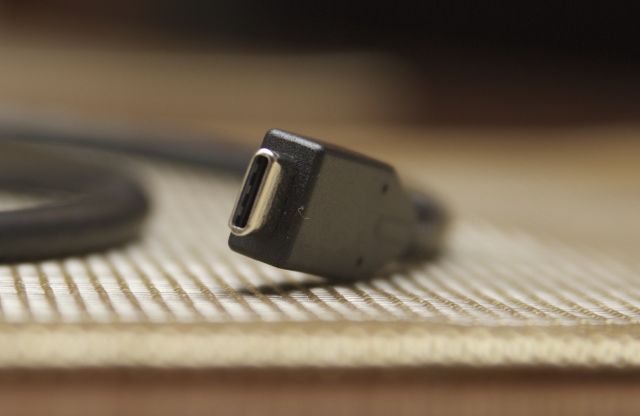
USB Type-C, the most exciting boring connector in the industry right now.
Andrew Cunningham

After the European Union (EU) announced that numerous consumer tech devices using wired charging would require USB-C by 2024, three US senators are seeking a similar standard.

In a letter sent Thursday [PDF], Senators Edward Markey (D-Mass.), Elizabeth Warren (D-Mass.), and Bernie Sanders (I-Vt) asked Secretary of Commerce Gina Raimondo to look toward a strategy that would require universal charging standards in consumer tech.

The senators didn’t mention USB-C but cited the EU’s upcoming legislation that will require smartphones, digital cameras, e-readers, headsets, laptops, and some other consumer tech products with wired charging to use USB-C.

As of writing, Secretary Raimondo hasn’t responded to the letter.

The senators asked the commerce secretary “to coordinate with offices and agencies across the Department of Commerce to develop a comprehensive plan that will protect both consumers and the environment by addressing the lack of a common US charging standard.”

Financial and environmental burden

The strongly worded letter focused on the “consumer electronics industry’s failure to establish uniform charging accessory standards” and subsequent “economic and environmental harm.”

It also pointed to EU data finding that in 2020, 38 percent of EU consumers had at least one time when they were trying to charge their phone and the only chargers around were incompatible.

This experience is ubiquitous for Apple iPhone users dependent on the proprietary Lightning port. Apple is the most well-known opponent of mandated USB-C charging in the EU. It claimed the policy would limit innovation and create more customer confusion and e-waste as Lightning chargers and accessories become obsolete.

Markey, Sanders, and Warren said such arguments preemptively, describing the chargers’ “planned obsolescence” as a financial burden for consumers.

The letter reads:

“Innovation should benefit consumers. It should not come at their expense, saddle them with incompatible accessories, and compel them to purchase different charging equipment for each device they own.”

A health concern

The senators urged government intervention, framing the debate as a health issue as well.

They pointed to new products making specialized chargers obsolete (looking at you, 30-pin connector) and are thrown away. EU data finds that chargers represent up to an estimated 11,000 tons of e-waste annually, the letter notes.

The senators wrote:

“When electronics are not disposed of properly, e-waste can spread toxins in water, pollute soil, and degrade the air we breathe.”

EU laid the groundwork, but obstacles remain in the US

In addition to using the EU’s data to make its argument to Raimondo, the senators asked her to follow EU legislators’ lead “by developing a comprehensive strategy to address unnecessary consumer costs, mitigate e-waste, and restore sanity and certainty to the process of purchasing new electronics.”

Still, there’d be a long way to go before we see USB-C or any charging solution standardized in consumer gadgets. It took the EU 10 years to pass its legislation, which isn’t expected to take effect until 2024. Along the way, it faced plenty of opposition from the likes of Apple.

Meanwhile, the debate for a standard charger policy is starting to take shape in the US. Markey, Sanders, and Warren weren’t specific about which tech products any standard should affect or the preferred charging standard.

The senators also didn’t suggest that a law should be passed but, rather, some sort of inter-agency discussion. Similar to the EU’s universal charging policy and the fight for the right to repair in the US, a common charging legislation in the US would likely face opposition from businesses and political groups who believe the government should be less involved. (It’s also worth mentioning notable movements in this space, including New York state passing the first electronics right-to-repair bill.)

Should the government look to standardize USB-C in some way, it’s helpful that many electronics have already adopted it willingly. Even Apple is reportedly testing USB-C charging for iPhones.

But it’s hard to ignore the argument that universal charging could stifle new charging techniques. While the EU said it would amend its policy if a new charging technology were better for consumers than USB-C, there’s obvious red tape to that approach.

Plus, knowing that any great innovation may become a selling point for your rivals could disincentivize R&D.

Depending on which products a common charger standard targeted, it could complicate things for companies that charge a premium for speedy, more ubiquitous USB-C. Similarly, it could impact products that take power over proprietary technology or alternatives like Micro USB, which can be bulkier and slower but cost less.

Regardless of the obstacles, senators believe the US government should follow the EU’s lead, which “wisely acted in the public interest.”

https://arstechnica.com/?p=1861540


SpaceX fires employees who wrote letter slamming Musk’s “embarrassing” behavior

A SpaceX logo seen on the outside of its headquarters building.
Enlarge / SpaceX headquarters in Hawthorne, California, on April 19, 2022.
Getty Images | Bloomberg

SpaceX has reportedly fired at least five employees who circulated a letter that urged company executives to condemn CEO Elon Musk’s public behavior.

SpaceX President Gwynne Shotwell explained the firings in an email to staff, according to a New York Times article. “The letter, solicitations and general process made employees feel uncomfortable, intimidated and bullied, and/or angry because the letter pressured them to sign onto something that did not reflect their views,” Shotwell wrote, according to the NYT. “We have too much critical work to accomplish and no need for this kind of overreaching activism.”

Shotwell’s email to staff also said, “Blanketing thousands of people across the company with repeated unsolicited emails and asking them to sign letters and fill out unsponsored surveys during the work day is not acceptable.” Shotwell urged employees to “stay focused on the SpaceX mission, and use your time to do your best work. This is how we will get to Mars.”

Reuters reported that the number of fired employees was at least five.

Letter cited allegation against Musk

The internal letter drafted by employees was circulated inside SpaceX on Wednesday and revealed in an article by The Verge. The letter said SpaceX executives should “publicly address and condemn Elon’s harmful Twitter behavior” and that the company “must swiftly and explicitly separate itself from Elon’s personal brand.”

The letter called out “recent allegations against our CEO and his public disparagement of the situation,” a reference to a Business Insider report last month that SpaceX “paid a flight attendant $250,000 to settle a sexual misconduct claim” against Musk in 2018. Musk denied the allegation, and Shotwell defended him in a company-wide email.

“Personally, I believe the allegations to be false; not because I work for Elon, but because I have worked closely with him for 20 years and never seen nor heard anything resembling these allegations,” Shotwell wrote to staff at the time, according to CNBC.

Musk’s behavior called a “source of embarrassment”

The employee letter that led to the firings said that “Elon’s behavior in the public sphere is a frequent source of distraction and embarrassment for us, particularly in recent weeks.” The letter accused the company of not applying its policies equally to executives and employees, writing that “SpaceX must establish safe avenues for reporting and uphold clear repercussions for all unacceptable behavior, whether from the CEO or an employee starting their first day.”

The letter was a result of a collaboration by “employees across the spectra of gender, ethnicity, seniority, and technical roles,” it said. The letter requested an in-person meeting with executives to discuss the employees’ requests.

“Our unique position requires us to consider how our actions today will shape the experiences of individuals beyond our planet. Is the culture we are fostering now the one which we aim to bring to Mars and beyond?” the letter asked.

https://arstechnica.com/?p=1861541


Musk tells Twitter staff that “exceptional” employees can work remotely

In this photo illustration, Elon Musk's twitter account is displayed on a smartphone in front of a background with the twitter logo.
Getty Images | SOPA Images

Although Elon Musk recently banned remote work at both Tesla and SpaceX, he told Twitter employees today that he won’t necessarily impose the same policy at the social network. “If someone can only work remotely, and they’re exceptional, it wouldn’t make sense to fire them,” Musk said in a virtual town hall with Twitter staff, according to The Wall Street Journal.

Musk also pointed out that the work at Twitter is different from the work at Tesla. “Tesla makes cars, and you can’t make cars remotely,” he said, according to CNBC.

While his comments may be promising for those who want to keep working remotely, Musk reportedly did not provide specifics on how he’d handle remote work at Twitter if he completes the $44 billion acquisition. His reference to letting “exceptional” employees work remotely suggests that a Musk-led Twitter might reduce remote work options even if they aren’t banned completely.

“There is a hit one takes remotely, because it does reduce esprit de corps,” Musk also said during the town hall, according to CNN. “Even if someone is working remotely, they’ve got to come in sometimes so they recognize their colleagues… The bias for me may be strongly toward working in person, but if somebody is exceptional then remote work can be okay.”

Musk’s remote work memos

About two weeks ago, Musk sent nearly identical memos to all Tesla and SpaceX workers telling them they must be in the office at least 40 hours per week or leave the company. “Everyone at Tesla is required to spend a minimum of 40 hours in the office per week,” Musk wrote in the Tesla version of the memo. “Moreover, the office must be where your actual colleagues are located, not some remote pseudo office. If you don’t show up, we will assume you have resigned.”

In a separate email to Tesla executive staff, Musk wrote, “If there are particularly exceptional contributors for whom this is impossible, I will review and approve those exceptions directly.” But the companywide email made no reference to exceptions.

Twitter CEO Parag Agrawal has strongly supported remote work, telling employees in March that while all company offices are reopening, “the decisions about where you work, whether you feel safe traveling for business, and what events you attend, should be yours. As we open back up, our approach remains the same. Wherever you feel most productive and creative is where you will work and that includes working from home full-time forever.”

Twitter Chief Marketing Officer Leslie Berland, who moderated the talk with Musk today, reportedly said during the meeting that about 1,500 of Twitter’s employees work remotely. Twitter has about 8,000 employees overall.

Musk wants 1 billion Twitter users

Musk did not rule out job cuts when asked if he plans layoffs at Twitter. “Right now, [Twitter’s] costs exceed the revenue, so that’s not a great situation to be in,” he said, according to CNN. “But anyone who’s obviously like a significant contributor should have nothing to worry about.”

Musk reportedly said he’d like to grow Twitter’s daily active users from the current 229 million to “at least a billion people.” Twitter should “try to include as much of the country, as much of the world, as possible” by emulating WeChat, he said.

“You basically live on WeChat in China because it’s so usable and helpful to daily life, and I think if we can achieve that, or even get close to that at Twitter, it would be an immense success,” he said, according to CNN.

Musk talks “freedom of speech and freedom of reach”

Musk has said he wants to protect free speech on Twitter. He reiterated that goal to Twitter employees but acknowledged that there must be some limits so that users will be “comfortable on Twitter.”

“There’s freedom of speech and freedom of reach,” he said. “Anyone could just go into the middle of Times Square right now and say anything they want. They can just walk into the middle of Times Square and deny the Holocaust… but that doesn’t mean that needs to be promoted to millions of people. So I think people should be allowed to say pretty outrageous things that are in the bounds of the law but that don’t get amplified and don’t get a ton of reach.”

Musk didn’t say whether he plans to take the CEO title at Twitter but said he wants to “drive the product in a particular direction.”

“There’s a lot of chores if you’re the CEO,” he said, according to Bloomberg. “I don’t really care what the title is, but obviously people do need to listen to me.”

Musk has been waffling on his commitment to buy Twitter in a dispute about spam-account data. He apparently did not give any firm update on Thursday regarding the acquisition’s likelihood of being completed. “Musk wasn’t directly asked and didn’t address the question of whether he is committed to buying Twitter,” Bloomberg wrote.

https://arstechnica.com/?p=1861425


SpaceX employee letter: Musk’s behavior is “frequent source of embarrassment”

Elon Musk wearing a tuxedo as he arrives at the 2022 Met Gala.
Enlarge / Elon Musk arrives for the 2022 Met Gala at the Metropolitan Museum of Art on May 2, 2022, in New York.
Getty Images | Angela Weiss

SpaceX employees are circulating a letter that urges company executives to condemn CEO Elon Musk’s public behavior. The letter was reported today and published in full by The Verge, which said it was shared Wednesday “in an internal SpaceX Microsoft Teams channel with more than 2,600 employees.”

The letter says executives should “publicly address and condemn Elon’s harmful Twitter behavior.”

“SpaceX must swiftly and explicitly separate itself from Elon’s personal brand,” the letter says. The letter is the result of a collaboration between “employees across the spectra of gender, ethnicity, seniority, and technical roles,” it says. The letter also asks for an in-person meeting with executives to discuss the employees’ requests.

The number of signatures gathered isn’t known, but employees “are being encouraged to sign onto the letter’s suggestions, either publicly or anonymously, with a signed version of the letter to be delivered to the desk of SpaceX President Gwynne Shotwell,” The Verge wrote.

“In light of recent allegations against our CEO and his public disparagement of the situation, we would like to deliver feedback on how these events affect our company’s reputation, and through it, our mission,” the letter begins. That’s a reference to a Business Insider report last month that SpaceX “paid a flight attendant $250,000 to settle a sexual misconduct claim” against Elon Musk in 2018.

Musk wrote on Twitter that “it never happened,” and SpaceX President Gwynne Shotwell defended him in a company-wide email. “Personally, I believe the allegations to be false; not because I work for Elon, but because I have worked closely with him for 20 years and never seen nor heard anything resembling these allegations,” Shotwell wrote to staff, according to CNBC.

Musk’s behavior an “embarrassment for us”

The letter circulated by employees doesn’t make any further reference to the sexual misconduct allegation against Musk. It doesn’t cite any specific Musk tweets, but it says that “Elon’s behavior in the public sphere is a frequent source of distraction and embarrassment for us, particularly in recent weeks. As our CEO and most prominent spokesperson, Elon is seen as the face of SpaceX—every Tweet that Elon sends is a de facto public statement by the company. It is critical to make clear to our teams and to our potential talent pool that his messaging does not reflect our work, our mission, or our values.”

The letter also says, “Many employees continue to experience unequal enforcement of our oft-repeated ‘No Asshole’ and ‘Zero Tolerance’ policies.” The letter urges executives to clearly define and consistently enforce those policies.

“SpaceX must establish safe avenues for reporting and uphold clear repercussions for all unacceptable behavior, whether from the CEO or an employee starting their first day,” the letter said.

The letter ends by urging executives to “consider how our actions today will shape the experiences of individuals beyond our planet. Is the culture we are fostering now the one which we aim to bring to Mars and beyond?” The collaboration needed to achieve SpaceX’s mission “to make life multiplanetary is incompatible with a culture that treats employees as consumable resources,” it said.

According to The Verge, the “letter generated more than a hundred comments in the Teams channel, with many employees agreeing to the spirit of the missive, according to screenshots of the chat shared by two sources who spoke with The Verge and asked to remain anonymous. Some commenters also claimed to be embarrassed by Musk’s behavior. Others expressed a desire for the company to better address executive leadership behavior as well as sexual harassment complaints.”

Sexual harassment allegations at Musk-led companies

In December 2021, former SpaceX mission integration engineer Ashley Kosak alleged that she reported incidents of sexual harassment to the human resources department, and “nothing was done.”

Musk is also CEO of Tesla, which is facing seven lawsuits from women who allege the company failed to stop rampant sexual harassment at factory facilities in Fremont, California, and service centers in the Los Angeles area. Tesla was also recently ordered by a judge to pay an ex-worker $15 million for “disturbing” racist abuse.

Meanwhile, Musk has a $44 billion deal to buy Twitter, where employees are concerned about his potential ownership. Musk has been waffling on his commitment to buy the company but is reportedly expected to “confirm his desire to own Twitter” in a meeting with the social network’s employees today.

https://arstechnica.com/?p=1861266


Facebook is receiving sensitive medical information from hospital websites

Facebook is receiving sensitive medical information from hospital websites
Aurich Lawson | Getty Images

A tracking tool installed on many hospitals’ websites has been collecting patients’ sensitive health information—including details about their medical conditions, prescriptions, and doctor’s appointments—and sending it to Facebook.

The Markup tested the websites of Newsweek’s top 100 hospitals in America. On 33 of them we found the tracker, called the Meta Pixel, sending Facebook a packet of data whenever a person clicked a button to schedule a doctor’s appointment. The data is connected to an IP address—an identifier that’s like a computer’s mailing address and can generally be linked to a specific individual or household—creating an intimate receipt of the appointment request for Facebook.

On the website of University Hospitals Cleveland Medical Center, for example, clicking the “Schedule Online” button on a doctor’s page prompted the Meta Pixel to send Facebook the text of the button, the doctor’s name, and the search term we used to find her: “pregnancy termination.”

Clicking the “Schedule Online Now” button for a doctor on the website of Froedtert Hospital, in Wisconsin, prompted the Meta Pixel to send Facebook the text of the button, the doctor’s name, and the condition we selected from a dropdown menu: “Alzheimer’s.”

The Markup also found the Meta Pixel installed inside the password-protected patient portals of seven health systems. On five of those systems’ pages, we documented the pixel sending Facebook data about real patients who volunteered to participate in the Pixel Hunt project, a collaboration between The Markup and Mozilla Rally. The project is a crowd-sourced undertaking in which anyone can install Mozilla’s Rally browser add-on in order to send The Markup data on the Meta Pixel as it appears on sites that they visit. The data sent to hospitals included the names of patients’ medications, descriptions of their allergic reactions, and details about their upcoming doctor’s appointments.

Former regulators, health data security experts, and privacy advocates who reviewed The Markup’s findings said the hospitals in question may have violated the federal Health Insurance Portability and Accountability Act (HIPAA). The law prohibits covered entities like hospitals from sharing personally identifiable health information with third parties like Facebook, except when an individual has expressly consented in advance or under certain contracts.

Neither the hospitals nor Meta said they had such contracts in place, and The Markup found no evidence that the hospitals or Meta were otherwise obtaining patients’ express consent.

“I am deeply troubled by what [the hospitals] are doing with the capture of their data and the sharing of it,” said David Holtzman, a health privacy consultant who previously served as a senior privacy adviser in the U.S. Department of Health and Human Services’ Office for Civil Rights, which enforces HIPAA. “I cannot say [sharing this data] is for certain a HIPAA violation. It is quite likely a HIPAA violation.”

University Hospitals Cleveland Medical Center spokesperson George Stamatis did not respond to The Markup’s questions but said in a brief statement that the hospital “comport[s] with all applicable federal and state laws and regulatory requirements.”

After reviewing The Markup’s findings, Froedtert Hospital removed the Meta Pixel from its website “out of an abundance of caution,” Steve Schooff, a spokesperson for the hospital, wrote in a statement.

As of June 15, six other hospitals had also removed pixels from their appointment booking pages and at least five of the seven health systems that had Meta Pixels installed in their patient portals had removed those pixels.

The 33 hospitals The Markup found sending patient appointment details to Facebook collectively reported more than 26 million patient admissions and outpatient visits in 2020, according to the most recent data available from the American Hospital Association. Our investigation was limited to just over 100 hospitals; the data sharing likely affects many more patients and institutions than we identified.

Facebook itself is not subject to HIPAA, but the experts interviewed for this story expressed concerns about how the advertising giant might use the personal health data it’s collecting for its own profit.

“This is an extreme example of exactly how far the tentacles of Big Tech reach into what we think of as a protected data space,” said Nicholson Price, a University of Michigan law professor who studies big data and health care. “I think this is creepy, problematic, and potentially illegal” from the hospitals’ point of view.

The Markup was unable to determine whether Facebook used the data to target advertisements, train its recommendation algorithms, or profit in other ways.

https://arstechnica.com/?p=1861234


Russia is taking over Ukraine’s Internet

A placard seen being displayed during a 2019 protest against state Internet control in Russia. Displaying the placard now would likely land its wielder in prison.
Enlarge / A placard seen being displayed during a 2019 protest against state Internet control in Russia. Displaying the placard now would likely land its wielder in prison.

Web pages in the city of Kherson in south Ukraine stopped loading on people’s devices at 2:43 pm on May 30. For the next 59 minutes, anyone connecting to the Internet with KhersonTelecom, known locally as SkyNet, couldn’t call loved ones, find out the latest news, or upload images to Instagram. They were stuck in a communications blackout. When web pages started stuttering back to life at 3:42 pm, everything appeared to be normal. But behind the scenes everything had changed: Now all Internet traffic was passing through a Russian provider and Vladimir Putin’s powerful online censorship machine.

Since the end of May, the 280,000 people living in the occupied port city and its surrounding areas have faced constant online disruptions as Internet service providers are forced to reroute their connections through Russian infrastructure. Multiple Ukrainian ISPs are now forced to switch their services to Russian providers and expose their customers to the country’s vast surveillance and censorship network, according to senior Ukrainian officials and technical analysis viewed by WIRED.

The Internet companies have been told to reroute connections under the watchful eye of Russian occupying forces or shut down their connections entirely, officials say. In addition, new unbranded mobile phone SIM cards using Russian numbers are being circulated in the region, further pushing people toward Russian networks. Grabbing control of the servers, cables, and cell phone towers—all classed as critical infrastructure—which allow people to freely access the web is considered one of the first steps in the “Russification” of occupied areas.

“We understand this is a gross violation of human rights,” Victor Zhora, the deputy head of Ukraine’s cybersecurity agency, known as the State Services for Special Communication and Information Protection (SSSCIP), tells WIRED. “Since all traffic will be controlled by Russian special services, it will be monitored, and Russian invaders will restrict the access to information resources that share true information.”

KhersonTelecom first switched its Internet traffic to a Russian network on April 30, before flipping back to Ukrainian connections for the majority of May. However, things appear to have shifted permanently since May 30. All of KhersonTelecom’s traffic is now being routed through Miranda Media, a Crimea-based company that is itself connected to Russian national telecom provider Rostelecom. (Miranda Media was set up after Putin annexed Crimea in 2014.) The day after KhersonTelecom made its latest switch, state-controlled Russian media outlet RIA Novosti claimed the Kherson and Zaporizhzhia areas were officially being moved to Russian Internet connections—days earlier, the outlet said the regions were also going to start using the Russian telephone code +7.

Zhora says that across occupied regions of Ukraine—including Kherson, Luhansk, Donetsk, and Zaporizhzhia—there is a patchwork of around 1,200 different ISPs. “We understand that most of them are forced to connect to Russian telecom infrastructure and reroute traffic,” Zhora tells WIRED. “Unfortunately, there are cases of massive routing of traffic of Ukrainian operators across Russian channels,” says Liliia Malon, the commissioner of Ukraine’s telecom regulator, the National Commission for the State Regulation of Electronic Communications. “Ukrainian networks are partially blocked or completely disconnected.”

Technical analysis confirms that the connections are switching. Internet monitoring company Cloudflare has observed KhersonTelecom’s traffic passing through Miranda Media for more than two weeks in June. Doug Madory, director of Internet analysis at monitoring firm Kentik, has observed around half a dozen networks in Kherson connecting to the provider. “It’s not a one-time thing,” Madory says. “Every couple of days, there’s another company getting switched over to Russian transit from Ukraine.”

Since the start of Putin’s war in February, disrupting or disabling Internet infrastructure has been a common tactic—controlling the flow of information is a powerful weapon. Russian missiles have destroyed TV towers, a cyberattack against a satellite system had knock-on impacts across Europe, and disinformation has tried to break Ukrainian spirits. Despite frequent Internet blackouts, Ukraine’s rich ecosystem of Internet companies has rallied to keep people online. While Ukrainian troops are successfully launching counterattacksagainst Russian occupation in the south of the country, Kherson remains controlled by invading forces. (In March, it became the first major city to fall into Russian hands, and its residents have lived under occupation for around 100 days, reporting numerous incidents of torture.)

https://arstechnica.com/?p=1861225


Cryptocurrency plunges as crypto “bank” Celsius suspends withdrawals

Cryptocurrency plunges as crypto “bank” Celsius suspends withdrawals
Aurich Lawson | Getty Images

Major cryptocurrencies suffered big losses on Monday. As I write this, bitcoin is down 14 percent over the last 24 hours, while ether is down 16 percent. Other major cryptocurrencies—including solana, dogecoin, and litecoin—are also down by double digits, according to CoinMarketCap.

The cryptocurrency crash is part of a broader market sell-off. The S&P 500 stock market index fell almost 4 percent on Monday amid fears of faster interest rate hikes from the Federal Reserve. High interest rates put downward pressure on all assets, including stocks and cryptocurrencies.

Another big factor that may have spooked cryptocurrency traders was the Monday announcement by crypto lender Celsius that it was suspending withdrawals. The company said this was the result of “extreme market conditions.”

Celsius is effectively an unregulated cryptocurrency bank. Customers can deposit cryptocurrencies with Celsius and then borrow dollars against those holdings. Customers can also earn interest on cryptocurrency deposits, with the company’s website advertising interest rates as high as 18 percent for some cryptocurrencies. That number is far more than Americans can earn from conventional banks. Celsius says it has 1.7 million customers.

A January Bloomberg article reported that Celsius had inspired loyalty from some of the platform’s users:

In testimonials posted last year on Twitter as part of a contest in which customers shared their ‘Celsius Story,’ many said they had entrusted Celsius with their life savings. One said he took out home equity and cashed in his work pension and his savings for his kids’ education to put the money into the company’s accounts. Another said it let him quit his job to move closer to his kid.

In a January Bloomberg article, Celsius CEO Alex Mashinsky “told Bloomberg Businessweek that Celsius is able to pay such high yields because it passes along most of its earnings to its users. He said it’s the traditional financial system that’s ripping people off by taking their deposits, using them to make money, and then claiming it can only pay tiny interest rates.”

“Somebody is lying,” Mashinsky said. “Either the bank is lying or Celsius is lying.”

While Celsius offers higher interest rates than a traditional bank, Celsius deposits are not protected by the Federal Deposit Insurance Corporation, which provides a financial backstop for deposits in conventional banks. This means that if Celsius were to get into financial trouble, some customers might not get all their money back.

In a blog post last week, Celsius swatted away rumors that it was having financial difficulties.

“At this already challenging time, it’s unfortunate that vocal actors are spreading misinformation and confusion,” the company wrote. “They have tried unsuccessfully, for example, to link Celsius to the collapse of Luna and falsely claim that Celsius sustained significant losses as a result.”

That was a reference to last month’s news that terra, an “algorithmic stablecoin,” had proven not to be so stable in practice. Terra’s value was supposed to be pegged to $1, with the related cryptocurrency luna supposedly providing a backstop for this peg. But the whole house of cards came crashing down last month amid a broader cryptocurrency sell-off.

Celsius has grown rapidly over the last year, attracting increased regulatory scrutiny. Last September, regulators in several states opened investigations into the company’s business practices, arguing that the company’s lending products may constitute unregulated securities.

Celsius hasn’t provided details on the “extreme market conditions” that led the company to suspend withdrawals. Celsius claims it is working diligently to resume withdrawals, but users have good reason to worry about the company’s financial health.

Across the cryptocurrency sector, companies are tightening their belts with expectations that recent price declines might last for a while.

On Friday, the cryptocurrency exchange and wallet company Crypto.com announced it was laying off 260 employees, about 5 percent of its workforce. A week earlier, the Gemini cryptocurrency exchange, which the Winkelvoss brothers founded, announced it was cutting its workforce by 10 percent. The brothers blamed the cuts on “turbulent market conditions that are likely to persist for some time.”

One of the biggest cryptocurrency companies, Coinbase, recently announced that it was freezing all new hiring. That included withdrawing some offers that job candidates had already accepted. Coinbase’s stock price has fallen more than 80 percent since its peak last November.

The steady drumbeat of bad news has led to discussion about the start of another “crypto winter.” The cryptocurrency world has experienced at least three of these periods. During this time of retrenchment, it’s common for a significant number of cryptocurrency-related projects and companies to fail.

Each previous crypto winter has been followed by a thaw and then a new boom. Most recently, bitcoin fell to around $3,200 in late 2018 before soaring above $60,000 in 2021. Cryptocurrency boosters hope that history repeats itself, with today’s low bitcoin price leading to new price records a few years down the road.

But there’s no guarantee that will happen. At some point, the crypto sector will reach a saturation point, after which cryptocurrency prices may start to behave more like other conventional assets—rising during booms and falling during downturns but not necessarily delivering outstanding returns for those who hold them over the long term.

Tim Lee was on staff at Ars from 2017 to 2021. In 2021, he launched Full Stack Economics, an independent email newsletter about the economy, technology, and public policy. You can subscribe to his newsletter here.

https://arstechnica.com/?p=1860503


Google to pay $118 million after being accused of underpaying 15,500 women

A sculpture of a large Google logo in the shape of a
Enlarge / Google’s new Bay View campus in Mountain View, California, on Monday, May 16, 2022.
Getty Images | Bloomberg

Google has agreed to pay $118 million to settle a class action lawsuit that alleges the company underpaid female employees. The agreement will release Google from claims that it “paid women in Covered Positions less than it paid men for substantially similar work, that Google assigned women to lower levels than it assigned men, and that Google failed to pay all wages due to employees upon their separation of employment,” the settlement says.

The settlement covers about 15,500 women who have worked for Google in California since 2013, the plaintiffs’ law firm said in an announcement on Saturday. Four named plaintiffs will get separate payouts: $75,000 for lead plaintiff Kelly Ellis and $50,000 each for the other three, in addition to their regular share from the net settlement fund. The settlement class covers a wide range of workers with 236 job titles.

The net settlement fund will have about $86 million after attorneys’ fees and other deductions, providing an average of about $5,500 for each class member. The lawsuit alleged that “Google paid women, on average, approximately $16,794 less per year than similarly situated men, in base pay, bonus, and stock.”

Google violated the California Equal Pay Act and other state laws, plaintiffs alleged in the gender-discrimination lawsuit. The settlement is pending a judge’s approval in San Francisco County Superior Court.

“In addition to monetary relief, the settlement provides that an independent third-party expert will analyze Google’s leveling-at-hire practices and that an independent labor economist will review Google’s pay equity studies,” the plaintiffs’ law firm said. “The post-settlement work will be supervised by an external settlement monitor over the next three years. The lawsuit challenged Google’s pay and leveling processes, and plaintiffs believe these programs will help ensure that women are not paid less than their male counterparts who perform substantially similar work, and that Google’s challenged leveling practices are equitable.”

“More equity for women”

Ellis was a software engineer at Google’s Mountain View office for about four years and left with the title of senior manager. Plaintiff Holly Pease worked for Google for about 10.5 years in various technical leadership roles; plaintiff Kelli Wisuri worked for Google for about 2.5 years in enterprise operations and sales; and plaintiff Heidi Lamar worked as a preschool teacher and infant/toddler teacher at Google’s Children Center in Palo Alto for about four years.

“As a woman who’s spent her entire career in the tech industry, I’m optimistic that the actions Google has agreed to take as part of this settlement will ensure more equity for women,” Pease said. Google reportedly has 150,000 employees worldwide, including about 45,000 in the Bay Area.

The additional payments to named plaintiffs are “intended to compensate the Class Representatives for the risks they took bringing this case, including but not limited to enduring potential for career or reputational harm, and their active and time-intensive participation in the prosecution and settlement of this case,” the settlement said.

In a statement provided to Ars, Google pointed out that it admitted no wrongdoing in the settlement and that it conducts regular pay equity reviews that result in raises:

While we strongly believe in the equity of our policies and practices, after nearly five years of litigation, both sides agreed that resolution of the matter, without any admission or findings, was in the best interest of everyone, and we’re very pleased to reach this agreement. We are absolutely committed to paying, hiring and leveling all employees fairly and equally and for the past nine years we have run a rigorous pay equity analysis to make sure salaries, bonuses and equity awards are fair.

If we find any differences in proposed pay, including between men and women, we make upward adjustments to remove them before new compensation goes into effect, and we’ll continue to do that. In 2020 alone, we made upward adjustments for 2,352 employees, across nearly every demographic category, totaling $4.4 million. We also undertake rigorous analyses to ensure fairness in role leveling and performance ratings. We’re very happy to have an advisor look at these processes and make recommendations for future improvement.

https://arstechnica.com/?p=1860529


India isn’t ready for a deadly combination of heat and humidity

India isn’t ready for a deadly combination of heat and humidity
Prakash Singh | Getty

R Lakshmanan has been making steel frames in the southern Indian city of Chennai for 20 years. His job involves standing for long hours outdoors at construction sites, pounding screws with careful precision onto steel rods. Each day he makes nearly 600 frames, which end up becoming the skeleton of a home. Often he works 12-hour shifts, beginning at 6 am. He always feels fortunate when he gets to work under a shady tree.

But this year, that protection hasn’t been enough. Ever since temperatures in March hit a sizzling 38° Celsius—4° above normal for Chennai—the conditions have been stifling. The metal frames Lakshmanan works with have been too hot to touch, the steel burning his fingertips and leaving behind painful sores. He has seen construction workers, especially women, collapse around him, and has had to take breaks during the workday to cope with fits of dizziness and nausea. “On some days, there’s so much heat, it feels like you’re living in a fireball,” he says.

When faced with these conditions, our bodies call upon a well-known mechanism to keep us from overheating: sweating. As perspiration evaporates from the skin, it cools the body’s temperature. But if the air is not only hot but also already filled with moisture, less sweat can evaporate, and this safety feature fails. In India, high temperatures and humidity are increasingly combining to pose a deadly threat—one the country isn’t prepared for.

This danger to human life is measured using “wet-bulb temperature”—the lowest temperature that air can be cooled to via evaporation. It’s determined by wrapping the bulb of a thermometer in a wet cloth and seeing what temperature is recorded. Essentially the bulb is you—or me, or Lakshmanan—the wet cloth is our sweating skin, and the temperature recorded is the coolest we can hope to get by sweating.

When heat and humidity combine to push wet-bulb temperatures past 32° Celsius, physical exertion becomes dangerous. Consistent exposure to high wet-bulb temperatures—35° Celsius and above—can be fatal. At this point the sweating mechanism shuts down, leading to death in six hours. On May 1, 2022, the wet-bulb temperature in Lakshmanan’s home city of Chennai hit 31° Celsius. The same day, the district of Ernakulam in the Indian state of Kerala recorded a wet-bulb temperature of 34.6° Celsius—a record high for the area.

“Without the mechanism to rid the body of that excessive heat, there are many physiological changes that happen in quick succession,” says Vidhya Venugopal, a researcher in public health at the Sri Ramachandra Institute of Higher Education and Research in Chennai.

Raise your internal temperature by 3° to 4° Celsius, and you’ll start to struggle. “As the body tries hard to restore your core temperature, all other processes slowly grind to a halt,” Venugopal says. Blood vessels dilate and circulation slows, particularly to the extremities. Not enough blood will flow to the brain, affecting its functioning. You lose alertness, become drowsy, and don’t feel thirst anymore. Soon organs shut down, one by one. “When the brain stops giving messages to the heart, the pulse slows and the person goes into a coma,” she says.

“Humidity aggravates the killing power of heat,” says Ambarish Dutta, professor of epidemiology at the Indian Institute of Public Health in Bhubaneswar. “It can trigger catastrophic events like heart attacks and strokes, aggravate secondary conditions like diabetes, change the regulatory capacity of the kidneys, affect the endocrine system by triggering stress hormones. In short, it’s a silent killer.”

World Weather Attribution, an international collaboration that analyzes extreme weather events, estimates that India and Pakistan’s recent heat wave has led to at least 90 deaths across both countries. During India’s 2015 heat wave, wet-bulb temperatures in the southern state of Andhra Pradesh rose to 32° Celsius. That year, the heat killed over 2,500 people.

Such events are going to become increasingly common as climate change warms the world. What magnifies the problem is that as temperatures rise, so does the absolute humidity in the atmosphere, says Jane Baldwin, assistant professor in the Department of Earth System Science at the University of California, Irvine. Thanks to what’s known as the Clausius–Clapeyron relationship of thermodynamics, “for every 1° increase in temperature, you see a 7 percent increase in humidity,” she explains. It means that for countries like India, climate change has a compounding impact. The effect is strongest over the world’s oceans, and particularly the Indian Ocean, whose rapid warming is a big trigger of South Asia’s high wet-bulb temperatures.

https://arstechnica.com/?p=1860137


Tesla Autopilot safety faces bigger questions as US upgrades crash probe

The interior of a Tesla Model X seen at a car expo.
Enlarge / Tesla Model X at Brussels Expo on January 10, 2018 in Belgium.
Getty Images | Sjoerd van der Wal

The National Highway Traffic Safety Administration (NHTSA) has upgraded an investigation into Tesla’s Autopilot system in a move that could lead to a recall.

The NHTSA’s Office of Defects Investigation opened the probe of Tesla Autopilot in August 2021 due to “eleven crashes in which Tesla models of various configurations have encountered first responder scenes and subsequently struck one or more vehicles involved with those scenes.” Five other crashes have since been added to the analysis, which covers 830,000 Tesla Model Y, Model X, Model S, and Model 3 cars released from 2014 to 2022. The crashes being investigated resulted in 15 injuries and one death, the NHTSA said.

An NHTSA notice published Thursday said the investigation has been “upgraded to an Engineering Analysis (EA) to extend the existing crash analysis, evaluate additional data sets, perform vehicle evaluations, and to explore the degree to which Autopilot and associated Tesla systems may exacerbate human factors or behavioral safety risks by undermining the effectiveness of the driver’s supervision. In doing so, NHTSA plans to continue its assessment of vehicle control authority, driver engagement technologies, and related human factors considerations.”

The NHTSA explains that an Engineering Analysis is the second of two phases in an investigation, with the first phase being a Preliminary Evaluation. The second phase can take over a year in complex cases and may lead to a recall if a safety-related defect is found.

NHTSA’s findings so far

The NHTSA’s Tesla probe began 10 months ago as a Preliminary Evaluation “to assess the performance of Tesla’s Autopilot system” due to “an accumulation of crashes in which Tesla vehicles, operating with Autopilot engaged, struck stationary in-road or roadside first responder vehicles tending to pre-existing collision scenes,” the agency said in its update.

In one of those cases, Tesla was sued by five Texas police officers who were injured when a Tesla Model X in Autopilot mode crashed into police vehicles that were stopped and had their flashing lights turned on.

Summarizing its findings so far, the NHTSA said its “analysis of these sixteen subject first responder and road maintenance vehicle crashes indicated that Forward Collision Warnings (FCW) activated in the majority of incidents immediately prior to impact and that subsequent Automatic Emergency Braking (AEB) intervened in approximately half of the collisions. On average in these crashes, Autopilot aborted vehicle control less than one second prior to the first impact.”

The NHTSA notice continued:

All subject crashes occurred on controlled-access highways. Where incident video was available, the approach to the first responder scene would have been visible to the driver an average of 8 seconds leading up to impact. Additional forensic data available for eleven of the collisions indicated that no drivers took evasive action between 2-5 seconds prior to impact, and the vehicle reported all had their hands on the steering wheel leading up to the impact. However, most drivers appeared to comply with the subject vehicle driver engagement system as evidenced by the hands-on wheel detection and nine of eleven vehicles exhibiting no driver engagement visual or chime alerts until the last minute preceding the collision (four of these exhibited no visual or chime alerts at all during the final Autopilot use cycle).

https://arstechnica.com/?p=1860042