“Everything is gone”: Russian business hit hard by tech sanctions

“Everything is gone”: Russian business hit hard by tech sanctions
vladimir18 | Getty Images

Russian companies have been plunged into a technological crisis by Western sanctions that have created severe bottlenecks in the supply of semiconductors, electrical equipment, and the hardware needed to power the nation’s data centers.

Most of the world’s largest chip manufacturers, including Intel, Samsung, TSMC and Qualcomm, have halted business to Russia entirely after the US, UK, and Europe imposed export controls on products using chips made or designed in the US or Europe.

This has created a shortfall in the type of larger, low-end chips that go into the production of cars, household appliances, and military equipment. Supplies of more advanced semiconductors, used in cutting-edge consumer electronics and IT hardware, have also been severely curtailed.

And the country’s ability to import foreign tech and equipment containing these chips—including smartphones, networking equipment, and data servers—has been drastically stymied.

“Entire supply routes for servers to computers to iPhones—everything—is gone,” said one Western chip executive.

The unprecedented sweep of Western sanctions over President Vladimir Putin’s war in Ukraine are forcing Russia into what the central bank said would be a painful “structural transformation” of its economy.

With the country unable to export much of its raw materials, import critical goods, or access global financial markets, economists expect Russia’s gross domestic product to contract by as much as 15 percent this year.

Export controls on “dual use” technology that can have both civilian and military applications—such as microchips, semiconductors, and servers—are likely to have some of the most severe and lasting effects on Russia’s economy. The country’s biggest telecoms groups will be unable to access 5G equipment, while cloud computing products from tech leader Yandex and Sberbank, Russia’s largest bank, will struggle to expand their data center services.

Russia lacks an advanced tech sector and consumes less than 1 percent of the world’s semiconductors. This has meant that technology-specific sanctions have had a much less immediate impact on the country than similar export controls had on China, the behemoth of global tech manufacturing, when they were introduced in 2019.

While Russia does have several domestic chip companies, namely JSC Mikron, MCST, and Baikal Electronics, Russian groups have previously relied on importing significant quantities of finished semiconductors from foreign manufacturers such as SMIC in China, Intel in the US, and Infineon in Germany. MCST and Baikal have relied principally on foundries in Taiwan and Europe for the production of the chips they design.

https://arstechnica.com/?p=1857769


Musk to Tesla and SpaceX workers: Be in the office 40 hours a week or quit

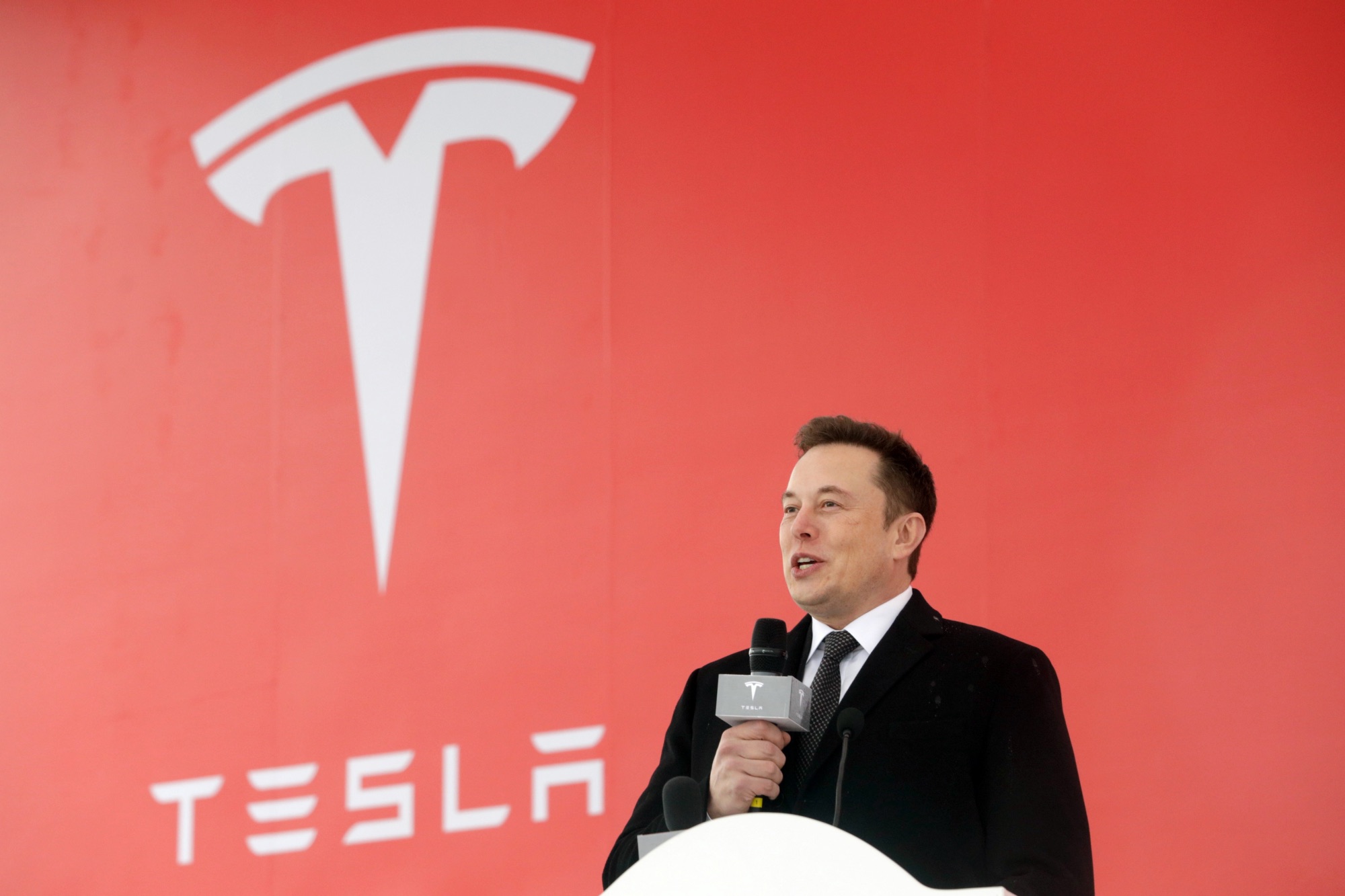
Tesla CEO Elon Musk holds a microphone and speaks at an event at a factory in China.
Enlarge / Tesla CEO Elon Musk at the company’s manufacturing facility in Shanghai, China, on Monday, Jan. 7, 2019.
Getty Images | Bloomberg

Elon Musk has ordered Tesla and SpaceX employees to work in the office full-time or quit their jobs.

On Tuesday, Musk sent two memos telling Tesla employees they must be in the office at least 40 hours per week or leave the company. “Anyone who wishes to do remote work must be in the office for a minimum (and I mean *minimum*) of 40 hours per week or depart Tesla. This is less than we ask of factory workers,” Musk wrote in a new memo circulating on Twitter, apparently first shared by Tesla stockholder and Full Self-Driving beta tester Sam Nissim. The email’s subject line was “Remote work is no longer acceptble [sic].”

Musk seemed to confirm the emailed memo’s authenticity. When asked to provide “any additional comment to people who think coming into work is an antiquated concept,” Musk tweeted, “They should pretend to work somewhere else.”

The first memo was sent by Musk to Tesla’s “ExecStaff” email group on Tuesday. But it’s not just executive staff who face the directive—a second leaked memo that delivered a similar ultimatum to all Tesla employees was sent by Musk on Tuesday night. The company-wide email was reported by Electrek and in the Tesla subreddit. Reuters subsequently reported that “two sources confirmed the authenticity of the email” sent to all Tesla employees.

The New York Times then reported that Musk sent a nearly identical memo to SpaceX employees.

Musk: No “remote pseudo office”

Musk’s second email to Tesla workers was sent to “Everybody” and had the subject line “To be super clear.”

“Everyone at Tesla is required to spend a minimum of 40 hours in the office per week,” Musk wrote in the leaked company-wide memo. “Moreover, the office must be where your actual colleagues are located, not some remote pseudo office. If you don’t show up, we will assume you have resigned.”

The email continued:

The more senior you are, the more visible must be your presence. That is why I lived in the factory so much—so that those on the line could see me working alongside them. If I had not done that, Tesla would long ago have gone bankrupt.

There are of course companies that don’t require this, but when was the last time they shipped a great new product? It’s been a while.

Tesla has and will create and actually manufacture the most exciting and meaningful products of any company on Earth. This will not happen by phoning it in.

Thanks, Elon

Musk’s email to SpaceX employees used the same language but with “SpaceX” swapped with “Tesla,” according to the NYT report. “That is why I spent so much time in the factory—so that those on the line could see me working alongside them. If I had not done that, SpaceX would long ago have gone bankrupt,” Musk wrote. He also wrote, “SpaceX has and will create and actually manufacture the most exciting and meaningful products of any company in space. This will not happen by phoning it in.”

https://arstechnica.com/?p=1857571


Sorry, Texas: Supreme Court blocks law banning “censorship” on social media

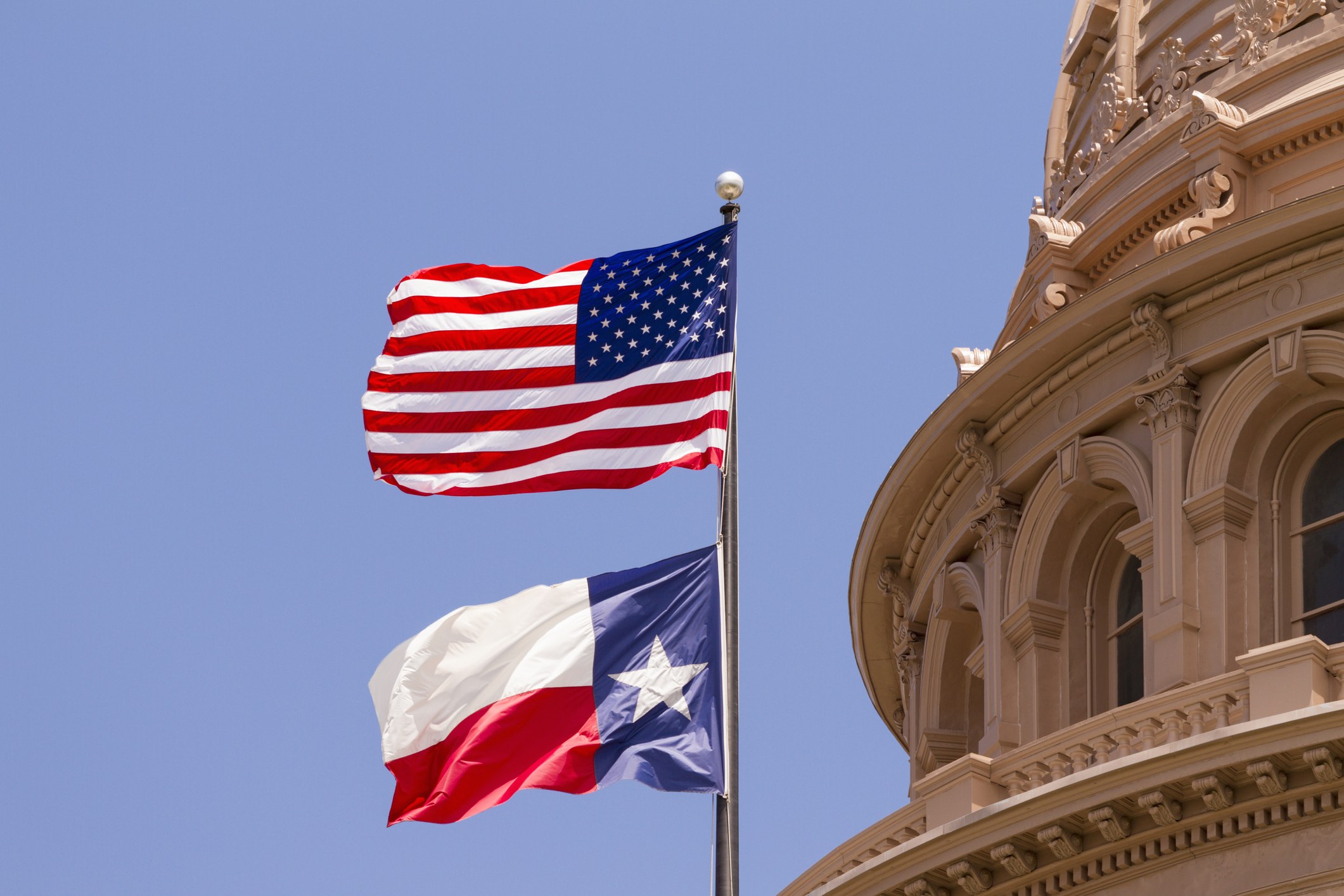
US and Texas flags seen in daytime outside the Texas State Capitol Building.
Enlarge / US and Texas flags flying outside the Texas State Capitol building in Austin.
Getty Images | PA Thompson

The US Supreme Court on Tuesday blocked the Texas law that prohibits social media companies from moderating content based on a user’s “viewpoint.” The Supreme Court order came about three weeks after the so-called “censorship” law was reinstated by the US Court of Appeals for the Fifth Circuit.

“The application to vacate stay presented to Justice [Samuel] Alito and by him referred to the Court is granted,” the ruling said. “The May 11, 2022 order of the United States Court of Appeals for the Fifth Circuit staying the district court’s preliminary injunction is vacated.”

It was a 5-4 decision with Justices Amy Coney Barrett, Stephen Breyer, Sonia Sotomayor, Brett Kavanaugh, and Chief Justice John Roberts voting to block the Texas law. Alito wrote a dissent that was joined by Justices Clarence Thomas and Neil Gorsuch. The ruling says separately that “Justice [Elena] Kagan would deny the application to vacate stay,” but Kagan did not join Alito’s dissent.

The Supreme Court ruling came in response to an emergency application from tech groups NetChoice and the Computer & Communications & Industry Association (CCIA). With the preliminary injunction reinstated, litigation will continue, and Texas cannot enforce the law unless it wins the case.

Tech group hails Supreme Court ruling

“This ruling means that private American companies will have an opportunity to be heard in court before they are forced to disseminate vile, abusive or extremist content under this Texas law. We appreciate the Supreme Court ensuring First Amendment protections, including the right not to be compelled to speak, will be upheld during the legal challenge to Texas’s social media law,” CCIA President Matt Schruers said.

“No online platform, website, or newspaper should be directed by government officials to carry certain speech. This has been a key tenet of our democracy for more than 200 years and the Supreme Court has upheld that,” Schruers also said.

The Texas law is labeled as “an act relating to censorship of or certain other interference with digital expression, including expression on social media platforms or through electronic mail messages.” The law says a “social media platform may not censor a user” based on the user’s “viewpoint” and defines “censor” as “block, ban, remove, deplatform, demonetize, de-boost, restrict, deny equal access or visibility to, or otherwise discriminate against expression.” The Texas attorney general or users can sue social media platforms that violate this ban and win injunctive relief and reimbursement of court costs, the law says.

In addition to being unconstitutional, the Texas law “would have been a disaster for social media users and for public discourse,” said John Bergmayer, legal director for consumer advocacy group Public Knowledge. “It would have ordered social media platforms to host and distribute horrific and distasteful content, and to turn a blind eye to hate, abuse, and coordinated misinformation campaigns. The main result of these policies would not be to enhance free speech, but to keep people from speaking by driving them away from toxic platforms.”

https://arstechnica.com/?p=1857391


The mystery of China’s sudden warnings about US hackers

Chinese flag with digital matrix -Innovation Concept - Digital Tech Wallpaper - 3D illustration
Enlarge / Chinese flag with digital matrix -Innovation Concept – Digital Tech Wallpaper – 3D illustration
peterschreiber.media | Getty Images

For the best part of a decade, US officials and cybersecurity companies have been naming and shaming hackers they believe work for the Chinese government. These hackers have stolen terabytes of data from companies like pharmaceutical and video game firms, compromised servers, stripped security protections, and highjacked hacking tools, according to security experts. And as China’s alleged hacking has grown more brazen, individual Chinese hackers face indictments. However, things may be changing.

Since the start of 2022, China’s Foreign Ministry and the country’s cybersecurity firms have increasingly been calling out alleged US cyberespionage. Until now, these allegations have been a rarity. But the disclosures come with a catch: They appear to rely on years-old technical details, which are already publicly known and don’t contain fresh information. The move may be a strategic change for China as the nation tussles to cement its position as a tech superpower.

“These are useful materials for China’s tit-for-tat propaganda campaigns when they faced US accusation and indictment of China’s cyberespionage activities,” says Che Chang, a cyber threat analyst at the Taiwan-based cybersecurity firm TeamT5.

China’s accusations, which were noted by security journalist Catalin Cimpanu, all follow a very similar pattern. On February 23, Chinese security company Pangu Lab published allegations that the US National Security Agency’s elite Equation Group hackers used a backdoor, dubbed Bvp47, to monitor 45 countries. The Global Times, a tabloid newspaper that’s part of China’s state-controlled media, ran an exclusive report on the research. Weeks later, on March 14, the newspaper had a second exclusive story about another NSA tool, NOPEN, based on details from China’s National Computer Virus Emergency Response Center. A week later, Chinese cybersecurity firm Qihoo 360 alleged that US hackers had been attacking Chinese companies and organizations. And on April 19, the Global Times reported on further National Computer Virus Emergency Response Center findings about HIVE, malware developed by the CIA.

The reports are accompanied with a flurry of statements—often in response to questions from the media—by China’s Foreign Ministry spokespeople. “China is gravely concerned over the irresponsible malicious cyber activities of the US government,” Foreign Ministry spokesperson Wang Wenbin said in April after one of the announcements. “We urge the US side to explain itself and immediately stop such malicious activities.” Over the first nine days of May, Foreign Ministry spokespeople commented on US cyber activities at least three times. “One cannot whitewash himself by smearing others,” Zhao Lijian said in one instance.

While cyber activity undertaken by state actors is often wrapped in highly classified files, many hacking tools developed by the US are no longer secret. In 2017, WikiLeaks published 9,000 documents in the Vault7 leaks, which detailed many of the CIA’s tools. A year earlier, the mysterious Shadow Brokers hacking group stole data from one of the NSA’s elite hacking teams and slowly dripped the data to the world. The Shadow Brokers leaks included dozens of exploits and new zero-days—including the Eternal Blue hacking tool, which has since been used repeatedly in some of the largest cyberattacks. Many of the details in the Shadow Brokers leaks match up with details about NSA which were disclosed by Edward Snowden in 2013. (An NSA spokesperson said it has “no comment” for this story; the agency routinely does not comment on its activities.)

https://arstechnica.com/?p=1856999


Who owns 4chan?

Who owns 4chan?
Jacqui VanLiew | Getty Images

Over the past 19 years, the imageboard 4chan has been tied to Gamergate, the inception of QAnon, the incubation of a particular brand of online racism, and a raft of domestic terror attacks that have killed scores of people.

Tragically, references and tributes to 4chan are littered throughout a 180-page screed believed to be written by the 18-year-old who is alleged to have shot 13 people in a predominately Black neighborhood in Buffalo, New York, on May 14. All 10 victims killed in the massacre were Black. Just this week, 4chan’s users spread transphobic misinformation about the identity of the school shooter who killed 19 children and two adults in an elementary school in Uvdale, Texas, that quickly reached the feeds of a right-wing member of Congress.

Even as the imageboard continues to rise in infamy, a question lingers: Who actually owns 4chan?

For years, its ownership has been murky: Invented by an American, sold to a Japanese businessman in 2015, its corporate structure is largely unknown, beyond a pair of Delaware-registered corporations.

New information, shared exclusively with WIRED, provides greater detail into 4chan’s largely unpublicized relationship with a major Japanese toy firm called the Good Smile Company. Legal documents, corporate records, and interviews with those familiar with both companies show that Good Smile played a role in 4chan’s 2015 acquisition.

In addition to being 4chan’s silent partner, Good Smile has struck major deals with some of the world’s largest entertainment companies, including Disney and Warner Bros. Good Smile also produces figurines depicting underage anime girls in various states of undress.

The company said last year that it is just a passive investor in 4chan. Records of a nondisclosure agreement, however, reveal that Good Smile Company and a major Japanese telecommunications company were involved in the 2015 acquisition of 4chan by its current owner. Court records, first detailed by The Hollywood Reporter and Kotaku in September and reviewed by WIRED, allege that Good Smile employees were disturbed by their company’s engagement with 4chan, but executives ignored their concerns.

As the United States grapples with 4chan’s toxic influence, from its role in enabling the January 6 insurrection to its alleged influence on mass shooters, its clear that attempts to hold someone accountable and perhaps even reduce its role in radicalizing young men will not be possible without a better grasp of its corporate structure.

From his dorm room in Arkansas in 1999, Hiroyuki Nishimura created 2channel.

The Japanese-language imageboard is built on several successful text-based usenet and message boards. But Nishimura offered users something rare and exciting: the freedom to be completely anonymous.

“It’s where idiots can be the idiots they want to be. It’s where they are allowed to say things they don’t need to take responsibility for,” Nishimura would tell The Japan Times years later. That freedom would prove wildly popular in Japan. Within a decade, Nishimura became the bad boy of Japanese media, cultivating a career as a self-help guru and even inking a deal with Japanese telecommunications giant Dwango to set up the hugely successful video-sharing site Niconico. Nishimura was the celebrity face of Niconico until he left in 2013.

While the message boards were largely inscrutable to English-speaking audiences, they had a small cult following stateside. On the Something Awful message boards, where a particularly edgy brand of Internet humor was taking shape, a group of users became enthralled with the anime popular on 2channel (and its offshoot, 2chan). They shared their finds on Something Awful’s Anime Death Tentacle Rape Whorehouse forum.

Amongst those early devotees was Christopher Poole. In 2003, looking to replicate 2channel’s vibe, he grabbed the open source code underpinning the website, translated it, and officially opened 4chan. He called himself moot.

In the early days, 4chan users could share anime on /a/, and everything else on /b/, the random board. The website quickly grew, branching into all manner of Internet culture, hardcore pornography, news, and, eventually, the politics board, /pol/.

Over its first decade of life, 4chan defined and shaped troll culture. There was a mischievous streak: Its users harassed white supremacist radio host Hal Turner and hacked Sarah Palin’s email. But 4chan also had a persistent problem with child sexual abuse material, while its users used their anonymity to make threats against their schools. (At the same time, 4chan users reported their fellow users who, they feared, could commit acts of violence.)

https://arstechnica.com/?p=1856881


Rethinking air conditioning amid climate change

Rethinking air conditioning amid climate change
Jupiter Images | Getty

It was a monumental day for the environmental movement more than 30 years ago when all 198 countries in the world agreed on something for the first and only time ever. They signed on to the Montreal Protocol, making a pact to phase out a roster of chemicals that damage the Earth’s ozone layer. Chief among these were the chlorofluorocarbons (CFCs) and hydrochlorofluorocarbons used by the cooling and refrigeration industry. Alternatives, such as hydrofluorocarbons (HFCs), were quickly found.

But in recent years, scientists have come to realize that the Montreal Protocol of 1987 might have traded an immediate problem for a long-term one. Though HFCs don’t cause the same damage to the ozone layer as CFCs do, the chemicals have warming potentials hundreds to thousands of times higher than that of CO2—making their growing global use a cause for concern.

The 20th-century industrial revolution saw a major boom in the air-conditioning and refrigeration industry in Europe and North America. Now, as developing nations boost their economies, countries such as China, India, and Nigeria are seeing skyrocketing demand for these appliances.

About 3.6 billion cooling appliances—for cooling buildings and refrigerating food and other items such as medicines—are in use today, according to a 2020 report by the United Nations Environment Program; the number is expected to leap to 9.5 billion by 2050. What’s more, that figure would be a staggering 14 billion if everyone who needed cooling services could acquire them, according to one estimate.

Knowable Magazine spoke with Shelie Miller, an environmental engineer at the School for Environment and Sustainability at the University of Michigan. Miller coauthored an article in the 2021 Annual Review of Environment and Resources that examined the rising global demand for cooling and refrigeration, its effects on greenhouse gas emissions, and potential solutions. This conversation has been edited for length and clarity.

This may sound like an odd topic for a lot of people. Why should we be concerned about the cooling and refrigeration industry?

When people think about environmental impacts that need to be tackled, it’s very rare that people think about cooling services. But it is an incredibly important issue that isn’t really being addressed. “Cooling service” is a very broad category that refers to temperature-controlled environments. And it intersects the building, transportation, and food sectors. It has a tremendous impact when you start looking at overall global energy use and greenhouse gas emissions.

And the industry is set to see exponential growth in developing countries. So it’s important that we realize the industry’s overall impact.

How does the cooling and refrigeration industry affect the environment?

Cooling an environment, whether it is a household refrigerator or an air conditioner, requires a tremendous amount of energy. Because our electricity grids rely heavily on fossil fuels, any energy use that goes to reducing temperature also emits greenhouse gases. So much of the environmental impact is simply the consumption of an incredible amount of energy, largely based on fossil fuels.

Also, when we talk about the technology of cooling spaces, it requires something called refrigerants. Refrigerants are chemicals that are used to reduce temperatures and conventional refrigerants often have high global warming potential.

So even though we’re using a relatively small amount of refrigerants, the impact of refrigerants when they leak out into the atmosphere ends up having a major impact on climate.

We once used refrigerants like CFCs that had a devastating impact on the ozone layer. So we banned them and introduced new chemicals. Did we only trade problems here?

One of the great environmental successes is the ban of certain chemicals that are ozone-depleting. As you mentioned, one of the major environmental conventions, the Montreal Protocol, banned the use of ozone-depleting chemicals in the refrigerant industry. As replacements, we came up with hydrofluorocarbons, or HFCs. And that did a great and effective job of reducing ozone depletion, but at the cost of warming.

So we traded off ozone depletion potential for high greenhouse gas emissions. In another international agreement called the Kigali Amendment, nations are trying to tackle the greenhouse gas emission-associated problems with refrigerants. So we are now trying to have alternative refrigerants that also have a lower global warming potential.

https://arstechnica.com/?p=1856893


Are TikTok algorithms changing how people talk about suicide?

Are TikTok algorithms changing how people talk about suicide?
Rafael Elias | Getty Images

Kayla Williams has never said the word “suicide” on TikTok, even though she uses the platform to discuss mental health issues with her 80,000 followers. Since the beginning of the pandemic, the 26-year-old student from Berkshire, England, has posted multiple videos about suicidal ideation and her stay in a psychiatric ward. Some of these clips are lighthearted, others far more serious. Yet Williams does not utter the word “suicide” to her front-facing camera, or type it in her captions, for fear the TikTok algorithm will censor or remove her content. Instead, she uses the word “unalive.”

The hashtag #unalivemeplease has 9.2 million views on TikTok; #unaliving has 6.6 million; #unaliveawareness has an additional 2.2 million. Though #suicideprevention is a frequently used tag on the app, the hashtags #suicide and #suicideawareness do not exist—if you search for them, TikTok pulls up the number for a local crisis helpline. It’s a well-intentioned policy, initiated in September 2021, a year after a graphic video of a suicide spread across the app. But users have also come to fear elusive content moderation filters that seemingly suppress or remove videos discussing death, suicide, or self-harm.

While the word “unalive” first became popular in 2013 (when it was used in an episode of Ultimate Spider-Man), Google searches for the term have spiked dramatically in 2022. From TikTok, “unalive” has spread to Twitter and Reddit; YouTubers also use it so their content isn’t demonetized. Depending on the context, the word can refer to suicide, murder, or death. Though “unalive” is often used comedically on TikTok, people like Williams also use it to talk candidly, forge a community, and signpost resources on the app. The rapid rise of “unalive” therefore raises a worrying question: What happens when we don’t openly say “suicide”?

“I think it kind of makes a joke out of such a serious subject,” Williams says of the term. Though she likes saying “unalive” when she intentionally wants to make videos “less heavy,” she adds: “It doesn’t sit right with me because we should be able to talk about the heavy stuff without being censored.”

Williams worries that the word “unalive” could entrench stigma around suicide. “I think as great as the word is at avoiding TikTok taking videos down, it means the word “suicide” is still seen as taboo and a harsh subject to approach,” she says. She also swaps out other mental health terminology so her videos aren’t automatically flagged for review—“eating disorder” becomes “ED,” “self-harm” is “SH,” “depression” is “d3pression.” (Other users on the site use tags like #SewerSlidel and #selfh_rm).

Prianka Padmanathan is a clinical academic in psychiatry at the University of Bristol; in 2019, she conducted a study on language use and suicide, surveying slightly less than 3,000 people affected by suicide. Padmanathan asked the participants to rate the acceptability of descriptors on the topic and found that “attempted suicide,” “took their own life,” “died by suicide,” and “ended their life” were considered the most acceptable phrases to discuss nonfatal and fatal suicidal behavior.

A number of those surveyed raised concerns regarding the complete avoidance of the word “suicide.” One participant said it was “dangerous” and “isolating” to avoid the word, while another said, “My brother committed suicide and my sister attempted suicide. I don’t think we should be scared of using the word.”

“Overall, respondents indicated a preference for terms that were perceived to be factual, clear, descriptive, commonly used, non-emotive, non-stigmatizing, respectful, and validating,” Padmanathan says. Further research is needed to determine whether “unalive” could potentially be stigmatizing, but she notes that words can and do affect the way we think about suicide, citing a 2018 study.

https://arstechnica.com/?p=1857008


GOP senators want to ban China’s digital currency from US apps and app stores

Illustration of the symbol for China's yuan or renminbi currency.
Getty Images | Diyun Zhu

Three Republican senators are proposing a law to prohibit app stores from carrying apps that accept payments using China’s digital currency. The “Defending Americans from Authoritarian Digital Currencies Act” would prohibit app stores in the US from carrying or supporting any app “that supports or enables transactions in e-CNY,” also known as the digital yuan or digital renminbi.

The app stores would also be prohibited from supporting or enabling digital yuan transactions. The bill defines an app store broadly as “a publicly available website, software application, or other electronic service that distributes applications from third-party developers to users of a computer, a mobile device, or any other general purpose computing device.”

The bill was proposed by Sens. Tom Cotton (R-Arkansas), Mike Braun (R-Indiana), and Marco Rubio (R-Florida). “The Chinese Communist Party will use its digital currency to control and spy on anyone who uses it. We can’t give China that chance—the United States should reject China’s attempt to undermine our economy at its most basic level,” Cotton said in a press release on Thursday.

Braun said the “digital yuan allows direct control and access to the financial lives of individuals. We cannot allow this authoritarian regime to use their state-controlled digital currency as an instrument to infiltrate our economy and the private information of American citizens.”

Ban could affect WeChat and Alipay

As Reuters reported, the legislation’s introduction “comes after WeChat, a messaging and payment application owned by China’s Tencent with over 1.2 billion users, announced it would begin supporting the currency earlier this year. Alipay, the hugely popular payments app owned by Jack Ma’s Ant Group, also accepts the digital currency. Both apps are available in the Apple and Google app stores.”

Rubio called China’s digital money a “major financial and surveillance risk” and said, “it makes no sense to tie ourselves to the digital currency of a genocidal regime that hates us and wants to replace us on the world stage.”

Meanwhile, the Chinese Embassy in Washington called the legislation “another example of the United States wantonly bullying foreign companies by abusing state power on the untenable ground of national security,” according to Reuters.

In March, nine Republican senators proposed a series of reports and standards to study and manage the risks posed by the digital yuan.

https://arstechnica.com/?p=1856925


Lawsuit: Musk manipulated Twitter stock price in attempt to renegotiate sale

A pen and book resting atop a paper copy of a lawsuit.

Elon Musk was sued by a Twitter investor who alleges that he broke the law in a scheme to drive down Twitter’s stock price.

The lawsuit was filed Wednesday against Musk and Twitter in US District Court for the Northern District of California. It recounts much of Musk’s behavior since he began investing in Twitter and since he agreed to buy the company for $44 billion.

The lawsuit noted that “Tesla’s stock is worth much less now than when Musk agreed to buy Twitter” as “Tesla’s shares have declined by over 37 percent since the announcement of the Buyout.” Musk, the CEO of Tesla, “pledged his Tesla stock as collateral for a $12.5 billion loan to finance the buyout of Twitter” and is thus “at risk of a margin call or a requirement to put up more cash,” it says.

“Musk quickly acted to attempt to mitigate these personal risks to himself by engaging in unlawful conduct that moved the price of Twitter’s stock down,” the complaint says. “Musk proceeded to make statements, send tweets, and engage in conduct designed to create doubt about the deal and drive Twitter’s stock down substantially in order to create leverage that Musk hoped to use to either back out of the purchase or renegotiate the buyout price by as much as 25 percent which, if accomplished, would result in an $11 billion reduction in the Buyout consideration. As detailed herein, Musk’s conduct was and continues to be illegal, in violation of the California Corporations Code, and contrary to the contractual terms he agreed to in the deal.”

The lawsuit was filed by Twitter shareholder William Heresniak, a Virginia resident, and seeks class action status on behalf of all Twitter stockholders. “Musk’s market manipulation worked—Twitter has lost $8 billion in valuation since the Buyout was announced,” the lawsuit says. The lawsuit seeks “punitive damages at the maximum amount permitted by law,” compensatory damages for stockholders, and “declaratory and injunctive relief from Twitter and Musk.”

Musk claimed Twitter buy “on hold”

One of the allegations relates to Musk tweeting that his Twitter buyout is “on hold” because of his concern about the number of spam and fake accounts on the site. “Twitter deal temporarily on hold pending details supporting calculation that spam/fake accounts do indeed represent less than 5 percent of users,” Musk wrote in the tweet on May 13.

“Musk’s tweet (and public statement) was misleading and constituted an effort to manipulate the market for Twitter shares as he knew all about the fake accounts,” the lawsuit said. “The statement was false because the buyout was not, in fact, ‘temporarily on hold.’ There is nothing in the buyout contract that allows Musk to put the deal ‘temporarily on hold.'”

As we’ve pointed out, Musk’s offer to buy Twitter waived “business due diligence.” Musk has produced no evidence to disprove Twitter’s statement that fewer than 5 percent of monetizable daily active users (mDAUs) are spam or fake. Musk has said he thinks at least 20 percent of Twitter accounts are fake or spam, but Twitter’s 5 percent figure refers only to accounts that are logged in and can see ads each day.

The investor lawsuit said that “Musk’s statement was misleading because it stated or implied that Musk’s obligation to consummate the buyout was conditioned on his satisfaction with due diligence to determine whether ‘spam/fake accounts do indeed represent less than 5 percent of users.’ This was false because Musk had specifically waived detailed due diligence as a condition precedent to his obligations under the buyout contract. Thus, Musk had and has no right to cancel the buyout based on any results from due diligence concerning the number of spam/fake accounts at Twitter. Musk then continued issuing false and disparaging tweets about Twitter in an effort to drive its stock price down further.”

Musk’s false and misleading tweets “caused Twitter’s stock to decline in the days following the tweets, in stark contrast to the Nasdaq index, which increased,” the lawsuit said. Musk was aware of Twitter’s spam problem before agreeing to buy the company, as he “had tweeted about that issue at Twitter several times in the past,” the lawsuit said.

https://arstechnica.com/?p=1856788


Google urged to stop collecting phone location data before Roe v. Wade reversal

A pro-choice demonstrator holds a sign with a coat hanger and the words
Enlarge / A pro-choice demonstrator in front of the US Supreme Court in Washington, DC, on May 11, 2022.
Getty Images | Stefani Reynolds

More than 40 Democratic members of Congress called on Google to stop collecting and retaining customer location data that prosecutors could use to identify women who obtain abortions.

“[W]e are concerned that, in a world in which abortion could be made illegal, Google’s current practice of collecting and retaining extensive records of cell phone location data will allow it to become a tool for far-right extremists looking to crack down on people seeking reproductive health care. That’s because Google stores historical location information about hundreds of millions of smartphone users, which it routinely shares with government agencies,” Democrats wrote Tuesday in a letter led by Senator Ron Wyden (D-Ore.) and Rep. Anna Eshoo (D-Calif.). The letter was sent to Google CEO Sundar Pichai.

Specifically, Google should stop collecting “unnecessary customer location data” or “any non-aggregate location data about individual customers, whether in identifiable or anonymized form. Google cannot allow its online advertising-focused digital infrastructure to be weaponized against women,” lawmakers wrote. They also told Google that people who use iPhones “have greater privacy from government surveillance of their movements than the tens of millions Americans using Android devices.”

The draft Supreme Court ruling overturning Roe v. Wade could be followed by strict limits or bans on abortion in many states, and Democrats wrote that “Republicans in Congress are already discussing passing a law criminalizing abortion in all 50 states, putting the government in control of women’s bodies.”

Location data from Android phones

In their letter, Democrats told Pichai:

While Google deserves credit for being one of the first companies in America to insist on a warrant before disclosing location data to law enforcement, that is not enough. If abortion is made illegal by the far-right Supreme Court and Republican lawmakers, it is inevitable that right-wing prosecutors will obtain legal warrants to hunt down, prosecute and jail women for obtaining critical reproductive health care. The only way to protect your customers’ location data from such outrageous government surveillance is to not keep it in the first place.

Google obtains detailed information “from Android smartphones, which collect and transmit location information to Google, regardless of whether the phone is being used or which app a user has open,” they wrote. While Android users have to opt into this data collection, “Google has designed its Android operating system so that consumers can only enable third party apps to access location data if they also allow Google to receive their location data too. In contrast, Google is only able to collect location data from users of iPhones when they are using the Google Maps app,” the lawmakers wrote.

We contacted Google about the letter today and will update this article if we get a response.

Exactly how Google’s location privacy settings work has been a matter of confusion, even for some Google employees. As we wrote in August 2020, documents from a consumer fraud suit the state of Arizona filed against Google “show that company employees knew and discussed among themselves that the company’s location privacy settings were confusing and potentially misleading.”

https://arstechnica.com/?p=1856331