“Radical” ruling lets Texas ban social media moderation based on “viewpoint”

A Texas state flag blowing in the wind.
Getty Images | PA Thompson

A federal appeals court has reinstated a Texas state law that bans “censorship” on social media platforms such as Facebook and Twitter, allowing Texas to enforce the law while litigation continues.

A US District Court judge had granted a preliminary injunction blocking the law in December, ruling that it violates the social networks’ First Amendment right to moderate user-submitted content. Texas Attorney General Ken Paxton appealed the injunction to the US Court of Appeals for the Fifth Circuit, and a panel of three judges issued a ruling Wednesday that stayed the preliminary injunction.

The ruling did not explain the judges’ reasoning. “It is ordered that appellant’s opposed motion to stay preliminary injunction pending appeal is granted,” the ruling said. The panel ruling was not unanimous, but it didn’t say how each judge voted.

The ruling is “startlingly radical,” said Corbin Barthold, Internet policy counsel at TechFreedom, a libertarian think tank that filed a brief in the court case. “Social media companies now face the prospect of liability for making distinctions based on ‘viewpoint.’ (For instance, treating pro-ISIS content differently than anti-ISIS content.) But there are many other difficulties to applying this law. No one—not lawyers, not judges, not experts in the field, not even the law’s own sponsors—knows what compliance with this law looks like,” Barthold said.

In a tweet, Paxton called the ruling a “BIG WIN against BIG TECH,” adding, “I look forward to continuing to defend the constitutionality of HB 20.” The state law says that a “social media platform may not censor a user” based on the user’s “viewpoint” and defines “censor” as “block, ban, remove, deplatform, demonetize, de-boost, restrict, deny equal access or visibility to, or otherwise discriminate against expression.” The Texas attorney general or users can sue social media platforms that violate this ban and win injunctive relief and reimbursement of court costs, the law says.

Judges “struggle with basic tech concepts”

Oral arguments were held on Monday this week, and the judges “seemed to struggle with basic tech concepts,” Protocol reported. Judges were skeptical of arguments made by tech industry groups NetChoice and the Computer & Communications & Industry Association (CCIA), which sued Texas to block the law. “[O]ne judge suggested that Twitter isn’t even a website, and another wondered if phone companies have a First Amendment right to kick people off their services,” Protocol wrote.

“Your clients are Internet providers,” Judge Edith Jones reportedly told the lawyer for NetChoice and CCIA. “They are not websites.” The two groups’ members are in fact almost entirely websites and online services rather than Internet service providers—see NetChoice’s members here and CCIA’s here. Amazon, eBay, Facebook, Google, Twitter, and Yahoo are all members of both groups.

At another point in the hearing, “Judge Andrew Oldham suggested that if the tech platforms succeeded, it would allow phone companies to kick off users,” Protocol reported. “Under your theory, could Verizon decide that they’re going to overhear every phone call… and when they hear speech they don’t like, they terminate the phone call?” Oldham asked.

Telephone companies are classified as common carriers and regulated by the Federal Communications Commission. No such designation has been applied to websites, though Supreme Court Justice Clarence Thomas has argued that digital platforms could be regulated as common carriers.

CNN tech reporter Brian Fung also detailed the Fifth Circuit judges’ confusion in a Twitter thread. Oldham called it “extraordinary” that Twitter has a First Amendment right to ban certain kinds of speech, even though the First Amendment’s free speech guarantee is imposed on Congress, not private companies. The tech groups’ lawyer, Scott Keller, pointed out that “when it comes to private entities, government doesn’t get to dictate what they must disseminate, what they can’t disseminate,” according to Fung’s account.

Jones is a Reagan appointee, while Oldham was appointed by Trump. The third judge in the panel, Leslie Southwick, was appointed by George W. Bush.

https://arstechnica.com/?p=1853972


El Salvador buys more bitcoin after ratings agency downgrades its debt

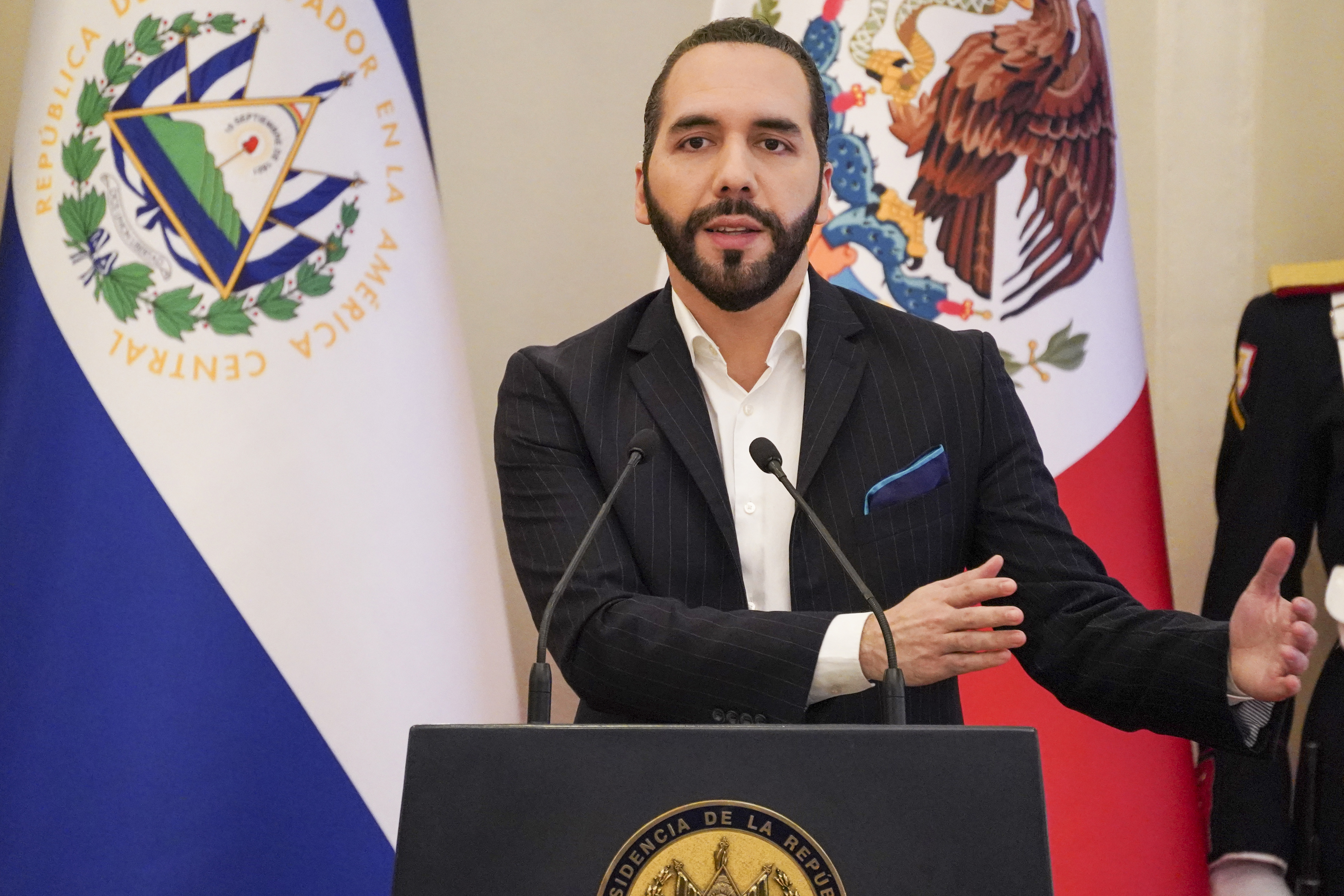
Nayib Bukele, president of El Salvador.
Enlarge / Nayib Bukele, president of El Salvador.
Kellys Portillo/APHOTOGRAFIA/Getty Images

Bitcoin’s price has plunged in recent days, briefly falling below $30,000 on Monday evening and again on Wednesday morning. Nayib Bukele, the bitcoin-boosting president of El Salvador, sees bitcoin’s low price as a buying opportunity. He announced on Monday that El Salvador had purchased another 500 bitcoin. With one bitcoin worth around $31,000, this represented a $15.5 million bet.

Bukele has made the embrace of bitcoin a signature of his presidency. Last year, El Salvador became the first nation in the world to make bitcoin legal tender alongside the US dollar. In an effort to encourage adoption of bitcoin, El Salvador launched wallet software called Chivo and offered Salvadorans $30 if they gave it a try.

Bloomberg calculates that El Salvador has accumulated a total of 2,301 bitcoins since it started buying them last September. Most were bought at prices above $45,000, so this nation of 6 million people has lost tens of millions of dollars speculating on bitcoin.

A precarious financial situation

The government of El Salvador is heavily in debt and has an $800 million debt payment coming due in January. Last week, ratings agency Moody’s downgraded El Salvador’s debt, warning that the Central American nation may be forced to default. El Pais reports that Salvadoran bonds are trading at around 40 percent of their face value, a sign that traders see this as a serious risk.

El Salvador’s bitcoin experiment has worsened the country’s already precarious financial situation. That’s not only because Bukele has tied up tens of millions of dollars in the volatile cryptocurrency. It has also damaged Bukele’s relationship with the International Monetary Fund, which is currently considering whether to offer El Salvador a $1.3 billion line of credit.

In January, the IMF recommended that El Salvador liquidate its bitcoin holdings in order to shore up its fragile balance sheet. The Bukele administration reacted angrily, with Treasury Minister Alejandro Zelaya declaring that “no international organization is going to make us do anything, anything at all.” Bitcoin’s price has fallen by about 17 percent since the IMF made its recommendation.

Bitcoin City

Bukele is also pushing forward with plans to construct a new “Bitcoin City” in the shadow of El Salvador’s Conchagua volcano. The idea would be to create a global hub for cryptocurrency users and entrepreneurs—all powered by geothermal energy from the volcano. On Monday, Bukele tweeted photos of himself reviewing a scale model of the planned metropolis.

To jumpstart the project, Bukele is planning to sell $1 billion worth of “bitcoin bonds.” In an unusual financial arrangement, half the proceeds would be invested in bitcoin, while the other half would be spent on infrastructure projects for the new city. If bitcoins gain value over the 10-year life of the bond, bond investors would get half the gains.

Critics pointed out that this arrangement makes little sense, since people who want to invest in bitcoin can invest directly in bitcoin and get 100 percent of any gains. But Bukele is counting on the novelty of the bonds—which are slated to be tokenized and sold on a blockchain—to attract investors.

These bonds were initially scheduled to be introduced in March. But that month the government postponed the debt issuance, citing the economic turmoil caused by Russia’s invasion of Ukraine. El Salvador’s finance minister said that the bonds would be introduced in September at the latest.

But if El Salvador doesn’t improve its financial position, it may become increasingly difficult to issue debt of any kind, since investors will be worried about the risk of an impending default.

https://arstechnica.com/?p=1853555


Elon Musk says Twitter banning Trump was “morally wrong and flat-out stupid”

The suspended Twitter account of former US President Donald Trump appears on an iPhone screen
Getty Images | Justin Sullivan

Elon Musk today said Twitter’s decision to ban Donald Trump was “morally wrong,” and that he would reverse the ban if he completes his pending acquisition of Twitter.

Financial Times reporter Peter Campbell asked Musk if he would reverse the Trump ban during a keynote session at an FT conference on Tuesday. “This is really the toupeed elephant in the room: Are you planning to let Donald Trump back on?” Campbell asked in an interview that otherwise focused mostly on the car industry.

“The answer is I would reverse the permanent ban,” Musk said, adding that his deal to buy Twitter is not guaranteed to be completed.

“I think it was a morally bad decision, to be clear, and foolish in the extreme,” Musk also said. Campbell pointed out that Trump was banned for inciting violence. “Even after he egged on the crowd who went to the US Capitol, some of them carrying nooses, you still think it was a mistake to remove him?” Campbell asked.

Musk responded, “if there are tweets that are wrong, those should be either deleted or made invisible, and a temporary suspension is appropriate, but not a permanent ban.”

Noting that Trump “has publicly stated that he will not be coming back to Twitter and he will only be on Truth Social,” Musk said that “banning trump from Twitter didn’t end Trump’s voice. It will amplify it among the right and this is why it is morally wrong and flat-out stupid.”

Musk: Trump ban “alienated a large part of the country”

Musk, the CEO of Tesla and SpaceX, also said he has spoken with Twitter co-founder and former CEO Jack Dorsey about permanent bans:

I’ve talked to Jack Dorsey about this and he and I are of the same mind, which is that permanent bans should be extremely rare and really reserved for accounts that are bots or spam, scam accounts, where there’s no legitimacy to the account at all. I do think it was not correct to ban Donald Trump.

I think that was a mistake because it alienated a large part of the country and did not ultimately result in Donald Trump not having a voice. He is now going to be on Truth Social as will a large part of the right in the United States, and so I think this could end up being frankly worse than having a single forum where everyone can debate.

Musk said his opposition to permanent bans doesn’t mean that Twitter under his ownership would never issue suspensions or delete tweets. “That doesn’t mean they get to say whatever they want to say,” Musk said. “If they say something that is illegal or otherwise just destructive to the world, there should be perhaps a timeout, a temporary suspension, or that particular tweet should be made invisible or have very limited traction. But I think permanent bans just fundamentally undermine trust in Twitter as a town square where everyone can voice their opinion.”

When Twitter banned Trump in January 2021, the company said, “we have permanently suspended the account due to the risk of further incitement of violence.” Twitter explained that elected officials and world leaders are given some leeway, but “these accounts are not above our rules entirely and cannot use Twitter to incite violence, among other things.”

Musk’s $44 billion offer to buy Twitter was accepted by the company’s board of directors on April 25. The deal is pending shareholder and regulatory approvals and is expected to close this year.

Musk “against censorship that goes far beyond the law”

Musk has said he’s buying Twitter to protect free speech on the platform. Musk’s definition of free speech suggests that he’s willing to comply with any government-imposed restrictions on speech but wouldn’t remove any content unless it’s specifically banned by law.

“By ‘free speech,’ I simply mean that which matches the law,” Musk wrote on April 26. “I am against censorship that goes far beyond the law. If people want less free speech, they will ask government to pass laws to that effect. Therefore, going beyond the law is contrary to the will of the people.”

Twitter has historically banned or suspended accounts and removed tweets for violating the company’s rules, relying on its own First Amendment right to moderate the platform. On Friday, a federal judge in California dismissed the Trump lawsuit in which the former president challenged his removal from Twitter.

https://arstechnica.com/?p=1853356


Why our continued use of fossil fuels is creating a financial time bomb

Why our continued use of fossil fuels is creating a financial time bomb
Aurich Lawson | Getty Images
Earth Day was April 22, and its usual message—take care of our planet—has been given added urgency by the challenges highlighted in the latest IPCC report. This year, Ars is taking a look at the technologies we normally cover, from cars to chipmaking, and finding out how we can boost their sustainability and minimize their climate impact.

The numbers are startling.

We know roughly how much more carbon dioxide we can put into the atmosphere before we exceed our climate goals—limiting warming to 1.5° to 2° C above preindustrial temperatures. From that, we can figure out how much more fossil fuel we can burn before we emit that much carbon dioxide. But when you compare those numbers with our known fossil fuel reserves, things get jaw-dropping.

To reach our climate goals, we’ll need to leave a third of the oil, half of the natural gas, and nearly all the coal we’re aware of sitting in the ground, unused.

Yet we have—and are still building—infrastructure that is predicated on burning far more than that: mines, oil and gas wells, refineries, and the distribution networks that get all those products to market; power plants, cars, trains, boats, and airplanes that use the fuels. If we’re to reach our climate goals, some of those things will have to be intentionally shut down and left to sit idle before they can deliver a return on the money they cost to produce.

But it’s not just physical capital that will cause problems if we decide to get serious about addressing climate change. We have workers who are trained to use all of the idled hardware, companies that treat the fuel reserves and hardware as an asset on their balance sheets, and various contracts that dictate that the reserves can be exploited.

Collectively, you can think of all of these things as assets—assets that, if we were to get serious about climate change, would see their value drop to zero. At that point, they’d be termed “stranded assets,” and their stranding has the potential to unleash economic chaos on the world.

Fantastic assets and how to strand them

To explain stranded assets, Armon Rezai of the Vienna University of Economics and Business turned to actual strandings. If you have a boat and it runs aground, you can no longer derive any financial benefits from the boat—it remains an asset, but it’s no longer useful. The same thing goes for any goods it was carrying, as well as the crew that was familiar with all its peculiarities.

While that sort of one-off disaster can definitely occur with fossil fuel production and use, it doesn’t represent the sort of wholesale threat to all fossil fuel production that’s at issue in the near future.

But there are many ways that assets can become stranded beyond freak events, and many of them are relevant to fossil fuels. Joyeeta Gupta of IHE Delft noted that assets could be stranded by something as simple as a brand falling out of fashion, leaving its owners with excess production capacity. Technological changes can also make a product obsolete, stranding all the infrastructure used to make, sell, and service it.

Stranding of infrastructure like this is metaphorical, not physics.
Enlarge / Stranding of infrastructure like this is metaphorical, not physics.

All of the people we talked to noted that these sorts of strandings are a normal part of capitalism. And they definitely apply to fossil fuels, as people have started to seek out cleaner alternatives and renewable technologies undercut them in price.

But there’s an added risk here: policy interventions by governments. Already, various governments have put a price on carbon emissions, launched carbon trading systems, and taken other actions to either discourage the use of fossil fuels or encourage the use of cleaner alternatives. (Of course, many of them have done that at the same time that they pursued other policies that promoted fossil fuel use.)

It’s tempting to consider these stranding mechanisms in terms of trying to identify which of them will be decisive. But all of them can—and in fact are—acting in parallel. And if we want to reach our climate goals, they’ll have to act much more quickly than they have been.

https://arstechnica.com/?p=1852602


Biden praises ISPs for price cuts even as they “sabotage” his FCC nominee

US President Joe Biden smiles during an event at the Rose Garden of the White House.
Enlarge / US President Joe Biden at an event on broadband discounts for low-income Americans, in the Rose Garden of the White House on May 9, 2022.
Getty Images | Drew Angerer

Consumer advocates are not impressed by President Biden’s announcement that Internet service providers have agreed to provide cheap broadband to low-income Americans.

Biden’s announcement on Monday touted voluntary commitments from Comcast, Charter Spectrum, AT&T, Verizon, and 16 other ISPs to offer $30-per-month broadband to households eligible for discounts under the Affordable Connectivity Program (ACP). Each of the 20 companies “committed to offer all ACP-eligible families at least one high-speed plan [with download speeds of at least 100Mbps] for $30/month or less, with no additional fees and no data caps,” the White House said. That effectively makes the broadband plans free for many people because the ACP provides eligible households with discounts of $30 a month.

At a press conference attended by representatives of ISPs, Biden called out Comcast, Charter, AT&T, Frontier, and Verizon. “You’re really changing people’s lives. You really are,” the president said to the big broadband providers. Biden also praised “smaller providers serving rural areas, like Jackson Energy Authority in Tennessee and Ideatek in Kansas.”

But this is just a short-term improvement while Biden’s broadband agenda is stalled by the failure to give the Federal Communications Commission a Democratic majority, advocacy groups said. Some of the same ISPs praised by Biden have lobbied behind the scenes against Biden nominee Gigi Sohn, who is still waiting for a Senate confirmation vote, the groups said. Comcast recently hired a lobbyist to work on “FCC nominations,” as reported in January.

“Some of the Internet service providers appearing at this White House event are sabotaging President Biden’s FCC even as they pose for today’s photo op,” Free Press VP of Policy and General Counsel Matt Wood said yesterday. Free Press also said:

The announcement marks welcome efforts to lower the cost of this essential service. But it comes at a time when the FCC—the agency that oversees the country’s communications industry—remains deadlocked thanks to these very same Internet service providers’ stall tactics. Though Biden nominated Gigi Sohn to the FCC more than six months ago, Democratic leaders have thus far failed to call a vote to confirm her, leaving the agency without the 3–2 Democratic majority it needs to rule on a number of critical matters, including oversight of the ACP program. An industry-financed smear campaign geared at hobbling the FCC has blocked progress on Sohn’s nomination.

“Strange juxtaposition”

A similar response came from Public Knowledge, the consumer advocacy group that Sohn co-founded in 2001. After leading Public Knowledge as its CEO for over a decade, Sohn served as a counselor to then-FCC Chairman Tom Wheeler from 2013 to 2016.

“These voluntary commitments form a strange juxtaposition to the aggressive delay efforts orchestrated by the very same broadband providers, wireless carriers, and broadcasters the FCC regulates to stall the confirmation of Gigi Sohn, a strong consumer champion, to the agency,” Public Knowledge said. “These delay tactics hamstring the agency’s work to provide oversight and enforceable consumer protections for affordable broadband for all Americans.”

Public Knowledge CEO Chris Lewis added that “this is a short-term win when Americans need bolder action from their policymakers to ensure affordable broadband in the future. Almost a year and a half into this administration, we continue to have no oversight of competition and pricing in the broadband market by Congress or at the expert agency on communications networks, the FCC.”

Biden nominated Sohn on October 26, 2021, after a surprisingly long delay. The Senate Commerce Committee sent the nomination to the full Senate on March 3, but there has been no final vote. Republican senators have painted Sohn as an enemy of free speech, and lobbying campaigns against her nomination include one that implausibly claims she doesn’t support the expansion of rural broadband.

Same ISPs are “undermining” Biden agenda

Biden is celebrating the same telecom companies that are “undermining his administration’s broadband agenda,” said the Community Broadband Networks Program at the Institute for Local Self-Reliance, an advocacy group for municipal Internet services.

“The Biden administration took a painfully long time to nominate the most obvious candidate for the position—Gigi Sohn—and has done precious little to have her confirmed in a reasonable time frame. Though it would be easy to blame Republican opposition, the truth is that it simply does not appear to be a priority for the administration,” said Community Broadband Networks Program Director Christopher Mitchell.

Meanwhile, ISPs praised themselves for their voluntary commitments. “We’ve never been more committed to closing the digital divide and helping people get connected to the Internet,” Comcast said yesterday. Cable-industry lobby group NCTA said the cheap plans “reflect a significant advance in the long-standing efforts of cable operators and many others to help vulnerable households overcome obstacles that have deterred some from subscribing to broadband at home.”

https://arstechnica.com/?p=1853230


Tesla sues thermal engineer for allegedly stealing secrets of “Dojo” supercomputer

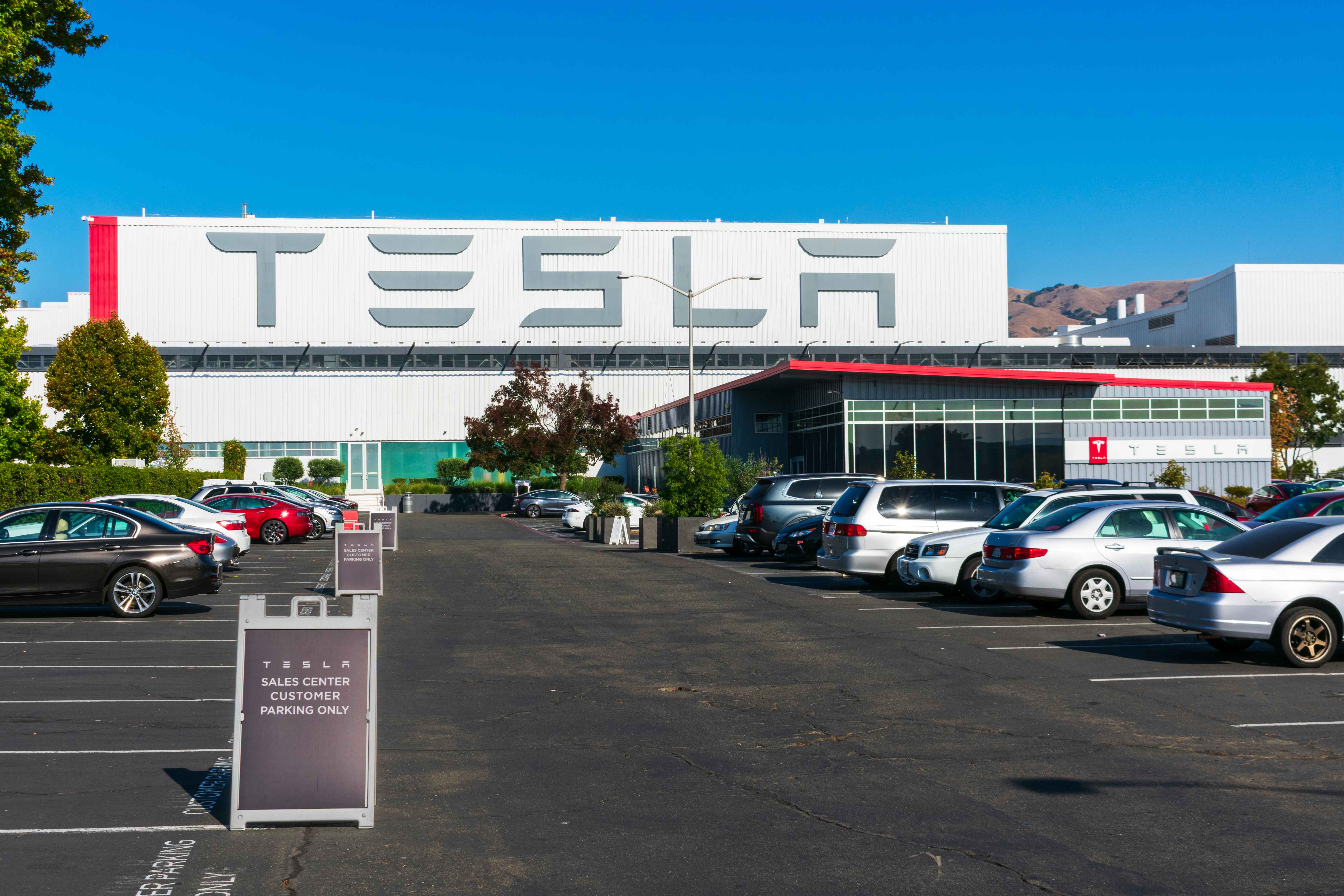
Yatskov worked near Tesla's headquarters in Fremont, California.
Enlarge / Yatskov worked near Tesla’s headquarters in Fremont, California.
Michael Vi / Getty

Tesla on Friday sued a former thermal engineer for trade-secret theft. The company accused its ex-employee, Alexander Yatskov, of transferring confidential information from Tesla’s network to his personal laptop.

Yatskov was hired in January to work on Dojo, the supercomputer Tesla is building to train its self-driving software. Through its customers’ vehicles, Tesla gathers vast quantities of real-world camera data. Dojo will use this data to train the neural networks that power Autopilot, Tesla’s self-driving software.

According to Tesla, Yatskov was assigned to a team that “runs complex simulations of how different thermal designs affect heat distribution, and in turn, affect the balancing of speed, power, safety, cost and environmental concerns.”

Tesla says it caught Yatskov transferring confidential details about Project Dojo from Tesla’s network to a personal computer. The company put him on administrative leave in April.

When confronted, Yatskov reportedly admitted to taking confidential information and promised to bring his personal laptop in for inspection by Tesla’s security personnel. But according to Tesla, Yatskov didn’t bring in a laptop he had been using regularly in the preceding weeks. Instead, he brought in a “dummy” laptop that had barely been used since 2020.

Tesla alleges that Yatskov logged in to the laptop only once in 2022: on the morning he brought it in. He allegedly seeded it with innocuous Tesla documents to make it look like he hadn’t stolen Tesla’s secrets. Yatskov resigned from Tesla on Monday, May 2.

Yatskov declined to comment

Tesla’s complaint says Yatskov lives in Manteca, California. LinkedIn lists an Alexander Yatskov who lives in Manteca and has worked as a thermal engineer at Juniper Networks since March 2016. Yatskov is named on several Juniper patents.

Previously, Yatskov spent a decade at supercomputer-maker Cray and then a decade at a Massachusetts firm called Thermal Form and Function. Yatskov earned a Ph.D. in machine design from Moscow State University. In 2011, while he was working in Massachusetts, he earned a master’s degree in engineering management from Tufts University.

Yatskov’s LinkedIn page shows him still working at Juniper Networks, but it seems unlikely that there were two thermal engineers named Alexander Yatskov in Manteca, California. Perhaps he just didn’t update his LinkedIn page when he started working at Tesla.

But I wanted to make sure—and to give Yatskov a chance to comment for this story. His LinkedIn page links to a consulting firm called Robust Cooling Technologies. So I called the phone number listed on the firm’s website. A man with a strong—possibly Russian—accent answered the phone and identified himself as Alexander Yatskov. When I said that I was a reporter calling about the Tesla lawsuit, there was a long pause.

“No comment,” he finally said.

I asked him to at least confirm that I had reached the same Alexander Yatskov as the one who was being sued by Tesla. “No comment,” he repeated. Then he hung up.

Tesla says it doesn’t know how much information its former employee took or what he might be planning to do with it. Tesla sued Yatskov under the Defend Trade Secrets Act, a 2016 law that beefed up protections for trade secrets. The company asked for an order to return the stolen information as well as award Tesla damages.

Tim Lee was on staff at Ars from 2017 to 2021. In 2021, he launched Full Stack Economics, an independent email newsletter about the economy, technology, and public policy. You can subscribe to his newsletter here.

https://arstechnica.com/?p=1853018


Musk’s Twitter deal could face national security probe into foreign investors

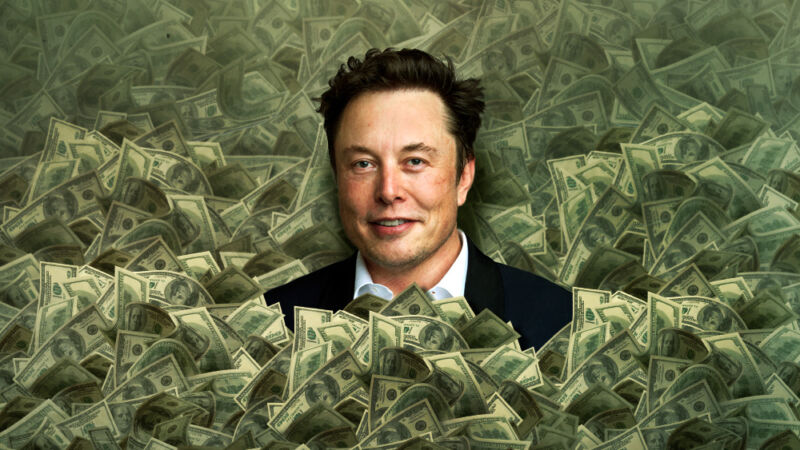
A photoshopped image of Elon Musk emerging from an enormous pile of money.
Aurich Lawson / Duncan Hull / Getty

Elon Musk’s $44 billion purchase of Twitter could face a probe into potential national security risks posed by Musk’s foreign investors, according to a Reuters report on Friday. The foreign investment could invite “the kind of regulatory scrutiny over US national security that social media peer TikTok faced,” the report said.

Musk’s investors include Qatar’s sovereign wealth fund and Saudi Arabia’s Prince Al Waleed bin Talal al Saud. The Saudi Kingdom Holding Company already owns 5.2 percent of Twitter stock and plans to roll that $1.9 billion stake into Musk’s privatized Twitter. The Qatar investment is for $375 million.

Musk also has a $500 million investment from Binance, a major cryptocurrency exchange that has faced its own government scrutiny. Binance was founded in China in 2017 but quickly left the country when China’s government restricted cryptocurrency trading; it now operates without an official headquarters. Binance’s founder is Changpeng Zhao, who was born in China but reportedly moved to Canada with his family when he was 12 years old.

Those three investors “could give the Committee on Foreign Investment in the United States (CFIUS) an opening to scrutinize the deal for potential national security risks, six regulatory lawyers not involved in the transaction and interviewed by Reuters said,” according to the Reuters report.

“To the extent that Musk’s proposed acquisition of Twitter includes foreign investment, it very well could fall under CFIUS jurisdiction,” Reuters was told by Chris Griner, chair of Stroock & Stroock & Lavan LLP’s national security practice.

Risk to deal is small

The lawyers “said the risk of CFIUS blocking Musk’s deal is small because he will control Twitter under the proposed takeover and the foreign investors are acquiring relatively small stakes,” but that “would change were Musk to give the foreign investors influence over the company, through a seat on its board or other means,” the report said.

The risk to the deal is heightened a bit because “the business of handling personal data by social media companies such as Twitter is typically viewed as critical infrastructure by CFIUS.” Sensitive personal data could include non-public communications such as Twitter direct messages.

The CFIUS is an interagency committee chaired by the Treasury Department that can review transactions involving foreign investment to determine their impact on national security. The committee raised concerns about Broadcom’s attempted acquisition of Qualcomm in 2018, shortly before then-President Donald Trump blocked the deal. The committee also investigated TikTok’s Chinese owner ByteDance.

A Treasury Department spokesperson “declined to comment on whether the national security panel planned to scrutinize Musk’s Twitter deal,” Reuters wrote.

Musk also has a $1 billion investment from Oracle co-founder Larry Ellison.

Free speech concerns

The CFIUS could apply scrutiny to “Musk’s business dealings with foreign governments hostile to free speech or keen to overtake the United States technologically,” the Reuters report said, noting that the Musk-led Tesla relies heavily on China. With Twitter, CFIUS may consider “whether or not there will be an opportunity for China to leverage its business activity in order to achieve a desired outcome,” Vinson & Elkins LLP partner Richard Sofield told Reuters.

Reuters noted that “China blocked Twitter in 2009 but many Chinese officials have been active on the social media platform. Some of them have complained that the company’s efforts to restrict misinformation have targeted them unfairly.”

While Musk has said he’s buying Twitter to protect free speech, both Saudi Arabia and Qatar impose heavy restrictions on speech. Last month Musk questioned Saudi Arabia’s treatment of journalistic free speech in a tweet responding to Al Waleed bin Talal, who initially opposed Musk’s purchase of Twitter.

But Musk’s explanation of his free speech views suggests that he doesn’t oppose government-imposed restrictions on speech. “By ‘free speech,’ I simply mean that which matches the law,” Musk wrote. “I am against censorship that goes far beyond the law. If people want less free speech, they will ask government to pass laws to that effect.”

Possible antitrust investigation

Separately, the Musk/Twitter deal could face an antitrust investigation. The Federal Trade Commission “is reviewing Elon Musk’s $44 billion Twitter takeover, a person familiar with the deal said, setting up a deadline in the next month for the agency to decide whether to conduct an in-depth review of the transaction,” Bloomberg reported on Thursday.

“Under US merger law, Musk is required to notify the FTC and the Justice Department of the transaction and wait at least 30 days before closing to allow an investigation into potential antitrust concerns,” the report continued. “The FTC can ask for additional information, issuing what’s known as a second request, which would further delay closing.”

However, the FTC may not be a big obstacle, as Bloomberg notes that “antitrust experts don’t expect the deal to raise antitrust concerns.” Reuters’ report on the potential CFIUS review also stated that “regulatory experts have said they do not expect the deal to face significant antitrust scrutiny.”

Musk and Twitter are also facing a shareholder lawsuit that challenges the acquisition.

https://arstechnica.com/?p=1852752


Frontier lied about Internet speeds and “ripped off customers,” FTC says

A computer showing a slow-moving loading bar.

The Federal Trade Commission today said it “has moved to stop Internet service provider Frontier Communications from lying to consumers and charging them for high-speed Internet speeds it fails to deliver.”

Frontier was sued by the FTC in May 2021, and on Thursday, it agreed to a settlement with the FTC and district attorneys in Los Angeles County and Riverside County who represented the people of California. Frontier must pay $8.5 million to California “for investigation and litigation costs” and another $250,000 that will be distributed to Frontier customers who were harmed by Frontier’s alleged actions.

Frontier must also make changes, such as letting customers cancel service at no charge and “discount[ing] the bills of California customers who have not been notified that they are receiving DSL service that is much slower than the highest advertised speed,” the FTC said.

“Frontier lied about its speeds and ripped off customers by charging high-speed prices for slow service,” said FTC Bureau of Consumer Protection Director Samuel Levine. “Today’s proposed order requires Frontier to back up its high-speed claims. It also arms customers lured in by Frontier’s lies with free, easy options for dropping their slow service.”

The settlement is pending a judge’s approval in US District Court for the Central District of California. The FTC approved the proposed order in a 4-0 vote. Frontier did not admit or deny the lawsuit’s allegations.

Slow, inconsistent DSL

The lawsuit pertains to Frontier’s claims about its DSL Internet service, which is much slower than fiber-to-the-home. DSL speeds also vary significantly by location based on how close a customer’s home is to the provider’s infrastructure.

The FTC said the proposed order will “require Frontier to substantiate its Internet speed claims at a customer-by-customer level for new and complaining customers and notify customers when it is unable to do so; require Frontier to ensure it can provide the Internet service speeds it advertises before signing up, upgrading, or billing new customers; [and] prohibit Frontier from signing up new customers for its DSL Internet service in areas where the high number of users sharing the same networking equipment causes congestion resulting in slower Internet service.”

Moreover, Frontier must “notify existing customers who are receiving DSL Internet service at speeds lower than was advertised and allow those customers to change or cancel their service at no charge.”

While customers will get some financial relief and flexibility, many are still stuck in areas where Frontier DSL is the only choice. “Many of the subscribers to Frontier’s DSL service are in rural areas where they may only have one choice, or very limited choices, for Internet service,” the FTC said.

The settlement also says Frontier must deploy fiber-to-the-home service to 60,000 homes in California within four years. That’s in addition to Frontier’s previous commitment to deploy fiber to 350,000 homes and businesses in California by the end of 2026, which came as part of a bankruptcy settlement. The new settlement also specifies that the 60,000 homes must be in addition to any deployment made with funding from the Federal Communications Commission or from any state or local government grant.

https://arstechnica.com/?p=1852527


Stung by 3 court losses, ISPs stop fighting California net neutrality law

The words

The broadband industry has abandoned its lawsuit against California’s net neutrality law after a series of court rulings went against Internet service providers.

The four broadband lobby groups that sued California “hereby stipulate to the dismissal of this action without prejudice,” they wrote in a filing Wednesday in US District Court for the Eastern District of California. The ISP groups are ACA Connects (formerly the American Cable Association), CTIA-The Wireless Association, NCTA-The Internet & Television Association, and USTelecom.

“After losing three times in federal court, the ISPs have finally realized that they can’t overturn California’s net neutrality law and that they should just stop trying,” Stanford Law Professor Barbara van Schewick wrote, calling the development “a historic win for Californians and the open Internet.”

“Thanks to the hard work of California’s attorney general and the wide coalition that helped defend the law in court, the ISPs gave up instead of fighting this to the Supreme Court,” she also wrote.

Preliminary injunction denied three times

ISPs had been seeking a preliminary injunction to block the law before the case went to trial but were repeatedly unsuccessful. First, US District Judge John Mendez refused to grant the requested preliminary injunction in February 2021, allowing California to enforce its net neutrality rules.

ISPs then appealed to the US Court of Appeals for the Ninth Circuit, but in January 2022, a three-judge panel unanimously upheld the lower court’s ruling. Finally, the ISPs asked for an en banc hearing with all the court’s judges. Zero judges on the 29-seat appeals court thought the broadband industry’s petition for a rehearing was even worth voting on.

“The full court has been advised of the petition for rehearing en banc, and no judge has requested a vote on whether to rehear the matter en banc. The petition for rehearing en banc is denied,” said the order against the ISPs on April 20.

ISPs could have proceeded to a trial in US District Court, as the denial of a preliminary injunction doesn’t prevent litigation from continuing. But the denials from appeals court judges combined with Mendez’s criticism of the ISPs’ legal arguments apparently persuaded the lobby groups not to go forward.

“The ISPs threw in the towel today on their challenge to California’s net neutrality law,” Andrew Jay Schwartzman, senior counselor for the Benton Institute for Broadband & Society, said in a statement after yesterday’s dismissal. “They were forced to accept what most observers had seen: in the wake of the Federal Communications Commission’s decision disclaiming interest in treating broadband access service as subject to federal regulation, the states were freed to adopt their own requirements.”

After the dismissal, the industry groups released a statement saying that “broadband providers are united in support of an open Internet” and “committed themselves to working with Congress and the Federal Communications Commission to develop a federal approach for resolving the issues,” according to Reuters. But despite claiming to support net neutrality principles, broadband lobby groups have consistently opposed net neutrality rules at both the federal and state level.

Judge: Law doesn’t support ISPs’ arguments

In his oral ruling against the preliminary injunction, Mendez said, “I don’t find that the plaintiffs have demonstrated a likelihood of success on the merits at this stage of the litigation.”

ISPs “asserted that the Communications Act gave the FCC the exclusive authority to regulate interstate communications, leaving the states only able to regulate purely intrastate communications,” Mendez said. “But the court finds that the provisions of the Act that the plaintiffs rely on do not support the arguments that have been raised.”

California’s net neutrality law is similar to the federal rules that were enacted by the FCC during the Obama administration and then repealed during the Trump era. California prohibits fixed and mobile ISPs from blocking or throttling lawful traffic and says ISPs may not require fees from websites or online services to deliver or prioritize their traffic to consumers. California’s law also bans paid data cap exemptions (so-called “zero-rating”) and says that ISPs may not attempt to evade net neutrality protections by slowing down traffic at network interconnection points.

https://arstechnica.com/?p=1852385


Larry Ellison chips in a cool billion toward Musk’s Twitter takeover

Oracle Corporation CEO Larry Ellison looks on after Oracle Team USA skippered by James Spithill lost race 1 of the America's Cup Finals on June 17, 2017, in Hamilton, Bermuda.
Enlarge / Oracle Corporation CEO Larry Ellison looks on after Oracle Team USA skippered by James Spithill lost race 1 of the America’s Cup Finals on June 17, 2017, in Hamilton, Bermuda.
Xaume Olleros | Getty Images

Elon Musk has raised $7.14 billion of funding for his $44 billion buyout of Twitter from investors including Oracle co-founder Larry Ellison, crypto exchange Binance, and asset management firms Fidelity, Brookfield, and Sequoia Capital.

With the new financing commitments, Musk will cut the margin loan he has taken with a group of lenders by half to $6.25 billion and increase the equity portion to $27.25 billion. The remainder of the purchase price will be paid with debt raised from global banks.

The Tesla chief has been in a whirlwind effort to secure outside backing to join his audacious bid for the social media platform, even as traditional private equity firms involved in leveraged buyouts have largely eschewed the transaction.

The deal would transform Musk, a self-declared “free speech absolutist” with nearly 91 million followers on the site, into a social media baron with control over how millions of people obtain news and information.

Twitter’s shares edged up by nearly 2 percent in pre-market trading to over $50 on Thursday. But the stock price has remained consistently below the $54.20-per-share offer made by Musk, as investors have worried that he would not be able to complete the deal. The entrepreneur would have to pay $1 billion if he abandons the transaction.

The biggest new backing for his purchase comes from Ellison, who also sits on the board of Tesla and is contributing $1 billion toward the Twitter deal. Venture capital firm Sequoia is providing $800 million, while Dubai-based tech investment firm Vy Capital is giving $700 million. Binance is providing $500 million.

Saudi Prince Alwaleed Bin Talal Bin Abdulaziz al Saud, already an investor in Twitter, will roll 35 million shares into the bid vehicle, which at the offer price equates to a $1.9 billion stake.

“Great to connect with you my ‘new’ friend @elonmusk,” the Saudi Prince wrote on Twitter. “I believe you will be an excellent leader for @Twitter to propel & maximize its great potential.”

That represents a turnaround for Prince Alwaleed, who had initially rejected Musk’s takeover bid when it was revealed last month, saying he did not believe the offer “comes close to the intrinsic value of Twitter given its growth prospects.”

Musk also revealed he is working to bring in additional equity investors, including billionaire Twitter co-founder Jack Dorsey, by giving existing shareholders an option to contribute their shares to the buyout. He added in the filing that any further contributions may replace portions of the financing commitments previously arranged.

The group of investors backing Musk’s bid does not include many private equity groups that held conversations with the South African businessman, according to people briefed on the matter.

Two private equity executives said they decided to stay out of the Twitter bid after determining that it would be hard for them to influence the maverick entrepreneur on the direction of the company.

Musk has argued he will “unlock” Twitter’s potential to be “the platform for free speech around the globe,” indicating he intends to loosen its content moderation policies in an effort to reduce the toxicity and abuse on the site.

Twitter has written to advertisers in recent weeks to say the company remains committed to ensuring their ads are not placed alongside harmful or offensive content, amid growing concern Musk’s takeover would hurt its $4.5 billion-a-year advertising business.

Musk also appears to be on a collision course with regulators and politicians around the world. The EU’s commissioner for the internal market, Thierry Breton, told the FT that Twitter under Musk’s ownership must comply with Brussels’ social media moderation or risk hefty fines or a ban.

© 2022 The Financial Times Ltd. All rights reserved Not to be redistributed, copied, or modified in any way.

https://arstechnica.com/?p=1852359