FAA urges airlines to replace altimeters that can’t filter out 5G signals

An airplane flying past a cell tower.
Getty Images | BackyardProduction

The Federal Aviation Administration is reportedly urging airlines to retrofit or replace altimeters that receive transmissions from outside their allotted frequencies. The FAA is meeting Wednesday “with telecom and airline industry officials on a push to retrofit and ultimately replace some airplane radio altimeters that could face interference from C-Band 5G wireless service,” Reuters reported Tuesday.

The Reuters report continued:

The FAA wants to use the meeting to establish “an achievable timeframe to retrofit/replace radar altimeters in the US fleet,” according to a previously unreported letter from the FAA’s top aviation safety official Chris Rocheleau reviewed by Reuters. It also asked aviation representatives “to offer options and commit to actions necessary to meet these objectives.”

Some altimeters used by airplanes to measure altitude apparently cannot filter out transmissions from C-Band frequencies assigned to wireless carriers for 5G. Altimeters are supposed to use frequencies from 4.2 GHz to 4.4 GHz, while wireless carriers’ C-Band licenses are for 3.7 GHz to 3.98 GHz.

Retrofits could be achieved with antenna filters that “are currently in production,” with one key question being “how to determine which planes are most at risk of interference and should therefore get retrofitted first,” the Reuters report said.

FCC urged aviation to act over two years ago

Airplanes’ faulty altimeters recently spurred the Federal Communications Commission to launch an inquiry into poorly designed wireless devices that receive transmissions from outside their allotted frequencies. The FCC could ultimately issue rules requiring better performance for wireless receivers, similar to how the FCC prohibits wireless transmitters from broadcasting outside their licensed spectrum. While the FCC has historically focused on regulating transmitters, the 5G/altimeter debacle showed how poorly designed receivers can prevent efficient use of spectrum.

The FAA’s new move to retrofit or replace altimeters comes more than two years after the FCC urged the aviation industry to fix the problem. In the FCC’s February 2020 decision to reallocate C-band spectrum, the commission said the 220 MHz guard band between altimeters and 5G should be plenty. More “analysis is warranted on why there may even be a potential for some interference given that well-designed equipment should not ordinarily receive any significant interference (let alone harmful interference) given these circumstances,” the FCC said at the time.

AT&T and Verizon were set to deploy 5G on the C-Band in December 2021, but the FAA forced the wireless industry to delay. The rollout eventually went ahead, and the carriers agreed to additional temporary restrictions near airports until July 2022.

The 220 MHz guard band is 400 MHz in practice this year because AT&T and Verizon have not yet deployed above 3.8 GHz, but the FAA has continued to warn of potential problems with altimeters. While the FAA authorized 90 percent of the US commercial aircraft fleet for low-visibility approaches in areas with C-band deployment, there could be another fight coming in July when AT&T and Verizon are scheduled to lift their voluntary 5G restrictions around airports.

Dispute “won’t be completely resolved” this summer

US Secretary of Transportation Pete Buttigieg told the Senate Appropriations Committee last week that the problem “won’t be completely resolved by this summer” and remains a “top concern,” according to CNET.

“We’re in a much better place than we were in December and January,” Buttigieg said, expressing optimism, “largely because we have much better dialogue and collaboration, not just among regulators but among industries, and have been directly engaging with the airlines, the aviation equipment manufacturers and with the telecom carriers to make sure that we’re on a better path.”

https://arstechnica.com/?p=1852128


Twitter warns of possible employee exodus before Musk completes purchase

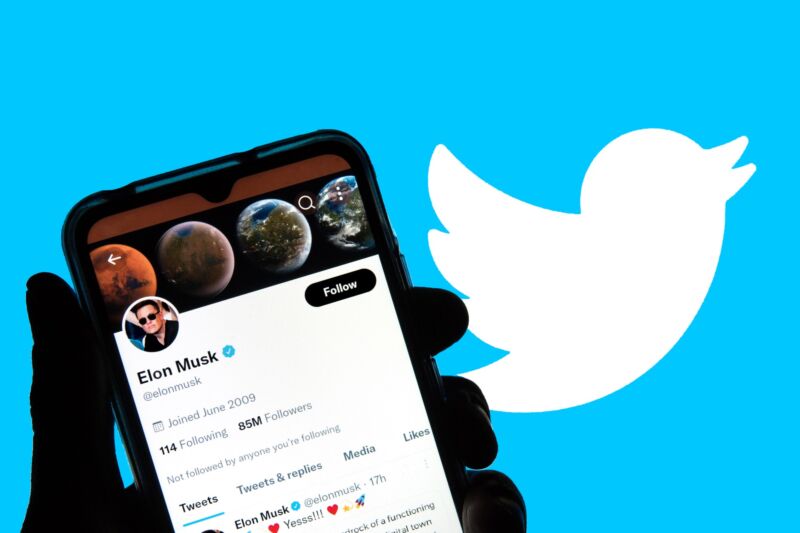
In this photo illustration, Elon Musk's twitter account is displayed on a smartphone in front of a background with the twitter logo.
Getty Images | SOPA Images

Twitter warned that it may lose key employees and have difficulty hiring during the period before it closes its $44 billion sale to Elon Musk. Twitter also warned that it could have trouble keeping advertisers on board.

“During the period prior to the closing of the merger, our business is exposed to certain inherent risks and certain restrictions on our business under the terms of the Merger Agreement that could harm our business relationships, financial condition, operating results, cash flows, and business,” Twitter said in a Securities and Exchange Commission filing on Monday.

Twitter’s stated list of risks includes “whether advertisers continue their spending on our platform” and “our inability to attract and retain key personnel and recruit prospective employees, and the possibility that our current employees could be distracted, and their productivity decline as a result, due to uncertainty regarding the merger.”

“[W]e may experience a departure of employees, prior to the closing of the merger,” Twitter’s filing also said. While this type of filing lists many risks of varying likelihood, Twitter’s concerns about keeping and hiring employees come amid reports of employee discontent about Musk buying the company. Twitter CEO “Parag Agrawal sought to quell employee anger on Friday during a company-wide meeting where employees demanded answers to how managers planned to handle an anticipated mass exodus prompted by Elon Musk,” Reuters reported.

Twitter’s SEC filing also warned that possible litigation could “prevent consummation of the merger” and that “[i]f the merger is not consummated for any reason, litigation could be filed in connection with the failure to consummate the merger.”

Musk wants “most of America” on Twitter

Meanwhile, Musk said on Monday that his goal “with Twitter is to have a service that is as broadly inclusive as possible where ideally most of America is on it and talking.”

Twitter says it has an average of 39.6 million daily active users in the US and 189.4 million globally. “Right now it’s sort of niche. I want a much bigger percentage of the country to be on it, engaging in dialogue,” Musk said.

Musk also said, “We have to get rid of the bots and trolls and the scams and everything because that’s obviously diminishing the user experience and we don’t want people getting tricked out of their money.”

Musk on employee departures: “That’s fine”

Musk made his comments to reporters at the Met Gala in New York. A Reuters article recounted how Musk addressed a potential mass departure of employees:

The billionaire also said he would make Twitter transparent about how tweets are promoted or demoted and wanted its software to be publicly available for critique.

Asked about a potential exodus of employees, Musk said: “It’s a free country.”

“Certainly if anyone doesn’t feel comfortable with that, they will on their own accord go somewhere else. That’s fine,” he said.

Musk has said he is buying Twitter to protect free speech, which he defines as “that which matches the law.” The purchase is pending shareholder approval and is expected to close later this year.

Musk sold $8.5 billion in Tesla stock after agreeing on deal terms with Twitter’s board, but he is also “in talks with large investment firms and high net-worth individuals about taking on more financing for his $44 billion acquisition of Twitter and tying up less of his wealth in the deal,” Reuters reported.

https://arstechnica.com/?p=1851870


USPS sued by states and environmental groups over purchase of 8.6 mpg trucks

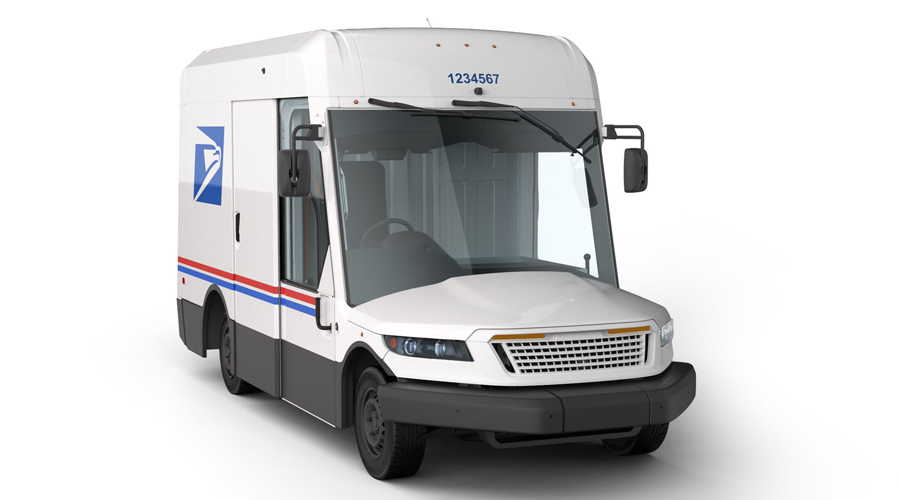
A Postal Service delivery vehicle.
Enlarge / The USPS’s new mail truck.
United States Postal Service

The US Postal Service is facing lawsuits from 16 states and several environmental groups challenging its decision to buy tens of thousands of gasoline-powered delivery vehicles instead of electric vehicles.

As previously reported, the Environmental Protection Agency says the gas-powered trucks being ordered by the USPS “are expected to achieve only 8.6 miles per gallon (mpg), barely improving over the decades-old long-life vehicles that achieve 8.2 mpg.” The USPS countered that the vehicles get 14.7 mpg when air conditioning isn’t being used and that the trucks’ size will make it possible to deliver the same amount of mail in fewer trips.

The USPS plan is to buy 50,000 to 165,000 vehicles over 10 years. Of those, at least 10 percent are slated to be battery-electric vehicles (BEV). Amid controversy, the USPS last month said its initial order of 50,000 trucks for $2.98 billion would include over 10,000 BEVs for “specific delivery routes that present the best initial application for electric vehicles.”

A lawsuit filed by California and 15 other states on Thursday said the USPS failed “to follow a process mandated by the National Environmental Policy Act (NEPA),” continuing:

Instead, the Postal Service first chose a manufacturer with minimal experience in producing electric vehicles, signed a contract, and made a substantial down payment for new vehicles. Only then did the Postal Service publish a cursory environmental review to justify the decision to replace 90 percent of its delivery fleet with fossil-fuel-powered, internal combustion engine vehicles, despite other available, environmentally preferable alternatives. In doing so, the Postal Service failed to comply with even the most basic requirements of NEPA.

States seek injunction

The lawsuit seeks an injunction forcing the USPS to stop the vehicle purchases “until it has complied with NEPA.” It was filed against the USPS and Postmaster General Louis DeJoy, who was appointed by the USPS Board of Governors in 2020 under then-President Donald Trump.

All 16 states involved in the lawsuit have Democratic attorneys general. They allege that the USPS “violated well-established legal precedent prohibiting ‘an irreversible and irretrievable commitment of resources’ before completing the NEPA process by signing contracts with a defense company (Oshkosh Defense, LLC) to procure vehicles six months before even releasing its draft environmental review and a year prior to issuing the Final Environmental Impact Statement (‘Final EIS’) and Record of Decision.”

The states also claim the USPS failed to consider and evaluate reasonable alternatives. “Specifically, the Postal Service did not properly evaluate several environmental impacts of its action, including air quality, environmental justice, and climate harms, by simply assuming that any upgrade to its vehicle fleet would have positive impacts on the environment,” the complaint said.

States also alleged the USPS “failed to ensure the scientific integrity of its analysis by relying on unfounded assumptions regarding the costs and performance of electric vehicles, infrastructure, and gas prices, and refusing to identify the source of the data relied upon in the Final EIS.”

https://arstechnica.com/?p=1851333


Joe Manchin calls EV tax credits “ludicrous” in Senate hearing

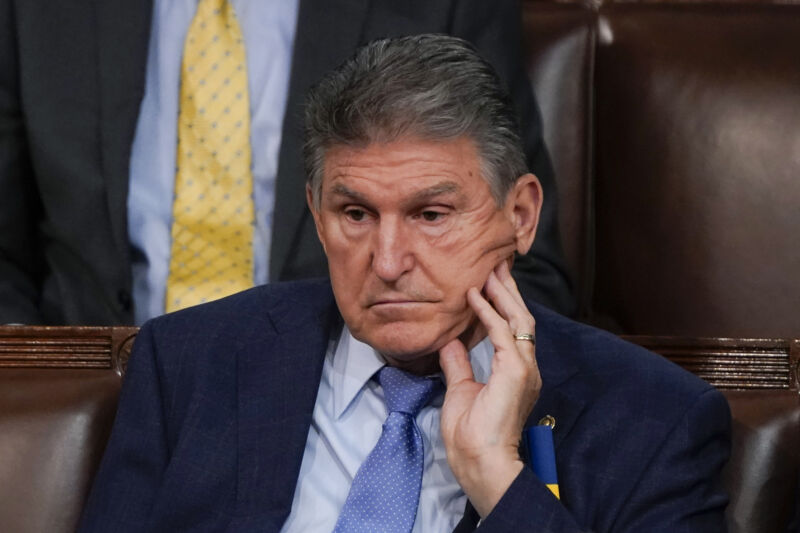
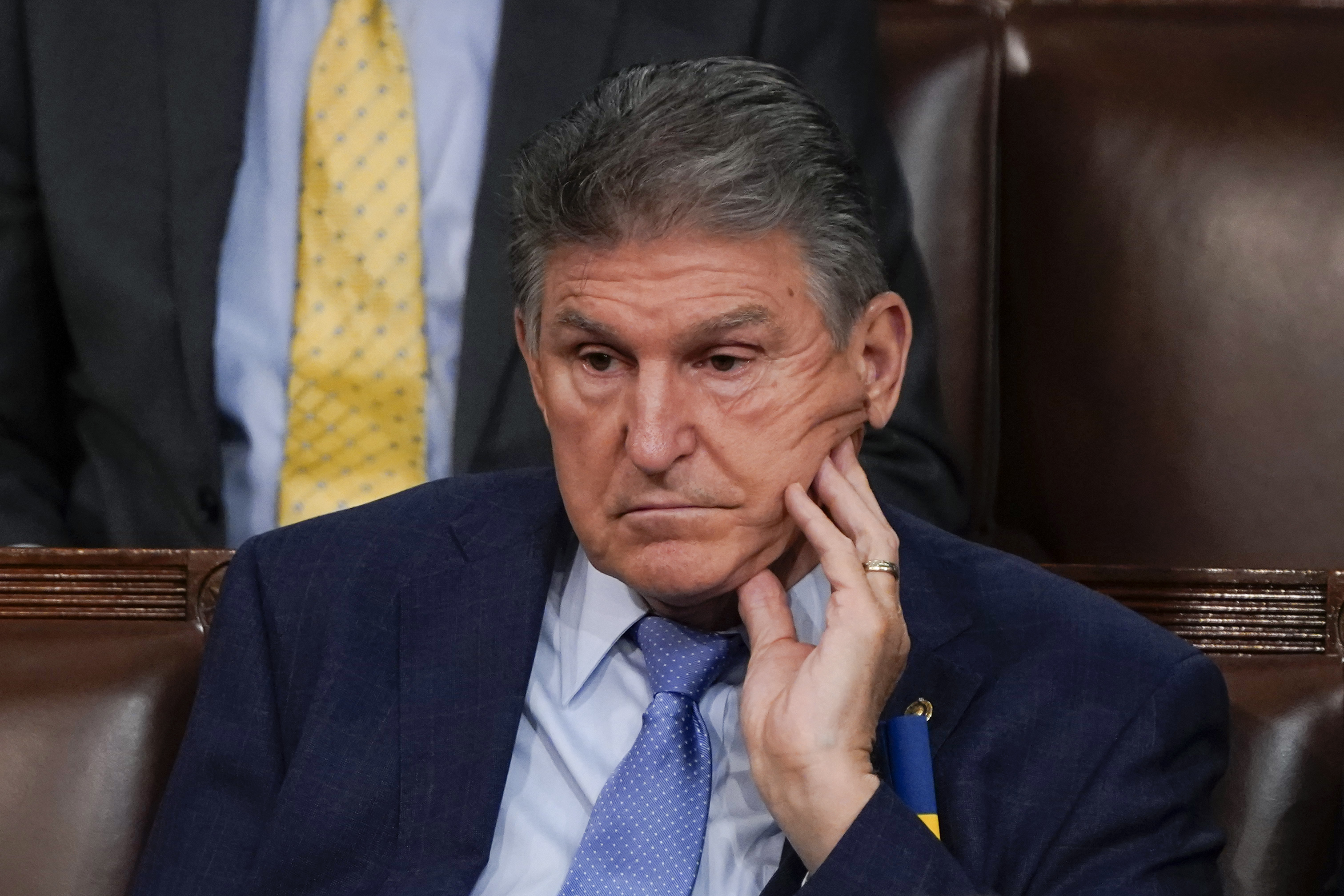
US Senator Joe Manchin likes the coal industry, doesn't like electric vehicles.
Enlarge / US Senator Joe Manchin likes the coal industry, doesn’t like electric vehicles.
J. Scott Applewhite-Pool/Getty Images

Senator Joe Manchin called federal tax credits for electric vehicles “ludicrous” in a Senate hearing on Thursday. The West Virginia politician, who continues to make millions from the coal industry, has been a regular critic of subsidies for EVs, which have played a key role in the Democratic Party’s plan to decarbonize the transport sector.

Since 2009, the US has used federal tax credits as a way to offset the higher price of EVs thanks to their battery packs.

Currently, the credit is for any plug-in vehicle (both battery EVs and plug-in hybrid EVs) with at least 5 kWh of battery capacity and ranges from $2,917 to $7,500, depending on the exact kWh total. But it’s a credit, not a rebate, so to receive the full $7,500, an EV buyer has to have at least $7,500 in tax liability that year. The tax credit also sunsets once a car manufacturer has sold 200,000 plug-in vehicles, although, so far, only Tesla and General Motors have crossed that threshold.

Perhaps recognizing the rapidly diminishing opportunity to ameliorate the worst effects of climate change, House Democrats put together an expanded incentive package, which would increase the tax credit to as much as $12,500 based on a number of factors, including whether the EV was made by a unionized workforce.

But the Democratic Party has a razor-thin majority in the Senate, and passing more tax credits would be impossible without Manchin’s vote.

Despite his claims to want to address climate change, this is not the first time Manchin has made clear his opposition to policies that would actually help. In November 2021, he called the EV incentives “wrong” and “not American.” And in March 2022, he said he was “very reluctant to go down the path of electric vehicles” and lambasted the idea of the government spending money on infrastructure.

Manchin was questioning Transportation Secretary Pete Buttigieg, urging his department to spend more money building more highways in West Virginia, when talk turned to EV tax credits.

“There’s a waiting list for EVs right now with the fuel price at $4. But they still want us to throw [a] $5,000 or $7,000 or $12,000 credit to buy electric vehicles. It makes no sense to me whatsoever. When we can’t produce enough product for the people that want it and we’re still going to pay them to take it—it’s absolutely ludicrous in my mind,” Manchin said.

https://arstechnica.com/?p=1851265


Elon Musk, Twitter’s next owner, provides his definition of “free speech”

Illustration of Elon Musk juggling three birds in the shape of Twitter's logo.
Aurich Lawson | Photo by Jim Watson/AFP via Getty Images

Elon Musk has claimed he is buying Twitter in order to protect free speech. But what does Musk mean by “free speech”? Musk provided a somewhat vague answer in a tweet on Tuesday, one day after striking a deal to buy Twitter for $44 billion. (The sale to Musk is pending and needs shareholder approval to be completed.)

Musk’s statement, which he made the pinned tweet on his Twitter profile, said the following:

By “free speech,” I simply mean that which matches the law. I am against censorship that goes far beyond the law.

If people want less free speech, they will ask government to pass laws to that effect. Therefore, going beyond the law is contrary to the will of the people.

Twitter has First Amendment right to moderate tweets

There are multiple ways to interpret Musk’s statement as it relates to United States law, particularly the First Amendment. One interpretation is that Musk doesn’t need to change Twitter at all to prevent “censorship that goes far beyond the law.”

The First Amendment says that “Congress shall make no law… abridging the freedom of speech, or of the press; or the right of the people peaceably to assemble, and to petition the Government for a redress of grievances.” The wording prevents the government from restricting speech, but courts have ruled that it does not prevent private companies from doing so.

In fact, judges have ruled that private companies like Twitter have a First Amendment right to moderate content. Both Florida and Texas tried to enact laws that would force social networks like Twitter and Facebook to scale back their content moderation. Judges blocked both state laws from taking effect, ruling that the laws violate the companies’ First Amendment rights to moderate their platforms.

Free speech laws vary widely by country

In that sense, Twitter’s content moderation—including restricting tweets and banning certain accounts—already “matches the law” on free speech in the US. But Musk clearly thinks Twitter’s content moderation is often a violation of free speech. His statement that free speech on Twitter should “match the law” may thus mean he thinks Twitter—like the US Congress—should not impose rules and policies that Musk deems to be “censorship.”

US law doesn’t say that Twitter must avoid such rules and policies, so Musk seems to want free speech that goes beyond what US law requires. Musk could achieve his goal by changing Twitter’s policies on what types of content are banned and by changing the algorithms that Twitter uses to promote or limit the visibility of certain tweets.

Of course, free speech laws vary by country, with the US being notable for not having many government-imposed limits on people speaking their mind. Twitter faces different laws around the world—China blocks Twitter, for example. In Europe, Twitter will face a new set of rules on moderating illegal and harmful content.

Musk’s statement that “if people want less free speech, they will ask government to pass laws to that effect” doesn’t match the reality of countries that impose significant limits on free speech. Repressive governments that highly restrict speech generally aren’t doing so because the people they govern have “ask[ed] government to pass laws to that effect.” Examples include China’s extensive Internet censorship system and Russia’s crackdown on news coverage of Putin’s invasion of Ukraine.

Musk recently suggested he would defy governments that demand speech restrictions, writing that “Starlink has been told by some governments (not Ukraine) to block Russian news sources. We will not do so unless at gunpoint. Sorry to be a free speech absolutist.”

But Musk’s new statement defining free speech as “that which matches the law” suggests a different approach in which he’d be willing to restrict speech in any country where the government requires him to do so. Using Musk’s explanation of free speech, a government law that prohibits certain kinds of speech is just “the will of the people.”

https://arstechnica.com/?p=1850808


Opinion: Here’s a simple way Elon Musk could make Twitter better

Last month, Twitter user Qasim Rashid tweeted the following:

These numbers are not accurate. The average price of West Texas Intermediate crude oil in June 2008 was $134, not $181.58. In March 2022, it was $108, not $99.76. Gas prices were $4.05 in June 2008 and $4.22 in March 2022. So the markup on gasoline has increased modestly since 2008, but not nearly as much as this tweet suggests.

Even so, Rashid’s tweet has racked up 18,000 retweets. As of publication time, it’s still on Twitter.

Tweets like this one are on my mind as I think about Twitter’s Monday announcement that it had accepted a deal for Elon Musk to buy Twitter for $44 billion.

“Free speech is the bedrock of a functioning democracy, and Twitter is the digital town square where matters vital to the future of humanity are debated,” Musk said in the press release announcing the acquisition.

In recent years, Twitter has developed an increasingly elaborate system for removing various types of harmful and low-quality content from Twitter, such as hate speech, vaccine misinformation, and former President Donald Trump’s tweets tacitly endorsing the January 6 insurrection at the US Capitol.

Rashid’s tweet apparently doesn’t run afoul of any of Twitter’s rules. But garden-variety misinformation obviously isn’t helpful to a functioning democracy.

Conversations about this issue tend to break down along now-familiar partisan lines, with folks on the left demanding that social media platforms do more to fight misinformation and hate speech and folks on the right decrying that as censorship. Musk has thrown his weight behind the free-speech side of the argument; there’s little chance that Twitter will do more content moderation with Musk at the helm.

But there are options other than just taking down misinformation or leaving it up. A good starting point would be for Twitter to work harder to not actively promote misinformation. That oil tweet wound up with 18,000 retweets because Twitter is designed to maximize the distribution of highly “engaging” tweets. And engaging tweets are often bad tweets.

The trouble with algorithmic news feeds

When I joined Twitter in 2008, the site showed users every tweet by people they followed in strictly chronological order. In 2016, Twitter introduced a new algorithmic feed that prioritized tweets Twitter thought users were likely to care about. This change met significant resistance from users, and Twitter initially portrayed it as optional. But over time, Twitter has increasingly pushed users to switch. Today, the algorithmic feed is the default view.

It’s easy to see the shift as an innocuous improvement to the user experience. If Twitter knows which tweets I’m likely to find most interesting, why not show those first? But the switch had profound consequences for the kind of platform Twitter would become.

In 2015, I had enough Twitter followers that I could count on every tweet getting at least a few reactions from followers. Some tweets got more reactions than others, and I usually hoped that my tweets would “go viral.” But my main motivation was to share stuff I thought was interesting with my direct followers.

But a few years later, I noticed a growing variation in the level of response to my tweets. If I wrote about a highly engaging topic (say, US politics), I would often get a bunch of likes and some retweets. But if I tweeted about a less exciting topic, engagement would be very low. Sometimes, I’d tweet and get no reactions at all.

The first few times this happened, I wondered if I’d written an especially boring tweet. But now, I think the more likely explanation is that hardly anyone sees these sorts of tweets. Once Twitter’s algorithm decides a tweet isn’t engaging enough, it stops putting the tweet into people’s newsfeeds.

The practical result is that Twitter’s software is “training” all of us on the kind of tweets to write. Nobody prevents us from writing tweets on non-engaging topics, but when we do, it’s like shouting into a void. Over time, we learn to write in a more “engaging” way—which often means writing tweets that are partisan, inflammatory, or pandering to the biases of our existing followers.

And because so much of our public discourse happens on Twitter, I think the move has had a non-trivial impact on our political culture. Twitter is feeding people tweets that confirm their existing biases and make them angry or fearful. When we see tweets from the “other side,” it’s often someone saying something outrageous, accompanied by dunks from our own side. We’re less likely to see tweets that challenge our prejudices or introduce us to topics we didn’t know we were interested in.

This basic insight isn’t new, of course. It has been a common criticism of social media since at least 2010, when author and activist Eli Pariser coined the term “filter bubble” to describe the phenomenon. But the rise of algorithmic feeds over the last decade has made the problem much worse. A common prescription for escaping filter bubbles is to deliberately follow people with ideological views different from your own. But this doesn’t help if Twitter’s algorithm notices you don’t engage very much with their tweets and stops showing them to you.

https://arstechnica.com/?p=1850470


It’s happening: Elon Musk strikes deal to buy Twitter for $44 billion

Elon Musk standing and gesturing with his hands while he speaks at a press conference.
Enlarge / Elon Musk at a press conference at SpaceX’s Starbase facility in Texas on February 10, 2022.
Getty Images | Jim Watson

Twitter’s board of directors has agreed to sell the company to Elon Musk for $44 billion, the company announced Monday.

“Free speech is the bedrock of a functioning democracy, and Twitter is the digital town square where matters vital to the future of humanity are debated,” Musk said in the purchase announcement. “I also want to make Twitter better than ever by enhancing the product with new features, making the algorithms open source to increase trust, defeating the spam bots, and authenticating all humans. Twitter has tremendous potential—I look forward to working with the company and the community of users to unlock it.”

The deal, pending shareholder approval and expected to close later this year, comes just 10 days after the Twitter board approved a poison pill to prevent a hostile takeover in response to Musk’s attempt to buy the company. Board members started taking Musk’s offer more seriously after he lined up $46.5 billion in financing. The sale agreement was announced hours after reports that a deal between Twitter and Musk was close.

The deal is “a definitive agreement to be acquired by an entity wholly owned by Elon Musk, for $54.20 per share in cash in a transaction valued at approximately $44 billion,” the announcement said. “Upon completion of the transaction, Twitter will become a privately held company.” Twitter’s stock price was up 5.7 percent today.

Board cites “thoughtful and comprehensive process”

Twitter Board Chairman Bret Taylor said, “The Twitter board conducted a thoughtful and comprehensive process to assess Elon’s proposal with a deliberate focus on value, certainty, and financing. The proposed transaction will deliver a substantial cash premium, and we believe it is the best path forward for Twitter’s stockholders.”

If the purchase is completed, Twitter stockholders “will receive $54.20 in cash for each share of Twitter common stock” they own, “a 38 percent premium to Twitter’s closing stock price on April 1, 2022, which was the last trading day before Mr. Musk disclosed his approximately 9 percent stake in Twitter,” the announcement said.

The sale to Musk was unanimously approved by the Twitter board and “is expected to close in 2022, subject to the approval of Twitter stockholders, the receipt of applicable regulatory approvals, and the satisfaction of other customary closing conditions,” the announcement said. Musk previously secured $25.5 billion of debt and margin loan financing and committed to provide $21 billion in equity.

Musk hopes his “worst critics remain on Twitter”

“I hope that even my worst critics remain on Twitter, because that is what free speech means,” Musk wrote in a tweet Monday. Musk, who has said that “Twitter needs to be transformed as a private company” to protect free speech, last year asked a college student to take down a Twitter account that tracks the movements of his private jet.

Musk recently purchased 9.2 percent of Twitter’s stock and agreed to join Twitter’s board. He then backed out of the board seat deal, which would have prohibited him from buying more than 14.9 percent of the company’s stock, and offered to buy Twitter instead.

Twitter directors initially seemed ready to fight Musk’s takeover attempt and unanimously approved the poison pill that makes it difficult to buy more than 15 percent of the company’s stock in any “transaction not approved by the Board.” The poison pill, of course, did not prevent the board from striking a deal with Musk in direct negotiations.

https://arstechnica.com/?p=1850359


Shanghai’s plan to reboot the supply chain will hit workers the hardest

Shanghai’s plan to reboot the supply chain will hit workers the hardest

Like many people in Shanghai, Joyce has spent weeks shut at home since the latest COVID-19 lockdown was imposed on March 28. The software industry executive, who asked to be identified only by her first name to avoid attention from the authorities, says she has suffered from food shortages, and the compound where she lives has resorted to “group buying,” where different individuals are responsible for sourcing as much of a certain product as possible for the community.

“A lot of people are struggling with being confined at home, because they have literally no income,” she says. Group purchases “are three to four or five times more expensive than the normal days, and Shanghai is not cheap.”

Faced with this dire situation, the central government in Beijing has made it a priority to restart Shanghai’s industrial sector. Liu He, the Chinese vice premier, announced this week that the government would aim to stabilize the country’s supply chain by helping 666 companies in COVID-ravaged Shanghai reboot their operations. Doing that while the city continues to battle China’s worst COVID outbreak since the pandemic began may prove an enormous challenge—and may not succeed in curbing the disruption that the global supply chain could feel for weeks or months to come.

The government announced the “white list” of Shanghai companies it would help to reopen on April 15, out of the 50,000 or so that operate in the area. The list includes domestic and foreign firms that provide key inputs to the supply chain, such as manufacturers of semiconductor components, automotive parts, and medical supplies. Tesla’s Shanghai factory has reportedly reopened already, with workers shut in a closed loop, but with many component supplies still closed it is unclear how much of the production line is operating.

The government may feel that it has no option but to kickstart industrial activity, even though the situation in Shanghai is not yet fully under control. On Monday, China’s National Bureau of Statistics released economic data showing that although the economy expanded 4.8 percent in the first quarter of 2022 compared to the same period in 2021, in March economic activity slowed in Shanghai and other cities subjected to lockdowns.

“People here have mixed feelings” about the reopenings, because they see them as partly a public relations exercise, says Joyce. “Most companies will ask people to live at the factory, but how are you going to do it? People may not be allowed to go home.”

Some factories have been able to continue operations while minimizing the risk of COVID outbreaks by operating with workers shut inside a “closed loop,” meaning that they have to remain inside a plant, eating there and in some cases reportedly sleeping on the floor, for days or even weeks at a time.

Many workers would need permission to leave the compound where they live and then risk not being allowed to return. Some factory managers are unsure whether workers will show up. One, at a Shanghai electronics factory, who asked not to be named because of the risk of upsetting the authorities, says his factory has been successfully using the closed-loop approach. But he worries that it may be difficult to find enough workers for each new shift.

https://arstechnica.com/?p=1849961


Airlines’ faulty altimeters spur FCC plan to regulate wireless receivers

Digitally generated image of glowing circles that form a data tunnel
Getty Images | Andriy Onufriyenko

The Federal Communications Commission unanimously voted to launch an inquiry into poorly designed wireless devices that receive transmissions from outside their allotted frequencies. The Notice of Inquiry (NOI) approved Thursday could result in new receiver regulations and is the first major step in the FCC’s quest to prevent future conflicts like the high-profile battle between the aviation and cellular industries, in which a 5G rollout was delayed because airplane altimeters receive transmissions from the wrong spectrum band.

The FCC said it will “explore options for promoting improvements in radio frequency (RF) receiver performance, including through use of incentives, industry-led voluntary approaches, commission policy and guidance, or regulatory requirements.” The inquiry will also “gather up-to-date information on receiver performance, advances in receiver technologies, and various approaches for promoting development and adoption of more interference-resilient receivers while fostering innovation in the marketplace.”

In her statement before the vote, FCC Chairwoman Jessica Rosenworcel said, “Receivers that are not sufficiently resilient [to interference] can make it more difficult to introduce additional services in the same or adjacent airwaves [and thus] diminish the spectral environment and shut out new uses before they even begin.”

Initial comments will be due 45 days after the Notice of Inquiry is published in the Federal Register, and reply comments will be due 75 days after publication. The docket can be found here.

Airplane altimeters receive signals from other bands

As we’ve reported in numerous articles, some of the altimeters used in airplanes to measure altitude are apparently incapable of filtering out transmissions from frequencies assigned to wireless carriers for 5G. The altimeters’ poor performance led the FCC to set aside a 220 MHz guard band between the wireless carriers’ C-Band spectrum (3.7 to 3.98 GHz) and the frequencies allotted to altimeters (4.2 GHz to 4.4 GHz).

The 220 MHz guard band is actually 400 MHz in practice this year because AT&T and Verizon have not yet deployed above 3.8 GHz. Despite that unusually large buffer, the Federal Aviation Administration said that altimeters couldn’t avoid receiving 5G transmissions and forced the carriers to delay the rollout originally scheduled for December 2021. The FCC had urged the aviation industry to fix their altimeters in February 2020 when the commission approved the spectrum for cellular use. The carriers’ C-Band rollout eventually moved ahead but with additional temporary restrictions near airports.

The FCC requires transmitters to broadcast only in their assigned frequencies but has been too lenient on receiver performance, Rosenworcel said at yesterday’s meeting. “To avoid harmful interference, we typically have rules about how and when transmitters can operate,” Rosenworcel said. “But wireless communications systems involve transmitters and receivers… so we need to rethink our approach to spectrum policy and move beyond just transmitters and consider receivers, too.”

The Notice of Inquiry mentioned both the C-Band fight and the Ligado/GPS controversy that involved a much smaller guard band of 23 MHz. “In these cases, the ability of incumbent service receivers to reject signals outside their intended band has been directly relevant to the timing and scope of the introduction of new services,” the FCC said.

https://arstechnica.com/?p=1849909


Twitter board in a bind as Elon Musk makes his move

Cartoon image of Twitter-logo birds flying out of empty wallet.

If Twitter’s board initially thought Elon Musk’s offer to buy the social media company for $43 billion was just a stunt, it has now found itself on the defensive on multiple fronts.

After the world’s richest man revealed on Thursday how he plans to fund his takeover bid, Twitter’s directors are under pressure to come to the negotiating table with him or find alternatives, such as a “white knight” bidder to come to their rescue, as the company nears a make-or-break moment.

For some, Musk’s bid has stoked hopes that Twitter will be taken private in order to address its perceived failure to innovate and find new revenue streams, even if many do not see Musk as the man for the job. It has also shined a spotlight on Twitter’s checkered history of sluggish innovation, technical shortcomings and leadership infighting.

“Twitter has been developed to a fraction of its full potential,” said one former board member. “God yes, it should go private. There is a world where I can imagine the business is 10 to 100 times bigger.”

The board is “caught in-between not enough value in Musk’s bid but maybe not enough ability to realize the greater value themselves,” said one tech investor, who does not have a position in Twitter.

Twitter has grown at a far slower clip than social media peers including Facebook and LinkedIn, and has been less profitable. In 2020, it drew the scrutiny of an activist investor, Elliott Management, over concerns that its co-founder and then-chief executive Jack Dorsey was too freewheeling and indecisive.

Analysts and advertisers have criticized Dorsey for being a Twitter purist too focused on small tweaks to the core product, while failing to aggressively seek ways to boost its advertising offering and diversify revenues beyond ads, to areas such as subscriptions.

“Here’s a company that has so much potential and keeps squandering it. You’ve almost got a whole PhD thesis on missed opportunities,” said one advertising agency executive, adding that Twitter had failed to capitalize on areas such as short-form video, ratings and reviews, and news.

https://arstechnica.com/?p=1849832