ISPs can’t find any judges who will block California net neutrality law

Illustration of Internet data, with wavy lines and a bunch of ones and zeroes.
Getty Images | Yuichiro Chino

The broadband industry has lost another attempt to block California’s net neutrality law.

After ISP lobby groups’ motion for a preliminary injunction was denied last year in US District Court for the Eastern District of California, they appealed to the US Court of Appeals for the Ninth Circuit. A three-judge panel unanimously upheld the ruling against the broadband industry in January, after which the industry groups petitioned for a rehearing with all of the appellate court’s judges (called an “en banc” hearing).

The answer came back Wednesday: no judges on the appeals court thought the broadband industry’s petition for a rehearing was even worth voting on.

“The full court has been advised of the petition for rehearing en banc and no judge has requested a vote on whether to rehear the matter en banc. The petition for rehearing en banc is denied,” the order said.

California can thus continue enforcing its net neutrality law while the case continues.

“Notable” that zero judges asked for vote

“It is notable that not a single judge on the nation’s largest court of appeals even asked for a vote on the industry’s rehearing petition,” Andrew Jay Schwartzman, senior counselor for the Benton Institute for Broadband & Society, said in a statement responding to the denial. The court has 29 judgeships and all 29 are currently filled.

Schwartzman also said the denial “is hardly a surprise. The Ninth Circuit’s unanimous panel opinion affirming the lower court’s decision allowing the new law to go into effect followed established principles. Its finding that federal law does not preclude California from adopting its own network neutrality rules is rock solid.”

FCC Chairwoman Jessica Rosenworcel, who voted for federal net neutrality rules in 2015 and opposed their repeal in 2017, applauded yesterday’s court decision.

“This is big. Because when the FCC rolled back its open Internet policies, states stepped in. I support net neutrality and we need once again to make it the law of the land,” Rosenworcel wrote on Twitter. Rosenworcel is likely to revive Title II common-carrier regulation of Internet service providers and net neutrality rules, but she hasn’t been able to do so yet because the FCC is stuck in a 2-2 deadlock between Democrats and Republicans.

Harold Feld, senior VP of consumer-advocacy group Public Knowledge, also found the “no judge has requested a vote” line to be significant. “We can expect ISPs to appeal to the Supreme Court because hey, why not,” Feld wrote, while adding that he thinks the Supreme Court is unlikely to reverse the decision or even take up the case.

Law prohibits blocking, throttling, paid priority

The lawsuit against California was filed by ACA Connects (formerly the American Cable Association), CTIA-The Wireless Association, NCTA-The Internet & Television Association, and USTelecom.

California’s net neutrality law is similar to the federal rules repealed under former FCC Chairman Ajit Pai. California prohibits ISPs from blocking or throttling lawful traffic. It also prohibits requiring fees from websites or online services to deliver or prioritize their traffic to consumers, bans paid data cap exemptions (so-called “zero-rating”), and says that ISPs may not attempt to evade net neutrality protections by slowing down traffic at network interconnection points.

In response to the law, AT&T ended its “sponsored data” program in which it charged online services for data cap exemptions. AT&T said it ended the program nationwide because “the Internet does not recognize state borders.”

The State of Washington is also enforcing a net neutrality law. While the Pai FCC attempted to preempt all such state net neutrality laws, an appeals court ruled that it couldn’t do so.

Judge said ISPs have little chance of success

In his February 2021 oral ruling against a preliminary injunction, District Judge John Mendez said, “I don’t find that the plaintiffs have demonstrated a likelihood of success on the merits at this stage of the litigation.”

ISPs “asserted that the Communications Act gave the FCC the exclusive authority to regulate interstate communications, leaving the states only able to regulate purely intrastate communications,” Mendez said. “But the court finds that the provisions of the Act that the plaintiffs rely on do not support the arguments that have been raised.”

While broadband industry groups could still win at trial, the wording of Mendez’s denial of the preliminary injunction suggested that they face an uphill battle. If ISPs lose in US District Court, they would have to appeal to the Ninth Circuit appeals court again. In the meantime, California’s net neutrality law remains in force even though there are no similar rules at the federal level.

https://arstechnica.com/?p=1849749


Judge in Musk trial will tell jury that “Funding secured” tweets were false

True and false written on a chalkboard with a check mark next to false.

Tesla CEO Elon Musk won’t be subject to a gag order in the court case over his infamous “Funding secured” tweets, but a federal judge confirmed that the jury will be told Musk’s tweets were false. District Judge Edward Chen denied the gag order requested by lead plaintiff Glen Littleton in a ruling issued Wednesday, in part because of the instructions Chen plans to issue to the jury.

“[T]hough ‘jury instructions are often an ineffective remedy,’ the Court finds that unlikely to be true for the instant case where the jury will be told that the Court has already found that the August 2018 tweets were false and made with the requisite scienter [knowledge of wrongdoing],” Chen wrote.

Musk and Tesla face a class action lawsuit in US District Court for the Northern District of California over Musk’s August 2018 claim that he had secured funding to take Tesla private. Musk made the claim over several tweets, starting with one that said, “Am considering taking Tesla private at $420. Funding secured.”

Musk has continued arguing publicly that he actually did secure funding, despite previously acknowledging that no financial deal was completed and settling a lawsuit filed by the Securities and Exchange Commission.

Sealed ruling confirmed

Musk’s latest claim at a TED conference that “funding was actually secured” led the plaintiff to seek a temporary restraining order that would prohibit Musk “from speaking with the press, media, news, and other public outlets about this case or the underlying facts until the end of trial.” The plaintiff argued that “Musk’s extensive pretrial media interviews pose a clear danger and serious risk to a fair trial because they attract pretrial publicity, poison the jury pool, and influence the outcome on the eve of trial.”

Littleton’s filing also said that the court ruled Musk’s tweets about taking Tesla private “were false and misleading and that Musk made these false statements recklessly and with full awareness of the facts that he misrepresented in his tweets.” Chen’s recent ruling on the falsity of Musk’s tweets was issued under seal and hasn’t been made public yet, but Chen’s statement about the planned jury instructions essentially confirmed Littleton’s description.

Chen also confirmed that previous ruling in the introduction to his latest one:

Mr. Littleton believes that a TRO [temporary restraining order] is necessary based on recent comments made by Mr. Musk during a TED Talk held on April 14, 2022. During the talk, Mr. Musk stated that funding had been secured to take Tesla private back in July-August 2018. Mr. Musk made these comments after the Court issued its summary judgment order, which found that Mr. Musk’s tweets from August 2018—claiming, e.g., that funding was secured—were in fact false and made with the requisite scienter.

https://arstechnica.com/?p=1849688


EU to unveil landmark law to force Big Tech to police illegal content

EU to unveil landmark law to force Big Tech to police illegal content
Justin Tallis | Getty Images

The EU is poised to unveil a landmark law on Friday that will force Big Tech to police their platforms more aggressively over illegal content, marking the latest move by regulators to curb the power of large technology groups.

The controversial practice of targeting users online based on their religion, gender or sexual preferences will be banned under the Digital Services Act, according to four people with knowledge of the discussions.

The DSA is a legislative package that sets for the first time the rules on how Big Tech should keep users safe online. It comes a month after the EU passed the Digital Markets Act, as it pushes ahead with the biggest overhaul of the laws governing the world’s biggest technology companies in more than two decades.

Under the DSA, manipulative techniques that lead people to unwillingly click on content on the Internet, known as dark patterns, will also face a ban.

Margrethe Vestager, the EU’s executive vice president in charge of digital policy, said she was hopeful of a breakthrough on Friday. She added the DSA would enable regulators to act so that users could be “safe online, buy products and express oneself.”

As part of the deal, which will be agreed in Brussels between member states, the European Commission, and the European parliament, children will be subject to new safeguards, meaning online platforms such as YouTube or TikTok will need to explain their terms and conditions in a way a minor can understand. Companies such as Facebook parent Meta will not be able to target minors with advertising under the new rules.

“The DSA shows that online platforms cannot do whatever they like and that they do not unilaterally set the terms of what users can or cannot see,” said an EU official working on the legislation.

Regulators will also include an emergency mechanism to force platforms to disclose what steps they are taking to tackle misinformation or propaganda in light of COVID-19 and the war in Ukraine.

Medium-sized platforms are likely to be given a grace period until they are able to fully comply with the new rules, while large companies such as Google and Amazon will have to comply once the rules are enacted.

Big Tech will fund the supervisory fees to make sure they are being compliant with their obligations of policing the Internet, two people with direct knowledge of the matter said.

Large platforms, defined as having at least 45 million users in the bloc, will foot a yearly bill of between €20 million and €30 million, the people added. Those companies that break the rules will face fines of up to 6 percent of global turnover.

Search engines will also be captured by the new rule book, meaning companies such as Google will have to assess and mitigate risks when it comes to users spreading disinformation on its search platform.

Thierry Breton, the EU’s internal market commissioner, has warned that Big Tech has become “too big to care.”

While regulators expect a deal to be struck on Friday, some warned that the timing could slip and the final agreement could change at the last minute.

There remain tensions within the European parliament between greens who want more privacy protections and liberals who are defending business-friendly regulations.

But Christel Schaldemose, an MEP leading the debate on the DSA, told the Financial Times there was “momentum now” and “[this is] the best time for a deal.”

“We need to have better rules and better protection for users. The DSA will make the platforms responsible for their algorithms, they have to do risk assessment and risk mitigation, to protect us,” she said.

© 2022 The Financial Times Ltd. All rights reserved Not to be redistributed, copied, or modified in any way.

https://arstechnica.com/?p=1849665


Musk tells judge that gag order would “trample” on his First Amendment rights

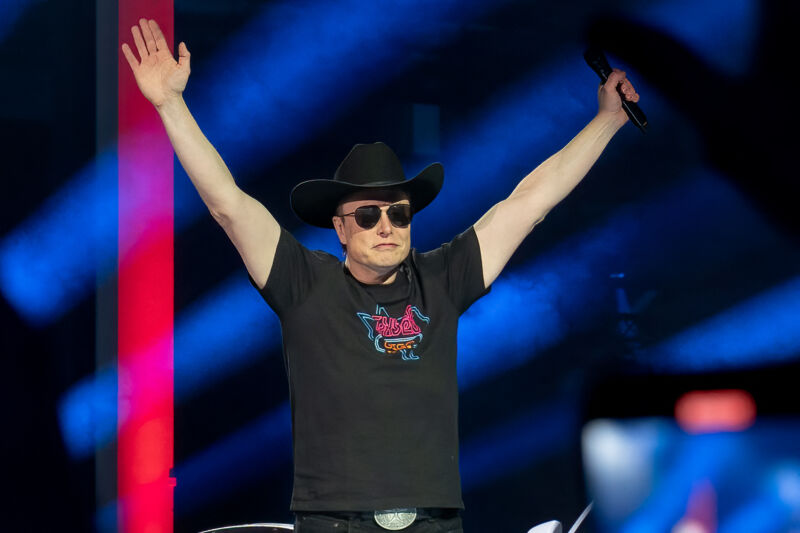
Tesla CEO Elon Musk on stage, holding a microphone in one hand while both of his arms are lifted up into the air.
Enlarge / Tesla CEO Elon Musk speaks at gigafactory opening party in Austin, Texas, on April 7, 2022.
Getty Images | Suzanne Cordeiro

On Wednesday, Tesla CEO Elon Musk urged a judge to reject a request for a gag order that would prevent him from continuing to publicly claim that his infamous “Funding secured” tweet was accurate.

The motion for a temporary restraining order “asks this Court to trample on Elon Musk’s First Amendment rights by barring him from publicly discussing this case or its underlying facts. Plaintiff’s motion cannot be reconciled with the Constitution’s guarantee of free speech and should be denied,” Musk’s lawyer wrote in a court filing Wednesday.

Musk and Tesla face a class action lawsuit in US District Court for the Northern District of California over Musk’s August 2018 claim that he had secured funding to take Tesla private. Musk and Tesla previously agreed to pay $20 million each in penalties and impose controls on Musk’s social media statements to settle a lawsuit filed by the Securities and Exchange Commission, which said that “Musk’s misleading tweets” about taking Tesla private caused the stock price to jump “and led to significant market disruption.”

Plaintiff: Musk’s false claims “poison the jury pool”

Musk acknowledged that no financial deal had been completed, but he argued it was close enough to justify his claim that funding was “secured.” In a TED conference appearance last week, Musk again claimed that “funding was actually secured” and he called the SEC “bastards.”

After Musk’s TED appearance, the lead plaintiff in the class action suit sought a temporary restraining order to prohibit Musk “from speaking with the press, media, news, and other public outlets about this case or the underlying facts until the end of trial.”

“Musk’s extensive pretrial media interviews pose a clear danger and serious risk to a fair trial because they attract pretrial publicity, poison the jury pool, and influence the outcome on the eve of trial,” plaintiff Glen Littleton’s motion argued.

Littleton’s filing said the federal judge overseeing the case has already ruled that Musk’s tweets about taking Tesla private “were false and misleading and that Musk made these false statements recklessly and with full awareness of the facts that he misrepresented in his tweets.” That ruling by District Judge Edward Chen is still under seal.

“The truth of the August 7, 2018 tweets and Musk’s state of mind when publishing them are no longer issues to be decided by the jury. Therefore, Musk’s continuing public statements about these issues only serve to prejudice the jury pool in this case by potentially influencing their deliberations during trial,” the plaintiff’s filing said.

Musk blames media for “false insinuations”

Musk countered that “Both the Ninth Circuit and the Supreme Court have made clear that the extraordinary relief of a prior restraint on litigants’ speech is subject to strict scrutiny and permissible only where there is a clear and discernable danger that an entire community will be corrupted by pretrial publicity such that locating twelve objective jurors would be impossible. This is not one of those rare cases.”

Musk’s court filing defended his comments at the TED conference:

Mr. Musk is in the middle of a public offer to take Twitter private, an undertaking which has led to a debate concerning the improper censorship of speech. In that context, the media has made comparisons with Musk’s previous consideration of taking Tesla private. The recent conference Musk attended is a prime example. Chris Anderson of TED asked Mr. Musk if funding was secured for the Twitter deal, an obvious allusion to the events underlying this case. Mr. Musk should be permitted to respond meaningfully and truthfully to inquiries such as this, and not be compelled to remain silent about false insinuations in questions posed to him by the media. Plaintiff’s request for a gag order is not designed to limit certain narrow forms of speech to ensure a fair trial; it is instead designed to silence Mr. Musk’s statements outside the context of this litigation.

Musk’s filing also noted that he is trying to get out of the SEC settlement in a separate court case. Musk claims he was “coerced into signing” the deal with the SEC.

“That agreement involved the same allegations at issue in this case, and Mr. Musk undoubtedly will be called upon by the media and by his shareholders to speak about that ongoing dispute. Imposing a broad and unwarranted gag order in this case would prejudice Musk’s rights in connection with that proceeding as well,” Musk’s filing said.

No hearing has been scheduled on the motion for a restraining order, and it’s not clear when the judge will rule.

https://arstechnica.com/?p=1849507


Musk keeps falsely claiming “Funding secured” tweet was accurate, judge is told

Elon Musk's Twitter profile displayed on a computer screen juxtaposed next to a Twitter logo displayed on a phone screen
Getty Images | NurPhoto

The shareholder who sued Elon Musk and Tesla over Musk’s infamous “Funding secured” tweet is seeking a temporary restraining order to prevent Musk from continuing to claim publicly that the 2018 tweet was accurate. The lead plaintiff representing a class of Tesla shareholders says a federal judge has already ruled that Musk’s tweet was false—although that ruling has not yet been unsealed.

“As this Court has determined in its recent order granting Plaintiff’s motion for partial summary judgment, these statements by Musk were false and misleading and that Musk made these false statements recklessly and with full awareness of the facts that he misrepresented in his tweets,” said the filing on Friday in the class action lawsuit in US District Court for the Northern District of California.

The order was issued under seal, according to another court filing.

“The request for the temporary restraining order alludes to an earlier ruling by Judge [Edward] Chen that is currently under seal because it refers to evidence that Musk’s team regarded as confidential,” CNBC wrote. “We anticipate the order will be published soon,” CNBC was told by Adam Apton of Levi & Korsinsky, lead counsel for the class of Tesla shareholders suing Musk and Tesla.

In an earlier ruling that allowed the lawsuit to move forward, Chen in April 2020 found that “Plaintiff [Glen Littleton] has adequately pled that Mr. Musk made false or materially misleading statements in the scope of his role as CEO of Tesla, with knowledge of the inaccuracies of his statements—or was, at minimum, deliberately reckless when making such public disclosures.”

Musk has until April 20 to file a response to the motion for a temporary restraining order. In a public appearance last week, Musk claimed that the tweet was accurate and called the Securities and Exchange Commission “bastards.”

“No reasonable jury could find Musk’s tweets accurate”

The court issued the order on April 1, and it was received by the parties in the case on April 10. “As the Court held, the evidentiary record demonstrated that no reasonable jury could find Musk’s tweets on August 7, 2018 accurate or not misleading. Likewise, given that Musk was intimately involved with the facts leading to that conclusion, the Court also held that he recklessly made the statements with knowledge as to their falsity,” the plaintiff’s filing said.

If granted, the requested temporary restraining order would prevent Musk “from speaking with the press, media, news, and other public outlets about this case or the underlying facts until the end of trial.” Musk’s ongoing public comments claiming that his “Funding secured” tweet was accurate are likely to prejudice a jury, the plaintiff’s filing argued.

“Musk’s extensive pretrial media interviews pose a clear danger and serious risk to a fair trial because they attract pretrial publicity, poison the jury pool, and influence the outcome on the eve of trial,” they wrote.

Musk and Tesla settled with SEC

On August 7, 2018, Musk tweeted, “Am considering taking Tesla private at $420. Funding secured.” The SEC sued the Tesla CEO over that tweet and others on the same topic, alleging that “Musk had not even discussed, much less confirmed, key deal terms, including price, with any potential funding source.”

Musk and Tesla quickly settled with the SEC, agreeing to pay $20 million each in penalties to resolve the SEC’s complaint and to impose controls on Musk’s social media statements. In the settlement announcement, the SEC said “Musk’s misleading tweets” about taking Tesla private caused the stock price to jump “and led to significant market disruption.”

The shareholders’ lawsuit represents people who purchased or sold Tesla stock from August 7 to August 17, 2018, and alleges that Musk “caus[ed] billions of dollars of damage to Tesla investors” by making statements he knew to be false.

https://arstechnica.com/?p=1848850


Companies used carbon credits created in oil extraction projects

The sun sets beyond an oil pumping unit, also known as a pumping jack, at a drilling site operated by Tatneft OAO near Almetyevsk, Russia.
Enlarge / The sun sets beyond an oil pumping unit, also known as a pumping jack, at a drilling site operated by Tatneft OAO near Almetyevsk, Russia.
Andrey Rudakov/Bloomberg

Daimler Trucks, eBay, and a US energy company were among the recent buyers of carbon offsets created by projects that involved injecting carbon dioxide underground in order to extract more oil.

Three US-based extraction projects were eligible to generate credits because their processes involved the capture of CO2. But this was used as a way to extract fresh oil that would otherwise have been inaccessible, a procedure known as “enhanced oil recovery” (EOR).

The offsetting rules that the credits were created under ignored the emissions associated with the extracted oil.

Nearly 3 million credits from the three projects, which cannot generate new offsets following a rule change, have been used by buyers to compensate for carbon emissions. Each offset is supposed to represent a ton of carbon that has been permanently avoided or removed from the atmosphere.

“Offsetting emissions with these credits is complete nonsense,” said Gilles Dufrasne, policy officer at Carbon Market Watch. “If the captured carbon enables an increase in oil extraction, then obviously this must be part of the calculation and would likely negate any supposed climate benefits.”

Stuart Haszeldine, professor of carbon capture and storage (CCS) at Edinburgh University, said that in the US it had “never been accepted that the extra oil produced [by the EOR process] has a carbon footprint.”

Offsets are very widely used by companies to mitigate their carbon emissions. They are generated by environmental projects such as tree-planting, with money from the sale of the credits used for funding.

Between 2000 and 2008, under now-defunct offsetting rules, the three US EOR projects generated a combined 12.4 million offsets. Although the schemes can no longer generate new credits, companies can still buy those created before the change.

One of the three schemes was developed by US oil and gas company Merit Energy and the offsets seller Blue Source. The project used carbon that had been captured from an ExxonMobil facility for oil extraction.

In March, DJR Operating, another US oil and gas group, used 150,000 offsets from the Merit project. Canadian power generator TransAlta also used 376,000 of these credits in 2015, while eBay bought 1,700 between 2020 and 2021, according to data from the American Carbon Registry.

Ebay said it “did not include [the offsets] in our carbon neutrality achievement for 2021.” TransAlta declined to comment, and DJR did not respond.

Customers of third-party offsets seller Terrapass, including Daimler Trucks, have used 73,000 credits from the three legacy schemes since 2020.

Terrapass said its customers had “supported dozens of renewable energy and greenhouse gas destruction projects.” Daimler Trucks said the credits had conformed to the “strict protocols” governing offsets when generated.

In April, a landmark UN report on climate change said it would be essential to remove carbon from the atmosphere to limit warming to 1.5° C above pre-industrial levels. Experts stressed that CCS should be used by sectors such as cement and steelmaking, where absolute emissions are unlikely ever to reach zero.

Proponents of EOR say the process provides a market for captured carbon emissions and will help accelerate the development of carbon capture technology.

Merit Energy and Blue Source did not respond to requests for comment.

© 2022 The Financial Times Ltd. All rights reserved Not to be redistributed, copied, or modified in any way.

https://arstechnica.com/?p=1848770


Twitter board fights Musk takeover with unanimous adoption of poison pill

A pill with a skull and crossbones printed on it in an illustration of a poison pill.
Getty Images | Peter Dazeley

Twitter’s board of directors approved a poison pill to prevent a hostile takeover in response to Elon Musk’s offer to buy the firm. “The company on Friday adopted a so-called poison pill that makes it difficult for him to increase his stake beyond 15 percent,” The Wall Street Journal wrote.

In a press release, Twitter said its board unanimously “adopted the Rights Plan following an unsolicited, non-binding proposal to acquire Twitter.”

“The Rights Plan will reduce the likelihood that any entity, person or group gains control of Twitter through open market accumulation without paying all shareholders an appropriate control premium or without providing the Board sufficient time to make informed judgments and take actions that are in the best interests of shareholders,” the announcement said.

Twitter said this move “does not prevent the Board from engaging with parties or accepting an acquisition proposal if the Board believes that it is in the best interests of Twitter and its shareholders.” The new shareholder rights will be in effect for one year and will be triggered if any person, entity, or group acquires 15 percent of stock “in a transaction not approved by the Board.” Twitter further explained:

In the event that the rights become exercisable due to the triggering ownership threshold being crossed, each right will entitle its holder (other than the person, entity or group triggering the Rights Plan, whose rights will become void and will not be exercisable) to purchase, at the then-current exercise price, additional shares of common stock having a then-current market value of twice the exercise price of the right.

Musk pushed for shareholder vote

Musk was briefly Twitter’s largest shareholder with his 9.2 percent stake until Vanguard Group upped its ownership share to 10.3 percent.

Bloomberg noted Thursday that a “poison pill defense strategy allows existing shareholders the right to purchase additional shares at a discount, effectively diluting the ownership interest of the hostile party.”

In response to news that Twitter was considering a poison pill, Musk wrote Thursday, “If the current Twitter board takes actions contrary to shareholder interests, they would be breaching their fiduciary duty. The liability they would thereby assume would be titanic in scale.” Musk also polled Twitter users about whether his offer should be voted on by shareholders.

Even before Friday, Twitter had bylaws that “could have the effect of rendering more difficult, delaying, or preventing an acquisition deemed undesirable by our board of directors,” the company said in a February 2022 SEC filing. That includes “a classified board of directors whose members serve staggered three-year terms,” and the ability to “authoriz[e] ‘blank check’ preferred stock, which could be issued by our board of directors without stockholder approval and may contain voting, liquidation, dividend and other rights superior to our common stock.”

https://arstechnica.com/?p=1848364


TikTok under US government investigation over child sexual abuse material

TikTok logo next to inverted US flag.

TikTok is under investigation by US government agencies over its handling of child sexual abuse material, as the burgeoning short-form video app struggles to moderate a flood of new content.

Dealing with sexual predators has been an enduring challenge for social media platforms, but TikTok’s young user base has made it vulnerable to being a target.

The US Department of Homeland Security is investigating how TikTok handles child sexual abuse material, according to two sources familiar with the case.

The Department of Justice is also reviewing how a specific privacy feature on TikTok is being exploited by predators, said one person with knowledge of the case. The DOJ has a longstanding policy of not confirming or denying the existence of ongoing investigations.

“It is a perfect place for predators to meet, groom and engage children,” said Erin Burke, unit chief of the child exploitation investigations unit at Homeland Security’s cyber crime division, calling it the “platform of choice” for the behaviour.

The investigations highlight how TikTok is struggling to cope with the torrent of content generated by more than 1 billion users. The company, owned by China’s ByteDance, has more than 10,000 human moderators worldwide and has been rapidly hiring staff in this area.

The business is booming. A forecast from Insider Intelligence puts TikTok’s advertising revenue at $11.6 billion this year—up threefold from last year’s $3.9 billion.

Mark Zuckerberg, Meta chief executive, has blamed the popularity of TikTok among young people as a principal reason for slowing interest in its longer-established social media platforms such as Facebook and Instagram.

But Meta has greater experience with dealing with problematic material, with about 15,000 moderators globally and employing other automated systems designed to flag posts.

Between 2019 and 2021, the number of TikTok-related child exploitation investigations by Homeland Security has increased sevenfold.

Social media networks use technology trained on a database of images collected by the National Center for Missing and Exploited Children (NCMEC), a centralised organisation where companies are legally required to report child abuse material.

TikTok reported nearly 155,000 videos last year whereas Instagram, which also has more than 1 billion users, had nearly 3.4 million reports. TikTok did not receive any takedown requests from NCMEC last year, unlike rivals Facebook, Instagram and YouTube.

“TikTok has zero-tolerance for child sexual abuse material,” the company said. “When we find any attempt to post, obtain or distribute [child sexual abuse material], we remove content, ban accounts and devices, immediately report to NCMEC, and engage with law enforcement as necessary.”

However, Homeland Security’s Burke claimed that international companies such as TikTok were less motivated when working with US law enforcement. “We want [social media companies] to proactively make sure children are not being exploited and abused on your sites—and I can’t say that they are doing that, and I can say that a lot of US companies are,” she added.

TikTok said it had removed 96 percent of content that violated its minor-safety policies before anybody had viewed them. Videos of minors drinking alcohol and smoking accounted for the majority of removals under these guidelines.

One pattern that the Financial Times verified with law enforcement and child safety groups was content being procured and traded through private accounts, by sharing the password with victims and other predators. Key code words are used in public videos, usernames and biographies, but the illegal content is uploaded using the app’s “Only Me” function where videos are only visible for those logged into the profile.

Seara Adair, a child safety campaigner, reported this trend to US law enforcement after first flagging the content on TikTok and being told that one video did not violate policies. “TikTok talk constantly about the success of their artificial intelligence but a clearly naked child is slipping through it,” said Adair. All accounts and videos referred to TikTok by the FT have now been removed.

“We are deeply committed to the safety and wellbeing of minors, which is why we build youth safety into our policies, enable privacy and safety settings by default on teen accounts, and limit features by age,” TikTok added.

© 2022 The Financial Times Ltd. All rights reserved Not to be redistributed, copied, or modified in any way.

https://arstechnica.com/?p=1848276


Tesla must pay ex-worker $15 million for “disturbing” racist abuse, judge rules

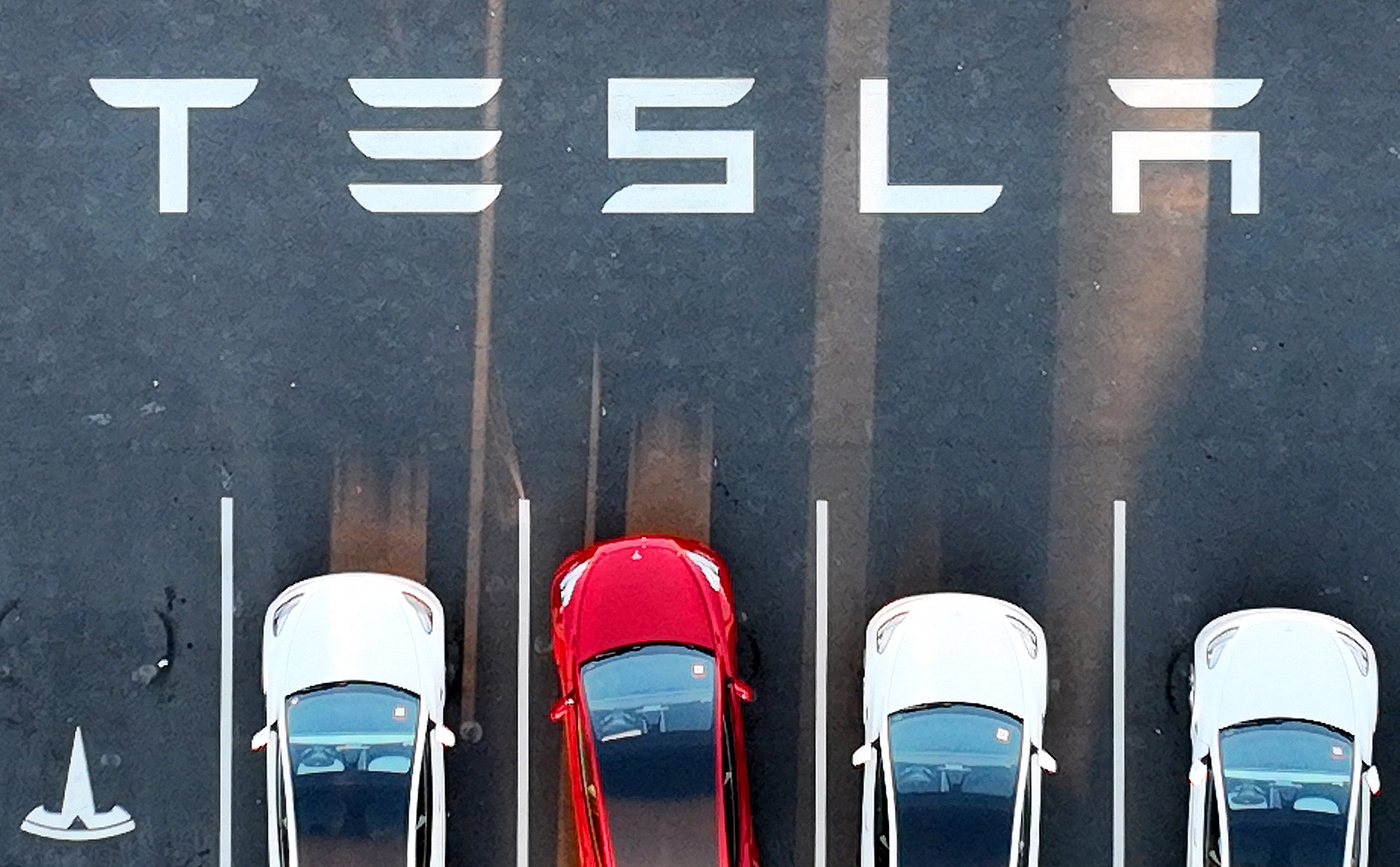
Aerial view of cars parked in a Tesla factory parking lot. A Tesla logo is painted on the concrete.
Enlarge / Cars parked at the Tesla Fremont Factory in Fremont, California, on February 10, 2022.
Getty Images | Josh Edelson

On Wednesday, a federal judge rejected Tesla’s claim that it is not liable for “disturbing” racist abuse suffered by an ex-factory worker. US District Judge William Orrick rejected what he called Tesla’s “watered-down revisionism” that cast plaintiff Owen Diaz’s suffering as “mild and short-lived.”

The judge slashed Diaz’s financial award, however. While the jury awarded Diaz $6.9 million in compensatory damages and $130 million in punitive damages, Orrick set the amounts at $1.5 million in compensatory damages and $13.5 million in punitive damages instead. He wrote that the new compensatory amount of $1.5 million is “the highest award supported by the evidence” and that the punitive damages can be nine times that amount based on US law.

“The evidence was disturbing,” said Orrick’s ruling in the US District Court for the Northern District of California. “The jury heard that the Tesla factory was saturated with racism. Diaz faced frequent racial abuse, including the n-word and other slurs. Other employees harassed him. His supervisors and Tesla’s broader management structure did little or nothing to respond. And supervisors even joined in on the abuse, one going so far as to threaten Diaz and draw a racist caricature near his workstation.”

Tesla wanted to limit compensatory and punitive damages to $300,000 each.

“Legally sufficient basis to find Tesla liable”

Diaz worked at a Tesla factory in Fremont starting in June 2015 and “was ‘separated’ from Tesla without prior warning” in May 2016, the ruling said. Diaz’s paychecks came from a staffing agency called CitiStaff, but he testified that “all of [his] directions came from Tesla.” He received training and certification from Tesla for his job operating a forklift. He sued Tesla in October 2017.

After the trial, Tesla asked the court for a “judgment as a matter of law that it is not liable,” or alternatively, “for a new trial and to reduce the amount of damages,” Orrick noted. Tesla argued that under 42 U.S.C. § 1981—a Reconstruction-era law that prohibits discrimination in the making and enforcement of contracts—it was not liable because “Diaz’s contract of employment was with a staffing agency that Tesla contracted with, not with Tesla itself,” Orrick wrote.

Orrick denied the motion for a judgment as a matter of law, writing:

[T]he jury had a legally sufficient basis to find Tesla liable on two grounds. First, it found in a special verdict that Tesla qualified as an employer of Diaz under the law, even if not on paper. It could have reasonably found that this employment relationship was governed by an implied-in-fact contract. Second, it could have found that Diaz was an intended beneficiary of the contract between Tesla and the staffing agency. As a result, Diaz was entitled to bring the Section 1981 claim to enforce his rights under that contract. On the remaining issues, Tesla waived its legal challenge to Diaz’s state-law negligent supervision claim. And Tesla’s motion for a new trial is also denied; the weight of the evidence amply supports the jury’s liability findings.

https://arstechnica.com/?p=1848152


Calif. lawyer resigns “in protest,” points to Newsom “interference” in Activision case

Calif. lawyer resigns “in protest,” points to Newsom “interference” in Activision case
Aurich Lawson | Getty Images

One of the main lawyers in California’s ongoing discrimination and harassment case against Activision Blizzard has resigned, citing “interference” by the office of Governor Gavin Newsom.

Bloomberg reports that Melanie Proctor, the assistant chief counsel for California’s Department of Fair Employment and Housing (DFEH), said in a resignation email Tuesday that Newsom’s office “repeatedly demanded advance notice of litigation strategy and of next steps in the litigation.” That interference, which Proctor says increased with her agency’s “wins” in state court, “mimick[ed] the interests of Activision’s counsel,” Proctor wrote.

The resignation letter noted that Chief Counsel Janette Wipper previously combatted this interference by “attempt[ing] to protect” the agency’s autonomy to prosecute, but Proctor alleges that her efforts directly led to Wipper being “abruptly terminated.” In response, Proctor filed her own resignation notice on Wednesday—which she claims is “in protest of the interference and Janette’s termination.”

“Avenues of legal recourse”

Proctor’s resignation email, as reviewed by Bloomberg, concluded with a direct criticism of Governor Newsom’s office. “Justice should be administered equally, not favoring those with political influence,” she wrote.

Instead of responding directly to questions about the allegations, the office of Governor Newsom referred reporters to a DFEH spokesperson, who has declined to comment on anything regarding personnel matters. In a statement sent to Ars Technica, a representative for Wipper confirmed that Newsom terminated her role at the DFEH on March 29 in spite of Newsom’s office reappointing Wipper to that role only four months earlier. In response, she is considering filing a claim under the California Whistleblower Protection Act, among other possible “avenues of legal recourse.”

The initial inciting lawsuit, filed in July 2021, alleged that Activision Blizzard was rife with sexual harassment and gender-based pay-disparity issues. The suit’s interviews “almost universally confirmed that working for Defendants was akin to working in a frat house,” the suit read.

In the months that followed, the SEC opened up an investigation into the allegations—and into whether Activision Blizzard failed to properly disclose what it knew about discrimination, sexual harassment, and other personnel issues to shareholders. The investigation began one month after Activision Blizzard shareholders filed their own lawsuit over the same issues.

“Potential prejudicial impact”

By September, Activision Blizzard settled a separate federal case, whose investigations dated back to 2018, over a similar spate of pay disparity and harassment allegations. The settlement required Activision Blizzard to create a compensation fund for affected employees. The negotiated sum of $18 million amounted to less than half a percent of the company’s annual revenue in 2020.

In the wake of that settlement, Activision Blizzard pushed back against the DFEH lawsuit by alleging a conflict of interest, pointing to its belief that lawyers for the California state lawsuit were also involved “in leadership roles” in the federal case. The DFEH called Activision Blizzard’s allegation an “improper procedural vehicle based on a substantive nonissue” and decried the September federal settlement for having a “potential prejudicial impact” on its ability to enforce California state law. The company’s own filings to delay that federal $18 million settlement were denied by a federal judge in February.

Before her firing from the DFEH, Wipper led recent high-profile cases against major California tech firms. Her agency’s filing against Riot Games over allegations of sexual harassment, discrimination, and pay disparity concluded in December with a $100 million settlement. And a February lawsuit filed against Tesla Inc. alleged widespread racial discrimination at the company’s Fremont factory, including claims that the workplace was racially segregated and that staffers used racist slurs to designate the portion of the factory where Black workers congregated.

Activision Blizzard, meanwhile, found its future fortunes shifting wildly once it announced a January acquisition deal with Microsoft valued at $68.7 billion. The move was eventually followed by an SEC investigation over allegations of insider trading ahead of the deal’s announcement.

Kyle Orland contributed to this report.

https://arstechnica.com/?p=1847785