US seizes RaidForums, the “go-to” site for hackers selling stolen login details
Person wearing a hoodie whose face is not visible sitting in front of a laptop in a dark room.
Getty Images | seksan Mongkhonkhamsao

The US has seized the domain of what it calls “one of the world’s largest hacker forums” and indicted its founder, the Department of Justice announced Tuesday. A notice on RaidForums.com says the domain was seized by the FBI, Secret Service, and Department of Justice. Europol and law enforcement agencies from Sweden, Romania, Portugal, Germany, and the UK were also involved.

RaidForums founder and chief administrator, Diogo Santos Coelho, a 21-year-old from Portugal, was arrested in the UK on January 31 and is in custody pending the outcome of extradition proceedings. The case in US District Court for the Eastern District of Virginia was unsealed Monday. Two accomplices were also arrested, according to Europol.

Founded in 2015, “RaidForums served as a major online marketplace for individuals to buy and sell hacked or stolen databases containing the sensitive personal and financial information of victims in the United States and elsewhere, including stolen bank routing and account numbers, credit card information, login credentials and social security numbers,” the DOJ said. As a Vice article noted, the seizure announcement “caps off weeks of speculation of what may have happened to the site, which mysteriously became unresponsive around the end of February.”

Security reporter Brian Krebs wrote that “the ‘raid’ in RaidForums is a nod to the community’s humble beginnings in 2015, when it was primarily an online venue for organizing and supporting various forms of electronic harassment. But over the years as trading in hacked databases became big business, RaidForums emerged as the go-to place for English-speaking hackers to peddle their wares.” The Krebs article said that “the FBI had been secretly operating the RaidForums website for weeks” before the seizure.

Hundreds of databases with stolen data

The DOJ said it also seized the related Rf.ws and Raid.lol domains. The DOJ announcement said:

Prior to its seizure, RaidForums members used the platform to offer for sale hundreds of databases of stolen data containing more than 10 billion unique records for individuals residing in the United States and internationally. At the time of its founding in 2015, RaidForums also operated as an online venue for organizing and supporting forms of electronic harassment, including by “raiding”—posting or sending an overwhelming volume of contact to a victim’s online communications medium—or “swatting”—the practice of making false reports to public safety agencies of situations that would necessitate a significant, and immediate armed law enforcement response.

In 2019, hackers from RaidForums breached the site of rival hacking forum Cracked.to and released data for more than 321,000 of its members, Ars reported at the time. Later that year, after a hack of cryptocurrency wallet service GateHub, a database with personal information for 1.4 million accounts was posted on RaidForums.

Databases offered for sale on RaidForums included “usernames and associated passwords for access to user accounts issued by an electronic commerce company in the United States,” usernames and passwords for “online customer accounts issued by a major broadcasting and cable company in the United States,” and private account information from “a major telecommunications company and wireless network operator that provides services in the United States,” the newly unsealed indictment of Coelho said. The telecom breach appears to be the one last year involving T-Mobile.

Coleho and co-conspirators “are alleged to have designed and administered the platform’s software and computer infrastructure, established and enforced rules for its users, and created and managed sections of the website dedicated to promoting the buying and selling of contraband, including a subforum titled ‘Leaks Market’ that described itself as ‘[a] place to buy/sell/trade databases and leaks,'” the DOJ announcement said. More details are available in an affidavit filed by an assistant US attorney.

https://arstechnica.com/?p=1847570


Elon Musk won’t join Twitter board, can thus exceed 14.9% ownership cap

Elon Musk's Twitter profile displayed on a computer screen juxtaposed next to a Twitter logo displayed on a phone screen
Getty Images | NurPhoto

Elon Musk will not be joining Twitter’s board of directors, dropping out of a deal that would have prohibited him from buying more than 14.9 percent of the company’s stock. Musk had agreed to join the board after purchasing 9.2 percent of Twitter’s stock, but Twitter CEO Parag Agrawal last night announced that Musk pulled out of the pending agreement.

Agrawal posted a note he sent to Twitter employees, which said:

We announced on Tuesday that Elon would be appointed to the Board contingent on a background check and formal acceptance. Elon’s appointment to the board was to become officially effective 4/9, but Elon shared that same morning that he will no longer be joining the board. I believe this is for the best. We have and will always value input from our shareholders whether they are on our Board or not. Elon is our biggest shareholder and we will remain open to his input.

Musk revealed a week ago that he had purchased nearly 73.5 million Twitter shares, which are now worth over $3 billion. If the SpaceX and Tesla CEO had followed through on the agreement to join Twitter’s board, he would have had to abide by a stock-purchasing limit detailed in a Securities and Exchange Commission filing.

“For so long as Mr. Musk is serving on the Board and for 90 days thereafter, Mr. Musk will not, either alone or as a member of a group, become the beneficial owner of more than 14.9 percent of the Company’s common stock outstanding at such time, including for these purposes economic exposure through derivative securities, swaps, or hedging transactions,” Twitter wrote in the SEC filing.

Analyst: Musk likely to build “active stake”

Musk staying off the board of directors sets up “a ‘Game of Thrones’ battle between Musk and Twitter, with the high likelihood that Elon takes a more hostile stance toward Twitter and further builds his active stake in the company,” Wedbush analyst Dan Ives wrote, as quoted by Barron’s and other media outlets.

Before offering Musk a spot as a director, Agrawal and board members “had many discussions about Elon joining the board, and with Elon directly,” Agrawal wrote in his note to employees about Musk pulling out of the deal. “We also believed that having Elon as a fiduciary of the company where he, like all board members, has to act in the best interests of the company and all our shareholders, was the best path forward.”

Agrawal further wrote, “There will be distractions ahead, but our goals and priorities remain unchanged. The decisions we make and how we execute is in our hands, no one else’s.”

New Musk tweet asks, “Is Twitter dying?”

On Saturday morning, Musk retweeted a list of the top 10 Twitter accounts by number of followers, adding, “Most of these ‘top’ accounts tweet rarely and post very little content. Is Twitter dying?”

Musk “spent much of the weekend tweeting criticisms, suggestions, and apparent jokes about Twitter,” The Wall Street Journal noted. The tweet asking if Twitter is dying was still up today, but Musk deleted others, “includ[ing] one proposing that people who sign up for Twitter Blue, the company’s premium subscription service, should receive an authentication checkmark. Another deleted tweet proposed that Twitter convert its San Francisco headquarters to a homeless shelter ‘since no one shows up anyway.'”

Board seat would “diminish” Musk’s voice

According to Reuters, sources said “that Musk had asked Twitter for a board seat even before the company’s invitation.” Reuters also paraphrased anonymous sources as saying that “news of Musk taking a board seat had some Twitter employees panicking over the future of the social media company’s ability to moderate content.”

Before revealing his 9.2 percent stake in the company, Musk wrote tweets questioning Twitter’s commitment to “free speech principles.”

CFRA Research analyst Angelo Zino last week wrote that “Musk’s actual investment is a very small percentage of his wealth, and an all-out buyout should not be ruled out.” Following Musk’s reversal on joining Twitter’s board, Zino wrote, “We had thought the equity cap and board seat was originally intended to handcuff Musk in many respects and think he is unlikely the type of individual who will now just sell his stake and walk away.”

“I think what he realized is that by being on the board, his voice will diminish, and that’s absolutely the last thing he wants,” Reuters quoted Wells Fargo analyst Brian Fitzgerald as saying.

https://arstechnica.com/?p=1847163


The Senate bill that has Big Tech scared

The Senate bill that has Big Tech scared
Wired | Getty Images

If you want to know how worried an industry is about a piece of pending legislation, a decent metric is how apocalyptic its predictions are about what the bill would do. By that standard, Big Tech is deeply troubled by the American Innovation and Choice Online Act.

The infelicitously named bill is designed to prevent dominant online platforms—like Apple and Facebook and, especially, Google and Amazon—from giving themselves an advantage over other businesses that must go through them to reach customers. As one of two antitrust bills voted out of committee by a strong bipartisan vote (the other would regulate app stores), it may be this Congress’ best, even only, shot to stop the biggest tech companies from abusing their gatekeeper status.

“It is the ball game,” says Luther Lowe, senior vice president of policy at Yelp and a longtime Google antagonist. “That’s how these guys stay big and relevant. If they can’t put their hand on the scale, then it makes them vulnerable to small and medium-size companies eating their market share.”

But according to the tech giants and their lobbyists and front groups, the bill, which was introduced by Amy Klobuchar and Chuck Grassley, respectively the top Democrat and Republican on the Senate Judiciary Committee, would be a disaster for the American consumer. In an ongoing publicity push against it, they have claimed that it would ruin Google search results, bar Apple from offering useful features on iPhones, force Facebook to stop moderating content, and even outlaw Amazon Prime. It’s all pretty alarming. Is any of it true?

The legislation’s central idea is that a company that controls a marketplace shouldn’t be able to set special rules for itself within that marketplace, because competitors who object don’t have any realistic place to go. No business can afford to be left out of Google’s search index, and few online retailers can make a living if they’re not listed on Amazon. So the Klobuchar-Grassley bill, broadly speaking, prohibits self-preferencing by platforms that hit certain size thresholds, like monthly active users or annual revenue. To take a simple example, it would mean Amazon can’t give its in-house branded products a leg up over other brands when someone is shopping on its site, and Google can’t choose to give YouTube links when someone does a video search unless those links are objectively the most relevant.

Beyond that, it’s difficult to say precisely what the law would do, because it leaves quite a bit unspecified. Like many federal statutes, it directs an administrative agency—in this case, the Federal Trade Commission—to turn broad provisions into concrete rules. And it gives the FTC, the Department of Justice, and state attorneys general the power to sue companies for violating those rules. (Last week, the DOJ endorsed the bill, an important signal of support from the Biden administration.) Inevitably, both the rules and any enforcement actions would end up being litigated in court, giving federal judges ultimate say over what exactly the law means.

This leaves plenty of uncertainty around how exactly the law would play out. Into that zone of uncertainty, the tech companies have poured dire warnings.

Perhaps the scariest talking point is that the law, if enacted, would kill Amazon Prime. According to eMarketer, more than 150 million Americans, more than half the adult population, are Prime members. That’s a lot of people who might hate to lose their “free” two-day shipping. (It’s not really free, of course, if you have to pay a subscription fee.)

https://arstechnica.com/?p=1846884


Cox customers fight back against sneaky broadcast TV and regional sports fees

A stack of $1 bills getting blown off a person's hand.
Getty Images | Jeffrey Coolidge

Cable TV provider Cox is facing hundreds of arbitration demands alleging that it failed to adequately disclose its “Broadcast Surcharge” and “Regional Sports Surcharge” and that it used these fees to raise prices on customers who were promised fixed rates.

The Hattis & Lukacs law firm last night “filed 295 individual consumer arbitrations against Cox with the American Arbitration Association,” representing clients in 17 of the 19 states Cox operates in, attorney Daniel Hattis told Ars. Hattis said he aims to file thousands more arbitration cases against Cox, which has an estimated 3.4 million TV customers. The arbitration filings describe claimants as “victim[s] of Cox’s bait-and-switch scheme whereby the Company charges customers more for its Cable TV service plans than Cox advertised and promised.”

Cox’s customer service agreement has a mandatory arbitration clause, which customers can opt out of within 30 days of receiving service. “Cox is currently under the mistaken impression that the arbitration clause is a liability shield such that they’ll never have to face consequences for their past deception because class actions aren’t possible, and consumers won’t bother filing a bunch of individual arbitrations for $100 or so in damages,” Hattis told Ars in an email.

Seeking “refund of all payments”

Hattis is recruiting people for more arbitration filings through this webpage that says, “If you are a current or former Cox Cable TV customer, then you may have a claim for monthly overcharges.” The page says Cox’s broadcast and regional sports fees are $19 and $12.50 per month, respectively, and the site includes a form for potential claimants to fill out and submit.

Representative arbitration filings provided by Hattis say, “Cox advertised and quoted to Claimant that the broadcast channels and/or local sports channels would be included in the advertised Cable TV package price, when in fact Cox charged Claimant extra for those channels via disguised extra service charges on the bill which Cox calls the ‘Broadcast Surcharge’ and the ‘Regional Sports Surcharge.'” Cox never adequately disclosed these surcharges “or that the true monthly price of the Cox Cable TV service plan would be higher than what Cox advertised and quoted” and “never adequately disclosed that the purportedly ‘guaranteed’ service price would be covertly increased via increases to the so-called Surcharges in the middle of a promised promotional or contractual ‘guaranteed’ fixed-price period,” it says.

The individual arbitrations ask for refunds of all payments for the Broadcast Surcharge and Regional Sports Surcharges, for punitive damages and attorneys’ fees, and for injunctions that would force Cox to change how it advertises prices.

Arbitrations paired with lawsuit

Hattis last year filed a lawsuit against Cox with similar claims in San Diego County Superior Court; the plaintiff is a customer who opted out of Cox’s arbitration agreement. Hattis said that after the lawsuit was filed, reviews of Cox’s online ordering website suggested that “Cox has started including in the advertised price the amounts of the Broadcast Surcharge and Regional Sports Surcharge—and for new customers, those surcharges do not even seem to be listed as line items in the bill anymore at all. However, existing customers continued to see and pay these line-item surcharges on their bill, and for them, the surcharges are still increased in the middle of the supposedly ‘guaranteed’ price-locked contract term.”

The lawsuit moved forward, and in February, “we defeated Cox’s attempt to dismiss the case, and now discovery is underway,” Hattis told us. Judge Gregory Pollack’s ruling said, “Simply stated, Cox cannot market a guaranteed fixed price for full services and then increase the price by simply labeling the charge for some services as ‘fees’ or ‘surcharges.'” A jury trial was scheduled for December 2022.

The mass arbitrations are necessary, Hattis said, because the lawsuit had to be filed “as an individual public injunctive relief action—to get Cox to change its practices—due to the legal and enforceable arbitration clause in the Cox Residential Service Agreement.”

“Mass arbitration is the logical culmination of the legal positions that the corporate defense bar has taken for decades as its members obtained an ever-expanding interpretation of the Federal Arbitration Act, with the justification that large numbers of aggrieved consumers could always file large numbers of individual arbitration demands,” Hattis said.

A Cox spokesperson declined comment on the arbitration cases today, saying they have not seen the filings yet. We also asked Cox about whether it still charges the broadcast TV and regional sports fees to new customers and did not get an answer.

Fees make real price higher than advertised

Cox and other cable companies say their broadcast TV fees cover the amounts they pay for retransmission of broadcast signals and that regional sports fees cover the amounts they pay to regional sports networks that air the games of local sports teams in each market. Cox says the “Broadcast Surcharge reflects increasing costs associated with the delivery of broadcast TV stations to our customers” and that the “Regional Sports Surcharge reflects a portion of the costs associated with the delivery of regional sports networks to our customers and varies by market.”

But TV providers have to pay for all sorts of programming in order to provide the core service they advertise and sell to customers. Carving out two categories of programming and charging special fees for each is a strategy cable companies use to advertise a lower price than the one customers actually pay on their monthly bills.

https://arstechnica.com/?p=1846909


Facebook says Ukraine military accounts were hacked to post calls for surrender

A Ukrainian soldier holding a Kalashnikov-style rifle and other Ukrainian soldiers sit on an armored military vehicle.
Enlarge / Ukrainian soldiers sit on an armored military vehicle in Sievierodonetsk on April 7, 2022, amid Russia’s invasion of Ukraine.

Facebook today reported an increase in attacks on accounts run by Ukraine military personnel. In some cases, attackers took over accounts and posted “videos calling on the Army to surrender,” but Facebook said it blocked sharing of the videos.

Specifically, Facebook owner Meta’s Q1 2022 Adversarial Threat Report said it has “seen a further spike in compromise attempts aimed at members of the Ukrainian military by Ghostwriter,” a hacking campaign that “typically targets people through email compromise and then uses that to gain access to their social media accounts across the Internet.” Ghostwriter has been linked to the Belarusian government.

“Since our last public update [on February 27], this group has attempted to hack into the Facebook accounts of dozens of Ukrainian military personnel,” Meta wrote today. Ghostwriter successfully hacked into the accounts in “a handful of cases” in which “they posted videos calling on the Army to surrender as if these posts were coming from the legitimate account owners. We blocked these videos from being shared.”

Ghostwriter links to Belarus government

In its February 27 update, Meta said it detected Ghostwriter’s “attempts to target people on Facebook to post YouTube videos portraying Ukrainian troops as weak and surrendering to Russia, including one video claiming to show Ukrainian soldiers coming out of a forest while flying a white flag of surrender.” Meta said it had “taken steps to secure accounts that we believe were targeted by this threat actor” and “blocked phishing domains these hackers used to try to trick people in Ukraine into compromising their online accounts.” But Ghostwriter continued its operations and hacked into accounts of Ukrainian military personnel, as previously mentioned.

The Ghostwriter name was first used by security firm Mandiant to describe an influence campaign that “promotes narratives critical of the North Atlantic Treaty Organization’s (NATO) presence in Eastern Europe.” Mandiant says the Ghostwriter campaign is conducted at least partly by “UNC1151, a suspected state-sponsored cyber espionage actor that engages in credential harvesting and malware campaigns.”

In November 2021, Mandiant said its research “assesses with high confidence that UNC1151 is linked to the Belarusian government… We cannot rule out Russian contributions to either UNC1151 or Ghostwriter. However, at this time, we have not uncovered direct evidence of such contributions.” Belarus has close ties to the Russian government and has supported the invasion of Ukraine.

An Insikt Group report said that the “lack of technical evidence indicating Russian involvement… is very likely an intended component of the threat activity. We have found many overlaps in tactics, techniques, and procedures (TTPs) used by UNC1151 and Ghostwriter activity and Russian threat activity groups. Additionally, we note that false flags are prevalent among Russian military advanced persistent threat groups.”

https://arstechnica.com/?p=1846613


Twitter plans edit button, says Elon Musk’s poll had nothing to do with it

Twitter app on a phone with an
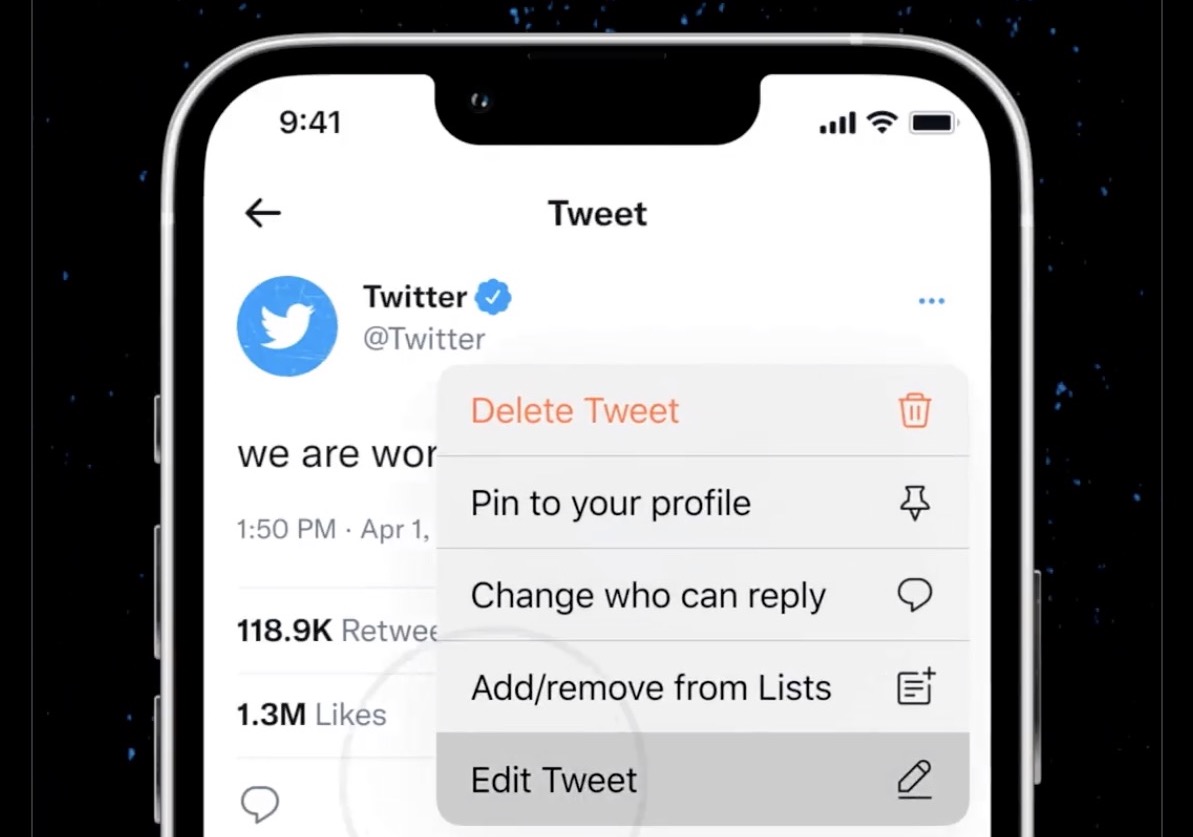
Enlarge / Forthcoming “Edit Tweet” option as seen in a post by Twitter’s communications team.

Twitter is adding an edit button, the company said yesterday. The “Edit Tweet” option will become available “in the coming months” to users of the paid Twitter Blue subscription, with a potential rollout to other users later on.

The announcement came shortly after Elon Musk joined the Twitter board of directors and polled users about whether they want an edit button. But Twitter said the edit button has been in the works for months.

“Now that everyone is asking… yes, we’ve been working on an edit feature since last year!” Twitter’s communications team wrote in a tweet. “No, we didn’t get the idea from a poll 😉. We’re kicking off testing within @TwitterBlue Labs in the coming months to learn what works, what doesn’t, and what’s possible.” Twitter Blue currently has an “Undo Tweet” option that delays sending tweets for up to 60 seconds, but the planned edit button would be the first feature to let users change a tweet after it has been posted. Twitter Blue costs $2.99 a month in the US.

Twitter previously said it was “working on an edit button,” but the company sent that tweet on April Fools’ Day. A follow-up tweet yesterday said, “ps: we weren’t joking.”

After Musk asked users if they want an edit button, Twitter CEO Parag Agrawal suggested that the results of Musk’s poll might influence Twitter policy. “The consequences of this poll will be important. Please vote carefully,” Agrawal wrote on Monday.

Twitter plans time limits and other controls

Many Twitter users have requested an edit button, but there’s a potential downside in that people could significantly change tweets that are going viral. Twitter Head of Consumer Product Jay Sullivan provided more detail in a thread, saying there will be controls to prevent “misuse.”

He wrote:

Without things like time limits, controls, and transparency about what has been edited, Edit could be misused to alter the record of the public conversation. Protecting the integrity of that public conversation is our top priority when we approach this work.

Therefore, it will take time and we will be actively seeking input and adversarial thinking in advance of launching Edit. We will approach this feature with care and thoughtfulness and we will share updates as we go.

As for why Twitter is working on an edit feature, Sullivan wrote, “Edit has been the most requested Twitter feature for many years. People want to be able to fix (sometimes embarrassing) mistakes, typos, and hot takes in the moment. They currently work around this by deleting and tweeting again.”

Co-founder and then-CEO Jack Dorsey said in January 2020 that Twitter would “probably never” add an edit feature. Dorsey cited the possibility of someone “completely chang[ing] the content” of a tweet that has been retweeted by others.

Meta CTO Andrew Bosworth wrote on Monday, “We solved this on Facebook a long time ago. You just include an indicator that it has been edited along with a change log. If you are really worried about embeds, they can point to a specific revision in that history but with a link to the latest edit. Not a real issue.”

Listing image by Thomas Trutschel/Getty Images

https://arstechnica.com/?p=1846180


DirecTV dropped OAN today, rejecting GOP pleas to keep right-wing network

An old television set displaying static.

One America News has officially been removed from DirecTV, as the TV provider resisted pressure from Republicans to keep the right-wing network in its channel lineup. A DirecTV spokesperson confirmed to Ars today that the channel removal went ahead as scheduled.

OAN’s future is in doubt as the network’s owner has said losing the DirecTV deal might force it to shut down. DirecTV previously issued a notice to users stating that OAN would leave DirecTV’s satellite channel lineup and the online service DirecTV Stream after April 4. The removal also affected A Wealth of Entertainment (AWE), another channel owned by OAN parent company Herring Networks.

DirecTV announced it wouldn’t renew its carriage deal with OAN after pressure from advocacy groups that pointed out OAN “is a major supporter of the Stop the Steal movement,” spread “election fraud lies that claimed the 2020 election was stolen from Donald Trump,” “stok[ed] violent calls for the attack on the US Capitol,” and airs “wall-to-wall COVID-19 disinformation.” US Reps. Anna Eshoo (D-Calif.) and Jerry McNerney (D-Calif.) had also questioned DirecTV owner AT&T and other TV providers about why they carry OAN, Newsmax, and Fox News.

DirecTV has since expanded its deal with Fox by offering Fox Nation streaming as a premium add-on. When asked whether it will keep Newsmax, DirecTV told Ars, “As we do for every network in our lineup, we’ll evaluate and make decisions as we approach each contract’s expiration.” The DirecTV spokesperson also said, “I’m not at liberty to provide the expiration date of the contract [with Newsmax].”

OAN sued DirecTV and AT&T

Herring Networks sued DirecTV and majority owner AT&T on March 7, alleging breach of contract and other violations. One of OAN’s allegations is that AT&T and DirecTV violated a confidentiality provision in their contract by telling the press about the April 2022 expiration date.

OAN’s primary breach-of-contract claim is a long shot given that DirecTV didn’t end the carriage agreement early. The TV provider announced in January that “We informed [OAN owner] Herring Networks that, following a routine internal review, we do not plan to enter into a new contract when our current agreement expires” and then dropped the channel when the deal expired this week.

AT&T spun off DirecTV into a separate company last year but still owns 70 percent of it.

Herring’s lawsuit said that “OAN and AWE might be forced off the air because Herring will no longer be able to broadcast OAN and AWE via DirecTV and Herring presently has limited alternative carriage options.” OAN’s website says the network is still on Verizon FiOS, CenturyLink, and smaller providers. OAN also sells online subscriptions directly to consumers for $5 a month.

In a 2020 court case, an OAN accountant testified that the deal with AT&T and DirecTV provided 90 percent of Herring Networks’ income, according to Reuters. “Without the DirecTV deal, the accountant said under oath, the network’s value ‘would be zero,'” the article said.

Republican AGs pressured DirecTV to keep OAN

After DirecTV’s January announcement, OAN host Dan Ball urged viewers to dig up “dirt” on AT&T Board Chairman William Kennard and to “Call AT&T’s support line. Complain, raise hell, email, phone call daily, every hour, set the alarm on your phone, blow the phone lines up, demand they keep OAN—this is censorship at its best.”

Texas Attorney General Ken Paxton and five other Republican state attorneys general last month urged DirecTV to reverse its decision, claiming that “your failure to do so will not only cause you to lose millions of dollars in business, but also drive many millions of Americans to simply cancel your services outright, as President Trump and other leading figures have already called for.”

Another letter from West Virginia Attorney General Patrick Morrisey accused DirecTV of caving to Democratic members of Congress, referencing the letter from Eshoo and McNerney. “The last thing our country needs right now is corporate censorship of conservative voices at the behest of members of Congress and others seeking to cut off debate by limiting the reach of those that disagree with them,” Morrisey wrote.

US Sen. Steve Daines (R-Mont.) also called on DirecTV to keep OAN, saying “the lack of transparency with the viewers of OAN in Montana in your decision-making process is unacceptable and has the appearance of targeting supporters of former President Donald Trump.”

https://arstechnica.com/?p=1846012


Elon Musk buys 9% of Twitter stock as he pressures company on “free speech”

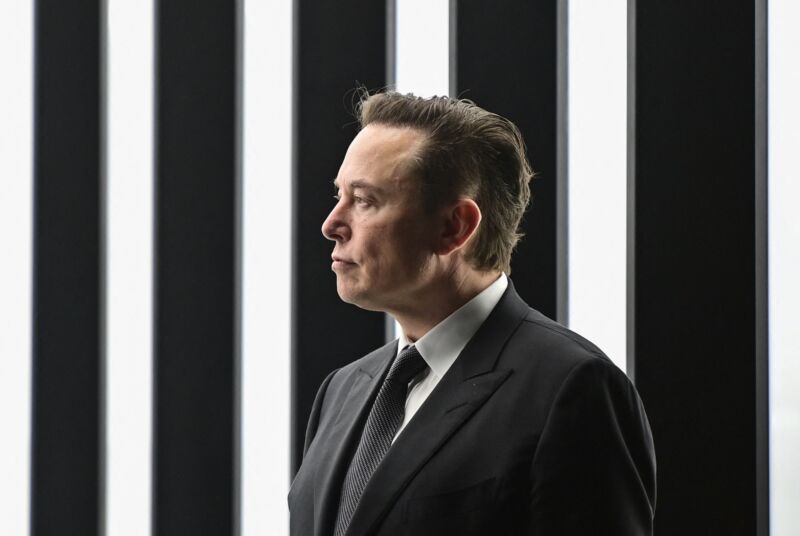
Elon Musk wearing a suit during an event at a Tesla factory.
Enlarge / Tesla CEO Elon Musk at an opening event for Tesla’s Gigafactory on March 22, 2022, in Gruenheide, southeast of Berlin.
Getty Images | Patrick Pleul

Elon Musk has purchased 9.2 percent of Twitter’s stock, he revealed in a Securities and Exchange Commission filing on Monday. The Tesla and SpaceX CEO bought 73,486,938 Twitter shares on March 14, the filing said.

Musk’s stake was worth $2.89 billion, based on Twitter’s closing price on Friday, and “appears to make Mr. Musk Twitter’s largest shareholder,” The New York Times wrote. Musk’s “holding is slightly larger than Vanguard’s 8.8 percent at the end of last year, and it dwarfs the 2.3 percent stake of Jack Dorsey, Twitter’s former chief executive.”

Twitter’s stock price was up over 28 percent Monday as of this writing. Based on today’s rise, Musk “has made about $1.1 billion on his holding since mid-March,” Bloomberg wrote.

Musk could use his ownership stake to influence Twitter’s business plan or its policies. Bloomberg wrote that “Twitter is particularly vulnerable to outside pressure because unlike Google, Facebook, Amazon, and Snap, the company’s founders don’t have special voting control over its future. The company has just recovered from activist pressure by Elliot Management that started in 2020 which led Dorsey, who was serving his second stint as CEO of Twitter, to set a succession plan.”

Musk scrutinized Twitter over “free speech”

Musk is a prolific Twitter user who often posts company news on the platform and has fought with the SEC over a 2018 settlement that requires Tesla to impose controls on his social media statements.

On March 25, Musk posted a Twitter poll, writing, “Free speech is essential to a functioning democracy. Do you believe Twitter rigorously adheres to this principle?”

Musk added in a follow-up tweet, “The consequences of this poll will be important. Please vote carefully.” Musk’s poll received over 2 million votes, with over 70 percent answering “no.”

A day after the poll, Musk wrote, “Given that Twitter serves as the de facto public town square, failing to adhere to free speech principles fundamentally undermines democracy. What should be done? Is a new platform needed?” Musk also polled users on whether the “Twitter algorithm should be open source,” and he claimed to be “giving serious thought” to building a new social media platform.

Musk recently called himself a “free speech absolutist,” after which an Insider article noted that he “has a track record of silencing critics with threats of lawsuits and firing employees who disagree with him.” Musk “is a free speech absolutist… unless it involves safety concerns IMO,” wrote ex-Tesla employee John Bernal, who says he was fired for posting YouTube videos about Tesla’s Full Self-Driving beta.

“All-out buyout should not be ruled out”

Financial analysts said that Musk’s stock purchase could signal an attempt to influence Twitter’s leadership. “We would expect this passive stake as just the start of broader conversations with the Twitter board/management that could ultimately lead to an active stake and a potential more aggressive ownership role of Twitter,” Dan Ives of Wedbush Securities wrote in a client note, according to NPR.

CFRA Research analyst Angelo Zino wrote that “Musk’s actual investment is a very small percentage of his wealth, and an all-out buyout should not be ruled out,” according to Reuters. Reuters also quoted Thomas Hayes, managing member at Great Hill Capital, as saying that Musk’s purchase “does send a message to Twitter… having a meaningful stake in the company will keep them on their toes because that passive stake could very quickly become an active stake.”

https://arstechnica.com/?p=1845637


Russia inches closer to its splinternet dream

Russia inches closer to its splinternet dream
Kirill Kudryavtsev | Getty Images

Russian Twitter users noticed something strange when they tried to access the service on March 4: They couldn’t. For the previous six days, anyone trying to access Twitter from within Russia saw their Internet speed slow to a crawl, no matter how fast their connection. Then came the blackout.

Twitter going offline showed how seriously the Russian state took social media’s role in amplifying dissent about the country’s invasion of Ukraine. And it demonstrated Russia’s progress in creating a “splInternet,” a move that would effectively detach the country from the rest of the world’s Internet infrastructure. Such a move would allow Russia to control conversations more tightly and tamp down dissent—and it’s getting closer by the day.

The gold standard of digital walled gardens is China, which has managed to separate itself from the rest of the digital world with much success—although people still find their way around the Great Firewall. “I think they would aspire to [mimic China],” Doug Madory of Kentik, a San Francisco-based Internet monitoring company, says of Russia. “But it wasn’t easy for the Chinese.” China tasked huge numbers of tech experts to create its version of the Internet, and it spent huge amounts of money. By 2001, the International Center for Human Rights and Democratic Development estimated, China spent $20 billion on censorious telecom equipment every year. The famed Great Firewall is just that: a firewall that inspects every bit of traffic entering Chinese cyberspace and checks it against a block list. Most Internet traffic into China passes through three choke points, which block any untoward content. Copying the Chinese approach in Russia is something Madory believes may be beyond Russian president Vladimir Putin’s reach. “I don’t think Russia has invested that kind of energy in engineering resources to replicate it,” Madory says. “There are quite a few countries that would love to have what China’s got, but they just can’t. They haven’t got the people to do it. There’s a ways to go before Russia becomes like China.”

Even if Russia did have the people, inserting barriers into relatively open Internet infrastructure built over decades is far from straightforward. Controlling a country’s Internet requires two major components: separating yourself from the rest of the world, and cutting access from within. “There are lots of things going on on either side of the ledger,” says Madory. But both are harder for Russia than China because it’s starting from a comparatively open Internet, after years of engagement with the West. (China, by contrast, has been closed almost since the first people logged on to the Internet, following a February 1996 order giving the state absolute control over its design and establishing a prohibition on “inciting to overthrow the government or the socialist system”—meaning it was insular by design.)

Russia’s Internet regulator, Roskomnadzor, can by law demand that Russia’s Internet service providers (ISPs) block content or don’t complete traffic requests. They can reroute Internet traffic away from sites that Roskomnadzor deems unsuitable for everyday Russians, essentially cutting any individual browser off from the rest of the world. However, Russia has more than 3,000 ISPs, which implement diktats at different speeds. “Everybody’s left to their own devices to figure out how to comply with the government order to block the BBC or something,” says Madory. Each ISP also uses different methods to try and block access to websites that the Russian media regulator says are forbidden, with varying levels of success. “Depending on the technique they adopt, circumventing the block can be easier or harder,” says Maria Xynou, with the Internet censorship nonprofit the Open Observatory of Network Interference (OONI).

https://arstechnica.com/?p=1845136


Biden sanctions Russian tech companies, including country’s biggest chipmaker

Treasury Secretary Janet Yellen.
Enlarge / Treasury Secretary Janet Yellen.
Jason Connolly-Pool/Getty Images

The Biden administration slapped a new round of sanctions on Russia, with a focus on technology companies that support the Russian war effort in Ukraine. Among the sanctioned companies is Mikron, Russia’s largest chipmaker.

“We will continue to target Putin’s war machine with sanctions from every angle until this senseless war of choice is over,” said Treasury Secretary Janet Yellen in the Treasury Department’s press release announcing the action.

Many of Mikron’s chips are used in bank cards, identification cards, and RFID tags. The company also manufactures power management chips. In addition to supplying technology for Russian military operations, the US says Mikron is responsible for a majority of Russia’s chip exports. So hobbling the company could help starve Russia of the hard currency it needs to pay for imports.

Another company targeted by Thursday’s sanctions, AO NII-Vektor, works on Russian satellites. A third, T-Platforms, makes supercomputers and “original computing equipment for the mass information technology market.”

The Treasury Department also announced broad sanctions on the aerospace, marine, and electronics sectors in Russia. “This determination allows for sanctions to be imposed on any individual or entity determined to operate or have operated in any of those sectors,” the Treasury Department wrote.

The Biden administration is also trying to crack down on efforts by the Russian government to evade the sanctions by setting up front companies. The US released a list of 21 entities that it believed were acting as fronts for sanctioned Russian companies or the Russian government.

War-related sanctions have had a big impact on Russia’s technology sector. A Bloomberg article this week reported that Yandex—Russia’s version of Google—has had to sever business relationships with many Western companies. If the sanctions continue, Yandex will struggle to obtain enough servers and other hardware. Since late last year, Yandex’s market value has plunged from $31 billion to $6.8 billion, according to Bloomberg.

The Associated Press reported this week that as many as 70,000 Russian technology workers have fled Russia since the invasion of Ukraine began. According to the AP, “Putin reacted to the exodus of tech professionals by approving legislation to eliminate income taxes between now and 2024 for individuals who work for information technology companies.”

The head of a Russian trade group warned that as many as 100,000 more tech workers might flee the country in April if conditions do not improve.

Tim Lee was on staff at Ars from 2017 to 2021. In 2021, he launched Full Stack Economics, an independent email newsletter about the economy, technology, and public policy. You can subscribe to his newsletter here.

https://arstechnica.com/?p=1845118