Huawei faces dilemma over Russia links that risk further US sanctions
The last time Western sanctions hit Russia after it annexed Crimea, President Vladimir Putin turned to Huawei to rebuild and upgrade the territory’s communication infrastructure. Now, the controversial Chinese technology company is positioned to aid the Putin regime on a much larger scale, despite the threat of Washington hitting it with more sanctions.
In Crimea, Russia “ripped out Western telecom gear in the heavily militarized territory and replaced it with Huawei and ZTE,” said Hosuk Lee-Makiyama, a telecoms expert at the European Centre for International Political Economy. If Nokia and Ericsson do fully exit Russia, Moscow would “need Chinese companies more than ever, especially Huawei,” he said.
Despite an initial plunge in phone shipments, Huawei has been an early winner from the Ukraine war. Its phone sales in Russia rose 300 percent in the first two weeks of March, while other Chinese brands Oppo and Vivo also recorded triple-digit sales increases, according to analysts at MTS, Russia’s largest mobile operator.
Its four Russian research centers are recruiting dozens of engineers, including machine-learning scientists in Novosibirsk, speech recognition researchers in St. Petersburg, and big data analysts in Nizhny Novgorod. Huawei has also added new sales and business development openings in Moscow since the invasion of Ukraine began, according to its website.
But experts say Chinese tech companies such as Huawei and rival Xiaomi risk violating sanctions if they keep shipping phones and telecoms gear to Russia. They need sign-off from Washington because the electronics often contain high-end semiconductors or are made with US tools, making them subject to new sanctions on Moscow.
Huawei could be hit with more sanctions from Washington—such as Trump’s order to ban ZTE from accessing any technology connected to the US—that would deliver another big blow to the Chinese company’s operations.
“My bet would be it’s impossible for [Huawei and other Chinese phone makers] to export legally to Russia,” said Kevin Wolf, a former commerce department official and sanctions expert.
“It is theoretically possible that [Huawei] has been able to figure out how to make a cell or base station without US tools, software etc. But it’s hard to believe they would be able to find all the [semiconductors] that were not made with US tools.”
https://arstechnica.com/?p=1845124
Meta can’t buy TikTok, so it hired GOP operatives to run a smear campaign
Jakub Porzycki/NurPhoto
If you can’t beat ’em, smear ’em.
That appears to be Facebook’s approach when it comes to countering the threat from TikTok, according to a new report in The Washington Post. Meta, Facebook’s parent company, has hired Targeted Victory, a large Republican consulting firm, to place stories in op-eds in local newspapers and on local TV newscasts around the US, according to the report.
TikTok poses perhaps the most existential challenge to Meta and Facebook yet. The video-based social media platform has gained users at a swift pace, and it’s especially popular among younger users, a demographic that Facebook and Meta’s other platforms have struggled with in recent years.
In an earnings call in February, Meta CEO Mark Zuckerberg all but acknowledged that TikTok was to blame for the company’s recent headwinds. For the first time, Facebook lost around 1 million daily active users last quarter. “People have a lot of choices for how they want to spend their time, and apps like TikTok are growing very quickly,” Zuckerberg said. Facebook’s own research, revealed by whistleblower Frances Haugen, shows that teens were using TikTok two to three times more than Instagram.
Around that same time, a Targeted Victory director emailed campaign operatives, exhorting them to “get the message out that while Meta is the current punching bag, TikTok is the real threat, especially as a foreign-owned app that is #1 in sharing data that young teens are using.”
A staffer replied: “Bonus point if we can fit this into a broader message that the current bills/proposals aren’t where [state attorneys general] or members of Congress should be focused.”
The consulting firm also helped coordinate op-eds and letters to the editor that were placed in local and regional newspapers, including ones that were markedly similar that ran in The Denver Post and the Des Moines Register. The op-eds said that TikTok was harmful to children’s mental health and claimed that “many people even suspect China is deliberately collecting behavioral data on our kids.” In neither case did Targeted Victory disclose its involvement.
“We believe all platforms, including TikTok, should face a level of scrutiny consistent with their growing success,” Meta spokesperson Andy Stone told The Washington Post.
Targeted Victory pitches itself as being at “the intersection of politics and business,” saying that it brings a “right-of-center perspective to solve marketing challenges.” The company also says it “start[s] at the hyperlocal level” and creates campaigns that “scal[e] from the neighborhood level all the way to a complete national rollout.” Targeted Victory was founded in 2009 by Zac Moffatt, who ran digital operations for Mitt Romney’s 2012 presidential campaign.
The firm’s “hyperlocal” focus is apparent in the emails seen by the Post. Targeted Victory staffers “urged partners,” the Post said, to find stories that would link TikTok to ominous-sounding stories about teen behavior. “Any local examples of bad TikTok trends/stories in your markets?” a staffer asked. “Dream would be to get stories with headlines like ‘From dances to danger: how TikTok has become the most harmful social media space for kids.’”
Targeted Victory also attempted to pin blame for scary teen trends on TikTok, including the “devious licks” challenge, in which students can be seen vandalizing schools. Yet, that challenge reportedly originated on Facebook, not TikTok, according to an investigation by the podcast Reply All.
Meta’s apparent smear campaign against TikTok likely comes from the fact that Meta’s options for dealing with the new competitor are limited. It launched Reels, a copycat feature that it’s pushing heavily in Instagram, though it’s still too early to know whether the feature is stealing any significant attention from TikTok.
If Meta were facing a different competitor in an earlier era, it might have tried to buy the company out as it did with Instagram and WhatsApp. But the social media giant is now under increasing scrutiny of its behavior, making large deals harder to close. TikTok also poses a unique challenge in that it’s owned by a Chinese company, ByteDance. It’s highly unlikely that Chinese regulators would ever sign off on a merger or acquisition by an American company.
https://arstechnica.com/?p=1844747
DeepMind accused of mishandling sexual misconduct allegations
Enlarge/ A Deepmind Health webpage sits displayed on the screen of an Apple Inc. iPhone in this arranged photograph in London, U.K. on Monday, Nov. 26, 2018. Three years ago, artificial intelligence company DeepMind Technologies Ltd. embarked on a landmark effort to transform health care in the U.K. Now plans by owner Alphabet Inc. to wrap the partnership into its Google search engine business are tripping alarm bells about privacy. Photographer: Jason Alden/Bloomberg via Getty Images
Bloomberg | Getty Images
A former DeepMind employee has accused the artificial intelligence group’s leadership of mishandling multiple allegations of sexual misconduct and harassment, raising concerns over how grievances are dealt with at the Google-acquired company.
The female member of staff, whom we call Julia to protect her identity, claimed in December 2019 that a senior researcher at the London-based group had sexually assaulted her twice, threatened suicide, and alluded to previous instances of rape, among other concerning behavior.
DeepMind, one of the world’s most respected AI companies, employs more than 1,000 people, including renowned research scientists. It said Julia’s “allegations were investigated thoroughly, and the individual who was investigated for misconduct was dismissed without any severance payments.”
However, in a letter to her former colleagues seen by the Financial Times, Julia has argued that there are major flaws in how grievances such as hers are handled at DeepMind. Alleged failures include extended delays in workplace investigations and insufficient safeguarding of sexual assault victims.
DeepMind, led by chief executive Demis Hassabis, has made a series of breakthroughs in AI since being acquired by Google for roughly £400 million in 2014. The company pursues top-tier researchers, competing with the likes of Amazon and Apple in a global battle for the best AI scientists.
Julia and two other former DeepMind employees claim the company prioritizes the protection of its reputation and top talent over the safety of potential victims. DeepMind said it takes all allegations of workplace misconduct seriously and “expects everyone—regardless of their role or seniority—to behave in a way that lives up to our values.”
Following Julia’s complaints, DeepMind said it had made several changes to its workplace policies, particularly around the investigation process and training for its managers.
Speaking to the FT, Julia outlined a series of traumatic encounters with a senior researcher over several months in 2019, including being repeatedly propositioned and sexually assaulted at her home and outdoors after an event.
She was also emailed a six-page confessional document by the researcher, written in the third person, on August 18, 2019. The document detailed suicidal tendencies, allusions to raping unconscious women, and sex addiction indicated by reference to a string of affairs with sex workers during work hours and with colleagues on and off DeepMind premises. Another document sent to her on September 19, 2019, included graphic and degrading sexual depictions of her.
https://arstechnica.com/?p=1844481
Bungie slams YouTube’s DMCA system in lawsuit against Destiny takedown fraudsters
Bungie slammed YouTube’s Digital Millennium Copyright Act (DMCA) process in a lawsuit against 10 John Doe defendants accused of sending fraudulent takedown notices against Destiny 2 videos.
“Doe Defendants were able to do this because of a hole in YouTube’s DMCA-process security, which allows any person to claim to be representing any rights holder in the world for purposes of issuing a DMCA takedown,” Bungie wrote in a complaint filed Friday in US District Court for the Western District of Washington. Bungie continued:
In other words, as far as YouTube is concerned, any person, anywhere in the world, can issue takedown notices on behalf of any rights holder, anywhere. A disgruntled infringer or a competitive content producer, for example, can issue takedown notices purportedly on behalf of Disney, or Fox, or Universal—or even Google itself. All they need to do is: (1) fill out the video removal form… (2) have a Google account—including, upon information and belief, one created that same day and with fake information; and (3) fill out information and click verification buttons fraudulently certifying that they have the right to submit the takedown request, with no verification done by YouTube.
While YouTube and its owner Google were not named as defendants, they feature heavily throughout Bungie’s complaint. The 10 Doe defendants haven’t been identified yet because of “the Byzantine procedural labyrinth Google required before it would address the fraud its users were committing, let alone identify who its fraudsters were,” Bungie wrote.
The fraudulent notices were apparently sent in retaliation by Destiny 2 players who had received Bungie’s legitimate takedown requests, the lawsuit said. The fraudsters apparently targeted other YouTubers who had received official Bungie takedown requests and then sent emails to the victims that claimed the official Bungie notices were also fraudulent.
“YouTube’s easily gamed reporting system”
The fraudulent notices began on or around March 17 and targeted Destiny YouTubers including My name is Byf and Aztecross, who have 967,000 and 595,000 subscribers, respectively. Even Bungie’s official Destiny YouTube channel got served a fraudulent takedown notice, the lawsuit said. The notices were sent from “a fake Gmail address that was, upon information and belief, newly created, which did not match the addresses used by Bungie’s brand protection vendor for legitimate DMCA notices.”
“Thanks to YouTube’s easily gamed reporting system, the attack was a success, and videos were removed (and YouTubers given ‘copyright strikes’ that, under YouTube rules, threaten the future viability of their YouTube channels) on the basis of the Fraudulent Takedown Notices,” Bungie wrote.
Afterward, “the Destiny community was bewildered and upset, believing that Bungie had reneged on a promise to allow players to build their own streaming communities and YouTube channels on Destiny 2 content. Destiny community members were also misled to believe that Bungie’s brand protection agent was also fraudulent, causing confusion among users as to the authenticity of legitimate DMCA notices,” Bungie said.
Bungie said its attempt to solve the problem was “complicated by the fact that while YouTube has a form that allows anyone to claim to represent a copyright holder and issue copyright strikes, it has no dedicated mechanism for copyright holders who are being impersonated to let YouTube know about the DMCA fraud.”
When contacted by Ars, a YouTube spokesperson said, “We take abuse of our copyright takedown process seriously and terminate tens of thousands of accounts every year for violating our policies, which prohibit submitting false information in a takedown request. We’ll continue our work to prevent abuse of our systems, and we’re committed to taking appropriate action against those who knowingly misuse our tools.”
YouTube also said that copyright law compels the website to take DMCA complaints at face value and quickly remove content when someone alleges their copyrights are being violated. YouTube further said it has employees and systems that work to detect suspicious behavior but acknowledged that trolls and bad actors can sometimes circumvent the measures.
Bungie seeks defendants’ real names
Bungie uses the vendor CSC Global to send its actual takedown notices, which are sent only after specific approval from Bungie’s legal department, the lawsuit said. After learning of the fraudulent Aztecross takedown, “CSC issued a retraction notice requesting reinstatement of the video, but on Monday, March 21 it reported that YouTube had denied the retraction request because the retraction notice was not sent from the same email that had issued the initial Fraudulent Takedown Notice,” Bungie’s lawsuit said.
At 3:18 pm local time on March 22, after more urgent requests from Bungie, “Google provided an update: it had terminated the accounts that submitted the fraudulent requests and all fraudulent submissions would be reversed, but Google would not share any information identifying who the fraudulent users were, including channel identifiers, email addresses, or other identifying information, without a law enforcement request or civil process. Fortunately for the people whose videos were targeted by the Fraudulent Takedown Notices, Bungie has the financial resources to begin that civil process in order to meet Google’s requirements.”
Bungie’s lawsuit said it is “entitled to damages and injunctive relief, including enhanced statutory damages of $150,000 for each Fraudulent Takedown Notice that willfully infringed Bungie’s copyrights.” Bungie also accused the defendants of business defamation, violation of the Washington Consumer Protection Act, and breach of contract (the Destiny 2 software license agreement). Bungie said it suffered “significant reputational and economic damage.”
https://arstechnica.com/?p=1843948
Feds allege destructive Russian hackers targeted US oil refineries
Enlarge/ Critical infrastructure sites such as this oil refinery in Port Arthur, Texas, rely on safety systems.
For years, the hackers behind the malware known as Triton or Trisis have stood out as a uniquely dangerous threat to critical infrastructure: a group of digital intruders who attempted to sabotage industrial safety systems, with physical, potentially catastrophic results. Now the US Department of Justice has put a name to one of the hackers in that group—and confirmed the hackers’ targets included a US company that owns multiple oil refineries.
On Thursday, just days after the White House warned of potential cyberattacks on US critical infrastructure by the Russian government in retaliation for new sanctions against the country, the Justice Department unsealed a pair of indictments that together outline a years-long campaign of Russian hacking of US energy facilities. In one set of charges, filed in August 2021, authorities name three officers of Russia’s FSB intelligence agency accused of being members of a notorious hacking group known as Berserk Bear, Dragonfly 2.0, or Havex, known for targeting electrical utilities and other critical infrastructure worldwide, and widely suspected of working in the service of the Russian government.
The second indictment, filed in June 2021, levels charges against a member of an arguably more dangerous team of hackers: a Russian group known variously as the Triton or Trisis actor, Xenotime or Temp.Veles. That second group didn’t merely target energy infrastructure worldwide but also took the rare step of inflicting real disruption in the Saudi oil refinery Petro Rabigh in 2017, infecting its networks with potentially destructive malware, and—the indictment alleges for the first time—attempting to break into a US oil-refining company with what appeared to be similar intentions. At the same time, a new advisory from the FBI cyber division warns that Triton “remains [a] threat,” and that the hacker group associated with it “continues to conduct activity targeting the global energy sector.”
Enlarge/ Gladkikh and alleged co-conspirators at a Russian research institute are accused of being members of the uniquely dangerous Triton hacker group.
The indictment of Evgeny Viktorovich Gladkikh, a staffer at the Moscow-based Kremlin-linked Central Scientific Research Institute of Chemistry and Mechanics (typically abbreviated TsNIIKhM), charges him and unnamed co-conspirators with developing the Triton malware and deploying it to sabotage Petro Rabigh’s so-called safety instrumented systems, sabotaging equipment intended to automatically monitor for and respond to unsafe conditions. The hacking of those safety systems could have led to disastrous leaks or explosions but instead triggered a fail-safe mechanism that twice shut down the Saudi plant’s operations. Prosecutors also suggest that Gladkikh and his collaborators appear to have tried to inflict a similar disruption on a specific but unnamed US oil refining firm, but failed.
“Now we have confirmation from the government,” says Joe Slowik, a researcher at security firm Gigamon who analyzed the Triton malware when it first appeared and has tracked the hackers behind it for years. “We have an entity that was playing around with a safety-instrumented system in a high-risk environment. And to try to do that not just in Saudi Arabia, but in the United States, is concerning.”
https://arstechnica.com/?p=1843669
EU announces Big Tech crackdown, demands interoperability between platforms
Getty Images | SimpleImages
European regulators have agreed on a Digital Markets Act that would impose a variety of new requirements on Big Tech companies classified as “gatekeepers.” Final votes on the legislation are still pending.
“The text provisionally agreed by Parliament and Council negotiators targets large companies providing so-called ‘core platform services’ most prone to unfair business practices, such as social networks or search engines, with a market capitalization of at least 75 billion euro or an annual turnover of 7.5 billion,” a European Parliament announcement said yesterday. “To be designated as ‘gatekeepers,’ these companies must also provide certain services such as browsers, messengers, or social media, which have at least 45 million monthly end users in the EU and 10,000 annual business users.”
Google, Apple, Amazon, Facebook owner Meta, and Microsoft would apparently have to comply with the new rules. “The Digital Markets Act puts an end to the ever-increasing dominance of Big Tech companies. From now on, they must show that they also allow for fair competition on the Internet,” said Andreas Schwab, a member of the European Parliament from Germany and rapporteur for Parliament’s Internal Market and Consumer Protection Committee.
EU lawmakers agreed that big messaging services such as Whatsapp, Facebook Messenger, and Apple’s iMessage “will have to open up and interoperate with smaller messaging platforms, if they so request. Users of small or big platforms would then be able to exchange messages, send files, or make video calls across messaging apps, thus giving them more choice,” the European Parliament’s announcement said. The wording makes it unclear whether the biggest messaging apps would have to work with each other or just with smaller competitors.
Legislators agreed that specific interoperability requirements for social networks “will be assessed in the future.” Another provision says that “combining personal data for targeted advertising will only be allowed with explicit consent to the gatekeeper.”
“If a gatekeeper does not comply with the rules, the [European] Commission can impose fines of up to 10 percent of its total worldwide turnover in the preceding financial year, and 20 percent in case of repeated infringements. In case of systematic infringements, the Commission may ban them from acquiring other companies for a certain time,” the announcement said.
App Store alternatives
The Hollywood Reporter described some of the practical impacts of the new rules. “Apple, for example, will have to allow alternatives to its App Store for downloading apps and allow payment methods for the App Store other than Apple’s own,” the article said. It continued:
Google and Meta, the parent company of Facebook and Instagram, will no longer be able to offer targeted ads across multiple platforms—using data gathered as users move between services owned by the same company, YouTube and Google Search, for example, without receiving explicit consent.
Amazon will be barred from using data collected from outside sellers on its services to offer competing products, a practice already the subject of a separate EU antitrust investigation.
The legislation text still needs to be “finalized at [the] technical level and checked by lawyer-linguists” and then approved by the European Parliament and Council, the Parliament announcement said. The Digital Markets Act would then “come into force 20 days after its publication in the EU Official Journal and the rules will apply six months after.”
https://arstechnica.com/?p=1843600
Russia can’t find enough buyers for its oil, considers selling in bitcoin
Enlarge/ The sun sets beyond an oil pumping unit, also known as a pumping jack, at a drilling site operated by Tatneft OAO near Almetyevsk, Russia.
Andrey Rudakov/Bloomberg
Russia’s economy is in shambles, and the value of the ruble has plummeted as the country finds itself increasingly isolated from global trade in the wake of its war on Ukraine. The country is even having a hard time finding buyers for its oil, in part because the global oil market is dominated by the US dollar.
Russia’s difficulty in selling its oil might be why it is considering alternative payment methods, including bitcoin. Pavel Zavalny, chair of the State Duma’s committee on energy, floated the idea at a press conference this week, the BBC reported.
“We have been proposing to China for a long time to switch to settlements in national currencies for rubles and yuan. With Turkey, it will be lira and rubles,” Zavalny said. “You can also trade bitcoins.”
The change would reportedly apply only to countries that Russia feels are “friendly.” Recently, China and India have been scooping up cheap oil from the country as the US and other countries have barred its purchase. The price of a barrel of Russia’s flagship crude, Urals, is selling for $17–$33 less than a barrel of Brent crude, the international benchmark, according to S&P Global Commodity Insights. The Russian federal budget is heavily reliant on oil and gas sales.
Russian President Vladimir Putin said earlier this week that he would require “unfriendly” countries to pay for oil and gas in rubles. That demand was quickly shot down by European leaders, who buy a significant amount of Russian oil and gas. Both German Chancellor Olaf Scholz and Italian Prime Minister Mario Draghi said that such a requirement would breach existing contracts, which typically specify that the currency should be in euros or dollars. Indeed, Gazprom has said as recently as January that nearly 100 percent of its contracts are in either currency, not rubles.
Putin’s demand for payment in rubles likely serves two purposes. One, it could be an end-run around sanctions, which have focused on bank transactions rather than shipments of oil and gas. And two, it would help boost the flagging ruble, which has plummeted in value against both the dollar and the euro by 25 percent since the start of the invasion.
Switching payment to bitcoin would be another way to circumvent sanctions since the cryptocurrency doesn’t flow through the international banking system. Still, it isn’t a silver bullet. The cryptocurrency has had a volatile several years, with its value swinging by 50 percent or more over the past year, far in excess of the ruble’s 25 percent decline. That could work in the Kremlin’s favor, but it may just as easily further undermine Russia’s economy.
“Clearly, accepting Bitcoin, compared with other traditional currencies, introduces considerably more risk in the trade of natural gas,” David Broadstock, a senior research fellow at the Energy Studies Institute in Singapore, told the BBC. “Moreover, one of the major ‘friendly’ trade partners for Russia is China, and cryptocurrency is banned for use in China.”
Putin’s ruble demand and Zavalny’s bitcoin gambit may amount to little more than geopolitical theater. After Putin’s announcement, the ruble appreciated by 9 percent.
Yet payment is only half the problem for Russian oil and gas producers. One of the biggest challenges that potential customers face is figuring out how to get the oil from Russia. Shipping companies like to be paid, too, and they don’t want to risk getting their ship impounded if they find themselves on the wrong side of international sanctions.
“One of the current problems is fixing a ship to carry Russian barrels,” an anonymous source at PetroChina told S&P, “as not many shipowners are willing to take the risk.”
https://arstechnica.com/?p=1843596
AARP-backed social network looks to lure older users from Facebook
Facebook, which turned 18 last month, has developed something of a reputation for being the social network for older Americans. That reputation is not unearned—according to a Pew Research Center survey, nearly 72 million Americans over the age of 50 use Facebook. And while the platform still has more users under the age of 50 than over, Facebook remains many older Americans’ sole social network.
That’s something the AARP is looking to change, though. The nonprofit funded the creation of Senior Planet Community, a social media network that encourages users to join pre-existing groups around shared interests, including gardening, travel, fitness, food, and technology. In that way, it feels more like a pared-down version of Reddit or a small collection of forums.
The social network was developed by an AARP affiliate, Older Adults Technology Services. OATS started out giving computer classes to older folks in New York City and has expanded its physical footprint over the years. During the pandemic, those classes moved online, and Senior Planet Community grew from that transition.
While the potential market for Senior Planet Community is enormous, OATS has realistic expectations for its new platform. “I do think eventually it would be great if we had a million people,” Tom Kamber, executive director of OATS, told Axios. “Right now, I’d be really happy to have 100,00 people using it well.”
Besides its focus on the 50-plus set, Senior Planet Community stands apart from Facebook in that it’s not commercial. The site has no advertising or membership fees. Unless the cost to run the site grows substantially, that probably won’t present much of a problem. AARP isn’t saying how much it has put into Senior Planet Community, but the organization is famously well-capitalized, with $2.3 billion in net assets and $1.7 billion in revenue in 2020.
At present, the site is bare-bones when compared with Facebook. There’s no mobile app yet, though OATS says it hopes to develop one. The site is mobile-friendly at least, and all the requisite features are there, including groups, photo sharing, @-mentions, notifications, and direct messaging.
As with all social networks, a looming question is how Senior Planet Community will handle moderation. The site has a relatively extensive list of “house rules” that encourages users to “be courteous” and “cite your sources.” Posts about politics aren’t forbidden, but the rules say posts can’t stray off-topic, and users can’t “attack individuals, social, ethnic, or political groups and figures.” Users can report posts they think violate the rules. Currently, the user base is relatively small, so policing it should be straightforward.
“The moderating team keeps an eye on all comments, posts, and updates added to the platform from the backend. Private messages are private, so we encourage all users to report any account that could be harassing them,” Suzanne Myklebust, OATS’s director of communications, told Ars. “Once something has been marked as reported, the moderating team will conduct an investigation to respond to the situation appropriately.”
Senior Planet Community has been in private beta for a month, so there’s already a small backlog of content. Everything seems civilized… so far.
https://arstechnica.com/?p=1843176
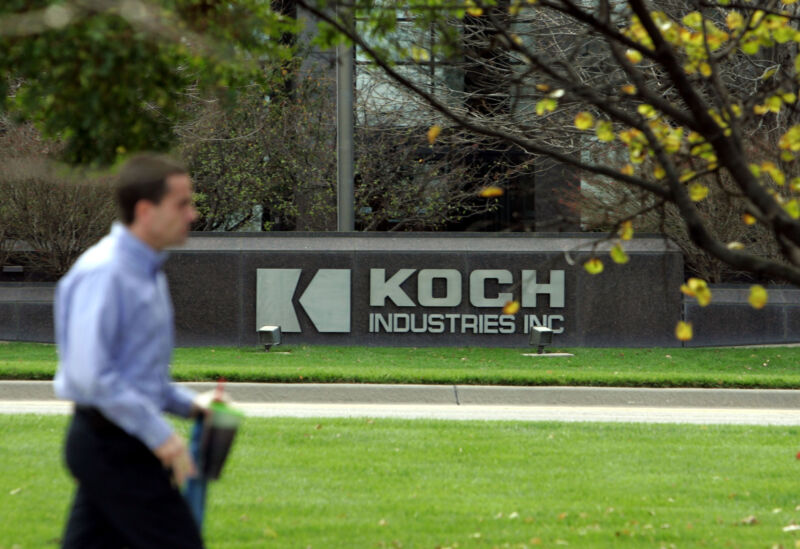
Oil-refining giant Koch Industries invests nearly $1B in battery companies
Enlarge/ Koch Industries Inc. headquarters in Wichita, Kansas.
Larry W. Smith/Bloomberg
Koch Industries—the conglomerate owned by Charles Koch and the heirs of David Koch, men who donated heavily to groups that helped politicize the science of climate change—is reportedly investing hundreds of millions of dollars in battery companies.
The privately held company has its fingers in a range of industries, from oil refining to chemical production, lumber and paper mills, glass, and electronics firm Molex, which created a popular computer interconnection. But according to a Wall Street Journal report, Koch Industries has become one of the largest investors in the battery world outside of automakers and their suppliers.
The firm has sunk at least $750 million into battery makers and battery material companies over at least 10 investments, the Journal reports. The sector has experienced rapid growth over the last decade, and battery technology continues to improve at a remarkably steady pace.
Koch Industries isn’t commenting on the investments. While they may appear to be an about-face for a company largely built on drilling and refining carbon, the stakes are also well-timed hedges that don’t stray far from its expertise. The firm has typically focused on extractive industries and the products that result from them. After its initial success in oil refining and chemical production, Koch Industries branched out into oil and gas pipelines, fertilizer production, lumber and paper mills, and glassmaking.
In that light, Koch’s investments in battery companies don’t seem so strange. Its largest investment, $225 million, is in Aspen Aerogels, which makes materials for battery anodes and thermal barriers to prevent battery fires. Some of its other products can be used to insulate buildings and industrial facilities where high or low temperatures are important, such as petrochemical refineries.
Koch Industries’ investment arm also put $100 million into each of three companies that are more tightly focused on batteries. Standard Lithium is a Canadian company that is developing lithium mines in the US. Another, Eos Energy, is based in Massachusetts and is concentrating on more affordable grid-scale batteries using zinc. And Canadian company Li-Cycle Holdings is focusing on lithium-ion battery recycling using mechanical and hydrometallurgical processes, which are less energy-intensive than the usual pyrometallurgical processes that melt cells to recover different materials.
Two other investments are in companies further down the supply chain. Norway-based Freyr Battery, which Koch has a 10 percent stake in, is working to mass-produce higher-density, lower-carbon battery cells for EVs and grid storage, and Colorado-based Solid Power is working to develop solid-state batteries and battery materials. Koch participated in a $165 million funding round for Solid Power a month after Ford and BMW participated in another early-stage round.
The extent of Koch Industries’ involvement in batteries may represent yet another turning point in the clean tech world. “The speed of the energy transition is directly correlated with companies like Koch participating in it,” Tom Jensen, CEO of Freyr Battery, told the Journal.
https://arstechnica.com/?p=1843072
Google routinely hides emails from litigation by CCing attorneys, DOJ alleges
Enlarge/ Google CEO Sundar Pichai uses his phone during the Allen & Company Sun Valley Conference on July 12, 2018, in Sun Valley, Idaho.
The US Department of Justice and 14 state attorneys general yesterday asked a federal judge to sanction Google for misusing attorney-client privilege to hide emails from litigation.
“In a program called ‘Communicate with Care,’ Google trains and directs employees to add an attorney, a privilege label, and a generic ‘request’ for counsel’s advice to shield sensitive business communications, regardless of whether any legal advice is actually needed or sought. Often, knowing the game, the in-house counsel included in these Communicate-with-Care emails does not respond at all,” the DOJ told the court. The fact that attorneys often don’t reply to the emails “underscor[es] that these communications are not genuine requests for legal advice but rather an effort to hide potential evidence,” the DOJ said.
The DOJ made its argument in a motion to sanction Google “and compel disclosure of documents unjustifiably claimed by Google as attorney-client privileged” and in a memorandum in support of the motion. “The Communicate-with-Care program had no purpose except to mislead anyone who might seek the documents in an investigation, discovery, or ensuing dispute,” the DOJ alleged.
CCing lawyers is a common practice, but the DOJ says Google took it to an “egregious” level. “Google’s institutionalized manufacturing of false privilege claims is egregious, spanning nearly a decade and permeating the company from the top executives on down,” the DOJ said.
The practice “continued unabated after the company was on notice of the Department of Justice’s investigation and even after the filing of the complaint in this action,” the DOJ said. The DOJ also said, “it is well settled that copying an attorney does not confer privilege” on its own.
DOJ: Emails relevant to Google search monopoly
The new motion and memorandum are part of an antitrust suit the DOJ and state attorneys general filed in October 2020. In the suit, the government plaintiffs alleged that Google is “unlawfully maintaining monopolies in the markets for general search services, search advertising, and general search text advertising in the United States through anticompetitive and exclusionary practices.” The case is in US District Court for the District of Columbia.
The DOJ said in yesterday’s motion that Google’s Communicate-with-Care program shields communications that are relevant to the government’s allegations:
In 2016, Google instructed employees to create artificial indicia of privilege for all written communications related to revenue-share agreements and Mobile Application Distribution Agreements (MADAs), the exclusionary agreements at the heart of this action. Google reiterated those instructions after the Department of Justice issued its first Civil Investigative Demand in the investigation preceding this case. The Court should, therefore, sanction Google for its deliberate and deceptive misuse of the attorney-client privilege and order the company to produce, unredacted, all emails between non-attorneys where included in-house counsel did not bother to reply, indicating that any request for legal advice was most likely a pretext.
The 2016 training was held “after the European Commission opened a formal investigation into Google’s search-distribution practices on Android,” the DOJ said. Google issued similar instructions after the DOJ began investigating, and the “strategy worked. Google’s outside counsel often accepted Google employees’ artificial claims of privilege at face value. After Plaintiffs’ extensive efforts to uncover and challenge erroneous privilege claims, Google’s outside counsel eventually deprivileged tens of thousands of documents initially withheld or redacted on the basis of privilege,” the DOJ said.
Google responded in a statement to Axios, saying, “Our teams have conscientiously worked for years to respond to inquiries and litigation, and suggestions to the contrary are flatly wrong. Just like other American companies, we educate our employees about legal privilege and when to seek legal advice. And we have produced over four million documents to the DOJ in this case alone—including many that employees had considered potentially privileged.” We contacted Google today and will update this article if the company provides any further response.