SEC will require companies to list greenhouse emissions, climate risks

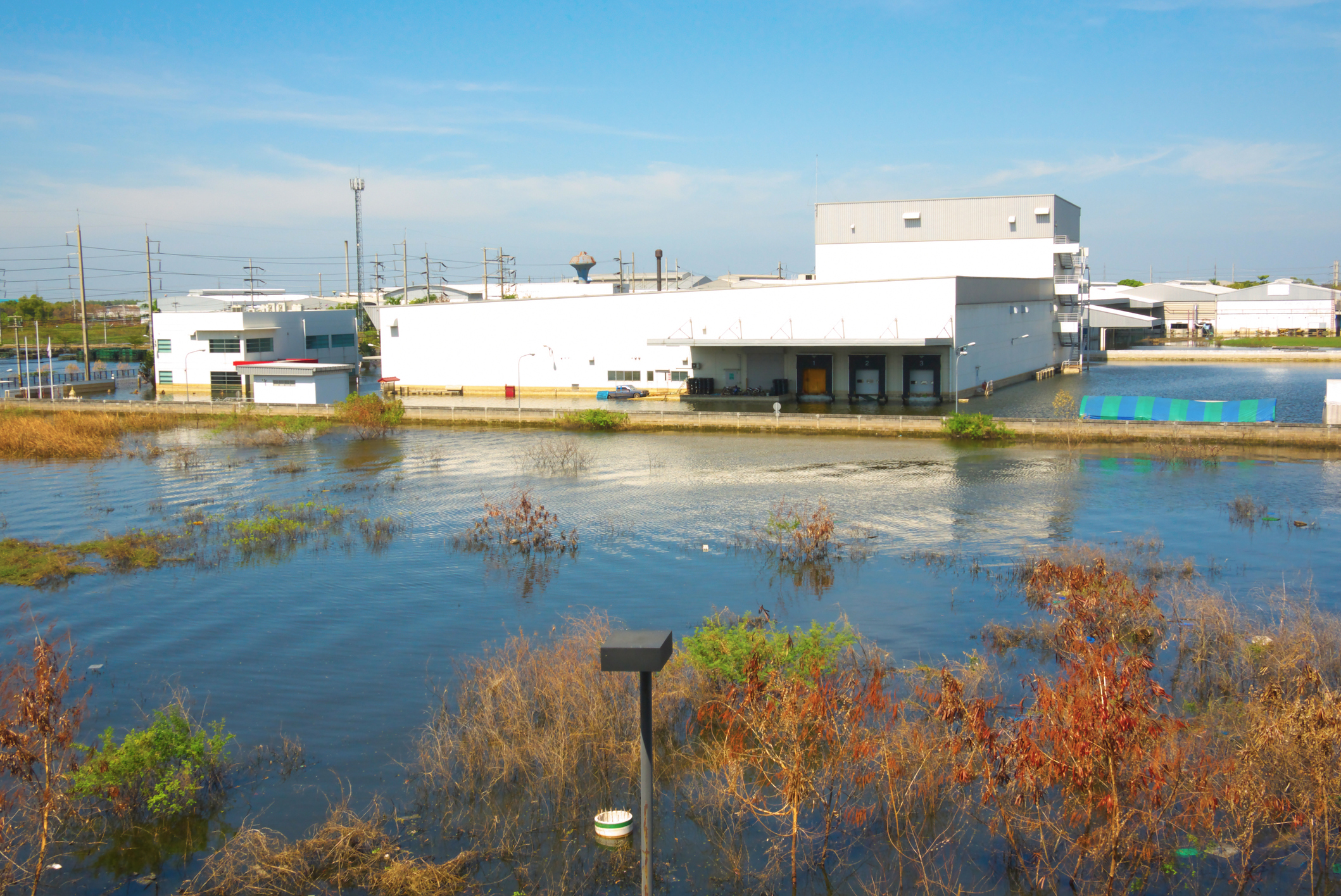
Image of a flooded warehouse.
Enlarge / It can be tough to run a business when your loading dock is under water.

On Monday, the US Securities and Exchange Commission (SEC) announced new rules about disclosing climate risks for companies listed on US-based stock exchanges. The rules are meant to give investors a clearer sense of how companies manage present and future challenges posed by climate change and by attempts to reduce greenhouse gas emissions. The rules will be published in the Federal Register for public comment shortly. A final version is expected later this year, and the lawsuits are likely to begin afterward.

In the announcement, SEC Chair Gary Gensler said the new rules adhere to the organization’s mission. “Our core bargain from the 1930s is that investors get to decide which risks to take,” he said, “as long as public companies provide full and fair disclosure and are truthful in those disclosures.” Typically, risk disclosure occurs in required formal filings that companies make with the SEC, like quarterly financial statements.

Some companies disclose their risks voluntarily, but the absence of standards allows them significant leeway over what to reveal. And many other companies choose not to disclose anything related to climate.

The proposed rules have two components. One is focused on direct risks to a company posed by climate change, such as rising oceans or increased weather extremes. A company would be required to disclose strategies for managing these risks, the costs they impose on the company, and “how any identified climate-related risks have affected or are likely to affect the registrant’s strategy, business model, and outlook.”

The disclosures would also have to include information regarding a company’s greenhouse gas emissions, which have the potential to alter its financials as countries start putting a price on carbon released into the atmosphere. The SEC would have the companies disclose the emissions that occur directly due to their activities, including those associated with their electricity supply. Each company would also have to disclose emissions associated with its supply chain and “downstream activities of its value chain.” This would include the emissions related to things like shipping products to customers.

The rules would phase in over the next four years, and small companies would be exempt from some of the more complicated disclosures.

The general outline of the rules seems sensible. Few would argue that our warming climate poses no risks, and some countries have already placed prices on greenhouse gas emissions that pose a more significant threat to some industries than others. But under the present system, investors may be left in the dark about these risks or struggle to understand different methods of accounting for them.

Still, there will likely be legal challenges should the rules be enacted. A Reuters report quotes opponents who argue that the rules are outside of the SEC’s scope or else that there are better, less intrusive ways of describing climate risks.

https://arstechnica.com/?p=1842596


Starlink helps Ukraine’s elite drone unit target and destroy Russian tanks

Ukrainian Vice Prime Minister Mykhailo Fedorov shared this photo of Starlink user terminals on March 18.
Enlarge / Ukrainian Vice Prime Minister Mykhailo Fedorov shared this photo of Starlink user terminals on March 18.
Mykhailo Fedorov

SpaceX’s Starlink Internet is proving to be useful for Ukraine’s military as it fights the Russian invasion. In an article Friday titled, “Elon Musk’s Starlink helping Ukraine to win the drone war,” The Telegraph described how the satellite connection helps the Ukrainian army’s Aerorozvidka (Aerial Reconnaissance) unit do its work of “using surveillance and attack drones to target Russian tanks and positions.”

The Telegraph wrote:

Amid Internet and power outages, which are expected to get worse, Ukraine is turning to the newly available Starlink system for some of its communications. Drone teams in the field, sometimes in badly connected rural areas, are able to use Starlink to connect them to targeters and intelligence on their battlefield database. They can direct the drones to drop anti-tank munitions, sometimes flying up silently to Russian forces at night as they sleep in their vehicles.

The Ukrainian unit’s “most sophisticated drones are connected using Starlink,” The Times of London wrote. “If we use a drone with thermal vision at night, the drone must connect through Starlink to the artillery guy and create target acquisition,” an Aerorozvidka officer told the paper.

The Times wrote that Aerorozvidka “has been picking off tanks, command trucks, and vehicles carrying electronic equipment since the invasion began,” destroying dozens of “priority targets.”

“We strike at night, when Russians sleep,” unit commander Yaroslav Honchar told The Times.

Quality is “excellent,” Ukrainian official says

Ukrainian Vice Prime Minister Mykhailo Fedorov said Starlink is working well in an interview on Friday with The Washington Post. “‘The quality of the link is excellent,’ Fedorov said through a translator, using a Starlink connection from an undisclosed location. ‘We are using thousands, in the area of thousands, of terminals with new shipments arriving every other day,'” The Post reported.

Russian officials are not happy about SpaceX providing help to Ukraine. “When Russia implements its highest national interests on the territory of Ukraine, Elon Musk appears with his Starlink which was previously declared as purely civilian,” Dmitry Rogozin, director general of Russian space agency Roscosmos, said on Russia Today in early March, according to a translation.

“I warned about it, but our ‘muskophiles’ said he is the light of the world of cosmonautics,” Rogozin said. “Here, look, he has chosen the side. I don’t even blame him personally. This is the West that we should never trust.”

Over 5,000 satellite dishes in Ukraine

Starlink is also being used by Ukrainian civilians, though it isn’t clear by how many. The Post quoted an anonymous source who is “familiar with Starlink’s effort in Ukraine” as saying that there are over 5,000 Starlink terminals in the country.

“Fedorov’s agency is working to get Starlink terminals to regions where Internet access has been cut off, he said,” according to the Post. “The systems have in some instances been used to connect people when cellular networks in the country have been overloaded.”

The Starlink app that is used to help set up the service “reached a total of 98,000 installs across Ukraine’s App Store and Google Play combined,” The Wall Street Journal wrote last week. The download number came from analytics firm Sensor Tower.

Ukraine gov’t Tweet was SpaceX’s “permission”

On February 26, Fedorov used Twitter to ask SpaceX CEO Elon Musk to send Starlink terminals to Ukraine. Just 10 hours later, Musk responded, “Starlink service is now active in Ukraine. More terminals en route.”

SpaceX President Gwynne Shotwell later said at a Caltech event that SpaceX “had been working on trying to get permission—landing rights—to lay down capacity in Ukraine… for a month and a half or so,” according to SpaceNews.

“The company, she said, had been waiting for a letter formally granting landing rights, but it never came before Russian forces invaded the country February 24,” SpaceNews wrote. The Fedorov tweet served as permission, according to Shotwell. “They tweeted at Elon and so we turned it on,” Shotwell said. “That was our permission. That was the letter from the minister. It was a tweet.”

Fedorov has tweeted photos of Starlink shipments, including one on Friday. “A new batch of Starlink stations! While Russia is blocking access to the Internet, Ukraine is becoming more open to the entire world,” he wrote. The photos show that Ukraine has received the original version of the Starlink dish instead of the new one, but the two versions have similar capabilities.

Musk warned of Russian attacks on Starlink

Musk warned on March 3 of a “high probability” that Russia will target the satellite dishes because “Starlink is the only non-Russian communications system still working in some parts of Ukraine.” On March 5, Musk wrote that “Some Starlink terminals near conflict areas were being jammed for several hours at a time. Our latest software update bypasses the jamming.”

“Experts have warned that the devices could give away Ukrainians’ locations to Russian attackers, but that hasn’t been an issue so far, Fedorov said,” according to The Washington Post article. “The devices have usually been used in ‘densely populated areas where there would be a lot of civilians anyway.'”

Fedorov also said there don’t appear to be major Russian cyberattacks on Starlink yet, despite Musk’s mention of jamming. “They currently appear to be very busy attacking the websites of our small towns and villages,” Fedorov said. “I think they’re just not at that point yet.”

https://arstechnica.com/?p=1842557


The TikTok-Oracle deal would set two dangerous precedents

The TikTok-Oracle deal would set two dangerous precedents
Sam Whitney | Getty Images

In August 2020, President Donald Trump dropped a bombshell executive order banning TikTok in the United States. Since then, as TikTok has competed against other Big Tech companies—growing among teen users while Facebook and others have struggled—its ability to survive in the United States has remained under a cloud of uncertainty. Would regulators step in and kill off a product that had become a staple form of communication for some 100 million Americans?

That cloud seemed to lift last week in the wake of reports that TikTok will enter into a data storage deal with Oracle. In the short term, the agreement would be good for US users, enabling TikTok to invest more of its resources and energy into improving its product, rather than wrestling with the government.

But in the long run, the forecast looks bleaker. The deal would establish precedents likely to harm technology companies and their users.

The main concern US politicians have raised about TikTok is that because it’s owned by China’s ByteDance, the Chinese government could conceivably access any American data held by the company. The other big concern has been security risk. This deal would address both. Under the agreement, Oracle would store TikTok data for US users, ensure that data is not transferred to ByteDance, and be responsible for protecting user data from cybersecurity threats. Because this sensitive task will be performed by a US company with close ties to the government, TikTok should finally be able to put to rest the concern that its operations in the United States constitute a grave threat to American security.

Of course, the agreement exacts financial and technical costs from TikTok. The company will pay for third-party data storage, even as its competitors have sought to reduce their own costs and improve performance by storing data in their own data centers. Still, the agreement is far preferable to being banned or forced to cede a majority stake to a US company, two outcomes that seemed plausible in the summer of 2020. The costs are worth bearing because they will give TikTok the freedom to compete on its greatest strength: its product.

https://arstechnica.com/?p=1842172


How did a vast Amazon warehouse change life in a former mining town?

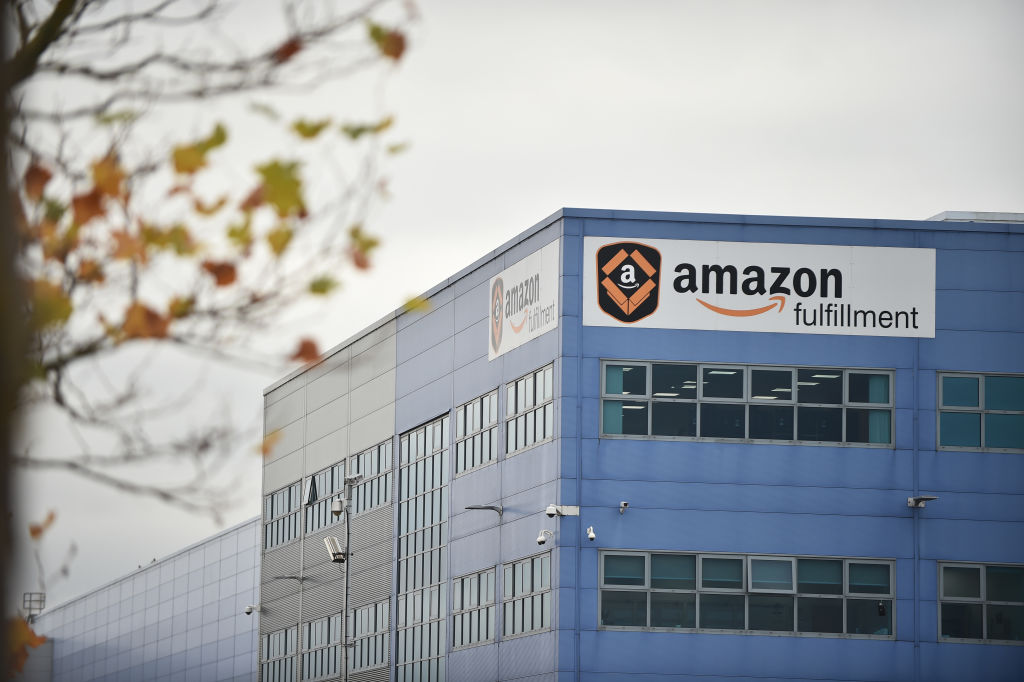
The Amazon Fulfilment Centre on November 24, 2021 in Rugeley, England.
Enlarge / The Amazon Fulfilment Centre on November 24, 2021 in Rugeley, England.
Nathan Stirk | Getty Images

Avril John was nine years old when she overheard a conversation in a train station that would stick in her memory. She and her family were on their way from Northumberland in the north of England to a small town in the Midlands called Rugeley, where a modern coal mine had just opened.

The year was 1960, and her father was one of many miners moving to the area for work. They were met at Birmingham station by a man from the National Coal Board. “I will always remember, for all I was only nine, how he said to my dad that [the mine] had just opened and it was guaranteed work for 100 years.”

Thirty years later, the mine closed. In 2011, the US online retailer Amazon opened a warehouse the size of nine football pitches right on top of it. When John, by then a 60-year-old, applied to work there, no one was making the kind of promises given to her father all those years ago: “At the Job Centre, it was stressed that it was till Christmas, possibly Easter, and maybe, maybe, a permanent job at the end of it. When I went to do my tests for the agency, it was stressed again: maybe.” None of her new colleagues should have been surprised when their jobs didn’t prove to be permanent, she says.

But people were surprised to begin with. In 2012, a year or so after the warehouse opened, I went to Rugeley to find out about the impact of Amazon’s 21st-century jobs on the old mining town. There was obvious symbolism in a place where the new economy was developing on top of the old; the pale-blue warehouse spread out next to the sooty brown towers of the dying power station.

Photographer Ben Roberts and I met plenty of people in those early days who were grateful for the new jobs inside that warehouse, but many were angry and disappointed with the insecurity of them. Workers on 1p above the minimum wage were divided into two groups: wearers of “blue badges” and “green badges.”

The former were permanent Amazon employees and the latter were temporary staff supplied by agencies who might one day achieve a blue badge or might be let go. The people of Rugeley were having to learn a new language of employment, one of “voice mechanisms” rather than unions, “associates” rather than workers, and where people were “released” rather than sacked.

Last year, Roberts and I returned to Rugeley to see what had changed for Amazon and the town in the intervening decade. Amazon’s value by market cap has risen from about $100 billion to $1.5 trillion. The personal wealth of Jeff Bezos, its founder, has swelled from roughly $23 billion to $170 billion. In Rugeley, meanwhile, the last remnants of the old coal economy have disappeared: the power station closed in 2016, and its cooling towers were destroyed in a controlled explosion last summer. After decades on the skyline, they crumpled like empty crisp packets and were gone within 10 seconds.

The anger toward Amazon, meanwhile, has dissipated. The company has become a better employer, at least in some ways. But it feels as if Amazon and Rugeley have learnt to live alongside each other, rather than to live together. Their stories are running along different tracks at different speeds, their fates not intertwined in the way of company towns of old. Whatever Rugeley’s future (and it doesn’t look bleak by any means), few in the town see Amazon at the heart of it.

An alarm sounds as Roberts and I stand at the reception desk in the Amazon warehouse. We catch sight of ourselves on a CCTV screen, a red circle around each of us. We step further apart, the circles turn green and the alarm stops. Amazon has been using the cameras to monitor social distancing between workers during the pandemic — just one of the ways in which computers hold the whip hand in this workplace.

https://arstechnica.com/?p=1842277


Proposed law in Minnesota would ban algorithms to protect the children

Illustration of binary code showing many ones and zeroes.
Getty Images | fotograzia

Minnesota state lawmakers are trying to prohibit social media platforms from using algorithms to recommend content to anyone under age 18. The bill was approved Tuesday by the House Commerce Finance and Policy Committee in a 15-1 vote. The potential state law goes next to the House Judiciary Finance and Civil Law Committee, which has put it on the docket for a hearing on March 22.

The algorithm ban applies to platforms with at least 1 million account holders and says those companies would be “prohibited from using a social media algorithm to target user-created content at an account holder under the age of 18.” There are exemptions for content created by federal, state, or local governments and by public or private schools.

“This bill prohibits a social media platform like Facebook, Instagram, YouTube, WhatsApp, TikTok, and others, from using algorithms to target children with specific types of content,” the bill summary says. “The bill would require anyone operating a social media platform with more than one million users to require that algorithm functions be turned off for accounts owned by anyone under the age of 18.” Social media companies would be “liable for damages and a civil penalty of $1,000 for each violation.”

Tech-industry lobbyists say the bill would violate the First Amendment, prevent companies from recommending useful content, and require them to collect more data on the ages and locations of users.

“Too many kids are struggling”

Rep. Kristin Robbins (R-Maple Grove) sponsored the bill, saying that “too many kids are struggling, or worse, dying,” according to an article about the committee vote on the Minnesota House website. Robbins said she was moved to act by Wall Street Journal articles about TikTok pointing minors to sex and drug videos and eating-disorder videos. Robbins “believes [the bill] could be a model for the rest of the country,” the article said. Online platforms’ use of algorithms has also come under fire in Congress.

Tech industry lobbying group NetChoice told Minnesota lawmakers that the bill is “well-intentioned” but “undermines parental choice, removes the access to beneficial technologies from young people, and is a clear violation of the First Amendment.” NetChoice members include Facebook, Google, TikTok, Twitter, and other tech companies.

“Clear violation of the First Amendment”

Florida and Texas laws that regulate social media in other ways have been blocked by federal judges who found that the laws violate the companies’ First Amendment rights to moderate user-submitted content. Florida’s law would have made it illegal for large social media sites like Facebook and Twitter to ban politicians, while the Texas law tries to ban “censorship.” Tech-industry groups won preliminary injunctions blocking both of them.

Democrats have a majority in the Minnesota House while Republicans have a majority in the state Senate. Commerce Finance and Policy Committee Chair Rep. Zack Stephenson (D-Coon Rapids) “was unimpressed by the argument that algorithms shouldn’t be barred because they are a vehicle companies use to send healthy, age-appropriate content. He compared it to saying you can’t ban cigarettes because it would prevent young people from the benefits of cigarette filters,” the article on the House website said.

“These companies are doing immense damage to our communities, to our children,” he said. “I am very determined to take some action before it is too late.”

NetChoice argued that the First Amendment case against the bill is strong, writing:

In Sorrell v. IMS, the Supreme Court ruled that information is speech and that a Vermont law could not prohibit the creation and dissemination of information including the selling of data to a database. Even more relevant here, multiple court cases have held that the distribution of speech, including by algorithms such as those used by search engines, are protected by the First Amendment. This proposal would result in the government restraining the distribution of speech by platforms and Minnesotans access to information. Thus, HF 3724 will be deemed by courts as a violation of the First Amendment.

https://arstechnica.com/?p=1842161


Mac Studio is far better for the climate than the iMac Pro—even with the display

Mac Studio is far better for the climate than the iMac Pro—even with the display
Apple | Getty Images | Aurich Lawson

With the new Mac Studio and Studio Display, Apple has essentially told enthusiasts and professionals that if they want higher-performance computing, they’ll need to move on from the 27-inch iMac all-in-one. That means buying two separate products that are made in two separate locations, shipped on two separate planes and trucks and arriving in two separate boxes.

If you’re an enthusiast or pro who is looking to maximize performance while minimizing your climate impacts, that doesn’t seem to be a winning combination. But according to Apple’s environmental reports, the combination of a Mac Studio and Studio Display produces nearly 50 percent fewer carbon emissions over its lifetime than the iMac Pro.

How did that happen?

Apple hasn’t said much beyond what was mentioned at the keynote and what’s in the environmental reports. But by diving into the reports, we can begin to understand where the company made improvements and where it might have gotten better at estimating its own footprint.

Life-cycle nitty-gritty

Apple, along with several other computer manufacturers, releases reports about the environmental impact of its products. These reports are usually created by experts within the company who query its supply chain and run the data through sophisticated models. The entire process is called life-cycle assessment, and one of the results is often a product’s carbon footprint, or how much carbon dioxide equivalent (CO2e) it produces over its lifetime.

Life-cycle analysis experts collect data from suppliers, calculate how much pollution different electric grids produce, and estimate how much energy it will take to recycle and dispose of the products when they reach the end of their lives. Approaches may vary, but most companies follow a pair of ISO standards to generate the reports.

The figures are not perfect, and ideally, companies will report the uncertainties of their estimates. (Apple, unfortunately, does not.) Typically, these reports are audited by third parties paid by the company. Apple’s description of its methodology doesn’t use the word “audit,” though, instead saying that its “data and modeling approaches are checked for quality and accuracy by the Fraunhofer Institute in Germany.” That’s probably something like an audit, but it’s a curious omission.

In a perfect world, life-cycle assessments would be audited by an independent organization that doesn’t have a financial relationship with the manufacturer. That’s obviously something the industry should strive for, but the status quo is better than nothing.

https://arstechnica.com/?p=1842081


Antitrust bill would bar mergers over $5B, allow regulators to unwind others

Antitrust bill would bar mergers over $5B, allow regulators to unwind others

Two Democratic lawmakers introduced a new bill on Wednesday that would institute a host of new regulations to scrutinize mergers, including a prohibition of those valued at more than $5 billion.

The Prohibiting Anticompetitive Mergers Act, sponsored by Sen. Elizabeth Warren (D-Mass.) and Rep. Mondaire Jones (D-N.Y.), would also prevent mergers and acquisitions that would increase market share among sellers and buyers beyond certain thresholds and would give regulators additional tools to unwind mergers.

While the $5 billion threshold, indexed to inflation, may capture headlines, this bill is perhaps most notable because it attempts to limit companies’ dominance as an employer, too, by preventing any one firm from controlling more than 25 percent of a labor market.

“The recent rise in corporate consolidation has increased unemployment, suppressed wages, and allowed companies to hike up prices even further during this period of inflation,” Jones said.

Market share measures

The new bill addresses a familiar antitrust concern, the concentration of sellers, by barring mergers that would give one company control of more than 33 percent of the market. Currently, many antitrust cases revolve around seller market power, but they tend to focus on a different measure.

Today, one statistic regulators consider when analyzing mergers is the Herfindahl-Hirschman Index, which is a measure of overall market concentration. HHI is calculated by squaring the market shares of competitors and adding them up. The US Department of Justice says that regulators “generally consider markets in which the HHI is between 1,500 and 2,500 points to be moderately concentrated and consider markets in which the HHI is in excess of 2,500 points to be highly concentrated.”

To see how that works, consider the case of wireless providers in the US. This example is somewhat hypothetical since it focuses on nationwide providers, but it’s illustrative nonetheless. According to Evercore ISI Research, in 2020, AT&T had 27 percent of the market, T-Mobile had 29 percent, Verizon had 42 percent, and cable companies had 2 percent. The HHI for the market at the time was 3,338, which is considered highly concentrated.

HHI is different from strictly looking at market share because it also attempts to describe relative market power. A market in which firms have a relatively equal share will have a lower HHI than one in which a single firm’s share is significantly larger than the others. It’s a more nuanced approach than a simple figure, like what is proposed in the new bill.

Focus on labor

The use of antitrust law to help balance the labor market isn’t novel, but neither has it been widely used in the US. Recently, though, there has been an increased focus on how market concentration harms workers. In the labor market, companies are considered buyers. If a company is dominant on the buy-side, it’s called a monopsony. Monopsonies can distort markets by throwing their weight around with sellers. For example, a dominant retailer can impose onerous terms on suppliers because they have few other places to sell. But monopsonies can also affect wages, benefits, and employment among workers. 

“Labor market power is the mirror image of product market power,” legal scholars Suresh Naidu, Eric Posner, and Glen Weyl wrote in the Harvard Law Review in 2018. “New evidence suggests that many labor markets around the country are not competitive but instead exhibit considerable market power enjoyed by employers, who use their market power to suppress wages.”

The turning point may have been the Justice Department’s 2010 lawsuit against Google, Apple, and other tech companies regarding their anti-poaching agreements, Posner has noted. In the intervening years, economists and legal scholars alike have taken a fresh look at labor market concentration.

While the new bill may face resistance from Republicans, none of whom have signed on as cosponsors yet, it’s unlikely to be the last attempt to broaden antitrust policy to include the labor market.

“For the last five decades, big companies have had almost free rein over our economy,” Warren said, “squashing competitors, growing bigger and bigger, and abusing their market power to price gouge consumers and crush workers and small businesses. This unconstitutional behavior has to stop.”

https://arstechnica.com/?p=1841849


Tesla fires employee who posted YouTube videos of Full Self-Driving accident

A view from inside a Tesla car a moment before it hit a bollard that appears to separate a car lane from a bike lane.
Enlarge / A Tesla with Full Self-Driving enabled, a moment before hitting a bollard in San Jose.

Ex-Tesla employee John Bernal says he was fired for posting YouTube videos about Tesla’s Full Self-Driving (FSD) beta. He had been creating the videos for about a year. Bernal says that Tesla also cut off his access to the FSD beta in the 2021 Tesla Model 3 that he owns.

The firing and beta cutoff occurred shortly after Bernal posted a video on February 4 of a minor accident in which his Tesla car hit a bollard that appears to separate a car lane from a bike lane in San Jose. In a subsequent video on February 7 providing frame-by-frame analysis of the collision, Bernal said that “no matter how minor this accident was, it’s the first FSD beta collision caught on camera that is irrefutable.”

“I was fired from Tesla in February with my YouTube being cited as the reason why—even though my uploads are for my personal vehicle, off company time or property, with software I paid for,” Bernal said in the latest video, which was posted yesterday on his AI Addict channel. Bernal showed a notice he received that said his Full Self-Driving beta access was disabled “based on your recent driving data.” But that explanation didn’t seem to make sense because “the morning of being fired, I had zero improper use strikes on my vehicle,” he said.

Bernal said his job at Tesla involved helping to develop FSD and test-operating the software. His new video asked Tesla to re-enable the beta on his personal car but explained that he is continuing to test the Full Self-Driving beta in a replacement vehicle. “This channel is meant to educate the public… I care about finding important safety bugs, and I still want to help. Luckily, this is Silicon Valley, where there is plenty of beta to go around, so today I’m in a new Tesla,” he said.

[embedded content]
Self Driving Collision (Analysis).

Firing notice “did not include the reason”

We contacted Tesla about Bernal’s firing and will update this article if we get a response. As reported by CNBC, Bernal started working for Tesla “as a data annotation specialist in August 2020” and “was dismissed in the second week of February this year, after having moved into the role of advanced driver assistance systems test operator, according to records he shared with CNBC.”

Bernal’s “written separation notice did not include the reason for his firing,” but he said that “before he was dismissed, managers verbally told him he ‘broke Tesla policy’ and that his YouTube channel was a ‘conflict of interest,'” CNBC wrote. “Bernal said he was always transparent about his YouTube channel, both with his managers at Tesla and with the public… Bernal said he had never seen a policy barring him from creating car tech reviews on his own time using his own property.”

CNBC said it obtained a copy of Tesla’s internal social media policy and that it “makes no direct reference to criticizing the company’s products in public. The policy states, ‘Tesla relies on the common sense and good judgment of its employees to engage in responsible social media activity.'”

Bernal maintained that he “never disclosed anything in his videos that Tesla had not released to the public,” saying that “the FSD beta releases I was demonstrating were end-user consumer products,” according to CNBC.

First accident in a year of testing

In the video analyzing the accident, Bernal said he had tested the software for over a year and that this was his “first incident.” He also noted that he spent a year “human-labeling this software for Tesla” as an employee.

When the accident happened, Bernal was letting the Full Self-Driving features control the car but said he “activated the brakes as hard as I could” once it became clear it was going off course. The Tesla bent the bollard to the ground. “Luckily, it was only plastic,” he said.

“Some may say I should have reacted sooner, which I should have. However, in my year of testing, FSD is usually really good at detecting objects last-minute and slowing to avoid,” he said. While it wasn’t a major accident, Bernal said there are “multiple other instances in the same video of the FSD system attempting to go straight for other bollards after already hitting one. It was not a one-off occurrence.”

“Close Calls, Pedestrians, Bicycles!”

Bernal’s AI Addict channel has nearly 8,800 subscribers, and the two videos of the accident racked up about 230,000 views combined. Most of his videos over the past year focus on Tesla Full Self-Driving. In addition to last month’s accident videos, Bernal posted one in March 2021 titled “Close Calls, Pedestrians, Bicycles!“

Bernal told CNBC that after the March 2021 video first ran, “a manager from my Autopilot team tried to dissuade me from posting any negative or critical content in the future that involved FSD Beta. They held a video conference with me but never put anything in writing.”

https://arstechnica.com/?p=1841482


OAN sues AT&T, says being kicked off DirecTV may force it to shut down

OAN host Dan Ball urges viewers to contact AT&T.
Enlarge / Dan Ball, host of One America News show Real America.

One America News might have to shut down because of DirecTV’s decision to drop the right-wing network from its channel lineup, OAN said in a lawsuit against DirecTV and its owner AT&T.

DirecTV recently said it will drop OAN after their carriage contract expires in early April. DirecTV will also drop AWE (A Wealth of Entertainment), as OAN and AWE are both owned by Herring Networks. In a lawsuit filed on March 7 and reported by the Daily Beast on Friday, Herring Networks alleged that breach of contract and other violations were committed by AT&T, DirecTV, and AT&T Board Chairman William Kennard.

“As a result of the conduct of AT&T, AT&T Services, DirecTV, and Kennard, OAN and AWE might be forced off the air because Herring will no longer be able to broadcast OAN and AWE via DirecTV and Herring presently has limited alternative carriage options,” the lawsuit said. The nonrenewal “will result in damage to Herring exceeding $1 billion” if it isn’t reversed, the lawsuit said. The complaint was filed in California Superior Court in San Diego County and seeks both injunctive relief and financial damages.

“This is an action to redress the unchecked influence and power that Defendants have wielded in an attempt to unlawfully destroy an independent, family-run business and impede the right of American television viewers to watch the news media channels and programs of their choice,” Herring Networks alleged.

OAN slammed for misinformation

Herring claimed in a previous court case that it created OAN at AT&T’s request after AT&T “told us they wanted a conservative network.” The deal with AT&T and DirecTV provides OAN with most of its revenue.

OAN entered panic mode in January after DirecTV said it would drop the network. OAN host Dan Ball urged viewers to dig up “dirt” on Kennard, a Democrat who was the Federal Communications Commission chairman during the Clinton administration and US Ambassador to the European Union under President Barack Obama. “You bring me concrete evidence of whatever it may be: cheating on his taxes, cheating on his wife, saying racial slurs against white people,” Ball said on his show, alluding to the fact that Kennard is Black. “Whatever it may be. Find it for me. Bring it, and we will air it.”

Despite a recent spinoff, AT&T still owns 70 percent of DirecTV. AT&T announced it would drop OAN after pressure from advocacy groups who pointed out that OAN “is a major supporter of the Stop the Steal movement,” “stok[ed] violent calls for the attack on the US Capitol,” and airs “wall-to-wall COVID-19 disinformation.” OAN was also sued by voting-machine maker Dominion, which says it was defamed when OAN aired segments that claimed the 2020 presidential election was rigged.

Former President Donald Trump blasted AT&T and DirecTV for dropping OAN last month, blaming “radical left lunatics” and a “Communist movement.” Texas Attorney General Ken Paxton and five other Republication state attorneys general last week urged DirecTV to reverse the decision, claiming that “your failure to do so will… drive many millions of Americans to simply cancel your services outright, as President Trump and other leading figures have already called for.”

OAN and AT&T still have advertising deal

One big problem for Herring’s lawsuit is that AT&T didn’t break a carriage contract—it just decided not to sign a new one after the current deal expires. But Herring has a separate advertising deal with AT&T subsidiary Xandr that runs until July 2024 and claims it “reasonably” viewed this deal as “proof” that the carriage agreement would be renewed:

Herring reasonably believed that the Advertising Agreement was proof of a commitment to a long-term carriage relationship by AT&T, AT&T Services, and DirecTV. This belief was solidified by the fact that the Advertising Agreement was set to expire more than two years after the Affiliation Agreement was set to expire. Herring did not take issue with the term of the Advertising Agreement because Herring had a reasonable belief that the Affiliation Agreement would be renewed.

“Indeed, it would not make sense for AT&T Services to be the exclusive advertiser for OAN and AWE if DirecTV did not also carry OAN and AWE,” the lawsuit said.

The ad deal struck in 2019 lets AT&T “provide both traditional advertising and programmatic targeted advertising for Herring’s programs,” gave AT&T “the exclusive right to sell ad space” on the networks, “and required that Herring terminate its existing media vendor,” the lawsuit said. AT&T is selling Xandr to Microsoft, but the pending sale “will not include the portion of the company that sells commercials for DirecTV or OAN,” according to Reuters.

https://arstechnica.com/?p=1841247


Banks on alert for Russian reprisal cyberattacks on Swift

Banks on alert for Russian reprisal cyberattacks on Swift
NurPhoto | Getty Images

Big banks fear that Swift faces a growing threat of Russian cyberattacks after seven of the country’s lenders were kicked off the global payments messaging system over the weekend.

VTB, Russia’s second-biggest bank, and Promsvyazbank, which finances Russia’s war machine, were among the lenders removed on Saturday from Swift as part of the West’s sanctions campaign against Moscow in response to its invasion of Ukraine.

Senior executives responsible for cybersecurity at several banks told the Financial Times that the threat to Swift, which enables banks to send trillions in payments across borders every day, could escalate if more of Russia’s lenders are expelled from the system.

Sberbank, Russia’s biggest bank, and Gazprombank have so far been kept on Swift as they facilitate much of the West’s payments for Russian oil and gas.

The executives are concerned that Swift could be a more attractive target than individual banks, as it is a pinch point in the global financial network.

“There are lots of concerns about Swift,” said a financial regulator that supervises some of the banks. “Banks seem to be comfortable with their own cybersecurity levels, but a hit to Swift would be very detrimental to the whole banking system.”

Although banks have become increasingly concerned about Swift as a potential target, so far, Russia’s cyberattacks have targeted only Ukrainian government departments and infrastructure.

Executives with oversight of cyber defense within their banks told the FT they had put their teams on alert for potential reprisal attacks.

Swift plays a crucial role in global banking, with more than 11,000 financial institutions using the system, which facilitates trillions of dollars’ worth of transactions every day.

“During warfare, it’s the most effective place to hit—it’s the nucleus of the global banking system, the node that connects everything,” said one senior bank executive.

An executive overseeing cybersecurity at another lender said the threat level from Russian attacks had “risen considerably” in recent weeks.

“We model for cyberattacks on institutions like the Fed, but we think a hit on Swift is more likely in retaliation for Russian banks being kicked off it,” he added. “That would have huge consequences for the global banking network.”

Swift, a Brussels-based organization that is owned by its members and overseen by the G10 central banks, has previously reported attacks on its network by cyber criminals.

In 2016, hackers robbed $81 million from the Bangladesh central bank in one of the biggest bank heists in history through exploiting vulnerabilities in other banks on Swift. The hackers used malware to impersonate other banks on the system and send payment requests.

Analysts said the tactics resembled those used by hackers targeting Sony Pictures Entertainment in 2014, which the FBI blamed on North Korea.

In response, Swift started a new regime of mandatory controls for member banks and stepped up its monitoring of them.

It also launched a program to help its members improve their cyber defenses and share information on attacks with each other to protect the network.

In a statement, Swift said that all its services were operating as normal.

“Swift takes security very seriously, and we have a strong control environment in place for physical and cybersecurity,” it added. “Like banks, market infrastructures, and other financial institutions, we continuously monitor the threat landscape and adapt responses accordingly.”

© 2022 The Financial Times Ltd. All rights reserved Not to be redistributed, copied, or modified in any way.

https://arstechnica.com/?p=1841101