Google “hijacked millions of customers and orders” from restaurants, lawsuit says

Google “hijacked millions of customers and orders” from restaurants, lawsuit says

Google is being sued by a Florida restaurant group alleging that the tech company has been setting up unauthorized pages to capture food orders rather than directing them to the restaurant’s own site.

Google uses “bait-and-switch” tactics to get customers to place takeout or pickup orders through “new, unauthorized, and deceptively branded webpages,” according to the lawsuit, filed on behalf of Left Field Holdings, a restaurant company that runs Lime Fresh Mexican Grill franchises. On those pages, customers are prompted with large buttons to order with food delivery companies like GrubHub, DoorDash, or Seamless.

“Google never bothered to obtain permission from the restaurants to sell their products online,” the lawsuit says. “Google purposefully designed its websites to appear to the user to be offered, sponsored, and approved by the restaurant, when they are not—a tactic, no doubt, employed by Google to increase orders and clicks.”

In a statement to Ars, Google disputed “the mischaracterizations of our product” and said it would be defending itself against the lawsuit. “Our goal is to connect customers with restaurants they want to order food from and make it easier for them to do it through the ‘Order Online’ button,” spokesperson José Castañeda told Ars. “We provide tools for merchants to indicate whether they support online orders or prefer a specific provider, including their own ordering website. We do not receive any compensation for orders or integrations with this feature.”

Google acquisition

The “Order Online” button appears to be the result of a Google acquisition known as “The Ordering App,” a site that was originally marketed toward restaurants. “The Ordering app is an online ordering platform, powered by Google, and designed specifically for Restaurants to help customers order more seamlessly from the Google Business Profile,” the product’s Salesforce page says. While The Ordering App was initially set up to take a percentage of sales, Google waived it “to help support restaurants affected during the COVID-19 pandemic.”

It’s not clear when The Ordering App or the “Order Online” button changed tack or if it ever did—there’s very little information about the acquisition or the product that’s public—but the lawsuit alleges that at some point Google decided to market it to food delivery companies instead of restaurants.

Before the “Order Online” button appeared, Google search result pages for restaurant queries looked like many others do—a list of organic results accompanied by text ads. Then, in 2019, Google started rolling out the new button, which appears prominently in what the company calls the Business Profile, a collection of information about a business that appears alongside search results.

When users click the “Order Online” button, they’re directed to a page that in many cases contains large links to food delivery companies, complete with their logos. The restaurant’s own site gets a link as well, though it’s a small, generic “website” button. In some cases, Google provides an interface for assembling an order, complete with prices and descriptions of the menu items. Companies that have completed the “Order Online” setup with Google can also direct customers to their own online ordering services. Yet because many restaurants’ ordering sites are run by third parties, those links may not contain a restaurant’s name. In the case of Cambridge, Massachusetts, cafe Flour Bakery, for example, the option to order directly appears as “thelevelup.com”.

If restaurants haven’t completed the setup, Google appears to create a page anyway. It’s unclear how that happens, though it’s possible that a restaurant’s appearance in a delivery app is what triggers it. That isn’t always a sign of a business relationship between the restaurant and food delivery company, though. Many food delivery companies have been sued for adding restaurants without their consent.

“Google’s ‘Order Online’ button leads to an unauthorized online storefront—one owned and controlled by Google—wherein consumers can place orders for the restaurant’s products, all under the restaurant’s tradename,” the lawsuit says. “Google prominently features the restaurant’s tradename at the top of the page, above the restaurant’s address and menu, to give the user the distinct impression that the storefront and products are authorized and sponsored by the restaurant, when they are not.”

Food delivery app fees

If the restaurant has a relationship with the food delivery company, it gets charged a fee. These fees can be so high—15 to 30 percent in many cases—that the restaurant has no hope of making a profit from the order. “A restaurant’s motivation to partner with a Delivery Provider is almost never to make a profit on orders received from the Delivery Provider,” the complaint says. “Rather, a restaurant’s usual goal is to capture new customers that may later place orders with the restaurant outside of the Delivery Providers’ expensive platforms.”

But, the lawsuit says, because of the way Google’s “Order Online” feature is designed, it limits restaurants’ chances of taking orders directly.

Given the number of restaurants in the US, the lawyers representing Left Field Holdings are seeking class action, saying they believe there are “tens of thousands” of potential plaintiffs. “Since launching its unauthorized Storefront, Google has hijacked millions of customers and orders,” the lawsuit alleges.

https://arstechnica.com/?p=1840662


Activists are reaching Russians behind Putin’s propaganda wall

Activists are reaching Russians behind Putin’s propaganda wall
Nikolai Vinokurov | Getty Images

René has nothing to do with the invasion of Ukraine. The 34-year-old lives more than 1,000 km away in Nuremberg, Germany. He has no family there, and he’s never been to the country. But when Russia invaded, he wanted to help. So on the dating app Tinder, he changed his location to Moscow and started talking to women there about the war.

“I had a conversation with a girl who said [the invasion] is only a military operation and the Ukrainians are killing their own people and stuff like that, so I got into an argument with her,” says René, who asks not to share his surname because he doesn’t want his clients to know about his activism. “I also had some reactions like, ‘Thank you for telling us.’”

Since the Kremlin invaded Ukraine, Russians have existed behind a wall of propaganda that protects them from the details of what is happening on the ground. Russia’s state media calls the invasion a “special military operation,” never a war. Troops are pictured handing out aid, not blowing up buildings. According to official pollsters, the Kremlin’s narrative is sticking. Support for sending troops into Ukraine is high, lingering at around 70 percent. Although it’s unclear how reliable those numbers are, The New York Times reported anecdotal evidence that even Russians with Ukrainian relatives believe only military infrastructure is being targeted in “precision” strikes and that images showing violence against civilians are fake.

But an idea is gaining traction online: if Russians learn the truth about Ukraine, they might rise up and oust the war’s architect, President Vladimir Putin. In the past week, people have been testing that theory by sending messages to ordinary Russians through reviews on Tinder and Google Maps, and under state-sponsored posts on Facebook before the platform was blocked in Russia last week.

Reaching out to Russians siloed online was a tactic initiated by Ukrainian President Volodymyr Zelenskyy the night of February 23, when he posted a selfie video in Russian. “You are told this flame [war] will bring freedom to the Ukrainian people, but the people of Ukraine are already free,” he said. Then, early in the invasion, a volunteer army of hackers was drafted to Ukraine’s defense. But now even ordinary Internet users are finding a role in the war, using the social media platforms the Kremlin has not yet blocked. “Hello Russian people,” wrote one woman under a Facebook post by Russian news agency TASS last week. “Since the Kremlin influences all information, we from Germany want to inform you that a terrible war is going on in Ukraine provoked by Putin.”

“Reaching Russians within Russia is really, really hard for anyone because the Russian state maintains such tight control over their media environment,” says Laura Edelson, a computer scientist studying misinformation at New York University. She says the Russian state has been very effective at creating a shared set of beliefs: that the Ukrainian government is full of Nazis who are committing war atrocities. “What you want to do is chip away at that false narrative,” she says.

That is what René says he is trying to do on Tinder, one of the few social media platforms the West still shares with Russia. To kick off his Tinder campaign, he asked a Russian friend to translate some text urging people still living in the country to “speak out” against the war so he could use it as his profile picture on the app. After he shared the text he was using on Twitter, he noticed other people were also adopting the idea.

https://arstechnica.com/?p=1840403


Russia’s disinformation machinery breaks down in wake of Ukraine invasion

Russia’s disinformation machinery breaks down in wake of Ukraine invasion

For decades now, Vladimir Putin has slowly, carefully, and stealthily curated online and offline networks of influence. These efforts have borne lucrative fruit, helping Russia become far more influential than a country so corrupt and institutionally fragile had any right to be. The Kremlin and its proxies had economic holdings across Europe and Africa that would shame some of the smaller 18th-century empires. It had a vast network of useful idiots that it helped get elected and could count on for support, and it controlled much of the day-to-day narrative in multiple countries through online disinformation. And many people had no idea.

While a few big events like the US’s 2016 election and the UK’s Brexit helped bring this meddling to light, many remained unaware or unwilling to accept that Putin’s disinformation machine was influencing them on a wide range of issues. Small groups of determined activists tried to convince the world that the Kremlin had infiltrated and manipulated the economies, politics, and psychology of much of the globe; these warnings were mostly met with silence or even ridicule.

All that changed the moment Russian boots touched Ukrainian soil. Almost overnight, the Western world became overwhelmingly aware of the Kremlin’s activities in these fields, shattering the illusions that allowed Putin’s alternative, Kremlin-controlled information ecosystem to exist outside its borders. As a result, the sophisticated disinformation machinery Putin spent decades cultivating collapsed within days.

Russia’s network of influence was as complex as it was sprawling. The Kremlin has spent millions in terms of dollars and hours in Europe alone, nurturing and fostering the populist right (Italy, Hungary, Slovenia), the far right (Austria, France, Slovakia), and even the far left (Cyprus, Greece, Germany). For years, elected politicians in these and other countries have been standing up for Russia’s interests and defending Russia’s transgressions, often peddling Putin’s narratives in the process. Meanwhile, on televisions, computers, and mobile screens across the globe, Kremlin-run media such as RT, Sputnik and a host of aligned blogs and “news” websites helped spread an alternative view of the real world. Though often marginal in terms of reach in and of themselves (with some notable exceptions, such as Sputnik Mundo), they performed a key role in spreading disinformation to audiences in and outside of Russia.

But the digital realm is where Russia found the most success in opening new fronts in its disinformation war. Social media, quasi-legitimate blogs, and bots reached ordinary people en masse all the time. With skill and care, Russian operatives tested and retested how best to polarize audiences. Using different platforms, content, and messaging, they built up a profile of users for their targeting purposes and then reflected back to them a picture of the world that would make them angry, frightened, and despairing—a picture that only exists online. For evidence of this, look no further than recent discourse in the West, where the Kremlin has been amplifying everything from climate denialism to the anti-vaxx movement to QAnon. All these things already existed but were the preserve of conspiracy theorists, quacks, and pranksters—now millions believe, in the face of reality, that climate change was made up by Green extremists, that “they” (whether it be Bill Gates, George Soros, or the World Economic Forum) are using vaccines to microchip people, that there’s a satanic cabal of baby-eaters in Washington, or all of the above.

https://arstechnica.com/?p=1840395


Posting “death to the Russian invaders” on Facebook now OK in some countries

Smoke rises from a Russian tank destroyed by Ukrainian forces in the Luhansk region on February 26, 2022. (Photo by Anatolii Stepanov / AFP via Getty Images)
Enlarge / Smoke rises from a Russian tank destroyed by Ukrainian forces in the Luhansk region on February 26, 2022. (Photo by Anatolii Stepanov / AFP via Getty Images)
Anatolii Stepanov / AFP

As Russia’s invasion of Ukraine grinds on, Meta is temporarily changing its policies to allow users on Facebook and Instagram to post calls for violence against—and even the deaths of—Russian soldiers and political figures, including Russian President Vladimir Putin and Belarusian President Alexander Lukashenko.

“As a result of the Russian invasion of Ukraine, we have temporarily made allowances for forms of political expression that would normally violate our rules like violent speech such as ‘death to Russian invaders,’” Meta spokesperson Andy Stone said on Twitter. “We still won’t allow credible calls for violence against Russian civilians.”

The temporary policy exception was recently sent to Facebook and Instagram moderators, and emails detailing the change were revealed by Reuters. The exceptions mark the social media company’s latest attempt to adapt to the shifting geopolitical situation.

“We are issuing a spirit-of-the-policy allowance to allow T1 violent speech that would otherwise be removed under the Hate Speech policy when: (a) targeting Russian soldiers, EXCEPT prisoners of war, or (b) targeting Russians where it’s clear that the context is the Russian invasion of Ukraine (e.g., content mentions the invasion, self-defense, etc.),” the email said. “We are doing this because we have observed that in this specific context, ‘Russian soldiers’ is being used as a proxy for the Russian military. The Hate Speech policy continues to prohibit attacks on Russians.”

The change apparently only applies to users in Armenia, Azerbaijan, Estonia, Georgia, Hungary, Latvia, Lithuania, Poland, Romania, Russia, Slovakia, and Ukraine.

Meta also is allowing for some praise of the Azov Battalion, a right-wing extremist militia that is fighting Russian soldiers in the eastern Donbas region, The Intercept reported. The exception is “strictly in the context of defending Ukraine or in their role as part of the Ukraine National Guard,” a Meta spokesperson told Reuters.

In response, the Russian government has opened an investigation into Meta and is looking to designate the company as an “extremist organization.”

“Meta’s aggressive and criminal policy leading to incitement of hatred and hostility toward Russians is outrageous,” the Russian Embassy in Washington, DC, said. “We demand that the US authorities stop the extremist activities of Meta and take measures to bring the perpetrators to justice.”

Ars has contacted Meta for further comment and clarification. We will update this article if we receive a reply.

https://arstechnica.com/?p=1840384


Router and modem rental fees still a major annoyance despite new US law

Network cables plugged into a modem.
Getty Images | Jill Ferry Photography

Consumer Reports wants the Federal Communications Commission to take a closer look at whether Internet service providers are complying with a US law that prohibits them from charging hardware rental fees when customers use their own equipment. In a filing submitted to the FCC this week, Consumer Reports said it asked members about their Internet bills and got over 350 responses, with some suggesting violations of either the letter or spirit of the law.

“Some contain allegations that the law is being violated, whereas others state the new statute is being respected. Many more stories suggest that ISPs dissuade consumers from using their own equipment, typically by refusing to troubleshoot any service disruptions if consumers opt not to rent the ISP’s devices. Such practices result in de facto situations where consumers feel pressured or forced to rent equipment that they would prefer to own instead,” Consumer Reports told the FCC.

Consumer Reports’ filing came in response to the FCC asking for public comment on the implementation of the Television Viewer Protection Act (TVPA), which took effect in December 2020. In addition to price-transparency rules for TV service, the law prohibited TV and broadband providers from charging rental or lease fees when “the provider has not provided the equipment to the consumer; or the consumer has returned the equipment to the provider.”

All the comments collected by Consumer Reports are available here. The FCC filing includes examples of complaints about AT&T, Comcast, Verizon, Charter Spectrum, Frontier, Windstream, and Cox, though the complaints weren’t all about rental fees.

Frontier’s bogus rental fee was outlawed

Consumer Reports has been researching cable bills for years. The group’s new FCC filing noted that its earlier research “confirmed a disturbing new business practice first reported by Ars Technica in 2019. Frontier Communications reportedly was charging a monthly rental fee for broadband modems provided to consumers even when consumers were not using that equipment because they were already using their own purchased modem and/or routers. Absurd as it may sound, consumers were being made to pay for something they neither purchased nor needed to receive Internet service.”

Congress subsequently passed the law banning such bogus charges. Complaints included in the Consumer Reports filing indicate that Frontier has complied with the law but is still annoying customers with other fees.

“Frontier FiOS used to charge me a router fee, although I have my own router. Now they don’t have that explicit fee, but they do charge an ‘Internet Infrastructure Surcharge’ ($6.99) and a ‘Frontier Secure Personal Security Bundle’ ($5.99 after ‘discount’),” a customer in Torrance, California, wrote.

“After the router fee was made illegal by the act of Congress, I quickly called up Frontier to have the fee removed, which they did going forward,” wrote a customer in Flower Mound, Texas. “However, a few months later, Frontier increased their infrastructure charge (another bogus fee) about $3 or $4 if I recall correctly. So in my mind, Frontier did a bait and switch and is just trying to play the bogus fee game but not calling it a router fee any longer.”

We’ve written multiple stories about Frontier’s sneaky “Internet Infrastructure Surcharge,” which was raised from $4 to $7 per month last year. Frontier claims the charge is “necessary to ensure 24×7 support of Internet access.”

Potential violations

In its call for public input, the FCC asked for comment on “the extent to which (if at all) subject entities continue to assess charges for equipment that are expressly prohibited by the statute.” The FCC’s specific questions were as follows:

For example, are any providers of covered services or fixed broadband Internet access services continuing to impose fees on consumers for the use of covered equipment that has been provided by the consumer? Are such providers assessing charges for the rental, lease, or provision of covered equipment that they have not provided to the consumer? Are any such providers imposing fees for the rental, lease, or provision of covered equipment that the consumer has returned to the provider, and which fees otherwise are not permissible under the statute?”

Consumer Reports said its questions for members were “designed to measure whether or not ISPs were in compliance… and also to solicit consumer opinion on whether or not it was difficult to use consumer-owned equipment versus renting those devices from the provider. Notably, neither of the two cable industry trade associations mentioned this issue in any detail in their comments filed last month at the Commission.”

Consumer Reports said that some of the responses “suggest the statute is not being complied with as vigorously as Congress intended… These allegations merit further investigation by the Commission.” Consumer Reports offered to share contact information for the customers with the FCC so it can investigate further.

https://arstechnica.com/?p=1840245


Biden considers digital dollar—here’s how it could differ from regular money

Illustration of fiber Internet lines with dollar signs.

President Joe Biden today issued an executive order that could lead to the US creating a digital currency.

“My Administration places the highest urgency on research and development efforts into the potential design and deployment options of a United States CBDC [Central Bank Digital Currency],” the executive order said. “These efforts should include assessments of possible benefits and risks for consumers, investors, and businesses; financial stability and systemic risk; payment systems; national security; the ability to exercise human rights; financial inclusion and equity; and the actions required to launch a United States CBDC if doing so is deemed to be in the national interest.”

Biden’s order said a US-issued digital currency could be used to “support efficient and low-cost transactions, particularly for cross‑border funds transfers and payments, and to foster greater access to the financial system, with fewer of the risks posed by private sector-administered digital assets” such as bitcoin and other cryptocurrencies. But there are “potential risks and downsides to consider,” and Biden ordered federal agencies to prepare a report within six months analyzing the implications. Over 100 countries are already “exploring or piloting” CBDCs, the White House said.

Biden also ordered government agencies to develop policies for managing cryptocurrencies that already exist. “The rise in digital assets creates an opportunity to reinforce American leadership in the global financial system and at the technological frontier, but also has substantial implications for consumer protection, financial stability, national security, and climate risk,” the White House said. Biden’s order “encourages regulators to ensure sufficient oversight and safeguard against any systemic financial risks posed by digital assets.”

Biden’s order noted that “negative climate impacts and environmental pollution… may result from some cryptocurrency mining.” There would be no need for mining with a digital currency issued by a central bank.

Bitcoin’s price was up 8 percent today, and other cryptocurrencies rose as Biden’s order “appeared to take a supportive stance toward the industry,” CNBC wrote. Bitcoin’s price has been highly volatile, as it “began the pandemic at $7,300, peaked at around $68,000 before falling back down to about $39,000,” a Biden administration official noted in a call with reporters yesterday.

What is a Central Bank Digital Currency?

The Federal Reserve explains that a Central Bank Digital Currency “is generally defined as a digital liability of a central bank that is widely available to the general public.” That’s in contrast to the two current types of central bank money in the US: “physical currency issued by the Federal Reserve and digital balances held by commercial banks at the Federal Reserve,” a Federal Reserve FAQ said.

“While Americans have long held money predominantly in digital form—for example in bank accounts, payment apps or through online transactions—a CBDC would differ from existing digital money available to the general public because a CBDC would be a liability of the Federal Reserve, not of a commercial bank,” the Federal Reserve says. Because it would be a liability of the Federal Reserve, “a CBDC would be the safest digital asset available to the general public, with no associated credit or liquidity risk.”

A US-issued digital currency would in some ways be similar to stablecoins that are pegged to the value of the dollar. A major difference is that CBDCs would be issued by the Federal Reserve itself.

The Federal Reserve says it hasn’t decided whether to pursue a digital currency but notes that a CBDC “could provide households and businesses a convenient, electronic form of central bank money, with the safety and liquidity that would entail; give entrepreneurs a platform on which to create new financial products and services; support faster and cheaper payments (including cross-border payments); and expand consumer access to the financial system.”

“The Federal Reserve does not intend to proceed with issuance of a CBDC without clear support from the executive branch and from Congress, ideally in the form of a specific authorizing law,” the Federal Reserve also says.

A US CBDC wouldn’t replace cash or paper currency. “The Federal Reserve is committed to ensuring the continued safety and availability of cash and is considering a CBDC as a means to expand safe payment options, not to reduce or replace them,” the Federal Reserve said.

Senior Biden administration officials told reporters that “the implications of potentially issuing a digital dollar are profound.” But those officials added that they intend to “maintain the centrality of the dollar in global financial markets and in the global economy.” 

https://arstechnica.com/?p=1839949


Republican county clerk indicted in voting-machine breach, arrest warrant issued

Mugshots of Tina Peters and Belinda Knisley.
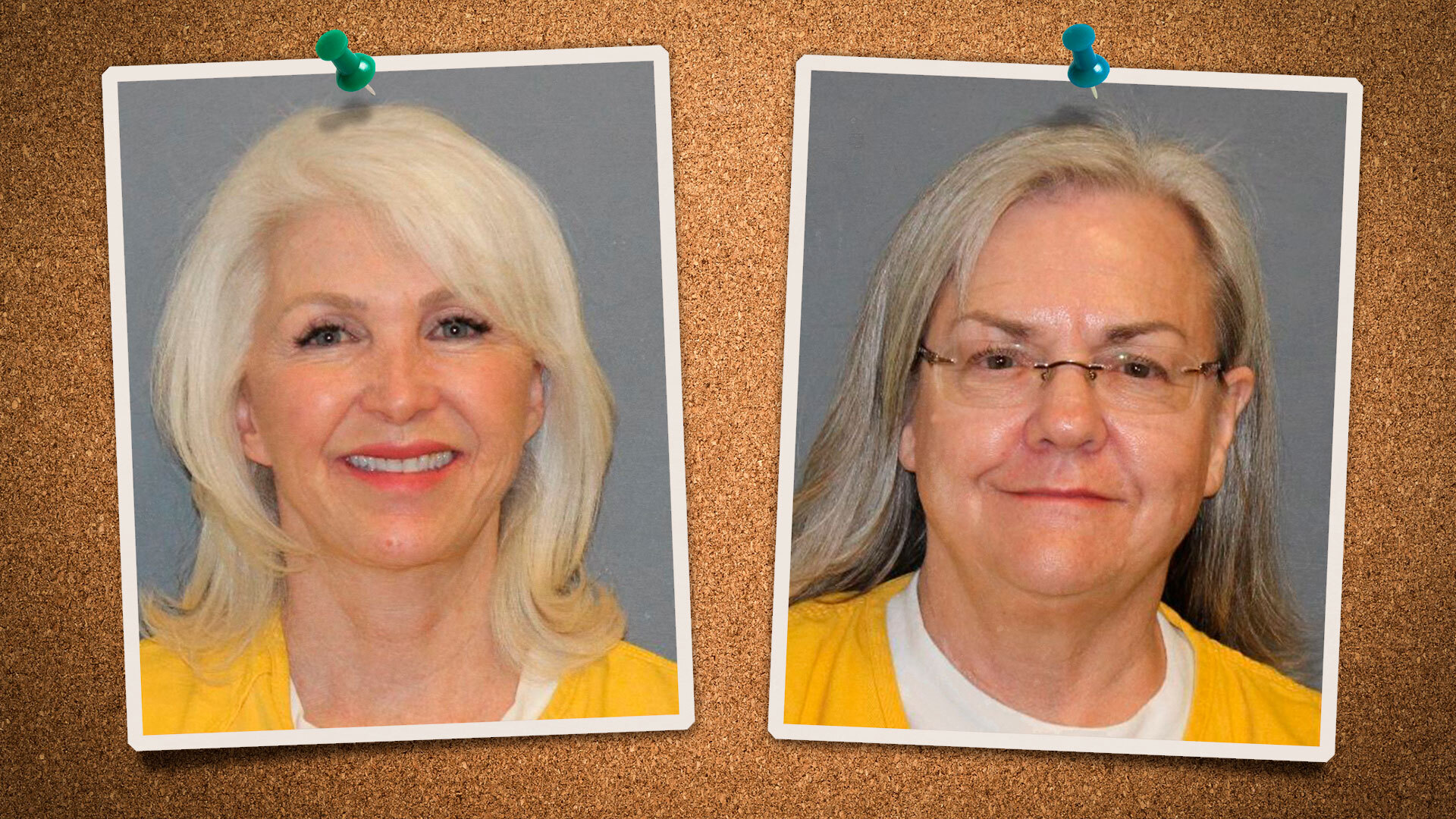
Enlarge / Booking photos of Tina Peters (left) and Belinda Knisley (right) provided by the Mesa County Sheriff’s Office after Peters and Knisley turned themselves in on March 9, 2022.
Aurich Lawson

A grand jury in Colorado yesterday indicted Mesa County Clerk Tina Peters on 10 charges related to the leak of voting-system BIOS passwords and other confidential information that ended up being published by QAnon conspiracy theorist Ron Watkins. Deputy Clerk Belinda Knisley was indicted on six counts.

Arrest warrants were issued for both Peters and Knisley, and bond was set at $500,000 for each woman. Peters, a Republican, last month announced she intends to run for secretary of state, saying that “Colorado deserves a secretary of state who will stand up to the Biden administration that wants to run our country into the ground with nationalized elections.”

In April and May 2021, Peters and Knisley “devised and executed a deceptive scheme which was designed to influence public servants, breach security protocols, exceed permissible access to voting equipment, and set in motion the eventual distribution of confidential information to unauthorized people,” the indictment said. “Furthermore, these defendants, without permission or lawful authorization, also used the name and personal identifying information of Gerald ‘Jerry’ Wood to further their criminal scheme. This unlawful use of Mr. Wood’s identity by Tina Peters and Belinda Knisley also subjected Mr. Wood to various forms of liability and criminal exposure.”

Peters has promoted former President Donald Trump’s conspiracy theory that voting machines were manipulated to help Joe Biden win the presidency. The FBI and local law enforcement raided Peters’ home in November as part of the investigation into the voting-machine security breach. She was also arrested and briefly detained by police last month when she was accused of resisting a search warrant.

Update at 6:15pm ET: Peters is now in custody after turning herself in to the Mesa County Detention Facility, the Mesa County Sheriff’s Office told Ars. Knisley turned herself in earlier today.

Trusted build meeting not so trustworthy

The indictment from a Mesa County grand jury charged Peters with three counts of attempting to influence a public servant, criminal impersonation, two counts of conspiracy to commit criminal impersonation, identity theft, first-degree official misconduct, violation of duty, and failing to comply with requirements issued by the secretary of state. Knisley was charged with three counts of attempting to influence a public servant, conspiracy to commit criminal impersonation, violation of duty, and failing to comply with requirements issued by the secretary of state.

The indictment centers on a May 2021 meeting about a “trusted build” software update that was supposed to ensure a secure chain of custody for the voting system. Before the meeting, Knisley had an IT employee shut off the surveillance cameras in the election offices. “Knisley stated in an interview that Tina Peters directed her to turn off the cameras,” the indictment said. Jessi Romero, who is the voting systems manager for the secretary of state’s office, told the grand jury “that Mesa County’s election staff had historically always kept their various security surveillance cameras on and operating,” the indictment said.

In April, Peters’ office asked the secretary of state’s office to let members of the public watch the trusted build, but Romero “informed Mesa County’s election staff that only required personnel from Dominion Voting Systems, the [secretary of state’s office], and the county will be permitted in the trusted build.”

https://arstechnica.com/?p=1839907


Rivian hit with shareholder lawsuit over surprise EV truck price hike

A person carries an air hose to a truck tire
Enlarge / That air compressor can output up to 150 psi.

Rivian, the electric vehicle manufacturer, is being sued (PDF) by a shareholder who alleges that the company’s surprise 20 percent price hike tarnished Rivian’s reputation and violated US securities laws.

The company made “untrue statements” in its IPO about the pricing of its R1T truck and R1S SUV, the lawsuit says. “Unbeknownst to investors,” the suit says, Rivian’s filings for the IPO contained statements that were “materially inaccurate, misleading, and/or incomplete because they failed to disclose, among other things, that the R1T and R1S were underpriced to such a degree that Rivian would have to raise prices shortly after the IPO.”

The lawsuit alleges that the surprise price increases would “tarnish Rivian’s reputation as a trustworthy and transparent company” and risk the cancellation of a “significant number” of the nearly 56,000 preorders the company had accumulated.

Rivian’s CEO RJ Scaringe as well as its chief financial officer, chief accounting officer, and its board of directors are named in the lawsuit along with the underwriters of Rivian’s IPO, including Morgan Stanley, Goldman Sachs, and JPMorgan Chase.

When contacted by Ars, a Rivian spokesperson declined to comment.

Rivian’s trucks have been widely praised in the automotive press, and, according to the company, nearly 56,000 customers placed $1,000 fully refundable deposits to buy either an R1T or R1S. For a first-time automaker, such rave reviews and reservation numbers are key to establishing a presence in the notoriously challenging industry.

Last week, many of those customers were outraged when Rivian raised prices on both the R1T and R1S by significant amounts. To get a truck with the same specifications, customers were now being asked to spend $12,000 more for an R1T and $14,500 more for an R1S. These prices represent increases of 17 percent and 20 percent, respectively. When announced, the price hikes applied to nearly every preorder—only customers whose vehicles were in or near production were exempt. Production has been slow to ramp up, so few customers were likely to be grandfathered in.

Within a day, the company partly reversed course by allowing customers to keep the initial pricing that had been advertised when they placed their $1,000 deposit. Customers who had canceled preorders placed before March 1 could have them reinstated if they chose.

Despite the reversal, the lawsuit alleges, the damage had been done. At issue are statements that Rivian made in its registration statement and prospectus, two key securities filings that are intended to help investors evaluate the company’s initial public offering. Specifically, as part of those filings, SEC regulations required Rivian to “describe any known trends or uncertainties that have had or that the registrant reasonably expects will have a material favorable or unfavorable impact on net sales or revenues or income from continuing operations.”

In its statements to the press at the time of the price hikes, Rivian said that “inflationary pressure” was to blame for the increases. Yet the shareholder complaint, citing Ars Technica’s coverage of Rivian’s price hikes, points to another lawsuit filed by Laura Schwab, the company’s former VP of sales and marketing.

One of Schwab’s allegations was that, to Rivian management, “it was clear that the vehicles were underpriced, and each sale would result in a loss for the company.” After Schwab repeatedly raised the issue, one senior executive “agreed that they would need to raise the vehicle prices after the IPO.”

The new shareholder complaint is asking for class-action status on behalf of all common stock shareholders who participated in the Rivian IPO on November 10, 2021, when the stock was offered at $78 per share. The day before the price hike was announced, Rivian traded for around $67 per share. But, the lawsuit points out, in the days after the price hike, the company’s value has tumbled to around $42 per share.

https://arstechnica.com/?p=1839532


Elon Musk tries to get out of settlement with SEC, says he was “forced” into it

Elon Musk standing and gesturing with his hands while he speaks at a press conference.
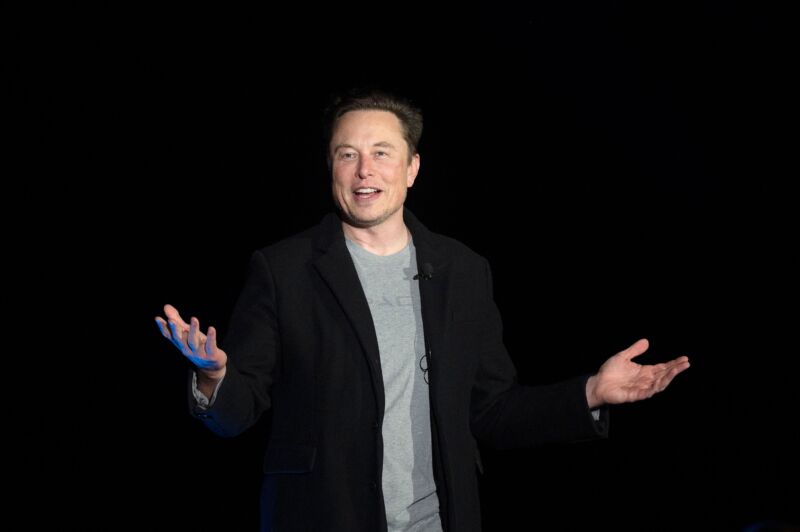
Enlarge / Elon Musk at a press conference at SpaceX’s Starbase facility in Texas on February 10, 2022.

Tesla CEO Elon Musk today asked a federal judge to terminate a 2018 settlement with the Securities and Exchange Commission, saying he’s tired of the SEC using the consent decree to “micro-manage” his Twitter activity and that he was “forced” into signing the deal. Musk also wants the court to quash an SEC subpoena that seeks documents related to whether he got pre-approval before posting a recent tweet about Tesla stock sales.

“Unlike other consent decrees, the SEC interprets the agreement in this case to permit it to micro-manage Mr. Musk’s Twitter activity,” according to Musk’s memorandum of law supporting his motion to quash the subpoena and terminate the consent decree. “Indeed, the SEC believes it may police speech that falls outside the bounds of Section 10(b) of the Securities Exchange Act of 1934, which prohibits fraud in the purchase or sale of securities and statements or omissions of material fact.”

The 2018 settlement required Tesla to impose controls on Musk’s social media statements. The settlement was reached to resolve the SEC’s complaint that “Musk’s misleading tweets” about taking Tesla private caused the stock price to jump “and led to significant market disruption.” Musk and Tesla also each agreed to pay $20 million in penalties.

Musk: “First Amendment freedoms are imperiled”

Musk claimed that “the consent decree should be terminated because compliance with it has become impossible under the SEC’s skewed conception of its authority.” The filing in US District Court for the Southern District of New York continued:

Nothing less than First Amendment freedoms are imperiled. The more the SEC monitors Mr. Musk’s Twitter activity, and forces others to do the same, the more Mr. Musk’s freedom of expression is infringed.

Musk’s filing said an SEC subpoena to Tesla on November 16, 2021, “seeks information relating to whether Mr. Musk sought and obtained approval from Tesla before he posted the November 6, 2021 tweets.” That’s a reference to Musk polling Twitter users about whether he should sell 10 percent of his Tesla stock. The SEC issued a similar subpoena to Musk on November 29, demanding that he “produce documents pertaining to (1) the review or pre-approval of statements he posted on Twitter and (2) his sale of Tesla stock or options,” Musk’s filing said.

Musk’s brother—Kimbal Musk, who serves on Tesla’s board of directors—sold Tesla shares valued at $108 million one day before the Twitter poll. An SEC insider-trading investigation is reportedly examining whether Elon Musk told his brother about the Twitter poll in advance. Musk’s filing says that “the SEC has used its subpoena power to continue investigating matters that were subject to settlements and then serially to start new investigations with no end in sight.” The filing then mentions in a footnote that the SEC leaked information about the insider-trading investigation to the press.

Musk is seeking an order stating that the November 29 subpoena “exceeds the investigatory power of the Commission and was issued in bad faith.” Musk argued that his poll was a way to gather information and “not a disclosure of information, much less information a company would have to report in SEC filings.” The poll “tweets did not include any information that Tesla would be required to disclose under the securities laws,” his court filing said.

Musk: “I never lied to shareholders”

In the August 2018 tweet that led to the complaint and settlement, Musk said he was “considering taking Tesla private at $420” and that he had secured funding. The SEC alleged that “Musk had not discussed specific deal terms, including price, with any potential financing partners, and his statements about the possible transaction lacked an adequate basis in fact.”

In another filing today, Musk wrote, “I never lied to shareholders. I would never lie to shareholders. I entered into the consent decree for the survival of Tesla, for the sake of its shareholders.” Musk told the court that “the SEC’s unrelenting regulatory pressure, combined with the attendant collateral consequence of the SEC’s complaint against me, caused a scenario in which I was forced to sign the consent decree in 2018.”

Judge rejected Tesla’s previous request

Tesla and Musk last month told US District Judge Alison Nathan that the SEC is “weaponizing” the 2018 settlement to muzzle Musk’s criticism of the government. They claimed that the SEC cannot issue subpoenas related to compliance with the settlement “without Court approval.” Nathan denied Tesla and Musk’s request for action, saying the request wasn’t specific enough.

“[T]o the extent that the Defendants have a non-frivolous basis to quash a subpoena in light of the Court’s prior orders in this case, the Defendants may make a motion, supported by briefing, that requests specific relief from the Court,” Nathan wrote on February 24.

Musk’s request today was more specific than the previous one that was denied, and he is seeking an oral argument on the motion.

https://arstechnica.com/?p=1839501


Netflix to leave Russia after defying order to carry state-run channels

A person's hand holding a TV remote control with a Netflix button.

Netflix is suspending its streaming service inside Russia after the country passed a law that would require the industry giant to carry Russian state-owned channels. This happens amid Russia’s invasion of the neighboring country of Ukraine.

“Given the circumstances on the ground, we have decided to suspend our service in Russia,” Netflix told Ars and other media outlets. Netflix stopped letting people in Russia sign up for new subscriptions and will prevent renewal of any existing subscriptions, a Netflix spokesperson told Ars. Once a subscriber’s monthly billing period ends, the person’s service will be halted.

Netflix previously said it would not comply with Russia’s “Vitrina TV law,” which would require it to carry 20 free-to-air Russian channels. “Given the current situation, we have no plans to add these channels to our service,” Netflix told media outlets last week.

The lineup of required channels includes the state-owned Channel One. A BBC article about how Russian TV channels report the invasion of Ukraine recounted a Channel One presenter stating “that Ukrainian troops ‘are preparing to shell residential houses’ and bomb warehouses with ammonia, in ‘acts of provocation against civilians and Russian forces.'” Russia has been telling media outlets not to call the country’s invasion of Ukraine “an attack,” “invasion,” or “declaration of war.”

Channel One is led by Konstantin Ernst, who was described in a 2019 New Yorker profile as “the Kremlin’s creative director” and “Putin’s unofficial minister of propaganda.”

Russian law

Netflix was reportedly required to comply with the Vitrina law by March 1. The company also recently stopped production of four Russian-language programs that were in the works.

The Vitrina law applies to services with over 100,000 subscribers in Russia, and “Netflix is the only international programmer that has enough subscribers to require compliance with the rule,” The Wall Street Journal wrote. Other channels that Netflix would have been required to carry reportedly include the Russian Orthodox Church’s channel Spas and the pro-Kremlin NTV, which is operated by a state-owned entity.

“Russian state-run media outlets have sought to advance President Vladimir Putin’s narrative that Ukraine is an aggressor that threatens Russia and have presented disinformation to support those claims,” the Journal article noted. “The Russian channels have adhered to the Kremlin’s line that its military action isn’t striking civilian targets and have played up the argument that Ukraine could revive its nuclear arsenal, a point meant to convey that Russia is acting out of self-defense.”

Netflix described its stoppage of service in Russia as a “suspension” rather than a permanent change and hasn’t ruled out restarting service in the future. Netflix has under 1 million subscribers in Russia but hasn’t provided a more specific user count. Netflix has 222 million paid subscriptions in over 190 countries.

Netflix in 2020 partnered with a Russian company to provide service in the country due to a Russian law requiring it to operate through a local company, a Netflix spokesperson said. Netflix is in the process of ending its business relationship with NMG, the Russian company it partnered with, the spokesperson said. NMG owns a minority stake in Channel One, which is majority owned by the Russian government.

TikTok suspends video due to Russian “fake news” law

Separately, TikTok said it is suspending livestreaming and video due to a Russian law that threatens prison sentences or fines for publication of information that contradicts Russia’s narrative about the country’s invasion of Ukraine. TikTok said it made the decision to protect “the safety of our employees and our users.”

“In light of Russia’s new ‘fake news’ law, we have no choice but to suspend livestreaming and new content to our video service while we review the safety implications of this law. Our in-app messaging service will not be affected,” TikTok said in a Twitter thread. TikTok is owned by Chinese company ByteDance.

The new Russian law also caused some Western news organizations to suspend operations in Russia.

https://arstechnica.com/?p=1838702