Russia mulls legalizing software piracy as it’s cut off from Western tech

Russia mulls legalizing software piracy as it’s cut off from Western tech
Aurich Lawson | Getty Images

With sanctions against Russia starting to bite, the Kremlin is mulling ways to keep businesses and the government running. The latest is a creative twist on state asset seizures, only instead of the government taking over an oil refinery, for example, Russia is considering legalizing software piracy.

Russian law already allows for the government to authorize—“without consent of the patent holder”—the use of any intellectual property “in case of emergency related to ensuring the defense and security of the state.” The government hasn’t taken that step yet, but it may soon, according to a report from Russian business newspaper Kommersant, spotted and translated by Kyle Mitchell, an attorney who specializes in technology law. It’s yet another sign of a Cyber Curtain that’s increasingly separating Russia from the West.

The plan would create “a compulsory licensing mechanism for software, databases, and technology for integrated microcircuits,” the Kommersant said. It would only apply to companies from countries that have imposed sanctions. While the article doesn’t name names, many large Western firms—some of which would be likely targets—have drastically scaled back business in Russia. So far, Microsoft has suspended sales of new products and services in Russia, Apple has stopped selling devices, and Samsung has stopped selling both devices and chips.

Presumably, any move by the Kremlin to “seize” IP would exempt Chinese companies, which are reportedly considering how to press their advantage. Smartphone-makers Xiaomi and Honor stand to gain, as do Chinese automakers. Still, any gains aren’t guaranteed since doing business in Russia has become riddled with problems, spanning everything from logistics to finance.

Plus, although China has been ramping up its criticism of US policies, the Communist Party is likely hesitant to undermine its lucrative stake in global trade. “Chinese companies have much more to lose than to gain by violating sanctions,” analysts at Gavekal Dragonomics said in a research report cited by The Wall Street Journal. “For most Chinese companies, Russia is just too small of a market for the business to be worth the risk of getting cut off from developed markets or being sanctioned itself.”

Software piracy in Russia is nothing new, of course. A 2019 survey by ESET, a Slovakian security company, found that 91 percent of Russians preferred pirated content, with nearly 20 percent saying that they had installed cracked software. The most commonly cited reason—listed by 75 percent of respondents—was that the official versions cost too much money. The practice has been institutionalized before, too; Mitchell mentions that just a decade ago, Russian ISPs hosted their own file-sharing networks.

The country has a long history of disregarding intellectual property rights, particularly those from other countries. “The most significant example is Winnie-the-Pooh,” wrote Igor Slabykh for the Institute of Modern Russia, a US-based think tank. “When the Soviet Union created the Winnie-the-Pooh cartoon in 1969, it did so without any copyright holder’s permission, even though the Civil Code of the Russian Soviet Federal Socialist Republic prohibited such an act.”

Such decisions, including the one that the Kremlin is currently weighing, are more frequently pragmatic than dogmatic. “As in the early United States, where printers freely copied English books,” Mitchell said in his blog post, “Russian society had come to the decision, collectively and non-explicitly, that for the moment, there was far more to gain taking en masse than to be lost in studious commerciality for domestic production.”

Still, state-sponsored software piracy may be a heavier lift today than it was even a decade ago. Software-as-a-service has become far more widespread, and many services are available only through a web app. It’s still possible to crack many traditional apps that rely on authentication servers to check subscription status, but it’s a lot harder than if Roskomnadzor could simply distribute a list of stolen or generated serial numbers.

https://arstechnica.com/?p=1838692


The war in Ukraine is keeping Chinese social media censors busy

A sign outside Canada's embassy in Beijing supporting Ukraine. It was later defaced, and posts about the incident were scrubbed from Chinese social media.
Enlarge / A sign outside Canada’s embassy in Beijing supporting Ukraine. It was later defaced, and posts about the incident were scrubbed from Chinese social media.
Kevin Strayer | Getty Images

“Artillery fire lights up the sky and breaks my heart. I hope my compatriots in Ukraine are taking care of themselves and their families,” said a user on Weibo, often called China’s Twitter, on February 27. The message was quickly blocked, according to Free Weibo, a service of Great Fire, which tracks Chinese censorship online.

Two days later, a very different message appeared on Weibo: “I support fighting! America and Taiwan have gone too far.” That, too, was blocked, according to Free Weibo.

The messages—and their quick disappearance—show how Chinese social media platforms find themselves in the crosshairs of the Russia-Ukraine war. The platforms must be sure to toe the official line amid subtle shifts in China’s position. Their responses could be an early test of new rules governing how companies use algorithms, which may make them responsible for trending topics and fake news appearing on their sites.

In general, Chinese online platforms receive daily guidance from the government about what sort of content to remove, says Yuqi Na, a researcher in media and communications at the University of Westminster.

A hint of how that works emerged in the days leading up to the invasion. On February 22, a Chinese outlet called Horizon News briefly posted, probably by accident, what appear to be internal instructions for how to spin the Ukraine crisis on its official Weibo account. Among the supposed rules: “Do not post anything unfavorable to Russia or pro-Western.”

https://arstechnica.com/?p=1838387


Hackers stoke pandemonium amid Russia’s war in Ukraine

Hackers stoke pandemonium amid Russia’s war in Ukraine
Elena Lacey | Getty Images

On Thursday, hackers defaced a Russian Space Research Institute website and leaked files that they allege are stolen from Roscosmos, the Russian space agency. Their message? “Leave Ukraine alone else Anonymous will f*ck you up even more.” Meanwhile a DDoS attack pummeled Russia’s .ru “top level domain,” with the aim of essentially cutting off access to all URLs that end in .ru. These are just the latest incidents in a surge of hacktivism in support of Ukraine.

Protests against Russia’s war of choice with Ukraine have been held around the world, including in 48 Russian cities. The global community has raised millions of dollars for Ukraine through cryptocurrency donations, and private companies from Shell and BP to Apple have temporarily or permanently pulled out of the Russian market. Amidst the havoc, hacktivists are joining the cacophony in an attempt to make a statement and advance their cause.

For years, Russia has barraged Ukraine with an array of intrusive and destructive cyberattacks. And the war opened in recent days with Russian campaigns to hit Ukrainian institutions with DDoS attacks and awaken data-wiping malware on hundreds of Ukrainian computers. Ukraine itself has launched an effort to amass a volunteer “IT Army” of civilian hackers from around the world to aid its fight, alongside traditional conscription. Still, as the back-and-forth has escalated into violence in the region and NATO countries have battered Russia with crippling economic sanctions, hacktivist data leaks, website defacements, and cyberattacks have become one of the most visible, if not necessarily the most impactful, digital battlegrounds.

The mix of hacktivism and active warfare creates a messy picture, experts say. Some caution that hacktivism could lead to unintended escalations or endanger intelligence operations. Others argue that even more than in peacetime, periods of active combat render hacktivism ineffectual and largely just distracting.

“It’s a high-intensity armed conflict between two states with heavy kinetic warfare, civilian casualties, and physical destruction,” says Lukasz Olejnik, an independent cybersecurity researcher and former cyberwarfare adviser to the International Committee of the Red Cross. “Let’s be honest here, what may hacktivism change in this picture? Besides, most of the reports of hacktivism are unverifiable at best. They are highly amplified on social media and traditional electronic media, but what is the actual effect?”

If nothing else, the hacktivist efforts have been very visible. As Russia began its invasion of Ukraine on Thursday, the hacking collective Anonymous tweeted that it was “officially in cyber war against the Russian government.” The group claimed credit for attacks that briefly knocked out access to a number of sites, including that of the state-controlled Russian news agency RT, Russian oil giant Gazprom, the Kremlin itself, and other Russian government agencies. A marine tracking data defacement resulted in Putin’s yacht being renamed “FCKPTN” in maritime tracking data. Soon after, two groups, known as “Anonymous Liberland” and “the Pwn-Bär Hack,” leaked roughly 200 gigabytes worth of alleged emails from the Belarusian weapons manufacturer Tetraedr.

https://arstechnica.com/?p=1838378


Elon Musk: “High” probability of Russian attacks on Starlink in Ukraine

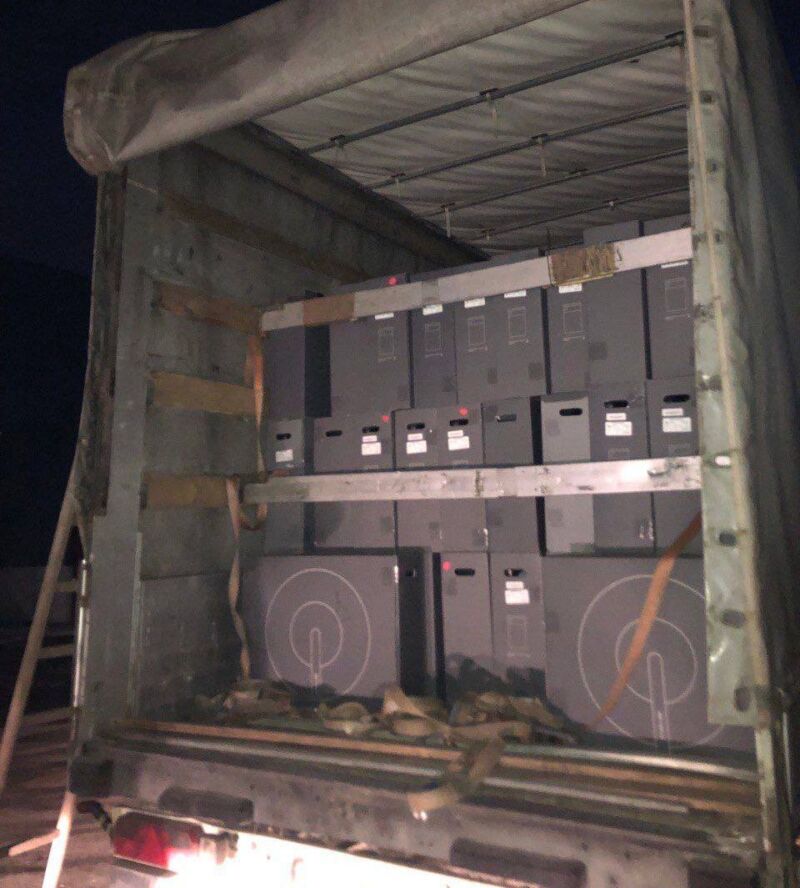
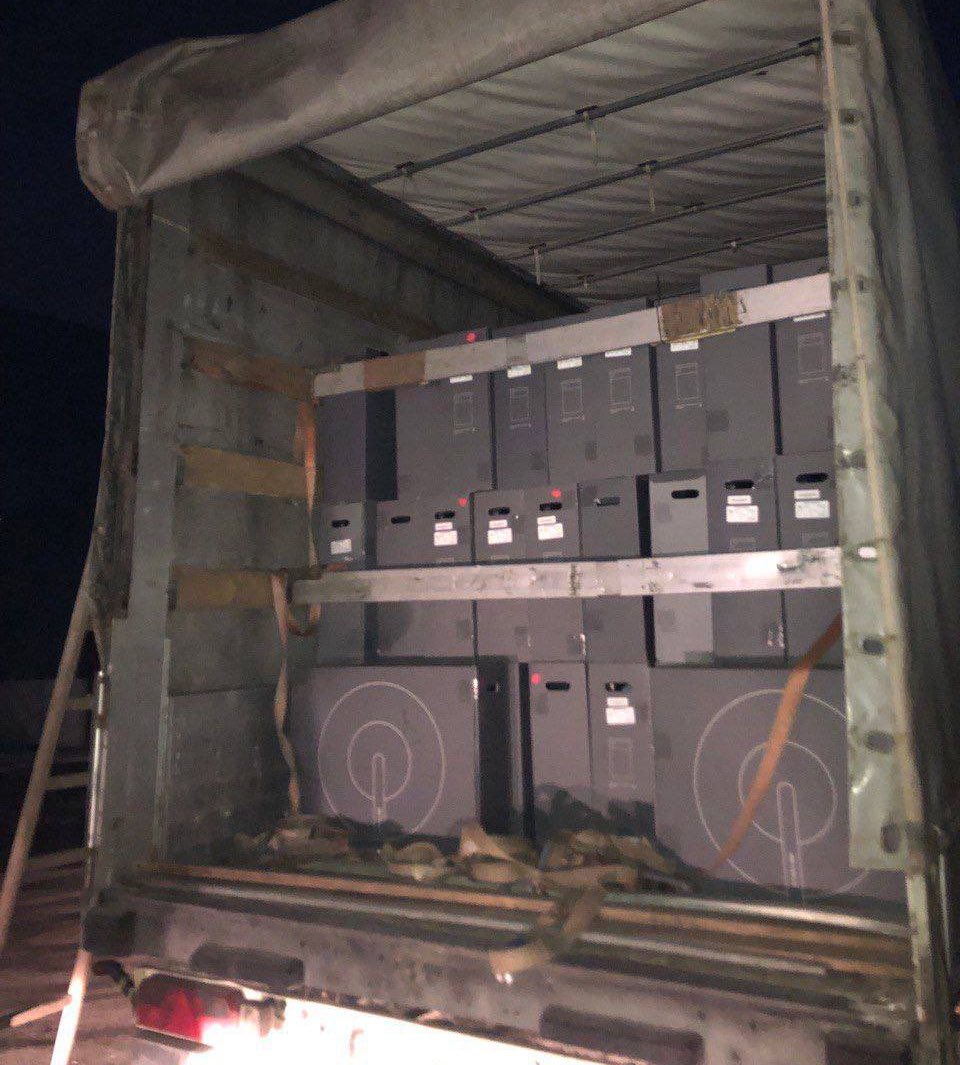
Boxes of Starlink terminals in the back of a truck in Ukraine.
Enlarge / Boxes of Starlink terminals in Ukraine seen in a picture posted by Vice Prime Minister Mykhailo Fedorov.

SpaceX CEO Elon Musk yesterday warned that Starlink user terminals in Ukraine could be targeted by Russia and advised users to take precautions. “Important warning: Starlink is the only non-Russian communications system still working in some parts of Ukraine, so probability of being targeted is high. Please use with caution,” Musk tweeted.

When asked for specific advice, Musk said people in Ukraine should turn Starlink on only when it’s needed, place the antenna “as far away from people as possible,” and “place light camouflage over [the] antenna to avoid visual detection.” A thin layer of spray paint would work if there are no metal particles in the paint, he wrote.

One Twitter user asked Musk if Starlink could face a cyberattack from Russia similar to the one that affected Viasat satellite service. Musk responded, “Almost all Viasat Ukraine user terminals were rendered permanently unusable by a Russian cyberattack on day of invasion, so… yes.”

As previously reported, Ukraine Vice Prime Minister Mykhailo Fedorov asked Musk to activate Starlink in Ukraine shortly after Russia’s invasion of the country disrupted Internet service. Musk responded in the affirmative, and two days later, Fedorov tweeted a photo of a truck full of newly arrived Starlink terminals.

It’s not clear exactly how many Starlink terminals are available in Ukraine, but Fedorov tweeted to Musk, “We will keep you posted as we roll out more Starlinks across the country.”

On Wednesday, Fedorov sent a tweet to Musk saying that Ukraine needs generators to keep Starlink and other services online due to Russian attacks on infrastructure. Musk initially recommended solar panels and a battery pack, and he followed up on Thursday to say that SpaceX is “updating software to reduce peak power consumption so Starlink can be powered from [a] car cigarette lighter.” Musk also wrote that “mobile roaming [has been] enabled, so [the] phased array antenna can maintain signal while on [a] moving vehicle.”

Starlink works for user in Kyiv

Starlink hasn’t deployed any ground terminals in Ukraine, and the nearest one is reportedly in Wola Krobowska in Poland. Twitter user Oleg Kutkov confirmed that Starlink was working for him in Kyiv on Monday and posted a speed test result showing a download rate of 137Mbps and upload speeds of 24Mbps. He also wrote that his top download speed was over 200Mbps for a while.

Kutkov told Insider that he bought his Starlink dish in December, before the service was operating in Ukraine. “After seeing Musk’s tweet on Saturday about Starlink being activated in Ukraine, Kutkov said he decided to try and connect to the service. He said he didn’t expect Starlink to go live in the country as soon as 10 hours after Ukraine asked Musk to sent Starlink kits,” the Insider article said.

“I didn’t expect it will work, but the system appears to be robust and provides a great connection,” Kutkov told the news site. Kutkov has fiber Internet and said he will use Starlink if it is cut because “it’s possible that the local Internet infrastructure will be destroyed.”

https://arstechnica.com/?p=1838408


ICANN won’t revoke Russian Internet domains, says effect would be “devastating”

World map with glowing lines to represent how countries are connected by the global Internet.
Getty Images | Yuichiro Chino

Ukraine’s request to cut Russia off from core parts of the Internet has been rejected by the nonprofit group that oversees the Internet’s Domain Name System (DNS). CEO Göran Marby of ICANN (Internet Corporation for Assigned Names and Numbers) said the group must “maintain neutrality and act in support of the global Internet.”

“Our mission does not extend to taking punitive actions, issuing sanctions, or restricting access against segments of the Internet—regardless of the provocations,” Marby wrote in his response to Ukraine Vice Prime Minister Mykhailo Fedorov. “ICANN applies its policies consistently and in alignment with documented processes. To make unilateral changes would erode trust in the multi-stakeholder model and the policies designed to sustain global Internet interoperability.”

Ukraine on Monday asked ICANN to revoke Russian top-level domains such as .ru, .рф, and .su; to “contribute to the revoking for SSL certificates” of those domains; and to shut down DNS root servers in Russia. Fedorov argued that the requested “measures will help users seek for reliable information in alternative domain zones, preventing propaganda and disinformation.”

ICANN was “built to ensure the Internet works”

Experts warned that granting Ukraine’s request would harm Russian civilians, have little impact on Russia’s government and military, and fail to achieve the goal of countering propaganda. Marby agreed with that assessment, telling Fedorov in his response:

As you have said in your letter, your desire is to help users seek reliable information in alternative domain zones and prevent propaganda and disinformation. It is only through broad and unimpeded access to the Internet that citizens can receive reliable information and a diversity of viewpoints. Regardless of the source, ICANN does not control Internet access or content.

While “ICANN and its global community are aware of and concerned about the terrible toll being exacted against your country,” ICANN itself has “no sanction-levying authority,” Marby wrote. “Essentially, ICANN has been built to ensure that the Internet works, not for its coordination role to be used to stop it from working.”

“Devastating” effect on global system

Regarding the request to revoke top-level domains, Marby wrote that “globally agreed policies do not provide for ICANN to take unilateral action to disconnect these domains as you request. You can understand why such a system cannot operate based on requests from one territory or country concerning internal operations within another territory or country. Such a change in the process would have devastating and permanent effects on the trust and utility of this global system.”

Marby’s response to the request to shut down DNS root servers in Russia was brief, saying that the “root server system is composed of many geographically distributed nodes maintained by independent operators.” Concerning Ukraine’s other request, Marby wrote that ICANN does “not have the ability to revoke the specific SSL certificates for the domains you mentioned. These certificates are produced by third-party operators, and ICANN is not involved in their issuance.”

Marby’s denial of Ukraine’s request cited the decentralized nature of the Internet. “No one actor has the ability to control it or shut it down. ICANN’s primary role, through the functions of the Internet Assigned Numbers Authority (IANA), is to ensure the consistent and unique assignment of Internet identifiers in line with global policies,” Marby wrote.

“These policies were developed by a multi-stakeholder community that includes technical experts, businesses, academics, civil society, governments, and other stakeholders who worked collaboratively to solve policy and technical challenges through consensus,” Marby continued. “It is a model that has allowed the Internet to flourish over decades, and this broad and inclusive approach to decision-making fosters the global public interest and makes the Internet resilient against unilateral decision-making.”

Though ICANN won’t sever DNS links, that doesn’t mean Russians have unfettered access to the Internet. Russia is reportedly blocking Twitter, Facebook, various news sites, and major app stores, as we wrote earlier today. Separately, US-based Internet backbone operator Cogent Communications is reportedly cutting off service in Russia in a move that could cause some outages and poor network performance.

https://arstechnica.com/?p=1838265


Microsoft suspends “all new sales of products and services in Russia”

Microsoft suspends “all new sales of products and services in Russia”

Microsoft President and Vice Chair Brad Smith announced today via blog post that Microsoft would be suspending “all new sales of Microsoft products and services in Russia” following the country’s “unjustified, unprovoked, and unlawful” invasion of Ukraine. The company didn’t name specific products, but a blanket ban would include Windows and Office software, Surface and Xbox hardware, Azure cloud computing services, and consumer services like OneDrive and Xbox Game Pass.

Microsoft isn’t the first of the big tech companies to formally halt sales in Russia while the country’s invasion of Ukraine continues. Apple halted sales of its products there earlier this week, and Google suspended advertising in Russia yesterday. Multiple tech companies, including Microsoft, have also blocked, demonetized, or deprioritized content from Russian state media outlets like RT and Sputnik. And some game companies have heeded requests from the Ukrainian government to halt sales of their games in Russia while the invasion continues.

Microsoft wrote a separate blog post earlier this week detailing its efforts to stop malware and other cyberattacks against Ukrainian and European targets. Today’s post reiterates the company’s focus on those issues.

“Since the war began, we have acted against Russian positioning [of] destructive or disruptive measures against more than 20 Ukrainian government, IT, and financial sector organizations,” Smith wrote. “We have also acted against cyberattacks targeting several additional civilian sites. We have publicly raised our concerns that these attacks against civilians violate the Geneva Convention.”

The use of “new sales” in Microsoft’s statement presumably means that current customers will be unaffected, but Microsoft says it is working with the US, EU, and UK governments to comply with sanctions that those governments have placed on Russia since the invasion began.

https://arstechnica.com/?p=1838237


Putin blocks Russians’ access to Facebook, Twitter, app stores [Updated]

Putin blocks Russians’ access to Facebook, Twitter, app stores [Updated]
Aurich Lawson | Getty Images

Update 2:40pm EST: Russia’s Internet censorship agency, Roskomnadzor, confirmed that it would be blocking access to Facebook, accusing the company of violating the law by blocking state media outlets from the platform.

When reached for comment by Ars, a Facebook spokesperson cited a statement from Nick Clegg, president of global affairs, who said, “We will continue to do everything we can to restore our services so they remain available to people to safely and securely express themselves and organize for action.”

Original article: Russia is reportedly blocking Twitter, Facebook, various news sites, and major app stores, according to a German journalist.

The move comes after the Russian government announced last week that it was partially restricting access to Facebook in retaliation for the company applying fact-checking labels to posts from state-controlled media outlets. Earlier this week, Meta, Facebook’s parent company, and YouTube blocked access to Russian state media outlets RT and Sputnik in the European Union.

The news of Russia’s blockade came from Mathieu von Rohr, head of the foreign desk at German newsmagazine Der Spiegel. He tweeted that “Twitter, Facebook, BBC, Deutsche Welle, App Stores” were all being blocked. (Deutsche Welle is the German public broadcaster.)

Putin has long sought to control the Internet inside Russia’s borders in much the same way that the Communist Party does within China. Yet, Russia’s attempts to censor the Internet aren’t as sophisticated and haven’t been as sweeping or effective as China’s Great Firewall, instead relying on regulatory harassment, occasional throttling, and government takeovers. For example, VK, the parent company of Russian social media network VKontakte, was recently taken over by Gazprom, the state-owned natural gas company.

Whether Russia’s attempts to censor the Internet will succeed remains to be seen. Compared with China, the country is late to the game, and it doesn’t have the market size to recreate the range of products and services offered by companies like Meta, Apple, or Google. Any efforts to start beefing up capabilities now will face stiff headwinds as Western sanctions begin to bite, with Russian companies unable to obtain advanced chips for computers, telecommunications, and more.

Ars has contacted Meta, Twitter, Apple, and Google to confirm whether their services are still available inside Russia. We will update this article if we hear back.

Update 12:43 EST: After publication, Ars commenter Artem S. Tashkinov said that connections to Facebook and Twitter were timing out in Russia, even when using a VPN, but that Instagram and Google Play remained accessible via the same route.

Previously, Ukraine had asked Apple to remove the App Store from the Russian market. Apple didn’t accede, but it did remove RT News and Sputnik News from the App Store outside Russia. The company also stopped selling products within the country. An Apple spokesperson said the move was in response to the invasion, though Western companies face myriad hurdles to selling in Russia, including problems processing credit card payments, uncertainties around importing products, and rising inflation in the country. Previously, Apple has temporarily suspended product sales in countries like Turkey where inflation has significantly devalued the currency.

Since President Vladimir Putin ordered the invasion of Ukraine, the Russian government has been pushing an avalanche of pro-Kremlin propaganda, spreading disinformation about the course of the invasion, casualty figures, and more. Not that this is any different from before—RT and Sputnik have long offered audiences a skewed, if not outright false, view of world events, one that hews to Putin’s party line.

Social media companies have been slow to respond to the war in Ukraine, appearing to fall back on their default “neutral” status and leaving their platforms open to state media companies. Even today, Sputnik and RT and its affiliated channels remain on YouTube outside of the EU, though Google has removed their ability to make money so as to comply with sanctions. Perhaps as a result, RT America ceased production yesterday, though its videos are still available on YouTube.

But, as the war drags on, civilian casualties mount, and Russia places even greater pressure on Western companies, social media platforms will likely be forced to decide whether their markets-first ideology will serve them in the long run. Since their advent, platforms like Facebook and Twitter have been able to thread the needle, doing just enough to stay in hostile markets without risking government probes or catastrophic consumer backlashes in Western markets. 

That era may be swiftly coming to a close, though, as a Cyber Curtain begins to take shape amid Putin’s efforts to relitigate the end of the Cold War.

https://arstechnica.com/?p=1838252


FCC considers crackdown on bad wireless receivers after 5G/altimeter debacle

FCC considers crackdown on bad wireless receivers after 5G/altimeter debacle
BackyardProduction/Getty

The Federal Communications Commission will consider issuing new rules for wireless receivers that could prevent future conflicts like the ongoing battle between the aviation and cellular industries.

There are strict rules requiring wireless devices to transmit only in their licensed frequencies. That means, for example, that AT&T and Verizon’s 5G transmissions in C-band spectrum (3.7 to 3.98 GHz) have to stay within the C-band.

But there isn’t much to prevent devices from receiving transmissions from outside their allotted frequencies. The altimeters used in airplanes to measure altitude officially rely on spectrum from 4.2 GHz to 4.4 GHz, but the Federal Aviation Administration has said that 5G transmissions in the C-band could interfere with the operation of some of those altimeters.

If an altimeter is affected by 5G, that means it is receiving transmissions from the wrong spectrum band despite a buffer zone of at least 220 MHz. The 220 MHz guard band is actually 400 MHz in practice this year because AT&T and Verizon have not yet deployed above 3.8 GHz, but the FAA still says the current level of transmissions can interfere with some altimeters. There are also satellite transmissions between 4.0 and 4.2 GHz, but those haven’t been a concern for the FAA.

Chair: Bad receivers “diminish broader opportunities”

In a speech Tuesday at Mobile World Congress, FCC Chairwoman Jessica Rosenworcel said the commission needs to get tough on wireless receivers. Rosenworcel did not mention airplane altimeters but explained that faulty receivers that cannot avoid transmissions from other spectrum bands can prevent new services in unused frequencies.

She continued:

In the past, our discussions of spectrum efficiency have been a one-way effort. They have focused almost exclusively on transmitters. We’ve put a lot rules in place about how and when transmitters can operate in order to control interference levels. But here’s the thing: Wireless communications only exists when transmitters are connected to receivers. Both are vital. Both matter. And going forward policymakers need to consider both transmitting and receiving. Not just the former at the expense of the latter.

That’s because minimally performing receivers can make it more difficult to introduce new services in the same or nearby frequencies. They can diminish broader opportunities with radio-frequency and put constraints on what is possible in the new wireless world.

FCC to ask for input on possible regulations

Rosenworcel said she will propose launching “a new inquiry to explore receiver performance and standards.” The notice of inquiry would ask for public input on possible solutions, including new “regulatory requirements,” Rosenworcel said.

She went on:

This inquiry would ask how receiver improvements could provide greater opportunities for access to spectrum. It would explore how these specifications could come in the form of incentives, guidelines, or regulatory requirements—in specific frequency bands or across all bands. And it would seek comment on legal authority and market-based mechanisms that could help create a more transparent and predictable radio-frequency environment for all spectrum users—new and old.

Rosenworcel said she will make the proposal in April. While the FCC still has a 2-2 partisan deadlock, the Democratic chair has bipartisan support. Rosenworcel thanked Republican Commissioner Nathan Simington “for his leadership on these issues and his willingness to work with me on a path forward.”

Simington issued a statement applauding “Chairwoman Rosenworcel’s decision to consider exploring a new regulatory framework for commercial spectrum allocations.” Simington’s statement went on to cite the problem with altimeters:

An approach that looks at both the receiver and transmitter ends of the equation is the only framework truly capable of timely accommodating the interests of federal users of spectrum, and other incumbents. We see a lot of value in getting to a place where conflicts such as the C-band/altimeter fight are headed off at the pass.

This model will provide all interested parties sufficient advanced warning about problematic band edges adjacent to any new commercial spectrum. Clear rights regarding interference protection can provide incentives for innovation and collaboration among spectrum users in a way that avoids regulatory dictate.

FCC urged aviation industry to act two years ago

When the FCC voted to allow cellular transmissions in the C-band in February 2020, the commission adopted power limits and the 220 MHz guard band between 5G and altimeters. “The technical rules on power and emission limits we set for the 3.7 GHz service and the spectral separation of 220 megahertz should offer all due protection to services in the 4.2-4.4 GHz band,” the FCC said.

While the FCC found no evidence that “harmful interference would likely result under reasonable scenarios,” it urged the aviation industry to conduct more testing on altimeters. “[F]urther analysis is warranted on why there may even be a potential for some interference given that well-designed equipment should not ordinarily receive any significant interference (let alone harmful interference) given these circumstances,” the FCC said. Despite that warning, the FAA and aviation industry seemingly weren’t prepared for the 5G transmissions when the rollout occurred almost two years later.

https://arstechnica.com/?p=1838018


Biden FCC pick advances in Senate by 14-14 vote amid Republican opposition

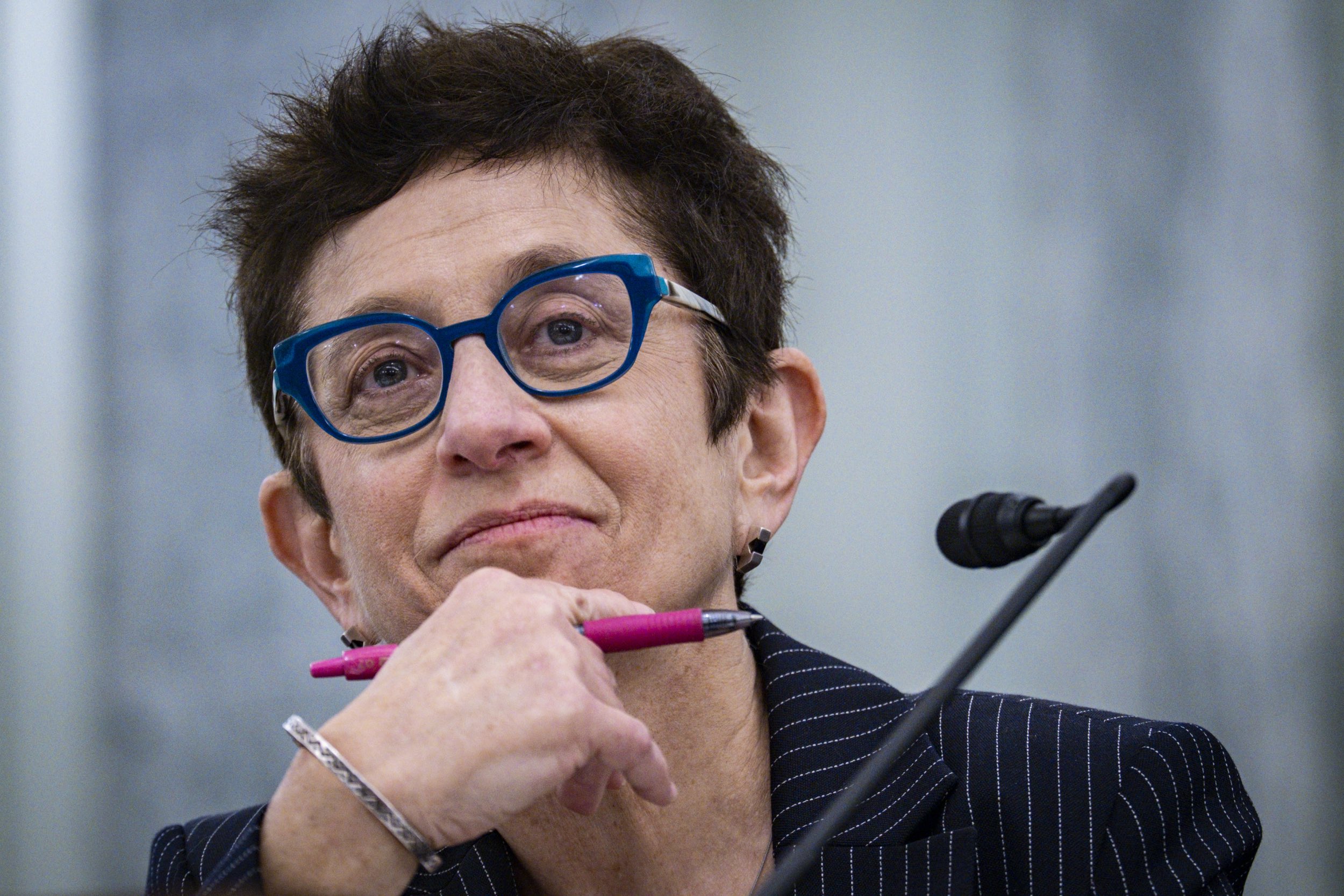
Gigi Sohn sits in front of a microphone and holds a pen in her hand at a Senate nomination hearing.
Enlarge / Gigi Sohn testifies during a Senate Commerce Committee hearing examining her nomination to the Federal Communications Commission on Wednesday, Feb. 9, 2022.
Getty Images | Pool

The Senate Commerce Committee today sent President Biden’s nomination of consumer advocate Gigi Sohn for a spot on the Federal Communications Commission to the full Senate. Sohn’s nomination was advanced with a 14-14 tie vote due to Republican opposition and still needs approval on the Senate floor.

The FCC has been stuck with a 2-2 partisan deadlock for Biden’s entire term, but Sohn’s confirmation would allow Chairwoman Jessica Rosenworcel to proceed with items opposed by Republicans. That includes the restoration of net neutrality rules and Title II common-carrier regulation of broadband providers.

The tie vote in committee makes the process of setting up a final Senate vote more complicated, but it can be accomplished if all Democrats back Sohn, a Broadcasting + Cable report explained. There were also tie votes in two other nominations advanced today by the Senate Commerce Committee. Those were for Federal Trade Commission nominee Alvaro Bedoya and Consumer Product Safety Commission nominee Mary Boyle.

“We’ve waited over a year for a fully functional FTC and FCC,” Free Press Action VP of Policy and General Counsel Matt Wood said today. “We can’t let cynical political maneuvers from obstructionist lawmakers and industry-aligned hacks further delay Bedoya and Sohn’s ability to serve people everywhere.”

Advocates urge quick Senate vote

Wood said that with Commerce Committee Chairwoman Maria Cantwell (D-Wash.) “having successfully navigated this tricky process, it’s time for Majority Leader [Chuck] Schumer and the Senate to confirm these highly qualified nominees and let them get to work as soon as possible.”

Public Knowledge CEO Chris Lewis said, “Based on their extensive qualifications and the bipartisan outpouring of support outside of Congress, we would have hoped these nominees would receive overwhelming bipartisan support in the Senate. Unfortunately, the politics of our time made that unachievable. Regardless, Majority Leader Chuck Schumer should move expeditiously to get these nominees through the process for final confirmation.”

Biden nominated Sohn on October 26. She was previously scheduled for a Commerce Committee vote in early February, but it was delayed after Sen. Ben Ray Luján (D-N.M.) suffered a stroke. Luján returned to the Senate today.

Sohn may need votes from every Democrat in the 50-50 Senate to be approved. Commerce Committee member Sen. Kyrsten Sinema (D-Ariz.) hadn’t previously said whether she would back Sohn, and Comcast hired a prominent lobbyist in Arizona to work on “FCC nominations,” but Sinema voted for Sohn today in the party-line decision. In the full Senate, Sen. Joe Manchin (D-W.Va.) may be a key swing vote.

Before today’s committee vote, Sen. Roger Wicker (R-Miss.) said that Sohn is “not the right choice to fill this vacancy at the FCC.” He cited her previous position as a board member at Locast, a nonprofit online TV service that shut down after losing a copyright case launched by major broadcast networks. Wicker said a settlement between Locast and networks “will continue to cause an appearance of conflict of interests if she is confirmed.”

We detailed the Locast debate in this article. Details on other reasons for opposition to Sohn cited by Republicans are in our previous articles.

https://arstechnica.com/?p=1837963


Ukraine asks ICANN to revoke Russian domains and shut down DNS root servers

World map with glowing lines to represent how countries are connected by the global Internet.

A Ukraine government official on Monday asked the nonprofit group that oversees the Internet’s Domain Name System (DNS) to shut down DNS root servers in Russia and revoke Russian domains such as .ru, .рф, and .su. The letter to ICANN (Internet Corporation for Assigned Names and Numbers) was posted here, and ICANN has confirmed that it received the letter.

Several Internet experts say that granting Ukraine’s request would be a bad idea. Executive Director Bill Woodcock of Packet Clearing House, an international nonprofit that provides operational support and security to Internet exchange points and the core of the domain name system, wrote a Twitter thread calling it “a heck of an ask on the part of Ukraine. As a critical infrastructure operator, my inclination is to say ‘heck no’ regardless of my sympathies.”

Sent days after Russia’s invasion of Ukraine began, the letter said that Russia’s “atrocious crimes have been made possible mainly due to the Russian propaganda machinery using websites continuously spreading disinformation, hate speech, promoting violence and hiding the truth regarding the war in Ukraine. Ukrainian IT infrastructure has undergone numerous attacks from the Russian side impeding citizens’ and government’s ability to communicate.”

The letter asked ICANN, which is based in California, to “revoke, permanently or temporarily, the domains ‘.ru’, ‘.рф’ and ‘.su’. This list is not exhaustive and may also include other domains issued in the Russian Federation.” Next, the letter asked ICANN to “contribute to the revoking for SSL certificates for the above-mentioned domains” and to “shut down DNS root servers” in Saint Petersburg and Moscow. ICANN has previously explained that “root servers respond to DNS lookup requests made by DNS resolvers generally operated by Internet service providers.”

The letter was sent by Mykhailo Fedorov, Ukraine’s vice prime minister and minister of digital transformation, to ICANN CEO Göran Marby. “Apart from these measures, I will be sending a separate request to RIPE NCC asking to withdraw the right to use all IPv4 and IPv6 addresses by all Russian members of RIPE NCC (LIRs-Local Internet Registries), and to block the DNS root servers that it is operating,” Fedorov wrote. RIPE NCC (Réseaux IP Européens Network Coordination Centre) is the regional Internet registry.

Cutoff would make sites unreachable and reduce security

The text of Fedorov’s letter was also sent in an email by Andrii Nabok, Ukraine’s representative to ICANN’s Governmental Advisory Committee, to Marby and other people at ICANN, the American Registry for Internet Numbers (ARIN), the Number Resource Organization (NRO), and the United Nations. Woodcock posted the email’s full text on Pastebin Monday.

Woodcock wrote that Ukraine’s request to remove Russian top-level domains from the root zone would make Russian websites and email “unreachable from outside Russia, and unreachable for some inside Russia as well, depending [on] how their ISPs and recursive resolvers are configured.” Ukraine’s request to shut down the root name servers inside Russia “would make connectivity spotty for many users inside Russia, but mostly regular folks, not government or military users,” he added. Thirdly, Woodcock wrote that Ukraine’s request to revoke “IP address delegations to Russian networks… would break the RPSL and RPKI security that protects their routing.”

“Taken together, these three actions would have the effect of making Russian civilian Internet users much more vulnerable to man-in-the-middle attacks, such as are used to compromise banking credentials and website passwords,” he wrote. Woodcock explained that the actions “would have little to no effect on the Russian government or military,” pointing out that what Ukraine requests “is exactly the attack the Russians practiced for last July, which means their defenses are probably at optimum readiness right about now.”

Ukraine’s letter to ICANN argued that the requested “measures will help users seek for reliable information in alternative domain zones, preventing propaganda and disinformation.”

But Woodcock contended that Ukraine’s request is a bad plan in the short term “because it would cut the Russian man-on-the-street off from international news and perspectives, leaving them with only what the Russian government chooses to tell them” and that it’s a bad plan in the long term because it “would set the precedent that small industry associations in Los Angeles and Amsterdam would be playing arbiter in international conflicts, and messing with countries’ supposedly sovereign country-code top-level domains. And if that were to happen, a lot more countries than just China and Russia would secede from the common-consensus-Internet that allows us to all talk to each other.”

https://arstechnica.com/?p=1837722