$3.6 billion bitcoin seizure shows how hard it is to launder cryptocurrency

The IRS detailed the winding and tangled routes the couple allegedly took to launder a portion of the nearly 120,000 bitcoins stolen from the cryptocurrency exchange Bitfinex in 2016.
Enlarge / The IRS detailed the winding and tangled routes the couple allegedly took to launder a portion of the nearly 120,000 bitcoins stolen from the cryptocurrency exchange Bitfinex in 2016.
William Whitehurst | Getty Images

On Tuesday, Ilya Lichtenstein and Heather Morgan were arrested in New York and accused of laundering a record $4.5 billion worth of stolen cryptocurrency. In the 24 hours immediately afterward, the cybersecurity world ruthlessly mocked their operational security screwups: Lichtenstein allegedly stored many of the private keys controlling those funds in a cloud-storage wallet that made them easy to seize, and Morgan flaunted her “self-made” wealth in a series of cringe-inducing rap videos on YouTube and Forbes columns.

But those gaffes have obscured the remarkable number of multi-layered technical measures that prosecutors say the couple did use to try to dead-end the trail for anyone following their money. Even more remarkable, perhaps, is that federal agents, led by IRS Criminal Investigations, managed to defeat those alleged attempts at financial anonymity on the way to recouping $3.6 billion of stolen cryptocurrency. In doing so, they demonstrated just how advanced cryptocurrency tracing has become—potentially even for coins once believed to be practically untraceable.

“What was amazing about this case is the laundry list of obfuscation techniques [Lichtenstein and Morgan allegedly] used,” says Ari Redbord, the head of legal and government affairs for TRM Labs, a cryptocurrency tracing and forensics firm. Redbord points to the couple’s alleged use of “chain-hopping”—transferring funds from one cryptocurrency to another to make them more difficult to follow—including exchanging bitcoins for “privacy coins” like monero and dash, both designed to foil blockchain analysis. Court documents say the couple also allegedly moved their money through the Alphabay dark web market—the biggest of its kind at the time—in an attempt to stymie detectives.

Yet investigators seem to have found paths through all of those obstacles. “It just shows that law enforcement is not going to give up on these cases, and they’ll investigate funds for four or five years until they can follow them to a destination they can get information on,” Redbord says.

In a 20-page “statement of facts” published alongside the Justice Department’s criminal complaint against Lichtenstein and Morgan on Tuesday, IRS-CI detailed the winding and tangled routes the couple allegedly took to launder a portion of the nearly 120,000 bitcoins stolen from the cryptocurrency exchange Bitfinex in 2016. Most of those coins were moved from Bitfinex’s addresses on the Bitcoin blockchain to a wallet the IRS labeled 1CGa4s, allegedly controlled by Lichtenstein. Federal investigators eventually found keys for that wallet in one of Lichtenstein’s cloud storage accounts, along with logins for numerous cryptocurrency exchanges he had used.

But to get to the point of identifying Lichstenstein—along with his wife, Morgan—and locating that cloud account, IRS-CI followed two branching paths taken by 25,000 bitcoins that moved from the 1CGa4s wallet across Bitcoin’s blockchain. One of those branches went into a collection of wallets hosted on AlphaBay’s dark web market, designed to be impenetrable to law enforcement investigators. The other appears to have been converted into monero, a cryptocurrency designed to obfuscate the trails of funds within its blockchain by mixing up the payments of multiple monero users—both real transactions and artificially generated ones—and concealing their value. Yet somehow, the IRS says it identified Lichtenstein and Morgan by tracing both those branches of funds to a collection of cryptocurrency exchange accounts in their names, as well as in the names of three companies they owned, known as Demandpath, Endpass, and Salesfolk.

The IRS hasn’t entirely spelled out how its investigators defeated those two distinct obfuscation techniques. But clues in the court document—and analysis of the case by other blockchain analysis experts—suggest some likely theories.

Lichtenstein and Morgan appear to have intended to use Alphabay as a “mixer” or “tumbler,” a cryptocurrency service that takes in a user’s coins and returns different ones to prevent blockchain tracing. AlphaBay advertised in April 2016 that it offered that feature to its users by default. “AlphaBay can now safely be used as a coin tumbler!” read a post from one of its administrators. “Making a deposit and then withdrawing after is now a way to tumble your coins and break the link to the source of your funds.”

https://arstechnica.com/?p=1833543


Apple will combat AirTag stalking by making unknown AirTags easier to find

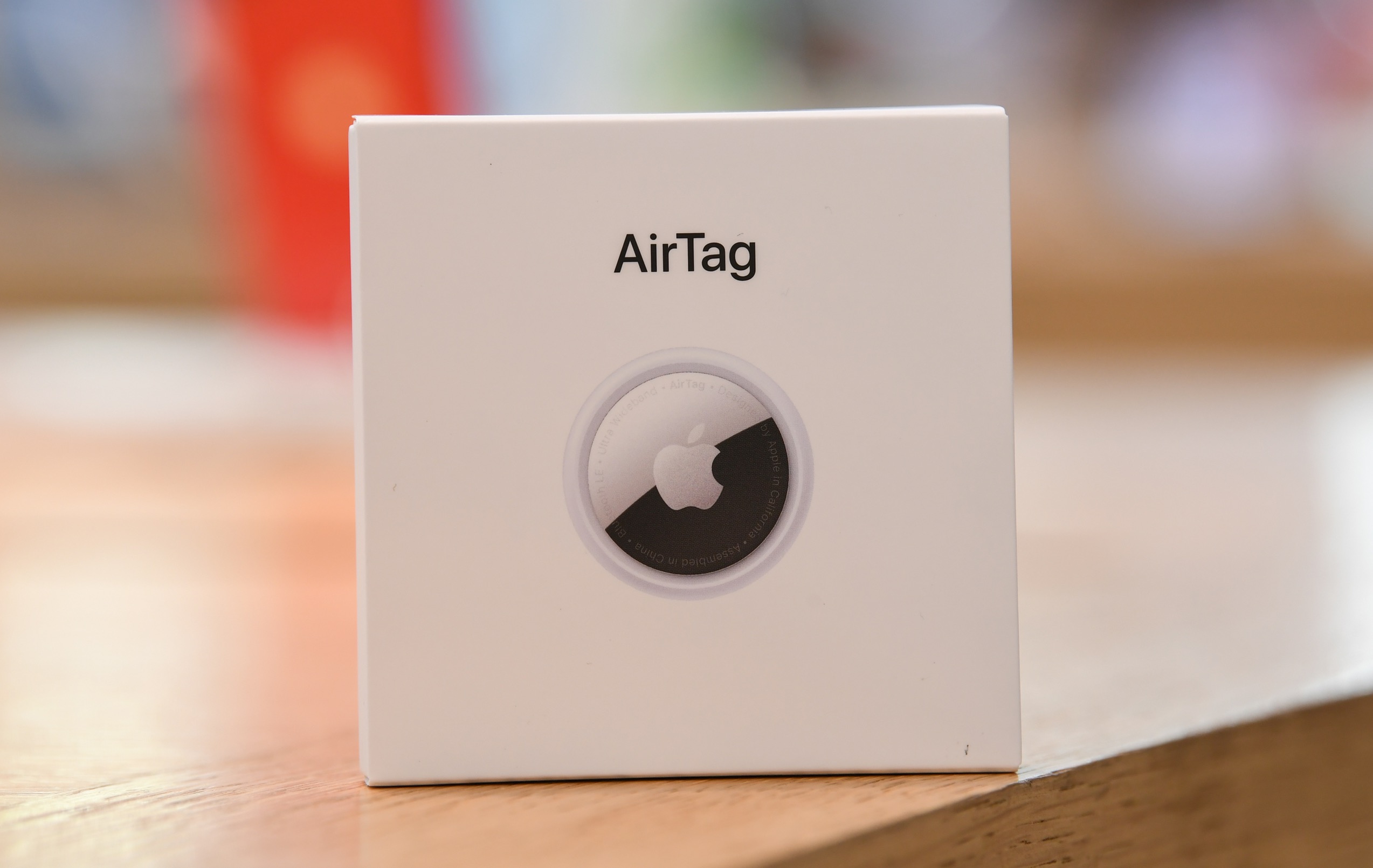
An Apple AirTag box sitting on a table.
Enlarge / AirTag box at an Apple Store on April 30, 2021, in Sydney, Australia.
Getty Images | James D. Morgan

Apple yesterday announced upcoming AirTag updates designed to combat stalking and other unwanted tracking.

“AirTag was designed to help people locate their personal belongings, not to track people or another person’s property, and we condemn in the strongest possible terms any malicious use of our products,” Apple said. Thieves have used AirTags to track high-end cars, and stalkers have used the devices to track women. Apple’s update yesterday acknowledged that the company has “seen reports of bad actors attempting to misuse AirTag for malicious or criminal purposes.”

AirTags already have some safety features, such as making beeping sounds when they’ve been away from their linked devices for a day. iPhones also receive warnings about unknown AirTags nearby. But the beep can be difficult to hear, and the timing of the warnings apparently varies. One person who was tracked “said she was notified four hours after her phone first noticed the rogue gadget,” while “others said it took days before they were made aware of an unknown AirTag,” a New York Times article in December said.

Software updates “later this year”

Apple said it will roll out “precision finding” that “allows recipients of an unwanted tracking alert to locate an unknown AirTag with precision. iPhone 11, iPhone 12, and iPhone 13 users will be able to use Precision Finding to see the distance and direction to an unknown AirTag when it is in range. As an iPhone user moves, Precision Finding fuses input from the camera, ARKit, accelerometer, and gyroscope to guide them to the AirTag through a combination of sound, haptics, and visual feedback.”

Apple said the update will be released “later this year” but didn’t get more specific on timing. Other changes planned for later this year are as follows:

  • More alerts sent to iOS devices: “When AirTag automatically emits a sound to alert anyone nearby of its presence and is detected moving with your iPhone, iPad, or iPod touch, we will also display an alert on your device that you can then take action on, like playing a sound or using Precision Finding, if available,” Apple said. “This will help in cases where the AirTag may be in a location where it is hard to hear or if the AirTag speaker has been tampered with.”
  • Earlier alerts: “Our unwanted tracking alert system uses sophisticated logic to determine how we alert users. We plan to update our unwanted tracking alert system to notify users earlier that an unknown AirTag or Find My network accessory may be traveling with them,” Apple said.
  • Louder tones: “Currently, iOS users receiving an unwanted tracking alert can play a sound to help them find the unknown AirTag. We will be adjusting the tone sequence to use more of the loudest tones to make an unknown AirTag more easily findable,” Apple said.

https://arstechnica.com/?p=1833514


CIA collecting bulk data on Americans without oversight, senators say

CIA collecting bulk data on Americans without oversight, senators say
SAUL LOEB/AFP/Getty Images

Two US senators have asked the Central Intelligence Agency to release the details of a secret bulk data collection program that has apparently ensnared Americans.

Sens. Ron Wyden (D-Ore.) and Martin Heinrich (D-N.M.) wrote the director of national intelligence and the CIA (PDF), asking them to declassify a review of a CIA program known as “Deep Dive II,” the details of which were redacted from their letter. The letter was written in April 2021 but was classified until yesterday.

The secret CIA program is operated under the authority of Executive Order 12333, which former President Ronald Reagan issued in 1981. It has been used to justify bulk data collection of people in the US, including phone calls, SMS messages, and, until recently, email metadata. That practice was limited by a 2015 reauthorization of the Foreign Intelligence Surveillance Act, known as FISA, which banned the bulk collection of phone and SMS metadata by the FBI.

“FISA gets all the attention because of the periodic congressional reauthorizations and the release of Department of Justice, Office of the Director of National Intelligence, and FISA Court documents,” Wyden and Heinrich said in a statement. “But what these documents demonstrate is that many of the same concerns that Americans have about their privacy and civil liberties also apply to how the CIA collects and handles information under executive order and outside the FISA law. In particular, these documents reveal serious problems associated with warrantless backdoor searches of Americans, the same issue that has generated bipartisan concern in the FISA context.”

The CIA’s bulk data collection program, the senators wrote, has been “secretly conducted” and is done “outside the statutory framework that Congress and the public believe govern this collection, and without any of the judicial, congressional, or even executive branch oversight that comes with FISA collection.

“This basic fact has been kept from the public and from Congress. Until the [Privacy and Civil Liberties Oversight Board] report was delivered last month, the nature and full extent of the CIA’s collection was withheld even from the Senate Select Committee on Intelligence.”

In a statement issued to the Associated Press, the CIA did not deny that it was collecting data on Americans or clarify its legal justification. “CIA recognizes and takes very seriously our obligation to respect the privacy and civil liberties of US persons in the conduct of our vital national security mission,” Kristi Scott, the agency’s privacy and civil liberties officer, said in the statement. “CIA is committed to transparency consistent with our obligation to protect intelligence sources and methods.”

Wyden and Heinrich are asking the CIA to disclose what type of relationship it has with its sources and what legal justification it thinks it has to conduct such an operation. They also want to know what types of records were collected, how they’re stored, who has access to them, and how many Americans had their records collected and retained.

“Each of these matters has been the subject of extensive declassifications with regards to NSA’s and FBI’s FISA collection; there is no reason why CIA’s activities cannot be equally transparent,” they wrote.

The government only disclosed in 2017 the attorney general’s guidelines that the CIA is supposed to follow when conducting a program under Executive Order 12333. 

In a set of recommendations that were declassified yesterday and made by the civil liberties oversight board, the CIA admits that “it is still in the process of implementing” those guidelines. Currently, one of the “checks” against abuse of that authorization is a pop-up box that reminds analysts that a tool is only to be used to collect foreign intelligence and is not to be used on US persons. It does not require them to “memorialize the justification” so it could be reviewed during an audit.

Wyden and Heinrich say that the CIA should exhibit greater transparency or else risk undermining the long-term credibility of the entire intelligence community. “This declassification is urgent,” the senators wrote. “It is critical that Congress not legislate without awareness of a [redacted] CIA program.”

https://arstechnica.com/?p=1833484


US Army turns to microgrids, EVs to hit net zero by 2050

A tank roars across a desert.
Enlarge / A US Bradley Fighting Vehicle drives during a joint military exercise between the Syrian Democratic Forces (SDF) and the US-led international coalition against the Islamic State (IS) group, in the countryside of Deir Ezzor in northeastern Syria on December 7, 2021. The US Army is currently testing a version of the Bradley with a hybrid-electric drivetrain.

The US Army released its climate change strategy this week, and it’s a lengthy document that shows how the largest and oldest branch of the military will not only prepare for climate change but will also zero out emissions from most of its operations and activities.

“We have a unique opportunity to improve our defense capabilities and become a more efficient force, while securing a better future,” Army Secretary Christine Wormuth said in an introduction to the report. “The Army is on track to build on the progress we’ve achieved to date and reach every aspect of the Army enterprise.”

The Army says that the goal isn’t just to eliminate greenhouse gas emissions—though that’s a key outcome—but also to make the force more resilient by “adapting infrastructure and natural environments to climate change risks.”

The strategy takes a multipronged approach toward addressing the climate threat, including overhauling the Army’s installations and its acquisitions and logistics practices.

On just the facilities side, the Army buys more than $740 million of electricity every year, producing over 4.1 million metric tons of carbon pollution. To bring those numbers down while also improving its ability to operate when the grid goes down, the Army says it will install microgrids at each of its more than 130 installations by 2035. Already, 25 microgrids are “scoped and planned” through 2024.

Microgrids are usually connected to the wider grid, though they can be easily cut off without losing power, allowing operations to continue if the connection is severed or the grid goes down. Currently, the Army is looking into solar, wind, and batteries to power microgrids.

On bases, myriad vehicles support day-to-day operations, and the new plan calls for the nontactical vehicle fleet to be all-electric by 2035. That includes everything from light trucks like Chevrolet Tahoes and Ford F-150s to massive prime movers like the “Dragon Wagon” and the HEMTT. Light-duty vehicles like the Tahoe are scheduled to be all-electric by 2027.

Tactical vehicles, though, will take a bit longer. The Army hopes to hybridize them by 2035 before moving to all-electric in 2050. The plan doesn’t spell out what it considers to be tactical vehicles, though the designation likely includes things like Humvees and MRAPs.

Currently, there’s no concrete plan for all-electric tanks and self-propelled artillery. “We are going to push hard to get there, but we’re going to be methodical and deliberate as we do to make sure that as we implement these changes, rather than impeding the mission effectiveness of these systems, we’re actually enhancing it,” Paul Farnan, the assistant Army secretary for installations, energy and environment, told Stars & Stripes. “The technology development and maturation of this technology is still happening. If we look back ten years ago, and where EVs were and where we are today, I don’t think anyone sitting in 2010 would have imagined where we’re going with EVs today.”

The Army’s plan also goes beyond buildings and hardware, requiring it to “proactively train its people and prepare a force that is ready to operate in a climate-altered world,” the document says. The Army has rolled out a “Climate 101” course to introduce fundamentals of climate science to base architects and garrison commanders, and it says it will update all of its training modules, exercises, and simulations to consider the impacts of climate change by 2028. The goal is to prepare the entire force for whatever conditions climate change presents, from severe weather to a thawing Arctic.

https://arstechnica.com/?p=1833263


Tesla factory is “racially segregated workplace,” Calif. state agency alleges

Aerial view of a Tesla factory with a large parking lot filled with cars.
Enlarge / Tesla’s factory in Fremont, California.

The California Department of Fair Employment and Housing (DFEH) sued Tesla on Wednesday, alleging systemic racial segregation in the workplace.

“After receiving hundreds of complaints from workers, DFEH found evidence that Tesla’s Fremont factory is a racially segregated workplace where Black workers are subjected to racial slurs and discriminated against in job assignments, discipline, pay, and promotion creating a hostile work environment,” DFEH Director Kevin Kish said in a statement published in a Wall Street Journal article and a Bloomberg story.

The lawsuit was filed in Alameda County Superior Court but doesn’t appear to be publicly available yet. We asked DFEH for a copy of the lawsuit and will update this story if we get it.

In October 2021, a federal jury awarded $137 million to Owen Diaz, a Black worker who alleged that Tesla failed to take reasonable steps to prevent racist abuse at the Fremont factory. Tesla is also facing lawsuits from seven women over allegations of rampant sexual harassment at factory facilities in California.

Tesla slams agency for filing lawsuit

Tesla slammed the DFEH lawsuit in a blog post yesterday, saying the case “follows a three-year investigation during which the DFEH—whose mission is supposedly to protect workers—has never once raised any concern about current workplace practices at Tesla. Rather, the lawsuit appears focused on alleged misconduct by production associates at the Fremont factory that took place between 2015 and 2019.”

Tesla said it will ask the court to pause the case and claimed that “despite repeated requests, the DFEH has declined to provide Tesla with the specific allegations or the factual bases for its lawsuit.” Tesla also claimed the lawsuit is an attempt to “generate publicity,” writing:

Over the past five years, the DFEH has been asked on almost 50 occasions by individuals who believe they were discriminated against or harassed to investigate Tesla. On every single occasion, when the DFEH closed an investigation, it did not find misconduct against Tesla. It therefore strains credibility for the agency to now allege, after a three-year investigation, that systematic racial discrimination and harassment somehow existed at Tesla. A narrative spun by the DFEH and a handful of plaintiff firms to generate publicity is not factual proof.

Tesla said it “has always disciplined and terminated employees who engage in misconduct, including those who use racial slurs or harass others in different ways,” and “recently rolled out an additional training program that reinforces Tesla’s requirement that all employees must treat each other with respect and reminds employees about the numerous ways they can report concerns, including anonymously.” Tesla also claims in its blog post that it is “the last remaining automobile manufacturer in California” and that the “Fremont factory has a majority-minority workforce and provides the best paying jobs in the automotive industry to over 30,000 Californians.”

“Attacking a company like Tesla that has done so much good for California should not be the overriding aim of a state agency with prosecutorial authority,” Tesla wrote.

https://arstechnica.com/?p=1833257


NASA says Starlink Gen2 may cause problems for Hubble and asteroid detection

Illustration of many satellites orbiting the Earth.
Enlarge / Artist’s impression of low Earth-orbit satellites like those launched by SpaceX and OneWeb.

NASA has warned that SpaceX’s plan for 30,000 more Starlink satellites could cause problems for science missions, human spaceflight, the Hubble telescope, and ground-based telescopes that look for asteroids that might hit the Earth.

NASA outlined its concerns in a letter to the Federal Communications Commission on Monday. “With the increase in large constellation proposals to the FCC, NASA has concerns with the potential for a significant increase in the frequency of conjunction events and possible impacts to NASA’s science and human spaceflight missions,” the agency said. “Consequently, NASA submits this letter for the purpose of providing a better understanding of NASA’s concerns with respect to its assets on-orbit and to further mitigate the risk of collisions for the benefit of all involved.”

NASA didn’t urge the FCC to reject SpaceX’s application, but it said it wants deployment to be “conducted prudently, in a manner that supports spaceflight safety and the long-term sustainability of the space environment.” NASA also said the large number of additional satellites “will require expanded coordination and communication between the two parties to ensure the continued safety of both SpaceX and NASA assets.”

Hubble telescope and asteroid surveys

The Hubble orbits at 535 km, and about “8 percent of composite images captured by the Hubble telescope are impacted by satellites captured during exposures,” NASA said. “This proposed Starlink license amendment includes 10,000 satellites in or above the orbital range of Hubble, a situation that could more than double the fraction of Hubble images degraded.” NASA also said that “degradation severity will increase.”

NASA said it has approximately 14 Earth-observing missions and that SpaceX’s planned altitudes for the 30,000 satellites are lower than most of the space vehicles used in those missions. That raises the “potential for sun-glint and reflections from the Starlink spacecraft to cause impacts to those missions’ measurements.”

Next, NASA noted that it “uses wide-field ground-based telescopes to survey for asteroids that could potentially impact the Earth and cause harm” and that these “telescopes occasionally find satellite streaks in their images that could interfere with or hide asteroid detections.” Starlink’s plans could make that problem quite a bit worse, NASA said:

With the addition of ~30,000 Starlink satellites as described in the Gen2 amendment request, NASA estimates that there would be a Starlink in every single asteroid survey image taken for planetary defense against hazardous asteroid impacts, decreasing asteroid survey effectiveness by rendering portions of images unusable. This could have a direct impact on NASA’s ability to fulfill its Congressional mandate and could have a detrimental effect on our planet’s ability to detect and possibly redirect a potentially catastrophic impact.

To address this risk, NASA said it wants “additional information including: spacecraft and laser specifications including deployed dimensions, communications plan, ground segment expansion, orbital spacing, and deployment schedule. This will inform a thorough analysis of risks and impacts to NASA’s missions and enable a mitigation strategy.”

We’ve previously written about how astronomers have observed growing numbers of Starlink satellite tracks on telescope images and about a report by astronomers stating that the effect on the night sky of Starlink satellites can’t be eliminated.

NASA sees problems for launch windows

Launches could be affected by the Starlink plan, NASA said. “SpaceX is proposing ~20,000 additional Starlink satellites in the 328-360 km altitude range, which is below the ISS and is a common phasing altitude for ISS visiting vehicles,” NASA’s letter said. “The proposed volume of autonomously maneuvering satellites directly parked in common phasing altitudes could result in potential loss of launch/entry opportunities impacting science and utilization for ISS.”

NASA also said it is worried about “an increasing unavailability of safe launch windows, especially for missions requiring instantaneous or short launch windows, such as planetary missions like the Europa Clipper, which would be significantly affected due to a lost launch opportunity.” NASA recommended that “SpaceX commission analysis of launch window availability… to demonstrate that the increase in launch conflicts does not significantly reduce access to space. NASA is specifically interested in analysis that may predict how this expansion impacts future NASA Science Missions, Commercial Crew, and Re-Supply launch/entry opportunities.”

The letter was signed by Samantha Fonder, NASA’s representative to the Commercial Space Transportation Interagency Group. A handful of satellite companies also submitted filings to the docket on or before the February 8 deadline for comments. Viasat petitioned the FCC to deny SpaceX’s application or hold it in abeyance, and Dish petitioned the FCC to dismiss or deny the application in part. EchoStar and Hughes called on the FCC to dismiss or suspend review of the SpaceX application.

Amazon, which has frequently battled with SpaceX over Starlink plans, asked for conditions to be imposed on the launches. OneWeb also asked the FCC to impose conditions. The 30,000 satellites pending approval are in addition to the nearly 12,000 that SpaceX already has licenses for. SpaceX has about 1,900 Starlink satellites in orbit so far.

https://arstechnica.com/?p=1833162


Intel’s strategy for outflanking Arm takes shape with bet on RISC-V

Intel’s strategy for outflanking Arm takes shape with bet on RISC-V

Many of Intel’s current woes can be traced to the fact that the company was left out of the iPhone. Whether Intel passed on the opportunity or couldn’t meet the spec is by now a moot point, but missing out on the smartphone revolution—and its billions of chips—played no small part in the company falling behind the leading edge.

Now, Intel is ponying up $1 billion in an attempt to avoid repeating history.

The company announced an “innovation fund” this week that places bets on a couple of key technologies, chief among them RISC-V, a free, open source instruction set that shows promise in low-power and embedded systems, markets that are expected to grow significantly over the next several years.

Distracted competitor

Intel’s announcement conveniently comes at a time when one of its main competitors, Arm, is somewhat distracted. Nvidia’s acquisition of the British company, recently valued at $80 billion, was challenged by regulators around the world, and earlier this week, the deal finally fell apart. Arm’s current owner, SoftBank Group, is desperate for cash. It wants to unload the chip designer while the market for semiconductors is hot, hoping that any windfall will make up for a string of losses caused by everything from China’s tech crackdown to the WeWork flop. 

With the Nvidia acquisition scuppered, Arm appears headed toward an IPO, a long and laborious process that will take many months to complete. That’s not to say that Arm’s engineers won’t keep sharpening their designs, but it does give Intel a small opening.

Intel’s investment in RISC-V isn’t just calculated—it’s complementary. The company’s existing processors are as powerful as they are power-hungry, and they run the decades-old x86 architecture. RISC-V, on the other hand, is relatively new, having been developed at UC-Berkeley just over a decade ago. As an instruction set, it’s fairly trim, and chips that use it tend to be smaller than competing ARM designs. Still, RISC-V is immature compared with ARM instruction sets, which have been refined over decades with the help of feedback from myriad customers. While RISC-V is not quite ready to challenge ARM-based smartphones, it has begun to make inroads in embedded systems, another market where ARM excels.

In pushing RISC-V, Intel appears to be ceding the current smartphone market to Arm (it wasn’t much of a competition anyway) while betting on simpler, smaller, and even lower-power chips that promise to be in everything from cars to smart lightbulbs. In other words, Intel is trying to squeeze Arm from the top and the bottom.

Manufacturing experience

While RISC-V chips tend to be small, their production numbers are not. RISC-V supplier Andes Technology said more than 3 billion SoCs using its intellectual property shipped last year alone. 

The new fund will no doubt bolster Intel’s relationships with promising RISC-V designers, including Taiwan-based Andes Technology and US-based SiFive. The fabless companies have been making their designs with TSMC, though the new partnership will probably help Intel peel off some of that business. If the bet pays off, Intel will gain experience manufacturing low-power chips, an area TSMC has plenty of experience in.

Volume from RISC-V chips could not only help Intel fill its newly announced fabs—two in Arizona and two in Ohio—it could also help the company refine its manufacturing processes. TSMC was able to push ahead of the competition in part because it made enormous quantities of chips. That allowed the Taiwanese company to work out the kinks in ever more advanced nodes, and by reaching the most advanced nodes first, TSMC put itself in a better position to win new orders, giving it even more volume. It’s a positive feedback loop that has allowed the company to become a juggernaut in the foundry world.

Intel’s nascent foundry operation is small by comparison, but by starting with low-power and embedded systems, where all-out performance isn’t a requirement, the company can establish a beachhead that will let it win some orders in a new corner of the market. Intel is clearly hoping to combine revenue and process learnings from its foundry and IDM operations to create a similar sort of feedback loop.

Given enough time, Intel may be able to use its expertise with RISC-V to push into other markets, just as Arm’s designs are now found in everything from automotive brake controllers to laptops and data centers. That’s a big “if,” but to Intel CEO Pat Gelsinger, it’s likely an opportunity that’s too tempting to pass up.

But at $1 billion, is Intel’s bet big enough?

https://arstechnica.com/?p=1832828


$66 billion deal for Nvidia to purchase Arm collapses

Extreme close-up promotional image of computer component.

SoftBank’s $66 billion sale of UK-based chip business Arm to Nvidia collapsed on Monday after regulators in the US, UK, and EU raised serious concerns about its effects on competition in the global semiconductor industry, according to three people with direct knowledge of the transaction.

The deal, the largest ever in the chip sector, would have given California-based Nvidia control of a company that makes technology at the heart of most of the world’s mobile devices. A handful of Big Tech companies that rely on Arm’s chip designs, including Qualcomm and Microsoft, had objected to the purchase.

SoftBank will receive a break-up fee of up to $1.25 billion and is seeking to unload Arm through an initial public offering before the end of the year, said one of the people.

The failure is set to result in a management upheaval at Arm, with chief executive Simon Segars being replaced by Rene Haas, head of the company’s intellectual property unit, the person added.

The collapse of the deal robs SoftBank of a big windfall it would have earned thanks to a boom in Nvidia’s stock price.

The cash-and-stock transaction was worth up to $38.5 billion when it was announced in September 2020. But the value soared as Nvidia’s shares took off, reaching a peak of $87 billion last November.

In the UK, where politicians have viewed Arm as a strategic national asset, attention is set to shift to whether the company will be listed on the country’s domestic market. A British competition review into the deal was extended late last year to include national security considerations.

However, people close to SoftBank said the group prefers the idea of listing Arm in New York and will seek to resist nationalistic pressure. US markets accord higher valuations to tech stocks, even after a recent sharp reversal, and UK tech executives recently pressed for changes to listing arrangements to make London more attractive.

Nvidia decided to abandon its pursuit of Arm at a board meeting earlier on Monday, said a person familiar with the discussion. Nvidia’s pursuit of Arm marked an opportunistic attempt to score an end-run around chip rivals such as Intel and AMD, and it was prompted by an approach from SoftBank after the Japanese company decided to shed the business.

Jensen Huang, Nvidia’s chief executive, hoped to use Arm’s processor designs to cement his company’s growing role in data centers, where Arm’s graphical processors have become important tools for machine learning.

However, some of the Big Tech companies that rely on Arm’s designs for their own chips argued that Nvidia would get an unfair advantage by having first rights to Arm’s technology, hurting competition.

Nvidia offered to competition regulators that it would maintain sales to Arm’s other customers after the deal was completed. However, the UK’s Competition and Markets Authority said it did not believe any such arrangements would be effective, and the US Federal Trade Commission launched an in-depth investigation late last year.

© 2022 The Financial Times Ltd. All rights reserved Not to be redistributed, copied, or modified in any way.

https://arstechnica.com/?p=1832394


IRS stops requiring selfies after facial recognition system is widely panned

A man using a smartphone to take a selfie. The illustration has lines extending from the phone to his face to indicate that facial recognition is being used.

The Internal Revenue Service is dropping a controversial facial recognition system that requires people to upload video selfies when creating new IRS online accounts.

“The IRS announced it will transition away from using a third-party service for facial recognition to help authenticate people creating new online accounts,” the agency said today. “The transition will occur over the coming weeks in order to prevent larger disruptions to taxpayers during filing season. During the transition, the IRS will quickly develop and bring online an additional authentication process that does not involve facial recognition.”

The IRS has been using the third-party system ID.me for facial recognition of taxpayers. Privacy and civil rights advocates and lawmakers from both major parties have objected to the system. The IRS wasn’t demanding ID.me verification for filing tax returns but was requiring it for accessing related services, such as account information, applying for payment plans online, requesting transcripts, and the Child Tax Credit Update Portal.

The ID.me system is “using Amazon’s controversial Rekognition technology” and had verified 20.9 million users’ selfies by January 25, Bloomberg wrote. The Treasury Department last year signed a two-year, $86 million contract with a vendor to deploy and maintain ID.me software.

Bipartisan opposition

US Sen. Ron Wyden (D-Ore.), chair of the Senate Finance Committee, was among those who called on the IRS to scrap the system. “The Treasury Department has made the smart decision to direct the IRS to transition away from using the controversial ID.me verification service, as I requested earlier today,” Wyden said after today’s announcement. “I understand the transition process may take time, but I appreciate that the administration recognizes that privacy and security are not mutually exclusive and no one should be forced to submit to facial recognition to access critical government services.”

The IRS process involves uploading a photo of an ID (such as a license or passport) along with a video selfie, which are compared against each other to verify the user’s identity. ID.me explains that, if the process fails, “you will be routed to verify your identity over a video call with an ID.me Trusted Referee… You will need to show your identity documents to an ID.me Trusted Referee along with a selfie (a photo of yourself) to complete your identity verification.”

ID.me verification was already required for people creating new IRS accounts. There was a phase-in approach for people who previously created IRS online accounts—the IRS said in November that those people can use their credentials until summer 2022 and will be “prompted to create an ID.me account as soon as possible.”

A group of 15 Republican senators last week wrote a letter to IRS Commissioner Chuck Rettig, saying the “IRS has unilaterally decided to allow an outside contractor to stand as the gatekeeper between citizens and necessary government services.” The senators objected to “intrusive verification measures” and the fact that “ID.me is not subject to the same oversight rules as a government agency.”

https://arstechnica.com/?p=1832322


Spotify removes 70 Joe Rogan episodes as he faces heat over use of n-word

Spotify's Joe Rogan Experience podcast seen on the screen of a smartphone.
Getty Images | Cindy Ord

Spotify on Friday removed 70 Joe Rogan Experience episodes from 2020 and previous years. Meanwhile, Rogan issued an apology after video showed him saying the n-word on various podcast episodes.

The new episode removals weren’t related to the COVID misinformation that led Neil Young, Joni Mitchell, and others to ask for their music to be pulled from Spotify, which caused a backlash from angry fans. But it was the second big round of Rogan episode removals since Spotify signed the podcast host.

“Previously, Spotify had pruned 43 ‘JRE’ episodes from the catalog after the company added Rogan’s show in September 2020 under a $100 million exclusive distribution pact. Those included segments with right-wing figures such as Infowars’ Alex Jones, Gavin McInnes and Milo Yiannopoulos and also episodes with comedians,” according to Variety.

The episodes removed Friday “featured guests including podcaster, actor and comedian Marc Maron, LGBTQ activist and author Dan Savage, political commentator Kyle Kulinski, and comedians Bill Burr, Tom Segura, Iliza Shlesinger, Theo Von, Brian Redban, Rich Vos, and Pete Holmes,” Variety wrote.

We contacted Spotify about the episode removals today and will update this article if we get a response. A website called JRE Missing uses the Spotify API to track which Joe Rogan Experience episodes that have been pulled. It says a total of 113 episodes are gone from Spotify, which would include the 70 pulled Friday and the 43 that were previously taken down.

Malone episode still on Spotify

Rogan’s controversial episode featuring Dr. Robert Malone is still on Spotify. Malone “was suspended from Twitter for spreading misinformation about COVID-19” and “used the JRE platform to further promote numerous baseless claims, including several falsehoods about COVID-19 vaccines and an unfounded theory that societal leaders have ‘hypnotized’ the public,” stated a recent open letter to Spotify signed by hundreds of scientists, professors, doctors, and healthcare workers.

The most recent Rogan episode that was pulled was originally published in April 2020 and features Chris D’elia, who was subsequently accused of sexually harassing underage girls. All previous episodes that were pulled are from February 2019 or earlier.

BBC’s “Reality Check” team last week pointed out several falsehoods from Rogan’s COVID-themed episodes, such as Rogan saying, “This is not a vaccine, this is essentially a gene therapy.”

India Arie calls out Rogan over n-word use

Grammy-winning musician India Arie asked to have her music pulled from Spotify and shared a video of Rogan saying the n-word on his podcast numerous times. “I empathize with the people who are leaving Spotify for the COVID misinformation reasons, and I think that they should,” Arie said. Objecting to Spotify’s lucrative payments to Rogan, she said, “Spotify is built on the back of the music streaming, so they take this money that’s built from streaming and pay this guy $100 million—but they pay us .003 percent of a penny. Just take me off.”

Rogan “shouldn’t even be uttering the word,” Arie also said, according to Deadline. “Don’t even say it, under any context. Don’t say it. That’s where I stand. I have always stood there.”

A February 2019 Twitter thread shows video of Rogan talking about seeing a Planet of the Apes film in a movie theater populated primarily by non-white people. “We walk into Planet of the Apes. We walked into Africa, dude. We walked in the door and there was no white people, there was no white people,” he said.

In another clip, Rogan spoke to a guest who has parents of different skin colors. “Powerful combination, genetic-wise, right?” Rogan said. “You get the body of the black man and then you get the mind of the white man all together in some strange combination… that doesn’t, by the way, mean that black people don’t have brains. It’s a different brain. Don’t get me wrong.”

https://arstechnica.com/?p=1832077