A fight over the right to repair cars turns ugly

A fight over the right to repair cars turns ugly
Getty Images

Chie Ferrelli loved her Subaru SUV, which she bought in 2020 because it made her feel safe. So when it was time for her husband, Marc, to purchase his own new car last summer, they returned to the Subaru dealer near their home in southeast Massachusetts. But there was a catch, one that made the couple mad: Marc’s sedan wouldn’t have access to the company’s telematics system and the app that went along with it. No remote engine start in the freezing New England winter; no emergency assistance; no automated messages when the tire pressure was low or the oil needed changing. The worst part was that if the Ferrellis lived just a mile away, in Rhode Island, they would have the features. They bought the car. But thinking back, Marc says, if he had known about the issue before stepping into the dealership he “probably would have gone with Toyota.”

Subaru disabled the telematics system and associated features on new cars registered in Massachusetts last year as part of a spat over a right-to-repair ballot measure approved, overwhelmingly, by the state’s voters in 2020. The measure, which has been held up in the courts, required automakers to give car owners and independent mechanics more access to data about the car’s internal systems.

But the “open data platform” envisioned by the law doesn’t exist yet, and automakers have filed suit to prevent the initiative from taking effect. So first Subaru and then Kia turned off their telematics systems on their newest cars in Massachusetts, irking drivers like the Ferrellis. “This was not to comply with the law—compliance with the law at this time is impossible—but rather to avoid violating it,” Dominick Infante, a spokesperson for Subaru, wrote in a statement. Kia did not respond to a request for comment.

The dispute is the latest chapter in long-running disagreements between the state and automakers over the right to repair, or consumers’ ability to fix their own cars or control who does it for them. In 2012, Massachusetts voters passed a similar ballot measure that, for the first time, required automakers to use nonproprietary onboard diagnostics ports on every vehicle.

A year later, the initiative formed the basis of a nationwide agreement. Automakers guaranteed that car owners and mechanics would have access to the same kinds of tools, software, and information that they give to their own franchised car dealers. As a result, today anyone can buy a tool that will plug into a car’s port, accessing diagnostic codes that clue them in to what’s wrong. Mechanics are able to purchase tools and subscriptions to manuals that guide them through repairs.

So for years, the right-to-repair movement has held up the automotive industry as the rare place where things were going right. Independent mechanics remain competitive: 70 percent of auto repairs happen at independent shops, according to the US trade association that represents them. Backyard tinkerers abound.

But new vehicles are now computers on wheels, gathering an estimated 25 gigabytes per hour of driving data—the equivalent of five HD movies. Automakers say that lots of this information isn’t useful to them and is discarded. But some—a vehicle’s location, how specific components are operating at a given moment—is anonymized and sent to the manufacturers; sensitive, personally identifying information like vehicle identification numbers are handled, automakers say, according to strict privacy principles.

https://arstechnica.com/?p=1831825


Apple shocks iOS developers with 27% commission on third-party payments

iPhone home screen with the App Store icon displayed.
Getty Images | NurPhoto

Apple has surprised iOS app developers by announcing a plan to charge 27 percent commissions on third-party payments—nearly as high as Apple’s standard in-app payment cut of 30 percent. While Apple is applying the 27 percent commission only to dating apps in the Netherlands in order to comply with a government order, critics worry that Apple will charge commissions in any country where it’s required to allow third-party payments unless such commissions are specifically forbidden.

In a new support document for developers, Apple said the 27 percent commission will apply even when a developer simply links to their own website. “To comply with an order from the Netherlands Authority for Consumers and Markets (ACM), Apple allows developers distributing dating apps on the Netherlands App Store to choose to do one of the following: 1) continue using Apple’s in-app purchase system, 2) use a third-party payment system within the app, or 3) include an in-app link directing users to the developer’s website to complete a purchase,” the document’s introduction said.

Explaining that the 27 percent commission applies to options 2 and 3, the document said:

Consistent with the ACM’s order, dating apps that are granted an entitlement to link out or use a third-party in-app payment provider will pay Apple a commission on transactions. Apple will charge a 27 percent commission on the price paid by the user, net of value-added taxes. This is a reduced rate that excludes value related to payment processing and related activities.

Apple claims “audit rights” over sales

To ensure compliance, developers must provide a sales report to Apple each month. Apple would then send an invoice to the developer.

Apple notes that it “has audit rights pursuant to the entitlement’s terms and conditions,” which “will allow Apple to review the accuracy of a developer’s record of digital transactions as a result of the entitlement, ensuring the appropriate commission has been paid to Apple.” Failure to pay the commission “could result in the offset of proceeds owed to you in other markets, removal of your app from the App Store or removal from the Apple Developer program.”

The ACM issued its order on December 24. “Dating-app providers are currently not able to choose freely a payment system for purchases made in their dating apps by consumers,” the agency said. “If Apple does not adjust the unreasonable conditions within two months, it will have to pay a periodic penalty of 5 million euros per week up to a maximum of 50 million euros.”

Arment expects Apple to use same tactic elsewhere

“Even if you’re not a dating app in the Netherlands, this is worth a read,” Marco Arment, who created Instapaper and Overcast and was previously CTO of Tumblr, wrote on Twitter today while pointing to Apple’s announcement. “This is almost certainly how Apple plans to comply with ALL external-purchase regulations, until and unless they’re forced to be more permissive.”

We asked Apple today if it will eventually charge similar commissions on third-party payments in the US and worldwide and will update this article if we get a response.

South Korea passed a law forcing Apple and Google to change app store payment requirements last year. Last month, “Apple said it plans to provide an alternative payment system at a reduced service charge compared with the current 30 percent charge, as the tech giant turned in its compliance plans to the Korea Communications Commission,” The Korea Herald reported at the time. Google had previously “pledged to provide an alternative payment system on its app store in South Korea at a slightly reduced service charge,” the article said.

https://arstechnica.com/?p=1831843


Vote on Biden’s FCC pick delayed; Sohn faces another hearing and rocky path

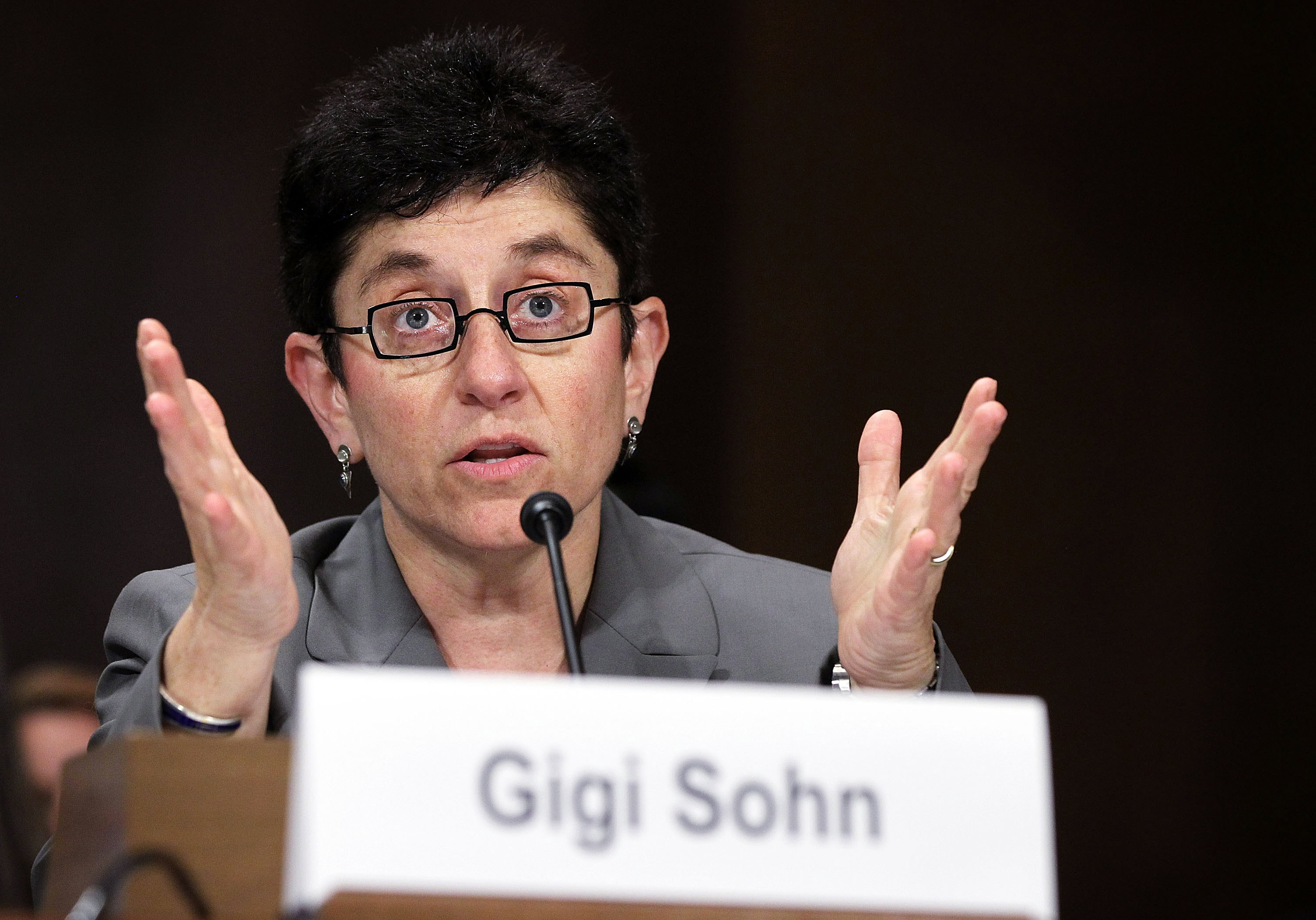
Gigi Sohn speaking and gesturing with her hands while testifying at a Senate hearing.
Enlarge / Gigi Sohn testifies during a Senate committee hearing on June 21, 2012.
Getty Images | Alex Wong

Although the Senate Commerce Committee was scheduled to vote yesterday on the nomination of Gigi Sohn to the Federal Communications Commission, it didn’t happen. The vote on President Joe Biden’s nomination of Sohn was delayed even as the committee voted to approve 10 other Biden nominations to various positions.

Yesterday’s delay has a logical explanation: Sen. Ben Ray Luján (D-N.M.) suffered a stroke last week, and Sohn’s confirmation needs his vote because of Republican opposition to the long-time consumer advocate who strongly supports reimposing net neutrality rules on broadband providers. Luján is expected to make a full recovery, but his absence could further delay Sohn’s nomination and other Democratic priorities in the 50-50 Senate. “On Wednesday an aide said that the New Mexico senator could return to work in four to six weeks, barring any complications,” The Wall Street Journal reported.

But Sohn’s nomination was already in trouble even though the Senate had plenty of time to vote on it before Luján’s health emergency. Biden nominated Sohn on October 26. The president made two other telecom choices on the same day, nominating FCC Chairwoman Jessica Rosenworcel for a new term and picking Alan Davidson to lead the National Telecommunications and Information Administration.

Rosenworcel was approved by the Senate Commerce Committee on December 1 and by the full Senate on December 7 in a 68-31 vote. Sohn and Davidson faced questions from the Senate Commerce Committee during the same nomination hearing on December 1. Davidson gained committee approval on December 15 and was confirmed by the full Senate on January 11 in a 60-31 vote.

Sohn to face second round of questioning

But there had been no movement on Sohn’s nomination until her vote was scheduled for and them bumped from the February 2 meeting. Commerce Committee Chair Maria Cantwell (D-Wash.) opted not to go ahead with what would have been a party-line vote—assuming all Democrats back Sohn. Comcast recently hired a new lobbyist with deep ties to Arizona, the home state of potential swing vote Kyrsten Sinema, a Democratic member of the Commerce Committee.

The slow Senate process combined with Biden waiting nine months to nominate a new FCC commissioner has left the agency with a 2-2 partisan deadlock throughout his term so far. With Luján’s recovery likely delaying action on Sohn for at least a few weeks, Cantwell scheduled an additional Commerce Committee hearing on Sohn for February 9.

That’ll give senators such as Ted Cruz (R-Texas) and Dan Sullivan (R-Alaska) another chance to grill Sohn publicly, two months after a previous hearing in which they claimed she would try to censor Fox News and conservative media in general. It’s not clear when the committee will vote on Sohn’s nomination.

Republicans and the National Association of Broadcasters have also criticized Sohn on the grounds of her being a former board member at Locast, a nonprofit online TV service that shut down after losing a copyright case launched by major broadcast networks. Sohn tried to silence this controversy by agreeing to recuse herself from certain broadcast-related decisions for three years, but this is likely to be the biggest topic of discussion at next week’s hearing.

New hearing “giving oxygen to baseless claims”

Public Knowledge, a consumer advocacy group that Sohn co-founded over 20 years ago, opposed the second hearing.

“Public Knowledge contends this unprecedented, pointless hearing risks giving oxygen to baseless claims slung by industry players at this consumer-focused nominee,” the group said yesterday. “We urge members of the committee to lay bare the real facts of what this hearing is about—hobbling the FCC at a time when it has so much important work to do… The FCC has not had a full five-member commission for the entire Biden administration and that has stalled key consumer protection priorities that President Biden has raised. Millions of Americans lack quality, high-speed broadband, and, yet, the FCC still doesn’t have authority over broadband a year into this administration. It’s time for a vote and a fully functioning FCC.”

New America’s Open Technology Institute (OTI) called the second hearing “a gift to AT&T, Comcast, and the other companies that have worked for years to weaken the FCC’s authority and who benefit from a deadlocked agency.” The institute added that “Sohn has been endorsed by nearly 250 organizations from across the political spectrum, including OTI, public safety officials, labor unions, civil rights organizations, and conservatives.”

Advocacy group Fight for the Future sent a letter today to Senate Majority Leader Charles Schumer (D-N.Y.), asking him to remove Cantwell from the Commerce Committee chair. Cantwell “has repeatedly caved to disingenuous opposition from Republicans and industry lobbyists, leading to inexcusable delays in the confirmation of highly qualified FCC nominee Gigi Sohn,” the letter said.

https://arstechnica.com/?p=1831592


Next-gen USPS mail trucks are only capable of 8.6 mpg, EPA says

The proposed replacement USPS mail truck got a lot of attention for its odd looks, but the real crime is a pathetic 8.6 mpg fuel efficiency—barely any improvement on the current vehicles.
Enlarge / The proposed replacement USPS mail truck got a lot of attention for its odd looks, but the real crime is a pathetic 8.6 mpg fuel efficiency—barely any improvement on the current vehicles.

The United States Post Office’s plan to replace its aging delivery vehicles has been heavily criticized by the Environmental Protection Agency and the White House Council on Environmental Quality. The letters, first published by The Washington Post on Tuesday, excoriate the decision to award a $482 million contract to Oshkosh Defense without properly examining the environmental impact, as required by law.

Specifically, the EPA says that the USPS’s required environmental impact report “does not disclose essential information underlying the key analysis of Total Cost of Ownership (TCO), underestimates greenhouse gas (GHG) emissions, fails to consider more environmentally protective feasible alternatives, and inadequately considers impacts on communities with environmental justice concerns.”

Or, as the Chair of the CEQ wrote in a letter to Postmaster Louis DeJoy, his “agency committed to walk down a path before looking to see where the path was leading,” in contravention of longstanding practices and laws.

When the USPS first announced the contract with Oshkosh in February 2021, it said the plan was to purchase between 50,000 and 160,000 Next Generation Delivery Vehicles. These, we were told, would be a mixed fleet. Some battery-electric vehicles, others using “fuel-efficient internal combustion engines” with an ability to be converted at a later date, “to keep pace with advances in electric vehicle technology,” it said.

Within a few hours, expectations were significantly downgraded with the clarification that only 10 percent of the planned NGDVs would be electric, but the EPA says things are even worse than that. Oshkosh’s proposed vehicle will only average 8.6 mpg (27.35 L/100 km) according to the EPA, a barely noticeable improvement on the current Grumman-made LLV trucks, which average 8.2 mpg (28.68 L/100 km). And there is no plan to convert any internal combustion-engined NGDVs to battery electric.

And it’s not like the USPS tried very hard to find alternatives. The EPA letter states that the “Postal Service chose not to consider in detail even a single feasible alternative to its proposal that would be more environmentally protective, evaluating only alternatives the Postal Service itself considered to be infeasible (e.g., 100 percent BEVs given longer rural routes).”

The EPA notes in its letter that recent federal court decisions have not been in the government’s favor regarding agencies ignoring required environmental protections and tells the USPS that it should not proceed to a decision on the NGDVs. It also calls for public comment on a new environmental impact statement and requests a public hearing.

https://arstechnica.com/?p=1831579


NSO tried to buy access to cell networks for “bags of cash,“ whistleblower says

A bag of money surrounded by a pile of money.

A whistleblower has accused Pegasus spyware-maker NSO Group of offering “bags of cash” to security company Mobileum in exchange for access to cellular networks in 2017. According to reports yesterday by The Guardian and The Washington Post, former Mobileum VP Gary Miller made his allegations in a complaint to the US Department of Justice and in an interview with news organizations that are part of the Pegasus Project consortium.

Miller alleged that, during the Mobileum/NSO Group meeting, “a member of his own company’s leadership at Mobileum asked what NSO believed the ‘business model’ was of working with Mobileum, since Mobileum did not sell access to the global signalling networks as a product,” The Guardian wrote. “According to Miller, and a written disclosure he later made to federal authorities, the response allegedly made by [NSO co-founder Omri] Lavie was ‘we drop bags of cash at your office.'”

NSO Group, an Israeli company that was recently blacklisted by the US government, was allegedly seeking access to the SS7 network. Mobileum’s various security products include an SS7 firewall, and the company’s website warns that “modestly priced access to the SS7 network is now available to hackers on a modest budget.”

Goal was to “conduct surveillance of cellphone users”

But Mobileum, which is based in California, says it doesn’t sell SS7 access. Mobileum CEO Bobby Srinivasan told the Pegasus Project news organizations that “Mobileum does not have—and has never had—any business relationship with NSO Group.” Mobileum also said it “does not have any direct access to the customer’s network and is unable to provide any kind of access, including SS7 access, to any third party.”

In the interview with news organizations, Miller alleged that “NSO officials made clear in the call that they wanted access to SS7 so NSO’s clients could conduct surveillance of cellphone users to investigate crimes,” the Post wrote. Miller further said that “the NSO Group was specifically interested in the mobile networks… They stated explicitly that their product was designed for surveillance and it was designed to surveil not the good guys but the bad guys.”

In the alleged meeting, NSO officials “stated multiple times that their work was authorized by government agencies,” Miller said, according to The Guardian. “They didn’t get in the details of who those government agencies were.”

The US in November blacklisted the NSO Group, saying the company “developed and supplied spyware to foreign governments that used this tool to maliciously target government officials, journalists, businesspeople, activists, academics, and embassy workers.”

Lavie: “No recollection” of saying “bags of cash”

Lavie’s denial of Miller’s account allowed for the possibility that he used the phrase “bags of cash” as a joke, The Guardian wrote:

In a statement to the Guardian, Lavie’s spokesperson said: “No business was undertaken with Mobileum. Mr. Lavie has no recollection of using the phrase ‘bags of cash,’ and believes he did not do so. However, if those words were used they will have been entirely in jest.”

A representative for Lavie also said in an email to the Guardian that Lavie “strongly denies having suggested any action that was unethical or illegal.”

NSO issued a statement saying that it had “never done any business with” Mobileum, that it “does not do business using cash as a form of payment,” and that “any suggestion otherwise demonstrates a profound lack of understanding about our company.”

“It just looks really fishy”

Miller also reported his allegations to US Rep. Ted Lieu (D-Calif.), who referred them to the Department of Justice. “Having such access would allow the NSO to spy on vast numbers of cellphones in the United States and foreign countries,” Lieu wrote in his referral, according to the Post.

The “bags of cash” quote is suspicious even if it isn’t direct evidence of a crime, Lieu told the Post. “I’m a former prosecutor, and you would do cash transactions because you want to hide it,” Lieu said. “When you have telecom companies and you have software companies, normally they don’t engage in cash transactions… It just looks really fishy, and it doesn’t smell right, and that’s why I want the Department of Justice to investigate.”

The Guardian wrote that the Justice Department is already investigating NSO Group for a range of allegations. “The Guardian and media partners have separately learned that NSO is the subject of an active criminal investigation by the Department of Justice, according to four people familiar with the investigation. The investigation, they claim, is focused on allegations of unauthorized intrusions into networks and mobile devices,” the news organization wrote.

“We are not aware of any DOJ investigation,” the NSO Group said.

Miller worked at Mobileum between 2014 and 2020, first as a senior technical director and later as vice president of network security and client solutions. He is now a mobile-security researcher for Citizen Lab at the University of Toronto.

https://arstechnica.com/?p=1831276


EU plans to label natural gas and nuclear power plants “sustainable”

EU plans to label natural gas and nuclear power plants “sustainable”

The European Union says it wants to “prevent greenwashing” among investors, but a new proposal may end up encouraging the behavior it wants to banish.

The European Commission put forward a plan today that defines what counts as a “sustainable investment,” something that’s all but required to manage a transition to clean energy. But to the chagrin of several EU countries, environmental groups, and asset managers, the proposal would allow both natural gas and nuclear to qualify as “contributing substantially to climate change mitigation.”

The split-the-baby approach came about because some countries, including Germany and Poland, lobbied for the inclusion of natural gas, while others, notably France, lobbied for nuclear power. Germany, which is in the process of shuttering its nuclear power plants, remains heavily dependent on coal and has been boosting its use of natural gas to “transition” away from coal. France, on the other hand, uses relatively little natural gas and gets nearly all of its electricity from nuclear power plants.

The end result appeased many EU countries, which tend to favor one fuel or another, but four, Austria, Denmark, the Netherlands, and Sweden, expressed their displeasure. “We are undermining the entire credibility of our Green Deal,” Bas Eickhout, a member of European Parliament from the Netherlands, told CNN. “And on the gas side, I really don’t see it. I fail to see the added value.”

Unhealthy proposal

Even people who had a hand in the plan aren’t happy. Andreas Hoepner, a professor at University College Dublin who helped advise the EU on the plan, told The Washington Post that the proposal was the equivalent of “calling french fries salad.”

While nuclear power is a true low-carbon fuel, producing lifetime carbon dioxide equivalent (CO2e) emissions on par with wind and solar, its inclusion as a sustainable energy source is controversial in Europe. Several countries, including Germany, Denmark, Austria, and Spain, oppose the construction of new nuclear power plants, mostly because of concerns about safety and waste storage.

Natural gas’s inclusion is controversial because it would encourage the construction of new power plants, facilitating the fossil fuel’s continued use for decades.

It’s not clear exactly how much of a climate benefit natural gas imparts over coal. While natural gas power plants emit less carbon than coal-fired ones, methane’s potency as a greenhouse gas means that leaks in the gas supply chain can drive its total emissions higher.

One optimistic study said that phasing out coal in favor of natural gas in Germany would cut emissions by 30 percent.

That’s not nothing, but proponents of the “bridge fuel” approach may be underestimating the length of the bridge. Earlier this year, Germany’s Constitutional Court required the government to rewrite its climate law because it found that it punted on the bulk of the emissions reductions, requiring future generations to make more onerous cuts. Locking in natural gas would have a similar effect.

Detailed requirements

The European Commission added a few details to the proposal that attempt to address concerns about both nuclear and natural gas. For nuclear, the plan requires countries to come up with waste storage plans before any investments can be considered sustainable. For natural gas, it requires plants to reduce their emissions intensities below 270 g CO2e/kWh and mandates increasing amounts of low-carbon gas (typically sourced from waste gas produced by landfills or manure). To get below the 270 g CO2e/kWh threshold, power plants can either install carbon-capture equipment or mix in low-carbon gas or green hydrogen. None of those approaches has been tested on a large scale, though.

Reviled though the plan may be, opponents face an uphill battle. They will need to convince at least half of the European Parliament or at least 20 of 27 EU heads of state to vote down the measure.

https://arstechnica.com/?p=1831261


Senate Republicans: Don’t let states choose where to spend broadband money

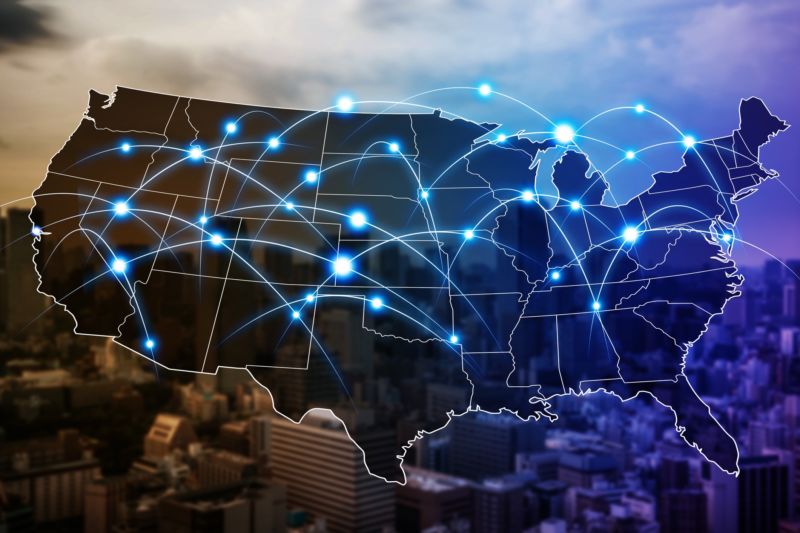
A US map with lines representing communications networks.

Senate Republicans are crying foul over a Biden administration plan to fund broadband deployment in regions that are already served with 25Mbps download and 3Mbps upload speeds.

The US Treasury Department’s recently issued final rule for distributing American Rescue Plan money eliminated an interim requirement that blocked broadband funds in areas that already have wired networks with speeds of at least 25Mbps/3Mbps. That speed threshold would leave out any area that’s already served by at least one cable provider, even if there’s no competition and no fiber-to-the-home availability.

The Treasury Department’s reversal was praised by community broadband advocates who said that keeping the original 25Mbps/3Mbps threshold could prevent deployment to large portions of the US containing more than 90 percent of Americans. The nation’s current broadband maps are also unreliable, raising the possibility that even homes without 25Mbps/3Mbps broadband access could be excluded.

But 11 Senate Republicans on Friday urged Treasury Secretary Janet Yellen to go back to the original rule. They wrote in a letter:

The final SLFRF [Coronavirus State and Local Fiscal Recovery Funds] rule increases the risk of overbuilding existing broadband investments. First, the final rule eliminates a key requirement that eligible broadband projects provide service to unserved or underserved households or businesses that lack access to minimum speeds of 25Mbps download/3Mbps upload. Instead, recipients can invest in projects designed to serve locations with “an identified need for additional broadband infrastructure investment”—a vague and subjective standard. The rule also permits recipients to invest in projects regardless of whether there is an existing federal or state funding commitment. As a result, the final rule will allow SLFRF recipients to fund projects in areas where broadband service is already or will be available—while continuing to leave truly unserved areas in our states without access to broadband.

GOP: Don’t let states “choose whatever” they want

The letter further objected to the fact that “[i]n addition to federal and state broadband data, funding recipients are permitted to consider user speed tests, interviews, and ‘any other information they deem relevant’ when determining whether to fund a broadband project in a given area.” The Republican senators want state governments to have less leeway in distributing funds, writing that “the broad nature of this guidance allows states to choose whatever information they wish to determine the availability of broadband in a given area.”

The letter concluded by urging Treasury “to ensure that SLFRF funds are focused on truly unserved areas to maximize the benefit to those Americans currently without broadband service.” The letter was led by Sen. Jerry Moran (R-Kan.) and was signed by fellow members of the Senate Commerce Committee, including Roger Wicker (R-Miss.), John Thune (R-S.D.), Shelley Moore Capito (R-W.V.), Marsha Blackburn (R-Tenn.), Roy Blunt (R-Mo.), Ted Cruz (R-Texas), and Deb Fischer (R-Neb.). It was also signed by Senators Thom Tillis (R-N.C.), Richard Burr (R-N.C.), and Susan Collins (R-Maine).

Both the interim and final rules said that funded projects must “reliably meet or exceed symmetrical 100Mbps download and upload speeds,” or at least 100Mbps download and 20Mbps upload speeds in areas where symmetrical speeds aren’t practicable “because of the excessive cost of the project or geography or topography of the area.”

The Treasury Department says the SLFRF includes $350 billion for state, local, and tribal governments “to support their response to and recovery from the COVID-19 pandemic.” Over $245 billion has already been distributed. Broadband infrastructure is one of many funding areas; others include schools, hospitals, child care facilities, premium pay for essential workers, vaccine services, affordable housing, and water and sewer infrastructure.

Given the mix of funded projects, the exact amount going to broadband could be higher or lower depending on the criteria adopted by the Treasury Department. The law that created the fund didn’t provide specific guidelines for broadband projects, leaving it up to the Biden administration to make those decisions.

Community broadband advocates pushed for change

In contrast to Republican senators, community broadband advocate Christopher Mitchell says the Treasury Department’s final rule is a big improvement over the interim one. Mitchell, director of the Community Broadband Networks Initiative at the Institute for Local Self-Reliance, wrote:

Treasury released an Interim Final Rule in May 2021, detailing how local governments would be allowed to invest in broadband. I promptly freaked out at the restrictions and complications that I (and others) feared would result in local governments backing away from needed broadband investments due to fears of being out of compliance with the rule.

Mitchell wrote that his group “worked with numerous local leaders and the National League of Cities to explain the problems we saw in the proposed rule,” and “after many months of deliberations, the Treasury Department has resolved all of the concerns that we identified as areas of concern in May.” As a result, “local governments have wide latitude to use SLFRF funds for a variety of needed broadband infrastructure investments, especially to resolve affordability challenges.”

https://arstechnica.com/?p=1830921


Study: Few places will struggle to balance renewables and conservation

Solar panels cover a hillside.
Enlarge / Solar power and habitat preservation are likely to conflict, but only in some areas.

Compared to fossil fuel plants, renewable power facilities cover a lot of ground. That ground can be put to additional uses; many wind farms are also regular farms, and even solar plants can work well with agriculture. But these sorts of developments are definitely not compatible with conserving sensitive habitats for wildlife or plants. Even wind farms, which have a relatively small on-ground footprint, require access roads and regular servicing.

Early studies on the matter suggest this might be a serious problem, as they found that a number of renewable power facilities had been built on land that had been identified as a sensitive habitat. But new work from researchers at the University of Southampton indicates that the problem isn’t as severe as it seems. The actual footprint of existing wind and solar farms on sensitive habitats is small and should be able to be kept small in most countries.

Carbon-free footprints

To understand present problems, you must have an idea of what land has been developed and what needs to be conserved. The researchers used two different sources to identify the footprints of current renewable power facilities. For sensitive habitats, the team started with a database of all existing protected areas. It supplemented that with maps of the ranges of all land vertebrates listed as threatened on the “Red List” as well as the World Wildlife Fund’s list of ecoregions. The protected areas were considered a starting point, and areas for potential expansion were identified based on their ability to protect the most threatened species.

Sufficient data wasn’t available for every region, notably all of Africa and Australia and countries like Indonesia and Mexico.

Based purely on overlap, the numbers are consistent with the earlier analyses: about 15 percent of the existing facilities occur within conservation areas. Most of this overlap occurs in Europe, where undeveloped habitat is often rare and renewables have been pursued aggressively.

Separately, however, the researchers looked at the total footprints of both the renewable sites and key habitats within each country. This allowed them to estimate how much overlap between the two (sites and habitats) we’d expect to see if both were distributed randomly. This helps address the question of whether sensitive habitats are especially vulnerable to being developed for renewable power.

In Europe, only Spain, Portugal, and France saw any indication of elevated overlap between renewables and sensitive habitats. Outside of that, the United States saw high levels of overlap, but these mostly occurred in the Great Plains, where other areas provided significant habitat protections. More concerning is Brazil, where high species densities make it difficult to find places where development isn’t problematic.

To get a sense of whether problems were arising from existing developments, the researchers checked for areas that had been de-listed as reserves or identified as having degraded habitats. There was no indication that these changes were driven by renewable energy development.

Ready to expand

Obviously, existing renewable energy facilities don’t come anywhere close to allowing us to hit our climate goals, so we’re going to have to expand them dramatically. Efforts are also underway to dramatically expand the protected habitats in many areas of the globe. How likely are those expansions to collide in the future?

To find out, the researchers looked into locations where renewable resources are being developed currently and projected those developments into the future. The researchers found that wind farms tend to be developed in areas with the best wind resources. By contrast, other considerations (such as proximity to road infrastructure) were the biggest factor for the siting of solar power installations. Expansion of protected habitats was modeled based on maximizing the number of protected species within them.

Based on these criteria, the researchers identified the top 30 percent of the regions that were likely to see renewable power development, as well as the top 30 percent that were likely to see habitat protection. These were compared to identify conflicts.

A map of the most likely regions of solar power expansion (yellow) and habitat protection expansion (blue). Areas where the two conflict are shown in red.
Enlarge / A map of the most likely regions of solar power expansion (yellow) and habitat protection expansion (blue). Areas where the two conflict are shown in red.
Dunnett, et. al.

Overall, the news is pretty good; there are large regions around the globe where conflict is unlikely. In many other areas, like Southern India and the US Great Plains, potential conflicts can be easily avoided because only a small portion of the area suited for renewable power development ends up overlapping with areas that should be prioritized for habitat preservation.

That said, a number of areas sit where conflicts are almost inevitable. Large areas of Southern Brazil and Southeast Asia are likely to see conflicts, as is the area bordering the Red Sea. Solar power in Central Europe is already on the verge of running into limits on development.

Of course, all this assumes that the trends for future renewable power siting will be an extension of the present trend, which is not guaranteed. And there are some highly specific conflicts that may be difficult to resolve, such as the risk posed to birds and bats from smaller on-shore wind turbines. On the more positive side, greater international integration of power grids may allow some smaller countries to benefit from renewable power without developing their own protected areas.

PNAS, 2022. DOI: 10.1073/pnas.2104764119  (About DOIs).

https://arstechnica.com/?p=1830907


Spotify’s Rogan problem is a cautionary tale for other tech platforms

Spotify is in the middle of a transformation—it just may not realize it.
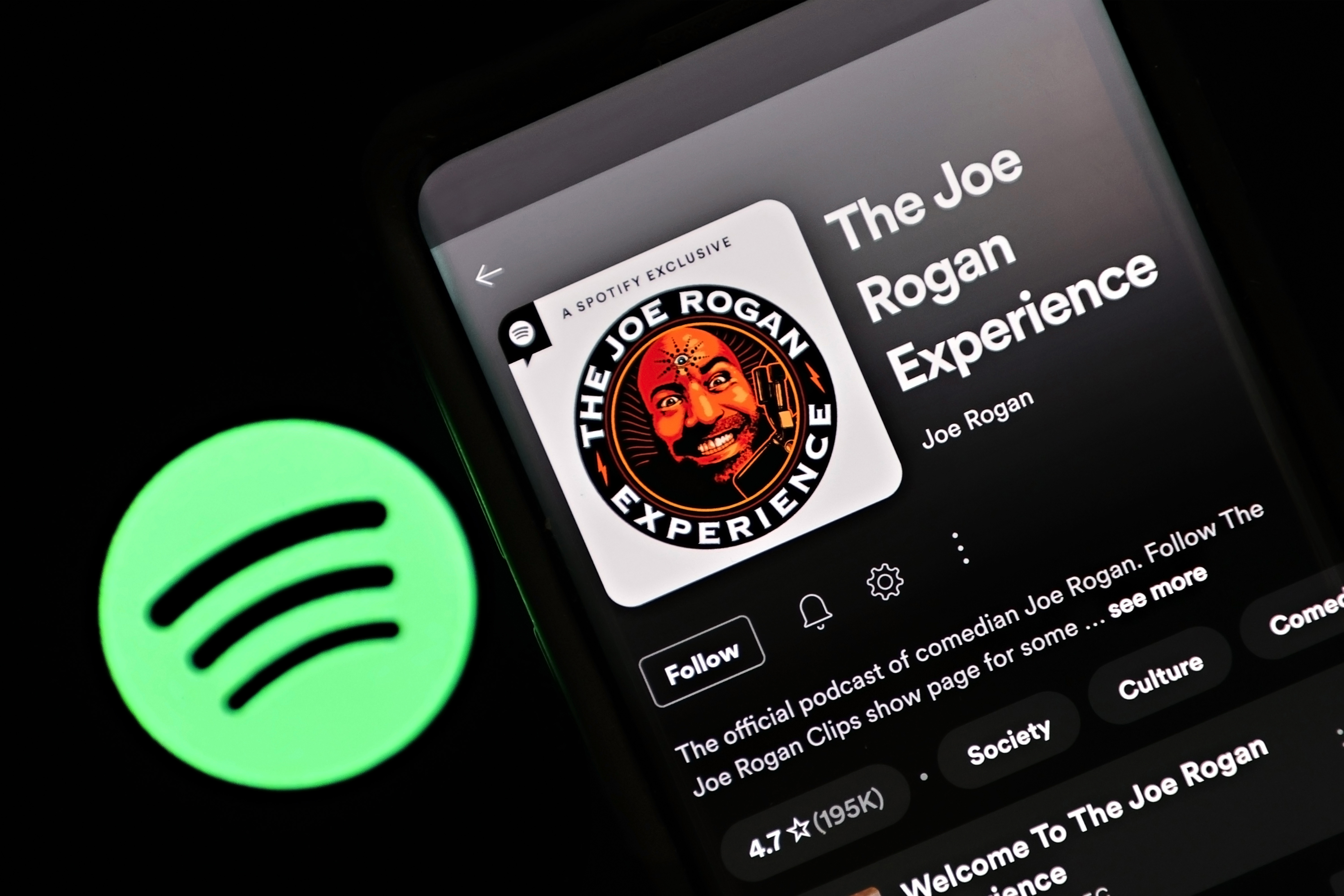
Enlarge / Spotify is in the middle of a transformation—it just may not realize it.
Cindy Ord/Getty Images

Spotify probably didn’t realize it, but it ceased being a tech company a few years ago.

It was excelling at all the tech startup things—attracting users and losing money—but like most businesses, it eventually wanted to make a profit. The company was having a tough time doing that simply by streaming music, which proved to be expensive since the labels demanded a hefty fee to access their catalogs. Without another product to sell alongside music, Spotify was hemorrhaging money.

So the company started looking afield, searching for a product that would complement its existing music offerings. It found one in podcasts.

Spotify had finally found a path to profitability. Podcasts brought in big ad spends, and they could be made for less than it cost to license music catalogs. Plus, podcasts kept users coming back. After all, the big streaming services all offer most of the music people listen to, which makes switching easier. But exclusive podcasts aren’t available anywhere else. They lock fans in.

In February 2019, Spotify bought podcast production company Gimlet, which had a sizable stable of shows. Then it snapped up a couple more companies before making a high-profile acquisition of The Ringer, a podcast network founded by former ESPN sportswriter Bill Simmons. In May 2020, Spotify bought an exclusive license to past and future episodes of Joe Rogan’s show.

But in the process, Spotify had changed. Now the future of the company depended not on a better music-streaming widget but rather on the podcasts it produced and the ads it sold around them. Music existed to broaden the offering.

Other companies may not repeat Spotify’s transformation from platform to media company. It might be a one-off, a necessity given the vagaries of the music-streaming industry. But it could just as likely be a cautionary tale about what happens to platforms when they run out of room to grow.

Platforms’ advantages

Today, tech platforms generally have several advantages over media companies. While both use the Internet to reach potentially billions of users, platforms have an edge because they serve both consumers and producers. They handle the underlying software and infrastructure, and other entities make the content that makes the platform valuable. 

On platforms, users and customers are sometimes different. Facebook and Twitter, for example, famously sell their users’ data to advertisers, who are the customers. Spotify has muddied the waters a bit, selling subscriptions to users while also using listening data to sell companies ad space in podcasts. (Spotify also offers a free tier that plays more ads.)

In addition, platforms hold a regulatory edge over media companies. Section 230 of the Communications Decency Act gives platforms broad immunity for what gets published using their tools. That’s not the case for publishing companies, which are generally responsible for the content they produce. Platforms also don’t tend to be liable for voluntarily “blocking and screening of offensive material,” what we today call “content moderation.”

For years, Spotify claimed that middle ground, acting as an intermediary between music labels and distributors and their audiences. But unlike other platforms like Facebook and Twitter, which get nearly all of their content for free from users, Spotify is at a disadvantage because it has to pay for the content it streams.

After years of growth, Spotify faced a dilemma. The company had over 100 million paying subscribers, but it was still losing money. It wasn’t “making it up on volume,” so to turn a profit, it needed a way to lower its cost of production. One way would be to negotiate lower rates with record labels, but any gains there probably just nibble around the edges. Spotify needed a way to boost profits big time.

Enter podcasts. For in-house series, Spotify can control their production, which can help lower per-minute costs. But the real gusher has been ad sales. Podcast ads are relatively good at reaching audiences—most people don’t skip over them—and as a result, they command a hefty premium. Spotify has also been automating their placement, fine-tuning which listeners hear which ads in the hopes of boosting rates further.

The bet has paid off. Ad revenue was up 75 percent year over year in the last quarter, and the company turned a profit, not something it usually does. While podcasts are still a drag on margins, growth is such that the company expects the situation will flip before long.

That profit may have come at a cost, though. By getting into the production business, Spotify is no longer just a neutral platform. Even if it hasn’t attracted the attention of regulators, it has raised the ire of its subscribers, which at this point may pose more of a risk. Spotify has been in a race to capture as many subscribers as possible, likely hoping that its commanding market share will give it more leverage in negotiations with record labels. Producing controversial content like Rogan’s podcast can attract one type of subscriber, but it can also drive others away. Push too many away, and Spotify risks losing its competitive advantage.

https://arstechnica.com/?p=1830845


HP wins huge fraud case against Autonomy founder and CEO Mike Lynch

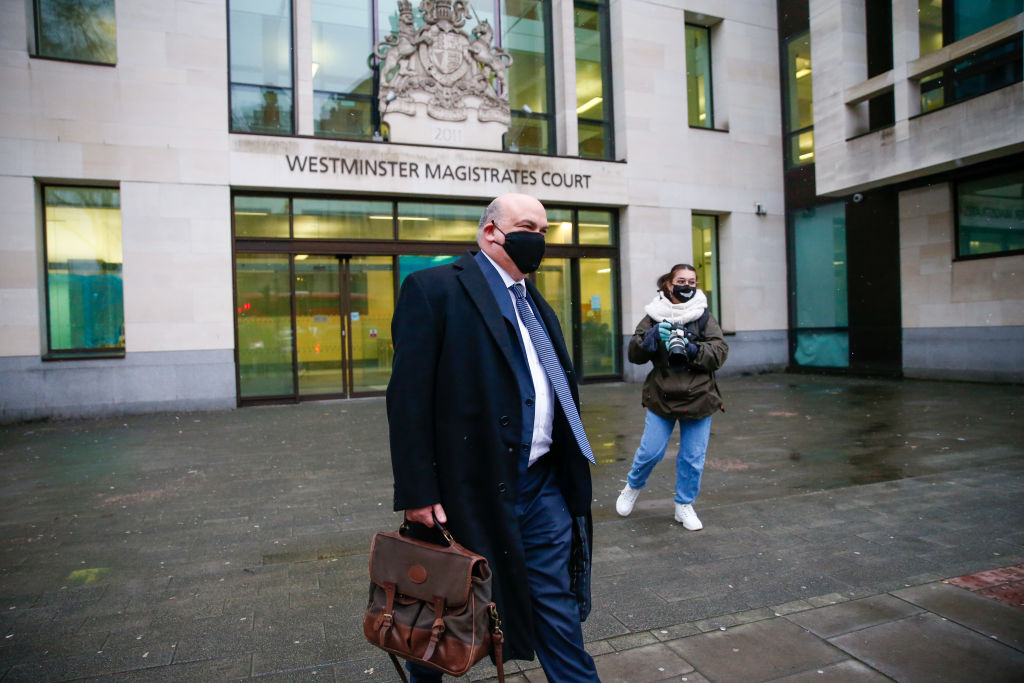
A man in a mask and a business suit walks away from an official building.
Enlarge / Mike Lynch, former chief executive officer of Autonomy Corp., departs from his extradition hearing at Westminster Magistrates Court in London on Tuesday, Feb. 9, 2021.
Bloomberg | Getty Images

After years of wrangling, HP has won its civil fraud case against Autonomy founder and chief executive Mike Lynch. The ruling, the biggest civil fraud trial in UK history, came just hours before the UK home secretary approved Lynch’s extradition to the United States, where he faces further fraud charges.

The UK’s High Court found that HP had “substantially succeeded” in proving that Autonomy executives had fraudulently boosted the firm’s reported revenue, earnings, and value. HP paid $11 billion for the firm back in 2011 and later announced a $8.8 billion write-down of its value. In court, HP claimed damages of $5 billion, but the judge said the total amount due would be “considerably less” and announced at a later date. Kelwin Nicholls, Lynch’s lawyer and a partner at law firm Clifford Chance, said his client intends to appeal the High Court ruling. In a later statement, Nicholls said his client would also appeal the extradition order in the UK’s High Court.

This week’s events are the latest twist in an extradition process that began in November 2019, when the US Embassy in London submitted a request for Lynch to face trial in the United States on 17 counts, including wire fraud, conspiracy, and securities fraud. Lynch denies all charges against him. Nicholas Ryder, professor in financial crime at the University of the West of England describes it as the “Colt .45 for the US Department of Justice”—an all-pervasive and powerful move. “That’s their go-to charge. The ramifications for Mr. Lynch are significant.”

At the time of the Autonomy acquisition, HP’s then-chairman said he had “serious cold feet” about the deal, according to claims subsequently made in court. The company claimed some former members of Autonomy’s management team “used accounting improprieties, misrepresentations, and disclosure failures to inflate the underlying financial metrics of [Autonomy].” Among them was Lynch, then CEO of the firm.

In 2015, HP filed a lawsuit in the UK against Lynch, alleging he was involved in the publication of false accounts that overstated how valuable Autonomy’s business was. Now, more than a decade after the ink dried on the deal, and nearly seven years after Lynch was taken to court, the civil case in the UK is complicated by a parallel case involving the United States’ Department of Justice—the ramifications of which could be huge for Lynch. In a related trial, his former colleague at Autonomy, chief financial officer Sushovan Hussain, was found guilty of fraud in a US court in May 2019, imprisoned for five years, and fined $4 million, as well as asked to forfeit $6.1 million more.

In July 2021, a London court ruled that Lynch could be extradited, with the judge saying that the UK civil case’s findings would be “of very limited relevance” to the US case. Since then, Patel has delayed signing an extradition request for someone currently being tried in the UK for largely similar crimes. But now that case is drawing to a close—and Lynch might be running out of options. “He could be facing a significant amount of time in prison if convicted of the 17 counts of fraud,” Ryder says of the US criminal charges against Lynch.

The case highlights a curiosity in parallel, twin-track legal proceedings. “We have a situation where a UK citizen, based in the UK, is accused of fraud against an American company,” says Thomas Cattee, a solicitor at UK immigration law firm Gherson, which has been monitoring the Lynch legal case. That American company used the UK courts to pursue civil action. Yet the US Department of Justice subsequently wants to pursue criminal charges against Lynch in the United States. “There are an awful lot of factors at play here,” says Cattee, who at a previous law firm worked on the case of Scottish hacker Gary McKinnon, who successfully held off extradition to the United States thanks to the intervention of then-Home Secretary Theresa May.

Lynch finds himself stuck in a transatlantic tiff that legal experts have called unprecedented. Patel has been put in a complicated position: having signed the extradition document, she has seemingly affirmed that US legal proceedings take precedence over a UK case. Her decision is also another reminder of the perceived imbalance in the extradition agreement between the UK and the US. Ultimately, US prosecutors could use the terms of the 2003 extradition treaty signed between the US and UK, which allows the US to extradite British citizens for alleged offenses under US law, even if those offenses are alleged to have occurred in the UK—but not the other way round. However, not everyone agrees with that point of view. “The narrative in relation to the perceived imbalance often is one outside the court,” says Richard Cannon, partner at Stokoe Partnership Solicitors, who specialize in criminal defense and civil litigation. “It’s very rarely, in my experience, something the courts can or would consider.”

Despite this, the case is being watched carefully because of the eye-watering numbers involved and its implications for the UK tech and business community. The worry is that the Lynch case could create a precedent around the primacy of one legal system over the other. “I think that the US has more aggressive powers in terms of pursuing these kinds of cases against individuals who aren’t in the UK,” says Cattee. “I think there’s just a general sense of unfairness,” he adds.

This story originally appeared on wired.com.

https://arstechnica.com/?p=1830229