Spotify support buckles under complaints from angry Neil Young fans

Neil Young's fans aren't happy that the rocker's music is no longer available on Spotify.
Enlarge / Neil Young’s fans aren’t happy that the rocker’s music is no longer available on Spotify.
Dave J Hogan/Getty Images

Neil Young was mad. Now his fans are, too, and they’re telling Spotify about it.

Earlier this week, Young had asked the music-streaming service to remove his music from its library in response to COVID misinformation aired on Joe Rogan’s podcast, which is available only on Spotify. “I want you to let Spotify know immediately TODAY that I want all my music off their platform,” Young wrote on his website. “They can have Rogan or Young. Not both.”

Spotify complied with the request, which ultimately came from Warner Brothers, Young’s label. Though the loss of Young’s music likely represents a small percentage of overall streams on Spotify, Young pointed out that “Spotify represents 60% of the streaming of my music to listeners around the world.” 

For Young and his fans, the hit was palpable, and his fans are apparently taking their frustrations out on Spotify. The hashtag #SpotifyDeleted trended on Twitter yesterday, and fans seem to have inundated customer support with so many messages that Spotify has had to take it offline at times.

“We’re currently getting a lot of contacts so may be slow to respond,” a large red banner has read on the support page. Options to message the company, which have previously included live chat with a customer support agent or a chat bot, are now limited to an email address link.

In the wake of Young’s departure from Spotify, Apple Music trolled its competitor, tweeting that it is “the home of Neil Young” and releasing a playlist titled “We Love Neil.”

The brouhaha can be traced back to 2020, when Spotify reportedly paid more than $100 million to obtain an exclusive license to Joe Rogan’s podcast and its archives. Rogan, the podcaster, UFC color commentator, and former actor, is no stranger to controversy. He has repeatedly urged his younger listeners not to get vaccinated and has touted ivermectin as a COVID treatment. (Ivermectin is an anti-parasitic drug and is not approved by the Food and Drug Administration to treat or prevent COVID. Its list of side effects is long.) Rogan has also hosted a variety of conspiracy theorists (including Alex Jones), has given voice to anti-trans views, and has falsely claimed that “left-wing people” started forest fires in the West.

“When I left Spotify, I felt better,” Young wrote on his website today. “I support free speech. I have never been in favor of censorship. Private companies have the right to choose what they profit from, just as I can choose not to have my music support a platform that disseminates harmful information. I am happy and proud to stand in solidarity with the front line health care workers who risk their lives every day to help others.”

The artist, who has long criticized audio quality on streaming services, and on Spotify in particular, closed with one last dig. “As an unexpected bonus, I sound better everywhere else,” he wrote.

https://arstechnica.com/?p=1830267


Dozens of states side with Epic in Apple App Store appeal

Dozens of states side with Epic in Apple App Store appeal

States are siding with Epic Games as the developer appeals a lower court ruling in its antitrust lawsuit against Apple over app store fees and payment processing.

The attorneys general for 34 states and the District of Columbia have filed an amicus brief on behalf of Epic. Utah led the brief, claiming that “Apple’s conduct has harmed and is harming mobile app developers and millions of citizens.”

Epic sued Apple in 2020, alleging anticompetitive behavior. Apple pulled Fortnite from the App Store after Epic covertly updated the game to include an “Epic Direct Payment” option, a move that ran afoul of the App Store’s developer agreement. 

In September, US District Judge Yvonne Gonzalez Rogers ruled in favor of Epic’s claim that Apple violated California’s Unfair Competition Law and granted a permanent injunction that forced Apple to let developers use external websites to take payments for in-app purchases. That would allow Epic and other developers to sidestep App Store fees of up to 30 percent for such purchases.

With the appeal, Epic is hoping to overturn the lower court’s ruling that Apple does not have a monopoly with its App Store. “Apple’s conduct is precisely what the antitrust laws prohibit,” the company said in its opening brief.

The states’ amicus brief has a relatively narrow focus compared with the arguments Epic is making in its appeal. The bulk of it hinges on Apple’s contract with developers. The attorneys general say that the lower court “erred in deciding that Section 1 of the Sherman Act does not apply to a ‘unilateral contract.’” They argue that “excluding contracts like Apple’s simply because Apple ‘unilaterally imposed’ the terms makes bad antitrust public policy.”

Including unilateral contracts under Section 1 of the Sherman Act, though, is contested in cases like this since it would imply that Apple is conspiring to restrain trade. The problem is that Apple hasn’t been accused of conspiring with another company. The states are arguing that the problem isn’t the contract, per se, but rather Apple’s conduct.

The states also argue that the lower court didn’t fully account for the positive and negative effects of Apple’s conduct in the context of antitrust law. Essentially, they’re asking the appeals court to redo that analysis. 

“As Epic points out, Apple amassed billions in supracompetitive profits from one billion iPhone users,” the brief says. “Without balancing, this type of immense harm to consumers can go unanswered with just the slightest showing of procompetitive benefit. The Court should require Apple to account for its conduct under a complete rule of reason analysis.”

Deciding those two issues will be a matter for the appellate judges, of course. Apple is “optimistic” that Epic will lose its appeal. “We remain committed to ensuring the App Store is a safe and trusted marketplace for consumers and a great opportunity for developers,” an Apple spokesperson told Bloomberg. The company is expected to reply to Epic’s appeal in March.

https://arstechnica.com/?p=1830153


Citizens of countries that rebate carbon taxes aren’t aware of the rebate

Stylized illustration of smoke stacks and gold coins.
Enlarge / Carbon tax isometric vector concept.

One of the simplest ways to reduce carbon emissions is to put a price on them, gradually ratcheting up the price to induce conversation and emissions-free technologies. In turn, the simplest way of imposing that price is by taxing emissions. But taxes are typically unpopular, as people are very sensitive to the cash they extract.

A rebate plan alongside carbon taxes makes those taxes less painful. Rather than putting the tax’s income into the national budget, the revenue is divided up and returned to citizens. The division is often done on a per-capita basis, which turns out to be progressive, since lower-income individuals tend to end up producing fewer carbon emissions but get an equal share of the rebate.

While a rebate sounds great on paper, only a couple of countries have actually tried it. A new study looks at these countries more carefully and finds that most citizens underestimate the rebate they get, and opinions on the taxes have become politicized.

The case in Canada

Canada is one of the countries with a tax-and-dividend program, although the program is complicated. Each of its provinces has the option of implementing its own program for putting a price on carbon emissions, and a number of provinces have. But, in the absence of that, a federal tax-and-dividend plan will kick in. Complicating matters further, at least one province (Alberta) started its own program, revoked it, and then defaulted to the federal system.

The rebate from the tax is done on a per-household basis (only one person per household gets the payment) but is based on the total number of people in the household. The rebate never shows up as an actual payment; instead, it’s given as a credit on annual income taxes. As it’s structured, 80 percent of Canadian households gets a rebate that’s larger than what they paid via the carbon tax.

The researchers behind the new work took surveys of Canadians in four provinces. One was Quebec (which has a provincial cap-and-trade scheme) and another was Alberta (which changed its scheme partway through the study period). But the researchers also surveyed in Ontario and Saskatchewan, which both used the federal tax-and-dividend plan.

A couple of things were clear. One is that support for the program is heavily politicized. Over 75 percent of Liberal Party voters supported the federal programs in the two provinces that were using it. Among Conservative Party voters, support was only 32 percent in Ontario and a tiny 13 percent in Saskatchewan. Controlling for the amount of tax people had paid made little difference to these figures.

The second point that was obvious was that people really weren’t paying attention to the rebate portion of things. In provinces where rebates went out, 17 percent of Canadians were unable to remember if they had received one. Numbers were even higher in non-rebate provinces, where over 10 percent of the respondents claimed they had received the rebate.

People who had actually received the rebate consistently underestimated how much they received, with Ontario residents being 9 percent low, and those in Saskatchewan averaging 29 percent below the actual value. Put differently, only about 20 percent of Canadians who received rebates were able to guess the amount within CA$100 ($79). Unfortunately, informing people what their rebate actually was didn’t change levels of support for the tax-and-rebate scheme.

Again, the problem was politicized: people who back the Conservative Party were more likely to underestimate their rebates and were more likely to continue to do so even after they were informed of its actual amount.

https://arstechnica.com/?p=1828934


FCC aims to stop broadband bill shock, reviving plan nixed by Ajit Pai

An Ethernet cable and fiber optic wires.
Getty Images | Rafe Swan

The Federal Communications Commission is moving ahead with plans to require broadband “nutrition labels” that include details on the actual price of Internet service and information about data caps and performance.

The consumer labels that home Internet and mobile broadband providers would have to provide at the point of sale will be similar to those adopted by the FCC in 2016. The labels and related rules requiring greater transparency were eliminated under former FCC Chairman Ajit Pai, but the Infrastructure Investment and Jobs Act approved by Congress in November 2021 requires the FCC to issue new rules mandating the display of the consumer labels.

Today’s 4-0 FCC vote approved a Notice of Proposed Rulemaking (NPRM) that seeks public comment on the plan. There’s generally at least a few months between an NPRM and a commission vote to issue final rules. The deadline for initial comments will be 30 days after the NPRM is published in the Federal Register, and reply comments will be due 45 days after Federal Register publication. The docket where comments will be filed can be found here.

Price, fees, data caps, and performance data

The FCC is proposing to adopt the same labels it did in 2016. For home Internet service, that includes “1) pricing; 2) monthly data allowance; 3) overage charges; 4) equipment fees; 5) other monthly fees; 6) one-time fees; and 7) early termination fees,” a public draft of the NPRM released before the meeting said. The home Internet labels would also “include information on performance (speed, latency, and packet loss) and on network management practices,” the draft said.

Mobile broadband labels would include “information on 1) pricing; 2) when you exceed data allowance; 3) other included services/features; 4) other monthly fees; 5) one-time fees; 6) service contract terms; 7) early termination fees; and 8) ‘bring your own device’ information,” the draft said. The mobile broadband labels would also include “performance information (speed, latency, and other services on the network) and network management practices,” the FCC said. “Both the fixed and mobile broadband labels include a link to the provider’s privacy policy and a link to how to file complaints and inquiries.”

The FCC is seeking comment “on where the labels should be displayed to best inform consumers; on enforcement issues related to the label requirement, including how the Commission should ensure the accuracy of label content; [and] on implementation issues, including the time by which broadband providers should be required to display the labels.” The FCC is proposing “to ensure that any required labels are accessible to persons with disabilities.”

Here’s a look at the 2016 version of the fixed and mobile broadband labels:

Comparison shopping—when there’s more than one choice

Consumer labels don’t address the most frustrating problem for many home Internet customers—a lack of competition. Internet service providers take advantage of that by imposing high prices, data caps with overage charges, and hidden fees such as Frontier’s “Internet Infrastructure Surcharge.” The consumer labels should make it easier for users to determine the actual price of broadband when they start a new subscription, though they wouldn’t require ISPs to lower prices.

While some people do have a choice of two or more home Internet providers, the potential for the labels to aid customers in comparison shopping is greater in the mobile broadband market, which has three major national providers and a variety of smaller ones. FCC Commissioner Geoffrey Starks focused on the potential to help customers compare ISPs in his statement at today’s FCC meeting.

“Shopping around for the best broadband plan can be a lot of work,” Starks said. “The ‘nutrition labels’ we seek comment on today will help households compare prices and service offerings, making it easier for them to find the right package and the best deal.”

ISPs love “hidden fees, surprise bills, and dense contracts”

“Today’s FCC vote is a welcome step forward and a win for consumers,” Joshua Stager, deputy director for broadband and competition policy at New America’s Open Technology Institute, said today. ISPs are “notorious for keeping customers in the dark” with “hidden fees, surprise bills, and dense contracts,” he said.

“The broadband nutrition label cuts through this confusion by clearly disclosing the cost and terms of service in a simple, consumer-friendly format,” Stager said. “It’s a common sense idea that we look forward to working with the commission to implement. People deserve to know what they are paying for.” The Open Technology Institute has been calling on the US to adopt a “Broadband Truth-in-Labeling” program since 2009.

While broadband lobby groups will likely urge the FCC to minimize the amount of information ISPs are required to provide, consumer advocates plan to call for the labels to be more detailed. “As the record develops, we hope it will show that these labels can be made even more impactful if the commission were to adopt requirements that the labels link to information about what speeds a household might need, as well as provide information on what certain technical terms mean,” said Jenna Leventoff, senior policy counsel at Public Knowledge.

https://arstechnica.com/?p=1828931


Particulate pollution is killing older Americans, even at legal levels

Exhaust from fossil fuel vehicles is a significant contributor to PM2.5 pollution in the US.
Enlarge / Exhaust from fossil fuel vehicles is a significant contributor to PM2.5 pollution in the US.
Ina Fassbender/picture alliance

At the outset of the pandemic, when lockdowns were widespread, a remarkable phenomenon occurred. Places that had been saturated with pollution suddenly cleared. The sky over Los Angeles turned blue. Snow-capped mountain ranges that were normally obscured by pollution glistened on the horizon. The white marble of the Taj Mahal, which is normally wrapped in smog, shone brightly against an azure sky. Even in regions that aren’t typically considered polluted, the air just smelled fresher.

The reason, of course, is that hardly anyone was driving. Burning fossil fuels, whether under the hood of an automobile or in a home furnace or power plant, produces copious amounts of fine particulate pollution, also known as PM2.5—particulate matter smaller than 2.5 microns. For years, researchers didn’t understand the impact of these pollutants.

But as scientists have started digging, they have discovered that particulates have an outsize impact on our health. Previous research showed that PM2.5 from burning fossil fuels kills more than a million people a year, mostly in heavily polluted regions of Asia. But now, a new study from the Health Effects Institute shows that even in the US, where the air is comparatively clean, PM2.5 current Environmental Protection Agency guidelines may not be low enough to prevent unnecessary deaths.

Better—but still not great

Air quality in the US has greatly improved since the 1970s, yet researchers were curious to see if today’s relatively clean air still contained unhealthy amounts of pollution. The new study, led by Francesca Dominici at Harvard University, looked at 68.5 million older Americans who were exposed to ambient air that was cleaner than current EPA guidelines. The team determined PM2.5 exposure using satellite data along with land-use details to refine pollution estimates from roads, farms, and so on. The researchers found that deaths among older Americans, regardless of the cause, rose 6–8 percent for every additional 10 µg of PM2.5 per cubic meter of air throughout the year. That’s a relatively small amount; to put it in context, daily PM2.5 levels classified as “good” would have to increase by more than twice that number to trigger an air quality alert for sensitive groups and 14-times to trigger an alert for everyone else.

PM2.5 is particularly deadly because of its size. Our noses are pretty good at filtering out larger particles, but smaller ones can penetrate deep into our lungs and circulatory systems. In the lungs, the particles can inflame tissues, causing or exacerbating asthma, chronic bronchitis, emphysema, and other problems. In our circulatory system, PM2.5 can drive up heart rates and lead to heart attacks, strokes, and other cardiovascular problems. Fine particulate pollution is even associated with neurological problems, including Alzheimer’s and Parkinson’s diseases.

In recent years, the evidence of negative health effects from PM2.5 “has grown substantially,” Daniel Greenbaum, president of the Health Effects Institute, told Ars. Two major studies in the late 1980s and early 1990s were the first to suggest that eliminating visible soot wasn’t enough, he said, and added “that there are really effects even with those very fine particles.” Since then, more landmark studies have shown just how pervasive and pernicious PM2.5 pollution can be.

Subtle changes, big impacts

The EPA didn’t regulate PM2.5 specifically until 1997, when it set the standard at 15 µg/m3 over the course of a year. In 2012, it reduced the number to 12 µg/m3, and the standard is again up for review, as it is every five years.

The researchers found that if the standard were to be lowered slightly, from 12 to 10 µg/m3, it would save the lives of 143,000 Americans over the next decade.

The drive to electrification would go a long way to achieving that end. In the US, around 40 percent of PM2.5 pollution comes from burning fossil fuels, with the majority coming from oil and natural gas. Eliminating those sources could have positive health effects, too. A World Bank review of pollution studies suggests that PM2.5 from fossil fuel combustion—particularly coal, gasoline, and diesel—may pose the greatest risk to people’s health.

Not all particulate matter comes from fossil fuels, of course. Some comes from farming and ranching, where fields and pastures kick up dust, while other sources include wildfires, industrial solvents, and waste incineration. There is probably a floor on how low PM2.5 pollution can get, but the study suggests that even small reductions could have a major impact on people’s health.

“Figuring out how we go about dealing with these already very low levels of pollution and further reducing them is not going to be simple. The sources are going to be very dispersed over wide areas,” Greenbaum said. The new study’s results, he added, pose “an even more challenging question for air quality policy.”

https://arstechnica.com/?p=1828892


Spotify says it will remove Neil Young’s music instead of dropping Joe Rogan

Neil Young playing guitar on stage.
Enlarge / Neil Young performs at FirstMerit Bank Pavilion at Northerly Island during Farm Aid 30 on September 19, 2015, in Chicago, Illinois.
Getty Images | Raymond Boyd

With Neil Young having told Spotify that it can keep him or podcaster Joe Rogan but not both, the streaming company today said it will remove Young’s catalog of music.

“We want all the world’s music and audio content to be available to Spotify users,” Spotify said in a statement to Deadline and other media organizations. “With that comes great responsibility in balancing both safety for listeners and freedom for creators. We have detailed content policies in place, and we’ve removed over 20,000 podcast episodes related to COVID since the start of the pandemic. We regret Neil’s decision to remove his music from Spotify but hope to welcome him back soon.”

Young’s music was still on Spotify as of this writing but will presumably be removed soon unless either Young or Spotify change their minds. Objecting to misinformation about COVID aired on Rogan’s podcast, Young told Warner Records this week that Spotify “has a responsibility to mitigate the spread of misinformation on its platform.”

“I want you to let Spotify know immediately TODAY that I want all my music off their platform,” Young wrote. “They can have Rogan or Young. Not both.”

Young thanks Warner for backing him

Young posted an update today thanking Warner. “I want to thank my truly great and supportive record company Warner Brothers-Reprise Records, for standing with me in my decision to pull all my music from Spotify. Thank You!” Young wrote. Young said this is “a huge loss for my record company to absorb” given that “Spotify represents 60 percent of the streaming of my music to listeners around the world.”

“I could not continue to support Spotify’s life-threatening misinformation to the music loving public… Spotify has become the home of life-threatening COVID misinformation. Lies being sold for money,” Young also wrote.

Young wrote that before he went public about wanting his music off Spotify, “I was reminded by my own legal forces that, contractually, I did not have the control of my music to do that. I announced I was leaving anyway because I knew I was. I was prepared to do all I could and more just to make sure that happened.”

Young, a long-time proponent of high-resolution music files, also wrote that “many other platforms, Amazon, Apple, and Qobuz, to name a few, present my music today in all its High-Resolution glory—the way it is intended to be heard, while unfortunately Spotify continues to peddle the lowest quality in music reproduction. So much for art.”

Open letter slammed Spotify for hosting Rogan

Young’s action came shortly after hundreds of scientists, professors, doctors, and healthcare workers wrote an open letter to Spotify about Rogan’s podcast. They wrote:

Throughout the COVID-19 pandemic, Joe Rogan has repeatedly spread misleading and false claims on his podcast, provoking distrust in science and medicine. He has discouraged vaccination in young people and children, incorrectly claimed that mRNA vaccines are “gene therapy,” promoted off-label use of ivermectin to treat COVID-19 (contrary to FDA warnings), and spread a number of unsubstantiated conspiracy theories. In episode #1757, Rogan hosted Dr. Robert Malone, who was suspended from Twitter for spreading misinformation about COVID-19.

Dr. Malone used the JRE [Joe Rogan Experience] platform to further promote numerous baseless claims, including several falsehoods about COVID-19 vaccines and an unfounded theory that societal leaders have “hypnotized” the public. Many of these statements have already been discredited. Notably, Dr. Malone is one of two recent JRE guests who has compared pandemic policies to the Holocaust. These actions are not only objectionable and offensive, but also medically and culturally dangerous.

https://arstechnica.com/?p=1828783


AG says he forced Amazon to shut down “unlawful price-fixing” program

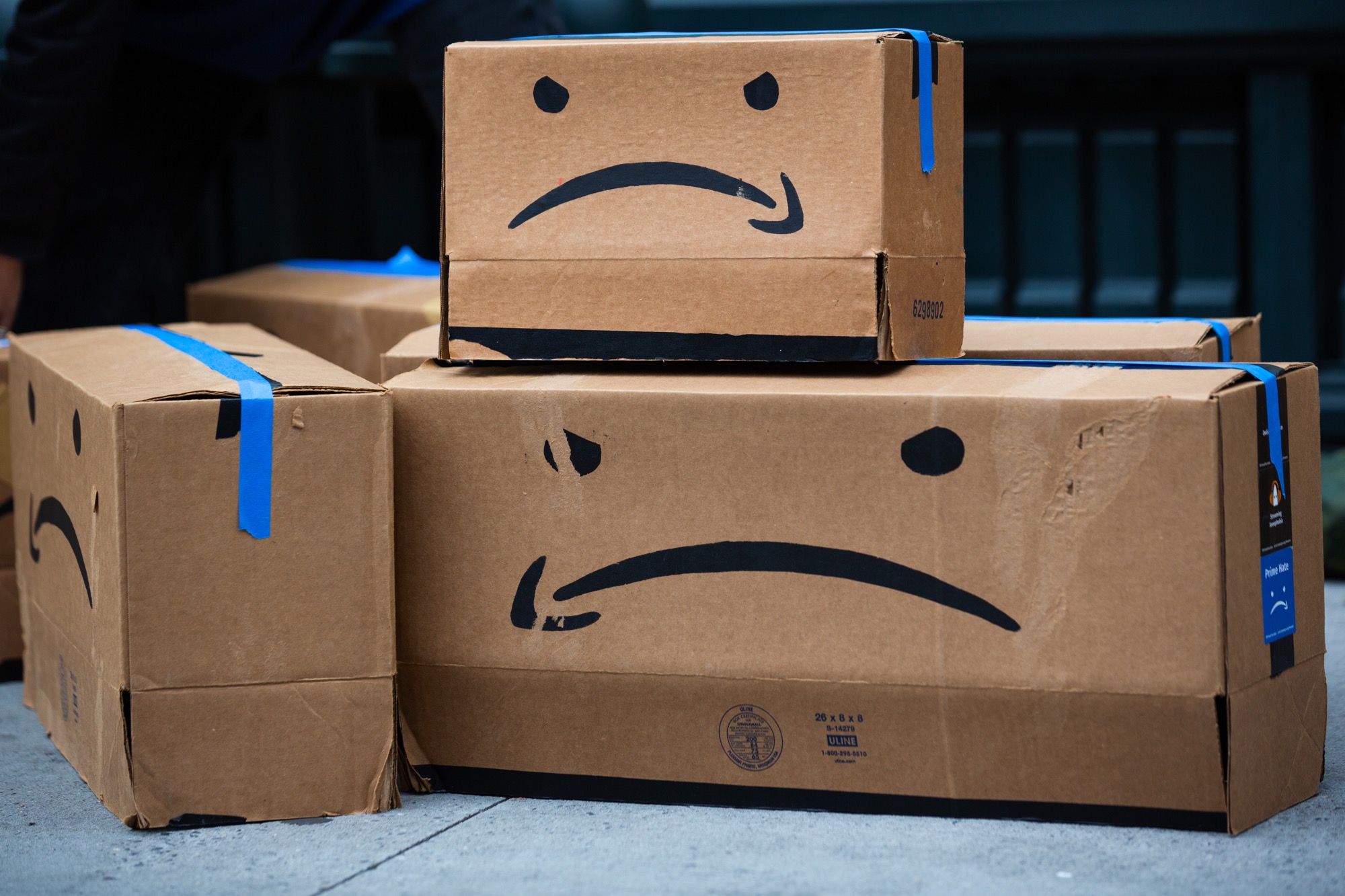
Cardboard boxes made to resemble Amazon packages, but with the logo in the shape of a frown.
Enlarge / Cardboard boxes made to resemble Amazon packages during a protest outside the home of Amazon Chief Executive Officer Jeff Bezos in New York on Wednesday, Dec. 2, 2020.

Amazon must shut down the price-fixing program known as “Sold by Amazon” (SBA) under a legally binding resolution announced today by Washington State Attorney General Bob Ferguson. Amazon had already suspended the program amid an investigation, but the settlement prevents the program from being restarted.

“The ‘Sold by Amazon’ program allowed the online retailer to agree on price with third-party sellers, rather than compete with them,” the announcement said. Ferguson alleged that Amazon violated antitrust laws by “unreasonably restrain[ing] competition in order to maximize its own profits off third-party sales” and that “this conduct constituted unlawful price-fixing.”

Ferguson filed a lawsuit against Amazon and the consent decree in King County Superior Court today.

“As part of the legally enforceable consent decree, Amazon must stop the ‘Sold by Amazon’ program nationwide and provide the Attorney General’s Office with annual updates on its compliance with antitrust laws,” Ferguson’s announcement said. Amazon will also pay $2.25 million that the AG’s office will use to support antitrust enforcement. The requirement for Amazon to provide annual updates lasts five years.

Amazon “glad to have this matter resolved”

Sold by Amazon began in 2018, and Amazon suspended the program in June 2020 after Washington state began investigating it. Ferguson’s lawsuit said that Amazon suspended the program “in a manner that could be efficiently and effectively resumed” at any time, but the consent decree forbids Amazon from restarting it. The consent decree also forbids Amazon from offering a new program with the same terms and conditions, regardless of whether the program uses the Sold by Amazon name.

When contacted by Ars, Amazon said, “This was a small program to provide another tool to help sellers offer lower prices, much like similar programs common among other retailers, that has since been discontinued. While we strongly believe the program was legal, we’re glad to have this matter resolved.” Amazon also claimed it discontinued the program “for business reasons unrelated to the AG’s investigation.”

In the settlement, Washington agreed to release Amazon “from all claims that the State asserted or could have asserted in the Complaint based upon past conduct.” The document says that Washington may “pursu[e] any law enforcement action with respect to the acts or practices of Amazon not covered by this Consent Decree or any acts or practices conducted after the Effective Date of this Consent Decree.”

https://arstechnica.com/?p=1828676


OSHA will try a different route to a vaccine mandate for businesses

Image of a gloved hand holding a cotton ball to a person's arm.

On Tuesday, the Occupational Safety and Health Administration (OSHA) announced it was withdrawing its planned vaccine mandate for businesses with 100 or more employees. The decision comes in the wake of a Supreme Court ruling that blocked OSHA from implementing the mandate while lawsuits opposing it made their way through lower courts.

But the agency also indicated it as still working on getting the mandate implemented via a completely different, albeit slower, mechanism.

OSHA’s initial attempt to implement a vaccine mandate was done under a clause of US law that allows the agency to issue temporary emergency standards in response to “new hazards.” Reasoning that SARS-CoV-2 represents a new hazard, the emergency standard would require vaccination or testing and apply to companies with 100 or more employees, provided those employees were not consistently working outdoors.

A number of states and business organizations then sued to block this emergency standard. Lower courts allowed the mandate to go into effect while those suits proceeded, but the Supreme Court blocked it via a mixed decision. The three liberal justices would have let the OSHA mandate go through, while three of the court’s six conservative justices argued that the mandate needed to be blocked because the US Constitution doesn’t allow Congress to delegate that sort of power to an agency. The three remaining conservatives blocked the mandate but allowed that a more narrowly focused version might pass muster.

The six votes for blocking the rule indicated to pretty much everyone, including OSHA leadership, that the emergency mandate would not survive if it ever came back before the Supreme Court—which it was certain to do if it survived the lower-court decisions. As a result, the agency said that the rule will be formally withdrawn as of tomorrow.

But that doesn’t mean OSHA is giving up entirely. In addition to the law that enables the agency to issue temporary emergency standards, Congress has given OSHA the statutory ability to set workplace safety standards through the standard federal rule-making process. This process involves publishing draft rules in the Federal Register, soliciting public feedback, and formulating a formal rule taking that feedback into account.

The process is much slower and will likely take most of the year to complete. But, critically, the language of the law enabling this process is completely different, so the recent court ruling will not apply to it. That’s not to say that the same justices won’t find different reasons to block the rule, just it’s more likely to survive than the emergency standard, given the recent decision.

In the meantime, the OSHA’s statement on the matter ends by noting the agency, “strongly encourages vaccination of workers against the continuing dangers posed by COVID-19 in the workplace.”

https://arstechnica.com/?p=1828359


Nvidia ready to abandon Arm acquisition, report says

Nvidia ready to abandon Arm acquisition, report says
Pavlo Gonchar/SOPA Images/LightRocket

Nvidia may be walking away from its acquisition of Arm Ltd., the British chip designer, according to a report from Bloomberg.

The blockbuster deal faced global scrutiny, and Nvidia apparently feels that it hasn’t made sufficient progress in convincing regulators that the acquisition won’t harm competition or national security. “Nvidia has told partners that it doesn’t expect the transaction to close, according to one person who asked not to be identified because the discussions are private,” Bloomberg reported.

In a further sign that the deal is likely to be abandoned, SoftBank is also working to take Arm public, according to the report.

Nvidia isn’t publicly confirming the report, though. “We continue to hold the views expressed in detail in our latest regulatory filings—that this transaction provides an opportunity to accelerate Arm and boost competition and innovation,” an Nvidia spokesperson told Ars.

Battle over “Switzerland”

When Nvidia first announced its intention to purchase Arm in September 2020, the deal was valued at $40 billion. Since then, the chip shortage and rising popularity of ARM designs has driven the cost as high as $75 billion. Nvidia initially expected the deal to close in March 2022. If the deal falls through, Arm and Softbank will receive a $2 billion breakup fee.

For Nvidia, the acquisition had obvious upsides. ARM designs are used in everything from smartphones and servers to TVs and antilock braking systems. ARM chips use little power given their performance, which has given the company a broad footprint across a variety of industries. Those qualities were appealing to Nvidia, which has transformed itself from GPU manufacturer to chip designer and, in the process, has become one of the world’s largest semiconductor companies.

But competitors, including Qualcomm, Intel, and Google, were concerned that an Arm takeover—let alone one mounted by one of the sector’s largest firms—would limit their access to ARM designs. Nvidia has insisted that it will offer ARM licenses to anyone who is interested and willing to pay, but it has faced an uphill battle convincing competitors and regulators that those promises will be kept.

Many regulators have either announced investigations into the acquisition or come out against it. Last October, the European Union said it was looking into the deal, and in November, after an earlier probe found “serious competition concerns,” the British government said it was investigating the takeover on antitrust and national security grounds.

Finally, in December, the Federal Trade Commission announced that it was suing “to block the largest semiconductor chip merger in history to prevent a chip conglomerate from stifling the innovation pipeline for next-generation technologies,” Holly Vedova, director of the FTC’s competition bureau, said in a statement at the time. The agency said the lawsuit aims to maintain Arm’s status as the “Switzerland” of the semiconductor industry, a neutral player that offers its designs to anyone.

Chinese concerns

Chinese regulators, worried about a key technology falling into the hands of a US company, are also questioning the deal. China has grown increasingly concerned that it lacks control over key technologies, particularly those related to semiconductors. The country spends more money importing semiconductors than importing oil, and ARM chips are as ubiquitous in China as they are elsewhere.

The Chinese Communist Party is undoubtedly frustrated by recent US attempts to limit the country’s competitiveness in the semiconductor market. In 2019, the Trump administration pressured the Dutch government to prevent a Chinese company from buying extreme ultraviolet lithography (EUV) machines made by Netherlands-based ASML. The machines are all but required to make chips under 7 nm. A year later, US officials imposed sanctions on Huawei, preventing the Chinese tech company from buying leading-edge chips made by TSMC.

Because of this history, Chinese officials almost certainly would have nixed the Nvidia-Arm transaction. Though, given the scrutiny the deal has faced elsewhere, it’s unlikely it would have gotten that far.

https://arstechnica.com/?p=1828196


FCC chair plans to block exclusive deals that limit ISP choice in apartments

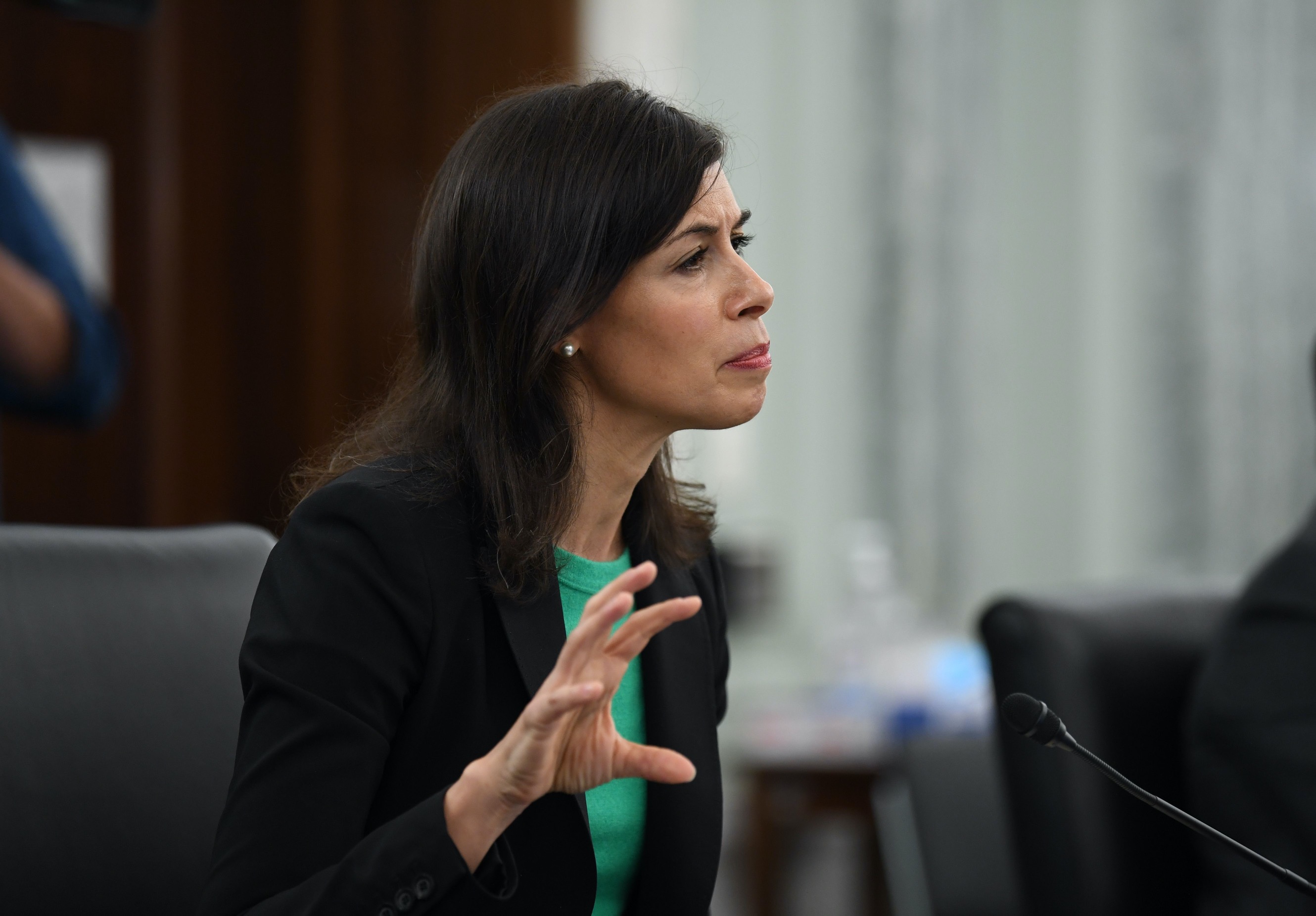
FCC member Jessica Rosenworcel sitting at a table and speaking during a Senate committee hearing.
Enlarge / FCC member Jessica Rosenworcel speaks during a Senate Commerce Committee oversight hearing on June 24, 2020, in Washington, DC.

The Federal Communications Commission is on course to block some types of exclusive deals that ISPs and landlords use to prevent broadband competition in apartment buildings and other multiple-tenant environments.

A plan announced Friday by FCC Chairwoman Jessica Rosenworcel would “prohibit providers from entering into graduated revenue sharing agreements or exclusive revenue sharing agreements with a building owner; require providers to disclose to tenants in plain language the existence of exclusive marketing arrangements that they have with building owners; [and] end a practice that circumvents the FCC’s cable inside wiring rules by clarifying that existing Commission rules prohibit sale-and-leaseback arrangements that effectively block access to alternative providers,” the FCC said.

Rosenworcel circulated the proposal to other commissioners, meaning they can vote on it at any time. The updated rules would apply to residential buildings that contain apartments or condo units and to office buildings.

Cable companies fought to preserve exclusive wiring deals

The FCC did not release the full proposal but summarized it in a press release. The proposal to “end a practice that circumvents the FCC’s cable inside wiring rules” appears to reject the cable industry’s argument that exclusive wiring deals between ISPs and landlords should be allowed. In the sale-and-leaseback arrangements that Rosenworcel wants to stop, an ISP sells its wiring to a building owner and then leases back the wiring on an exclusive basis.

“With more than one-third of the US population living in apartments, mobile home parks, condominiums, and public housing, it’s time to crack down on practices that lock out broadband competition and consumer choice,” Rosenworcel said. “Consumers deserve access to a choice of providers in their buildings. I look forward to having my colleagues join me in lifting the obstacles to competitive choice for broadband for the millions of tenants across the nation.”

The FCC noted that it already prohibits exclusive deals but that ISPs and landlords use “practices that evade long-existing FCC rules intended to allow tenants to choose their own provider.” The FCC invited public comment on the problem in September 2021, and the responses “revealed a pattern of new practices that inhibit competition, contrary to the commission’s goals, and limit opportunities for competitive providers to offer service for apartment, condo, and office building unit tenants,” the FCC said.

“These practices could throttle consumer access to providers participating in the commission’s affordable broadband programs such as the Emergency Broadband Benefit and its successor, the Affordable Connectivity Program,” the FCC also said, referring to the commission’s newest subsidy programs.

Rosenworcel does what she can with 2-2 deadlock

Rosenworcel’s proposal may have been more ambitious if the FCC wasn’t still operating with a 2-2 deadlock between Democrats and Republicans. The Senate has not yet voted on Biden nominee Gigi Sohn, who would give Democrats a 3-2 majority.

“We welcome this action as an interim step to advancing consumer choice,” Jenna Leventoff, senior policy counsel at consumer-advocacy group Public Knowledge, said today. Leventoff said landlords and ISPs have “exploited loopholes to limit consumer choice” and that Rosenworcel’s plan “would curtail the worst of these loopholes—including graduated revenue sharing agreements (which encourage landlords to limit which broadband providers can serve a building in order to maximize their own profit) and sale-leaseback agreements (which exist solely to evade current rules).”

Public Knowledge said Rosenworcel should do more for apartment dwellers once the FCC has a 3-2 Democratic majority.

“[W]ith landlords and ISPs constantly creating new loopholes, consumers in multi-tenant environments won’t have full choice until the commission takes action to ban all arrangements that limit consumer choice in multi-tenant environments,” Leventoff said. “Additionally, the commission’s efforts to promote broadband competition more broadly will ultimately require the direct authority found in Title II of the Communications Act.” The Title II regulations that also underpinned net neutrality rules were eliminated under former chairman Ajit Pai, but Rosenworcel is likely to revive them after she gets a Democratic majority.

https://arstechnica.com/?p=1827890