“Death Star” response from US would lock Russia out of 5G, advanced chips

Russian mobile phone networks could be severely hampered if mooted US tech sanctions go into effect.
Enlarge / Russian mobile phone networks could be severely hampered if mooted US tech sanctions go into effect.
Chris Ratcliffe/Bloomberg

The US is considering restricting the flow of semiconductors into Russia to deter Russian President Vladimir Putin from invading Ukraine. The move would prevent the Russian military and much of the nation’s economy from advancing technologically.

The details of the sanctions are still being decided, but they would rely on similar restrictions that kneecapped Huawei, the Chinese tech company. Though most semiconductors are made overseas, US companies control huge swaths of the larger market, from chip design and manufacturing equipment to process and quality control. By restricting access to those companies’ products and services, the US can effectively limit Russian access to the latest chips, even if they’re made in other countries.

“It’s one of the tools that the US has come to prefer because it’s painful, but it doesn’t involve the use of force,” James Andrew Lewis, senior vice president and director of the Strategic Technologies Program at the Center for Strategic and International Studies, told Ars. “It sort of freezes Russia at a technological moment.”

Though most of the restrictions will likely focus on companies that supply Russia’s military, either directly or indirectly, one place where consumers could feel the pinch is mobile phone service. If implemented, the restrictions would “box the Russians out of the 5G market,” Lewis said.

“Death Star”

Today, Russian companies can get 5G equipment from Ericsson and Nokia, but the European companies would likely follow any US sanctions, Paul Triolo, head of geotechnology at Eurasia Group, told Ars. The other major player in the Russian telecom market, Huawei, hasn’t been able to deliver true 5G since the US prevented TSMC from making their chips.

To supply the Russian market, companies like Huawei may have a few options to deliver 5G-like speeds, but the result would be imperfect. “You can design a broader architecture that gets you some part of the way toward the performance part, but it’s hard because of power consumption with broad 5G deployments,” Triolo said. “You need the throughput, the latency, and the power consumption. It’s really hard to get that without advanced nodes below 7 nm or so.”

The sanctions against Russia would be implemented under the foreign direct product rule, which allows the government to impose restrictions on how companies use US technology, even in other countries. Previously, this rule was mostly aimed at companies that would sell directly to foreign militaries. But under the Trump administration, the rule was extended to include certain semiconductor-related technologies to target Chinese telecom suppliers Huawei and ZTE.

The statutory authority in this area is “fairly broad,” Triolo said. “This rule is sort of like a Death Star. We can point it at things we don’t like, and ‘boom.’” The rule can target individual products or even entire countries “because that’s the way this thing is written. It’s really pretty broad,” he said. “That Death Star can be scaled up from something you can hold in your hand to something huge.”

https://arstechnica.com/?p=1827894


Bitcoin drops to six-month low as investors dump speculative assets

Bitcoin drops to six-month low as investors dump speculative assets

Bitcoin dropped to a six-month low on Saturday, extending a steep fall recorded in the previous session as the cryptocurrency market was swept up in a powerful shift by investors out of speculative assets.

The price of the biggest digital token by market value fell 4.3 percent in the European morning on Saturday to $35,127, the lowest level since July 2021. Bitcoin has now lost almost a quarter of its value this year.

Other cryptocurrencies have also come under intense selling pressure, with an FT Wilshire index of the top five tokens excluding bitcoin down 30 percent in the first month of 2022.

The cryptocurrency rout comes as investors have dumped shares in tech companies on expectations the US Federal Reserve will move to rein in loose pandemic monetary policy to combat inflation. Global stock markets posted their biggest declines in more than a year this week, with the fast-growing companies that powered the rally from the depths of the coronavirus crisis enduring intense falls.

Investors now forecast the Fed, the world’s most influential central bank, will raise interest rates three to four times this year, something that has sent bond yields surging. Higher yields on low-risk assets like US government bonds make the potential returns that can be earned through speculative investments like cryptocurrencies look less appealing, analysts say.

Andrew Sullivan, managing director at Outset Global in Hong Kong, said Asia was seeing “huge volumes going through in a number of markets as investors move to cash” on Friday, as technology shares in the region fell.

The sharp sell-off in digital assets also came a day after the Russian central bank announced on Thursday draft proposals seeking to ban all cryptocurrency trading and mining. The proposed regulations would also block cryptocurrency investment by banks and forbid any exchange of cryptocurrency for traditional currencies in Russia, one of the world’s largest centres for crypto mining.

The central bank said in its 36-page report that the rapidly rising value of cryptocurrencies “is defined primarily by speculative demand for future growth, which creates bubbles,” adding they “also have aspects of financial pyramids, because their price growth is largely supported by demand from new entrants to the market.”

The announcement initially had little impact on bitcoin, which rose as much as 3.7 percent against the dollar on Thursday. But by Friday afternoon in Asia the cryptocurrency had dropped more than 10 percent from the previous day’s high to hit its lowest level since August.

“The Russian regulators have been frustrated [with the cryptocurrency industry] for several years and none of their warnings have been heeded,” said Vince Turcotte, Asia-Pacific sales director at Eventus Systems.

He added that while the Russian proposal was “relatively harsher,” it was only the latest in a slew of announcements on cryptocurrencies by regulators across the globe focused mainly on protecting retail investors.

Turcotte likened the situation in Russia to that of China before Beijing began a more forceful crackdown on the industry. “Nobody listened to [Chinese officials] until they actually brought the hammer down,” he said. Last year, China declared that all crypto activities were illegal.

© 2022 The Financial Times Ltd. All rights reserved Not to be redistributed, copied, or modified in any way.

https://arstechnica.com/?p=1827809


Airline CEOs make U-turn, now say 5G isn’t a big problem for altimeters

An airplane cockpit seen during flight.
Enlarge / Airbus 320 cockpit.
Getty Images | Skyhobo

The Federal Aviation Administration’s fight against AT&T’s and Verizon’s new 5G deployment appears to be coming to a temporary close, with the FAA having cleared about 78 percent of US planes for landing in low-visibility conditions. Airline CEOs are striking an upbeat tone, with one saying the process of ensuring that airplane altimeters work in 5G areas is “really not that complicated.”

Over the past week, the FAA announced clearances for 13 altimeters that can filter out 5G transmissions from the C-band spectrum that is licensed to wireless operators, accounting for those used by all Boeing 717, 737, 747, 757, 767, 777, 787, and MD-10/-11 models; all Airbus A300, A310, A319, A320, A330, A340, A350, and A380 models; and some Embraer 170 and 190 regional jets. More approvals will presumably be announced soon, bringing the US closer to 100 percent capacity.

Unfortunately, there could be another showdown in about six months, when AT&T and Verizon lift temporary 5G restrictions around airports—we’ll cover that later in this article. For now, airline CEOs appear to be satisfied, even though the FAA hasn’t said definitively that altimeters will continue working after the temporary 5G limits around airports are lifted.

No “material disruption going forward”

“It’s taken a while to get to the right spot, but I feel like we’re in the right spot,” American Airlines Doug Parker said yesterday, according to a CNN article. “I don’t think you’re going to see any material disruption going forward because of this.”

“While I wish it happened earlier, the good news is we now have everyone engaged, the FAA and DOT at the highest levels, the… aircraft manufacturers, airlines, and the telecoms,” United Airlines CEO Scott Kirby said. “While we don’t have a final resolution quite yet, I’m confident we’ll get there.”

“The technical experts that are working on it tell us it’s really not that complicated once they all are able to share information and work on it,” Parker also said. “So they seem encouraged that we’ll be able to address this in a way that allows for full deployment of 5G, including near airports. I don’t expect until we get to the point that everyone is really comfortable that you’ll see anything turned on near airports, because no one wants to go through this again.”

These statements marked a sudden shift, coming just three days after Parker and Kirby signed a letter claiming that 5G on the C-band would cause “catastrophic disruption” to air travel.

FAA waited almost two years to test altimeters

The biggest recent development is that the FAA finally started a process to evaluate and approve altimeters after claiming without proof that 5G on C-Band spectrum (3.7 to 3.98 GHz) would disrupt altimeters that use spectrum from 4.2 GHz to 4.4 GHz. While the Federal Communications Commission created a 220 MHz guard band to protect airplane equipment, poorly built altimeters may be unable to filter out transmissions from other spectrum bands.

The FAA didn’t start its process of evaluating the actual altimeters used by airplanes after February 2020, when the Federal Communications Commission approved the use of C-Band spectrum for 5G. The FAA also didn’t start this evaluation process after the FCC auctioned off the spectrum to wireless carriers in February 2021. Instead, the FAA continued arguing that 5G deployment should be blocked long after carriers started preparing their equipment and towers to use the C-band.

Harold Feld, a long-time telecom attorney and senior VP of consumer-advocacy group Public Knowledge, told Ars today that the FAA should have started setting up the process to evaluate altimeters shortly after the FCC approved the use of the spectrum for 5G—or, at the very latest, shortly after the $81 billion spectrum auction went forward.

“They spent their time relitigating the whole thing,” Feld said. “It was rash and reckless for the FAA to proceed without any kind of plan B. Had not Secretary [of Transportation Pete] Buttigieg personally intervened and the White House personally intervened and forced the FAA to actually stand this process up, then they still wouldn’t have stood it up on their own.”

FCC deemed C-band safe to use

Nearly two years ago, the FCC found that C-band spectrum was safe to use, in part because T-Mobile showed that airline-industry research did not investigate whether interference would occur in any realistic scenario. Still, the FCC imposed power limits in the 220 MHz guard band—which is actually 400 MHz this year because carriers are not yet deploying on the upper part of their licensed spectrum. C-band spectrum is also being used for 5G in about 40 other countries without reports of interference to altimeters.

“[W]ell-designed equipment should not ordinarily receive any significant interference (let alone harmful interference) given these circumstances,” the FCC said when it approved 5G usage with the 220 MHz guard band. The FCC also pointed out that the 220 MHz guard band “is double the minimum guard band requirement discussed in initial comments by Boeing and ASRC [Aviation Spectrum Resources].”

https://arstechnica.com/?p=1827579


Intel says Ohio “megafab” will begin making advanced chips in 2025

Intel's rendering of its two new leading-edge processor factories planned to be built outside Columbus, Ohio.
Enlarge / Intel’s rendering of its two new leading-edge processor factories planned to be built outside Columbus, Ohio.

Intel announced the location of its megafab today, a 1,000-acre parcel on the outskirts of the Columbus, Ohio, metro area. The semiconductor manufacturer plans to break ground on two leading-edge fabs by the end of the year and enter production in 2025.

“This is all part of the strategy that our CEO Pat Gelsinger announced back in March,” Intel Senior Vice President Keyvan Esfarjani told Ars.

“We are starting with two fabs, and that’s all in line with the growing demand for what the industry needs,” he said. “It’s also critically important for the balance of the supply chain around the world.”

Though the company will start with two fabs, the massive site gives Intel “optionality,” said Esfarjani, who oversees manufacturing, supply chain, and operations for the company worldwide. There’s room for up to eight fabs, “but we have space to do even more,” he said. If the entire site gets built out, Intel could spend as much as $100 billion on the Ohio site alone.

Intel's "megafab" will be located outside of the Columbus suburb of New Albany.
Enlarge / Intel’s “megafab” will be located outside of the Columbus suburb of New Albany.
Google Maps/Aurich

Esfarjani said that Intel spent about nine months evaluating 35–40 locations across the US before settling on the New Albany parcel. The scale of the project demanded an entirely new site, he said. “All of our sites within the company, whether it’s in Oregon, New Mexico, or Arizona—we are essentially at the level where it’s not going to have enough footprint, enough space where you want to grow for those mega scales.”

Gelsinger is betting that Intel can regain the lead in semiconductor manufacturing by making not just its own chips but chips for other companies, too. Traditionally, Intel has designed and manufactured chips for itself, but the success of foundries like TSMC, which focuses on making chips for others, has pushed Intel to open its fabs. In theory, making more chips will allow Intel to master new processes faster while giving it more cash to invest in the research and development of more advanced nodes. The new Ohio site will give Intel significant new manufacturing capacity, which Esfarjani said would be available to foundry customers, depending on demand.

The Intel site as it looks today.
Enlarge / The Intel site as it looks today.

While the company considered hundreds of variables, a few key factors helped influence the decision. First, Intel needed a location with the resources to support facilities of this size. The company required somewhere with ample land, water, and power. Second, it needed a metro area that could help supply enough technicians and engineers to run the fabs. And lastly, Intel was looking for state and local governments that would be eager to welcome the sites. (Amazon’s recent struggles with its HQ2 no doubt crossed Intel executives’ minds.)

“Out of all the options, Ohio—no brainer. It came to the top,” Esfarjani said. The farm fields around Columbus provided space to build and expand, while the region’s temperate climate offers a steady supply of water. (Esfarjani pointed out that the company recycles 95 percent of its water.) The state is also among the nation’s top 10 electricity producers, though nearly all of the power is generated by burning natural gas and coal. Intel intends for the site to be run on 100 percent renewable power, which will require the state to add significant wind and solar installations. “Part of why we are so anxious to move forward in announcing this project is so that we can formalize those engagements and get those agreements under way,” Esfarjani said.

Intel will also be working with The Ohio State University and nearby community colleges to ensure a steady supply of technicians and engineers. Though the company isn’t releasing details of its educational plans yet, it did say it will spend $100 million supporting educational institutions, students, and the NSF to develop a pipeline for semiconductor jobs.

https://arstechnica.com/?p=1827473


Antitrust bill that bars Big Tech self-preferencing advances in Senate

The dome of the United State Capitol Building against a deep blue sky in Washington, DC.
Enlarge / The dome of the United States Capitol Building in Washington, DC.

The Senate Judiciary Committee voted 16-6 today to advance an antitrust bill that would prevent Big Tech firms from giving their own services preferential treatment.

The bill attempts to limit the ability of dominant firms to “unfairly preference” their own products or services in a way that would harm competition. For example, Apple and Google could not rank their own apps higher than competitors’ on app stores or in searches. With five Republican senators voting alongside Democrats, the bill has a reasonable chance of passing once it hits the Senate floor. A similar bill has been introduced in the House.

“We haven’t meaningfully updated our antitrust laws since the birth of the Internet,” said Senate co-sponsor Amy Klobuchar (D-Minn.) in a committee hearing today. “We have to look at this differently than just startup companies in a garage. That’s not what they are anymore.”

While today’s vote is significant, the bill’s enactment isn’t guaranteed since President Joe Biden hasn’t committed to signing it. The bill has also faced some resistance from other Democrats, including Sen. Diane Feinstein (D-Calif.), who felt that it was too narrowly focused on a portion of the market.

“It’s difficult to see the justification for a bill that regulates the behavior of only a handful of companies while allowing everyone else to continue engaging in that exact same behavior,” she said. Feinstein ultimately voted to move the bill out of committee.

Apple CEO Tim Cook has been personally lobbying senators, including Sen. Ted Cruz (R-Tex.), to address the company’s concerns, which center on Apple’s control of its App Store and the iOS platform.

“I spent about 40 minutes on the phone yesterday with Tim Cook, the CEO of Apple, who expressed significant concerns about the bill,” Cruz said. “One issue that he raised, that I thought was a reasonable issue, was a concern that the bill would erect obstacles to Apple giving consumers the ability to opt out of apps monitoring what they’re doing online, where they’re going, and what’s occurring on their phone.” At the end of debate, Cruz voted to move the bill to the Senate floor.

Others are concerned that a provision in the bill is overly broad and would prevent companies from removing harmful content from their platforms. “It opens the door to arguments that covered platforms are unlawfully discriminating against hate-and-disinformation purveyors by taking them down,” Carmen Scurato, associate legal director of Free Press Action, said in a statement to Ars.

https://arstechnica.com/?p=1827294


FAA clears Boeing 777 and other planes after 5G warning halted some flights

A Boeing 777 flying above the clouds.
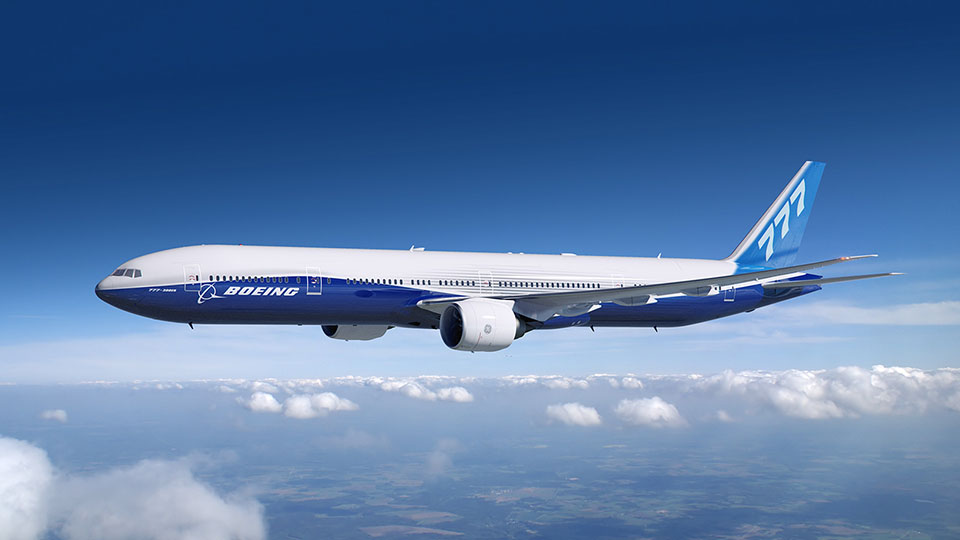
Enlarge / A Boeing 777.

The Federal Aviation Administration today said it has cleared 62 percent of US commercial airplanes to perform low-visibility landings at airports where AT&T and Verizon are deploying 5G on C-band spectrum this week.

Several international airlines previously canceled some flights to the US after Boeing issued a recommendation to not fly the 777 into airports where carriers are deploying 5G on the C-band. However, the 777 planes—or at least those that have altimeters capable of filtering out C-band transmissions—were on the FAA’s new list of cleared aircraft. The FAA has been granting Alternate Means of Compliance (AMOCs) to operators with altimeters that are safe to use.

“Airplane models with one of the five cleared altimeters include some Boeing 717, 737, 747, 757, 767, 777, MD-10/-11 and Airbus A300, A310, A319, A320, A330, A340, A350 and A380 models,” the FAA said in a statement issued shortly after 2 pm EST today. These airplanes are now authorized “to perform low-visibility landings at airports where wireless companies deployed 5G C-band,” the FAA said. The word “some” indicates that not every plane with the mentioned model numbers has an approved altimeter.

The 62 percent figure is an improvement over Sunday, when the FAA said it had “cleared an estimated 45 percent of the US commercial fleet to perform low-visibility landings at many of the airports where 5G C-band will be deployed on Jan. 19.” That first round of approvals included some Boeing 737, 747, 757, 767, and MD-10/-11 models as well as Airbus A310, A319, A320, A321, A330, and A350 models.

Canceled flights

Airlines that canceled some flights to the US include Emirates, All Nippon Airways, Air India, and British Airways, the Associated Press reported today. Some airlines switched to different aircraft on flights that were originally scheduled to use the Boeing 777.

“But Air France said it planned to continue flying its 777s into American airports. It did not explain why it didn’t change its aircraft as many other carriers have,” the AP wrote.

Major US airlines sent a letter to US government officials on Monday warning of “catastrophic disruption” to air travel and asked for a ban on C-band deployment within two miles of airport runways. AT&T and Verizon subsequently agreed to additional limits around airports.

Boeing warning

AT&T and Verizon are deploying 5G on C-band frequencies between 3.7 GHz and 3.8 GHz this year. The carriers spent a combined $69 billion on licenses to use spectrum between 3.7 GHz and 3.98 GHz, and they plan to use the upper part of those frequencies in future years.

The radio altimeters used to determine airplane altitudes rely on spectrum from 4.2 GHz to 4.4 GHz. While US carriers point out that 5G on the C-band has been deployed without problems in nearly 40 countries, the FAA and airlines say that some altimeters may not be able to filter out 5G transmissions.

“Boeing on Monday night sent a so-called multi-operator message to carriers flying 777 and 747-8s and ‘recommends operators do not operate 777 airplanes on approach and landing to US runways’ with 5G C-band notices starting on January 19 unless there is an alternative means of compliance with FAA directives,” according to a report yesterday by The Air Current.

Boeing declined to comment when contacted by Ars today. The FAA referred us to its new statement confirming that 62 percent of planes have been cleared.

The FAA on January 4 agreed not to seek any more 5G delays from AT&T and Verizon barring “any unforeseen aviation safety issues.”

“During the two-week delay in deploying new 5G service, safety experts determined that 5G interference with the aircraft’s radio altimeter could prevent engine and braking systems from transitioning to landing mode, which could prevent an aircraft from stopping on the runway,” the FAA said on January 14. The January 14 statement also said the FAA “will require operators of Boeing 787s to take additional precautions when landing on wet or snowy runways at airports where 5G C-band service is deployed.” The 787 was not on today’s updated list of planes that are authorized “to perform low-visibility landings at airports where wireless companies deployed 5G C-band.”

All of the FAA’s recent statements on 5G and altimeters are available at this page.

https://arstechnica.com/?p=1826976


After airline outcry, AT&T and Verizon postpone 5G deployments near some airports [Updated]

American Airline planes sit on the tarmac at Ronald Reagan Washington National Airport (DCA) in Arlington, Virginia, on January 15, 2022.
Enlarge / American Airline planes sit on the tarmac at Ronald Reagan Washington National Airport (DCA) in Arlington, Virginia, on January 15, 2022.
Stefani Reynolds | Getty Images

Update, January 18, 3:50 pm EST: Verizon and AT&T have said they will postpone the launch of their advanced 5G services near certain airports in response to airlines’ threats to cancel flights. From the Financial Times:

AT&T said it had voluntarily agreed to “temporarily defer turning on” a limited number of 5G-enabled towers around “certain airport runways” as it provides more information to airlines and regulators, but added it was launching its advanced 5G services elsewhere as planned.

Verizon also said it would launch its 5G “ultra wideband” network on Wednesday, but had voluntarily decided to limit it “around airports,” without specifying the number of airports.

Original story: The imminent rollout of high-speed 5G telecoms services threatens to ground flights across the US, America’s largest airlines warned on Monday, as they urged government agencies to intervene to avoid “chaos” for passengers and “incalculable” disruptions to supply chains.

“The harm that will result from deployment on January 19 is substantially worse than we originally anticipated,” warned Airlines for America, an industry lobby group, pointing to the potential for 5G services to interfere with the sensitive equipment that aircraft use to take off and land.

The letter, seen by the Financial Times and first reported by Reuters, was signed by the largest US carriers as well as the air freight arms of two of the biggest logistics groups, UPS and FedEx.

The companies called on Joe Biden’s administration to block the rollout of 5G to towers located within two miles of airport runways that the Federal Aviation Authority has identified as being prone to disruption.

“Unless our major hubs are cleared to fly, the vast majority of the traveling and shipping public will essentially be grounded,” the lobby group wrote in its letter to officials including Brian Deese, the National Economic Council director, and Pete Buttigieg, the transportation secretary.

United Airlines said Washington’s 5G rollout plan would have “a devastating impact,” affecting an estimated 1.25 million of its passengers and 15,000 flights a year while disrupting an already fragile supply chain.

“Governments in other countries have successfully designed policies to ensure the safe deployment of 5G technology and we’re simply asking the US government to do the same,” United said in a statement. “We implore the Biden administration to act quickly and apply the same common sense solutions here that have clearly worked so well around the world.”

5G services have been introduced in other countries without sparking the same concern among airlines. According to the FAA, the services planned in the US differ in several ways, including operating at frequencies closer to those used by aircraft equipment, and at higher power levels.

The White House and the transportation department did not immediately respond to a request for comment. An Airlines for America spokesperson declined to comment.

AT&T and Verizon had planned to launch their 5G services on December 5 but delayed the launch a month to allow time for safety reviews. The two telecoms groups initially rejected a subsequent request from regulators to delay their rollout by another two weeks to January 19, but then agreed to do so.

The planned 5G services use frequencies in the C-band radio spectrum, which can be close to those used by altimeters that measure an aircraft’s height from the ground and feed information into navigation instruments and other onboard safety systems.

The FAA has planned buffer zones around 50 airports that have wireless transmitters in proximity to runways, including in New York, Los Angeles, and Chicago. However, airlines maintain that this will not be enough to prevent disruptions.

The 11 executives who signed Monday’s letter said that the FAA’s latest statement on the issue had downplayed the threat of disruption and that continuing flight restrictions at those 50 airports could leave “huge swaths of the operating fleet” grounded indefinitely.

On Sunday, the FAA cleared aircraft using two models of radio altimeters to perform low-visibility landings at the 88 airports it expected to be most affected by 5G C-band interference.

The FAA’s clearance of those devices could still leave 1,100 flights and 100,000 passengers affected by cancellations or delays on a typical day, Airlines for America warned, saying that it had established that flight restrictions would not be limited to poor weather operations.

The airlines’ warning of “incalculable” effects on passengers, staff, and cargo operations came as the industry has continued to struggle to rebuild its schedules to pre-COVID levels while dealing with seasonal disruptions from winter storms.

On Monday, FlightAware reported that more than 2,500 US flights had suffered delays, with more than 1,600 cancellations.

© 2022 The Financial Times Ltd. All rights reserved Not to be redistributed, copied, or modified in any way.

https://arstechnica.com/?p=1826518


Inmates sue Arkansas doc, jail after unknowingly taking dangerous doses of ivermectin

Tablets of ivermectin.
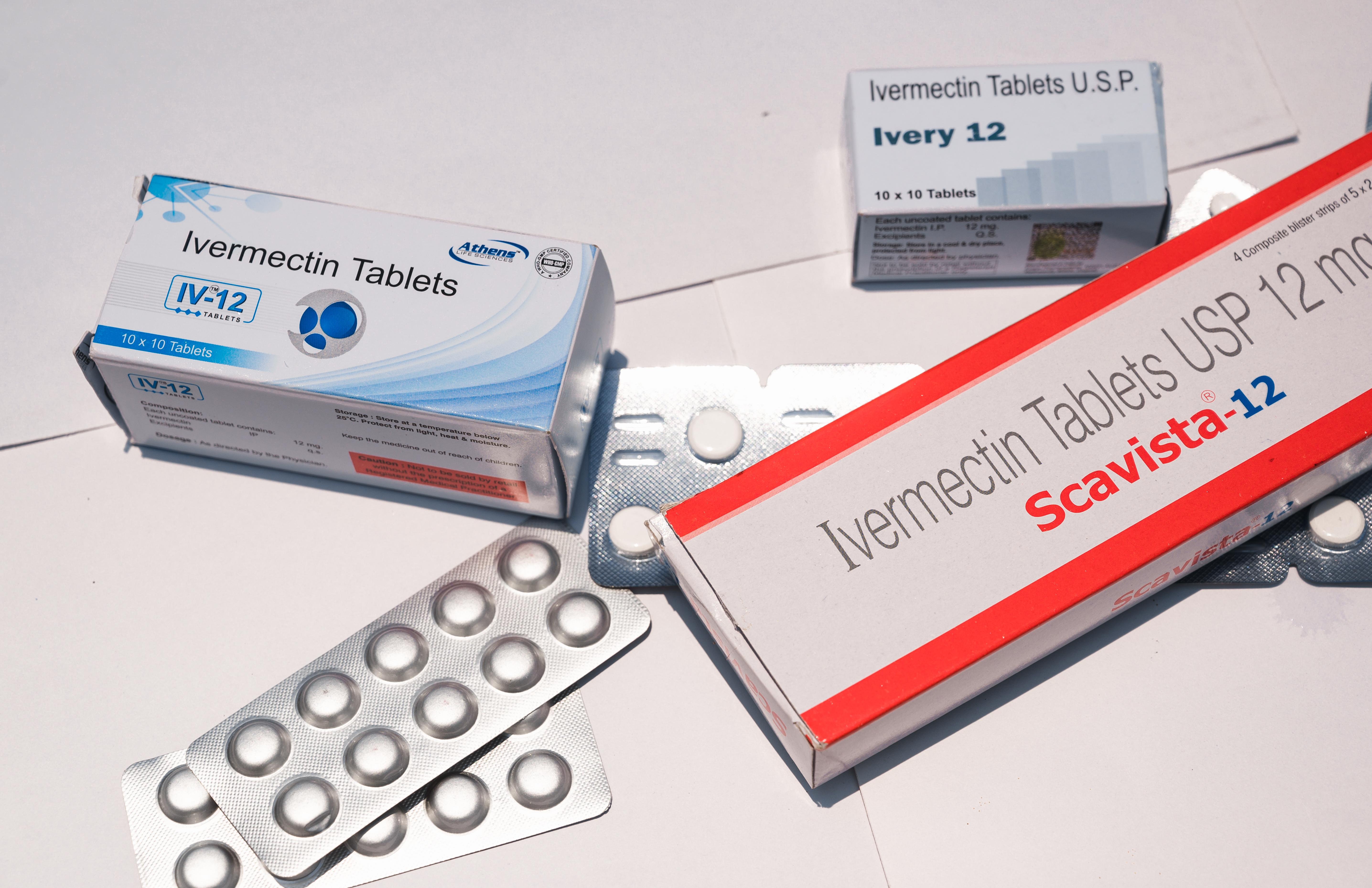
Enlarge / Tablets of ivermectin.

Detainees at an Arkansas jail were given ivermectin without their knowledge or consent, a new lawsuit alleges. As early as November 2020, Dr. Robert Karas, the jail’s doctor, told inmates who had contracted COVID that he was giving them a cocktail of vitamins, antibiotics, and steroids when in fact he was administering dangerously high doses of the dewormer. Ivermectin is not authorized by the FDA to treat or prevent COVID, and the agency has repeatedly told people not to take it outside its approved use as an anti-parasitic. 

“At no point were Plaintiffs informed that the medications they were consuming included Ivermectin,” the lawsuit says. “Further, Plaintiffs were not informed of the side effects of the drug administered to them or that any results would be used for research purposes.”

Four detainees are suing Dr. Karas and his company, the Washington County sheriff, and the Washington County Detention Center and 10 of its employees, alleging that they violated the inmates’ rights to informed consent. The ACLU of Arkansas filed the lawsuit on their behalf. The plaintiffs are seeking medical evaluations by independent providers and an injunction preventing Dr. Karas from administering ivermectin to COVID patients.

“No one—including incarcerated individuals—should be deceived and subject to medical experimentation. Sheriff Helder has a responsibility to provide food, shelter, and safe, appropriate care to incarcerated individuals,” Gary Sullivan, legal director of the ACLU of Arkansas, said in a statement.

Lack of informed consent

The four men who brought the lawsuit say that if they had been told what they were being given and made aware of its side effects, they would have refused to take it.

“It is both customary and legally required in all medical settings, both within Arkansas and beyond, that patients be given complete, accurate, and truthful information to enable them to make an informed decision as to whether to proceed with medical treatments,” the lawsuit says. “As medical providers, [Dr. Karas and his colleagues] undoubtedly knew this.”

At least two of the inmates were given incredibly high doses of the drug, according to the lawsuit. For its use as an anti-parasitic drug, the FDA has approved 0.2 mg per kilogram of body weight in a single oral dose. If necessary, second doses are only given three to 12 months after the first. One 72 kg inmate, though, received 48 mg over four days, or 3.4 times the approved dose. Another, who weighed 87 kg, received 108 mg over four days, or 6.3 times the approved dose.

As a result, these men experienced diarrhea, bloody stools, stomach cramps, and vision problems, the lawsuit says, all of which suggest ivermectin poisoning. “To add insult to injury, Plaintiffs were subject to the payment of fees for medical examinations they sought after suffering side effects from the Ivermectin treatment.”

“COVID protocols”

As the pandemic took hold, Dr. Karas began “publicly and privately espousing the virtues” of ivermectin, the lawsuit says, and “began conducting research as to its efficacy” against COVID. He has publicly posted about the “virtues” of ivermectin, including detailed dosing as part of his “COVID protocols.” In one Facebook post, made on December 24, 2021, he said that he was dosing inmates at the jail higher than those in his private practice. Karas’ “protocols,” which he says he has used with his family members, have caught the attention of the Arkansas Medical Board, which has opened an investigation.

For providing medical services at the jail, Dr. Karas’ company, Karas Correctional Health, of which he is the sole member, receives $1.4 million annually. Plus, his contract allows him to buy drugs wholesale and sell them to the jail, which is “obligated to pay the costs for all prescription medications prescribed to WCDC detainees,” the lawsuit states.

The ivermectin problem isn’t limited to jails, of course. People around the world have latched onto the idea that the dewormer can both prevent COVID infection and fight it off. Early in the pandemic, a petri dish study suggested that the drug may have some antiviral qualities but at doses that would be 100-times higher than what had been approved in humans. Fringe members of the medical community have pushed the false narrative, and certain politicians continue to do so.

The widespread misuse of the drug has led to spikes in demand, and, according to a new study in the Journal of the American Medical Association, a surge in insurance reimbursements, too. Despite the fact that they should be incentivized not to cover ineffective treatments, private health insurers are spending around $130 million a year, the study’s authors estimate.

https://arstechnica.com/?p=1826593


Microsoft warns of destructive disk wiper targeting Ukraine

Microsoft warns of destructive disk wiper targeting Ukraine
Getty Images

Over the past few months, geopolitical tensions have escalated as Russia amassed tens of thousands of troops along Ukraine’s border and made subtle but far-reaching threats if Ukraine and NATO don’t agree to Kremlin demands.

Now, a similar dispute is playing out in cyber arenas, as unknown hackers late last week defaced scores of Ukrainian government websites and left a cryptic warning to Ukrainian citizens who attempted to receive services.

Be afraid and expect the worst

“All data on the computer is being destroyed, it is impossible to recover it,” said a message, written in Ukrainian, Russian, and Polish, that appeared late last week on at least some of the infected systems. “All information about you has become public, be afraid and expect the worst.”

Around the same time, Microsoft said in a post over the weekend, “destructive” malware with the ability to permanently destroy computers and all data stored on them began appearing on the networks a dozens of government, nonprofit, and information technology organizations, all based in Ukraine. The malware—which Microsoft is calling Whispergate—masquerades as ransomware and demands $10,000 in bitcoin for data to be restored.

But Whispergate lacks the means to distribute decryption keys and provide technical support to victims, traits that are found in virtually all working ransomware deployed in the wild. It also overwrites the master boot record—a part of the hard drive that starts the operating system during bootup.

“Overwriting the MBR is atypical for cybercriminal ransomware,” members of the Microsoft Threat Intelligence Center wrote in Saturday’s post. “In reality, the ransomware note is a ruse and that the malware destructs MBR and the contents of the files it targets. There are several reasons why this activity is inconsistent with cybercriminal ransomware activity observed by MSTIC.”

Over the weekend, Serhiy Demedyuk, deputy head of Ukraine’s National Security and Defense Council, told news outlets that preliminary findings from a joint investigation of several Ukrainian state agencies show that a threat actor group known as UNC1151 was likely behind the defacement hack. The group, which researchers at security firm Mandiant have linked to the government of Russian ally Belarus, was behind an influence campaign named Ghostwriter.

Ghostwriter worked by using phishing emails and theft domains that spoof legitimate websites such as Facebook to steal victim credentials. With control of content management systems belonging to news sites and other heavily trafficked properties, UNC1151 “primarily promoted anti-NATO narratives that appeared intended to undercut regional security cooperation in operations targeting Lithuania, Latvia, and Poland,” authors of the Mandiant report wrote.

All evidence points to Russia

Ukrainian officials said UNC1151 was likely working on behalf of Russia when it used its skill in harvesting credentials and infiltrating websites to deface Ukraine’s government sites. In a statement, they wrote:

As of now, we can say that all the evidence points to the fact that Russia is behind the cyber attack. Moscow continues to wage a hybrid war and is actively building forces in the information and cyberspace.

Russia’s cyber-troops are often working against the United States and Ukraine, trying to use technology to shake up the political situation. The latest cyber attack is one of the manifestations of Russia’s hybrid war against Ukraine, which has been going on since 2014.

Its goal is not only to intimidate society. And to destabilize the situation in Ukraine by stopping the work of the public sector and undermining the confidence in the government on the part of Ukrainians. They can achieve this by throwing fakes into the infospace about the vulnerability of critical information infrastructure and the “drain” of personal data of Ukrainians.

Damage assessment

There were no immediate reports of the defacements having a destructive effect on government networks, although Reuters on Monday reported Ukraine’s cyber police found that last week’s defacement appeared to have destroyed “external information resources.”

“A number of external information resources were manually destroyed by the attackers,” the police said, without elaborating. The police added: “It can already be argued that the attack is more complex than modifying the homepage of websites.”

Microsoft, meanwhile, didn’t say if the destructive data wiper it found on Ukrainian networks had merely been installed for potential use later on or if it had actually been executed to wreak havoc.

There’s no proof that the Russian government had any involvement in the wiper malware or the website defacement, and Russian officials have flatly denied it. But given past events, Russian involvement wouldn’t be a surprise.

In 2017, a massive outbreak of malware initially believed to be ransomware shut down computers around the world and resulted in $10 billion in total damages, making it the most costly cyberattack ever.

NotPetya initially spread spread through a legitimate update module of M.E.Doc, a tax-accounting application that’s widely used in Ukraine. Both Ukrainian
and US government officials have said Russia was behind the attacks. In 2020, federal prosecutors charged four Russian nationals for alleged hacking crimes involving NotPetya.

https://arstechnica.com/?p=1826361


North Korean hackers stole nearly $400 million in crypto last year

North Korean hackers stole nearly $400 million in crypto last year

The past year saw a breathtaking rise in the value of cryptocurrencies like Bitcoin and Ethereum, with Bitcoin gaining 60 percent in value in 2021 and Ethereum spiking 80 percent. So perhaps it’s no surprise that the relentless North Korean hackers who feed off that booming crypto economy had a very good year as well.

North Korean hackers stole a total of $395 million worth of crypto coins last year across seven intrusions into cryptocurrency exchanges and investment firms, according to blockchain analysis firm Chainalysis. The nine-figure sum represents a nearly $100 million increase over the previous year’s thefts by North Korean hacker groups, and it brings their total haul over the past five years to $1.5 billion in cryptocurrency alone—not including the uncounted hundreds of millions more the country has stolen from the traditional financial system. That hoard of stolen cryptocurrency now contributes significantly to the coffers of Kim Jong-un’s totalitarian regime as it seeks to fund itself—and its weapons programs—despite the country’s heavily sanctioned, isolated, and ailing economy.

“They’ve been very successful,” says Erin Plante, a senior director of investigations at Chainalysis, whose report calls 2021 a “banner year” for North Korean cryptocurrency thefts. The findings show that North Korea’s global, serial robberies have accelerated even in the midst of an attempted law enforcement crackdown; the US Justice Department, for instance, indicted three North Koreans in absentia in February of last year, accusing them of stealing at least $121 million from cryptocurrency businesses along with a slew of other financial crimes. Charges were also brought against a Canadian man who had allegedly helped to launder the funds. But those efforts haven’t stopped the hemorrhaging of crypto wealth. “We were excited to see actions against North Korea from law enforcement agencies,” Plante says, “yet the threat persists and is growing.”

The Chainalysis numbers, based on exchange rates at the time the money was stolen, don’t merely point to an appreciation of cryptocurrency’s value. The growth in stolen funds also tracks with the number of thefts last year; the seven breaches Chainalysis tracked in 2021 amount to three more than in 2020, though fewer than the 10 successful attacks that North Korean hackers carried out in 2018, when they stole a record $522 million.

For the first time since Chainalysis began tracking North Korean cryptocurrency thefts, Bitcoin no longer represents anywhere near the majority of the country’s take, accounting for only around 20 percent of the stolen funds. Fully 58 percent of the groups’ cryptocurrency gains came instead in the form of stolen ether, the Ethereum network’s currency unit. Another 11 percent, around $40 million, came from stolen ERC-20 tokens, a form of crypto asset used to create smart contracts on the Ethereum blockchain.

Chainalysis’ Plante attributes that increased focus on Ethereum-based cryptocurrencies—$272 million in total thefts last year versus $161 million in 2020—to the skyrocketing price of assets in the Ethereum economy, combined with the nascent companies that growth has fostered. “Some of these exchanges and trading platforms are just newer and potentially more vulnerable to these types of intrusions,” she says. “They’re trading heavily in ether and ERC-20 tokens, and they’re just easier targets.”

While Chainalysis declined to identify most of the victims of the hacker thefts it tracked last year, its report does blame North Korean hackers for the theft of around $97 million in crypto assets from the Japanese exchange Liquid.com in August, including $45 million in Ethereum tokens. (Liquid.com didn’t respond to WIRED’s request for comment on its August hacker breach.) Chainalysis says it linked all seven 2021 cryptocurrency hacks to North Korea based on malware samples, hacking infrastructure, and following the stolen money into clusters of blockchain addresses it has identified as controlled by the North Korean hackers.

Chainalysis says the thefts were all carried out by Lazarus, a loose grouping of hackers all widely believed to be working in the service of the North Korean government. But other hacker-tracking firms have pointed out that Lazarus comprises many distinct groups. Security firm Mandiant nonetheless echoes Chainalysis’ findings that stealing cryptocurrency has become a priority for virtually all of the North Korean groups it tracks, in addition to whatever other missions they may pursue.

Last year, for instance, two North Korean groups Mandiant calls TEMP.Hermit and Kimsuky both seemed tasked with targeting biomedical and pharmaceutical organizations, likely to steal information related to COVID-19, says Fred Plan, a senior analyst at Mandiant. Yet both groups continued to target cryptocurrency holders throughout the year. “That consistency of financially motivated operations and campaigns continues to be the undercurrent of all these other activities that they had to do in the past year,” says Plan.

Even the group Mandiant calls APT38—which has previously focused on more traditional financial intrusions, such as the theft of $110 million from the Mexican financial firm Bancomext and $81 million from Bangladesh’s Central Bank—now appears to have turned its sights on cryptocurrency targets. “Almost all of the North Korean groups we track have a finger in the pie of cryptocurrency in some way,” Plan says.

One reason the hackers have focused on cryptocurrency over other forms of financial crime is no doubt the relative ease of laundering digital cash. After APT38’s Bangladeshi bank heist, for instance, the North Koreans had to enlist Chinese money launderers to gamble its tens of millions at a casino in Manila to prevent investigators from tracking the stolen funds. By contrast, Chainalysis found that the groups have plenty of options to launder its stolen cryptocurrency. They’ve cashed out their gains through exchanges—largely exploiting ones based in Asia and trading their cryptocurrency for Chinese renminbi—that have less-than-stringent compliance with “know-your-customer” regulations. The groups have often used “mixing” services to obscure the money’s origins. And in many cases they’ve used decentralized exchanges designed to directly connect cryptocurrency traders with no intermediary, often with little in the way of anti-money-laundering rules.

Chainalysis found that the North Koreans have been remarkably patient in cashing out their stolen crypto, often holding onto the funds for years before beginning the laundering process. The hackers, in fact, appear to still be holding on to $170 million in unlaundered cryptocurrency from previous years’ thefts, which they’ll undoubtedly cash out over time.

All of those hundreds of millions, says Mandiant’s Fred Plan, will end up in the accounts of a highly militarized rogue nation that has spent years under severe sanctions. “The North Korean regime has figured out they don’t have any other options. They don’t have any other real way of engaging with the world or with the economy. But they do have this pretty awesome cyber capability,” says Plan. “And they’re able to leverage it to bring money into the country.”

Until the cryptocurrency industry figures out how to secure itself against those hackers—or to prevent their coins from being laundered and converted into clean bills—the Kim regime’s illicit, ethereal revenue stream will only continue to grow.

This story originally appeared on wired.com.

https://arstechnica.com/?p=1825925