Intel is reportedly planning to build a large chip facility in New Albany, Ohio, a suburb of Columbus, the state capital. An official announcement is expected on January 21.
The company reportedly plans to invest $20 billion in the site, and the city of New Albany is working to annex up to 3,600 acres of land to accommodate the facility, according to the Cleveland Plain Dealer, which first reported the deal.
Given the size of the parcel and the facility’s rumored price tag, it is likely the site of Intel’s “mega-fab,” which CEO Pat Gelsinger said would be like “a little city.” The mega-fab would contain six to eight modules, he said, and would focus on lithography processes and packaging techniques. Suppliers would have space on the site, too.
The mega-fab would also become a center for training new production engineers. Given the site’s proximity to Ohio State University, just 15 miles away, it’s likely that the company would partner with the university’s electrical engineering department. At the very least, it would provide a nearby source of potential future employees.
Intel declined to comment on the story when contacted by Ars.
Ohio and New York were competing for the facility, according the Plain Dealer. New York has a long history of semiconductor manufacturing dating back to the heyday of IBM. If Intel’s mega-fab does land in Ohio, it would be a coup for the state, which isn’t known to be a hub for major semiconductor firms.
Intel has fallen behind in recent years, but Gelsinger is pushing to bring the company back to the leading edge. To get there, he’s planning to make not only Intel chips but also chips for other companies. The semiconductor giant has already signed Qualcomm and Amazon Web Services, and Intel VP Klaus Schuegraf told Ars in October that more than 100 companies have expressed interest. If even a fraction of them follow through, they could help fill order capacity at the mega-fab.
https://arstechnica.com/?p=1826076
PayPal stole users’ money after freezing, seizing funds, lawsuit alleges
Thomas Trutschel/Photothek
PayPal is facing a class-action lawsuit alleging that the digital payments company violated racketeering laws by freezing customer funds without offering an explanation.
When users contacted PayPal about the frozen funds, they were told they had violated the company’s “acceptable use policy” but weren’t told how that violation had occurred, the lawsuit says. What’s more, it alleges that in at least one instance, PayPal said that a user would “have to get a subpoena” to find out why.
“PayPal violates its own Agreement by failing to provide adequate notice to users whose accounts have had holds placed on them,” the lawsuit says. When PayPal does let users know it placed a hold on their funds, “it does not inform such users why such funds are being held, how they can obtain a release of the hold, and/or how they can avoid future holds being placed on their accounts.”
It also says that PayPal takes the money for itself after a 180-day hold period. “PayPal’s user agreement and acceptable use policy cannot be used as a ‘license to steal,’” the complaint says.
“Never able to reach a live person”
The three lead plaintiffs claim they had nearly $250,000 seized by PayPal. One plaintiff, Shbadan Akylbekov, ran a storefront selling hyaluron pens, which are filled with hyaluronic acid, a dermal filler that is used to reduce wrinkles. He said that PayPal took $172,206.43 from his wife’s account, which he used for his store, with no explanation. After numerous calls and letters to PayPal, he was finally told that the seizure was “for its liquidated damages arising from those [acceptable use policy] violations pursuant to the User Agreement.” He claims he never received a copy of that policy until his account was restricted.
Later, PayPal said it used those funds to reimburse customers who had purchased hyaluron pens from his store. Akylbekov followed up by asking to see documentation of the customers who requested refunds. A PayPal customer service representative said the report would be available within two days, but Akylbekov says he still hasn’t received it.
Then, PayPal sent Akylbekov a 1099K form saying that he owed taxes on $162,517.19. “PayPal essentially claimed a deduction for an expense that it never paid. PayPal seized $172,206.43, while reporting only $162,517.19 to the IRS,” the lawsuit alleges.
Another PayPal user, Roni Shemtov, says that she was given three different explanations for why the company took a total of $42,351.87 from her account. The first customer service representative said she had violated the acceptable use policy “by using the same IP address and computer that other PayPal users used.” A second told her that she violated the AUP by holding multiple PayPal accounts, which Shemtov denies. A third said she ran afoul of the policy by selling yoga clothing at 20–30 percent below retail price.
Shemtov was also sent an IRS form stating that she owed taxes on the funds that PayPal seized.
The third plaintiff, Lena Evans, says she had $26,984 taken from her PayPal account. Evans, who founded the nonprofit Poker League of Nations, used her account for buying and selling on eBay to organize poker leagues and to operate her nonprofit, which seeks to increase the number of women who play poker. She says that PayPal did not explain the seizure, even after repeated emailed requests. “She also tried calling PayPal a number of times but was never able to reach a live person,” the lawsuit says.
PayPal told Ars that it’s reviewing the filing. “We will respond to the allegations through the appropriate legal channels in due course,” a spokesperson said.
Triple damages
The lawsuit appears to have been organized by Chris Moneymaker, a professional poker player who won the 2003 World Series of Poker. Moneymaker said that PayPal placed a hold on $12,000 of his money, and he threatened to sue the company. “Anyone else that got funds confiscated by PayPal feel free to reach out to my lawyers whom [sic] are starting a class action suit,” he said in a tweet last May.
The lawsuit is seeking triple damages for the plaintiffs and class members.
https://arstechnica.com/?p=1825931
Ukraine says government websites hit by “massive cyber attack”
Enlarge/ A Ukrainian Military Forces serviceman watches through a spyglass in a trench on the frontline with Russia-backed separatists near Avdiivka, southeastern Ukraine, on January 9, 2022.
Anatolii Stepanov | Getty Images
Ukraine said it was the target of a “massive cyber attack” after about 70 government websites ceased functioning.
On Friday morning targets included websites of the ministerial cabinet, the foreign, education, agriculture, emergency, energy, veterans affairs, and environment ministries. Also out of service were the websites of the state treasury and the Diia electronic public services platform, where vaccination certificates and electronic passports are stored.
“Ukrainians! All your personal data has been uploaded to the public network,” read a message temporarily posted on the foreign ministry’s website. “All data on your computer is being erased and won’t be recoverable. All information about you has become public, fear and expect the worst.”
Viktor Zhora, deputy head of Ukraine’s state agency in charge of special communication and information protection, told journalists on Friday that it was “the most powerful attack in four years” with about 70 central and regional government websites taken down.
“I want to note that as a result of the attack on the sites, the personal data of Ukrainians have not been distorted in any way, important data has not been leaked, the site’s content has not been damaged, and some sites have been forcibly shut down,” he said.
“As soon as we make sure that there are no third parties in the system, there is no malicious code and we will gather all the necessary evidence, the work of these sites will be restored,” Zhora said.
The incident follows tense negotiations this week between the US, Nato, and Western allies and Russia, aimed at deterring Russian President Vladimir Putin from opting for a deeper invasion of Ukraine. Moscow annexed the Ukrainian peninsula of Crimea in 2014.
Ukrainian officials have recently warned that cyber attacks and other efforts to destabilize the country would be a prelude to further aggression. Authorities, however, have not assigned blame for the Friday onslaught.
“As a result of a massive cyber attack, the websites of the Ministry of Foreign Affairs and a number of other government agencies are temporarily down,” Ukraine’s foreign ministry said. “Our specialists are already working on restoring the work of IT systems, and the cyber police opened an investigation.”
The message left by hackers, posted in Ukrainian, Russian, and Polish, added: “This is for your past, present and future. For Volyn, for the OUN UPA [Organization of Ukrainian Nationalists/Ukrainian Insurgent Army], for Halychyna, for Polissya and for historical lands.”
Comments at the end of the message referred to Ukrainian insurgent fighters during the second world war and appeared to chastise Ukraine for ethnic clashes and atrocities. Poland and Ukraine accuse each other of committing atrocities during the period in the region, which the countries have jostled over for centuries.
The hackers’ post also included defaced images of Ukraine’s national symbols, with a line across the flag, coat of arms, and a map of the country.
It was not immediately clear if the hackers were Polish or if this was an attempt to incite divisions between Ukraine and Poland, one of Kyiv’s strongest European allies in the face of Russian aggression.
Julianne Smith, the US ambassador to Nato, said the US would wait “to see what we find out today.” She added that proof of a Russian cyber attack “certainly” would be classed as an example of renewed aggression against Ukraine, which could trigger Western sanctions against Moscow.
“We are monitoring everything that Russia is going to be doing towards Ukraine,” she said. “We are attuned to some of the efforts to destabilize Ukraine from within. We all understand that there’s an array of scenarios that could unfold as it relates to what happens between Russia and Ukraine.”
Josep Borrell, Brussels’ top diplomat, said the EU’s political and security committee and cyber units will convene to see how to help Kyiv.
“We are going to mobilize all our resources to help Ukraine to tackle this cyber attack. Sadly, we knew it could happen,” Borrell was quoted as saying by Reuters at an EU foreign ministers meeting in Brest, western France. “It’s difficult to say [who is behind it]. I can’t blame anybody as I have no proof, but we can imagine.”
Ukraine’s SBU state security service said in a statement that “provocative messages were posted on the main page of these sites.”
“The content of the sites was not changed, and the leakage of personal data, according to preliminary information, did not occur,” the SBU added.
Oleksiy Danilov, Ukraine’s national security chief, late last year told the Financial Times that Ukraine faced “continuous” Russian cyber attacks and other attempts to destabilize the country since Moscow annexed Crimea and orchestrated a proxy separatist war in its eastern regions.
“Domestic destabilization is the immediate objective” of Russia prior to unleashing a potential deeper military incursion, he said, “firstly through cyber warfare, triggering an energy crisis and information warfare.”
Comcast trying to “torpedo” Biden FCC pick Gigi Sohn, advocacy group says
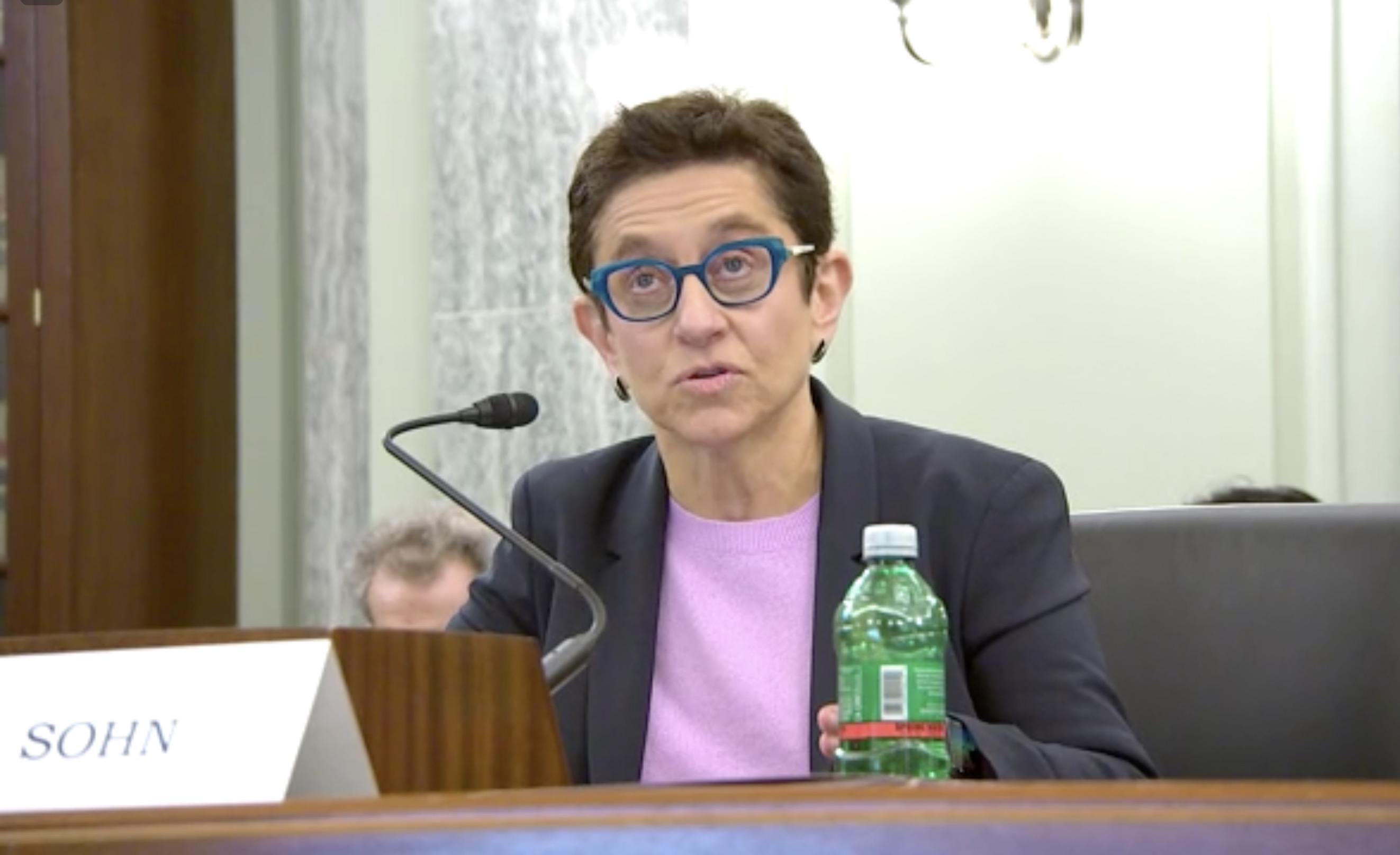
Enlarge/ Gigi Sohn answering questions on December 1, 2021, at a Senate Commerce Committee hearing on her nomination to the Federal Communications Commission.
Comcast’s hiring of a new lobbyist is part of an attempt to “torpedo” President Joe Biden’s nomination of Gigi Sohn to the Federal Communications Commission, advocacy group Free Press alleged yesterday.
“Comcast just hired a lobbying firm to try to torpedo Gigi Sohn’s nomination to the FCC. The company clearly knows that Sohn will work for people, not corporations,” Free Press wrote in an email to members. The email asked people to call Commerce Committee Chair Sen. Maria Cantwell (D–Wash.) to urge a vote on Sohn’s nomination by the end of January.
Comcast’s newly hired lobbyist is Kirk Adams of Consilium Consulting in Phoenix, Arizona. Adams’ lobbying disclosure, which was filed with Congress on January 6, lists one specific lobbying issue that he expects to work on: “FCC nominations.” An amended version of the lobbying registration filed about 11 hours later deleted “FCC Nominations” and replaced it with “telecommunications policy.”
We asked Comcast if it hired Adams to lobby against the Sohn nomination and why the change was made to the lobbying registration document. “We don’t comment on lobby filings,” a Comcast spokesperson responded. “As you note the firm filed a corrected filing.”
Comcast hasn’t publicly opposed Sohn’s nomination. “Gigi Sohn has been an advocate for consumers for many years and would bring her tireless advocacy on the critical issue of connecting all Americans to broadband back to the FCC. We have long shared that commitment,” Comcast said in October after Biden announced his choice.
Swing vote Sinema may be lobbyist’s target
Politico wrote on Tuesday that Adams has “deep ties to Arizona, a state whose senior senator may hold the key to confirming Gigi Sohn for an open seat at the FCC.” That US senator from Arizona is Democrat Kyrsten Sinema, a member of the Commerce Committee. “Sinema, who has typically aligned more with Republicans and Internet service providers like Comcast over the rest of her party on the issue of net neutrality, has not yet revealed whether she will vote for Sohn,” Politico wrote.
A story in The Hill noted that Adams is a “former Republican speaker of the Arizona House of Representatives.” Adams was Arizona House speaker from 2008 to 2011 and chief of staff to Arizona Gov. Doug Ducey from 2015 to 2018.
Politico also pointed out that another newly retained Comcast lobbyist used to work for Sen. Joe Manchin (D-W.Va.). Manchin may also be a swing vote if Sohn’s nomination reaches the Senate floor. “Comcast retained Larry Puccio, who was Manchin’s [chief of staff] as governor of West Virginia and has remained close with the swing vote senator, and fellow West Virginia lobbyist Angel Moore, at the end of November, according to a newly filed disclosure,” Politico wrote.
The disclosure for Puccio and Moore lists “telecommunications—broadband deployment and adoption” as their lobbying issues, with no mention of FCC nominations.
FCC’s 2-2 deadlock persists
Sohn’s confirmation would break a 2-2 deadlock between Democrats and Republicans that has persisted throughout Biden’s term as president. Sohn has a long history as a consumer advocate and has faced plenty of opposition from Senate Republicans.
“The Federal Communications Commission has been without a governing majority for the entire Biden administration,” Free Press wrote in its email to members. “That means that the agency hasn’t been able to do things like restore net neutrality and the FCC’s authority over high-speed Internet, begin the process of reckoning with its shameful history on race or repair all of the damage done during the Trump years.”
Biden nominated Sohn on October 26, 2021, and resubmitted the nomination on January 4. A Commerce Committee spokesperson said the committee may vote on Sohn’s nomination during the week of January 24, according to Politico.
A Democratic majority is needed for the FCC “to begin the process of reversing the misguided decisions of the [Ajit] Pai FCC and reasserting its authority over broadband, an essential service that currently lacks any meaningful federal oversight,” a coalition of advocacy groups wrote Tuesday. Those groups are the Benton Institute for Broadband & Society, Demand Progress, Electronic Frontier Foundation, Fight for the Future, Free Press Action, MediaJustice, Open Technology Institute, Public Knowledge, and United Church of Christ Media Justice Ministry.
“For more than a year, the FCC has been operating without a full slate of commissioners, hampering its ability to advance all of the important tasks on its agenda… All of these proceedings need a fully functioning FCC, which means Ms. Sohn needs to be voted out of the Committee this month and moved to the full Senate for a floor vote,” the groups wrote. “The time for these votes is now.”
https://arstechnica.com/?p=1825857
Supreme Court on vaccine mandates: Hospitals OK, general employment a “no”
The Biden administration has made vaccine mandates central to its attempts to limit the impact of the COVID-19 pandemic. Or at least it has tried to; various states and other organizations have used the courts to challenge the federal government’s authority to impose these mandates. Last week, the Supreme Court heard arguments regarding two of the most significant mandates: one for all hospital workers issued by the Department of Health and Human Services (HHS), and a second for all employees of large companies issued by the Occupational Safety and Health Administration (OSHA).
By the time the cases were argued before the Supreme Court, the HHS rule was already blocked by a stay issued by a lower court. By contrast, the OSHA rules had seen a lower court lift earlier stays, leaving it on the verge of enforcement.
On Thursday, the Supreme Court issued expedited rules that reflected the tone of the questioning the week before. The OSHA rule is now subject to a stay that blocks its implementation, a decision that saw the court’s three liberal justices issue a dissent. The stay against the HHS rules was lifted, but only by a close 5-4 ruling.
At issue is the law authorizing OSHA to issue temporary emergency standards, which can be issued when “employees are exposed to grave danger from exposure to substances or agents determined to be toxic or physically harmful or from new hazards.” OSHA determined that COVID-19 posed a new hazard and presented evidence that the virus was often spread in a variety of workplaces. The agency’s rule would offer vaccination or testing and masking as options, and it would not apply to workplaces that could demonstrate they posed a low risk of exposure.
The ruling was issued by the court as a whole and joined in a separate concurrence from Justices Gorsuch, Thomas, and Alito. The ruling determined that those suing to block the OSHA rule were likely to prevail, and it is largely focused on the scope of the rule. It suggests that the agency likely does have the ability to regulate the risk of viral exposure in “particularly crowded or cramped environments” but states that infection “is not an occupational hazard in most [workplaces],” which include things like landscapers and other occupations that occur primarily outdoors. This conclusion is strongly contested in the dissent, as we’ll see below.
The ruling likens OSHA’s approach to “broad public health measures” and fails to distinguish between risks specific to the workplace and those facing society more generally.
The concurrence by Gorsuch, Thomas, and Alito agrees that the rule won’t survive court challenges, but it attempts to place the decision in the context of their larger ideological battles over the scope of federal authority. They make frequent mentions of the major questions doctrine, which suggests that agencies cannot take major regulatory actions without being specifically directed to by Congress. But they go beyond that by suggesting that Congress doesn’t even have the right to give that sort of authority to regulatory agencies: “If the statutory subsection the agency cites really did endow OSHA with the power it asserts, that law would likely constitute an unconstitutional delegation of legislative authority.”
The dissent by Justices Breyer, Sotomayor, and Kagan focuses on the plain language of legislation that OSHA cites for its authority, concluding that COVID-19 definitely qualifies as both a “grave danger” and “new hazard.” It notes that the rule issued by OSHA was backed up by extensive documentation of spread within a variety of workplaces—not strictly cramped or crowded ones. The dissent slams the majority for “acting outside of its competence” by dismissing the OSHA risk analysis, which was performed by experts in occupational safety.
As for the majority’s distinction between workplace and general risks, the dissent notes that OSHA currently regulates risks like fires and electrical problems without any legal issues.
https://arstechnica.com/?p=1825779
Scammers put fake QR codes on parking meters to intercept parkers’ payments
Enlarge/ Image from the City of Austin’s warning to ignore QR code stickers on parking meters.
Scammers in a few big Texas cities have been putting fake QR codes on parking meters to trick people into paying the fraudsters. Parking enforcement officers recently found stickers with fraudulent QR codes on pay stations in Austin, Houston, and San Antonio.
San Antonio police warned the public of the scam on December 20, saying that “people attempting to pay for parking using those QR codes may have been directed to a fraudulent website and submitted payment to a fraudulent vendor.” Similar scams were then found in Austin and Houston.
The Austin Transportation Department started examining their own meters after being “notified of a QR code scam by the City of San Antonio in late December—when more than 100 pay stations were stickered with fraudulent codes,” Fox 7 Austin reported last week. Austin officials checked the city’s 900 or so parking pay stations and found fraudulent QR codes on 29 of them, according to a KXAN article.
The fake QR codes reportedly directed people to a “Quick Pay Parking” website at the domain passportlab.xyz, which is now offline. It’s not clear how many people—if any—were tricked into paying the fraudsters.
City doesn’t use QR codes—they’re too easy to fake
“We don’t use QR codes at all for this very reason, because they are easy to fake or place on the devices,” Austin parking division manager Jason Redfern told KXAN. “And we heard from industry leaders that this would be a possibility.” Austin accepts payments directly at the meter with coins or credit or with the Park ATX mobile payment app.
Austin city officials said in a press release that they are “continuing to inspect the City’s more than 900 pay stations to ensure there are no additional QR codes in use.” Austin urged people to call 911 if they see someone without a city employee badge tampering with a pay station. “Any person who believes they were a victim of a credit card breach due to recent parking meter payments should file a police report and notify their card issuer immediately,” the city also said.
Houston officials found five meters with fake QR codes and removed the stickers, according to KPRC 2. Like Austin, Houston does not use QR codes on parking meters but does offer a payment app.
While the scam seems to have been centered in Texas, it could be repeated anywhere. If you see a QR code on a parking meter, ignore it and make sure you pay the city directly.
https://arstechnica.com/?p=1825443
FTC has a “plausible claim” that Facebook is an illegal monopoly, judge says
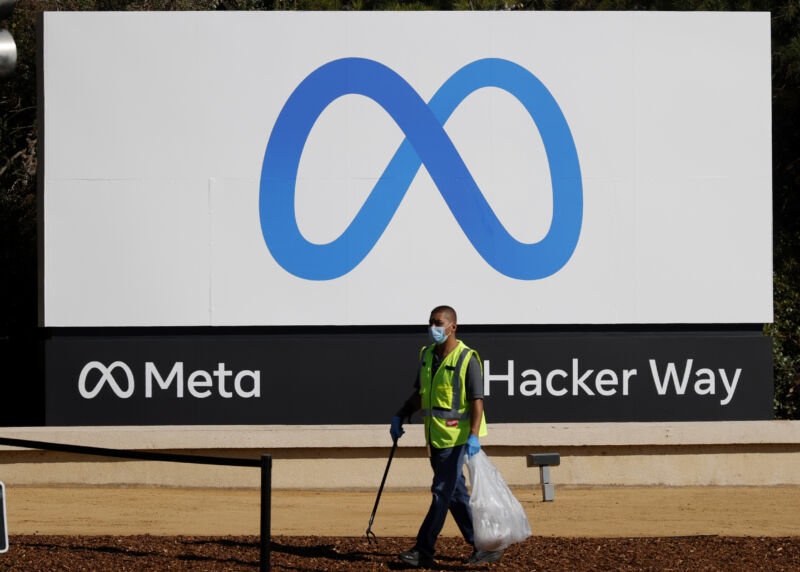
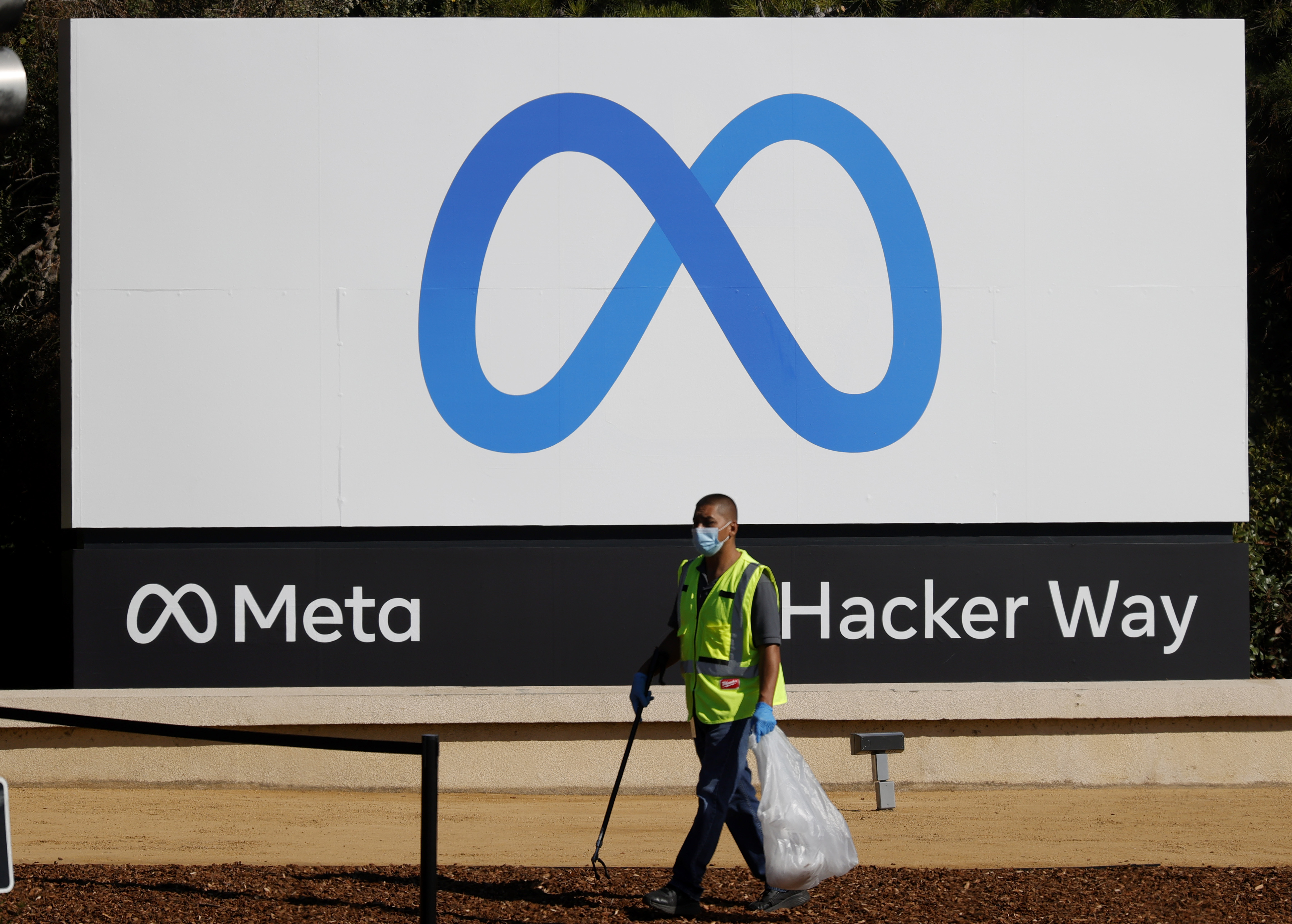
Enlarge/ A worker picks up trash in front of the new logo in front of Meta’s headquarters on October 28, 2021, in Menlo Park, Calif.
Justin Sullivan/Getty Images
The Federal Trade Commission’s antitrust suit against Facebook may proceed, a federal judge has ruled. The company had filed a motion to dismiss the case, which the judge denied.
US District Judge James Boasberg had invited the FTC to refile the case after throwing out its initial attempt when he found it lacking. “Second time lucky?” Boasberg wrote in yesterday’s opinion. Apparently.
“The core theory of the lawsuit remains essentially unchanged,” he said of the FTC’s refiling. “The facts alleged this time around to fortify those theories, however, are far more robust and detailed than before, particularly in regard to the contours of Defendant’s alleged monopoly.”
The FTC argues that Facebook (now known as Meta) used a “buy and bury” strategy to stifle competition in the social networking space. Specifically, it alleges that Facebook purchased both Instagram and WhatsApp to prevent them from offering their large user bases new features that could have challenged Facebook’s main platform.
“Cleared the bar”
Boasberg found that the FTC “cleared the pleading bar” and the bar for the “buy and bury” allegations. In support of those claims, he cites the fact that Facebook had initially considered competing directly with Instagram before deciding to simply acquire the app, a move that reduced competition in the marketplace. The FTC’s “allegations that Facebook scaled down and eventually shuttered its own mobile-sharing app after acquiring Instagram is consistent with the assertion that consumers would have a better and broader market of services to choose from had the acquisition never occurred,” he wrote.
The judge also pointed out that Facebook followed the same path when faced with competition from WhatsApp. The company “briefly attempted to compete” with WhatsApp before deciding to buy it, he said.
Boasberg also noted that Zuckerberg wrote in 2012 that he was “the most worried about messaging. WhatsApp is already ahead of us in messaging in the same way that Instagram was ‘ahead’ of us in photos… I’d pay $1B for them if we could get them.” Two years later, Facebook bought the messaging company for $19 billion.
Hits and misses
But while the FTC succeeded with the “buy and bury” claim, it failed to get the judge to proceed with its other allegation—that Facebook used its policies to stifle competition by restricting access to its APIs. There were a few problems with the agency’s approach—one, Boasberg did not invite the FTC to refile those allegations, and two, the judge pointed out that Facebook dropped the policies in 2018 and had not enforced them since 2013. The judge noted that in this instance, the FTC doesn’t have statutory authority to go after Facebook based on past conduct.
Facebook had also been seeking FTC Chair Lina Khan’s recusal because it claimed that she came into the position with pre-existing opinions about the company’s behavior. Here, Boasberg sided with the FTC, saying that “such contention misses its target, as Khan was acting in a prosecutorial capacity, as opposed to in a judicial role, in connection with the vote” to pursue antitrust charges against Facebook.
Buried in Boasberg’s opinion are a few tidbits that suggest he might keep an open mind when assessing Facebook’s alleged anticompetitive behavior and whether it has affected consumers. “The advent of federal legislation addressing various privacy and advertising concerns related to consumer technology is consistent with the intuitive notion that consumers care about these issues and may prefer stronger protections in their [social networking] services,” he wrote.
In other words, the mere fact that Congress is debating such legislation suggests that the public cares about these issues, even as people continue to use Meta’s products.
T-Mobile has responded to complaints that it is blocking iCloud Private Relay on iPhones, saying that the block only affects subscribers who enabled parental controls or other types of content filtering. T-Mobile also says it has identified a bug in iOS that may be messing with users’ iCloud Private Relay settings, but Apple hasn’t confirmed this.
“Customers who chose plans and features with content filtering (e.g. parent controls) do not have access to the iCloud Private Relay to allow these services to work as designed. All other customers have no restrictions,” T-Mobile told Ars last night. This also applies to customers who subscribed to Sprint before the companies merged.
Customers affected by iCloud Private Relay blocking get an error message in the iPhone settings app when they try to enable the Apple privacy feature. The message says, “Your cellular plan doesn’t support iCloud Private Relay. With Private Relay turned off, this network can monitor your Internet activity, and your IP address is not hidden from known trackers or websites.”
Some users noticed that T-Mobile was blocking iCloud Private Relay yesterday, leading to speculation that the carrier plans to block the Apple privacy feature for all US-based customers. While it now appears the blocking is not widespread, it may be affecting some users who did not enroll in content filtering. One Sprint user told us on Twitter that iCloud Private Relay is blocked even though he doesn’t have filtering enabled on his account and that he needs to “talk to advanced tech support next” because T-Mobile support told him that “they couldn’t open a ticket.”
Additionally, a 9to5Mac report states that “many of the users we’ve heard from… do not have any such content filtering enabled.”
T-Mobile says there’s an iOS 15.2 problem
In a further response to Ars today, T-Mobile suggested that there’s a problem with the default settings in iOS 15.2. “Overnight, our team identified that in the 15.2 iOS release, some device settings default to the feature being toggled off,” T-Mobile told us. “We have shared this with Apple. This is not specific to T-Mobile. Again, though, we have not broadly blocked iCloud Private Relay.” We contacted Apple and will update this article if we get more information.
iCloud Private Relay is available in beta and is designed to prevent network operators from monitoring customers’ Internet activity. “If you turn off Private Relay, network providers and websites can monitor your Internet activity in Safari,” Apple says.
T-Mobile’s Web Guard “prevents access to adult web content” when customers are connected to the T-Mobile cellular network. Apparently, it can’t block such content when Apple’s new privacy feature is protecting a user’s browsing.
Possible fix: “Limit IP Address Tracking”
An AT&T spokesperson told Ars today that it does not block iCloud Private Relay at all, even if customers have filtering enabled. We’re still waiting for answers from Verizon.
Some AT&T customers reported on Twitter that iCloud Private Relay wasn’t working on cellular data yesterday. However, some of those Twitter threads show that their problem was fixed by turning on “Limit IP Address Tracking” in the Cellular Data Options section of the iPhone Settings app.
The toggle description in the iPhone settings app says, “When this is turned off, iCloud Private Relay will also be turned off for this cellular provider.” If you’re having a problem with iCloud Private Relay, check to make sure that the “Limit IP Address Tracking” toggle is on.
A Verizon customer who reported a similar problem last month told us today that he never had content filtering turned on and that Private Relay is working for him now.
When iCloud Private Relay is enabled, web “requests are sent through two separate, secure Internet relays,” Apple says. “Your IP address is visible to your network provider and to the first relay, which is operated by Apple. Your DNS records are encrypted, so neither party can see the address of the website you’re trying to visit. The second relay, which is operated by a third-party content provider, generates a temporary IP address, decrypts the name of the website you requested, and connects you to the site.”
https://arstechnica.com/?p=1825105
Google hired union-busting consultants to convince employees “unions suck”
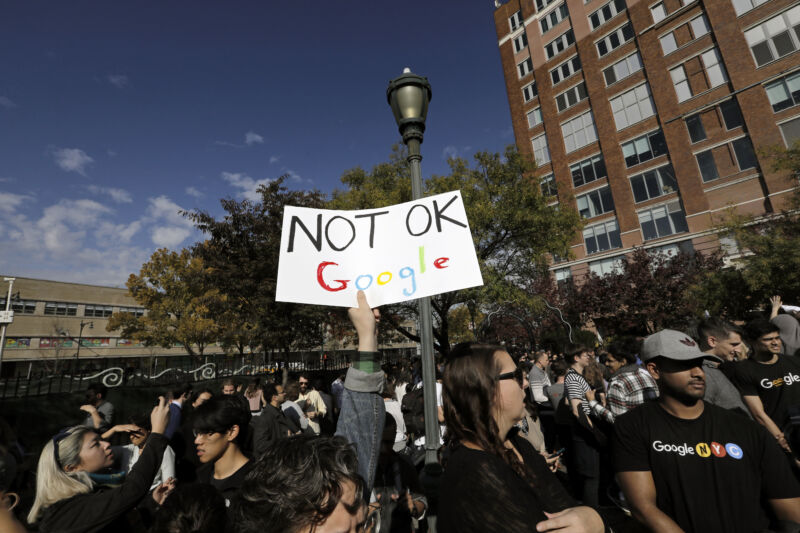
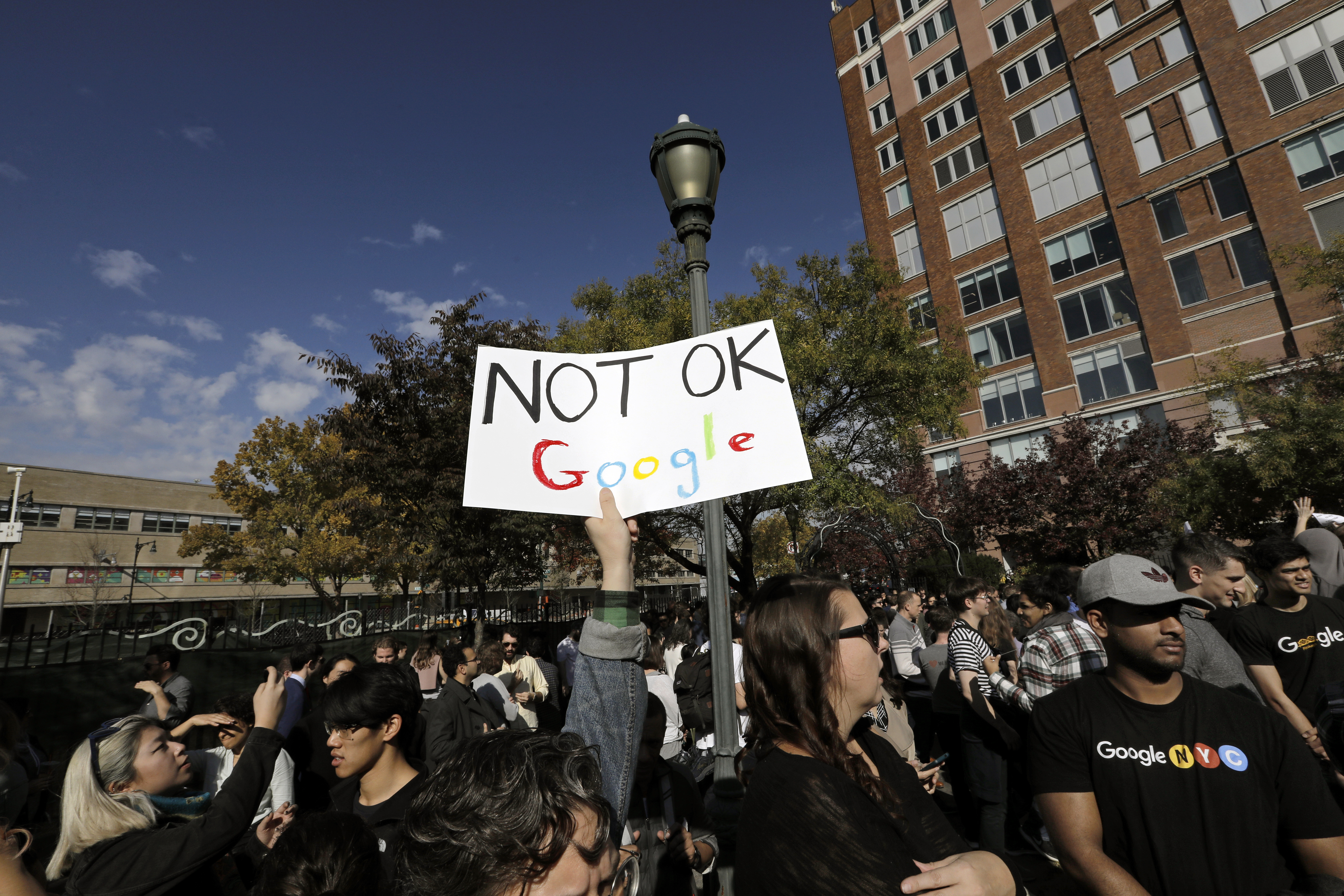
Enlarge/ A Google employee holds a sign during a walkout to protest how the tech giant handled sexual misconduct at Jackson Square Park in New York on Thursday, Nov. 1, 2018.
Peter Foley/Bloomberg
For years, Google has attempted to kill employee-led unionization efforts under an initiative codenamed “Project Vivian.” In the words of one senior manager, Project Vivian existed “to engage employees more positively and convince them that unions suck.”
Project Vivian appears to be Google’s response to a surge in worker activism that began in 2018, when thousands of employees walked out in protest of the company’s response to sexual harassment complaints. Months later, employees began pushing for improved working conditions for Google contractors and an end to contracts with US government agencies involved in deportations and family separations. Two employees who helped organize the 2018 walkout later left the company, saying they were facing retaliation.
Ultimately, five employees were fired, and two were disciplined. They filed a complaint with the National Labor Relations Board alleging that Google interfered with their law-protected rights to organize at the workplace. The NLRB agreed and filed a complaint against Google in December 2020. Google refused to settle, and the matter went to the NLRB’s administrative court.
Revelations about Project Vivian were made public in a ruling, released late last week, by an NLRB administrative law judge. In the scathing order, the judge, Paul Bogas, told Google to turn over hundreds of internal documents related to its anti-union efforts, his second such order.
Bogas had previously ordered Google to hand over documents for review by a special master in camera, a process that allows another judge to look through them for confidential or sensitive information before they’re made public. Many of the documents involve Google’s work with IRI Consultants, a union-busting firm that the tech giant hired in late 2019. Google has so far refused to produce the documents, claiming that they are protected by attorney-client privilege or work product privilege.
Bogas wasn’t having it. “This broad assertion is, to put it charitably, an overreach,” he wrote.
For such privileges to apply, Bogas said, there must be a case that’s being currently litigated—or at least expected to be litigated. Google “cannot spin the mere fact of a nascent organizing effort among employees into ‘litigation’—like straw spun into gold—that entitles it to cloak in privilege every aspect of its antiunion campaign,” Bogas wrote.
What’s more, “the documents confirm that IRI did not give legal advice but rather was retained to provide antiunion messaging and message amplification strategies tailored to the Respondent’s workforce and the news and social media environment,” Bogas wrote.
Many of the documents that Google claimed to be protected by attorney-client privilege or work product privilege “were, in fact, communications between non-lawyers, with attorneys included, if at all, only as ‘cc’d’ recipients, and without any statement seeking legal advice,” he said. IRI, he pointed out, “gave campaign messaging, not legal, advice.”
Bogas noted that Google’s own internal memos that advocated hiring IRI do not mention retaining the firm for legal advice but rather for communications and messaging:
According to the document recommending the retention of a consultant, the purpose of the consultant would be to: “[H]elp us understand the current sentiment around labor organizing/unionization efforts at Google; map out the current stakeholders, risk areas, and efforts; and work with Google stakeholders to create and activate a proactive strategy for positive employee engagement, education, and response. We are also looking for guidance on how to engage our executives, leaders, managers, and Googlers appropriately, arm them with the right information and facts, and be able to proactively engage on these matters.”
Other documents might have qualified for attorney-client privilege, but Google waived those rights when it shared them with IRI, a third party that Bogas said lies outside the privileged relationship. Google sent other documents for in camera review already redacted, making it impossible to determine whether the requirements for attorney-client privilege were met.
Bogas has ordered Google to tell him how attorney-client privilege might apply to the disputed documents in light of his finding that any communications with IRI fall outside the attorney-client relationship. Google has until January 21 to respond.
https://arstechnica.com/?p=1825055
ISPs must accept gov’t subsidy on all plans—no more upselling, FCC chair says
Less than a year after Verizon and other ISPs forced users to switch plans in order to get government-funded discounts, a new federal program will prevent such upselling by requiring ISPs to let customers obtain subsidies on any Internet plan.
With last year’s $50-per-month Emergency Broadband Benefit that was created by Congress, the Federal Communications Commission let ISPs participate in the program as long as they offered the discount on at least one service plan. The FCC said it did so to encourage participation by providers, but some major ISPs drastically limited the subsidy-eligible plans—forcing users to switch to plans that could be more expensive in order to get a temporary discount.
Congress subsequently created a replacement program that will offer $30 monthly subsidies to people with low incomes. The program also specified that ISPs “shall allow an eligible household to apply the affordable connectivity benefit to any Internet service offering of the participating provider at the same terms available to households that are not eligible households.” The FCC still has to make rules for implementing the new Affordable Connectivity Program (ACP), but that requirement prevented the FCC from using the same one-plan rule that helped ISPs use the program as an upselling opportunity.
ISPs urged FCC to exclude “legacy” plans
Despite that, there was still a question of whether the FCC would define “any Internet service offering” to include legacy and grandfathered plans that are no longer offered to new customers. ISPs urged the FCC to let them exclude legacy or grandfathered plans from the subsidy-eligible offerings—such as requests from AT&T, Verizon, Frontier, Dish, the cable lobby group NCTA, and telco lobby group USTelecom.
The FCC is now on track to reject those requests under draft rules released by Chairwoman Jessica Rosenworcel on Friday. Although many ISPs “expressed concern at the extensive technical challenges necessary to include legacy and grandfathered plans,” the FCC draft rules “conclude that any Internet service offering means, for a particular customer, any broadband Internet plan in which the customer is currently enrolled (regardless of whether it is a legacy grandfathered plan), as well as any broadband Internet plan that a provider currently offers to new customers.”
The draft also says:
[W]e find that the purpose of this provision is to ensure that the eligible households are permitted to apply the affordable connectivity benefit to currently offered plans that are available to non-eligible households, such that eligible households are not limited to choosing from a subset of plans or restricted in some way for such plans. We also do not think that Congress intended to exclude consumers on existing legacy or grandfathered plans from participating in the Affordable Connectivity Program. We further clarify that the requirement that legacy or grandfathered plans be eligible for reimbursement does not require that providers offer such legacy or grandfathered plans to other customers, including ACP-eligible customers, that are not already on such plans.
Rosenworcel’s plan gives ISPs 60 days after publication of the order in the Federal Register to “ensure that the affordable connectivity benefit can be applied to all generally available and currently sold plans” and to “accommodate requests by existing subscribers to apply the affordable connectivity benefit to legacy or grandfathered plans on a case-by-case basis.”