Canon can’t get enough toner chips, so it’s telling customers how to defeat its DRM
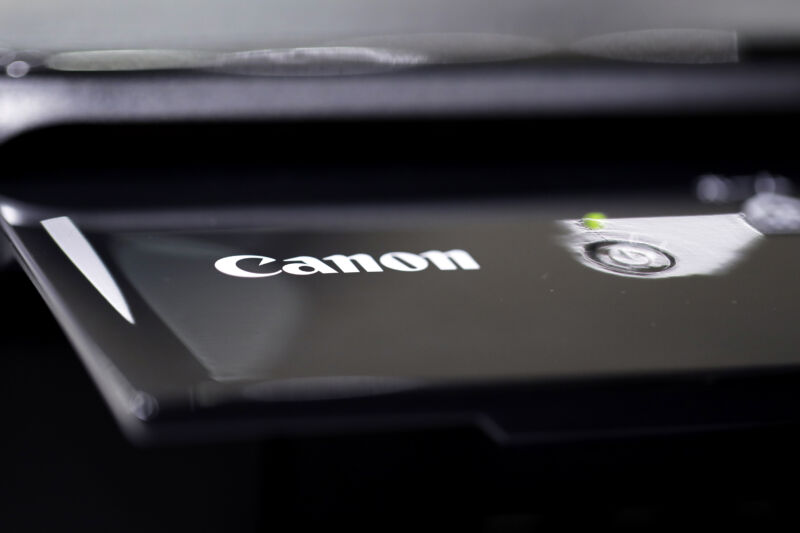
Canon can’t get enough toner chips, so it’s telling customers how to defeat its DRM
Kiyoshi Ota/Bloomberg

For years, printers have been encumbered with digital rights management systems that prevent users from buying third-party ink and toner cartridges. Printer companies have claimed that their chip-enabled cartridges can “enhance the quality and performance” of their equipment, provide the “best consumer experience,” and “protect [the printers] from counterfeit and third-party ink cartridges.”

Left unsaid is the fact that requiring first-party cartridges also ensures a recurring revenue stream. It’s an old business model—Gillette sold its razor handles cheaply to sell more razors, for example—and it’s one that printer companies have enthusiastically embraced. Lexmark, HP, Canon, Brother, and others all effectively require users to purchase first-party ink and toner.

To enforce the use of first-party cartridges, manufacturers typically embed chips inside the consumables for the printers to “authenticate.” But when chips are in short supply, like today, manufacturers can find themselves in a bind. So Canon is now telling German customers how to defeat its printers’ warnings about third-party cartridges.

“Due to the worldwide continuing shortage of semiconductor components, Canon is currently facing challenges in procuring certain electronic components that are used in our consumables for our multifunction printers (MFP),” a Canon support website says in German. “In order to ensure a continuous and reliable supply of consumables, we have decided to supply consumables without a semiconductor component until the normal supply takes place again.”

The chip in question tells the printer when toner levels are getting low. A useful feature, certainly, but one that printer companies often use to lock out third-party cartridges—without the chip, the printer will say it doesn’t know how much ink or toner is inside the cartridge, assume it’s zero, and refuse to print.

But Canon has been having a hard time getting chips amid the shortage, so the company is telling owners of its imageRUNNER large-office printers how to defeat its own protections against cartridges that don’t have chips.

The software on these printers comes with a relatively simple way to defeat the chip checks. Depending on the model, when an error message occurs after inserting toner, users can press either “I Agree,” “Close,” or “OK.” When users press that button, the world does not end. Rather, Canon says users may find that their toner cartridge doesn’t give them a low-toner warning before running empty.

“Although there are no negative effects on print quality when consumables are used without electronic components, certain additional functions, such as the detection of the toner level, may be impaired,” Canon’s support site says.

https://arstechnica.com/?p=1824817


Facebook’s data center plans rile residents in the Netherlands

Steam rises from an industrial facility behind a wind turbine.

When Susan Schaap, 61, travels from her Dutch hometown of Zeewolde to the nearest city of Leylystad, the 30-minute drive takes her through vast tulip fields, interrupted only by wind turbines and sometimes sheep. But if Facebook parent company Meta’s plans are approved, her view would be replaced by the Netherlands’ largest-ever data center.

Meta’s data center is “too big for a small town like Zeewolde,” says Schaap, who has become one of the project’s most vocal opponents. “There are 200 data centers in the Netherlands already,” she argues, and the move would give huge swathes of farmland to just one company, “which is not fair.”

Like Schaap, other residents of Zeewolde are outraged that Meta has chosen their town for its first gigantic data center in the Netherlands. They claim the company will be allowed to syphon off a large percentage of the country’s renewable energy supply to power porn, conspiracy theories, and likes on Meta’s social platforms.

Their attitude reflects a wider shift against Big Tech’s plans to flock to the Netherlands, one of three key hubs for data centers in Europe alongside the UK and Germany, turning the issue into a national debate ahead of local elections later this year.

Amsterdam is home to a major Internet exchange, which distributes traffic from data centers nearby, and it has attracted tech giants looking for better connectivity and fiber to set up giant, “hyperscale” data centers to process their own data nearby.

Microsoft built the first hyperscale in the Netherlands in 2015. Since then, two more have been built, and that number is expected to grow, according to trade group the Dutch Data Center Association. But Meta’s plan for the Zeewolde site, known as Tractor Field 4, is by far the biggest yet. It would span 166 hectares, the equivalent of more than 1,300 Olympic swimming pools, and would devour 1,380 gigawatt-hours of energy a year, at least double what the municipality’s 22,000 residents consume in the same period.

The fate of Tractor Field 4 has sparked protests and prompted 5,000 people to sign a petition. Schaap has set up a formal organization—Sichting DataTruc—to give locals’ voices more weight with the council. Different groups have different concerns, but each insists it is not opposed to data centers per se. “We don’t oppose data centers at all,” says Caroline de Roos of the biodiversity group Land von Ons. “What we are opposed to is the use of this superb, really excellent agricultural ground for the data center or any industry. It’s a waste of cropland.” For Schaap, the size is the issue. “It is out of proportion,” she says. “Seventy percent of the people that were asked [in a recent survey] are against a hyperscale like this, because it’s too big, it asks too much of our electricity, it asks too much of our water.”

Zeewolde residents’ argument that the data center will take from the community without giving much in return is exacerbated by what they know about Meta’s social media empire. At the top of the Facebook page Schaap set up to oppose the plans is a sketch by cartoonist Ronald Oudman, showing five buildings towering over the flat Dutch countryside. Each is emblazoned with a label that says “PORNO, FAKE NEWS, SILLY CHATS, LIKES AND COMMENTS and CONSPIRACY THEORIES.” “It has nothing to do with medical applications for hospitals or banking applications, it’s not for any purpose but for fun,” says Schaap. “We don’t gain too much from all this. [Meta] speaks about community programs and social return. But that’s just a big joke, because it’s going to be peanuts compared to what we give to them.”

A spokesperson for Meta declined to comment on concerns over the type of data it would process in the Netherlands but said that the company wants to be a “good neighbor for everyone in the area” and that it plans to partner with the local community if the data center goes ahead. The Zeewolde council says on its website that Meta has agreed to invest in the local economy and make residual heat generated by the data center free of charge.

Despite local opposition, the council and the town’s alderman (a local policymaker) have remained supportive. “We believe the data center will have a positive impact on the region,” alderman Egge Jan de Jonge told regional newspaper De Stentor in December.

https://arstechnica.com/?p=1824533


Biden’s vaccine mandates come before the Supreme Court

The US Supreme Court building in Washington DC.
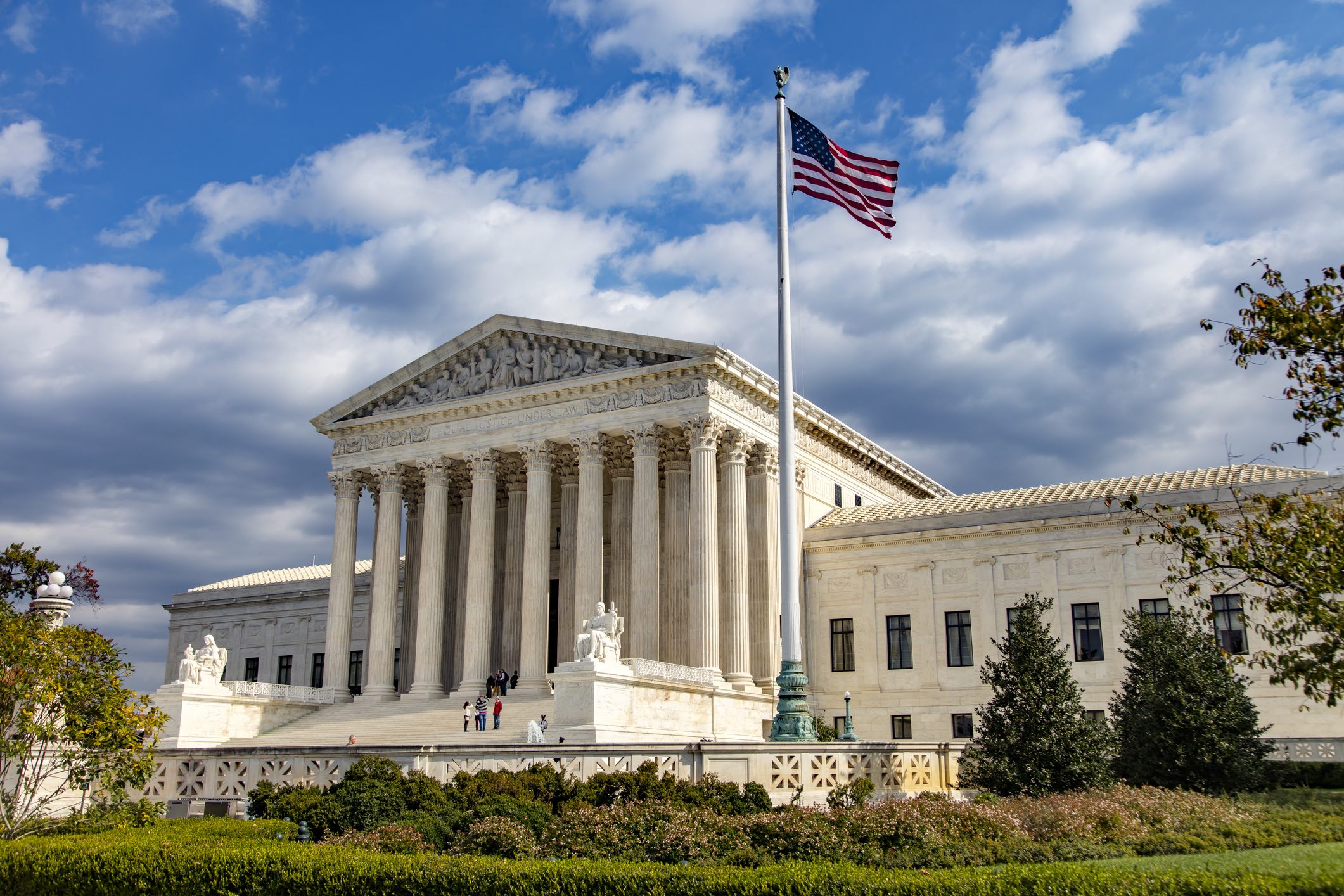
Enlarge / The US Supreme Court building in Washington, DC.

On Friday, the Supreme Court heard arguments in two cases that could severely limit the federal government’s ability to set public health policy during the pandemic. At issue is whether existing health and safety authority given to federal agencies by Congress is broad enough to cover the pandemic or whether Congress needs to step in and explicitly authorize the agencies’ actions.

The arguments occur as the US sees an unprecedented surge in COVID-19 cases. Indeed, two of the state lawyers arguing against these new public health measures were caught up in that surge and had to participate in the hearings remotely.

For and against

Two separate cases are being heard today, both regarding executive actions taken by the Biden administration. The first case involves a rule, issued by the Department of Health and Human Services (HHS), covering all health care workers at facilities that accept Medicare and Medicaid. The rule requires these workers to be vaccinated unless they are exempted on medical or religious grounds. The second case involves a vaccine-or-test mandate issued by the Occupational Safety and Health Administration (OSHA); the mandate would apply to any businesses with 100 or more employees.

The HHS rule is currently on hold due to lower court rulings. But OSHA’s rule could be enforced as early as Monday, since the highest court to rule on the measure has lifted any stays imposed by lower courts.

The government argues that Congress gave the executive branch agencies the right to issue these rules. In the case of HHS, Congress allowed the agency to set minimal standards that medical facilities have to meet in order to protect the health and safety of patients. OSHA was similarly given the ability to issue emergency rules to prevent employees from being exposed to workplace hazards.

The two new rules, however, have been opposed by a number of US states and business groups. A complicated set of partly overlapping lawsuits are making their way through lower courts right now; at issue is whether the new rules should be put on hold while these cases are decided. To do that, opponents of the new rules must convince the Supreme Court that they are likely to prevail when the cases are ultimately decided.

Those opposed to the new public health measures argue that the Court’s “major questions doctrine” applies—meaning that administrative agencies can’t adopt significant policy changes based on vague language in existing laws; they need specific guidance from Congress to do so. Opponents argue that the regulatory authority Congress has given to agencies was meant for applications other than a virus, so new, explicit authorization is required.

Separately, opponents also argue that enforcing either rule would cause many employees to quit, disrupting businesses and healthcare. Since the exact opposite has been seen when private employers and hospital systems have issued their own mandates, this argument seems unlikely to carry much weight.

Split decision?

The OSHA rules for private businesses were given a longer hearing, and they seemed to attract more skeptical scrutiny. Although this may be a product of their different status—the OSHA rules are currently allowed to go into effect—it was also clear that the conservative justices were leaning towards declaring the issue of vaccine mandates for general employment a “major question” that would require new Congressional action.

In contrast, there was far less skepticism of the HHS’s legal grounds for setting medical safety standards. Even one of the state attorneys general arguing against the new rule admitted that the government had the ability to set standards for preventing other diseases, and the issue was simply one of whether vaccines were within that established remit. Meanwhile, Justice Kavanaugh highlighted the fact that it was state officials, rather than the healthcare facilities that would be regulated, that were objecting to the policy.

With the arguments complete, the only question left is how quickly the court will rule. While the hearings took place on an expedited schedule, OSHA is currently ready to enforce its rule as early as next week, which leaves a short window for the Supreme Court to intervene before businesses around the country need to act.

https://arstechnica.com/?p=1824524


Holmes’ testimony backfired—jurors rated her the least credible witness

Elizabeth Holmes trial: Split verdict finds Theranos founder guilty of four counts of criminal fraud, not guilty on four other counts
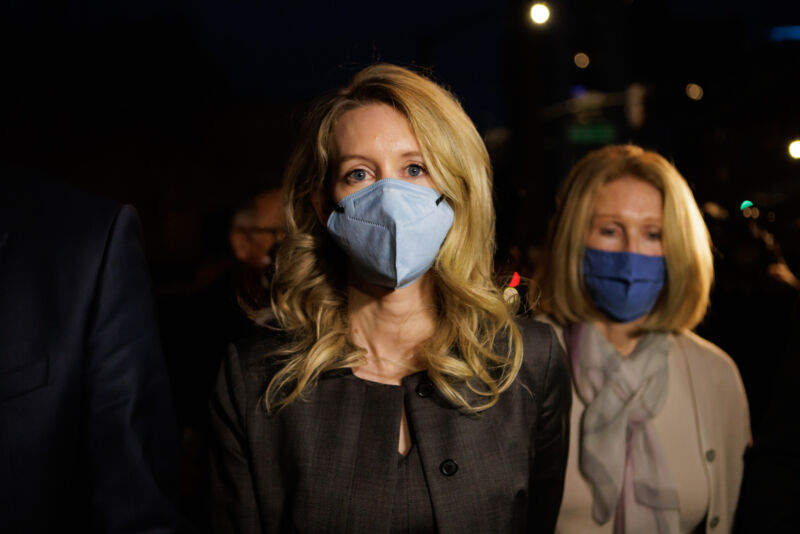
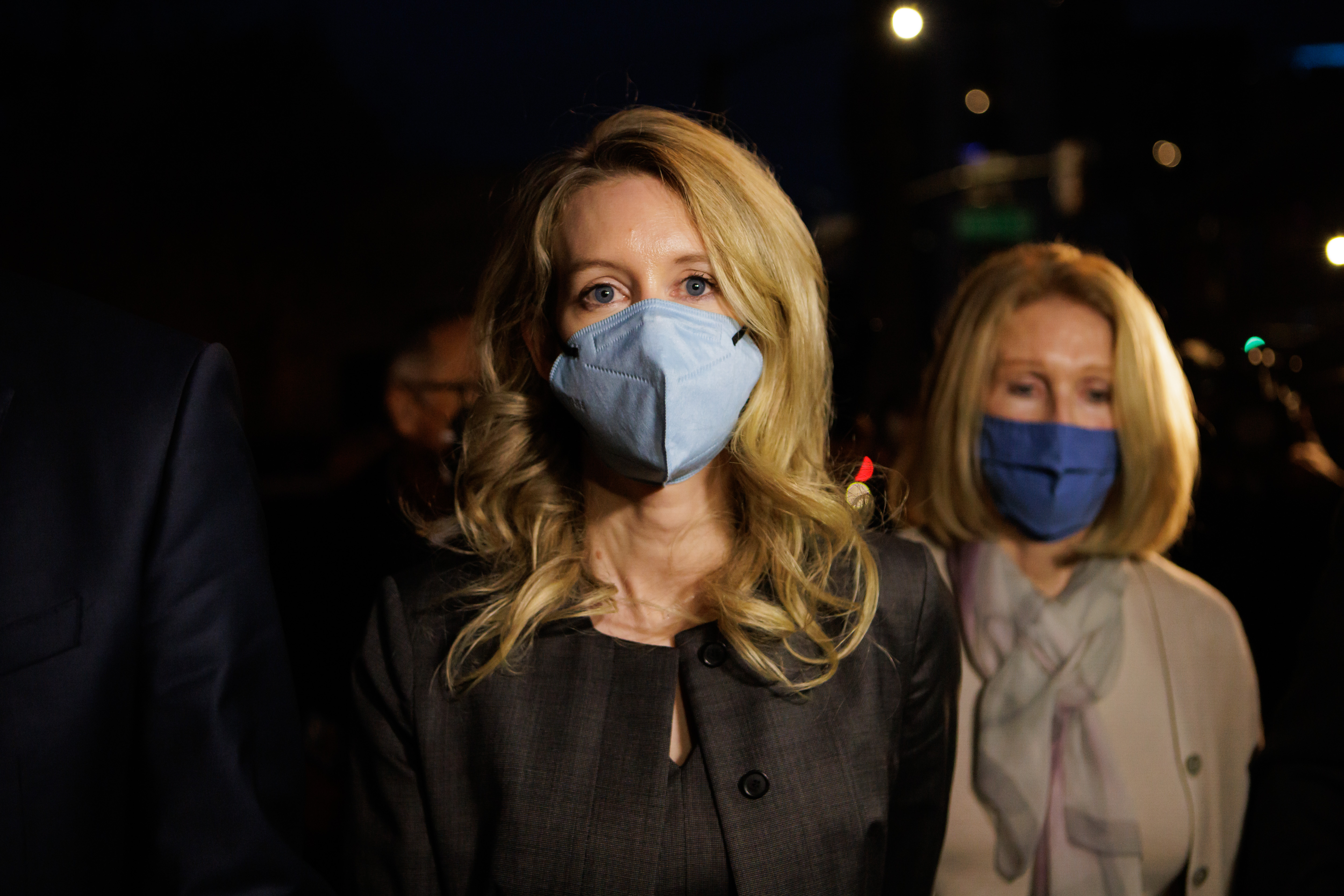
Enlarge / Theranos founder Elizabeth Holmes, center, and her family leave the Robert F. Peckham Federal Building and US Courthouse after the jury found her guilty on four counts in San Jose, Calif., on Monday, January 3, 2022.
Dai Sugano/MediaNews Group/The Mercury News

When jurors deliberated the case of Elizabeth Holmes, the founder of failed medical diagnostic startup Theranos, two pieces of evidence helped them convict her of fraud: a faked pharmaceutical company report and inflated financial projections.

Holmes was convicted earlier this week of one count of conspiracy to commit wire fraud and three counts of wire fraud, all involving investors. She was acquitted of defrauding patients, and the jury deadlocked on charges that she defrauded three other investors. The four women and eight men who served as jurors reached their decision after more than 50 hours of deliberations.

On the four guilty counts, jurors found the evidence clearly convincing, with one juror describing two pieces as “smoking guns” in an interview with The Wall Street Journal. One piece was a Theranos-authored report that Holmes gave to investors; it had a Pfizer logo at the top of every page, making it look like the pharmaceutical company had either written or approved its findings. The second was a set of financial projections that Holmes shared with investors, including Lakeshore Capital Management, the DeVos family office. 

“There were just so many falsehoods on that sheet of paper,” said Susanna Stefanek, an editorial manager at Apple who was known at the trial as Juror No. 8. “She was trying to make this thing look better than it was, and that was just clearly a deceptive act.”

Rosy projections

The projections showed that Theranos would bring in $140 million in revenue in 2014 and lose just $3 million. For 2015, the company forecast $990 million in revenue with $230 million in profit. But the most damning piece for the jury was the claim that Theranos would bring in $40 million in revenue from pharmaceutical companies in 2014 despite a lack of contracts.

On the same document, Lisa Peterson, who was overseeing the Theranos investment for the DeVos family, mentioned “900 stores,” which she told the court referred to Holmes’ claim that Theranos would have its devices in 900 Walgreens stores. For Stefanek and other jurors, that figure was damning. They heard in testimony that months before Holmes gave the document to Peterson, Walgreens had drastically scaled back the rollout to 200 stores. In the end, Theranos testing was introduced in just 41 stores.

Hyperbole isn’t unusual in Silicon Valley, Stefanek said, but “when it got to providing those hard-money figures that were completely bogus, that was when I had to say no.”

Jurors had a harder time finding Holmes guilty of allegations that she defrauded patients. Yes, the lab was very poorly run, they agreed, but they didn’t think the prosecution had presented enough evidence to convince them that Holmes had intentionally marketed problematic tests to patients. 

“If all we’d had to prove was that she knew there might be problems in the lab and that might end up harming patients, that would be one thing,” Stefanek said. But she and others felt the bar was higher for the charges. The foreman, who didn’t want to be identified, said he initially supported a guilty verdict for defrauding patients but changed his mind after the jury debated the matter.

Witness credibility

In reviewing the testimony heard in court, the jurors rated each witnesses’ credibility on a scale of one to four stars, with four being the most credible. Most received top marks, including Theranos patients, doctors, former defense secretary Jim Mattis, and those who had worked for Walgreens and Safeway.

One key witness, Erika Cheung, was docked a star for appearing to be “invested in a certain outcome,” Stefanek said. Cheung had worked in Theranos’ research and development lab and its clinical lab. She ended up quitting after seven months and filed a whistleblower report with the Centers for Medicare and Medicaid Services, claiming that the company routinely cherry-picked data.

Cheung responded, telling the WSJ, “I respect the jury’s effort, time, and energy” but noted that her credibility ranking with the jury showed “an indication that there is still stigmatization against whistleblowers.” The trial backed up her allegations, Cheung said, and added that “a life goal of mine was never to play a role in sending someone to prison.”

The lowest-ranked witness was Holmes herself. Jurors generally believed Holmes’ allegations of abuse by her ex-boyfriend and Theranos executive Ramesh “Sunny” Balwani. But they didn’t think it played a role in the fraud committed against investors.

With Holmes’ testimony, the jury felt “there was a certain amount of cynicism that it was a sympathy ploy,” Stefanek said.

https://arstechnica.com/?p=1824433


Lawsuit: Facebook recommendations helped extremists meet and plan murder

Members of the Boogaloo Bois gather for the 12th annual Second Amendment March sponsored by Michigan Open Carry Inc. and Second Amendment March outside of the Michigan State Capitol in Lansing, Michigan, on September 23, 2021.
Enlarge / Members of the Boogaloo Bois gather for the 12th annual Second Amendment March sponsored by Michigan Open Carry Inc. and Second Amendment March outside of the Michigan State Capitol in Lansing, Michigan, on September 23, 2021.

The sister of a slain federal security officer has filed a wrongful death lawsuit against Facebook owner Meta. The lawsuit alleges that the killing of Dave Patrick Underwood in May 2020 “was not a random act of violence” but rather “the culmination of an extremist plot hatched and planned on Facebook by two men who Meta connected through Facebook’s groups infrastructure and its use of algorithms designed and intended to increase user engagement and, correspondingly, Meta’s profits.”

The lawsuit says that Meta “helped build” the antigovernment “boogaloo” community, which includes white supremacists, militia promoters, and far-right conspiracy theorists. This community “supported [the] criminal planning” of Underwood’s murderer and his accomplice, the complaint says, accusing Facebook of negligence.

The lawsuit was filed yesterday by Angela Underwood Jacobs in California Superior Court for Alameda County, and it seeks damages of at least $25,000. The lawsuit notes that Dave Underwood “was a Federal Protective Services Officer working under a contract with the Department of Homeland Security to provide security” at a federal building and courthouse in Oakland. On May 29, 2020, during protests over the police killing of George Floyd, the 53-year-old Underwood was stationed in a guard post outside the building and was killed in a drive-by shooting. He was shot in the neck and right flank and endured “extreme pain and suffering” before dying in the emergency room, the lawsuit said.

Weeks after the shooting, the Department of Justice announced a murder charge against alleged gunman Steven Carrillo and an attempted murder charge for injuries to a second security officer. The DOJ also announced aiding and abetting charges against Robert Alvin Justus Jr., the alleged driver of the vehicle. A jury trial in the criminal case is scheduled for November 2022.

According to the Anti-Defamation League, the “boogalooers’ anti-police beliefs prompted them to participate widely in the Black Lives Matters protests following the killing of George Floyd by Minneapolis police in May 2020.”

Lawsuit: Facebook suggestions led Justus to boogaloo

The civil suit filed by Jacobs alleges that “Meta led Justus down a road toward extremism, recommending, among other things, that he join boogaloo-related groups, including the group that introduced him to Carrillo, where members conspired to commit acts of violence against federal law enforcement officers under the cover of the protests taking place in response to the police killing of George Floyd… Carrillo and Justus only met on Facebook because Meta recommended that Justus join groups dedicated to promoting the boogaloo movement.”

Facebook recommended boogaloo groups to Justus after he “explored fathers’ rights and Second Amendment rights on Facebook,” the lawsuit said.

“Meta’s negligent conduct was a substantial factor in Carrillo and Justus meeting on Facebook, planning on Facebook to carry out acts of violence against federal law enforcement officers, and then carrying out their plan by meeting on May 29, 2020 and killing Officer Underwood in a drive-by shooting,” the lawsuit said. A press release from Jacobs’ law firm said that “Facebook had previously acknowledged the need to ban the dangerous network from its platform but reportedly did not remove the majority of the boogaloo groups.”

When contacted by Ars about the lawsuit today, Meta said, “We’ve banned more than 1,000 militarized social movements from our platform and work closely with experts to address the broader issue of Internet radicalization. These claims are without legal basis.”

https://arstechnica.com/?p=1824337


France fines Google and Facebook €210M for making cookies hard to reject

A computer cursor hovering over an
Getty Images | Sean Gladwell

French regulators today ordered Google and Facebook to make rejecting cookies as simple as accepting them and fined the companies a total of €210 million for failing to comply with France’s Data Protection Act.

The CNIL (Commission Nationale de l’Informatique et des Libertés) said that “facebook.com, google.fr and youtube.com offer a button allowing the user to immediately accept cookies” but “do not provide an equivalent solution (button or other) enabling the Internet user to easily refuse the deposit of these cookies. Several clicks are required to refuse all cookies, against a single one to accept them.”

The process making it harder to reject cookies than to accept them “affects the freedom of consent of Internet users and constitutes an infringement of Article 82 of the French Data Protection Act,” the CNIL said. The agency announced fines of €150 million for Google and €60 million for Facebook and said it “ordered the companies to provide Internet users located in France with a means of refusing cookies as simple as the existing means of accepting them, in order to guarantee their freedom of consent, within three months. If they fail to do so, the companies will have to pay a penalty of 100,000 euros per day of delay.”

The CNIL said it has received many complaints from users about both companies. In its announcement of the Google fine, the CNIL said it determined that “making the refusal mechanism more complex actually discourages users from refusing cookies and encourages them to opt for the ease of the ‘I accept’ button.” With Facebook, “in order to refuse the deposit of cookies, Internet users must click on a button entitled ‘Accept cookies,’ displayed in the second window… such a title necessarily generates confusion and… the user may have the feeling that it is not possible to refuse the deposit of cookies and that they have no way to manage it.”

Fines based on ad revenue

The agency said it calculated each fine based on “the number of data subjects concerned and the considerable profits the company makes from advertising revenues indirectly generated from the data collected by the cookies.” But the penalties won’t make much of a dent in either company’s revenue. Google owner Alphabet reported $65.1 billion in revenue and $18.9 billion in net income in its most recent quarter, while Facebook reported $29 billion in revenue and $9.2 billion in net income.

New cookie rules for websites and mobile applications took effect on March 31, 2021. Since that date, “the CNIL has adopted nearly 100 corrective measures (orders and sanctions) related to non-compliance with the legislation on cookies,” the agency said.

Google and Facebook vague on planned changes

When contacted by Ars, neither Google nor Facebook said exactly how they will change their cookie policies to comply with the ruling. A Google spokesperson said, “People trust us to respect their right to privacy and keep them safe. We understand our responsibility to protect that trust and are committing to further changes and active work with the CNIL in light of this decision under the ePrivacy Directive.”

Facebook owner Meta told Ars, “We are reviewing the authority’s decision and remain committed to working with relevant authorities. Our cookie consent controls provide people with greater control over their data, including a new settings menu on Facebook and Instagram where people can revisit and manage their decisions at any time, and we continue to develop and improve these controls.”

https://arstechnica.com/?p=1824167


Nevermind baby’s child-porn lawsuit against Nirvana dismissed by judge

<img src="https://rassegna.lbit-solution.it/wp-content/uploads/2022/01/nevermind-babys-child-porn-lawsuit-against-nirvana-dismissed-by-judge.jpg" alt="Nirvana's Nevermind album cover.”>
Enlarge / Nirvana’s Nevermind album cover.

A federal judge yesterday dismissed the complaint filed against Nirvana by the man who appeared on the band’s Nevermind album cover when he was a baby. The plaintiff, Spencer Elden, will have one more chance to file an amended complaint.

Elden’s August 2021 lawsuit alleged that the picture of a naked baby in a swimming pool violated criminal child-pornography statutes and sought damages of at least $150,000 from each defendant. Named defendants include Nirvana, Universal Music Group, Warner Records, Courtney Love in her role as executor of frontman Kurt Cobain’s estate, band members Krist Novoselic and Dave Grohl, and others.

“[T]he court will grant defendants’ Motion and give plaintiff one last opportunity to amend his complaint,” said yesterday’s ruling by Judge Fernando Olguin in US District Court for the Central District of California. “In preparing the Second Amended Complaint, plaintiff shall carefully evaluate the contentions set forth in defendants’ Motion, including defendants’ assertions that plaintiff’s claims pursuant to 18 U.S.C. § 2255 and 18 U.S.C. § 1595 are time-barred. The court expects that defendants will agree to any amendment(s) that will cure the alleged defects.”

Elden’s attorney said he plans to file another amended complaint. “In accordance with the court’s order, we will be filing a Second Amended Complaint very soon,” Elden’s attorney, Robert Lewis, told Ars today. “We are confident that Spencer will be allowed to move forward with his case.”

Olguin’s ruling gave Elden until January 13 to file an amended complaint “attempting to cure, to the extent he believes is warranted by existing law, the alleged defects outlined in defendants’ Motion.”

10-year statute of limitations

Elden’s first amended complaint accused Nirvana and other defendants of “commercial child sexual exploitation of him from while he was a minor to the present day.”

“Defendants used child pornography depicting Spencer as an essential element of a record promotion scheme commonly utilized in the music industry to get attention, wherein album covers posed children in a sexually seductive manner to gain notoriety, drive sales, and garner media attention and critical reviews,” the complaint said.

The defendants filed a motion to dismiss the case with prejudice on December 22, saying that the lawsuit’s central claims are time-barred under both “the federal statute that permits victims of certain federal child pornography criminal offenses to sue for civil damages (18 U.S.C. § 2255)” and “the federal statute that permits victims of certain trafficking crimes to sue for civil damages (18 U.S.C. § 1595).” Section 2255 has a 10-year limit that “runs from the time the plaintiff reasonably discovers the later of either the ‘violation’ or the ‘injury’ that ‘forms the basis of the claim,'” while the “Section 1595 claim fails because the alleged conduct pre-dates the statute’s enactment,” defendants wrote.

Section 2255 also allows claims “not later than 10 years after the date on which the victim reaches 18 years of age,” but that date passed for Elden in February 2019. Section 1595 similarly prohibits complaints later than “10 years after the cause of action arose; or 10 years after the victim reaches 18 years of age, if the victim was a minor at the time of the alleged offense.”

Child-porn allegation “not serious”

Elden’s claims would fail on the merits even if they are not time-barred, Nirvana and other defendants wrote. “Elden has spent three decades profiting from his celebrity as the self-anointed ‘Nirvana Baby.’ He has re-enacted the photograph in exchange for a fee, many times; he has had the album title ‘Nevermind’ tattooed across his chest; he has appeared on a talk show wearing a self-parodying, nude-colored onesie; he has autographed copies of the album cover for sale on eBay; and he has used the connection to try to pick up women,” the court filing said.

“Elden’s claim that the photograph on the ‘Nevermind’ album cover is ‘child pornography’ is, on its face, not serious,” the motion continued. “A brief examination of the photograph, or Elden’s own conduct (not to mention the photograph’s presence in the homes of millions of Americans who, on Elden’s theory, are guilty of felony possession of child pornography) makes that clear.”

The defendants’ motion also cited a Third Circuit precedent that said, “No one seriously could think that a Renoir painting of a nude woman or an innocuous family snapshot of a naked child in the bathtub violates the child pornography laws. Nudity must be coupled with other circumstances that make the visual depiction lascivious or sexually provocative in order to fall within the parameters of the [child pornography] statute.”

https://arstechnica.com/?p=1823686


Judge blocks Navy vaccine rule: “No COVID-19 exception to the First Amendment”

Nurse wearing a mask and Navy uniform prepares a vaccine.
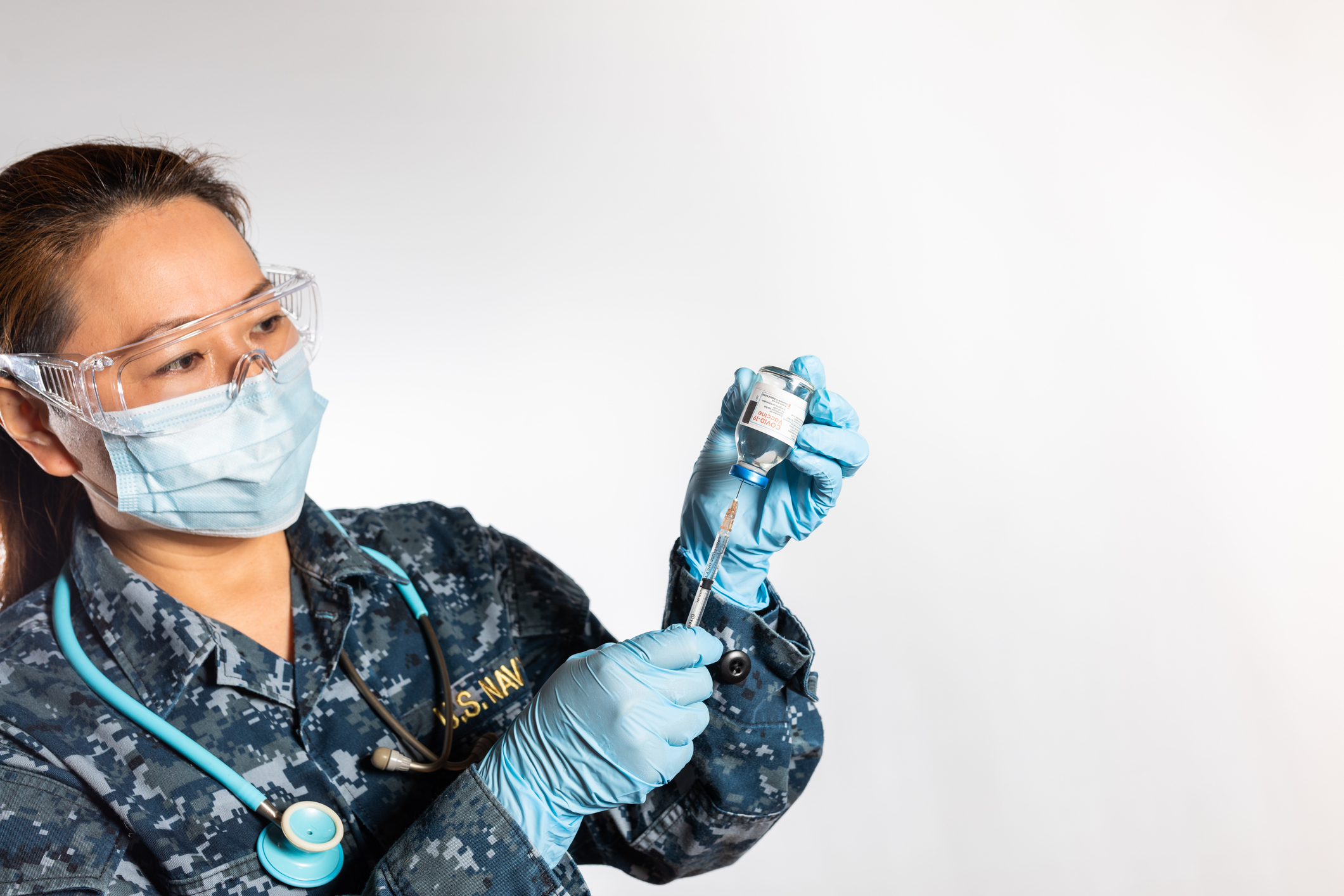
Enlarge / A Navy nurse prepares a syringe.
Getty Images | petesphotography

US Navy Seals who objected to COVID vaccination on religious grounds yesterday won a preliminary injunction that prohibits the Navy from enforcing its vaccine mandate.

“Thirty-five Navy Special Warfare service members allege that the military’s mandatory vaccination policy violates their religious freedoms under the First Amendment and Religious Freedom Restoration Act,” Judge Reed O’Connor wrote in the ruling out of US District Court for the Northern District of Texas. “The Navy provides a religious accommodation process, but by all accounts, it is theater. The Navy has not granted a religious exemption to any vaccine in recent memory. It merely rubber stamps each denial.”

O’Connor, who was nominated by President Bush in 2007, found that the Navy service members are likely to win the case on the merits. He granted the injunction prohibiting the Navy from enforcing its mandate against the plaintiffs and “from taking any adverse action against Plaintiffs on the basis of Plaintiffs’ requests for religious accommodation.”

“No COVID-19 exception to the First Amendment”

“The Navy service members in this case seek to vindicate the very freedoms they have sacrificed so much to protect,” O’Connor wrote. “The COVID-19 pandemic provides the government no license to abrogate those freedoms. There is no COVID-19 exception to the First Amendment. There is no military exclusion from our Constitution.”

The 35 plaintiffs include 26 Navy SEALs, five Special Warfare Combatant Craft Crewmen, three Navy Divers, and one Explosive Ordinance Disposal Technician. They sued President Biden, Secretary of Defense Lloyd Austin, the Department of Defense, and Secretary of the Navy Carlos Del Toro. O’Connor dismissed Biden from the lawsuit because the court has no declaratory or injunctive power against the president.

The Department of Defense and Navy can appeal the preliminary injunction ruling to the US Court of Appeals for the Fifth Circuit. In a December 2021 brief opposing the preliminary injunction, the Department of Justice said the motion “ask[s] this Court to intrude into the management of the military by forcing the Navy to consider Plaintiffs medically qualified for continued service in a special warfare unit, eligible for combat missions, and world-wide deployable. Plaintiffs cite no case that has ever granted such extraordinary relief in the military context, and in fact, they provide no authority supporting the reviewability of military decisions.”

“[T]he Navy has a vital interest in maximizing the effectiveness of Naval Special Warfare operations against US enemies and minimizing the risk of error in these critical operations,” the US also argued. “The Government’s interest in ‘maximum efficiency’ of Navy SEAL special operations and ensuring their maximum capacity ‘of easily and quickly responding to continually changing circumstances’ is paramount. The Navy cannot accept any Naval Special Warfare operating conditions that place its success in combat against enemies of the United States at risk of failure.”

“Divine instruction not to receive the vaccine”

While 99.4 percent of active-duty Navy service members were fully vaccinated by early November, the plaintiffs are among the remaining 0.6 percent and belong to the Catholic, Eastern Orthodox, and Protestant branches of Christianity. The plaintiffs’ religious beliefs include “(1) opposition to abortion and the use of aborted fetal cell lines in development of the vaccine; (2) belief that modifying one’s body is an afront [sic] to the Creator; (3) direct, divine instruction not to receive the vaccine; and (4) opposition to injecting trace amounts of animal cells into one’s body,” O’Connor wrote.

The Navy has so far denied at least 29 of the 35 exemption requests, has never granted a religious exemption request for the COVID-19 vaccine, and has not granted any religious exemptions for any vaccine in the past seven years, O’Connor wrote. “Several Plaintiffs have been directly told by their chains of command that ‘the senior leadership of Naval Special Warfare has no patience or tolerance for service members who refuse COVID-19 vaccination for religious reasons and wants them out of the SEAL community,'” the ruling said.

Judge: Navy process tilted against exemptions

O’Connor criticized the Navy’s 50-step process for evaluating religious exemption requests, writing that “the first fifteen steps require an administrator to update a prepared disapproval template with the requester’s name and rank. In essence, the Plaintiffs’ requests are denied the moment they begin.”

After that, a tentative disapproval letter is “sent to seven offices for review,” religious exemption requests from multiple service members are packaged together, and the administrator “prepares an internal memo to Vice Admiral John Nowell, asking him to ‘sign… letters disapproving immunization waiver requests based on sincerely held religious beliefs.'” O’Connor continued:

Then, at step thirty-five of the process, the administrator is told—for the first time—to read through the religious accommodation request. At that point, the disapproval letter has already been written, the religious accommodation request and related documents has already been reviewed by several offices, the disapproval has already been packaged with similar requests, and an internal memo has already been drafted requesting that Vice Admiral Nowell disapprove the religious accommodation request. The administrator is then tasked with reading the request and recording any pertinent information in a spreadsheet. At no point in the process is the administrator given the opportunity to recommend anything other than disapproval. The materials are then sent to Vice Admiral Nowell. The entire process belies the manual’s assertion that “[e]ach request is evaluated on a case by case basis.”

https://arstechnica.com/?p=1823591


AT&T and Verizon back down in standoff with FAA, agree to 5G delay [Updated]

A person on an airplane using a smartphone to take a photo through the window.
Getty Images | Marco Bottigelli

Update at 11:20 pm ET: AT&T and Verizon reversed course on Monday night, announcing that they agreed to the request for a two-week delay of their 5G rollouts on C-Band frequencies, according to reports from several news organizations. “At Secretary [of Transportation Pete] Buttigieg’s request, we have voluntarily agreed to one additional two-week delay of our deployment of C-Band 5G services,” an AT&T spokesperson said, according to CNN. “We also remain committed to the six-month protection zone mitigations we outlined in our letter. We know aviation safety and 5G can co-exist and we are confident further collaboration and technical assessment will allay any issues.”

Verizon also confirmed to news organizations that it agreed to the delay, despite both carriers rejecting the request from Buttigieg and the Federal Aviation Administration yesterday. While the two-week delay requested by the FAA apparently applies nationwide, it isn’t clear whether AT&T and Verizon will agree to the FAA’s request for longer delays in areas surrounding airports.

Original story as published on January 3, 2022 at 2:50 pm ET follows:

AT&T and Verizon yesterday rejected a Federal Aviation Administration request to further delay a 5G rollout on C-Band frequencies but said they will adopt one of the world’s “most conservative” power limits near airports for six months after the planned January 5 deployment. This is in addition to other voluntary limits the carriers recently announced even though it has been almost two years since the Federal Communications Commission determined that use of the spectrum should not interfere with properly designed airplane altimeters.

“Specifically, for six months, until July 5, 2022, we will adopt the same C-Band radio exclusion zones that are already in use in France, with slight adaptation to reflect the modest technical differences in how C-Band is being deployed in the two countries,” the carriers said in yesterday’s letter. “That approach—which is one of the most conservative in the world—would include extensive exclusion zones around the runways at certain airports. The effect would be to further reduce C-Band signal levels by at least 10 times on the runway or during the last mile of final approach and the first mile after takeoff.”

The exclusion zones in France are 910×2100 meters, the letter said. AT&T and Verizon said they will use bigger exclusion zones with “an additional 540m on all four sides to accommodate” the higher power levels permitted in the US.

The carriers noted that “US aircraft currently fly in and out of France every day with thousands of US passengers and with the full approval of the FAA,” and that the “laws of physics are the same in the United States and France. If US airlines are permitted to operate flights every day in France, then the same operating conditions should allow them to do so in the United States.”

Meanwhile, a group representing major airlines sent a letter to the FCC threatening a lawsuit and claimed that “thousands of flights” could be diverted or canceled every day due to interference from 5G transmissions. But the spectrum is already being used for 5G in nearly 40 other countries, and the FAA admitted there are no “proven reports of harmful interference” to altimeters.

Buttigieg on FAA’s side

The AT&T/Verizon letter was a response to a December 31 letter from FAA Administrator Steve Dickson and US Secretary of Transportation Pete Buttigieg. Dickson and Buttigieg asked AT&T and Verizon to delay all commercial C-Band service for another two weeks, until January 19, and to wait for the aviation industry to conduct further analysis before deploying 5G on the C-Band near airports.

AT&T and Verizon previously agreed to a one-month delay of the deployment that was originally scheduled for December 5, 2021. In yesterday’s letter, they objected that the new FAA/DOT request “asks that we agree to transfer oversight of our companies’ multi-billion dollar investment in 50 unnamed metropolitan areas representing the lion’s share of the US population to the FAA for an undetermined number of months or years.”

The FCC approved 5G transmissions in the C-Band in February 2020, while requiring power limits as well as a 220 MHz guard band that will remain unused to protect altimeters. AT&T and Verizon then spent a combined $69 billion to purchase C-Band spectrum licenses from 3.7-3.98 GHz. The radio altimeters used to determine airplane altitudes rely on spectrum from 4.2 GHz to 4.4 GHz.

The guard band is effectively even bigger in 2022 because carriers have said they don’t plan to deploy between 3.8 and 3.98 GHz until 2023.

Airlines plan to sue if FCC doesn’t act

Airlines for America, a trade group that represents the major US airlines, filed an emergency petition on December 30 asking the FCC to stop C-Band deployment near airports. The group said if the FCC doesn’t act by noon ET on January 3, the group “will be forced to seek judicial or other relief to avoid the immediate and unacceptable safety risks to its members’ operations from interference to radio altimeters.”

The emergency petition claimed that interference from the C-Band “will cause irreparable harm and jeopardize the function of critical aircraft safety systems, which in turn threatens to divert or cancel thousands of flights every day, thus disrupting millions of passenger reservations, causing substantial disruptions for air crews, further interrupting the U.S. and global supply chains, and eroding the safety margin that the industry and the Federal Aviation Administration have worked so hard to achieve.”

“A4A is playing stupid games, because they waited until the FCC closed on Dec. 30 to file. Since the FCC was closed Dec. 31, and A4A says they will appeal today [Monday], this gives FCC no time to review or respond to stay petition,” wrote Harold Feld, a telecom attorney who is senior VP of consumer advocacy group Public Knowledge.

Six former FCC chairs last month criticized the FAA’s fight against C-Band deployment, saying that the “FAA position threatens to derail the reasoned conclusions reached by the FCC after years of technical analysis and study.”

https://arstechnica.com/?p=1823175


Elizabeth Holmes found guilty on 4 of 11 charges

Theranos founder and former CEO Elizabeth Holmes and her partner, Billy Evans, right, leave the Robert F. Peckham Federal Building on November 23, 2021, in San Jose, Calif.
Enlarge / Theranos founder and former CEO Elizabeth Holmes and her partner, Billy Evans, right, leave the Robert F. Peckham Federal Building on November 23, 2021, in San Jose, Calif.
Ethan Swope/Getty Images

Elizabeth Holmes was convicted today of three counts of criminal wire fraud and one count of criminal conspiracy to commit wire fraud. The jury delivered its verdict after six days of deliberation.

The government’s victory in the case is a rare rebuke for tech startups, which often pitch investors on their technological prowess and business acumen using wildly optimistic assumptions.

Theranos was, perhaps, an extreme example, raising over $900 million on the back of claims that its proprietary tests were better, cheaper, and less invasive than the competition. None of those claims was true, and unlike many other Silicon Valley startups, the health and safety of patients was on the line.

Holmes was found guilty of defrauding Lakeshore Capital Management (the family office of the DeVoses) of $100 million, PFM Healthcare (a hedge fund) of $38 million, and an LLC connected to Daniel Mosley (Henry Kissinger’s former estate attorney) of $6 million. She was also convicted of conspiracy to commit wire fraud against Theranos investors more generally. On three charges, all alleging wire fraud against investors, the jury returned no verdict. Holmes was acquitted of all other charges, including those that involved defrauding patients. She faces up to 20 years in prison.

With the guilty verdict, Holmes, the founder of the company, is the first Theranos executive to be held criminally responsible for her actions, though she may not be the last.

Holmes’ very personal involvement

Holmes was on trial for defrauding Theranos investors and patients. She founded the company after dropping out of Stanford University with the hopes of changing the way medical diagnostic testing is done, chiefly by reducing the amount of blood required to a single finger prick. Over the years, Holmes raised over $900 million from a range of wealthy families and individuals, most of whom had no experience investing in biomedical startups.

Theranos, of course, could never deliver on its signature promise that it could perform more than 1,000 tests. In reality, it could do 12. The company’s proprietary devices—first the Edison, then the MiniLab—were unreliable and had to be rigged with “null protocols” during investor demos to avoid raising red flags. During the trial, the jury heard how Holmes personally approved investor presentations, including those fraudulent demos.

The court also heard how Holmes had doctored Theranos-authored reports with the logos of various pharmaceutical companies, making it look like the companies approved of the contents. In fact, some contracts that Theranos had with those companies expressly forbade the startup from using their logos. That didn’t stop Holmes, though, who said she was merely “trying to convey” the partnership between the two companies.

In its prosecution of Holmes, the government called 29 witnesses, ranging from investors to lawyers to doctors and their patients. Though the testimony focused mainly on the investors since they made up the bulk of the criminal charges, the jury did hear from two patients who had received questionable results from Theranos. One was a woman who was told that she had tested positive for HIV when, in fact, she had not. The other was a pregnant woman who, in a series of Theranos tests, was told that she was miscarrying. It turned out that, for one of her pregnancy tests, Theranos had likely misplaced a decimal point. She would go on to give birth to a healthy baby.

Failed defense

Holmes’ defense relied on casting blame on others—many of whom were scientists—and on allegations that she had been abused and controlled by her ex-boyfriend Ramesh “Sunny” Balwani, who was COO at Theranos for much of its existence. Holmes claimed that she was raped by Balwani and that he sought to control every facet of her life.

Defense attorneys did not try to put that testimony in context, though, and did not call to the stand Mindy Mechanic, an expert witness on intimate partner violence. It’s unclear whether the defense felt that Mechanic’s testimony wouldn’t be beneficial or that Holmes’ presence on the stand was sufficient.

The jury apparently did not buy into Holmes’ version of the Theranos story, which differed from nearly everyone else called to the stand. Holmes will return to court at a later date for sentencing. Balwani faces the same charges in a trial scheduled to start next year.

https://arstechnica.com/?p=1821924