China upset about needing to dodge SpaceX Starlink satellites
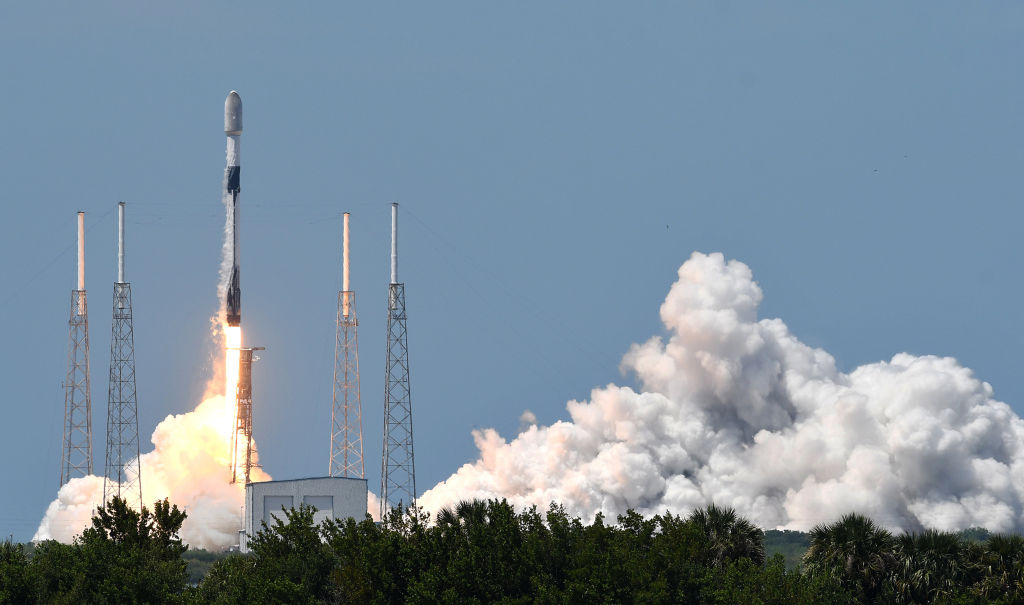
Enlarge/ A SpaceX Falcon 9 rocket lifts off from pad 40 at the Cape Canaveral Space Force Station in May 2021 carrying the 29th batch of approximately 60 satellites as part of SpaceX’s Starlink broadband Internet network.
Earlier in December, the Chinese government filed a document with the Committee on the Peaceful Uses of Outer Space at the United Nations. The body helps manage the terms of the Treaty on Principles Governing the Activities of States in the Exploration and Use of Outer Space, more commonly known as the Outer Space Treaty. In the document, China alleges that it had to move its space station twice this year due to potential collisions with Starlink satellites operated by SpaceX.
The document pointedly notes that signatories of the treaty, which include the US, are responsible for the actions of any nongovernmental activities based within their borders.
The document was filed back on December 6, but it only came to light recently when Chinese Internet users became aware of it and started flaming Elon Musk, head of SpaceX.
The document starts out with an impossibly formal 110-word-long sentence that notes the Outer Space Treaty obliges its signatories to inform other nations when they discover any phenomena in space that could pose a risk to astronauts. It then indicates that China has identified such a threat: Starlink satellites.
Starlink is SpaceX’s satellite-based Internet service, which launched in beta earlier this year. To achieve decent coverage, the company has already put up a large number of small satellites, and has plans for many, many more. This has caused worries within the astronomy community, as the satellites can potentially photobomb astronomical observations, appearing as long streaks across lengthy exposures.
There have also been concerns about how the large constellations of satellites could worsen our space junk problem, although those were eclipsed when Russia blew up one of its satellites in November, creating a massive debris cloud.
China’s complaint seems to be an attempt to return the world’s attention to SpaceX’s satellites. The document describes two cases in which the country alleges it had to move the China Space Station out of the way of a Starlink satellite.
The first is one where it says Starlink device had been orbiting at over 500 km, but was brought down to 382 km through a series of maneuvers that completed on June 24th. A week later, this new orbit created a close encounter with the China Space Station. In the second case, the space station was moved simply because China couldn’t figure out what SpaceX’s hardware was doing. “The maneuver strategy was unknown and orbital errors were hard to be assessed,” the document reads, “there was thus a collision risk between the Starlink-2305 satellite and the China Space Station.”
The document goes on to remind everyone that, while the US doesn’t exert control over SpaceX, it is responsible for any problems it creates. It quotes the Outer Space Treaty as saying that “States Parties to the Treaty shall bear international responsibility for national activities in outer space, including the moon and other celestial bodies, whether such activities are carried on by governmental agencies or by non-governmental entities, and for assuring that national activities are carried out in conformity with the provisions set forth in the present Treaty.”
As of today, the incidents have not been independently verified, and SpaceX hasn’t responded to any requests for comment. But the Chinese government, for its part, would like the US government to step in.
https://arstechnica.com/?p=1822621
Riot Games to pay $100 million to settle gender discrimination lawsuit
Chris Delmas | Getty Images
Riot Games has settled a class-action lawsuit for $100 million. Filed in 2018 by two female employees and later certified as a class-action, the lawsuit accused the studio of discrimination, sexual harassment, and unequal pay.
Under the terms of the settlement, Riot Games will pay $80 million directly to women who have worked at the company from November 2014 through to the present, including full-time, part-time, and temporary employees. The remaining $20 million will go to attorneys’ fees.
In addition to the $100 million payout, Riot Games will enact workplace policy reforms. These include the creation of an application pipeline for current or former contractors to apply for permanent positions and more transparency regarding salaries for job applicants.
“Three years ago, Riot was at the heart of what became a reckoning in our industry. We had to face the fact that despite our best intentions, we hadn’t always lived up to our values. As a company we stood at a crossroads; we could deny the shortcomings of our culture, or we could apologize, correct course, and build a better Riot,” the company said in a statement posted Monday. “We chose the latter. We’re incredibly grateful to every Rioter who has worked to create a culture where inclusivity is the norm, where we’re deeply committed to fairness and equality, and where embracing diversity fuels creativity and innovation..”
The lawsuit accused Riot of putting women in lower-paying roles, paying women less than men for comparable work, regularly promoting men over women, and creating an office environment that exposed women employees to “discrimination, harassment, and retaliation.”
Riot negotiated a $10 million settlement with the claimants in 2018, but the California Department of Fair Employment and Housing blocked the agreement. The DFEH said instead that women employees may be entitled to over $400 million in damages covering wage differential alone.
“This historic agreement reflects California’s commitment to strategic and effective government enforcement of the State’s robust equal-pay, anti-discrimination, and anti-harassment laws,” said DFEH Director Kevin Kish in a statement. “If entered by the court, this decree will compensate employees and contractors affected by sex discrimination and harassment, ensure lasting change in this workplace, and send the message that all industries in California, including the gaming industry, must provide equal pay and workplaces free from discrimination and harassment.”
https://arstechnica.com/?p=1822568
Elizabeth Holmes and “pinch-to-zoom” in Rittenhouse trial: 2021’s top policy stories
In the world of tech policy news, 2021 began with Twitter and other social networks banning then-President Donald Trump after the January 6 insurrection. Many other noteworthy stories followed in the ensuing months.
The Elizabeth Holmes trial featured fascinating revelations about Theranos, while the judge in the Kyle Rittenhouse trial didn’t let the prosecutor use an iPad’s pinch-to-zoom feature. Missouri’s Republican governor claimed that viewing HTML code is “hacking,” WhatsApp forced users to share data with Facebook, Apple announced a controversial plan to scan photos, and the Supreme Court saved the software industry from API copyrights. President Joe Biden failed to give Democrats a majority on the Federal Communications Commission, and Republicans are now fighting Biden’s belated attempt to fill the FCC’s empty seat.
As usual, we wrote plenty of stories about telecom companies behaving badly—such as when Verizon forced users onto pricier plans to get $50-per-month government subsidies. This article lists and summarizes our top policy stories of the year, which we selected based on reader interest and importance.
When Elizabeth Holmes founded Theranos, she said she wanted to change the way clinical diagnostic testing happened, making it so quick and easy that patients could get their results in as little as 20 minutes. It sounded too good to be true—and it was. This year, the founder and former CEO of the failed company went to trial accused of defrauding investors and patients alike.
During the Kyle Rittenhouse trial that ended in an acquittal, Judge Bruce Schroeder prevented Kenosha County prosecutor Thomas Binger from using the pinch-to-zoom feature on an iPad while showing drone footage from the night of the fatal shootings in Wisconsin. After defense attorney Mark Richards claimed that with pinch-to-zoom, “Apple’s iPad programming creat[es] what it thinks is there, not what necessarily is there,” Schroeder agreed that zooming in might “insert more items” into the video. Binger scrapped the plan to use an iPad during cross-examination of Rittenhouse and instead displayed the drone video on a 4K TV hooked up to a Windows computer.
For years, Intel was at the top of the semiconductor industry. Its chip designs and fabs were the envy of the world. But a few years ago, the company stumbled, and today, it’s no longer able to make cutting-edge chips. CEO Pat Gelsinger thinks he has a plan, though, and it requires the historically insular Intel to open its fabs to make chips for “the community at large.”
Semiconductor manufacturing has benefited from scale, a trend that has only increased as transistors have shrunk. Without foundry customers, Intel may not have sufficient scale to stay at the leading edge. “Intel falling behind TSMC and Samsung in the very leading-edge technology can be traced to the fact that Intel did not participate in the foundry,” UC-Berkeley Professor Chenming Hu told Ars. It’s not the first time Intel has tried to become a foundry, but it might be the first time it has had to. Success, Hu said, “really depends on whether you think you have to do it.”
In August, Apple announced a plan to have iPhones and other Apple devices scan photos for child-sexual-abuse material (CSAM) before images are uploaded to iCloud. Security experts and privacy advocates expressed alarm, arguing that governments will demand that the photo-scanning system be used for broader surveillance—for example by “demand[ing] that Apple scan for and block images of human rights abuses, political protests, and other content that should be protected as free expression.”
Apple defended the system’s privacy protections and said it would refuse government demands to expand photo-scanning beyond CSAM. But in September, the industry titan said it will “take additional time over the coming months” to improve the program before deploying it. Apple recently removed references to CSAM scanning from its Child Safety webpage but told Ars on December 15 that “nothing has changed” in its plan to eventually deploy the system. Apple also implemented a related system that scans photos in Messages for nudity, but this only applies to Apple devices used by children and is optional for parents.
Missouri Gov. Mike Parson really didn’t want to admit that a state government website exposed the full Social Security numbers of teachers and other school employees in unencrypted form. The Republican governor called the St. Louis Post-Dispatch reporter who found the gaping security hole a “hacker” and threatened both criminal charges and “a civil suit to recover damages against all those involved.” In reality, Post-Dispatch reporter Josh Renaud had simply viewed the website’s HTML code, notified government officials of the security problem, and did not report the flaw publicly until after it was fixed.
The bizarre investigation also targeted Shaji Khan, a cybersecurity professor at the University of Missouri-St. Louis who helped Renaud verify the security vulnerability. Khan responded with a letter to Parson and several state agencies explaining that viewing a website’s unencrypted source code is not illegal or “hacking” and that translating the source code into plain text can be “done by anyone.” It later emerged that Missouri state government officials planned to publicly thank the journalist who discovered the security flaw before a drastic change in plans.
The Facebook-owned WhatsApp service kicked off 2021 by giving its users an ultimatum: agree to share their personal data with the social network or delete their accounts. An in-app alert directed users to agree to sweeping changes in the WhatsApp terms of service and said that those who don’t accept the revamped privacy policy would no longer be able to use the app after February 8, 2021. WhatsApp delayed the change for a few months after a backlash but implemented the new policy in May.
Donald Trump was permanently banned from Twitter after the January 6 attack on the US Capitol, with Twitter saying it made the decision to prevent “further incitement of violence.” Trump was also banned by other social networks, which finally had enough of the one-term president. Trump later sued Twitter, Facebook, and Google subsidiary YouTube, claiming that all three companies are guilty of “impermissible censorship” that violates “the First Amendment right to free speech.” But courts have generally found that the First Amendment protects companies’ right to moderate user-submitted content, which leads to our next story.
https://arstechnica.com/?p=1821055
Intel apologizes for banning use of components from Xinjiang
Enlarge/ Photo taken on Aug. 2, 2019 shows the booth of CPU chip manufacturer Intel at China Digital Entertainment Expo and Game Expo in Shanghai, China.
Future Publishing |Getty Images
Intel has apologized for a ban on using components from Xinjiang in response to attacks from Chinese nationalist media over the policy, becoming the latest multinational to become embroiled in China’s battle with the US over human rights issues.
The episode quickly became one of the most talked-about topics online in China with netizens on Twitter-like Weibo calling for the government to hit Intel with fines and other punishments.
The controversy erupted after Intel sent a year-end letter to suppliers noting that components made in the north-western Chinese region of Xinjiang should not be used in its chips. The message attracted the attention of nationalist media outlet Guancha.
In a Chinese language social media post, Intel said it wanted to “clarify” that the ban was only for compliance with US law and not its “own intention or position.”
“We apologize for the trouble caused to our respected Chinese customers, partners and the public,” Intel added.
The statement was trending on Weibo and had been viewed 190m times by Thursday afternoon.
As tensions mount between the west and China, multinationals are finding it more difficult to avoid politics, with Beijing’s “reeducation” of a million Uyghur Muslims in its western Xinjiang region a particular flashpoint.
State media have whipped up nationalist opposition to brands such as Nike and H&M that voiced concerns about Xinjiang or vowed to eliminate the use of forced labor from the region from their supply chains.
Intel told the Financial Times that its Chinese statement intended to “address concerns raised by our stakeholders there regarding how we communicated certain legal requirements and policies with our global supplier network.” It added it would continue to remain compliant with US laws.
“This company must abide by American laws but still wants to make money in China, we can’t replace them at the moment but we can fine them,” said one Weibo commentator. “Let’s fine them billions at a time and use the money for R&D.”
Intel earned one-quarter of its revenue from customers in China last year and has more than 10,000 employees in the country. It has recently moved to shrink its Chinese operations by selling a memory chip factory to a South Korean chipmaker.
China’s nationalist tabloid Global Times accused Intel of “biting the hand that feeds it.” “What we need to do is to make it increasingly expensive for companies to offend China,” it said in an editorial.
Chinese celebrities have also been forced to quickly cut ties with the companies that cause offense to avoid trouble from fans and the Communist party’s propaganda ministry.
On Wednesday, the studio of Wang Junkai, lead singer of one of China’s biggest boy bands, announced that it would cut all ties with the US chipmaker, adding that it had repeatedly urged the company to publicly express a “correct stance” and that “national interest trumps all.”
Wang had been a brand ambassador for Intel before the dispute.
Big Tech split leads to demise of Internet Association
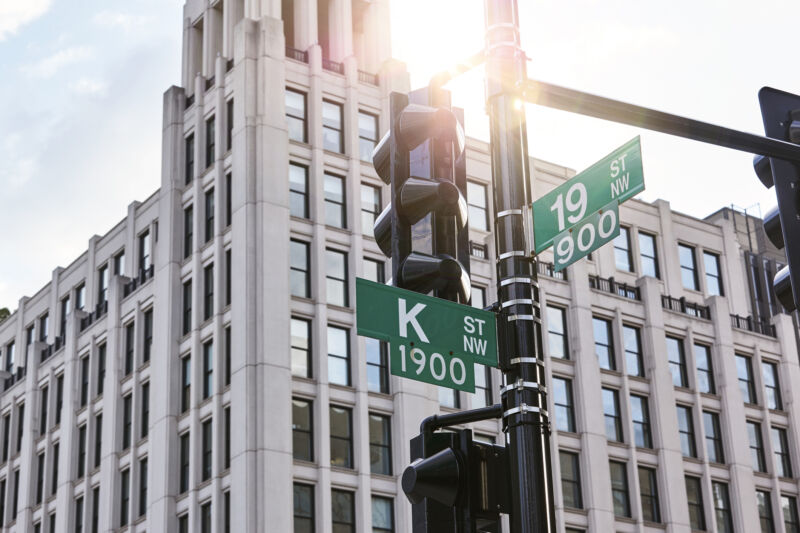
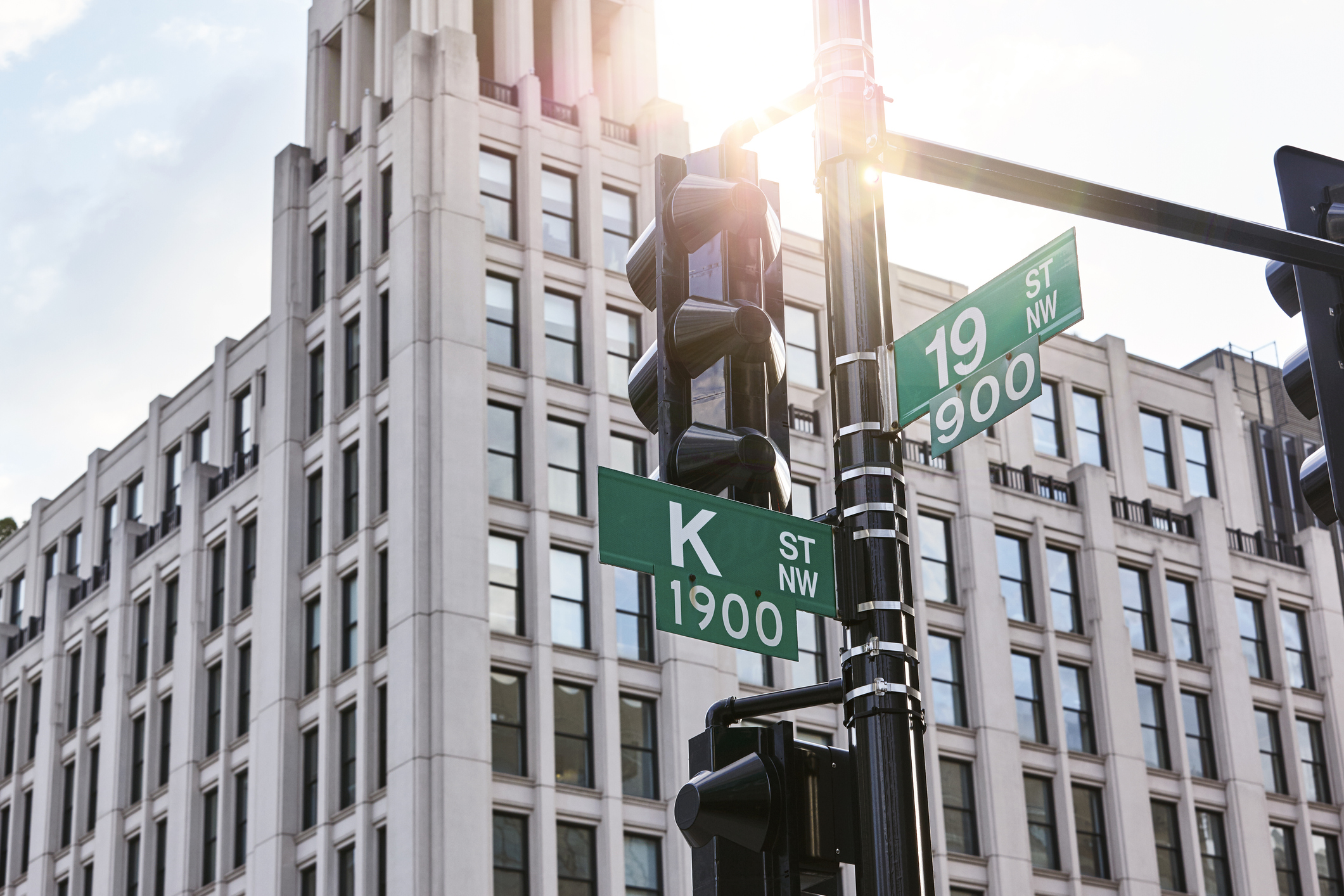
Enlarge/ Street sign for K Street, the Wall Street of political influence in the US capital.
Bjarte Rettedal | Getty Images
Growing tensions between Microsoft, Amazon, Alphabet, Meta, and Apple lie behind the death of the Internet Association (IA), the nine-year-old lobby group that was Big Tech’s voice in Washington, according to insiders and industry observers.
The Washington-based group, which dubbed itself the “unified” voice of the internet industry, will shut at the end of the year after both Microsoft and Uber, among others, pulled their financial support, leaving an insurmountable funding gap.
“Our industry has undergone tremendous growth and change,” it said in a statement, adding that its closure was “in line with this evolution.”
The closure is a sign of the increasingly different policy objectives of its Big Tech members, said observers, with Microsoft in particular looking to distance itself from its Silicon Valley peers.
“Microsoft has realized that it doesn’t want to be associated with Google, Facebook and Amazon,” said Barry Lynn, executive director of the Open Markets Institute, an anti-monopoly campaign group. “It’s really, really simple.”
A number of smaller tech companies had also become frustrated that their priorities were at odds with Big Tech’s agenda.
“This org could’ve saved itself years ago by kicking out everyone with a market cap greater than $500 billion,” tweeted Luther Lowe, Yelp’s head of public policy. Yelp left the association in 2019. “I made this suggestion to the leadership a few years ago, but it was shot down, so we quit.”
A person familiar with Microsoft’s decision-making said the company no longer saw value for money in its involvement with the IA. Membership dues are calculated according to companies’ size, based on revenue.
An earlier report from Politico suggested the biggest contributors, Microsoft among them, were paying up to $800,000 to $1 million per year. Microsoft declined to comment.
Despite being the second most valuable US technology group, Microsoft has been able to dodge the latest focus on antitrust in Congress. Unlike the CEOs of Facebook, Google, Apple and Amazon, Microsoft’s Satya Nadella was left out of the blockbuster congressional hearing in July 2020 that saw the others summoned for a lengthy grilling.
Microsoft has also not yet been the focus of any action announced by President Joe Biden’s reinvigorated Federal Trade Commission.
The company, which went through lengthy antitrust scrutiny in the early 2000s that led it to the brink of being broken up, now boasts about a more collaborative approach with regulators. An internal memo written by Microsoft president Brad Smith and sent to staff in June outlined the company’s strategy.
“There will be many days when some in the tech sector will complain loudly about the risks of regulation,” read the memo, which the company shared with the FT. “There are real risks, and they need a fair hearing. But as a company, we will continue to be more focused on adapting to regulation than fighting against it.”
https://arstechnica.com/?p=1822325
2021 was the year the world finally turned on Facebook
Jens Buettner/picture alliance
Wish 2021 had been a better year? Facebook probably does, too. The company has long been maligned by politicians, media observers, and consumer advocates, but it wasn’t until 2021 that it felt like the tide truly began to turn.
Though Facebook had faced scandals in the past, from Cambridge Analytica to the Myanmar genocide, this year’s string of missteps and revelations may have tipped the company and its reputation past the point of no return.
For Facebook, trouble started shortly after the new year. On January 6, the company found itself enmeshed in the insurrection at the US Capitol. Both Facebook and Instagram played a key role in radicalizing users who later attended the deadly rally. While the company had acted swiftly in November 2020 to shutter the “Stop the Steal” group formed to undermine the results of the presidential election, it let splinter groups and individuals spawn a “harmful movement” that spread across its platforms. For two months, those groups operated more or less unfettered.
Then, during the insurrection, Facebook and Instagram served as a loudspeaker for the rioters, with violent content posted that afternoon up “more than 10-fold from the morning,” according to internal documents obtained by The Wall Street Journal.
Whatever corporate introspection the insurrection had inspired didn’t have a lasting impact. By March, Facebook was caught autogenerating pages for white supremacist groups, creating pages for groups like “Universal Aryan Brotherhood Movement” when someone would add the group’s name as an employer. Its moderation AI were being easily fooled by simple misspellings, like swapping S for $, which allowed many groups to operate unnoticed.
By the summer, the company began to feel the effects of Apple’s App Tracking Transparency feature that was introduced in iOS 14.5. While the company weathered the initial storm, it has likely lost billions of dollars as a result of users asking the company not to track them.
In September, Facebook was hit with a shareholder lawsuit that alleged the company had intentionally overpaid a $5 billion Federal Trade Commission fine. The agency had been considering holding CEO Mark Zuckerberg responsible for the Cambridge Analytica scandal, but the record fine put an end to that. Shareholders claimed that Facebook should have only paid about $105 million and that the additional $4.9 billion payment was a breach of fiduciary duty.
Whistleblower leaks
That lawsuit was just a blip compared with what was to come. The Wall Street Journal had been publishing a string of exposés based on particularly damning and detailed internal documentation it had obtained. Those documents revealed that the company used a different set of moderation rules for 5.8 million VIPs, that it was aware of how Instagram harmed teens’ mental health, especially that of girls. They detailed how Facebook failed to stop human traffickers and ethnic violence. The leaks kept coming.
Then, on October 3, Frances Haugen revealed herself as the whistleblower who had sent the WSJ the documents. She had also sent them to Congress and the Securities and Exchange Commission, where she sought whistleblower protection. After Haugen’s debut on 60 Minutes, she began a speaking tour of sorts, with stops at Congress, the European Parliament, and more. With each appearance, politicians’ calls for regulations grew louder. Two days after Haugen went public, Facebook and many of its services suffered an embarrassing outage.
Facebook had lost control of the narrative and was clearly in need of a distraction. CEO Mark Zuckerberg had spent the previous few months talking at length about the metaverse. To him, the metaverse would be a virtual environment in which people could chat, play games, hold meetings, and buy things (of course)—the sort of shiny new thing that leaders trot out when things are going bad. Here was something new the company could sell to consumers who had grown tired of the company’s old platforms. It was also something dispirited employees could work toward that wasn’t tainted with scandal.
But the metaverse would take years to realize, and Facebook’s problems were pressing. After enduring a month of unflattering revelations, Zuckerberg announced that Facebook was renaming itself as Meta.
While the decision wasn’t a surprise, its timing was. The company seemed ill prepared for the change, and investors have speculated that the company rushed the name change because of Haugen’s testimony. Indeed, to this day, Facebook press requests receive replies from “@fb.com” accounts. Perhaps the Meta rebranding is another distraction for an already distracted company.
Will “Meta” be enough to save the company’s reputation? That remains to be seen. Once companies reach the size that Meta has, they tend to have very long lives. What shape that life takes, well, that’ll be up to Zuckerberg to decide.
https://arstechnica.com/?p=1822143
SEC rejects Apple’s bid to block three shareholder proposals
The Securities and Exchange Commission has rejected Apple’s petition to block three shareholder proposals from going to a vote at its next annual meeting—a win for activists that signals trouble for other US companies hoping the regulator will allow them to fend off unwanted attention.
The resolutions call for detailed reports regarding allegations of forced labor in Apple’s supply chain, explanations of why certain apps are deleted from the App Store in China, and a public report of what risks the iPhone maker could face by allegedly using nondisclosure agreements in the context of workplace harassment and discrimination.
The Financial Times reported in October that Apple asked the SEC for permission to block six shareholder petitions, the highest amount of proposals the company has had since 2017. Apple’s reasoning was that it had “substantially implemented” what the petitioners were asking for. Of the remaining three proposals, one was rejected and two remain outstanding.
The SEC’s rejection letters to Apple, seen by the FT and expected to be published as early as Wednesday, said the company’s current policies and procedures “do not compare favorably” with the proposals.
Apple, which is expected to hold its annual meeting in the first quarter of 2022, declined to comment.
The SEC’s response to Apple could bode poorly for other companies. Last month, the regulator changed its policies to make it harder for companies to win regulatory support to reject investor petitions.
Following the SEC changes, more companies appear to be acquiescing to activist demands. A fourth Apple petition regarding the “right to repair” its products has already been resolved after the company last month announced it would launch a program to help customers repair their devices. Goldman Sachs this week also published a report about forced arbitration after an investor proposal demanded more information about the bank’s policies.
To combat the app removal shareholder proposal, Apple argued that its annual Transparency Report detailed how many apps were taken down in China. But those reports were “woefully lacking,” said Joshua Brockwell, who filed the resolution on behalf of Azzad Asset Management.
“They love to aggregate numbers, but what does that mean?” he asked. “There’s not enough insight if you’re an investor motivated by human rights values.”
He added that the names of removed apps were not divulged, and it could “boggle the mind” why apps ostensibly made for reading the Bible or the Quran were deleted from the App Store—the only mechanism users have to get apps onto an iPhone.
NHTSA investigating Tesla over infotainment display gaming feature
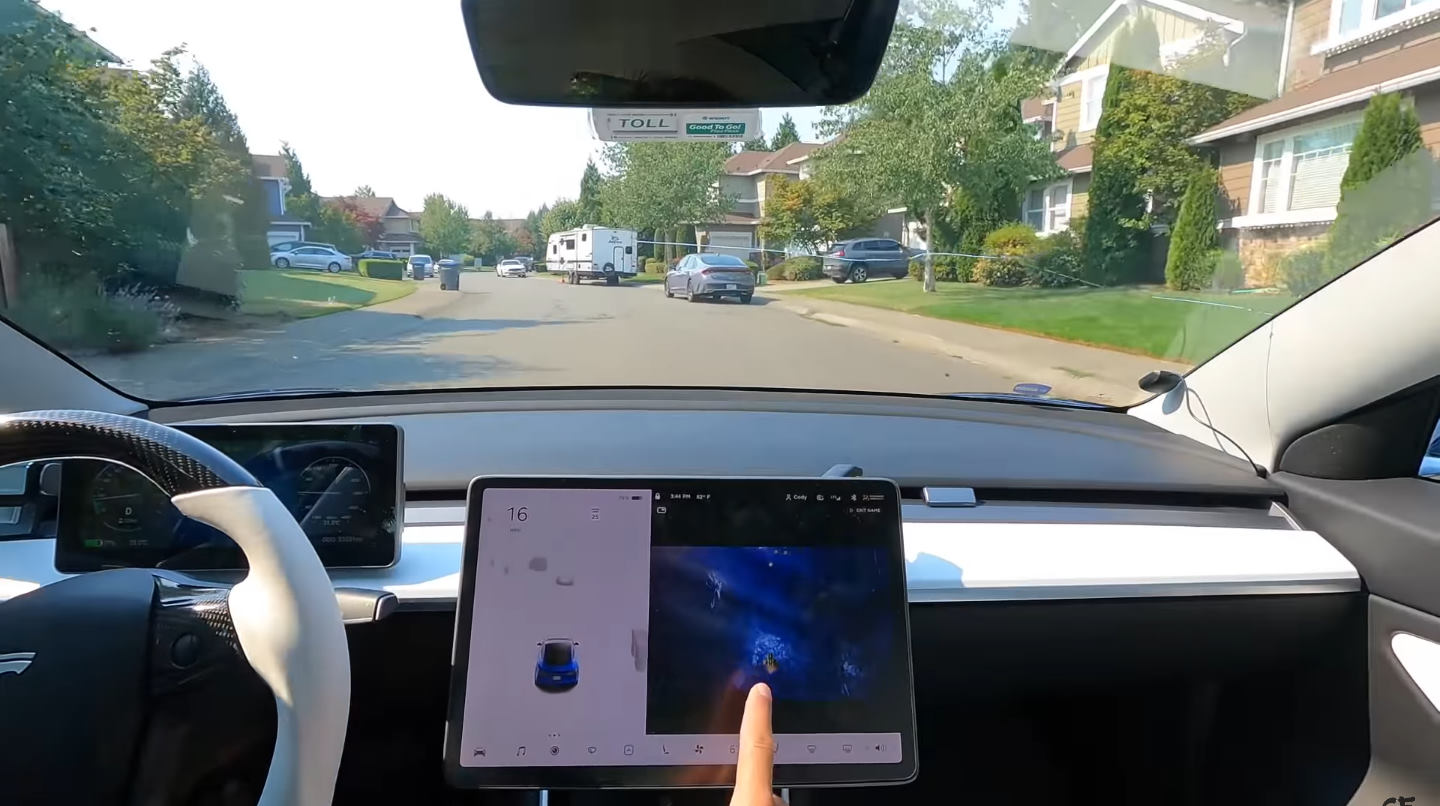
<img src="https://rassegna.lbit-solution.it/wp-content/uploads/2021/12/nhtsa-investigating-tesla-over-infotainment-display-gaming-feature.jpg" alt="Sky Force Reloaded running on a Tesla’s central screen while the car is driving down the road.”>
Enlarge/Sky Force Reloaded running on a Tesla’s central screen while the car is driving down the road.
Earlier this month, we covered a software update issued by Teslathat allowed games to be played on the infotainment display while the car was in motion. We pointed out at the time that this new capability would likely draw the attention of state and federal regulators. To no one’s surprise, the National Highway Traffic Safety Administration on Wednesday announced a formal safety investigation over the update.
According to the NHTSA, the feature has been around since December 2020 for Teslas equipped with “Passenger Play.” Prior to that, games could only be played on the center screen when the vehicle was in park.
The NHTSA’s investigation covers approximately 580,000 Tesla Model S, 3, X, and Y vehicles spanning model years 2017 through 2021. The agency said it will be evaluating “aspects of the feature, including the frequency and use scenarios of Tesla ‘Passenger Play.'”
Tesla does warn against gaming while driving. When Passenger Play is activated, a warning pops up on the screen: “Use of Touch Arcade while the vehicle is in motion is only for passengers. Please check local laws prior to playing.” With at least 34 states having “video screen restriction” laws as of 2014, gaming via Passenger Play would appear to be broadly illegal. In addition, the NHTSA issued guidelines for front-row displays back in 2013, saying that “displaying images or video not related to driving… will inherently interfere with a driver’s ability to safely operate the vehicle.”
Tesla is also under investigation by the NHTSA over 12 instances where vehicles using Tesla’s Autopilot driver assistance system crashed into emergency vehicles pulled over to the side of the road. Those crashes have led to at least 17 injuries and at least one death. That investigation covers 765,000 Teslas built between 2014 and 2021.
https://arstechnica.com/?p=1822189
Boeing, Airbus wade into 5G scuffle, ask Biden admin to delay rollout
Enlarge/ Aircraft manufacturers Boeing and Airbus claim that an upcoming C-band 5G rollout will interfere with airplane instrumentation.
Boeing and Airbus have asked US Department of Transportation Secretary Pete Buttigieg to delay the deployment of C-band spectrum for 5G wireless service. The companies claim the rollout will interfere with key aircraft instruments.
“5G interference could adversely affect the ability of aircraft to safely operate,” said the letter, which has been obtained by Reuters. Boeing CEO David Calhoun and Airbus Americas CEO Jeffery Knittel claim that the rollout, currently scheduled for January 5, could have “an enormous negative impact on the aviation industry.”
Both manufacturers and aviation regulators have expressed concerns over C-band 5G signals interfering with radio altimeters on commercial aircraft. The instruments work by beaming radio signals in the 4.2–4.4 GHz band toward the ground and listening for a reply. By measuring the time it takes for the signal to return to the sensor, the aircraft can calculate its height above the ground. Radio altimeters give pilots a more precise reading than barometric altimeters, which rely on air pressure.
The aviation industry is concerned about the possibility of rogue 5G signals interfering with those calculations. If the FCC authorizes the C-band’s use by mobile carriers, the aviation industry is claiming that tens or hundreds of thousands of flights could face delays, diversions, or cancellations.
Ongoing battle
The 5G C-band rollout has been the subject of a protracted dispute between the Federal Aviation Administration and the Federal Communications Commission. The FCC first sold C-band spectrum to mobile carriers in February 2020 after looking into claims of aircraft instrument interference.
Though the FCC didn’t find any credible evidence of interference, it set aside a 220 MHz guard band, restricting mobile carriers to 3.7–3.98 GHz. That’s “double the minimum guard band requirement discussed in initial comments by Boeing and ASRC [Aviation Spectrum Resources],” the FCC said.
Last month, CTIA, the wireless industry’s trade group, pointed to the ongoing use of C-band 5G in nearly 40 countries “at similar frequencies and similar power levels” as evidence of its safety.
The root cause of the FAA’s concerns appear to be altimeters “built to decades-old specifications,” a wireless technology analyst pointed out, adding that “well-designed equipment with reasonable filtering should not be adversely affected by other equipment operating in adjacent bands—or hundreds of MHz away.”
FAA Administrator Steve Dickson said that the agency is looking into updating its standards for radio altimeters but said that “what that looks like in terms of retrofits remains to be seen.” In a letter to the National Telecommunications and Information Administration, Dickson said that he expects “the cost of replacement or retrofit of radar altimeters will be substantial.”
Last week, six former chairs of the FCC—Republicans Ajit Pai and Michael Powell and Democrats Tom Wheeler, Mignon Clyburn, Julius Genachowski, and Michael Copps—all wrote a letter to FCC Chairwoman Jessica Rosenworcel and NTIA acting Administrator Evelyn Remaley criticizing the FAA’s tactics in challenging the FCC C-band approval and auction. The “FAA position threatens to derail the reasoned conclusions reached by the FCC after years of technical analysis and study,” the former chairs wrote.
https://arstechnica.com/?p=1822127
Meta investors are sick of the scandals and want more oversight
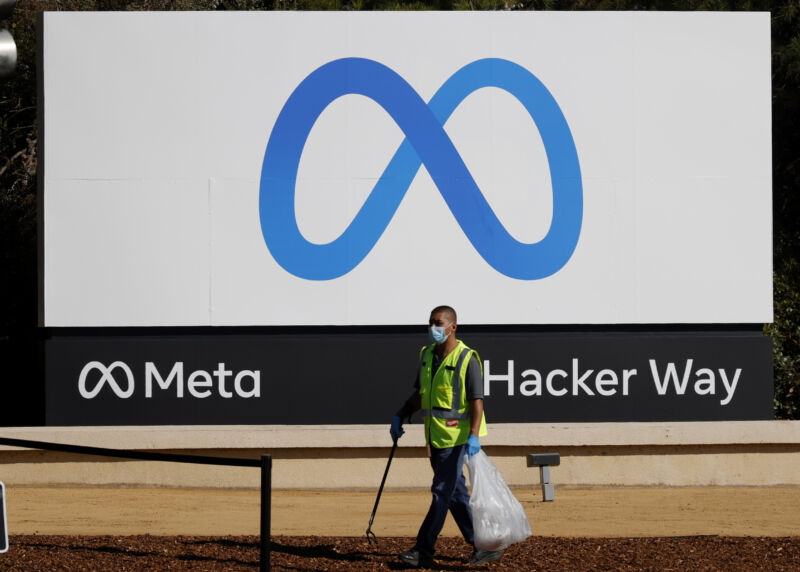
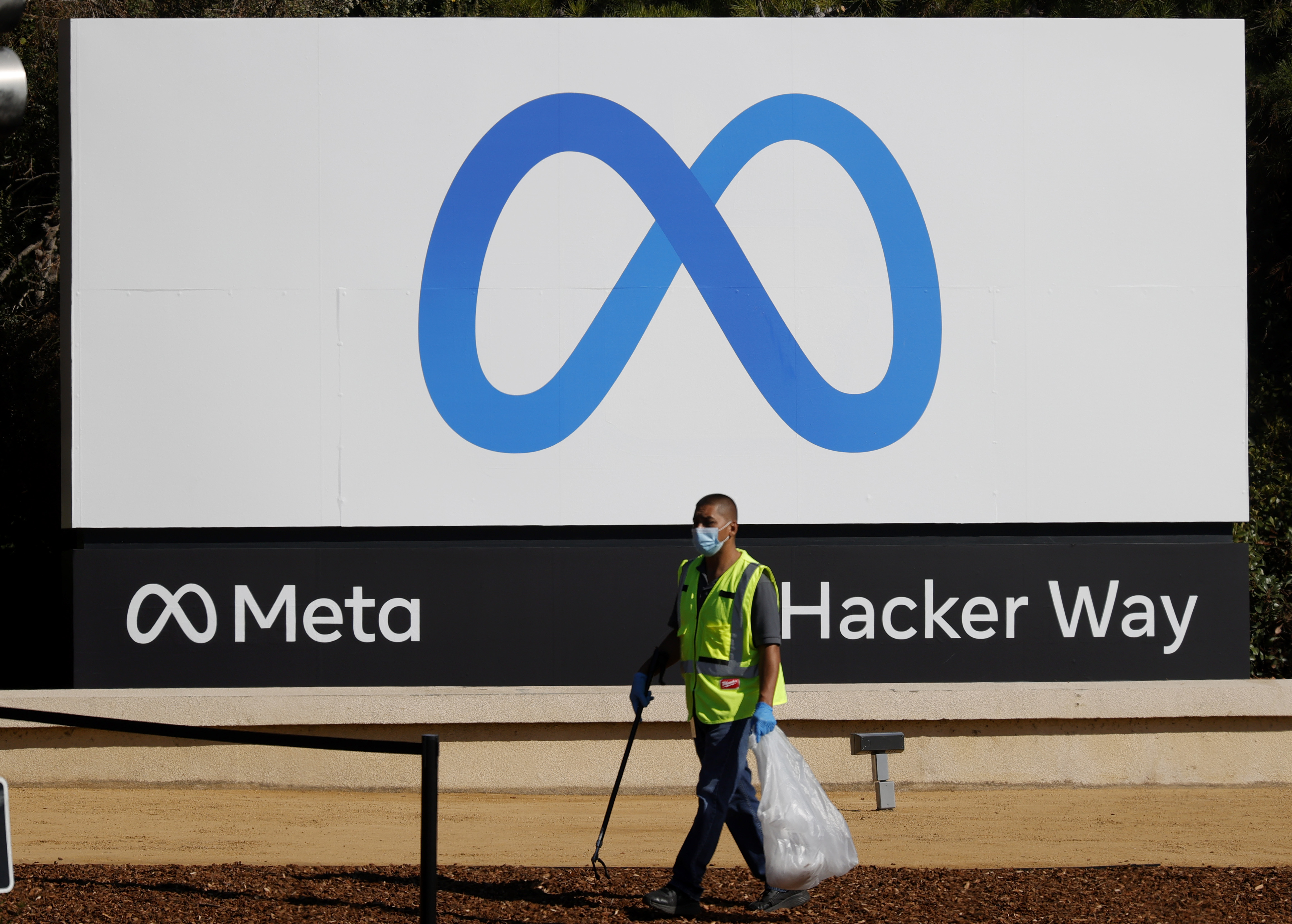
Enlarge/ A worker picks up trash in front of the new logo in front of Meta’s headquarters on October 28, 2021, in Menlo Park, Calif.
Justin Sullivan/Getty Images
After a year of stunning and damning revelations, Meta, formerly Facebook, is facing calls from investors to allow an independent assessment of the company’s audit and risk oversight committee.
Investors and a public interest nonprofit have sent a letter to Meta’s corporate secretary requesting that its proposal be included in the company’s annual proxy to be voted on by shareholders.
“Shareholders request the board commission an independent assessment of the Audit and Risk Oversight Committee’s capacities and performance in overseeing company risks to public safety and the public interest and in supporting strategic risk oversight on these issues by the full board,” says the letter, which was obtained by Axios.
Two investors, Harrington Investments and the Park Foundation, have joined with the Campaign for Accountability to force Meta’s hand. Harrington Investments calls itself a shareholder activist and socially responsible investor, while the Park Foundation is a grant-making foundation that funds initiatives in democracy and civil society, media, and the environment.
This isn’t the first time Meta/Facebook has faced demands for greater oversight of risk on the platforms. In 2018, another resolution asked shareholders if Facebook should create a committee that focuses on risks posed by the platform, including Russian meddling in the 2016 election, incitements to violence, and more.
That resolution failed, as many do, because CEO Mark Zuckerberg controls about 58 percent of the voting shares. Enough independent shareholders supported it, though, that the company added risk oversight to the duties of the board of directors’ audit committee.
In addition to this year’s request for an independent assessment of the audit and risk committee, Meta is facing other resolutions that are calling for greater board oversight to reduce harmful content on its platforms as well as a risk assessment of its new metaverse initiative. The shareholders calling for these changes, including the New York State Common Retirement Fund and the Illinois State Treasurer, filed other proposals last year that were defeated, one of which called for an independent board chair.
The proposed resolutions come after a year of controversy surrounding the various platforms run by Meta. In January, Facebook played a key role in helping organizers shape the violent insurrection at the US Capitol. Shareholders sued it for overpaying an FTC fine, which they allege was done to protect Zuckerberg from additional government scrutiny. Over the summer, President Joe Biden singled out the company for not taking a sufficiently aggressive stance against vaccine disinformation. Then, whistleblower Frances Haugen shared thousands of documents with The Wall Street Journal and Congress, which revealed Instagram harming teens’ mental health, using special moderation rules for VIPs, and inciting racial violence and genocide.