The secret Uganda deal that has brought NSO to the brink of collapse
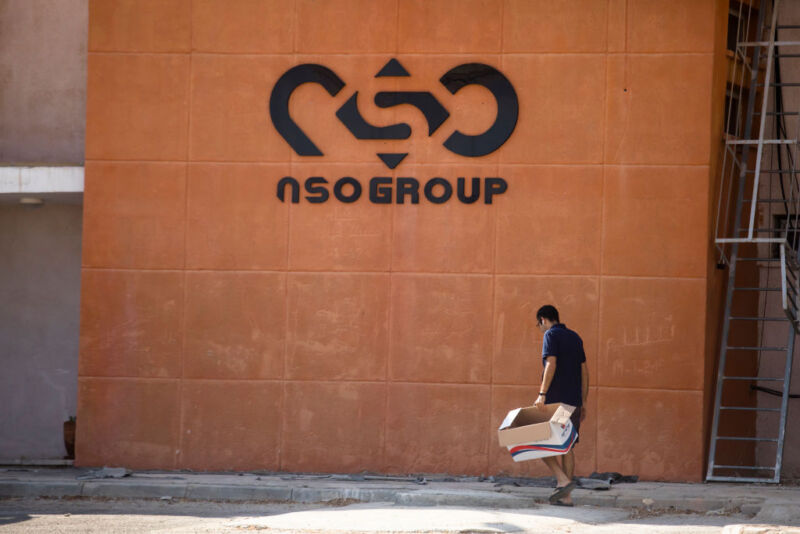
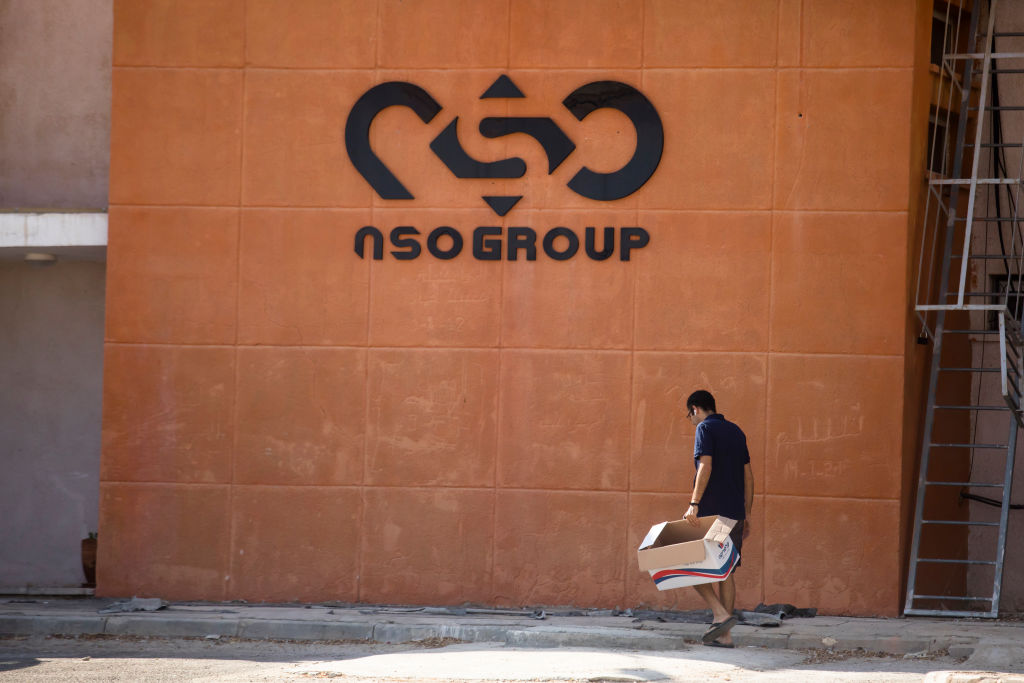
A man walks by the building entrance of Israeli cyber company NSO Group at one of its branches in the Arava Desert on November 11, 2021, in Sapir, Israel.
Enlarge / A man walks by the building entrance of Israeli cyber company NSO Group at one of its branches in the Arava Desert on November 11, 2021, in Sapir, Israel.
Amir Levy | Getty Images

In February 2019, an Israeli woman sat across from the son of Uganda’s president and made an audacious pitch—would he want to secretly hack any phone in the world?

Lt. General Muhoozi Kainerugaba, in charge of his father’s security and a long-whispered successor to Yoweri Museveni, was keen, said two people familiar with the sales pitch.

After all, the woman, who had ties to Israeli intelligence, was pitching him Pegasus, a piece of spyware so powerful that Middle East dictators and autocratic regimes had been paying tens of millions for it for years.

But for NSO, the Israeli company that created Pegasus, this dalliance into East Africa would prove to be the moment it crossed a red line, infuriating US diplomats and triggering a chain of events that would see it blacklisted by the commerce department, pursued by Apple, and driven to the verge of defaulting on its loans, according to interviews with US and Israeli officials, industry insiders, and NSO employees.

A few months after the initial approach, NSO’s chief executive, Shalev Hulio, landed in Uganda to seal the deal, according to two people familiar with NSO’s East Africa business. Hulio, who flew the world with the permission of the Israeli government to sell Pegasus, liked to demonstrate in real time how it could hack a brand-new, boxed iPhone.

The eventual business was small for NSO. A person familiar with the transaction said it brought in between $10 million and $20 million, a fraction of the $243 million that Moody’s estimated the privately owned NSO made in revenues in 2020.

But about two years after the sales pitch, someone deployed Pegasus to try to hack the phones of 11 American diplomats and employees of the US embassy in Uganda, according to two US officials, who spoke after notifications were sent out by Apple when the iPhone maker discovered and closed a flaw in its operating system in November.

It is not clear who tried to hack the US citizens. Uganda’s neighbor, Rwanda, had also been using Pegasus to hack phones inside Uganda, but the revelation shocked the US. NSO has always told its customers that US phone numbers are off-limits. In this case, all 11 targets were using Ugandan numbers but had Apple logins using their State Department emails, according to the two US officials.

NSO said it shut down the hacking systems for “customers relevant to this case” and is investigating the issue. A person familiar with the company said it no longer has any business in Africa.

The presidential press secretary for Museveni and the minister of information for the Ugandan government did not reply to a request for comment. A person close to Museveni said they “were not authorized to speak on the subject.”

Israeli and US officials declined to confirm that the Ugandan hack directly triggered a decision to blacklist NSO. But one US official who discussed the issue with Israel’s defense ministry said: “Look at the entire sequence of events here—this is careful, not by chance.” He added that putting NSO, one of the jewels of Israel’s tech community, on a US blacklist was designed to “punish and isolate” the company.

The blacklisting, which came in November, means that NSO cannot buy any equipment, service, or intellectual property from US-based companies without approval, crippling a company whose terminals ran on servers from Dell and Intel, routers from Cisco, and whose desktop computers run on Windows operating systems, according to a spec sheet from a sale to Ghana, in West Africa.

In recent weeks, for instance, Intel asked all its employees to cease any ongoing business relationships with NSO, one person familiar with the matter said. Intel said in a statement that it “complies with all applicable US laws, including US export control regulations.”

A new CEO, Itzik Benbenisti, hired from Partner Communications, one of Israel’s largest telecom providers, quit two weeks into his new job after the blacklisting. And while the company tried to cheer up its employees with a Hanukkah party in the beach resort of Eilat, Hulio—who retook the reins after Benbenisti stepped down—was less sanguine in a recent phone call with an old business associate.

“We always knew this thing had an expiration date,” he told the friend, complaining that some clients had asked to shift their contracts to lesser-known rivals, according to a person familiar with the conversation.

After spending a decade in the favor of the Israeli government, NSO now finds itself as an irritant in relations between Israel and the US, using up vital foreign “policy bandwidth we need to talk about Iran,” said a foreign ministry official who asked for anonymity.

That is a reversal for NSO, which former Prime Minister Benjamin Netanyahu used as a diplomatic calling card with several countries, including the UAE, Morocco, Bahrain, and Saudi Arabia, which did not have official relations with Israel.

The reputational damage has also made it difficult to keep hiring the most promising graduates of Israel’s elite signals intelligence units, who have the skills to repeatedly outwit the defenses of both Android phones and iPhones.

For example, when Google reverse-engineered the hack used against American diplomats in Uganda, it found an elegant, tiny piece of code that adapted software from 1990s Xerox machines to fit a so-called Turing machine—essentially a complete computer—into a single GIF file.

“Pretty incredible, and at the same time, pretty terrifying,” said Google’s engineers. “Wow. Just wow,” tweeted Yaniv Erlich, an Israeli professor of computer science at Columbia University.

“You can count on one hand the number of teams in the world that could create something like that,” said John Scott-Railton, a senior researcher at the University of Toronto’s Citizen Lab, which found the malware and brought it to Apple’s attention.

NSO said it had hired 30 new employees in recent weeks. “There is an understanding among our employees that there is a wide gap between media reports and the reality,” a spokesperson said.

Meanwhile, NSO has also fallen into the crosshairs of Silicon Valley, after angering Apple and Meta by hacking into iPhones and WhatsApp.

Apple’s two-pronged approach—it has notified many of the targets of NSO’s hacks, while suing the company in US courts—sent a “shockwave” through the industry, said a person familiar with the matter.

Apple and Citizen Lab have also shared NSO’s technical secrets, worrying rival companies enough to ask their clients to dial down the use of other spyware, scared of getting caught in Apple’s dragnet, said a former senior executive at an Israeli tech group.

“There is a sense that this is a full-on war against the entire industry,” he said, adding that high-level Israeli employees of NSO and other similar firms are “staying put” in Israel to avoid being pulled in for questioning in the US and its allies.

For now, the US pressure had left NSO with few options, said company insiders. Moody’s has downgraded NSO’s debt as the company’s free cash flow turned negative in 2020 and is expected to remain negative this year. “There’s a high risk NSO might not be in compliance” with a covenant on the $500 million in loans it took in 2019 to go private at a $1 billion valuation, said Moody’s.

It has hired Moelis & Co, a New York-based investment bank, to see if it can sell off parts of the company to raise cash, even offering to change Pegasus into a “defensive” product if that makes it more palatable to US investors.

Last Wednesday, that window also narrowed—18 US senators wrote to Secretary of State Antony Blinken and Treasury Secretary Janet Yellen to sanction NSO under the Magnitsky Act, alongside a handful of other cyber surveillance firms.

If the US acts upon that request, NSO would be cut off from the US banking system, and its employees would be barred from traveling to the US.

© 2021 The Financial Times Ltd. All rights reserved Not to be redistributed, copied, or modified in any way.

https://arstechnica.com/?p=1822047


Holmes’ fate hangs in the balance as jury deliberates criminal fraud charges

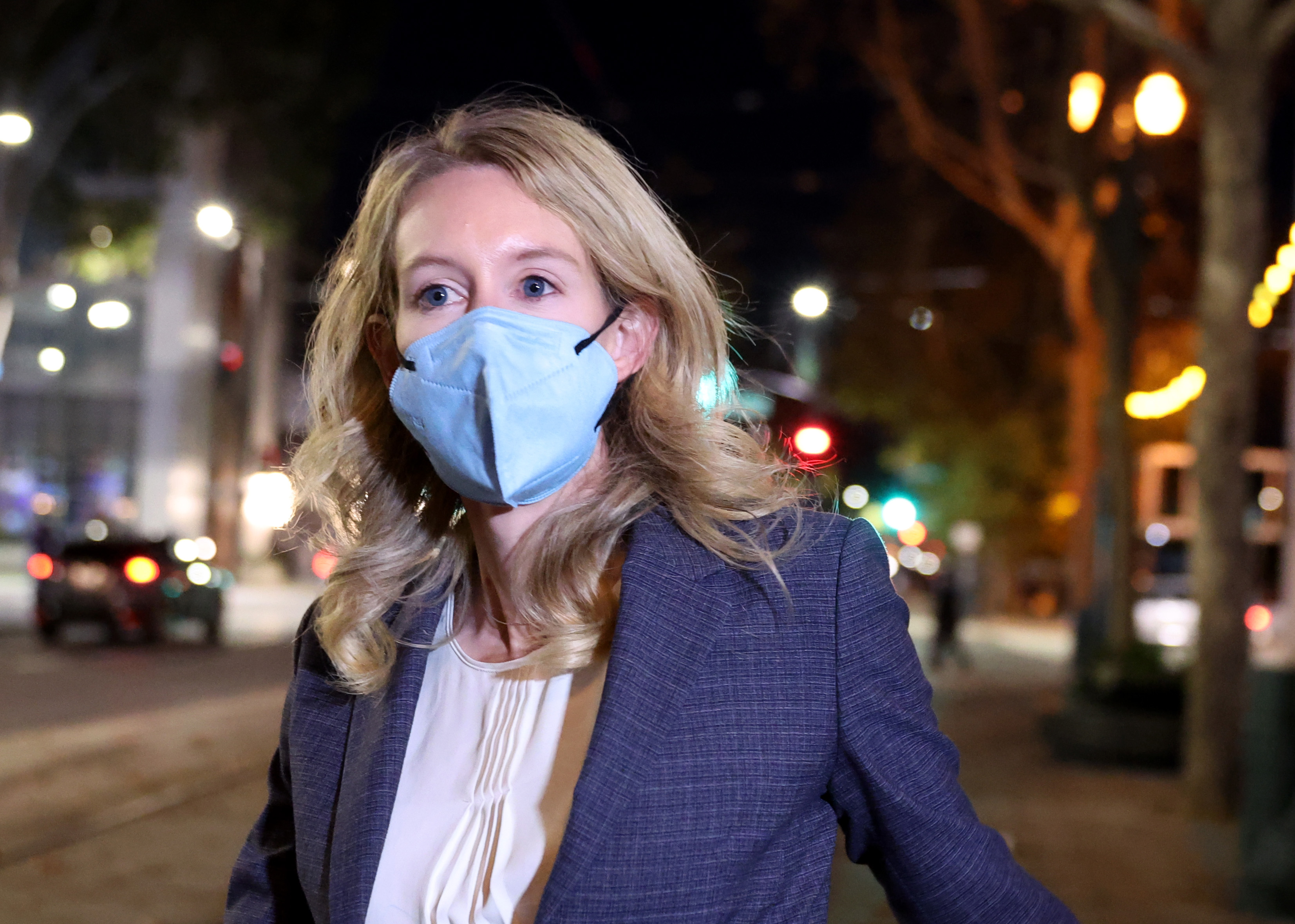
Theranos founder and former CEO Elizabeth Holmes leaves the Robert F. Peckham Federal Building in San Jose, California, on December 17, 2021.
Enlarge / Theranos founder and former CEO Elizabeth Holmes leaves the Robert F. Peckham Federal Building in San Jose, California, on December 17, 2021.
Justin Sullivan/Getty Images

Who is to blame for the implosion of Theranos, the ill-fated blood-testing startup that folded in 2018, and did it amount to fraud? That’s the question before 12 people today in San Jose, California, who will decide the fate of Elizabeth Holmes, the startup’s founder and ex-CEO.

Jurors spent the final two days of last week hearing closing arguments from prosecution and defense attorneys. The latter said nearly everyone but Holmes was responsible for one of the most high-profile failures of a startup in recent history, while the former said that Holmes should be held accountable for what happened.

Holmes faced a choice

“She chose to be dishonest,” assistant US attorney Jeffrey Schenk told jurors in his closing argument. There were at least three decision points, three cash crunches, at which Holmes could have chosen to let Theranos “slowly fade.” Instead, she chose “to go down the path of fraud.”

By the time of the alleged fraud, which spanned 2013–2015, according to the indictment, Holmes was anything but naïve, Schenk said. She knew exactly what she was doing. “The truth is, by the time investors invested in 2013 and 2014, she was nearly 30 and had been CEO for nearly a decade.” 

Holmes, Schenk said, oversaw myriad parts of the company, ranging from public relations to legal, business development, regulatory affairs, and more. In the course of perpetrating the alleged fraud, he said she made numerous false statements—that Theranos’ devices performed better than they actually did, that they were being used on the battlefield, that they had been validated by pharmaceutical companies, and that the company was financially stable. 

Each of Holmes’ investors latched on to one or another of her false claims, Schenk said. The DeVos family liked the fact that Theranos used smaller blood samples. Chris Lucas liked its use of automation. Texas investor Alan Eisenman, whose colorful antics lit up the courtroom, was drawn to Theranos’ supposed accuracy.

Schenk also attacked Holmes’ claims that trade secrets prevented her from disclosing facts that might have made investors put their money elsewhere. Holmes’ desire to protect Theranos’ trade secrets didn’t “give her permission to make false statements,” he said.

Schenk wrapped his closing argument by addressing the elephant in the room: Holmes’ allegations of abuse by her ex-boyfriend and former Theranos COO Ramesh “Sunny” Balwani. (Balwani has denied her claims.) If the jurors decide she’s guilty of fraud, it’s not the same as saying, “We the jury do not believe her claims of abuse,” Schenk said. On the other hand, if they say she’s not guilty, “your verdict doesn’t validate her claims of abuse. You do not need to decide if that abuse happened.”

Defense blames everyone but Holmes

One of the first things Holmes’ attorney, Kevin Downey, did was remind jurors what “beyond a reasonable doubt” means. Then he started trying to sow that doubt in their minds. 

He said that Holmes didn’t have criminal intent, that she was transparent in some of her dealings. After all, she told the FDA that her company was using third-party machines, and she was willing to send one of their proprietary devices to Johns Hopkins scientists, who said the startup’s technology was “novel and sound.”

Downey also tried to blame others for Theranos’ failure and alleged fraud. Investors were either too lazy or unsophisticated to look for public data that would have addressed the concerns they raised in their testimony. Scientists, especially former lab director Adam Rosendorff, should share the blame because he approved many patient tests performed on Theranos’ proprietary devices. The lab, Downey said, “was not Ms. Holmes’ responsibility.” 

Journalists were a party to Theranos’ failure, too, since they quoted people saying nice things about Holmes and the company. (Perhaps that was meant to suggest that Holmes used media reports—which she manipulated through selective disclosure—as a sort of moral compass telling her whether she was on the right track?)

And last but not least, Downey reminded the jury that Holmes tried to turn things around in 2016, alluding to but not explicitly mentioning Balwani’s departure both from the company and Holmes’ romantic life. 

“Are those the actions of someone who had been engaged in a conspiracy to defraud people?” Downey concluded.

After closing arguments wrapped, Judge Edward Davila read the jury nearly 40 pages of instructions. Today, jurors are scheduled to return to the courthouse for deliberations.

https://arstechnica.com/?p=1821867


YouTube TV loses ESPN, ABC, and all other Disney-owned channels

Photo illustration showing the YouTube TV logo on a smartphone.
Getty Images | SOPA Images

YouTube TV customers have lost access to all Disney-owned channels including ESPN and ABC, as the companies failed to agree on a new contract before the previous one expired last night. YouTube TV customers will automatically get a $15-per-month discount for as long as the Disney channels remain blacked out, reducing the base plan cost from $65 to $50.

“Members, we worked hard to avoid this but were unable to reach a fair deal with Disney,” YouTube TV said. “We regret to share that as of December 17, all Disney-owned channels are unavailable on YouTube TV. While Disney content remains off our platform, we’ll decrease our price by $15/month. We know how frustrating it is to lose channels like ESPN and your local ABC station, and will continue conversations with Disney in hopes of restoring their content for you.”

The list of channels no longer on YouTube TV includes all local ABC channels, ABC News Live, Disney Channel, Disney Junior, Disney XD, Freeform, FX, FXX, FXM, National Geographic, National Geographic Wild, ESPN, ESPN2, ESPNU, ESPNEWS, SEC Network, and ACC Network. YouTube TV posted details on how credits will be issued on this webpage.

“If you want to continue watching some of Disney’s content, consider signing up for their own service, The Disney Bundle, which they offer for $13.99/month and which is subject to its own terms and restrictions,” YouTube TV said.

YouTube TV sought price guarantee

As we reported a few days ago, the Google-owned YouTube TV was seeking a most-favored-nation (MFN) clause from Disney. “Our ask to Disney, as with all our partners, is to treat YouTube TV like any other TV provider—by offering us the same rates that services of a similar size pay, across Disney’s channels for as long as we carry them,” YouTube TV said at the time.

YouTube TV nearly lost NBCUniversal channels in another recent dispute. But in that case, YouTube and NBC agreed to a short extension to avoid a blackout when the original contract expired, and then struck a new multiyear deal.

There was no extension to prevent a blackout in the ongoing YouTube TV/Disney dispute, but both companies said they still hope to reach a new agreement.

“We’ve been in ongoing negotiations with Google’s YouTube TV and unfortunately, they have declined to reach a fair deal with us based on market terms and conditions,” Disney said in a statement sent to news outlets. “As a result, their subscribers have lost access to our unrivaled portfolio of networks including live sports and news plus kids, family and general entertainment programming from ABC, the ESPN networks, the Disney channels, Freeform, the FX networks and the National Geographic channels. We stand ready to reach an equitable agreement with Google as quickly as possible in order to minimize the inconvenience to YouTube TV viewers by restoring our networks. We hope Google will join us in that effort.”

https://arstechnica.com/?p=1821766


Judge rejects Sackler immunity deal, vacating Purdue Pharma opioid settlement

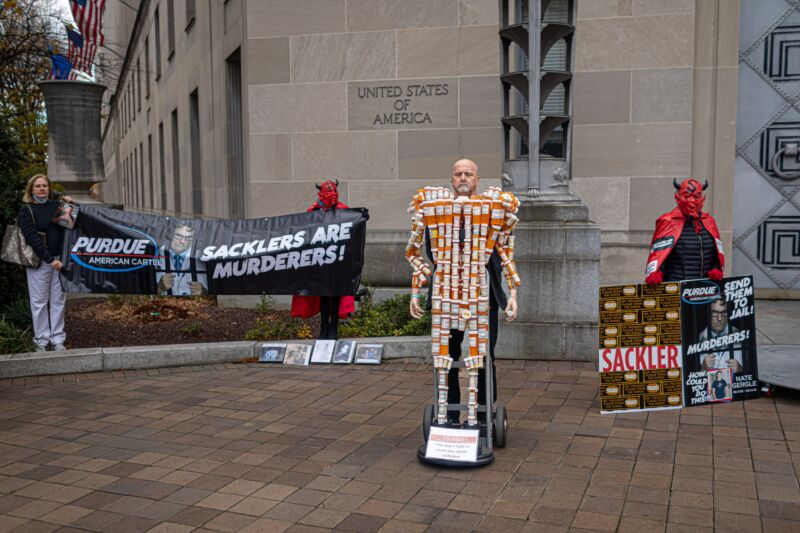
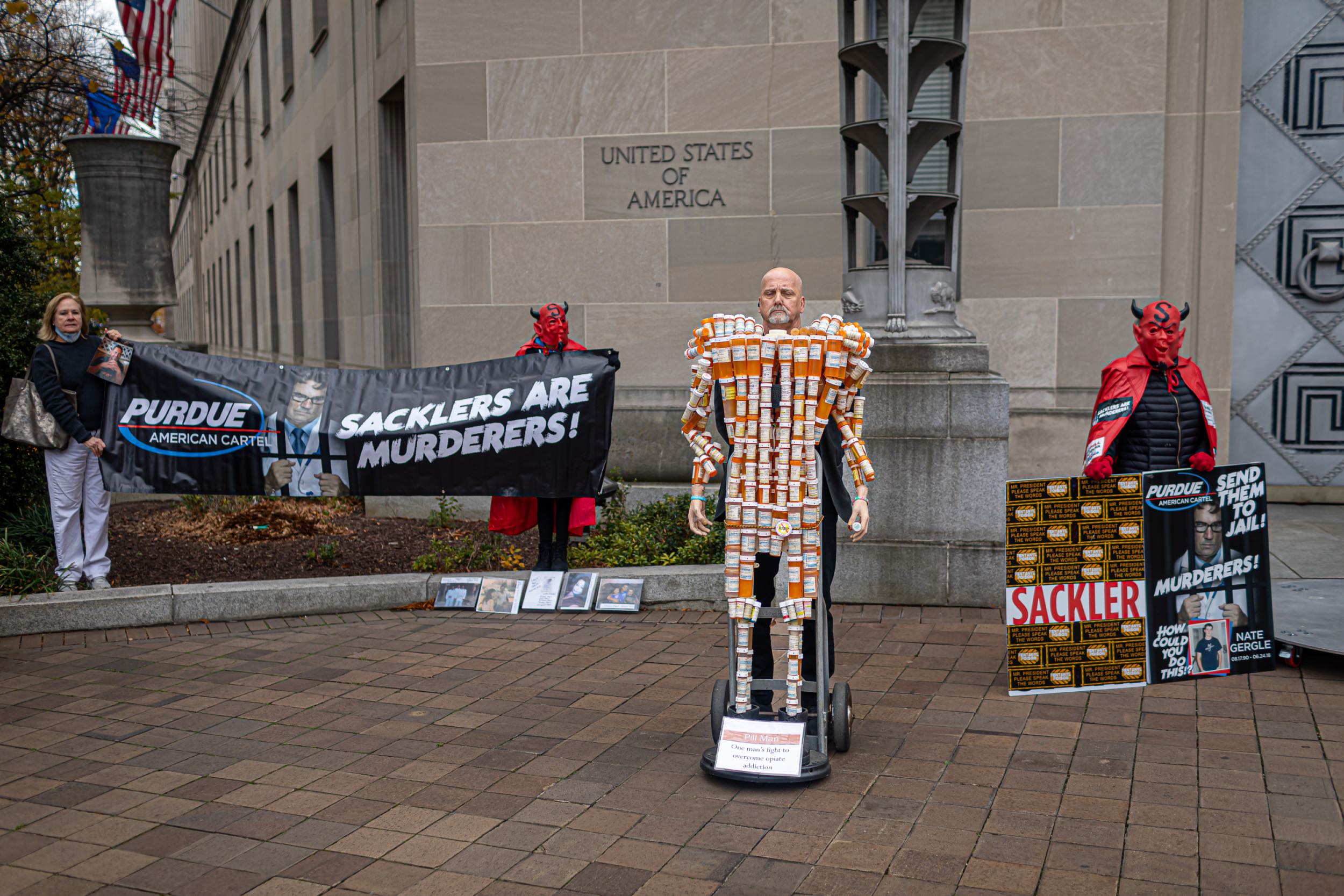
Protesters hold a sign that says,
Enlarge / Frank Huntley, who raises awareness of opiate addiction with his sculpture “Pill Man,” is among protesters who rallied at the Department of Justice in Washington, DC, on December 3, 2021, calling on Attorney General Merrick Garland to bring criminal charges against members of the Sackler family.
Getty Images | Pacific Press

A federal judge yesterday rejected the Purdue Pharma settlement that would grant lifetime legal immunity to the Sackler family for their role in the opioid crisis, finding that the bankruptcy court doesn’t have the authority to approve legal immunity for people who did not declare bankruptcy. The ruling to vacate the bankruptcy plan was issued by Judge Colleen McMahon in US District Court for the Southern District of New York.

Non-debtors like the Sackler family members aren’t obligated to “disclose their assets and apply them… to the resolution of the claims of their creditors,” McMahon noted. Because non-debtors do not have those obligations, they also “do not have any rights at all under the ‘special remedial scheme’ that is bankruptcy—certainly not the ‘right’ to have claims that are being asserted against them outside the bankruptcy process released.”

The $4.5 billion settlement was previously approved by a judge in US Bankruptcy Court for the Southern District of New York. While 15 US states agreed to the settlement, eight states and the District of Columbia objected to it and filed appeals. US government officials also objected to the settlement.

“Sackler Family must be held accountable”

“We are pleased with the District Court’s decision invalidating the Purdue Pharma bankruptcy plan,” US Attorney General Merrick Garland said. “The bankruptcy court did not have the authority to deprive victims of the opioid crisis of their right to sue the Sackler family.”

California Attorney General Rob Bonta applauded the ruling, saying that “the Sackler Family must be held accountable for their contribution to the ongoing opioid crisis. Too many California communities have unfairly paid the price for their willful misconduct, and the bankruptcy plan would have allowed them to exchange money for lifetime immunity—falling far short of true accountability.”

Purdue said it will appeal the ruling. “It will delay, and perhaps end, the ability of creditors, communities, and individuals to receive billions in value to abate the opioid crisis,” Purdue Chairman Steve Miller said, according to the Associated Press. “These funds are needed now more than ever as overdose rates hit record-highs, and we are confident that we can successfully appeal this decision and deliver desperately needed funds to the communities and individuals suffering in the midst of this crisis.”

The settlement money would be used for prevention, treatment, and recovery programs throughout the US.

Sacklers took $10.4 billion out of Purdue

“All Appellants assign the same reason for their opposition: the Plan provides broad releases, not just of derivative, but of particularized or direct claims—including claims predicated on fraud, misrepresentation, and willful misconduct under various state consumer protection statutes—to the members of the Sackler family (none of whom is a debtor in the bankruptcy case) and to their affiliates and related entities,” McMahon wrote. The judge continued:

As the opioid crisis continued and worsened in the wake of Purdue’s 2007 Plea Agreement, the Sacklers—or at least those members of the family who were actively involved in the day to day management of Purdue—were well aware that they were exposed to personal liability over OxyContin. Concerned about how their personal financial situation might be affected, the family began what one member described as an “aggressive[]” program of withdrawing money from Purdue almost as soon as the ink was dry on the 2007 papers. The Sacklers upstream[ed] some $10.4 billion out of the company between 2008 and 2017, which, according to their own expert, substantially reduced Purdue’s “solvency cushion.” Over half of that money was either invested in off-shore companies owned by the Sacklers or deposited into spendthrift trusts that could not be reached in bankruptcy and off-shore entities located in places like the Bailiwick of Jersey.

When the family fortune was secure, the Sackler family members withdrew from Purdue’s Board and management. Bankruptcy discussions commenced the following year. As part of those pre-filing discussions, the Sacklers offered to contribute toward a settlement, but if—and only if—every member of the family could “achieve global peace” from all civil (not criminal) litigation, including litigation by Purdue to claw back the money that had been taken out of the corporation.

The settlement approved by the bankruptcy court “extinguishes all civil claims against the Sacklers that relate in any way to the operations of Purdue—including claims on which certain members of the Sackler family could be held personally liable to entities other than Purdue (principally the various states),” McMahon wrote.

https://arstechnica.com/?p=1821527


Comcast delays data caps in Northeast US for at least another year

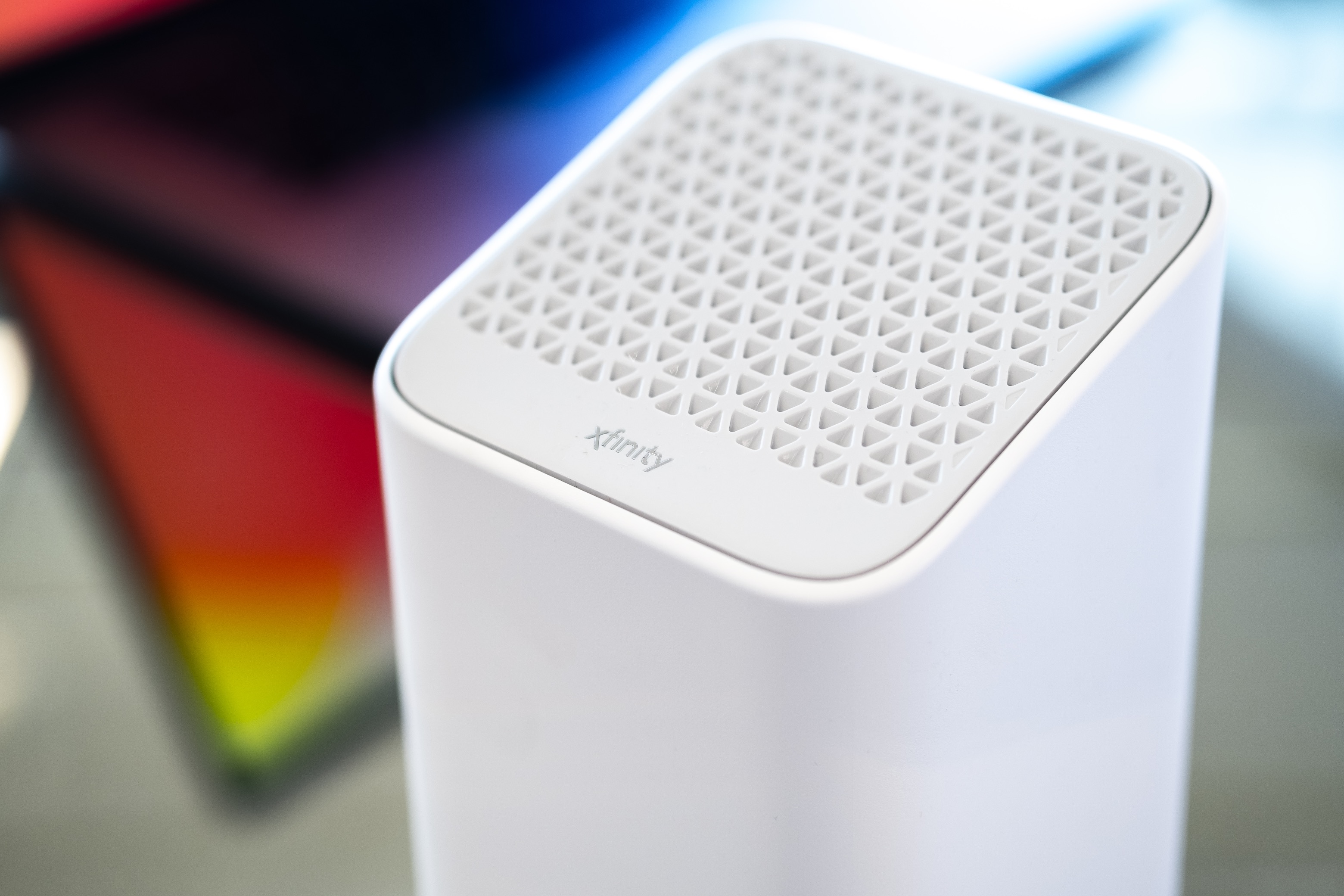
A Comcast gateway modem-and-router device labeled with the Xfinity brand name.
Enlarge / Comcast’s xFi Advanced Gateway.
Getty Images | Jeff Fusco

Comcast says it won’t deploy data caps in the Northeast US in 2022, giving another year’s reprieve to 12 states and a few other areas where Comcast customers don’t face overage fees. “We don’t have plans to implement our data usage plan in our Northeast markets in 2022 at this time,” Comcast said, according to a Light Reading article.

Comcast confirmed that quote to Ars today but declined to provide any further statement when asked about plans for 2023 and beyond. Comcast’s statement came after Massachusetts state Rep. Andy Vargas, a Democrat, told WHAV that “the latest we have is that they have no intention of reintroducing the data caps at all, which is a huge win.”

Vargas and 70 other Massachusetts lawmakers slammed Comcast a year ago when it announced a plan to start enforcing the data cap in the Northeast starting in January 2021.

“Network capacity is not an issue for Comcast or a valid excuse to charge customers more,” the lawmakers’ December 2020 letter said. “Comcast itself claims it has plenty of capacity across its network, including areas where no caps are currently imposed… It is inconceivable that Comcast would choose to impose this ‘cap and fee’ plan during a pandemic, when many Massachusetts residents are forced to work and attend school from home via the Internet.”

Comcast caved to pressure

Comcast backed down in early 2021, promising to delay data caps in those states until 2022. With 2022 now just a couple of weeks away, Comcast is holding off on data cap enforcement again.

While Vargas’ quote makes it sound like Comcast has dropped the data cap plan altogether, the company’s statement to news organizations only references 2022. We asked Vargas for more information on exactly what Comcast told him today and will update this article if we get a response.

Comcast rolled out enforcement of its data cap to most of the 39 states in which it operates between 2012 and 2016, but not in the Northeast states where the cable company faces competition from Verizon’s un-capped FiOS fiber-to-the-home service. The un-capped Comcast areas are in Connecticut, Delaware, Massachusetts, Maryland, Maine, New Hampshire, New Jersey, New York, Pennsylvania, Virginia, Vermont, West Virginia, the District of Columbia, and parts of North Carolina and Ohio.

Comcast’s data cap webpage today still said the cap will be “[a]pplicable in Northeast markets in 2022,” but the page will presumably be updated to reflect Comcast’s statement about not imposing the cap in 2022.

Unlimited data options

The cap is currently 1.2TB a month. Customers who exceed 1.2TB are charged an extra $10 plus tax for each additional block of 50GB, up to a maximum monthly overage charge of $100. Comcast provides one “courtesy month” that waives the overage fees one time only.

Unlimited data is included with Comcast’s Signature+ More, Super+ More, and Internet Essentials packages. Signature+ More and Super+ More are triple-play plans that include Internet, TV, and phone service, while Internet Essentials is a $10-per-month Internet-only plan for households with low incomes. There’s also no data cap on Comcast business Internet and Comcast’s fiber-to-the-home Gigabit Pro service that costs $300 a month.

For people on capped plans, there’s an option to buy unlimited data for an extra $30 a month. Comcast also used to offer unlimited data with its $25-per-month xFi Complete add-on, but the webpage says this is no longer available.

In other Comcast news this week, the advertising industry’s self-regulatory body found that Comcast’s claim that it offers “Unlimited 5G” on Xfinity Mobile is unsupported because it reduces cellular-data speeds after 20GB of smartphone usage. Comcast agreed to stop making this claim, the National Advertising Division said Tuesday. The Comcast mobile service relies on the Verizon Wireless network—there aren’t any similar speed restrictions on Comcast home Internet service.

https://arstechnica.com/?p=1821195


Tesla sexual harassment lawsuits multiply as 6 more women sue Musk-led firm

Tesla signs outside of a showroom and service center.
Enlarge / A Tesla showroom and service center on Friday, Sept. 4, 2020, in Burbank, California.
Getty Images | Kent Nishimura

Six more women sued Tesla yesterday, alleging that the company failed to stop rampant sexual harassment at factory facilities in Fremont, California, and service centers in the Los Angeles area.

The lawsuits are similar to one filed last month by employee Jessica Barraza, who alleged that she and other women working in the carmaker’s Fremont factory have been subjected to “nightmarish conditions of rampant sexual harassment,” including offensive comments, propositions, and “frequent groping on the factory floor.” Barraza alleged that managers and human resources personnel failed to protect her even though she complained repeatedly.

The lawsuits filed yesterday “detail specific instances of harassment that each woman experienced, and the lack of action from Tesla when these claims were reported,” according to a press release from law firm Rudy Exelrod Zieff & Lowe, which represents Barazza and the six other women. “Those who complained were sometimes threatened into silence or faced undesirable transfers. The message was clear, there would be no consequences for abusers. The six women describe an environment in which it was normal for women to be catcalled, ogled, touched inappropriately, and propositioned.”

The lawsuits filed by factory workers say that “Tesla’s factory floor more resembles a crude, archaic construction site or frat house than a cutting-edge company in the heart of the progressive San Francisco Bay Area.”

“Misconduct reflects an attitude at the top”

The behavior reflects the attitude of Tesla CEO Elon Musk, attorney David Lowe said in the press release. “Elon Musk tweeting a lewd comment about women’s bodies or a taunt toward employees who report misconduct reflects an attitude at the top that enables the pattern of pervasive sexual harassment and retaliation at the heart of these cases. Tesla has failed to take sexual harassment seriously, from the top of the company down,” Lowe said.

Lowe was referring to one Musk tweet in which he proposed creating a new university with the acronym “TITS” and another in which he joked about Tesla whistleblowers. The Musk-founded SpaceX is also facing sexual harassment allegations from former mission integration engineer Ashley Kosak, who wrote in an essay that misogyny is “rampant” at SpaceX and that harassers she complained about “have still not been held to account.”

We contacted Tesla about the six new lawsuits today and will update this article if we get a response.

The lawsuits in Alameda County Superior Court were filed by five women who work or worked at Tesla’s Fremont, California, factories and one who worked in Tesla “service centers throughout Southern California,” the law firm’s press release said. The employees were allegedly “subjected to constant sexual harassment at the hands of their colleagues and supervisors.”

In October, a federal jury awarded $137 million to Owen Diaz, a Black worker who alleged that Tesla failed to take reasonable steps to prevent racist abuse at the Fremont factory.

“Constant barrage of sexual comments”

The following are examples of the alleged sexual harassment as described in the press release, with links to copies of the complaints that Lowe provided to Ars:

Michaela Curran worked at Tesla as her first job out of high school. Her direct supervisor told her to “shake [her] ass” for him. He said with her “big butt” she should dance as a stripper. A colleague asked her to give him a “handjob” in the parking lot.

Alize Brown started working the night shift at Tesla when she was 21 years old and had a 3-month-old baby. Her colleague called her a “cow” who was “milking” and referred to her back-side as her “wagon.” She asked her supervisor, who would often look her body up and down, to speak to the harasser, but the supervisor treated it like a joke.

Jessica Brooks was harassed starting her first day of orientation. Her supervisor encouraged his male subordinates to check out the new girl. She was so besieged by unwanted male attention that she stacked up boxes around her workstation to block the view of her body. When she finally complained to H.R., they were already aware that she was stacking boxes to shield herself from harassment, but had done nothing. As a result of complaining, Ms. Brooks, not her harasser, was moved and had to learn a new type of work.

Alisa Blickman’s supervisor would rub his hand on her lower back at the start of each shift and whispered a sexual comment in her ear. When she responded negatively, he threatened to have her transferred.

Samira Sheppard was subjected to a constant barrage of sexual comments by male coworkers, and a supervisor told her colleagues that he could see her nipples through her shirt, prompting them to joke with her repeatedly about how she must be cold.

Eden Mederos faced near daily harassment from the technicians at her service center who would comment on her butt, using offensive words, like “ass,” “cake,” or “dump truck.” They also made sexist comments, saying, “A pretty girl shouldn’t be working in a service center.” They told her that she should flirt with customers to get a rich husband. When she reported a manager’s sexist and harassing behavior to HR, the manager interfered with her advancement at Tesla and HR did nothing.

https://arstechnica.com/?p=1820964


No jab, no job: Google will fire unvaccinated employees

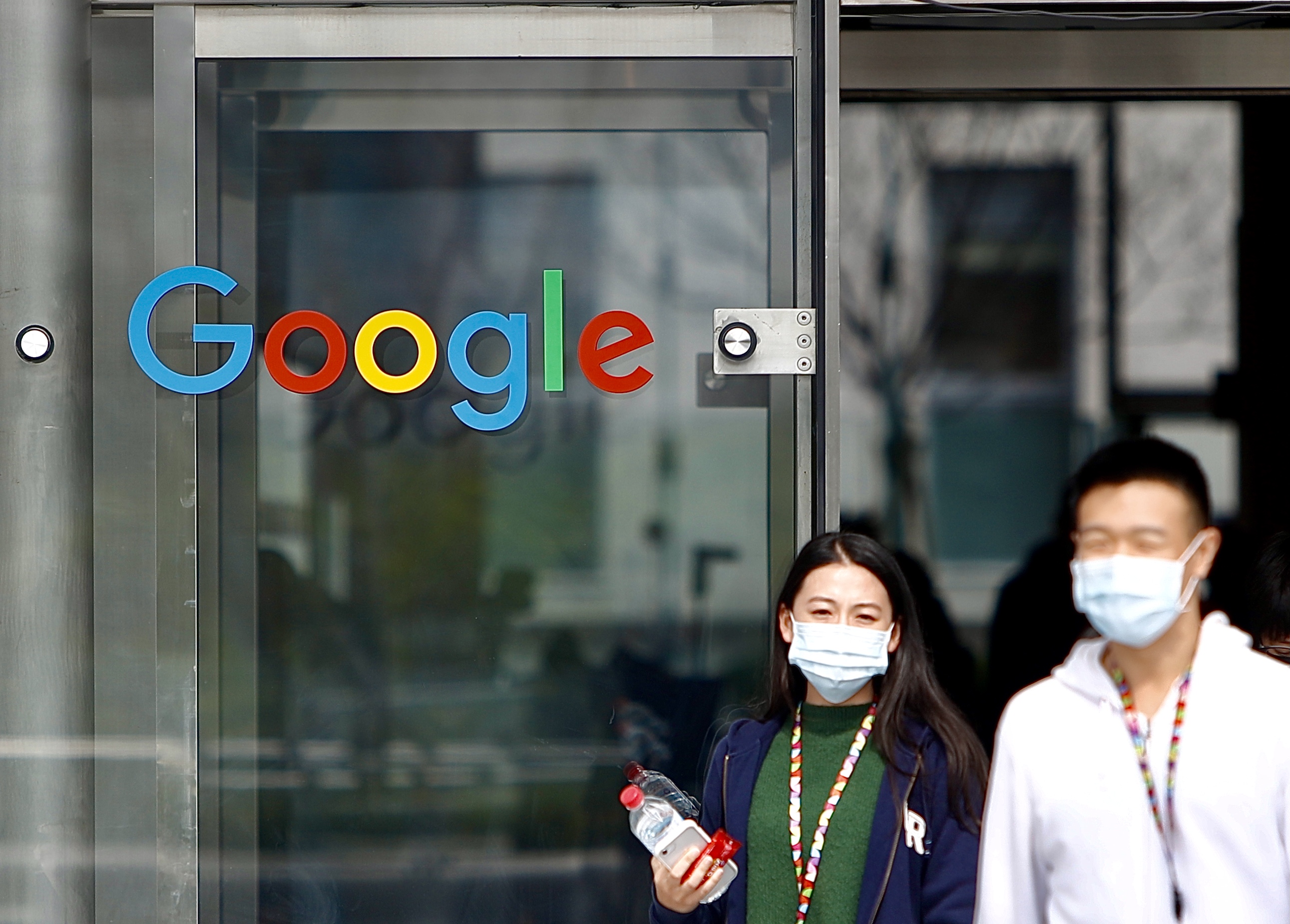
People walk out of a Google office building in Taipei, Taiwan, on January 29, 2021.
Enlarge / People walk out of a Google office building in Taipei, Taiwan, on January 29, 2021.
Ceng Shou Yi/NurPhoto

Google is giving employees until January 18 to prove that they’ve been vaccinated against COVID-19 or apply for an exemption, according to a report from CNBC. 

News of the requirement broke late Tuesday, but Google employees have been aware of the policy since December 3, when an internal memo alerted them to the deadline. If employees don’t upload proof of vaccination by then, they’ll be placed on paid administrative leave for 30 days and unpaid personal leave for six months after that. If they still haven’t shown proof of vaccination after seven months, they’ll be fired.

“We expect that almost all roles at Google in the US will fall within the scope of the executive order,” the memo said. “Anyone entering a Google building must be fully vaccinated or have an approved accommodation that allows them to work or come onsite.” 

“Frequent testing is not a valid alternative to vaccination,” it said.

Google’s memo came three weeks after a federal court declined to lift a stay on President Joe Biden’s executive order that directed large companies to require vaccination for their employees. The Supreme Court is expected to take up the matter, but Google’s recent memo suggests that the company will proceed with its requirement regardless of the outcome of any future rulings.

“As we’ve stated before, our vaccination requirements are one of the most important ways we can keep our workforce safe and keep our services running,” a Google spokesperson told Ars. “We’re committed to doing everything possible to help our employees who can get vaccinated do so, and firmly stand behind our vaccination policy.”

Biden’s order was implemented by the Occupational Safety and Health Administration, known as OSHA, which was granted the authority to implement workplace safety standards by Congress in 1970, when President Richard Nixon signed the Occupational Health and Safety Act.

The search company has been clear that vaccines are part of a plan to reopen offices while also limiting the impact of COVID in communities where Google employees work and live. “Vaccines are key to our ability to enable a safe return to office for everyone and minimize the spread of Covid-19 in our communities,” Chris Rackow, Google’s vice president of security, wrote in an October email obtained by CNBC.

The company has cited its work with the federal government as another driving force behind the requirement. Government contracts touch nearly every part of the company either directly or indirectly, according to Rackow’s email, “encompass[ing] products and services spanning Ads, Cloud Maps, Workspace, and more.”

Employees who do not get vaccinated can apply for exemptions for religious beliefs or medical conditions, which Google has said it will grant on a case-by-case basis. Employees who are not vaccinated and do not receive an exemption will keep their benefits for 92 days. The company said that workers could search for other roles in the company that wouldn’t fall under the executive order and would be eligible for remote work.

It’s unclear how many positions would meet those criteria, but based on the memo, there probably aren’t many. 

On the other hand, not many Google employees seem staunchly opposed to the requirement. Last month, 600 or so workers signed a “manifesto” asking the company to rescind the requirement. That’s just 0.4 percent of Google’s 150,000 employees.

https://arstechnica.com/?p=1820893


Ajit Pai and Tom Wheeler agree: The FAA is behaving badly in battle against FCC

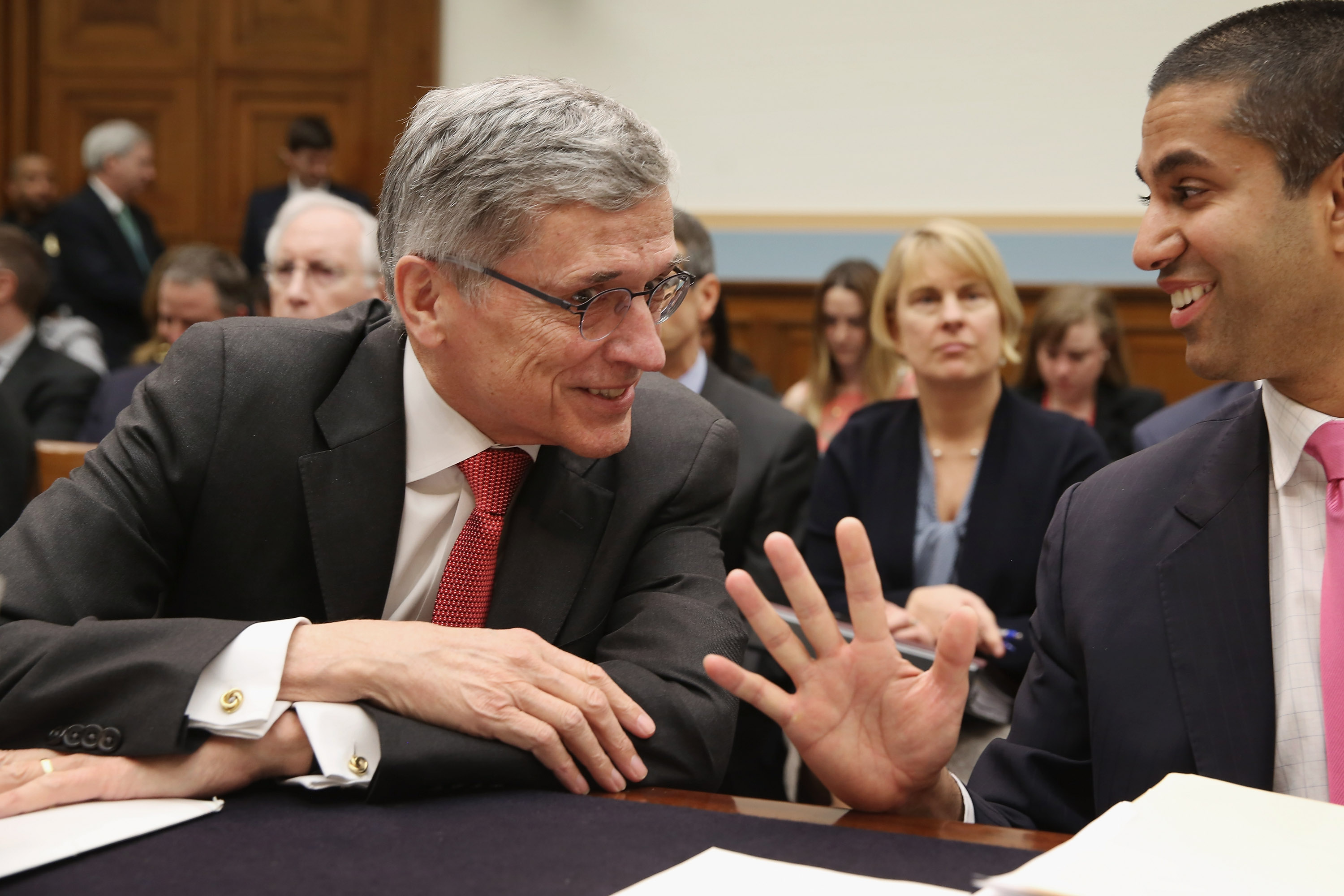
Then-Federal Communications Commission Chairman Tom Wheeler and FCC Commissioner Ajit Pai smiling and talking to each other before a Congressional hearing.
Enlarge / Then-Federal Communications Commission Chairman Tom Wheeler (L) and FCC Commissioner Ajit Pai talk before testifying to the House Judiciary Committee on March 25, 2015 in Washington, DC.

Six former chairs of the Federal Communications Commission yesterday criticized the Federal Aviation Administration’s fight against a new 5G rollout on spectrum that the FCC has studied and deemed safe to use. Republicans Ajit Pai and Michael Powell joined with Democrats Tom Wheeler, Mignon Clyburn, Julius Genachowski, and Michael Copps in writing a letter describing their concerns about how the FAA has tried to undermine public confidence in the FCC’s decision-making process.

“The FAA should work with the FCC and the National Telecommunications and Information Administration (NTIA)… to assess and resolve the FAA’s concerns expeditiously, but this debate should not be fought publicly in a way that undermines consumer confidence in the process, nor should it require months of additional delays,” said the six former chairs’ letter, which was sent to FCC Chairwoman Jessica Rosenworcel and NTIA acting Administrator Evelyn Remaley.

The “FAA position threatens to derail the reasoned conclusions reached by the FCC after years of technical analysis and study,” the former chairs also wrote.

AT&T and Verizon have already delayed their 5G launches on the new spectrum to assuage the FAA’s concerns, but the carriers plan to move ahead with the deployments next month.

No evidence of harm

Nearly 40 other countries are using C-band spectrum for 5G without any reports of interference to airplanes’ radio altimeters. As we wrote previously, the FCC in February 2020 approved mobile carriers’ use of C-Band spectrum from 3.7 to 3.98 GHz only after analyzing the aviation industry’s interference claims and finding no credible evidence of harm to altimeters, which use spectrum from 4.2 to 4.4 GHz.

To be safe, the FCC required carriers to follow power limits and created a 220 MHz guard band that will remain unused to protect altimeters from any possible interference from 5G transmissions. The FCC decision said the aviation industry’s research was unrealistic and that “well-designed equipment should not ordinarily receive any significant interference (let alone harmful interference) given these circumstances.”

Over a year after the aviation industry’s objections were dismissed by the FCC due to a lack of evidence, unnamed FAA officials tried to revive the debate by leaking their concerns to The Wall Street Journal. The FAA followed that up by issuing a November 2 bulletin that warned of “potential adverse effects on radio altimeters” even though the FAA bulletin acknowledged there have been no “proven reports of harmful interference” in the many countries where this spectrum is already used.

Former chairs say FCC acted on the evidence

The former FCC chairs’ letter said the agency’s 2020 decision on C-band spectrum “followed almost two years of careful review of the public record,” during which other federal agencies were given the chance “to raise—and defend with reliable data—their concerns about interference from transitioning spectrum to new uses.”

“At the end of this process, an FCC decision is reached that reflects the input of all stakeholders and its technical experts on the effective transition of spectrum, consistent with its statutory charge to ensure that new systems do not cause harmful interference,” the former chairs wrote. “In turn, this decision-making approach provides wireless companies or other license holders with the confidence necessary to invest in the networks that will deliver the innovation that will ensure the US remains the technology leader of the world.”

That’s how it’s supposed to work, but the FAA actions threaten to derail the process, the letter concluded:

In this case, the FAA position threatens to derail the reasoned conclusions reached by the FCC after years of technical analysis and study. We encourage all stakeholders to work together toward a speedy resolution of the issues in this band, and to ensure these surprises do not become a recurring feature of American spectrum management in the future.

https://arstechnica.com/?p=1820678


OSHA probes Amazon warehouse where workers died with no tornado shelter

A first responder walks among the wreckage of a damaged Amazon warehouse on December 11, 2021, in Edwardsville, Illinois.
Enlarge / A first responder walks among the wreckage of a damaged Amazon warehouse on December 11, 2021, in Edwardsville, Illinois.
Michael B. Thomas/Getty Images

The federal Occupational Safety and Health Administration announced yesterday that it is opening an investigation into the deaths of six workers at an Amazon warehouse in Illinois that was struck by a massive tornado, one of more than 40 that ripped through the region over the weekend.

Nearly half of the 1.1 million-square-foot building was demolished as winds as high as 150 mph (240 kph) tore through the structure. “The west-facing walls of the warehouse collapsed inward, which was followed by multiple structural failures as the tornado moved through the complex,” the National Weather Service said.

The first warnings came relatively early, at 8:06 pm and again at 8:16 pm, when the NWS issued tornado warnings. A “warning” means that a twister has been sighted or radar data suggests one will form. The NWS says that the tornado formed at 8:28 pm as an EF-0, the lowest on the scale, and quickly intensified to an EF-3 as it moved across Interstate 255. More than 20 minutes elapsed between the first warning and touchdown, over double the average lead time.

Amazon told CNBC that warehouse managers directed workers to find shelter at 8:16 pm, which coincides with the second tornado warning. Most workers huddled in bathrooms on the north end of the building, but a smaller group took shelter on the south end, which was demolished by the tornado. Six workers were killed while 39 survived, according to Amazon.

“We’re deeply saddened by the news that members of our Amazon family passed away as a result of the storm in Edwardsville,” the spokesperson told Ars. “Our thoughts and prayers are with the victims, their loved ones, and everyone impacted by the tornado.”

Workplace safety

The deaths have sparked fresh scrutiny of Amazon’s labor practices. OSHA hasn’t revealed the details of its investigation, though it did say that the agency looks into all workplace deaths, and Amazon says it is supporting the agency. Workers at the Edwardsville facility and others in the Midwest have said that their sites have never run tornado drills, and family members have criticized the company for not letting workers find shelter sooner.

OSHA guidelines say that workplaces should “practice shelter-in-place plans on a regular basis” to prepare for tornadoes. An Amazon spokesperson told Ars that the company provides “emergency response training” to new employees and “that training is reinforced throughout the year.”

According to The Intercept, Amazon’s corporate offices were busy troubleshooting network outages and only learned about the tornado strike through media reports. “What the correspondence showed was that initially, nobody knew what was happening,” an Amazon employee told the site. “More and more people joined in on the tickets to troubleshoot the issues only to find out from the media that the building was hit by a tornado.”

No safe room

The Amazon warehouse was built using a “tilt up” technique, in which steel-reinforced concrete walls are poured horizontally on-site and tilted up into place. The roof is then tied into the top of the wall, helping to brace the walls. The structures are cheap to build and favored by warehouses and big-box retailers, but they’re not known for their integrity in storms. Once the roof comes off, the heavy walls become much less stable. On Friday, the tornado destroyed everything in its path, ripping off the roof and pushing down the 40-foot-high concrete walls.

“Tilt-up buildings were not invented for resisting tornadoes,” Grace Yan, a professor of structural engineering at Missouri University of Science & Technology, told the St. Louis Post-Dispatch.

Inside, there were no safe rooms built to withstand the force of tornadoes. In the Midwest, many buildings have basements that double as tornado shelters, but Illinois Gov. J.B. Pritzker said that the Amazon warehouse did not because the area is prone to flooding. In buildings without basements or reinforced safe rooms, it’s common for bathrooms to be the best option during a tornado warning since they tend to be interior rooms without windows.

Amazon spokeswoman Kelly Nantel said at a news conference that the warehouse was “constructed consistent with code” and that the workers had “minutes” to reach shelter in the massive building, which measures approximately 1,000 feet long by 570 feet wide.

https://arstechnica.com/?p=1820579


YouTube TV warns it may lose all Disney-owned channels amid contract dispute

YouTube app icon on a TV screen.
Getty Images | Chris McGrath

YouTube TV yesterday warned that it could lose all Disney-owned channels after Friday because of a contract dispute and said it will temporarily reduce its price by $15 a month if that happens.

“We’re now in negotiations with Disney to continue distributing their content on YouTube TV so you can continue watching everything from your favorite teams on ESPN to The Bachelor to Good Morning America. Our deal expires on Friday, December 17, and we haven’t been able to reach an equitable agreement yet, so we wanted to give you an early heads up so that you can understand your choices,” the Google-owned YouTube wrote in a blog post.

“[I]f we are unable to reach a deal by Friday, the Disney-owned channels will no longer be available on YouTube TV and we will decrease our monthly price by $15, from $64.99 to $49.99 (while this content remains off our platform),” the blog post said. YouTube noted that users can pause or cancel their YouTube TV subscriptions at any time and subscribe to the Disney Bundle for $13.99 a month.

YouTube’s statement that it wants “equitable” terms indicates that it is seeking a most-favored-nation (MFN) clause from Disney. “Our ask to Disney, as with all our partners, is to treat YouTube TV like any other TV provider—by offering us the same rates that services of a similar size pay, across Disney’s channels for as long as we carry them. If Disney offers us equitable terms, we’ll renew our agreement with them,” YouTube wrote.

When contacted by Ars, Disney said that the contract is scheduled to expire on Friday at 11:59 pm ET and covers “the ABC Owned Television Stations, the ESPN networks, the Disney channels, Freeform, the FX networks, and the National Geographic channels.” Disney expressed confidence that the companies can avoid a blackout:

Disney Media and Entertainment Distribution has a highly successful track record of negotiating such agreements with providers of all types and sizes across the country and is committed to working with Google to reach a fair, market-based agreement. We are optimistic that we can reach a deal and continue to provide their YouTube TV customers with our live sporting events and news coverage, plus kids, family, and general entertainment programming.

YouTube settled disputes with NBC and Roku

YouTube’s demand for an MFN clause was also one of the sticking points in its recent dispute with the Comcast-owned NBCUniversal. In that case, the companies had to agree to a short extension to avoid a blackout when the original contract expired. One day later, they announced a multiyear deal to keep NBC on YouTube TV.

The YouTube/NBC negotiations were contentious partly because NBCUniversal asked YouTube TV to bundle Peacock, the NBC streaming service that has apparently failed to get many paying subscribers. A Disney spokesperson told Ars that Disney did not ask YouTube TV to bundle Disney+.

A recent dispute between Roku and Google resulted in the YouTube TV app being pulled from the Roku Channel Store. Google and Roku reached a deal to end that impasse last week, one day before the regular YouTube app would have been removed from the Roku store.

https://arstechnica.com/?p=1820550