Elizabeth Holmes says she forged pharma reports—for all the right reasons
Enlarge/ Theranos founder and former CEO Elizabeth Holmes along with her partner, Billy Evans, right, leave the Robert F. Peckham Federal Building on November 23, 2021 in San Jose, Calif.
Ethan Swope/Getty Images
Elizabeth Holmes spent over six hours on the stand yesterday, trying to make the case that, while mistakes were made, she never meant to defraud anyone.
It’s an argument that appears to rely heavily on nuance and emotion. When Holmes handed investors forged reports, did she mean to deceive them? When she shared overly optimistic financial projections, was she merely relying on the work of others? When she declined to tell investors that Theranos was using third-party devices to run blood tests—contrary to her company’s carefully cultivated public image—was she being duplicitous or merely protecting her company’s hard-won trade secrets?
How the jury interprets Holmes’ answers will likely depend on her performance under cross-examination, which has yet to begin. But her testimony yesterday attempted to paint an image of a conscientious executive who was misguided at key decision points. She and her attorneys dropped hints that, at each of those points, her intentions were noble, ranging from selflessness to trust, respect, and even motherly protectiveness.
Doctored reports
Perhaps the biggest revelation yesterday came when Holmes admitted to placing pharmaceutical company logos atop a Theranos report without their permission. She claims she didn’t think that investors or executives at Walgreens and Safeway would think that other companies had produced the reports. Rather, by placing Pfizer and Schering-Plough logos on the reports—on every page, in the case of the Pfizer report—she said she was merely giving credit to her partners.
“This work was done in partnership with these companies and I was trying to convey that,” she testified.
Did she realize that other people would believe that the pharmaceutical companies, not Theranos, were the authors of the report, Downey asked her. “No,” she said. “I’ve heard that testimony in this case, and I wish I’d done it differently.”
Balwani’s projections
Another bombshell came when she placed the blame for rosy financial projections squarely with Ramesh “Sunny” Balwani, Theranos’ COO and her boyfriend at the time. The projections came from financial models he created, Holmes said, which were heavily influenced by assumptions about how quickly Theranos could roll out its testing services in Walgreens stores. The startup had a deal with the drug store to put its proprietary devices at some 3,000 locations.
While she trusted Balwani with the financial projections, Holmes said that she put Vice President Daniel Young in charge of the Walgreens rollout. “He had skillsets in modeling and data, and we wanted to apply them,” she told the court.
When that rollout faltered, it wasn’t because Theranos’ technology wasn’t up to snuff, she said, but because Walgreens’ new management got cold feet, thinking they would run into regulatory trouble if they put a Theranos device in every store. “Our lawyers had different opinions, but we agreed to do what Walgreens wanted,” she said.
https://arstechnica.com/?p=1815606
Apple sues Israeli spyware group NSO
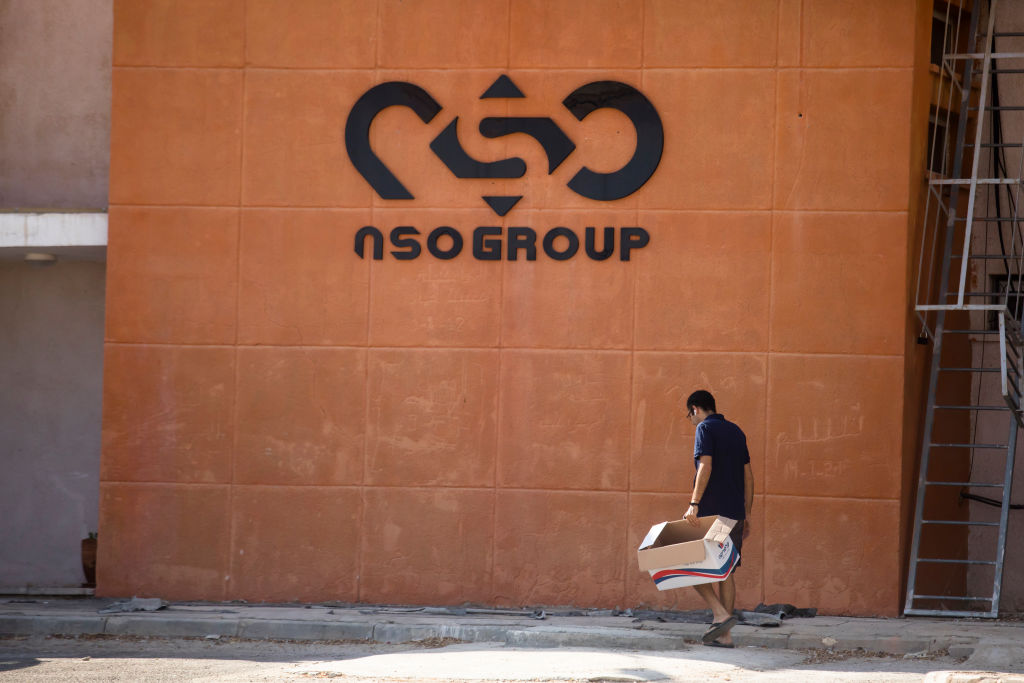
Enlarge/ A man walks by the building entrance of Israeli cyber company NSO Group at one of its branches in the Arava Desert on November 11, 2021, in Sapir, Israel.
Amir Levy | Getty Images
Apple is suing NSO Group Technologies, the Israeli military-grade spyware manufacturer that created surveillance software used to target the mobile phones of journalists, political dissidents, and human rights activists, to block it from using Apple products.
The iPhone maker’s lawsuit, filed on Tuesday in federal court in California, alleged that NSO, the largest known Israeli cyber warfare company, had spied on and targeted Apple users. It is seeking damages as well as an order stopping NSO from using any Apple software, device, or services.
NSO develops and sells its spyware, known as Pegasus, which exploits vulnerabilities in iPhones and Android smartphones and allows those who deploy it to infiltrate a target’s device unnoticed.
Apple’s suit provided new details about a recently patched vulnerability, nicknamed FORCEDENTRY, that was used by NSO’s clients for about eight months to deliver code to an unspecified number of targets.
NSO said its software had saved “thousands of lives . . . around the world” and that its technology helped governments “catch paedophiles and terrorists.”
The company has never provided any evidence to back up those claims, citing confidentiality agreements with the government agencies that NSO sells to with the approval of the Israeli authorities.
It has recently appealed to the Israeli government to help lobby the White House to remove NSO from a US Department of Commerce blacklist for selling a technology that has resulted in “transnational repression,” according to two people familiar with the request.
It is not known if the Israeli government has acted on that request.
The US government announced this month that it had added NSO Group and rival Tel Aviv-based Candiru to the trade blacklist, which would restrict exports of US hardware and software to the companies, as it cracks down on the global hacking-for-hire industry.
Apple’s lawsuit comes as Moody’s cut NSO’s debt two notches to eight levels below investment grade, indicating a high risk of default on $500 million in loans.
The company had fully drawn down a bank credit line, Moody’s said, and tight liquidity meant NSO could breach a covenant on its debt, leading to a default.
Pegasus was revealed in July to have been used to target smartphones belonging to dozens of journalists, human rights activists, and politicians, according to an investigation by a consortium of newspapers.
“State-sponsored actors like the NSO Group spend millions of dollars on sophisticated surveillance technologies without effective accountability. That needs to change,” Craig Federighi, Apple’s senior vice-president of software engineering, said in a statement. “Apple devices are the most secure consumer hardware on the market—but private companies developing state-sponsored spyware have become even more dangerous.”
Apple’s complaint comes just weeks after the US Court of Appeals for the Ninth Circuit held that NSO and its parent company Q Cyber were not sovereign entities and therefore were not shielded from an earlier lawsuit brought by Facebook accusing NSO of targeting users of its WhatsApp messaging service.
In the complaint, Apple called NSO a group of “notorious” and “amoral” hackers that act as “mercenaries” creating cyber-surveillance machinery “that invites routine and flagrant abuse” for commercial gain.
The US company accused NSO of violating multiple federal and state laws “arising out of their egregious, deliberate, and concerted efforts in 2021 to target and attack Apple customers.”
Apple issued an emergency software update in September after a vulnerability from Pegasus was exposed by researchers at the University of Toronto’s Citizen Lab.
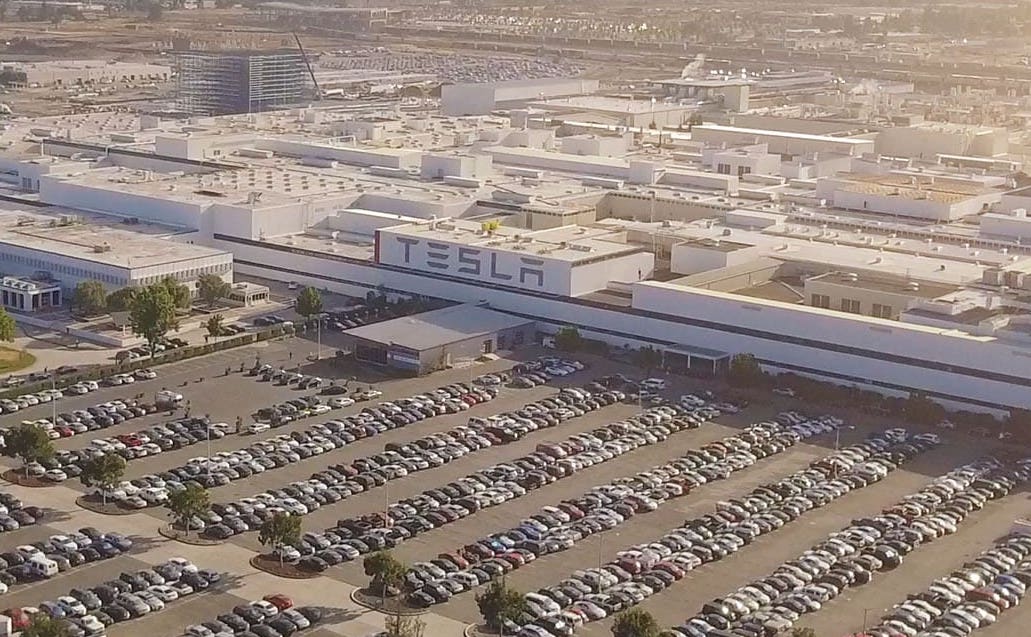
Tesla Motors was sued yesterday by an employee who alleges that she and other women working in the carmaker’s Fremont factory have been subjected to “nightmarish conditions of rampant sexual harassment.”
Jessica Barraza’s lawsuit against Tesla says that she works nights and that as “she walks to and from her work station at the beginning and end of shifts or breaks, men make comments like ‘She’s got fat titties,’ ‘She’s got cakes!,’ ‘That bitch hella thick,’ ‘Go ahead, sexy,’ ‘Damn, girl!,’ ‘She has a fat ass,’ ‘Oh, she looks like a coke bottle,’ and ‘Girl has an onion booty.'” Barraza began working on the Tesla factory floor as a production associate in October 2018 and had “hopes of spending her career at Tesla and rising through the ranks,” but she is now on medical leave after suffering panic attacks triggered by the harassment, the lawsuit says.
“Multiple times a week, male co-workers brush up against Ms. Barraza’s back-side (including with their groins) or unnecessarily touch her under the pretext of working together in close quarters,” the lawsuit alleges. Barraza says that managers and human resources personnel both failed to protect her even though she complained repeatedly.
“Ms. Barraza, who started her career at Tesla as a strong, confident, ambitious woman, is currently on a medical leave until the end of the year, ordered by her doctor, in treatment with a therapist who has diagnosed her with post-traumatic stress disorder, and on anxiety medication,” the complaint says.
Like a “construction site or frat house”
Barraza’s lawsuit was filed in Alameda County Superior Court in California. This is how the complaint’s first paragraph summarizes the alleged harassment:
Although Tesla publicly claims that it fosters a safe and respectful environment for its workers, the truth is that for years Tesla has subjected women working in its Fremont plant to nightmarish conditions of rampant sexual harassment. Tesla’s factory floor more resembles a crude, archaic construction site or frat house than a cutting-edge company in the heart of the progressive San Francisco Bay Area. The pervasive culture of sexual harassment, which includes a daily barrage of sexist language and behavior, including frequent groping on the factory floor, is known to supervisors and managers and often perpetrated by them. Jessica Barraza complained repeatedly to managers and to HR, who failed to protect her. She was forced to endure this atrocious and illegal behavior for years until she could not take it anymore. Ms. Barraza is bringing this case to put a stop to the systemic sexual harassment that plagues her and the other women at Tesla.
The complaint alleges sexual harassment in violation of the California Fair Employment and Housing Act, failure to prevent sexual harassment, and retaliation. Barraza says that Tesla retaliated against her after she complained about sexual harassment and that she was “denied certain privileges and benefits that were afforded to women who did not object to supervisors’ sexual advances and flirtations.”
Barraza’s complaint asks for compensatory damages, punitive damages, and injunctions preventing Tesla from continuing the behavior described in the lawsuit—including a requirement that Tesla “adopt training, monitoring, reporting, and enforcement policies reasonably calculated to immediately end such unlawful practices.”
Suit challenges Tesla’s mandatory arbitration
Barraza signed a mandatory arbitration agreement as a condition of employment when she took the job at Tesla, but her lawsuit alleges that the arbitration provision “is procedurally and substantively unconscionable and, therefore, unenforceable.” Tesla uses mandatory arbitration to “shield itself from public accountability,” Barraza alleges.
Barraza’s lawsuit against Tesla says she also filed a complaint with the Department of Fair Employment and Housing against the company for discrimination, harassment, and retaliation, and she obtained a right-to-sue notice that allowed her to file the lawsuit.
We contacted Tesla about Barraza’s lawsuit today and will update this article if we get a response.
Barraza’s lawsuit was filed about six weeks after a federal jury awarded $137 million to Owen Diaz, a Black worker who alleged that Tesla failed to take reasonable steps to prevent racist abuse at the Fremont factory. “It shines a light on what’s going on inside of Tesla’s factory,” Diaz reportedly said after the verdict. “Elon Musk, you’ve been put on notice. Clean that factory up.”
After the Diaz verdict, Tesla issued a statement stressing that the trial covered events from 2015 to 2016. Tesla has “come a long way from five years ago. We continue to grow and improve in how we address employee concerns,” the company said. But Barraza’s lawsuit alleges that sexual harassment at the Tesla factory continued until at least October 2021, shortly before she went on leave.
Tesla says that over 10,000 employees work at its Fremont factory.
Barraza has witnesses
Barraza’s complaint demands a jury trial and says there are witnesses who will testify about the “rampant” harassment at Tesla:
Ms. Barraza saw other women experiencing the same environment, and witnesses will testify that they too experienced or observed the rampant sexual harassment at Tesla. Ms. Barraza brings this action to hold Tesla accountable for the harm it has caused her and other women and to seek injunctive relief in the form of policy changes at Tesla that will put a stop to the unsafe, hostile work environment harming women at its Fremont factory.
Barraza’s lawsuit describes her as a 38-year-old mother of two. The sexist comments she gets while walking to and from her workstation “come not only from co-workers, but from supervisory ‘Leads,’ and within earshot of supervisors, and sometimes from supervisors themselves,” the lawsuit says. “One of her supervisors referred to her and other female colleagues as ‘bitches.’ That same supervisor re-assigned her to another area where his friend had a ‘crush’ on her, as if she were a ‘prize’ to be doled out. A Lead propositioned her by text message, and another supervisor flirted with her and told her how he controlled her career prospects.”
https://arstechnica.com/?p=1814448
Holmes claimed Theranos could do “more than 1,000 tests”—it did 12
Enlarge/ Elizabeth Holmes, founder of Theranos Inc., left, arrives at federal court in San Jose, Calif., on Tuesday, Oct. 12, 2021.
The jury in Elizabeth Holmes’ criminal trial heard from Theranos’ founder and former CEO for the first time yesterday. What she said, however, didn’t come from the witness stand—Holmes hasn’t been called to testify yet. Rather, the prosecution played interviews recorded by journalist Roger Parloff, who wrote a cover story about Holmes when he worked at Forbes magazine.
Over the course of 10 hours of taped interviews, Holmes made a number of remarkable, and damning, statements.
In one clip, Parloff asked her how many tests Theranos can perform. “I think can we say more than 1,000,” Holmes said.
In another excerpt, the jury heard Holmes telling the reporter that “the fact that we have a single device that can perform any test” was a trade secret.
The jury also heard Parloff asking Holmes whether Theranos could essentially replace Quest Diagnostics, one of the nation’s largest medical laboratories. Quest could do 600 some tests, Parloff pointed out to Holmes, including tissue biopsies.
“We can do all of those tests so we can provide data back to clinicians for all the same tests,” Holmes said after a brief hesitation. When asked why she hesitated and didn’t say “replaced,” she replied, “We’re processing the samples in different ways, let’s put it that way,” assuring Parloff that Theranos’ data is still of the “highest quality.”
Many of those statements were outright falsehoods or, more charitably, danced around the truth. In reality, Theranos couldn’t perform more than 12 tests on its Edison devices, former lab associate Erika Cheung told the jury earlier in the trial. Even then, “the Edison analyzer could only run one type of test for one patient at a given time,” Cheung said when she took the stand in September.
Holmes also shared with Parloff the doctored reports that sported various pharmaceutical company logos—including Pfizer, Schering-Plough, and GlaxoSmithKline. On the stand, Parloff confirmed that she never told him that the reports were produced by Theranos and hadn’t been approved by those companies.
Parloff also told the jury that Holmes never disclosed that most of their tests were performed using third-party devices, despite the fact that he asked her that question directly.
Article and correction
When Parloff’s article was published in June 2014, it became part of Holmes’ packet sent to woo investors. It’s easy to see why. In the article, Parloff described Theranos’ finger-prick method—“To me, it felt more like a tap than a puncture”—and he relayed the sheer number of tests the company could do at lower cost than competitors.
“Theranos’s tests can be performed on just a few drops of blood, or about 1/100th to 1/1,000th of the amount that would ordinarily be required,” Parloff wrote, “an extraordinary potential boon to frequently tested hospital patients or cancer victims, the elderly, infants, children, the obese, those on anticoagulants, or simply anyone with an aversion to blood draws.”
For Theranos, the article was a marketing gold mine. The company even linked to it from its website.
Yet, in July 2015, at a Theranos demonstration at a board member’s law firm, Parloff noticed something odd. The company had set up two devices, one to run a potassium test, another to run an Ebola test. “I was a little surprised they needed two machines because I thought one could do everything,” he told the court.
Months later, after The Wall Street Journal published its investigation into Theranos, Parloff went back to Holmes to ask her to clarify points made in the article. Specifically, he asked her how many tests Theranos could perform on its proprietary device as of late 2014, the date mentioned in his article. “She responded, ‘50, 60, maybe 70. We can get you that number,’” Parloff told the court.
Ultimately, he released a “protracted correction” in which he picked apart several claims Holmes made to him.
Uneven test results
Earlier in the day, the jury heard from Dr. Mark Burnes and his patient, Merhl Ellsworth. Though Ellsworth’s time on the stand was brief, testimony from Burnes, who ordered blood tests for him with Theranos, was revealing.
In the summer of 2015, the time of the tests, Ellsworth was a retired dentist who was about to embark on a two-year mission trip to Asia. He had checked in with his doctor to ensure he was fit to travel. Burnes ordered a prostate cancer screening, which Ellsworth had undergone before, and he recommended Theranos since the company’s tests were cheaper than the competition.
What followed sounds strikingly similar to another patient’s experience: when the results came back, Ellsworth’s prostate-specific antigen numbers were high, at 26.1, a potential sign of prostate cancer. Four days later, Ellsworth took another test. This time, the results were 1.71, which were similar to earlier pre-Theranos results and did not indicate the presence of cancer.
Still, Burnes wasn’t confident in either number and called Theranos. The regional lab director told him the first result was probably an error. Burnes said he would have Ellsworth take the test for a third time, and he asked the regional director if Theranos would reimburse for the cost, which it did.
The third test came back high once more—22.9. Burnes called Theranos, telling the court that in the conversation, “I expressed a lack of confidence in their tests.” He asked Theranos to pay for yet another test, this time with a venous draw. The company agreed, and the result was normal—0.95.
Inside Theranos, executive Daniel Young and other employees had been discussing the botched results in a lengthy email chain, which the jury saw had been forwarded to Holmes.
In cross-examination, Holmes’ attorney asked Burnes whether he was familiar with the error rate for medical diagnostic labs. Earlier, Burnes had pointed out that in his 30 years practicing medicine, he has interpreted over 10,000 tests for prostate-specific antigen. He told the defense attorney that, yes, labs can have errors. But “they’re very rare.”
In March 2016, nearly a year after Theranos ran Ellsworth’s blood, the company sent Burnes a corrected lab report in which it had voided the high numbers. The PSA results, it said, ”should not be used out of an abundance of caution.”
https://arstechnica.com/?p=1814434
FAA forced delay in 5G rollout despite having no proof of harm to aviation
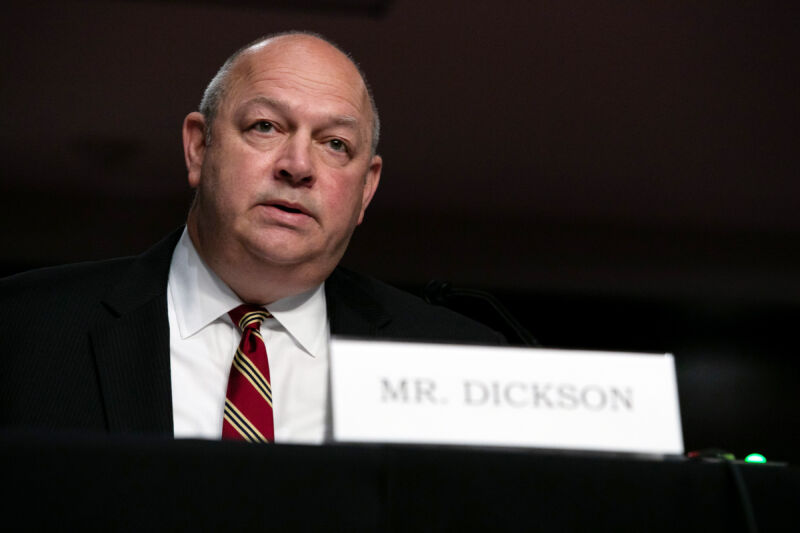
Enlarge/ Federal Aviation Administration Administrator Steve Dickson testifies before a Senate panel examining safety certification of jetliners on June 17, 2020, in Washington, DC.
Two weeks ago, AT&T and Verizon reluctantly agreed to delay the launch of 5G on newly acquired C-band spectrum licenses for one month, until January 5, in response to the Federal Aviation Administration’s claim that the new service could interfere with radio altimeters used in airplanes.
Mobile carriers aren’t alone in being frustrated by the delay. Telecom-industry observers point out that the Federal Communications Commission approved use of the C-Band spectrum from 3.7 to 3.98 GHz only after analyzing the aviation industry’s interference claims and finding no evidence to support the claims. The FCC also required a 220 MHz guard band that will remain unused to protect altimeters from interference. That guard band is more than twice as big as the 100 MHz buffer initially suggested by Boeing, the FCC has said.
Moreover, this spectrum is reportedly already being used for 5G in nearly 40 countries without evidence of the problems that US aviation officials are warning of. “Tick, tick, tick… US wireless leadership and national security await ‘resolution’ of unfounded concerns by FAA,” former FCC Commissioner Mike O’Rielly tweeted yesterday.
Verizon and AT&T dominated auction
Verizon and AT&T dominated the C-band auction when the results were announced in February 2021, with Verizon’s winning bids totaling $45.45 billion and AT&T’s adding up to $23.41 billion. T-Mobile spent $9.34 billion on C-band spectrum, but is primarily using 2.5 GHz frequencies for its midband 5G deployment. The FCC issued the C-band licenses in July 2021.
Verizon and AT&T have big plans for the C-band. They expect the 3.7-3.98 GHz spectrum to boost 5G networks with faster speeds than are provided on sub-1 GHz spectrum and larger coverage areas than are possible with millimeter-wave spectrum, which doesn’t perform well with obstacles or long distances.
The radio altimeters used to determine airplane altitudes rely on spectrum from 4.2 GHz to 4.4 GHz. The adjacent C-band was previously allocated to satellite service before the FCC repurposed it for cellular use. The band technically extends from 3.7 to 4.2 GHz, but the FCC limited cellular use to 3.98 GHz and below to create the 220 MHz guard band.
FAA slammed for “new heights of irresponsibility”
The FCC is the expert agency on spectrum interference, and some industry observers say that other US agencies have a history of claiming interference problems without good evidence. The “federal government’s processes for addressing spectrum policy [are] severely broken,” Harold Feld, a long-time telecom attorney and senior VP of consumer-advocacy group Public Knowledge, wrote in a lengthy blog post on the dispute last week. “Unhappy federal agencies that don’t like the outcome of an FCC proceeding respond by undermining the FCC in the press and trying to wage proxy wars through allies in Congress. But the FAA’s actions here take this behavior to new heights of irresponsibility and danger.”
Feld—a frequent critic of how telecom companies treat users—wrote that he sides with the wireless industry on this issue in part because the “FAA had a year to collect information on what altimeters were out there and start collecting data on whether 5G would cause harmful interference to any models, and what interference mitigation might be necessary to avoid any potential for harmful interference… Instead, the aviation industry (with the silent support of FAA) basically went for all or nothing. Every correspondence in the FCC record requests that the FCC prevent activation of 5G networks on any part of the C-Band until the aviation industry was satisfied that there was no potential risk of harmful interference.”
In some of the countries already using the C-band, “5G signals operate in spectrum adjacent to aviation equipment. US airlines fly in and out of these countries every day,” the wireless industry group CTIA’s president and CEO, Meredith Attwell Baker, wrote today. “If interference were possible, we would have seen it long before now. Nevertheless we’ve added a layer of protection in the United States, called a guard band, that is hundreds of times greater than the separation that exists between wireless and other critical spectrum users.”
FAA acknowledged no “proven” interference
The FAA issued a November 2 bulletin that warned of “potential adverse effects on radio altimeters,” but that bulletin acknowledged there have been no “proven reports of harmful interference,” even in countries that allow 5G transmissions above the 3.98 GHz limit set by the FCC.
“Many countries around the world are already deploying wireless networks in the bands from 3300-4200 MHz; some countries have implemented temporary technical, regulatory and operational mitigations, including temporary proximity and power restrictions, on wireless broadband networks operating in bands ranging from 3700-4200 MHz,” the FAA wrote. “There have not yet been proven reports of harmful interference due to wireless broadband operations internationally, although this issue is continuing to be studied.” The US has deployed wireless broadband in 3.65-3.7 GHz since 2007, the FAA noted.
In its February 2020 decision to reallocate C-band spectrum, the FCC said the aviation industry’s research was unrealistic and urged the industry to conduct more testing, saying that “further analysis is warranted on why there may even be a potential for some interference given that well-designed equipment should not ordinarily receive any significant interference (let alone harmful interference) given these circumstances.” About 20 months later, in the bulletin issued this month, the FAA recommended that “radio altimeter manufacturers, aircraft manufacturers, and operators voluntarily provide to federal authorities specific information related to altimeter design and functionality, specifics on deployment and usage of radio altimeters in aircraft, and that they test and assess their equipment in conjunction with federal authorities.”
The FAA’s new warning to the aviation industry also noted that the FCC first sought comment on using the C-band for mobile broadband in 2017.
“The 5G C-band issue has been pending for YEARS… why are they only now looking at better standards for altimeters?” spectrum technology and policy consultant Michael Marcus, an engineer who spent over two decades working for the FCC, wrote on Twitter yesterday. Marcus also pointed to a July 2012 report by a White House advisory council that recommended “methodologies for spectrum management that consider both transmitter and receiver characteristics to enable flexible sharing of spectrum” because “receiver characteristics increasingly constrain effective and flexible spectrum usage.” In other words: receivers should be designed well enough to protect themselves from interference from transmissions in other spectrum bands.
The FAA told the FCC in December 2020 that it “expect[s] that the cost of replacement or retrofit of radar altimeters will be substantial.”
https://arstechnica.com/?p=1814119
FBI raids home of Trumpist county clerk in probe of voting-system passwords leak [Updated]
The FBI joined state and local authorities in reportedly raiding the homes of Mesa County Clerk Tina Peters and several associates yesterday as law enforcement agencies continue investigating a voting-machine security breach from Peters’ office.
“The FBI carried out a court-ordered search of Peters’ home in Mesa County early Tuesday morning, leaving her ‘terrified,’ Peters said Tuesday night in an appearance on Lindell TV, an online channel run by MyPillow CEO Mike Lindell, a Trump supporter and proponent of discredited claims the 2020 election was stolen,” Colorado Politics reported yesterday.
Colorado Politics wrote that federal, state, and local authorities searched the homes of “Peters and three of her associates on Tuesday as part of an investigation into accusations the elected official was involved in voting machine security breaches.”
“We executed four federally court-authorized operations today to gather evidence in connection with the investigation into the Mesa County Clerk and Recorder’s Office,” Mesa County District Attorney Dan Rubinstein told the news site. “We did so with assistance from the DA’s office from the 21st Judicial District, the attorney general’s office and the FBI.”
We contacted Rubinstein, the FBI, and the Colorado attorney general’s office today and will update this article if we get any more information on the raids and investigation.
(Update, 5:05 pm EST: We received a statement from the Mesa County government, which said: “On the morning of Nov. 16, the FBI conducted federally-authorized law enforcement actions into potential criminal activity by employees of the Mesa County Clerk and Recorder’s Office and others associated with those employees. The activity occurred in both Mesa and Garfield Counties at four separate locations. Investigators with the 21st Judicial District Attorney’s Office (Mesa County, Colo.) and the Colorado Attorney General’s Office assisted in the operations. No arrests were made, and the operations are related to ongoing investigations. Per order of a federal court, all documents related to these operations are sealed.”)
“The FBI raided my home”
“The FBI raided my home at 6 a.m. this morning, accusing me of committing a crime,” Peters reportedly said on the Lindell channel. “And they raided the homes of my friends, mostly older women. I was terrified.” Peters reportedly said the search of her home took about three hours, that her phone and other electronic devices were confiscated, and that law enforcement officers conducting the raid “looked very much like they were in a combat zone—soldiers with automatic weapons and combat gear.”
“She added that authorities ‘used a battering ram,’ destroying the front door of one of her friends’ homes,” Colorado Politics wrote.
The FBI confirmed in August that it had joined the criminal investigation into the security breach and was working with Mesa County prosecutors on the matter.
One of the homes searched yesterday reportedly belongs to Sherronna Bishop, a Peters supporter who once served as the campaign manager for Rep. Lauren Boebert (R-Colo.). Bishop’s support of the Proud Boys far-right extremist group apparently got her sacked from the Boebert campaign last year.
https://arstechnica.com/?p=1813884
Small-city mayor arrested in big revenge-porn case, faces 50 criminal charges
Enlarge/ Andrew Bradshaw, mayor of Cambridge, Maryland.
The mayor of a small city in Maryland today was arrested and charged with 50 counts of distributing revenge porn on Reddit, the Maryland state prosecutor’s office announced.
Cambridge Mayor Andrew Bradshaw, 32, “created multiple accounts on the public Internet forum ‘Reddit,’ employing public usernames consisting of permutations of the name and birthdate of a person, identified as Victim-1, who had a past romantic relationship with Mr. Bradshaw,” the announcement said. Bradshaw allegedly “posted nude photographs of Victim-1, captioned with racial slurs and sexually explicit language, on those ‘Reddit’ accounts and various ‘Subreddit’ forums that were related to sexual activity, humiliation, degradation, race, and other topics.”
Each of the 50 counts carries a maximum penalty of two years in prison and a fine of $5,000. Police had executed a search and seizure warrant at the mayor’s office in City Hall on August 4.
Bradshaw was sworn in as mayor in January 2021 after defeating incumbent Victoria Jackson-Stanley in a runoff election, reportedly with 1,643 votes to Jackson-Stanley’s 1,219 votes. Cambridge had an estimated 12,260 residents as of July 2019.
Woman contacted police after discovering Reddit posts
The state prosecutor detailed the allegations in a charging document filed in Circuit Court for Dorchester County. The document says that Bradshaw’s alleged victim is a woman born in 1995 who contacted law enforcement in May 2021 after discovering that nude photographs of herself were posted on Reddit without her consent.
“Victim-1 advised that she transmitted the posted photographs only to one other person, Andrew Bradshaw, that the photographs were sent when she and Bradshaw were in an intimate relationship, and that she did not provide Bradshaw with consent to re-distribute the photographs. Victim-1 advised law enforcement that she is no longer romantically involved with Bradshaw,” the charging document says.
Bradshaw was charged with violating Maryland’s revenge-porn statute, which “prohibits the nonconsensual distribution of a private visual representation of another which exposes their intimate body parts or displays them engaged in sexual activity, with the intent to harm, harass, intimidate, threaten or coerce the person depicted,” the state prosecutor’s announcement said.
“Online court records indicate he was released on his own recognizance after appearing in Dorchester Circuit Court on Monday,” The Washington Post wrote.
Insulting captions included racial slurs
Reddit accounts with usernames based on the victim’s name and date of birth “were utilized to post photographs of Victim-1’s face and intimate parts to public Reddit forums,” the charging document said. Those forums include “subreddits named ‘HumiliatingComments,’ ‘DegradeThisPig,’ ‘DegradedCaptions,’ ‘Slut,’ and ‘needysluts,'” the document said. “Additional photographs of Victim-1 were posted in subreddits specifically related to ‘raceplay’ with racial slurs in several of the posting titles.” The revenge-porn posts were made from an IP address traced to a house that Bradshaw owns in Cambridge, the document said.
Racial epithets allegedly used by Bradshaw in photo captions were redacted from the copy of the charging document provided by the prosecutor’s office. The document says captions on the revenge-porn photos included “Ready to try my first ever [redacted] dick,” “The kind of white girl [redacted] love to nut on,” “I have no self-esteem, and just want to be covered in cum to know my fat body has a purpose,” “Every morning, I get off to the thought of dozens of guys jerking off and pumping out their load to pics of my fat titties <3,” “Would you rather cum in me, on my titties, on my tummy, or on my face???,” “chubby white girl looking for a [redacted] daddy to message with,” and “Ready to put a [redacted] dick between these titties for the first time ;).”
“The business of the City is unaffected”
The Baltimore Sun reported on how Cambridge’s government will proceed while the mayor faces criminal charges:
David Deutsch, Cambridge’s acting city manager, said the city’s commissioners will be meeting with the city attorney “shortly” to examine the city charter and code to see “what options exist and if any action needs to be taken.” That’s likely to take place before the commissioners’ next meeting in mid-December, he said.
In the meantime, Bradshaw remains the city’s mayor, Deutsch said.
“Government operations are still moving forward,” Deutsch said. “The legal issues surrounding the mayor is a personal matter and doesn’t involve city business.”
The city also posted a statement on its website. “The City is currently gathering information and will cooperate fully with the Maryland State Police and the Office of the State Prosecutor,” the statement said. “As the City has a Council-Manager form of municipal government whereby the City Manager serves as the chief executive officer of the City and the head of its administrative branch, the business of the City is unaffected. As this is an active legal matter, no further comments will be made at this time.”
The youngest mayor in Cambridge’s history, Bradshaw graduated magna cum laude from Penn State and has experience working in his family’s body shop business and serving as a volunteer firefighter, according to his bio on the city’s website.
https://arstechnica.com/?p=1813203
Amazon liable for crash because software “micromanages” delivery drivers, victim says
Enlarge/ An Amazon delivery truck drives down a street in Anaheim, California.
Amazon is currently defending itself against a lawsuit that could determine whether it is liable for the actions of its contract delivery drivers.
In March, Ans Rana was going to see his sister’s new house with his father and brother, who was driving a Tesla Model S, when they came upon a disabled vehicle on Interstate 75 outside Atlanta. Rana’s brother slowed to a near stop, but the Amazon delivery van behind them apparently didn’t notice. The driver of the van was going nearly 14 miles per hour over the speed limit, Rana’s lawyers allege in a lawsuit. The van slammed into the rear of the Tesla with such force that it pushed the car into the left lanes of the interstate where it was struck by a Toyota Corolla before hitting the median barrier.
Rana suffered life-threatening injuries, including a traumatic brain injury, and had to be placed on a ventilator. His spinal cord was also damaged, and he hasn’t been able to regain the use of his legs or arms despite months of therapy and rehabilitation.
“I have lost my legs, which I wouldn’t wish on my worst enemy,” Rana told Bloomberg.
In June, Rana sued Amazon and its delivery contractor, alleging that the e-commerce giant is responsible for the driver’s actions because of the software the company uses to monitor them. Amazon says it isn’t liable because the driver didn’t work for it but, rather, for Harper Logistics LLC, a contractor that handles deliveries for the tech firm.
Software in play
Yet, Rana’s lawsuit alleges that Amazon is liable because it is ultimately in control of the delivery operation. Amazon closely monitors its drivers through the use of a smartphone app and in-van cameras and sensors in a bid to minimize delivery times and address safety concerns. The company keeps close tabs on a number of actions drivers take, including “backup monitoring, speed, braking, acceleration, cornering, seatbelt usage, phone calls, texting, in-van cameras that use artificial intelligence to detect for yawning, and more,” the lawsuit says.
What’s more, the lawsuit claims that Amazon pushes contractors and drivers to prioritize speed over safety, with Amazon employees sending text messages “complaining that a certain driver is ‘behind the rabbit’ and needs to be ‘rescued’ to ensure that all the packages on Amazon’s route are delivered in compliance with Amazon’s unrealistic and dangerous speed expectations,” it says.
In addition to Amazon, Rana is suing contractor Harper Logistics, driver Bryan Williams, and Old Republic Insurance, the contractor’s insurance company. But it’s unlikely anyone but Amazon will be able to cover Rana’s costs, especially since medical bills already exceed $2 million. Harper Logistics’ insurance policy only covers $1 million for liability, and the company doesn’t own the vans it operates, meaning even if it went bankrupt, it probably couldn’t cover the cost. Williams, who is 23 years old, only makes $15 an hour. Amazon, on the other hand, made over $3 billion in profit last quarter.
“Committed to safety”
Amazon spokeswoman Maria Boschetti told Bloomberg that the company is “committed to the safety of drivers and the communities where we deliver.” She added that Amazon works with delivery contractors to “set realistic expectations that do not place undue pressure on them or their delivery associates.” Boschetti said that the number of incidents per mile for the first nine months of 2021 are down compared with the same period last year.
Delivery drivers typically work 10-hour shifts and deliver around 250 packages, depending on the route. They drive Amazon-branded vans, wear Amazon-branded uniforms, and have to use Amazon’s Flex app, which the lawsuit says “micromanages every imaginable aspect of delivering the packages.”
AT&T refused to “listen to anybody” at Time Warner after buying it, ex-CEO says
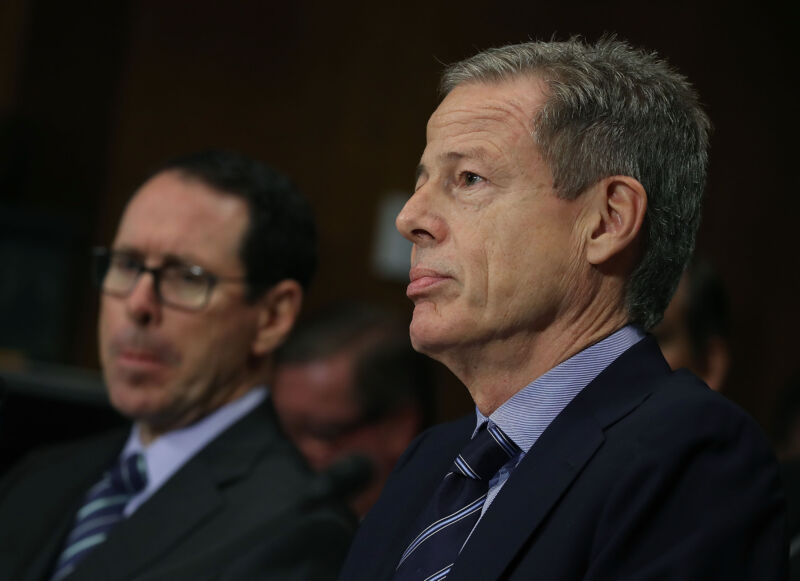
Enlarge/ Time Warner CEO Jeff Bewkes (R) and AT&T CEO Randall Stephenson (L) at a Senate Judiciary Subcommittee hearing about the AT&T/Time Warner merger in December 2016.
Getty Images | Mark Wilson
Former Time Warner CEO Jeff Bewkes says that he and other board members were surprised that AT&T mismanaged the media company after buying it in 2018. Bewkes is quoted about the aftermath of the $108 billion merger in a James Andrew Miller book called Tinderbox: HBO’s Ruthless Pursuit of New Frontiers, which will be released on November 23.
The Wall Street Journal received an advance copy of the book and published an article today describing Bewkes’ comments:
While Mr. Bewkes doesn’t express regret over the decision to sell to AT&T, he said he is angry about how his team of top executives and the staff were treated.
Among the high-profile departures were HBO’s former boss, Richard Plepler. Mr. Plepler left after clashes over strategy with John Stankey, who was tapped to run the entity—rebranded as WarnerMedia—and now is chief executive of AT&T.
“The most disappointing thing to me about the AT&T merger,” Mr. Bewkes is quoted in the book as saying, is that he and his board thought AT&T “would basically leave our people alone.” That didn’t happen, he said. “We didn’t think they would go to such a level of malpractice as to not listen to anybody… even though they themselves had no experience in those areas.”
Bewkes suggested merger with AT&T
Bewkes was Time Warner CEO from 2008 to 2018 and was previously the CEO of HBO. He apparently proposed the sale to AT&T several years before it happened.
“Mr. Bewkes first planted the seed of a sale of Time Warner to AT&T in 2014, as he was looking to fend off Rupert Murdoch’s 21st Century Fox’s takeover attempt,” the WSJ article said. At the time, “Mr. Bewkes bumped into Randall Stephenson, AT&T’s then-chief executive, at the Allen & Co. conference in Sun Valley, Idaho, and told him, ‘our conversation ought to be with you’ instead of Rupert Murdoch, Fox’s then-chief. Mr. Stephenson replied, ‘hold that thought… maybe one day we’ll talk.'”
The Journal article said that “Bewkes confirmed the accuracy of his quotes in the book” and that AT&T representatives confirmed the accuracy of quotes attributed to Stankey and Stephenson. Stankey took over as AT&T CEO when Stephenson retired in mid-2020.
AT&T completed its acquisition of Time Warner in June 2018 after defeating a Department of Justice lawsuit that tried to block the deal. Bewkes left the top post at the same time, collecting an exit package reportedly worth nearly $98 million. Bewkes “agreed to remain with the company as a senior advisor during a transition period,” an AT&T press release at the time noted. His quotes about AT&T’s mismanagement of Time Warner seem to refer to that transition period.
Shortly after AT&T assumed ownership of Time Warner, Stankey told HBO employees at a town hall-style meeting that the network wasn’t making enough money and needed to produce more shows. Plepler resigned in February 2019 amid reports that he was frustrated about having less autonomy to run HBO under AT&T’s ownership.
AT&T spinning-off Time Warner division in 2022
AT&T in May 2021 announced a plan to spin-off WarnerMedia into a new company only three years after buying Time Warner. AT&T struck a deal with Discovery, Inc. to combine WarnerMedia’s and Discovery’s assets into a “standalone global entertainment company” and said the transaction would close in mid-2022. With AT&T having also spun-off DirecTV into a subsidiary, the telecom company will focus on what it probably should have prioritized all along: broadband.
AT&T eliminated tens of thousands of jobs across its media and telecom divisions after the Time Warner merger. AT&T had 273,210 employees immediately after buying Time Warner in mid-2018 and 226,840 as of June 30, 2021. The AT&T employee count dropped to 214,840 after the DirecTV spinoff was completed in August.
Despite giving up on Time Warner, Stankey defended AT&T’s stewardship of the company. “If you are in an acquisition and somebody pays a premium for your stock, by definition it means something has to change,” Stankey is quoted as saying in Miller’s book, according to the WSJ. “If you paid a premium for an operation and you continue to operate it exactly the same way, you never pay back the premium.”
Stankey also said that “he still believes in the vision behind AT&T’s purchase” but that he made the spinoff deal with Discovery in part because investors “refused to give us credit for [the] progress” made with Time Warner. “One of the jobs I need to do in carrying AT&T forward is ensuring we come up with a strategy that the investor base will tolerate and work through and give us the right credit for,” Stankey said.
https://arstechnica.com/?p=1813098
Doom’s creator goes after “Doomscroll”
Aurich Lawson | Getty Images
Dustin Mitchell was scanning the local news one day when inspiration struck in an unlikely article. The report was on a woman who, in a fit of QAnon mania, had destroyed a display of face masks at a Scottsdale, Arizona, Target store. The woman later explained what brought her to that point: “All I did was doomscroll,” she said, referring to her voracious consumption of disastrous news on social media. Something in Mitchell clicked.
“That’s a killer name for a band,” thought Mitchell, a metal guitarist in Dallas, Texas. “I got to do that.”
Mitchell, 38, whose day job involves operations at Amazon, says he doesn’t personally doomscroll. Mitchell is not very online; he’ll check local news every now and then, maybe NPR, but doesn’t use Twitter or Reddit outside of researching new gear for his music. To Mitchell, Doomscroll was the impetus he needed to start his new “progressive thrash metal band.” To set it in stone, last February, Mitchell filed his first trademark request with the US Patent and Trademark Office for the word “doomscroll.” And a few months later, he received an email from the USPTO acknowledging that the trademark would go through in 30 days and then officially publish. At that point, Doomscroll would become Mitchell’s alone to protect and exploit as a band name and entertainment property. Doomscroll would, one day, rock. Mitchell registered www.facebook.com/doomscroll in anticipation.
In October, Mitchell was noodling around on his guitar before bed when he decided to check his email one last time. A message from a lawyer appeared in his inbox. “Dear Mr. Mitchell,” it read. “My law firm represents Id Software LLC which owns the video game DOOM and related registered trademarks.” That day, October 13, it continued, was the deadline for Id Software LLC, or anyone else, to oppose his trademark application to register “doomscroll.” The lawyer asked Mitchell to agree to extend the deadline. That way, Mitchell and the Doom developer could find time to reach a resolution before any legal action went down.
Mitchell immediately felt funny; even a little sour. He was 10 in 1993, when Doom took the gaming world by storm, empowering edgelord gamers to head-pop demons with a bevy of firearms against the background of fiery hell. He had played Doom and Doom 2 back in the day, both of which he describes as “awesome,” and had listened to the metal-inspired soundtrack for 2020’s Doom Eternal, which he describes as “not bad.” Now Mitchell found himself in an unexpected standoff with its developer. He loved those games as a kid, he says, but “they’re trying to take something away from me that is completely unrelated to them.”
The first use of doomscroll is often credited to a 2018 tweet: “Taking a break from doomscrolling and being inundated with things and stuff,” wrote artist Calla Mounkes. “I’ll be back Tuesday or something.” Mounkes says she had been using the term since 2017 but isn’t sure she came up with it. “I think it was something that was coming up in our public conscience,” she told WIRED over email. “When we are all attached to a smartphone, just as I am writing this from one, it is inevitable that we will come up with language to describe our forever fascination with social media.”
In 2020, when the crashing waves of headlines on coronavirus, police violence, and the election merged into an endless hurricane of morbidity, the term doomscrolling hit the mainstream. Searches for the term skyrocketed on Google, reflecting a collective compulsion to endlessly scroll feeds of ominous news on Twitter, Facebook, Reddit, and other social media. It was a recognition of our masochistic tendency to obsess over the negative, a shared sickness of the perennially online. Everyone from boomer parents to Stephen Colbert was saying it, doing it, trying not to do it. “In a situation like that, we engage in these more narrow, immediate survival-oriented behaviors. We’re in fight-or-flight mode,” University of Michigan School of Information professor Nicole Elisson told WIRED last year. Psychologists say doomscrolling erodes mental health, often eliciting anxiety and depression.
A fun quirk of trademarks is that nobody can trademark “doomscrolling” as defined as an online outlet for mass hysteria. You can’t trademark a generic term used to describe or define a generic phenomenon or object. Apple, for example, can’t be registered as a trademark for apples, but it can be registered as a trademark for computers, because the word “apple” doesn’t describe computers. As a name for a progressive thrash metal band, “doomscroll, in the musical context, is not generic or descriptive of music, musical performances, or musical services. So in theory, yes, you can apply to register and successfully register that mark,” says Anna Chang, a lawyer for Sideman Bancroft who specializes in trademark law. “Assuming there’s no opposition which, in this case, there is.”
If there’s anyone most associated with the word, it’s finance journalist Karen Ho of Business Insider. In April 2020, Ho noticed herself, frenzied and anxious, scrolling Twitter late into the night, which cut into her sleep. And it wasn’t just her; it was all of the journalists she knew. She began tweeting out reminders to drink a glass of water, stretch, log off, go to bed. Soon, Ho became known on Twitter as “Doomscroll Reminder Lady.” Several times, she says, people have asked her to trademark the term to write a book or sell merchandise.
“I would just like one job, please,” she tells WIRED. Plus, she says, she didn’t invent the term; she just popularized it (through, she estimates, about 55 interviews with journalists and scholars). Eventually Ho outsourced her reminders to @Doomscroll_Bot, a Twitter bot that has amassed 16,000 followers since its creation in May 2021. In June 2020, Merriam-Webster added doomscroll to its “Words We’re Watching” category, which tickled Mounkes, who is a self-described bookworm. She says she always “wanted to be a coiner of words specifically, so I kind of feel like I’ve made it.”
Chang says it’s pretty typical for a company like Id Software to scoot into a trademark filing like this to prevent other people from using the term in a way that would cause confusion around its product—in this case, the video game Doom. In 2017, sci-fi fans threw a fit when video game publisher CD Projekt Red trademarked the word “cyberpunk” in the EU for its noir open-world game Cyberpunk 2077. Cyberpunk is a time-honored genre; how could a Polish game company trademark it? In an explanatory tweet, CD Projekt Red claimed it was a “self-defense measure only,” adding that if someone else registered the trademark in the future, they could prevent the game publisher from making, say, Cyberpunk 7702. And anyway, CD Projekt Red had held the trademark “cyberpunk” in the US since 2011.
Id Software is scooting in on “doom” in the same way. The company owns several trademarks around the word “doom” and video games; in the last month, the company has also filed oppositions to trademarks for “ODoom” and “Doomlings.” Prior to that, Id Software filed oppositions to entertainment properties the Maryland Doom Fest, Garden of Doom, and Doomsday Happy Hour. JB, the guy behind the Maryland Doom Fest, says he didn’t pursue the trademark after Id’s initial opposition. It would have been too expensive, he guesses. Jeff, who tried to trademark Garden of Doom, his podcast, says he came to an agreement with the lawyers representing Id Software; he says he just can’t make a movie or video game called Garden of Doom.
Right now, the fate of Doomscroll is in the hands of Id Software and the Patent Office. The Trademark Trial and Appeal Board is processing the Doom developer’s opposition. A hefty trial schedule was sent out mid-October, which stretches deep into 2023. It may not be that Id Software even wants the Doomscroll trademark; it might just not want Mitchell to form a progressive thrash metal band that, maybe, someone will confuse with the storied game series.
Doomscroll may never rock. That could be a good thing; it could be too soon for a band that reminds us of our concentrated anxieties, the addictiveness of social media negativity. Mounkes thinks it’s good for other reasons. “I hope no one makes money off of ‘doomscroll,’” she says. “It’s a kind of a lame band name.”