Natural gas customers in Texas get stuck with $3.4 billion cold-snap surcharge

Natural gas customers in Texas get stuck with $3.4 billion cold-snap surcharge
Getty Images

Texans will be paying for the effects of last February’s cold snap for decades to come, as the state’s oil and gas regulator approved a plan for natural gas utilities to recover $3.4 billion in debt they incurred during the storm.

The regulator, the Railroad Commission, is allowing utilities to issue bonds to cover the debt. As a result, ratepayers could see an increase in their bills for the next 30 years.

During the winter storm, natural gas prices spiked as cold temperatures drove demand up while also depressing supply. Much of Texas’ natural gas comes from fracking, which uses large amounts of water. To prevent the wellheads from freezing, many producers shut-in their wells in advance of the storm. The governor’s office knew of the looming shortages days before they happened, yet the preparations they made did little to alter the course of the disaster.

The shortfall caused a cascade of effects throughout the state. Many wells run on electricity, but the state lost half its generating capacity. Many natural gas-fired power plants had to shut down because they weren’t weatherized—their equipment was literally frozen. Even those that could operate had a hard time receiving gas because of the wells that were either shut in or frozen. Power producers paid an extra $8 billion to gas producers during the five-day storm.

Gas sellers made record profits in just a few days, together bringing in as much as $11 billion, about 70–100 times more than normal, based on spot prices at the time.

Meanwhile, many Texans suffered through blackouts and bitter cold, and 210 people died, according to the latest estimate from the Texas Department of State Health Services.

Calls for winterization

In the wake of the storm, many officials have called on utilities and oil and gas companies to winterize their operations. In a law passed in May, the Railroad Commission was given the authority to write regulations for critical gas infrastructure, including winterization. But facilities have to voluntarily submit forms declaring that they’re critical infrastructure, and the regulator says that the law includes a loophole that allows gas producers, for $150, to file for an exemption from winterizing wellheads. (The fee amount is laid out in another Texas law, which lawmakers apparently overlooked.) Winterizing a wellhead, on the other hand, can cost tens of thousands of dollars.

Texans aren’t the only ones whose bills are higher as a result of producers’ and utilities’ unwillingness to winterize their equipment. Utilities around the country were forced to buy natural gas at significantly higher prices when Texas’ markets went haywire as a result of low supply and high demand. Ratepayers as far away as Minnesota will be paying surcharges for years to come after their utilities had to pay $800 million more than expected for natural gas.

“The ineptness and disregard for common-sense utility regulation in Texas makes my blood boil and keeps me up at night,” Katie Sieben, chairwoman of the Minnesota Public Utility Commission, told The Washington Post in April. “It is maddening and outrageous and completely inexcusable that Texas’ lack of sound utility regulation is having this impact on the rest of the country.”

https://arstechnica.com/?p=1812787


The US closes Huawei loophole, will no longer grant exceptions for ISPs

Giant Huawei logo onstage.

The Biden administration has found yet another way to tighten restrictions on Huawei and other Chinese companies that the US government has designated as national security threats. Both sides of the political aisle in the US have gone after the smartphone and networking giant, starting with the Trump administration in 2019. The latest restriction: there will no longer be special exceptions for network operators using Huawei’s equipment.

The new law, called the “Secure Equipment Act of 2021,” will require the FCC “to establish rules stating that it will no longer review or approve any authorization application” for “radio frequency devices that pose a national security risk.” The law covers any company that lands on the list of untrusted companies, which currently covers Huawei, ZTE, Hikvision, Hytera, and Dahua Technology. The Federal Communications Commission previously banned US companies from using networking gear from these providers. It also ordered ISPs to replace any existing equipment, and Congress established a $1.9 billion equipment replacement fund, lovingly nicknamed the “Huawei Rip & Replace” program, to make it happen. Flying in the face of all this anti-Huawei action was the FCC’s ability to approve exceptions on a case-by-case basis, and now this loophole has been closed.

FCC Commissioner Brendan Carr has been pushing for this legislation to pass, saying back in March, “Once we have determined that Huawei or other gear poses an unacceptable national security risk, it makes no sense to allow that exact same equipment to be purchased and inserted into our communications networks as long as federal dollars are not involved. The presence of these insecure devices in our networks is the threat, not the source of funding used to purchase them.”

The one part of Huawei that still isn’t banned in the US is Honor, Huawei’s smartphone brand that was spun off as a separate company after the Huawei ban. Honor is a value-oriented sub-brand of Huawei, similar to how the US automotive giant General Motors owns Chevy, Cadillac, GMC, and other brands aimed at different markets. Huawei sold Honor to a company called “Shenzhen Zhixin New Information Technology Co., Ltd.,” which the Associated Press reports is still a state-owned company. Honor has the same parts, suppliers, software, and executives as Huawei, with the only real difference being that it makes phones and not networking equipment.

Honor is now one of the fastest-growing brands in China, filling the vacuum left by Huawei now that US sanctions are limiting Huawei’s ability to sell phones. News about a possible Honor ban came in September from The Washington Post, which said US officials were still unsure if the company posed a security threat.

https://arstechnica.com/?p=1812582


Flint water crisis costs Michigan $600 million—preventing it would have cost $80/day

The city of Flint Water Plant water tower in Flint, Michigan.
Enlarge / The city of Flint Water Plant water tower in Flint, Michigan.
Brett Carlsen/Getty Images

Residents of Flint, Michigan, began complaining in 2014 that their water tasted bad, smelled foul, and came out of the tap discolored. The city had switched water supplies to save money, and in the process, the city and state failed to add anti-corrosion chemicals to the new supply. Flint’s aging pipes began to poison its residents. People suffered rashes after bathing, children were exposed to high levels of lead, and at least a dozen people died from Legionnaires’ disease.

Residents, pediatricians, and pastors sounded the alarm, but it wasn’t until they sued the city and state that a federal judge ordered bottled water to be delivered to every affected home. 

In the intervening years, though, up to 20,000 children were exposed to potentially dangerous levels of lead. In some neighborhoods, the percentage of children who suffered from lead poisoning tripled.

Now, a judge has approved a settlement that will distribute $626 million to people affected by the avoidable disaster. Lead poses the most risk to children, particularly young children whose nervous systems are developing rapidly. Eighty percent of the net settlement will go to residents who were younger than 18 when they were exposed to the tainted water, and a majority of that sum will go to children who were six years old or younger. Another $35 million will be set aside for minors who for whatever reason do not file claims immediately, giving them until they are 19 years old to do so.

“Remarkable achievement”

“The settlement reached here is a remarkable achievement for many reasons,” Levy said in the lengthy opinion. Most notable, she said, was the fact that everyone affected by the crisis will be covered in the settlement, regardless of whether they were represented in the class action or brought their own lawsuits. Levy said the matter of attorney fees “will be addressed in a separate opinion and order.” Attorneys have asked for around $200 million in fees for some 182,000 hours of work.

Taylormatthias Wilson-Williams, 2 months, is pictured outside of a water distribution area at the St. Mark Baptist Church in Flint, Mich., on February 23, 2016. He was born 12 weeks premature, and his mother, Tiantha Williams, believes the complication was related to her home's contaminated drinking water. He must use a heart monitor and breathing machine.
Enlarge / Taylormatthias Wilson-Williams, 2 months, is pictured outside of a water distribution area at the St. Mark Baptist Church in Flint, Mich., on February 23, 2016. He was born 12 weeks premature, and his mother, Tiantha Williams, believes the complication was related to her home’s contaminated drinking water. He must use a heart monitor and breathing machine.
Tom Williams/CQ Roll Call

“The portion of the $626.25 million settlement to be paid by the state of Michigan is one of the largest settlements in the state’s history,” Levy pointed out. The city of Flint, an engineering firm, and a hospital where many cases of Legionnaires’ were contracted will pay about $26 million, and the state will cover the rest. Residents will be eligible if they have elevated lead levels in their blood or bones or if they suffer from cognitive problems that can be traced to lead. 

Behind the switch

The Flint water crisis was among the worst of its kind in recent history. The city has about 95,000 residents, and some 18,000–20,000 were children and adolescents during the crisis. It began on April 25, 2014, when the city’s water supply was switched to the Flint River to save $5 million a year. Though the previous source had been treated with corrosion inhibitors that maintain a protective scale on the inside of lead pipes, officials from Gov. Rick Snyder’s administration decided against adding the inhibitors, even though the practice was mandated by the Environmental Protection Agency for cities over 50,000 people. 

Adding the treatment would have cost about $80–$100 per day, and officials apparently never intended to do so—they didn’t even install the equipment needed to add the compounds. It didn’t take long for the scale to corrode and the water to turn brown and become laced with lead.

Former Gov. Rick Snyder and eight others have been charged with crimes related to the Flint water crisis. They have all pleaded not guilty.

Earlier this year, President Joe Biden made it a priority to replace existing lead water pipes throughout the US. The $1 trillion infrastructure bill that recently passed in the House of Representatives dedicated $15 billion toward the effort.

https://arstechnica.com/?p=1812632


You shall not pinch to zoom: Rittenhouse trial judge disallows basic iPad feature

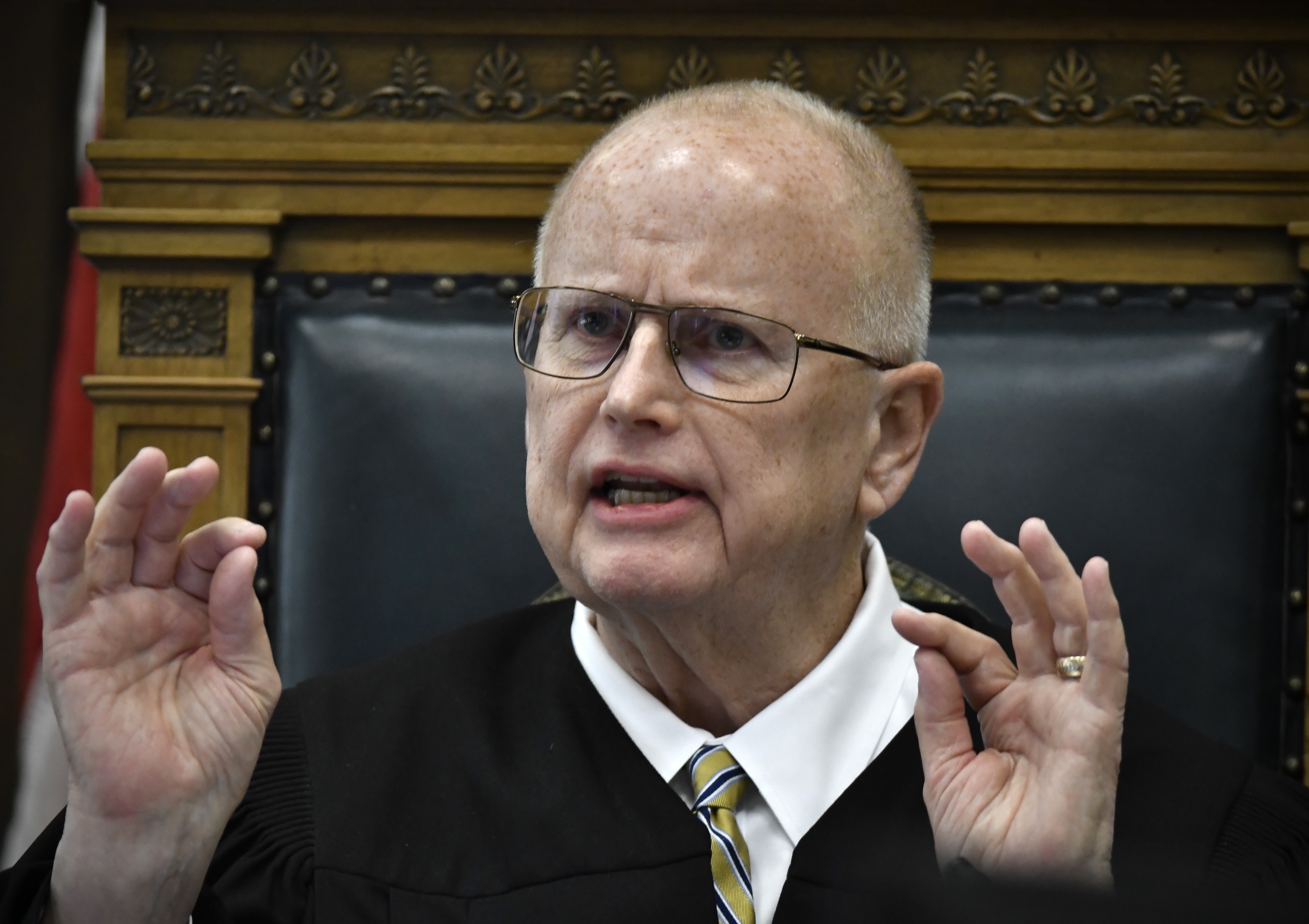
Judge Bruce Schroeder speaking from the bench and gesturing with his hands.
Enlarge / Judge Bruce Schroeder reprimands Assistant District Attorney Thomas Binger during cross-examination of Kyle Rittenhouse at the Kenosha County Courthouse in Wisconsin on November 10, 2021.
Getty Images | Pool

When Kenosha County prosecutor Thomas Binger cross-examined murder suspect Kyle Rittenhouse yesterday, he wanted to show Rittenhouse video on an iPad and use a touchscreen feature that phone and tablet owners around the world use every day: pinch-to-zoom.

Judge Bruce Schroeder’s ruling? You shall not pinch.

Schroeder prevented Binger from pinching and zooming after Rittenhouse’s defense attorney Mark Richards claimed that when a user zooms in on a video, “Apple’s iPad programming creat[es] what it thinks is there, not what necessarily is there.” Richards provided no evidence for this claim and admitted that he doesn’t understand how the pinch-to-zoom feature works, but the judge decided the burden was on the prosecution to prove that zooming in doesn’t add new images into the video.

When Binger proceeded with his cross-examination, he used a Windows PC connected to a TV instead of an iPad to display drone footage from August 25, 2020, the night of the fatal shootings in Wisconsin. While the TV screen seemed to provide an acceptable alternative to Binger’s preferred method of zooming in on an iPad, Rittenhouse testified that he couldn’t tell what was happening in the video in response to some of the prosecutor’s questions.

You’ve likely already heard about this much-mocked incident at Kenosha County Circuit Court. In this article, you can read lengthy excerpts from the pinch-to-zoom discussion involving lead defense attorney Richards, Assistant District Attorney Binger, and Judge Schroeder. You can also watch this part of the trial on The Washington Post’s YouTube channel. The discussion offers a glimpse into how criminal trials are affected by a judge’s unfamiliarity with technology—even when that technology is a common consumer feature that’s grasped intuitively by millions of people of all ages.

“I don’t think [zooming is] appropriate—it’s wrong”

The exchange began during cross-examination when Binger told Rittenhouse he was going to play the drone video and “use the pinch-and-zoom feature on the iPad to zoom in on the area.” Richards interrupted Binger, saying, “Your honor, I’m going to object to this, and I’d like to be heard outside the presence of the jury.”

Mark Richards, Kyle Rittenhouse's lead attorney, argues about Assistant District Attorney Thomas Binger's line of questioning while cross-examining Kyle Rittenhouse on November 10, 2021.
Mark Richards, Kyle Rittenhouse’s lead attorney, argues about Assistant District Attorney Thomas Binger’s line of questioning while cross-examining Kyle Rittenhouse on November 10, 2021.

After the jury left, Richards stated his objection:

I don’t know what the state’s going to do next, but I suspect that it’s something along the lines of… they’re going to use the iPad, and Mr. Binger was talking about pinching the screen. iPads, which are made by Apple, have artificial intelligence in them that allow things to be viewed through three dimensions and logarithms.

Richards was apparently trying to say “algorithms.” When asked to repeat himself, he called them “alogarithms” and added, “I don’t understand it all, either.” Richards then claimed that zooming in on an iPad screen adds things that aren’t actually there into an image, and he asked the judge to disallow it:

[The iPad] uses artificial intelligence or their logarithms to create what they believe is happening. So this isn’t actually enhanced video, this is Apple’s iPad programming creating what it thinks is there, not what necessarily is there. And I don’t know what’s going to happen but we had this video enhanced, we had testimony regarding it, and this is one of the topics that came up. I asked my expert—I said, “Do you know of anything that does something like that?” Because that was when detective [Ben] Antaramian testified about pinching his telephone, and that’s what I was told and that’s where I think this is going, and I don’t think it’s appropriate—it’s wrong.

Prosecutor: Pinch-to-zoom is like a magnifying glass

Kenosha County prosecutor Thomas Binger holds up his iPhone while arguing that pinch-to-zoom should be allowed when showing video during cross-examination in this screenshot from the Washington Post's livestream.
Kenosha County prosecutor Thomas Binger holds up his iPhone while arguing that pinch-to-zoom should be allowed when showing video during cross-examination in this screenshot from the Washington Post’s livestream.

Binger responded that pretty much everyone who owns a smartphone has zoomed in on photos and videos and understands that doing so doesn’t change the image in any fundamental way:

I think everybody in this room has a smartphone, whether it’s an Apple iPhone or some other device, and I think we’ve all taken a photograph or a video at one point or another and used the pinch-to-zoom feature. This is a common part of everyone’s everyday life. In the olden days, you had a photograph and a magnifying glass, right? That doesn’t change the photograph. When you use a magnifying glass to look at words on a paper or a photograph, the magnifying glass doesn’t change the image. It doesn’t change the pixels on a paper, it doesn’t change the words in the book. All it does is make them easier to see. The pinch-to-zoom feature on the iPad or the iPhone or Android phone—whatever device everyone in this room has—does that exact same thing.

Binger then argued that the burden of proving that zooming should be disallowed is on the defense:

Now if counsel has an expert who will say that this is unreliable or distorting the image or something along those lines—even though this is something everybody in this room has done with countless videos and photos through the last 10 years of our lives here; this is a feature of everyday life in America now with smartphones—if they want to have an expert come in and say it’s unreliable and you can’t believe what’s on that screen, they can do that, and then the jury can make a decision as to whether or not pinching and zooming on an iPad or an iPhone is tampering with the video or altering the image, or unreliable or shouldn’t be given any weight. If they want to make a jury question out of this, they are free to do so.

I don’t frankly understand or agree with anything counsel [Richards] just said. I’ve used my phone, I think probably you have, too; this is something within everyone’s common knowledge to pinch and zoom on a screen, and that’s what’s going on here. It does not change the image in any way.

Judge: “I know less than anyone in the room about all of this stuff”

Kyle Rittenhouse watches video of himself from the night of the shootings during cross-examination at the Kenosha County Courthouse on November 10, 2021, in Kenosha, Wisconsin.
Getty Images | Pool

It quickly became clear that Judge Schroeder thought the prosecution must prove that zooming in doesn’t insert new pixels and alter objects in the video.

Schroeder said:

Well, I don’t know. When I put the magnifying glass up, it’s enlarging the image, it is not altering the image. What [the defense attorney is] saying, I think, and I know less than anyone in the room, I’m sure, about all of this stuff, but I’m hearing him to say that they are actually artificially inserting pixels into there, which is altering the object which is being portrayed. You know what, myself, when confronted with these changes in technology, what I usually do is to admit the evidence but make sure that the finder of fact is aware of the fact that it is not the original image and the method by which it’s been enhanced. You’re suggesting that I should make the defense bring in an expert for it. My thought would be that actually you’re the one who’s offering the exhibit, so you should be in a position to offer evidence as to the fact that it is not distorting the object which is depicted.

Binger protested that the court could simply use “common sense,” but the judge insisted that zooming in on a video could “insert more items.” Schroeder said:

I thought I heard the expert say on the stand and, believe me again, this is not something I’m familiar with, but I thought I heard the expert say that you brought down in from the crime lab that in fact there were alterations made by adding pixels. That’s an alteration of the image. I don’t have any problem with it being received but you’re going to have to have someone testify that it’s a reliable, I don’t want to say mirror image, but because obviously if you insert more items into an area of space, it’s going to distort what’s depicted.

https://arstechnica.com/?p=1812324


Holmes’ ex-boyfriend, who was Theranos exec, bullied and ignored $1.2M investor

Holmes’ ex-boyfriend, who was Theranos exec, bullied and ignored $1.2M investor

In 2006, Alan Eisenman invested more than $1 million in Theranos, a then-promising medical diagnostic company founded by college dropout Elizabeth Holmes. Holmes had told him that her company was talking with Morgan Stanley about an IPO in 12–18 months and that the company would bring in $200 million in revenue by 2008. 

For years, Eisenman and Holmes were in frequent communication, including quarterly calls with other investors and one-on-one conversations. He was impressed that the company had contracts with a number of pharmaceutical companies, including Pfizer and Novartis, and believed in its mission.

Eisenman is a retired financial planner from Texas, and he took the stand yesterday in Holmes’ criminal trial. Holmes is being charged with ten counts of wire fraud and two counts of conspiracy to commit wire fraud. Eisenman’s investment is one of the counts of wire fraud. For him, Theranos’ shine tarnished in 2010 when communications from Holmes and Theranos “dropped to zero,” Eisenman said.

He grew suspicious. “There was no information coming from the company. To me, that’s a sign of trouble,” Eisenman said.

One investor’s persistence

That didn’t stop him from trying to get more detail. Eventually, Holmes replied that she couldn’t give Eisenman the information he wanted. She offered to buy him out, saying that he would receive “greater than five times” his initial investment. Eisenman replied with yet more questions, but Holmes never replied. Still, he persisted in asking for more information, emailing Holmes and Theranos’ chairman, only to be brushed off. 

Then, in 2013, Theranos’ tone changed. The company emailed him, saying that it was “rapidly scaling to establish a national footprint” and that it was soliciting investments. Eisenman emailed Ramesh “Sunny” Balwani, the company’s COO, saying he was thinking of investing another $1 million. Balwani quickly replied, saying that he was available to talk any time. To Eisenman, the sudden openness was a complete change from Balwani’s previously “hostile” and “aggressive” communications with him.

Ultimately, Eisenman decided in 2013 to invest around $100,000, because, as an early seed investor, he had a “seat at the table” and thought that Theranos had finally turned things around. He assumed his money would be used to scale-up operations.

After the 2013 investment, though, Eisenman grew frustrated again. He repeatedly asked for more information, and finally, Balwani asked him to stop emailing. In 2015, when Eisenman wanted to liquidate his shares, he emailed Holmes and Balwani with a subject line reading, “PLEASE RESPOND!!!”

His note said, “It’s really unfair for you to play this cat and mouse game with me… I can’t make a rational decision to settle or hold my stock with the lack of info you have provided.”

Balwani replied one last time, saying, “Your emails are insulting, full of inaccurate statements and wasteful of our time. Our next response to this email and all your future emails will come from our counsel.” Eisenman wasn’t able to liquidate his shares and presumably lost his entire investment when the company dissolved in 2018.

In cross-examination, Holmes’ attorney Lance Wade pointed out that in a previous deposition, Eisenman acknowledged his contract with Theranos didn’t grant him access to any company information. Wade also noted that his contract didn’t guarantee an IPO. “What’s more important is the conversations with principals,” Eisenman said.

“More bad news”

The day in court began with the cross-examination of Kingshuk Das, Theranos’ fourth and final lab director. Das was hired in December 2015, shortly after a federal audit of the company’s lab—which no one at Theranos mentioned until he started work. As he started revamping things, though, he said that Holmes was supportive of his efforts to turn the lab around. Das was the first lab director to report to Holmes directly. All others had reported to Balwani.

In the course of Wade’s cross-examination of Das, jurors saw one of his emails to Holmes. The subject read, “More bad news, sorry”—he was concerned about HIV tests that the company was running on third-party equipment. He suggested that Theranos stop running the tests, along with others being run in the “BUGS lab.” (It’s unclear what “BUGS” stood for.) Das said that Holmes supported this decision, too.

Wade’s line of questioning seemed to suggest that once Holmes was in control, she started cleaning up the mess left by Balwani. But by this point, she had little choice. After the disastrous inspection in November 2015, federal regulators at the Centers for Medicare and Medicaid Services were considering shutting down the lab entirely. That would have prevented Holmes and Balwani from working in the blood-testing business for two years.

Das’ testimony ended on a poetic, albeit awkward, note—Wade asked him about his favorite quote from the film The Best Exotic Marigold Hotel, which he apparently mentioned in a meeting at Theranos. The quote: “Everything will be all right in the end, and if it’s not all right, it’s not yet the end.”

It’s not clear what Wade was driving at, but Das’ time at Theranos ended in 2018 when he was laid off shortly before the company was dissolved.

https://arstechnica.com/?p=1812164


Republicans fight Biden FCC pick Gigi Sohn, claim she’ll censor conservatives

Gigi Sohn speaking and gesturing with her hand while testifying at a Senate hearing.
Enlarge / Gigi Sohn testifies during a Senate committee hearing on June 21, 2012.
Getty Images | Alex Wong

Senate Republicans are planning a strong fight against President Biden’s nomination of consumer advocate Gigi Sohn to the Federal Communications Commission. “I will do everything in my power to convince colleagues on both sides of the aisle to reject this extreme nominee,” Sen. Lindsey Graham (R-S.C.) wrote in a Twitter thread yesterday.

Sohn has a longtime career in government policy, having co-founded consumer-advocacy group Public Knowledge in 2001. In 2013, then-FCC Chairman Tom Wheeler chose Sohn to serve as a counselor, and the FCC proceeded to adopt Title II common-carrier and net neutrality regulations for Internet service providers—rules that were later overturned during the Trump administration. Since leaving the FCC, Sohn has continued to push for strict regulations to protect telecom consumers.

“For over thirty years, Gigi has worked to defend and preserve the fundamental competition and innovation policies that have made broadband Internet access more ubiquitous, competitive, affordable, open, and protective of user privacy,” the White House said in its announcement of Sohn’s nomination on October 26.

Sohn’s support of consumer protection regulations was obviously going to put her at odds with Senate Republicans, but conservatives are also claiming she’ll use the FCC to censor them. Somewhat surprisingly, the argument that Sohn will censor conservatives relies partly on one instance in which she agreed with Ajit Pai, as we’ll explain later in this article.

Senate Minority Whip John Thune criticized Sohn, telling Politico that “she’s going to be a heavy hand in regulation, very heavy in net neutrality.” Sen. Roger Wicker (R-Miss.), the top Republican on the Commerce Committee that will evaluate the nomination, said that Sohn’s nomination is “more problematic” than the re-nomination of Chairwoman Jessica Rosenworcel and that Sohn’s past statements and positions “could prove to be of concern to members of the committee.”

The Thune and Wicker remarks were pretty tame, but Graham ratcheted up the rhetoric by suggesting in his Twitter thread that Sohn is “unqualified” or a “hack.”

“While I have been deferential to all presidents when it comes to picking their team, I have also pushed back on unqualified nominees and hacks,” he wrote. “Gigi Sohn is a complete political ideologue who has disdain for conservatives. She would be a complete nightmare for the country when it comes to regulating the public airwaves.”

WSJ claims Sohn would be “media censor”

The only evidence provided by Graham was a link to a Wall Street Journal editorial, so let’s take a look at what the Wall Street Journal editorial board had to say about Sohn. The WSJ correctly pointed out that Sohn has called for the FCC to regulate Internet service providers more strictly by restoring net neutrality rules and imposing new limits on zero-rating and data caps, though the WSJ also credulously repeated the shaky claim that Wheeler’s net neutrality rules “caused broadband investment to decline.” But the Journal’s primary argument against Sohn, the one highlighted in both the editorial’s headline and sub-headline, is that Sohn will be a “media censor” who “wants more government control of the airwaves.”

It’s undeniable that Sohn wants the FCC to more aggressively protect broadband consumers, but the Journal didn’t provide conclusive evidence that Sohn would also try to use the FCC to censor conservatives. The WSJ editorial claimed that Sohn “hinted at deploying the agency’s regulatory power to censor conservative media and revive a version of its mooted fairness doctrine” and that “Sohn seems to believe that the state is endorsing conservative speech by allowing cable companies to carry it.” The WSJ’s evidence that Sohn would use the FCC to censor conservative media is a tweet about Fox News in which she suggested a congressional hearing but did not suggest any FCC action or even mention the FCC.

“For all my concerns about #Facebook, I believe that Fox News has had the most negative impact on our democracy. It’s state-sponsored propaganda, with few if any opposing viewpoints. Where’s the hearing about that?” Sohn wrote in the October 2020 tweet, making a reference to a Senate hearing on Facebook held that day.

WSJ faults Sohn for agreeing with Ajit Pai

The WSJ editorial board also contended that Sohn “suggested using the FCC’s power over broadcast licenses to censor conservative outlets.” The editorial’s evidence for this claim is that in 2018, Sohn reacted positively to Tribune Media Company terminating its merger agreement with Sinclair Broadcast Group, which was trying to buy Tribune.

The Journal wrote:

After Tribune Broadcasting abandoned its merger with the conservative-leaning Sinclair Broadcast Group in 2018, she declared “Today is a good day for every American who believes that diversity of voices in the media is better for our democracy” and urged the FCC to “look at whether Sinclair is qualified to be a broadcast licensee at all.”

A key detail the Journal editorial did not mention is that the merger was opposed unanimously by the FCC’s then-Republican majority led by Chairman Pai, who found that Sinclair’s merger plan was likely illegal. All of the FCC commissioners including Pai and two other Republicans voted to refer the merger to an administrative law judge, a procedural move that essentially killed the deal.

https://arstechnica.com/?p=1811944


Theranos tests detected prostate-cancer marker in prostateless women

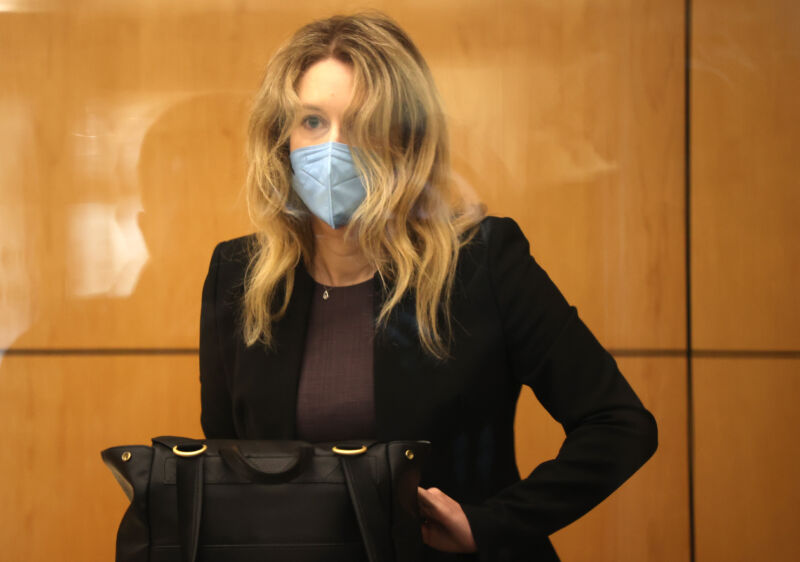
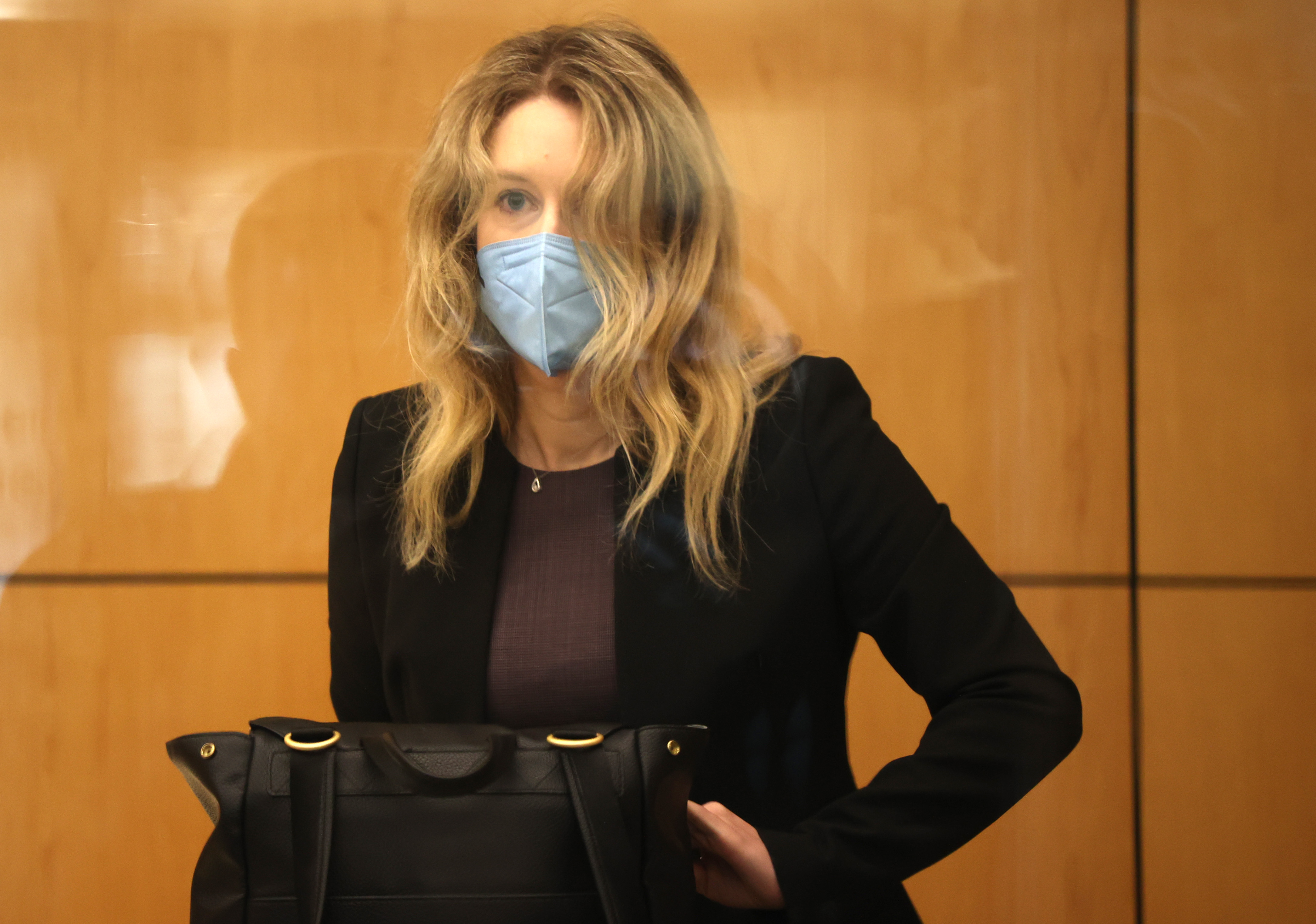
Former Theranos founder and CEO Elizabeth Holmes goes through security after arriving for court at the Robert F. Peckham Federal Building on September 17, 2021, in San Jose, California.
Enlarge / Former Theranos founder and CEO Elizabeth Holmes goes through security after arriving for court at the Robert F. Peckham Federal Building on September 17, 2021, in San Jose, California.

Around 2016, Theranos’ fourth lab director, Kingshuk Das, noticed a problem. He was analyzing data from the company’s diagnostic devices when he saw results from tests for prostate-specific antigen, or PSA. PSA is used to detect prostate cancer in men, and except in rare cases, it’s not present in women’s blood. Except, here it was, appearing in women’s test results.

Das took his PSA findings to CEO Elizabeth Holmes. “Females should generally not have PSA detectable,” Das told the jury in Holmes’ criminal trial yesterday. 

Yet Holmes refused to believe that Theranos’ proprietary devices could be at fault. She suggested that some of the patients whose blood was tested instead had a rare type of breast cancer, pointing to “an article or two” that showed it was possible, Das recalled. Holmes’ explanation, he told jurors, “seemed implausible.”

It was just one example of the many errors that Das encountered. He had been hired in March 2016, and when he first started, he thought the company was running tests on standard lab diagnostic equipment, not the company’s own Edison or MiniLab devices. He would soon discover that wasn’t true.

Immediate jeopardy

One of his primary tasks was responding to a devastating report the company received in January 2016 from the federal Centers for Medicare and Medicaid Services, or CMS. The report, which followed a November 2015 inspection, contained the header “CONDITION LEVEL DEFICIENCIES – IMMEDIATE JEOPARDY.”

“As a result of the survey, it was determined that your facility is not in compliance with all of the Conditions required for certification in the CLIA program,” the report read. “It was determined that the deficient practices of the laboratory pose immediate jeopardy to patient health and safety.”

As Das went through that report, a separate 121-page “statement of deficiencies” also produced by CMS, and the company’s own data, he reached a conclusion that called into question years of testing done on Theranos’ devices. 

“I found these instruments to be unsuitable for clinical use,” Das said in court. He ended up voiding every test Theranos had ever performed in its federally regulated lab, some 50,000 to 60,000 results from 2014 and 2015.

At the time, Holmes told Das that the problem wasn’t the instruments but rather quality control and quality assurance. Das wasn’t convinced. “These instruments were not performing from the very beginning,” he recalled telling Holmes. 

After the results were voided, Theranos never performed another test. Das continued to work for Theranos until he was laid off in 2018, shortly before the company was dissolved.

Das admitted that Theranos never contacted patients whose test results were voided.

Third lab director finishes testimony

Das’ testimony followed the cross-examination of former Theranos lab director Lynnette Sawyer by Holmes’ defense attorneys and redirect by the prosecution. Sawyer’s position was temporary, and she resigned in June 2015. Her job mostly involved using DocuSign to approve standard operating procedures (SOPs) for lab tests. She never set foot in the lab, and she half-heartedly tried to fix the SOPs when she spotted problems by emailing her contact at the company. Sawyer admitted to never calling anyone at Theranos to follow up on those changes.

Though Sawyer’s testimony yesterday was brief, it contained one juicy detail. One of Theranos’ calling cards was the nanotainer, the company’s name for a small vial that held blood obtained through finger pricks. Holmes would frequently pose for photos holding a nanotainer between her thumb and forefinger, including for a Forbes magazine cover. 

The term “nanotainer” appeared in one of the policies that Sawyer signed off on, so her answer to a question from Holmes’ defense attorney Lance Wade was a bit surprising. “What is a nanotainer?” he asked her. 

“I don’t know,” Sawyer replied.

https://arstechnica.com/?p=1811924


Zuckerberg’s metaverse will invade workers’ privacy, whistleblower says

screen sharing
Enlarge / Facebook/Meta wants its metaverse to be at the center of nearly everything, including work.

Facebook/Meta CEO Mark Zuckerberg’s vision of the virtual reality-fueled future could bring new privacy risks to our homes and workplaces, Facebook whistleblower Frances Haugen said.

Last month, Zuckerberg announced that he would focus his company on the metaverse. While the concept has many meanings, to Zuckerberg, it’s an “even more immersive and embodied Internet,” where users can meet with friends, connect with colleagues, shop for goods and services, and so on. In other words, Zuckerberg wants to take people’s lives and put them inside a metaverse, preferably one he controls.

To Haugen, that’s a red flag. “Facebook should have a transparency plan for the metaverse before they start building all this stuff because they’ve demonstrated with regard to Facebook that they can hide behind a wall, they keep making unforced errors, they keep making things that prioritize their own profits over our safety,” she said in an interview with the Associated Press.

Haugen was a product manager at Facebook until April of this year. Before she resigned, she gathered tens of thousands of documents detailing various problems at the company, ranging from harms to teens’ mental health to ethnic violence to special treatment for VIPs. She handed the documents over to Congress, the Wall Street Journal, and regulators at the SEC, where she also filed a whistleblower lawsuit alleging that the company breached its fiduciary duty by hiding many of its problems from shareholders.

In the wake of Haugen’s bombshells, Facebook rebranded its parent company as Meta, and Zuckerberg started touting the metaverse as the social media company’s next big thing. Haugen said the moves amounted to an attempt to distract from the company’s problems. Facebook’s mentality, she said, has been: “If you don’t like the conversation, you try to change the conversation.”

“Once-in-a-generation opportunity”

Yesterday, Haugen was in Brussels speaking before European Parliament. Her comments and question-and-answer session lasted nearly three hours and drew applause at the end. In her remarks, she warned that Facebook excels at “dancing with data,” and she encouraged lawmakers to ask Facebook for details about any data they receive from the company, including exactly how it was obtained. She also recommended that EU lawmakers focus on future-proofing the proposed Digital Services Act, which would increase pressure on platforms to moderate illegal content.

“The Digital Services Act that is now before this parliament has the potential to be a global gold standard,” she said in her opening statement. “It can inspire other countries, including my own, to pursue new rules that would safeguard our democracies. But the law has to be strong and its enforcement firm. Otherwise, we will lose this once-in-a-generation opportunity to align the future of technology and democracy.”

Facebook/Meta has sought to soften European lawmakers with the promise of creating 10,000 jobs in the bloc to develop its metaverse concept.

Supercharged problems

Haugen voiced concerns that a Facebook/Meta-owned metaverse will only supercharge problems that exist on the company’s current platforms. Virtual environments of the kind Zuckerberg is proposing have the potential to be “extremely addictive, and they encourage people to unplug from the reality we actually live in,” she told the AP.

She’s also worried that Facebook/Meta’s push into the workplace will give people no choice but to hand over more personal data to the company. “In the case of workplaces, we don’t get to choose to be in those spaces,” she said. “If your employer decides they’re now a metaverse company, you have to give out way more personal data to a company that’s demonstrated that it lies whenever it’s in its best interests.”

That Facebook/Meta would launch a major initiative in the midst of a company-wide crisis is emblematic of how the company approaches problems, she said. It would rather “move on” than fix its existing products.

“The fact that they can afford 10,000 more engineers to build video games when they allegedly can’t afford to have 10,000 engineers working on our safety, I find that unconscionable,” Haugen told the European Parliament.

https://arstechnica.com/?p=1811526


US charges Ukrainian and Russian nationals over ransomware attacks

Russian national Yevgyeniy Polyanin remains at large.
Enlarge / Russian national Yevgyeniy Polyanin remains at large.

US authorities have brought criminal charges against a Ukrainian and a Russian national for their roles in high-profile ransomware attacks as part of a sprawling global crackdown on digital extortion groups.

The US justice department on Monday said it had charged Ukrainian Yaroslav Vasinskyi, 22, for allegedly conducting one of the largest global supply chain ransomware attacks, the Kaseya hack, among others. The US said it is seeking to extradite Vasinskyi, who was arrested in Poland after crossing the border from Ukraine, Merrick Garland, attorney general, said.

The sprawling hack in July hit information technology management software supplier Kaseya and an estimated 1,500 of its clients and clients’ clients. The attack forced Swedish supermarket chain Coop to close nearly all of its 800 stores.

The US has also charged Russian national Yevgyeniy Polyanin, 28, for allegedly targeting US government entities and private-sector companies in about 3,000 attacks that reaped an estimated $13 million, Garland said. The US has seized $6.1 million in ransom proceeds from his activities, he added, and he is believed to be abroad.

US authorities said both individuals were part of Sodinokibi/REvil, a prolific Russia-linked ransomware gang that has also been blamed for a crippling attack on meat supplier JBS. The US Treasury department said the gang had received more than $200 million in ransom payments in cryptocurrency from its victims.

The moves—which also involved authorities in Poland, Romania, Ukraine, France, Estonia, Latvia, and Germany—mark the most significant and coordinated effort yet by the US to curb the recent spate of ransomware attacks, in which hackers seize a company’s data and demand a ransom.

Separately on Monday, Europol announced that law enforcement in Romania had arrested two ransomware hackers associated with the Sodinokibi/REvil ransomware cartel.

Many Western security experts have said president Joe Biden’s administration should be tougher on Moscow in particular, given that the majority of ransomware criminals are understood to be based in Russia or Russian-speaking countries, where they operate with impunity.

Biden warned Russian President Vladimir Putin in a June summit that 16 areas of critical infrastructure, spanning energy, health, and water, should be “off-limits to attack” by cyber or other means and urged responsible countries to take action against criminals who conduct ransomware activities on their territory. However, attacks by such groups appear to have continued unabated.

Asked whether Russia had either condoned or was aware of the illicit activity, Garland said: “We expect and hope that any government in which one of these ransomware actors is residing will do everything it can to provide that person to us for prosecution.”

The US State Department said it was offering a reward of up to $10 million for any information leading to the identification or location of anyone in a leadership position in the Sodinokibi/REvil group and a further $5 million for any information leading to the arrest or conviction of any individual involved in a Sodinokibi/REvil ransomware incident.

US authorities are also increasing scrutiny of the ballooning crypto industry over concerns that anonymous digital assets can be used for money laundering.

The US Treasury Department on Monday imposed sanctions on Chatex, a virtual currency exchange that it said had “facilitated transactions for multiple ransomware variants,” along with three groups that it said had provided “material support and assistance to Chatex.”

According to the Treasury, more than half of Chatex’s transactions were directly linked to “illicit or high-risk activities,” such as making payments on underground markets on the dark web and allowing ransomware groups to launder their extortion payments. It also said that Chatex used services provided by Suez, a virtual currency exchange that was also sanctioned by the US in September for similar allegations.

Additional reporting by Katrina Manson in Washington

© 2021 The Financial Times Ltd. All rights reserved Not to be redistributed, copied, or modified in any way.

Listing image by Rob Engelaar | Getty Images

https://arstechnica.com/?p=1811461


Theranos lab director never entered the lab, resigned over “lack of clarity”

Elizabeth Holmes, founder of Theranos Inc., left, arrives at federal court in San Jose, Calif., on Tuesday, Oct. 12, 2021.
Enlarge / Elizabeth Holmes, founder of Theranos Inc., left, arrives at federal court in San Jose, Calif., on Tuesday, Oct. 12, 2021.

The prosecution had an up-and-down day in court yesterday during the criminal trial of Elizabeth Holmes, the founder of failed medical diagnostic startup Theranos.

Judge Edward Davila ruled that a witness that the prosecution had flown in from out of state wouldn’t be able to take the stand. The onetime Theranos patient identified in court documents as “B.B.” was supposed to testify about “suspicious” test results he received in 2015. Holmes’ attorneys had filed a motion last week to block his testimony, saying that the test in question, a complete blood count, wasn’t included in a list of 25 tests that the government claimed Theranos couldn’t consistently or accurately produce results for.

The judge agreed, saying that because the test wasn’t included in court documents, Holmes’ attorneys wouldn’t have time to prepare an adequate defense. Assistant US attorney John Bostic admitted that prosecutors were “confused.” They thought that B.B. had taken a test for blood clotting, which was included in court documents. Bostic said the patient was likely to testify about whether he had symptoms related to an elevated platelet count.

“It sounds like the government may have been confused about which tests it was charging,” Holmes’ attorney Katherine Trefz said. “That is not our fault.”

Platelets are important to the clotting process, and while both tests may provide insight into a clotting-related condition, there is a difference between the two. Judge Davila didn’t excuse the mistake.

As a result of the error, the prosecution now won’t have testimony to support one of the charges of wire fraud, which cited a “telephone call from patient B.B. to Theranos regarding laboratory blood test results.” Without that, Holmes still faces nine counts of wire fraud and two counts of conspiracy to commit wire fraud.

Lack of transparency

The witnesses who did take the stand yesterday, though, appeared to bolster the government’s case. The first was Chris Lucas, whose venture capital firm Black Diamond invested over $2 million in two investments in 2006 and another $5.4 million in December 2013. Lucas’ uncle, investor Donald Lucas, was chairman of Theranos’ board until 2012.

Lucas was impressed with Holmes. “She was very passionate about the project. Very sincere about what she was trying to do. She worked all the time. It was all Theranos, all the time for Elizabeth.” He said he met with her four to five times a year, and in those meetings, he didn’t hear any bad news about the company. “There was not a lot of transparency,” he said.

Lucas acknowledged during cross-examination by the defense that he hadn’t hired a firm to conduct any due diligence, saying that he was following his uncle’s philosophy. Investing, he said, wasn’t always about the financials, “it’s always about the people.” He added that his uncle’s experience with the company helped shape his decision to invest, as did his own experience with Holmes. https://arstechnica.com/?p=1810693