Smartmatic sues OANN, Newsmax over claims it rigged voting machines for Biden

Workers and voting machines in a Smartmatic warehouse.
Enlarge / A Smartmatic warehouse.

Voting machine maker Smartmatic yesterday filed lawsuits against Newsmax and the owner of One America News Network (OANN), claiming the conservative news organizations conducted a “disinformation campaign against Smartmatic” and “acted with actual malice and ill will” by falsely claiming “that Smartmatic fixed, rigged, and stole the 2020 US election for Joe Biden and Kamala Harris.”

Smartmatic is seeking financial damages in the defamation lawsuits filed against OANN owner Herring Networks in US District Court for the District of Columbia and against Newsmax in Delaware Superior Court.

“OANN falsely stated and implied that Smartmatic’s election technology and software were compromised or hacked during the 2020 US election and sent votes to foreign countries to be compromised or hacked,” that “Smartmatic was founded and funded by corrupt dictators from socialist and communist countries,” and that “Smartmatic’s election technology and software were designed to and have fixed, rigged, and stolen elections before,” the lawsuit against OANN said. Smartmatic made largely identical allegations in the lawsuit against Newsmax.

Lawsuit: OANN chose to report lies

“The first time it happened could be a mistake. The second, third, fourth and fiftieth times it happened were intentional choices. OANN had every opportunity to do the right thing after the 2020 election for President and Vice President of the United States. It could have reported the truth. Instead, OANN chose to do the wrong thing every time. It reported a lie,” the lawsuit against OANN said.

As other news organizations told their audiences that Biden had defeated Donald Trump, “OANN told its audience that the election had been stolen and voting machines had switched votes cast for President Trump to President Biden,” the lawsuit said. “OANN knew it was not true. OANN had seen no evidence to support the assertion. But OANN chose to spread disinformation.” OANN continued doing this “in the months and weeks that followed.”

Smartmatic said it “provided election technology and services to Los Angeles County during the 2020 US election” but that its “technology and software were used nowhere else in the country… Even in Los Angeles County, the company played no part in the counting or tabulation of votes.”

“OANN’s choices have damaged Smartmatic’s reputation and brand by casting it as a corrupt company whose technology and software was used to steal the 2020 US election. OANN must be held accountable for its deliberate choice to spread disinformation,” the lawsuit said.

“Newsmax purposefully avoided learning the truth”

In the other lawsuit, Smartmatic alleged that in November and December 2020, “Newsmax published dozens of reports indicating that Smartmatic participated in a criminal conspiracy to rig and steal the 2020 US election and that its technology and software were used to switch votes from former President Trump to now President Biden. Smartmatic’s participation in the conspiracy was a fact, according to Newsmax and its guests, as was the use of Smartmatic’s technology and software to switch votes.”

Smartmatic argued that “Newsmax purposefully avoided learning the truth about Smartmatic and its election technology and software, establishing its actual malice. First, Newsmax intentionally avoided obtaining information from Smartmatic. No one from Newsmax ever contacted Smartmatic to verify any statements it made or published.” Newsmax also “allowed a myriad of guests to appear on its various news programs and make false statements and implications about Smartmatic without showing any proof or evidence for those statements” and “did not interview anyone with personal knowledge of Smartmatic’s involvement in the 2020 US election or the allegations being made about Smartmatic,” Smartmatic alleged.

“A myriad of information was available to Newsmax that showed its statements and implications about Smartmatic and the use of its technology and software in the 2020 US election (and in contested states) were false. Newsmax either ignored this information, and thereby acted with reckless disregard or broadcast and published its false statements knowing they were false based on this information,” the lawsuit said. Smartmatic made virtually identical allegations against OANN.

Dominion Voting Systems sued Newsmax and OANN in August. Dominion and Smartmatic have both sued Fox News.

We contacted Newsmax and OANN about the lawsuits and will update this story if we get any response. According to a Deadline article, Newsmax issued a statement saying that it “reported accurately on allegations made by well-known public figures, including the president, his advisors and members of Congress, as well as reporting on Smartmatic’s claims in its defense. Smartmatic’s action against Newsmax today is a clear attempt to squelch the rights of a free press.”

https://arstechnica.com/?p=1810382


US blacklists maker of Pegasus spyware that helps governments spy on activists

Protesters in India hold signs criticizing the Indian government's use of Pegasus spyware.
Enlarge / KOLKATA, WEST BENGAL, INDIA: On July 25, 2021, protesters criticized the Indian government for using Pegasus spyware to snoop on journalists, opposition leaders, and activists.
Getty Images | SOPA Images

The US has blacklisted Pegasus spyware maker NSO Group, saying that the Israeli company “developed and supplied spyware to foreign governments that used this tool to maliciously target government officials, journalists, businesspeople, activists, academics, and embassy workers.”

The Biden administration’s Commerce Department today announced a final rule that adds NSO Group and three other foreign companies to the Entity List “for engaging in activities that are contrary to the national security or foreign policy interests of the United States.” The other three companies are Israel-based Candiru, Russia-based Positive Technologies, and Singapore-based Computer Security Initiative Consultancy. Exports and transfers of their products will be restricted.

As we explained in a previous article, “Pegasus is frequently installed through ‘zero-click’ exploits, such as those sent by text messages, which require no interaction from victims.” Pegasus can jailbreak or root an iPhone or Android phone and make copies of call histories, text messages, calendar entries, and contacts. Pegasus can also activate cameras and microphones to eavesdrop, track a target’s movements, “and steal messages from end-to-end encrypted chat apps.”

While NSO Group’s website says its technology “helps government agencies prevent and investigate terrorism and crime,” an investigation by The Washington Post and other news organizations found it “was used in attempted and successful hacks of 37 smartphones belonging to journalists, human rights activists, business executives, and two women close to murdered Saudi journalist Jamal Khashoggi.” That report was released in July 2021, but there have been other reports of Pegasus targeting human rights activists over the past several years.

Apple has been patching iOS vulnerabilities exploited by Pegasus since at least August 2016, but NSO Group found ways to continue exploiting iPhones. Another Apple patch to close a vulnerability exploited by Pegasus was issued in September 2021.

“Digital tools used for repression”

“Today’s action is a part of the Biden-Harris Administration’s efforts to put human rights at the center of US foreign policy, including by working to stem the proliferation of digital tools used for repression,” the Commerce Department announcement said. The decision was made by the End-User Review Committee, which is chaired by the Commerce Department and includes the Departments of Defense, State, Energy, and Treasury.

NSO Group and Candiru made tools that “enabled foreign governments to conduct transnational repression, which is the practice of authoritarian governments targeting dissidents, journalists, and activists outside of their sovereign borders to silence dissent,” the Commerce Department said. Positive Technologies and Computer Security Initiative Consultancy “were added to the Entity List based on a determination that they traffic in cyber tools used to gain unauthorized access to information systems, threatening the privacy and security of individuals and organizations worldwide.”

Candiru is a secretive company whose “founder is [venture capital investor] Isaac Zack, who was also a founder of NSO,” a January 2019 Haaretz report said. At the time, Candiru was “believed to employ 120 people and generate annual sales of $30 million a year,” which “would make it Israel’s second-largest offensive cyber company after NSO, not counting publicly traded Verint and general defense companies.”

Blacklisting restricts exports and transfers

The US government’s Entity List is used “to restrict the export, reexport, and in-country transfer of items” that are subject to US Export Administration Regulations (EAR), the Commerce Department said.

“For the four entities added to the Entity List in this final rule, BIS [Bureau of Industry and Security] imposes a license requirement that applies to all items subject to the EAR,” the Commerce Department said. “In addition, no license exceptions are available for exports, reexports, or transfers (in-country) to the entities being added to the Entity List in this rule. BIS imposes a license review policy of a presumption of denial for these entities.”

After the July 2021 reports on Pegasus targeting journalists and human rights activists, NSO Group claimed that a “well-orchestrated media campaign” pushed by “special interest groups” had exhibited a “complete disregard of the facts.” NSO Group also said it “will no longer be responding to media inquiries on this matter” and “will not play along with the vicious and slanderous campaign,” but it did offer this defense:

NSO is a technology company. We do not operate the system, nor do we have access to the data of our customers, yet they are obligated to provide us with such information under investigations.

NSO will thoroughly investigate any credible proof of misuse of its technologies, as we always had, and will shut down the system where necessary.

NSO will continue its mission of saving lives, helping governments around the world prevent terror attacks, break up pedophilia, sex, and drug-trafficking rings, locate missing and kidnapped children, locate survivors trapped under collapsed buildings, and protect airspace against disruptive penetration by dangerous drones.

https://arstechnica.com/?p=1809988


Theranos swiped logos from Pfizer and another pharma giant for fake reports

Elizabeth Holmes, founder of Theranos Inc., left, arrives at federal court in San Jose, California, on Tuesday, Nov. 2, 2021.
Enlarge / Elizabeth Holmes, founder of Theranos Inc., left, arrives at federal court in San Jose, California, on Tuesday, Nov. 2, 2021.
David Paul Morris/Bloomberg

As Theranos burned through cash, founder Elizabeth Holmes was apparently desperate to land a large investment from Walgreens—so desperate that she sent the drugstore’s executives two fake pharma reports, the jury in Holmes’ criminal trial learned yesterday.

A few weeks ago, the court heard how Holmes had sent Walgreens executives a report that featured a prominently placed Pfizer logo. But Pfizer hadn’t authorized its use. Yesterday, the court heard that Holmes did it once more, sending reports that prominently featured the logo of Schering-Plough, the large pharmaceutical company that was acquired by Merck in 2009.

Constance Cullen was director of Schering-Plough’s bioanalytical lab in 2009 when her company tasked her with helping to evaluate medical diagnostic tests being developed by Theranos. The pharma company was interested in working with Theranos to develop custom diagnostic tests, and it had acquired two of the startup’s proprietary devices to see whether they lived up to their promise. Cullen and other Schering-Plough scientists evaluated three different tests, for which Theranos charged them $279,000 for test materials.

As part of the evaluation, Cullen and her colleagues met with Holmes and other Theranos employees at the company’s Palo Alto headquarters. The Schering-Plough scientists came prepared with technical questions but did not receive technical answers. “I was dissatisfied, quite honestly,” Cullen said. “There was insufficient technical detail for us to be able to evaluate the technology.”

“There were what I’d describe as cagey responses or attempts to redirect to other topics of discussion,” she added. Cullen said that, though there were other Theranos employees in the meeting, Holmes did nearly all of the talking. “Almost exclusively Ms. Holmes was the one answering the questions irrespective of to whom the questions were being asked,” she said.

Theranos later sent Cullen a report that said Theranos’ technology “has been shown to give accurate and precise results.” Cullen told the court that she had not discussed that statement with Theranos, nor did she agree with it.

In the spring of 2010, though, Holmes sent that report to Walgreens executives with some small but significant changes. The report now had the Schering-Plough logo at the top, and a key line had been tweaked. Now it said that Theranos’ diagnostic technology “has been shown to give more accurate and precise results”—note the addition of the word “more.” Cullen confirmed for the court that no one at her company approved that statement.

Missed revenue projections

Cullen’s testimony followed the defense’s cross-examination of Lisa Peterson, who led private-equity investments for the DeVos family office. In his questioning, Holmes’ attorney Lance Wade made the case that Peterson and the DeVos family were sophisticated investors. He showed the jury that the family office signed a document acknowledging that Theranos was a relatively new company and confirmed that Peterson knew that the startup was “highly speculative and involves substantial risks.”

In redirect, assistant US attorney Robert Leach raised the issue of Theranos’ rosy financial projections, which the company gave to Peterson in late 2014. The startup had forecast $140 million in revenue in 2014 and $990 million in 2015. Peterson said that if Theranos had made one-third what it had predicted for 2015, she would have been pleased since it would show signs of progress. In reality, the company made nothing in 2014 and under $500,000 in 2015. Had she expected that revenue would be zero in 2014? “No,” Peterson said.

“What they were telling us wasn’t true,” she said. (Wade later objected, pointing out that Theranos had “deferred revenue” of $169 million that year.)

Peterson also said that the DeVos family investment relied on a few documents and claims, one of which was the Theranos report featuring the unauthorized Pfizer logo, which Holmes had emailed to investors. 

“There’s a couple things that we really relied on,” Peterson said, “and one of the biggest things was that third-party pharmaceutical companies and the government were using the analyzer in the field.”

https://arstechnica.com/?p=1809962


Facebook to stop using facial recognition, delete data on over 1 billion people

With an image of himself on a screen in the background, Facebook co-founder and CEO Mark Zuckerberg testifies before the House Financial Services Committee in the Rayburn House Office Building on Capitol Hill October 23, 2019, in Washington, DC.
Enlarge / With an image of himself on a screen in the background, Facebook co-founder and CEO Mark Zuckerberg testifies before the House Financial Services Committee in the Rayburn House Office Building on Capitol Hill October 23, 2019, in Washington, DC.
Chip Somodevilla/Getty Images

Facebook introduced facial recognition in 2010, allowing users to automatically tag people in photos. The feature was intended to ease photo sharing by eliminating a tedious task for users. But over the years, facial recognition became a headache for the company itself—it drew regulatory scrutiny along with lawsuits and fines that have cost the company hundreds of millions of dollars.

Today, Facebook (which recently renamed itself Meta) announced that it would be shutting down its facial recognition system and deleting the facial recognition templates of more than 1 billion people.

The change, while significant, doesn’t mean that Facebook is forswearing the technology entirely. “Looking ahead, we still see facial recognition technology as a powerful tool, for example, for people needing to verify their identity, or to prevent fraud and impersonation,” said Jérôme Pesenti, Facebook/Meta’s vice president of artificial intelligence. “We believe facial recognition can help for products like these with privacy, transparency and control in place, so you decide if and how your face is used. We will continue working on these technologies and engaging outside experts.”

In addition to automated tagging, Facebook’s facial recognition feature allowed users to be notified if someone uploaded a photo of them. It also added a user’s name automatically to an image’s alt text, which describes the content of the image for users who are blind or otherwise visually impaired. When the system finally shuts down, notifications and the inclusion of names in automatic alt text will no longer be available.

Controversial technology

As facial recognition has grown more sophisticated, it has become more controversial. Because many facial recognition algorithms were initially trained on mostly white, mostly male faces, they have much higher error rates for people who are not white males. Among other problems, facial recognition algorithms were initially trained on mostly white, mostly male faces and has led to people being wrongfully arrested in the US.

In China, the technology has been used to pick people out from crowds based on their age, sex, and ethnicity. According to reporting by The Washington Post, it’s been used to sound a “Uighur alarm” that alerts police to the presence of people from the mostly Muslim minority, who have been systematically detained for years. As a result, the US Department of Commerce sanctioned eight Chinese companies for “human rights violations and abuses in the implementation of China’s campaign of repression, mass arbitrary detention, and high-technology surveillance.”

While Facebook never sold its facial recognition technology to other companies, that didn’t shield the social media giant from scrutiny. Its initial rollout of the technology was opt-out, which prompted Germany and other European countries to push Facebook to disable the feature in the EU.

In the US, some states have passed stringent laws restricting the use of biometrics. Illinois has perhaps the strictest, and in 2015, several residents sued Facebook claiming the “tag suggestions” feature violated the law. Facebook settled the class-action lawsuit earlier this year for $650 million, paying millions of users in the state $340 each.

Today’s announcement comes as Facebook/Meta has come under increasing scrutiny from lawmakers, regulators, and the broader public. The company has been faulted for its role in spreading misinformation in recent elections in the US, helping to foment ethnic violence in Myanmar, and failing to combat disinformation about climate change.

More recently, revelations from documents gathered by whistleblower Frances Haugen have shown that the company was aware that its products harm teens’ mental health, that its algorithms were driving polarization, and that its platform was undermining the company’s efforts to get people vaccinated against COVID.

https://arstechnica.com/?p=1809777


EPA announces rules to slash methane leaks throughout oil and gas supply chain

Right now, a lot of the methane created or extracted during other activities goes to waste.

The EPA announced new rules today that would slash methane leaks from the oil and gas sector, a significant source of carbon emissions that represents 30 percent of methane pollution in the US.

Nearly every step in the oil and gas supply chain would be affected, from production to processing, storage, and transmission. In a first, the rules would apply to old wells in addition to new ones, and the rules would introduce “a comprehensive monitoring program to require companies to find and fix leaks,” the EPA said. Altogether, the rules would trim the oil and gas sector’s methane leaks by 75 percent, the administration estimated.

Leaks are rife throughout the industry, amounting to 2.3 percent of all natural gas production in the US. Globally, leaks are responsible for just over 5 percent of all energy-related greenhouse gas emissions, according to the International Energy Agency.

Methane is a significant source of greenhouse gas emissions, representing 10 percent of carbon pollution in the US alone. One ton of the gas warms the atmosphere 84 times more than one ton of carbon dioxide over the course of 20 years. And while eliminating methane pollution alone won’t limit warming to 1.5˚ C, which is broadly accepted as a “safe” amount of warming, the gas’s outsize impact means that plugging methane leaks is relatively low-hanging fruit.

Large oil and gas companies have generally favored methane regulations, while smaller firms have opposed them. Such divisions are commonplace in a variety of industries, since larger companies tend to have more resources to comply with rules. In the case of methane, regulations could meaningfully boost larger companies’ profits. In many cases, leaked methane can’t be sold. But because leaked methane is still a small percentage of all natural gas produced, volumes must be large for the savings to translate into significant amounts—which is why larger companies have been more accepting of leak-plugging regulations.

Global pledge

The new EPA rules were announced as representatives from the world’s governments convene for the second day of the COP26 climate meeting in Glasgow, Scotland. More than 80 countries signed a global methane reduction pledge, which was spearheaded by the US and the European Union. The pledge seeks to trim methane pollution worldwide by 30 percent by 2030.

In the US, the Biden administration is seeking to halve methane pollution by the end of the decade and hit net-zero by 2050. Oil and gas companies will have to use methane-spotting cameras quarterly to identify leaks so they can be stopped, and oil wells won’t be able to vent natural gas as they have in the past.

Alongside the EPA’s proposed rules, other US government agencies introduced new regulations and programs aimed at curbing methane emissions.

The Pipeline and Hazardous Materials Safety Administration will push utilities and gas companies to fix leaks in natural gas distribution lines throughout the country. The Department of Agriculture is working with farmers and ranchers to reduce methane emissions from manure, and the Department of Energy recently launched a program to speed the adoption of heat pumps and induction stoves to reduce the need for natural gas, which also contributes to poor air quality inside homes and apartments. The Bureau of Land Management is planning to charge companies royalties for any gas that is vented or flared on public lands.

While the new regulations do not cover leaking abandoned wells, which pollute as much as a day’s worth of oil consumption in the US, Agency officials said those sites could be addressed in a proposal next year.

https://arstechnica.com/?p=1809626


Fossil fuels doomed in New York as regulator blocks new gas power plants

Fossil fuels doomed in New York as regulator blocks new gas power plants

New York took an aggressive stance toward fossil fuels this week, effectively killing the development of new fossil fuel power plants in the state. The Department of Environmental Conservation denied permits for two proposed natural gas power plants, saying they were incompatible with the state’s climate law, which calls for an end to fossil fuel-generated electricity by 2040. 

Though the proposed plants would be more efficient than those currently in operation, the state agency said the plants would generate “significant” amounts of pollution and that their construction now, less than 20 years from the targeted net-zero emissions date, would be “inconsistent” with what is required by the climate law.

New York’s climate law requires polluters to account for two sources of emissions: from the plants themselves and from the natural gas supply chain. Once the latter was included—figures which in the past were nearly always ignored when determining a power plant’s pollution—the emissions quickly exceeded the DEC’s thresholds, the decisions say.

“Speculative” arguments

Danskammer Energy had proposed adding a new gas turbine to its 532 MW Newburgh peaker plant, which runs in times of high demand, so that the plant could run more routinely. NRG had proposed replacing the 50-year-old turbines at its 647 MW peaker plant in Astoria, Queens.

The two companies both argued that the gas power plants would help keep the electric grid stable as more intermittent solar and wind power came online and claimed that the new turbines would displace older, dirtier sources from the grid.

Both companies also said that by the 2040 net-zero date, they would transition away from natural gas to hydrogen or renewable natural gas, an industry term that refers to methane drawn from sources like landfills and animal manure.

But the DEC didn’t find any of those arguments compelling. The agency pointed out that hydrogen isn’t currently used as a fuel for large combustion power plants and that renewable natural gas, while available on small scales, isn’t significant enough to consider today. “Overall, the Applicant’s plan for compliance with the Climate Act’s emission-free by 2040 generation requirement is uncertain and speculative in nature,” it said in one decision.

The DEC also faulted the logic both companies used to suggest that the new plants would displace emissions elsewhere on the grid. The problem, the agency said, was that their modeling relied on too many assumptions—particularly “projected reductions that could occur at other GHG emission sources across the State” (emphasis in the original). In other words, since neither company can control the actions of other polluters, they don’t get to count speculative reductions elsewhere as their own.

“Denying projects like Astoria is simply short-sighted and bad public policy,” Tom Atkins, vice president of development at NRG Energy, said in a statement to Ars. “NRG’s Astoria Replacement Project would have provided immediate reductions in greenhouse gas emissions and would have been fully convertible to green hydrogen in the future.”

While both companies have the option to appeal the decision, neither has said whether it will. Astoria is scheduled to shut down in 2023 under current emissions regulations.

https://arstechnica.com/?p=1808996


Pirate-site operator hacked MLB and tried to extort $150,000, feds say

A Major League Baseball logo and a baseball player holding a bat.

A pirate-website operator named Joshua Streit was charged with hacking into Major League Baseball (MLB) computer systems and trying to extort $150,000 from the league by threatening to publicize security vulnerabilities, the US Department of Justice announced yesterday.

Streit also “is alleged to have illegally streamed sports content online from MLB, the NHL, the NBA, and the NFL for his own personal profit,” the announcement said. Streit was charged in US District Court for the Southern District of New York with wire fraud, illicit digital transmission, sending interstate threats with the intent to extort, and two counts of computer intrusion. The maximum possible sentences for these counts add up to 37 years in prison, including 20 years for wire fraud, though the press release noted that “maximum potential sentences in this case are prescribed by Congress and are provided here for informational purposes only, as any sentencing of the defendant will be determined by the judge.”

Streit is a 30-year-old from Minnesota who is also known as Josh Brody. The pirate streaming website that he allegedly ran was called HeheStreams and operated from approximately 2017 to August 2021.

“We allege Mr. Brody hacked into the systems of several of our country’s biggest professional sports leagues and illegally streamed copyrighted live games,” FBI Assistant Director Michael Driscoll said. “Instead of quitting while he was ahead, he allegedly decided to continue the game by extorting one of the leagues, threatening to expose the very vulnerability he used to hack them.”

Streit allegedly sought $150,000 bug bounty

In March 2021, Streit emailed an MLB employee, according to the complaint. Streit “noted that he had earlier notified MLB of a particular network vulnerability and complained that the ‘lack of gratitude [from MLB] is frankly shocking,'” FBI Special Agent Joshua Williams wrote. Streit asked to be put in touch with senior IT personnel and subsequently told an MLB executive referred to as “MLB Executive-1” in a phone call “that he wanted to be financially compensated for reporting the network vulnerability,” the agent wrote.

The executive “informed Streit that MLB does not have a ‘bug bounty’ program but that MLB appreciated Streit’s efforts. Streit then told MLB Executive-1 that MLB should have a bug bounty program for situations like this and that it would be bad if the media found out about the network vulnerability and embarrassed MLB,” Williams wrote.

Streit apparently refrained from contacting news reporters about the vulnerability at the executive’s request but again asked for money in an email to the executive on or around September 28, 2021. “MLB Executive-1 replied, and among other things, noted that ‘people here are concerned about this as unauthorized access to our systems,'” the agent wrote. “MLB Executive-1 also asked, ‘Can you let me know the specific amount of money that you want?'”

Streit asked for $150,000 in his response and told the executive “that when disclosing a network vulnerability ‘there should be at least some sort of mutual understanding that acting in good faith is encouraged, not discouraged,'” the FBI agent wrote. Streit ended his email by writing that “the idea of MLB coming after me for ‘unauthorized access to systems’ is going to make me lose sleep when it’s already at a premium.”

Although Streit “approached MLB in the guise of being helpful to MLB, his simultaneous intrusion into MLB accounts and illegal streaming of MLB content on the illicit streaming website indicates that Streit acted knowingly and with the intent to extort MLB,” Williams wrote. The email in late September was made “shortly before the beginning of the MLB playoffs, and thus at a time when MLB was under increased media scrutiny and public interest,” he wrote.

https://arstechnica.com/?p=1808990


Congress fails to pin down oil company execs on their bad-faith arguments

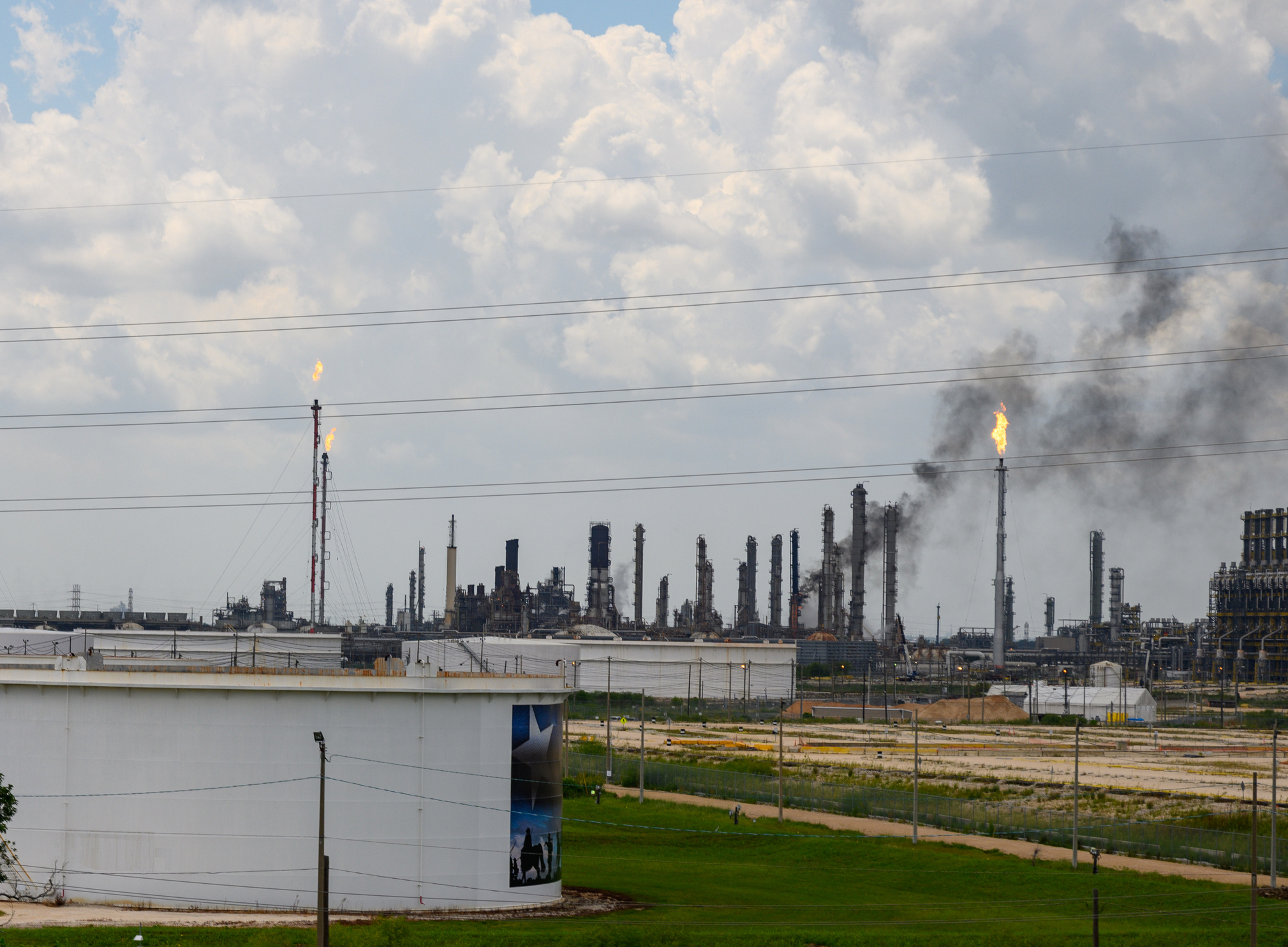
Image of an oil refinery.
Enlarge / At some point, this must stop. A recent congressional hearing left us no closer to figuring out when that point will be reached.

Thursday, the House Committee on Oversight and Reform held hearings on the role of oil companies in fostering our present climate crisis. The companies led by these executives have a long history of playing down the risks of climate change, leading a number of House Democrats to suggest that this hearing could be the equivalent of the 1994 hearings with tobacco executives, in which the executives denied well-established scientific data on the addictiveness of nicotine.

But that expectation was doomed to disappointment. Oil companies, after all, had already demonstrated that they are happy to accept the science of climate change when under oath; they just tend to spin the details of their own role in influencing public perceptions of that science. Congress was treated to a repeat performance of that sort that neatly avoided the kind of catastrophic failure in public perception that the tobacco company executives produced.

However, the hearing did manage to highlight the gap between what many companies are saying now and the reality of what society has determined it needs to accomplish. What follows is less a recap of the testimony and more of an analysis of how the companies’ spin brought them to their current circumstances—and where they’ll go from here.

Why we’re here

It’s now well-established that Exxon employed scientists who looked into the issue of climate change decades ago and came to the same conclusions as mainstream science did. But even as that information percolated internally, the company’s executives were casting doubt on those findings.

This is where their paths diverged from those of tobacco executives. Over time, the rhetoric of oil companies shifted so that they no longer directly contested the science. Instead, Exxon provided funding to organizations that attack climate science, such as the Heartland Institute. Others funded the organization in a more roundabout way, through contributions to the American Petroleum Institute (API), which then provided funding to Heartland. Obviously, the API did many other things on behalf of oil companies, providing a useful layer of abstraction between the companies and climate change denialism.

That funding ended up serving two purposes. First, it continued the circulation of unjustified uncertainties regarding the strength of the scientific evidence, and company executives could reference that uncertainty in statements. Second, it allowed the executives to publicly acknowledge some aspects of climate science while remaining assured that the lobbying the companies had funded would continue to prevent any concrete action based on that science.

Thursday’s hearings saw these factors come out in both dramatic and subtle ways. Exxon’s CEO, Darren Woods, was challenged on a statement by a former company CEO who assigned climate science an uncertainty his own scientists said it lacked. But Woods denied any contradiction because he was able to point to a different part of the same statement in which the CEO said that we should probably do something about climate change.

All the executives were careful to note that they accepted that humanity “contributes” to climate change. Given that recent Intergovernmental Panel on Climate Change reports have concluded that essentially all the warming in the past century is due to human activities, this is a subtle way to undercut scientific conclusions while appearing to sound reasonable. Unfortunately, nobody called the executives on the tactic. But Committee Chair Carolyn Maloney did note the companies’ past funding of climate change denialism and asked the executives to pledge that they would not do it again in the future. A grand total of zero executives were willing to make that pledge.

By contrast, all of them happily pledged to keep producing energy when prompted by a Republican committee member.

The awkward present

The promise to keep producing fossil fuels nicely illustrates the difficult set of circumstances that the oil companies’ past stalling has left them and the public in. To an extent, we’re all now the victims of their past successes.

The inaction the oil companies helped promote has ensured that we’re now decades behind on reducing our carbon emissions. As a result, achieving international goals on emissions means that some of the known oil reserves that form the foundation for the companies’ value will actually have to stay in the ground. Put differently, if we want to keep warming below 2° C, some of the oil companies’ assets will end up being worthless, and they’ll need to start reducing production tomorrow.

The companies are only now starting to take halting steps to acknowledge that fact. Shell intends to stop searching for new deposits in 2025. It is investing in renewables, and it plans to lower its production—but at a pace that’s not fast enough to meet goals set out in the Paris Climate Agreement. Only BP plans to reduce production at a pace that is consistent with Paris; Exxon has no plans for reducing production, and Chevron actually plans to increase it.

https://arstechnica.com/?p=1808870


FCC defends Starlink approval as Viasat, Dish urge court to block SpaceX license

A Starlink satellite dish sitting next to a lake in a remote area.
Enlarge / A Starlink satellite dish.

The Federal Communications Commission this week urged a court to back the FCC’s approval of SpaceX Starlink satellite launches against a lawsuit filed by Viasat and Dish.

With oral arguments scheduled for December 3, final briefs were filed on Tuesday by the FCC, Viasat, Dish, and SpaceX. Judges at the US Court of Appeals for the District of Columbia Circuit previously rejected Viasat’s motion for a stay that would have halted SpaceX’s ongoing launches of low-Earth-orbit (LEO) satellites pending the resolution of the lawsuit. Judges found that Viasat failed to show that it is likely to win its case alleging that the FCC improperly approved the satellite launches. Judges said at the time that Viasat did not meet “the stringent requirements for a stay pending court review” but granted a motion to expedite the appeal.

The FCC said in its new brief that the “commission reasonably granted SpaceX’s request to modify the orbital altitude of 2,824 of its Starlink satellites, which the commission concluded would serve the public interest by improving broadband access in underserved areas and reducing the potential to generate orbital debris. Neither Dish’s arguments regarding the potential for interference nor the criticisms by Viasat and the Balance Group of the commission’s review of environmental issues have merit.” (The Balance Group was apparently founded last year and said in a court document that it “is a membership organization that represents… astronomers and other scientists concerned about light pollution and other environmental impacts of satellite constellations.”)

The FCC has given SpaceX several approvals of satellite launches for a total of nearly 12,000 satellites. This lawsuit challenges a license modification granted in April 2021 that lowered the altitude of 2,824 satellites from 1,100-1,300 km to 540-570 km. Viasat said this license change that it wants the court to vacate constitutes SpaceX’s “final authorization to deploy a specific tranche of 2,824 low-earth orbit satellites.”

FCC: Courts must be “deferential” to agency

The FCC said that, under the “deferential” standard used by courts, judges must uphold agency decisions as long as the agency “has reasonably considered the relevant issues and reasonably explained the decision” and articulates a “rational connection between the facts found and the choice made.” In this case, the FCC said it reasonably concluded “that SpaceX’s satellites will not cause unacceptable interference to other operators.”

Viasat provides slower, higher-latency home-Internet service from geostationary satellites and faces a competitive threat from Starlink. The company alleged that the FCC failed to comply with the National Environmental Policy Act (NEPA) because it did not conduct an environmental assessment. The FCC’s brief said that “further review is required only where the commission concludes that their potential effects on the environment may be significant” and that “this standard was not met.”

For example, the FCC said it “reasonably concluded that the record did not show that effects from the deposit of alumina and other particulates as a result of the re-entry of the SpaceX satellites authorized by the order might be ‘significant.'” The FCC also said it “previously assessed the risk of SpaceX debris falling to Earth as part of the review of SpaceX’s orbital debris plan, and it was not required to re-assess the same issue” in this case. Similarly, the FCC said it did not need to re-assess “the risk that SpaceX satellites will generate debris in orbit” because of that previous review.

“No further review” of impact on night sky

One controversial problem with SpaceX satellites is their effect on astronomers and the night sky. The FCC said:

The commission reasonably concluded that no further review of SpaceX’s effects on astronomy and the night sky was necessary. The record showed that SpaceX had engaged in efforts to mitigate those effects and was working with the astronomy community to make additional progress. The studies on which Viasat and the Balance Group rely discuss effects on the night sky from a host of sources; they do not undermine the commission’s conclusion that the record did not show that the SpaceX satellites at issue may have significant effects.

The FCC also said it did not have to “review the environmental effects of emissions resulting from satellite launches because the Federal Aviation Administration―the agency that licenses such launches―had already conducted an environmental assessment of SpaceX launches.”

SpaceX supported the FCC’s case in its own brief, of course. On the question of environmental review, SpaceX said, “It cannot be the case that unsubstantiated allegations of any speculative chance of environmental impact are enough to compel an environmental assessment—least of all where, as here, the agency has already promulgated a categorical exclusion covering the activity.”

The FCC had found that SpaceX’s license change qualified for a categorical exclusion for “actions that normally do not have a significant effect on the human environment,” meaning a review isn’t necessary except in “extraordinary circumstances.”

https://arstechnica.com/?p=1808584


Facebook who? Zuckerberg announces rebranding as Meta

Mark Zuckerberg speaks in front of a monitor that says Meta.
Enlarge / Facebook? Who is Facebook? My name is Meta!

During his Connect 2021 keynote presentation today, Facebook CEO Mark Zuckerberg rolled out the name “Meta” as a new corporate identity reflecting the company’s “new north star—to help bring the metaverse to life.”

The name, which Zuckerberg noted comes from the Greek word for “beyond,” is “a new company brand to encompass everything that we do.” That means the company will be “looking at and reporting on our business as two different segments, one for a family of apps and one for work on future platforms,” he said.

The name “Facebook,” Zuckerberg said, “just doesn’t encompass everything we do” anymore. While social media apps will “always” be a focus for Meta, it has been limiting to have a “brand that is so tightly linked to one product that it can’t possibly represent everything we’re doing today, let alone in the future,” he said.

Naming for individual apps and brands within Facebook won’t be changing, Zuckerberg said, though the Oculus branding is apparently being phased out for the company’s VR headsets. “We want to make it clear that Quest is a Meta product,” Meta VP of AR/VR Andrew Bosworth wrote in a Facebook post. “For this reason, we’re simplifying our brand architecture and shifting away from the Oculus brand. Starting in early 2022, you’ll start to see the shift from Oculus Quest from Facebook to Meta Quest and Oculus App to Meta Quest App over time.”

The shift to “metaverse first” represents “a fundamental change to our company,” Zuckerberg continued, saying that “over time, I hope we are seen as a metaverse company.” That also means that “over time, you’re not going to need to use Facebook to use our other services,” Zuckerberg said, referring to the controversial policy of requiring a Facebook login to use Quest headsets.

A reimagined future

The move is somewhat reminiscent of Google’s 2015 corporate transition to the name Alphabet. As our own Ron Amadeo wrote back then:

Google declares that “Search, ads, Maps, apps, YouTube, Android, and infrastructure” are part of the new, slimmed-down “Google,” and “Calico, Nest, Google Fiber, Google Ventures, Google Capital, and Google X” are independent units under “Alphabet.” Alphabet isn’t a big change in the way Google works, just a formalization of the structure that seems to have been there for years.

Facebook’s rebranding, though, suggests it sees itself as a company with a very different future focus than the one it currently has. The wider Connect keynote presentation focused heavily on the idea of the metaverse, a vision of a social media universe that can seamlessly move between smartphones, VR goggles, and augmented reality glasses. That idea appears to rely on each of Meta’s services working in concert, and Zuckerberg’s Thursday announcement included teases of exactly that, with Instagram, Facebook, WhatsApp, and Oculus systems working in tandem in a demonstration of future social, work, and gaming possibilities.

https://arstechnica.com/?p=1808540