$100M Theranos investor did little vetting for fear of upsetting Elizabeth Holmes

Former Theranos founder and CEO Elizabeth Holmes goes through security after arriving for court at the Robert F. Peckham Federal Building on September 17, 2021, in San Jose, California.
Enlarge / Former Theranos founder and CEO Elizabeth Holmes goes through security after arriving for court at the Robert F. Peckham Federal Building on September 17, 2021, in San Jose, California.

Theranos sent a major investor financial projections that were wildly optimistic—perhaps even deceptive—the jury heard yesterday in the criminal trial of company founder and former CEO Elizabeth Holmes. 

Laura Peterson, who oversees investments for RDV Corporation, the DeVos family office, testified that Theranos sent her company forecasts that predicted hundreds of millions of dollars in the very near future.

In October 2014, Theranos pitch materials said the startup would bring in revenues of $140 million in 2014, losing just $3 million that year. The picture was even more positive for 2015, when the projections forecast $230 million in profit from $990 million in revenue. In reality, the startup brought in only $150,000 in revenue in 2014. Peterson said that she and others were unaware that the company made no money in 2012 or 2013.

The DeVoses were just one of a handful of wealthy families that Holmes courted to invest in her company. The DeVos family fortune, pegged at around $5 billion today, stems from the Amway Corporation, a multilevel marketing company founded by the father-in-law of Betsy DeVos, the former secretary of education. Holmes also wooed the Walton family of Walmart fame and Rupert Murdock.

Peterson got the impression that the company was “hand-picking” investors. Peterson said that while she was vetting Theranos, it felt like Theranos was vetting the DeVoses. “She was inviting us to participate in this opportunity,” she said. Holmes told her that she was looking for long-term partners rather than more typical private equity investors who might want to cash out with a quick IPO.

Rosy projections

Peterson volunteered to look into Theranos after her boss, Jerry Tubergen, flagged the investment opportunity for family members in September 2014. “This morning I had one of the most interesting meetings I can recall with the woman profiled in the attached Fortune magazine article,” he wrote in an email.

Theranos followed up by sending Peterson two “very large” binders filled with information on the company. The rosy financial projections were included, as was a report that prominently featured Pfizer’s logo. That report, the jury heard last week, was in fact authored by Theranos scientists using Theranos’ data, and Pfizer had not given the startup approval to use its logo. The materials in the binders also claimed that the company’s proprietary blood-testing technology had been “comprehensively validated over the course of the last seven years by ten of the 15 largest pharmaceutical companies.”

Things moved quickly from there. Peterson, Tubergen, and members of the DeVos family flew to California for a meeting at Theranos’ headquarters. There, they heard a pitch and received a demo of the company’s proprietary testing device—one of the DeVoses had her finger pricked for testing. Peterson told the prosecution that she and the others went into the meeting expecting to invest $50 million. But after the meeting, where they heard that others were investing nine-figure sums, they huddled in the parking lot and decided to increase their commitment to $100 million.

What else prompted the family to double their investment? For one, they were impressed with the technology and the claims that it could be used in military helicopters and other challenging environments. They also thought Theranos’ major risks were mostly in the rollout of its technology at Walgreens and elsewhere. The startup had “long-term contracts, so risk is execution,” Peterson’s notes from the meeting said.

Test problems hidden

Peterson and others were not aware that Theranos was having trouble getting results from its proprietary devices. Assistant US attorney Robert Leach asked Peterson if Holmes ever said that the company was relying on third-party devices for the majority of its tests.

“No,” she said.

“Would that have mattered to you?” Leach asked.

“Yes,” she replied.

In cross-examination, Holmes’ attorney Lance Wade questioned the level of diligence that Peterson performed. Had she read Theranos’ press releases about its Walgreens rollout or studied the company’s website, both of which mentioned that the startup used veinous draws in many cases? No, Peterson said, she had not. Had she visited a Walgreens in Arizona where the rollout was happening? No. Had she called anyone at Walgreens, perhaps the chief information officer, whom she knew? No, Peterson admitted. Had she or anyone else at RDV hired a scientist or regulatory lawyer to investigate further? No, she said.

Why not? “They were telling us that it worked,” Peterson said. “We were relying on what we were told.” But it was more than that.

“We felt if we circumvented the process, we would be uninvited to participate,” she said. “We were very careful not to circumvent things and upset Elizabeth.”

https://arstechnica.com/?p=1808090


Biden finally makes FCC picks: Rosenworcel as chair, Gigi Sohn as commissioner

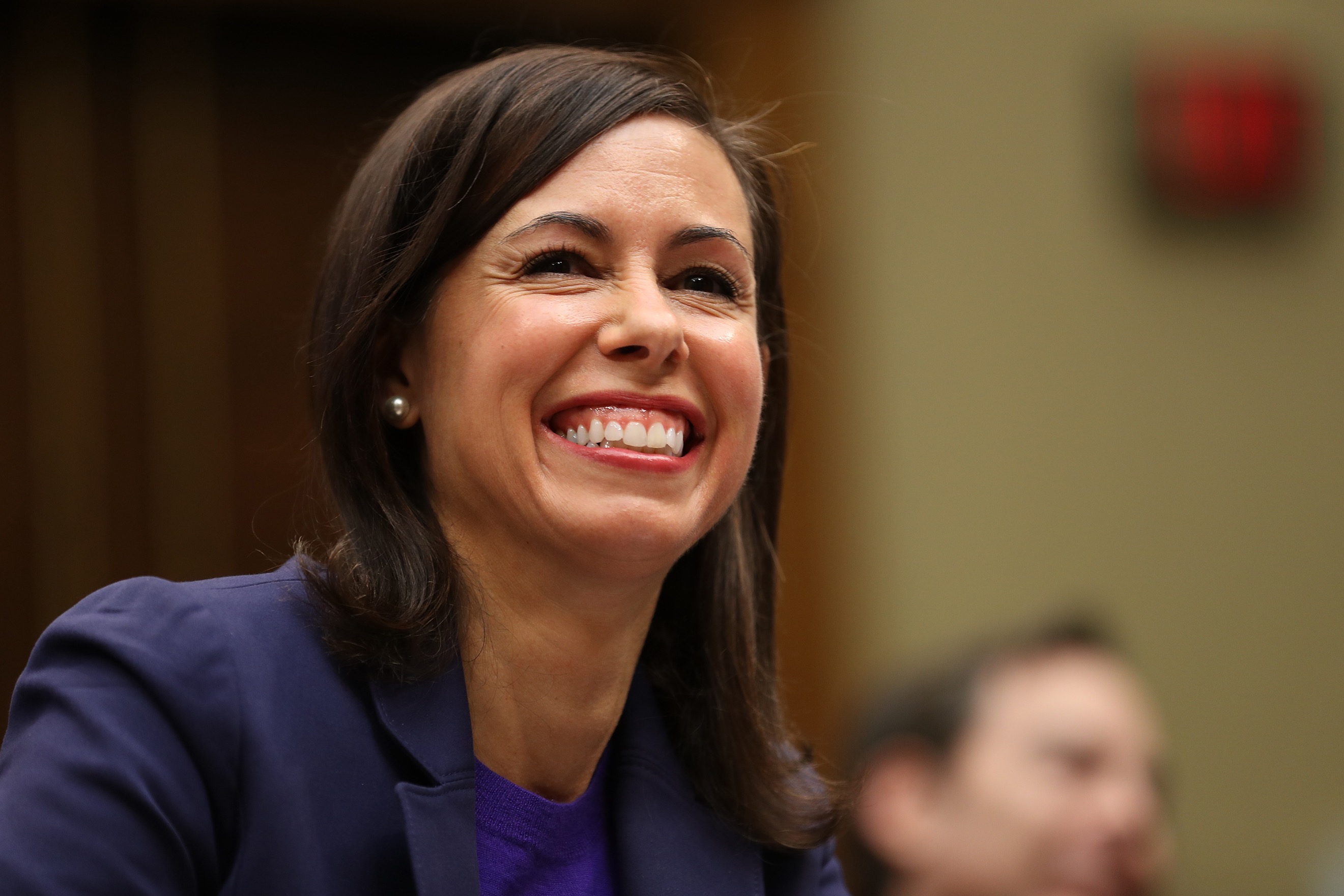
FCC Commissioner Jessica Rosenworcel smiling as she testifies in front of Congress during a 2019 hearing.
Enlarge / FCC Commissioner Jessica Rosenworcel testifies before the House Energy and Commerce Committee’s Communications and Technology Subcommittee on December 05, 2019, in Washington, DC.
Getty Images | Chip Somodevilla

President Biden finally made his picks for the Federal Communications Commission today, ending a baffling delay that forced Democrats to operate in a 2-2 deadlock with Republicans instead of the 3-2 majority that the president’s party typically enjoys.

The names themselves are familiar. Jessica Rosenworcel, who has been acting FCC chairwoman since January, was today designated the permanent chair. Biden will also fill the empty Democratic slot on the commission by nominating Gigi Sohn, a longtime consumer advocate who was an FCC official during the Obama years. Then-FCC Chairman Tom Wheeler chose Sohn in 2013 to serve as his counselor, a role in which she advocated for strong net neutrality rules and Title II common-carrier regulation of Internet service providers.

Biden was able to promote Rosenworcel from acting to permanent chair immediately because the president can choose any sitting commissioner as chair. But Rosenworcel’s current five-year term already expired, and she would have to leave the FCC entirely in January if she doesn’t get a new term. That means Biden has to submit nominations to the Senate for both Rosenworcel and Sohn, and the Senate has to confirm them to avoid giving Republicans a 2-1 majority at the beginning of 2022.

The nominations were reported last night by Politico and The New York Times and announced by the White House today. In her nearly 10 years as an FCC commissioner, Rosenworcel “has worked to promote greater opportunity, accessibility, and affordability in our communications services in order to ensure that all Americans get a fair shot at 21st century success,” the White House said, adding:

From fighting to protect an open Internet, to ensuring broadband access for students caught in the homework gap through the FCC’s Emergency Connectivity Fund, to making sure that households struggling to afford Internet service stay connected through the Emergency Broadband Benefit program, she has been a champion for connectivity for all. She is a leader in spectrum policy, developing new ways to support wireless services from Wi-Fi to video and the Internet of Things. She has fought to combat illegal robocalls and enhance consumer protections in our telecommunications policies.

Senate confirmations often take a few months or longer, but the Rosenworcel and Sohn nominations will presumably be fast-tracked given the circumstances. 

Sohn was nearly Biden’s chair pick

In 2001, Sohn co-founded consumer-advocacy group Public Knowledge, and she was president of that group until going to work for Wheeler at the FCC. Biden had reportedly floated Sohn’s name for the chair slot months ago but dropped that plan after behind-the-scenes opposition from senators. A Sohn-led FCC might have resembled the Federal Trade Commission under Lina Khan, a Biden pick who is turning the FTC into a more aggressive antitrust regulator.

“For over thirty years, Gigi has worked to defend and preserve the fundamental competition and innovation policies that have made broadband Internet access more ubiquitous, competitive, affordable, open, and protective of user privacy,” the White House said in its announcement of her nomination.

Not having Sohn as chair is probably a bit of a relief for the big telecom providers who oppose virtually every plan to regulate the broadband and cable TV industries. In July, reports of Sohn’s potential nomination led Bernstein media analyst Peter Supino to write, “As chairwoman, we think Sohn would probably pursue a form of broadband price regulation” and that, “were Sohn appointed, we would expect cable stocks to tumble.”

ISPs have generally defined “price regulation” extremely broadly—they claimed that Wheeler’s net neutrality plan was essentially rate regulation even though Wheeler never proposed limits on consumer broadband prices. But while full-blown price regulation is unlikely even in a Democratic administration, Sohn’s history as a consumer advocate suggests she might have taken more direct steps to lower broadband prices if she had become chair.

Though Rosenworcel and Wheeler usually agreed on the major telecom-regulatory questions, Rosenworcel was less enthusiastic about strict regulation than Wheeler and Sohn in one notable instance. In 2016, Rosenworcel declined to vote for Wheeler’s plan to require TV providers to make video applications for third-party set-top boxes. Wheeler wanted to make it easier for consumers to avoid paying the hardware-rental fees demanded by TV providers; the cable industry launched a major lobbying campaign against it, and Rosenworcel said that Wheeler’s plan was too complicated.

https://arstechnica.com/?p=1807563


Viewing website HTML code is not illegal or “hacking,” prof. tells Missouri gov.

Cybersecurity professor Shaji Khan sitting in a chair.
Enlarge / Cybersecurity professor Shaji Khan of University of Missouri–St. Louis.

The cybersecurity professor who helped uncover the Missouri government’s failure to protect teachers’ Social Security numbers has demanded that the state cease its investigation into him and stop making “baseless accusations” that he committed a crime.

As we reported on October 14, Missouri Gov. Mike Parson threatened to prosecute and seek civil damages from a St. Louis Post-Dispatch journalist who identified a security flaw that exposed the Social Security numbers of teachers and other school employees. The state is also investigating Shaji Khan, a cybersecurity professor at the University of Missouri-St. Louis who helped the Post-Dispatch journalist verify the security vulnerability.

This is all happening despite the fact that the state government made teachers’ Social Security numbers available in an unencrypted form in the HTML source code of a publicly accessible website. The governor’s strategy of blaming those who discovered the flaw earned him widespread mockery on social media from people who are familiar with the standard “view source” function present in major web browsers.

Khan hired an attorney to defend himself against the state’s accusations. On Thursday last week, Khan’s attorney sent a litigation hold and demand letter to Parson and several state agencies. The letter says that Parson and other state officials defamed Khan and violated his First Amendment “right to speak freely without the threat of government retaliation.” The letter adds that the state’s investigation into Khan “would violate the prohibition on malicious prosecution.”

“Professor Khan is likely to prevail on the merits of any case brought against him,” the letter said. “No statute in Missouri or on the federal level prohibits members of the general public from viewing publicly available websites or viewing the website’s unencrypted source code. No reasonable person would think they were unauthorized to view a publicly available website, its unencrypted source code, or any of the unencrypted translations of that source code. There is no probable cause to investigate Professor Khan, and instigation or continuation of any proceeding against him would therefore be prohibited.”

SSNs sent “to every visitor to the website”

The letter notes that Post-Dispatch reporter Josh Renaud asked Khan to verify the security flaw in a Missouri government website that allowed the public to search teacher certifications and credentials. “Professor Khan agreed to verify whether the security flaw existed only if Mr. Renaud agreed not to publish any story until the State of Missouri had an opportunity to protect teachers’ sensitive information if a flaw was in fact present. Mr. Renaud agreed,” the letter said.

The security flaw was easy to confirm, the letter says:

The public website permitted visitors to look up the credentials of Missouri teachers. Users could look up teachers by school assignments or by their last names and last four digits of their Social Security numbers. However, due to a major security flaw present in its design, the website was programmed to send the full Social Security number of Missouri teachers to every visitor to the website, whether the visitor was aware or not. That information was also programmed to be automatically stored in the visitors’ web browsers…

On October 11-12, 2021, Professor Khan verified the security flaw. He did so by:

  • Visiting the public website, which was accessible by anyone and did not require a login;
  • Looking at the publicly available source code, which can be easily done by anyone on any webpage under the “View” menu option;
  • Identifying a suspicious piece of the source code referred to as “View State” that can contain security flaws like the one found here; and
  • Translating the source code into plain text, which can also be done by anyone.

This entire process could be completed by anyone in a matter of just a few minutes. None of the data was encrypted, no passwords were required, and no steps were taken by the State of Missouri to protect the Social Security numbers of its teachers that the State automatically sent to every website visitor.

The website is still “down for maintenance.”

Khan: The only crimes were committed by the state

Khan’s letter calls for an investigation into the state government, saying the government violated a Missouri law that prohibits state entities from publicly disclosing Social Security numbers. The state also violated a state law requiring government officials to provide accurate information to victims of data breaches, the letter said:

Here, the State of Missouri and its officials improperly published Social Security numbers of approximately 100,000 teachers online. Instead of informing teachers of the nature of their failure, Missouri officials chose to minimize the security flaw created by the State and publicly blame the individuals who responsibly reported the problem to the proper authorities. The government has a responsibility to follow the law and provide accurate information to the teachers it failed. It did not and still has not, and the government has therefore violated the law.

On October 13, the Missouri Office of Administration issued a press release claiming that a “hacker” accessed the Social Security numbers of teachers. This characterization is “false,” Khan’s letter said. “The State of Missouri automatically transmitted teacher Social Security numbers to every website visitor. No one who discovered and reported this security flaw attempted to gain unauthorized access to or ‘hack’ the website.”

https://arstechnica.com/?p=1807377


Four revelations from the Facebook Papers

Four revelations from the Facebook Papers
Aurich Lawson | Getty Images

Facebook is battling its gravest crisis since the Cambridge Analytica scandal after a whistleblower accusing the company of placing “profit over safety” shed light on its inner workings through thousands of pages of leaked memos.

The documents were disclosed to US regulators and provided to Congress in redacted form by Frances Haugen’s legal counsel. A consortium of news organisations, including the Financial Times, has obtained the redacted versions received by Congress.

Earlier this month, Haugen testified in Congress that the social media company does not do enough to ensure the safety of its 2.9 billion users, plays down the harm it can cause to society and has repeatedly misled investors and the public. The Wall Street Journal also ran a series of articles called the Facebook Files.

Here are four surprising revelations the documents contain:

Facebook has a huge language problem

Facebook is often accused of failing to moderate hate-speech on its English-language sites but the problem is much worse in countries that speak other languages, even after it promised to invest more after being blamed for its role in facilitating genocide in Myanmar in 2017.

One 2021 document warned on its very low number of content moderators in Arabic dialects spoken in Saudi Arabia, Yemen and Libya. Another study of Afghanistan, where Facebook has 5 million users, found even the pages that explained how to report hate speech were incorrectly translated.

Facebook allocated only 13 percent of its budget for developing misinformation detection algorithms to the world outside the US
Enlarge / Facebook allocated only 13 percent of its budget for developing misinformation detection algorithms to the world outside the US
Washington Post | Getty Images

The failings occurred even though Facebook’s own research marked some of the countries as “high risk” because of their fragile political landscape and frequency of hate speech.

According to one document, the company allocated 87 percent of its budget for developing its misinformation detection algorithms to the US in 2020, versus 13 percent to the rest of the world.

Haugen said Facebook should be transparent on the resources it has by country and language.

Facebook often does not understand how its algorithms work

Several documents show Facebook stumped by its own algorithms.

One September 2019 memo found that men were being served up 64 percent more political posts than women in “nearly every country,” with the issue being particularly large in African and Asian countries.

While men were more likely to follow accounts producing political content, the memo said Facebook’s feed ranking algorithms had also played a significant role.

Facebook found that men were being served up 64 percent more political posts than women in "nearly every country."
Enlarge / Facebook found that men were being served up 64 percent more political posts than women in “nearly every country.”
Ben Stansall | Getty Images

A memo from June 2020 found it was “virtually guaranteed” that Facebook’s “major systems do show systemic biases based on the race of the affected user.”

The author suggested that perhaps the news feed ranking is more influenced by people who share frequently than those who share and engage less often, which may correlate with race. That results in content from certain races being prioritised over others.

https://arstechnica.com/?p=1807384


Plastic industry pollution to overtake coal in US by 2030, report says

Smoke billows from one of many chemical plants near Baton Rouge, La. 'Cancer Alley' is one of the most polluted areas of the US and lies along the once pristine Mississippi River that stretches some 80 miles from New Orleans to Baton Rouge, where a dense concentration of oil refineries, petrochemical plants, and other chemical industries reside alongside suburban homes.
Enlarge / Smoke billows from one of many chemical plants near Baton Rouge, La. ‘Cancer Alley’ is one of the most polluted areas of the US and lies along the once pristine Mississippi River that stretches some 80 miles from New Orleans to Baton Rouge, where a dense concentration of oil refineries, petrochemical plants, and other chemical industries reside alongside suburban homes.
Giles Clarke/Getty Images

Plastic pollution usually conjures images of grocery bags blowing in the wind or nurdles lodged in a seabird’s stomach. But soon, plastic pollution may take on another meaning, as a new report forecasts that the industry’s greenhouse gas emissions in the US will outpace those of coal by the end of the decade.

“Unlike the plastic trash choking our waterways and littering our communities, the plastic industry’s devastating impact on our climate is taking place under the radar, with little public scrutiny and even less government accountability,” Judith Enck, president of Beyond Plastics and a former EPA regional administrator, said in the report.

Plastic is a large but often overlooked source of carbon pollution. Production in the US creates at least 232 million metric tons of greenhouse gases, according to the report by Bennington College and the nonprofit organization Beyond Plastics. Plastic production is expected to emit another 55 million tons by 2025 if the 42 plants currently planned or under construction come online.

Last year, coal power in the US produced 786 million metric tons of CO2, an amount that is expected to decline as coal-fired power plants are outcompeted by natural gas, solar, and wind. Between 2019 and 2020, carbon pollution attributed to coal dropped by 166 million tons. As coal continues its decline and plastic rises, it’s inevitable that the two lines will cross.

Today, carbon pollution from other parts of the economy exceeds that of plastics. But as other sectors are decarbonized, the industry’s continued emissions growth undermines President Joe Biden’s goal to reach net-zero carbon pollution by 2050.

Myriad sources

A significant portion of plastics’ carbon pollution comes from fracking and transporting gases used in production. One of those is methane, a potent greenhouse gas that warms the atmosphere 86 times more than the same amount of CO2 over 20 years. Leaks at wellheads and along pipelines create 36 million tons of carbon pollution, the report says. Other parts of natural gas, like ethane, are used as feedstocks, and cracking them creates another 70 million tons. Other plastics feedstocks like coal and ammonia produce an additional 28 million tons.

The pollution continues as plastics reach the end of their lives. Burning plastic waste is responsible for 15 million tons of carbon pollution. Even so-called “chemical recycling,” which typically uses high heat to melt plastics into component parts, could add another 18 million tons by 2025, the report says.

The Plastics Industry Association said the report ignores some benefits of plastics that could offset some production-related pollution. “Plastic is lighter and more durable than alternatives and reduces the overall weight of products. Lighter products require less fuel to transport,” a spokesperson told E&E News. “If plastic packaging were replaced with other materials, waste and energy consumption would double, and weight and costs would quadruple,” the spokesperson said. The American Chemistry Council, a trade association for American chemical companies, claims that alternatives to plastic packaging would have carbon footprints 2.7 times larger. 

The results of the new report jibe with a previous effort by the Center for International Environmental Law, which found that by 2050, carbon pollution from plastics could top 2.5 billion metric tons worldwide, more than double today.

Plastic production facilities also tend to be concentrated near communities that disproportionately bear the brunt of the pollution. “More than 90% of the climate pollution that the plastics industry reports to EPA occurs in 18 communities, mostly along the coastlines of Texas and Louisiana,” the new report’s authors note. “People living within 3 miles of these petrochemical clusters earn 28% less than the average US household and are 67% more likely to be people of color.”

https://arstechnica.com/?p=1806938


FBI, others crush REvil using ransomware gang’s favorite tactic against it

FBI, others crush REvil using ransomware gang’s favorite tactic against it
Aurich Lawson

Four days ago, the REvil ransomware gang’s leak site, known as the “Happy Blog,” went offline. Cybersecurity experts wondered aloud what might have caused the infamous group to go dark once more.

One theory was that it was an inside job pulled by the group’s disaffected former leader. Another was that law enforcement had successfully hacked and dismantled the group. “Normally, I am pretty dismissive of ‘law enforcement’ conspiracy theories, but given that law enforcement was able to pull the keys from the Kaseya attack, it is a real possibility,” Allan Liska, a ransomware expert, told ZDNet at the time.

“Rebranding happens a lot in ransomware after a shutdown,” he said. “But no one brings old infrastructure that was literally being targeted by every law enforcement operation not named Russia in the world back online. That is just dumb.”

Well, apparently, whoever relaunched REvil wasn’t the brightest bulb. Last night, Reuters reported that several countries working together took down the ransomware gang using one of the criminal organization’s favorite tactics—compromised backups.

Though the FBI isn’t commenting on the matter, private-sector cybersecurity experts and a former US official confirmed the operation, Reuters reports. “The FBI, in conjunction with Cyber Command, the Secret Service, and like-minded countries, have truly engaged in significant disruptive actions against these groups,” Tom Kellermann, VMware’s head of cybersecurity strategy and an adviser to the US Secret Service on cybercrime investigations, told Reuters. “REvil was top of the list.”

“The gloves have come off”

The newfound success against the slippery gang stems in part from the new legal freedom to pursue such criminal operations. US Deputy Attorney General Lisa Monaco recently determined that ransomware attacks on critical infrastructure are a national security threat on par with terrorism. That allowed the Justice Department to bring in assistance from the Pentagon and US intelligence agencies.

“Before, you couldn’t hack into these forums, and the military didn’t want to have anything to do with it,” Kellermann said. “Since then, the gloves have come off.”

REvil was one of the most notorious ransomware gangs in recent years. The group first appeared in 2019, and over the last year, it racked up a laundry list of victims. The first was a celebrity law firm that represented Lady Gaga, U2, and Madonna. The firm refused to pay the $21 million ransom, so REvil published some of Lady Gaga’s documents. Next up was contract manufacturer Quanta Computer. REvil stole confidential data from the company and published details of two Apple products. In May, the group hacked Colonial Pipeline’s operations, causing widespread fuel shortages from New Jersey to Texas. In June, it attacked JBS, a meat processor, shutting down plants in the US, Canada, and Australia.

Finally, in July, REvil hacked software from Keseya, an IT firm. The company’s compromised remote management tools were used by 54 services providers to serve as many as 1,500 organizations. Victims of the attack ranged from grocery stores to hospitals, town halls, and businesses.

Strategic delay

In September, a report by The Washington Post revealed that the FBI had hacked REvil’s servers and obtained a universal decryption key but didn’t tell victims for three weeks. At the time, FBI Director Christopher Wray testified before Congress that the delay was strategic. “We make the decisions as a group, not unilaterally,” he said. “These are complex… decisions, designed to create maximum impact, and that takes time in going against adversaries where we have to marshal resources not just around the country but all over the world.”

Withholding the key appears to have paid off. The FBI and its collaborators were able to burrow deep enough into REvil’s operations that law enforcement’s software remained hidden in backups that were recently used by gang member “0_neday” to restore operations. When he spun things up again, he unknowingly granted law enforcement access to some of the systems, Oleg Skulkin, deputy head of the forensics lab at the Russian-led security company Group-IB, told Reuters.

“Ironically, the gang’s own favorite tactic of compromising the backups was turned against them,” Skulkin said.

https://arstechnica.com/?p=1806806


Cardboard shortages deal another blow to strained supply chains

Cardboard shortages deal another blow to strained supply chains

First it was toilet paper. Then it was processors and other silicon. Now it’s cardboard. (And there’s a whole lot of other stuff in between.)

The latest kink in the planet’s ever-gnarled supply chain is one that is sending retailers, shippers, and consumers all scrambling. Cardboard supplies are unreliable, as are those for other packing materials like paper and plastic. And what is available costs more, with loads of companies passing the increased expenses to customers.

Many of the cardboard-producing paper mills around the world shut down at different points during the COVID-19 pandemic. While plants have come back online, they’re still scrambling to fill a backlog of orders.

Meanwhile, consumer shopping habits altered by the pandemic are also a factor. With most of the world having experienced some sort of lockdown since the beginning of 2020, homebound shoppers have turned to Amazon and other online outlets in increasing numbers for life’s necessities.

Complicating the situation is last winter’s deep freeze that knocked several power plants in Texas offline for days. With no power, refineries were unable to make plastics used in shipping materials. That, in turn, led manufacturers and shippers to rely more on other products—like cardboard.

“The types of materials that would be key and the raw materials that go into them—polyethylenes, polyurethanes—we’ve seen the cost of those raw materials surging to the tune of 50 percent year over year,” Vipul Shah, the chief product officer of Next Trucking, a logistics technology startup, told NBC News. “The story for packaging is the same.”

With shipping behemoths like Amazon able to secure supplies by virtue of their size and massive bankrolls, the rest of the world is facing higher prices and short supplies.

“Someone like Amazon is obviously going to be at the front of the line to get their share of capacity, whereas these smaller businesses are at the back of the line. They don’t have the ability to absorb these costs as easily,” Andrew Hogenson, the global managing partner of consumer goods, retail and logistics at Infosys Consulting, told NBC News. “Whereas smaller- to mid-sized businesses are going to be stuck or have to pay exorbitant prices.”

https://arstechnica.com/?p=1806780


More than 100,000 people have had their eyes scanned for free cryptocurrency

People in Chile with Worldcoin's "Orb" iris scanner.
Enlarge / People in Chile with Worldcoin’s “Orb” iris scanner.

More than 100,000 people have had their eyes scanned in return for a cryptocurrency called Worldcoin, as a project to distribute digital money more widely around the world accelerates.

Worldcoin has distributed about 30 iris-scanning hardware devices, which they call “orbs,” to early users on four continents, who get rewards for signing up more people. Orbs take photos of a user’s eyeballs, creating a unique code that can be used to claim free digital tokens.

The project’s developers said on Thursday they planned to release hundreds of orbs in the coming months and eventually distribute 4,000 devices per month. The team plans to debut the cryptocurrency network early next year and begin giving away the tokens at that time. They have not said how much cryptocurrency users can expect to receive.

Worldcoin amounts to one of the most ambitious and complex attempts to hand out cryptocurrency to the world’s population, similar to the economic concept of universal basic income. The project has already faced feverish criticism, and its own developers admit the “outcome is uncertain.”

Alex Blania, the cofounder of Worldcoin, denied that the project would invade people’s privacy, saying that the orbs convert iris scans into unique strings of letters and numbers before permanently deleting the images.

The resulting code would simply be used to check whether a user has already claimed a share of the Worldcoin tokens.

“Even if I would have your iris code in one form or another, I would have no chance to find out who you actually are on the blockchain,” Blania said, referring to the digital ledgers that underpin cryptocurrencies. Worldcoin is built on the ethereum blockchain.

Blania said about 130,000 people had signed up for the project so far and that the token would be valuable as a technology that can be used for new financial applications.

The team behind Worldcoin has raised $25 million in venture capital, including a round of funding led by Andreessen Horowitz that valued the company, Tools for Humanity, at $1 billion.

Sam Altman, a former president of the Y Combinator start-up accelerator, is also an investor and cofounder of the project. Altman has been a vocal proponent of universal basic income, the concept of providing people with free money on a regular basis.

Worldcoin plans to issue 10 billion tokens in total, with 80 percent going to users, 10 percent to the company’s investors and another 10 percent to a foundation for manufacturing the orbs and developing the network.

Blania said cofounders and employees will receive a portion of the foundation’s tokens, declining to provide an exact figure. A Worldcoin spokesperson said the company planned to set up the foundation before the network’s debut.

Like many cryptocurrency projects, Worldcoin’s tokens are not backed by any hard assets and could fluctuate in value based on their popularity.

Worldcoin estimated that it could reach more than 1 billion people within the first two years of the network’s operation, assuming people continue signing up at current rates and the team meets its orb distribution targets.

People who sign up for Worldcoin will receive their full allotment of tokens over time through a pre-planned vesting schedule, which Blania said was still in development.

Blania said the rate at which Worldcoin is distributed would ultimately depend on the design of the vesting schedule and the pace of user sign-ups.

Worldcoin has so far distributed orbs to 12 countries in Africa, South America, Europe, and Asia. The most productive orb owner has signed up more than 10,000 people in Chile by hiring 20 people who work in shifts, the company said.

© 2021 The Financial Times Ltd. All rights reserved Not to be redistributed, copied, or modified in any way.

https://arstechnica.com/?p=1806743


CDC advisory panel unanimously approves expanded COVID vaccine boosters

Image of vaccine vials and syringes.

On Thursday, the Centers for Disease Control’s expert advisory committee on vaccines met to vote on new guidelines for the use of boosters to sustain the immunity provided by the COVID-19 vaccines in use in the US. The day prior, the Food and Drug Administration issued an emergency use authorization (EUA) that greatly expanded the number of vaccinated people who could receive a booster shot. That set the stage for the CDC to determine whether the FDA approval should be adopted as formal health policy.

A key step in the CDC’s policymaking process is approval by its Advisory Committee on Immunization Practices (ACIP). While the CDC director isn’t bound to follow ACIP’s advice (and notably didn’t in an earlier booster decision), overruling ACIP is unusual. Given that ACIP has now voted unanimously to expand booster use to Moderna and Johnson & Johnson vaccine recipients, the CDC director will likely follow its guidance.

FDA sets the stage

On Wednesday, the FDA announced that it was expanding its EUA for COVID-19 vaccine booster shots. Earlier this month, the FDA approved Pfizer/BioNTech boosters for people who are six months out from receiving their initial doses and are at risk of exposure (like health care workers) or severe COVID cases (the elderly and those with health conditions). The CDC approved this guidance despite a split vote against it from its advisory committee.

The FDA gives the same guidance to recipients of the Moderna vaccine as it gave for the Pfizer/BioNTech vaccine: It is approved for those over 65 years of age, those with medical conditions that place them at risk, and those with a job that increases their exposure to infections. For those who received the J&J shot, anyone over the age of 18 can get a second shot as soon as two months after their prior one.

The FDA also acted on evidence that mix-and-match boosters are highly effective. Accordingly, anyone who qualifies for a booster based on any of the rules described above is now authorized to receive any of these three vaccines.

The FDA’s EUA, however, is simply a determinant of what’s allowed. The CDC separately sets a policy for its preferred approach to vaccinations, based on the advice of ACIP—although as we saw earlier this month, the CDC director overruled some of ACIP’s advice. The CDC’s guidance is often taken into account by state and local health departments, insurance companies, and others, so it has a significant impact on how the FDA’s authorizations are put into practice.

Data, so much data

Anyone who worries that we don’t have the data to know enough about these vaccines—a group that sadly includes Florida’s new surgeon general—should be forced to sit through the hours of presentations that the ACIP receives before voting. We now have multiple clinical trials (both industry- and government-funded) and several platforms for tracking adverse reactions among the vaccinated. And the numbers in some cases are staggering: Between clinical trials and ad-hoc boosting, the CDC has tracked nearly 11 million people who have already received vaccine booster doses.

While covering all the data is impossible, there were a number of recurring trends. One is that the rate of side effects from boosters is not significantly different from that of the initial vaccination. The most significant issues (heart inflammation from the RNA vaccines, clotting problems from the J&J) remain rare, and no new issues have been identified. Mostly, people get a bit feverish, achy, and/or tired.

https://arstechnica.com/?p=1806546


Trumpist county clerk barred after leak of voting-system passwords to QAnon

A photo of Tina Peters.
Enlarge / Tina Peters.

A Colorado judge on Wednesday barred Mesa County Clerk Tina Peters from supervising elections due to the leak of voting-system BIOS passwords to QAnon conspiracy theorist Ron Watkins. Colorado Secretary of State Jena Griswold and Mesa County registered elector Heidi Jeanne Hess had petitioned the court for a ruling that Peters and Deputy Clerk Belinda Knisley are unable to perform the functions of the Designated Election Official for the November 2021 election.

The “court determines that the petitioners have met the burden of showing that Peters and Knisley have committed a breach and neglect of duty and other wrongful acts,” Mesa County District Court Judge Valerie Robison wrote in Wednesday’s ruling. “As such, Peters and Knisley are unable or unwilling to appropriately perform the duties of the Mesa County Designated Election Official. The court further determines substantial compliance with the provisions of the code require an injunction prohibiting Peters and Knisley from performing the duties of the Designated Election Official.”

In August, Watkins released photos of information on Dominion’s Election Management Systems (EMS) voting machines, including an installation manual and “BIOS passwords for a small collection of computers, including EMS server and client systems,” as we reported at the time. While Watkins, a former 8chan administrator, was trying to prove that Dominion can remotely administer the machines, the documents actually showed “a generic set of server hardware, with explicit instructions to keep it off the Internet and lock down its remote management functions.”

Peters, who promoted Trump’s conspiracy theory that voting machines were manipulated to help Joe Biden win the 2020 election, “‘holed up’ in a safe house provided by pillow salesman and conspiracy theorist Mike Lindell” when the FBI began investigating her, according to an August 19 Vice News article. Her location was described as a “mystery” for a while, but she appeared at an event in Grand Junction, Colorado, last month.

Peters brought outsider to confidential meeting

Judge Robison’s ruling details how Peters brought a man named Gerald Wood into a meeting on a “trusted build” software update that ensures a secure chain of custody for the voting system. The meeting was intended only for authorized staff, but Wood was not a county employee even though Peters introduced him to staff “as an administrative assistant with her office who was transitioning from the motor vehicle division to the election’s division.” The judge wrote:

During the Mesa County “trusted build”, confidential passwords were required. The passwords were maintained on a spreadsheet contained on a laptop [that Colorado Department of State Senior Voting Systems Specialist Danny] Casias brought with him from Denver. At some point, during the four plus hours of the “trusted build” process, video and photos were taken of Casias’ laptop and the passwords contained on his screen.

Later, the confidential passwords were publicly posted to an online social media site. On August 2, 2021, the Secretary learned that the confidential passwords had been publicly disseminated and an investigation began.

After Griswold’s complaint against Peters, the court held a September 28 status conference during which “the parties agreed that the facts were undisputed, and an evidentiary hearing was unnecessary.” Robison thus decided the case based on the pleadings and exhibits.

Though Peters originally presented Wood to staff as an administrative assistant, “Peters and Knisley now describe Gerald Wood as a ‘consultant’ hired by Peters to copy the voting equipment computers,” the judge’s ruling said in a section listing the “undisputed” facts of the case. “There was no information provided to the Secretary that Peters or Knisley obtained a background check of Gerald Wood,” even though Colorado election rules require background checks for anyone accessing secured areas with election equipment.

https://arstechnica.com/?p=1804525