Senators slam Facebook, say it’s using Big Tobacco playbook to hook kids
Enlarge/ Sen. Marsha Blackburn (R-Tenn.) speaks as Facebook head of global safety, Antigone Davis, testifies before a hearing of the Senate Subcommittee on Consumer Protection focusing on Facebook, Instagram, and mental health harms on September 30, 2021.
Senators spent three hours yesterday grilling Facebook’s head of global safety, Antigone Davis, as she attempted to defend the company’s approach to handling the mental wellbeing of children who use its services.
“Facebook has taken Big Tobacco’s playbook,” said Sen. Richard Blumenthal (D-Conn.), chair of the Senate Commerce Subcommittee on Consumer Protection. “It has hidden its own research on addiction and the toxic effects of its products, it has attempted to deceive the public and us in Congress about what it knows, and it has weaponized childhood vulnerabilities against children themselves.”
The hearings come on the heels of a Wall Street Journal investigation that revealed that Facebook has been sitting on a cache of research that shows just how harmful its products can be for children under the age of 18. The whistleblower documents, which also have been turned over to Congress, offer “deep insight into Facebook’s relentless campaign to recruit and exploit young users,” Blumenthal said.
“You’ve lost trust, and we do not trust you with influencing our children,” said Sen. Marsha Blackburn (R-Tenn.), the subcommittee’s ranking member.
Instagram makes teens feel worse
Facebook’s own research shows Instagram to be the cause of mental health issues in a startling percentage of teens. Around 20 percent of teens in the US and the UK said that they felt alone or lonely after using Instagram, and of teens who had suicidal thoughts, 6 percent in the US and 13 percent in the UK traced the origin of those feelings to Instagram.
“We care deeply about the safety and security of the people on our platform,” Davis, who testified via video, told the subcommittee. “We take the issue very seriously,” she added. “We have put in place multiple protections to create safe and age-appropriate experiences for people between the ages of 13 and 17.”
Though Davis said her company would not retaliate against the whistleblower for testifying to Congress, her response left open the possibility that Facebook would go after the person for handing them over to the media.
The senators were clearly frustrated with Facebook’s lack of transparency. Sen. Ted Cruz (R-Texas) zeroed in on the company’s unwillingness to share all of its research. For example, in anticipation of The Wall Street Journal exposé, Facebook released two presentations of its research into Instagram and teen mental health. But the Journal published six presentations, revealing far more about Facebook’s research than the company had wanted to share. Davis said the Journal’s slides offered an incomplete or incorrect picture of the company’s work.
Cruz pressed Davis to commit the company to releasing all of its research, and she demurred. Cruz pushed further. “You’re telling us, ‘If only you knew the full research,’ and then at the same time, you’re not releasing the research. So which is it?” Cruz asked. Davis said Facebook was still evaluating which research it could share with the public. “So you’ve cherry-picked the ones you want us to see,” Cruz said.
Facebook’s response to Congress “simply untrue”
Facebook’s selective interpretation of its own research hasn’t been limited to managing public relations disasters, either. It seemed to take a similar approach when responding to questions that Blumenthal and Blackburn had sent in August to CEO Mark Zuckerberg. In yesterday’s hearing, one of those questions was top of mind for Blumenthal: “Has Facebook research ever found that its platforms and products have a negative effect on children’s and teens’ mental health or well-being?”
In August, the company had responded, “We are not aware of a consensus among studies or experts about how much screen time is too much.”
To Blumenthal, that reply and subsequent disclosures and leaks suggested that the company was less than forthcoming. “That response was simply untrue. It knows the evidence of harm to teens is substantial and specific to Instagram,” Blumenthal said.
Sen. Ed Markey (D-Mass.) pushed Davis to commit to canceling its planned Instagram for teens app. “Do you promise not to launch a site that includes features such as like buttons and follower counts that allow children to quantify popularity?” asked Markey.
Davis wouldn’t commit. “Those are the kinds of features that we will be talking about with our experts trying to understand, in fact, what is most age appropriate and what isn’t age appropriate, and we will discuss those features with them of course,” she said.
https://arstechnica.com/?p=1799950
Settlement forces Amazon to tell workers they can’t be fired for organizing
Enlarge/ Tech workers show support for Maren Costa (left) and Emily Cunningham (right) on Sept 16, 2021.
Amazon has agreed to a settlement with two employees who alleged that they were illegally fired for speaking out about warehouse working conditions during the pandemic.
“Amazon will be required to pay us our lost wages and post a notice to all of its tech and warehouse workers nationwide that Amazon can’t fire workers for organizing and exercising their rights,” the fired workers, Maren Costa and Emily Cunningham, said in a statement yesterday. “It’s also not lost on us that we are two women who were targeted for firing. Inequality, racism, and sexism are at the heart of both the climate crisis and the pandemic.”
Costa and Cunningham were tech workers at Amazon’s Seattle headquarters and were fired in April 2020. “Both were active in an internal employee group advocating for climate issues and had circulated a petition inside the company calling on Amazon to expand benefits and pay for employees in warehouses,” we noted in an article at the time.
In April of this year, the National Labor Relations Board (NLRB) found that Amazon acted illegally and in retaliation when it fired them. NLRB “staff told Ms. Cunningham and Ms. Costa that it would accuse Amazon of unfair labor practices if the company did not settle the case,” The New York Times wrote.
The NLRB scheduled a hearing for Tuesday of this week. NLRB Administrative Law Judge John Giannopoulos reportedly announced the settlement at Wednesday’s hearing. Amazon also confirmed the settlement to news organizations, saying, “We have reached a mutual agreement that resolves the legal issues in this case and welcome the resolution of this matter.”
We asked Amazon for details on the settlement but the company didn’t provide us with any information beyond its statement.
In a separate case, an NLRB attorney and hearing officer found in August that Amazon interfered with a union-certification vote at a fulfillment center in Bessemer, Alabama. The NLRB could order a new vote, and Amazon said it would appeal.
Amazon avoids lengthy trial
“By reaching a settlement, Amazon avoids what could have been a potentially lengthy trial, complete with witnesses and a dissection of its treatment of employees,” according to CNBC. “Had the NLRB sided with the employees, Amazon could have been forced to rehire Cunningham and Costa or award them back pay, among other remedies.” Cunningham and Costa worked at Amazon for 15 years as user experience designers, CNBC wrote.
The NLRB said that Amazon and the former employees “reached a non-board settlement, a private agreement between parties in which terms were not disclosed,” according to Reuters. “The NLRB regional director, however, is required to review and approve the settlement agreement before allowing the charges to be withdrawn.” The docket now lists the case as “closed,” but an NLRB told Ars that the regional director is still reviewing the settlement.
Amazon previously disputed the NLRB’s preliminary findings, saying in April 2021 that “we support every employee’s right to criticize their employer’s working conditions, but that does not come with blanket immunity against our internal policies, all of which are lawful. We terminated these employees not for the reasons cited in the preliminary finding, but because they repeatedly violated internal policies.”
“Tech workers… have immense power”
Costa and Cunningham have continued to push Amazon to adopt more climate-friendly policies.
“Tech workers standing up together have immense power to move the biggest corporations in the world,” they said in their statement about the settlement. “Everything we love is threatened by climate chaos. Workers at every company need to be standing up for each other and the world, together.” They called the settlement with Amazon “a win for protecting workers rights, and [it] shows that we were right to stand up for each other, for justice, and for our world.”
We asked Costa and Cunningham for more details on the settlement, including the payment of lost wages and the notice that Amazon is required to post to its tech and warehouse workers. We’ll update this article if we get a response.
Costa and Cunningham have had plenty of support from Amazon workers since they began speaking out in 2018 about Amazon’s effect on the climate. The Amazon Employees for Climate Justice group that they helped form “gained the support of more than 8,700 employees and propelled more than 1,500 employees to walk out in protest of Amazon’s climate policies,” CNBC noted. In May 2020, Amazon VP Tim Bray resigned in protest of Amazon’s treatment of warehouse workers and the firing of employees, including Costa and Cunningham.
https://arstechnica.com/?p=1799634
Phone companies must now block carriers that didn’t meet FCC robocall deadline
Getty Images | RobertAx
In a new milestone for the US government’s anti-robocall efforts, phone companies are now prohibited from accepting calls from providers that did not comply with a Federal Communications Commission deadline that passed this week. “Beginning today, if a voice service provider’s certification and other required information does not appear in the FCC’s Robocall Mitigation Database, intermediate providers and voice service providers will be prohibited from directly accepting that provider’s traffic,” the FCC said yesterday.
Specifically, phone companies must block traffic from other “voice service providers that have neither certified to implementation of STIR/SHAKEN caller ID authentication standards nor filed a detailed robocall mitigation plan with the FCC.” As we’ve written, the STIR (Secure Telephone Identity Revisited) and SHAKEN (Signature-based Handling of Asserted Information Using toKENs) protocols verify the accuracy of Caller ID by using digital certificates based on public-key cryptography.
STIR/SHAKEN is now widely deployed on IP networks because large phone companies were required to implement it by June 30 this year, but it isn’t a cure-all. Because of technology limitations, there was no requirement to implement STIR/SHAKEN on older TDM-based networks used with copper landlines, for instance. The FCC has said that “providers using older forms of network technology [must] either upgrade their networks to IP or actively work to develop a caller ID authentication solution that is operational on non-IP networks.”
The FCC also gave carriers with 100,000 or fewer customers until June 30, 2023, to comply with the STIR/SHAKEN requirement, though the commission is seeking comment on a plan to make that deadline June 30, 2022, instead because “evidence demonstrates that a subset of small voice service providers appear to be originating a high number of calls relative to their subscriber base and are also generating a high and increasing share of illegal robocalls compared to larger providers.”
“Too many loopholes”
Computer science professor Brad Reaves of North Carolina State University called STIR/SHAKEN “a good start” but told Marketplace that this won’t make a huge dent in the robocall problem yet:
There are just too many loopholes and ways to bypass this system. First of all, smaller providers currently aren’t being required to implement this new system. And so if you’re robocalling, you’re probably going to be moving to a smaller carrier. Another issue is there are certain providers who are providing US phone service, but for people located overseas. Those so-called “gateway providers” currently aren’t required to participate in the system, either. So if a call is coming from outside the United States, and a lot of people think that most robocalls are, it’s not going to have this identifying token attached to it.
The FCC last year authorized phone companies to block calls from certain “bad-actor upstream voice service providers” and took action against companies that act as “gateways” for foreign robocallers, but it is still a problem as Reaves pointed out. Reaves argued that something like the “Know Your Customer” rule that applies to the banking industry is needed in telephony to make more significant progress in fighting robocalls.
As of yesterday afternoon, 4,798 companies had filed in the Robocall Mitigation Database. “All of the largest phone carriers have certified to implementation of STIR/SHAKEN standards on their IP networks. Many hundreds of other carriers have also certified to full implementation on their IP networks,” the FCC said. Phone companies that don’t fully implement STIR/SHAKEN across their networks “must describe the robocall mitigation steps they are taking to ensure they are not the source of illegal robocalls.” The FCC did not say how many companies failed to comply.
The US Public Interest Research Group (PIRG) analyzed the 3,063 filings that came in by September 3 and found that “17 percent (536 companies) said they’d completely implemented anti-robocall technology; 27 percent (817 companies) had partially implemented the technology; and 56 percent (1,710 companies) said they were not using the industry standard technology but rather are using their own methods to manage robocalls.”
Robocalls dropped slightly after June 30 deadline
Although PIRG’s report concluded that “the industry isn’t doing nearly as much as hoped to fight” robocalls, it said that robocall traffic has gone down since the STIR/SHAKEN implementation deadline on June 30. YouMail, a robocall-blocking service, calculates that “Americans have received over 34 billion robocalls so far this year, averaging roughly 4.3 billion robocalls calls/month, putting the country on a pace to hit roughly 52 billion robocalls for the year. However, since STIR/SHAKEN and new federal robocall mitigation rules took effect on June 30, we have seen 8.6 percent fewer robocalls/month.” The YouMail data goes through August.
STIR/SHAKEN implementation was required by Congress after then-FCC Chairman Ajit Pai’s voluntary compliance plan didn’t lead to widespread adoption. To make it easier to block calls from non-compliant companies, the FCC is providing an email alert service to notify phone companies of updates to the Robocall Mitigation Database.
“The FCC is using every tool we can to combat malicious robocalls and spoofing—from substantial fines on bad actors to policy changes to technical innovations like STIR/SHAKEN,” FCC Acting Chairwoman Jessica Rosenworcel said yesterday. “Today’s deadline establishes a very powerful tool for blocking unlawful robocalls.”
https://arstechnica.com/?p=1799376
Russia arrests cybersecurity expert on treason charge
Enlarge/ KAZAN, RUSSIA – JULY 9, 2020: Group-IB CEO and founder Ilya Sachkov speaks during a panel discussion with representatives of the IT industry at Innopolis’ Popov Technopark.
Dmitry Astakhov | Getty Images
The founder of one of Russia’s largest cybersecurity companies has been arrested on suspicion of state treason and will be held in a notorious prison run by the security services for the next two months, a Moscow court said on Wednesday.
The charges against Ilya Sachkov, founder of Group-IB, are classified and details of them were not immediately clear. State-run news agency Tass cited an anonymous source who said Sachkov denied passing on secret information to foreign intelligence services.
Group-IB, which specializes in preventing cybercrime and ransomware, confirmed that law enforcement raided its officers yesterday but said it did not know the reason for Sachkov’s arrest.
“Group-IB’s team is confident in the innocence of the company’s CEO and his business integrity,” the company said in a statement.
Dmitry Volkov, Group-IB’s cofounder, will assume Sachkov’s leadership responsibilities, it added.
RIA Novosti, another state newswire, reported that investigators searched Group-IB’s office in St Petersburg and other unspecified premises on Wednesday.
The company, which is headquartered in Singapore, is an official partner of Interpol and Europol and has hosted senior international law enforcement officials at its conferences in Moscow. Its private sector clients include BP, Microsoft, DHL, and several major Russian state-owned companies.
Group-IB said it was continuing to operate as normal. “The decentralized infrastructure of Group-IB allows us to keep our customer’s data safe, maintain business operations and work without interruption across our offices in Russia and around the world,” the company said.
Dmitry Peskov, president Vladimir Putin’s spokesman, told reporters on Wednesday that Sachkov’s arrest “had nothing to do with the business and investment climate in our country,” according to Interfax.
“He was in a grey area because of the industry he worked in. The secret services consider cybersecurity to be part of their territory. So either he crossed a line, or he crossed somebody’s interests,” said a person who has worked with Sachkov.
Russia’s FSB, the successor agency to the KGB, has arrested several prominent scientists, cybersecurity officials, and a former journalist in recent years on treason charges, which carry a sentence of up to 20 years in prison.
Convictions on the various counter-intelligence related-statues, which have significantly expanded the definitions of state secrets and potentially qualify nearly all contacts with foreign organisations as treason, have risen fivefold since 2009, according to Mediazona, an independent news site that covers Russia’s criminal justice system.
In 2019, a court sentenced a former top FSB cyber security official to 22 years on treason charges for passing information along to the US. A former senior executive at Kaspersky Lab, Russia’s top cyber security firm, was sentenced to 14 years in prison in the same case, details of which were not made public.
Elizabeth Holmes urged employees to hide Theranos’ lab equipment from inspectors
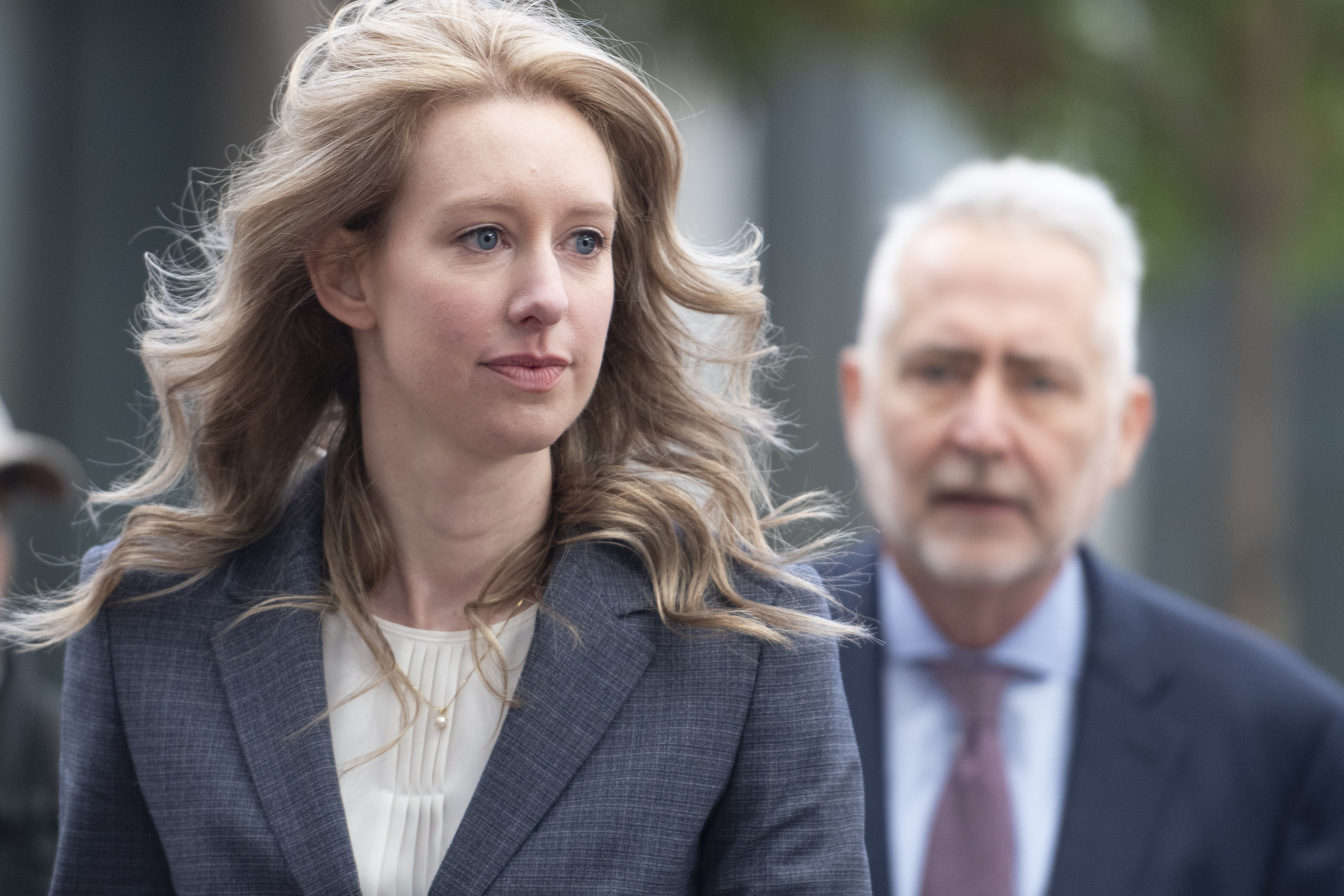
Enlarge/ Elizabeth Holmes, founder and former CEO of Theranos, arrives for motion hearing on Monday, November 4, 2019, at the US District Courthouse in San Jose, California.
A patient on blood thinners reported bruising and feeling off after a medication change following a Theranos test, the court heard yesterday in the criminal trial of company founder Elizabeth Holmes.
Her doctor had increased the dosing of her blood thinner in response to test results reported by Theranos. “I have not felt ‘right’ since the one increased dose and also experienced various skin bruising on my legs and arms almost immediately after the one dose increase,” she said in an email to Theranos.
That complaint and other issues “raised serious and grave concerns for me about the accuracy of the testing process,” Dr. Adam Rosendorff, Theranos’ former lab director, told jurors in response to questioning by the prosecution.
Other tests the company performed were producing worrisome results, Rosendorff said, and after repeatedly raising the issue with executives, it got to the point where he didn’t feel comfortable staying with the company. “The number and severity of issues had reached a crescendo for me.”
Hiding from inspectors
Warning signs appeared earlier, though. In January 2013, in anticipation of a visit from state inspectors who certify labs for Medicare, Balwani had told employees that no one was to go into or out of the lab that contained the company’s proprietary Edison devices, Rosendorff said. The court also saw an email from Holmes, in which she asked an employee, “Let me know if the path for walking the auditors in and downstairs has been cemented so we avoid areas that cannot be accessed, and what that path is.”
During visits by state inspectors, labs are legally obligated to grant inspectors “access to all areas encompassed under the certificate,” and while it doesn’t appear that Holmes or Balwani barred inspectors from those rooms, keeping the doors shut certainly made it less likely that they would ask to see what’s inside. Typically during inspections, company employees are supposed to “show inspectors what they asked for,” Rosendorff said.
Later, Rosendorff was asked to provide explanations to doctors as to why Theranos tests were producing questionable results. In one instance, Christian Holmes, Elizabeth’s brother, asked Rosendorff to reply to a doctor who wanted a more detailed explanation about cholesterol test results. “I’m going to pass on this one,” Rosendorff replied to Christian. When Holmes’ brother asked him what he meant, he replied, “If you’re asking me to defend these values then the answer is no.”
“Passing,” Christian told him, “is not an option.” In a later email exchange between Christian and Elizabeth, she told her brother, “You handled this excellently.”
Under cross-examination, Holmes’ attorney, Lance Wade, asked Rosendorff, “Did you offer lab tests that you knew at the time were inaccurate or unreliable?” The former lab director replied, “No, I ordered the laboratory to discontinue testing and I raised concerns to management.” Asked if Holmes had ever told him to “report an inaccurate result,” Rosendorff said no, she had not asked him to do so. He also revealed that the patient launch that he pushed to delay was restricted to friends and family.
Wade further pressed Rosendorff on whether his answers to prosecutors’ questions were scripted. “I was always instructed to be truthful and tell the truth,” Rosendorff said.
“Pressured to vouch”
Toward the end of Rosendorff’s tenure at Theranos, his relationship with executives, and Balwani in particular, became increasingly frayed.
In a later email, he outlined a number of issues with the company’s testing protocols, saying, “This is not a question of interpreting results—this is a question of the reliability and accuracy of the result…The most constructive thing at this point is to offer reliable and robust assays, not to spin.”
Ultimately, Rosendorff reached the end of his rope and found another job. He gave notice but stayed on while the company looked for his replacement. In that time, he emailed Holmes about another problematic test result and asked to be taken off the lab’s license. “I am feeling pressured to vouch for results I cannot be confident in,” he wrote to Holmes.
Holmes replied, “How sad and disappointing to see this from you,” claiming that he hadn’t shared his concerns with her earlier—despite being copied on numerous emails, which the jury has seen, where he did exactly that. In a separate reply, Balwani was dismissive of Rosendorff’s complaints and later emailed Holmes, urging her to fire him rather than let him finish his last few days. “We need to respond to him now and cut him Monday.”
https://arstechnica.com/?p=1799315
Tesla on Autopilot slammed into police cars despite flashing lights, lawsuit says
Tesla has been sued by five Texas police officers who were injured when a Tesla Model X in Autopilot mode crashed into police vehicles that were stopped and had their flashing lights turned on. The officers also sued the owner of a restaurant accused of overserving alcohol to the X’s driver.
“On February 27, 2021, a Tesla Model X engaged in Autopilot and equipped with Tesla’s proprietary system of safety features, crashed into several police officers who were engaged in a traffic stop in a blocked-off lane of traffic on the Eastex Freeway in Texas. All were badly injured,” the lawsuit said. The officers include four Montgomery County constables and a Splendora police officer, according to a Houston Public Media article.
The lawsuit accuses Tesla of gross negligence for “failing to safely and properly design, market, and manufacture the Autopilot system” and, among other things, “failing to warn the public of the Autopilot system’s inability to detect emergency cars with flashing lights.” The plaintiffs are seeking “damages for the severe injuries and permanent disabilities they suffered as a result of the crash,” and they want to “force Tesla to publicly acknowledge and immediately correct the known defects inherent in its Autopilot and collision avoidance systems, particularly as those impact the ongoing safety of our nation’s first responders,” the lawsuit said.
The complaint, which is available in a KPRC Click2Houston news article, was filed Sunday in Harris County District Court. The plaintiffs who sued Tesla are Dalton Fields, Rai Duenas, Kenneth Barnett, Chris Taylor, and Daniel Santiago.
NHTSA investigates crashes into emergency vehicles
The National Highway Traffic Safety Administration (NHTSA) is investigating Tesla over crashes into emergency vehicles, noting that in the US there have been “twelve incidents where a Tesla vehicle operating in either Autopilot or Traffic Aware Cruise Control struck first responder vehicles/scenes, leading to injuries and vehicle damage.” The 12 crashes, including the one involving Texas officers, all happened between January 2018 and August 2021.
The officers’ lawsuit said, “there have been numerous accidents and reports involving Tesla’s Autopilot system and emergency vehicles with flashing lights since its release” and that “Tesla has carelessly failed to recall, repair, remedy and/or otherwise notify the public of the hazards associated with the Autopilot system’ failure to detect cars with flashing lights and effectively engage the Autopilot system to avoid or ameliorate the risks of collision.”
Tesla and its CEO Elon Musk have “repeatedly exaggerated the actual capabilities of Autopilot, resulting in the public, including first responders, and Tesla drivers being put at a significant risk of serious injury or death,” the lawsuit claims.
Tesla hit two police cars at 70 mph
The Texas crash occurred when officers had pulled over and were searching a different vehicle for drugs. “[A] 2019 Model X Tesla, going approximately 70 mph, plowed into the scene of the police stop,” the lawsuit said. “The Tesla slammed into the two police Tahoes with flashing lights that were blocking the scene, pushing the ‘Tahoes into the officers and the civilian who was detained. Plaintiffs were seriously injured and could have been killed.”
The crash happened around 1:15 am, according to an ABC 13 news story published on the day of the accident. The Tesla driver was not injured and was arrested on a charge of driving while intoxicated, the article said.
The officers’ injuries weren’t initially believed to be serious, “ranging from scrapes to back injuries” and “a possible broken arm,” the article said. The man whose car was being searched “was standing on the shoulder of the road when the crash happened and was seriously injured” and “was transported to a hospital in critical condition.”
The other defendant is Pappasito’s Cantina, a restaurant where “the driver consumed alcohol to the point where he was obviously intoxicated, and he presented a clear danger to himself and others,” the lawsuit said. Pappas Restaurants, the Houston-based chain that owns the restaurant, told KPRC that it “will be conducting an investigation into [the lawsuit’s] allegations.”
Tesla “completely unable” to detect vehicles
While the driver’s intoxication played a role in the crash, the lawsuit said that Tesla’s safety system was “completely unable” to detect the presence of police vehicles:
Even though Autopilot was enabled at the time and the police cars had flashing lights, the Tesla filed to engage the Autopilot safety features to avoid the accident. The vehicle did not apply its “Automatic Emergency Braking” to slow down to avoid or mitigate the accident. The Tesla was completely unable to detect the existence of at least four vehicles, six people, and a German Shepherd fully stopped in the lane of traffic. The Tahoes were declared a total loss. The police officers and the civilian were taken to the hospital, and Canine Officer Kodiak had to visit the vet.”
We contacted Tesla about the lawsuit and will update this article if we get a response.
https://arstechnica.com/?p=1799177
NBC demanded that YouTube TV bundle Peacock or lose access to NBC channels
Enlarge/ A giant peacock in front of 30 Rockefeller Plaza in New York City.
Getty Images | NBC
NBCUniversal recently asked YouTube TV to bundle Peacock, the NBC streaming service that has apparently failed to get many paying subscribers. The Comcast-owned NBC wants the Google-owned YouTube TV to pay for Peacock as a condition of continuing to have access to NBC channels after the companies’ current contract expires.
Google objected to the demand, and NBC is apparently willing to drop it. But a dispute over how much Google must pay NBC is still pending, and both sides have warned that YouTube TV subscribers could lose access to NBC channels.
NBC’s Peacock demand came during an ongoing carriage dispute between NBC and YouTube TV, according to a blog post yesterday by investor research firm LightShed Partners. The existing carriage contract between YouTube TV and NBC expires on Thursday, and about 15 NBCUniversal channels would be dropped from YouTube TV if the companies don’t strike a new deal in time.
“NBCU is trying to force YouTube TV to bundle and pay for Peacock Premium as part of a new affiliation agreement for the NBCU channels,” LightShed Partners wrote, pointing out that this is a strange demand.
“Your initial reaction should be why is Peacock even part of this discussion since it is an over-the-top, direct-to-consumer streaming service,” LightShed Partners wrote. “You do not need YouTube TV nor any MVPD/vMVPD [Multichannel Video Programming Distributor] service to get Peacock—it is $5/month with ads and $10/month without ads via iOS/Android, tvOS, etc… The whole point of DTC streaming is you do NOT need the legacy multichannel bundle.”
When contacted by Ars, a Google spokesperson confirmed that NBC asked YouTube TV to bundle Peacock and said that NBC’s demand would force subscribers to pay twice for the same content. Google also told Ars that despite this proposed bundling arrangement costing users more, subscribers would have to download and use the Peacock app separately from YouTube TV. Given that, a Peacock subscription would simply be an extra perk of subscribing to YouTube TV without providing any special integration that makes the two services easier to use together.
An NBC source who is familiar with the negotiations told Ars that NBC’s Peacock demand is “out” of the negotiations for now. But the source did not completely rule a Peacock/YouTube TV bundling out of a final agreement because negotiations are fluid and could change up until the final minute.
NBC clings to “legacy business model”
LightShed Partners analysts say they “sense the leading reason [for NBC’s demand] is that Peacock has been underwhelming to date beyond usage on Comcast/Cox set-top boxes, where it effectively functions as an updated version of on-demand programming for cable subscribers… With NBCU struggling with marketing Peacock direct-to-consumer (evidenced by their talking about ‘registrations’ vs. ‘paying subscribers’), they are falling back on their legacy business model of wholesale bundling to drive distribution. If they can force YouTube TV to carry Peacock, we suspect they will try to force other vMVPDs and MVPDs to do the same.”
The dispute is a reminder that the bundling practices common to cable and satellite TV may not be eliminated by the rise of online streaming services. But in this case, LightShed Partners said it believes that NBC is fighting a losing battle and will ultimately drop its demand:
While carriage battles almost always end with the distributor caving, this just feels different. NBCU… want[s] to show investors that Peacock is a ‘success’ as streaming success is now the only thing that matters to media investors (thanks to Disney’s incredible success launching Disney+) and sustain their increasingly challenged legacy broadcast/cable network assets. Yet, doing battle with a tech platform whose investors do not care about the broadcast/cable network business and who probably think of YouTube TV as a hobby with little-to-no profitability is going to be hard for Comcast/NBCU to win. Google clearly believes in the importance of YouTube TV to drive YouTube ad sales given its aggressive marketing spend. However, the leverage in this negotiation feels like it is skewed toward Google. Ultimately, we expect NBCU to cave and leave Peacock out of the agreement.
NBC may have dropped its Peacock demand after LightShed published its post, based on what the NBC source told Ars.
Though YouTube TV is delivered over the Internet, it is similar to traditional cable TV in that it offers a bundle of live channels, on-demand video, and DVR service. Google would obviously like YouTube TV to continue offering NBC channels without having to bundle Peacock, and that’s probably a better outcome for users who could be forced to pay more for YouTube TV if NBC’s bundling demand is successful.
Comcast CEO Brian Roberts said in July that Peacock has “54 million sign-ups and over 20 million monthly active accounts.” That includes people who registered for the free tier, and it isn’t clear how many people pay for the $5 and $10 tiers. As LightShed noted, the user number also includes people who get the ad-supported $5 tier of Peacock for free in a bundle with Comcast or Cox cable service. Comcast’s latest quarterly earnings announcement said its media-division results include a “loss of $363 million related to Peacock.”
Google to cut price by $10 if dispute continues
Google announced in a blog post on Tuesday that if the NBC deal expires without a new agreement being reached, it will decrease the YouTube TV monthly price from $65 to $55 until NBC channels are available again. Google pointed out that customers can sign up for Peacock separately “to continue watching NBCU content, such as Sunday Night Football.”
NBC made a similar Peacock-bundling demand of Spectrum TV operator Charter earlier this year but “failed in trying to get Charter to carry Peacock Premium… and settled for a short-term trial for Charter subs,” LightShed Partners wrote.
“We cannot fathom why YouTube TV would pay for Peacock, when they can simply tell subscribers to sign up for Peacock Premium via Google Play or any other app store,” the investment research firm’s blog post said. One of the strangest aspects of NBC’s demand, LightShed wrote, “is that YouTube TV subscribers would not even be able to access Peacock from within the YouTube TV app; they would need to download Peacock and use the Peacock app. In addition, Peacock has a lot of next-day linear programming from NBCU that you already get when you subscribe to YouTube TV (or any other MVPD/vMVPD).”
Channels that could be dropped from YouTube TV if the dispute isn’t settled include NBC, Bravo, CNBC, E!, Golf Channel, MSNBC, Oxygen, SYFY, Telemundo, The Olympic Channel, Universal Kids, Universo, and USA Network. Also at stake is access to NBC’s regional sports networks in the Bay Area, Northern California, Boston, Chicago, Philadelphia, New York, the Northwest US, and Washington, DC.
YouTube TV wants to be treated “like any other TV provider”
One sticking point in negotiations is reportedly YouTube TV’s demand that NBC agree to a most-favored-nation (MFN) clause. LightShed noted that other TV providers have required MFN agreements for years, and “[g]iven YouTube TV’s scale and growing industry importance, we have a hard time understanding why they would not be able to protect themselves with an MFN.” Another area of dispute is over what YouTube TV has to pay NBC for regional sports networks, but LightShed’s post said that the Peacock and MFN disputes are the “two big issues.”
“Our ask is that NBCU treats YouTube TV like any other TV provider,” Google said in its blog post, in an apparent reference to negotiations over an MFN clause. “In other words, for the duration of our agreement, YouTube TV seeks the same rates that services of a similar size get from NBCU so we can continue offering YouTube TV to members at a competitive and fair price.” Google told Ars that NBC has not been willing to offer contractual protections that ensure YouTube TV doesn’t pay more for NBC channels than similarly sized TV providers do.
Google’s blog post said that “NBCU is an important partner for us” and that it is “hopeful we can get past this impasse to keep their content available on YouTube TV.” NBC took an aggressive stance, setting up a “You Need Channels” website that warns users, “YouTube TV may drop your favorite channels.” This NBC website urges users to express their discontent by contacting YouTube TV and provides a list of alternate TV providers that consumers could switch to.
NBCUniversal provided Ars a statement, saying that “NBCUniversal is seeking fair rates from Google for YouTube TV’s continued carriage of the only portfolio offering entertainment, Hispanic, news and sports networks. Unfortunately, Google is refusing to make a deal at these fair rates and is willing to withhold entertainment, news and sports programming from their paying customers. NBCUniversal feels a responsibility to inform our fans that they are at risk of losing their favorite shows if Google continues with their demands.”
Analyst: Comcast should stick to broadband
Comcast continues to operate both a cable network and a media business, courtesy of its 2011 purchase of NBCUniversal. By contrast, AT&T plans to spin off WarnerMedia and focus more on its core telecom expertise, while Verizon is similarly giving up on the media business by selling Yahoo and AOL.
LightShed analysts say Comcast should focus on broadband instead of media—but they don’t expect that to happen.
“Given that Comcast investors really only care about Comcast broadband, we are having a harder and harder time understanding why Comcast still owns NBCU, let alone Sky in the UK,” LightShed wrote. “Not to mention, why is Comcast even still in the video bundling business and trying to force Peacock to be a success versus just offering third-party vMVPDs and SVOD/AVOD services on top of its incredible broadband pipe? If Comcast exited NBCU, Sky and the video bundling biz, its stock would soar. Unfortunately for Comcast investors, it does not appear any of this is likely anytime soon.”
https://arstechnica.com/?p=1799084
Ex-Fox host claims Facebook defamed him by fact-checking climate change videos
Enlarge/ John Stossel speaking with attendees at the 2018 Young Americans for Liberty New York City Spring Summit at the Teaneck Marriott at Glenpointe in Teaneck, New Jersey.
Former Fox Business host John Stossel is suing Facebook, alleging that the social media company and one of its contracted fact-checking organizations defamed him when it flagged two of his videos, alerting viewers to “missing context” and “partly false” claims.
The lawsuit also claims that Stossel’s professional reputation has been “significantly and irreparably damaged by the false labels and statements.”
Since Stossel left Fox Business, he’s been releasing videos on various social platforms, including Facebook, Instagram, and YouTube. The endeavor has apparently been somewhat lucrative—he has made around $10,000 a month from Facebook alone. “My news model is based on social media companies showing you videos,” he said on YouTube.
But when Facebook’s fact-checking label appeared on two videos, Stossel alleges that his ad revenue from the platform was cut by approximately 45 percent.
Stossel’s claims
In the videos, Stossel, and others appearing alongside him, cast doubt on the severity of climate change. In one video, titled Are We All Doomed?, Stossel replays excerpts from a panel discussion he moderated for The Heartland Institute, which has received funding from fossil fuel companies and groups opposed to regulations on greenhouse gases. The panel consisted of three climate skeptics—meteorologist Patrick Michaels, geographer David Legates, and astrophysicist Willie Soon—who proceeded to question whether anthropogenic climate change is causing sea level rise or increasing the power of hurricanes.
In another, titled Government Fueled Fires, Stossel discusses whether forest management practices or climate change were driving severity of California’s recent fire seasons, interviewing author Michael Shellenberger on the matter. Shellenberger is a self-proclaimed environmental activist who writes about “environmental alarmism” and claims that climate change “is not even our most serious environmental problem.”
Both videos were fact-checked by Climate Feedback, a subsidiary of French fact-checking organization and Facebook partner Science Feedback. The group found that Stossel’s climate change video contained “partly false information” because “speakers in the video rely on several inaccurate claims and use imprecise language that misleads viewers about the scientific understanding of climate change.”
The California fire season video, on the other hand, was labeled “missing context” because it “misrepresents a complex reality” by focusing on how forest fire suppression over the 20th century led to catastrophic fire conditions while downplaying the significance of climate change. “Scientific studies demonstrate clear links between climate change, hotter and drier conditions, and an increase in dry vegetative fuel load, drastically increasing the amount of forest fire area in the western US,” Climate Feedback wrote in its assessment.
“Misrepresentation of our process”
To bolster their argument in the lawsuit, Stossel’s lawyers point out that two of the experts cited in the review of the California fire season video initially didn’t watch the video, which the reviewers confirmed when Stossel interviewed them. However, in 2020, Climate Feedback says that Stossel’s claim of an inappropriate review “is based on a misrepresentation of our process, and of the assessments of the scientists who contributed to this review.” Indeed, the Climate Feedback page and versions available on Archive.org clearly state that, when the organization is reviewing claims similar to others that have previously been assessed, it will republish scientists’ prior statements on the matter.
Upon reviewing the video in question, both experts interviewed by Stossel said that the Facebook fact-check label was appropriately applied.
Stossel claims that the fact-check labels have prevented him from reposting the California fire season video, which, for example, “would have resulted in another approximately 1.2 million views and the associated ad revenue from those views.”
We have reached out to Facebook and Climate Feedback for comment and will update this story if we hear from them.
https://arstechnica.com/?p=1799048
Emails show Elizabeth Holmes directing response to failed Theranos tests
Enlarge/ Theranos founder Elizabeth Holmes leaves the Robert F. Peckham Federal Building and US Courthouse in San Jose, Calif., on Wednesday, Sept. 22, 2021. Holmes is charged with two counts of conspiracy to commit wire fraud and nine counts of wire fraud and could face up to 20 years in prison if convicted.
Theranos’ former lab director, Dr. Adam Rosendorff, told jurors on Friday that he quit the company because he “felt pressured to vouch for tests I did not have confidence in.”
The company’s management, he said, was not willing to perform proficiency testing that is required by federal law before clinical laboratories can run tests on patient samples. That, and a series of other issues, caused him to lose confidence in the company. “I came to believe that the company was more about PR and fundraising than patient care,” Rosendorff said.
Rosendorff didn’t always have such a dim view of Theranos, though. When he joined the company in April 2013, he was eager to help founder Elizabeth Holmes realize her vision to replace veinous blood draws with finger sticks.
“I thought Theranos had advanced technology that allowed them to do this,” he said. “I thought it was going to be the next Apple.” Within months, though, he came to doubt that Theranos could deliver what it had been promising, and he began looking for a new job that summer.
Botched rollout
Theranos was scheduled to begin offering diagnostic tests for patients on September 9, 2013, and as that date neared, Rosendorff said he was “raising alarm bells.” As of August 31, just weeks before launch, none of the company’s tests had been validated as required by law, and emails show Holmes was aware of the problem. Rosendorff lobbied Holmes and Ramesh “Sunny” Balwani, the company’s president and COO, to delay the public launch so he could sort out issues with testing and staff training. He asked for “a few more weeks to sort through these medical and logistical issues.”
Rosendorff said he didn’t feel Balwani, his supervisor, was taking him seriously, so he met with Holmes directly to press for a delay. “She was very nervous,” he said of the meeting. “She was not her usual composed self. She was trembling a little bit.”
Despite his efforts, Theranos went through with the launch as planned, though third-party devices performed the tests.
“This is already handled”
At some point, Theranos started using its Edison device to test patient samples, and the results were frequently inconsistent or troubling. Earlier last week, the jury heard testimony from a nurse practitioner who had sent one of her patients to Theranos in October 2014 to test for a key pregnancy hormone, hCG.
The first result came back at 12,558, far higher than expected given the stage of the woman’s pregnancy. The second result came back at 125.58, so low that the nurse feared the woman was miscarrying. In the end, Theranos issued a correction for the second test, saying they had misplaced a decimal point. The result should have been 12,558—the exact same number that it had reported for the first test. Ultimately, the woman would go on to give birth.
At the time of the woman’s pregnancy test, Holmes was already aware of problems with the diagnostics. In June 2014, Holmes’ brother, Christian, who served as a liaison between doctors and the lab director, sent her and Balwani an email saying, “Just fyi-hCG right now causing some serious issues and patient complaints.”
Holmes replied, saying she’d follow up and telling Balwani, “this is already handled.” Rosendorff, who was nominally in charge of the lab, was not copied on any of these emails. In fact, he said in court that this was the first time he was seeing them.
Other questionable tests
Theranos’ devices were also returning questionable results for HDL cholesterol and sodium, potassium, and chloride. They were sometimes so far below the accepted range that Rosendorff suspected problems with the tests themselves. In February 2014, he suggested switching patient tests over to third-party devices. Holmes, Balwani, and another executive didn’t want to make the change, he said. “I got a lot of pushback.”
Rather than tell health care providers that they were having problems with the tests, Theranos would void results that were either above or below accepted values. For some patients, that practice was problematic. In one instance, a doctor had ordered a test for a patient with low sodium, and the test results came back low enough that Theranos’ practice was to toss them out. The customer service representative assigned to the case wasn’t sure how to proceed and emailed Rosendorff: “Is it possible that that was the value? If she comes in again, and the value is still critical low, will it be voided again?”
If a doctor suspects a patient has low sodium, they’ll turn to lab tests to confirm it so they can treat accordingly. But Theranos was voiding test results that came in too low—even if those results might have been accurate. The practice of voiding results outside a particular range raises the question of which results, if any, could have been trusted.
“I’m not sure of a clinical value of a sodium assay in which the only time we can report it is when it is not critical and the very situations that require accurate measurement and reporting of abnormal sodium results are voided,” Rosendorff wrote to Balwani and Holmes, forwarding the customer service rep’s email.
From Rosendorff’s testimony and from emails introduced by the prosecution, it’s clear that not only was Holmes aware of Theranos’ many testing problems, but she was also directing the response.
As Theranos’ problems persisted and as Rosendorff “felt pressured to defend the company’s results to physicians,” he began forwarding emails to his personal Gmail account. “I wanted to protect myself,” he told the court.
https://arstechnica.com/?p=1798587
Facebook suspends plan to launch Instagram Kids app as critics circle
Facebook has suspended plans to launch Instagram Kids, a version of its photo-sharing app for children under the age of 13, as criticism of the project gathered momentum in Washington.
Adam Mosseri, who runs the Facebook-owned app, denied that the decision to “pause” development work on Instagram Kids was an admission that the concept was a “bad idea” and added that it was still the “right thing to do” to build a standalone app that offers parents more control and supervision.
Still, Mosseri said in a statement on Monday: “I hear the concerns with this project, and we’re announcing these steps today so we can get it right.”
The move comes after an investigation by the Wall Street Journal found that Facebook’s own internal research previously found that using Instagram could be detrimental to aspects of many teenagers’ wellbeing, such as body image.
Facebook has disputed the WSJ’s presentation of its research but said delaying the launch of Instagram Kids would give it more time to incorporate feedback from policymakers, parents, and other child safety campaigners, many of whom have been broadly critical of the scheme.
Earlier this year, 44 US attorneys-general wrote to Facebook chief Mark Zuckerberg and called on him to drop plans for Instagram Kids, saying it would be “harmful for myriad reasons.” That letter came after Zuckerberg was grilled by US lawmakers at a hearing in March over accusations that Facebook was designed to attract young users and could expose them to unsafe content.
New UK regulations came into force earlier this month designed to protect children online, including checking ages and guaranteeing a “high level of privacy by default.”
Many children have spent much more time online during the pandemic’s lockdowns over the past 18 months, triggering growing calls for big tech companies to go further in protecting their mental health and policing for potential abuse.
Facebook has argued that it is better—and more practical—to create safe digital spaces for children, where parents are better able to monitor what they are doing, than to try to prevent them from going online altogether.
However, parental groups have taken aim at Instagram in particular, saying it can hook young users into its endless scroll, intrude on their privacy at a vulnerable age, and make them unnecessarily anxious about their appearance.