California Senate passes warehouse workers bill, taking aim at Amazon

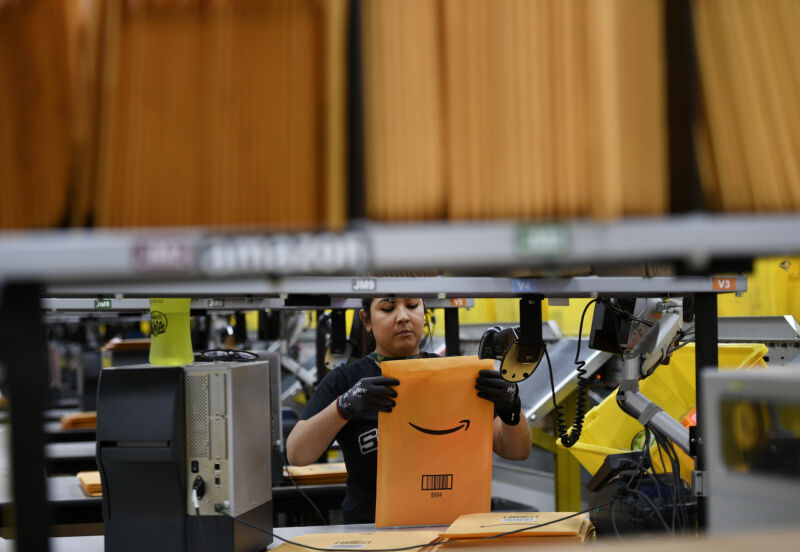
Modern warehouse work sometimes unfolds within million-square-foot buildings, which some labor organizers say can make bathroom breaks “logistically impossible.”
Enlarge / Modern warehouse work sometimes unfolds within million-square-foot buildings, which some labor organizers say can make bathroom breaks “logistically impossible.”
Jane Barlow | Getty Images

Warehouse workers in California are one step closer to being able to pee in peace. Yesterday, the state Senate voted 26-11 to pass AB 701, a bill aimed squarely at Amazon and other warehousing companies that track worker productivity. The bill would prevent employers from counting health and safety law compliance—and yes, bathroom breaks—against warehouse workers’ productive time, which is increasingly governed by algorithms. The bill, which organizers call the first in the nation to address the future of algorithmic work, is now en route to Governor Gavin Newsom’s desk for signature.

Although some observers expect Newsom to sign the bill given his record on other pro-worker legislation, such as AB 5, he has thus far remained mum on AB 701. When asked about his intentions, Newsom’s office demurred, saying only, “The bill will be evaluated on its merits when it reaches the governor’s desk.” (The governor is currently fending off a recall election, which takes place September 14.)

AB 701’s passage came as welcome news to advocates like Yesenia Barerra, a former seasonal Amazon worker who traveled to Sacramento to campaign for the bill, helping stage a mock assembly line on the steps of the state capitol. Barrera staffed the company’s Rialto, California, fulfillment center for five months until her termination in 2019. When she was hired, she didn’t realize the rigidity of the productivity system or the extent of Amazon’s camera- and barcode-based employee tracking matrix. She assumed only slackers got fired.

During one hectic shift, Barrera’s barcode scanning gun got stuck underneath some boxes on the conveyor belt. As more boxes careened down the line, she struggled to dislodge the gun. Eventually she yanked it out, but it hit her face, injuring her eye so that she momentarily saw black. Minutes later her supervisor materialized to ask why she’d stopped scanning. “I was thinking, how did she know I was not scanning? She wasn’t in the area.” At an onsite clinic, she says she was given a wet paper towel and an ibuprofen, then told to return to work. “My manager said, I saw you take the ibuprofen. You’ll be fine,” recalls Barrera. Amid her own bout of impaired vision, she became acutely aware that she was under constant surveillance by an all-seeing eye.

Not long after, Barrera was written up by a different manager for too much “Time Off Task,” Amazon’s system for tracking employee productivity. More than five minutes without scanning a barcode set the TOT clock ticking, regardless of whether that time was spent using the bathroom, wiping down a workstation, goofing off, or simply taking a breather. (In June, Amazon revised the system, averaging TOT over a longer period.) Too much TOT was grounds for a writeup and, eventually, termination. “Sometimes we’d chit chat, and the girls would be like, I’m on my period, and I’m getting Time Off Task,” Barrera says. She found out she’d been terminated when she reported to her next scheduled shift and her badge wouldn’t work. (Amazon did not respond to requests for comment on Barrera’s story or anything else related to AB 701.)

AB 701 would change the game for workers like Barrera. The bill requires employers to disclose productivity quotas to workers upon hire, alongside any penalties for falling short. Trips to the bathroom don’t count as time off task, nor do legally permitted health and safety measures like stretching or sanitizing a workstation. (“Trips” is the operative word. Many warehouses are so capacious that a round-trip walk to the restroom might eat up 10 to 15 minutes. Eight if you jog, says Barrera.) It also gives workers the right to request 90 days’ worth of their own productivity figures and grants the state labor commissioner access to data on quotas and injury rates. If an employer fails to comply, an employee can sue under a state statute called the Private Attorney Generals Act.

PAGA serves as what the state Senate called a “force multiplier” for labor law enforcement, essentially deputizing individual workers as attorneys general. It lets employees file lawsuits against their employers for labor or health and safety violations on behalf of not just themselves but their coworkers and the state. After talks with business groups, lawmakers added a provision to AB 701 that gives employers 30 days to fix a problem before PAGA kicks in. Should a worker win their suit under PAGA, companies would have to pay civil penalties, but no damages, and provide injunctive relief, meaning they’d have to stop the behavior at issue and pay the worker’s attorneys fees. “This isn’t a cash cow,” says Assembly Member Lorena Gonzalez, the bill’s sponsor.

AB 701 was born out of complaints Gonzalez heard from warehouse workers about their injury rates. In February, she introduced the bill to the state Assembly, where it passed in May. Four days later, The Washington Post released an analysis of data from the US Occupational Safety and Health Administration, finding that Amazon warehouse workers were seriously injured at nearly twice the rate of workers in non-Amazon warehouses.

Gonzalez concluded that workers needed regulation to protect them. “As you peel back the onion, you realize what’s going on,” she says. “It’s really the fact that the computer generates what the worker should be able to accomplish, and then pushes and pushes and pushes. We’ve also seen it in the gig economy. We thought, wow, our laws are seriously inadequate to deal with this.”

Amazon hasn’t commented publicly on the bill, but on the day The Washington Post published its analysis, Amazon released an update on its “vision to be Earth’s Best Employer.” On top of changes to its Time Off Task policy, the company said it would stop pre-employment screening for marijuana use.

Industry groups that oppose the bill say that current law already grants workers the right to meal and rest breaks; perhaps the chronically underfunded Cal-OSHA or the labor commissioner just needs more resources, suggests Rachel Michelin, president of the California Retailers Association. Labor groups say this ignores the reality of modern warehouse work, which sometimes unfolds within million-square-foot buildings. “When you’re on the ground, you find out that [taking the bathroom breaks you need] is logistically impossible,” says Christian Castro, spokesman for the Los Angeles County Federation of Labor, which cosponsored the bill along with the California Teamsters Public Affairs Council and the Warehouse Worker Resource Center. “Workers are scared they’ll get dinged because it takes them too long to get there and back,” he said. “Also, if these requirements were already working, their workers wouldn’t be getting hurt so much,” he added.

While current state law provides a meal break and two rest periods per shift, it says little about how employers manage workers’ time in between. Before algorithms could monitor and direct a worker’s every move, second by second, employees had more flexibility to steal moments of respite when needed. “You can be a warehouse worker across the street [from Amazon] working for a food distribution company. They give you a list of things to get from the warehouse, put on a pallet, and load onto a truck. You have X amount of time to do it. If you want to take a break, go to the bathroom, take a breather because you just lifted five cartons of cat food, you have time to do that,” says Eric Frumin, director of health and safety at the Strategic Organizing Center, a coalition of unions. “Not at Amazon.” He calls the company’s level of control “hyper-micromanagement.”

Which gets at another of Michelin’s points: “This bill, frankly, is really just targeting one company and not taking into account the diversity of the industry,” which ranges from agriculture to automobiles. She pointed to AB 5, another Gonzalez-sponsored bill that reclassified many so-called contractors as employees but created consequences for groups like freelance journalists and photographers who lost work after its passage and are challenging it in court. “She was going after one or two specific companies”—the ride-hailing startups Uber and Lyft—“but a lot of other people got wrapped up in that.”

Beth Gutelius, research director at the University of Illinois’ Center for Urban Economic Development, foresees fewer unintended consequences with AB 701. “The problem with AB 5 was that there were all these other independent contractors whose status was perhaps less in limbo than ride-sharing drivers. I don’t think we see that same dynamic playing out here.” Rather, she thinks it could nip bad behavior in the bud. “It puts other companies who are chasing Amazon’s lead on notice that maybe their window is closing for being able to play in the sandbox with no real regulatory framework.”

Luis Portillo, director of public policy at the pro-business Inland Empire Economic Partnership, where Barrera’s former fulfillment center sits, worries about the practicality of providing quotas to employees when workloads fluctuate daily based on the flow of product. He criticized the bill for contributing to a climate that might incentivize warehouses to move out of state. But given that proximity to suppliers and customers largely dictates warehouse locations and given the major ports in California, it’s hard for some observers to hear that as more than an empty threat, at least in most cases. “I don’t think there’s any way that Amazon could uproot its distribution network in California and still be able to compete in the ways that they are competing,” says Gutelius.

An earlier version of the bill set standards for warehouse quotas, but that was removed. Gonzalez doesn’t consider that matter closed, though. “Ultimately, we have to get there.” She thinks the data they collect through the law, if signed, could help lawmakers or Cal-OSHA develop a standard.

Gutelius sees the bill as a model for other states, although she thinks the ultimate goal is federal legislation. But the devil lurks in the details. “I think we’ll learn a lot from both the way that the bill has moved through the legislature and how it’s enforced. Our labor laws have been underfunded for a long time, so I think there are some real questions about capacity.”

No matter the outcome, organizers are energized to keep up the fight. The pandemic has forced attention on essential workers and the dangerous conditions under which they often labor, and not just in California. “When workers in the same companies in other states learn about the victories of these workers in California, you can be sure that they’re going to demand some of the same protections,” says Frumin. “Because you’re playing with workers’ work lives.”

This story originally appeared on wired.com.

https://arstechnica.com/?p=1793687


House bill would eliminate natural gas, impose sweeping changes on economy

House bill would eliminate natural gas, impose sweeping changes on economy

President Joe Biden’s climate ambitions will face a critical test on Monday as a major portion of the $3.5 trillion reconciliation bill comes up for a vote. If it passes, the sprawling legislation will push the American economy to rein in its carbon emissions by spurring advancements in clean energy, electric vehicles, grid modernization, and more.

Nearly $500 billion worth of grants, incentives, and programs will be voted on by the members of the House Energy and Commerce Committee. After that, the legislation will be merged with the other portions of the reconciliation bill as soon as Wednesday. Senate Democrats have been meeting to draft their version of the bill, and Congressional Democrats hope to send a finalized piece of legislation to Biden by the end of the year.

So far, Republicans are united in their opposition, and the reconciliation bill’s passage appears to hinge on whether Sen. Joe Manchin (D-W.Va.) approves of key portions. Manchin, who represents coal-rich West Virginia and who owns millions of dollars of stock in a coal brokerage, has expressed reservations about the bill eliminating fossil fuels.

Ultimately, Manchin may be persuaded to vote yea or nay by the United Mine Workers of America. Currently, the group is inclined to oppose the entire reconciliation bill because it doesn’t include provisions for retraining coal miners, E&E News reports. “We’re talking about a whole bunch of jobs,” UMWA spokesman Phil Smith told the publication. “Where’s the replacement?”

The coal miner transition plan for coal is conspicuous in its absence, though it may be part of the negotiations. “I’m hopeful that we’re going to see a really big package for energy workers as part of the reconciliation bill,” Leah Stokes, a professor at UC Santa Barbara who helped draft the clean power plan, told E&E News.

Clean power, part deux

The most significant piece in the bill is the Clean Electricity Performance Plan, a suite of carrots and sticks intended to steadily increase the amount of clean power produced by utilities and producers. The House is considering a target of 80 percent clean power by 2030, a significant increase from today’s 20 percent but one that falls short of Biden’s stated goal of net zero by the end of the decade. 

To hit the target, the bill would provide $150 billion in tax incentives for clean energy, which the bill defines as anything producing less than 0.1 metric tons of CO2 equivalent, a level that effectively eliminates natural gas from consideration. To qualify for the incentives, power producers have to increase the supply of clean energy by 4 percent annually. If they fail to do so, they’ll be charged $40 for every MWh they fall short.

The grid gets a jolt, too, with $9 billion allocated for updates that include improved ties between the Eastern and Western Interconnections—the two major North American grids—and with ERCOT, Texas’ grid, which suffered significant power outages in February. The hope is that a modernized grid will accommodate growing contributions from renewables and be more reliable in the face of extreme weather events that are becoming more common due to climate change.

On the supply side, oil and gas companies would have to overhaul their operations to reduce methane leaks throughout their operations. Currently, around 1.5 percent to 4 percent of methane seeps out of pipelines, gas fields, and refineries, depending on the estimate. The proposed law would require producers to plug a lot of leaks to bring total methane emissions down to 0.2 percent of sales. If the producers don’t succeed, they would be assessed a fee that would help reduce greenhouse gas emissions from other oil and gas operations and clean up lingering pollution in communities near refineries and other facilities.

Retrofits for all

The House bill would help reduce oil and gas demand through several other programs, too, most notably with $13.5 billion for EV charging infrastructure. While representing less than Biden’s $15 billion request, the money would target charge points at weak spots throughout the country, including along roads and highways, in apartment buildings and condos, at workplaces, and in underserved areas. If this part passes as is, it would be a significant step forward for EV infrastructure—many apartment and condo dwellers have held back on buying EVs because of questions about charging, and government support in underserved areas would help fill gaps in many commercial charging networks.

Buildings get a boost in the bill, too, with provisions to entice people to buy more energy-efficient appliances and rebates for folks who want to improve their home’s energy efficiency. Federal buildings would also qualify. There aren’t many details yet, so how extensive or effective these portions will be remains to be seen. 

Motivated by disasters

It’s unlikely that the bill will reach Biden’s desk as written. Manchin, who chairs the Senate Energy and Natural Resources committee, will have significant input. But Democrats think that the recent spate of extreme weather makes a strong case for action sooner than later. 

“Last year alone, our country experienced 22 major natural disasters costing Americans a record-shattering $95 billion in damages—figures that represent more than double the historical average but which still don’t reflect the cost of lost jobs or the trauma of families losing their homes,” Rep. Frank Pallone (D-NJ), chairman of the House Energy and Commerce Committee, told The New York Times. “The climate crisis is here, and the cost of inaction is already staggering.”

https://arstechnica.com/?p=1793751


Texas law could force social media to host misinformation and hate speech

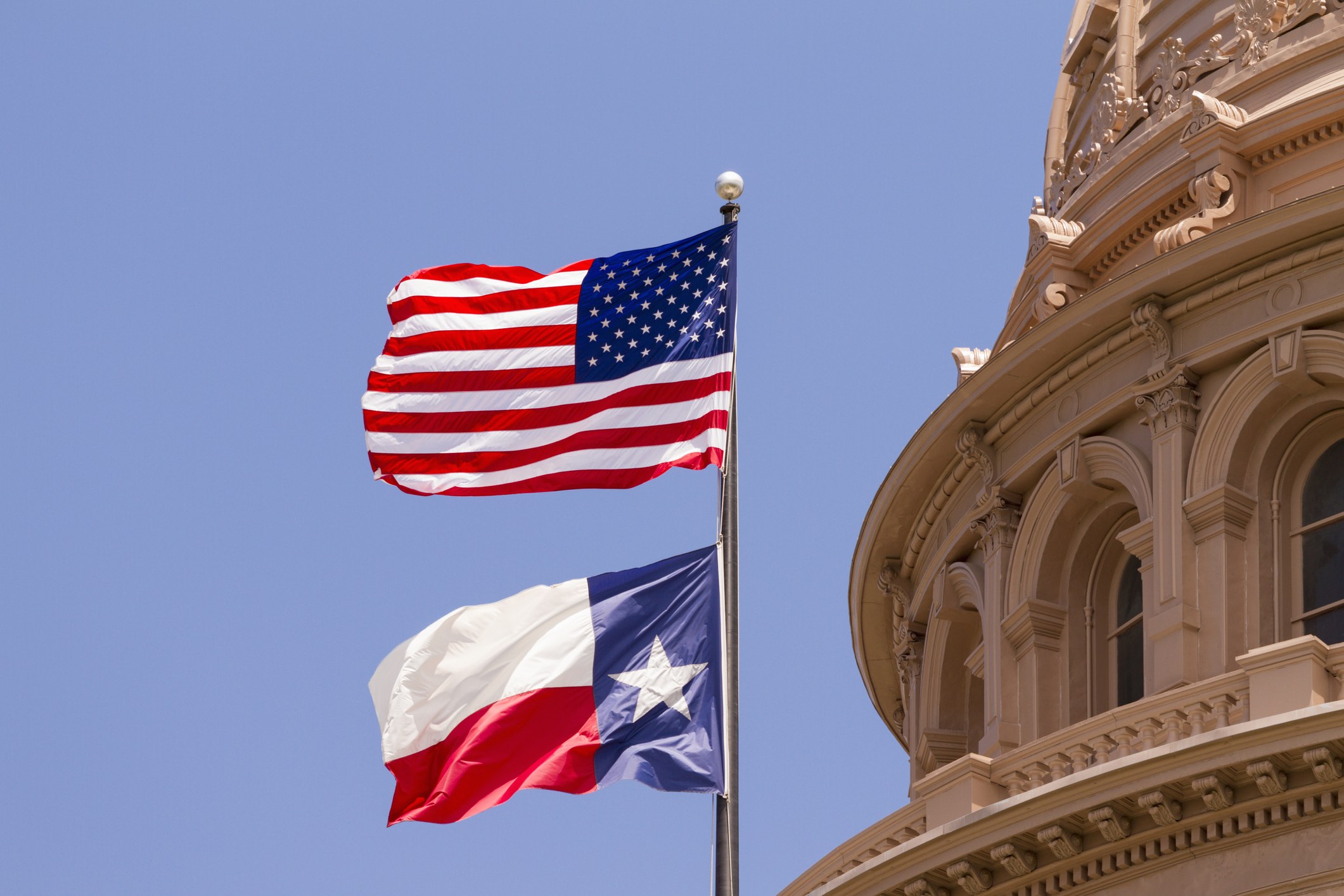
US and Texas flags seen in daytime outside the Texas State Capitol Building.
Enlarge / US and Texas flags flying outside the Texas State Capitol building in Austin.
Getty Images | PA Thompson

Texas Governor Greg Abbott yesterday signed a ban on social media “censorship” into law, imposing new restrictions on tech companies that are certain to spark a court battle similar to one happening in Florida.

Industry groups slammed the newly enacted legislation as “unconstitutional.” The law “seeks to punish social media companies for following policies that protect Internet users from dangerous content online,” according to the Computer & Communications Industry Association (CCIA).

The CCIA previously sued Florida to block a state law that would have made it illegal for social media companies to ban politicians. US District Judge Robert Hinkle sided with the tech industry in June, granting a preliminary injunction that blocks the law because it violates the First Amendment rights of companies that moderate user content on their online platforms.

“Unconstitutional and dangerous”

NetChoice, which sued Florida along with the CCIA, called the Texas law “unconstitutional and dangerous.”

“This bill abandons conservative values, violates the First Amendment, and forces websites to host obscene, antisemitic, racist, hateful, and otherwise awful content… By empowering the government to control online speech, HB 20 clearly violates the First Amendment,” NetChoice President Steve DelBianco said. “This law essentially creates a new Fairness Doctrine for the Internet which will only make it harder for conservatives to share their news and views online.”

The law only lets social networks ban hate speech if it involves “specific threats of violence.”

DelBianco said the Texas law “has the same First Amendment flaws as the Florida law that a federal court blocked this summer” and predicted that the “same outcome will almost certainly occur in Texas.” If it isn’t blocked by a court, the Texas law is slated to take effect on December 2.

The Chamber of Progress, a recently formed industry lobby group, said the Texas law “prohibits social media companies from removing content based on the ‘viewpoint’ of the user—even if that content violates the platform’s community standards. During debate last week, Texas Democrats offered amendments that would explicitly allow social media platforms to take down posts related to Holocaust denial, domestic and international terrorism, and vaccine disinformation. Republicans succeeded in defeating all three.”

The law will “put more hate speech, scams, terrorist content, and misinformation online, when most people want a safer, healthier Internet,” the group said. The lobby group’s members include Facebook, Twitter, Google, Amazon, Apple, and other companies that operate online platforms.

Gov. claims Big Tech censors “conservative viewpoints”

Abbott claimed that the law protects freedom of speech.

“We will always defend the freedom of speech in Texas, which is why I am proud to sign House Bill 20 into law to protect first amendment rights in the Lone Star State,” Abbott said in an announcement. “Social media websites have become our modern-day public square. They are a place for healthy public debate where information should be able to flow freely—but there is a dangerous movement by social media companies to silence conservative viewpoints and ideas. That is wrong, and we will not allow it in Texas.”

The Texas law labels social media platforms as “common carriers” and applies its restrictions to social media platforms with over 50 million active users in the US.

“A social media platform may not censor a user, a user’s expression, or a user’s ability to receive the expression of another person based on: (1) the viewpoint of the user or another person; (2) the viewpoint represented in the user’s expression or another person’s expression; or (3) a user’s geographic location in this state or any part of this state,” the law says.

The bill’s definition of “censor” is “block, ban, remove, deplatform, demonetize, de-boost, restrict, deny equal access or visibility to, or otherwise discriminate against expression.” The Texas attorney general or users can sue social media platforms that violate this ban and win injunctive relief and reimbursement of court costs, the law says.

Law applies to “maximum extent” allowed by Constitution

The law has exceptions allowing companies to censor any post that a “social media platform is specifically authorized to censor by federal law; is the subject of a referral or request from an organization with the purpose of preventing the sexual exploitation of children and protecting survivors of sexual abuse from ongoing harassment; directly incites criminal activity or consists of specific threats of violence targeted against a person or group because of their race, color, disability, religion, national origin or ancestry, age, sex, or status as a peace officer or judge; or is unlawful expression.”

The bill authors seemed to be aware that the Constitution limits how far they can go in regulating online platforms and that courts are likely to strike down parts of the law. “This chapter applies to the maximum extent permitted by the United States Constitution and the laws of the United States but no further than the maximum extent permitted by the United States Constitution and the laws of the United States,” the law says. The law also says that if any part “is found by a court to be invalid or unconstitutional,” the rest of the law shall still apply.

Besides the ban on censorship, the new law says that social media “sites must disclose their content management and moderation policies and implement a complaint and appeals process for content they remove, providing a reason for the removal and a review of their decision,” the governor’s announcement said. “They also must review and remove illegal content within 48 hours. House Bill 20 also prohibits email service providers from impeding the transmission of email messages based on content.”

https://arstechnica.com/?p=1793689


SpaceX calls Amazon’s protest of Starlink plan an irrelevant “diatribe”

Outside view of a warehouse with a large Amazon logo on the side of the building.
Enlarge / Amazon UK warehouse at Leeds Distribution Park on May 27, 2021, in Leeds, England.
Getty Images | Nathan Stirk

On Thursday, SpaceX called Amazon’s latest protest against Starlink plans an irrelevant “diatribe” that should be ignored by the Federal Communications Commission.

“Another week, another objection from Amazon against a competitor, yet still no sign of progress on Amazon’s own long-rumored satellite system,” SpaceX told the FCC in a filing. “In its latest diatribe, Amazon spends over six of eight pages on matters wholly irrelevant to the current proceeding or even matters currently before the commission.”

As we’ve reported, Amazon last month urged the FCC to reject SpaceX’s proposal for a next-generation version of Starlink that could include up to 30,000 broadband satellites. Amazon claims that SpaceX violated a rule against incomplete and inconsistent applications by submitting plans for “two mutually exclusive configurations” with “very different orbital parameters.”

The FCC rule cited by Amazon doesn’t specifically prohibit SpaceX’s approach, which is to offer two satellite configurations in case its preferred one doesn’t work out. SpaceX argues that Amazon simply wants to delay Starlink’s plans because its own satellite division is nowhere near ready to offer service.

SpaceX slams Amazon “theatrics” and “gamesmanship”

Amazon continued to press its case on Wednesday, telling the FCC that SpaceX and Elon Musk-led companies in general act as if “rules are for other people.” Amazon also said that if SpaceX’s multiple-configuration approach is accepted, it would create an “administrative snarl” and “open the floodgates for applicants to apply for two, three, four—or more—separate, mutually exclusive configurations.”

SpaceX’s response was the shortest filing so far in this back and forth, consisting of just three paragraphs. “As usual, Amazon tries to prevent a fair review on the merits by using procedural gamesmanship,” SpaceX told the FCC. “Despite its theatrics, Amazon does not identify a single fact, figure, or scintilla of data that SpaceX omitted from its application. Nor can Amazon point to a single rule that prohibits SpaceX from providing the commission with extra information about an alternative configuration for its system. That is because SpaceX has provided all information required under commission rules and more information than necessary for the public and the commission to evaluate all aspects of its application.”

SpaceX argues that the FCC’s decision is a simple one because it doesn’t need to approve or deny the application yet. The FCC just has to decide whether the application is complete enough to seek public comment, the Starlink operator says.

“Pushing past Amazon’s efforts at distraction and delay, only one simple question is currently before the commission in this proceeding: whether SpaceX provided sufficient information on a proposed minor amendment to the application for its next-generation system for the commission to seek public comment on that application. The answer is unquestionably yes,” SpaceX wrote. Amazon is trying “to use a procedural gambit to prevent the public from even having the opportunity to provide feedback on the merits of SpaceX’s application,” the filing said.

Viasat backs Amazon’s case

Satellite operator Viasat entered the fray today with a filing that supports Amazon’s argument. “Instead of addressing the deficiencies in its amended application or responding to the merits of [Amazon subsidiary] Kuiper’s arguments, SpaceX once again tries to deflect attention from its own failures by claiming that others are merely attempting to ‘slow down competition’ and engaging in ‘procedural gamesmanship,'” Viasat wrote.

Viasat pointed to an FCC rule that says: “Applicants with an application for one NGSO [non-geostationary satellite orbit] license on file with the commission in a particular frequency band… will not be permitted to apply for another NGSO-like satellite system license in that frequency band.”

“The commission has explained that this restriction is necessary to ‘restrain speculation’ by applicants and preserve opportunities for other operators to utilize scarce orbital and spectrum resources,” Viasat wrote. “In this case, SpaceX’s proposal for authority to operate with two different and mutually exclusive orbital configurations would remove opportunities for other parties to utilize those scarce resources.”

Viasat also said that in 2003, the FCC eliminated language from another rule that previously “specif[ied] that operators could incorporate, within their applications, ‘alternatives that increase flexibility in accommodating the satellite in orbit.'”

SpaceX, Amazon fight over who is the biggest complainer

Much of Amazon’s latest filing was about other proceedings involving SpaceX or Tesla. Amazon said that SpaceX frequently responds to “any private company that dares point out its flouting of laws and regulations” by calling its accusers “anticompetitive” and provided several examples. Amazon also noted that SpaceX does the same thing it complains about, as Musk’s company “routinely raises concerns with respect to its competitors’ currently filed plans, including with respect to interference.”

Assuming the FCC puts the application out for public comment, SpaceX said it expects another round of protests from “Amazon’s legion of lobbyists and lawyers” during the comments period.

“Undoubtedly, Amazon will find a litany of other issues with the application to complain about,” SpaceX wrote. “Nonetheless, that is what the comment cycle is for—to give the public the opportunity to build a complete record to assist the commission in evaluating SpaceX’s application for its next-generation system. SpaceX therefore urges the commission to put the application out for comment immediately to expedite the process of providing better broadband to more Americans, no matter where they live.”

SpaceX is providing broadband service in beta to over 100,000 customers from more than 1,700 satellites. The company has FCC approval to launch nearly 12,000 satellites and is seeking an FCC license to launch an additional 30,000. Amazon’s Kuiper Systems subsidiary has approval to launch 3,236 low Earth orbit satellites but has said it won’t launch any until at least 2023.

Amazon declined to comment on SpaceX’s filing today.

https://arstechnica.com/?p=1793524


Amazon fights high warehouse turnover with offer of free college tuition

Adriana Ramirez packs items into envelopes at Amazon's Fulfillment Center on March 19, 2019, in Thornton, Colorado. The facility, which opened in July of 2018, is 855,000 square feet and employs over 1,500 people.
Enlarge / Adriana Ramirez packs items into envelopes at Amazon’s Fulfillment Center on March 19, 2019, in Thornton, Colorado. The facility, which opened in July of 2018, is 855,000 square feet and employs over 1,500 people.

As Amazon struggles to staff its warehouses, it’s joining other large employers by offering to pay for college tuition in an attempt to attract and retain hourly employees.

The e-commerce giant announced Thursday that it would be broadening its education benefits by offering more than 750,000 employees the opportunity to attend college or finish high school for free. Employees only have to work at the company for 90 days to be eligible, and if they leave, they do not have to reimburse Amazon for any tuition or fees paid during their time with the company.

Notably, it’s not a reimbursement program—Amazon is paying tuition and fees up front so employees don’t have to dip into savings to enroll. The company expects to roll out the new benefits in January. In addition to bachelor’s and associate’s degrees and GEDs, the program will cover English as a second language certifications. Amazon also announced skill training and apprenticeship programs for entry-level employees working in AWS and other IT positions. So long as an employee works for Amazon, they’ll be able to use the benefit, potentially earning multiple degrees or certifications if they so choose.

Full-time employees are eligible for the fully subsidized tuition, while part-time workers logging as few as 20 hours per week will receive half the benefit. Though the company still has details to work out, it says that employees can use the benefit at “hundreds of education partners across the country.” Workers may be limited in terms of which degree programs they could apply to, and the programs may vary by region. Ardine Williams, the company’s vice president of workforce development, told The Wall Street Journal that she expects the company will subsidize degrees in technology, engineering, and health care. The expanded benefit goes well beyond what Amazon previously offered—95 percent of the cost of an associate’s degree or other certification.

One potential hitch could be scheduling, though Amazon says that it will provide flexible work schedules for students accommodate both school and work.

In total, Amazon anticipates the programs will cost $1.2 billion by 2025. Last year, the company made $21.3 billion in profit on $386 billion in revenue. Other companies like Walmart, Target, Chipotle, and JBS, a meat processor, offer comparable tuition subsidy programs, according to The Wall Street Journal.

Retention strategy

The move comes as Amazon has encountered high turnover at its front-line operations, particularly its warehouses. Since the pandemic began, Amazon says that it has hired 400,000 new workers who are eligible for the perk. Some of that has come as a result of expanded operations, but much of it is the result of people quitting. Among hourly employees, the turnover rate is 3 percent per week or about 150 percent per year, according to a New York Times investigation. In other words, in a single year, Amazon has to hire the equivalent of one-and-a-half times its entire hourly staff.

The education benefit may help lower that rate somewhat, Chris O’Leary, a senior economist at the WE Upjohn Institute for Employment Research, told The Wall Street Journal. “They might be able to get enough productive months or years out of somebody to make it worth the investment.”

The economic recovery has driven a hiring boom that has left workers in high demand. Increased wages have helped employers staff up to some extent, but that hasn’t tamped workers’ desires to advance in their careers, not simply get paid a bit more. (Still, don’t discount the financial motivation—people who finish some college make around 20 percent more than those with only a high school diploma, and those who have a bachelor’s earn about 80 percent more.)

Education benefits may help attract employees who are more willing to endure working conditions in Amazon’s warehouses. Workers are tracked as they complete tasks around the warehouse and pushed to finish them faster. That has led to heightened injury rates, according to one investigation, and instances where workers say they’ve skipped breaks to stay on top of their tasks.

California’s legislature has taken up the issue with a bill that aims to limit the use of algorithmic monitoring and quotas that can lead to unsafe conditions. The legislation would require companies to disclose productivity quotas to government agencies and employees alike, and it would forbid employers from establishing quotas that prevent workers from taking legally mandated breaks or skipping trips to the bathroom.

https://arstechnica.com/?p=1793478


LA police ask people they stop for their Facebook and Twitter account info

Two Los Angeles Police Department officers walking through Union Station.
Enlarge / Los Angeles Police Department officers patrol Union Station on Wednesday, August 11, 2021.

The Los Angeles Police Department (LAPD) instructs officers to collect social media account information and email addresses when they interview people they have detained, according to documents obtained by the Brennan Center for Justice at NYU School of Law.

The Brennan Center filed public records requests with LAPD and police departments from other major cities, finding among other things that “the LAPD instructs its officers to broadly collect social media account information from those they encounter in person using field interview (FI) card.” The LAPD initially resisted making documents available but supplied over 6,000 pages after the Brennan Center sued the department.

One such document, a memo from then-LAPD Chief Charlie Beck in May 2015, said that “When completing a FI report, officers should ask for a person’s social media and e-mail account information and include it in the ‘Additional Info’ box.” That includes Twitter, Instagram, or Facebook profiles, the memo said.

This may be an unusual policy even though the LAPD has been doing it for years. “Apparently, nothing bars officers from filling out FI cards for each interaction they engage in on patrol,” wrote Mary Pat Dwyer, a lawyer and fellow in the Brennan Center’s Liberty and National Security Program. “Notably, our review of information about FI cards in 40 other cities did not reveal any other police departments that use the cards to collect social media data, though details are sparse.” The center reviewed “publicly available documents to try to determine if other police departments routinely collect social media during field interviews” but found that “most are not very transparent about their practices,” Dwyer told Ars today.

LAPD field-interview cards.

While people can refuse to give officers their social media account details, many people may not know their rights and could feel pressured into providing the information, Dwyer told Ars. “Courts have found that stopping individuals and asking for voluntary information doesn’t violate the Fourth Amendment and people are free not to respond,” she told us. “However, depending on the circumstances of a stop, people may not feel that freedom to walk away without responding. They may not know their rights, or they may be hoping to quickly end the encounter by providing information in order to ensure it doesn’t escalate.”

The Brennan Center has also been seeking police department records since January 2020 from Boston, New York City, Baltimore, and Washington, DC, but is still fighting to get all the requested information.

Data enables “large-scale monitoring”

A field interview is defined as “the brief detainment of an individual, whether on foot or in a vehicle, based on reasonable suspicion, for the purpose of determining the individual’s identity and resolving the officer’s suspicions concerning criminal activity,” according to an International Association of Chiefs of Police model policy for field interviews and pat-down searches. Field-interview cards can play a significant role in investigations.

“These cards facilitate large-scale monitoring of both the individuals on whom they are collected and their friends, family, and associates—even people suspected of no crime at all,” Dwyer wrote. “Information from the cards is fed into Palantir, a system through which the LAPD aggregates data from a wide array of sources to increase its surveillance and analytical capabilities.”

Officers apparently have wide discretion in choosing which people they record information on and, in some cases, have falsified the inputted information. Last year, the Los Angeles Times found that an LAPD “division under scrutiny for officers who allegedly falsified field interview cards that portrayed people as gang members has played an outsized role in the production of those cards.” The LAPD’s “Metropolitan Division made up about 4 percent of the force but accounted for more than 20 percent of the department’s field interview cards issued during a recent 18-month period,” the Times wrote. Police officers can fill out these cards “to document encounters they have with anyone they question on their beat,” the report also said.

It isn’t clear how much social media account information LAPD officers have collected or what officers do when people decline to provide the details. We contacted an LAPD spokesperson today and will update this article if we get a response. According to an article published by The Guardian, an LAPD spokesperson said that “the field interview card policy was ‘being updated,’ but declined to provide further details.”

LAPD expands social media monitoring

Collecting social media details during field interviews is one of a growing number of components in the LAPD’s use of social media for investigations. The Brennan Center said its public-records request found that LAPD “authorizes its officers to engage in extensive surveillance of social media without internal monitoring of the nature or effectiveness of the searches” and that, “beginning this year, the department is adding a new social media surveillance tool: Media Sonar, which can build detailed profiles on individuals and identify links between them. This acquisition increases opportunities for abuse by expanding officers’ ability to conduct wide-ranging social media surveillance.”

Media Sonar advertises that its products give investigators access to a “full digital snapshot of an individual’s online presence including all related personas and connections.”

The LAPD’s social media user guide encourages officers to monitor social media but imposes few restrictions on the practice, Dwyer wrote. The guide encourages officers to use “fictitious online personas” to conduct investigations and says that using these fake personas “does not constitute online undercover activity.”

“Few limitations offset this broad authority: officers need not document the searches they conduct, their purpose, or the justification,” she wrote. “They are not required to seek supervisory approval, and the guide offers no standards for the types of cases that warrant social media surveillance. While officers are instructed not to conduct social media surveillance for personal, illicit, or illegal purposes, they seem otherwise to have complete discretion over whom to surveil, how broadly to track their online activity, and how long to monitor them.”

The LAPD told the Brennan Center that it does not track what its employees monitor on social media sites and “has not conducted any audits regarding the use of social media.”

Broad authority, few restrictions

Dwyer argued that the expanding use of social media monitoring is particularly troubling at the LAPD because it has “identif[ied] people as gang members based on false or tenuous evidence” and “has a history of monitoring minority and activist communities.” Another detail revealed by the Brennan Center’s public-records request is that the LAPD used Geofeedia, a third-party vendor, “to search social media for information about Black Lives Matter activists and protests against police violence, using numerous hashtags to identify their posts,” Dwyer wrote. That was before Facebook and Twitter cut off Geofeedia’s access to social media data in 2016.

“Law enforcement should not have a free pass to broadly trawl the Internet without accountability or oversight,” Dwyer wrote. “Communities in Los Angeles and elsewhere must demand transparency in and limits around social media monitoring practices.”

https://arstechnica.com/?p=1793296


Recycling symbol can’t appear on non-recyclable items, California bill says

Discarded plastic bottles made of high-density polyethylene (HDPE) are bundled at a recycling center.
Enlarge / Discarded plastic bottles made of high-density polyethylene (HDPE) are bundled at a recycling center.

The recycling symbol—those three arrows stamped on myriad plastic items—doesn’t mean what most people think it does, and a California bill wants to change that.

The California Legislature passed a bill yesterday that would ban companies from putting the recycling symbol on items that aren’t regularly recycled throughout the state. The bill is now awaiting Gov. Gavin Newsom’s signature, and if signed into law, it would end a labeling practice that has confused consumers for decades and created major headaches for the solid-waste industry.

The ubiquitous “chasing arrows” symbol wasn’t originally meant to appear on all plastics. Rather, it was designed by a college student for a contest in the early 1970s to symbolize paper recycling. The company that sponsored the contest released the symbol to the public domain. Confusion over the chasing arrows began in the late ’80s and early ’90s, when oil and plastic companies lobbied states to make resin identification codes—which included the arrows—mandatory on all plastic, even if it couldn’t be recycled easily.

While all plastics can technically be recycled, only a small percentage actually are. Only about 9 percent of all plastics are recycled in the US annually, and around 9 percent of all plastics ever produced have been recycled. The rest are incinerated or, more likely, landfilled or scattered as litter.

Morning inspiration

Though many plastics cause problems for recycling companies, plastic bags are particularly pernicious. Though most curbside programs don’t accept plastic bags, people still throw them into the bin, thinking they’re recyclable because they are labeled with the chasing arrows symbol.

It’s that confusion that led California State Sen. Ben Allen to propose the bill that is now on the governor’s desk. After fetching his newspaper every morning, Allen would throw the plastic bag it came in into his recycling bin. “I thought, oh, this is recyclable—but actually I was making the situation worse while trying to do the right thing,” Allen told CalMatters.

Allen’s proposal, known as Senate Bill 343, would require CalRecycle, the state’s recycling agency, to collect data on which types of plastic are most commonly recycled around the state. Only those that are recycled at a rate of 75 percent and don’t contain certain compounds like PFAS would be allowed to retain the chasing arrows symbol. All others would be stamped with a solid triangle around the resin identification code.

In practice, this means that plastics classified as 1 or 2—PETE and HDPE—would most likely be marked with the chasing arrows symbol. All others would get the solid triangle. If recycling of those other plastics takes off, they could earn their arrows back. Currently, though, only a handful of California municipalities accept anything beyond numbers 1 and 2 for curbside recycling.

The plastic and packaging industries have voiced opposition to the bill, saying that it would create a patchwork of regulations across the country and lead to more waste ending up in landfills.

California’s bill is the latest attempt to overhaul recycling systems that have been struggling since China stopped importing recycled plastics. Maine and Oregon both passed laws recently that levy a fee on packaging producers based largely on the amount of plastic they produce.

Industry origins

Plastic recycling was initially pushed by oil and gas companies as a solution to mounting concerns about plastic waste in the 1970s and 1980s. An investigation by NPR and PBS’s Frontline uncovered a decades-long campaign to convince the public that recycling would solve plastic’s sustainability problems. “The feeling was the plastics industry was under fire—we got to do what it takes to take the heat off because we want to continue to make plastic products,” Larry Thomas, former president of the Society of the Plastics Industry, told NPR.

For years, the plan seemed to work. Recycling programs spread around the country, and plastic production soared, with over 300 million tons made every year.

Yet in the last few years, the tide has begun to turn once more. Plastic pollution is filling the oceans, and consumers have grown increasingly concerned about the ubiquity of microplastics in the environment. As scientists have developed ever more sophisticated ways to detect microplastics, they’ve been discovering them in an alarmingly wide range of places, from the top of mountains to fish nurseries—and even people’s poop.

This new bill isn’t likely to slow plastic’s exponential growth, but it could clear up some of the confusion and lead to a more streamlined recycling process. “Americans find recycling… more confusing than building IKEA furniture, doing their taxes, playing the stock market, or understanding their spouse,” Allen told CalMatters.

https://arstechnica.com/?p=1793244


“Failure is not a crime,” Theranos founder’s lawyers tell jury

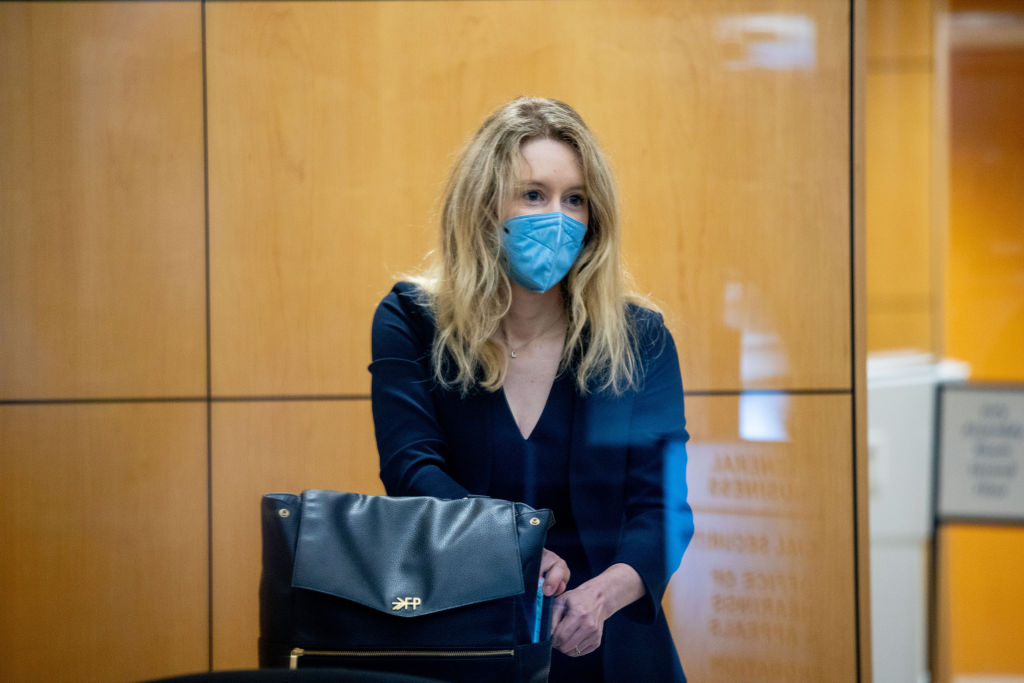
Theranos founder Elizabeth Holmes collects her belongings after going through security at the Robert F. Peckham Federal Building with her defense team on August 31, 2021 in San Jose, California.
Enlarge / Theranos founder Elizabeth Holmes collects her belongings after going through security at the Robert F. Peckham Federal Building with her defense team on August 31, 2021 in San Jose, California.
Ethan Swope | Getty Images

Elizabeth Holmes’ failure to make her blood-testing technology startup Theranos a viable business was not a crime, her lawyers told a federal jury on Wednesday, at the beginning of a closely watched trial that will scrutinize her mental state and Silicon Valley’s promotional culture.

“Elizabeth Holmes did not go to work every day intending to lie, cheat, and steal,” an attorney for Holmes, Lance Wade, told jurors during opening arguments. “The government would have you believe her company her entire life is a fraud.”

Holmes, 37, “worked herself to the bone for 15 years trying to make lab testing cheaper and more accessible. She poured her heart and her soul into that effort,” Wade added.

“In the end, Theranos failed. And Ms. Holmes walked away with nothing. But failure is not a crime. Trying your hardest and coming up short is not a crime.”

The trial in a US federal court in San Jose promises to be one of the most high-profile tests of alleged wrongdoing in Silicon Valley, which is experiencing a historic boom in startup funding.

Earlier, a US prosecutor said Holmes had intentionally duped investors and customers of the once high-flying startup in order to get rich. “This is a case about fraud, about lying and cheating to get money,” assistant US attorney Robert Leach said.

Prosecutors sought to link Theranos’ business struggles with Holmes’ behavior, claiming the company came close to financial ruin at least twice if it could not raise additional capital.

“Out of time and out of money, Elizabeth Holmes decided to lie,” Leach said.

Holmes faces 10 counts of wire fraud and two counts of conspiracy to commit wire fraud. She has pleaded not guilty. If convicted, she faces a maximum sentence of up to 20 years in prison.

She arrived at the San Jose courtroom wearing a grey skirt suit and light-colored shirt, a departure from the black turtleneck that was her sartorial trademark at the height of her fame.

Theranos, which was founded by Holmes in 2003 and headquartered in Palo Alto, appeared to be a successful startup that had discovered new ways to perform dozens of medical tests using small amounts of blood. In 2014, investors valued the company at $9 billion.

But prosecutors from the US Department of Justice indicted Holmes and Ramesh Balwani, former president of Theranos, in 2018, alleging that they falsely promoted the company’s technology despite knowing it had issues with reliability.

“The main thing is going to be for the prosecutor to show that she knew these tests were not working,” said Cheryl Bader, an associate professor of law at Fordham University and a former federal prosecutor.

The prosecutors also allege that Holmes and Balwani misrepresented Theranos’ financial position to investors, claiming the company would make $1 billion in revenues in 2015 when it only had modest sales.

Holmes’ attorneys have previously sought to dismiss the case, arguing that the indictment was too vague. Judge Edward Davila denied their motions in October last year.

In March 2020, Davila ordered that the two defendants could have separate trials. Attorneys for Holmes have argued that Balwani, who is also her former boyfriend, abused the Theranos founder, affecting her judgment. Balwani has denied the claims.

Prosecutors have submitted a list of possible witnesses that includes Henry Kissinger, a former board member; lawyer David Boies, the company’s previous outside counsel; and media mogul Rupert Murdoch, who was an investor in Theranos.

Lawyers for Holmes have said they could call for testimony from John Carreyrou, the former Wall Street Journal reporter whose investigation into Theranos helped precipitate the company’s downfall. It is unclear whether Holmes herself will testify at the trial, which is expected to last for several months.

© 2021 The Financial Times Ltd. All rights reserved Not to be redistributed, copied, or modified in any way.

https://arstechnica.com/?p=1792899


Amazon slams SpaceX, tells FCC that Musk-led companies are rule-breakers

Illustration of many satellites orbiting the Earth.
Enlarge / Artist’s impression of low Earth-orbit satellites like those launched by SpaceX and OneWeb.

In the ongoing battle between the two companies, Amazon fired back at SpaceX today at the Federal Communications Commission, claiming that the Starlink operator refuses to obey the rules and that it launches unjustified attacks on anyone who points out SpaceX’s rule-breaking.

“Whether it is launching satellites with unlicensed antennas, launching rockets without approval, building an unapproved launch tower, or re-opening a factory in violation of a shelter-in-place order, the conduct of SpaceX and other Musk-led companies makes their view plain: rules are for other people, and those who insist upon or even simply request compliance are deserving of derision and ad hominem attacks,” Amazon told the FCC.

Two weeks ago, Amazon urged the FCC to reject SpaceX’s proposal for the next-generation version of Starlink that could include up to 30,000 broadband satellites. Amazon claims that SpaceX violated a rule against incomplete and inconsistent applications by submitting plans for “two mutually exclusive configurations” with “very different orbital parameters.” SpaceX says it is pitching two possible configurations in case its preferred setup doesn’t work out and says this does not violate the FCC rule. SpaceX also told the FCC that Amazon frequently tries to hinder competitors to “compensate for Amazon’s failure to make progress of its own.”

The FCC rule in question doesn’t specifically prohibit SpaceX’s approach but says that an application will be rejected if it “is defective with respect to completeness of answers to questions, informational showings, internal inconsistencies, execution, or other matters of a formal character.”

Amazon sighs

In today’s filing, Amazon said it is making its response to SpaceX and its CEO Elon Musk “with a sigh.”

“Try to hold a Musk-led company to flight rules? You’re ‘fundamentally broken.’ Try to hold a Musk-led company to health and safety rules? You’re ‘unelected & ignorant.’ Try to hold a Musk-led company to US securities laws? You’ll be called many names, some too crude to repeat,” Amazon wrote.

Amazon said SpaceX frequently lobs the accusation of being “anticompetitive” at “any private company that dares point out its flouting of laws and regulations.” Amazon cited several other proceedings, including one in which satellite operator Viasat sued the FCC and asked judges for a stay that would halt the FCC-approved Starlink launches. US appeals-court judges rejected Viasat’s request.

“Before the FCC, SpaceX’s accusations of anticompetitive behavior have become a tell, signifying only its discomfort in the face of reasonable argument. When Viasat raised environmental concerns in response to SpaceX’s Mod3 [a recent modification of SpaceX’s satellite system], SpaceX decried the argument as a ‘blatantly anti-competitive… attack by a party that will stop at nothing to delay the only operational [low Earth-orbit satellite] system offering consumer service.’ SpaceX’s CEO echoed these sentiments in a tweet,” Amazon wrote. “When Amazon sought to have SpaceX’s substantial redesign of its constellation placed in the processing round during which SpaceX’s modification application was filed, SpaceX asserted that Amazon was ‘laser focused on changing rules to harm competitors.’… When Amazon petitioned the commission for a rulemaking to update its rules governing the modification of station licenses—it was merely an attempt to ‘hobble Amazon’s competitors by effectively freezing innovation.'”

SpaceX, meanwhile, “works tirelessly to ensure that everyone else plays by the rules that it itself rebuffs,” as it urged the FCC to reject a petition “to permit two-way mobile use in the 12.2-12.7 GHz band” and “routinely raises concerns with respect to its competitors’ currently filed plans, including with respect to interference,” Amazon said.

Amazon plans to launch satellite-broadband service through its Kuiper Systems subsidiary but has said it won’t launch any satellites until at least 2023. SpaceX is providing beta service to over 100,000 customers from more than 1,700 satellites.

“SpaceX clandestinely redesigned” satellites, Amazon says

Amazon further cited a case in which “SES, Amazon, and OneWeb identified that SpaceX clandestinely redesigned and launched its satellite antennas in a manner that violated the scope of its existing authorization” by using both parabolic and phased-array antennas without telling the FCC about the parabolic antennas.

“Faced with incontrovertible evidence and strong argument, SpaceX did what it always does: ignored the issue for as long as possible, and accused those that raised it of ‘obvious delay tactics… designed to waste commission resources and slow delivery of high-quality broadband to otherwise unserved Americans,” Amazon wrote. The FCC has not yet resolved this issue, Amazon wrote in a footnote.

In the current instance, “SpaceX’s primary argument here is that Amazon identifying a rule violation is merely an anticompetitive attempt to hinder its progress,” Amazon wrote, continuing:

SpaceX repeating this argument again and again—in its ex parte letter and on Twitter—has not made it true. And like all ad hominem attacks, it ignores the actual argument. As Amazon’s letter made clear, the purpose of enforcing the commission’s longstanding rule that applicants settle on an orbital configuration before applying is to preserve the fairness and efficiency of the FCC’s licensing process. We are aware of no instance—nor does SpaceX cite any—in which the commission has permitted a filing that asked the commission to consider multiple, mutually exclusive applications. Notwithstanding SpaceX’s arguments that the rules simply shouldn’t apply to it, the FCC could not abandon this rule for SpaceX alone.

Amazon: SpaceX wants “administrative snarl”

Amazon argued that SpaceX’s multiple-configuration approach forces the FCC and competitors to do extra analysis work and, if approved by the FCC, would encourage even more unwieldy applications:

Abandoning the rule for all would open the floodgates for applicants to apply for two, three, four—or more—separate, mutually exclusive configurations. Whatever effort SpaceX or others might spare themselves with this approach would multiply and land on the shoulders of the commission and other interested parties. SpaceX itself notes that Mod3 attracted “nearly 200 pleadings.” These commenters are not mere obstructionists. They include other [satellite] operators seeking to ensure that SpaceX’s thousands of satellites do not collide or interfere with their own constellations, scientists concerned about the impact on their fields of study, and other operators seeking to protect their own investments and businesses.

SpaceX argued that its approach, while unusual in the US, is common in filings to the International Telecommunication Union. “Amazon makes the odd argument that the application is incomplete because it provides too much information,” SpaceX told the FCC last week.

Amazon claimed today that SpaceX is urging the FCC to create an “administrative snarl” that would become a “bottleneck for all potential competitors applying for licenses.”

“For existing and prospective licensees seeking to authorize new services, multiplying the commission’s burden in processing applications could dramatically extend this already lengthy process. In other words, Amazon’s argument protects competition by keeping the door open for prospective licensees, while SpaceX’s position would close it,” Amazon said.

Amazon concluded, “If SpaceX and Musk continue to hold themselves above the rules, they should buckle up: they will only draw further protest from Amazon and others who want to see rules applied to everyone equally. Musk and SpaceX will likely continue to respond as they have here, and the chaotic and resource draining cycle will continue. Amazon asks that the commission show SpaceX that the rules apply to it as well.”

We contacted SpaceX about Amazon’s filing today and will update this article if we get a response.

https://arstechnica.com/?p=1792867


SEC threatens to sue Coinbase over lending product

SEC threatens to sue Coinbase over lending product

The US Securities and Exchange Commission has warned that it will sue Coinbase if it launches a new digital asset lending product and also issued subpoenas to the cryptocurrency trading platform to provide it with more information, according to executives.

Paul Grewal, Coinbase’s chief legal officer, said in a blog post that the company, which in April became the first major US cryptocurrency exchange to list publicly, had received a Wells notice from the regulator saying it would pursue legal action if Coinbase introduced a yield product called Lend.

Lend is designed to allow users to earn interest on certain digital assets on the platform.

Grewal said the SEC had told Coinbase earlier this year that it considered the Lend product a security “but wouldn’t say why or how they’d reached that conclusion.”

Coinbase announced the product in June and opened a waiting list to interested users, prompting the SEC to open a formal investigation into the exchange and issue it with subpoenas, he added.

“Despite Coinbase keeping Lend off the market and providing detailed information, the SEC still won’t explain why they see a problem,” Grewal said. “Rather, they have now told us that if we launch Lend they intend to sue.”

Brian Armstrong, Coinbase’s chief executive, took to Twitter to attack the SEC, arguing that its actions constituted “sketchy behavior.”

“They are refusing to offer any opinion in writing to the industry on what should be allowed and why, and instead are engaging in intimidation tactics behind closed doors,” he wrote. “Whatever their theory is here, it feels like a reach/land grab vs other regulators.”

Coinbase has long cast itself as a cautious, regulation-friendly exchange in the freewheeling world of cryptocurrencies—but joins an increasing number of crypto companies in complaining that the SEC is reticent on giving clear guidance on how its rules should be applied in the nascent space.

A number of platforms have started offering to pay interest to cryptocurrency holders if they lend or “stake” their balances, but the mechanisms for returning interest are often complex, and there is little regulatory oversight and no protection for investors if they face losses.

Authorities in Washington have been rushing to formulate rules for cryptocurrencies generally. SEC Chair Gary Gensler has warned that many cryptocurrency trading platforms host trading in unregistered securities that should be complying with the agency’s rules. He has also called for the SEC to have the explicit authority to monitor crypto exchanges, citing the need for investor protection.

Earlier this summer, state agencies in Texas, New Jersey, and Alabama initiated a crackdown on BlockFi, which offers interest-bearing crypto accounts, alleging that it amounted to an unregistered offering of securities. BlockFi denies the claims.

Grewal, too, argued that Lend did not constitute a security because it was “not an investment contract or a note.”

He added that the company would not be launching the product—which would initially offer a 4 percent annual percentage yield for holders of its stablecoin, the USD Coin—until “at least October.”

There were falls in the prices of a wide range of cryptocurrencies on Wednesday, with bitcoin and ethereum both down more than 12 percent by 7 am London time. Coinbase said the market overall was down almost 14 percent over the past 24 hours.

© 2021 The Financial Times Ltd. All rights reserved Not to be redistributed, copied, or modified in any way.

https://arstechnica.com/?p=1792766