Even Epik says the Texas abortion “whistleblower” site violates its rules

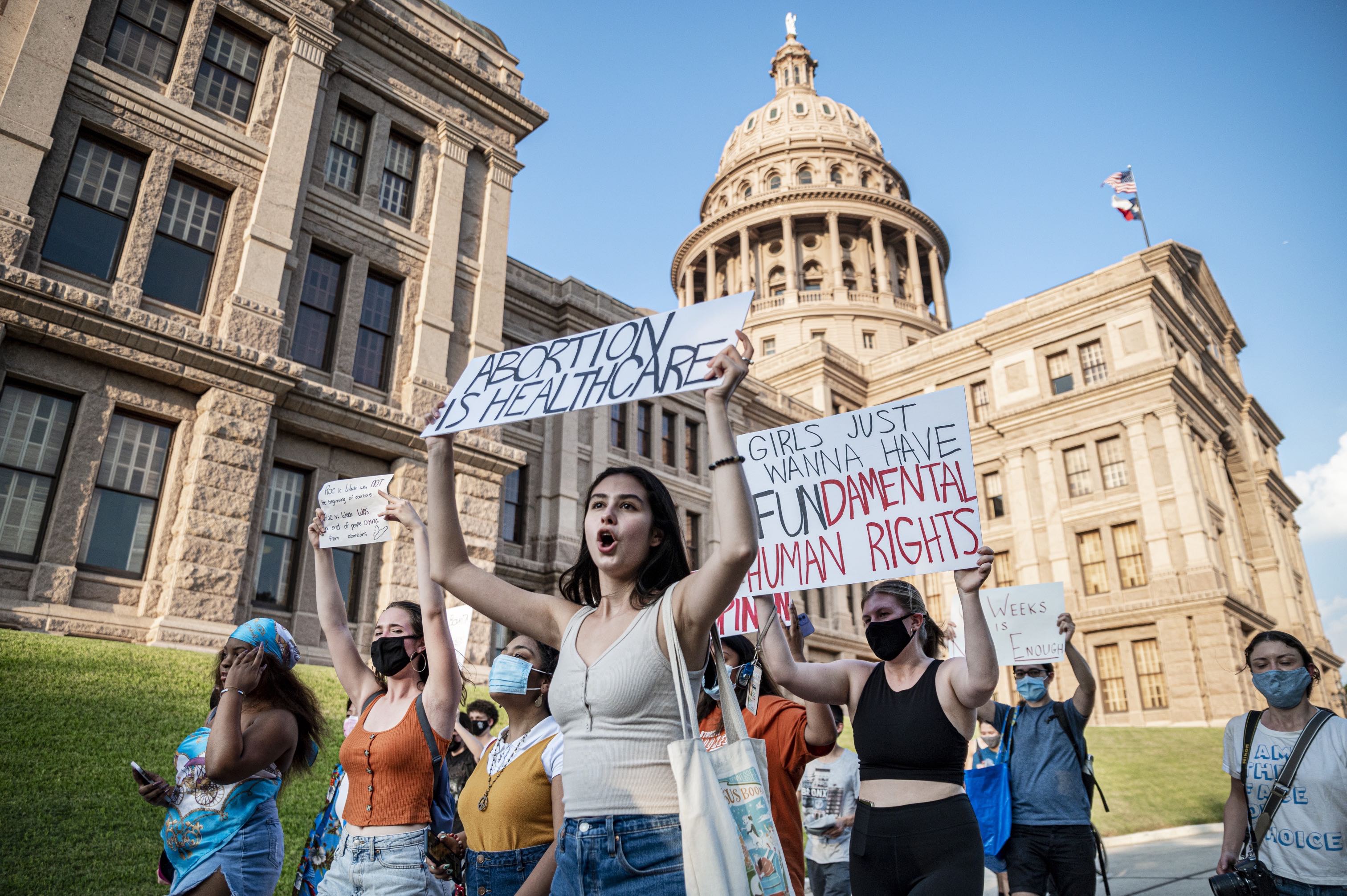
Pro-choice protesters march in Texas, carrying signs that say
Enlarge / Pro-choice protesters march outside the Texas State Capitol on Sept. 1, 2021, in Austin, Texas.
Getty Images | The Washington Post

Epik, the domain registrar for controversial sites such as Gab and Parler, says that the Texas abortion-whistleblower website violates its terms of use.

The Texas Right to Life group’s prolifewhistleblower.com website was booted by GoDaddy on Friday for violating its rules, including one that prohibits sites from using GoDaddy to “collect or harvest… non-public or personally identifiable information” without people’s prior written consent. The website switched its domain registration from GoDaddy to Epik and switched its name servers from GoDaddy to hosting provider Digital Ocean. Digital Ocean quickly cut off service, and the abortion-whistleblower site’s domain records now list Epik as both the registrar and name servers.

But the website—which encouraged people to report violations of the restrictive new anti-abortion law in Texas—is offline, and the domain now redirects to Texas Right to Life’s homepage. The group says it plans to get the site back online.

Epik general counsel Daniel Prince emailed Ars and other news organizations on Sunday, saying, “When the site owner moved it to Epik’s name servers… we contacted the owner of the site, notified them that the website violated Epik’s terms of use, and persuaded them to stop collecting anonymous tips and to take it off the Internet entirely. At no time did Epik serve as the web host for prolifewhistleblower.com.”

Texas group “exploring” options for domain

As previously noted, prolifewhistleblower.com still uses Epik as its domain registrar. Texas Right to Life spokesperson Kimberlyn Schwartz told Ars yesterday that “we’re not being kicked off Epik” but suggested that the site will change to a new registrar. “We’re exploring various long-term plans for the domain,” Schwartz said.

When asked why Epik hasn’t terminated the site’s domain registration, Prince told us today that “the domain is not currently violating our terms of service by simply redirecting to the main page of Texas Right to Life. If that changes, we’ll address it.” Epik did not tell us which rule the site breaks, but a Daily Beast article said the “specific violation was reportedly the collection of information on third parties without their consent.”

Texas Right to Life says the site will return. “For now, prolifewhistleblower.com is redirecting to texasrighttolife.com while we move hosts. It will be back up soon to collect anonymous tips,” Schwartz told us.

Epik known for serving extremist sites

Founded and led by CEO Rob Monster, “Epik supports the conspiracy theory website InfoWars, embattled conservative platform Parler, the largely unregulated YouTube alternative BitChute, the gun forum AR15.com, and a site for rabid Trump supporters called Patriots.win, previously known as The Donald,” NPR noted in a February 2021 article. Epik calls itself “the Swiss bank of the domain industry.”

Epik is the owner of BitMitigate, which provides DDoS protection, a CDN, and other services for websites. The abortion-whistleblower site was briefly redirecting to BitMitigate’s website on Friday night.

Texas’ six-week abortion ban

The Texas Heartbeat Act took effect on Wednesday last week, banning abortions after about six weeks of pregnancy. The law allows people to sue abortion providers or anyone who “aids or abets the performance or inducement of an abortion” and recover civil damages of at least $10,000 for each abortion that violates the law.

The anti-abortion group’s whistleblower site urged people to report violations, saying that “Texas Right to Life will ensure that these lawbreakers are held accountable for their actions.”

Texas Right to Life on Friday said it would have the website back up and running within 24 to 48 hours but didn’t meet that goal. “Pro-abortion advocates tried for over a week to overwhelm the website with traffic and fake tips,” Schwartz wrote in a blog post. “When they failed, keyboard warriors harassed GoDaddy to take down our site.”

Epik helped Gab and Parler stay online

Epik is still the domain registrar for Gab, a right-wing social network that was booted by GoDaddy after a 2018 mass shooting in a Pittsburgh synagogue by a white supremacist who had made an antisemitic post on Gab before the attack.

Epik is also the domain registrar for Parler, which had a domain registration with Dreamhost before making the switch. That happened after Trump supporters attacked the US Capitol in January 2021—Parler also had to change hosts because it was cut off by Amazon Web Services.

Epik is still the domain registrar for 8chan. But the 8chan website now simply links to its successor, 8kun, which uses a different provider.

https://arstechnica.com/?p=1792436


GoDaddy boots Texas abortion “whistleblower” site for violating privacy rule

US and Texas flags in front of the Texas state capitol building.
Enlarge / The Texas state capitol.
Getty Images | Bo Zaunders

The Texas Right to Life group will have to find a new hosting provider for its website that encourages people to report violations of the state’s restrictive new anti-abortion law.

GoDaddy took action after Gizmodo reported that Texas Right to Life’s new website, prolifewhistleblower.com, seems to violate a GoDaddy rule that says website operators may not “collect or harvest (or permit anyone else to collect or harvest) any User Content or any non-public or personally identifiable information about another user or any other person or entity without their express prior written consent.” GoDaddy’s terms of service also say that customers cannot use the web hosting platform in a way that “[v]iolates the privacy or publicity rights of another User or any other person or entity, or breaches any duty of confidentiality that you owe to another User or any other person or entity.”

GoDaddy now says that the website has less than 24 hours to find a new hosting provider. “Last night we informed prolifewhistleblower.com they have violated GoDaddy’s terms of service and have 24 hours to move to a different provider,” GoDaddy told Ars in a statement. GoDaddy previously confirmed the action to The New York Times and Newsweek.

GoDaddy told Ars that “the site violated multiple provisions, including, but not limited to, Section 5.2 of our terms of service.” That section is the one that prohibits sites from using GoDaddy to “collect or harvest… non-public or personally identifiable information” without people’s prior written consent.

Update at 6:15 pm ET: Texas Right to Life responded to our inquiry, saying that its “IT team is already in [the] process of transferring our assets to another provider and we’ll have the site restored within 24-48 hours.”

“We will not be silenced,” the group also said. “If anti-lifers want to take our website down, we’ll put it back up. No one can keep us from telling the truth. No one can stop us from saving lives. We are not afraid of the mob. We will not back down.”

Update at 9:45 pm ET: The website went offline briefly but is now back. Its new hosting provider, Digital Ocean, also has rules against violating people’s privacy, including one that bans “[c]ontent that… is intended to harass, abuse or invade the privacy of any individual.”

While the abortion whistleblower site points to Digital Ocean name servers, its domain registrar is Epik, which has served controversial platforms such as Gab, Parler, and 8chan.

Update at 12:35 am ET on September 4: Digital Ocean has apparently cut off hosting service, as the anti-abortion website is now using Epik for its name servers and as its domain registrar.

Six-week abortion ban encourages “whistleblowers”

The Texas Heartbeat Act took effect on Wednesday, banning abortions after it’s possible to detect a “fetal heartbeat,” which the law defines as “cardiac activity or the steady and repetitive rhythmic contraction of the fetal heart within the gestational sac.” This effectively bans abortions after about six weeks of pregnancy. The US Supreme Court rejected an emergency request to block the law, but it could still be ruled unconstitutional after litigation.

“Some reproductive rights groups argue that the term ‘heartbeat’ bill is a misnomer, since the fetus does not yet have a heart at six weeks’ gestation—the cardiac activity detectable at that time comes from tissue called the fetal pole, as OB-GYN Jen Gunter has written. Planned Parenthood refers to the bills as “six-week bans,” Vox wrote in its explainer of the Texas law.

The abortion “whistleblower” website urges people to help enforce the Texas abortion ban, saying:

Any person can sue any abortion provider who kills an unborn child after six weeks of gestation—and any person can sue anyone who aids or abets these illegal abortions. All of these individuals must pay damages to the person who sued them of at least $10,000 for each illegal abortion that they perform or assist.

Texas Right to Life will ensure that these lawbreakers are held accountable for their actions. Use the links below to report anyone who is violating the Texas Heartbeat Act by aiding or abetting a post-heartbeat abortion. And report any person or entity that aids or abets (or that intends to aid or abet) an illegal abortion in Texas.

Expect a “torrent of lawsuits”

The Electronic Frontier Foundation argued that the Texas law will “unleash a torrent of lawsuits” and that its prohibition on “aiding or abetting” abortion will have a chilling effect on speech protected by the First Amendment.

“SB8 is a ‘bounty law’: it doesn’t just allow these lawsuits, it provides a significant financial incentive to file them,” the EFF wrote. “It guarantees that a person who files and wins such a lawsuit will receive at least $10,000 for each abortion that the speech ‘aided or abetted,’ plus their costs and attorney’s fees. At the same time, SB8 may often shield these bounty hunters from having to pay the defendant’s legal costs should they lose. This removes a key financial disincentive they might have had against bringing meritless lawsuits.”

Opponents of the new abortion law have been flooding the snitch website with fake reports. Texas Right to Life told USA Today that the group “completely anticipated this and [was] prepared for all the trolls coming to the website.”

Sending complaints to GoDaddy turned out to be more effective, but it didn’t take long for the abortion whistleblower website to switch over to Epik.

https://arstechnica.com/?p=1791992


Amid backlash, Apple will change photo-scanning plan but won’t drop it completely

Close-up shot of female finger scrolling on smartphone screen in a dark environment.

Apple said Friday that it will make some changes to its plan to have iPhones and other devices scan user photos for child sexual-abuse images. But Apple said it still intends to implement the system after making “improvements” to address criticisms.

Apple provided this statement to Ars and other news organizations today:

Last month we announced plans for features intended to help protect children from predators who use communication tools to recruit and exploit them, and limit the spread of Child Sexual Abuse Material [CSAM]. Based on feedback from customers, advocacy groups, researchers and others, we have decided to take additional time over the coming months to collect input and make improvements before releasing these critically important child safety features.

The statement is vague and doesn’t say what kinds of changes Apple will make or even what kinds of advocacy groups and researchers it will collect input from. But given the backlash Apple has received from security researchers, privacy advocates, and customers concerned about privacy, it seems likely that Apple will try to address concerns about user privacy and the possibility that Apple could give governments broader access to customers’ photos.

Privacy groups warned of government access

It isn’t clear how Apple could implement the system in a way that eliminates its critics’ biggest privacy concerns. Apple has claimed it would refuse government demands to expand photo-scanning beyond CSAM. But privacy and security advocates argue that once the system is deployed, Apple likely won’t be able to avoid giving governments more user content.

“Once this capability is built into Apple products, the company and its competitors will face enormous pressure—and potentially legal requirements—from governments around the world to scan photos not just for CSAM, but also for other images a government finds objectionable,” 90 policy groups from the US and around the world said in an open letter to Apple last month. “Those images may be of human rights abuses, political protests, images companies have tagged as ‘terrorist’ or violent extremist content, or even unflattering images of the very politicians who will pressure the company to scan for them. And that pressure could extend to all images stored on the device, not just those uploaded to iCloud. Thus, Apple will have laid the foundation for censorship, surveillance and persecution on a global basis.”

Apple previously announced that devices with iCloud Photos enabled will scan images before they are uploaded to iCloud. Given that an iPhone uploads every photo to iCloud right after it is taken, the scanning of new photos would happen almost immediately if a user has previously turned iCloud Photos on.

Apple has said it will also add a tool to the Messages application that will “analyze image attachments and determine if a photo is sexually explicit.” The system will be optional for parents, who can enable it in order to have Apple devices “warn children and their parents when receiving or sending sexually explicit photos.”

Apple initially said it would roll the changes out later this year, in the US only at first, as part of updates to iOS 15, iPadOS 15, watchOS 8, and macOS Monterey. Apple’s promise to “take additional time over the coming months to collect input and make improvements” suggests the scanning system could be implemented later than Apple intended, but the company never provided a firm release date to begin with.

Apple called system an advancement in privacy

As we’ve previously written, Apple says its CSAM-scanning technology “analyzes an image and converts it to a unique number specific to that image” and flags a photo when its hash is identical or nearly identical to the hash of any that appear in a database of known CSAM. An account can be reported to the National Center for Missing and Exploited Children (NCMEC) when about 30 CSAM photos are detected, a threshold Apple set to ensure that there is “less than a one in one trillion chance per year of incorrectly flagging a given account.” That threshold could be changed in the future to maintain the one-in-one-trillion false-positive rate.

Apple has argued that its system is actually an advancement in privacy because it will scan photos “in the most privacy-protecting way we can imagine and in the most auditable and verifiable way possible.”

“If you look at any other cloud service, they currently are scanning photos by looking at every single photo in the cloud and analyzing it. We wanted to be able to spot such photos in the cloud without looking at people’s photos and came up with an architecture to do this,” Craig Federighi, Apple’s senior VP of software engineering, said last month. The Apple system is “much more private than anything that’s been done in this area before,” he said.

Changes to the system could be fought by advocacy groups that have urged Apple to scan user photos for CSAM. Apple partnered on the project with NCMEC, which dismissed privacy criticisms as coming from “the screeching voices of the minority.” Apple seemingly approved of that statement, as it distributed it to employees in an internal memo that defended the photo-scanning plan the day it was announced.

https://arstechnica.com/?p=1791903


Apple will let video and music apps—but not games—link to other payment options

The app icons for Spotify, Netflix, and Podcasts on an iPhone screen.

Enlarge (credit: Getty Images | stockcam)

Apple has made another concession related to its restrictive App Store rules, saying that it will let several types of media apps link to their own websites, where users can purchase subscriptions without Apple getting its usual commission. Apple was forced to make the change to settle an investigation by the Japan Fair Trade Commission (JFTC). The change will take effect in early 2022, Apple said in an announcement yesterday.

“The update will allow developers of ‘reader’ apps to include an in-app link to their website for users to set up or manage an account,” Apple said. “While the agreement was made with the JFTC, Apple will apply this change globally to all reader apps on the store. Reader apps provide previously purchased content or content subscriptions for digital magazines, newspapers, books, audio, music, and video.”

The JFTC issued a statement saying that the planned change “would eliminate” Apple’s suspected violations of Japan’s Antimonopoly Act. The regulator said it “decided to close the investigation on this case after the JFTC confirms the measure has been taken.”

Read 12 remaining paragraphs | Comments

https://arstechnica.com/?p=1791704


Locast’s free TV service is in peril as Big 4 networks win copyright ruling

An old television set displaying static.

The major broadcast networks have won a big copyright ruling against Locast, a nonprofit organization that provides online access to broadcast TV stations. Although it’s a partial summary judgment, the ruling by a federal judge rejects Locast’s primary defense against claims of copyright infringement.

Locast was sued by ABC, CBS, Fox, and NBC in July 2019. The companies alleged that Locast “must have a license to retransmit copyrighted television programming” even though the TV channels are available over the air for free. The lawsuit argued that Locast must “secure the consent of the broadcasters to retransmit the broadcast signals” in the same manner as cable, satellite, and online video services. Locast fought the lawsuit, saying it qualified for a copyright-law exemption available to nonprofits.

US District Judge Louis Stanton yesterday granted the networks’ motion to dismiss Locast’s affirmative defense that its service is exempt from liability under the US copyright law. The law enacted in 1976 allows secondary transmissions by nonprofit organizations if they receive no “commercial advantage” and do not charge users anything more than what’s “necessary to defray the actual and reasonable costs of maintaining and operating the secondary transmission service.” Locast cites this exemption as the key to its argument that its service is legal.

Stanton found that Locast doesn’t qualify for that exemption because it uses payments from viewers to fund its expansion into new geographic markets. In addition to granting the networks’ motion, he denied a Locast motion seeking a summary judgment that it does qualify for the statutory exemption.

With Locast having lost on this crucial point, there is apparently nothing left for the judge to rule on. “In December of 2019, the parties agreed to limit the scope of the litigation to the issue of applicability of the Section lll(a) (5) exemption, which is the sole question before the court on these two motions,” Stanton wrote.

Locast evaluating options, could appeal

Locast is represented by the Electronic Frontier Foundation (EFF), which today said that the “court interpreted the law in an artificially narrow way. Congress wrote copyright’s nonprofit retransmission exception to make sure that every American has access to their local broadcast stations, and expanding access is exactly what Locast does. This ruling that nonprofit retransmitters can’t use viewer contributions to expand access will do the opposite of what Congress intended.”

In a notice sent to users and posted on its website, Locast said the ruling is “disappointing” and that it is evaluating options for how to proceed. Locast says it has over 3 million users, most of whom use its free version. There’s also a paid version.

If the ruling stands, Locast could be forced to change its pricing, limit expansion into new markets, or buy retransmission licenses. The EFF called the ruling “a blow to millions of people who rely on local television broadcasts,” but no changes to the Locast service have been announced.

“Make no mistake, this case demonstrates once again how giant entertainment companies use copyright to control when, where, and how people can receive their local TV broadcasts, and drive people to buy expensive pay-TV services to get their local news and sports,” the EFF said. “We are disappointed that the court is enabling this callous profiteering that tramples on Congress’s intent to ensure local communities have access to news that’s important to people regardless of their ability to pay.”

The case is in US District Court for the Southern District of New York. Locast could challenge Stanton’s ruling in a federal appeals court.

The Locast litigation is reminiscent of a previous case that put online-TV company Aereo out of business.

Locast made $4.5 million in 2020

The free version of Locast’s service interrupts programming every 15 minutes “with a fifteen-second video requesting donations,” Stanton noted. Users can pay $5 a month to eliminate those donation appeals or “request that the service stop displaying the donation requests based on their financial circumstances.”

Locast also gets donations from pay-TV providers such as AT&T, which integrates Locast into its consumer offering. TV providers have repeatedly objected to the retransmission fees charged by broadcast networks, sometimes leading to channel blackouts and making Locast an attractive option for companies that want to pay less for programming.

Despite the partnership with TV providers, direct payments from users accounted for $4.37 million of Locast’s $4.52 million in revenue in 2020, the judge’s ruling said. “On those undisputed facts, in 2020 Locast made far more money from user charges than was necessary to defray its costs of maintaining and operating its service,” Stanton wrote.

Update at 6:20 pm ET: Locast is suspending the donation prompts that interrupt programming. “Although we disagree with this interpretation and are exploring our legal options to contest it, out of respect for the court’s order, Locast is suspending immediately all programming interruptions to request donations,” the company said, according to Law360 reporter Kelcee Griffis.

Locast also sent emails to users saying that “anyone located in a market we serve who signs up for Locast will get the service without interruption, regardless of whether or not they donate,” according to The Verge. “Of course, it is up to you whether or not to contribute to Locast. But if you currently contribute, we humbly request that you continue to do so. And if you don’t contribute, we hope that you will do so if you can afford it.”

Judge: Locast can’t use payments from users to expand

Locast launched in 2018 and gradually expanded to 36 geographic markets containing 55 percent of the US population. That includes New York City, Los Angeles, the District of Columbia, Miami, Boston, Baltimore, Chicago, Detroit, Atlanta, Dallas, Denver, Houston, Phoenix, Seattle, and San Francisco.

Locast argued that its service qualifies for the copyright exemption because payments from users cover the costs of maintaining and operating an expanding system, Stanton’s ruling said. But Stanton was persuaded by plaintiffs’ argument that Locast can’t use payments from users to expand:

Defendants aver that contributions from users are essential to the expansion of the Locast service. They argue that disallowing use of the assessments for that purpose would prevent expansion, which they say was not intended by Congress when granting the exemptions.

But under the statute, income made from charges to recipients can only be used to defray the actual and reasonable costs of maintaining and operating the service, not of expanding it into new markets. The argument that Section lll(a) (5) should not “prevent” a natural process of expansion misconceives the statutory structure… Nothing in Section 111 specifies that an expansion of the number of infringing transmissions is exempt from that law, and it is not for a court to infer that Congress really meant to allow them.

Locast’s argument likely would have held up if Congress had added the word “expanding” to the copyright-law exemption that lets nonprofits charge users enough to cover the “costs of maintaining and operating the secondary transmission service.”

“But expansion is nowhere mentioned, and it is therefore excluded from the short, tightly crafted grant of exemptions,” Stanton wrote.

Locast remains “committed to its mission”

Locast’s fight is not over, according to a statement from one of the lawyers on its legal team.

“Our client is in the process of evaluating the decision and formulating next steps,” said R. David Hosp, a partner at Orrick, Herrington & Sutcliffe. “Locast provides a valuable service to its over 3 million users who are otherwise unable to access the over-the-air broadcasts to which they are entitled by virtue of their location or economic circumstances. Our client remains committed to its mission of delivering free, local broadcast TV service to all Americans, and particularly for those consumers who can’t afford pay-TV services like cable, satellite, or streaming, or who can’t get their local broadcast channels using an over-the-air antenna.”

https://arstechnica.com/?p=1791311


Crypto platforms need regulation to survive, says SEC boss

Crypto platforms need regulation to survive, says SEC boss

The chair of the US Securities and Exchange Commission is warning that cryptocurrency trading platforms are putting their own survival at risk unless they heed his call to work within the nation’s regulatory framework.

Gary Gensler told the Financial Times that while he remained “technology neutral,” crypto assets were no different than any others when it came to such public policy imperatives as investor protection, guarding against illicit activity and maintaining financial stability.

“At about $2 trillion of value worldwide, it’s at the level and the nature that if it’s going to have any relevance five and 10 years from now, it’s going to be within a public policy framework,” he said. “History just tells you, it doesn’t last long outside. Finance is about trust, ultimately.”

Gensler expressed disappointment with the industry’s response to his suggestion that trading platforms register with the SEC on the grounds that a sufficient number of cryptocurrencies qualify as securities.

“Talk to us, come in,” he said. “There are a lot of platforms that are in operation today that would do better engaging and instead there is a bit of… begging for forgiveness rather than asking for permission.”

Cryptocurrency trading platforms are a big business in the US—New York-listed Coinbase reported a $1.6 billion profit in the second quarter. However, it is unclear which US financial regulator is supposed to oversee them. Gensler has called on Congress to make such authority more explicit.

Gensler’s crypto comments carry additional weight because he taught a course on the subject at the Massachusetts Institute of Technology. On Wednesday, he is set to testify on crypto and other matters before the European Parliament’s economic and monetary affairs committee.

Gensler said he had been focusing on cryptocurrency trading platforms because 95 percent or more of the activity in this “highly speculative asset” takes place in such venues—with investor protections he described as “really sparse.”

He said cryptocurrencies and decentralized finance (DeFi) platforms pose a challenge for regulators because they exist without traditional brokers, to whom laws can be easily applied. Instead, they offer opportunities for investors to deal more directly with each other.

But he said regulators would be able to exercise authority over even supposedly decentralized platforms. He argued that DeFi was “not really a new concept” but a variation on the peer-to-peer lending businesses that sprouted earlier in the century.

Just as there was “a company in the middle” of peer-to-peer lending, he said, the DeFi platforms have “a fair amount of centralization,” including governance mechanisms, fee models, and incentive systems.

“It’s a misnomer to say they are just software they put out in the web,” he said. “But they are not as centralized as the New York Stock Exchange. It’s sort of an interesting thing that is in between.”

Gensler also reiterated his concerns about Chinese companies listing in the US. He said the listed vehicles were typically shell companies based in offshore locations such as the Cayman Islands that strike service agreements with operating companies in China.

“Is there any real money flowing from the operating company in China to make payments or not?” he said. “There’s a service agreement, and generally speaking those payment entities do not pay dividends.”

The SEC is also finalising rules that would suspend trading in such companies if their auditors do not allow US regulators to scrutinise their books. Under the Trump-era Holding Foreign Companies Accountable Act, those companies have until 2024 to comply with such rules.

Congress is considering bringing that timetable forward by a year. Gensler said the commission would be ready to implement those rules under the accelerated schedule, meaning that Chinese companies could face greater scrutiny as soon as 2023.

© 2021 The Financial Times Ltd. All rights reserved Not to be redistributed, copied, or modified in any way.

https://arstechnica.com/?p=1791286


New ruling reverts Clean Water Act protections to 1980s vintage

Image of a waterless stream bed.
Enlarge / Even though this stream bed is dry much of the year, it still may qualify for regulation under the Clean Water Act.

The latest legal decision in a years-long fight over how to implement the Clean Water Act has set rules back to where they were in the 1980s. The reversion is the product of the Trump administration’s haste to get rid of Obama-era regulations, leading to action that produced rules running counter to the Environmental Protection Agency’s own scientific findings. As a result, a judge has decided that the rules cannot remain in place for the time that will be needed for the Biden administration to formulate replacements.

Defining water

The long-running saga is the product of the Clean Water Act’s remarkably vague protections. The act seeks to control pollution via a permitting process that applies to the “waters of the United States,” but it doesn’t define what constitutes said waters.

While the process would clearly apply to a flowing river, it’s less clear whether the act would regulate the pollution of a stream bed only filled seasonally or following heavy rains—even though the stream bed can flow directly into a river that is active year-round. Similar issues apply to items like man-made ponds that connect to other bodies via groundwater flow.

In the absence of a clear definition in the statute itself, the relevant agency—in this case, the EPA—has been left to define what is regulated via a federal rule-making process. During the Obama administration, the EPA recognized that the then-active rules, which dated from 1986, were unpopular with both businesses and environmentalists and were increasingly out of step with our scientific understanding of the role of groundwater and seasonal bodies of water. So the agency began the process of formulating new rules, which required proposing them, soliciting public feedback, and modifying the rules in response.

The rules, finalized near the end of Obama’s second term, covered a wider range of small bodies of water and wetlands. This outcome proved highly unpopular with business interests, which tied up the rules’ adoption in court long enough for President Trump to withdraw them in order to formulate his own.

On again, off again

Trump’s EPA ultimately produced the Navigable Waters Protection Rule, which went into effect near the end of Trump’s time in office. This rule largely reversed the changes made by the previous administration, removing permit requirements for things like man-made channels, groundwater, and stream beds that only fill following rains. The draft version of the Navigable Waters Protection Rule was specifically criticized by the EPA’s own science advisory board as ignoring our current scientific understanding and being incompatible with the aims of the Clean Water Act.

So it was no surprise that this rule also ended up in court, with one case involving Native American tribes in the Southwest, where many bodies of water are only active following rainfall. And once again, with the change in administration, the Biden EPA asked the court to suspend the case while it formulated a replacement for the Navigable Waters Protection Rule. In the meantime, however, the administration asked the court to allow the rule to remain in place to prevent things from reverting to the definition that dates back to the 1980s.

And that’s where the new decision from US District Judge Rosemary Márquez was needed. The Tribal plaintiffs asked that the judge accept the suspension of the case but vacate the Navigable Waters Protection Rule in the process, reverting things to the post-1986 status quo. They argued that leaving the rule in place risked irreparable harms to the watercourses in their area of the country.

How to decide?

Márquez determined there were several reasons that the Navigable Waters Protection Rule would have to go. For example, precedent indicated that “an agency conclusion that is in direct conflict with the conclusion of its own experts… is arbitrary and capricious,” and arbitrary and capricious rules violate the Administrative Procedure Act that governs federal rulemaking. And, as indicated by the EPA’s science advisory board, this rule was clearly in conflict with the opinions of the EPA’s own experts.

Accordingly, the rule could not be fixed by simply providing a better legal justification; Márquez said that the rule needed to be thrown out and rewritten, a process the Biden administration had already indicated it intends to engage in.

The decision about whether to retain the rule in the meantime is determined by whether its flaws would enable harm during the time in which it’s being replaced. And here, the plaintiffs made a strong case that harm would come. They noted that the federal government itself has identified over 300 projects that would have required permits under the Obama-era rules but not under the Trump version. In New Mexico and Arizona, where the Tribes are located, the vast majority of the 1,500 streams would not require permits under the Navigable Waters Protection Rule.

Overall, when it comes to revoking the rule, Márquez concluded that “the seriousness of the Agencies’ errors in enacting the Navigable Waters Protection Rule, the likelihood that the Agencies will alter the Navigable Waters Protection Rule’s definition of ‘waters of the United States,’ and the possibility of serious environmental harm if the Navigable Waters Protection Rule remains in place upon remand, all weigh in favor.”

Unless the case is appealed, that’s the end of the Navigable Waters Protection Rule. Over the course of the last five years, businesses have had to deal with three separate standards for determining whether permits are needed—with one of them being in force two different times. And within the next two years, a new rule will be formulated and put on hold while court cases are filed.

https://arstechnica.com/?p=1790905


Reddit’s teach-the-controversy stance on COVID vaccines sparks wider protest

Photo illustration with a hand holding a mobile phone and a Reddit logo in the background.
Getty Images | SOPA Images

Over 135 subreddits have gone dark this week in protest of Reddit’s refusal to ban communities that spread misinformation about the COVID pandemic and vaccines.

Subreddits that went private include two with 10 million or more subscribers, namely r/Futurology and r/TIFU. The PokemonGo community is one of 15 other subreddits with at least 1 million subscribers that went private; another 15 subreddits with at least 500,000 subscribers also went private. They’re all listed in a post on r/VaxxHappened which has been coordinating opposition to Reddit management’s stance on pandemic misinformation. More subreddits are being added as they join the protest.

“Futurology has gone private to protest Reddit’s inaction on COVID-19 misinformation,” a message on that subreddit says. “Reddit won’t enforce their policies against misinformation, brigading, and spamming. Misinformation subreddits such as NoNewNormal and r/conspiracy must be shut down. People are dying from misinformation.”

The r/TIFU subreddit message says it “is closed until the Reddit administration removes /r/NoNewNormal and other vaccine misinformation subreddits from Reddit. We cannot remain open and also keep our consciences clear.”

At r/PokemonGo, moderators posted a message saying that COVID directly impacts gamers “because [Pokemon] Go is played outside in real life with others… we will stay private until NoNewNormal and similar subs dedicated entirely to misinformation are banned.”

The VaxxHappened subreddit is still public but has restricted new submissions to approved users only.

Reddit allows “dissent” from vaccine consensus

Last week, the moderators of over 450 subreddits joined an open letter urging Reddit to “take action against the rampant Coronavirus misinformation on their website,” saying that subreddits existing “solely to spread medical disinformation and undermine efforts to combat the global pandemic should be banned.”

Reddit published a response defending its stance, saying it will continue to allow “debate” and “dissent” on vaccines and other COVID-related matters, even when it “challenge[s] consensus views.”

“We appreciate that not everyone agrees with the current approach to getting us all through the pandemic, and some are still wary of vaccinations. Dissent is a part of Reddit and the foundation of democracy,” the company said.

Reddit does draw a line somewhere, as it said it will continue to take action against communities “dedicated to fraud (e.g. fake vaccine cards) or encouraging harm (e.g. consuming bleach).” But in general, Reddit said, “we believe it is best to enable communities to engage in debate and dissent, and for us to link to the CDC wherever appropriate.”

We contacted Reddit today, and a spokesperson said the company has nothing to say in addition to last week’s statement.

A few weeks ago, Reddit quarantined r/NoNewNormal, where anti-mask and anti-vaccine posts are common. Users can still go to that subreddit after viewing a message that advises “consult[ing] your physician” for medical advice and points to information on vaccines from the Centers for Disease Control and Prevention.

Moderators protesting Reddit policies say the company has done “nothing of substance” other than quarantining that one subreddit.

“We could have been better off months ago, but disinformation and lies have been allowed to spread readily through inaction and malice, and have dragged this on at the cost of lives,” the open letter said. “There are those who deny that the pandemic even exists, there are those who think that wearing a mask will literally suffocate you, there are those who think it’s no worse than a regular flu virus, that it’s a bioweapon, and everything in between. This volume of blatant misinformation is problematic and dangerous.”

Disclosure: The majority shareholder of Reddit is Advance Publications, the parent company of Condé Nast, which owns Ars Technica.

https://arstechnica.com/?p=1790901


Theranos founder Elizabeth Holmes on trial as jury selection begins

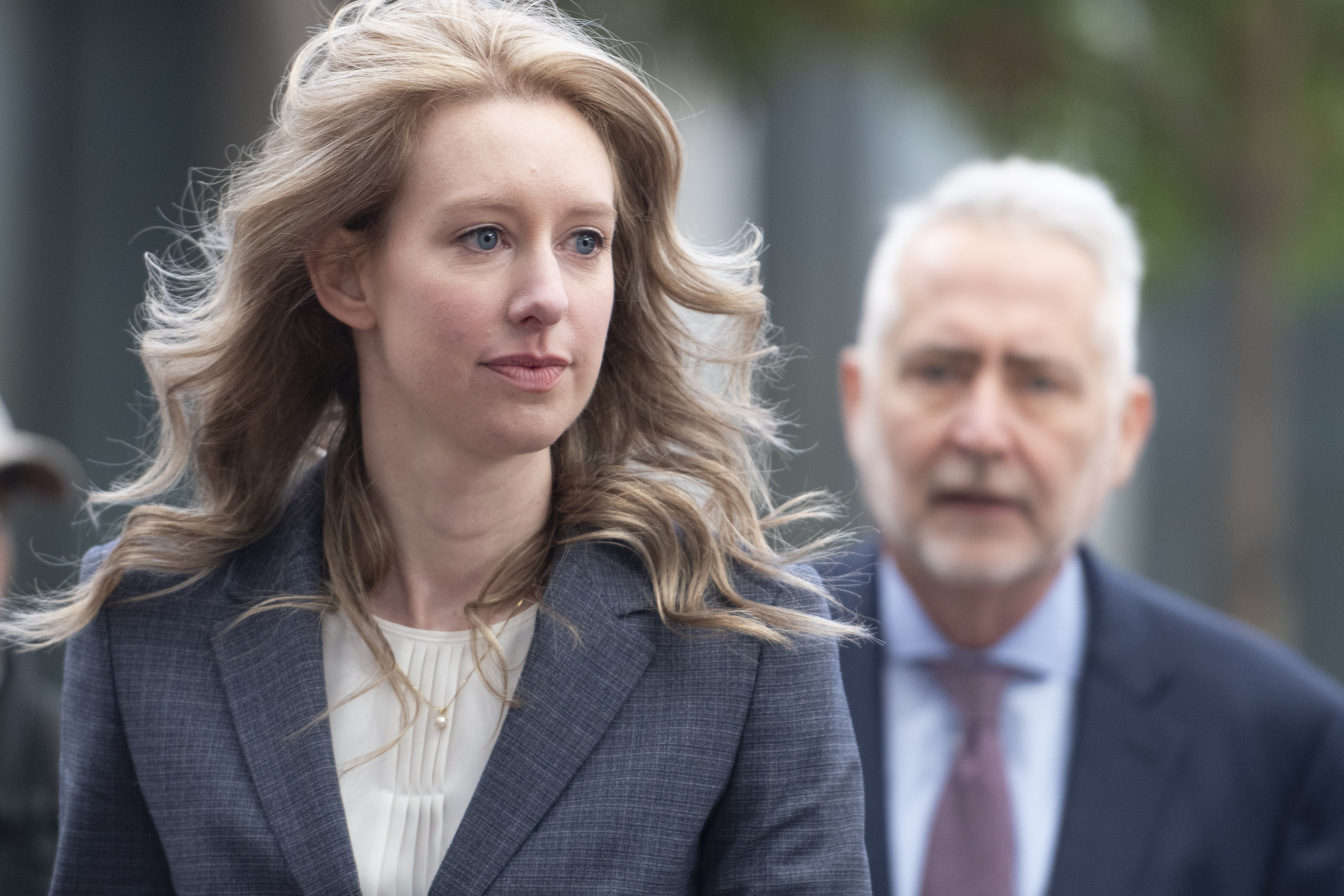
Elizabeth Holmes, founder and former CEO of Theranos, arrives for motion hearing on Monday, November 4, 2019, at the US District Court House in San Jose, California.
Enlarge / Elizabeth Holmes, founder and former CEO of Theranos, arrives for motion hearing on Monday, November 4, 2019, at the US District Court House in San Jose, California.

Nearly a decade ago, Theranos touted a revolutionary diagnostic device that could run myriad medical tests without having to draw blood through a needle. Today, the startup’s founder, Elizabeth Holmes, goes to court, where she’s facing 12 criminal counts for statements she made to investors and consumers about her company’s technology.

Holmes founded Theranos in 2003 after dropping out of Stanford University at the age of 19. Driven by her phobia of needles, Holmes wanted to create diagnostic tests that use blood from finger pricks rather than from needles. The idea caught on, attracting well-connected board members like Henry Kissinger and James Mattis, drawing over $400 million in investments from wealthy investors including Larry Ellison and Rupert Murdoch, and securing lucrative partnerships with Walgreens and Safeway. At its peak, Theranos was worth over $9 billion.

But Theranos’ myth started unwinding in 2015 when a Wall Street Journal investigation revealed that the company had been performing most of its tests on traditional blood diagnostic machines rather than its own “Einstein” device. The company’s own employees doubted the machine’s accuracy.

Problematic claims

For many tests, blood from finger pricks is difficult to analyze. Small amounts of blood typically contain more variability than larger draws from veins, and a poorly executed stick might grab interstitial fluid along with the blood. Plus, finger-prick blood comes in contact with the skin, raising the chances of contamination that can confound the results. Yet Holmes and Ramesh “Sunny” Balwani, Theranos’ president and chief operating officer, painted a rosy picture for investors, partners, and customers.

“Theranos claimed that its laboratory infrastructure yielded test results in less time than conventional labs—requiring hours instead of days. Theranos claimed that its proprietary technology and methods would minimize the risk of human error and generate results with the highest accuracy,” the indictment says. Despite this, prosecutors have said, “Holmes and Balwani knew that the analyzer had accuracy and reliability problems, performed a limited number of tests, was slower than some competing devices, and, in some respects, could not compete with existing, more conventional machines.”

Holmes and Balwani were indicted in June 2018, and soon Theranos was facing mounting civil and criminal investigations. The company settled a Securities and Exchange Commission probe and shut down shortly thereafter.

The end of Theranos didn’t halt the scrutiny of Holmes’ and Balwani’s behavior, though. Three rounds of indictments have brought the total to 10 counts of wire fraud and two counts of conspiracy to commit wire fraud. The latest indictment, which supersedes the previous two, was filed in June 2020.

Both Holmes and Balwani have pleaded not guilty, and Balwani’s trial will begin next year.

The indictments aren’t limited to claims about the company’s proprietary diagnostic machine but also include what Holmes and Balwani allegedly said to investors about revenue and business deals. The prosecution says the pair told investors that Theranos would bring in over $100 million in revenue in 2014, helping the company break even, and hit $1 billion in 2015, amounts that exceeded the executives’ actual expectations. Prosecutors also say that the pair falsely told investors that the company landed contracts with the Pentagon.

Delayed trial

The road to trial has been filled with delays, first due to the COVID-19 pandemic and then again when Holmes became pregnant. Her child was born in July, around the time the trial was supposed to begin. If convicted, Holmes faces up to 20 years in prison.

Today’s proceedings kick off jury selection, in which prosecutors and defense attorneys will begin questioning over 100 potential jurors. The pool was already slashed last week, as Holmes’ attorney Kevin Downey told US District Judge Edward Davila of the Northern District of California that more than 30 jurors had “consumed substantial—and I mean lengthy, extrajudicial—material about the case and about the defendant.” In a pre-trial hearing, Downey also said that selected jurors must be vaccinated, while the prosecution wouldn’t commit to a stance on the issue.

Opening statements are scheduled to begin on September 8, and the trial may run through mid-December. Holmes is expected to claim that Balwani, who was her boyfriend for much of Theranos’ existence, was an abusive and controlling partner. A court filing released on Saturday revealed that Holmes is expected to take the stand during the trial and allege that he monitored her calls, texts, and emails and was physically violent, claims that Balwani denies. Her attorneys say these actions affected her “state of mind” when the alleged fraud took place.

https://arstechnica.com/?p=1790858


Judge’s order requiring hospital to give COVID patient ivermectin called “unethical”

Judge’s order requiring hospital to give COVID patient ivermectin called “unethical”
Aurich Lawson | Getty Images

A county judge in Ohio has ordered a hospital in Cincinnati to administer ivermectin to an intensive care patient, a move raises questions about the role of the courts in the medical system.

“It is absurd that this order was issued,” Arthur Caplan, professor of bioethics at New York University’s Langone Medical Center, told Ars. “If I were these doctors, I simply wouldn’t do it.”

The order was spurred by a lawsuit filed by Julie Smith, whose 51-year-old husband, Jeffrey, is being treated in West Chester Hospital for COVID-19. The lawsuit was first reported by the Ohio Capital Journal. Jeffrey has been in the hospital since July 15, and as his condition declined, his wife Julie began investigating alternative treatments.

A treatment without supporting evidence

During her husband’s time in the hospital, Julie found groups espousing the purported benefits of ivermectin, which she asked the hospital’s doctors to administer. They refused.

Ivermectin was initially developed as a treatment for river blindness and other parasitic infections. In the US, the FDA has approved it for two specific forms of parasitic infection as well as topical treatments for head lice. Importantly, the doses at which it’s administered for internal use in humans are far lower than what’s available over-the-counter for treating parasitic infections in livestock. At high doses, ivermectin can cause serious side effects in humans, ranging from nausea, vomiting, and diarrhea to low blood pressure, seizures, coma, and death. 

But people have clung to the idea that ivermectin can treat COVID after a study early in the pandemic suggested that it disrupted SARS-CoV-2’s ability to infect cells. What’s often overlooked is that study was limited to cells in Petri dishes. What’s more, when the NIH looked into it, the agency found that to achieve the ivermectin’s reported disruptive effects, the dose would have to be 100-times greater than what’s currently approved in humans. At those levels, the side-effects would likely be serious. The FDA has pleaded with people not to take ivermectin for COVID.

Still, that hasn’t stopped people on the Internet from encouraging its use. Prescriptions of the drug have spiked, and some people have resorted to buying livestock-grade ivermectin when they can’t obtain a script. Poison control centers have been inundated with calls, yet some doctors continue to push the drug for COVID despite potentially grave side effects and a lack of evidence.

Outside doctor

After watching her husband suffer in the hospital for more than a month, Julie Smith was desperate. He had been in the ICU since the day he was admitted, and he had to be intubated on August 1, according to the lawsuit. Two days later, his sedation wore off and he woke up, ripping the tube out of his throat and “disturbing and/or breaking the feeding tube, which caused food particles and toxins to escape into his lungs; this caused him to aspirate,” the lawsuit says. He developed an infection, which he is still fighting.

Distressed, his wife began investigating “other forms of treatment for COVID-19” and requested that the hospital doctors “administer Ivermectin pursuant to its dosage schedule,” the lawsuit says. Julie offered to sign a form releasing the doctors of any liability, but they refused.

It’s unclear when Julie contacted Dr. Fred Wagshul, but on August 20, he prescribed ivermectin for Jeffrey. Wagshul is a pulmonologist with a practice near Dayton, Ohio, and he helps run the Front Line COVID-19 Critical Care Alliance, a group of doctors which encourage treatment of COVID with ivermectin, fluvoxamine, famotidine, and a smorgasbord of other drugs. Some of those drugs may work in limited circumstances, but most of them appear useless against the virus. Currently, Wagshul does not appear to have any privileges at any hospitals.

“Try anything”

Ivermectin “is absolutely not indicated for COVID. There is no standard of care saying you have to use it,” Caplan said. “Indeed, major medical groups advising against using it because people have died from it.” The judge’s order was asking hospital doctors to do something “unethical and illegal,” he said. “The doctors who are caring for the guy in the hospital are his doctors, not this guy,” Caplan added, referring to Dr. Wagshul.

The judge in the case likely feels that, because Jeffrey Smith is dying, that doctors should “try anything,” Caplan said. “Well, that’s false, because you can still kill him faster.” 

“The judge is trying to throw a life preserver to a dying man. The problem is what he’s throwing is actually a 50 pound weight that’ll sink him.”

https://arstechnica.com/?p=1790673