Bitcoin surges as Amazon job posting suggests retailer may accept cryptocurrencies

Bitcoin surges as Amazon job posting suggests retailer may accept cryptocurrencies

Amazon posted a job opening late last week that suggested the e-commerce giant may be considering accepting cryptocurrencies as a form of payment.

The posting sent bitcoin and other cryptocurrencies surging, with bitcoin and ethereum up 12 percent and 9 percent, respectively, over the past 24 hours. The development also came on the heels of an event last Wednesday where crypto boosters Elon Musk and Jack Dorsey reiterated their support for bitcoin and other cryptocurrencies.

Amazon is looking for a “Digital Currency and Blockchain Product Lead,” who will be a member of the Payment Acceptance and Experience Team, which the posting says is “responsible for how Amazon’s customers pay on Amazon’s sites and through Amazon’s services around the globe.”

If Amazon does decide to accept cryptocurrency as a form of payment on its site or for AWS, it’s not clear whether the company will use an existing cryptocurrency or develop a new one. It’s likely that Amazon hasn’t decided on a specific approach yet. The posting says the product lead would work with various Amazon teams, including AWS, to “develop the roadmap” and “develop the case for the capabilities which should be developed, drive overall vision and product strategy, and gain leadership buy-in and investment for new capabilities.”

Amazon is no stranger to blockchain technologies. AWS already offers blockchain services, and while it’s possible that any new initiative would expand those, this position does not appear to be focused on enterprise blockchain but rather alternative payment methods for the company’s e-commerce customers.

Not just Amazon

Amazon isn’t the only company exploring whether to accept cryptocurrency payments. Last week, Elon Musk said that Tesla might be changing its position—again. “Most likely the answer is that Tesla would resume accepting bitcoin,” Musk said at the B Word conference.

Jack Dorsey, CEO of Twitter and Square, also reiterated his support of bitcoin at the conference. As of February, his payments company, Square, held over $200 million worth of bitcoin.

But Square’s holdings pale in comparison with Tesla, which held $2.48 billion worth of bitcoin as of March 31. The automaker has had an on-again, off-again relationship with the cryptocurrency. After announcing earlier this year that Tesla would accept bitcoin, Musk said in mid-May that the company would halt the practice. Musk had grown concerned about the cryptocurrency’s environmental impact after reading reports about its carbon footprint, including one on Ars about a power plant that was revived to mine bitcoin.

“Tesla’s mission is accelerating the advent of sustainable energy. We can’t be the company that does that and also not do appropriate diligence on the energy usage of bitcoin,” Musk said at the conference last week. Yet apparently, he thinks that the trend is changing. “Now, it looks like bitcoin is shifting a lot more to renewables,” he added.

Musk has said in the past that he has had conversations with bitcoin miners about moving to renewable power. Still, it’s not clear whether miners have been making the change or that they will follow through with their plans. Most estimates of bitcoin’s use of renewable power come from self-reported data, which is hard to verify.

What seems to have changed is bitcoin’s overall power consumption, which appears to have dropped in the past couple of months. That development would have the effect of lowering the network’s carbon footprint. Two widely cited models that estimate bitcoin’s energy consumption have come to slightly different conclusions. One model, run by Cambridge University, says that annualized energy usage for the blockchain network is down by almost half since mid-May. Another, run by a Dutch data scientist, says annualized energy consumption is up 17 percent over the same timeframe, though the study acknowledges that its estimate of the minimum power required by the network has dropped by 40 percent.

The drop likely reflects the aftereffects of the Chinese Communist Party’s broader crackdown on bitcoin. Earlier this year, the regional government in the country’s Inner Mongolia Province, a part of China known for its cheap coal power, announced it would ban crypto mining starting in April. In mid-May, China’s financial regulators warned banks and other financial institutions not to process cryptocurrency transactions or offer related services. Then, less than two weeks later, the Financial Stability and Development Committee of the State Council offered a more definitive statement, saying it would “crack down on bitcoin mining and trading behavior and resolutely prevent the transfer of individual risks to the society.”

Since then, bitcoin’s hash rate, a proxy for the number of miners working on the blockchain, has plummeted, dropping by almost half.

Other options

Despite the drop, bitcoin remains the largest cryptocurrency by market cap, but that doesn’t mean it’s Amazon’s only option. It’s entirely possible that Amazon could accept a lesser-known cryptocurrency or develop its own. Of all companies, Amazon is in a strong position to do so. The company’s market cap of $1.87 trillion is more than double the estimates of bitcoin’s total value, giving Amazon significant financial firepower. The company also has around 40 percent market share in e-commerce, giving it a broad base of potential users.

But just because Amazon could make its own digital currency doesn’t mean it would. And the job posting isn’t definitive evidence that it ultimately will do anything with cryptocurrencies. 

Amazon is not the only trillion-dollar company to be dipping its toes in the blockchain waters. Both Google and Microsoft employ engineers who focus on blockchain technologies, mostly for their cloud services. Apple, too, is exploring blockchain and alternative methods for payment, including cryptocurrencies, according to a job posting from May. 

Yes, the companies may be serious about accepting crypto payments, but it’s more likely that they’re hedging their bets. If crypto payments catch on, Big Tech will be well-positioned to capitalize on the move. One product manager’s salary will barely make a dent in Amazon’s earnings, and hiring someone to keep an eye on the space seems like a smart and relatively inexpensive insurance policy.

https://arstechnica.com/?p=1783060


New bill strips Facebook, Twitter of Section 230 immunity for spreading vaccine falsehoods

New bill strips Facebook, Twitter of Section 230 immunity for spreading vaccine falsehoods

A new bill introduced Thursday would hold Facebook, Twitter, and other social media companies responsible for amplifying conspiracies and falsehoods about vaccines, COVID cures, and other health misinformation.

“For far too long, online platforms have not done enough to protect the health of Americans,” said Sen. Amy Klobuchar (D-MN), one of the bill’s sponsors. “These are some of the biggest, richest companies in the world, and they must do more to prevent the spread of deadly vaccine misinformation.”

If signed into law, the Health Misinformation Act would strip Facebook, Twitter, and other social media companies of some immunity under Section 230 of the Communications Decency Act, which currently prevents Internet firms from being held liable for most content posted on their platforms. The carveout proposed by Klobuchar and Sen. Ben Ray Luján (D-NM) would eliminate that legal shield in instances where a platform “promotes health misinformation through an algorithm,” the bill says.

Limited scope

The reduced immunity would only kick in during public health emergencies declared by the Department of Health and Human Services. That agency would also be responsible for defining which “health misinformation” platforms need to remove from algorithmic promotion.

Defining health misinformation is certain to be a hurdle both for the law’s passage and, if it is passed, for policymakers at HHS during implementation. In recent years, certain health matters, including COVID-19 and vaccines for the virus, have become politicized. Even if HHS were to comprehensively define health misinformation, dedicated conspiracy theorists and other misinformation spreaders would likely find ways around any bans. Take, for example, the recent trend among some anti-vaccination groups on Facebook. To avoid detection by the site’s algorithms, they’ve started cloaking their names and language they use to post, referring to themselves as a “Dance Party” or “Dinner Party.”

The legislation would not forbid people from posting falsehoods, and platforms would still enjoy Section 230 immunity if they display the posts using a “neutral mechanism,” the bill says, adding that posts shown in chronological order would be one such example. Still, the new law would make it less likely that people receptive to, but not dedicated to, anti-vax views would be inundated with misinformation.

Despite the bill’s limited scope, the sort of restriction it proposes would likely encounter resistance from tech companies, Olivier Sylvain, a law professor at Fordham University, told Ars. “They’re likely to raise the argument that ranking and displaying content through some automated system is, from their vantage point, the thing that distinguishes social media, and it’s arguably the kind of thing that’s protected,” he said.

“But I’m not terribly persuaded by this,” Sylvain added, “because this is not a bill that imposes sanction or criminal liability. It is instead a bill that would remove the immunity and just return us to the baseline that every other person on the planet has to abide by.”

“The challenge is determining whether any given reform to Section 230 is unconstitutionally restrictive of speech,” he said. “It can’t be that simply removing the immunity is what triggers First Amendment scrutiny. Because then, under that theory, when Congress passed the 1996 bill, it would have basically created a protection for the intermediaries for all time.”

Automated moderation

While Section 230 shields platforms from liability for what they publish, the law was written to encourage moderation by not leaving companies liable for that moderation. An early ruling on the law said that platforms could not be sued for performing “a publisher’s traditional editorial functions—such as deciding whether to publish, withdraw, postpone, or alter content.”

Yet shielding tech companies from scrutiny over any form of moderation has allowed misinformation to flourish and spread on platforms. Social media, while not people’s only source of information on health matters, has played a major role in reducing COVID-19 vaccine acceptance, according to the Kaiser Family Foundation.

If the bill passes, it could force social media companies to think more carefully about the role their algorithms play in the spread of information, Sylvain said. “It would make these companies far more alert to the ways in which they impose harms and costs by way of their automated systems,” he said. “It’s not enough to say they’re not the source of the bad information—that’s a disingenuous argument because they are the ones spreading it by way of targeted delivery.”

https://arstechnica.com/?p=1782556


Judges reject Viasat’s plea to stop SpaceX Starlink satellite launches

60 of SpaceX's broadband satellites stacked before launch.
Enlarge / 60 Starlink satellites stacked for launch at SpaceX facility in Cape Canaveral, Florida.

SpaceX can keep launching broadband satellites despite a lawsuit filed by Viasat, a federal appeals court ruled Tuesday.

Viasat sued the Federal Communications Commission in May and asked judges for a stay that would halt SpaceX’s ongoing launches of low Earth orbit (LEO) satellites that power Starlink Internet service. To get a stay, Viasat had to show that it is likely to win its lawsuit alleging that the FCC improperly approved the satellite launches.

A three-judge panel at the US Court of Appeals for the District of Columbia Circuit was not persuaded, saying in a short order that “Viasat has not satisfied the stringent requirements for a stay pending court review.” The judges did grant a motion to expedite the appeal, however, so the case should move faster than normal.

Viasat fears Starlink competition

Viasat is worried that its slower Internet service delivered from geostationary satellites will lose customers once Starlink is out of beta and more widely available. Viasat has some LEO-satellite plans but nothing close to the thousands of satellites that SpaceX is launching or the 1,500 or so SpaceX already has in operation.

Viasat alleged that the FCC did not comply with the National Environmental Policy Act (NEPA) when it approved SpaceX satellite launches because the commission “refused to conduct any environmental assessment.” Viasat told the DC Circuit court that SpaceX launches should be halted because of potential environmental harms when satellites are taken out of orbit; light pollution that alters the night sky; orbital debris; collision risks that may affect Viasat; and because “Viasat will suffer unwarranted competitive injury.”

“This court is likely to vacate the [FCC] order and direct the commission to conduct at least some NEPA review of Starlink,” Viasat wrote. “Any [SpaceX] launches should occur after that review, not before. This court should stay the order pending its review.”

Viasat argued that a stay won’t harm SpaceX much if the FCC order is ultimately upheld. “If this court upholds the commission’s NEPA ruling, the only effect of the stay would be to delay SpaceX’s ability to launch satellites pursuant to the [FCC] order by some number of months,” Viasat wrote.

Viasat’s limited low Earth plans

Viasat explained its financial concerns by writing that SpaceX “intends to use its environmentally irresponsible constellation to extend its reach geographically and directly compete with Viasat. The rate at which SpaceX is launching satellites makes both the extent and risk of harm during this appeal particularly high.”

Viasat said it “operates at least one satellite at the same altitude as Starlink” and that it has a “contract with the Department of Defense to operate a high-value LEO satellite in the same orbital range as the Starlink satellites, which it intends to launch in the next six to twelve months.” Viasat alleged that “failed SpaceX satellites and debris from a collision involving a SpaceX satellite can damage, disable, or destroy Viasat’s satellites.”

Dish Network is also fighting SpaceX’s FCC approval, and Dish’s case was consolidated with Viasat’s appeal. The judges set an August 6 deadline for Viasat and Dish to file opening briefs. The FCC will have until September 21, and SpaceX will have a deadline of September 28. Dish and Viasat will have until October 12 to file replies, and final briefs are due October 26. Oral arguments will follow “on the first appropriate date” after briefs.

FCC defends SpaceX license

The FCC and SpaceX last month filed briefs opposing Viasat’s motion for a stay. The FCC told judges that it “closely examined and reasonably rejected Viasat’s claims… As to each category of alleged environmental impact, the Commission considered the alleged effect in detail and found insufficient evidence that SpaceX’s license modification… requires further review.”

The FCC has given SpaceX several approvals of satellite launches. In 2018, the FCC approved 4,408 satellites at altitudes of 1,100-1,300 km. In 2019, the agency granted a license modification that cut the orbital altitude of 1,584 of those satellites in half.

The FCC order that Viasat challenged was another license modification granted in April 2021 that lowered the altitude of the remaining 2,824 satellites to 540-570 km. The FCC said in its court brief that the license change fell into a category “of actions that normally do not have a significant effect on the human environment.” Under this “categorical exclusion,” a review is not required by NEPA except in “extraordinary circumstances” in which there may be “significant environmental impact,” the FCC said.

The FCC did require SpaceX to explain how it will prevent orbital debris, collisions in space, and casualties upon satellite reentry. The FCC also imposed conditions on the license.

“SpaceX’s orbital debris mitigation plan explained that the satellites are capable of maneuvering to avoid collisions and that the lower altitude helps minimize debris by ensuring satellites more quickly descend into the atmosphere and are destroyed at the end of their useful lives,” the FCC told judges. “SpaceX also addressed the potential casualty risk resulting from portions of satellites surviving reentry by explaining that SpaceX had revised the design of all but the initial 75 satellites so that ‘no components of… the satellite will survive atmospheric re-entry, reducing casualty risk to zero.'” The FCC said it “granted the modification with conditions including compliance with current and future orbital debris rules.”

SpaceX also has FCC approval for another 7,500 satellites with even lower orbits.

FCC and SpaceX in sync

The FCC had more arguments against Viasat’s motion, telling judges that Viasat “relies on speculative assertions of primarily economic harm that do not demonstrate a likelihood that Viasat has standing, much less show irreparable injury justifying the extraordinary remedy of a stay pending appeal.” Halting the satellite launches would create harm “to SpaceX and to the public interest in advancing broadband satellite service to remote or underserved areas of the United States,” the FCC said.

SpaceX’s filing alleged that Viasat made a “transparent bid to co-opt the National Environmental Policy Act and the procedure for extraordinary stay relief as weapons of commercial warfare,” adding:

Viasat’s newfound environmentalism is belied by its actions at every turn. Viasat failed to raise any environmental concerns in connection with any other satellite authorization, including SpaceX’s authorization to operate Starlink satellites at a different altitude and its prior request (nearly identical to the one at issue here) to lower many of those satellites. To the contrary, Viasat—a non-US licensee that has previously sought to escape Commission regulation altogether—ultimately relies on “competitive harm” to support its stay request. But stifling competition and protecting profits is not what NEPA is about.

https://arstechnica.com/?p=1782438


Activision Blizzard sued by state agency over alleged widespread discrimination

Sign on facade of Activision's Los Angeles offices.
Enlarge / Sign on facade of Activision’s Los Angeles offices.
Getty Images

On Wednesday, a California State agency filed a lawsuit against the game publisher Activision Blizzard over allegations of rampant sexual discrimination and sexual harassment. The nature of this harassment is so widespread, the lawsuit says, that women who have worked for the game maker “almost universally confirmed that working for Defendants was akin to working in a frat house”—which, according to this lawsuit, means a workplace full of inebriated men who sexually harassed their female colleagues without being punished for it.

The 29-page lawsuit claims that across the entire corporation, pay disparity led to women receiving “less total compensation than their male counterparts while performing substantially similar work.” It includes multiple alleged examples of Activision Blizzard slowing promotions for women in favor of male counterparts, even when those women had longer tenures and a superior review record at the company, and added that women of color were “particularly targets of Defendants’ discriminatory practices.”

A direct report to Blizzard’s president

The full lawsuit includes a lengthy list of violations of both sexual discrimination and sexual harassment statutes, including many that single out unnamed Activision Blizzard staffers, and they range from explicit to repugnant. The lawsuit describes one particularly extreme example of alleged harassment—and says the sufferer eventually took her own life.

Multiple company executives are mentioned by name in the filing. Blizzard Entertainment President J. Allen Brack allegedly received a direct report from an employee in “early 2019” that staffers were quitting the company over “sexual harassment and sexism.” The report pointed directly to the company’s battle.net online service team, where “women who were not ‘huge gamers’ or ‘core gamers’ and not into the party scene were excluded and treated like outsiders.”

A former senior creative director at the company’s World of Warcraft division allegedly had a reputation at Blizzard’s annual BlizzCon event for hitting on female colleagues; he was so aggressive that “supervisors had to intervene and pull him off female employees.” Brack is named in these allegations for giving the director nothing more than a “slap on the wrist” after each incident.

And one Activision CTO, not identified by name, was allegedly seen “groping inebriated female employees at company events” and allegedly hired women based on their looks.

The lawsuit alleges a long and detailed history of Activision Blizzard not responding to official complaints filed by affected staffers. Those complaints were allegedly not kept confidential, and the lawsuit claims those complainants were subject to subsequent retaliation, which came in the form of layoffs, unwanted department transfers, and denied career advancements.

Company response: “Unaccountable State bureaucrats”

Activision Blizzard issued a statement following the lawsuit, going so far as to accuse California State’s Department of Fair Employment and Housing of “distorted, and in many cases false, descriptions of Blizzard’s past.” After claiming that the DFEH didn’t engage in “good faith discussions” prior to filing its suit, it then called the suit “irresponsible behavior from unaccountable State bureaucrats that [is] driving many of the State’s best businesses out of California.”

The damages sought by the DFEH include those based on women’s pay disparity, and while Activision Blizzard’s statement includes claims that it “strive[s] to pay all employees fairly for equal or substantially similar work,” it doesn’t acknowledge any possible issue of pay disparity in the company’s past, nor how the company might have rectified prior violations of California state law.

Activision Blizzard is far from alone in terms of sexual harassment allegations in the video games industry—as seen in recent examples at Ubisoft, EA, and Riot Games.

https://arstechnica.com/?p=1782211


Lawsuit: eBay tried to “terrorize, stalk, and silence” couple that ran news site

A bloody pig mask mailed to cyberstalking victims by then-eBay employees.
Enlarge / A bloody pig mask mailed to cyberstalking victims by then-eBay employees.

A former eBay security official who pleaded guilty for his role in a cyberstalking conspiracy has asked for leniency in sentencing while blaming his actions in part on a “drinking culture” at eBay that contributed to his alcoholism.

“eBay had a bar on campus that opened at 3:00 p.m., and drinking was part of the culture, with alcohol present throughout the office space where it was typical to take morning shots of alcohol with co-workers,” a sentencing memorandum for 56-year-old defendant Philip Cooke said yesterday. It was filed in US District Court for the District of Massachusetts.

Cooke was senior manager of security operations for eBay’s Global Security Team, making an annual salary of $185,000 when he played a role in the harassment of a couple that operated a news website. The harassment—in response to news coverage that eBay executives did not like—involved sending threatening messages and deliveries of live cockroaches, a funeral wreath, and a bloody pig mask to the couple’s home in Natick, Massachusetts. Cooke was promoted by eBay to director of security operations and given a raise to $205,000 in June 2020, about 10 months after the cyberstalking campaign began and just before it became public.

Ex-CEO among defendants in suit against eBay

In addition to criminal charges, Cooke is one of the defendants in a lawsuit filed by the harassment victims today. Ina and David Steiner of Natick, who run news website EcommerceBytes, filed the complaint against eBay and the alleged perpetrators of the cyberstalking in the same US District Court. Defendants include eBay itself, former eBay CEO Devin Wenig; former eBay Chief Communications Officer Steven Wymer; and Progressive F.O.R.C.E Concepts (PFC), a security firm that employed Cooke as a contractor before he became a full-time eBay employee.

“eBay… engaged in a coordinated effort to intimidate, threaten to kill, torture, terrorize, stalk and silence the Steiners, in order to stifle their reporting on eBay,” the lawsuit alleged.

The lawsuit said that Wenig and Wymer:

provided the other Defendants with carte blanche authority to terminate the reporting of the Steiners by whatever means necessary, with Defendant Wymer expressing “… I want to see ashes. As long as it takes. Whatever it takes.” Defendant Wymer promised the defendants he would “embrace managing any bad fallout” if the plan went south, further directing, “We need to STOP her.” All of the horrific, vicious and sickening conduct that followed was committed by employees of eBay and PFC, while acting in the scope of their employment under the authority of and for the benefit of eBay and PFC.

Wenig and Wymer were not hit with criminal charges when other eBay employees were arrested and charged last year.

The Steiners’ lawsuit said:

Starting with an online intimidation campaign, the defendants taunted Ina Steiner using a phony Twitter handle pretending to be an eBay seller, and directly threatened her to stop reporting on eBay. The online attacks continued to escalate into threatening and disturbing package deliveries, which included live spiders, cockroaches, a bloody pig mask, a funeral wreath, and a book entitled “Grief Diaries: Surviving Loss of a Spouse” sent directly to David Steiner. These messages and deliveries often were accompanied by ominous simultaneous Twitter messages such as “do I have your attention now, cunt?” Shockingly graphic and vulgar messages, such as “U are sick motha fuckers…and every one will kno! U fuckin cunt ass bitch!” paired with taunting emails and deliveries, including pornography and “Hustler: Barely Legal” magazines sent to the Steiner’s neighbors’ home in David Steiner’s name, to defame the Steiners and attempt to disgrace them and tarnish their reputation within their community.

Some of the conspirators traveled from California to Massachusetts and, among other things, “menacingly stalked and tailed the Steiners in a black van and other rental vehicles, repeatedly circling the block, tracking their every move, and following David Steiner when he left the residence. The defendants even went as far as to attempt to break into the Steiner garage in order to install a GPS tracking device on their vehicle,” the lawsuit said.

eBay issued a statement last year that said an “internal investigation found that, while Mr. Wenig’s communications were inappropriate, there was no evidence that he knew in advance about or authorized the actions that were later directed toward the blogger and her husband.”

eBay provided a statement to Ars today, saying, “The misconduct of these former employees was wrong, and we will do what is fair and appropriate to try to address what the Steiners went through. The events from 2019 should never have happened, and as eBay expressed to the Steiners, we are very sorry for what they endured. As noted by the US Attorney’s Office when this matter first came to light, eBay cooperated fully with the government’s investigation, noting that ‘eBay was extremely cooperative with the investigation in helping state and federal authorities figure out what had happened and collect evidence of the crime.'”

eBay “culture” exacerbated alcohol problem

Cooke’s sentencing memorandum quotes his wife as saying that a “drinking culture at eBay” exacerbated an alcohol abuse problem that got worse after Cooke retired from a career as a captain in the Santa Clara Police Department. Cooke went to work for Progressive F.O.R.C.E Concepts about a year after retiring from police work, and “while the job provided a place to go, a purpose, and new colleagues, it did not resolve his drinking problem.” After taking a full-time job at eBay in April 2019, Cooke “continued to drink heavily, especially with his friends and colleagues.” That was a few months before the cyberstalking campaign began.

“When he returned to eBay as an employee, Phil’s drinking problem became even worse,” his wife said in the memorandum. “I remember one time Phil didn’t come home from work until around 4am the following day. When I asked him where he had been, he said he closed down a bar with his coworkers and slept in his car for a few hours until he felt safe to drive home. I knew Phil and his coworkers had a liquor cabinet at work, but what I didn’t know until later was they were taking shots of alcohol in the morning.”

Cooke’s filing asked the court for a sentence of “home confinement for whatever period the Court believes is necessary, 12 months supervised release, a $200 special assessment, no restitution (as none has been requested), and no fine.”

The filing went on:

As a result of this prosecution, Mr. Cooke has endured extensive punishment already… He lost a job he enjoyed, was devastated by the disappointment he caused his family, and was humiliated in his community—a community he honorably and faithfully served [as a police officer] for 30 years. He has accepted full responsibility for his misconduct, is very remorseful for his bad choices, and wants to do whatever it takes to put his life right. Since accepting responsibility, he has addressed his substance abuse issue, remained sober, and successfully trained to facilitate meetings in a substance abuse program in California for both other substance abusers and also for their friends and families.

The document downplays Cooke’s role in the conspiracy, saying that he didn’t travel to Massachusetts and that he warned fellow employees against some of the worst parts of the plan. The filing said:

While Mr. Cooke joined the plan to engage in a “white knight strategy” to send harassing and anonymous Twitter messages to soften up the victims for eBay’s security team’s assistance, and viewed at least some draft messages in connection with that scheme, he was not personally involved in two or more separate “instances” of harassing the same victim. His involvement is more fairly described as a single “course of conduct” or “a pattern of conduct comprised of 2 or more acts evidencing a continuity of purpose pattern of activity.”

Guilty pleas by five ex-eBay employees

Cooke pleaded guilty in October 2020 to one count of conspiracy to commit cyberstalking and one count of conspiracy to commit witness tampering. Each charge carries a maximum sentence of five years in prison, three years of supervised release, a fine of up to $250,000, and restitution.

Four other former eBay security employees pleaded guilty in October 2020. They are Brian Gilbert, former senior manager of special operations for eBay’s Global Security Team; Stephanie Stockwell, former manager of eBay’s Global Intelligence Center; Stephanie Popp, eBay’s former senior manager of Global Intelligence; and Veronica Zea, a former eBay contractor who was an intelligence analyst in eBay Global Intelligence. Like Cooke, all four pleaded guilty to charges of conspiracy to commit cyberstalking and conspiracy to tamper with witnesses and are waiting to be sentenced.

While the harassment case involves only eBay, the sentencing memorandum noted a similar drinking culture at Facebook.

“I did not know about the drinking culture at eBay and Facebook,” Cooke’s wife said in a statement quoted in the memorandum. “First, he worked as a contractor for eBay which has a bar on campus where he would drink with his coworkers. They would often leave that bar and go over to a local bar/restaurant and continue drinking until late at night. Then he started working at Facebook where they allowed drinking during the day and would often have free alcohol available.”

https://arstechnica.com/?p=1781983


Biden picks Google foe to lead DOJ antitrust as it mulls plan to break up Big Tech

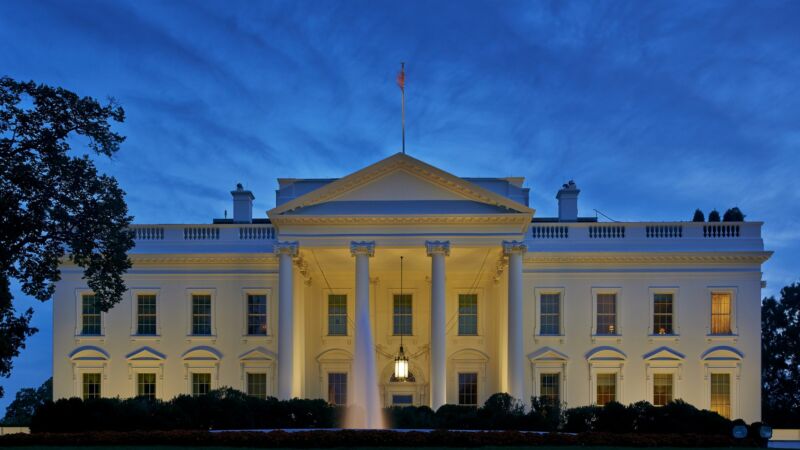
The White House seen in the early evening.

President Joe Biden today said he will nominate Jonathan Kanter to be the assistant attorney general in charge of the Department of Justice’s antitrust division. Kanter is an attorney known for his criticism of Google and will take over the antitrust division as it considers a Biden plan to reverse harmful mergers and break up monopolies.

Kanter “is a distinguished antitrust lawyer with over 20 years of experience” and has been “a leading advocate and expert in the effort to promote strong and meaningful antitrust enforcement and competition policy,” the White House announcement said.

US Sen. Amy Klobuchar (D-Minn.) applauded the nomination in a statement. “For years, Jonathan Kanter has been a leader in the effort to increase antitrust enforcement against monopolies by federal, state, and international competition authorities. His deep legal experience and history of advocating for aggressive action make him an excellent choice to lead the Department of Justice’s Antitrust Division,” Klobuchar said.

Kanter represented companies against Google

Kanter founded the Kanter Law Group, described by the White House as a “boutique antitrust law firm that advocates in favor of federal and state antitrust law enforcement.” The firm’s website says that Kanter represents clients before the Department of Justice, Federal Trade Commission, Congress, and state attorneys general. Kanter also worked as an attorney in the FTC’s competition bureau between 1998 and 2000.

“During the Obama administration, Microsoft engaged [Kanter] to push antitrust officials to take action against Google. More recently, he represented clients, including Yelp Inc., who urged the Justice Department to sue Google last year,” Bloomberg wrote today.

“Antitrust enforcement is barely on life support,” Kanter said at an event about Amazon in 2016, as quoted by Bloomberg. “When was the last time you can remember a major antitrust agency bringing a monopolization case? The reason you can’t remember it is because they haven’t done it.”

Kanter: Google has “long history of harming content providers”

Also in 2016, Kanter wrote an op-ed for The New York Times titled “Don’t Hand Our TVs Over to Google.” Kanter’s op-ed criticized then-Federal Communications Commission Chairman Tom Wheeler’s proposal to give consumers more choices in set-top boxes by requiring cable and satellite-TV companies to provide content and programming information to makers of third-party hardware or applications. Kanter argued that Wheeler’s plan, which was never adopted amid opposition from cable companies, “threatens to replace one set of powerful gatekeepers with a new one: Google.”

Kanter outlined some of his views on Google in that op-ed, writing:

The FCC must ensure that Google doesn’t engage in the same behavior when users search from their TVs. Absent FCC oversight, the record suggests, Google will favor its own video services in search results just as it does today for shopping, news, and other categories.

Google also has a long history of harming content providers. To attract users and advertisers to its services, Google needs content. But it loses ad dollars from additional searches when users click away from its search engine, so it often copies that content—sometimes in small pieces—from third parties.

For example, Google’s image search engine displays high-resolution and large-format images from third-party sites, thereby promoting piracy. Google also seems to favor sites that rely on ads rather than subscription fees, a practice that has cut into news outlets’ profit margins. These kinds of practices starve content providers of revenue and chill investment in content creation.

Kanter’s DOJ could sue Big Tech companies

Biden’s recent executive order encouraged the DOJ and FTC “to enforce the antitrust laws vigorously” and to “challenge prior bad mergers that past administrations did not previously challenge,” the White House said.

As head of the antitrust division, Kanter would decide whether to file lawsuits against companies such as Google, Amazon, Facebook, and Apple, all of which are facing congressional scrutiny, with Democrats proposing stronger antitrust rules that could break up Big Tech companies. Kanter’s work would complement that of Lina Khan, an antitrust scholar and Big Tech critic who became the FTC chair in mid-June.

“Kanter has the right expertise and holds the right values for the moment we are experiencing in tech and communications policy,” said Charlotte Slaiman, competition policy director at consumer-advocacy group Public Knowledge. “The public needs an assistant attorney general with both strong legal know-how and the requisite boldness to challenge gatekeepers and consolidated markets, including broadband providers and digital platforms. Jonathan Kanter fits that bill.”

Biden taking a long time on nominations

Kanter’s nomination must be approved by the Senate, and Slaiman urged senators to confirm Kanter quickly. The process will likely take a few months. Former President Donald Trump’s antitrust chief, Makan Delrahim, was nominated by Trump in early April 2017 and confirmed by the Senate on September 27 of that year. Khan was confirmed to the FTC a bit less than three months after Biden nominated her.

It took Biden about 180 days to name an antitrust chief. That’s the longest since then-President Jimmy Carter, who “took 168 days to nominate John Shenefield for the post,” Politico wrote earlier this month. The 168-day wait was previously the longest “in modern US history,” but in that case, “Shenefield had already taken over as acting antitrust head in May [of 1977],” Politico wrote.

Biden has been slow with other nominations, too. He needs to nominate a Federal Communications Commission member to break a 2-2 deadlock between Democrats and Republicans, and he still needs to pick an FCC chair. Jessica Rosenworcel has been the acting chairwoman throughout Biden’s term so far but has been hamstrung by the lack of a Democratic majority.

https://arstechnica.com/?p=1781759


“Clickless” exploits from Israeli firm hacked activists’ fully updated iPhones

“Clickless” exploits from Israeli firm hacked activists’ fully updated iPhones
Getty Images

Smartphones belonging to more than three dozen journalists, human rights activists, and business executives have been infected with powerful spyware that an Israeli firm sells, purportedly to catch terrorists and criminals, The Washington Post and other publications reported.

The handsets were infected with Pegasus, full-featured spyware developed by NSO Group. The Israel-based exploit seller has come under intense scrutiny in recent years after repressive governments in the United Arab Emirates, Mexico, and other countries have been found using the malware against journalists, activists, and other groups not affiliated with terrorism or crime.

Pegasus is frequently installed through “zero-click” exploits, such as those sent by text messages, which require no interaction from victims. After the exploits surreptitiously jailbreak or root a target’s iPhone or Android device, Pegasus immediately trawls through a wealth of the device’s resources. It copies call histories, text messages, calendar entries, and contacts. It is capable of activating the cameras and microphones of compromised phones to eavesdrop on nearby activities. It can also track a target’s movements and steal messages from end-to-end encrypted chat apps.

iPhone 12 running iOS 14.6 felled

According to research jointly done by 17 news organizations, Pegasus infected 37 phones belonging to people who don’t meet the criteria NSO says is required for its powerful spyware to be used. Victims included journalists, human rights activists, business executives, and two women close to murdered Saudi journalist Jamal Khashoggi, according to The Washington Post. Technical analysis from Amnesty International and the University of Toronto’s Citizen Lab confirmed the infections.

“The Pegasus attacks detailed in this report and accompanying appendices are from 2014 up to as recently as July 2021,” Amnesty International researchers wrote. “These also include so-called ‘zero-click’ attacks which do not require any interaction from the target. Zero-click attacks have been observed since May 2018 and continue until now. Most recently, a successful ‘zero-click’ attack has been observed exploiting multiple zero-days to attack a fully patched iPhone 12 running iOS 14.6 in July 2021.”

All 37 infected devices were included in a list of more than 50,000 phone numbers. It remains unknown who put the numbers on it, why they did so, and how many of the phones were actually targeted or surveilled. A forensic analysis of the 37 phones, however, often shows a tight correlation between time stamps associated with a number on the list and the time surveillance began on the corresponding phone, in some cases as brief as a few seconds.

Amnesty International and a Paris-based journalism nonprofit called Forbidden Stories had access to the list and shared it with the news organizations, which went on to do further research and analysis.

Reporters identified more than 1,000 people in more than 50 countries whose numbers were included on the list. Victims included Arab royal family members, at least 65 business executives, 85 human rights activists, 189 journalists, and more than 600 politicians and government officials—including cabinet ministers, diplomats, and military and security officers. The numbers of several heads of state and prime ministers also appeared on the list. The Guardian, meanwhile, said 15,000 politicians, journalists, judges, activists, and teachers in Mexico appear on the leaked list.

As detailed here, hundreds of journalists, activists, academics, lawyers, and even world leaders appear to have been targeted. Journalists on the list worked for leading news organizations, including CNN, the Associated Press, Voice of America, The New York Times, The Wall Street Journal, Bloomberg News, Le Monde in France, the Financial Times in London, and Al Jazeera in Qatar.

“The targeting of the 37 smartphones would appear to conflict with the stated purpose of NSO’s licensing of the Pegasus spyware, which the company says is intended only for use in surveilling terrorists and major criminals,” Sunday’s Washington Post said. “The evidence extracted from these smartphones, revealed here for the first time, calls into question pledges by the Israeli company to police its clients for human rights abuses.”

NSO pushes back

NSO officials are pushing back hard on the research. In a statement, they wrote:

The report by Forbidden Stories is full of wrong assumptions and uncorroborated theories that raise serious doubts about the reliability and interests of the sources. It seems like the “unidentified sources” have supplied information that has no factual basis and [is] far from reality.

After checking their claims, we firmly deny the false allegations made in their report. Their sources have supplied them with information which has no factual basis, as evident by the lack of supporting documentation for many of their claims. In fact, these allegations are so outrageous and far from reality that NSO is considering a defamation lawsuit.

NSO Group has a good reason to believe the claims that are made by the unnamed sources to Forbidden Stories are based on [a] misleading interpretation of data from accessible and overt basic information, such as HLR Lookup services, which have no bearing on the list of the customers’ targets of Pegasus or any other NSO products. Such services are openly available to anyone, anywhere, and anytime and are commonly used by governmental agencies for numerous purposes, as well as by private companies worldwide.

The claims that the data was leaked from our servers is a complete lie and ridiculous, since such data never existed on any of our servers.

In its own statement, Apple officials wrote:

Apple unequivocally condemns cyberattacks against journalists, human rights activists, and others seeking to make the world a better place. For over a decade, Apple has led the industry in security innovation and, as a result, security researchers agree iPhone is the safest, most secure consumer mobile device on the market. Attacks like the ones described are highly sophisticated, cost millions of dollars to develop, often have a short shelf life, and are used to target specific individuals. While that means they are not a threat to the overwhelming majority of our users, we continue to work tirelessly to defend all our customers, and we are constantly adding new protections for their devices and data.

Repeat offender

This is by no means the first time that NSO has come under international criticism when its Pegasus spyware was found targeting journalists, dissidents, and others with no clear ties to crime or terrorism. The NSO spyware came to light in 2016 when Citizen Lab and security firm Lookout found it targeting a political dissident in the United Arab Emirates.

Researchers at the time determined that text messages sent to UAE dissident Ahmed Mansoor exploited what were three iPhone zero-day vulnerabilities to install Pegasus on his device. Mansoor forwarded the messages to Citizen Lab researchers, who determined that the linked webpages led to a chain of exploits that would have jailbroken his iPhone and installed the Pegasus spyware.

Eight months later, researchers from Lookout and Google retrieved a Pegasus version for Android.

In 2019, Google’s Project Zero exploit research team found NSO exploiting zero-day vulnerabilities that gave full control of fully patched Android devices. Days later, Amnesty International and Citizen Lab disclosed that the mobile phones of two prominent human rights activists were repeatedly targeted with Pegasus. That same month, Facebook sued NSO, allegedly for attacks that used clickless exploits to compromise WhatsApp users’ phones.

Last December, Citizen Lab said a clickless attack developed by NSO exploited what had been a zero-day vulnerability in Apple’s iMessage to target 36 journalists.

The exploits that NSO and similar firms sell are extremely complex, costly to develop, and even more expensive to purchase. Smartphone users are unlikely to ever be on the receiving end of one of these attacks unless they are in the crosshairs of a wealthy government or law enforcement agency. People in this latter category should seek guidance from security experts on how to secure their devices.

https://arstechnica.com/?p=1781429


US warns China over state-sponsored hacking, citing mass attacks on Exchange

The flags of the US and China rippling on flagpoles on a windy day.
Getty Images | cbarnesphotography

The US government blamed the Chinese government on Monday for attacks on thousands of Microsoft Exchange servers.

China’s Ministry of State Security (MSS) “has fostered an ecosystem of criminal contract hackers who carry out both state-sponsored activities and cybercrime for their own financial gain,” US Secretary of State Antony Blinken said in a statement that blamed the MSS for the Microsoft Exchange hacks. The US government and its allies “formally confirmed that cyber actors affiliated with the MSS exploited vulnerabilities in Microsoft Exchange Server in a massive cyber espionage operation that indiscriminately compromised thousands of computers and networks, mostly belonging to private sector victims,” Blinken said.

Blinken’s statement was released alongside a Justice Department announcement that three MSS officers and one other Chinese national were indicted by a federal grand jury on charges related to a different series of hacks into the “computer systems of dozens of victim companies, universities, and government entities in the United States and abroad between 2011 and 2018.” Blinken said that the US “and countries around the world are holding the People’s Republic of China (PRC) accountable for its pattern of irresponsible, disruptive, and destabilizing behavior in cyberspace, which poses a major threat to our economic and national security.”

The US did not announce any new sanctions against China, but Blinken said the indictment is evidence that “the United States will impose consequences on PRC malicious cyber actors for their irresponsible behavior in cyberspace.”

Exchange zero-days

The Microsoft Exchange attacks have been public knowledge for over four months. “Tens of thousands of US-based organizations are running Microsoft Exchange servers that have been backdoored by threat actors who are stealing administrator passwords and exploiting critical vulnerabilities in the email and calendaring application,” we wrote on March 6.

At the time, Microsoft wrote that it “detected multiple 0-day exploits being used to attack on-premises versions of Microsoft Exchange Server in limited and targeted attacks” and that it “attributes this campaign with high confidence to Hafnium, a group assessed to be state-sponsored and operating out of China, based on observed victimology, tactics, and procedures.” Microsoft issued emergency patches for four zero-day vulnerabilities in Exchange Server that were being exploited by hackers.

The attacks were unusual because six hacking groups exploited vulnerabilities before Microsoft issued a patch. Compromised Exchange servers were also hit with multiple types of ransomware.

Today, Blinken said, “Responsible states do not indiscriminately compromise global network security nor knowingly harbor cyber criminals—let alone sponsor or collaborate with them. These contract hackers cost governments and businesses billions of dollars in stolen intellectual property, ransom payments, and cybersecurity mitigation efforts, all while the MSS had them on its payroll.”

EU and UK condemn attacks

The European Union issued a statement today saying the attacks were “conducted from the territory of China for the purpose of intellectual property theft and espionage,” but it did not say the attackers were state-sponsored.

“We continue to urge the Chinese authorities to adhere to these norms and not allow its territory to be used for malicious cyber activities, and take all appropriate measures and reasonably available and feasible steps to detect, investigate and address the situation,” the EU said.

The United Kingdom’s statement today said, “The UK is joining like-minded partners to confirm that Chinese state-backed actors were responsible for gaining access to computer networks around the world via Microsoft Exchange servers.” Later in the release, the UK said its National Cyber Security Centre “is almost certain that the Microsoft Exchange compromise was initiated and exploited by a Chinese state-backed threat actor,” namely Hafnium, and that the “attack was highly likely to enable large-scale espionage, including acquiring personally identifiable information and intellectual property.”

According to the Associated Press, “a Chinese Foreign Ministry spokesperson has previously deflected blame for the Microsoft Exchange hack, saying that China ‘firmly opposes and combats cyber attacks and cyber theft in all forms’ and cautioned that attribution of cyberattacks should be based on evidence and not ‘groundless accusations.'”

Indictment

The Justice Department said the 2011-2018 hacking campaign “targeted victims in the United States, Austria, Cambodia, Canada, Germany, Indonesia, Malaysia, Norway, Saudi Arabia, South Africa, Switzerland, and the United Kingdom” and stole trade secrets, medical research, and other sensitive information:

Targeted industries included, among others, aviation, defense, education, government, health care, biopharmaceutical and maritime. Stolen trade secrets and confidential business information included, among other things, sensitive technologies used for submersibles and autonomous vehicles, specialty chemical formulas, commercial aircraft servicing, proprietary genetic-sequencing technology and data, and foreign information to support China’s efforts to secure contracts for state-owned enterprises within the targeted country (e.g., large-scale high-speed railway development projects). At research institutes and universities, the conspiracy targeted infectious-disease research related to Ebola, MERS, HIV/AIDS, Marburg, and tularemia.

The four Chinese nationals were indicted by a federal grand jury in San Diego in May. The indictment was unsealed Friday and “alleges that much of the conspiracy’s theft was focused on information that was of significant economic benefit to China’s companies and commercial sectors, including information that would allow the circumvention of lengthy and resource-intensive research and development processes,” the Justice Department said.

“These criminal charges once again highlight that China continues to use cyber-enabled attacks to steal what other countries make, in flagrant disregard of its bilateral and multilateral commitments,” Deputy Attorney General Lisa Monaco said.

Three of the four indicted people—Ding Xiaoyang, Cheng Qingmin, and Zhu Yunmin—were officers in the Hainan State Security Department (HSSD), an arm of China’s MSS, the Justice Department said. They “sought to obfuscate the Chinese government’s role” in the hacks “by establishing a front company, Hainan Xiandun Technology Development Co., Ltd.,” the department said. The fourth indicted person was Wu Shurong, “a computer hacker who, as part of his job duties at Hainan Xiandun, created malware, hacked into computer systems operated by foreign governments, companies and universities, and supervised other Hainan Xiandun hackers,” the Justice Department said.

US advisory on state-sponsored hackers

The US government today also issued an advisory on the tactics, techniques, and procedures used by Chinese state-sponsored attackers.

“The FBI and our partners are determined to disrupt the increasingly sophisticated Chinese state-sponsored cyber activity that targets US political, economic, military, education, and counterintelligence personnel and organizations,” FBI Cyber Division Assistant Director Bryan Vorndran said.

https://arstechnica.com/?p=1781358


California’s ambitious fiber-Internet plan approved unanimously by legislature

Illustration of fiber-optic cables.
Enlarge / Illustration of fiber-optic cables.

The California legislature unanimously approved a plan to build a statewide, open-access fiber network yesterday. The legislation was supported by Democrats and Republicans in votes of 78-0 in the California Assembly and 39-0 in the state Senate.

The statewide, open-access fiber lines will function as a “middle-mile” network that carries data from Internet backbone networks to connection points in cities and rural areas. A middle-mile network doesn’t extend all the way to residential properties, but “last-mile” ISPs can get access to it and focus on building infrastructure that connects the middle mile to homes.

California’s decision to make the middle-mile network open-access means it will provide “non-discriminatory access to eligible entities on a technology and competitively neutral basis, regardless of whether the entity is privately or publicly owned,” the bill text said. If all goes as planned, the network will make it easier for existing ISPs to expand and for new ISPs to get started, filling in gaps where there’s no modern access and boosting competition and speeds in other areas. Last-mile ISPs could use network technology other than fiber to connect to homes because of the provision allowing technology-neutral access.

“We did it!!! Today, we voted on an historic broadband budget package” that will provide over $6 billion “in middle, last-mile, and local government support with a focus on unserved and underserved [areas],” wrote Sen. Lena Gonzalez (D-Long Beach).

$2B last-mile funding complements open-access fiber

The state is providing $3.25 billion to build the middle-mile network and, as Gonzalez noted, it doesn’t stop at the middle mile. While the package won’t build an open-access last-mile network, it provides $2 billion in funding for last-mile ISPs to serve more homes.

“Every single California legislator. Every Republican and Democrat in Sacramento just voted for a fiber for all future,” Electronic Frontier Foundation Senior Legislative Counsel Ernesto Falcon wrote on Twitter. Falcon previously wrote that big ISPs were lobbying for changes that seemed to focus on “blocking the state government from pushing middle-mile fiber deep into every community.”

Falcon has been urging both the state and federal government to prioritize fiber networks over other technologies like cable that have slower upload speeds and aren’t as future-proof. Congress and President Biden are negotiating a $65 billion broadband deal, but it isn’t yet clear whether they’ll prioritize fiber or whether they’ll give funding priority to public networks or private companies.

Gov. Gavin Newsom is certain to sign the California bill because he agreed on the final details with legislators earlier this week.

“This broadband package is historic,” Newsom’s announcement of the deal said. “It transcends politics, and it will be a legacy project that will benefit generations of rural and urban residents alike. This legislation will yield vital, broadened access for California families by prioritizing the unserved and underserved areas, facilities, households, and businesses that remain disconnected in the digital era.” Newsom’s budget plan released in May had proposed using federal relief funds and the state’s surplus to build broadband and other infrastructure as part of “a once-in-a-lifetime investment in the future of the state.”

Assemblymember Cecilia Aguiar-Curry (D-Winters), who was part of the team of lawmakers that negotiated with Newsom, said, “I’m so excited; I’ve been working on this for 10 years,” according to the Press Democrat. “With the passage of AB 156 today, California has committed to a generational investment in providing for all Californians the access they need to Internet-based services like education and job training, telehealth, and the digital economy.”

Unserved areas get first priority

As Newsom’s press release noted, the plan involves “hiring a third party to build and maintain the ‘middle-mile network’—high-capacity fiber lines that carry large amounts of data at higher speeds over longer distances between local networks,” with state spending of “$3.25 billion to target that middle mile and build the broadband lines.” The middle-mile network would be available to “last-mile providers, anchor institutions, and tribal entities,” the bill text said.

The $2 billion for last-mile “lines that will connect consumers’ homes and businesses with local networks” includes $1 billion for rural communities and $1 billion for urban communities, Newsom’s announcement said. Applicants for last-mile funding will have until June 30, 2023, to apply. After that date, leftover money “shall be made available to the [Public Utilities] Commission to allocate for the construction of last-mile broadband infrastructure anywhere in the state,” the bill text says.

Building the middle-mile network is apparently expected to take a few years, as the bill says “the design-build procurement authorization… shall remain in effect for purposes of the statewide open-access middle-mile broadband network after January 1, 2024, until the completion of the broadband network.” The bill states that priority locations for the middle-mile network include schools, colleges, government entities, health care institutions, libraries, public safety answering points, and tribal lands.

The middle-mile plan would initially target locations where there’s no residential access to 25Mbps download and 3Mbps upload speeds. The Public Utilities Commission is tasked with identifying locations “in communities where there is no known middle-mile infrastructure that is open access, with sufficient capacity, and at affordable rates.” The commission must also “identify priority statewide open-access middle-mile broadband network locations, including areas that can be built expeditiously, areas with no known middle-mile network access, regions underserved by middle-mile networks, and regions without sufficient capacity to meet future middle-mile needs,” the bill says.

https://arstechnica.com/?p=1780945


Delta stole its pilot’s messaging app, should pay $1 billion, lawsuit alleges

Delta stole its pilot’s messaging app, should pay $1 billion, lawsuit alleges

A pilot for Delta Airlines is suing his own company for $1 billion, alleging that it stole an app he created.

Captain Craig Alexander, an 11-year veteran who flies 757s, developed a messaging app called QrewLive that facilitated flight crew communications. He says he pitched the app to Delta management, who, after allegedly expressing interest, ultimately turned him down before releasing a similar app of its own.

Alexander says he worked on the project on his own time and spent $100,000 of his own money to create the app. He says he had several meetings with Delta about the app in 2015 and 2016 in which executives allegedly showed interest in acquiring the software. After 2016, though, Delta stopped communicating with Alexander about the app, and in April 2018, the airline released its own app, called Flight Family Communications.

Some of the meetings between Alexander and Delta executives may have come at the behest of CEO Ed Bastian and CIO Rahul Samant. Alexander emailed Bastian in the wake of an August 2016 power failure at Delta’s Atlanta data center, an incident that disrupted flights for five hours and cost the company more than $150 million. The pilot told the CEO that he had a “solution” that would help in the event of future outages. Bastian allegedly replied to Alexander and connected him with Samant.

“‘FFC’ is a carbon copy, knock-off of the role-based text messaging component of Craig’s proprietary QrewLive communications platform,” Alexander said in the lawsuit, which he filed in Georgia state court and which alleges theft of trade secrets. The value of his software, “based solely upon operational cost savings to Delta, conservatively exceeds $1 billion,” he said in the suit.

Delta disputes this characterization. “While we take the allegations specified in Mr. Alexander’s complaint seriously, they are not an accurate or fair description of Delta’s development of its internal crew messaging platform,” Morgan Durrant, a Delta spokesperson, told Bloomberg in a statement.

App development

To make the app, Alexander contracted with an Atlanta-based software development firm, Ars has learned, which built QrewLive atop RabbitMQ, an open-source middleware that facilitates messaging. The software was a “role-based” platform, allowing members of a particular flight crew to communicate directly with each other, similar to Slack.

Flight Family Communications does much the same thing. The app “ensures employees, or flight family members, working an assigned Delta flight have the ability to communicate directly with one another about the status of dozens of tasks and customer service items required before departure—think catering, cleaning, fueling, accounting for carry-on and checked bags, inspecting aircraft, etc.,” Delta said in a press release at the time of the app’s launch. The messaging software came amid a push by the airline to develop a number of mobile apps for crew and gate agents.

Employment law

Alexander’s chances of winning the lawsuit depend on several variables, Laurence S. Moy, deputy managing partner for Outten and Golden, told Ars. In many employment contracts, employees are considered “work for hire,” which allows employers to claim ownership of ideas or projects that employees develop outside of work, though not always. “Many employers do have very broad language for work for hire,” Moy said. “But sometimes that language still preserves the ability for an employee to own their own inventions, provided that they create them on their time and on their own dime.”

The fact that management expressed interest in Alexander’s app doesn’t necessarily change the case. “The whole question is still ‘is he entitled to have ownership by virtue of the fact that he created this on his own time without company resources?’ The second part is ‘did [management] steal it if he did create it on his own time?’ The fact that they expressed interest isn’t necessarily probative of either one of those.”

What those meetings looked like, though, is another question. Merely sharing the idea for a flight crew messaging app with Delta management may not be enough to win the lawsuit. But Alexander’s case could be stronger if he held detailed conversations or showed a prototype of the software during the meetings.

Alexander’s lawsuit reminds Moy of Robert Kearns, a Ford engineer who invented intermittent wipers on his own time. He presented a prototype to his employer in 1963, and Ford was initially interested. But after learning how Kearns’s system worked, the company decided to use another system when it introduced the feature in the 1969 Ford Galaxie. Kearns sued Ford for patent infringement, and the case dragged on for years, taking a toll on his marriage and finances. Ultimately, though, he won $10.2 million from Ford and another $18.7 million from Chrysler.

“People invent things on their kitchen tables, and they go on to become wildly successful,” Moy said. “There’s a gold rush type of appeal to the idea that a regular working person can come up with something ingenious that no one else thought of and have success with it.”

https://arstechnica.com/?p=1780885