US cracks down on “Fulfilled by Amazon,” citing sale of 400,000+ hazardous items

Illustration of smoke, a lit match in a person's hand, and a matchbox with an Amazon logo.

The US Consumer Product Safety Commission (CPSC) yesterday filed a complaint against Amazon over the sale of hundreds of thousands of hazardous products, including carbon monoxide detectors that fail to detect carbon monoxide, hair dryers without required protection from shock and electrocution, and flammable sleepwear meant for children. The CPSC said it sued Amazon to “force [the] recall” of the dangerous products. While Amazon has halted sales of most of them already and issued refunds, the CPSC said it isn’t satisfied with how Amazon notified customers and said the industry giant must do more to ensure that the faulty products are destroyed.

The dangerous products were offered by third parties using the “Fulfilled by Amazon” (FBA) program, in which Amazon stores products in its warehouses, ships them to customers, and takes a sizable cut from the proceeds. The CPSC’s administrative complaint alleges that Amazon hasn’t taken enough responsibility for dangerous third-party products that it ships via FBA.

The complaint didn’t mention any specific incidents of injury but said the evidence supporting the charges includes “lawsuits concerning incidents or injuries involving various consumer products identified in the Complaint.” It also said that CPSC staff tested the products and found that they don’t meet safety requirements. Products that don’t meet these requirements pose a substantial risk of injury or death to consumers, the agency said.

“The complaint charges that the specific products are defective and pose a risk of serious injury or death to consumers and that Amazon is legally responsible to recall them,” the CPSC announcement said. “The named products include 24,000 faulty carbon monoxide detectors that fail to alarm, numerous children’s sleepwear garments that are in violation of the flammable fabric safety standard risking burn injuries to children, and nearly 400,000 hair dryers sold without the required immersion protection devices that protect consumers against shock and electrocution.”

The CPSC said its complaint “seeks to force Amazon, as a distributor of the products, to stop selling these products, work with CPSC staff on a recall of the products, and to directly notify consumers who purchased them about the recall and offer them a full refund.”

“We must grapple with how to deal with these massive third-party platforms more efficiently, and how best to protect the American consumers who rely on them,” CPSC acting Chairman Robert Adler said.

In a statement provided to Ars, Amazon said it has already removed the “vast majority” of the products from its online store, notified customers, and provided refunds. Amazon alleged that the CPSC hasn’t provided enough information about the remaining products. Amazon said:

Customer safety is a top priority and we take prompt action to protect customers when we are aware of a safety concern. As the CPSC’s own complaint acknowledges, for the vast majority of the products in question, Amazon already immediately removed the products from our store, notified customers about potential safety concerns, advised customers to destroy the products, and provided customers with full refunds. For the remaining few products in question, the CPSC did not provide Amazon with enough information for us to take action and despite our requests, CPSC has remained unresponsive. Amazon has an industry-leading recalls program and we have further offered to expand our capabilities to handle recalls for all products sold in our store, regardless of whether those products were sold or fulfilled by Amazon or third-party sellers. We are unclear as to why the CPSC has rejected that offer or why they have filed a complaint seeking to force us to take actions almost entirely duplicative of those we’ve already taken.

Risk of fire, electrocution, and carbon monoxide

Over 30 sellers offered the defective hair dryers, and consumers bought “approximately 398,187” of them for $20 to $70 each, the CPSC wrote. They were sold between June 10, 2019, and March 9, 2021. The handheld hair dryers “lack an immersion protection device integral to the power cord,” violating a federal safety rule, and thus “present a significant electric shock and electrocution hazard to users,” the CPSC said.

The flammable children’s sleepwear garments were made by sellers called HOYMN, IDGIRLS, Home Swee, and Taiycyxgan and had product names including phrases such as “Little Girl’s Lace Cotton Nightgowns,” “Princess Sleepwear for Toddlers,” “Boy’s Plush Fleece Robe Shawl Skull,” and “Hooded Spacecraft Printed Soft Kids Bathrobe for Boy.” The kids’ sleepwear items sold for between $15 and $30 each.

“The children’s sleepwear garments have been tested by CPSC staff and fail to meet the flammability requirements for children’s sleepwear as required under the Flammable Fabrics Act,” the complaint said. Amazon distributed the products via FBA starting in May 2019 and “removed the ASINs for the children’s sleepwear garments” between January and April 2020, the complaint said.

The CPSC noted that most burn incidents involving kids’ sleepwear occur while children are awake and that the “primary hazard is ignition of the sleepwear by contact with hot surfaces and/or small open-flame ignition sources, such as stove elements, matches, and lighters.” Standards require that “children’s sleepwear garments stop burning when the flame source is removed.”

Amazon distributed defective carbon monoxide detectors made by sellers named WJZXTEK, Zhenzhou Winsen Electronics Technology Company, and BQQZHZ, the CPSC said. They were sold between February 9, 2018, and November 23, 2020, and 24,632 were sold to consumers at prices of $9 to $13.

“The carbon monoxide detectors have been tested by CPSC technical staff and failed to activate when carbon monoxide gas is present… The carbon monoxide detectors are defective because they fail to detect carbon monoxide and alarm consumers,” the complaint said.

The CPSC said that “Amazon removed the ASINs for certain of the Subject Products,” but it’s not clear which products have not been removed by Amazon.

https://arstechnica.com/?p=1780635


Facebook tries to beat FTC lawsuit by pushing Chair Lina Khan off the case

Lina Khan speaking and gesturing with her hands at a Senate committee hearing.
Enlarge / Lina Khan speaks to the Senate Commerce Committee on April 21, 2021, when her nomination to the FTC was being considered.

In an attempt to avoid government scrutiny, Facebook today petitioned the Federal Trade Commission to have Chair Lina Khan removed from the antitrust case against the social media giant.

Facebook’s petition comes shortly before the FTC must decide whether to continue its lawsuit against Facebook, which seeks to break up the company. The agency would have to submit an amended complaint because a judge dismissed the agency’s first attempt, which was filed by the FTC during the last weeks of the Trump administration.

Today’s Facebook petition was sent to the FTC and Khan, asking them “to recuse Chair Khan from participating in any decisions concerning whether and how to continue the FTC’s antitrust case against the company.” Facebook’s petition comes two weeks after Amazon filed one asking Khan to remove herself “from any antitrust investigation, adjudication, litigation, or other proceeding in which Amazon is a subject, target, or defendant.”

“Due process entitles any targeted individual or company to fair consideration of its factual and legal defenses by unbiased Commissioners who, before joining the Commission, have not already made up their minds about the target’s legal culpability,” Facebook wrote in its petition. “When a new Commissioner has already drawn factual and legal conclusions and deemed the target a lawbreaker, due process requires that individual to recuse herself from related matters when acting in the capacity of an FTC Commissioner.”

Facebook and Amazon haven’t identified a conflict of interest in the usual sense that would require Khan to recuse herself. They don’t like the conclusions she has previously made about the state of competition in the US—and Facebook today pointed to a legal precedent that it believes supports its petition for recusal. In that 1960s case decided by the US Court of Appeals for the District of Columbia Circuit, “the DC Circuit deemed it an ‘appalling’ violation of due process when a prior FTC Chair participated in a matter against a specific defendant because he ‘had investigated and developed many of the[] same facts’ regarding that defendant as a congressional staffer,” Facebook wrote. Amazon cited the same case in its petition.

“That precedent, as well as the federal ethics rules, compel Chair Khan’s recusal from any decisions regarding the pending antitrust case against Facebook,” the petition said.

Commissioners have opinions

Commissioners on agencies including the FTC and Federal Communications Commission are expected to be partisan. US law lets three of the five FTC commissioners “be members of the same political party” and gives the president the right to nominate commissioners and choose the chair. There’s a similar US law specific to the FCC that lets the president’s party have a majority on that commission as well.

It was Khan’s antitrust research and approach to competition policy that led to President Joe Biden nominating her to the commission and then appointing her chair. Laws such as the Administrative Procedure Act dictate the processes that agencies must follow to prevent decisions that are arbitrary, capricious, an abuse of discretion, or otherwise illegal.

But given the partisan basis of these commissions, it would be unusual for a commissioner not to have an opinion on the industries and companies they regulate. For example, FCC Chairman Ajit Pai vowed to overturn net neutrality rules before he was named chairman, and the repeal he led ultimately held up in court.

In a 1995 case involving an FCC waiver decision that was heard by the US Court of Appeals for the District of Columbia Circuit, judges rejected an argument that certain FCC commissioners should have recused themselves. A high bar has to be met for a nonrecusal decision to be overturned by a court, the judges wrote in a paragraph that cited three cases, including the same FTC case that Facebook and Amazon cited in their petitions.

“In an adjudicatory proceeding, recusal is required only where ‘a disinterested observer may conclude that [the decision-maker] has in some measure adjudged the facts as well as the law of a particular case in advance of hearing it,'” the ruling said. “In other words, we will set aside a commission member’s decision not to recuse himself from his duties only where he has ‘demonstrably made up [his] mind about important and specific factual questions and [is] impervious to contrary evidence.'”

The DC Circuit court also clarified its position in a 1980 case in which it sided with FTC Chairman Michael Pertschuk when he was accused of prejudging issues of fact in a rulemaking proceeding. Recusal requirements can’t be too strict because that “would necessarily limit the ability of administrators to discuss policy questions,” the court wrote. “The legitimate functions of a policymaker, unlike an adjudicator, demand interchange and discussion about important issues. We must not impose judicial roles upon administrators when they perform functions very different from those of judges.”

Facebook cites Khan’s earlier work and statements

Assuming Khan doesn’t recuse herself, the full commission could vote on whether she has to sit out the Amazon and Facebook cases. “After Amazon filed its petition for recusal, the FTC pointed to a rule that says it’s first up to a commissioner to recuse himself or herself,” Bloomberg wrote today. “If he or she declines to do so, the full commission votes on the matter without the participation of the commissioner who’s subject to the recusal request.”

Facebook’s petition cited Khan’s work for the Open Markets Institute, an advocacy group, between 2011 and 2018; academic articles; her work as counsel in a congressional investigation into digital markets in 2019 and 2020; and statements she made in public appearances and posts on Twitter.

“Chair Khan published academic articles discussing her belief that Facebook violated the antitrust laws,” Facebook wrote. “She has already concluded that Facebook ‘has both foreclosed competitors from its platform and appropriated their business information and functionality’ and that, ‘[d]espite facing public backlash for both its apparent deception and its pervasive surveillance, Facebook did not change course—perhaps because it no longer faced serious competition in the social network market.'”

When Khan was legal director for Open Markets, the group urged the FTC to reverse its approvals of Facebook’s purchases of Instagram and Facebook, the petition said. The House Judiciary Committee Antitrust Subcommittee’s report Khan worked on “concluded that Facebook ‘acquired Instagram to neutralize a nascent competitive threat,'” Facebook noted.

Facebook summarized Khan’s statements to the media as follows:

In interviews and media appearances, Chair Khan has discussed her beliefs on Facebook’s culpability under the antitrust laws, including in the context of discussing the Subcommittee’s Report. Last year, she told the New York Times that Facebook had engaged in “killer acquisition[s]… in several cases” and that “Facebook’s acquisition strategy was basically a land grab to… lock up the market.” In particular, she concluded that Facebook’s “purchase of Instagram was an effort to really neutralize… competitive threats,” and the FTC’s decision to “allow[] [the Instagram acquisition] to go through” in 2012 was an “institutional failure” that demands “a moment of reckoning.”

Facebook also pointed to a Twitter thread in which Khan applauded the FTC’s lawsuit against Facebook.

“Chair Khan’s statements—which are unsupported and contrary to law—convey to any disinterested observer that she has already decided the material facts relevant to the Commission’s pending antitrust lawsuit against Facebook, well before becoming a Commissioner,” Facebook wrote in its conclusion. “Chair Khan has also already concluded that Facebook was liable under the antitrust laws. Thus, Chair Khan’s recusal is necessary in order to protect the fairness and impartiality of the proceedings.”

Facebook cited ethics rules that require any federal official to “avoid an appearance of loss of impartiality in the performance of [her] official duties.” The company added that the “Office of Government Ethics has specifically noted that an official’s ‘political… association[s]… may raise an appearance question’ requiring recusal even if they do not give rise to a ‘covered relationship.'” Facebook claimed that “Chair Khan’s leadership of the Subcommittee’s investigation and Majority Staff Report illustrates exactly the type of ‘political association’ that warrants recusal.”

FTC and 46 states sued Facebook

The FTC and a coalition of 46 states and the District of Columbia sued Facebook in December, asking for a permanent injunction that would force it to divest Instagram and WhatsApp and “seek prior notice and approval for future mergers and acquisitions.” The antitrust fight against Facebook has been bipartisan, as the suit was filed when there was still a 3-2 Republican majority on the FTC—though two of the three Republicans voted against filing the lawsuit.

Then-Chair Joseph Simons, a Republican, joined two Democrats in voting to sue Facebook. The two Republicans who voted against filing the lawsuit, Noah Phillips and Christine Wilson, are both still on the FTC and could thus vote on Khan’s potential recusal and on whether to continue the lawsuit against Facebook.

On June 28, US District Judge James Boasberg in the District of Columbia dismissed the FTC’s complaint against Facebook, saying it is “legally insufficient” because the “FTC has failed to plead enough facts to plausibly establish a necessary element of all of its Section 2 claims—namely, that Facebook has monopoly power in the market for Personal Social Networking (PSN) Services.” The judge was skeptical of the FTC’s challenge “to Facebook’s policy of refusing interoperability permissions with competing apps” because “there is nothing unlawful about having such a policy in general.”

The judge also dismissed the states’ entire case against Facebook. This doesn’t necessarily mean the FTC’s case is over, because Boasberg dismissed the FTC’s complaint without prejudice and did not dismiss the federal agency’s entire case. He also wrote that the FTC can file an amended complaint within 30 days and that “the agency is on firmer ground in scrutinizing the acquisitions of Instagram and WhatsApp, as the Court rejects Facebook’s argument that the FTC lacks authority to seek injunctive relief against those purchases.” While the states waited too long to challenge Facebook’s 2012 purchase of Instagram and its 2014 purchase of WhatsApp, the FTC can still challenge the acquisitions because “federal antitrust laws grant unique authority as sovereign law enforcer,” he wrote.

https://arstechnica.com/?p=1780276


How much do you pay your ISP? Consumer Reports wants to see your bill

Vacuum cleaner sucking up a pile of money.

With broadband-industry lobby groups implausibly claiming that Internet providers have slashed their prices, Consumer Reports is on a mission to collect and analyze thousands of monthly Internet bills from real customers.

In an announcement today, Consumer Reports said it launched the Broadband Together initiative with 40 other groups to “analyze the cost, quality, and speeds that are being delivered to people in communities across the US and to better understand the factors that affect price and why consumers pay different rates for the same service.” At least one thing is certain before the analysis begins: the actual amount ISPs charge is a lot higher than their advertised prices because of various fees that get tacked on after customers select a plan.

Over 6,600 people have already participated. You can join at the project website, which says the process takes seven minutes. “To participate, consumers will need an Internet bill, an Internet connection so CR researchers can test their speeds, and answer a few questions about their broadband service,” Consumer Reports said. The group will analyze bills “to compare companies’ prices and service” and figure out “what consumers actually pay for broadband.”

Users pay more, despite what industry says

Consumer Reports launched the initiative amid much talk about how much Internet users pay for broadband and about whether the government should do anything to drive prices down. We’ve written a few stories recently about how broadband costs for consumers are rising even as lobby groups for ISPs like AT&T and Verizon claim they’ve lowered prices. An analysis of US government data by consumer-advocacy group Free Press found that households’ average monthly expenditures on Internet service have been rising at about twice the rate of inflation each year.

The USTelecom industry lobby group purported to show that broadband prices actually dropped this year, claiming that the “price of the most popular tier of broadband service has declined by 7.5 percent” from 2020 to 2021 and that the “price for the highest-speed broadband service offering declined by 2.3 percent.” USTelecom also claimed that the most popular broadband tier’s price dropped 26.2 percent since 2015 and that the highest-speed offering’s price dropped 39.2 percent in that six-year stretch.

Free Press Research Director Derek Turner called USTelecom’s analysis “grossly misleading and inaccurate.” He added that the industry lobby group “grossly manipulates FCC data on standalone, non-promotional advertised rates, which are not the same as the price customers are actually charged” because they don’t reflect the use of bundles or the “confusing maze of promotional prices, extra fees, and ballooning post-promotional rates that people pay out of pocket every month.” Turner also wrote that major ISPs’ earnings reports show that “companies’ average residential revenues per broadband customer—the average, actual price customers are charged—[are] rising at more than twice the rate of inflation, with a sharp increase during the first quarter of 2021.”

Industry’s speed comparison flawed

As we reported, USTelecom compared what it called the “fastest speed tier in 2015” to a supposedly comparable tier in 2021, but neither plan measured was even close to being the fastest tier in either year. USTelecom compared the price of 141Mbps download speeds in 2015 to the price of 248Mbps download speeds in 2021, but gigabit download speeds have been available over fiber since before 2015, and Comcast started delivering gigabit downloads over cable in 2016. Average Internet speeds have also increased much faster than in the speed tiers examined by USTelecom, demonstrating that the industry group wasn’t making an apples-to-apples comparison.

NCTA, which represents the top cable providers, has meanwhile been arguing that prices have dropped 98 percent since 2000. But that’s only when measuring the “price per megabit” and ignoring that the actual price consumers pay each month has soared.

An executive order from President Joe Biden on Friday urged the Federal Communications Commission to crack down on hidden fees, pointing out that actual prices broadband customers pay are generally much higher than the prices ISPs advertise. In response, USTelecom CEO Jonathan Spalter wrote a blog post titled “Context and Facts Matter: A Response to the White House Executive Order Fact Sheet.” In that post, Spalter claimed that the price of broadband dropped this year “at all price points,” even though USTelecom’s research only examined the price of two speed tiers. (Correction: After this story published, USTelecom pointed out to us that it has also now published a report on entry-level broadband prices, so the group’s research has expanded beyond the two speed tiers described in its earlier findings.)

Consumer Reports seeks the truth

Consumer Reports said its research will help uncover the “truth” about Internet prices. “For too long, the true cost and quality of Internet service has been hidden and obscured,” Consumer Reports CEO Marta Tellado said.

“To create a better marketplace, we need to know the truth about our Internet prices and fees,” said Jonathan Schwantes, the group’s senior policy counsel. “Shockingly, some bills don’t even list the price consumers are paying for Internet service. This effort aims to bring broadband consumers much needed transparency, and the facts we need to advocate for better quality and affordable prices.”

The pandemic “has revealed the serious challenges that millions of Americans face every day when it comes to getting broadband,” Consumer Reports also said. “Many consumers can be charged more based on where they live. People get stuck with slow speeds and poor quality of service because of a lack of competition in their community. Some consumers spend more money for less service thanks to confusing pricing, and too many people simply cannot get online because there is no service where they live, or they cannot afford it.”

https://arstechnica.com/?p=1779990


AT&T will let unlimited-data customers pay more to avoid the slow lane

A man with an umbrella walking past a building with an AT&T logo.

On Monday, AT&T announced the end of data slowdowns for smartphone users who purchase “unlimited” data—but the perk is only for customers who buy AT&T’s most expensive mobile plan. AT&T will continue to sell two other “unlimited” plans that can be put into a slow lane.

AT&T advertises three “unlimited” plans, each with different limits. The Unlimited Elite plan’s advertised price is $85 per month for one line, while AT&T’s “Unlimited Extra” plan is $75, and the “Unlimited Starter” plan is $65.

None of those plans come with unlimited data of the high-speed variety, but that will change this week. In a press release that says customers will soon be able to “stay in the fast lane with unlimited high-speed data,” AT&T said that purchasers of the priciest plan “will now enjoy AT&T’s high-speed data regardless of how much data they’ve used.” AT&T said it will “start rolling out this enhancement this week and Elite customers everywhere will soon receive a text notifying them when the benefit has been added.” While the change will be made with no extra fees for people who already buy the most expensive plan, other people will have to pay more to get onto the only plan with AT&T’s new “fast lane” perk.

As the change hasn’t yet taken effect, AT&T’s website still says that Unlimited Elite comes with “100GB of premium data” and that “after 100GB, AT&T may temporarily slow data speeds if the network is busy.” The Unlimited Extra plan comes with 50GB of premium data, while Unlimited Starter doesn’t guarantee any amount of premium data. Unlimited Starter simply carries the caveat that “AT&T may temporarily slow data speeds if the network is busy” regardless of how much data a customer has used. Essentially, Unlimited Starter users get prioritized behind everyone else when they’re connecting in congested network locations, even if they haven’t used any data that month.

With yesterday’s newly announced upgrade, customers on Unlimited Elite should never be prioritized behind other AT&T users, even if they go way past the soon-to-be-lifted 100GB threshold. There was no announced change for the other two plans, so Unlimited Extra users will continue to face potential slowdowns after 50GB each month, while Unlimited Starter users will continue to face potential slowdowns at any time regardless of usage.

All three carriers impose limits

AT&T is following in the footsteps of T-Mobile, which ended data slowdowns on its “Magenta Max” plan in February. T-Mobile still imposes thresholds of 50GB and 100GB before slowdowns on other plans. Verizon advertises entry-level unlimited plans that can be slowed down at any time and three pricier plans that come with 50GB of “premium” data before potential slowdowns.

AT&T ending its data slowdowns entirely when customers pay more demonstrates, if it wasn’t obvious already, that the limits aren’t necessary for network-management purposes. Imposing different levels of data slowdowns is one of the methods AT&T and other carriers use to create product differentiation among plans that all nominally offer “unlimited” data but cost different amounts.

Data service may still be fast enough to be usable when the limits are in place, but AT&T does not say what speeds customers should expect during slowdowns.

AT&T lifts video cap and raises hotspot data

AT&T is also lifting the video-resolution cap on the Unlimited Elite plan, allowing 4K streaming instead of limiting videos to 480p (“DVD quality”) or regular HD. Currently, Unlimited Elite uses what AT&T calls “Stream Saver” to limit videos to 480p but provides a toggle that lets customers turn off Stream Saver and watch in high definition. Yesterday’s announcement said that AT&T is “upping the video resolution to 4K Ultra High Definition” on Unlimited Elite. Unlimited Extra and Unlimited Starter always limit video to standard-definition 480p, according to this AT&T page. AT&T did not announce any video-resolution changes for these plans.

AT&T is also increasing mobile-hotspot data from 30GB to 40GB on Unlimited Elite. Unlimited Extra will continue to have 15GB of hotspot data each month. Customers can technically keep using hotspot data after hitting those limits, but it’s throttled to 128kbps at most. Unlimited Starter does not include any hotspot data.

AT&T also provides a subscription to HBO Max with its Unlimited Elite plan and 5G access on all three unlimited plans.

Better than it used to be

We’ve been writing about AT&T slowing down speeds on unlimited-data plans for a long time, and it used to be a lot worse. Until 2015, “AT&T customers who used 5GB of data in a single monthly billing period were throttled for the rest of the month at all times, receiving barely usable service, despite paying for ‘unlimited’ data,” as we wrote when AT&T implemented a more forgiving policy. The 2015 change ensured that “unlimited-data” users who exceeded 5GB would only be slowed down when the network was congested, similar to today’s policies but with a different threshold before potential slowdowns kicked in.

AT&T’s throttling practices were severe enough that the Federal Trade Commission sued the company for misleading customers, saying that AT&T made “unequivocal promises of unlimited data” while imposing “speed reductions of 80 to 90 percent for affected users.” As the FTC said in its October 2014 complaint, AT&T’s speed caps began at 128kbps in 2011 and were raised to 256kbps for 3G and HSPA+ devices and 512kbps for LTE devices in 2012. The FTC said the throttling affected 3.5 million customers.

Although AT&T loosened its slowdown policies, the telco claimed for years that the FTC had no jurisdiction over the company and tried to use its arbitration requirements to block class-action status in a lawsuit filed by customers. AT&T agreed to a $60 million settlement with the FTC in 2019 and a $12 million settlement in the class-action lawsuit in 2021. Throttled customers ultimately didn’t get much back, as the FTC settlement typically provided $12 for each person and the class-action suit provided another $10 or $11 but only applied to residents of California.

https://arstechnica.com/?p=1779818


FCC speed standard that Ajit Pai never updated is too slow, GAO report says

A wireless router on a desk in an office where a man is typing.

The Federal Communications Commission broadband standard that was implemented under then-Chairman Tom Wheeler in 2015 and never updated by Ajit Pai is now “likely too slow,” according to a government report issued last week.

The Wheeler-led FCC in January 2015 updated the agency’s broadband standard from 4Mbps downstream and 1Mbps upstream to 25Mbps downloads/3Mbps uploads. The increase was opposed by broadband-industry lobbyists and Republicans, including Ajit Pai, who was then a commissioner and later served as FCC chairman throughout the Trump administration.

Pai never updated the 25Mbps/3Mbps standard in his four years as chair. In his last annual broadband-deployment report issued in January 2021, Pai concluded that “fixed services with speeds of 25/3Mbps continue to meet the statutory definition of advanced telecommunications capability.”

Consumer advocates have frequently called the 25Mbps/3Mbps outdated, and the nonpartisan US Government Accountability Office (GAO) agreed in a report based on a review of research and interviews with small businesses.

“Much of the literature GAO reviewed suggests that FCC’s current broadband minimum benchmark speeds—25 megabits per second (Mbps) for downloading and 3Mbps for uploading—are likely too slow to meet many small business speed needs,” the GAO said in a report issued Thursday.

Small-business focus

The GAO report is focused on small businesses and said that FCC officials acknowledged that “they are not aware of any small business requirements that have been taken into consideration in determining the minimum speed benchmark.” The GAO urged the FCC to analyze the broadband needs of small businesses, including by “solicit[ing] stakeholder input,” and to incorporate the results into its next broadband benchmark. The “FCC agreed with this recommendation,” the GAO said.

The GAO pointed to a 2019 USDA report on rural broadband and agriculture, saying it found that “as technology advances and volumes of data needed to manage agriculture production grow, speeds in excess of 25/3Mbps with more equal download and upload speeds will likely be necessary.” The GAO also said that “in 2017, BroadbandUSA—a National Telecommunications and Information Administration program—published a fact sheet stating that small businesses need a minimum of 50Mbps speeds in order to conduct tasks such as managing inventory, operating point-of-sale terminals, and coordinating shipping.”

“Eleven of the twelve small business owners we interviewed also highlighted advanced uses of broadband, and two gave examples of using higher broadband speeds,” the GAO wrote. “One business owner we spoke to in California provides IT services to other small businesses, and he advises clients to get a 100/25Mbps connection, at minimum.”

Senators called for 100/100 benchmark

The FCC’s 25Mbps/3Mbps definition was developed with the needs of home-Internet users in mind and is used to analyze how many Americans have or lack access to high-speed broadband service. It has also been used to determine which parts of the country should get government funding for network deployment and to set the floor for speeds that ISPs are required to provide in exchange for public subsidies. Pai’s Rural Digital Opportunity Fund set 25Mbps/3Mbps as the minimum, though it used several speed tiers and ended up allotting nearly all the money to ISPs that pledged speeds of at least 100Mbps/20Mbps.

Four US senators—including one Republican—recently called on the FCC and other Biden administration agencies to use a standard of 100Mbps both upstream and downstream for new deployments. The GAO didn’t recommend a specific standard, but it wrote in the full report’s conclusion that the current one is likely not fast enough, particularly on the upload side.

“Millions of small business owners continue to lack access to broadband that meets their needs. FCC’s minimum speed benchmark of 25/3Mbps is likely not fast enough to meet the needs of many small businesses, particularly with regard to upload speeds,” the GAO wrote.

Speed standards have been a big topic lately as the Biden administration and Congress discuss how to spend $65 billion on broadband deployment. A symmetrical 100Mbps standard like the one proposed by the four senators would likely ensure that government-subsidized networks are built with fiber instead of technologies that have slower uploads, like cable and fixed wireless. Congress can set its own speed standards for funding purposes, so it doesn’t necessarily have to use the FCC’s current 25Mbps/3Mbps benchmark.

Acting FCC chair said 25/3 standard is outdated

Boosting the speed standard would result in a higher number of Americans being classified as “unserved” in government data. FCC acting Chairwoman Jessica Rosenworcel has been supporting an upgrade to the agency’s broadband-speed standard for years. “With so many of our nation’s providers rolling out gigabit service, it’s time for the FCC to adjust its baseline upward, too,” she said last year, calling for a 100Mbps download standard and an upload standard that’s higher than 3Mbps.

This year, after Pai stuck with the 25Mbps/3Mbps standard, Rosenworcel said it “confounds logic” that the FCC issued a “report that says that broadband is being deployed to all Americans in a reasonable and timely fashion.” She said the pandemic has made it “painfully clear there are too many people in the United States who lack access to broadband,” with “people sitting in parking lots using free Wi-Fi signals because they have no other way to get online” and “students who fall in the homework gap because the lack the high-speed service they need to participate in remote learning.”

FCC data, which is based on speeds that ISPs say they offer in each census block, shows much lower deployment rates in higher speed tiers, especially in rural areas. “According to FCC’s 2021 Broadband Deployment Report, only about 67 percent of rural Americans have access to 100/10Mbps speeds, compared to about 83 percent at the current 25/3Mbps,” the GAO report noted.

FCC advisory groups urged higher speeds

Despite Pai maintaining the 25Mbps/3Mbps standard, the FCC itself formed advisory groups that found higher speeds are likely necessary, the GAO wrote. One of those reports recommended higher upload speeds in particular because of needs in agriculture:

Recently, two FCC-commissioned advisory groups have suggested that higher speeds may be necessary. A December 2020 report issued by the FCC Broadband Deployment Advisory Council encouraged FCC to continue to update the broadband speed benchmark to account for higher capacity download and upload speeds sufficient to support current and future demand… An October 2020 interim working group report from the FCC Precision Agriculture Connectivity Task Force, looking at the use of broadband in agriculture, which can include small farms, also recommended that the minimum benchmark be increased from 25/3Mbps. This report stated there should be a particular focus on increasing upload speeds to accommodate the large amounts of data collected and analyzed for agriculture management. FCC officials stated that they would review and determine whether to follow the report’s recommendations.

Rosenworcel is leading the FCC without a majority because Biden hasn’t nominated a new commissioner to break the 2-2 deadlock between Democrats and Republicans. Biden’s delay, coupled with the Senate confirmation process that often takes months after a nomination is announced publicly, means that the FCC likely won’t tackle big agenda items like restoring net neutrality rules in 2021.

Raising broadband speed standards has also generally required a partisan battle. But with the most recent FCC deployment report having been released in January 2021, the FCC may wait until early 2022 to issue a new report and raise the 25Mbps/3Mbps standard. By then, the FCC presumably will have a Democratic majority.

https://arstechnica.com/?p=1779504


Biden urges FCC to undo Pai’s legacy—but it can’t until he picks a third Democrat

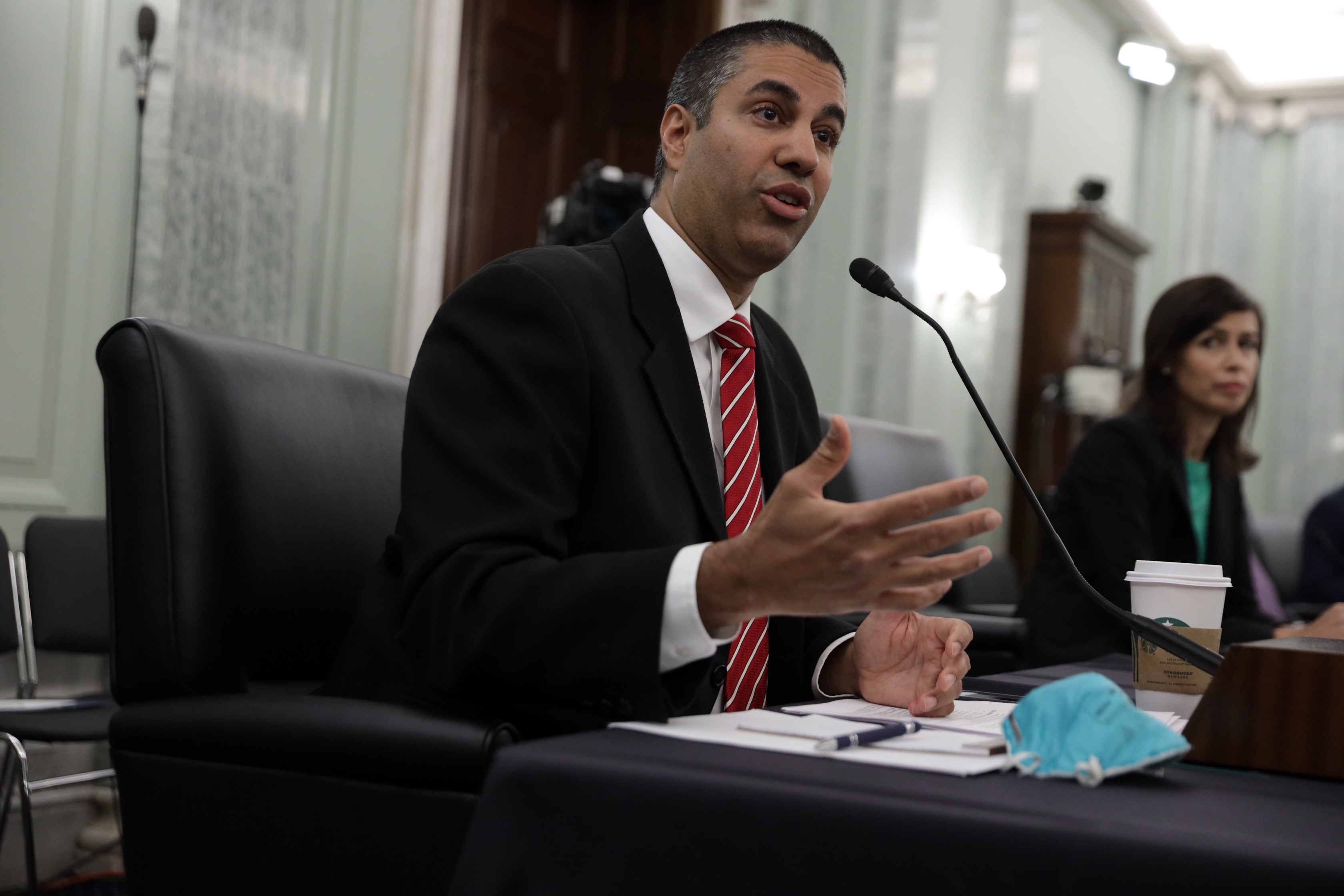
Then-FCC Chairman Ajit Pai and Commissioner Jessica Rosenworcel sit at a table while testifying at a Senate hearing.
Enlarge / Then-Chairman of the Federal Communications Commission Ajit Pai testifies at a Senate Commerce Committee hearing on June 24, 2020 in Washington, DC. Commissioner Jessica Rosenworcel, who is now the FCC’s acting chairwoman, looks on.
Getty Images | Alex Wong

President Biden today urged the Federal Communications Commission to restore net neutrality rules and take steps to boost price transparency and competition in broadband—but the FCC can’t do most or all of that yet because Biden still hasn’t nominated a fifth commissioner to break the 2-2 deadlock between Democrats and Republicans.

Consumer advocacy groups have been urging Biden to nominate a third Democrat to the deadlocked FCC for months, but he still hasn’t done so. What’s causing the holdup isn’t clear. The delay could wipe out the FCC’s ability to do anything opposed by Republicans for all of 2021, because it can take the Senate months to approve FCC nominations, and the FCC process for complicated rulemakings is also lengthy.

Biden today released a fact sheet describing an executive order focused on boosting competition in numerous industries. The order targets four broadband problems that Biden’s order “encourages” the FCC to solve: deals between ISPs and landlords that limit tenants’ choices; misleading advertised prices; high termination fees; and net neutrality. (We published a separate article today on how other parts of the executive order affect the tech industry.)

“The Order tackles four issues that limit competition, raise prices, and reduce choices for Internet service,” the Biden fact sheet’s broadband section said. “More than 200 million US residents live in an area with only one or two reliable high-speed Internet providers, leading to prices as much as five times higher in these markets than in markets with more options. A related problem is landlords and Internet service providers entering exclusivity deals or collusive arrangements that leave tenants with only one option. This impacts low-income and marginalized neighborhoods, because landlord-ISP arrangements can effectively block out broadband infrastructure expansion by new providers.”

Biden’s order encourages the FCC to “prevent ISPs from making deals with landlords that limit tenants’ choices.” The FCC technically bans exclusive agreements for TV and telecom services in multi-unit buildings but hasn’t stamped out the problem.

Biden targets hidden fees and switching costs

The next part of Biden’s fact sheet covers the misleading advertised prices used by ISPs to hide the true cost of service. “Even where consumers have options, comparison shopping is hard. According to the FCC, actual prices paid for broadband services can be 40 percent higher than advertised,” the fact sheet said.

Biden’s proposed solution is to bring back the Obama-era “nutrition labels” that were designed to give customers information about hidden fees, data caps, overage charges, speed, latency, packet loss, and so on. Biden’s fact sheet said the executive order “encourages the FCC to revive the ‘Broadband Nutrition Label’ and require providers to report prices and subscription rates to the FCC.”

Biden further asks the FCC to “limit excessive early termination fees,” because customers in areas with competition “may be unable to actually switch because of high early termination fees—on average nearly $200—charged by Internet providers.”

Restoring net neutrality rules

Finally, Biden encouraged the FCC to “restore net neutrality rules undone by the prior administration.” Without the Obama-era net neutrality rules, “big providers can use their power to discriminatorily block or slow down online services,” Biden wrote.

ISPs do have to follow net neutrality rules in California and Washington state because of state laws and may do so in other states for the sake of simplicity in network operations and because they don’t want to give the government more incentive to impose stronger regulations while the long-term status of net neutrality is unsettled. Reviving the FCC’s Obama-era net neutrality rules would likely involve reclassifying broadband providers as common carriers under Title II of the Communications Act again to establish a nationwide framework for protecting net neutrality.

The FCC could also use its authority over common carriers to protect consumers in other ways. For example, former FCC Chairman Ajit Pai’s net neutrality repeal simultaneously wiped out the Obama-era price-transparency rules that Biden wants to bring back.

Sen. Ed Markey (D-Mass.) applauded Biden’s call for restoring net neutrality rules. “As soon as there are three Democratic Commissioners in place, the FCC must act without delay to reclassify broadband as a Title II service and reassert its authority over broadband,” Markey said. “I also plan to soon introduce legislation to do the same by statute. We cannot and will not stop working until net neutrality is the law of the land.” The pandemic “highlighted what we already knew: broadband isn’t a luxury. Like running water and electricity, it is an essential utility that everyone needs,” Markey said.

Cable industry blasts Biden order

The cable industry’s primary lobby group blasted Biden’s order.

“We are disappointed that the Executive Order rehashes misleading claims about the broadband marketplace, including the tired and disproven assertion that ISPs would block or throttle consumers from accessing the Internet content of their choice,” NCTA-The Internet & Television Association said today. “America’s broadband networks have been the nation’s most resilient and critical infrastructure during the pandemic, keeping our economy moving and enabling our citizens to learn, work and stay connected from the safety of their homes. As policymakers and industry share the goal of connecting every American to robust and reliable broadband service, we hope the Administration will put the rhetoric aside and focus on constructive solutions.”

NCTA and the USTelecom lobby group have repeatedly claimed that broadband prices are dropping. But their claims rely on a “price-per-megabit” calculation that doesn’t reflect consumers’ total bills and a “Broadband Pricing Index” that only includes the prices of a couple of service tiers instead of the average or median price. The actual monthly price consumers pay to Internet service providers has been rising far faster than inflation for years.

Municipal broadband plan apparently stalled

Biden first signaled plans to take on the broadband industry in late March when he said he would lower prices, end hidden fees, and provide funding for municipal broadband networks. Publicly owned networks have “less pressure to turn profits and… a commitment to serving entire communities,” Biden noted at the time.

Biden originally proposed $100 billion in funding, with priority access going to publicly owned networks, triggering a round of lobbying by AT&T and other ISPs that aim to prevent competition and want broadband money going only to private companies. Biden ended up making a $65 billion deal with Republicans, apparently without any preference for public networks, but that’s still subject to negotiations in Congress.

FCC needs 5th member to “fully function”

Biden will have less direct involvement in implementing the measures he has asked the FCC to tackle because the FCC is an independent agency that doesn’t simply do what the president asks. The president does get to nominate commissioners and choose the chair, so he can pick people who agree with his priorities. But he has to actually pick someone before the FCC’s Democrats can get to work on anything that involves a partisan battle like reclassifying broadband providers as common carriers, imposing net neutrality rules, and forcing ISPs to lower prices and end hidden fees.

“The executive order is important, but the processes and personnel to actually move ahead on these priorities are not in place yet… the agency needs a fifth commissioner to fully function,” Free Press VP of policy and general counsel Matt Wood said today.

Restoring the FCC’s Title II common-carrier authority over broadband will let the FCC use “all its available tools to bring more competitive choice to the wired-broadband market,” Wood said. The FCC should also collect “better data on what individuals are actually paying each month” and “prevent abusive practices and price gouging.”

“The FCC needs to reverse the damage done by the Trump administration, which presided over rising prices and declining investment in broadband while pretending that a do-nothing deregulatory approach would solve these problems,” Wood said. Once the FCC is fully functioning, the FCC can start “promoting the public interest again,” he said.

https://arstechnica.com/?p=1779085


“Bad mergers” and noncompete clauses targeted in Biden executive order

President Joe Biden speaking into a microphone and gesturing with his hands.
Getty Images | Bloomberg

President Joe Biden announced his anticipated executive order today, and it’s a sweeping document that seeks to counter rising corporate consolidation and foster greater competition in everything from labor markets to mergers, banking, healthcare, device repairs, transportation, broadband, and more.

“For decades, corporate consolidation has been accelerating,” the White House said in a statement. “In over 75 percent of US industries, a smaller number of large companies now control more of the business than they did twenty years ago. This is true across healthcare, financial services, agriculture and more.” (We published a separate article today that dives into the broadband portions of the executive order.)

With the order, Biden appears to be positioning himself as an antitrust champion, name-checking famed trust-buster Teddy Roosevelt. That’s no surprise—his appointment of Lina Khan as chair of the Federal Trade Commission telegraphed that he would be taking an aggressive approach to consolidation and anticompetitive practices.

Labor market overhaul

Some of the order’s broadest and most immediate effects will be felt in the labor market. Biden encourages the FTC to outright ban or substantially limit noncompete agreements in employee contracts. The practice was once largely limited to top executives who were highly paid and had broad insight into a company’s inner workings, but over the years, it has trickled down to prevent employees in a variety of industries from taking new jobs with competitors, including sub sandwich makers, janitors, and summer camp counselors. 

The practice also pops up in the tech industry, and while many noncompete clauses may not hold up in court, their presence can have a chilling effect, leading many prospective job seekers and potential employers to err on the side of caution. Some states, like California, refuse to enforce noncompete clauses, and others, like Massachusetts, have enacted legislation recently that prohibits the practice. Congress has attempted to step in, with senators proposing similar bans.

The order also encourages the FTC to use antitrust laws and regulations to prevent employers from collaborating to suppress wages or reduce benefits, which is often done by sharing wage and benefit information with each other. Biden is pushing the FTC to restrict “unnecessary occupational licensing” that can create barriers to entry—sometimes costly ones—for people seeking to enter a new field.

Pushing back on platforms

Following the trend of growing antitrust sentiment, particularly of Big Tech, the Biden administration said it would be closely scrutinizing mergers, “especially by dominant Internet platforms, with particular attention to the acquisition of nascent competitors, serial mergers, the accumulation of data, competition by ‘free’ products, and the effect on user privacy.” The order also encourages the FTC to create rules that would regulate the gathering and use of personal information and related data.

When the White House previewed the order earlier this week, they said they would be taking steps to give consumers more latitude in how they repair cell phones and tractors, and those steps are present in the new executive order. Though tractors and mobile phones may seem like an odd couple, they’ve both been at the heart of the right-to-repair movement that has sprung up over the last decade. Farmers have been pushing back against EULAs imposed by equipment manufacturers like John Deere that require authorized technicians for repairs. And tech enthusiasts have been lobbying for the ability to execute DIY repairs or to select independent repair shops to fix broken phones and more. This order promises to make right-to-repair more accessible and enforceable.

Other changes

The rest of the order is a bit of a grab bag, covering banking, airlines, and rail transportation, among others. With respect to banks, the White House is encouraging the Department of Justice and other bank regulators to more closely scrutinize mergers, and it’s urging the Consumer Financial Protection Bureau to issue rules that will guarantee customers downloadable access to their records. 

For airlines, the new order attempts to rein-in fees, which have taken off in the last decade, rising from $1.2 billion in 2007 to over $35 billion in 2018. Airlines will have to clearly disclose baggage, change, and cancellation fees, and they’ll have to refund those fees when services aren’t delivered—if baggage is delayed, for example, or if the in-flight Wi-Fi is broken. 

Passenger rail also gets a boost under the order. The president, who has been nicknamed “Amtrak Joe,” is pushing the Surface Transportation Board to force freight train companies and other track owners to follow through on the rights of way that passenger trains are supposed to receive. Amtrak, which had typically settled disputes with freight companies quietly, has grown increasingly vocal in recent years about the problems it has had with delays caused by freight trains. By law, Amtrak trains are supposed to be given preference, but in practice, that’s not always the case. Biden’s executive order could help Amtrak get its trains back on time.

“Encouraging” order

Many parts of the executive order “encourage” different agencies to take action. There’s a reason for that—though the document is called an “order,” the president cannot force independent agencies, including the FTC, FCC, and others, to follow his every word. “The executive cannot make an agency do anything, because we do not have a command-and-control government,” Shane Greenstein, a professor at Harvard Business School, told Ars. “The executive branch does not even make the budget. It just proposes one, and Congress takes it apart and makes its own. It can only hire and fire the people at the top of an agency—and even then, its ability to fire is pretty limited.”

“So what does the executive branch have? Its charms and goodwill. Its executive orders,” he added. “Since it is still early in the administration, most political appointees will want to play nice. And in any event, most of them largely agree with the general direction, albeit, perhaps not the details and specifics.”

https://arstechnica.com/?p=1779087


GOP’s Big Tech plan ignores consumers, targets “censorship” of Republicans instead

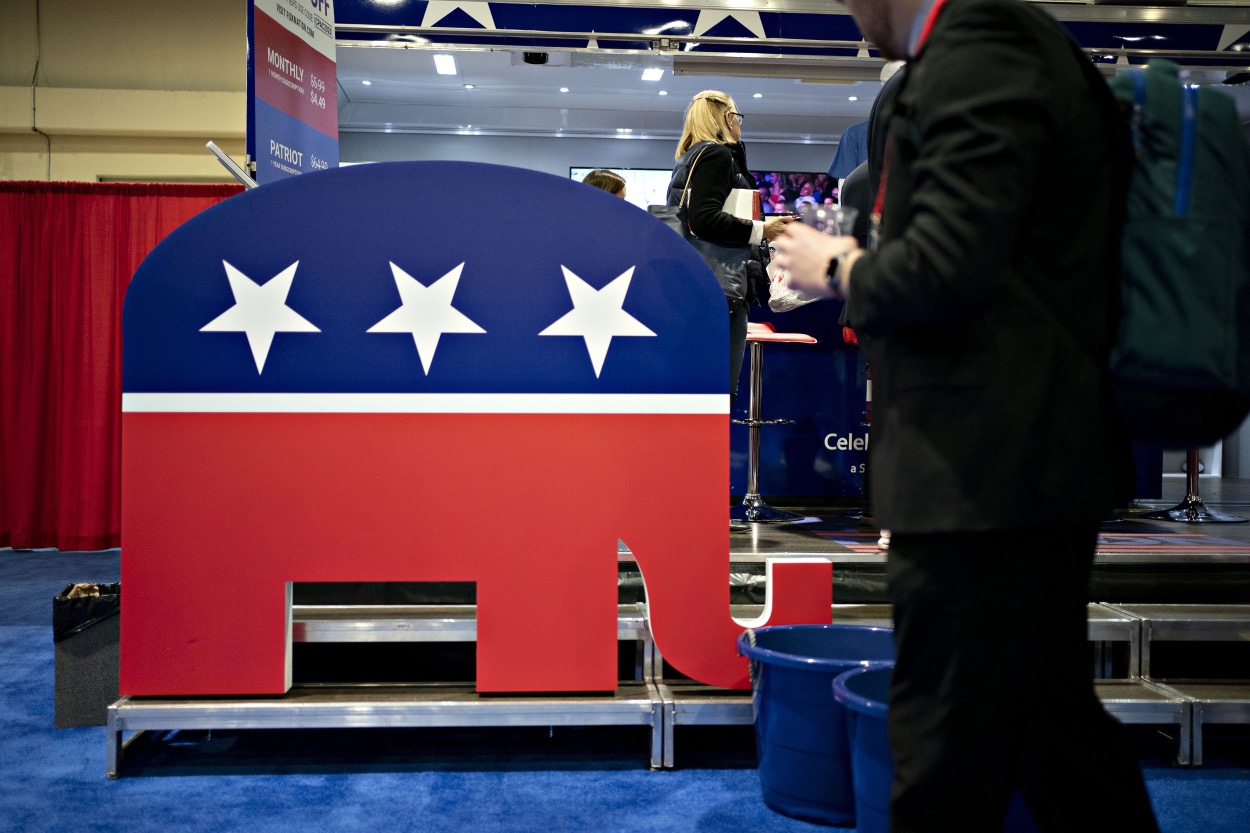
The Republican Party elephant symbol seen in a conference hall.
Enlarge / The Republican Party elephant symbol at the Conservative Political Action Conference in National Harbor, Maryland, on Friday, Feb. 28, 2020.

Congressional Republicans released an antitrust plan for Big Tech yesterday with an announcement that made it clear their focus is not on boosting competition or reducing harms to online consumers but on alleged “censorship” of conservatives.

“Big Tech is out to get conservatives” is the first sentence in the “House Judiciary Republican Agenda for Taking on Big Tech.” The “conservative response” to tech-industry problems “will speed up and strengthen antitrust enforcement, hold Big Tech accountable for its censorship, and increase transparency around Big Tech’s decisions,” the opening paragraph continues. The word “competition” never appears in the two-page plan. A separate plan previously released by House GOP Leader Kevin McCarthy (R-Calif.) does mention competition, but McCarthy’s plan also focuses mostly on supposed bias against conservatives.

The House Judiciary Republicans’ plan was released as former President Donald Trump sued Twitter, Facebook, and Google subsidiary YouTube for banning him, claiming that all three companies are guilty of “impermissible censorship” that violates “the First Amendment right to free speech.” Trump’s lawsuit has been widely mocked by legal experts and is almost certain to be defeated because the First Amendment does not require private companies to host speech and because Section 230 of the Communications Decency Act gives online platforms immunity from lawsuits over how they moderate user-submitted content.

Trump’s lawsuits claimed he was banned from social media networks “for exercising his constitutional right of free speech,” while in reality he was banned for incitement that led to his supporters attacking the US Capitol on January 6 in an effort to overturn his election loss. Social media networks also frequently moderated Trump’s baseless claims of election fraud and misinformation about COVID-19 vaccines that has contributed to low vaccination rates among Republicans. While House Republicans claim anticonservative censorship is rampant on social media, conservatives regularly dominate Facebook’s top posts.

Obsession with supposed censorship

The GOP said the “accountability” portion of its plan “subjects Big Tech to legal accountability for its censorship. Platforms like Twitter, Facebook, and YouTube are functionally the public square of the digital age. It is wrong that these platforms control and censor speech with impunity.” Republicans said they propose to “create a statutory basis for Americans to directly challenge Big Tech in court for its censorship and silencing of conservatives.”

Republicans didn’t release more detail on how they intend to achieve that, but they wouldn’t be able to override the First Amendment protections enjoyed by private businesses. Last week, a federal judge blocked enforcement of a Florida state law that would have regulated social media moderation decisions, including by making it illegal for large social media sites like Facebook and Twitter to ban politicians. The judge found that the law violated the social media companies’ First Amendment right to choose what content they host. Similar legislation is being considered in Texas this week.

GOP wants to sideline “Biden bureaucrats” at FTC

The GOP is also trying to sideline FTC Chair Lina Khan, who was just appointed to the agency’s top spot by President Joe Biden. Claiming that the “current system of splitting antitrust enforcement between the Department of Justice and the Federal Trade Commission… empowers radical Biden bureaucrats at the expense of Americans,” the GOP said it wants to “consolidate antitrust enforcement within the Department of Justice so that it is more effective and accountable.”

The GOP also said it wants to change Section 230 because “Big Tech has exploited this protection to make subjective content moderation decisions, often in a manner harmful to conservative voices.” Republicans said their plan “will ensure that any content moderation decisions are done in good faith, based on objectively reasonable criteria, and in accord with particularized rules.”

In the section on transparency, the GOP plan complains that Big Tech’s “decisions about who to censor are made in secret” and promises “massive fines” for companies that don’t follow a proposed requirement that “content moderation decisions and censorship must be listed, with specificity and particularity, on a publicly available website.”

Republicans said their plan would also speed up antitrust lawsuits by “requir[ing] faster treatment of antitrust cases against Big Tech companies at the trial court,” allowing for “a direct appeal to the Supreme Court and requiring the Supreme Court to act quickly when these cases get there,” and “allow[ing] state attorneys general to utilize the same fast-track procedures available to the federal government so that they will be on equal footing in their cases.”

Democrats try to boost competition

By contrast, House Democrats’ antitrust agenda focuses mostly on boosting competition to help small businesses and give consumers more choice. For example, the Democrats’ Ending Platform Monopolies Act could break up tech companies like Amazon to eliminate “the ability of dominant platforms to leverage their control over across multiple business lines to self-preference and disadvantage competitors in ways that undermine free and fair competition.”

Democrats also proposed fines of up to 15 percent of annual revenue for companies that don’t follow proposed prohibitions on conduct that “advantages the covered platform operator’s own products, services, or lines of business over those of another business user; excludes or disadvantages the products, services, or lines of business of another business user relative to the covered platform operator’s own [offerings]; or discriminates among similarly situated business users.”

These and other antitrust bills were approved by the House Judiciary Committee in a two-day session that ended on June 24. While a few Republicans voted for the antitrust bills and a few Democrats opposed them, the votes mostly went along party lines with Democrats supporting them and Republicans in opposition.

Republicans were angry that Democrats’ antitrust agenda focused on boosting competition instead of trying to stamp out alleged anticonservative bias. After the June 24 votes, House Judiciary Committee Republicans issued a statement from Ranking Member Jim Jordan (R-Ohio), saying, “Big Tech is out to get conservatives. But rather than address Republican concerns of bias and censorship on the Internet, Democrats spent the last two days pushing radical antitrust legislation that will systematically change the United States economy as we know it… We look forward to introducing legislation in the coming days that holds Big Tech accountable and actually addresses censorship of conservatives online.”

https://arstechnica.com/?p=1778874


Google “bought off Samsung” to limit app store competition, 36 states allege

Google “bought off Samsung” to limit app store competition, 36 states allege

Yesterday, dozens of state attorneys general sued Google on antitrust grounds, alleging that the company worked to “preemptively quash” competing app stores (most notably the Samsung Galaxy Store) and maintain its monopoly on Android app distribution.

The lawsuit alleges that Google engaged in a range of anticompetitive practices, including offering large app developers profit-sharing agreements in exchange for exclusivity, creating unnecessary hurdles for sideloading, and attempting “to buy off Samsung to limit competition from the Samsung Galaxy app store.”

Google says the lawsuit is “meritless.” “It’s strange that a group of state attorneys general chose to file a lawsuit attacking a system that provides more openness and choice than others,” Wilson White, Google’s senior director of public policy, wrote in a blog post. 

Yet those Google claims about Android’s openness are part of what drew the attention of the attorneys general. “Google promised repeatedly that Android would be the basis for an ‘open’ ecosystem in which industry participants could freely compete,” they wrote in the complaint. “Google has not kept its word. Instead, Google has taken steps to close the ecosystem from competition and insert itself as the middleman between app developers and consumers.”

Some of the allegations against Google will sound familiar to anyone who has been following Epic’s lawsuit against Apple. The complaint says that Google’s 30 percent commission on app sales is a monopoly rent that unfairly burdens both consumers and developers. The complaint also alleges that forcing app developers to use Google Play Billing for in-app purchases is “unduly restrictive and anticompetitive.”

Buying off Samsung

While allegations about commission rates are a key part of the lawsuit, the attorneys general spend a lot of time dissecting Google’s alleged efforts to keep competing app stores at bay, especially Samsung’s Galaxy Store. “Google was willing to offer Samsung myriad benefits and concessions in order to prevent Samsung’s Galaxy Store from being built out,” it says.

Though the Galaxy Store was not nearly as popular as the Play Store, Google feared that Samsung would develop into a strong competitor, especially since the company sells a majority of high-end Android phones in the US. Google was particularly concerned that Samsung would get an exclusive game for the store to attract more users, which Samsung did in 2018 when it partnered with Epic to launch Fortnite exclusively on the Galaxy Store. That move alone cost Google millions of dollars in revenue. 

Samsung apparently pursued other exclusives with “popular” app developers, though their names are redacted in the filing. If the Galaxy Store had gained traction, the lawsuit says the competitive pressure would have threatened the 30 percent commissions Google charged other developers.

To quash the Galaxy Store, the lawsuit claims that Google offered Samsung exclusive game content, deals, and events on the Google Play Store and on YouTube. It even offered to “white label” the Play Store as the Galaxy Store so Samsung could maintain its branding. 

In negotiations with Samsung, Google apparently preferred to pay a lump sum for any revenue share rather than a percentage, which would reveal the size of the Play Store. “Google was aware that if Samsung actually saw Google’s returns from control of the Google Play Store, it would be harder to keep Samsung from competing in the app distribution market,” the lawsuit states.

Sweetening the deals

Revenue share was apparently a frequently used tactic. Earlier in Android’s history, just after its launch, Google approached device manufacturers and network operators, which had been mulling their own app stores on Android phones. Google’s goal, the lawsuit says, was to “discourage the OEMs and MNOs from creating competing app stores.” To do so, Google offered manufacturers and network operators a share of revenue from advertising and the app store in exchange for agreeing to a number of restrictions that helped ensure Google’s dominance over the Android platform, the suit says. These include commitments that forbid companies from forking Android and a Mobile Application Distribution Agreement, which allowed companies to use Google’s proprietary apps and APIs on Android devices. The MADA was also a focus of a European Commission antitrust investigation a few years ago. 

This new lawsuit also says that companies that accept revenue shares have to place the Play Store on the home screen, ensure that it can’t be deleted, and promise that another app store can’t be placed more prominently.

Google also leveraged its dominance in search and advertising to benefit the Play Store, the attorneys general claim. Apps sold in stores other than the Play Store cannot buy advertising on Google search results pages, YouTube, and the Google Display Network. Because of those and other efforts, the Google Play Store distributes more than 90 percent of all Android apps, the lawsuit says.

https://arstechnica.com/?p=1778821


Biden’s right-to-repair order could stop companies from blocking DIY fixes

Michael Ghadieh, owner of FixMyPhoneSF, fixes an Apple Inc. iPhone in his shop in San Francisco, California, U.S., on Friday, Aug. 23, 2013. Photographer: David Paul Morris/Bloomberg *** Local Caption *** Michael Ghadieh
David Paul Morris/Bloomberg/Getty Images

After years of petitions and proposals, momentum is building in government to give consumers broader rights to repair products they own ranging from farm tractors to mobile phones.

In a press briefing yesterday, White House Press Secretary Jen Psaki said Biden will issue an executive order directing the US Department of Agriculture to issue rules that, among other things, “give farmers the right to repair their own equipment how they like.”

The order will reportedly cover more than tractors. According to a Bloomberg report, Biden will urge the Federal Trade Commission to press computer and electronics manufacturers and defense contractors to offer additional leeway in how their devices are repaired.

Tractors became a focus of the right-to-repair movement after John Deere added a clause to its end-user license agreement in 2016 that said only Deere-authorized technicians could make repairs that touched on software embedded in the tractor. Farmers were incensed. After paying hundreds of thousands of dollars for the equipment, they felt that they had a right to decide how to fix their machines. Farmers sometimes have to perform repairs in the field or call on independent techs to minimize downtime. Requiring a lengthy trip to the dealership or waiting for an authorized technician didn’t fit with many farmers’ operations.

Yet John Deere has maintained that tweaking the company’s software to execute a repair could result in a number of issues ranging from safety to emissions.

The right-to-repair issue has brought farmers in league with electronic and computer enthusiasts, who for years have groused at the thought that they merely licensed software, didn’t own it, and weren’t able to modify it to their liking.

The Biden order will have the most sway over agricultural machines, since the USDA falls squarely under the executive branch while the FTC is an independent agency. As such, Biden cannot direct the FTC to guarantee right-to-repair. Rather, the executive order is part of how the branches of government engage with independent agencies.

Yet Biden’s nudge may be enough to push the FTC to focus more intently on the matter. The agency has been increasingly embracing right-to-repair over the years. In 2018, it sent warning letters to six companies, including Nintendo, Sony, and Hyundai, saying that “warranty void” stickers and “genuine parts” clauses are not allowable warranty terms. And earlier this year, the FTC showed more of its hand when it issued a report to Congress about the impacts of repair restrictions on consumers, businesses, and independent repair shops. It was blunt in its assessment: “There is scant evidence to support manufacturers’ justifications for repair restrictions,” the agency said.

Some companies have started taking steps to address the criticisms—and potentially to head off legislative or regulatory action that would open the repair process further. For example, Apple started a program in 2019 that gave independent repair shops access to genuine Apple parts, tools, training, diagnostics, and more.

That hasn’t stopped the tide of legislation, of course. Last year, Massachusetts voters passed a ballot initiative to expand its automotive right-to-repair law to include connected-car platforms and telematics services. And last month, Rep. Joe Morelle (D-NY) introduced the Fair Repair Act, which would require mobile phone and computer manufacturers to provide independent repair shops with documentation, diagnostic, and repair information.

Biden’s executive order could usher in sweeping changes or just nibble around the margins—we’ll have to wait for the full text to know more. Regardless, with the FTC pursuing the matter along with legislation popping up both in states and in Congress, it seems likely that consumers will have more repair options in the near future.

https://arstechnica.com/?p=1778628