America’s “Smart City” didn’t get much smarter

In 2016, Columbus, Ohio, beat out 77 other small and midsize US cities for a pot of $50 million that was meant to reshape its future. The Department of Transportation’s Smart City Challenge was the first competition of its kind, conceived as a down payment to jump-start one city’s adaptation to the new technologies that were suddenly everywhere. Ride-hail companies like Uber and Lyft were ascendant, car-sharing companies like Car2Go were raising their national profile, and autonomous vehicles seemed to be right around the corner.

“Our proposed approach is revolutionary,” the city wrote in its winning grant proposal, which pledged to focus on projects to help the city’s most underserved neighborhoods. It laid out plans to experiment with Wi-Fi-enabled kiosks to help residents plan trips, apps to pay bus and ride-hail fares and find parking spots, autonomous shuttles, and sensor-connected trucks.

Five years later, the Smart City Challenge is over, but the revolution never arrived. According to the project’s final report, issued this month by the city’s Smart Columbus Program, the pandemic hit just as some projects were getting off the ground. Six kiosks placed around the city were used to plan just eight trips between July 2020 and March 2021. The company EasyMile launched autonomous shuttles in February 2020, carrying passengers at an average speed of 4 miles per hour. Fifteen days later, a sudden brake sent a rider to the hospital, pausing service. The truck project was canceled. Only 1,100 people downloaded an app, called Pivot, to plan and reserve trips on ride-hail vehicles, shared bikes and scooters, and public transit.

The discrepancy between the promise of whiz-bang technology and the reality in Columbus points to a shift away from tech as a silver bullet, and a newer wariness of the troubles that web-based applications can bring to IRL streets. The “smart city” was a hard-to-pin-down marketing term associated with urban optimism. Today, as citizens think more carefully about tech-enabled surveillance, the concept of a sensor in every home doesn’t look as shiny as it once did.

Still, Columbus officials insist the Smart City project was not a failure. In fact, the final report labeled the project a success. Now Columbus wants to rethink the slippery term.

“It’s not supposed to be a competition for who has more sensors, or anything like that, and I think we got a little distracted at a certain point,” says Jordan Davis, director of Smart Columbus, the organization charged with continuing the challenge’s work. Some of the challenge’s projects will continue. Davis says the focus will be, “How do we use technology to improve quality of life, to solve community issues of equity, to mitigate climate change, to achieve prosperity in the region?”B25688521.301838743;sz=1x1;ord=805662530;dc_lat=;dc_rdid=;tag_for_child_directed_treatment=;tfua=.png

Think back to 2015, and the challenge’s techno-solutionist goals made sense. The future was coming quick, and the DOT hoped its seed money would help a midsize city like Columbus work with companies to plan ahead, with equity in mind. When it selected the city, the department said it was impressed by the number of local companies that had pledged additional support for the project. The challenge is “about using … advanced tools to make life better for all people, especially those living in underserved communities,” then secretary Anthony Foxx said. (He is now the chief policy officer for Lyft.)

Now it’s clear that private firms can’t predict the future of cities and may not have their best interests in mind. Davis says Columbus’ selection led to a flood of proposals from companies that ultimately proved difficult to manage, and “at times distracting.” Meanwhile, Uber (and Lyft) have pulled out of autonomous vehicles, notably after an Uber testing vehicle struck and killed a pedestrian in Arizona. Google sibling Sidewalk Labs promised in 2017 to construct a sensored-up neighborhood of the future in Toronto. But it killed the project last year amid the pandemic and a bitter political battle with privacy advocates and local groups and developers.

Still, smart-city projects continue around the world. Toyota is building a self-driving-car-friendly community outside of Tokyo. Sidewalk Labs just announced it’s advising real estate developers in a handful of US cities on “innovation plans.” And Alibaba-led “smart traffic” projects continue in China, Malaysia, and Macau.

In the end, a smart-city revolution in Columbus may have been overly ambitious from the start. “A lot of people were expecting a lot from this project, and perhaps too much,” says Harvey Miller, a geography professor and director of the Center for Urban and Regional Analysis at Ohio State University, who helped plan and evaluate the challenge. He points out that $50 million ($40 million from the federal government, $10 million from the late Microsoft cofounder Paul Allen’s Vulcan Inc.) isn’t much money, especially spread out over five years. It’s not Columbus’ fault that industry promises about the imminent arrival of self-driving cars were way overblown.

“I think what Columbus did is test revolutionary ideas,” says Miller. “And I think they learned a lot, what works and what doesn’t work.”

What works, according to Columbus: Once the pandemic hit, the project transformed the autonomous shuttle into a food bank delivery operation, which self-drove 500 boxes of food a month between summer 2020 and spring 2021 to a local food pantry, bringing it closer to people in need. (A safety operator was always on board to monitor the tech.) Twenty-seven Columbus residents with cognitive disabilities tested an app to help them navigate public transit, with which 70 percent reported “satisfaction” afterwards. Seventy pregnant women tested an app-based Uber-like service to get to medical appointments. Compared with a control group that didn’t use the on-demand service, they visited doctors, pharmacies, and grocery stores more often. The report says the rides alone were unlikely to guarantee safer births and healthier babies, but suggested they could be a “valuable contribution.”

Five of the eight projects launched by the challenge will continue, including a citywide “operating system” to share data between government and private entities, the smart kiosks, and the parking and trip-planning apps. Smart Columbus will also focus on providing broadband access to all of its residents who lack it—a gap that officials say became even more problematic during the pandemic.

Davis, the Smart Columbus director, acknowledges that the program’s rules sometimes made it hard to shape projects around the real needs of the community. They had only so much room to deviate from the plan set out five years ago. Going forward, she says, the city will rely more on “empathy and engagement,” rather than “‘This is a really cool tech that’s coming out of the private sector.’”

This piece first appeared on wired.com.

Listing image by Smart Columbus

https://arstechnica.com/?p=1777996


US hits anti-robocall milestone but annoying calls won’t stop any time soon

Two people communicate via tin cans connected by string, except one is a cartoon robot.

The nation’s largest phone companies have met a federal deadline to deploy a new anti-robocall technology, but unwanted calls and scams will continue to be an annoying problem for Americans for the foreseeable future.

Federal Communications Commission Acting Chairwoman Jessica Rosenworcel announced Wednesday that “the largest voice service providers are now using STIR/SHAKEN caller ID authentication standards in their IP networks, in accordance with the [June 30] deadline set by the FCC. This widespread implementation helps protect consumers against malicious spoofed robocalls and helps law enforcement track bad actors.”

STIR/SHAKEN was deployed by large mobile carriers AT&T, Verizon, T-Mobile, and US Cellular. In March, the FCC denied petitions for a deadline extension from Verizon and US Cellular, saying that “the petitioners have failed to meet the high standard of ‘undue hardship.'” The Verizon petition was limited to a small portion of its fiber-based home phone network.

On the mobile side, “Verizon is now exchanging STIR/SHAKEN-enabled calls with wireless carriers that collectively represent around 80 percent of the US wireless industry,” Verizon said this week. “More than 135 million calls a day are currently being exchanged between Verizon and the participating carriers, with that number growing quickly.” It’s also deployed on IP-enabled wireline phone networks operated by Comcast, Charter, AT&T, Verizon, and others.

STIR/SHAKEN widely used “at last”

The technology by itself isn’t a robocall cure-all. Its deployment on landline phone networks is much sparser than on mobile networks because of the continued existence of copper landlines that don’t support STIR/SHAKEN. Additionally, some companies that carry a lot of robocalls aren’t yet required to follow the rules because of an exemption for carriers with 100,000 or fewer customers.

The STIR (Secure Telephone Identity Revisited) and SHAKEN (Signature-based Handling of Asserted Information Using toKENs) protocols verify the accuracy of Caller ID by using digital certificates based on public-key cryptography. Getting major US phone companies to adopt the technology is a significant milestone, as it ensures that STIR/SHAKEN will be used by both the sending and receiving carriers in many phone calls.

“At last, STIR/SHAKEN standards are a widely used reality in American phone networks,” Rosenworcel said. “While there is no silver bullet in the endless fight against scammers, STIR/SHAKEN will turbo-charge many of the tools we use in our fight against robocalls: from consumer apps and network-level blocking, to enforcement investigations and shutting down the gateways used by international robocall campaigns.”

The STIR/SHAKEN mandate was ordered by Congress after then-FCC Chairman Ajit Pai’s voluntary compliance plan didn’t lead to widespread adoption. The deadline applied to large mobile and wireline providers and required them to “implement STIR/SHAKEN in the Internet Protocol (IP) portions of their networks.”

STIR/SHAKEN itself doesn’t stop robocalls. But it is useful because, when the technology is fully deployed by carriers, it checks whether Caller ID is being spoofed. This can help customers spot scams and help carriers improve blocking tools.

“While STIR/SHAKEN will improve the quality of caller ID information, it does not mean the call itself is legitimate,” the FCC said. “This improved information will help verify the phone number from which the call was made—or flag that it is not verified—and help blocking services both at the consumer level and before the call reaches the consumer.”

The FCC provided limited exemptions to AT&T, Bandwidth Inc., Charter, Comcast, Cox, Verizon Wireless, and Vonage. But these exemptions were only available to carriers that met “early implementation benchmarks” and certified that they expected to implement STIR/SHAKEN by June 30. These providers are required to “file a second certification after June 30, 2021, stating whether they, in fact, achieved the implementation goal to which they previously committed.”

Landlines lag, small carriers exempt for now

Because of technology limitations, the June 30 requirement did not apply to the older TDM-based networks used with copper landlines. The FCC says its rules “require providers using older forms of network technology to either upgrade their networks to IP or actively work to develop a caller ID authentication solution that is operational on non-IP networks.”

“Given the large proportion of TDM-based networks still in use, we expect a significant number of calls to be outside the STIR/SHAKEN authentication framework in the near term,” the FCC said in an order adopted in September 2020.

The requirement also doesn’t yet apply to small phone companies because carriers with 100,000 or fewer customers were given until June 30, 2023 to comply. The FCC is seeking comment on a plan to make that deadline June 30, 2022 instead because “evidence demonstrates that a subset of small voice service providers appear to be originating a high number of calls relative to their subscriber base and are also generating a high and increasing share of illegal robocalls compared to larger providers.”

Because many companies are sending unwanted calls, the FCC is letting telecoms block all calls “from bad-actor upstream voice service providers that pass illegal or unwanted calls along to other providers, when those upstream providers have been notified but fail to take action to stop these calls.”

Robocall Mitigation Database

The FCC in April also launched its Robocall Mitigation Database and requires voice providers “to inform the agency of their robocall mitigation efforts, including their STIR/SHAKEN implementation status.” Providers that don’t comply could have their calls blocked, as the FCC explained in this week’s announcement:

Beginning on September 28, 2021, if a voice service provider’s certification does not appear in the database, intermediate and voice service providers will be prohibited from directly accepting the provider’s traffic. To date, over 1,500 voice service providers have filed in the database. Over 200 voice service providers have certified to full STIR/SHAKEN implementation and hundreds more have certified to partial implementation—generally certifying to full implementation on the IP portions of their networks. Those certifying to anything short of full STIR/SHAKEN implementation must describe the new steps they are taking to ensure they are not the source of illegal robocalls.

Unfortunately, robocalls originating from overseas remain a stubborn problem. Multiple US agencies have worked on this problem; the Department of Justice last year sued small voice providers that allegedly connected hundreds of millions of fraudulent robocalls from Indian call centers to US residents, and the FCC has pressured US-based carriers that act as “gateways” for foreign robocalls to block them.

Gap in AT&T network

There’s a STIR/SHAKEN gap in at least one large network. In December 2020, AT&T told the FCC that it “recently discovered that a small volume of calls entering AT&T’s network on its wholesale VoIP platform (AT&T VoIP Connect Service or ‘AVOICS’) and terminating to AT&T VoLTE customers use network elements that cannot retain the SHAKEN header information and thus cannot be verified.” The FCC later noted that “by AT&T’s own admission, it will not be capable of fully implementing STIR/SHAKEN on its wireless network by the June 30, 2021, deadline.”

AT&T told the FCC that the AVOICS problem affects “approximately four percent of AT&T’s VoLTE traffic” and that it expected to move up to half of the affected traffic to the “STIR/SHAKEN-enabled portions of its network” by June 30. On June 22, an AT&T press release said the carrier is now “blocking or labeling more than 1 billion robocalls per month,” and that it is using STIR/SHAKEN to improve the blocking and labeling “with extra data for detection and accuracy.”

https://arstechnica.com/?p=1777987


Facebook, Twitter pledge to fight abuse of women but leave lots of room for failure

Young woman online shopping on smartphone while lying in bed in darkness at night

Four major social media companies yesterday pledged to make efforts to improve the safety of women on their platforms. Facebook, Google, TikTok, and Twitter all signed the pledge in response to the recommendations of a working group of 120 experts organized by the Web Foundation.

“For too long, women have been routinely harassed, attacked, and subsequently silenced in online spaces. This is a huge threat to progress on gender equality,” said Web Foundation Senior Policy Manager Azmina Dhrodia in a statement. Abuse against women online has reached epidemic proportions, with 38 percent of women reporting personal experience with online violence, according to an Economist Intelligence Unit report.

The pledges represent a step in the right direction, but it’s unclear if they’ll do much to address online abuse. “I’m really grateful to Web Foundation for work that they’ve done, genuinely, to get platforms to make some efforts in this regard because there’s been very little movement over time,” Sarah Sobieraj, a professor at Tufts University and faculty associate at the Berkman Klein Center for Internet and Society, told Ars.

“Having said that, looking at the commitments, it’s pretty difficult to know what they’re going to mean or what they’re going to look like,” she said. “They’re very open-ended. A lot depends on how much the platforms are willing to do.”

Eight pledges

The pledges outline eight tactics split evenly between two broad categories: curation and reporting.

The companies promise to:

Build better ways for women to curate their safety online by:

  1. Offering more granular settings (e.g. who can see, share, comment, or reply to posts)
  2. Using more simple and accessible language throughout the user experience
  3. Providing easy navigation and access to safety tools
  4. Reducing the burden on women by proactively reducing the amount of abuse they see

Implement improvements to reporting systems by:

  1. Offering users the ability to track and manage their reports
  2. Enabling greater capacity to address context and/or language
  3. Providing more policy and product guidance when reporting abuse
  4. Establishing additional ways for women to access help and support during the reporting process

Indeed, those commitments don’t sound very specific, and users may question how thoroughly the pledges will be implemented—social media companies have made it a habit of asking for forgiveness when their half-efforts have fallen short. The way the pledges are written gives the platforms plenty of leeway.

Much of the emphasis is on giving users greater control over what they see and improving the reporting process. Many social media platforms have opaque reporting processes that frequently result in no action being taken against harassers. A moderator reviewing a report may misunderstand the context of a post, for example, or fail to grasp the meaning of coded language. Those shortcomings mean that enforcement of existing policies is often uneven.

Even if platforms were to enforce their policies more consistently, the pledges above still mostly place the burden of dealing with abuse on the user, not the platform. “These mechanisms for flagging or reporting are vital—they’re absolutely essential,” Sobieraj said. “But you can’t unsee or unread the content that comes through to you. It’s a lot of work for the women who are heavily targeted. It’s time consuming, but also it’s very upsetting.”

“Not only is it a burden on recipients,” she added, “but also, the senders still know that the recipients have to read [the posts] in order to [report them]. [The abusers] still get the satisfaction. It really needs to be disincentivized.”

To cope with abuse, some women have taken to outsourcing the management of their social media accounts. It’s a drastic measure, though, and it’s costly, making it unavailable to the vast majority of women on social media.

“We see that the abuse is especially burdensome for women of color, women from religious minority groups, queer women, and so on,” Sobieraj said. “If people start to recede from participating in public spaces, it’s not fair to them, but it also isn’t fair to the rest of us. The people who leave, there’s a pattern. It’s not that it’s random. We’re going to lose certain groups of voices. Maybe it doesn’t feel like that’s a big deal if you’re talking about pop culture, but if you’re talking about politics, it’s pretty important. And I’d argue that it’s pretty important about pop culture, too.”

Proactive solutions

Rather than keeping the burden of combatting abuse largely on users, Sobieraj said social media platforms should take more proactive steps when people become the object of online violence. For one, repeat offenders who aren’t yet banned should have their posts held for moderation, effectively forcing the platform to sign off on the content before it’s visible to anyone, Sobieraj said. She suggested that platforms monitor content trends for people who would likely be the target of abuse and moderate the mentions of the person until the attention wanes.

Preemptive moderation in these cases would take the burden off targeted users so they and others wouldn’t have to see the content. It would also remove a key incentive that motivates many abusers, without disrupting everyone else, Sobieraj said. With those safeguards in place, the vast majority of content could still flow freely on social platforms.

Of course, these solutions would require platforms to take a more active role in content moderation. The companies might have this sort of enforcement in mind—the fourth pledge under “curation” could be interpreted that way. But history has shown that social media companies are loath to preemptively moderate content.

The other pledges are helpful but not revolutionary. To follow through on them, platforms likely wouldn’t have to change much. The companies could simply tweak existing systems that are already in dire need of improvement. The result could end up being more algorithmic Band-Aids on problems that algorithms still haven’t solved.

https://arstechnica.com/?p=1777873


Judge tears Florida’s social media law to shreds for violating First Amendment

A judge's handing hitting a wooden block with a gavel.

A federal judge has blocked Florida’s new social media law because it violates the First Amendment rights of tech companies that moderate user content on their online platforms. The state law would make it illegal for large social media sites like Facebook and Twitter to ban politicians and impose other restrictions on the tech companies, but the judge’s order means it cannot be enforced while an industry lawsuit against Florida is pending. The law would have taken effect today if not for the injunction.

The preliminary-injunction order issued by US District Judge Robert Hinkle yesterday called Florida’s law “an instance of burning the house to roast a pig.”

“If a preliminary injunction is not issued, the plaintiffs’ members will sometimes be compelled to speak and will sometimes be forbidden from speaking, all in violation of their editorial judgment and the First Amendment,” Hinkle wrote. The tech companies would sometimes be forbidden from speaking because the Florida law’s definition of censorship includes not only deleting content, but also “post[ing] an addendum to any content or material posted by a user.”

For several reasons outlined by the judge, the trade groups that sued Florida “are likely to prevail on the merits of their claim that these statutes violate the First Amendment,” Hinkle wrote. “There is nothing that could be severed and survive.” The judge’s order “preliminarily enjoins enforcement of the parts of the legislation that are preempted or violate the First Amendment,” he wrote.

Trade groups representing Facebook, Twitter, and other major websites quickly sued Florida after the state enacted its law in May. The lawsuit was filed in US District Court for the Northern District of Florida.

Gov. claimed law would stop “censorship” of conservatives

Florida Gov. Ron DeSantis claimed the Sunshine State’s law would stop the “censorship” of conservatives on social media websites. The law’s prohibition on kicking politicians off social media platforms would have imposed fines of up to $250,000 per day on social media companies that ban candidates for elected office.

The law also said that online platforms “may not take any action to censor, deplatform, or shadow ban a journalistic enterprise based on the content of its publication or broadcast,” unless the content is “obscene.” Another provision would give Floridians the right to sue Big Tech companies over content-moderation decisions.

The law carved out an unusual exemption for tech companies that happen to also own large theme parks, which would benefit Disney and Comcast, the latter of which owns NBCUniversal including Universal Theme Parks. As Big Tech trade groups pointed out in their lawsuit, “the exemption was added with the undisguised objective of ensuring that certain companies with big economic footprints in Florida—like Disney—are not ‘caught up in this.'”

Judge details everything wrong with the law

Hinkle’s order said that Florida’s law “compels providers to host speech that violates their standards—speech they otherwise would not host—and forbids providers from speaking as they otherwise would. The Governor’s signing statement and numerous remarks of legislators show rather clearly that the legislation is viewpoint-based.”

In addition to violating the First Amendment, Hinkle found that the Florida law is preempted by Section 230 of the Communications Decency Act, which gives online platforms protection from lawsuits over how they moderate user-submitted content.

“[D]eplatforming a candidate restricts access to material the platform plainly considers objectionable within the meaning of [Section 230],” Hinkle wrote. “If this is done in good faith—as can happen—the Florida provision imposing daily fines is preempted by § 230(e)(3). Good faith, for this purpose, is determined by federal law, not state law. Removing a candidate from a platform based on otherwise-legitimate, generally applicable standards—those applicable to individuals who are not candidates—easily meets the good-faith requirement. Indeed, even a mistaken application of standards may occur in good faith.”

Section 230 also preempts the parts of the Florida law “that purport to impose liability for other decisions to remove or restrict access to content” by creating a private right of action against social media companies, Hinkle wrote.

Theme-park exemption laughed out of court

During oral arguments, Florida’s lawyers were unable to mount a convincing defense of the theme-park exemption. Hinkle said the legal standard of “strict scrutiny” must apply to the law even though the state claimed the more permissive “intermediate scrutiny” standard should be used. The law would apparently fail under both tests, however.

“[I]n any event, when asked at oral argument, the State could suggest no theory under which the exclusion could survive even intermediate scrutiny,” Hinkle wrote. Further, “[d]espite the obvious constitutional issue posed by the exclusion, the Legislature adopted it, apparently unwilling to subject favored Florida businesses to the statutes’ onerous regulatory burdens,” he wrote.

State has “no argument” that could pass strict scrutiny

Hinkle then explained why the law doesn’t pass strict scrutiny:

To survive strict scrutiny, an infringement on speech must further a compelling state interest and must be narrowly tailored to achieve that interest. These statutes come nowhere close. Indeed, the State has advanced no argument suggesting the statutes can survive strict scrutiny. They plainly cannot. First, leveling the playing field—promoting speech on one side of an issue or restricting speech on the other—is not a legitimate state interest. Whatever might be said of any other allegedly compelling state interest, these statutes are not narrowly tailored. Like prior First Amendment restrictions, this is an instance of burning the house to roast a pig.

The law is subject to strict scrutiny because it was enacted with a “viewpoint-based motivation.” The plaintiffs asserted “with substantial factual support” that the law was motivated by “hostility to the social media platforms’ perceived liberal viewpoint,” Hinkle wrote.

He continued:

Thus, for example, the Governor’s signing statement quoted the bill’s sponsor in the House of Representatives: “Day in and day out, our freedom of speech as conservatives is under attack by the ‘big tech’ oligarchs in Silicon Valley. But in Florida, we said this egregious example of biased silencing will not be tolerated.” Similarly, in another passage quoted by the Governor, the Lieutenant Governor said, “What we’ve been seeing across the U.S. is an effort to silence, intimidate, and wipe out dissenting voices by the leftist media and big corporations… Thankfully in Florida we have a Governor that fights against big tech oligarchs that contrive, manipulate, and censor if you voice views that run contrary to their radical leftist narrative.”

Additional factors make it clear the law is content-based, including one provision that “applies to deplatforming a candidate, not someone else,” and one that “imposes restrictions applicable only to material posted ‘by or about a candidate,'” Hinkle wrote. The state also did not provide a good defense “for imposing these restrictions only on the largest providers… even without evidence of an improper motive, the application of these requirements to only a small subset of social media entities would be sufficient, standing alone, to subject these statutes to strict scrutiny,” he wrote.

Law’s definition of journalism made little sense

The law’s provisions on moderation of journalism seemed to strike the judge as nonsensical. “The statute defines ‘journalistic enterprise’ in a manner that covers many entities that are engaged in journalism but many that are not; any retailer who does business in Florida, has a website of substantial size, and fills 100,000 online orders per month apparently qualifies,” he wrote. “A small newspaper, in contrast—one with fewer than 50,000 paid subscribers and fewer than 100,000 active monthly users—does not qualify, no matter how high its journalistic standards.”

Hinkle summarized his findings in the order’s conclusion:

The legislation now at issue was an effort to rein in social-media providers deemed too large and too liberal. Balancing the exchange of ideas among private speakers is not a legitimate governmental interest. And even aside from the actual motivation for this legislation, it is plainly content-based and subject to strict scrutiny. It is also subject to strict scrutiny because it discriminates on its face among otherwise-identical speakers: between social-media providers that do or do not meet the legislation’s size requirements and are or are not under common ownership with a theme park. The legislation does not survive strict scrutiny. Parts also are expressly preempted by federal law.

Hinkle also found that the Florida law “is riddled with imprecision and ambiguity” but wrote that “[t]his order need not and does not decide whether vagueness would provide an independent ground for a preliminary injunction.”

The Computer & Communications Industry Association, one of the trade groups that sued Florida, said the law would have “empower[ed] bad actors to bring abusive lawsuits against digital services trying to protect users,” putting US-based “Internet users at greater risk to foreign disinformation and propaganda and extremism, predators and fraudsters, and viruses and malware, among other threats.”

“This decision upholding the Constitution and federal law is encouraging, and reaffirms what we have been saying: Florida’s statute is an extraordinary overreach, designed to penalize private businesses for their perceived lack of deference to the Government’s political ideology,” CCIA President Matt Schruers said. “The court’s ruling is a win for internet users and the First Amendment.”

https://arstechnica.com/?p=1777626


The Tim Berners-Lee NFT that sold for $5.4M might have an HTML error

Berners-Lee reflecting on the creation of the World Wide Web.
Enlarge / Berners-Lee reflecting on the creation of the World Wide Web.
Courtesy Sotheby’s

Two weeks ago, World Wide Web creator Tim Berners-Lee sent an NFT of the web’s original source code to the auction block with a starting bid of just $1,000. Yesterday, Sotheby’s announced that the crypto asset sold for $5.4 million. The sum makes Berners-Lee’s work one of the priciest NFTs of all time.

The digital package included not just the source code but also a letter from Berners-Lee reflecting on the creation of the web, some original HTML documents, an SVG “poster” of thousands of lines of code, and a 30-minute visualization of the code being typed on a screen. 

But there’s a twist. An eagle-eyed researcher pointed out on Twitter that the animation initially posted on the Sotheby’s site had errors in the code, possibly introduced when the person making the video fed the Objective-C code through an app or web service to produce the typing effect in the animation. Instead of angle brackets that are present in the code (< and >), the HTML codes for the symbols (&lt; and &gt;) appeared instead. On the poster, which was made by a Python script created by Berners-Lee, the brackets appear correct. Presumably, they are also correct in the code itself.

The code was corrected in later animations, raising questions about this particular NFT and NFTs as a whole. It’s unclear whether the video posted on the listing page for the auction was pulled directly from the animation originally included in the NFT, and we’ve reached out to Sotheby’s for clarification. But if it was, and if the later, corrected animation reflects what was actually sold, it could mean that the original NFT was scrapped and a new one was created.

Since NFTs are little more than digital files attached to cryptographic certificates of authenticity, the NFT with the error would remain just as authentic as the one that was sold. The original certificate should still be present in the Ethereum blockchain, and the right public and private keys would be able to decrypt it. 

If an NFT can be trashed and a new one created, is the new version worth more because it’s factually correct? Or would a typo version of Berners-Lee’s NFT be worth more because of its unique history? It wouldn’t be the first time a collectible gained value because of an error. Several thousand pennies minted in 1955 are worth up to $16,000, all because a misaligned die struck one side with two copies of “In God we trust,” “Liberty,” and “1955.” 

In other words, Sotheby’s might be sitting on an NFT that’s even more rare than the one that fetched over $5 million.

https://arstechnica.com/?p=1777609


Amazon doesn’t like FTC chair Lina Khan’s views, wants her off investigations

Lina M. Khan testifies during a Senate Commerce, Science, and Transportation Committee nomination hearing on Capitol Hill on April 21, 2021, in Washington, DC.
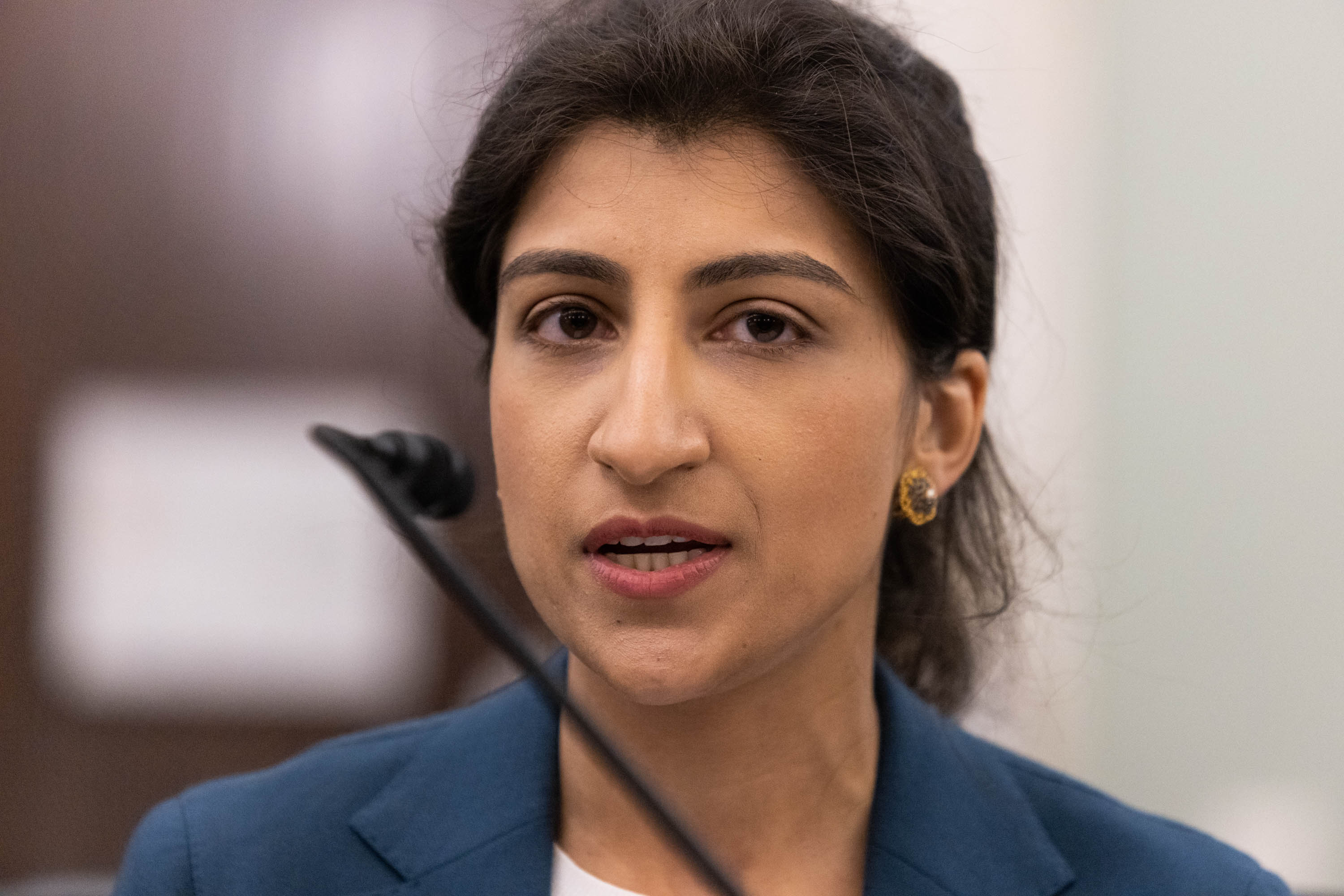
Enlarge / Lina M. Khan testifies during a Senate Commerce, Science, and Transportation Committee nomination hearing on Capitol Hill on April 21, 2021, in Washington, DC.

Amazon filed a 25-page petition today with the Federal Trade Commission asking that Chairwoman Lina Khan recuse herself from antitrust investigations into the company.

Khan, a frequent critic of Amazon and other Big Tech firms, was appointed FTC chair less than two weeks ago. Though there has been plenty of speculation about her first moves, her short tenure to date means she hasn’t had much opportunity to file lawsuits or announce investigations. Amazon’s petition shows that its legal team hasn’t sat idle since her nomination as commissioner and subsequent appointment as chair.

“Although Amazon profoundly disagrees with Chair Khan’s conclusions about the company,” Amazon wrote in the petition, “it does not dispute her right to have spoken provocatively and at great length about it in her prior roles. But given her long track record of detailed pronouncements about Amazon and her repeated proclamations that Amazon has violated the antitrust laws, a reasonable observer would conclude that she no longer can consider the company’s antitrust defenses with an open mind.”

Khan made a name for herself four years ago when she published a paper in a law journal. Titled “Amazon’s Antitrust Paradox,” the paper made the case that current antitrust laws have fallen short as tech platforms have risen to dominance. She argued that prices are a poor yardstick with which to measure anticompetitive behavior and market power, especially among platform companies like Amazon. The peculiar economics of platforms means that companies are happy to forgo profits in the name of growth, which leads to predatory pricing, she said. And because the very nature of platforms allows companies to control access to various products and services, it creates incentives for companies to favor their own products over rivals.

Since graduating from law school, Khan worked for the Open Markets Institute, which advocates for stronger antitrust laws and enforcement, and for the House Judiciary Committee, where she worked with Rep. David Cicilline (D-R.I.) to open a congressional inquiry into tech companies’ behavior.

That Amazon has come out guns blazing suggests that the company thinks some of its behavior will likely reach the FTC’s inbox, if it hasn’t already. The FTC’s agenda isn’t necessarily set by the chair, Harvard Professor Shane Greenstein told Ars when Khan’s appointment was announced. Rather, it’s shaped by consumer complaints, merger proposals, and so on. The FTC would need a complaint to act on if it were to take action against Amazon.

Of course, Khan likely has plenty of complaints to choose from on that front. Earlier this year, an independent bookstore in suburban Chicago filed a class-action lawsuit against Amazon, alleging that the company had colluded with five major book publishers to fix prices and stifle competition among sellers. Last month, the District of Columbia sued Amazon, saying that its most-favored-nation clauses prevented companies from selling their products for less on others sites. The high fees Amazon imposes on third-party sellers “impose an artificially high price floor” that affects prices on other sites.

And then there’s Amazon’s proposed acquisition of MGM Studios, which Sen. Elizabeth Warren (D-Mass.) asked the FTC to investigate. “This $8.45 billion deal would ostensibly help Amazon attract consumers to its subscription streaming services. But because this service is tied to a wide range of additional Amazon products and services that affect broad sectors of our economy, this transaction requires meticulous antitrust scrutiny,” Warren wrote to the FTC in an argument that plugs neatly into Khan’s “Antitrust Paradox” thesis.

Khan said during her confirmation hearing that in cases where recusal questions arise, she would consult with FTC ethics officials. How they’ll advise her is unclear, but they are surely aware that political appointees seldom come into government as blank slates, wholly lacking in opinions related to the thing they’re going to oversee.

Amazon isn’t the first company to attempt to push an FTC commissioner off of an investigation. For decades, companies have argued that commissioners have conflicts that require recusal, ranging from potentially biased statements to previous employment at law firms that represented the company or a competitor—and even employment at the company requesting the recusal. The tactic can work, though not every time.

https://arstechnica.com/?p=1777406


Ohio GOP ends attempt to ban municipal broadband after protest from residents

Champagne bottle and confetti

After coming close to imposing a near-total ban on municipal broadband networks, Ohio’s Republican-controlled legislature has reportedly dropped the proposed law in final negotiations over the state budget.

The final budget agreement “axed a proposal to limit local governments from offering broadband services,” The Columbus Dispatch wrote. With a June 30 deadline looming, Ohio’s House and Senate approved the budget and sent it to Gov. Mike DeWine for final approval on Monday night, the Dispatch wrote.

As we wrote earlier this month, the Ohio Senate approved a version of the budget containing an amendment that would have forced existing municipal broadband services to shut down and prevented the formation of new public networks. The proposed law was reportedly “inserted without prior public discussion,” and no state senator publicly sponsored the amendment. It was approved in a party-line vote as Democrats opposed the restrictions in municipal broadband.

The House version did not contain the amendment, and it was dropped during negotiations between the House and Senate.

“Real grassroots movement”

Lawmakers apparently relented to public pressure from supporters of municipal broadband and cities and towns that operate the networks. People and businesses from Fairlawn, where the city-run FairlawnGig network offers fiber Internet, played a significant role in the protests. FairlawnGig itself asked users to put pressure on lawmakers, and the subscribers did so in great numbers.

“We had a real grassroots movement here in Fairlawn. We are thrilled our residents, subscribers, and businesses came together and helped us defeat this amendment,” Fairlawn Service Director Ernie Staten said yesterday, according to an article by the Community Networks team at the Institute for Local Self-Reliance (ILSR). “We appreciate that the State of Ohio recognizes that municipal broadband has a place in this state and we hope to continue this great endeavor.”

Fairlawn subscribers sent more than 700 emails telling lawmakers, “Don’t take this (municipal broadband) away!” Staten said.

The proposed law would have let cities and towns provide broadband service only to unserved areas and used a definition of “unserved” that would reportedly have made over 98 percent of the state ineligible for municipal broadband. The proposed law defined “unserved areas” as those without access to service with download speeds of at least 10Mbps and upload speeds of at least 1Mbps, which isn’t even half as fast as the 25Mbps/3Mbps broadband threshold the Federal Communications Commission adopted over six years ago.

Cities build networks when private ISPs don’t bother

Staten also pointed out that “municipalities only enter the broadband space when forced to by the inaction of the private sector,” according to the Akron Beacon Journal.

There are about 30 public broadband providers in Ohio. Besides Fairlawn, examples of local governments running broadband networks include Hudson, Medina County, and Wadsworth. “We’re thrilled that communities like Fairlawn and Hudson can keep serving their communities,” Summit County Executive Ilene Shapiro said after learning that the budget amendment was dropped, according to the Akron Beacon Journal.

Cleveland City Council President Kevin Kelley previously said the city would sue the state if it restricted municipal broadband.

Until a few months ago, 19 US states had laws restricting municipal broadband, passed for the benefit of private Internet providers that don’t want to face competition from public networks. Washington state lawmakers have since killed their anti-municipal broadband law, and Arkansas ended many of its restrictions on municipal broadband as well.

Public networks may be ineligible for new funding

Though it isn’t banning public networks, at least for now, Ohio’s legislature is apparently not letting municipal networks apply for a new round of funding.

“While Staten celebrated the removal of the budget amendment, he called the victory ‘bittersweet,’ as municipalities and electric cooperatives in the state do not have access to the proposed $250 million broadband expansion grant program that will be established when, and if, Gov. Dewine signs the budget into law,” the ILSR wrote.

The outcome of that isn’t certain yet. “We have been asking for a small definition change to add municipalities and electric coops, but unless they changed the language, I believe the House version stands,” Staten told the ILSR. But the biggest news is the legislature dropping the plan that would have forced networks to shut down. “Being able to continue [providing service] is much more important,” Staten said.

https://arstechnica.com/?p=1777005


Amazon’s new price of doing business—the right to buy ownership stakes in vendors

Amazon leases its fleet of planes from a handful of cargo airlines, some of which have signed contracts that give the retailer the right to buy stock in the company.
Enlarge / Amazon leases its fleet of planes from a handful of cargo airlines, some of which have signed contracts that give the retailer the right to buy stock in the company.

Amazon is making some vendors and suppliers offers they can’t refuse. As part of large contracts with the retailer, companies have to offer Amazon the right to buy their stock at a potentially discounted price.

The e-commerce giant started including warrants—rights to buy stock in the future at a set price—in vendor contracts a decade ago. But in recent years, Amazon has been making the unusual request more frequently, according to a new report from The Wall Street Journal. Amazon’s last quarterly report said the company held $2.8 billion in warrants, up fivefold in the last three years.

Amazon executives are reportedly careful not to include anything in writing that would suggest that the warrants are required for a vendor to earn the contract, but apparently the message didn’t need to be delivered in writing. Almost all the companies that were offered contracts that included terms for warrants accepted the deal. “Several former Amazon executives who worked on such deals said in interviews that they found them to be unfair and one-sided, saying the companies weren’t in a position to refuse and that most of the upside went to Amazon,” the WSJ wrote.

The deals tend to be with companies offering goods or services that help Amazon run its business, not vendors that would sell goods on the e-commerce site.

Such deals aren’t unheard of, although, in the US, they’re typically done with companies that are considered high risk. Amazon executives used the bank bailouts of 2008 as a template for their deals. Similar—though not identical—arrangements happen in other countries. In China, foreign companies must frequently enter into joint ventures with local firms to gain access to the market. In Japan, companies involved in a keiretsu all own small stakes in the other companies, making the arrangements more mutual than Amazon’s deals.

Amazon reportedly targets its warrant requests at smaller companies that might see a big jump in business as a result of a deal with the retailer. Such arrangements help Amazon share in some of the gains these companies see after the contracts are announced.

Last year, Amazon amended its contract with SpartanNash, a grocery distributor it had been using to fulfill Amazon Fresh orders. Upon signing the deal, Amazon received warrants worth 2.5 percent of the company’s stock and the option to receive another 12.5 percent if the retailer buys $8 billion worth of groceries over seven years. SpartanNash’s stock price surged 26 percent the day the deal was announced, and though the price has slid since, it’s still up 12 percent.

Another supplier, Clean Energy Fuels Corp., which sells natural gas sourced from landfills and other “biogenic” sources, signed a contract with Amazon that allowed the retailer to buy up to 20 percent of the company over the next ten years. Executives at the gas supplier reportedly hope that the warrants and potential shareholding will keep Amazon from buying from other suppliers.

Not all companies are eager to meet Amazon’s terms, though, according to the article. Air Transport Services Group, known as ATSG, was negotiating a deal to lease 20 Boeing 767s to Amazon for its delivery network. Amazon wanted warrants as part of the contract, but ATSG executives weren’t thrilled with the idea. Amazon pushed hard in “intense, protracted negotiations,” one person told the WSJ. “It took a lot of convincing.” ATSG ended up agreeing to the terms in 2016, and last month, Amazon exercised its warrants, buying 19.5 percent of ATSG’s stock. If Amazon leases more aircraft, the company could receive additional warrants, giving it the option to own up to 39.9 percent of the cargo airline.

Amazon also has contracts with Atlas Air and Cargojet that include warrants, and it has a similar arrangement with Startek, a call-center company. During the Atlas Air negotiations, which resulted in Amazon receiving warrants for up to 30 percent of the company, “there was definitely a sense that if it wasn’t agreed to, there wouldn’t be a deal,” a source told the WSJ.

https://arstechnica.com/?p=1777002


AT&T gives investors and gov’t wildly different takes on need for fiber Internet

An AT&T sign in front of a retail store
Enlarge / A sign in front of an AT&T retail store on May 17, 2021, in San Rafael, California.

AT&T says fiber Internet is a “superior” technology that is built for today and the future because of its ability to deliver symmetrical upload and download speeds of 1Gbps and higher. AT&T also says that “there is no compelling evidence” to support the deployment of fiber across the US and that rural people should be satisfied with nonfiber Internet access that provides only 10Mbps upload speeds.

The difference between those two wildly different statements was the audience. AT&T’s message about fiber’s future-proof nature and its superiority over cable and DSL was delivered to investors while AT&T discussed the incremental fiber expansion in which it is hooking up more homes in metro areas where it already offers fiber. By contrast, AT&T’s message that Americans don’t need fiber access was delivered to the US government while the ISP lobbied against government-subsidized construction of fiber lines that are clearly superior to the DSL and fixed wireless home-Internet products that AT&T sells in areas where it decided that fiber is not cost-effective.

As we reported on March 29, AT&T is fighting proposals to subsidize nationwide fiber, writing that “there would be significant additional cost to deploy fiber to virtually every home and small business in the country, when at present there is no compelling evidence that those expenditures are justified over the service quality of a 50/10 or 100/20Mbps product.” That refers to 50Mbps download speeds with 10Mbps upload speeds or 100Mbps downloads with 20Mbps uploads.

AT&T Executive VP of Federal Regulatory Relations Joan Marsh also said at the time that building new networks in areas that already have basic speeds “would needlessly devalue private investment and waste broadband-directed dollars.” But while AT&T tells the government that such spending is a “waste,” it has a vested interest because blocking fiber construction would protect it from competition in the many areas where it hasn’t upgraded copper to fiber and in places where it has deployed fixed wireless instead of wired Internet.

AT&T: Fiber profitable “because it’s a superior product”

Of course, AT&T wouldn’t bother deploying fiber to any homes if everyone at the company believed 10Mbps uploads are fast enough. So on June 16, AT&T consumer-division CEO Thaddeus Arroyo told investors that “we plan to reach 30 million customer locations passed with fiber by the end of 2025. That’s going to double our existing fiber footprint. And investing in fiber drives solid returns because it’s a superior product. Where we have fiber, we win. We’re improving share in our fiber footprint, and the penetration rates are accelerating and growing, given our increased financial flexibility.” (See transcript.)

Arroyo went on to tout fiber’s “20X faster upload speeds than standard cable, 99 percent reliability, [and] low latency.” He said that AT&T’s fiber investment will “generate internal rates of return in the mid-teens” in part because the pandemic increased consumer demand for high upload speeds.

“This work-from-home shift during the pandemic highlighted fiber’s symmetrical differentiation,” he said. “And we expect, in a post-pandemic hybrid workforce and a home-based learning model, that even as students go back to school, we’ll move into new models of tutoring at home using these video capabilities.” Usage of “the uplink is growing faster than the downlink. This strengthens that potential for fiber-based services.”

In sum, Arroyo said that “fiber is a superior product… met for the moment in time that we’re in and beyond,” adding that fiber’s ability to provide the “same speed up [and] the same speed down… makes it very durable. But more importantly, this foundation of what we’ve built is capable of scaling to multiple gigabits in the near future.”

But if you’re not already close to a metro area where AT&T delivers fiber-to-the-home, you’re probably out of luck in the near future. AT&T has said it plans fiber-to-the-home expansions in 90 metro areas this year, reaching 3 million customers who live close enough to existing fiber lines that building to their homes is profitable enough for AT&T to make the effort. AT&T’s rural customers won’t be getting fiber any time soon unless another ISP or municipality decides to provide it, and many people in urban areas won’t get fiber either due to the “digital redlining” in which ISPs prioritize rich neighborhoods over poor ones.

Fiber easily beats cable upload speeds

Some of Arroyo’s comments were included Friday in a Light Reading article titled, “Is AT&T’s fiber investment a good idea?” The article also quoted New Street Research analysts as saying “cable will face new fiber competition in more of its markets over the next few years; however, there is little to no prospect of fiber delivering a service in those markets that cable can’t easily match or beat.”

The claim that cable can “easily match or beat” fiber is objectively false. The cable industry has been issuing press releases about future symmetrical upload speeds for years now, but no cable company has delivered those speeds to customers or even said when it will do so. In the meantime, Comcast’s cable upload speeds range only from 5Mbps to 35Mbps, and that’s the general standard across all major cable ISPs.

Altice decided to lower its upload speeds by up to 86 percent in order to, a company spokesperson told Ars, bring the speeds “in line with other ISPs and aligned with the industry.” Comcast and other cable companies have even built fiber-to-the-home in parts of their footprints because it’s the only way they can offer symmetrical speeds. Version 4.0 of DOCSIS, the Data Over Cable Service Interface Specification, is supposed to bring multi-gigabit upload speeds over cable. But theoretical speeds are different from actual speeds—a version of DOCSIS released in 2013 theoretically allowed 1Gbps upload speeds, but cable companies never came close to delivering that.

AT&T: Fiber creates JOBS

Light Reading also pointed to a post last week in which AT&T senior VP of network infrastructure Mo Katibeh wrote, “We are building MORE Fiber to MORE homes and businesses… And you know what comes with all that investment in America? JOBS.”

We haven’t heard that kind of effusive praise for fiber from AT&T when it discusses the rural areas where it has tens of millions of copper lines that provide phone service and/or DSL. Many of those copper lines have deteriorated because AT&T neglected to do maintenance that would prevent lengthy outages and other troubles, an investigation by California state regulators found.

AT&T lobbies against municipal fiber

AT&T’s comments about rural people not needing fiber were delivered as President Joe Biden and Congress debate how to spend tens of billions of dollars on subsidizing broadband for areas with no service or slow service. Biden initially proposed $100 billion to build “future-proof” networks across the US, with priority access to funding “for broadband networks owned, operated by, or affiliated with local governments, non-profits, and co-operatives—providers with less pressure to turn profits and with a commitment to serving entire communities.”

AT&T, which has already taken billions from the government to deliver 10Mbps download and 1Mbps upload service in rural areas, doesn’t want public networks getting any money in the big round of funding currently being negotiated. AT&T CEO John Stankey said this month that it “would be a shame” to use “taxpayer money [to] ask local governments to go into a business that they don’t run today.” He added that he is confident Congress will steer legislation in the more “pragmatic” direction that AT&T favors.

Biden has since settled on $65 billion in a deal with Republicans that may not favor municipal networks as he originally proposed. There are still details to be worked out in the House and Senate, with a key question being whether the US will prioritize building the fiber networks that AT&T has told investors are “superior” to all other broadband technologies or the non-fiber networks that AT&T claims are sufficient when it lobbies politicians.

Ex-FCC chair: Don’t spend billions on slow service

Former Federal Communications Commission Chairman Tom Wheeler wrote last week about “an intense lobbying campaign… especially by wireless and satellite network providers, to define digital down so that they may be able to sup at the federal funding trough. These companies want federal funds for their for-profit services, even if the services are slower in speed than what the market has demonstrated is necessary for broadband.”

Wheeler warned that spending tens of billions on outdated technology would risk replacing the current divide between broadband haves and have-nots with another divide that’s nearly as bad.

“At a time when commercial broadband companies are investing private money in upgrading their networks to mega-high-speed broadband deployment, it is foolhardy for the government to spend public money for second-class service,” Wheeler wrote. “At a time when the nation is finally moving beyond talking about the digital divide to actually doing something about the problem, it is illogical to spend the taxpayers’ dollars for something that will only open the possibility of a ‘not good enough divide’ as demand continues to rise.”

https://arstechnica.com/?p=1776858


Amazon is using algorithms with little human intervention to fire Flex workers

An Amazon Flex driver delivers an armload of packages in Cambridge, Mass., on Dec. 18, 2018.
Enlarge / An Amazon Flex driver delivers an armload of packages in Cambridge, Mass., on Dec. 18, 2018.

Locked gates, inclement weather, and bad selfies—all reasons drivers report that they were fired by the bots that apparently run human resources for Amazon’s Flex delivery program.

Millions of independent contractors are at the whim of a system that Amazon knows is problematic, according to a new report by Bloomberg. While serious early glitches have been worked out, significant issues remain, according to the article. Amazon is reportedly unconcerned about the hiccups and bad press that result so long as sufficient numbers of drivers are available to replace those whose accounts are mistakenly terminated.

“Executives knew this was gonna shit the bed,” a former engineer who designed the system told Bloomberg. “That’s actually how they put it in meetings. The only question was how much poo we wanted there to be.”

The e-commerce giant started Flex in 2015 to handle surges of packages and two-hour deliveries for its Prime Now service. Today, it also coordinates deliveries for Whole Foods grocery orders. (If you’re curious to hear details about how the system functions when it’s working, Ars’ own Sam Machkovech went gonzo a few years ago and worked a shift as a driver.) During the pandemic, the Flex program became an increasingly important part of the retailer’s logistics program, so much so that it offered Flex drivers a bonus to work at least 20 hours in December 2020. 

Flex hirings, performance reports, and firings are all handled by software, with minimal intervention by humans. Drivers sign up and upload required documents via a smartphone app, through which they also sign up for shifts, coordinate deliveries, and report problems. It’s also how drivers monitor their ratings, which fall into four broad buckets—Fantastic, Great, Fair, or At Risk. Flex drivers are assessed on a range of variables, including on-time performance, details like whether the package is sufficiently hidden from the street, and a driver’s ability to fulfill customer requests.

Amazon refutes the idea that drivers have been unfairly treated. “We have invested heavily in technology and resources to provide drivers visibility into their standing and eligibility to continue delivering, and investigate all driver appeals,” Amazon spokesperson Kate Kudrna told Bloomberg.

Opaque system

Former Flex drivers interviewed by Bloomberg and driver reports posted on forums across the Internet reveal an opaque system that often leaves them guessing as to why their ratings dropped or why their accounts were terminated—effectively firing them from the job. 

Neddra Lira, a former driver interviewed by Bloomberg, said her ratings tanked after she had to return packages to the warehouse when she found a nail in her tire. She managed to raise her rating to “great” over the next several weeks only to have her account terminated for violating terms of service. She appealed the termination, but Amazon didn’t budge. 

Another driver Bloomberg spoke with, Stephen Normandin, had trouble delivering packages to Phoenix-area apartment complexes before dawn. The gates were still locked, the offices were closed, and package recipients weren’t answering their phones. In another apartment complex, an Amazon locker wouldn’t open for him. His rating also suffered in the wake of those problems, and he spent six weeks reviving it—only to be terminated days later because his rating had “dropped below an acceptable level.”

The reasons Amazon gives for firing Flex workers don’t always appear to match the true reason for the termination. One driver posting on reddit said they were terminated because, according to the Flex app, the selfies they took to verify their identity at the start of the shift didn’t match the driver’s license photo they uploaded when they set up the account. The driver wasn’t buying it, though, since in the shift they worked before being fired, packages the app assigned to them were not available at the Prime Now depot and thus were unable to be delivered.

“The termination email I received this morning was sent at 1:17am, but at 1:06am, just eleven minutes before, I had also received one of those generic emails reminding me that I need to pick up all of my orders,” the person wrote. “I’m assuming this isn’t coincidence, and even though the termination email specifically states ‘images’ as the reason for termination, I’m attributing it to these ‘missed packages.’”

Facial recognition issues

Amazon started requiring selfies in 2019 so that multiple people wouldn’t share a single account. The practice may help prevent people from using other accounts to steal packages. But there are other drivers who use the practice for more legitimate purposes, including to deliver more packages faster, which can bump up their ratings, or to fulfill deliveries without racking up parking tickets.

Flex drivers’ forums are littered with posts from people complaining that their accounts were terminated because their selfies did not “meet the requirements for the Amazon Flex program.” The photos appear to be verified by image recognition algorithms. People who have lost weight or shaved their beards or gotten a haircut have run into problems, as have drivers attempting to start a shift at night, when low lighting can result in a poor-quality selfie.

Drivers who believe they’ve been unfairly terminated have ten days to petition to have their accounts reinstated, but in that time, they cannot work any shifts. If a driver loses the appeal, they can ask for arbitration, though it costs them $200. For many drivers, who make between $18–$30 per hour delivering for Flex, it’s simply not worth it. For Amazon, though, botched terminations don’t seem to be tempering interest in the Flex program. In May alone, the Flex app was downloaded 200,000 times, according to SensorTower.

https://arstechnica.com/?p=1776745