Facebook extends Trump ban, ends exemptions for politicians’ posts [Updated]
Chris Ratcliffe/Bloomberg via Getty Images
Update, 12:54 pm EDT: Facebook announced today that Donald Trump will remain banned from the company’s platforms through January 7, 2023. On that day, Facebook will evaluate current events and ask experts “to assess whether the risk to public safety has receded,” wrote Facebook Vice President of Global Affairs Nick Clegg. Factors Facebook will consider include “instances of violence, restrictions on peaceful assembly, and other markers of civil unrest.”
If the company still thinks there’s a risk, it will extend Trump’s ban. “When the suspension is eventually lifted, there will be a strict set of rapidly escalating sanctions that will be triggered if Mr. Trump commits further violations in future, up to and including permanent removal of his pages and accounts,” Clegg wrote.
Original story: Facebook has given politicians extreme leeway with what they can post, essentially treating them as a special class of user. Now, that policy will reportedly change, perhaps as early as today.
The impetus for the change seems to be a looming deadline that Facebook’s Oversight Board gave the company regarding its suspension of former President Donald Trump’s accounts in the wake of the January 6 insurrection at the US Capitol. The board gave Facebook until June 5 to respond to recommendations that it clarify how influential users are treated relative to the rest of the site’s user base. The forthcoming updates were first reported by The Verge.
Under the new policy, politicians’ posts would be treated like everyone else’s, at least initially. If Facebook reviews a post and decides it’s both legal and newsworthy, even if it violates site policy, moderators will allow the post to appear on the site and flag it so users can see that the newsworthiness exemption was applied. It’s unclear exactly how that newsworthiness notice will appear or what standards Facebook will use to determine newsworthiness. Ars has reached out to Facebook for comment, and we’ll update this story if we hear back.
Facebook will also introduce a “strikes” policy that could see politicians’ pages or accounts suspended if they repeatedly break the site’s rules regarding hate speech and inciting violence, for example. Presumably, strikes would not be issued if Facebook claims the newsworthiness exemption for a post. The company will also be reportedly clarifying how strikes are applied to all accounts, addressing a frequent criticism of the opaque policy. Among the changes, users will be alerted when they receive a strike.
Though Facebook’s newsworthiness policy will be updated, the company will not be altering its fact-checking policy regarding politicians, according to CNN.
Depending on the details, the new policy could represent a marked shift from Facebook’s stance toward politicians over the last several years. The social media company has been relatively hands-off when it comes to moderating politicians’ accounts and pages, claiming that anything they post that is not illegal is newsworthy and should remain on the site. Facebook executives, including CEO Mark Zuckerberg and Vice President of Global Affairs Nick Clegg, have insisted that politicians’ speech not be moderated the same as others’. “We will treat speech from politicians as newsworthy content that should, as a general rule, be seen and heard,” Clegg said in a 2019 post.
Trump, of course, tested those rules. Facebook banned Trump from Instagram and its eponymous service on January 7 in response to posts that voiced support for the rioters and insurrectionists who stormed the US Capitol. In the wake of the attack, Facebook reviewed those and earlier posts on Trump’s accounts and determined that, in Zuckerberg’s words, “the risks of allowing the President to continue to use our service during this period are simply too great. His decision to use his platform to condone rather than condemn the actions of his supporters at the Capitol building has rightly disturbed people in the US and around the world. We removed these statements yesterday because we judged that their effect—and likely their intent—would be to provoke further violence.”
The company initially said the suspension would extend at least through January 20, Inauguration Day, but then clarified that it would be indefinite. On January 21, Facebook referred the matter to the Oversight Board, which issued its decision on May 5.
The Oversight Board said that Facebook should decide whether to permanently ban Trump’s page or to reinstate it—the open-ended nature of the suspension didn’t jibe with the site’s policies. Facebook has five more months to review its stance on Trump’s page.
https://arstechnica.com/?p=1769852
Ransomware will now get priority treatment at the Justice Department
The Justice Department has created a task force to centrally track and coordinate all federal cases involving ransomware or related types of cybercrime, such as botnets, money laundering, and bulletproof hosting.
“To ensure we can make necessary connections across national and global cases and investigations… we must enhance and centralize our internal tracking of investigations and prosecutions of ransomware groups and the infrastructure and networks that allow the threats to persist,” Deputy Attorney General Lisa Monaco told US attorneys throughout the country on Thursday. She issued the directive in a memo that was first reported by Reuters. Investigators in field offices around the country would be expected to share information as well.
The new directive applies not just to cases or investigations involving ransomware but a host of related scourges, including:
Counter anti-virus services
Illicit online forums or marketplaces
Cryptocurrency exchanges
Bulletproof hosting services
Botnets
Online money laundering services
All ransomware all the time
The heightened scrutiny comes as two recent ransomware attacks—first on Colonial Pipeline in May and three weeks later on meat producer JBS—have exposed the fragility of the nation’s critical supply chains. By using an ad-hoc group to track cases centrally, Justice Department officials hope the move brings focus and consistency to the investigations it conducts and cases it brings.
On Thursday, at least two new ransomware infections surfaced. The first struck Cox Media Group and, according to The Record, left the media company unable to provide livestreaming for TV stations and internal networks. The second hit UF Health Central Florida, which operates two hospitals. A spokesman for UF Health said that access to email and most other system platforms had been suspended. Staff in all hospitals and physician clinics are now using pen and paper to document and order care.
Monaco’s memo instructs attorneys to notify senior Justice Department officials whenever they open a case involving ransomware or when there are significant developments. The memo comes as ransomware has become a regular topic of discussion at White House press briefings and is among the concerns Biden plans to raise at a meeting scheduled for later this month with Russian President Vladimir Putin.
https://arstechnica.com/?p=1769834
Supreme Court reins in definition of crime under controversial hacking law
Enlarge/ In April 2013, more than 120 people attended a rally in Boston to remember Aaron Swartz and call for reform of the Computer Fraud and Abuse Act.
Getty Images | Boston Globe
The Supreme Court issued a ruling Thursday that imposes a limit on what counts as a crime under the Computer Fraud and Abuse Act (CFAA).
The case involves a former Georgia police sergeant who “used his own, valid credentials” to get information about a license plate number from a law enforcement database, the court decision said. The sergeant ran the search in exchange for money and for non-law enforcement purposes, violating a department policy. He was charged with a felony under the CFAA, which says it’s a crime when someone “intentionally accesses a computer without authorization or exceeds authorized access.” He was convicted and sentenced to 18 months in prison in May 2018.
A federal appeals court upheld the conviction, but the Supreme Court reversed it today in a 6-3 decision that said Van Buren did not violate the CFAA. Justices found that the cybersecurity statute does not make it a crime to obtain information from a computer when the person has authorized access to that machine, even if the person has “improper motives.”
The court wrote:
Nathan Van Buren, a former police sergeant, ran a license-plate search in a law enforcement computer database in exchange for money. Van Buren’s conduct plainly flouted his department’s policy, which authorized him to obtain database information only for law enforcement purposes. We must decide whether Van Buren also violated the Computer Fraud and Abuse Act of 1986 (CFAA), which makes it illegal “to access a computer with authorization and to use such access to obtain or alter information in the computer that the accesser is not entitled so to obtain or alter.”
He did not. This provision covers those who obtain information from particular areas in the computer—such as files, folders, or databases—to which their computer access does not extend. It does not cover those who, like Van Buren, have improper motives for obtaining information that is otherwise available to them.
“The parties agree that Van Buren accessed the law enforcement database system with authorization,” the ruling said. “The only question is whether Van Buren could use the system to retrieve license-plate information. Both sides agree that he could. Van Buren accordingly did not ‘excee[d] authorized access’ to the database, as the CFAA defines that phrase, even though he obtained information from the database for an improper purpose. We therefore reverse the contrary judgment of the Eleventh Circuit and remand the case for further proceedings consistent with this opinion.”
Van Buren caught in FBI sting
Van Buren’s disputed computer access occurred after he asked a man named Andrew Albo for a loan. Albo secretly recorded the conversation “and took it to the local sheriff’s office, where he complained that Van Buren had sought to ‘shake him down’ for cash,” the ruling said. The FBI got involved and devised an operation in which “Albo would ask Van Buren to search the state law enforcement computer database for a license plate purportedly belonging to a woman whom Albo had met at a local strip club. Albo, no stranger to legal troubles, would tell Van Buren that he wanted to ensure that the woman was not in fact an undercover officer. In return for the search, Albo would pay Van Buren around $5,000,” the ruling continued.
During oral arguments, Van Buren’s lawyer contended that the government’s interpretation of the law would make it a crime to violate a website’s terms of service or to use a business email or Zoom account for personal purposes if an employer had a policy against doing so. “This construction would brand most Americans criminals on a daily basis,” the lawyer, Jeff Fisher, told justices.
The US Department of Justice argued that the government’s interpretation would not extend the law to public websites, even if they require a username and password. Instead, the government argued that its interpretation of the law applies only to people who are “akin to employees” and have been granted “specific, individualized permission.”
But as we wrote in our story on the oral arguments, the government’s argument “seems hard to square with past CFAA cases. TicketMaster’s website, for example, is available to the general public. People who purchase tickets there aren’t ‘akin to employees.’ Yet people got prosecuted for scraping it. Similarly, JSTOR doesn’t hand-pick who is allowed to access academic articles—yet [Aaron] Swartz was prosecuted for downloading them without authorization.”
Swartz committed suicide in 2013 when he was being prosecuted under the CFAA for downloading over 4 million academic journal papers from JSTOR over MIT’s computer network.
Ruling “radically restrict[s]” scope of law
Harvard Law School Professor Lawrence Lessig applauded the ruling, writing that the court decision written by Justice Amy Coney Barrett “has radically restricted the scope of the Computer Fraud and Abuse Act—the statute that the United States said @aaronsw [Aaron Swartz] had violated. Applying Barrett’s reading, he plainly did not.”
Barrett’s majority opinion was joined by Justices Stephen Breyer, Sonia Sotomayor, Elena Kagan, Neil Gorsuch, and Brett Kavanaugh. Justice Clarence Thomas filed a dissenting opinion, joined by Chief Justice John Roberts and Justice Samuel Alito.
The ruling could have a major effect on government prosecutions. As justices wrote today, the CFAA originally “barred accessing only certain financial information” but “has since expanded to cover any information from any computer ‘used in or affecting interstate or foreign commerce or communication.’ As a result, the prohibition now applies—at a minimum—to all information from all computers that connect to the Internet.”
Violating the CFAA is punishable by fines and imprisonment of up to 10 years. The law also provides for civil liability, as people who suffer “damage” or “loss” from CFAA violations can sue for damages.
Berkeley Law professor Orin Kerr pointed out one caveat that might limit the effect of the Supreme Court ruling. “In a footnote, the Court seems to adopt the authentication test—’whether a user’s credentials allow him to proceed past a computer’s access gate’—that I and others have proposed,” Kerr wrote. “But there’s a big caveat to that. In a different footnote, the Court says it is not reaching whether that ‘gate’ can be imposed only by technology, or by a contract or policy.”
Kerr added that it “might still mean a mostly technological test, but one that can be impacted by written restrictions.”
Case hinged on the word “so”
Van Buren appealed his conviction to the US Court of Appeals for the 11th Circuit, “arguing that the ‘exceeds authorized access’ clause [in the CFAA] applies only to those who obtain information to which their computer access does not extend, not to those who misuse access that they otherwise have,” today’s ruling said. The appeals court ruled against him, but the Supreme Court said it took up the case to resolve a split between the 11th Circuit and “several” other circuit appeals courts that “see the clause Van Buren’s way.”
The case hinged on the word “so” as used in the CFAA’s prohibition on “obtain[ing] or alter[ing] information in the computer that the accesser is not entitled so to obtain or alter.”
“The parties agree that Van Buren ‘access[ed] a computer with authorization’ when he used his patrol-car computer and valid credentials to log into the law enforcement database. They also agree that Van Buren ‘obtain[ed]… information in the computer’ when he acquired the license-plate record for Albo. The dispute is whether Van Buren was ‘entitled so to obtain’ the record,'” the court wrote.
“Van Buren contends that the word ‘so’ serves as a term of reference and that the disputed phrase thus asks whether one has the right, in ‘the same manner as has been stated,’ to obtain the relevant information,” the ruling also said. The US government “argues that ‘so’ sweeps more broadly, reading the phrase ‘is not entitled so to obtain’ to refer to information one was not allowed to obtain in the particular manner or circumstances in which he obtained it.”
The court’s majority said it disagreed with the government because of how the statute is structured and “because without ‘so,’ the statute could be read to incorporate all kinds of limitations on one’s entitlement to information.”
“Van Buren’s account of ‘so’—namely, that ‘so’ references the previously stated ‘manner or circumstance’ in the text of [the law] itself—is more plausible than the Government’s,” the court wrote. “‘So’ is not a free-floating term that provides a hook for any limitation stated anywhere.” Referencing the Oxford English Dictionary and Webster’s Dictionary, the court wrote that “so” refers “to a stated, identifiable proposition from the ‘preceding’ text; indeed, ‘so’ typically ‘[r]epresent[s]’ a ‘word or phrase already employed,’ thereby avoiding the need for repetition.”
US argument a “sleight of hand”
The majority additionally found that the government’s interpretation “has surface appeal but proves to be a sleight of hand”:
While highlighting that “so” refers to a “manner or circumstance,” the Government simultaneously ignores the definition’s further instruction that such manner or circumstance already will “ha[ve] been stated,” “asserted,” or “described.” Under the Government’s approach, the relevant circumstance—the one rendering a person’s conduct illegal—is not identified earlier in the statute. Instead, “so” captures any circumstance-based limit appearing anywhere—in the United States Code, a state statute, a private agreement, or anywhere else. And while the Government tries to cabin its interpretation by suggesting that any such limit must be “specifically and explicitly” stated, “express,” and “inherent in the authorization itself,” the Government does not identify any textual basis for these guardrails.
Meanwhile, the dissenting opinion written by Thomas would essentially remove the word “so” from the statute, the majority wrote:
The dissent accepts Van Buren’s definition of “so,” but would arrive at the Government’s result by way of the word “entitled.” According to the dissent, the term “entitled” demands a “circumstance dependent” analysis of whether access was proper. But the word “entitled” is modified by the phrase “so to obtain.” That phrase in turn directs the reader to consider a specific limitation on the accesser’s entitlement: his entitlement to obtain the information “in the manner previously stated.” And as already explained, the manner previously stated is using a computer one is authorized to access. To arrive at its interpretation, the dissent must write the word “so” out of the statute.
https://arstechnica.com/?p=1769621
Verizon says forcing people off old plans to get FCC subsidy isn’t “upselling”
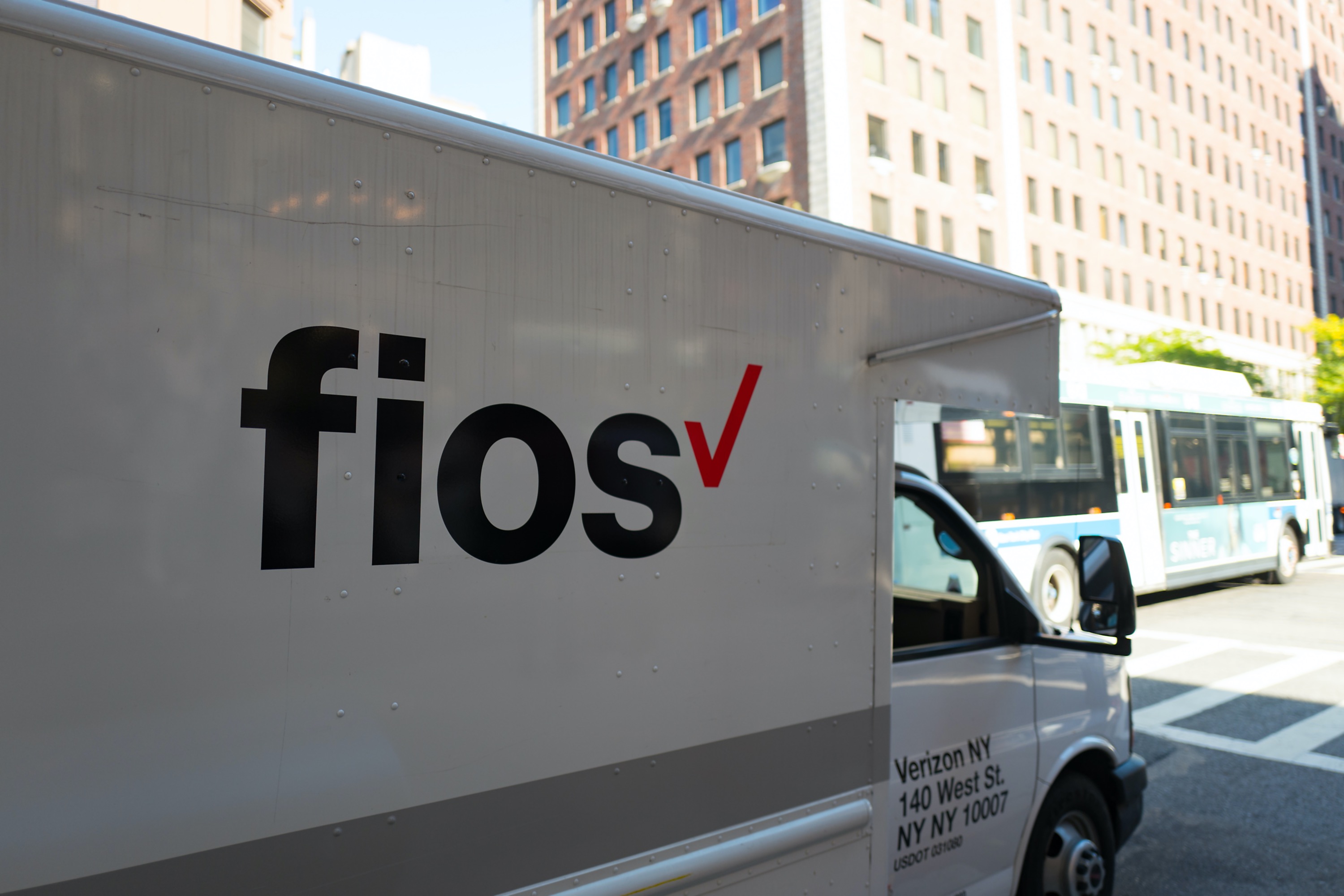
Enlarge/ A Verizon FiOS truck in Manhattan on September 15, 2017.
Verizon is defending its practice of forcing customers to switch plans to get a government-funded $50-per-month discount, telling the Federal Communications Commission that this is not the same thing as “upselling.” Verizon has partially backtracked from this restrictive policy but told the FCC it will take “about a month” to deploy a billing-software update that will let more home-Internet customers get the discounts without changing plans.
As we wrote on May 18, Verizon is preventing some customers from getting the new government subsidies unless they switch to different plans that are sometimes more expensive. AT&T, Charter, and T-Mobile also limit the plans eligible for the subsidies, while Comcast says it will honor the discounts even on grandfathered plans that are no longer offered to new customers.
Verizon is mad that its policy was criticized.
“Despite Verizon’s decision to offer the EBB [Emergency Broadband Benefit] discount on nearly all of our current fixed and mobile broadband service offerings, there have been isolated claims that Verizon viewed the EBB program as an opportunity to ‘upsell’ customers to higher-priced plans. Those claims are unfounded,” Verizon told the Federal Communications Commission in a filing on Friday.
Despite this contention, Verizon decided to loosen its rules after facing a public backlash over its subsidy restrictions. “[W]e heard from some customers that they prefer to stay on the legacy plans they have. Moving forward, we will offer customers on legacy FiOS plans (no longer in market today) the ability to enroll in EBB,” Verizon said in a May 19 update, a week after the discount program began.
That means FiOS home Internet customers won’t have to switch to Verizon’s new “Mix & Match” plans to get the discount. However, Verizon told the FCC that it will take a month to make the “complex billing system changes” necessary to give the discounts to FiOS customers on grandfathered plans. FiOS adopted the Mix & Match pricing system in January 2020, so what Verizon is calling “legacy plans” includes any FiOS plan that’s at least 18 months old.
Verizon lets users switch back—if they act fast
Verizon also told the FCC that “EBB customers that contact us within 14 days of moving to a Mix & Match plan may switch back to their legacy plan.” But Verizon didn’t say whether it has notified those customers about that option. For customers who already switched, the 14 days will have passed by the time Verizon changes its billing system to allow the discount on old plans.
On the mobile side, Verizon apparently still won’t let wireless users on old plans get the discounts unless they buy “a Mix & Match Unlimited phone plan or a Mobile Hotspot as the main or only line on an account.” Verizon doesn’t make the subsidy available at all on legacy DSL plans, which it offers in areas where it hasn’t upgraded copper lines to fiber.
Verizon said the purpose of its letter to the FCC is to “address incorrect characterizations of Verizon’s practices in implementing the EBB program, and notify the Commission of additional steps that Verizon has taken to encourage participation by eligible consumers.”
“[R]ather than paying more, most existing customers who switch from a legacy FiOS plan to an EBB-eligible Mix & Match plan save money—an average of about $25 per month (before the EBB discount)—by having the flexibility to choose just the services and content that they want. These savings would continue after the EBB program ends,” Verizon said.
Verizon also said that its “experience during the early days of the program confirms that our original list of EBB-eligible services provides the vast majority of EBB-eligible customers with both choice and a cost-effective broadband service option.” But Verizon did not dispute the fact that, to get the discount, some customers had to get more expensive plans with prices that would remain at the higher level after the government subsidy expires.
AT&T limits also frustrate customers
The EBB is temporary, lasting until the $3.2 billion in program funding runs out or six months after the Department of Health and Human Services declares an end to the pandemic.
Verizon is not the only Internet provider frustrating customers with its subsidy policies. For example, AT&T is not letting home-Internet customers get the discount on plans with speeds higher than 300Mbps. One AT&T customer who pays $70 a month for 1Gbps speeds emailed Ars last week, writing, “I was told that in order to take advantage of the subsidy, I must change to a 300Mbps plan for $75 a month, and I’d pay $25 per month after the subsidy, and lose two thirds of my speed!”
ISPs only have to offer one plan to comply
The $50-per-month subsidies are available to people who have low incomes or who lost income during the pandemic. But ISPs aren’t required to participate in the EBB program, and the FCC lets ISPs participate even if they only make one plan available to customers seeking subsidies. The FCC said it made that decision because “dictating the required offerings in a temporary program will discourage participation and result in less consumer choice than would otherwise be available if we provided participating providers with more flexibility.”
While Verizon apparently isn’t breaking any rules, consumer-advocacy group Public Knowledge told the FCC that Verizon’s “behavior runs contrary to the intent of the program and undermines Verizon’s own reasons for requesting a recent waiver of the FCC’s EBB reimbursement rules.” The FCC on April 20 granted Verizon’s request for a waiver, which allowed additional time to file reimbursement claims.
“Contrary to Verizon’s arguments, receiving the waiver did nothing to prevent Verizon from later using the EBB to force customers onto more expensive plans well above the subsidy amount,” Public Knowledge wrote, adding that the FCC “should take note of the fact that Verizon’s internal decision-making process led it to treat the EBB as an opportunity to take advantage of the low-income consumers they were supposed to serve.”
https://arstechnica.com/?p=1769275
SEC struggling to rein in Elon Musk’s tweets, letters reveal
The Securities and Exchange Commission is having a hard time reining in Elon Musk’s social media use, according to a new report from The Wall Street Journal.
The regulator sent Tesla three sternly worded letters between August 2019 and June 2020, asking Tesla’s attorney’s to enforce a 2018 settlement that demanded greater oversight of Musk’s social media posts. “Tesla has abdicated the duties required of it by the court’s order,” said the SEC in a letter from May of last year.
The three letters, including the SEC’s records of its correspondence with Tesla’s attorneys, were obtained by the Journal through a Freedom of Information Act request. They show a regulator struggling to enforce a settlement that, from the outset, seemed challenging to implement.
The brouhaha began when Musk sent his infamous “funding secured” tweet. In August 2018, Musk announced that he would be taking Tesla private at $420 per share. That sent the company’s stock soaring, only to see it plummet when funding turned out to not, in fact, be secured. Investors complained en masse to the SEC about the stunt. The regulator investigated the matter and first attempted to settle things with Musk and Tesla. Musk balked, so the SEC sued.
In court, Musk risked losing the ability to be an officer or board member, not just at Tesla but at any publicly listed company in the US. So rather than go to court, where the SEC was the heavy favorite, Musk and Tesla settled, with both defendants paying $20 million in penalties. Musk also stepped down as chairman of Tesla’s board.
But that wasn’t all. The SEC also stipulated another condition in the settlement: Tesla would have to implement “controls and procedures to oversee Musk’s communications.” Musk would have to seek approval for tweets that “contain or could contain” material information—basically anything that could affect Tesla’s stock price.
Refining the settlement
From the beginning, it was clear that Musk had his own interpretation of the settlement terms.
Less than five months after the settlement, Musk tweeted that Tesla “will make around 500k in 2019.” He later clarified that he meant an annualized production rate of 500,000 cars. He didn’t clear either statement with Tesla lawyers, so the SEC took him to court, asking that he be held in contempt.
The court instead ordered both parties to negotiate a deal, which resulted in the SEC defining in more specific terms which of Musk’s communications would require legal approval. They included communications about Tesla’s finances, production and delivery numbers, new lines of business, sales projections, proposed mergers, fundraising efforts, and regulatory decisions, among others. The new settlement was reached on April 26, 2019.
Well, it turns out the new settlement didn’t change much. Just over three months later, Musk tweeted about a Tesla energy product. “Spooling up production line rapidly. Hoping to manufacture ~1000 solar roofs/week by end of this year.” The tweet clearly mentioned “production and delivery numbers,” the SEC wrote in a letter, which was verboten. Tesla’s lawyers replied that it didn’t matter because Musk’s tweet was “wholly aspirational,” according to SEC records of its correspondence with the company.
Musk poked the SEC again on May 1, 2020, when he tweeted, “Tesla’s stock price is too high imo.” The SEC again wrote a letter, to which Tesla replied that the tweet didn’t need approval because it was just a “personal opinion.”
Losing patience
By this point, the SEC’s correspondence notes make clear that the regulators were losing patience. They asked Tesla for records related to the stock price tweet, and Tesla’s lawyers revealed that they had none. The SEC wrote back, saying, “In the face of Mr. Musk’s repeated refusals to submit his covered written communications on Twitter to Tesla for pre-approval, we are very concerned by Tesla’s repeated determinations that there have been no policy violations because of purported carve-outs.”
Tesla’s attorneys replied that tweeting about the company’s stock price wasn’t covered under the new settlement—and that they thought the regulator was out to “harass” Musk. “The serial nature of these investigations leaves us gravely concerned that the SEC is targeting Mr. Musk for an improper purpose,” they wrote.
In the final letter the WSJ obtained, the SEC asked Tesla to “reconsider its positions in this matter by acting to implement and enforce disclosure controls and procedures.”
The SEC’s frustrations aren’t surprising. Social media use has upended the way people communicate around the world, throwing a new element of chaos into what had been routine discourse. In many ways, the bigger surprise was that the situation took so long to bleed into the world of business.
To see how social media has amplified some voices and their influence to nearly unprecedented heights, look no further than today’s spike in the share price for Samsung Publishing. The company, which is not related to the Samsung conglomerate, soared more than 10 percent during trading hours today. The cause? Elon Musk, of course, who tweeted an observation about the viral nature of the kids’ song “Baby Shark.” “Baby Shark crushes all! More views than humans,” Musk tweeted.
Samsung Publishing owns the company that produced a “Baby Shark” music video.
https://arstechnica.com/?p=1769282
After 75,000 Echo arbitration demands, Amazon now lets you sue it
Amazon quietly changed its terms of use last month, dropping a clause that forced customers into arbitration. Now, people can sue the company individually or in a class action.
The change apparently was brought about by a surge in arbitration demands over revelations that Amazon’s Echo devices were sometimes recording and saving conversations without consent, including those involving children. Those recordings allegedly ran afoul of laws in several states that require consent before recording and data collection.
Two state laws, the Illinois Biometrics Information Privacy Act and the California Information Privacy Act, have been key drivers of complaints against Amazon. Lawyers have filed class-action suits on the grounds that Amazon’s Echo recordings violated both consent laws and biometric laws, since some recordings were used to develop voiceprints to identify individual users in a household. But Amazon’s attorneys have successfully argued on several occasions that the cases should be kicked out of court and sent to arbitration.
Yet, this wasn’t quite the “win” that Amazon wanted. Echo users have now brought more than 75,000 arbitration demands against the company, according to a Wall Street Journal report. Because Amazon’s previous terms said that the company would pay for arbitration filing fees, the retail giant was on the hook for tens of millions of dollars before a single case was heard. Amazon has now changed course.
Arbitration everywhere
Over the last decade or so, companies have increasingly embraced arbitration in their contracts. Companies typically expect that only a small fraction of customers who would otherwise qualify for class-action status will follow through with arbitration demands. The companies pay arbitration fees under the assumption that those fees will be significantly lower than defending against lawsuits or paying settlements and judgments.
In 2018, the US Supreme Court reinforced the power of arbitration clauses by allowing companies to force employees into arbitration over wage theft and other work-related violations. The 5-4 decision allows companies to sidestep potentially costly individual and group litigation in favor of cheaper, though frequently less transparent, arbitration.
As a result of this decision and others that preceded it, arbitration agreements have spread like wildfire across a range of industries. For telecom companies like AT&T and Verizon, arbitration is a requirement for obtaining service, and the only way to opt out is to not use their service. T-Mobile includes arbitration as the default in its contract, though customers can opt out. Apple’s credit card also requires arbitration, though there, too, you can opt out. Online home goods retailer Wayfair includes an arbitration clause with every purchase, as one customer discovered when a headboard he bought on the site arrived with bedbugs. And Google famously pursued engineer Anthony Levandowski into arbitration for allegedly downloading confidential files before taking a job at Uber. That case resulted in the arbitration board awarding Google $179 million. The arbitration agreement was a part of Levandowski’s employment contract.
What seems to have turned the tide against arbitration in smaller, consumer-oriented cases is a new trend in the legal profession. Tech-savvy lawyers have begun using digital marketing tools to recruit and sign up thousands—even tens of thousands—of customers to participate in arbitration. One firm, Keller Lenkner, has reportedly built its own IT infrastructure to handle client recruitment and communications. Where other small firms outsource their IT operations, the Chicago-based firm even employs a full-time director of IT and analytics.
In an early case, Keller Lenkner recruited more than 5,000 DoorDash drivers who claimed they were improperly classified as contractors. When the food delivery company found itself faced with millions of dollars in arbitration fees, it attempted to push the drivers into filing a class-action lawsuit. US District Judge William Alsup instead forced DoorDash to arbitrate each claim, costing the company nearly $10 million even before the cases were decided. In November, DoorDash individually settled claims brought by 35,000 drivers for a total of $85 million.
“No doubt, DoorDash never expected that so many would actually seek arbitration,” Alsup wrote in his order. “Instead, in irony upon irony, DoorDash now wishes to resort to a class-wide lawsuit, the very device it denied to the workers, to avoid its duty to arbitrate. This hypocrisy will not be blessed.”
https://arstechnica.com/?p=1768911
Amazon devices will soon automatically share your Internet with neighbors
If you use Alexa, Echo, or any other Amazon device, you have only 10 days to opt out of an experiment that leaves your personal privacy and security hanging in the balance.
On June 8, the merchant, Web host, and entertainment behemoth will automatically enroll the devices in Amazon Sidewalk. The new wireless mesh service will share a small slice of your Internet bandwidth with nearby neighbors who don’t have connectivity and help you to their bandwidth when you don’t have a connection.
By default, Amazon devices including Alexa, Echo, Ring, security cams, outdoor lights, motion sensors, and Tile trackers will enroll in the system. And since only a tiny fraction of people take the time to change default settings, that means millions of people will be co-opted into the program whether they know anything about it or not. The Amazon webpage linked above says Sidewalk “is currently only available in the US.”
The webpage also states:
What is Amazon Sidewalk?
Amazon Sidewalk is a shared network that helps devices work better. Operated by Amazon at no charge to customers, Sidewalk can help simplify new device setup, extend the low-bandwidth working range of devices to help find pets or valuables with Tile trackers, and help devices stay online even if they are outside the range of their home wifi. In the future, Sidewalk will support a range of experiences from using Sidewalk-enabled devices, such as smart security and lighting and diagnostics for appliances and tools.
How will Amazon Sidewalk impact my personal wireless bandwidth and data usage?
The maximum bandwidth of a Sidewalk Bridge to the Sidewalk server is 80Kbps, which is about 1/40th of the bandwidth used to stream a typical high definition video. Today, when you share your Bridge’s connection with Sidewalk, total monthly data used by Sidewalk, per account, is capped at 500MB, which is equivalent to streaming about 10 minutes of high definition video.
Why should I participate in Amazon Sidewalk?
Amazon Sidewalk helps your devices get connected and stay connected. For example, if your Echo device loses its wifi connection, Sidewalk can simplify reconnecting to your router. For select Ring devices, you can continue to receive motion alerts from your Ring Security Cams and customer support can still troubleshoot problems even if your devices lose their wifi connection. Sidewalk can also extend the working range for your Sidewalk-enabled devices, such as Ring smart lights, pet locators or smart locks, so they can stay connected and continue to work over longer distances. Amazon does not charge any fees to join Sidewalk.
Amazon has published a white paper detailing the technical underpinnings and service terms that it says will protect the privacy and security of this bold undertaking. To be fair, the paper is fairly comprehensive, and so far no one has pointed out specific flaws that undermine the encryption or other safeguards being put in place. But there are enough theoretical risks to give users pause.
Wireless technologies like Wi-Fi and Bluetooth have a history of being insecure. Remember WEP, the encryption scheme that protected Wi-Fi traffic from being monitored by nearby parties? It was widely used for four years before researchers exposed flaws that made decrypting data relatively easy for attackers. WPA, the technology that replaced WEP, is much more robust, but it alsohas a checkered history.
Bluetooth has had its share of similarvulnerabilities over the years, too, either in the Bluetooth standard or in the way it’s implemented in various products.
If industry-standard wireless technologies have such a poor track record, why are we to believe a proprietary wireless scheme will have one that’s any better?
The omnipotent juggernaut
Next, consider the wealth of intimate details Amazon devices are privy to. They see who knocks on our doors, and in some homes they peer into our living rooms. They hear the conversations we’re having with friends and family. They control locks and other security systems in our home.
Extending the reach of all this encrypted data to the sidewalk and living rooms of neighbors requires a level of confidence that’s not warranted for a technology that’s never seen widespread testing.
Last, let’s not forget who’s providing this new way for everyone to share and share alike. As independent privacy researcher Ashkan Soltani puts it: “In addition to capturing everyone’s shopping habits (from amazon.com) and their internet activity (as AWS is one of the most dominant web hosting services)… now they are also effectively becoming a global ISP with a flick of a switch, all without even having to lay a single foot of fiber.”
Amazon’s decision to make Sidewalk an opt-out service rather than an opt-in one is also telling. The company knows the only chance of the service gaining critical mass is to turn it on by default, so that’s what it’s doing. Fortunately, turning Sidewalk off is relatively painless. It involves:
Opening the Alexa app
Opening More and selecting Settings
Selecting Account Settings
Selecting Amazon Sidewalk
Turning Amazon Sidewalk Off
No doubt, the benefits of Sidewalk for some people will outweigh the risks. But for the many, if not the vast majority of users, there’s little upside and plenty of downside. Amazon representatives didn’t respond to a request for comment.
https://arstechnica.com/?p=1768704
AT&T/Verizon lobby keeps claiming that home-Internet prices are dropping
Getty Images | spxChrome
US government data shows that home-Internet customers pay more each year and that average broadband expenditures are rising faster than inflation, but cable and telecom lobbies keep claiming that broadband prices are getting lower.
The latest example came Wednesday from USTelecom, which represents AT&T, Verizon, CenturyLink/Lumen, Frontier, and other DSL and fiber Internet providers. In a post titled “No Fluke: American Broadband Prices Continue Decline in 2021,” the group unveiled the latest version of its Broadband Pricing Index [BPI] that measures prices for residential Internet service.
But instead of measuring the average or median price that all home-Internet customers pay, the group reports the prices of a couple service tiers that it claims are representative of American consumers at large.
“This second installment of the BPI reveals continued and substantial price reductions for the most popular and highest-speed broadband Internet services,” USTelecom wrote. “These price declines coincide with an unprecedented increase in pandemic related broadband demand and an increase in the overall cost of consumer goods.”
The group said the “price of the most popular tier of broadband service has declined by 7.5 percent” from 2020 to 2021 and that the “price for the highest-speed broadband service offering declined by 2.3 percent.” USTelecom also says the most popular broadband tier’s price has dropped 26.2 percent since 2015 and that the highest-speed offering’s price dropped 39.2 percent in that six-year stretch. But USTelecom’s measurement of the “highest-speed” plan uses a value of 248Mbps in 2021, even though the group’s members routinely offer speeds four times as fast over fiber networks.
“Price per megabit” dropped
Separately, cable lobby group NCTA asserts that broadband prices have dropped 98 percent since 2000—but that’s only when measuring the “price per megabit” and ignoring that the “fast” Internet speeds of 512kbps in the year 2000 would provide an awful Internet experience in the year 2021. It also ignores that people in some rural areas still have to use DSL service with speeds of less than a megabit while paying nearly as much as people with modern connections. In these areas where the telecom industry has failed to upgrade old networks, the companies have not slashed the price per megabit.
The lobby groups have struggled to convince anyone outside their industry that broadband prices are going down. Americans know that they are paying more because they can read their bills, which are often much higher than the advertised rates because of hidden fees.
President Joe Biden recently said that “Americans pay too much for Internet service” and that he will work with Congress to “drive down the price for families who have service now and make it easier for families who don’t have affordable service to be able to get it now.” His stated plan was vague but the cable lobby immediately protested the notion that ISPs might face some limits on what they can charge.
Lobby groups made their case to the Biden administration that prices are dropping, but the White House reportedly found it unconvincing because non-industry research showed prices were high and rising and that ISPs offer slower speeds for the same price in areas where they face no competition. Just yesterday, we wrote about a case in which Charter charges $70 a month in a competition-free area for a 400Mbps service plan that costs only $30 on a nearby street where it faces competition from a fiber provider.
USTelecom isn’t measuring fastest speeds
As mentioned earlier, USTelecom claims that the most popular broadband tier’s price has dropped 26.2 percent since 2015 and that the highest-speed offering’s price dropped 39.2 percent. But figuring out exactly what USTelecom is measuring when it says the “most popular” and “highest-speed” service tiers have dropped in price is a little tricky.
The group’s report said its “BPI-Consumer Choice index” compares ISPs’ “most popular 2015 speed tier of broadband service to the most comparable (or higher) tier of service they offered in 2021.” Notice that they aren’t claiming to be measuring the most popular tier in 2021. A chart shows that the group is comparing 43Mbps download speeds in 2015 to 98Mbps download speeds in 2021.
USTelecom said its “BPI-Speed index” compares ISPs’ “fastest speed tier in 2015 to the most comparable (or higher) service tier they offered in 2021.” A chart shows that this comparison is between 141Mbps download speeds in 2015 and 248Mbps download speeds in 2021. But in areas where DSL is thankfully no longer the best option, both cable and fiber companies routinely offer gigabit downloads. Those plans are four times faster and cost more than what USTelecom is measuring in its so-called “fastest speed tier” comparison.
In its fastest-speed index, USTelecom is comparing a plan from 2015 to a 2021 plan that is about 76 percent faster. In the “most popular” tier measurement, USTelecom’s 2021 speed is 128 percent higher than 2015’s. But actual speeds have risen more than that. Ookla launched its Speedtest Global Index in 2017 and has measured an increase in average US home-Internet download speeds from 76Mbps in November 2017 to 192Mbps in April 2021, a 153 percent increase in a shorter time frame than the 2015-2021 data set used by USTelecom.
USTelecom said it chose its speed tiers to make an “apples-to-apples” comparison. “These findings establish clearly that on an apples-to-apples basis (i.e., using similar speeds and technologies in 2021 as in 2015) average prices that US subscribers pay for broadband services have been declining,” the report said. USTelecom said its report “uses FCC and other public data sources.”
“Grossly misleading and inaccurate”
Consumer-advocacy group Free Press Research Director Derek Turner called USTelecom’s analysis “grossly misleading and inaccurate.” He wrote:
USTelecom describes its misleading index as an actual price with a dollar figure, even though its methodology produces a result that is completely divorced from the actual prices people pay. USTelecom’s methodology is unnecessarily complex, and hides the reality anyone can learn from looking at ISPs’ annual reports. Those reports show companies’ average residential revenues per broadband customer—the average, actual price customers are charged—rising at more than twice the rate of inflation, with a sharp increase during the first quarter of 2021.
For example, Comcast’s residential-broadband customers paid $53.71 per month on average in 2016 and $65.90 as of the first quarter of 2021. Charter’s residential-broadband customers paid $50.64 per month on average in 2016 and $61.97 per month as of the first quarter of 2021.
USTelecom uses “FCC data on standalone, non-promotional advertised rates, which are not the same as the price customers are actually charged” because they don’t reflect the use of bundles or the “confusing maze of promotional prices, extra fees, and ballooning post-promotional rates that people pay out of pocket every month,” Turner wrote. Moreover, USTelecom’s choice of speed tiers is “a very misleading quality adjustment that in no way reflects what customers are actually paying for their service each month—and essentially compares what was a high-end speed tier six years ago to what is an increasingly expensive basic tier today,” he wrote.
As Turner noted, ISPs’ public reports show what the average customer pays. For example, AT&T’s average revenue per user (ARPU) for IP broadband services rose from $51.84 in Q1 2020 to $53.52 in Q1 2021, a 3.2 percent increase in one year.
That isn’t a huge jump in dollar terms, but the percentage increase is significantly larger than the 1.9 percent inflation figure cited in USTelecom’s report. It also squares with what the government’s household-expenditure data shows. Despite USTelecom claiming that prices went down, ISPs are making more on average from each customer, even after accounting for inflation.
Enlarge/ A worker repairs a power line in Austin, Texas, on Thursday, Feb. 18, 2021.
Texas’ days-long power outages during last February’s deep freeze almost stretched into weeks or even months thanks to a string of failures at “black start” generators.
More than half of the state’s 28 black start generators, which are crucial for bringing a collapsed grid back to life, experienced outages themselves, according to a new report by The Wall Street Journal. Of the 13 primary generators, nine encountered trouble, as did six of 15 secondary generators acting as backups in case the primary backups failed. Some had trouble getting enough fuel to run, while others were damaged by the cold weather.
“Having had experience for almost two decades with utilities, it’s genuinely inconceivable to me—even in today’s massively deregulated environment—I cannot imagine how any regulatory oversight got itself into this position,” said Evan Wilner, who served as Delaware’s first public advocate representing utility customers.
While one black start generator is theoretically enough to bring a grid back to life, the process would take an exceptionally long time, which is why grids have many such generators standing by.
Five minutes from catastrophe
Early on the morning of February 15, Texas came within five minutes of needing its troubled black start generators. Fossil fuel generators began tripping offline and wind turbines were freezing, eventually causing more than 35 GW of capacity to become unavailable. Cold temperatures were driving demand higher, and the grid’s frequency began dropping dangerously.
Just before 2 am, as the frequency dropped to 59.4 Hz and then to 59.3 Hz, grid operators began “shedding load,” a technical term for cutting off power to portions of the grid. That action reduced demand, which brought the frequency back closer to the target of 60 Hz.
If grid operators had been unable to bring the frequency back up, the power plants that had been generating would have been forced offline to avoid damage to their equipment. Already widespread outages would have spread even further, plunging more of Texas into darkness.
If the grid had collapsed, Texas would have needed to turn to its black start generators to slowly bring each power plant back online. But when the state would have needed them most, many generators were unable to fulfill their duties. The black start generator at the massive 3.65 GW coal- and gas-fired W.A. Parish power plant was down for 17 hours on February 15, the day the outages began. Black start at another large generator, the 1 GW T.H. Wharton plant, was down for 84 hours that week because its air intake was frozen. The average length of outages across all black start generators in Texas during the deep freeze was 40 hours.
Black start power
Without working black start generators, power plants cut off from the grid have no way of getting back online. All power plants, including nuclear and hydroelectric, require electricity to jump-start their operations. Without power, pumps can’t feed water to boilers, and spillways can’t open to allow water to course through their turbines. Even the generators themselves require a small amount of electricity to excite the electromagnetic fields in their rotors. Larger power plants generally require larger black start generators, and those units may require smaller generators to get cranking.
Some power plants that provide black start services are finding the economics challenging, according to the WSJ report. One small hydroelectric plant in West Virginia says it spends $65,000 to comply with black start regulations but earns only $51,000 a year for the service.
Every North American grid has black start generators, but there’s no nationwide standard regulating them. Each state or grid operator decides how to operate the generators. Some use a mix of fossil fuel generators and hydroelectric dams. Hydro is particularly attractive because the fuel source is often more reliable—as long as there’s water behind the dam, the generators require just a small amount of power, either from a generator or a battery, to ramp up to full capacity.
But Texas no longer has any hydroelectric black start facilities. All of its black start generators use natural gas as a primary fuel, and only 13 generators at six sites can use fuel oil as a backup. When natural gas supplies run short, generators without an alternate fuel source are unable to provide vital services to the grid. Plant operators are required to maintain a reserve supply of fuel, but it wasn’t clear during the February freeze that they were all fulfilling this obligation. The Electric Reliability Council of Texas, or ERCOT, which manages most of the state’s electrical grid, is reportedly in the process of trying to recover some of the payments made to black start facilities that failed during the outage.
Myriad costs
Utilities in Texas may not have trouble recouping their costs, though. Texas lawmakers are on the verge of passing bills that would allow gas and electric utilities and cooperatives to issue state-approved bonds that would be backed by additional charges on customers’ bills, according to the Texas Tribune.
Utilities and cooperatives ran up massive debts when ERCOT set the maximum wholesale rate at $9,000 per MWh, and natural gas prices spiked as supplies tanked. If the bills pass, natural gas utilities could issue $4.5 billion in ratepayer-backed bonds, and electric cooperatives could issue $2 billion in bonds. Retail electric providers could finance $2.1 billion for power bought but never received, and ERCOT would receive an $800 million loan from the rainy day fund to pay companies that are still owed money.
The financial toll is just a sideshow to the human costs of the disaster, though. While 151 deaths have been officially attributed to the outages, a new BuzzFeed News report suggests that the tally is likely closer to 700.
https://arstechnica.com/?p=1768455
Charter charges more money for slower Internet on streets with no competition
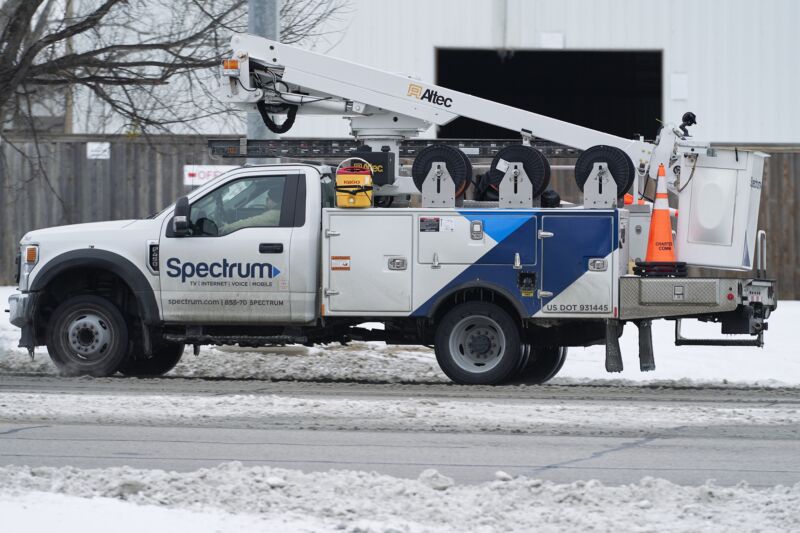
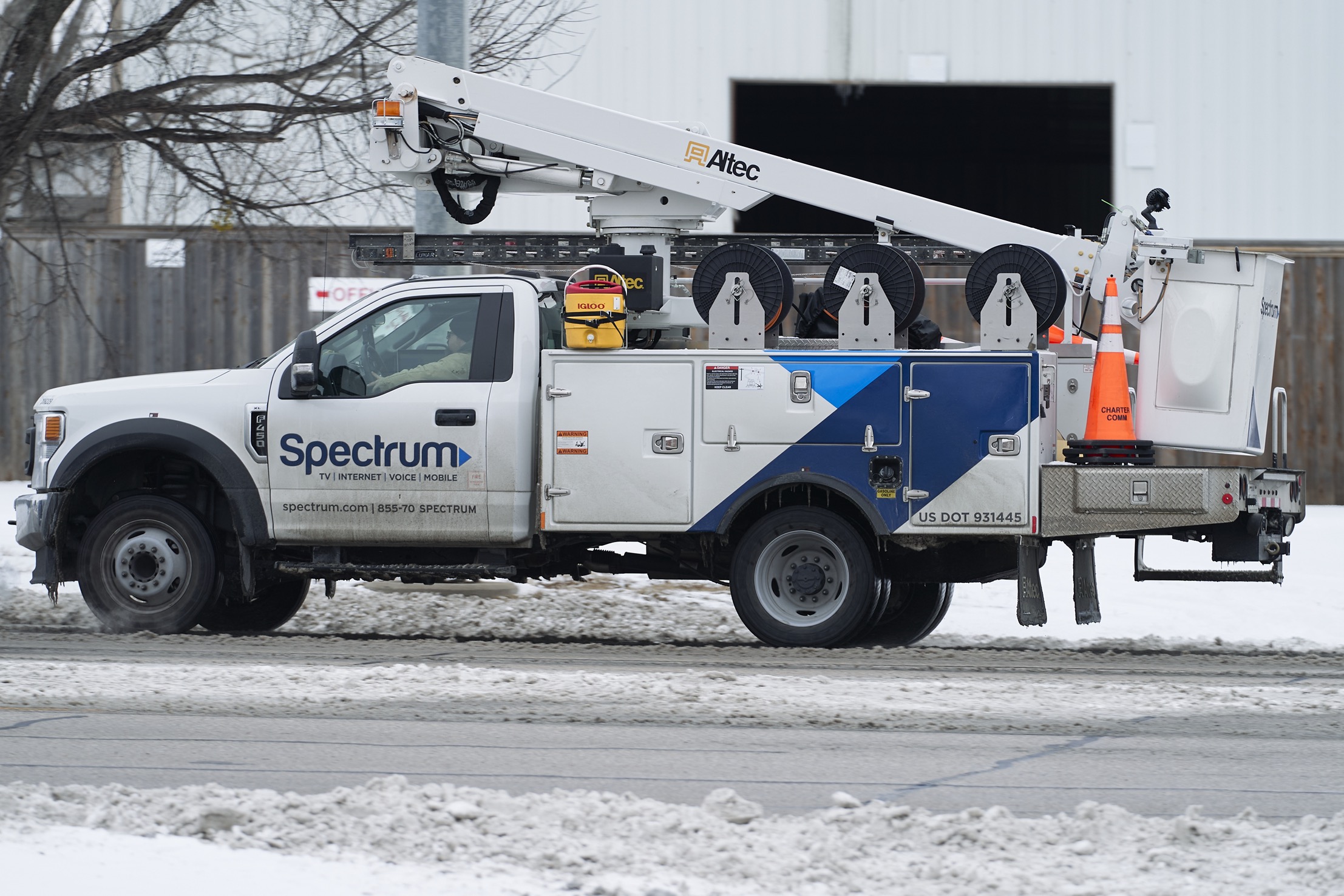
Enlarge/ A Charter Spectrum service truck in McKinney, Texas, on Tuesday, Feb. 16, 2021.
It’s no surprise that cable companies charge lower prices for broadband when they face competition from fiber-to-the-home services. But an article yesterday by Stop the Cap provides a good example of how dramatically promotional prices for Charter’s Spectrum Internet service can vary from one street to the next.
In this example, Charter charges $20 more per month for slower speeds on the street where it faces no serious competition. When customers in two areas purchase the same speeds, the customer on the street without competition could have to pay $40 more per month and would have their promotional rates expire after only one year instead of two.
Stop the Cap said it examined promotional offers to new customers in the metro Rochester, New York, market, “where Spectrum faces token competition from Frontier’s slow speed DSL service” and more robust competition in limited areas from Greenlight Networks’ fiber service. Greenlight fiber is available in 23 percent of Rochester, while Charter cable is available to homes throughout the city, according to BroadbandNow. Greenlight prices start at $50 per month for 500Mbps.
“Charter’s offers are address-sensitive,” Stop the Cap founder Phillip Dampier wrote. “The cable company knows its competition and almost exactly where those competitors offer service. That is why the company asks for your service address before it quotes you pricing.”
Dampier found that Charter offers 200Mbps service for $50 a month “[i]n neighborhoods where Spectrum enjoys a broadband monopoly.” Charter charges $70 for 400Mbps service in those same competition-free neighborhoods.
But “[j]ust one street away, where Greenlight offers customers the option of gigabit speed over a fiber-to-the-home network, Spectrum’s promotional prices are quite different,” Dampier wrote. On the competitive street, Charter charges only $30 a month for the same 400Mbps service that costs $70 nearby. As previously noted, customers on the noncompetitive street have to pay $50 for 200Mbps.
“Spectrum does not even bother offering new customers its entry-level 200Mbps plan in areas where it has significant fiber competition,” Dampier noted, referring to the promotional offers that pop up when you type in an address. “For $20 less per month, you get double that speed.”
For gigabit-download service, Charter charges $90 a month on the competitive street versus $110 on the noncompetitive street. These are the base prices without fees and taxes. Stop the Cap’s article included these screenshots from Charter’s promotional offers:
Charter prices on a street where the company faces no serious competition.
Charter prices on a street where it faces competition from fiber.
Longer price guarantee on competitive street
Charter also offers to lock in the monthly rate for two years in the competitive area, compared to just one year in the noncompetitive area. Prices can rise dramatically once promotional deals expire, so locking in a price for 24 instead of 12 months ensures that customers on competitive streets save even more money in the long run.
And that’s not all. Charter “charges a hefty $199.99 compulsory installation fee for gigabit service in noncompetitive neighborhoods. Where fiber competition exists, sometimes just a street away, that installation fee plummets to just $49.99,” Dampier wrote.
He added:
Note similar pricing variability exists in Spectrum service areas around the country, with the most aggressively priced offers reserved for addresses also served by a fiber-to-the-home provider or multiple competitors (e.g., cable company, phone company, Google Fiber or other [competitor]). Current customers typically have to cancel existing service and sign up as a new customer to get these prices.
Cable-company pricing varies widely, so the price difference between competitive and noncompetitive areas may be lower elsewhere. But the price differences show how valuable competition is to broadband subscribers.
Greenlight charges $50 per month for 500Mbps service, $75 for 750Mbps, $100 for 1Gbps, and $200 for 2Gbps. The company charges a $100 installation fee. It doesn’t offer promotional prices, so there isn’t a big automatic price hike after a set period like there is with many major ISPs.
Charter says it uses a “common” pricing strategy
When contacted by Ars, Charter said that “Spectrum Internet retail prices, speeds, and features are consistent in each market—regardless of the competitive environment.” But “retail prices” are the standard rates customers pay after promotional rates expire. Stop the Cap showed that Charter’s promotional rates vary between competitive and noncompetitive areas.
Charter told Ars that its promotional offers are affected by several factors, including “location.”
“Any promotional offers available to new customers are time-limited and vary based on a number of factors, such as time of year, location and programming, or device opportunities, and testing different promotional offers concurrently is common in a subscription business,” Charter said.
This isn’t the first time we’ve written about major Internet providers offering lower prices in competitive areas. In 2015, we noted that AT&T was charging $40 more per month for gigabit service in cities without Google Fiber.
Price isn’t the only factor that a customer might consider when choosing between Greenlight and Charter. As a fiber provider, Greenlight offers far higher upload speeds than Charter’s cable network.
Charter’s upload speeds max out at 35Mbps, while Greenlight’s start at 50Mbps. Greenlight currently lists upload speeds as being 10 percent of download speeds, so the 500Mbps-download plan has 50Mbps uploads, and the 2Gbps plan has 200Mbps uploads. But Greenlight plans to make its speeds symmetrical like other fiber providers do.
“In response to the COVID-19 pandemic, we are upgrading upload speeds for orders in Serviceable Greenlight Districts at no additional charge. Your upload speed will match your download speed (500/500, 750/750, 1000/1000, 2000/2000.),” the company’s website says.
Charter’s upload speeds start at only 4Mbps. Its 200Mbps download plan comes with 10Mbps upload speeds, and the 400Mbps download plan comes with 20Mbps upload speeds. You have to buy Charter’s gigabit-download plan to get its highest upload speeds of 35Mbps, slower than Greenlight’s lowest upload rate. Despite years of promising higher upload speeds through upgrades to cable’s DOCSIS standard, Charter and other cable companies still lag far behind fiber in upload capabilities.
Disclosure: The Advance/Newhouse Partnership, which owns 13 percent of Charter, is part of Advance Publications. Advance Publications owns Condé Nast, which owns Ars Technica.