Multiple US agencies probing world’s largest cryptocurrency exchange
Binance, the world’s largest cryptocurrency exchange, is under investigation by a laundry list of US government agencies, including the US Justice Department, the Internal Revenue Service, and the Commodity Futures Trading Commission, according to a report by Bloomberg. The agencies are probing Binance for potential criminal violations, the report says, though the company has not been accused of any wrongdoing.
The investigations come on the heels of a report by Chainalysis that traced $2.8 billion worth of illicit bitcoin on exchange and trading platforms. Of that, $756 million went through Binance. Most of the suspect accounts received small amounts, but the majority of the illicit cryptocurrency flowed to a few hundred accounts that received between $100,000 to $100 million. Government officials are said to be focused on money laundering and tax evasion.
The recent ransomware attack on the Colonial Pipeline that led to gasoline shortages has sharpened the focus on cryptocurrencies’ role in illegal activities. In that case, it’s reported that Colonial paid the attackers $5 million to return control of the pipeline’s operations. In another, a ransomware gang recently posted personnel records from District of Columbia’s Metropolitan Police Department after the department didn’t cave to their demands of a $4 million ransom. The group, known as Babuk, is behind other ransomware attacks and frequently requests payment in bitcoin.
Among cryptocurrency exchanges, Binance is a giant. In the last 24 hours, over $60 billion in trades flowed through Binance, more than triple its nearest competitor, Huobi, and far outpacing the US-domiciled Coinbase. Binance has risen quickly since its founding by CEO Changpeng Zhao in 2017 in Hong Kong. Today, the company is incorporated in the Cayman Islands and has an office in Singapore but reports that it has no official headquarters.
IRS agents have been investigating Binance for months, Bloomberg reports, and they are apparently scrutinizing both account holders and employees of the company. The CFTC is looking into whether Binance allowed Americans to trade illegally on the platform—US residents cannot trade cryptocurrency derivatives unless the company offering them is registered with the agency. And the Justice Department has reportedly assigned the investigation to its bank integrity unit, which handles particularly complex cases.
This isn’t the first time Binance’s name has appeared in criminal probes. Earlier this year, the company appeared in two separate criminal cases, though it was not accused of wrongdoing in either. In one case, in February, two Florida men were caught running an online fentanyl ring, and prosecutors alleged that one deposited the proceeds into a Binance account. In the other, federal prosecutors demanded the forfeiture of nearly $450,000 in cryptocurrencies held by a 20-year-old Ukranian, who had exchanged the bitcoin for Tether, the cryptocurrency that was formerly pegged to the dollar.
Another cryptocurrency exchange, BitMEX, was charged in October for violating the Bank Secrecy Act. The exchange allegedly allowed thousands of US customers to trade on the exchange even though the company claimed they could not. Three company officials have pleaded not guilty and a fourth is still at large.
https://arstechnica.com/?p=1765146
Tesla owner who “drives” from back seat got arrested, then did it again
The California Highway Patrol said it arrested a man seen riding in the back seat of a Tesla Model 3 that had no one in the driver’s seat. Param Sharma, 25, was arrested “and booked into Santa Rita Jail” on counts of reckless driving and disobeying an officer, the department said in a statement Tuesday. Sharma was arrested after multiple 911 calls on Monday around 6:30 pm reported a driverless vehicle “traveling eastbound on I-80 across the San Francisco-Oakland Bay Bridge toward the city of Oakland,” police said.
Sharma spent a night locked up, and he “committed the same crime shortly after being released from jail,” according to a story yesterday by KTVU Fox 2:
Param Sharma met KTVU’s Jesse Gary in San Francisco Wednesday afternoon, not far from his mother’s high-rise apartment. After getting out of jail on two counts of reckless driving, he pulled up sitting in the back seat of a Tesla with no one in the driver’s seat.
When asked if he purchased a new Tesla after the previous one was impounded he said, “Yeah, I’m rich as [expletive]. I’m very rich.”
“I feel safer back here than I do up there,” Sharma also told KTVU from the right-rear passenger seat.
Sharma expressed confidence in Tesla’s self-driving capabilities in another interview with KTVU. “I’ve been brake-checked before really hard, and the car stopped. The car came to a complete stop. [Tesla CEO] Elon Musk really knows what he’s doing, and I think people are tripping and they’re scared,” Sharma said.
The officer who pulled over Sharma “observed the individual move into the driver’s seat” and then bring the car to a stop, police said. Police said they had already “cited Sharma on April 27 for similar behavior.”
Sharma posted videos from back seat
Sharma this week also posted videos on Instagram of himself in the back seat of a moving Tesla with an empty driver’s seat. In one video, he is reading an article about himself titled “Man seen riding in the back seat of Tesla with no driver.” In a video posted yesterday, he says, “I just got out of jail. I already got [another] Tesla. You feel me, I’m rich like that. I came out of the pandemic a fucking millionaire, bitch.”
A California Highway Patrol spokesperson told Vice’s Motherboard that it is “recommending charges to the district attorney’s office” and “conducting a thorough investigation that will consider the possibility of previous incidents and obviously his social media.”
Tesla’s “Full Self-Driving” isn’t “autonomous”
Tesla says that “Autopilot is a hands-on driver assistance system that is intended to be used only with a fully attentive driver.” Consumer Reports last month found that Tesla’s driver-monitoring system “not only failed to make sure the driver was paying attention, but it also couldn’t tell if there was a driver there at all.”
Tesla’s Full Self-Driving system has more capabilities, but both “Autopilot and Full Self-Driving Capability are intended for use with a fully attentive driver, who has their hands on the wheel and is prepared to take over at any moment,” Tesla says.
Musk has said he expects the company to achieve Level 5 automation—the ability to drive without human attention—by the end of this year. However, a newly released California DMV memo says that Tesla’s director of Autopilot software, CJ Moore, told state regulators in March that Musk’s predicted timeline “does not match engineering reality.”
Tesla has a permit to “operate autonomous vehicles with human backup drivers in California,” but it does not have a permit “to put fully self-driving vehicles on California roads,” an Associated Press article noted in October 2020.
California law allows public use of autonomous cars if they meet certain conditions. But Tesla says its cars aren’t autonomous despite the names “Autopilot” and “Full Self-Driving.” A Tesla lawyer told the California DMV in December 2020, “[C]urrently neither Autopilot nor FSD Capability is an autonomous system, and currently no comprising feature, whether singularly or collectively, is autonomous or makes our vehicles autonomous.”
NTSB investigating deadly Tesla crash
In April, two men died when a Tesla Model S crashed into a tree in a residential neighborhood in Texas. Authorities said they found no one in the driver’s seat, but the National Transportation Safety Board’s preliminary report cast doubt on whether Tesla’s Autopilot system was being used. As we wrote at the time, “the NTSB says that video footage shows the occupants getting into the front seats of the car shortly before the crash,” and “the NTSB was unable to engage a component of Autopilot on the stretch of road where the crash happened.” NTSB investigators were able to “activate the Traffic Aware Cruise Control component of Autopilot on the stretch of road in question.”
“Using Autopilot requires both the Traffic Aware Cruise Control and the Autosteer systems to be engaged,” the NTSB report said.
https://arstechnica.com/?p=1764902
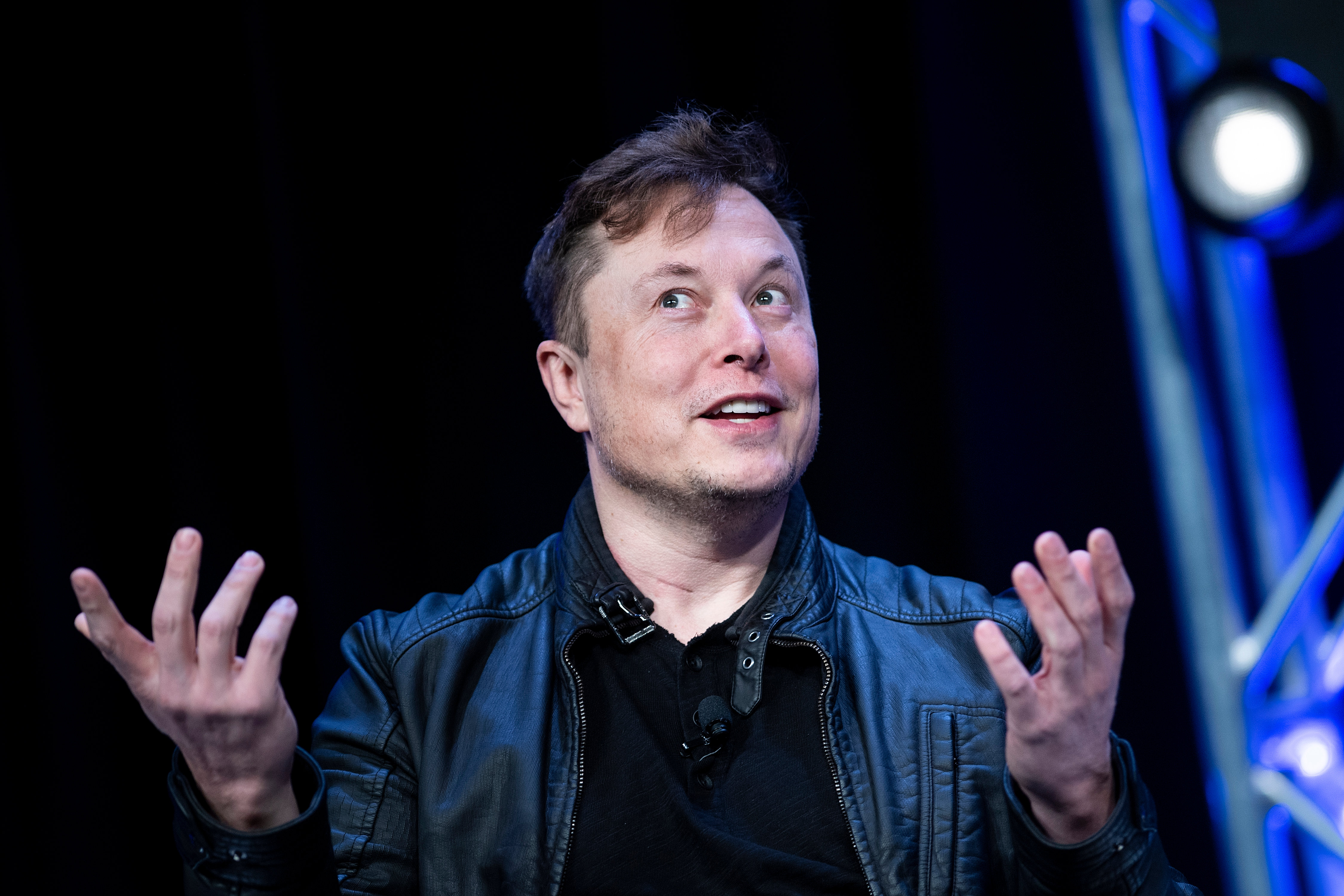
Musk: Bitcoin is bad for climate (and you can’t buy Teslas with it anymore)
Tesla CEO Elon Musk announced on Wednesday that Tesla would stop taking bitcoin as payment for the company’s electric vehicles. The change comes less than two months after the automaker began accepting the cryptocurrency. Why the about-face? Musk now says he has concerns over bitcoin’s carbon footprint.
Tesla’s purchase policy wasn’t the company’s only bitcoin-related announcement that has made waves. In February, the electric automaker disclosed that it had taken a $1.5 billion stake in the currency. Cryptocurrency promoters rejoiced at the string of announcements—Tesla’s moves had bolstered the currency’s legitimacy, and bitcoin’s price against the dollar surged over 15 percent in the wake of the disclosure.
But environmentalists despaired—the carbon footprint of purchasing a Tesla with bitcoin was so large that it swamped any emissions savings from driving it. Today, Musk appears to share that assessment. “We are concerned about rapidly increasing use of fossil fuels for Bitcoin mining and transactions, especially coal, which has the worst emissions of any fuel,” Musk wrote in a tweet.
As mining effort has increased over the years, the electricity required to maintain and expand the bitcoin network has surged. Today, the network uses about the same amount of electricity per year as Egypt, or about 150 TWh. (In fact, its electricity requirements are so great that a private equity firm bought and revamped a power plant expressly to mine bitcoin.)
Tesla says it originally bought bitcoin as an alternative asset, and so far, the move has paid off. Bitcoin trading padded Tesla’s first-quarter earnings this year to the tune of $101 million as prices have risen.
Since Musk’s tweet yesterday evening, bitcoin prices are down about 10 percent as of publication, according to Coindesk.
Musk followed his tweet with a graph from the Cambridge Bitcoin Electricity Consumption Index pointing to the recent rise in annualized electricity consumption for the entire bitcoin network. The trend is certainly increasing, though it’s important to note that your perspective on the chart may change depending on whether you’re viewing it on a desktop or on mobile—mobile devices compress the x-axis, making the recent rise seem more precipitous.
Also, it’s unclear whether that change represents a meaningfully worse environmental impact today compared with March 24, when Tesla’s bitcoin purchase option was announced. When purchased using dollars, a new Tesla Model 3 made and operated in the US produces about 8.85 tonnes of carbon dioxide over its lifetime (assuming it’s driven about 94,000 miles). The price of the same car on March 24, when Musk announced the payment option, would have been around one bitcoin, and at the time, one bitcoin had an estimated footprint of around 400 tonnes.
Not only does one Tesla’s worth of bitcoin pollute significantly more than the car itself, including manufacturing, it also represents more than five times the carbon pollution of an average combustion-engined vehicle in the US. And that’s according to Tesla’s own estimate. Today, that same Model 3 bought with bitcoin would produce over 500 tonnes of carbon pollution.
So yes, bitcoin’s environmental impact has gotten worse, but it wasn’t exactly climate-friendly back on March 24.
Still, Musk left the door open to other cryptocurrencies with lower footprints. “We are also looking at other cryptocurrencies that use <1% of Bitcoin’s energy/transaction,” he wrote. He also appeared to be prodding the bitcoin world toward more climate-friendly operations. “Tesla will not be selling any bitcoin and we intend to use it for transactions as soon as mining transition to more sustainable energy.”
That’s a tall order for a decentralized currency that’s mostly mined in a handful of high-emission countries. Tesla’s shifting stance on bitcoin may have been able to move the cryptocurrency’s price, but it remains to be seen whether the company’s move can change the currency’s climate impact.
https://arstechnica.com/?p=1764840
Biden signs executive order to strengthen US cybersecurity
President Joe Biden signed an executive order on Wednesday in an attempt to bolster US cybersecurity defenses after a number of devastating hacks, including the Colonial pipeline attack, revealed vulnerabilities across business and government.
“Recent cybersecurity incidents… are a sobering reminder that US public and private sector entities increasingly face sophisticated malicious cyber activity from both nation-state actors and cyber criminals,” the White House said.
Under the order, federal agencies will be required to introduce multi-factor authentication to their systems and encrypt all data within six months in a bid to make it harder for hackers to penetrate their IT infrastructure.
The order also requires IT providers that contract with the government to meet higher security requirements and report to the government if their systems have been breached. There would be strict timelines for disclosure on a sliding scale based on the severity of the incident, a senior administration official said.
A pilot of a new star rating system for software sold to the government will also be launched so that the officials and the public can judge how secure it is.
The measures come in the wake of the SolarWinds hack, in which Russian hackers hijacked American-made software to conduct espionage campaigns that targeted dozens of businesses, plus agencies like the US commerce and Treasury departments.
Earlier this year, it emerged that Chinese state-backed hackers had also been conducting stealthy attacks on multiple targets by exploiting recently disclosed vulnerabilities in Microsoft software.
The order also comes after a ransomware attack by a group of cyber criminals crippled a key East Coast pipeline run by Colonial on May 7, causing a run on gasoline and leading to fuel shortages. The 5,500-mile pipeline system resumed operations on Wednesday.
“These incidents share commonalities, including insufficient cybersecurity defenses that leave public and private sector entities more vulnerable to incidents,” the White House said.
In an effort to streamline government cyber defenses, the order seeks to introduce a “playbook” for how government agencies should respond to incidents and improvements in logging and information-sharing following breaches.
It also sets up a private-public sector board, to be named the Cybersecurity Safety Review Board, tasked with analyzing large cyber incidents after they have occurred and making recommendations to prevent them from happening again.
The board, which is modeled on the National Transportation Safety Board that investigates airplane and train crashes, would first be tasked with reviewing the SolarWinds hack, the senior administration official said.
$50 monthly broadband discounts available starting today via 825 ISPs
Getty Images | Oscar Wong
The Federal Communications Commission today opened enrollment for $50-per-month broadband subsidies for US residents who have low incomes or who lost income during the pandemic. Over 825 Internet service providers across the US are participating in the program, with the full list of ISPs in each state and territory available here. All the biggest ISPs and hundreds of smaller ones are participating, so the subsidies should be available in most areas with home Internet access.
Cable, fiber-to-the-home, DSL, and fixed wireless ISPs are among the home-Internet services included in the program. The subsidies aren’t just for home Internet, as many mobile providers are participating in the program as well. To enroll, go to getemergencybroadband.org and click on “Apply Now.” I received error messages when clicking the link today, but other people said it was working, so hopefully everyone who needs it will be able to get through without much trouble.
Update at 2:40pm ET: The FCC acknowledged that it’s having some trouble handling the high number of people trying to sign up for broadband subsidies, but said it is working on a fix. “We have witnessed a high level of demand in the Emergency Broadband Benefit Program, which demonstrates how critical this program is for families struggling to afford Internet service during the pandemic,” an FCC spokesperson told Ars. “We are actively working to resolve any issues users encounter and increasing resources to meet the demand. This high level of interest is evidence that Internet service is critical and for far too many is out of reach and why we need programs like this.”
Congress approved the subsidy program in December, providing $3.2 billion. “This pandemic-related program will continue until the $3.2 billion in federal funding runs out or six months after the Department of Health and Human Services declares an end to the pandemic,” the FCC said today. “Eligible households will be able to receive on their broadband bill a discount of up to $50 per month, or $75 on qualifying Tribal lands. They will also be eligible for a one-time discount of up to $100 to purchase a laptop, desktop computer, or tablet from participating providers if they contribute more than $10 and less than $50 toward the purchase price.”
How to qualify
There are a half-dozen or so ways to qualify for the subsidy. Households with incomes at or below 135 percent of federal poverty guidelines qualify, as do people who suffered a substantial loss of income since the pandemic began. All the ways in which households can qualify are listed at the program’s official website and in this Ars article published two weeks ago. There is also a page listing documents that people who apply may need to provide.
“This program will have a tremendous, positive impact on so many American households,” Acting FCC Chairwoman Jessica Rosenworcel said today. “It’s an investment in American families and a vote of confidence in the economic power of getting us all online. High-speed Internet service is vital for families to take advantage of today’s health, education, and workplace opportunities. And the discount for laptops and desktop computers will continue to have positive impact even after this temporary discount program wraps up.”
More detailed instructions for applying are available here. Besides the online tool, it is also possible to apply via postal mail or by contacting broadband providers participating in the program. The FCC posted a “Companies Near Me” tool to help people identify nearby ISPs.
Update on $7B fund for schools and libraries
The FCC is also moving closer to implementing a separate $7.17 billion emergency fund that Congress approved for schools and libraries. The FCC approved rules for the program yesterday, saying that the fund “will enable schools and libraries to purchase laptop and tablet computers, Wi-Fi hotspots, and broadband connectivity for students, school staff, and library patrons in need during the COVID-19 pandemic.”
The FCC said it has “adopt[ed] an application process that first provides funding to schools and libraries for purchases during the coming school year of eligible equipment and services for use by students, school staff, and library patrons who would otherwise lack access to eligible equipment or services sufficient to engage in remote learning and virtual library services.” During this first round of applications, schools and libraries “will be able to submit requests for funding for purchases made between July 1, 2021 and June 30, 2022.” If there is money left over, the FCC said it will open a second round of applications to reimburse schools and libraries for similar purchases “made from March 1, 2020 to June 30, 2021.”
https://arstechnica.com/?p=1764525
Snap suspends Yolo, LMK anonymous messaging apps after lawsuit over teen’s death
stockcam / Getty
Snapchat’s parent company, Snap, yesterday suspended two apps that allowed users to send anonymous messages to other users on the platform. The move came in response to a lawsuit filed Monday against Snap and the two messaging apps.
The lawsuit seeks class-action status to represent all 92 million Snapchat users, and it demands that Snap ban both Yolo and LMK from its app store. The developers of both apps, the suit alleges, did not implement adequate safeguards against harassing and bullying behavior.
The suit was brought by Kristin Bride, the mother of Carson Bride, a 16-year-old who suffered from cyberbullying on the Yolo and LMK apps. Over half the messages he received on Yolo were “meant to humiliate him, often involving sexually explicit and disturbing content,” according to the lawsuit. After a particularly personal string of insults, 16-year-old Carson searched in vain for how to reveal the identity of his bullies. Just over two weeks later, he took his own life. His last search was “reveal Yolo username online.”
Both Yolo and LMK rely on Snap Kit, a platform that allows developers to tap into Snapchat-specific functionality like logins, Bitmoji avatars, stickers, and various app-specific content features. Of the two, Yolo, a reference to the phrase “you only live once,” has garnered the most attention. First released in May 2019, the app shot to the top of the charts in the week after its launch. In February 2020, the company raised $8 million. “What we are trying to build is a new kind of network where there’s a fluidity to identity,” Yolo co-founder Greg Henrion told Tech Crunch at the time. “We weren’t sure if Yolo was here to stay, but we’re still ranking well and there seems to be a real opportunity in anonymity starting with Snapchat Q&A.”
Enlarge/ Yolo’s now-removed app store screenshots highlight the app’s anonymous messaging features.
Yolo / iOS App Store
Yolo users could post questions to their Snap accounts for other users to answer anonymously, and Yolo later added a group chat feature allowing users to invite friends or friends of friends. In group chat mode, users were represented by their Bitmoji avatars rather than usernames, and once per hour, users could use a “Superpower” function to send completely anonymous messages to the entire group.
Other anonymous chat apps like YikYak folded after becoming littered with hateful speech. But years after those apps shut down, Yolo’s developers persisted, apparently thinking they had the problem solved. As part of the sign-up process, Yolo included a pop-up warning users, “YOLO has no tolerance for objectionable content or abusive users. You’ll be banned for any inappropriate usage.” The company initially outsourced moderation to Two Hat, though its unclear if that arrangement remains in place.
“We’re strict on moderation. When looking at the reviews about bullying, it’s like nothing compared to any other anonymous app. I think we solved 90% of the problem,” Henrion said in the Tech Crunch interview.
Either Henrion overestimated his company’s mastery of the problem or the remaining 10 percent was skewed toward bullying and other harmful messages. Archived app store reviews for the iOS version show that users were complaining of bullying behavior as recently as last Friday. “I keep getting bullied on here and every time I try blocking the person who is sending nasty messages it doesn’t work!!” one review read. We’ve reached out to Yolo and Snap for comment and will update this article if we hear from them.
Enlarge/ As recently as May 7, 2021, reviewers complained about bullying on Yolo.
SensorTower
The lawsuit alleges that the Yolo and LMK apps were “dangerous and defective,” a tack that attempts to work around Section 230 to hold platforms and app developers accountable. It’s an approach that the 9th Circuit Court of Appeals seemed to endorse in a decision issued last week. That case was brought against Snap by the parents of two deceased teenagers who died in a high-speed crash while using the Snapchat Speed Filter in an attempt to unlock a “reward” the teens thought existed for exceeding 100 mph.
“In short, Snap, Inc. was sued for the predictable consequences of designing Snapchat in such a way that it allegedly encouraged dangerous behavior. Accordingly, the panel concluded that Snap, Inc. did not enjoy immunity from this suit under § 230(c)(1) of the CDA,” the appellate court said in its opinion, which reversed a lower court decision dismissing the case.
The new suit against Snap, Yolo, and LMK also argues that the app-makers did not fulfill their own terms of service, a strategy that relies on recent decisions relating to consumer protection law. Though no court has ruled in favor of this argument yet, one recent ruling in a case against the dating app Grindr seemed to open the door.
Yolo may be particularly at risk here. The company made claims that it had “no tolerance” for abusive users, but when Bride’s parents attempted to contact the company months after their son’s death to try to unmask his bullies, the email Yolo provided for law enforcement cases bounced. Bride’s parents tried again, this time using the customer support email. The company has not responded.
Update: A Snap spokesperson sent the following statement to Ars after publication: “In light of the serious allegations raised by the lawsuit, and out of an abundance of caution for the safety of the Snapchat community, we are suspending both YOLO and LMK’s Snap Kit integrations while we investigate these claims.”
Correction: Yolo uses Hive for image moderation, not text moderation, which it outsourced to Two Hat. This post has been updated to reflect that.
If you or someone you know is feeling suicidal or in distress, please call the Suicide Prevention Lifeline number: 1-800-273-TALK (8255), which will put you in touch with a local crisis center.
https://arstechnica.com/?p=1764515
Baltimore chief prosecutor asks FCC to stop negative news coverage about her
Enlarge/ Baltimore chief prosecutor Marilyn Mosby being interviewed by NBC News in August 2016, in the neighborhood where Freddie Gray was arrested shortly before his death from a spinal cord injury.
Baltimore’s chief prosecutor has asked the Federal Communications Commission to stop a local Fox News affiliate’s negative coverage about her, claiming that the “tone of the coverage” violates FCC rules.
The office of Marilyn Mosby, the Maryland State’s Attorney (SA) for Baltimore, filed the formal complaint last week against “FCC-licensed station WBFF, a Baltimore City-based Fox News-affiliated network.” The complaint asked acting FCC Chairwoman Jessica Rosenworcel and the rest of the commission “to enlist the full investigative and enforcement powers granted to you by the federal government to take action against the WBFF as soon as possible.” Mosby is a Democrat, and WBFF is part of the conservative Sinclair Broadcast Group.
The closest the complaint comes to alleging a factual error is in reference to a guest on one segment who said that Mosby is “a follower of the George Soros playbook, who’s… bought and paid for these elected DAs.” The complaint said that “State’s Attorney Mosby has never received a penny from George Soros or any of his political groups.” However, that segment was made by one of Sinclair’s national shows that runs on many stations and was not produced by WBFF.
Constitutional right of free press
The Radio Television Digital News Association urged the FCC to reject Mosby’s complaint, saying that “local journalists across the country have a Constitutionally guaranteed obligation to serve their communities by seeking and reporting the truth, often by reporting on the public activities of public officials.”
Mosby’s complaint points to an FCC rule that says, “[b]roadcasters may not intentionally distort the news,” and claimed that “WBFF persistently follows a disconcerting and dangerous pattern: beginning with a slanted, rigged, misleading, or inflammatory headline; followed by a conspiracy theory; and supported with guest commentary from disgruntled ex-employees or political opponents that lend false credibility to their biased coverage or omission of facts. Utilizing this pattern of practice in their broadcasts, citizens are not only consistently misinformed about the basis and intent of prosecutorial policies, additionally the merit of criminal convictions are distorted to detract from the public good championed by prosecutors.”
The complaint said that WBFF ran 248 stories about Mosby in 2020 and 141 so far in 2021, far more than any other Baltimore station. “While the frequency of coverage in question by the WBFF would give any reasonable person pause, it is the tone of the coverage that violates the FCC rules,” the complaint said. “The coverage by the WBFF represents acts that are not merely against the public interest; they also represent acts that are inflammatory against the safety of an elected official. In the public sphere, Fox News is infamous for its bias against people of color, and even more against those who could be deemed ‘progressive’ people of color.”
The FCC is highly unlikely to revoke a license or otherwise punish a news station for the “tone” of its coverage. As an FCC document explains, “the First Amendment and the Communications Act bar the FCC from telling station licensees how to select material for news programs or prohibiting the broadcast of an opinion on any subject.” The FCC further explains why it rarely intervenes in claims of news distortion:
The Commission often receives complaints concerning broadcast journalism, such as allegations that stations have aired inaccurate or one-sided news reports or comments, covered stories inadequately, or overly dramatized the events that they cover. For the reasons noted previously, the Commission generally will not intervene in these cases because it would be inconsistent with the First Amendment to replace the journalistic judgment of licensees with our own. However, as public trustees, broadcast licensees may not intentionally distort the news. The FCC has stated that “rigging or slanting the news is a most heinous act against the public interest.” The Commission will investigate a station for news distortion if it receives documented evidence of rigging or slanting, such as testimony or other documentation, from individuals with direct personal knowledge that a licensee or its management engaged in the intentional falsification of the news. Of particular concern would be evidence of the direction to employees from station management to falsify the news. However, absent such a compelling showing, the Commission will not intervene.
Mosby’s three-page complaint doesn’t refer to any “documented evidence of rigging or slanting” along the lines of what the FCC would require to take action.
The FCC says the broadcast of hoaxes concerning crimes or catastrophes can violate the commission’s rules but only if the “station licensee knew that the information was false; broadcasting the false information directly causes substantial public harm; and it was foreseeable that broadcasting the false information would cause such harm.”
Mosby alleges “pointed threat” to her safety
Mosby’s complaint said that “WBFF deliberately broadcast the home address of State’s Attorney Mosby on live TV during one of its news segments” and “made a formal inquiry attempting to find out the schools the SA’s children attended.” Saying that Mosby “has received innumerable personal death threats and hate mail, including letters describing how her husband would be killed on the steps of her home,” the complaint alleged that WBFF’s coverage is “malicious” and a threat to her and her family’s safety:
These threats against SA Mosby are facts known by the WBFF—they aired reports of the numerous death threats made against her. As such, when the WBFF network and its administrators willfully publicize the State’s Attorney’s home address, and when they take further steps to facilitate the publication of where her young children attend school, their acts rise beyond mere professional irresponsibility and become what can only be reasonably deemed malicious, against the public interest, and a pointed threat to the safety of the State’s Attorney’s life and that of her family.
Mosby’s complaint provided six examples of what it called “WBFF’s distorted coverage about the State’s Attorney’s Office and its leadership.” The headlines quoted in the complaint were as follows:
“To be clear, the State’s Attorney’s Office is not above receiving criticism,” the complaint said. “We welcome being held accountable, and we support First Amendment freedom of speech. However, what we find troubling, abhorrent, and outright dangerous, is that the distinctly relentless slanted broadcast news campaign, against the Baltimore City State’s Attorney’s Office and its lead prosecutor, has the stench of racism.”
“Direct attack on free speech” and journalism
Rosenworcel hasn’t weighed in publicly on Mosby’s complaint yet. She opposed then-President Donald Trump’s call for the FCC to “challenge” NBC’s license in 2017 because of what he deemed “fake news.” In 2020, Rosenworcel opposed Trump’s attempt to crack down on Facebook and Twitter, saying that the FCC must not become “the president’s speech police.”
FCC Republican Brendan Carr yesterday urged the commission to reject Mosby’s complaint, saying that Mosby “has launched a chilling and direct attack on free speech and journalistic freedom” and is trying to “censor a newsroom simply because journalists are doing their constitutionally protected jobs and shining a light on the work of the State’s Attorney.”
Unlike Rosenworcel, Carr cheered on Trump’s attempt to limit social-media sites’ ability to moderate and block content. Carr accused social media platforms of bias against Trump and called for “a neutral application of terms of service to all Americans.”
Mosby faces federal investigation
Regarding the Mosbys, Carr said, “It is particularly troubling that a public official would work to silence reporters that are investigating her work at a time when federal prosecutors have already opened a criminal investigation into her activities.”
Carr was referring to an investigation into Mosby and her husband, Baltimore City Council President Nick Mosby. In March, the Baltimore Sun reported that “[f]ederal prosecutors have opened a criminal investigation into Baltimore City Council President Nick Mosby and State’s Attorney Marilyn Mosby, subpoenaing her campaign and the couple’s business records, according to a grand jury subpoena.”
“The US Attorney’s office and the FBI requested a wide range of financial records related to the power couple: tax returns, bank statements, credit card statements, loan documents and canceled checks,” the article continued. “They subpoenaed Mosby’s campaign treasurer and requested records tracing back to 2014, some related to the Mosbys’ private travel and consulting businesses.” A lawyer for the couple called the probe a “baseless and politically motivated investigation” and said that the Mosbys “are high-profile public servants that fight everyday against systems of injustice, inequality, and racism” and “have been at the forefront of police accountability reform, criminal justice reform, and racial health disparities.”
https://arstechnica.com/?p=1764100
Amazon “seized and destroyed” 2 million counterfeit products in 2020
Enlarge/ Amazon trailers backed into bays at a distribution center in Miami, Florida, in August 2019.
Amazon “seized and destroyed” over 2 million counterfeit products that sellers sent to Amazon warehouses in 2020 and “blocked more than 10 billion suspected bad listings before they were published in our store,” the company said in its first “Brand Protection Report.”
In 2020, “we seized and destroyed more than 2 million products sent to our fulfillment centers and that we detected as counterfeit before being sent to a customer,” Amazon’s report said. “In cases where counterfeit products are in our fulfillment centers, we separate the inventory and destroy those products so they are not resold elsewhere in the supply chain,” the report also said.
Third-party sellers can also ship products directly to consumers instead of using Amazon’s shipping system. The 2 million fakes found in Amazon fulfillment centers would only account for counterfeit products from sellers using the “Fulfilled by Amazon” service.
The counterfeit problem got worse over the past year. “Throughout the pandemic, we’ve seen increased attempts by bad actors to commit fraud and offer counterfeit products,” Amazon VP Dharmesh Mehta wrote in a blog post yesterday.
Counterfeiting is a longstanding problem on Amazon. Other problems on Amazon that harm consumers include the sale of dangerous products, fake reviews, defective third-party goods, and the passing of bribes from unscrupulous sellers to unscrupulous Amazon employees and contractors. One US appeals court ruled in 2019 that Amazon can be held responsible for defective third-party goods, but Amazon has won other similar cases. Amazon is again arguing that it should not be held liable for a defective third-party product in a case before the Texas Supreme Court that involves a severely injured toddler.
Amazon tries to reassure legit sellers
Amazon’s new report was meant to reassure legitimate sellers that their products won’t be counterfeited. While counterfeits remain a problem for unsuspecting Amazon customers, the e-commerce giant said that “fewer than 0.01 percent of all products sold on Amazon received a counterfeit complaint from customers” in 2020. Of course, people may buy and use counterfeit products without ever realizing they are fake or without reporting it to Amazon, so that percentage may not capture the extent of the problem.
Amazon’s report on counterfeits describes extensive systems and processes to determine which sellers can do business on Amazon. While Amazon has argued in court that it is not liable for what third parties sell on its platform, the company is monitoring sellers in an effort to maintain credibility with buyers and legitimate sellers.
Amazon said it “invested over $700 million and employed more than 10,000 people to protect our store from fraud and abuse” in 2020, adding:
We leverage a combination of advanced machine learning capabilities and expert human investigators to protect our store proactively from bad actors and bad products. We are constantly innovating to stay ahead of bad actors and their attempts to circumvent our controls. In 2020, we prevented over 6 million attempts to create new selling accounts, stopping bad actors before they published a single product for sale, and blocked more than 10 billion suspected bad listings before they were published in our store.
“This is an escalating battle with criminals that attempt to sell counterfeits, and the only way to permanently stop counterfeiters is to hold them accountable through litigation in the court system and through criminal prosecution,” Amazon also said. “In 2020, we established a new Counterfeit Crimes Unit to build and refer cases to law enforcement, undertake independent investigations or joint investigations with brands, and pursue civil litigation against counterfeiters.”
Amazon said it now “report[s] all confirmed counterfeiters to law enforcement agencies in Canada, China, the European Union, UK, and US.” Amazon also urged governments to “increase prosecution of counterfeiters, increase resources for law enforcement fighting counterfeiters, and incarcerate these criminals globally.”
Stricter seller-verification system
Amazon said it had a “new live video and physical address verification” system in place in 2020 in which “Amazon connects one-on-one with prospective sellers through a video chat or in person at an Amazon office to verify sellers’ identities and government-issued documentation.” Amazon said it also “verifies new and existing sellers’ addresses by sending information including a unique code to the seller’s address.”
Most new attempts to register as a seller were apparently fraudulent, as Amazon said that “only 6 percent of attempted new seller account registrations passed our robust verification processes and listed products.” Overall, Amazon “stopped over 6 million attempts to create a selling account before they were able to publish a single listing for sale” in 2020, more than double “the 2.5 million attempts we stopped in 2019,” Amazon said.
The verification process isn’t enough on its own to stop all new fraudulent sellers, so Amazon said it performs “continuous monitoring” of sellers to identify new risks. “If we identify a bad actor, we immediately close their account, withhold funds disbursement, and determine if this new information brings other related accounts into suspicion. We also determine if the case warrants civil or criminal prosecution and report the bad actor to law enforcement,” Amazon said.
Amazon monitors product detail changes for fraud
One problem we wrote about a few months ago involves “bait-and-switch reviews” in which sellers trick Amazon into displaying reviews for unrelated products to get to the top of Amazon’s search results. In one case, a $23 drone with 6,400 reviews achieved a five-star average rating only because it had thousands of reviews for honey. At some point, the product listing had changed from a food item to a tech product, but the reviews for the food product remained. After a purging of the old reviews, that same product page now lists just 348 ratings at a 3.6-star average.
Amazon is trying to prevent recurrences of this problem, saying in its new report that it scans “more than 5 billion attempted changes to product detail pages daily for signs of potential abuse.”
Amazon also provides self-service tools to companies to help them block counterfeits of their products. Amazon’s report said that 18,000 brands have enrolled in “Project Zero,” which “provides brands with unprecedented power by giving them the ability to directly remove listings from our store.” The program also has an optional product serialization feature that lets sellers put unique codes on their products or packaging.
The self-service tool only accounts for a tiny percentage of blocked listings. “For every 1 listing removed by a brand through our self-service counterfeit removal tool, our automated protections removed more than 600 listings through scaled technology and machine learning that proactively addresses potential counterfeits and stops those listings from appearing in our store,” Amazon said.
https://arstechnica.com/?p=1763878
Private-equity firm revives zombie fossil-fuel power plant to mine bitcoin
Aurich Lawson / Getty
Few bitcoin projects illustrate the cryptocurrency’s enormousclimate impact better than the Greenidge power plant in upstate New York. The once-abandoned power plant was bought by private equity firm Atlas Holdings and retasked. A significant portion of Greenidge’s electricity no longer powers nearby homes or businesses; rather, the plant’s smokestacks are increasingly pouring pollutants into the atmosphere in the service of mining bitcoin.
Now, Greenidge is on the verge of ramping up its bitcoin ambitions. By the end of this year, it plans to have 18,000 specialized machines mining bitcoin, and with the recent approval of its data center expansion plans, it will add 10,500 more. When the project is complete, the miners will be using 79 percent of the power plant’s capacity, or 85 MW.
“No direct competitor currently owns and operates its own power plant for the purpose of bitcoin mining,” the company wrote in its recent S-4 filing with the SEC. “No other bitcoin-mining operation of this scale in the United States currently uses power generated from its own power plant.” The filings came as a result of Greenidge’s recent merger with Support.com.
Many nearby residents are not pleased. At a planning board meeting last month in the town of Torrey, New York, a crowd of around 50 people were split in their opinion of Greenidge’s expansion plans. The additional four data center buildings would provide 12 long-term jobs, but the mining operations would significantly contribute to air pollution in the area and discharge hot water into a nearby trout stream that empties into Seneca Lake.
Environmental groups are concerned about the plant’s footprint. Dozens of local residents, along with the Sierra Club and others, have filed a lawsuit to halt the expansion, claiming it would violate New York law by discharging high-temperature water into the stream and lake and that those discharges would increase the likelihood of harmful algae blooms. Toxins produced by such blooms cannot be stripped from the water, and several petitioners draw their homes’ drinking water directly from the lake.
Part of the controversy stems from the fact that Greenidge was once destined for the scrap heap. Its owner had gone bankrupt a decade ago, and the coal-fired power plant was retired and its operating permits abandoned. But then Atlas Holdings bought the plant in 2014 and spent $65 million to convert it to natural gas and get it running again. Greenidge restarted in 2017 and spent the next two years testing its bitcoin-mining strategy. Over time, it sold less electricity to the grid, devoting more and more power to its mining operations.
The plant’s shift to bitcoin-only operation comes at a time when New York state is fighting to keep cryptocurrency miners from taking advantage of the state’s cheap power. In 2018, the Public Service Commission gave municipal power companies the ability to raise rates on cryptocurrency customers.
Greenidge’s operations aren’t affected by PSC decisions, though. Their mining happens “behind the meter,” meaning it’s not affected by grid-level prices. And those operations appear to be fantastically profitable. Between February 2020 and February 2021, the company mined nearly 1,186 bitcoin at a cost of $2,869 per bitcoin. Today, one bitcoin is trading at $57,475.
In the company’s SEC filings, Greenidge says it will use expertise developed at its current power plant to expand to at least 500 MW of mining capacity by 2025.
https://arstechnica.com/?p=1763789
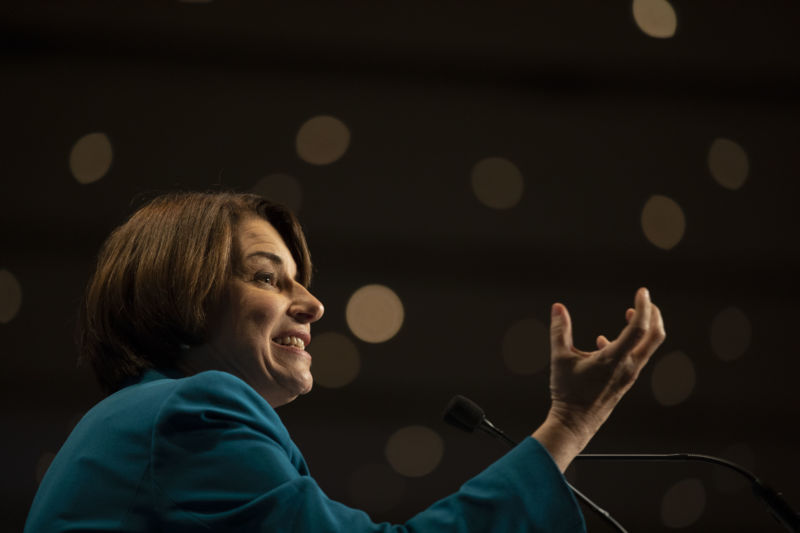
Why Amy Klobuchar just wrote 600 pages on antitrust
Nonetheless, I welcomed the chance to speak with her. Klobuchar has enjoyed a heightened profile since her presidential run and quick pivot to the eventual winner, Joe Biden, so she had her choice of book subjects to focus on. Ultimately, she produced 600 pages on the relatively arcane topic of antitrust law, a telling choice. Her goal is to make the subject less arcane, in hopes that a grassroots movement will support her effort to fortify and enforce the laws more vigorously. In the book, Klobuchar attempts to inspire readers with a history of the field, which in her rendering sprang from a spirited populist movement that included her own coal-mining ancestors. That’s why her book is stuffed with vintage political cartoons, typically portraying Gilded Age barons as bloated giants, hovering over workers like top-hatted Macy’s balloons. (Obviously those were the days before billionaires had Peloton.)
I’m not sure the downtrodden masses are about to become radicalized by thumbing through the 204 pages of footnotes in Antitrust. But as Klobuchar says, people are starting to realize that the wonderful products from sprightly startup founders have locked them into relationships with trillion-dollar, competition-killing behemoths. “In the beginning, consumers may have gotten a good deal, but history shows that in the end, monopolists do what monopolists want to do,” she says.
No wonder people feel helpless, especially when the government has done very little to curb consolidation and predatory practices in the past few decades. “Monopolies tend to have a lot of control, not just over consumers, but also over politics,” says Klobuchar. “People have just gotten beaten down. I wanted to show the public and elected officials that you’re not the first kids on the block with this. What do you think it was like back when trusts literally controlled everyone on the Supreme Court, or literally elected members of the Senate before they were elected by the public?”
I suppose it would be like… now. Where the power and political donations of big corporations have led to merger after merger, and where courts are dominated by jurists who cling to the pro-business dogma pioneered by Judge Robert Bork. (Klobuchar is excellent in describing how Bork provided a legal framework for anti-consumer conservatives to set the bar ridiculously high in enforcing competition.) Klobuchar admits that the current makeup of the Supreme Court, especially with corporate fanboy Neil Gorsuch in and Ruth Bader Ginsberg out, presents a considerable obstacle to reform. Her solution is to create new legislation that even our sitting judges will have to respect. That’s why the law she cosponsors has specific limits on the market power of big companies, including a ban on large mergers and acquisitions.
Klobuchar’s book comes just as her senate colleague, Josh Hawley of Missouri, released his own book about antitrust, as well as his own version of an antitrust law. In his treatise, Hawley expresses contempt for monopolies, a view that didn’t prevent him from accepting huge political donations from monopoly-defender Peter Thiel, who once wrote an op-ed for The Wall Street Journal headlined “Competition Is for Losers.” Hawley’s complaints are less rooted in history than Klobuchar’s and are seemingly motivated by his questionable belief that tech platforms stifle conservative speech. But even so, Klobuchar thinks there might be common ground.
Klobuchar takes pains to say she’s not anti-tech. “I am never saying, ‘Get rid of their products.’ But let’s have more of the products that give you more choices. You can keep one product, but it’s better to have other products, because we’re not China.” In other words, Facebook could keep it’s main app, but the public might benefit if Instagram and WhatsApp were not Mark Zuckerberg productions. She also notes that she’s concerned not only with tech, but also with other heavily consolidated industries like pharma.
While I have Klobuchar on the line, I ask her why legislators so often embarrass themselves in hearings with irrelevant partisanship, clueless technical questions, and time-wasting grandstanding. “Welcome to my life,” she says. “I get it—there’s going to be hearings that are irritating to people who know a lot. But that’s a great argument for tech to use because they don’t want this oversight.” She claims that lately the hearings have become more sophisticated and useful, citing a recent one she chaired that investigated the practices of Apple’s App Store and Google’s search results. Executives from smaller firms testified to apparently predatory practices from those trillion-dollar rivals. “We actually got to something,” she says.
I ask her to pick one thing that the tech companies have done in the past decade that she’d like to roll back. “I’m not going to pick one merger,” she says, but she does mention the Facebook acquisitions again, as well as Google’s preferential search functions. Oh, and she would have had companies build in better privacy. “I wouldn’t destroy those companies,” she says. “I would just do what antitrust laws are supposed to do, which is create a competitive environment and stop exclusionary behavior.”
At the end of her book, Klobuchar lists 44 suggestions for reform. The last is surprising: “Stop using the word antitrust.” The issues she addresses, she writes, are broader than those covered by that specific term. If you want to do that, I ask, why did you use that word as your book title? “Well, I thought antitrust was an interesting word,” she says. “It’s not only about this body of law; it’s also about not trusting anyone.”
Indeed, if Klobuchar had written a book about “trust,” it would be a much slimmer volume. And maybe that fact is an even bigger problem than the one posed by Big Tech.