Cable lobby says it hates Biden plan to expand broadband and lower prices
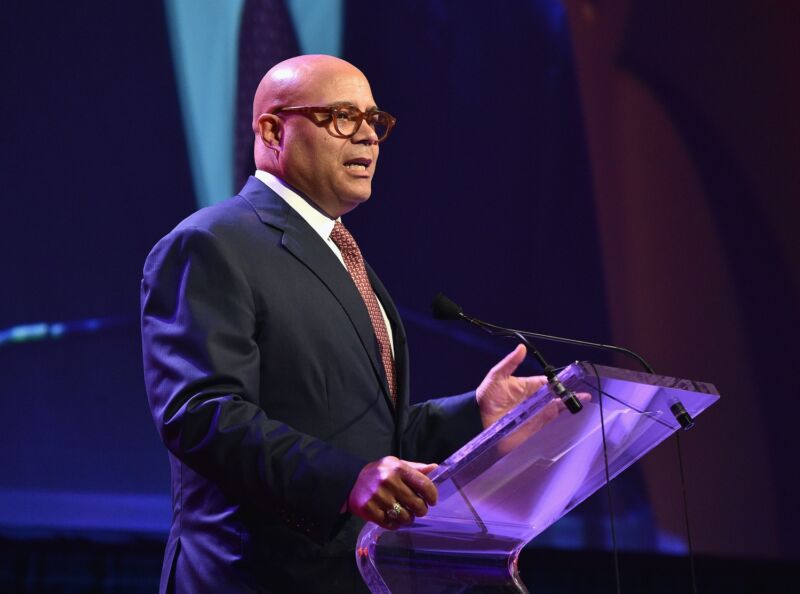
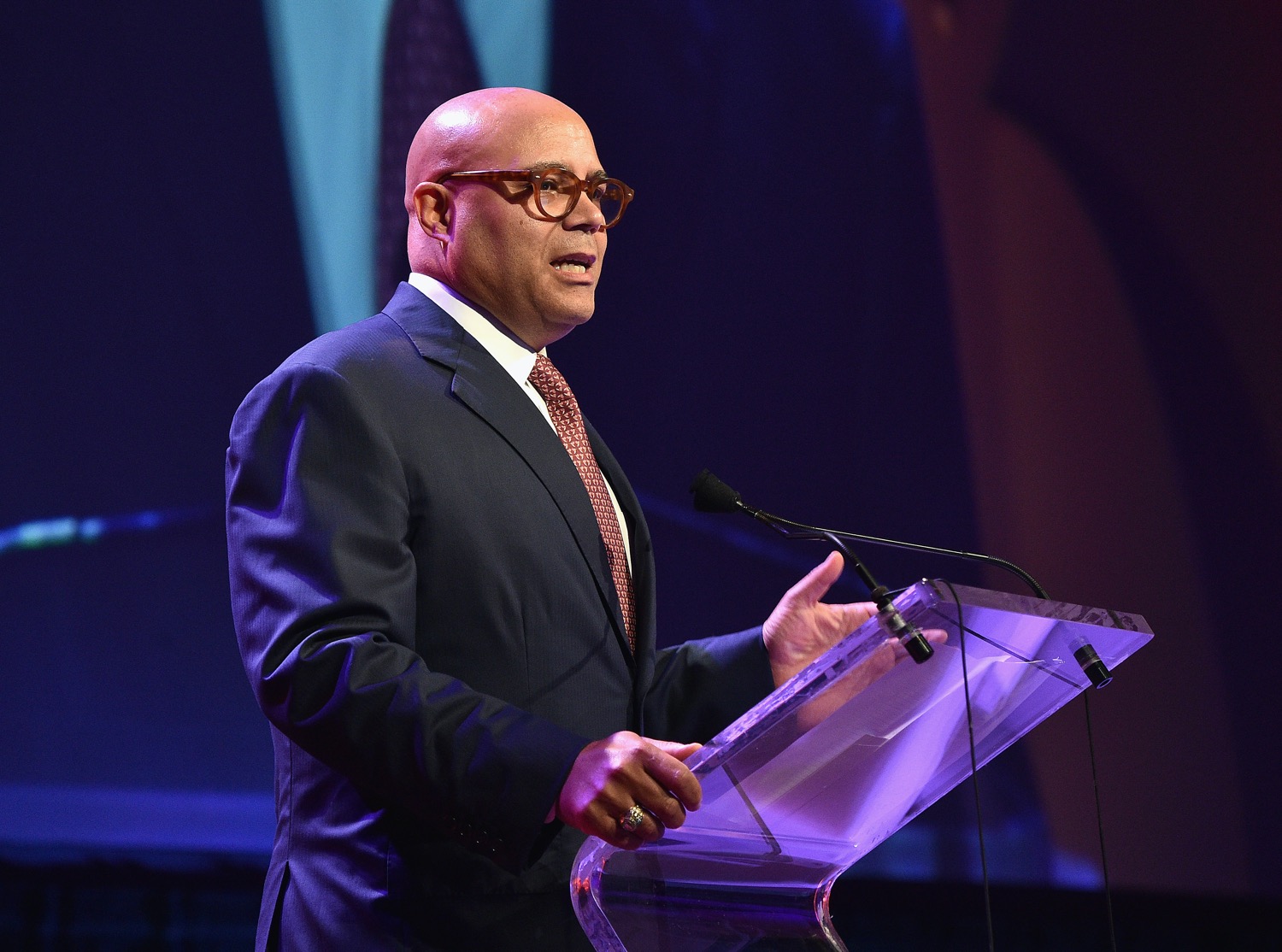
Cable lobbyist Michael Powell speaking in front of a podium.
Enlarge / Cable lobbyist Michael Powell speaks at a conference in September 2015.
Getty Images | Larry Busacca

President Biden’s plan to expand broadband access and lower prices is, predictably, facing bitter opposition from cable companies that want to maintain the status quo.

NCTA–The Internet & Television Association, which represents Comcast, Charter, Cox, and other cable companies, argued that Biden’s plan is “a serious wrong turn.” NCTA is particularly mad that Biden wants to expand municipal broadband networks that could fill gaps where there’s no high-speed broadband from private ISPs and lower prices by providing competition to cable companies that usually dominate their regional territories.

“The White House has elected to go big on broadband infrastructure, but it risks taking a serious wrong turn in discarding decades of successful policy by suggesting that the government is better suited than private-sector technologists to build and operate the Internet,” NCTA CEO Michael Powell wrote in a statement.

Before becoming a lobbyist, Powell was chairman of the Federal Communications Commission under President George W. Bush. In that role, Powell led a vote in 2002 that prevented common-carrier regulation of cable Internet, with his FCC claiming that the decision would “result in better quality, lower prices, and more choices for consumers.”

Yesterday, Powell claimed that America’s broadband is just fine the way it is. Biden is “mistakenly lumping in our successful modern digital networks with our decaying roads, bridges, waterways, and electric grids,” Powell wrote. “While we have seen repeated examples of traditional infrastructure failures in recent years, America’s broadband has been a reliable workhorse as millions of Americans have worked, learned, and stayed connected from home during the pandemic. Simply put, the high caliber of our broadband networks kept millions of Americans safe and will continue to revolutionize work, healthcare, education, and more.”

USTelecom, which represents AT&T, Verizon, and other DSL and fiber providers, also claimed that things are going well and that Biden should stick with a strategy centered on private ISPs.

“Today’s broadband marketplace is also ultra-competitive, defined by increasing speeds, declining prices, new entrants and next generation technologies,” USTelecom CEO Jonathan Spalter said. “Congress now should prioritize affordability and accessibility solutions that are fast and smart and incentivize continued private investment to get the job done.”

Biden: “Americans pay too much for Internet service”

Biden’s plan would make a $100 billion broadband investment and, per the White House’s description, “prioritizes support for broadband networks owned, operated by, or affiliated with local governments, non-profits, and co-operatives—providers with less pressure to turn profits and with a commitment to serving entire communities.”

Biden’s plan talks of “lifting barriers that prevent municipally owned or affiliated providers and rural electric co-ops from competing on an even playing field with private providers,” which may be a reference to overturning nearly 20 state laws that restrict the growth of municipal networks.

Biden further proposed “requiring Internet providers to clearly disclose the prices they charge,” an idea opposed by cable companies because they like to advertise low prices and then sock customers with bigger monthly bills by tacking on hidden fees. Biden also wants other action to lower prices, though exactly what that would be is unclear. The plan said that “the president is committed to working with Congress to find a solution to reduce Internet prices for all Americans, increase adoption in both rural and urban areas, hold providers accountable, and save taxpayer money.”

The Biden plan also said that “Americans pay too much for the Internet—much more than people in many other countries.” Further, “more than 30 million Americans live in areas where there is no broadband infrastructure that provides minimally acceptable speeds,” and, “in part because the United States has some of the highest broadband prices among OECD countries, millions of Americans can’t use broadband Internet even if the infrastructure exists where they live.” These problems of access and affordability are most severe in rural and tribal areas and for minority groups, the Biden plan said.

“When I say ‘affordable,’ I mean it,” Biden said in a speech yesterday. “Americans pay too much for Internet service. We’re going to drive down the price for families who have service now and make it easier for families who don’t have affordable service to be able to get it now.”

Cable lobby opposes plan to reduce prices

Powell is mad at Biden for suggesting that the government should try to lower broadband prices.

“Government does have a critical role to play in getting networks to areas that lack service and helping low-income families afford it,” Powell wrote. “However, those targeted, shared goals are not served by suggesting wrongly that the entire network is ailing and that the solution is either to prioritize government-owned networks or micromanage private networks, including the unfounded assertion that the government should be managing prices.” (Biden did not say that the government should be managing prices—his stated plan to “find a solution to reduce Internet prices for all Americans” is too vague to know what that will consist of, and requiring ISPs to clearly disclose prices wouldn’t necessarily make those prices lower.)

Powell also argued that “the rapid innovation in Internet technology and services that Americans have seen over the past two decades is the direct consequence of massive and continuing private investment in networks across the country.” While Powell touted “private investment,” he did not mention that the FCC has given billions to private ISPs since 2015 to build networks in underserved areas, and recently awarded another $9.2 billion out of a total of $20.4 billion planned.

Despite that, millions of Americans still lack access to fast and/or affordable broadband. The cable industry and Republicans have consistently worked against plans to fix those problems with municipal networks. Republicans in Congress last month proposed a nationwide ban on municipal broadband.

Small ISPs more welcoming of Biden plan

A group that represents small, rural broadband providers issued a far more positive statement about the Biden plan. “No infrastructure package would be complete without digital infrastructure, and on behalf of NTCA’s members, I want to thank President Biden for recognizing the importance of broadband access in his new American Jobs Plan,” said Shirley Bloomfield, CEO of NTCA–The Rural Broadband Association.

“We need to aim high and invest in efficient and scalable technologies like fiber to meet the needs not only of today’s consumers but also tomorrow’s,” Bloomfield said. By contrast, AT&T is lobbying against government-funded fiber networks in rural areas despite admitting that fiber is the most “future-proof” broadband technology.

The Wireless Internet Service Providers Association (WISPA), another lobby group representing small ISPs, issued a similarly positive statement.

“Though the digital divide is shrinking, more can and must be done to bring all Americans online. The president’s focus is right on target,” the group said. Still, the lobby group said that subsidy programs should “leverage providers already in the marketplace,” a stance that would favor existing ISPs over new municipal, nonprofit, and co-op providers.

Whereas Congressional Democrats are pushing for a symmetrical 100Mbps broadband standard that would prioritize the building of fiber networks, WISPA naturally wants funding for wireless ISPs. The group said that subsidy programs should be “truly tech-neutral,” that more spectrum should be made available to “small innovators,” and that small ISPs should get “nondiscriminatory access to physical infrastructure.”

Consumer advocates have been heaping praise on the Biden plan. “President Biden’s historic plan places a big bet on broadband that is desperately needed,” said Gigi Sohn, a consumer advocate who served in the Obama-era FCC as counselor to then-Chairman Tom Wheeler. “Refusing to repeat the mistakes of the past, which have left tens of millions of people in America unconnected, the president’s plan prioritizes ‘future proof networks,’ promotes competition by lifting state barriers on community-owned networks, requires price transparency, and pledges to tackle affordability by, among other things, addressing the high price of broadband Internet access.”

https://arstechnica.com/?p=1753817


HoloLens for 120,000 Army personnel: Microsoft inks $21.9 billion deal

A soldier raises a rifle from within a comically oversized headset.

On Wednesday, the US Army formally moved forward with the largest ever government-related deal for headsets in the virtual and augmented reality sector: a 10-year agreement with Microsoft to provide 120,000 headsets “based” on the HoloLens line.

Reports by CNBC and Bloomberg point to a $21.9 billion value for this week’s updated arrangement, following its initial announcement in November 2018. Neither of those reports point to exact reasons for the deal’s jump from an initial contract value of $480 million, despite that earlier deal confirming similarly high headset numbers.

Official IVAS image as provided by Microsoft as part of Wednesday's announcements. Notice an array of sensors across the top, along with an apparent headset-strapping requirement for this model.
Official IVAS image as provided by Microsoft as part of Wednesday’s announcements. Notice an array of sensors across the top, along with an apparent headset-strapping requirement for this model.

The headset model in question, as revealed by Microsoft’s Alex Kipman in a Wednesday blog post, appears to deviate slightly from its originally announced intent. While it’s still known as the Integrated Visual Augmentation System (IVAS) and includes an array of HoloLens-like sensors, the model seen in today’s announcement appears to attach to a helmet. Ars previously reported that Microsoft and the US Army intended for this headset to not require mounting on a helmet, arguably to increase its applicability.

Otherwise, we assume the headset’s goals still align with previously known plans to amplify “Lethality, Mobility, and Situational Awareness,” whether in training or in combat. The enterprise-only HoloLens 2 has already improved on crucial technical fronts, particularly the “field of view” for virtual screen elements, while the IVAS will include military-grade features previously announced, such as thermal and night vision cameras, visual target acquisition, vitality sensors, and a system that can detect if wearers suffer concussions.

Intriguingly, the Army’s Wednesday announcement confirms the most video game-like feature yet for a HoloLens-derived headset: “a life-like mixed reality training environment.” Such a combat simulator would technically count as the first official gun-combat “game” for any HoloLens product, since the hardware has largely not been aimed at gamers—even though it will likely require compatible “controllers” like real-world guns. (Hence, such a simulator is probably out of most users’ reach.)

HoloLens for war?

Today’s announcement follows heightened scrutiny over the Department of Defense’s deals with Microsoft. The loudest opposition has come from Amazon, whose AWS department was in a bidding war for a $10 billion cloud-computing contract eventually awarded to Microsoft Azure.

Before that deal was inked in October 2019, Oracle sued to claim that the bidding process was “tainted” by several DOD staffers’ close ties to Amazon. Amazon itself filed a lawsuit in December 2019, with its claims largely revolving around then-President Donald Trump’s public feuding with CEO Jeff Bezos. Amazon continues to challenge this contract in court.

Microsoft has faced internal opposition as well, particularly to the HoloLens-related piece of these deals. An early 2019 open letter penned by Microsoft employees, titled “HoloLens for good, not war,” demanded that Microsoft cancel the IVAS contract, due in part to it being internally developed with weaponization in mind—as opposed to providing open-ended software that a military division might then retrofit to support combat or violence. Microsoft CEO Satya Nadella replied at the time by telling staffers that the company would not “withhold technology” from democratic governments who “protect the freedoms we enjoy.”

https://arstechnica.com/?p=1753570


Biden broadband plan will be hated by big ISPs, welcomed by Internet users

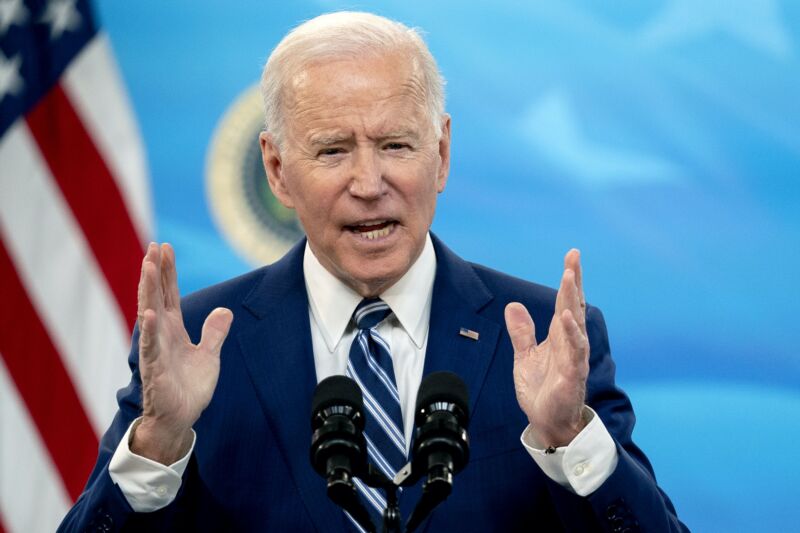
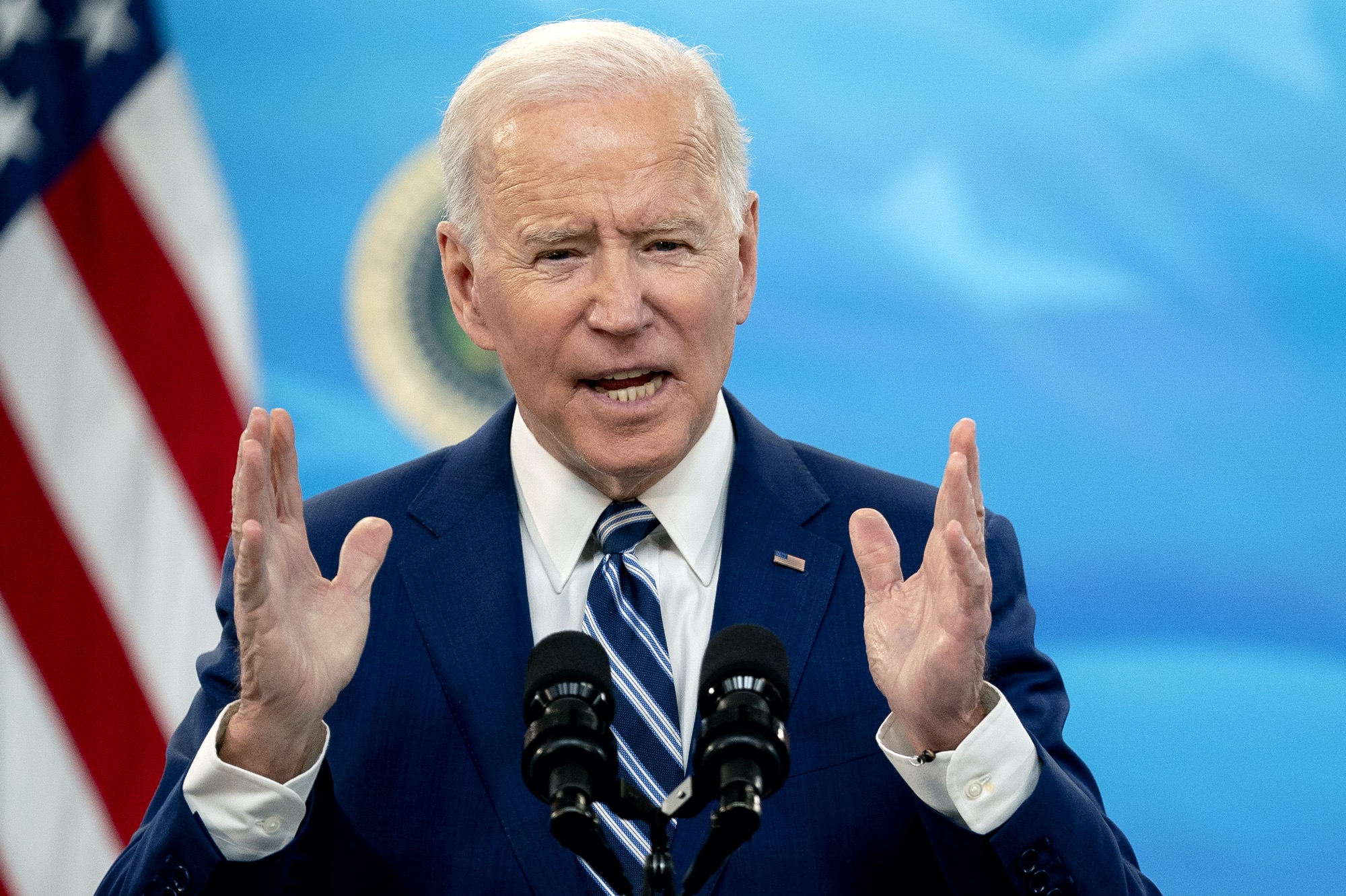
President Joe Biden speaking into a microphone and gesturing with his hands.
Enlarge / President Joe Biden speaks in the Eisenhower Executive Office Building in Washington, DC, on Monday, March 29, 2021.
Getty Images | Bloomberg

President Biden’s plan to connect all Americans with high-speed broadband includes proposals to boost competition, build more publicly owned networks, lower prices, and prioritize “future-proof” networks instead of ones that would quickly become outdated. In other words, the plan includes some of the broadband industry’s least-favorite ideas and is sure to meet fierce resistance from cable and telecom lobby groups and Republicans.

Biden’s $100 billion broadband proposal is part of the American Jobs Plan described by the White House in a fact sheet released today. The broadband details released so far are a bit vague, and the plan could be changed in Congress, but there’s a lot to like for Internet users.

“The president believes we can bring affordable, reliable, high-speed broadband to every American through a historic investment of $100 billion,” the fact sheet said. The $100 billion in broadband funding would be spread out over a number of years, as the entire jobs plan is slated to “invest about $2 trillion this decade.” (We published another story today on how the Biden plan would also eliminate fossil fuel subsidies.)

Emphasis on municipal ISPs and nonprofits

Municipally owned networks, nonprofits, and co-operatives would play a major role in the expansion pitched by Biden. The broadband industry and Republicans have been fighting city-owned networks for years, and nearly 20 states have laws that restrict the growth of municipal broadband. While Democrats have proposed eliminating those state laws, congressional Republicans last month proposed a nationwide ban on municipal broadband.

Biden’s plan “prioritizes support for broadband networks owned, operated by, or affiliated with local governments, non-profits, and co-operatives—providers with less pressure to turn profits and with a commitment to serving entire communities,” the White House fact sheet said.

Biden’s plan also seeks to “promote price transparency and competition among Internet providers, including by lifting barriers that prevent municipally owned or affiliated providers and rural electric co-ops from competing on an even playing field with private providers, and requiring Internet providers to clearly disclose the prices they charge.” The “lifting barriers” part of that statement could be a reference to overturning state laws that restrict municipal broadband, but the fact sheet didn’t get more specific on that point.

The proposal also “ensures funds are set aside for infrastructure on tribal lands and that tribal nations are consulted in program administration,” the fact sheet said. “Along the way, it will create good-paying jobs with labor protections and the right to organize and bargain collectively.”

Ending hidden fees

Biden’s plan to “requir[e] Internet providers to clearly disclose the prices they charge” is another idea hated by major broadband providers, which love to advertise low rates and then hit users with much higher monthly bills through a slew of hidden fees. The Obama-era Title II regulation included rules requiring more price transparency, but they were eliminated when FCC Chairman Ajit Pai led a vote to deregulate the industry and repeal net neutrality rules.

Biden’s fact sheet did not get specific about the price-disclosure rules he proposes, but he also promised other actions to reduce prices. The fact sheet said:

While the president recognizes that individual subsidies to cover Internet costs may be needed in the short term, he believes continually providing subsidies to cover the cost of overpriced Internet service is not the right long-term solution for consumers or taxpayers. Americans pay too much for the Internet—much more than people in many other countries—and the president is committed to working with Congress to find a solution to reduce Internet prices for all Americans, increase adoption in both rural and urban areas, hold providers accountable, and save taxpayer money.

Future-proof networks

Biden’s fact sheet didn’t specify any minimum speeds for broadband networks built under the plan. But the fact sheet said, “The president’s plan prioritizes building ‘future-proof’ broadband infrastructure in unserved and underserved areas so that we finally reach 100 percent high-speed broadband coverage.”

Future-proof could mean fiber broadband with symmetrical upload and download speeds, or at least networks that provide higher upload speeds than today’s cable and fixed-wireless networks. If Biden wants to prioritize symmetrical speeds, he will have support from at least some high-ranking congressional Democrats.

As we recently reported, the congressional Democrats’ plan would include an $80 billion fund to deploy broadband with download and upload speeds of 100Mbps to unserved areas. These speeds would likely require a massive fiber-to-the-home investment and is opposed by AT&T, which argues that Americans should be happy with only 10Mbps upload speeds.

AT&T admitted that fiber technology is the most “future-proof” while claiming that bringing fiber to every home “is not practical.” But with Democrats controlling Congress and Biden agreeing that “future-proof” networks are the ones to prioritize in funding, the US could end up with a universal-broadband plan that heavily emphasizes fiber-to-the-home.

“Broadband Internet is the new electricity”

Biden’s fact sheet argues that the investment in broadband needed by America today is similar to the one that brought electricity nationwide nearly a century ago. The fact sheet said:

Generations ago, the federal government recognized that without affordable access to electricity, Americans couldn’t fully participate in modern society and the modern economy. With the 1936 Rural Electrification Act, the federal government made a historic investment in bringing electricity to nearly every home and farm in America, and millions of families and our economy reaped the benefits. Broadband Internet is the new electricity. It is necessary for Americans to do their jobs, to participate equally in school learning, health care, and to stay connected. Yet, by one definition, more than 30 million Americans live in areas where there is no broadband infrastructure that provides minimally acceptable speeds.

The Biden fact sheet also said that America needs to fix the digital divide that has left many disadvantaged groups with less access to and ability to afford Internet service:

Americans in rural areas and on tribal lands particularly lack adequate access. And, in part because the United States has some of the highest broadband prices among OECD countries, millions of Americans can’t use broadband Internet even if the infrastructure exists where they live. In urban areas as well, there is a stark digital divide: a much higher percentage of White families use home broadband Internet than Black or Latino families. The last year made painfully clear the cost of these disparities, particularly for students who struggled to connect while learning remotely, compounding learning loss and social isolation for those students.

https://arstechnica.com/?p=1753489


Biden plan eliminates billions in fossil fuel subsidies

Biden plan eliminates billions in fossil fuel subsidies

Today, President Joe Biden will unveil a $2 trillion infrastructure plan that promises to overhaul the nation’s highways, airports, electrical grid, and more. It will be partly paid for by repealing subsidies for the fossil fuel industry.

Currently, the United States gives the $180 billion fossil fuel industry between $5 billion to $62 billion per year in direct subsidies, depending on the estimate. When accounting for indirect subsidies, including public health impacts and climate change, the handout could be as high as $649 billion. The Biden administration hasn’t specified which tax credits or subsidies it would eliminate, and certain subsidies probably will be subject to horse trading in Congress. That makes it difficult to get an accurate number at this point, but the number would certainly be in the range of billions of dollars. 

If the Biden administration is successful, the US would be following through on a promise made at the 2009 G20 summit, which stated that signatories should “phase out and rationalize over the medium term inefficient fossil fuel subsidies.”

Handouts given to the fossil fuel industry run the gamut. Oil companies, for example, can take a tax deduction for a majority of their costs for drilling domestic wells. They also get to use special accounting methods that reduce their tax burden for both domestic and foreign sales. Oil producers are also considered manufacturers under certain parts of the tax code, which allows them to claim a tax break intended to prevent outsourcing of jobs. Coal companies similarly benefit from “clean coal” projects and accounting methods that increase the amount of depreciation they can claim when mining a reserve.

Though the end of subsidies would be a significant change in policy, the majority of Biden’s plan would be paid for by raising the corporate income tax from 21 percent to 28 percent.

Biden’s big plans

Biden’s proposal includes the usual planned investments in roads and bridges, but it also calls for $85 billion to revamp existing mass transit systems, which are in dire straits across the US as ridership has plummeted during the pandemic. Amtrak would receive $80 billion to address its backlog of repairs, and the plan will direct an unspecified amount of money to electrify the US Postal Service fleet and at least 20 percent of the nation’s school buses. 

Infrastructure supporting electric vehicles would also get a boost under the plan—Biden is repeating his call for 500,000 EV chargers by 2030. The network would presumably be public, helping to address one of the major criticisms of an all-electric vehicle fleet: many renters do not have access to charging stations when their car is parked at home, and many owners of single-family homes may not have the funds to install one. A public network, especially one that includes tens of thousands of fast chargers, would go a long way toward addressing the problem. If the 500,000 chargers are installed at a constant rate, the network would comfortably exceed demand, as estimated in a 2019 report from the International Council on Clean Transportation, which suggested that the US would need just over 100,000 public chargers in 100 major metro areas.

In order to support the EV charger network, add capacity for all-electric housing, and address other shortcomings of the electrical grid, Biden’s plan proposes 20 gigawatts of high-voltage power lines and a ten-year extension of clean energy tax credits, including a provision for energy storage. It also calls for domestic supply chains to support battery manufacturing. Currently, the US lags behind Europe and Asia in that sector. Production at Tesla, for example, has been constrained by limited supplies. The provision supporting a domestic supply chain, including raw and intermediate battery materials, would be key to giving the sector a leg up. Previous efforts to create a battery manufacturing industry in the US failed in part due to a nonexistent domestic supply chain.

Biden’s plan is, of course, a proposal at this point. The administration will have to work with Congress, and the plan’s passage may require the use of the 51-vote budget reconciliation process since Republicans are unlikely to support it in meaningful numbers.

https://arstechnica.com/?p=1753484


Police say they found mafia fugitive on YouTube, posting cooking tutorials

Bolognese sauce in a pan, next to a bowl of spaghetti.
Enlarge / Bolognese sauce and spaghetti.
Getty Images | Westend61

An alleged mafia fugitive hiding from Italian police in the Dominican Republic was arrested after being spotted showing off his cooking skills in instructional videos he posted on YouTube, according to news reports.

Marc Feren Claude Biart, an alleged member of the ‘Ndrangheta criminal organization based in southern Italy, reportedly hid his face in the cooking videos but failed to hide his tattoos, leading to his identification. The man had been hiding since law enforcement “ordered Biart’s arrest in 2014 for criminal drug trafficking on behalf of the ‘Ndrangheta’s Cacciola clan,” according to The Washington Post.

The 53-year-old Biart didn’t keep his recipes secret but “was always careful to hide his face in his Italian cooking tutorials, filming the YouTube videos while laying low from police on a sandy beach in the Caribbean,” the Post wrote. It’s not clear whether the videos are still online, but Biart and his wife “appeared to have uploaded several cooking tutorials for Italian recipes to YouTube, including ones where Biart’s tattoos were visible,” the Post wrote.

The arrest and YouTube aspect of the story were confirmed by Interpol, the International Criminal Police Organization, which helped in the investigation. “Authorities located [Biart] after recognising his tattoos in a YouTube video,” Interpol wrote on Twitter today.

Extradited to Italy

The BBC, The Guardian, and other news organizations also wrote about the arrest and YouTube cooking videos, attributing the information to a statement from Italian authorities.

“The alleged member of the ‘Ndrangheta crime gang was arrested in the Dominican Republic last Wednesday and has now been extradited back to Italy,” the BBC wrote yesterday. Biart “was wanted by police for allegedly trafficking cocaine into the Netherlands on behalf of the Cacciola clan of the ‘Ndrangheta mafia,” the BBC article also said.

Before being caught, Biart “led a quiet life in Boca Chica, in the Dominican Republic, with the local Italian expat community considering him a ‘foreigner,’ police said in a statement on Monday,” The Guardian wrote.

“He was betrayed by a YouTube channel in which he showed off his Italian cooking skills,” the article continued. “The videos never showed his face, but the tattoos on his body gave him away, [police] said.”

Bigger than Cosa Nostra

Biart’s arrest was part of a larger investigation into the criminal organization. Francesco Pelle, a “wheelchair-bound ‘Ndrangheta boss linked to Germany’s infamous Duisburg mafia killings, has been arrested in Portugal, Italian police said Monday,” according to a story by the AFP news agency that was published on Barron’s.

Pelle was reportedly found in a clinic, being treated for COVID-19. “Pelle, 44, was on the Italian interior ministry’s ‘most dangerous fugitives’ list, after having been given a life sentence for murder,” the AFP wrote.

The ‘Ndrangheta has a “secretive culture and brutal enforcement of codes of silence [that] have made it very difficult to penetrate,” the AFP said. The group “has extended its reach across all parts of the world, surpassing Sicily’s Cosa Nostra as Italy’s biggest mafia organisation.”

The ‘Ndrangheta “controls most of the cocaine entering Europe” but is now the subject of “the biggest mafia trial Italy has seen in decades,” the BBC wrote. “There are 355 alleged mobsters and corrupt officials who have been charged after a long investigation into the ‘Ndrangheta group.” Charges include murder, drug trafficking, extortion, and money laundering.

https://arstechnica.com/?p=1753255


Nike sues over “Satan Shoe,” disavowing all connection to soul soles

Promotional image shoes a man with demonic eyes holding a customized sneaker.
Enlarge / The shoes—and the marketing for them—are definitely committed to their aesthetic.

Nike is suing the company behind a viral, limited-edition custom shoe, arguing that the unauthorized custom work dilutes its brand and creates a false impression that Nike approves the controversial design.

The Satan Shoe, a collaboration between a company called MSCHF and rapper Lil Nas X, is a tie-in to the rapper’s new single, “Montero (Call Me By Your Name),” released last Friday. The music video for the song (contains explicit language and extremely unambiguous sexual imagery; do not watch at work or around small children) tells a story “of sin, banishment, and redemption” that ends with Lil Nas X descending into Hell, giving Satan the lap dance of a lifetime, then deposing him and claiming the devil’s horns for his own.

“Montero” proved to be an immediate viral sensation; in five days, it has racked up about 45 million YouTube views, and the song, the singer, and various related terms (“Satan,” “mark of the beast,” “devil,” etc.) have been trending on Twitter and other platforms nonstop for days.

The Satan Shoes differ from the original Nike Air Max 97 shoe due to the addition of a bronze pentagram on the laces, the number “666” and the phrase “Luke 10:18” embroidered on the side, “Lil Nas X” embroidered on the back, a red inverted cross on the top of the tongue, and a mixture of 60 cc of red ink and one drop of human blood injected into the bubble of the sole. MSCHF made only 666 pairs of the shoes, which (despite costing $1,018 each) sold out in minutes.

Nike argues in its suit (PDF) that it had nothing to do with these shoes, but MSCHF has created brand confusion leading customers to think Nike is somehow involved. “Nike files this lawsuit to maintain control of its brand, to protect its intellectual property, and to clear the confusion and dilution in the marketplace by setting the record straight,” the suit reads. “Nike has not and does not approve or authorize MSCHF’s customized Satan Shoes.” The company asks the court to stop MSCHF from fulfilling any orders for the shoes.

How is this shoe different from any other shoe?

People sell customized sneakers all the time. The Internet is chock-full of individual sellers slinging custom Nikes, as well as any number of websites specializing in them.

US law, broadly speaking, tends to be pretty forgiving of doing whatever the hell you want with a thing after you have legally purchased that thing. In intellectual property law, there’s a legal principle called the first-sale doctrine. At a high level, the first-sale doctrine basically means that someone loses their intellectual property rights over what is done with a thing they have sold at the time they sell it and that the new owner then gets to decide what to do with it. There are, of course, exceptions, but generally if I spend my own money legally to acquire something—a book, a shoe, a designer bag—I can modify it however I want and then sell it to whomever I want for whatever price that person is willing to pay. There is a similar principle, called patent exhaustion, that applies to goods that are patented rather than copyrighted.

Nike, however, is specifically alleging brand confusion and trademark infringement. In short, the company says its swoop (sorry, “SWOOP”) is world-famous, and by leaving it on the shoe, MSCHF is deliberately confusing consumers into thinking Nike has something to do with the product. “MSCHF’s wrongful use of the Nike Asserted Marks is likely to cause dilution by blurring and the whittling away of the distinctiveness and fame” of Nike’s visual trademarks, the suit argues. “Unless restrained, MSCHF will continue to use the Nike Asserted Marks and/or confusingly similar marks and will cause irreparable damage to Nike for which Nike has no adequate remedy” other than the lawsuit.

Nike is clearly right that the Satan Shoes and associated video are deliberately and intentionally provocative, and they are indeed drawing predictable ire from certain conservative Christian corners. South Dakota Gov. Kristi Noem, for example, shared the Twitter announcement of the Satan Shoe with the caption, “We are in a fight for the soul of our nation. We need to fight hard. And we need to fight smart. We have to win.”

The suit includes several online comments from consumers claiming they are going to boycott Nike over the Satan Shoe. “Words cannot describe the amount of disgust and disbelieve that this is truly happening,” one user going by “Michelle” wrote. “Jesus please save us!!!! Never supporting or buying Nike again!!!!”

“Nike has no control over the nature and quality of the Satan Shoes,” the company concludes, “and MSCHF’s keeping the Nike name on them is reflecting negatively on the company, its reputations, and the quality and safety of its goods.”

Huge success

Whether or not a single pair of shoes gets into the hands of any buyer now seems to be beside the point; clearly MSCHF has gotten all the attention it could possibly desire.

Brooklyn-based MSCHF—i.e., mischief—specializes in viral absurdity. That’s its entire jam, company CEO Gabriel Whaley recently explained to Business Insider.

“We’re trying to do stuff that the world can’t even define,” Whaley said. “Our perspective is everything is funny in a nihilistic sort of way. We’re not here to make the world a better place… We just do shit, and people buy our stuff.”

Lil Nas X himself is likewise clearly enjoying and leaning into the controversy online, as he is known to do. Over the weekend he posted a YouTube video called “Lil Nas X Apologizes for Satan Shoe,” in which he briefly holds up a shoe before the video cuts to the sex-with-Satan part of the “Montero” video.

The singer also posted a Tweet late Sunday with a mock-up of a white version of the Nike shoe, featuring Chick-fil-A branding in place of the iconic swoop and an allusion to John 3:16. “[W]e have decided to drop these to even the score,” he wrote. “[D]amn y’all happy now?”

https://arstechnica.com/?p=1753125


AT&T lobbies against nationwide fiber, says 10Mbps uploads are good enough

Illustration of a snail that looks like an Internet cable.

AT&T is lobbying against proposals to subsidize fiber-to-the-home deployment across the US, arguing that rural people don’t need fiber and should be satisfied with Internet service that provides only 10Mbps upload speeds.

AT&T Executive VP Joan Marsh detailed the company’s stance Friday in a blog post titled “Defining Broadband For the 21st Century.” AT&T’s preferred definition of 21st-century broadband could be met with wireless technology or AT&T’s VDSL, a 14-year-old system that brings fiber to neighborhoods but uses copper telephone wires for the final connections into each home.

“[T]here would be significant additional cost to deploy fiber to virtually every home and small business in the country, when at present there is no compelling evidence that those expenditures are justified over the service quality of a 50/10 or 100/20Mbps product,” AT&T wrote. (That would be 50Mbps download speeds with 10Mbps upload speeds or 100Mbps downloads with 20Mbps uploads.)

AT&T said that “overbuilding” areas that already have acceptable speeds “would needlessly devalue private investment and waste broadband-directed dollars.”

“Overbuilding” is what the broadband industry calls one ISP building in an area already served by another ISP, whereas Internet users desperate for cheaper, faster, and more reliable service call that “broadband competition.”

Democrats want 100/100Mbps in rural areas

The AT&T blog post came about two weeks after Congressional Democrats proposed an $80 billion fund to deploy broadband with download and upload speeds of 100Mbps to unserved areas. The Biden administration is also planning a $3 trillion package that includes funding for rural broadband among many other priorities. Four US senators recently called on the Biden administration to establish a “21st century definition of high-speed broadband” of 100Mbps both upstream and downstream.

The US subsidizing deployment of symmetrical 100Mbps speeds would help other ISPs bring fast broadband to areas where AT&T still uses old phone lines that have fallen into disrepair because AT&T hasn’t properly maintained them. AT&T could bid for the funding too, of course, but it doesn’t want to build fiber throughout rural areas. AT&T previously said it is deploying fiber to 3 million more homes and businesses this year, but the company is only doing so in metro areas and mostly in those metro areas where AT&T already built out most of the infrastructure and can get a better return on investment. There are tens of millions of homes without fiber in AT&T’s 21-state wireline service area.

AT&T has been fighting against increases in broadband-speed benchmarks for years. Back in 2014, AT&T urged the Federal Communications Commission to keep its standard of 4Mbps downloads and 1Mbps uploads. AT&T claimed at the time that even 10Mbps downloads would “exceed what many Americans need today,” but the FCC raised the standard to 25Mbps down and 3Mbps up in January 2015.

AT&T’s current fixed-wireless service only provides download speeds of 10 to 25Mbps and upload speeds of 1Mbps, but the company plans upgrades that could help the wireless service qualify for the proposed $80 billion fund if Congress doesn’t require high upload speeds.

AT&T did take $428 million per year from the FCC starting in 2015 to bring 10Mbps download and 1Mbps upload speeds to 1.1 million rural homes and businesses in 18 states. AT&T later gave the FCC false broadband-coverage data but said it was correcting the mistakes and that it would meet the end-of-2020 deployment deadline in all 18 states.

A 100Mbps upload requirement could also prod cable companies into finally deploying the symmetrical cable services they’ve been teasing for years. Comcast and other cable companies still limit upload speeds to 35Mbps on gigabit-download plans.

How AT&T would define broadband

AT&T’s blog post on Friday addressed two topics: how broadband should be defined to determine which homes are considered unserved, and what types of broadband networks should be chosen when the government distributes funding to ISPs.

AT&T argued that the FCC’s 6-year-old broadband definition of 25Mbps downstream and 3Mbps upstream “is sufficient to support Zoom working and remote learning.” But AT&T admitted, “When Zooming, streaming, and tweeting is combined in an average household of four, it’s easy to conclude that download speeds must increase.”

As noted earlier in this article, AT&T is opposed to a broadband definition that requires symmetrical upload and download speeds. “A definition built on symmetrical speeds could dramatically expand the locations deemed ‘unserved,’ leading to some areas being unnecessarily overbuilt while leaving fewer dollars to support areas in greater need, which tend to be rural,” AT&T wrote.

AT&T also admitted that fiber technology is the most “future-proof” but said that bringing fiber to every home “is not practical.” AT&T wrote:

Some flexibility must be preserved, particularly for the next generation of fixed wireless technologies likely to be deployed in the recently auctioned C-Band that will easily deliver performance at 100Mbps down. But wireless networks are not built to deliver symmetrical speeds, so any mandate around symmetrical performance could undermine delivery of these efficient and robust technology solutions in hard to serve areas of the country.

AT&T warns of high monthly bills

AT&T also argued that the monthly bills for fiber service will be too expensive for many rural customers. “As higher speed networks get deployed to rural America, the current availability challenge could easily become an affordability one,” AT&T said.

But the point of an $80 billion fund to deploy high-speed broadband, like the one proposed by Democrats, is to subsidize deployment so that rural customers get the same service at similar prices as urban customers.

A bill summary provided by House Majority Whip James Clyburn (D-S.C.) said that ISPs accepting subsidies would have to provide “at least 100/100Mbps with sufficiently low latency, offering broadband service at prices that are comparable to, or lower than, the prices charged for comparable service, and offering an affordable service plan.”

Congress already approved a $7.17 billion fund that schools and libraries will use to help people get Internet access at home. Separately, the pending legislation proposed by Clyburn and other Democrats would add $6 billion to the Emergency Broadband Connectivity Fund for Americans who have low incomes or who lost their jobs during the pandemic. Congress initially provided $3.2 billion for that fund, and the FCC is aiming to start enrollment by the last week of April.

Fiber compared to electricity

With Democrats controlling the White House and both chambers of Congress, at least some members of the party want to make real progress toward universal broadband that doesn’t leave rural people with worse service than ISPs are capable of providing. Clyburn compared the broadband-deployment plan to “rural electrification efforts in the last century.”

“In 2021, we should be able to bring high-speed Internet to every family in America—regardless of their ZIP code,” Sen. Amy Klobuchar (D-Minn.) said when she announced the identical Senate version of the plan.

The comparison between fiber and electricity has been made by numerous broadband advocates over the years. That includes Glen Akins, who helped lead a successful pro-municipal broadband ballot campaign in Fort Collins, Colorado, in 2017. (Voters approved the ballot question despite heavy lobbying against it by the cable and telecom industry.)

“The only households that should be exempted from a fiber requirement are those that lack a connection to the electrical grid,” Akins wrote in a tweet last week. “If you run power to a house, you can run fiber to a house. Substituting anything else is grift.”

https://arstechnica.com/?p=1752910


Sweeping climate law zeroes out carbon pollution for Massachusetts

Massachusetts Governor Charlie Baker signed into law late last week one of the nation’s most sweeping climate bills, putting the state on a path to net-zero carbon emissions by 2050. 

The law sets emissions limits of 50 percent below 1990 levels by 2030 and 75 percent cuts by 2040 with interim limits every five years. To achieve those goals, the Bay State will add gigawatts of offshore wind power, spur cities and towns to adopt a net-zero building code, and set targets for electric vehicles, charging stations, and energy storage. 

The state expects that it will be able to fully eliminate 85 percent of all carbon emissions by 2050. For the remaining 15 percent, it will have to find other options, including tree planting or direct air capture of carbon dioxide. The net-zero target of 2050 is encouraged by the Intergovernmental Panel on Climate Change to avoid warming of greater than 1.5˚ C.

The governor’s office and the legislature had been volleying the bill back and forth for months—this was the third time the legislature had sent the bill to Gov. Baker’s desk. Baker, a Republican, has publicly supported climate legislation, but he vetoed the first version in January and a second in February. The legislature, which is majority Democrat, adopted some of his suggested amendments and returned it a third time with a veto-proof majority. 

Over the next 30 years, Massachusetts will have to reduce carbon pollution in six broad sectors: electricity, transportation, residential buildings, commercial and industrial buildings, industrial processes, and natural gas distribution. Reductions in each sector are legally binding, though there is some wiggle room. If the state hits its overall target at each five-year period, it’ll allow one or two of the sectors to pollute more than allowed. The compromise will offer some flexibility in how each industry goes about reducing emissions while ensuring that no one sector significantly burdens the others.

Sector-by-sector reductions

In the electricity sector, Massachusetts has already green-lit over 1,600 MW of offshore wind split almost evenly between two projects just off Martha’s Vineyard and Nantucket. Together, they are expected to meet about 12 percent of the state’s electricity demand. The new law calls for an additional 2,400 MW, bringing total capacity to 4,000 MW. It also counts nuclear, hydropower, and landfill methane sources toward net-zero goals, but biomass burning does not. 

For buildings, the state is pushing cities to adopt a new so-called “stretch code” that would encourage net-zero, high-performance buildings that are better sealed and insulated. Appliances will have to meet California’s efficiency standards, and homeowners and builders will likely have new incentives to install heat pumps for heating and cooling. Many of those provisions were fought by home and commercial builders, who lobbied Baker intensely to water them down. 

What the new law doesn’t do is allow cities to ban new natural gas hookups. Several cities in Massachusetts have already looked into that—and one passed a law doing so—only to be blocked by the attorney general. If cities are going to have that option, the legislature will have to pursue that in a separate bill. Natural gas has been targeted across the state not simply for its greenhouse gas emissions but for the leaky and dangerous infrastructure that distributes it. Several natural gas explosions have occurred in the state in recent years, including one in the Merrimack Valley that started over 80 fires and destroyed more than 40 homes.

On the transportation front, Massachusetts already has a modest rebate to encourage EV adoption, but the new bill is likely to drive new incentives. It will also encourage the installation of more charging stations.

Codifying environmental justice

The new law also codifies environmental justice policy in the state, which to this point had been limited to executive orders and other regulatory decisions. It introduces a new review process for projects that would pollute designated environmental justice communities, which the state defines as those suffering disproportionate impacts from pollution. The pollution impacts of new projects won’t be considered in isolation—they’ll be evaluated as part of the total cumulative pollution the community already endures.

There are a host of other provisions, too. The law increases funding for the Massachusetts Clean Energy Center, an economic development agency, so it can train more workers for clean energy jobs. It also creates a new program to prioritize solar power installations for low-income households, and it finally includes new regulations for municipal utilities, which until now had been exempt from renewable power requirements.

Massachusetts has been moving toward net-zero for years, but its previous steps were tenuous and ultimately would not have been sufficient to meet a 2050 goal. There are still many details to be ironed out, but the new law puts the state on track to eliminate its carbon emissions by then.

Listing image by MIT News

https://arstechnica.com/?p=1752886


Bias, subtweets, and kids: Key takeaways from Big Tech’s latest outing on the Hill

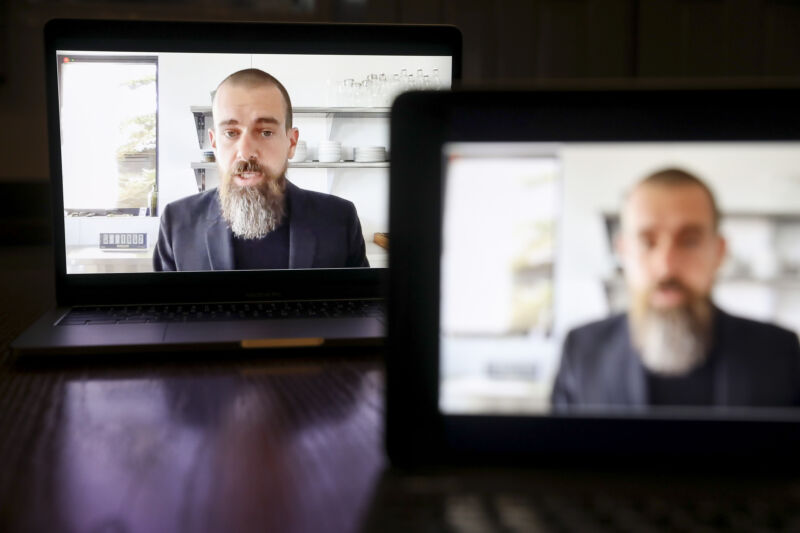
There was no fancy Hill hearing room for this all-virtual event, so Twitter CEO Jack Dorsey dialed in from... a kitchen.
Enlarge / There was no fancy Hill hearing room for this all-virtual event, so Twitter CEO Jack Dorsey dialed in from… a kitchen.

A trio of major tech CEOs—Alphabet’s Sundar Pichai, Facebook’s Mark Zuckerberg, and Twitter’s Jack Dorsey—once again went before Congress this week to explain their roles in the social media ecosystem. The hearing nominally focused on disinformation and extremism, particularly in the wake of the January 6 events at the US Capitol. But as always, the members asking the questions frequently ventured far afield.

The hearing focused less on specific posts than previous Congressional grillings, but it was mainly an exercise in people talking to plant their stakes. Considered in totality, fairly little of substance was accomplished during the hearing’s lengthy six-hour runtime.

Nonetheless, a few important policy nuggets did manage to come up.

On Section 230

Section 230 is an enormously misunderstood snippet of law that has become a rallying cry for reformers in both parties. At a high level, Section 230 basically means that Internet companies have legal immunity for the content their users generate or for the moderation choices they do or don’t make around that content.

On the left, proposed Section 230 reforms are largely targeted at limiting abuse and disinformation. From the right, proposed Section 230 reforms, including repeal proposals, tend to focus more on claims of alleged “bias” among social media firms. All manner of bills to amend or repeal the law have been introduced in both the previous and current Congress, by both Republican and Democratic sponsors.

Zuckerberg set the stage ahead of time by including a plea to reform Section 230 in his written testimony (PDF).

“I believe that Section 230 would benefit from thoughtful changes to make it work better for people,” he wrote, adding:

We believe Congress should consider making platforms’ intermediary liability protection for certain types of unlawful content conditional on companies’ ability to meet best practices to combat the spread of this content. Instead of being granted immunity, platforms should be required to demonstrate that they have systems in place for identifying unlawful content and removing it. Platforms should not be held liable if a particular piece of content evades its detection—that would be impractical for platforms with billions of posts per day—but they should be required to have adequate systems in place to address unlawful content.

Pichai’s prepared testimony (PDF), on the other hand, basically asked Congress to leave well enough alone. “Regulation has an important role to play in ensuring that we protect what is great about the open web, while addressing harm and improving accountability,” he wrote, adding:

We are concerned that many recent proposals to change Section 230—including calls to repeal it altogether—would not serve that objective well. In fact, they would have unintended consequences—harming both free expression and the ability of platforms to take responsible action to protect users in the face of constantly evolving challenges.

During the hearing, neither Pichai nor Dorsey seemed particularly inclined to back Zuckerberg’s take on what’s best for the future of the Internet. Pichai said he thought the accountability and transparency the Facebook CEO mentioned were “important principles” and that there were some legislative proposals floating around in Congress that Google would “welcome.”

Dorsey, however, pointed out that most platforms are not anything like the size of Facebook, which reaches about 2.8 billion monthly users. “I think it’s going to be very hard to determine what’s a large platform and a small platform, and it may incentivize the wrong things,” he cautioned.

On violence, Trump, and deplatforming

All three CEOs also were asked to say, yes or no, if they felt their platforms had a role in the violence of the Capitol riot.

“I think the responsibility lies with the people who took action to break the law and do the insurrection,” Zuckerberg replied. “And secondarily with the people who spread that content, including the former president.

It’s something of a tightrope, Zuckerberg seemed to say, indicating that Facebook tried to act proactively in the fall “to secure the integrity of the election” against a likely tide of misinformation. “And then on January 6, President Trump gave a speech… calling on people to fight.”

Dorsey was the only witness to agree outright that his company played a role. “Yes,” he confirmed. “But you have to take into consideration the broader ecosystem [of misinformation]. It’s not just about the technological systems that we use.”

Republican members of the committee remained frustrated with the bans and suspensions former President Donald Trump earned from Facebook, Twitter, and YouTube in the wake of the January 6 insurrection at the Capitol.

Facebook has called in its Oversight Board to make the final ruling on Trump’s suspension, and Zuckerberg confirmed in the hearing that if the board says Trump’s account should be reinstated, “then we will honor that.”

https://arstechnica.com/?p=1752214


Amazon argues it’s not liable for product that severely injured toddler

A package is transported on a conveyor belt in an Amazon logistics center.
Enlarge / A package is transported on a conveyor belt in an Amazon logistics center.

Amazon argued yesterday before the Texas Supreme Court that it should not be held liable for defective products sold through its site.

Over the years, several customers have been injured by defective products they purchased on the site from third-party sellers, including one woman whose eye was blinded by a defective dog leash and another who was burned by a laptop battery. The case currently before the Texas Supreme Court involves a 19-month-old toddler who suffered permanent damage to her esophagus when she ingested a lithium-ion battery that popped out of a knockoff remote control. 

For years, Amazon has claimed that it is not liable in such cases since it functions as a middleman for sales made through its Marketplace platform.

The toddler’s mother purchased the knockoff Apple TV remote from a third-party seller called “USA Shopping.” After the battery burned her daughter, she sought to find out who was behind the Amazon storefront, discovering that it was run by one “Hu Xi Jie” out of Shenzhen, China. Neither the mother nor Amazon has been able to locate or contact Hu Xi Jie.

Lawyers for the child’s mother have argued that Amazon is liable for the defective remote since the site serves the same function as a physical retail store, which is to put products into the stream of commerce. Traditional brick-and-mortar stores are typically held liable for injuries caused by defective products if they don’t take adequate steps to keep them out of the hands of consumers, but courts have ruled that online marketplaces aren’t subject to the same rules since they don’t exercise the same level of control.

That may be beginning to change. Amazon’s “middleman” defense in product liability cases has worked in the past, but it’s looking increasingly thin. For example, last year, a California appellate court ruled that the company could be held liable in such cases, and the state’s supreme court declined to review it, effectively upholding the ruling. 

During the hearing in Texas yesterday, Justice Debra Lehrman questioned Amazon’s claims that it is merely a “facilitator,” as the company’s attorneys claimed. “[Amazon] can basically be selling junk and have no responsibility to figure it out,” she said.

Amazon’s lawyer argued that vetting products in advance of listing them on the site was impossible given the scale of the problem. “Scale” is an increasingly common defense among Big Tech companies ranging from Amazon to Facebook, which have come under fire for their slipshod moderation practices. In Facebook’s case, the company has turned to artificial intelligence to tame the torrent of content that appears on the platform—with mixed success. Recently, the site’s own algorithms were found to be autogenerating pages for white supremacists, which Facebook has banned from the site.

Amazon’s scale problem is arguably harder to manage. A large portion of Amazon’s business is selling physical goods, which are practically impossible to vet using software alone. Thus, its strategy has been to react to problems as they arise rather than head them off in advance.

The plaintiff’s lawyer argued that Amazon’s reactive approach wasn’t sufficient. For one, sellers kicked off the platform can simply open a new storefront under a different name, creating a game of Whac-A-Mole. Then there’s also the question of the effectiveness of Amazon’s product safety teams, the lawyer told the court. “I deposed the product safety team and this woman, with all due respect, she was just asleep at the wheel,” he said.

Listing image by Ronny Hartmann/picture alliance | Getty Images

https://arstechnica.com/?p=1752415