AWS director sues Amazon, alleging systemic racism in corporate office
Amazon's orange-yellow logo wall.
Enlarge / Amazon’s orange-yellow logo wall.

A senior manager at Amazon Web Services has filed suit against the company alleging race and gender discrimination, saying that she was underpaid, denied promotions, and sexually assaulted at the firm.

Charlotte Newman, who is Black, began working at AWS in 2017 in a public policy role. Prior to joining Amazon, she served as a congressional advisor, including a senior role advising US Senator Cory Booker (D-NJ). From the start, she alleges, she was “de-leveled”—hired at a position below the one for which she applied and for which she was qualified—and undercompensated as a result.

Underpaying Black employees through de-leveling is routine at Amazon, the suit (PDF) alleges. “When a company’s top leaders traffic in stereotypes of Black employees and fail to condemn intimidation tactics, managers farther down the chain will take note of that modus operandi and behave accordingly,” the filing reads.

During the 2017-2019 time frame, no Black employees were hired at or promoted to the director level (“L8”) within Amazon’s public policy division, the suit alleges. Neither were any Black employees hired at the next level down, L7, until December 2018. Newman had applied for an L7 position but was hired at L6; the suit alleges that she did the work of an L7 job for several years before receiving a promotion to that level in fall 2019.

While working for Amazon, Newman alleges that she faced multiple instances of colleagues overtly engaging in racial stereotypes to discuss her or her work, describing her as “just scary,” “too direct,” or looking “like a gorilla.”

“Dismissive attitude”

Management’s “dismissive attitude towards Black and female employees” such as Newman created an environment in which a senior co-worker seemed to feel perfectly safe sexually harassing and assaulting Newman, the suit adds, outlining several instances in which the colleague touched her inappropriately or propositioned her.

Newman in 2020 filed complaints within the company about her colleague’s behavior, the suit alleges, before then filing an administrative complaint with the Washington, DC Office of Human Rights about her experiences with Amazon.

Recent reporting would seem to back up Newman’s claims about widespread issues within the company. Tech news site Recode last week published a deep dive about racial bias inside Amazon.

More than a dozen current and former corporate employees for the tech behemoth told Recode that Black employees inside Amazon “often face both direct and insidious bias that harms their careers and personal lives.” All of the Black employees who spoke with Recode said they or Black colleagues they knew were down-leveled at hiring. Recode also obtained internal documents which seemed to display signs of bias in performance reviews.

“We do not tolerate discrimination or harassment of any kind and thoroughly investigate all claims and take appropriate action,” Amazon said of the claims. “We are currently investigating the new allegations included in this lawsuit.”

Endemic everywhere

Unfortunately, the claims against Amazon are far from unique. Nearly every major tech firm has faced allegations of race and/or gender discrimination from employees in recent years.

A Black manager at Facebook filed a complaint with federal regulators in 2020, alleging a pattern of discrimination and bias against Black employees in “evaluations, promotions, pay, and hiring practices.” At the time, just 1.5 percent of Facebook employees in technical jobs were Black.

Former Pinterest COO Francoise Brougher sued the company in August, alleging that Pinterest, which targets an audience of mainly women, was in fact a rampantly sexist “boys club” at the executive level. Several Black women who had worked for Pinterest also spoke out in 2020 about discrimination they had faced at the company. Pinterest settled with Brougher for $22.5 million in December but still faces a separate shareholder suit over similar allegations.

Google, too, has faced multiple rounds of discrimination allegations. Last month, the company agreed to a $3.8 million settlement with federal regulators to settle allegations it underpaid women software engineers and unfairly passed over women and Asian candidates for software engineering roles. A Black Google employee also sued the company in 2019, alleging the company used “bait and switch tactics” when it hired candidates from racial minorities by placing them in less desirable roles than the positions for which they interviewed.

https://arstechnica.com/?p=1746418


Biden administration puts a price on carbon

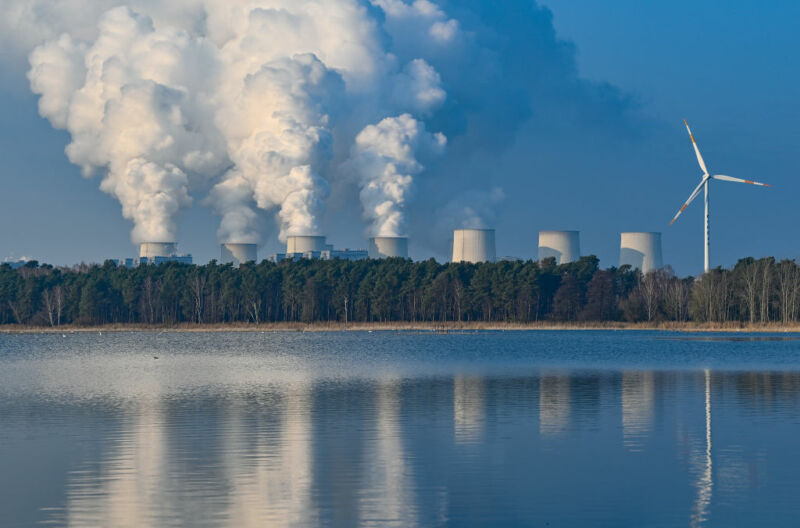
Image of exhaust from power plants.

On Friday, the Biden administration announced it had fulfilled the requirements of one of the executive orders issued on the very first day of his presidency: determining what’s called the “social cost of carbon.” This figure tries to capture the cumulative economic value achieved by investing in limiting carbon emissions now. As such, carbon’s social cost plays a key role in informing the cost/benefit analysis of any government policy or regulation that influences carbon emissions.

The government is required to attach a value to the social cost of carbon, which typically requires the consideration of extensive economic and climate research. But the Trump administration had ended the process of updating the value after having chosen an artificially low one. Given a 30-day deadline to come up with a new one, the Biden administration has chosen to adjust the last pre-Trump value for inflation and use that until it can do a more detailed analysis of how the research landscape has changed over the last four years.

The net result is a dramatically higher price on carbon that will enable far more aggressive regulatory action for at least the next four years.

Counting costs

The social cost of carbon is difficult to calculate. According to the document that details the new figures, the social cost of carbon should include “the value of all climate change impacts, including (but not limited to) changes in net agricultural productivity, human health effects, property damage from increased flood risk natural disasters, disruption of energy systems, risk of conflict, environmental migration, and the value of ecosystem services.” Obviously, understanding all of these factors requires a lot of research on climate change, human health, the ecosystem’s response, agriculture, and economics, among other considerations.

The US government only got into the process of calculating carbon’s social cost because it had to. In 2008, a court blocked the adoption of fuel-economy rules because they assigned no value to lower carbon emissions. (The new document cites the court as ruling, “While the record shows that there is a range of values, the value of carbon emissions reduction is certainly not zero.”) Since that decision, the government developed and updated this price several times, the most recent being at the end of the Obama administration in 2016.

Two things happened in 2017 that changed the landscape. The first is that the US National Academies of Science issued an expert report that described a process by which the government could ensure that it kept its social cost of carbon updated in line with developing research. The second is that the Trump administration disbanded the group that was tasked with keeping the value up to date and settled on a new, extremely low social cost of carbon.

The administration did so in part by limiting the costs to considering only impacts within the US as opposed to the entire planet—even though the rest of that planet trades with us, receives foreign aid, sends us refugees, and so on.

Costs at a discount

The people who put together the new document clearly want to follow the advice in the National Academies report, and they plan on doing so. But it’s also clear that there’s no way that can be done within the Biden Executive Order’s 30-day time limit. And the administration chose 30 days because so many of the regulations it intends to revise—some already thrown out by courts while others are the subject of lawsuits—will need a value for a social cost of carbon.

So, what the new document does is go back to the last reasonable value derived in 2016, updates it for inflation, and use that. The estimates include the social cost not only of carbon dioxide emissions, but for two other greenhouse gasses as well: methane and nitrous oxide.

To understand the values, there, you have to understand something called the discount rate. This rate is meant to adjust for the fact that the cost of something in the present comes in the form of a currency value that will be worth less in the future. Plus, people have a tendency to value money they have in the present more than money saved in the future. While it’s clear that a lower discount rate means present emissions cost more, there’s significant controversy over exactly what the discount rate should be. This document from the London School of Economics explains it all in more detail, and it indicates that, five years ago, the average economist felt that a discount rate of about 2 percent was appropriate for climate.

The new document calculates the social cost of carbon at three different discount rates, for 5 percent, 3 percent, and 2.5 percent—all of them higher (and thus cheaper) than the 2 percent rate suggested by the survey of economists. But even the 5 percent value produces a social cost of carbon of $14 per metric ton of emissions, which is roughly triple the value that the Trump administration had used. At the high end, the 2.5 percent figure is $76, or over 10 times what the Trump administration.

Real-world impacts

To get a sense of what this means, we can take burning enough coal to produce a megawatt-hour of power, which the Energy Information Agency indicates will produce about a metric ton of carbon dioxide emissions. For domestic energy users, the typical price of that electricity would be about $128.00. Under the middle-of-the-road 3 percent discount figure, the social cost of carbon from those emissions would add $51.00 to that price, an increase of 40 percent.

Even given that moderate value, the social cost of carbon means that most reasonable steps to limit coal use will pass any economic tests you can throw at them. Notably, this doesn’t include all the health costs from the other emissions associated with burning coal, and so it is an underestimate of the full societal burden. The use of coal is simply exporting far too many future costs on society; its current use is only economical because we pretend those costs don’t exist.

The costs also go up over time, as calculated at 5-year intervals. This is because the intervening time will see further emissions locked in, meaning each further metric ton of emissions in the future will take us further away from a desirable climate. So, the 3 percent discount rate sees the social cost of carbon hit $85.00 by 2050.

Methane and nitrous oxide are far more potent greenhouse gasses, and their current social costs are astronomical in comparison. At the same 3 percent discount rate, a metric ton of methane emissions has a social cost of $1,500.00p; nitrous oxide hits $18,000.00.

Limit methane!

Again, this means that nearly any regulation meant to limit methane leaks—like the one issued by Obama and then rescinded by Trump—would easily pass an economic test. This may also have a heavy influence on the Biden administration’s plan to re-evaluate the price paid for drilling for gas on federal lands, which is expected to include the environmental costs of the fuel extracted.

None of this means that society will suddenly start to pay the social costs of fossil fuels in their electric bills, as emissions regulations do just that: limit emissions. Instead, regulations generally leave it to private industry to find economic ways of ensuring those limits are met. In many cases, however, the regulations themselves have to be justified via a cost-benefit analysis, and those often end up the subject of court action. These values for the social cost of carbon, in addition to being more realistic, will likely make it harder to challenge Biden’s impending regulatory moves on economic grounds.

https://arstechnica.com/?p=1746292


Trump’s is one of 15,000 Gab accounts that just got hacked

Promotional image for social media site Gab says

The founder of the far-right social media platform Gab said that the private account of former President Donald Trump was among the data stolen and publicly released by hackers who recently breached the site.

In a statement on Sunday, founder Andrew Torba used a transphobic slur to refer to Emma Best, the co-founder of Distributed Denial of Secrets. The statement confirmed claims the WikiLeaks-style group made on Monday that it obtained 70GB of passwords, private posts, and more from Gab and was making them available to select researchers and journalists. The data, Best said, was provided by an unidentified hacker who breached Gab by exploiting a SQL-injection vulnerability in its code.

“My account and Trump’s account were compromised, of course as Trump is about to go on stage and speak,” Torba wrote on Sunday as Trump was about to speak at the CPAC conference in Florida. “The entire company is all hands investigating what happened and working to trace and patch the problem.”

An important data set

GabLeaks, as DDoSecrets is calling the leak, comes almost eight weeks after pro-Trump insurrectionists stormed the US Capitol. The rioters took hundreds of thousands of videos and photos of the siege and posted them online. Mainstream social media sites removed much of the content because it violated their terms of service.

“The Gab data is an important, but complicated dataset,” DDoSecrets personnel wrote in a post on Monday morning. “In addition to being a corpus of the public discourse on Gab, it includes every private post and many private messages, as well. In a simpler or more ordinary time, it’d be an important sociological resource. In 2021, it’s also a record of the culture and the exact statements surrounding not only an increase in extremist views and actions, but an attempted coup.”

Gab and a competing site called Parler were some of the last refuges that allowed much of the content to remain publicly available. Amazon and web hosting providers later cited a lack of adequate content moderation in suspending service to Parler.

Shortly before the shuttering, however, somebody found a way to use Parler’s publicly available programming interfaces to scrape about 99 percent of the user content from the site and subsequently make it publicly available.

While law enforcement groups likely had other ways to obtain the Parler data, its public availability enabled a much wider body of people to do their own research and investigations. The leak was especially valuable because materials contained metadata that’s usually stripped out before users can download videos and images. The metadata gave people the ability to track the precise timelines and locations of filmed participants.

DDoSecrets said that the 70GB GabLeaks contains over 70,000 plaintext messages in more than 19,000 chats by over 15,000 users. The dump also shows passwords that are “hashed,” a cryptographic process that converts plaintext into unintelligible characters. While hashes can’t be converted back into plaintext, cracking them can be trivial when websites choose weak hashing schemes. (Best told Ars they didn’t know what hashing scheme was used.) The leak also includes plaintext passwords for user groups.

Hate-speech haven

Gab has long been criticized as a haven for hate speech. In 2018, Google banned the Gab app from its Play Store for terms of service violations. A year later, web host GoDaddy terminated service to Gab after one of its users took to the site to criticize the Hebrew Immigrant Aid Society shortly before killing 11 people in a Pittsburgh synagogue.

Gab has also been investigated by Pennsylvania’s attorney general. In January, the Anti-Defamation League called on the US Justice Department to investigate Gab for its role in the insurrectionist attack on the capitol.

Attempts to reach Torba for comment didn’t succeed.

Best said that DDoSecrets is making GabLeaks available only to journalists and researchers with a documented history of covering leaks. People can use this link to request access.

https://arstechnica.com/?p=1746241


Why N95 masks are still hard to get, even though production is up

Medical masks move along a conveyor belt.
Enlarge / A machine makes respiratory masks in a family-owned medical equipment factory in north Miami, Florida, on February 15, 2021. The firm now has 30 million unsold masks because it can’t find buyers in the United States.

Even though we’ve had more good vaccine news lately, COVID-19 in the US is still very much a widespread concern. We’re still going to need masks for many months to come. So why, a year into the pandemic, are good ones still so hard to find?

The New York Times reports that there are dozens of small, US-based businesses that have pivoted to making medical-grade masks, but they can’t sell them to consumers because of policies put in place to protect supply chains at the beginning of the pandemic.

Facebook and Instagram will be happy to show you ads for cute, fashion-forward fabric masks (in adult and children’s sizes)—but not ads for actual medical-grade, government-approved N95 masks. The social network explained to the NYT that its policies are meant both to preserve supplies for workers in the health care field who need them the most and also to cut down on sales of counterfeits.

One manufacturer told the NYT that his sales have dropped to $5,000 per day from a high of $40,000 per day since Facebook prohibited him from running ads last August. “These companies have such a monopoly that you really can’t be in business without them,” he told the NYT. “The policy just doesn’t make sense.”

There is indeed still deep need for high-quality masks in the health care field. Both The Washington Post and NPR reported in the past month that N95 respirators are still in short supply in some hospitals and health care facilities. Even where such equipment is available, prices have increased by 100 to 500 percent.

When supply and demand don’t match

There are manufacturers making supplies of medical-grade masks and buyers who need them, but the pre-pandemic purchasing systems built out all over the nation still haven’t quite aligned to make those chains link up.

Earlier reporting by The New York Times in February identified 19 small US firms that recently received federal approval for their N95 masks but which have been unable to sell them to health care facilities. Large health care chains, state governments, and other major buyers have been hesitant to purchase from the newer entrants to the market, either for reasons of price or unfamiliarity.

The White House told the NYT that the Biden administration expects to soon announce a number of new federal contracts for personal protective equipment, including masks, but cautioned that sorting out the supply chain is a long-term project. President Joe Biden last week signed an executive order to review and address critical supply chain issues in several market segments, including PPE, but those plans, too, are on the order of months or years.

The manufacturers told the NYT that being able to sell directly to consumers through sites such as Amazon would “help them stay afloat” while they wait for federal assistance. Unfortunately, that, too, is fraught with challenges. Shoppers conducting searches for masks may receive a message from Amazon that supplies are being restricted to prioritize “organizations on the front lines.” And even if consumers can get through, manufacturers said, the site’s policies mean that major producers that can ship in bulk, such as Kimberly-Clark, are more likely to have their wares accepted for sale.

“Amazon changes the rules all the time without explanation,” one manufacturer told the NYT. “I realize they’re not a charity, but a small company like ours doesn’t stand a chance.”

Amazon has spent the last year trying to thread a difficult needle when it comes to PPE. Profound shortages early in the pandemic drove up prices for a number of goods dramatically. About a year ago, state and federal regulators asked Amazon to take action against price-gougers charging sky-high sums for masks and other household goods. Then, in June, 3M—which manufactures N95 filtration masks—filed suit against Amazon over the prevalence of fakes on the platform.

“Our teams continually monitor the supply of PPE, including N95 masks, to ensure we can meet the demand for health care customer needs, as well as general business and at-home customers,” Amazon told the NYT.

Although now might be a good time to up your mask game, you don’t necessarily have to find an N95 mask to do it. The Centers for Disease Control and Prevention recently published a study finding that adjusting the fit of a standard medical procedure mask or wearing a widely available fabric mask over it may significantly reduce your exposure to particles capable of carrying the coronavirus.

https://arstechnica.com/?p=1746130


“We knew T-Mobile couldn’t be trusted,” union says after 5,000 job cuts

A T-Mobile logo on the window of a store.
Enlarge / A T-Mobile logo at a store in New York on April 30, 2018.
Getty Images | Bloomberg

T-Mobile has cut at least 5,000 jobs since completing its acquisition of Sprint despite promising that the merged company would start creating new jobs “from day one.”

As noted by Light Reading today, a T-Mobile filing with the Securities and Exchange Commission last week said, “As of December 31, 2020, we employed approximately 75,000 full-time and part-time employees, including network, retail, administrative, and customer support functions.” That’s 5,000 fewer than the number T-Mobile gave on previous occasions, including a press release on December 8, 2020 that said there are “more than 80,000 employees at the post-merger T-Mobile.” The 80,000 figure was probably off by at least a few thousand employees by the time it was repeated in that press release, given that T-Mobile had 5,000 fewer employees just a few weeks later.

The US government didn’t impose any hiring requirements in the merger conditions that allowed T-Mobile to complete its acquisition of Sprint in April 2020. But T-Mobile and then-CEO John Legere made jobs a key part of their lobbying for the merger. In April 2019, Legere published a blog post titled “Just the Facts on Jobs: The New T‑Mobile Will Create Jobs From Day One.”

“New T-Mobile will have more than 11,000 additional employees on our payroll by 2024 compared to what the combined standalone companies would have,” Legere wrote. Legere also claimed that T-Mobile would “open 600 new stores to serve rural areas and small towns, that neither T-Mobile nor Sprint serve today, directly resulting in approximately 5,000 new retail jobs.” That was consistent with T-Mobile owner Deutsche Telekom’s claim in April 2018 that its “overall plan is for the larger company to employ more staff than the two previous companies put together.”

Union predicted job cuts before merger

The Communications Workers of America (CWA) union wasn’t fooled by T-Mobile’s premerger promises. “We knew that T-Mobile couldn’t be trusted to keep its promises. That’s why we pushed for enforceable commitments from T-Mobile on jobs during the merger process,” a CWA spokesperson told Ars today. “Regulators need to take a close look at what’s happening at T-Mobile and get serious about protecting jobs as part of their oversight of corporate mergers.”

The CWA predicted before the merger was complete that it could lead to 25,500 job losses at retail stores and 4,500 job losses at T-Mobile headquarters. Retail stores are often run by independent third parties with their own employees, so those job losses wouldn’t necessarily be reflected in T-Mobile’s head count.

The US did force T-Mobile to sell former Sprint subsidiary Boost Mobile and other prepaid businesses, which may have reduced T-Mobile’s head count a bit. This does not explain the reduction from 80,000 to 75,000 jobs at T-Mobile because of the aforementioned retail-store issue and the fact that T-Mobile continued to cite the 80,000-employee number for over five months after it sold Boost to Dish.

We asked T-Mobile today for details on what types of jobs were cut and will update this article if we get an answer.

Before the merger, T-Mobile had about 53,000 part- and full-time employees at the end of 2019. Sprint had nearly 29,000 employees at the beginning of 2019, but it’s not clear how many it had right before the merger was completed over a year later. T-Mobile also laid off some employees about a month before completing the Sprint acquisition.

California regulators imposed a merger condition requiring T-Mobile to add 1,000 employees across the state. T-Mobile asked the California Public Utilities Commission (CPUC) to eliminate the jobs requirement, but the CPUC denied the request.

Update at 5:45pm ET: T-Mobile did not answer our specific questions about what types of jobs were cut but provided a statement after this article published, saying, “We’re not backing away from our commitment on jobs. In 2020 we worked through the integration and as with any merger we addressed some redundancies, however we have continued hiring in spite of a complex pandemic environment. We currently have nearly 3,000 job openings, only a portion of which are part of our Un-Carrier Job initiative that we launched last summer to hire 5,000 more employees.”

https://arstechnica.com/?p=1746210


TikTok agrees to proposed $92 million settlement in privacy class action

TikTok agrees to proposed $92 million settlement in privacy class action

TikTok parent company ByteDance has agreed to a $92 million deal to settle class-action lawsuits alleging that the company illegally collected and used underage TikTok users’ personal data.

The proposed settlement (PDF) would require TikTok to pay out up to $92 million to members of the class and to change some of its data-collection processes and disclosures going forward.

The suit, which rolled up more than 20 related lawsuits, mostly filed on behalf of minors, alleged that TikTok violated both state and federal privacy laws, including the Computer Fraud and Abuse Act and the Video Privacy and Protection Act, through its use of data.

TikTok uses “automated software, proprietary algorithms, AI, facial recognition, and other technologies to commercially profit from” its users, the complaint (PDF) alleged. The data that TikTok allegedly collects, shares, and uses for machine learning training goes surprisingly deep, the suit added, including users’ “identities, unique identifying information, biometric data and information, images, video and digital recordings, audio recordings, clipboard data, geolocation, names, email addresses, passcodes, social media accounts, messaging services, telephone numbers, and other private, nonpublic, or confidential data and information.”

Additionally, the suit cited concerns that private and personally identifiable user data TikTok collected could have been shared with Chinese government entities, echoing the Trump administration’s concerns in its failed attempts to ban TikTok from operating in the US.

TikTok denied any specific wrongdoing. “While we disagree with the assertions, rather than go through lengthy litigation, we’d like to focus our efforts on building a safe and joyful experience for the TikTok community,” the company said in a statement.

Money for the taking—unless everyone asks

Attorneys representing the plaintiffs touted the settlement as “one of the largest ever achieved” in such a case. Inasmuch as their assertion is true, it comes out as far more damning of the state of US privacy laws than complimentary of this particular case.

The total class, as defined in the settlement, includes 89 million US users. The attorneys ask for a collective payment “not to exceed 33.33% of the settlement fund,” leaving $61 million for the class members to collect. On top of that, however, the proposed deal is structured such that each member of the “national” class can claim a share, and Illinois users can claim six shares.

TikTok identified 1.4 million users who would qualify in the Illinois subclass, leaving about 87.6 million other class members nationwide. According to the settlement, if every qualified member of the class filed for a claim, most users could expect to reap about $0.96 and Illinois users could get as much as $5.75.

In the filing, however, attorneys make clear that they do not expect a high percentage of the class to file claims, instead describing likely payouts for hypothetical claims rates from 1.5 percent ($383.33 for Illinois, $63.89 for everyone else) to 20 percent ($28.75 for Illinois, $4.79 for everyone else) of the class.

Of course, money isn’t everything; lawsuits such as this class action often seek injunctive relief as well—that is, requiring the company not to do the bad thing anymore. This agreement is no different. Under the proposed terms, TikTok will implement a “companywide data privacy training initiative” to instruct employees and contractors to comply with data privacy laws.

As for its collection, storage, and use of sensitive data, TikTok does not actually say in the settlement that it will stop those activities, but it says instead that it will update its privacy policies to make sure those activities are more clearly disclosed “and in compliance with all applicable laws.”

A judge will have to approve the proposed settlement before it goes into effect; the process is expected to take several months.

https://arstechnica.com/?p=1745503


Texas woman sues Griddy after being charged $9,546 for 19 days of power

US and Texas flags seen next to power lines and transmission towers.
Enlarge / The US and Texas flags fly in front of high-voltage transmission towers on February 21, 2021 in Houston, Texas.
Getty Images | Justin Sullivan

A Texas woman who was charged $9,546 for power this month has filed a class-action lawsuit against Griddy, alleging that the variable-rate electricity provider violated a state law against price gouging during disasters.

Lisa Khoury, a retiree in Mont Belvieu, signed up with Griddy in June 2019 and typically received monthly bills of $200 to $250 until this month’s power disaster sent rates soaring. Griddy charged Khoury and her husband $9,546 from February 1 to 19, 2021, the lawsuit said, noting that “some customers received bills as high as $17,000.”

Khoury’s lawsuit, filed Monday in Harris County District Court, seeks certification of a class of thousands of Texas residents who bought power from Griddy, claiming they’re entitled to damages of over $1 billion.

“Griddy’s charging of excessive prices for electricity with their variable-rate plan is unconscionable,” the lawsuit said. “An unconscionable act [as defined by Texas law] ‘takes advantage of the lack of knowledge, ability, experience, or capacity of the consumer to a grossly unfair degree.’ Khoury and Class Members are unsophisticated consumers. They chose Griddy, a wholesale electricity provider, to pay less. Variable-rate plans, however, are a gamble and unpredictable. Consumers rarely understand the risks. Griddy took advantage of this lack of knowledge to a grossly unfair degree when selling these plans.”

The lawsuit further says that Griddy should have “had a system in place to prevent its customers from being charged excessive prices and taken aggressive steps to prevent it.” The lawsuit alleged that Griddy violated the Texas Deceptive Trade Practices Act, which outlaws “taking advantage of a disaster” by charging excessive prices for necessities, and that it is guilty of negligence and unjust enrichment.

Griddy: It’s not our fault

In a statement to The Dallas Morning News, Griddy said it is not at fault because “Griddy passes through the wholesale electricity price to customers without mark-up. The prices charged are the direct result of the non-market prices ordered by the PUCT [Public Utility Commission of Texas] last week. The lawsuit is meritless and we plan to vigorously defend it.”

Griddy further defended its pricing in a statement on its website on February 18. Griddy said that PUCT “cited its ‘complete authority over ERCOT (Electric Reliability Council of Texas)‘ to direct that ERCOT set pricing at $9/kWh until the grid could manage the outage situation after being ravaged by the freezing winter storm.”

The statement continued:

Under ERCOT’s market rules, such a pricing scenario is only enforced when available generation is about to run out (they usually leave a cushion of around 1,000 MW). This is the energy market that Griddy was designed for—one that allows consumers the ability to plan their usage based on the highs and lows of wholesale energy and shift their usage to the cheapest time periods.

However, the PUCT changed the rules on Monday.

As of today (Thursday, February 18), 99 percent of homes have their power restored and available generation was well above the 1,000 MW cushion. Yet, the PUCT left the directive in place and continued to force prices to $9/kWh, approximately 300x higher than the normal wholesale price. For a home that uses 2,000 kWh per month, prices at $9/kWh work out to over $640 per day in energy charges. By comparison, that same household would typically pay $2 per day.

A subsequent statement from Griddy said the company is “engaging with ERCOT and the PUCT seeking customer relief… and is committed to crediting customers for any relief received, dollar-for-dollar.” Customers who contact Griddy are getting an auto-reply email that says, “We will fight for, and alongside, our customers for accountability into why prices were allowed to remain so high for so long.” Griddy is also directing customers toward an application for its deferred payment plan.

We asked Griddy if it has any further response to the lawsuit and will update this article if we get an answer.

Griddy withdrew $1,200 from bank account

Khoury’s lawsuit noted that Griddy customers pay a $10 monthly fee plus “the cost of spot power trades on Texas’s power grid based on the time of day they use power.” Khoury generally kept a $150 balance in her Griddy account to pay bills. After the storm hit, “Griddy automatically withdrew from Khoury’s bank account each time her electricity bill hit the recharge amount of $150. From February 13 to 18, 2021, Griddy withdrew eight times from Khoury’s bank account, $150 each time. By Friday, February 19, 2021, Griddy withdrew a total of $1,200 from Khoury’s bank account.”

Khoury placed a stop payment on her bank account to prevent further withdrawals but “still owed Griddy an additional $8,235,” the lawsuit said.

“Griddy charged Khoury in the middle of a disaster,” the complaint said. “She and her husband mostly were without power in their home from Wednesday, February 17, 2021 to Thursday, February 18, 2021. At the same time, Khoury hosted her parents and in-laws, who are in their 80s, during the storm. Even then, she continued to minimize any power usage because of the high prices.”

The lawsuit said that Griddy can be “held accountable and liable for price gouging” during a disaster under the Texas Deceptive Trade Practices Act, even though “Griddy attempted to justify the price increases as being a result of the wholesale power market and places the burden on customers to track market prices.”

Griddy failed to take steps that could have prevented the large bills, the lawsuit said: “Griddy had the ability, capacity, and contractual right to prevent charging customers excessive prices during the disaster. Griddy controlled its services and platform and oversaw pricing and contracting.”

Griddy emailed 29,000 customers on February 14, suggesting they switch to a different power company with a fixed rate, the lawsuit said. However, the lawsuit said, “Customers could not switch providers because other providers were not accepting new customers due to the storm. Khoury attempted to change providers on Tuesday, February 16, 2021 and was initially told service could only start in a week. Persistent under pressure, Khoury was able to change providers on Friday, February 19, 2021.”

Lt. Gov: “Read the fine print”

Khoury’s lawsuit quoted government officials who spoke out against the high power bills, including Sen. Ted Cruz (R-Texas), who said, “No power company should get a windfall because of a natural disaster, and Texans shouldn’t get hammered by ridiculous rate increases for last week’s energy debacle.”

Texas Lt. Gov. Dan Patrick told Fox News that “people who are getting those big bills are people who gambled on a very, very low rate, and it would go up with the power [costs].”

Patrick said the government will take some kind of action, potentially including ending variable-rate plans. “Going forward, people need to read the fine print in those kinds of bills, and we may even end that type of variable plan because people were surprised,” he said.

https://arstechnica.com/?p=1745532


Best Buy lays off 5,000 workers as it shifts focus to online sales

Snow outside of a Best Buy store in Oklahoma City, Oklahoma, on Feb. 17, 2021.
Enlarge / Snow outside of a Best Buy store in Oklahoma City, Oklahoma, on Feb. 17, 2021.
Nick Oxford/Bloomberg via Getty Images

Best Buy says it has trimmed its headcount by 21,000 over the last year as the pandemic has accelerated the company’s transition to selling online. Most of those losses were due to attrition—including workers who were furloughed during the pandemic last year and then chose not to return to work. But Best Buy says that in recent weeks it formally laid off 5,000 workers. The company now has about 102,000 workers—including employees in its retail stores and corporate headquarters.

A company will often lay off workers because it is struggling. The last year has certainly been a challenging period for some brick-and-mortar businesses. This week, for example, electronics giant Fry’s shut down all of its stores.

But that doesn’t seem to be the situation at Best Buy, which has weathered the pandemic fairly well. In the last quarter, same-store sales at Best Buy’s brick and mortar stores were up 12 percent compared to a year earlier. Meanwhile, online sales were up an impressive 89 percent.

As a result, online sales accounted for 43 percent of total sales in Best Buy’s fourth quarter, which ends on January 31. That’s way up from 25 percent in 2019 and 22 percent in 2018. And Best Buy believes that this shift will be mostly permanent, with 40 percent of sales coming from online in the new fiscal year.

Best Buy is downsizing its physical retail presence

Best Buy says its recent changes are an effort to adjust to this new market reality. Traditional stores aren’t going away, but they’re becoming less important. Best Buy says that it has been closing about 20 stores per year over the last two years and expects to accelerate the process in the coming year. Best Buy has 450 stores (out of roughly 1,000) whose leases will run out in the next three years. The company says that it always rigorously evaluates a store before renewing its lease, but in the future, the company will have “higher thresholds on renewing leases.” In other words, under-performing stores will get shuttered more quickly than in the past.

That will mean fewer workers overall and particularly fewer full-time workers. As it laid off 5,000 mostly full-time workers, Best Buy is planning to add 2,000 new part-time jobs.

Best Buy is also working to increase the flexibility of its workforce by training workers to perform a mix of face-to-face and online-oriented jobs. For example, during a slow shift, workers with appropriate training can pick up customer calls from Best Buy’s national hotlines.

Best Buy plans to reconfigure stores to devote less space to showrooms in the front of the store and more space to storage and shipping facilities in the back. Store workers will be able to spend some time helping customers face to face and some time packing online orders.

Some parts of Best Buy’s business are booming

This is all in the context of a generally upbeat financial picture for the company. In a call with investors on Thursday, Best Buy executives reported that the pandemic has boosted demand for several categories of products that Best Buy stocks. For example, the company has struggled to keep gaming consoles on store shelves because “there just hasn’t been enough inventory to meet demand.”

Remote workers have been spending heavily on a range of work-from-home products, from “high tech chairs to monitors to standing desks.” Best Buy says that printing products are in perpetually short supply.

Best Buy also says that home theater equipment and personal fitness gear has been selling briskly as more people exercise and watch movies at home. Kitchen gadgets have also been selling well.

Moreover, Best Buy believes the spending surge is unlikely to abate in 2021. While many workers have struggled financially during the pandemic, a lot of white-collar workers have seen their savings rise as they kept their jobs but couldn’t spend as much on restaurant meals, travel, or other luxuries. So Best Buy expects strong sales of luxury gadgets to continue well into 2021.

https://arstechnica.com/?p=1745487


Google reportedly promises change to research team after high-profile firings

Google, by night.
Enlarge / Google, by night.

Google is reportedly promising that it will change its research review procedures this year in its AI division in an apparent bid to restore employee confidence in the wake of two high-profile firings of prominent women from the division.

Reuters obtained a recording from an internal meeting this month in which Google Research executives promised to better address “sensitive topics” and research critical of Google’s own business operations.

By the end of the second quarter, the approvals process for research papers will be more smooth and consistent, division Chief Operating Officer Maggie Johnson reportedly told employees in the meeting. Research teams will have access to a questionnaire that allows them to assess their projects for risk and navigate review, and Johnson predicted that a majority of papers would not require additional vetting by Google.

Johnson also said the division is bringing in a third-party firm to help it conduct a racial-equity impact assessment, Reuters reports, and she expects the assessment’s recommendations “to be pretty hard.”

Departures

Google landed in hot water in December over its abrupt firing of Timnit Gebru, a widely respected researcher who had been co-head of Google’s AI ethics team. Gebru co-authored a research paper that looked at the potential risks for bias in large-scale natural language modeling. The paper analyzed not only the social risks of such work—including unintentionally perpetuating racism and bias—but also some physical risks, such as increased energy usage that could exacerbate the climate crisis.

People above Gebru in the chain at Google blocked her from publishing the paper, instead asking her to retract it or remove her name. She declined, and she sent an internal email to the team describing the decision as part of a pervasive attitude inside Google to silence marginalized voices, including women and people of color. (Gebru is Black.)

Co-author Emily Bender told the Financial Times at the time, “From the outside, it looks like someone at Google decided this was harmful to their interests.” Gebru was gone from the company within days.

Gebru’s firing was contentious among Google employees from the moment it happened. Many of the workers who launched a union drive inside the company in January cited its handling of Gebru and her firing as a last straw.

On top of that, Google last week abruptly fired Margaret Mitchell, who jointly led the ethics team with Gebru for about two years. Mitchell was also a co-author with Gebru on the paper that led to Gebru’s firing, and she published an open letter in support of Gebru at the time.

The paper (PDF) that prompted the departures has since been made public with both Gebru and “Shmargaret Shmitchell” listed among the authors.

https://arstechnica.com/?p=1745099


Fed glitch shuts down wire transfers, direct deposits, other services

A long Neoclassical building in white marble.
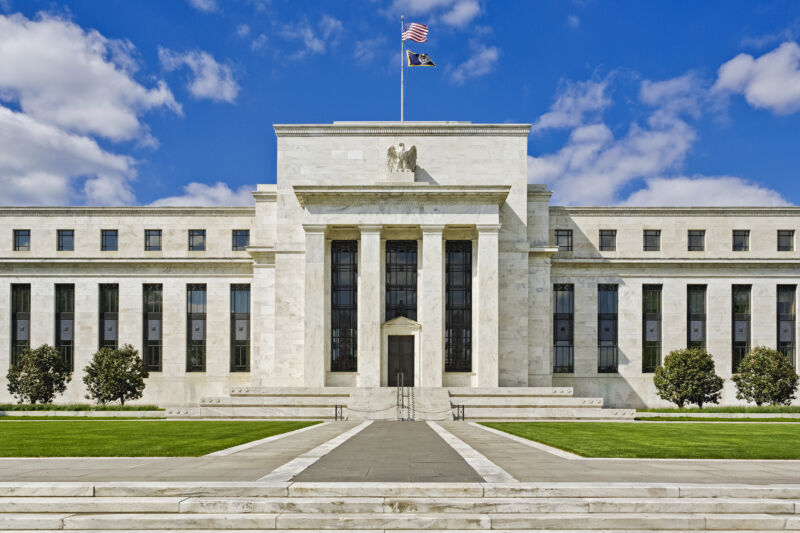
Enlarge / The Federal Reserve Building in Washington, DC.

Federal Reserve electronic systems that enable US banks to send each other electronic payments experienced a massive outage on Wednesday afternoon. A Fed statement attributed the outage to an “operational error” but didn’t provide much more detail.

The Federal Reserve System acts as America’s central bank, and it controls much of the plumbing of the US financial system.

The automated clearing house (ACH) system is used for paychecks, bill payments, and other small and medium-sized transactions across the economy. The Check 21 system is used for clearing paper checks. It takes one to two days for these transactions to clear.

The Fedwire system is used to instantly wire large sums of money from one bank to another. The system moves more than $3 trillion on an average day.

All of these systems and a few others were down for more than an hour on Wednesday afternoon.

By 3:30pm on Wednesday, most of these systems were back in service, but the Fed warned banks that it would need time to work a backlog of transactions through its system. The Fed urged banks to double-check that any transactions they submitted in recent hours had actually gone through.

https://arstechnica.com/?p=1744900