Comcast reluctantly drops data-cap enforcement in 12 states for rest of 2021

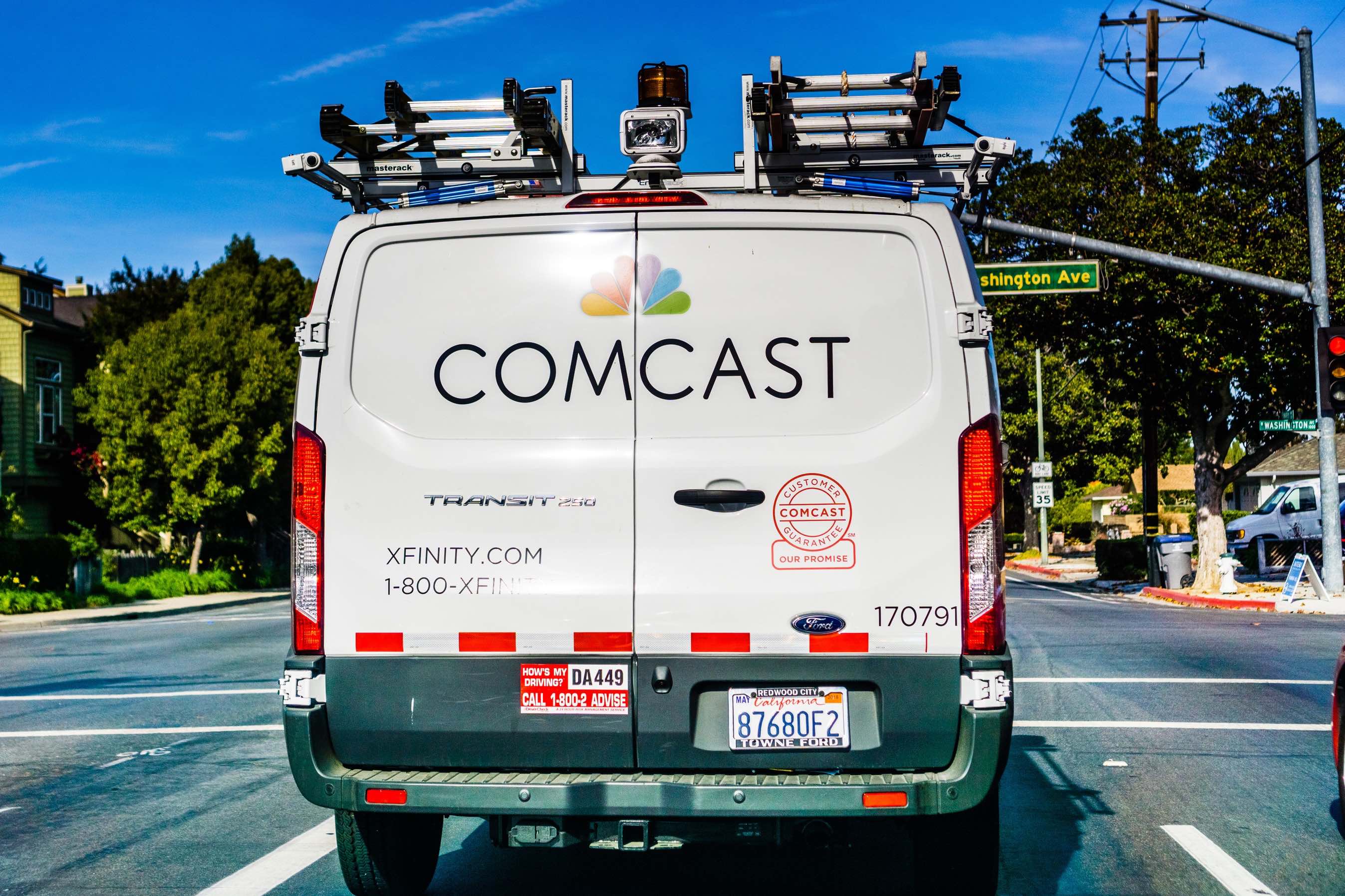
The back of a Comcast van driving along a street in Sunnyvale, California.
Enlarge / A Comcast van in Sunnyvale, California, in November 2018.

Comcast is delaying a plan to enforce its 1.2TB data cap and overage fees in the Northeast US until 2022 after pressure from customers and lawmakers in multiple states.

“[W]e are delaying implementation of our new data plan in our Northeast markets until 2022,” Comcast said in an announcement yesterday. “We recognize that our data plan was new for our customers in the Northeast, and while only a very small percentage of customers need additional data, we are providing them with more time to become familiar with the new plan.”

Comcast has enforced the data cap in 27 of the 39 states in which it operates since 2016, but not in the Northeast states where Comcast faces competition from Verizon’s un-capped FiOS fiber-to-the-home service. In November 2020, Comcast announced it would bring the cap to the other 12 states and the District of Columbia starting in January 2021. But with yesterday’s announcement, no one in those 12 states and DC will be charged overage fees by Comcast in all of 2021.

“Delaying this ill-timed data cap until at least 2022 is the right call,” Connecticut Attorney General William Tong said yesterday. “I have heard from families across Connecticut who easily exceeded this cap while studying and working remotely. Far from so-called super users, these were stories from typical Connecticut families merely trying to stay employed and educate their children during a global pandemic. To raise rates on these families at the very moment they were most reliant on broadband access and least able to pay more was simply unconscionable.”

The delay applies to Connecticut, Delaware, Massachusetts, Maryland, Maine, New Hampshire, New Jersey, North Carolina, New York, Pennsylvania, Vermont, West Virginia, and the District of Columbia.

Comcast vague on plans for 2022

Comcast’s original plan for the Northeast imposed the cap in January 2021 while providing courtesy months in which newly capped customers can exceed 1.2TB without penalty, resulting in the first overage charges being assessed for data usage in the April 2021 billing period. That plan drew condemnation from lawmakers, including legislation in Massachusetts that would ban data caps and price hikes until the pandemic is over.

Comcast responded in late January by delaying overage charges until the July billing period, but the extra few months didn’t quiet the controversy. Yesterday’s announcement of a delay until 2022 did not specify in which month of 2022 the first overage charges will appear. We asked Comcast if it plans to impose the caps on the Northeast in January 2022 or sometime later but didn’t get an answer.

Unlucky customers in 27 other states

Comcast did tell us that there are no changes in the other 27 states, where customers will continue to face caps and overage fees. Comcast’s insistence on continuing to charge overage fees in most of its territory maintains the unequal status quo in which a customer’s state of residence determines whether they have to deal with Comcast’s most unpopular policy. Comcast’s overage charges are $10 for each additional block of 50GB, up to a maximum of $100 each month. Customers can avoid overage charges by spending an extra $30 a month on unlimited data or $25 for the “xFi Complete” plan that includes unlimited data and the rental cost for Comcast’s xFi gateway modem and router.

As we noted in previous coverage, Comcast said it wouldn’t charge Northeast users for unlimited data plans until at least April. “Customers in our Northeast markets who have signed up for xFi Complete or Unlimited haven’t actually been billed because of the complimentary months. So [there is] no need for refunds or credits,” Comcast told us today.

Though Comcast claims the 1.2TB cap only affects “super users,” the percentage of Internet users hitting that mark is always increasing, and broadband usage has risen more than usual during the pandemic. OpenVault research found that over 14 percent of US-based subscribers used over 1TB a month in Q4 2020, up from 8.8 percent of subscribers in Q3 2020, as we reported last week. The percentage of customers using over 2TB a month more than doubled to 2.2 percent in the same time period. Median monthly usage in Q4 2020 was 293.8GB and average usage was 482.6GB.

“The explosion in data consumption during 2020 has established a new normal of bandwidth usage that is especially visible when compared with pre-pandemic time periods,” OpenVault said.

Network capacity not a “valid excuse”

Data-overage fees boost Comcast’s revenue, but limiting monthly data usage regardless of when in the month that usage occurs is not an effective tool for preventing network congestion in real time. Comcast has boasted of its network’s strong performance in the pandemic, once again showing that data caps are a profit play rather than a necessity.

Tong told Comcast in a letter earlier this month that “[b]roadband Internet access is an essential public service, particularly during the ongoing pandemic… The last thing our residents need to worry about at this time is whether they will run afoul of data caps, or incur significant unanticipated expense in order to remain connected.”

“Network capacity is not an issue for Comcast or a valid excuse to charge customers more,” 71 Massachusetts lawmakers told Comcast in a letter in late December. “Comcast itself claims it has plenty of capacity across its network, including areas where no caps are currently imposed… It is inconceivable that Comcast would choose to impose this ‘cap and fee’ plan during a pandemic, when many Massachusetts residents are forced to work and attend school from home via the Internet.”

https://arstechnica.com/?p=1743804


UK Supreme Court says Uber drivers are not independent contractors

UK Supreme Court says Uber drivers are not independent contractors
Peter Summers/Getty Images

The Supreme Court of the United Kingdom has ruled that Uber drivers are legally workers, not self-employed contractors as Uber has argued in courts around the world. The ruling means that drivers in Britain and Northern Ireland are eligible for additional benefits and protections, including a minimum wage.

Uber claims that it merely acts as a technology provider and broker between independent drivers and their customers—much as eBay facilitates sales between buyers and sellers. In Uber’s view, this means that it doesn’t owe its drivers benefits like unemployment insurance, doesn’t need to reimburse drivers for their costs, and isn’t bound by minimum wage and overtime rules. Uber emphasizes that its drivers are free to decide when, where, and how much they work.

But critics point out that Uber exerts a lot more control over its drivers—and over the driver-passenger relationship—than a conventional platform like eBay or Airbnb. Uber sets fares, collects payments from customers, deducts its own fee, and remits the remainder to the driver. It requires drivers to accept a large majority of the rides they are offered. It handles customer complaints and kicks drivers off the platform if their average rating falls too low.

“A position of subordination and dependency”

So the UK Supreme Court ruled Friday that Uber drivers are legally Uber workers, not independent business owners who happen to get most of their business from Uber.

“Drivers are in a position of subordination and dependency in relation to Uber such that they have little or no ability to improve their economic position through professional or entrepreneurial skill,” said Lord George Leggatt, one of the justices of the Supreme Court, as he handed down the ruling.

One consequence is that Uber drivers must be paid at least the minimum wage. And importantly, the high court held that drivers must be paid not only for the time when they’re driving but also for time they’re logged in to the app waiting for another fare.

This could have significant implications for Uber’s relationship to drivers. While drivers will presumably appreciate a minimum earnings guarantee, this could also mean that Uber will restrict when drivers are allowed to work—since having too many drivers online during periods of low demand could cost Uber more than it earns in fares.

According to the Financial Times, the ruling means Uber must set up a pension program for its drivers. Thousands of drivers could be eligible to sue for back pay as a result of the ruling.

A global battle

In recent years, Uber has been fighting over the same issue in jurisdictions around the world. California passed legislation in 2019 requiring Uber (and Lyft) to treat its drivers as employees. Uber and Lyft fought the law in court for the next year, delaying its implementation until voters overturned it in a November 2020 vote.

According to the Financial Times, UK law has three legal categories—employees, workers, and independent contractors. Workers in the UK have more rights than independent contractors, but not as many as employees. Employment law in the US generally just has two categories—employees and independent contractors.

Last year, France’s top court ruled that Uber drivers must be treated as employees. Spanish courts reached a similar conclusion in September. Uber is facing a class-action lawsuit in Canada over the same issue.

Uber is also facing litigation in Massachusetts over the legal status of its drivers.

Of course, Uber may ultimately overturn some of these rulings in the courts or national legislatures, or through referenda. But it seems unlikely that Uber will prevail in all of these fights. Which means that unless Uber wants to abandon broad swaths of hard-won territory, it’s going to have to figure out how to make its business model work while treating drivers as employees.

That might mean higher prices for consumers and less flexibility for the drivers. But advocates say that drivers will ultimately benefit from having the same legal protections as most other workers.

https://arstechnica.com/?p=1743797


New browser-tracking hack works even when you flush caches or go incognito

New browser-tracking hack works even when you flush caches or go incognito
Getty Images

The prospect of Web users being tracked by the sites they visit has prompted several countermeasures over the years, including using Privacy Badger or an alternate anti-tracking extension, enabling private or incognito browsing sessions, or clearing cookies. Now, websites have a new way to defeat all three.

The technique leverages the use of favicons, the tiny icons that websites display in users’ browser tabs and bookmark lists. Researchers from the University of Illinois, Chicago said in a new paper that most browsers cache the images in a location that’s separate from the ones used to store site data, browsing history, and cookies. Websites can abuse this arrangement by loading a series of favicons on visitors’ browsers that uniquely identify them over an extended period of time.

Powerful tracking vector

“Overall, while favicons have long been considered a simple decorative resource supported by browsers to facilitate websites’ branding, our research demonstrates that they introduce a powerful tracking vector that poses a significant privacy threat to users,” the researchers wrote. They continued:

The attack workflow can be easily implemented by any website, without the need for user interaction or consent, and works even when popular anti-tracking extensions are deployed. To make matters worse, the idiosyncratic caching behavior of modern browsers, lends a particularly egregious property to our attack as resources in the favicon cache are used even when browsing in incognito mode due to improper isolation practices in all major browsers.

The attack works against Chrome, Safari, Edge, and until recently Brave, which developed an effective countermeasure after receiving a private report from the researchers. Firefox would also be susceptible to the technique, but a bug prevents the attack from working at the moment.

Favicons provide users with a small icon that can be unique for each domain or subdomain on the Internet. Websites use them to help users more easily identify the pages that are currently open in browser tabs or are stored in lists of bookmarks.

Browsers save the icons in a cache so they don’t have to request them over and over. This cache isn’t emptied when users clear their browser cache or cookies, or when they switch to a private browsing mode. A website can exploit this behavior by storing a specific combination of favicons when users first visit it, and then checking for those images when users revisit the site, thus allowing the website to identify the browser even when users have taken active measures to prevent tracking.

Browser tracking has been a concern since the advent of the World Wide Web in the 1990s. Once it became easy for users to clear browser cookies, websites devised other ways to identify visitors’ browsers.

One of those methods is known as device fingerprinting, a process that collects the screen size, list of available fonts, software versions, and other properties of the visitor’s computer to create a profile that is often unique to that machine. A 2013 study found that 1.5 percent of the world’s most popular sites employed the technique. Device fingerprinting can work even when people use multiple browsers. In response, some browsers have attempted to curb the tracking by blocking fingerprinting scripts.

Two seconds is all it takes

Websites can exploit the new favicon side channel by sending visitors through a series of subdomains—each with its own favicon—before delivering them to the page they requested. The number of redirections required varies depending on the number of unique visitors a site has. To be able to track 4.5 billion unique browsers, a website would need 32 redirections, since each redirection translates to 1 bit of entropy. That would add about 2 seconds to the time it takes for the final page to load. With tweaks, websites can reduce the delay.

The paper explains it this way:

By leveraging all these properties, we demonstrate a novel persistent tracking mechanism that allows websites to reidentify users across visits even if they are in incognito mode or have cleared client-side browser data. Specifically, websites can create and store a unique browser identifier through a unique combination of entries in the favicon cache. To be more precise, this tracking can be easily performed by any website by redirecting the user accordingly through a series of subdomains. These subdomains serve different favicons and, thus, create their own entries in the Favicon-Cache. Accordingly, a set of N-subdomains can be used to create an N-bit identifier, that is unique for each browser. Since the attacker controls the website, they can force the browser to visit subdomains without any user interaction. In essence, the presence of the favicon for subdomain in the cache corresponds to a value of 1 for the i-th bit of the identifier, while the absence denotes a value of 0.

The researchers behind the findings are: Konstantinos Solomos, John Kristoff, Chris Kanich, and Jason Polakis, all of the University of Illinois, Chicago. They will be presenting their research next week at the NDSS Symposium.

A Google spokesman said the company is aware of the research and is working on a fix. An Apple representative, meanwhile, said the company is looking into the findings. Ars also contacted Microsoft and Brave, and neither had an immediate comment for this post. As noted above, the researchers said Brave has introduced a countermeasure that prevents the technique from being effective, and other browser makers said they were working on fixes.

Until fixes are available, people who want to protect themselves should investigate the effectiveness of disabling the use of favicons. Searches here, here, and here list steps for Chrome, Safari, and Edge respectively.

https://arstechnica.com/?p=1743712


Robinhood says GameStop volatility was a “1 in 3.5 million” black swan

Ready, take aim, and let fly...
Enlarge / Ready, take aim, and let fly…
Aurich Lawson / Getty Images

Robinhood’s move to temporarily limit purchases of GameStop and other highly volatile stocks in late January was the overwhelming focus of today’s House Committee on Financial Services hearing.

At the hearing, Robinhood CEO Vlad Tenev said that extreme stock volatility that led to Robinhood’s restriction was a “five sigma” event with a “1 in 3.5 million” chance of happening. That made the situation practically impossible for the company to plan for, Tenev said. “In the context of tens of thousands of days in the history of US stock market, a 1 in 3.5 million event is basically unmodelable.”

As we’ve covered previously, the high volatility of GameStop and other so-called “meme stocks” last month meant Robinhood was suddenly forced to provide much more collateral to the stock clearing houses that actually process its trades. Tenev said Thursday that these collateral obligations increased tenfold between January 25 and January 28, as GameStop rose from $76 a share to over $347, then back down to $193.

“Despite unprecedented conditions, what happened is unacceptable to us,” Tenev said. “To our customers, I’m sorry, and I apologize. We’re doing everything in our power to make sure this won’t happen again.”

Where’s the money?

Tenev reiterated multiple times that Robinhood never had a liquidity issue in terms of covering its users’ actual positions. But the company did lack immediate capital to cover those collateral requirements, which meant its only alternative was to temporarily limit sales of those stocks until it could raise more funds (or until the stocks became less volatile).

Some members of the House Financial Services Committee were not impressed with that quibbling over what “liquidity” means for Robinhood. “Your customers wanted to buy the stock,” Rep. Van Taylor (R-Texas) said at one point. “You wouldn’t let them do it because you didn’t have the capital to allow them to do it.”

Tenev was also taken to task for not clearly and quickly communicating the reasons behind those restrictions to customers. Rep. Carolyn Maloney (D-N.Y.) noted that Robinhood’s initial January 28 blog post announcing the restrictions contained “no disclosures about capital requirements” and only “vague language about restricting trading.” The initial impression, she implied, was that Robinhood was “[making] up the rules as you go along.”

Since it was forced to halt trading, Robinhood has attracted over $3.4 billion in additional investment that Tenev said “cushions the firm from market volatility and further black swan events.” And while he was apologetic, Tenev also said that “other firms did similar things in restricting buying [of these volatile stocks], which suggests it is a systemic problem rather than a uniquely Robinhood problem.”

But Rep. Alexandria Ocasio-Cortez (D-N.Y.) pointed out that “when Robinhood prohibited it customers from purchasing additional shares of certain stocks, other brokerages merely adjusted margin requirements on these stocks.” That, she suggests, might mean that “the issue isn’t clearinghouses but that you simply didn’t manage your own margin rules or failed to manage your own internal risks.”

An example of an error message greeting Robinhood users trying to buy certain volatile stocks in late January.
Enlarge / An example of an error message greeting Robinhood users trying to buy certain volatile stocks in late January.

Some on the committee also focused on Robinhood’s business model, which generates a majority of its revenue by selling its “order flow” to market makers like Citadel (who then shave a little bit of profit off of the price improvement they can provide over the exchanges). “When you’re not paying for it, it’s not free,” Rep. Brad Sherman (D-Calif.) said regarding Robinhood’s commission-free trades. “You’re the product, someone else [i.e., Citadel] is the customer.”

“If removing revenues from payment for order-flow would cause the removal of commission-free trade, doesn’t that mean trading on Robinhood isn’t actually free to begin with, because you’re just hiding the cost?” Ocasio-Cortez added in some pointed questioning.

Deregulate or re-regulate?

While Tenev was apologetic for the mistakes Robinhood made, he also placed some blame on what he called outdated and moribund trade settlement rules that place a lot of pressure on the system. Under the current T+2 timeline for stock settlement, market makers actually have two full days to officially settle a trade (i.e., transfer the shares/cash) after it’s made. When a stock’s price is especially volatile, the clearinghouse needs more collateral to cover the potential price changes that could happen on either side of the trade in that two-day interval.

“The existing two-day period to settle trade exposes investors and the industry to unnecessary risk,” Tenev said. “There is no reason why the greatest financial system in the world can not settle trades in real time…. If we had real-time settlement capability and infrastructure was modernized, we wouldn’t have seen similar problems.”

Ken Griffin, CEO of Citadel, stopped short of asking for real-time trade settlement in his testimony to the committee. But he said that relaxing the rules to a one-day turnaround would “reduce counter-party risk holistically.” While instant or same-day clearing of trades would be nice, Griffin said it would essentially require “all systems… to function at all times every day with no room for error.”

Rep. Andy Barr (R-Ky.) pointed out through his questioning that the current capital requirements were put in place in 2010’s Dodd-Frank Wall Street Reform bill. “If anyone has a problem with [Robinhood]’s decision, their frustration should be with federal regulations,” he said. Rep. William Timmons (R-S.C.) added that Dodd-Frank is “arguably to blame for this exorbitant capital requirement that you weren’t able to meet… Well-intentioned legislation is somewhat responsible.”

Other House members, like Rep. Rashida Tlaib (D-Mich.) argued forcefully for a 0.1 percent financial transactions tax, which would discourage speculative betting on meme stocks and limit algorithm-driven high-frequency trading. She noted that Hong Kong implemented a financial transactions tax that’s twice as large, limiting high-frequency trading without hurting that market’s significant growth.

But Jennifer Schulp, director of Financial Regulation Studies at the free-market-focused Cato Institute, told the committee such taxes “often fail to raise money and distort trading in a way that’s unforeseen. A financial-transaction tax might seem like a small imposition, but it often hurts individual investors’ long-term goals by affecting institutions that do the trading.”

While Schulp allowed that a financial-transactions tax might decrease total volatility in the market, she added that she doesn’t think it would have had that effect in the particular case of GameStop’s recent stock moves, which were driven primarily by heavy buying.

Diamond hands

To represent the retail traders who helped drive the GameStop bubble, the committee heard from Keith Gill, aka DeepFuckingValue on Reddit. He first invested in GameStop in mid-2019 (when the stock was valued at under $10) and heavily hyped the stock’s value on the WallStreetBets subreddit. “The market was underestimating the prospects of GameStop’s legacy business and overestimating the risks of bankruptcy,” he said. “I grew up playing video games and shopping at GameStop, and I plan to keep shopping there. GameStop stores provide real value to gamers and real revenue to GameStop.”

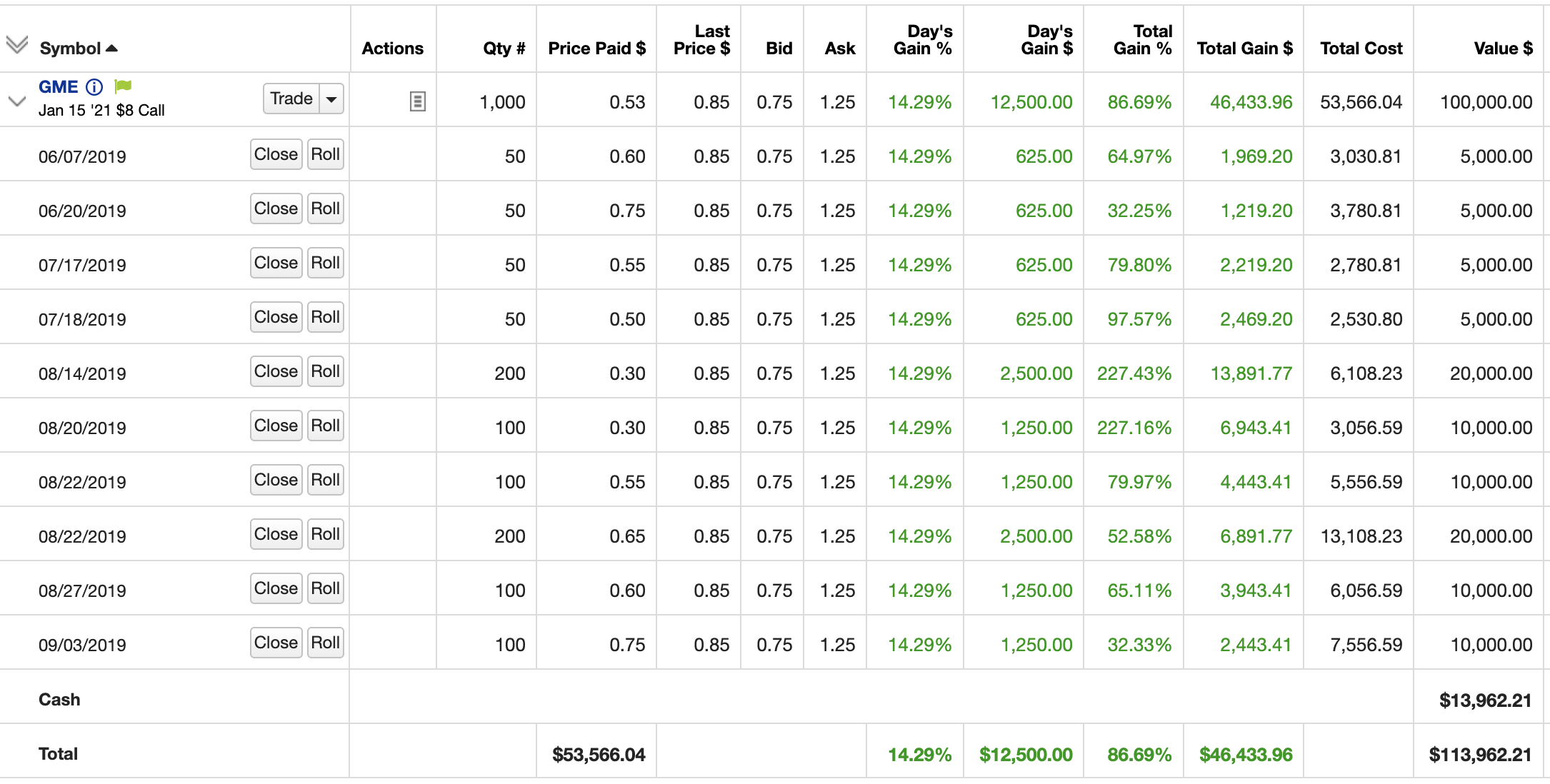
In a WallStreetBets post from September 2019, Keith Gill shows off the value of the GameStop stock in his portfolio, well before its meteoric rise.
Enlarge / In a WallStreetBets post from September 2019, Keith Gill shows off the value of the GameStop stock in his portfolio, well before its meteoric rise.

Gill, who has now made millions off an initial investment of about $50,000, said he still thinks GameStop is an attractive investment at its current price of about $40 a share. His optimism is thanks in large part to GameStop’s potential to pivot to a more focused e-commerce strategy. “As for me, I like the stock,” he said. “I’m as bullish as I’ve ever been on a potential turnaround, and I remain invested in the company.”

Less represented at the hearing were the many other investors who bought into the stock at or near its peak in late January, only to see their investments crumble in days. Rep. Jim Himes (D-Conn.) brought up the case of Salvador Vergara, who took out a $20,000 personal loan to invest in GameStop only to see his stock’s value go down 80 percent in days. “We need to be thoughtful about this,” Himes said, regarding how to deal with retail investors’ access to the market.

The committee also heard from Reddit co-founder and CEO Steve Huffman, who said Reddit had found no evidence of bots or foreign agents playing a significant role in trying to unduly pump up any stock through the WallStreetBets subreddit. “We will comply with requests from regulators, but we believe the community was well within bounds of our own policies,” he said.

“It’s a real community,” Huffman continued, regarding WallStreetBets. “The self-deprecating jokes, memes, and crass at times language reflect that. There’s a significant depth to the community based on the affinity users show for each other.”

https://arstechnica.com/?p=1743729


Tech groups sue Maryland to block new digital-ad tax from going into effect

Tech groups sue Maryland to block new digital-ad tax from going into effect
G Fiume | Getty

A group of business organizations led by the US Chamber of Commerce is suing the state of Maryland, seeking to block the implementation of the state’s brand-new, first-of-its-kind tax on digital-advertising revenue.

Maryland’s tax bill is “deeply flawed” and “illegal in myriad ways,” the suit (PDF) alleges, claiming that act will “harm Marylanders and small businesses and reduce the overall quality of Internet content.”

“This is a case of legislative overreach, punishing an industry that supports over one hundred thousand jobs in Maryland and contributes tens of billions of dollars to its economy each year,” the Internet Association, one of the plaintiffs, said in a statement about the suit. “Internet services and companies are proud to play a role in creating opportunities for Maryland’s small businesses and citizens.”

What new tax?

Maryland’s Digital Advertising Gross Revenues Tax does what it sounds like: it imposes a tax on the gross revenues companies make from digital advertising inside Maryland. Digital-advertising services, as defined in the bill, include “advertisements in the form of banner advertising, search advertising, interstitial advertising, and other comparable advertising services.”

Businesses that make less than $100 million in a calendar year from global digital-advertising revenues are exempt from the tax, after which it scales up. Businesses with global annual gross advertising revenues higher than $100 million, up to $1 billion, owe 2.5 percent. For businesses between $1 billion and $5 billion, it’s 5 percent, then 7.5 percent for businesses with global revenue up to $15 billion, and 10 percent for anything larger than that.

The Act uses global revenue to calculate what tax bracket a company falls into, but it specifically only imposes that tax on digital advertising in Maryland, aimed at Marylanders. If 2 percent of a company’s US digital ad revenue in 2021 comes from advertising in Maryland, then the company would owe tax on just that 2 percent.

Lawmakers in the Old Line State first approved the bill back in May, but Republican Gov. Larry Hogan vetoed it. Both chambers of the state legislature voted last week in favor of overriding the veto and implementing the law.

The lawsuit

Several Maryland businesses joined with large trade groups last year to launch a coalition, Marylanders for Tax Fairness, to lobby against the tax. The major groups representing almost all of the large US tech firms—including the Internet Association, the IAB, the NCTA, and TechNet—are among the coalition’s membership.

The coalition in a statement last week all but promised to sue when the legislature overrode Hogan’s veto on the bill, and three of its members, plus another organization, are now making good on that threat.

The bill is not actually a tax but is instead a “punitive fee, penalty, or fine” under US law, the trade groups argue in the suit. Because of the revenue-based scale, the Act targets “extra-territorial conduct,” i.e., behavior outside the state of Maryland, and “is a highly unusual and extraordinarily severe form of exaction.”

Additionally, the plaintiffs argue, the tax violates the Internet Tax Freedom Act. Congress first passed the ITFA in 1998 and subsequently renewed it several times before President Barack Obama signed a permanent extension of the bill into law in 2016.

The ITFA is designed to stop states from taxing Internet-access services, which looked in the 1990s like they might be about to become a new potential line of state revenue. In short, your state, county, or city cannot impose a 5 percent tax on your monthly Comcast or Verizon bill. A handful of states had enacted such taxes prior to the 1998 law but were required to phase those taxes out by 2020.

The ITFA does not prohibit other sales and use taxes related to transactions that take place over the Internet, which is why most of us pay sales tax on our online orders by now. What will be left to the court to determine is if the ad sales tax is discriminatory because the bill does not include other advertisers, such as print and television, and instead only includes online ads.

https://arstechnica.com/?p=1743598


Facebook’s Australia news ban backfires, hits government and charity pages

News is still very much happening both around the world and in Australia... but you wouldn't know it if you're one of the tens of millions of Australian Facebook users.
Enlarge / News is still very much happening both around the world and in Australia… but you wouldn’t know it if you’re one of the tens of millions of Australian Facebook users.

A long-simmering battle between tech firms and the government of Australia became explosive yesterday when Facebook announced that it would block all linking of news publications inside the country. Not only has this change affected Australian and international news publishers, but Facebook’s wide net has also caught up governments, nonprofits, and basically anyone else in Australia who posts non-news content to the platform.

Australian lawmakers have been considering a bill that would require Internet platforms such as Google and Facebook (“digital platform corporations”) to negotiate in good faith with news outlets (“registered news business corporations”) to link to their content. If the outlets and the platforms can’t reach a deal on their own, they would have to go to baseball-style arbitration, where a neutral third-party arbitrator would decide whose offer is the better one.

The bill would at first apply to only two companies: Google and Facebook. Both, as you might expect, have expressed consistent opposition to the bill. (Microsoft, operator of remote second-place search engine Bing—which captures between 2 and 3 percent of the market—does not oppose the rules that would apply to its largest competitor.)

After months of complaint, Facebook took the nuclear option on Wednesday, blocking all Australian users from sharing links either from Australian or international sources and blocking everyone else in the world from sharing any links to any Australian news sources.

At a high level, the dispute is not unlike the cable blackouts US consumers are all too used to experiencing. When two parties can’t agree, each one points the finger at the other and tells consumers to blame the other guy for the inconvenience. Meanwhile, consumers are stuck in the middle, facing all the harm. And when the fight is between the world’s largest online platforms and an entire country, the stakes are high.

Apparently everything is “news”

Facebook’s universal block turned out to be as blunt an instrument as you could imagine, and for several hours Wednesday it blocked basically all links from being shared in Australia.

The ban hit not only news outlets but also a wide range of other websites and organizations inside Australia. City, state, and national government pages, including departments of health that communicate with the public about the pandemic and weather services that warn about fire hazards, were blocked for several hours before being restored. Facebook even suspended its own page for a while.

Nonprofits were also affected, according to Bloomberg News. Pages for food banks, domestic violence shelters, the Australia Council of Trade Unions, and a wildlife preservation group were all caught up in the ban, as well as pages for some politicians and emergency services departments.

“Government Pages should not be impacted by today’s announcement,” a Facebook spokesperson told Bloomberg. “As the law does not provide clear guidance on the definition of news content, we have taken a broad definition in order to respect the law as drafted.”

“Arrogant and disappointing”

Facebook’s actions were “as arrogant as they were disappointing,” Australian Prime Minister Scott Morrison said in—of course—a Facebook post. “These actions will only confirm the concerns that an increasing number of countries are expressing about the behavior of BigTech companies who think they are bigger than governments and that the rules should not apply to them.

“We will not be intimidated by BigTech seeking to pressure our Parliament” as the bill heads to a vote, Morrison added. “I encourage Facebook to constructively work with the Australian Government, as Google recently demonstrated in good faith.”

Google in January threatened to exit Australia rather than pay to link to news content. Earlier this week, however, Google made a deal with News Corp—media mogul Richard Murdoch’s international company—to pay “significant” sums for access to News Corp’s US, UK, and Australian news outlets.

Australian news outlets—the entities the bill is theoretically designed to boost and protect—were similarly displeased.

“Despite key issues such as the COVID-19 pandemic having ongoing effects on all Australians, Facebook has today removed important and credible news and information sources from its Australian platform,” the Australian Broadcasting Corporation (ABC)’s managing director said in a written statement. “We will continue our discussions with Facebook today following this development.”

The NT News, a regional paper, was more blunt. The cover for its Thursday issue reads: “FEBRUARY 18, 2021. THE DAY FACEBOOK WENT TO WAR WITH AUSTRALIA.”

https://arstechnica.com/?p=1743443


Facebook goes nuclear, banning all news posts in Australia

A man in a suit seems concerned.
Enlarge / Mark Zuckerberg speaks at the Munich Security Conference in 2020.

Facebook has gone nuclear in its long-running battle with the Australian government over news content. Australia is considering legislation that would require Facebook to pay to link to Australian news stories. In response, Facebook has announced a wide-ranging ban on users linking Australian news content.

The ban means that Facebook users in Australia can no longer make posts that link to news articles—either in the Australian media or internationally. Meanwhile, users outside of Australia can’t post links to Australian news sources. The ban has already gone into effect, as I discovered when I tried to post a link to The Sydney Morning Herald on Facebook:

Facebook says that Australian news publishers will be blocked from sharing or posting content to their Facebook pages. Posts by news publishers outside of Australia won’t be available to Australian users.

Under the Australian law, Facebook and Google would be required to negotiate “in good faith” with Australian news sites for licenses to link to their content—something they currently do for free. Nondiscrimination rules would require Google and Facebook to treat sites the same whether they have to pay a site for links or not. If negotiations broke down, the disputes would be settled by baseball-style arbitration, where each side puts an offer on the table and a neutral party decides which offer is more reasonable.

In short, Facebook and Google will be required to pay Australian news sites when they send them traffic—and the Internet titans are not allowed to stop linking to Australian news sites to avoid paying.

In a blog post, Facebook argued that this proposal “fundamentally misunderstands the relationship between our platform and publishers who use it to share news content.” Facebook argues news sites benefit from the traffic Facebook sends them far more than Facebook benefits by linking to news sites. Facebook says that last year it sent 5.1 billion free referrals to Australian publishers—traffic the company estimates is worth AU$407 million ($315 million).

Facebook also sought to distinguish itself from Google, the other technology giant targeted by the proposed Australian law.

“Google Search is inextricably intertwined with news and publishers do not voluntarily provide their content,” Facebook claimed. “On the other hand, publishers willingly choose to post news on Facebook, as it allows them to sell more subscriptions, grow their audiences, and increase advertising revenue.”

Last month, Google issued its own threat that it would shut down its Australian search engine before paying for news sites. But since then, the search giant seems to have softened its stance. It recently signed a deal with French publishers to feature their articles in search results. And more recently, it has begun signing deals with Australian publishers, including a deal with News Corp., which was founded by Australian native Rupert Murdoch and owns a number of Australian newspapers.

https://arstechnica.com/?p=1743159


Posing as Amazon seller, consumer group investigates fake-review industry

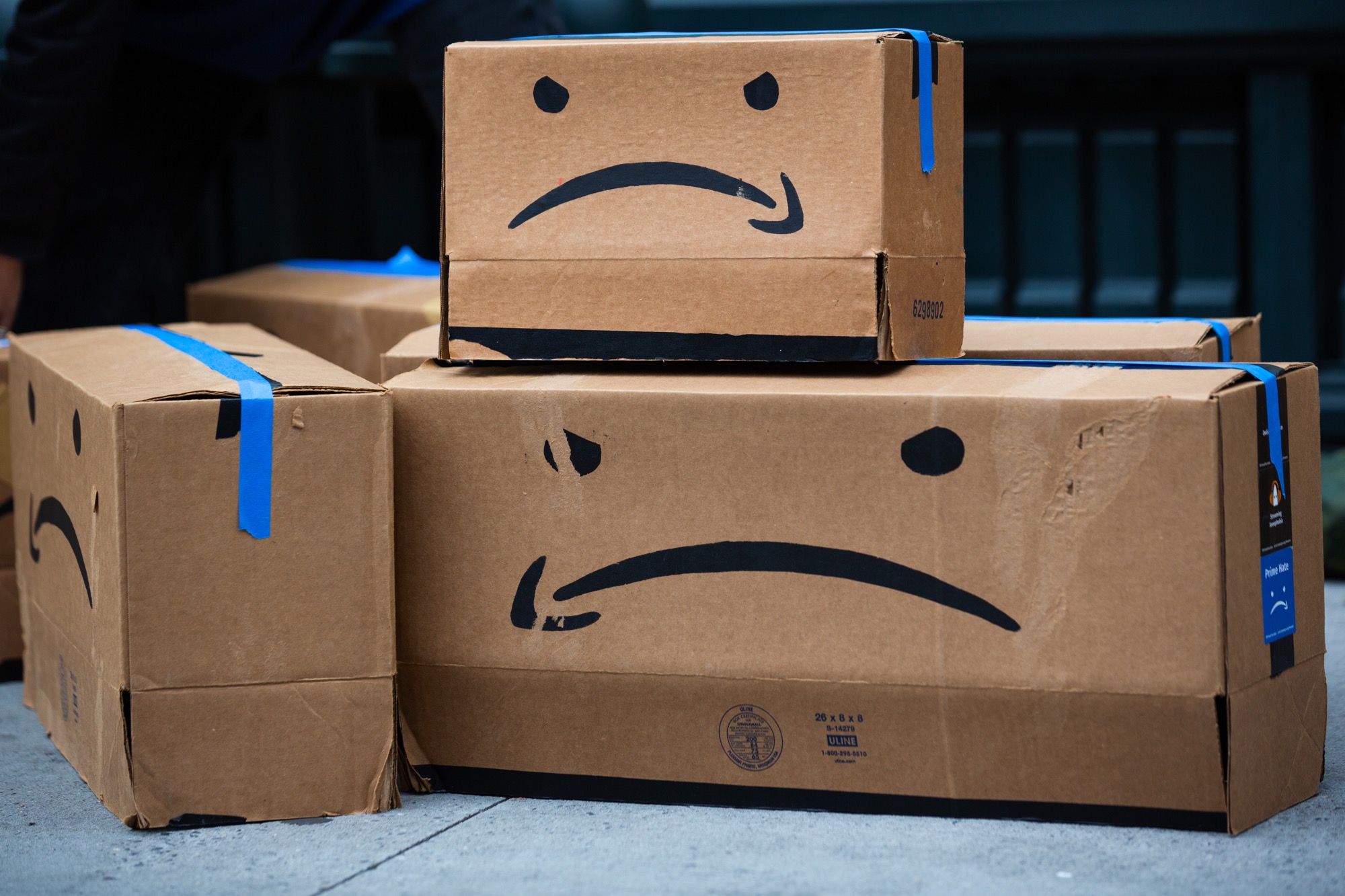
Cardboard boxes made to resemble Amazon packages, but with the logo in the shape of a frown.
Enlarge / Cardboard boxes made to resemble Amazon packages during a protest outside the home of Amazon Chief Executive Officer Jeff Bezos in New York on Wednesday, Dec. 2, 2020.

Posing as an Amazon seller, a UK consumer group dug into the shady marketplace where fake reviews are sold in bulk by companies promising sellers a quick rise to the top of Amazon’s charts.

“In December 2020, we signed up to 10 sites offering review manipulation services, including free or discounted products in exchange for reviews, or sales campaigns for sellers to boost their positive reviews,” according to the report published yesterday on Which?, a website run by the Consumers’ Association, a UK-based charity that does product research and advocacy on behalf of consumers. The consumer group said it found an army of “702,000 product reviewers across just five businesses” and “one site selling contact and social media details for Amazon reviewers.”

One review seller is a German company called AMZTigers. “Amazon prohibits sellers from paying third parties in exchange for reviews, and says that it suspends, bans and takes actions against those who violate these policies. But this is exactly the sort of service AMZTigers offers,” the report said. “We posed as an Amazon seller and signed up to find out more. After a short registration, we were assigned an account manager who arranged a call to discuss what we were looking for, including whether we already had stock to sell.”

A screenshot in the Which? report showed that AMZTigers was selling reviews individually for 15 euros or in bulk packages ranging from 699 euros for 50 reviews to 8,999 euros for 1,000 reviews. (That’s about $10,900 for 1,000 reviews at the current euro/dollar exchange rate.) An account manager “told us that AMZTigers could help sellers get an Amazon’s Choice endorsement in less than a fortnight by using its pool of buyers to generate sales on certain search terms—such as ‘Bluetooth headphones’—on Amazon,” the report said.

AMZTigers' price list.
AMZTigers’ price list.

The consumer group said it shared its findings with AMZTigers but received no response. The AMZTigers website boasts that sellers can “Use our vast network of verified shoppers to increase your sales & revenue on Amazon.”

AMZTigers was also the subject of a Daily Mail report in December 2019. “The testers are given a small fee and a refund for the cost of buying the products they have to recommend,” that report said. An AMZTigers employee told a Daily Mail reporter who was posing as a potential client that “if you don’t like the comments, we can change the tester. It’s not really legal but it’s not really unlegal [sic]. So it’s like in a grey zone.”

We contacted AMZTigers today and will update this article if we get a response.

Longstanding problem

When contacted by Ars today, Amazon said it has “removed the Amazon Choice label from the products in question.”

Amazon also gave us this statement:

We remove fake reviews and take action against anyone involved in abuse. We have won dozens of injunctions against providers of fake reviews across Europe and we won’t shy away from taking legal action. However, Amazon and other online retailers cannot do this alone. Customers need to be able to trust the reviews they see online and the systematic manipulation of reviews needs consistent enforcement and global coordination with stronger enforcement powers given to regulators against bad actors. We continue to work to protect the authenticity of customer reviews. We advise customers who doubt the credibility of a review on a product to click the “report abuse” link available below each review. We will then investigate and take necessary measures.

Back in 2015, we wrote about Amazon filing lawsuits against fake-review operations. In February 2019, the US Federal Trade Commission settled a case with a company it sued for making false and unsubstantiated claims about a weight-loss pill, including by purchasing fake Amazon reviews.

In September 2020, six people were indicted in the United States on allegations of paying over $100,000 in bribes to Amazon employees and contractors as part of a scheme to give third-party sellers unfair advantages on the Amazon marketplace. The US Department of Justice said that Amazon workers who accepted bribes reinstated sellers whose accounts had been suspended for offering dangerous products and that these workers suspended the seller accounts of fraudulent sellers’ competitors. Previously suspended merchants made over $100 million from Amazon sales after their “baseless and fraudulent reinstatement,” an indictment said. The case is still pending.

A Financial Times investigation in September 2020 found that top reviewers were profiting from posting thousands of five-star ratings for “Chinese products from unknown brands and manufacturers.” Even more recently, an Ars report pointed out that high ratings for some products on Amazon are driven by reviews written for entirely different products.

Evading Amazon detection

Amazon sellers sometimes offer free or discounted products in exchange for reviews even though Amazon bans the practice. “We discovered a range of review sites designed to link sellers with potential reviewers, some of which even offered a small payment alongside a free or discounted product—ranging from a few pounds up to more than £10,” the Which? report said.

These sites provided advice to reviewers to help them avoid detection. Advice included “leaving reviews that were at least two sentences long” and “leaving reviews a certain number of days after receiving a product.”

One site called AMZDiscover “allows sellers to target those they know are interested in particular products, and poach them from competitors,” the report said. “By signing up to one of the paid-for plans, sellers can access the contact details of existing Amazon reviewers, including information about their reviewer ranking on Amazon [and] email addresses and social media profiles.” Users of AMZDiscover can look up Amazon product listings “and then download contact details for the reviewers of the product so they can contact them, unsolicited, directly.” The practice violates an Amazon rule that prohibits buyers from contacting customers outside Amazon’s own messaging platform.

The Which? report called for a crackdown on sites selling or facilitating the trade for fake reviews and urged Amazon to “do more to proactively prevent fake reviews infiltrating their sites,” including by working with other tech companies to shut down fake-review businesses.

“If online platforms do not take responsibility, the government must urgently strengthen online consumer protections, including platforms’ legal responsibilities for fake and misleading review activity, so that sites can be held to account if they fail to keep their users safe,” the report said.

https://arstechnica.com/?p=1742714


North Dakota lawmakers jump into Apple/Epic fight with new app store bill

A wide lawn surrounds a 21-story Art Deco tower.
Enlarge / North Dakota’s capitol, in Bismarck, features convenient floral labeling.

The North Dakota state Senate is jumping into a simmering feud between Apple and iOS software developers with a bill that would make it illegal for device makers to require to use their app stores and payment systems.

The bill (PDF) has two main prongs. First, it would make it unlawful for companies such as Google and Apple to make their app stores the “exclusive means” of distributing apps on their platforms. Second, it would prohibit those providers from requiring third parties to use their digital transaction or in-app payment systems in their applications.

The proposed law applies to app stores for which gross sales receipts to North Dakota residents exceed $10 million in a calendar year. It applies to any “general-purpose hardware,” including tablets and smartphones, but it explicitly excludes “special-purpose digital application distribution platforms” such as gaming consoles, music players, and “other special-purpose devices connected to the internet.” Thread that needle, and you’re left with a pretty firm arrow pointing directly at Google’s and Apple’s mobile app platforms. (It could also apply to the Mac OS and Windows app stores for laptop and desktop computers, but those platforms are already less restrictive.)

“The purpose of the bill is to level the playing field for app developers in North Dakota and protect customers from devastating, monopolistic fees imposed by big tech companies,” Republican state Sen. Kyle Davison said to local reporters when he introduced the bill, The Bismarck Tribune reports.

The targets

Google does permit users to go around the built-in Android app store to side-load apps, which would probably put it in the clear as far as that part of the bill goes. Apple, however, infamously does not, and it is facing antitrust complaints about that restriction from the makers of several apps including Telegram.

Even more under threat, however, is the 30 percent cut of sales that Apple and Google make from requiring apps on their respective platforms to use their own payment platforms. ProtonMail’s founder and CEO last year called Apple’s cut “virtually indistinguishable from a protection racket.” ProtonMail in this is in line with several other developers, such as Spotify, who have publicly complained that the fee amounts to a tax on non-Apple software that makes it harder to compete against Apple-native apps, because they either have to take a 30 percent hit to their revenue or pass the cost along to consumers and look more expensive in comparison.

If you’re thinking this sounds familiar, you’re right. The proposal is closely bound to the heated fight between Epic and Apple playing out right now in federal court.

All of this has happened before right now…

Back in August, Epic Games, maker of Fortnite, picked a fight with Apple and Google by launching an alternative payment system for in-app purchases inside of the game. Apple booted it from the iOS app store within hours, as predicted, and Epic immediately filed an antitrust suit against the company in federal court. That case is still very much in progress at the moment.

Last fall, in the midst of this dispute, Epic brought in 12 other companies to launch a lobbying group, the Coalition for App Fairness, to fight back against Apple. Spotify, Bandcamp, and Protonmail, all of whom publicly took Apple to task for its App Store policies, were among the founders, alongside Epic; the group now has more than 45 member businesses.

According to the New York Times, the lobbyist who proposed the draft legislation to the state senator who sponsored it was working on behalf of both Epic Games and the Coalition.

(Update 6:00pmEST: After Ars published our story, Epic Games CEO Tim Sweeney and the Coalition for App Fairness both clarified that the coalition, not Epic, wrote the draft bill. Epic and the lobbyist both submitted testimony supporting it, as did several other members of the coalition.)

North Dakota may be just one low-population state (it has fewer than 1 million residents), but it’s not the only state where legislators are looking at taking action against the big international tech firms on their own. Arizona also has an extremely similar bill under consideration in its state legislature at the moment.

In the absence of federal regulation states are acting on other facets of the digital economy, too. Virginia last week became the second state, after California, to pass a comprehensive digital privacy law, and Maryland last week became the first in the nation to impose a tax on digital advertising revenue.

https://arstechnica.com/?p=1742650


Parler says it’s back without “Big Tech” after being kicked off Amazon

The Parler logo on a phone screen.
Enlarge / Parler’s logo.

Parler.com is getting back online after being kicked off Amazon’s hosting service, with the controversial social network saying it no longer relies on “Big Tech” for its Web infrastructure. A Parler announcement today said its relaunched website is “built on sustainable, independent technology and not reliant on so-called ‘Big Tech’ for its operations.”

Amazon cut off Parler’s Web-hosting service on January 10, a few days after a Trump-incited mob stormed the US Capitol, saying that “Parler cannot comply with our terms of service and poses a very real risk to public safety.” Parler sued Amazon in response, but a federal judge denied Parler’s request for a preliminary injunction that would have forced Amazon to reinstate its services.

Now, Parler is using hosting services from a company called SkySilk. Parler said its site is available this week only to users who already had accounts. New users, on the other hand, will be able to sign up next week. While existing users can now log in to Parler, their old posts have been removed from the site, TechCrunch reported.

“When Parler was taken offline in January by those who desire to silence tens of millions of Americans, our team came together, determined to keep our promise to our highly engaged community that we would return stronger than ever. We’re thrilled to welcome everyone back,” Parler interim CEO Mark Meckler said in the announcement. “Parler is being run by an experienced team and is here to stay. We will thrive as the premier social media platform dedicated to free speech, privacy, and civil dialogue.” (Meckler, who co-founded the Tea Party Patriots in 2009, replaced recently fired CEO John Matze as head of Parler.)

Amazon said in a court filing that it cut Parler off because of its “demonstrated unwillingness and inability to remove from the servers of Amazon Web Services content that threatens the public safety, such as by inciting and planning the rape, torture, and assassination of named public officials and private citizens.”

In new Parler posts today, Parler’s official account said, “We will not be canceled,” while Meckler wrote, “Parler is live and it feels so good!” Here is a screenshot:

Parler traffic on a new path

Parler traffic is going through a data center in Ohio run by CloudRoute and from there to a SkySilk data center in Los Angeles, where SkySilk exchanges Internet traffic with NTT. This is confirmed by traceroutes from tens of major cities distributed throughout the Americas, Europe, and Asia. We contacted NTT today and will update this article if we get a response.

CloudRoute and SkySilk seem to be connected in some way and may ultimately be part of the same company. CloudRoute CEO Andre Temnorod denied or downplayed any connection, telling The New York Times that “SkySilk is our customer and Parler is SkySilk’s customer.” However, Whois information lists Temnorod’s email and other CloudRoute email addresses as contacts for SkySilk. SkySilk CEO Kevin Matossian “confirmed to NPR that the company is providing Web hosting services to Parler,” according to NPR reporter Bobby Allyn.

CloudRoute is described by Scamalytics as “a potentially high​ fraud risk ISP,” with about 56 percent of traffic from the ISP “suspected to be potentially fraudulent.” We contacted CloudRoute and SkySilk today and will update this article if we get any response.

CloudRoute bills itself as a partner of Microsoft, but that doesn’t necessarily mean any Parler.com content is hosted on Microsoft’s cloud services. Parler has been a user of Microsoft Office 365 for email, and Microsoft employees reportedly debated last month whether it should stop providing the service to Parler. We contacted Microsoft today and will update this article if we get a response.

Parler.com last month moved its domain to Epik, a domain registrar that also provides service to Gab, which is known for hosting anti-Semitic content. Parler at one point last month was using services from the Russian company DDoS-Guard but apparently isn’t anymore.

Congressional investigation

As reported last week, a congressional oversight committee is investigating whether Parler has financial ties to Russian entities, saying the social network “allowed Russian disinformation to flourish” before the 2020 US election. The House Committee on Oversight and Reform is also looking into a BuzzFeed report that Parler offered the Trump Organization a 40 percent ownership stake in exchange for then-President Donald Trump making Parler his primary social network. The negotiations “were ultimately derailed by the events of January 6,” that report said.

Parler’s Community Guidelines said, “We prefer that removing users or user-provided content be kept to the absolute minimum” and that Parler’s policies are “viewpoint-neutral.” However, the guidelines say that “Parler will not knowingly allow itself to be used as a tool for crime, civil torts, or other unlawful acts. We will remove reported user content that a reasonable and objective observer would believe constitutes or evidences such activity. We may also remove the accounts of users who use our platform in this way.”

Ars Technology Reporter Jim Salter contributed to this report.

https://arstechnica.com/?p=1742438