Parler’s ownership offer to Trump and possible Russian ties probed by Congress

The Parler logo on a phone screen.
Enlarge / Parler’s logo.

A congressional oversight committee is investigating whether Parler has financial ties to Russian entities, citing reports that the right-wing social network “allowed Russian disinformation to flourish” before the election and hosted calls for violence before a Trump-incited mob stormed the Capitol on January 6. The committee’s chairwoman sent a letter to Parler COO Jeffrey Wernick today, demanding documents on Parler’s ownership, potential ties to Russian individuals or entities, and reported negotiations between Parler and the Trump Organization.

“Parler reportedly allowed Russian disinformation to flourish on its platform prior to the November 2020 election, facilitating Russia’s campaign to sow chaos in the American electorate,” US Rep. Carolyn Maloney (D-NY), chairwoman of the House Committee on Oversight and Reform, wrote in the letter to Wernick. “Although similar disinformation was removed by other social media platforms, it was allowed to remain on Parler. When US hosting services cut ties with Parler for repeatedly failing to moderate content advocating violence, Parler re-emerged on a Russian hosting service, DDos-Guard, which has ties to the Russian government and counts the Russian Ministry of Defense as one of its clients.”

Maloney also cited a BuzzFeed report that said, “The Trump Organization negotiated on behalf of then-president Donald Trump to make Parler his primary social network, but it had a condition: an ownership stake in return for joining.” Parler offered Trump’s company a 40 percent ownership stake but negotiations “were ultimately derailed by the events of January 6,” the report said.

“These negotiations reportedly occurred while President Trump was still in office, which experts have warned raise legal concerns regarding anti-bribery laws,” Maloney wrote.

Parler users called for “civil war”

In the weeks before January 6, “Parler users actively took to the platform to call for violence and even ‘civil war,'” Maloney wrote. She also described an increase in calls for violence on Parler just after Trump spoke at a rally on January 6, before his supporters stormed the Capitol.

“A recent analysis by USA Today shows a strong connection between President Trump’s speech at the January 6 rally and a significant uptick in calls for violence on Parler,” Maloney wrote to Wernick. “Immediately after President Trump exhorted his supporters to ‘show strength’ during his speech, the term ‘civil war’ surged into one of the top five most frequently used terms on Parler. One user wrote, ‘Be men fight back and f— them up. Civil war is upon us.'”

Maloney noted that “numerous Parler users have been arrested and charged for their roles” in the January 6 mob, “with the Department of Justice citing in several instances the threats that individuals made through Parler in the days leading up to and following the attack.”

Parler co-founder and CEO John Matze was recently fired.

Seeking Parler ownership info

Urging Parler to comply with her request for documents, Maloney pointed to the Oversight Committee’s “broad authority to investigate ‘any matter’ at ‘any time’ under House Rule X.” Maloney also referred to legislation she filed to help law enforcement agencies obtain “ownership information for opaque corporate entities as part of their investigations into the assault on the Capitol on January 6. Individuals with ties to the January 6 assault should not—and must not—be allowed to hide behind the veil of anonymity provided by shell companies.”

Maloney asked Wernick to respond by February 22 with the following documents:

  1. A capitalization table showing individuals and entities with direct or indirect ownership interests in Parler, and a shareholder register maintained by you or any third-party on your behalf;
  2. A list of all individuals and entities who have or had any control over Parler;
  3. A list of Parler’s creditors which hold or held a debt of at least $10,000, including the type of debt funding, amount owed, maturity, and applicable interest rate;
  4. All agreements, including but not limited to consulting, service, or business agreements, that Parler has with any Russian individual or entity;
  5. All documents and communications referring or relating to proposed or completed financing, gifts, or investment in Parler directly or indirectly by any Russian individual or entity; and
  6. All documents and communications referring to [or] relating to a proposal to provide President Donald Trump with an ownership stake in Parler.

We contacted Parler about Maloney’s letter today and will update this article if we get a response. Parler, which was cut off by Amazon Web Services on January 10, remains online only as a static webpage with a few posts and a note about “technical difficulties.”

https://arstechnica.com/?p=1740622


Klobuchar targets Big Tech with biggest antitrust overhaul in 45 years

Sen. Amy Klobuchar (D-MN), during a Senate Commerce, Science, and Transportation Committee hearing on Jan. 21, 2021.
Enlarge / Sen. Amy Klobuchar (D-MN), during a Senate Commerce, Science, and Transportation Committee hearing on Jan. 21, 2021.

With a new session of Congress underway and a new administration in the White House, Big Tech is once again in lawmakers’ crosshairs. Not only are major firms such as Apple, Amazon, Facebook, and Google under investigation for allegedly breaking existing antitrust law, but a newly proposed bill in the Senate would make it harder for these and other firms to become so troublingly large in the first place.

The bill (PDF), called the Competition and Antitrust Law Enforcement Reform Act (CALERA for short, which is still awkward) would become the largest overhaul to US antitrust regulation in at least 45 years if it became law.

“While the United States once had some of the most effective antitrust laws in the world, our economy today faces a massive competition problem,” said Sen. Amy Klobuchar (D-Minn.) when she introduced the bill on Thursday. “We can no longer sweep this issue under the rug and hope our existing laws are adequate,” Klobuchar added, calling the bill “the first step to overhauling and modernizing our laws” to protect competition in the current era.

The bill proposes significantly expanded resources (i.e., more money) for the Federal Trade Commission and the Antitrust Division at the Department of Justice, to allow both to be able to pursue review of more mergers more aggressively. As Klobuchar put it to CNBC, “You can’t take on trillion-dollar companies with Band-Aids and duct tape.”

More importantly, however, the proposed law would invoke modern legal theories to update antitrust law for the way companies do and don’t compete with each other in the 21st century.

Sens. Richard Blumenthal (D-Conn), Cory Booker (D-N.J.), Edward Markey (D-Mass.), and Brian Schatz (D-Hawaii) co-sponsored the bill, which firmly targets the tech sector without actually naming it at all.

What does antitrust law do?

There have been four major antitrust bills so far in US history, all of which are aimed at preventing a single company from using unfair tactics to dominate its market sector and squash potential rivals.

Congress’s first stab at antitrust enforcement, the Sherman Act, became law in 1890. The Sherman Act was surprisingly short and simple, making it illegal to monopolize, attempt to monopolize, or conspire to monopolize a market. Once that baseline was established, the laws that followed have tried to address all the ways businesses have tried to work around it.

In 1914 the Clayton Act elaborated significantly on existing antitrust law, in large part to deal with the rush of acquisitions and formation of corporations that flowed in the wake of the Sherman Act. That law put limitations on acquisitions through stock purchases but left a giant loophole for firms that acquired other firms by buying their assets outright.

The next major antitrust overhaul, the Celler-Kefauver Act of 1950, tried to address the loopholes in the Clayton Act by setting regulations around vertical mergers (when a company acquires a business in its supply chain rather than acquiring a direct competitor) and mergers of conglomerates. Finally, in 1976, the Hart-Scott-Rodino Act put in place a rule that companies planning mergers over a certain value ($92 million for 2021) have to notify regulators and potentially face scrutiny before they complete their deal.

Switching scrutiny

All of the laws currently in place relating to review of mergers put the burden of proof in the same place: on the regulator.

When companies file their pre-merger notice with regulators (the FTC usually; the DOJ for high-profile, high-value, or particularly tricky transactions), their paperwork basically says, “We’re going to do this and this is fine.” The onus is on the regulator specifically to look for, define, and potentially argue in court reasons why the proposed transaction might not be.

Klobuchar’s bill would shift that burden in the other direction for businesses that already have a dominant market position. Those companies—which in tech would absolutely include firms such as Amazon, Google, and Facebook—would proactively have to demonstrate that a merger would not “create an appreciable risk of materially lessening competition,” in addition to not creating a monopoly or monopsony.

Mono-what?

A monopsony is effectively the same problem as a monopoly—excessively concentrated market power—but inverted. Instead of there being only one seller, a monopsony is a situation in which there may be many sellers but only one buyer.

In a classic monopoly, you have only one seller available. For example, a single oil firm has purchased all the oilfields and oil transportation companies and related businesses in the country, so if you want oil, you have to buy it from that company. In the absence of competition, that company has no incentive to be flexible in any way, including on price, and can effectively commit extortion not only on consumers but also to other businesses up and down the supply chain.

In a monopsony, you have only one buyer available—or one major buyer at least has such outsize market power that it alone can determine the way in which sellers operate and what prices they can set. In the 1990s and 2000s, for example, Walmart was routinely criticized for forcing vendors to lower prices to unsustainably low thresholds. Walmart was able to do so because it commanded such a high share of the US retail market that suppliers who wanted access to consumers couldn’t realistically refuse to work with it.

In the tech space, one could argue that Facebook, Google, and Apple each currently exert monopsony power in at least one market segment. Amazon, for example, is so dominant in the bookselling space that publishers basically can’t avoid the platform if they actually want to sell books, and that gives Amazon leverage to set terms that may be unfavorable to publishers.

Although the first known use of the word “monopsony” dates to 1933, no US antitrust law to date has ever addressed the idea of anticompetitive behavior from that sort of bottom-up direction. If it becomes law, Klobuchar’s bill would be the first to add the risk of creating a monopsony to the factors competition regulators must consider when reviewing mergers.

And speaking of “anticompetitive”…

The bill also expands the scope of what is considered unlawfully bad behavior on the part of a dominant firm.

As we’ve explained before, being the biggest—or even the only—player in a sector isn’t by itself illegal. Competition law is instead concerned with how you got there and what you do with the market power that dominance gives you. Klobuchar’s proposal would expand that threshold and prohibit “exclusionary conduct” that has an “appreciable risk of harming competition.”

That kind of legal standard might, for example, have led to a different outcome in the Qualcomm case, where the Ninth Circuit reversed an earlier judge’s finding that the company behaved anticompetitively.

“These harms, even if real, are not ‘anticompetitive’ in the antitrust sense—at least not directly—because they do not involve restraints on trade or exclusionary conduct in ‘the area of effective competition,” the court wrote in a widely panned opinion. Law that expands the definition of “exclusionary conduct” could lead to different findings in similar cases in the future.

But will it ever become law?

Six months or a year ago, any antitrust reform proposal would have been dead in the water (as Klobuchar’s 2019 reform bill was).

With Democrats currently controlling the White House, the House, and—through Vice President Kamala Harris—the Senate, however, the idea of reform actually being passed is more possible. The wheels of Congress turn at roughly the rate of frozen molasses, of course, and lawmakers on the Hill are currently prioritizing COVID-related packages… but there’s enough free-floating anger at Big Tech both in the government and in the nation at large that there’s a non-zero chance a bill of this type could, indeed, have legs.

https://arstechnica.com/?p=1740017


SpaceX plans Starlink phone service, emergency backup, and low-income access

A stack of 60 Starlink satellites being launched into space, with Earth in the background.
Enlarge / A stack of 60 Starlink satellites launched in 2019.

A new SpaceX filing outlines plans for Starlink to offer phone service, emergency backup for voice calls, and cheaper plans for people with low incomes through the government’s Lifeline program.

The details are in Starlink’s petition to the Federal Communications Commission for designation as an Eligible Telecommunications Carrier (ETC) under the Communications Act. SpaceX said it needs that legal designation in some of the states where it won government funding to deploy broadband in unserved areas. The ETC designation is also needed to get reimbursement from the FCC’s Lifeline program for offering discounts on telecom service to people with low incomes.

Starlink is in beta and costs $99 per month, plus a one-time fee of $499 for the user terminal, mounting tripod, and router. As we noted yesterday, the SpaceX filing also says Starlink now has over 10,000 users in the US and abroad. SpaceX should have capacity for several million customers in the US—the company has permission to deploy up to 1 million user terminals (i.e. satellite dishes) and is seeking FCC permission to raise the maximum-deployment level to 5 million user terminals.

VoIP plans

While the Starlink beta only includes broadband, SpaceX said it will eventually sell VoIP service that includes “(a) voice-grade access to the public switched telephone network (‘PSTN’) or its functional equivalent; (b) minutes of use for local service provided at no additional charge to end users; (c) access to emergency services; and (d) toll limitation services to qualifying low-income consumers.”

Voice service will be sold “on a standalone basis at rates that are reasonably comparable to urban rates,” SpaceX said. The plan isn’t finalized, but SpaceX said it is exploring the use of “a white-label managed service provider (MSP) voice platform.”

“In this baseline plan, Starlink Services would provide telephone services connecting consumers to its MSP’s platform using its network capacity, which is available to consumers through their customer premises equipment,” the filing said. “Consumers will have the option of using a third-party, conventional phone connected to a Session Initiation Protocol standards-compliant analog terminal adaptor or a native-IP phone selected from a list of certified models.”

SpaceX said it is also exploring other phone-service options:

Starlink Services continues to assess integrating alternative standalone voice applications into the Starlink network, including other third-party providers, or possibly developing its own proprietary solution. The company may adopt such approaches in the event that further testing demonstrates alternative solutions would provide a superior experience to the end customer or, if Starlink Services determines the end user would benefit from the existence of multiple voice solutions to introduce competition and redundancy into the supply chain.

Emergency backup

Like other VoIP providers, Starlink would sell a 24-hour battery backup to customers who want it. “At the user level, Starlink Services will offer a 24-hour battery back-up option for user equipment that will provide the ability to make phone calls in the event of a power outage,” SpaceX said.

The 24-hour backup offer would satisfy an FCC rule passed in 2015 under then-Chairman Tom Wheeler. Though the backup option described in SpaceX’s filing applies to phone service, we’ve seen from the Starlink beta that the user terminal can deliver broadband with a portable power supply.

SpaceX’s filing also detailed backup and redundancy plans at the network level:

Starlink Services will have sufficient back-up power to remain functional without an external power source in emergency situations, will be able to reroute traffic around damaged facilities, and will be able to manage traffic spikes resulting from emergency situations… At the system level, Starlink Services is building redundancy into the network. For example, every user will have multiple satellites in view with which it can communicate. Additionally, every satellite will have multiple gateway sites in view with which it can communicate. The Starlink traffic routing system ensures that every user is served with bandwidth before users demanding more bandwidth get additional throughput assigned, which gives the Starlink network robustness in the event of emergencies requiring high throughput.

Lifeline

SpaceX didn’t provide much detail on its Lifeline plans beyond the fact that it intends to offer them.

“Starlink Services currently has no Lifeline customers because only carriers designated as an ETC can participate in the Lifeline program,” the company said. But once it gets the ETC designation, SpaceX said it “will provide Lifeline to qualifying low-income consumers and publicize the availability of Lifeline service in a manner reasonably designed to reach those likely to qualify for the service.”

Lifeline currently provides a $9.25 monthly subsidy for low-income households to get broadband or a $5.25 monthly per-household subsidy for phone service. Based on Starlink’s beta price of $99 per month, the subsidies would not be enough to make that plan affordable for low-income consumers, so we’d expect SpaceX to offer other, cheaper plans to customers who meet the low-income requirements. With Lifeline, each provider seeks reimbursement from the fund after providing service to eligible consumers.

Starlink to be common-carrier service

SpaceX’s filing also said that Starlink broadband and phone will be offered as common-carrier services. “For purposes of this [ETC] designation, Starlink Services will provide broadband Internet access service and standalone voice service to the public throughout the Service Areas on a common carrier basis,” the filing said.

Whether broadband should be regulated as a common-carrier service has been a partisan battle. The Obama-era FCC classified ISPs as common carriers under Title II of the Communications Act in order to enforce net neutrality rules, and the Trump-era FCC reversed that classification. Broadband lobby groups bitterly opposed the Title II classification.

“The FCC allows carriers to offer broadband on a common-carrier basis if they so desire,” Harold Feld, a longtime telecom lawyer and senior VP of consumer-advocacy group Public Knowledge, told Ars.

SpaceX taking on the common-carrier classification as part of its plan to be an ETC and accept government funding doesn’t necessarily have any major significance. However, Feld said, “It suggests that [SpaceX is] unlikely to fight against Title II classification. Ideally, they might even support Title II. But at a minimum, this demonstrates that they don’t think Title II common carriage is some kind of horrible burden that will prevent them from offering service.”

https://arstechnica.com/?p=1740130


Cops can’t access $60M in seized bitcoin—fraudster won’t give password

Cops can’t access $60M in seized bitcoin—fraudster won’t give password
Aurich Lawson / Getty Images

Officials in Germany have seized a digital wallet believed to contain $60 million in bitcoins obtained by fraudulent online activity. The original owner of the wallet was convicted of installing bitcoin mining malware on peoples’ computers without permission and has served more than two years in prison. But the wallet is encrypted, and the fraudster has steadfastly refused to disclose the password protecting the 1,700 bitcoins.

“We asked him but he didn’t say,” the prosecutor from the Bavarian town of Kempten said to Reuters on Friday. “Perhaps he doesn’t know.”

The value of bitcoin soared during the two years that the fraudster was behind bars.

The German news organization BR says that if the authorities do gain access, the bitcoins would be sold and the cash would go into the state treasury. That’s because the bitcoins apparently weren’t stolen from anyone in particular. They were instead freshly mined with hacked computing power.

According to BR, officials were able to gain access to 86 bitcoins that were not protected by a password, yielding €500,000 ($600,000). Presumably, this happened at a time when bitcoins were not as valuable as they are now.

While the government can’t access the remaining 1,700 bitcoins, officials say that the original owner can’t access them, either.

https://arstechnica.com/?p=1740079


Pornhub brings in third-party “identity verification” system for users

A Pornhub logo at the company's booth during an industry conference.
Enlarge / A Pornhub logo at the company’s booth during the 2018 AVN Adult Expo on January 25, 2018, in Las Vegas, Nevada.

Adult website Pornhub this week announced a slew of new security features and policies as it tries to get back in the world’s good graces in the wake of abuse allegations it faced late last year.

Pornhub is adding “comprehensive measures for verification, moderation, and detection” of uploaded content to verify that the videos on its platform feature consenting adults and not “potentially illegal material,” including exploitation of minors, the company said in a press release (PDF) this week.

The site—and its parent company MindGeek—found itself in the spotlight in early December as New York Times opinion columnist Nicholas Kristof published a feature alleging that Pornhub “monetizes child rapes, revenge pornography, spy cam videos of women showering, racist and misogynist content, and footage of women being asphyxiated in plastic bags.” Kristof spoke to several women who said videos of them being sexually assaulted were uploaded to Pornhub without their knowledge or consent and that having them removed was all but impossible due to the site’s upload and download policies.

Within days, Pornhub suspended uploads and downloads from all nonverified users and deleted millions of videos—nearly 80 percent of its hosted content in the end. Those actions, however, proved to be too little, too late for Visa and Mastercard, which both banned Pornhub from their payment networks.

The company’s new policies include expanding moderation—that means both software-based matching as well as “an extensive team of human moderators” who will manually review all uploads. Pornhub also created a “trusted flagger program.” That program allows any of an international collection of nonprofit groups, such as the National Center for Missing and Exploited Children, to flag a video they think contains illegal content that violates Pornhub’s terms of service. Videos flagged by those groups are immediately disabled rather than remaining visible until further review.

In addition to expanded moderation, Pornhub is bringing in a third party, Yoti, to verify users. Only verified users, including studios and individual members of Pornhub’s “Model Program,” are allowed to upload or download content from Pornhub due to its earlier policy changes.

“We know nothing”

London-based Yoti launched in 2014 and has been slowly expanding its presence inside the UK. It doesn’t yet have a particularly notable footprint inside the US. The company essentially works as middleman. You provide it with a biometric identifier, such as video or voice recordings, show it your government identity paperwork, and it tells whoever’s asking—in this case, Pornhub—that everything’s in order and you are who you say you are. The Yoti customer—Pornhub again, here—never sees the documentation at all.

“We have no idea if you’re using the system. If you use Yoti with another individual, we know nothing,” Yoti co-founder and CEO Robin Tombs explained to ZDNet in 2017. “We just issue receipts to the willing counterparts. If it’s with a company, we know that a name has gone to, say, Barclays Bank, but we don’t know whose name. We don’t need to know that information, so it’s best if we don’t know it. We’ve designed a system that prevents us from knowing it so that you and Barclays can trust the system.”

The company frames its approach as “ethical” and privacy-driven. Among other things, it promises that it only stores identification data for seven days while it conducts verifications, and after that, it keeps user account information encrypted and secured even from itself.

Handing off the identity verification to Yoti sidesteps the potential problem of Pornhub—and therefore, potentially any hackers, regulators, or unethical employees—holding on to performers’ personal information and being able to match it with those performers in other contexts.

https://arstechnica.com/?p=1739474


AT&T customer since 1960 buys WSJ print ad to complain of slow speeds

A snail resting on a computer mouse, to illustrate slow Internet service.

A man who has been an AT&T customer since 1960 has a message for CEO John Stankey about the company’s failure to upgrade DSL areas to modern Internet service. Aaron Epstein, 90, is so frustrated by his 3Mbps Internet plan that he took out a Wall Street Journal ad in today’s print edition in order to post an open letter to Stankey.

“Dear Mr. Stankey: AT&T prides itself as a leader in electronic communications. Unfortunately, for the people who live in N. Hollywood, CA 91607, AT&T is now a major disappointment,” Epstein wrote in the letter.

Epstein paid $1,100 to run the ad for one day in the Manhattan and Dallas editions of today’s Journal, he told Ars in a phone interview. He chose the Manhattan edition to reach investors who might want to pressure AT&T into upgrading its network and Dallas because that’s where AT&T is headquartered, he said.

“We need to keep up with current technology and have looked to AT&T to supply us with fast Internet service,” Epstein wrote in the open letter to AT&T’s CEO. “Yet, although AT&T is advertising speeds up to 100Mbps for other neighborhoods, the fastest now available to us from AT&T is only 3Mbps. Your competitors now have speeds of over 200Mbps. Why is AT&T, a leading communications company, treating us so shabbily in North Hollywood?”

The digital version of The Wall Street Journal print edition, available online to subscribers, shows that Epstein’s ad ran today on page A7 and took up the bottom left quarter of the page. We first learned of Epstein’s ad when a Twitter user posted a picture of the print edition:

Obsolete DSL

Plugging Epstein’s address into AT&T’s Internet-availability checker results in a message saying that “high-speed Internet isn’t available at your address.” This likely means that it’s in one of the areas where AT&T is discontinuing DSL service despite its failure to upgrade the areas to fiber-to-the-home or fiber-to-the-node. Existing users are supposed to be able to keep their DSL service in these places, but AT&T isn’t accepting new customers.

“I get very annoyed because, periodically, I get snail mail and periodically I see ads on TV and ads on the Internet offering the faster service [from AT&T],” Epstein told Ars. But whenever Epstein calls AT&T about getting faster speeds, a customer service rep says the company is working on it but cannot provide a date for when it will be available, he said.

Epstein said his “3Mbps” service often provides just 1.5Mbps when he checks the speed. The slow speeds give him trouble with online streaming on his Roku device. “It’s very frustrating because now we all use streaming services… sometimes the movies are perfectly smooth and fast, and other times it’s too frustrating and I don’t use it at all,” he said.

AT&T is not Epstein’s only option for wired Internet service. In fact, he said he pays for both Charter Spectrum’s cable Internet and AT&T DSL at home but generally only uses AT&T Internet because, he said, “in order to get phone service, I have to use the AT&T modem.” He noted that a technician could probably set things up so that he could use AT&T phone service and Charter Internet. But with the pandemic continuing, Epstein said that he and his wife are playing it safe by not having any visitors in the house.

AT&T neglect helps cable ISPs dominate

While having both Charter cable and AT&T DSL available is a better situation than living in DSL-only territory, AT&T’s abandonment of many DSL areas helps cable companies solidify their regional dominance and avoid competition. Comcast and Charter, the two largest US cable companies, don’t compete against each other in individual cities and towns. For tens of millions of Americans, the only broadband option with modern speeds is either Charter or Comcast.

There are 52.97 million households in AT&T’s 21-state wireline service area, and 14.93 million of them have fiber-to-the-home access, the Communications Workers of America union recently told Ars. AT&T has nearly 5 million paying fiber-to-the-home customers and 8.7 million fiber-to-the-node customers. There are 407,000 paying DSL customers in areas where AT&T is phasing out the legacy service, and that number has been dropping steadily each quarter.

AT&T has slowed down fiber-to-the-home construction since completing deployment obligations required by the merger conditions of its 2015 purchase of DirecTV. AT&T has dramatically reduced its workforce, from 273,210 employees in mid-2018 to 230,760 employees at the end of 2020. While these cuts have affected more than just wireline network operations, they have resulted in fewer technicians available for deploying fiber or maintaining the old DSL network.

Epstein said he pays AT&T about $100 a month at home for two phone lines and Internet service and $49 a month to Charter for cable Internet. Epstein also pays AT&T for phone and Internet service at a business he owns in Sherman Oaks, but he said the slow Internet doesn’t bother him much in the office because he uses it for basic tasks like email and not for video streaming.

Epstein hadn’t received a response to his open letter from AT&T when we talked to him this morning.

When contacted by Ars, an AT&T spokesperson said the company will reach out to Epstein to address his concerns. AT&T did not answer our specific questions, such as whether it will upgrade Internet service at Epstein’s address or whether it recommends that customers like Epstein switch to Charter. AT&T provided the following statement: “We continually enhance and invest in our wireless and wireline networks. We have invested more than $3.1 billion in our Los Angeles-area networks from 2017-2019.”

Disclosure: The Advance/Newhouse Partnership, which owns 13 percent of Charter, is part of Advance Publications. Advance Publications owns Condé Nast, which owns Ars Technica.

https://arstechnica.com/?p=1739513


Why victims of AT&T unlimited-data throttling get only $22 in settlements

A broken piggy bank covered with AT&T's logo.
Enlarge / Poor piggy.

AT&T has agreed to a $12 million settlement in a class-action lawsuit over its throttling of “unlimited” mobile data plans. As usual, refunds to individual customers amount to a fraction of what the customers paid for the hobbled service.

The paltry nature of expected per-person payments was explained last week by plaintiffs in a filing that asked the US District Court for the Northern District of California to approve the settlement. After administrative costs and attorneys’ fees, typical victims are expected to get $10 or $11 from the new settlement. Many of these same people previously received $12 each from a $60 million settlement between AT&T and the Federal Trade Commission, bringing the typical person’s total payout to $22 or $23. (The FTC/AT&T settlement applied to customers in any state, but the newly announced settlement is only for California residents.)

Customers paid AT&T $30 a month for unlimited data at a time when AT&T automatically throttled “unlimited” plans for the rest of the month once subscribers hit thresholds of either 3GB or 5GB. This throttling was particularly severe because it was enforced 24 hours a day regardless of whether there was any network congestion, and downloads were throttled to speeds as low as 128kbps. AT&T eased up on the throttling in 2014 and 2015 and now throttles only when consumers are connected to congested cell sites.

The FTC, which sued AT&T over the practice in 2014, said after the $60 million settlement that “AT&T promised unlimited data—without qualification—and failed to deliver on that promise.” The FTC had accused AT&T of violating US law against unfair or deceptive acts in commerce with its “unfair mobile data throttling program” and “deceptive failure to disclose [the] mobile data throttling program.”

The new class-action settlement says that, on average, settlement-class members exceeded the throttling thresholds during 7.5 monthly billing periods. This means customers paid AT&T an average of $225 for unlimited data in months they were throttled. Despite that, plaintiffs concluded that the $10 or $11 settlement payments are a good deal compared to what they would likely get at trial. “It is unlikely… that plaintiffs and the class could recover [$225 for each person], even assuming plaintiffs were to overcome the numerous remaining pre-trial obstacles, prevail at trial, and survive an inevitable further appeal,” plaintiffs wrote in their filing asking for court approval of the settlement.

The filing continued:

AT&T would have arguments for significantly reducing that amount. Some of the throttling occurred after the (generally two-year) contract period in which the accounts were throttled for the first time. AT&T will argue that any possible damages would, at the least, be cut off after the first contract period during which the customer was throttled, because the customer was then “on notice” and could have discontinued their service plan. Even assuming as much as one-half of the throttling (i.e., 3.75 monthly billing periods) occurred during the first contract period in which the customers were first throttled, this argument if successful would reduce the estimated average damages to about $112.50 per Group A account. AT&T will also argue that, even in the monthly billing periods that customers were throttled, they got some of what they paid for—i.e., data service for the part of the period before they were throttled. Plaintiffs understand that throttling typically occurred towards the latter part of the monthly billing period (i.e., after the account exceeded the data threshold for the period).

Payment details

Here’s how the numbers in the new settlement shake out. Of the $12 million, $462,000 is set aside for administrative costs and up to $3 million for attorneys’ fees and expenses. The remainder would be distributed to the class, which is defined as California residents who bought unlimited mobile data from AT&T and exceeded the data usage threshold “for one or more monthly billing cycles such that the user would have been eligible for data usage slowing or deprioritization by AT&T in those billing cycles under AT&T’s network management policies.” (Plaintiffs originally sought certification of a nationwide class but ended up agreeing to a California-only class.)

The class is divided into two groups. Group A consists of about 750,000 California residents who exceeded the data-usage threshold before AT&T deployed “congestion-aware throttling,” the system that throttles only when the network is congested. All 750,000 “will automatically be issued a ‘Group A payment’ without the need to submit a claim,” with payments expected to be “approximately” $10 or $11.

Group B consists of California residents who were throttled after the congestion-aware throttling system went into place. There won’t be automatic payments to this group because AT&T’s records “reflect which accounts exceeded the threshold, but not which were actually throttled.” After the settlement is approved and administered, Group B members will be able to submit claim forms “attesting (by checking a box) that they believe their data was slowed at least once in 2014 or later” in order to receive a payment.

Group B payments are expected to be about $13 to $14 each, and there is overlap between Group A and B. That means some people will get $23 to $25 from the California settlement. But there won’t be much money left over for Group B after the Group A payments, which could be $7.5 million or more. The $13-$14 estimate is based on an assumption that only 3 percent of the 1.35 million people in Group B will submit claims, which amounts to about 40,500 people.

These payments are in addition to what customers got in the FTC settlement. “Under the FTC judgment, most payment recipients received approximately $12, with a smaller portion receiving approximately $31,” the new settlement notes. Since Group B claims are expected to be low, we figure the typical consumer included in this settlement will get $10 or $11 in new money plus the $12 they got before from the FTC case.

Class members who are still AT&T customers will get their payments via credits to their accounts. Former customers will get checks in the mail. There’s nothing for settlement-class members to do right now. Class members will be notified via mail, email, or text message after the settlement gets preliminary approval, and a settlement website will be set up. The notice date is defined as 45 days after the settlement gets preliminary approval from a judge; after the notice date, Group B members will have 90 days to submit claims.

Paying the $12 million won’t be much of a problem for AT&T, which reported $45.7 billion in revenue in Q4 2020. “While we continue to dispute the allegations, we elected to settle rather than continuing to engage in drawn-out litigation,” AT&T said in a statement to Ars.

Long road between lawsuit and settlement

It’s not unusual for many years to pass between the filing of lawsuits and payments to consumers, and AT&T’s strategies in the FTC and class-action suits help illustrate why.

After the FTC sued in October 2014, AT&T claimed that the FTC had no jurisdiction over the company because the FTC is barred from regulating common carriers. A panel of federal appeals court judges ruled in AT&T’s favor in August 2016, but the FTC finally got the court victory it needed in February 2018. Settlement talks followed, and the $60 million deal was announced in November 2019.

AT&T seemed to have defeated the separate but similar class-action lawsuit in March 2016, when a federal judge ruled that the dispute had to be heard in arbitration instead of court. The lawsuit was revived by an April 2017 California Supreme Court decision in another case, which essentially changed the state law on mandatory arbitration agreements.

Multiple years of legal wrangling still lay ahead. In February 2020, a panel of US appeals court judges ruled that AT&T’s mandatory-arbitration clause was unenforceable. After another 11 months, the sides announced their settlement last week.

https://arstechnica.com/?p=1738765


70% of top “civic” Facebook groups are toxic or violent, report finds

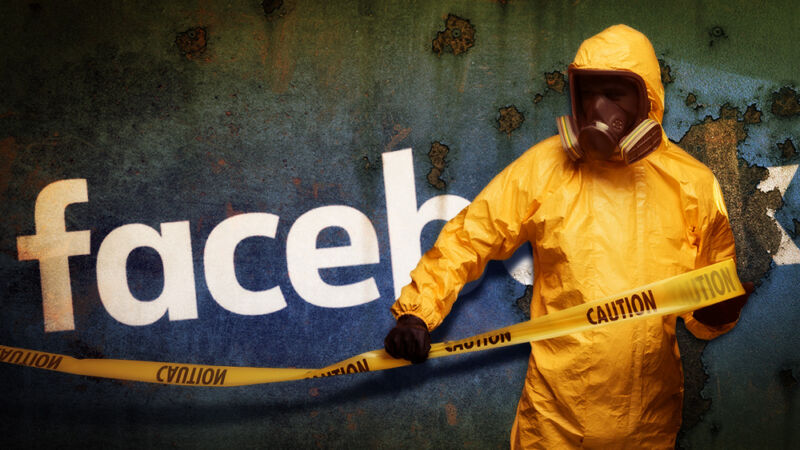
A person in a Hazmat suit covers the Facebook logo with warning tape.

As Facebook scrambles to deal with its most problematic groups in the wake of January’s assault on the US Capitol, a new report finds that leaders inside the company knew as long ago as August that 70 percent of its top “civic” groups had too much hate speech, misinformation, violent rhetoric, or other toxic behavior to be recommended to other users.

Researchers inside the company warned executives months ago that top groups were plagued with misinformation and calls to violence, The Wall Street Journal reported Sunday. “We need to do something to stop these conversations from happening and growing as quickly as they do,” the researchers wrote in internal documents obtained by the WSJ.

Of the top 100 most-active US civic groups, 70 percent “are considered non-recommendable for issues such as hate, misinfo, bullying, and harassment,” the presentation said. “Our existing integrity systems aren’t addressing these issues.”

Facebook deliberately pivoted in 2019 to make groups the centerpiece of its service—literally, on its mobile apps. But issues with groups plagued the platform for years before that. Although many Facebook groups are indeed small, relatively congenial, and beneficial to their users, both civil rights advocates and Facebook’s own researchers have warned for years that the way groups are managed and recommended to users increases extremism and radicalization.

Admitting you have a problem

In the days after the insurrection at the Capitol, Facebook COO Sheryl Sandberg downplayed concerns that Facebook played any role in bringing the mob together.

“I think these events were largely organized on [other] platforms that don’t have our abilities to stop hate and don’t have our standards and don’t have our transparency,” Sandberg told Reuters on January 11. “Certainly,” she added, “to this day, we are working to find any single mention that might be linked to this and making sure we get it down as quickly as possible.”

Media reports over the next two days, however, revealed that much of the planning for the events of January 6 did indeed happen on Facebook. The New York Times, The Wall Street Journal, and Reuters all ran stories within hours of each other finding that violent rhetoric had increased dramatically on Facebook into the first week of January and remained high ahead of President Joe Biden’s inauguration.

Neither was Facebook, in fact, taking action on “any single mention” of violence at the time, as Sandberg insisted. Even a cursory half-hour search at the time turned up several groups and events filled with calls for “patriots” to come together and march on Washington during the week of the inauguration, including some with explicit calls for harm against figures such as Speaker of the House Nancy Pelosi (D-Calif.).

Multiple warnings

The August report was far from the first warning Facebook had about toxicity on its platform. In May 2020, The Wall Street Journal obtained internal Facebook documents showing executives knew since 2016 that the platform’s recommendation engine explicitly drove users toward some of the site’s worst content.

“64% of all extremist group joins are due to our recommendation tools,” the 2016 presentation found, particularly the “Groups You Should Join” and “Discover” systems. “Our recommendation systems grow the problem,” the researchers concluded.

A Facebook representative told the WSJ at the time, “We’ve learned a lot since 2016 and are not the same company today.” Given the August 2020 report, however, it seems perhaps Facebook did not learn quite enough.

In October, amid heightened tensions preceding the 2020 US presidential election, Facebook said it would stop recommending “political” groups to users. At about the same time, however, the company doubled down on group recommendations with an update that made both the groups tab and an individual’s newsfeed promote group content from groups that a user does not subscribe to. This was done in order to increase engagement with both the content and the group.

Unfortunately, recent research has shown that the recommendation ban is not, in fact, blocking political groups from being recommended to users.

In January, tech news site The Markup reported on group recommendations Facebook was continuing to make to users. Political groups were definitely on the list—and they were showing up in a decidedly lopsided fashion. Facebook users who voted for Donald Trump were the most likely to have political groups promoted to them: 23 of the top 100 groups promoted to that cohort were political in nature, as compared to 15 for users who voted for Joe Biden and zero for nonvoters.

Several of the groups The Markup found recommended to Trump voters contained posts targeting elected officials and alleging falsely that Trump won the election. “Kayleigh McEnany Fan Club,” one of the groups the Facebook research team said back in August had a “toxic atmosphere” and served only to distribute “low-quality, highly divisive, likely misinformative news content” was recommended to more than 18 percent of the Trump voters in The Markup’s panel.

“A record of broken promises”

“Facebook does not just allow these dangerous pages to exist on its platform, it recommends them to users,” Sen. Edward Markey (D-MA) wrote in a January 26 letter (PDF) to Zuckerberg, referencing The Markup’s report. “Facebook’s recommendations allegedly reached users across the ideological spectrum, and it appears that Facebook continued to recommend political groups to its users in January 2021, even after your company reiterated its commitment not to do so.”

Two days later, Facebook CEO Mark Zuckerberg said in a call with investors that the moratorium on recommending political or civic groups to users is now being extended permanently. Markey applauded Facebook’s action… cautiously.

“I am pleased to see that Facebook is heeding my calls and has pledged to permanently stop recommending political groups to its users, as a matter of policy,” Markey said in a written statement. “Frankly, though, Facebook has a record of broken promises, and I’ll be watching closely to see whether it keeps this commitment.”

https://arstechnica.com/?p=1738676


Why kids matter in the quest to stamp out COVID-19

Masked school children work at desks separated by clear barriers.

Last December, when Caleb Chung, a 12-year-old in Durham, North Carolina, first heard from his dad that he might be eligible for a local clinical trial of a COVID-19 vaccine, his reaction was a little muted. He was “interested,” he tells me over Zoom. Not excited, exactly, not jumping for joy at the thought of joining the rarefied ranks of the immune. Interested. He had heard about side effects, for one thing, while watching the news with his parents. But mostly he just wasn’t sure what to make of the idea.

So Caleb and his dad, a pediatrician who works with adolescents, started talking. They covered the science of creating vaccines and testing them and how trials had helped bring vaccines to vulnerable people in the past. Plus, Caleb missed seeing his friends indoors, and seventh-grade Zoom school was slow. Getting shots to more people would bring a quicker end to the tedium. So he signed up. In late December, he got his first shot of what was either the Pfizer-BioNTech vaccine or a placebo. Then, three weeks later, he received his second. Both times, he kept a daily log of how he was feeling, recording a slight fever and soreness in his arm on day two. He took it in stride. “I hope this means I got the vaccine,” he says.

At the moment, two COVID-19 vaccines have been greenlit for emergency use by the US Food and Drug Administration, but both are only available to people older than Caleb. The Moderna vaccine is authorized for people over 18, while Pfizer’s is allowed for people as young as 16 because people that age were included earlier in its trials. But that could be changing. Last week, Pfizer officials announced they had finished enrolling more than 2,200 people in an expanded vaccine trial that includes kids as young as 12, and Moderna is currently in the process of signing up teens. That likely sets the stage for the companies to include teens in their requests for FDA approval, expected later this spring.

In the difficult calculus of prioritizing who should receive scarce vaccines and when, children occupy a strange niche. The rate of deaths and hospitalizations is much lower for children than for other age groups, and there’s some—albeit sometimes conflicting—evidence that they may spread the virus at lower rates than adults. For a doctor faced with a decision between vaccinating an 80-year-old and a 15-year-old, the older person with the higher risk of severe illness would be the obvious choice, says Grace Lee, a professor of pediatrics at Stanford’s School of Medicine and a member of the CDC’s Advisory Committee on Immunization Practices. But there are plenty of reasons, she adds, why younger people should get the shots.

One factor is that every 15-year-old is different. Kids with preexisting conditions are prone to worse outcomes from COVID-19, just like adults, and many teens work outside of the home in fields like food service, an industry that has among the highest rates of infection. More than three-quarters of child deaths have been among Hispanic, Black, and American Indian children, and other effects of the disease, such as MIS-C, the immune ailment that sometimes trails in the wake of COVID-19 infection in children, have similar disparities. “We are understandably focused on deaths and hospitalizations, but we haven’t yet thought about the long-term effects,” Lee says. Without the option to vaccinate kids, a return to normal life—one that will inevitably involve less protective distancing and mask-wearing than we have now—would lead to the virus exacting a quiet but steady toll on children, she says. In October, the National Academy of Medicine recommended giving children the same vaccination priority as some essential workers based on a rubric that included equity.

Then there’s the role of people under 18, who make up about a quarter of the US population, in getting the nation to herd immunity. Just how many vaccinations are required to stop the free circulation of the virus will depend on just how well the shots reduce transmission, as well as illness. But getting 70 percent of the population vaccinated is a good rule of thumb. “If we are going to achieve the levels of community immunity that we need, excluding children is going to make that really, really challenging,” says Ann Chahroudi, director of Emory University’s Center for Childhood Infections and Vaccines.

“You need to go to a population where you know the two-dose strategy is not a big deal.”

Many existing vaccine campaigns follow that basic principle. The annual task of vaccinating against new influenza strains tends to result in patchy coverage among middle-aged adults, many of whom are loath to show up at a doctor’s office or pharmacy. But nearly two-thirds of children get vaccinated each year, protecting young and old alike. It’s also part of the thinking behind the pneumococcal vaccine: giving children the shot was found to be better at suppressing the spread of the bacteria among the elderly, who are at the greatest risk from it, than targeting those older people directly. Then there’s the rubella virus; the chief benefit of vaccinating children against it is to reduce the spread to pregnant women and their babies, who can have severe complications.

For maximum immune coverage, the younger the better. That’s because little kids routinely go to the doctor for check-ups and boosters. “You need to go to a population where you know the two-dose strategy is not a big deal,” says Sallie Permar, chair of pediatrics at Weill Cornell Medicine. She points to the hepatitis B vaccine, which requires three doses to reach maximal effectiveness. Even 12-year-olds can be difficult to get back to the doctor’s office multiple times in a row, so doctors aim to vaccinate kids who are younger.

This summer, Permar was among the experts raising the alarm at the limited planning for pediatric trials of a COVID-19 vaccine. She’s encouraged by the progress pharmaceutical companies have made since then and the possibility of more vaccines catching up. But even with the current timeline, it is difficult to imagine achieving what Permar had originally hoped for: vaccinating children at scale by fall. “I think we’re going to have to imagine schools this fall without kids being vaccinated,” she says.

But it’s important to think long-term, she adds. Vaccinations should hopefully quell the raging pandemic soon, but SARS-CoV-2 is likely to stay with us beyond that. Over time, antibodies from the current round of shots may wane, likely at different rates in different groups of people, and depending on which of the vaccines people initially receive. New variants have already prompted some vaccine makers to announce plans for retooled shots. But after the first round, people might be less motivated to get a boost—just like the annual flu-shot scenario. Kids would then play a role in keeping up immunity overall, helping to prevent outbreaks among other, more vulnerable populations.

Deescalation

Vaccines typically make their way into younger populations through a process called deescalation. Teenagers are the first rung on this ladder. Their immune systems are fairly mature, which means data about effectiveness and safety gathered from testing in adults translates to them smoothly. The primary aim of this phase of testing is to do a deeper dive into safety. Doctors like Lee are optimistic based on the data from adult tests, but drug companies need to be on careful watch for outliers—new or more abundant side effects or perhaps allergies and other immune ailments. After that comes the testing for children younger than 12, who during the trial process are often given lower initial doses, followed by another group that includes toddlers and infants.

In those later stages, the process often slows down. Convincing parents to enroll young children can be an arduous process, and scheduling their shots between other immunizations is a challenge. There’s also the possibility that the immune response might behave differently in young bodies, especially with different dose amounts. For infants, another complication is immunity potentially passed down from their mother. That protection helps keep the infant safe from infection but can prevent them from developing their own immune response if they receive a shot too early. (Researchers including Permar hope to study vaccinated women and their infants to help determine how soon that maternal immunity may wane.)

Moderna CEO Stephane Bancel told CNBC earlier this month that he expected trials for the under-12 group to take “much longer” than the ones for adolescent groups, and he doesn’t expect results until 2022, in part because of the dosing question. At a CDC meeting Wednesday, Emily Erbelding, director of the Division of Microbiology and Infectious Diseases at the National Institutes of Health, noted that all four of the leading vaccine candidates, including those made by AstraZeneca and Johnson & Johnson, have imminent plans to include teenagers in their trials, but none have a firm timeline yet for testing in younger children.

Hesitancy

In the meantime, the focus turns to uptake for those who will be vaccine eligible. In recent weeks, Chahroudi has been giving doses to elderly people at Emory who are grateful to receive a shot. But she knows it’s a self-selecting crowd. So she’s thinking ahead. In her own clinic, she’s made it a habit to ask her adolescent patients and their parents about the vaccines, knowing it’ll be the teens’ turn eventually. She has noticed some worrying patterns. “I’ve encountered a lot of hesitancy,” she says. “I don’t know that I’ve encountered one person who says they’re excited to get it.” As she probes into the reasons why, she often uncovers misinformation discovered online. People believe they can catch COVID from the vaccine (you can’t) or that corners were cut during development (they weren’t). But they also often wonder if vaccination will be more or less risky given their own medical history.

She can tell her young patients that their vaccination will benefit everyone, and she does. But first she wants to address their personal concerns, to share the science and data. Vaccine “hesitancy,” Chahroudi adds, isn’t really just a euphemism for those opposed to vaccines. It’s a sign of somebody who could benefit from learning a little more. “It’s a matter of individually taking the time and having a conversation with each person,” she says. It’ll be a long process, a lot of work for doctors like her. But Chahroudi hopes that when their time comes, it will mean people young and old will choose to protect themselves and others.

This story originally appeared on wired.com.

https://arstechnica.com/?p=1738385


Lawmakers take aim at insidious digital “dark patterns”

Pixilated image of pointing finger mouse icon.

In 2010, British designer Harry Brignull coined a handy new term for an everyday annoyance: dark patterns, meaning digital interfaces that subtly manipulate people. It became a term of art used by privacy campaigners and researchers. Now, more than a decade later, the coinage is gaining new, legal, heft.

Dark patterns come in many forms and can trick a person out of time or money or into forfeiting personal data. A common example is the digital obstacle course that springs up when you try to nix an online account or subscription, such as for streaming TV, asking you repeatedly if you really want to cancel. A 2019 Princeton survey of dark patterns in e-commerce listed 15 types of dark patterns, including hurdles to canceling subscriptions and countdown timers to rush consumers into hasty decisions.

A new California law approved by voters in November will outlaw some dark patterns that steer people into giving companies more data than they intended. The California Privacy Rights Act is intended to strengthen the state’s landmark privacy law. The section of the new law defining user consent says that “agreement obtained through use of dark patterns does not constitute consent.”

That’s the first time the term dark patterns has appeared in US law but likely not the last, says Jennifer King, a privacy specialist at the Stanford Institute for Human-Centered Artificial Intelligence. “It’s probably going to proliferate,” she says.

State senators in Washington this month introduced their own state privacy bill—a third attempt at passing a law that, like California’s, is motivated in part by the lack of broad federal privacy rules. This year’s bill copies verbatim California’s prohibition on using dark patterns to obtain consent. A competing bill unveiled Thursday and backed by the ACLU of Washington does not include the term.

King says other states, and perhaps federal lawmakers emboldened by Democrats gaining control of the US Senate, may follow suit. A bipartisan duo of senators took aim at dark patterns with 2019’s failed Deceptive Experiences to Online Users Reduction Act, although the law’s text didn’t use the term.

California’s first-in-the-nation status on regulating dark patterns comes with a caveat. It’s not clear exactly which dark patterns will become illegal when the new law takes full effect in 2023; the rules are to be determined by a new California Privacy Protection Agency that won’t start operating until later this year. The law defines a dark pattern as “a user interface designed or manipulated with the substantial effect of subverting or impairing user autonomy, decision-making, or choice, as further defined by regulation.”

James Snell, a partner specializing in privacy at the law firm Perkins Coie in Palo Alto, California, says it’s so far unclear whether or what specific rules the privacy agency will craft. “It’s a little unsettling for businesses trying to comply with the new law,” he says.

Snell says clear boundaries on what’s acceptable—such as restrictions on how a company obtains consent to use personal data—could benefit both consumers and companies. The California statute may also end up more notable for the law catching up with privacy lingo, rather than a dramatic extension of regulatory power. “It’s a cool name but really just means you’re being untruthful or misleading, and there are a host of laws and common law that already deal with that,” Snell says.

Alastair Mactaggart, the San Francisco real estate developer who propelled the CPRA and also helped create the law it revised, says dark patterns were added in an effort to give people more control of their privacy. “The playing field is not remotely level, because you have the smartest minds on the planet trying to make that as difficult as possible for you,” he says. Mactaggart believes that the rules on dark patterns should eventually empower regulators to act against tricky behavior that now escapes censure, such as making it easy to allow tracking on the Web but extremely difficult to use the opt-out that California law requires.

King, of Stanford, says that’s plausible. Enforcement by US privacy regulators is generally focused on cases of outright deception. California’s dark patterns rules could allow action against plainly harmful tricks that fall short of that. “Deception is about planting a false belief, but dark patterns are more often a company leading you along a prespecified path, like coercion,” she says.

This story originally appeared on wired.com.

https://arstechnica.com/?p=1738389