Apple’s app store is an illegal monopoly, rival Cydia claims in suit

Apple’s app store is an illegal monopoly, rival Cydia claims in suit

The company behind Cydia, an iPhone app store that launched before Apple’s own App Store, has sued Apple arguing that Apple has monopolized the market for iOS app stores, violating antitrust law in the process.

When the iPhone was introduced in 2007, it didn’t have any mechanism for natively running third-party software. Instead, Steve Jobs encouraged developers to create Web apps that would run in the iPhone’s Safari browser.

But people soon figured out how to jailbreak the iPhone and began making iPhone apps without Apple’s help. Seeing an opportunity, software developer Jay Freeman created a program called Cydia that made it easy for users to download and install native iPhone apps—an app store before the App Store.

A few months later, Apple introduced its own official App Store. Ever since, Apple has tried to drive Cydia and other unauthorized app stores out of the market using both technological and contractual restrictions. For example, anyone who wants to sell software through the official App Store must agree not to offer the software in competing app stores like Cydia.

In a Thursday lawsuit filed in California federal court, the company behind Cydia argues that this was a flagrant violation of antitrust law. “Apple has wrongfully acquired and maintained monopoly power in the market for iOS app distribution, and in the market for iOS app payment processing,” the lawsuit argues.

The lawsuit points to a number ways this has harmed consumers and the app industry. Most obviously, Apple charges a 30 percent commission on most app purchases—recently reduced to 15 percent for apps that earn less than $1 million. Cydia argues that Apple couldn’t get away with such high fees in a competitive market.

Cydia also argues that Apple takes a long time to approve apps and limits direct communications between developers and their users. Again, Cydia argues that more competition would force Apple to up its game.

An Apple spokeswoman didn’t provide an on-the-record comment about the lawsuit. But we can get some idea of the company’s likely response by looking at Apple’s August filing in Epic’s antitrust lawsuit. In that case, Apple argued that its app store strategy couldn’t have violated antitrust law because it had “exponentially increased output, reduced prices, and dramatically improved consumer choice.”

Apple also argued in the Epic case that there wasn’t a separate “iOS App Distribution Market.” Rather, in Apple’s view the iPhone and its app store are two parts of a single product. In Apple’s view, antitrust law gives Apple broad flexibility to decide how to monetize this platform.

This is a recurring theme in antitrust cases related to the technology sector. In the 1990s, the US government sued Microsoft for tying its operating system to its Web browser. Microsoft insisted that the Internet Explorer browser wasn’t a separate product but was rather a new feature of Windows. A trial court rejected Microsoft’s arguments, but that ruling was partially overturned on appeal. The case was settled soon after George W. Bush took office, with Microsoft agreeing to make modest changes to its business model.

Since then, there have been few if any successful antitrust lawsuits challenging this kind of integration between technology products. And Apple points out that it is far from the only hardware maker to tightly control third-party software on its platform. For example, Apple argues that Cydia’s argument implies that Sony, Microsoft, and Nintendo are also monopolists, since they try to control who makes software for their gaming consoles.

https://arstechnica.com/?p=1729391


Visa and MasterCard ban Pornhub over abusive videos

Visa and MasterCard ban Pornhub over abusive videos

Pornhub has been banned from accepting payments over the Visa and MasterCard networks—a serious blow for a site that has come under increasing fire for failing to effectively filter harmful content.

“The issue is not pornography but rape,” wrote New York Times columnist Nicholas Kristof in a column last week that inspired the credit card companies’ moves. “Promoting assaults on children or on anyone without consent is unconscionable.”

Like other social media sites, Pornhub allowed anyone to upload content to be shared with others. Many of those videos depict adults engaged in consensual sexual acts. But Kristof said a number of videos show sex acts involving children under the age of 18. He also found videos of women being raped, creepy hidden-camera videos, and “recordings of assaults on unconscious women and girls.”

While Pornhub has a moderation team, it’s far smaller than those of mainstream social media sites, and Kristof found it was ineffective at blocking even the most offensive videos.

Under mounting public pressure, Pornhub’s owner—a shadowy, Canada-based porn conglomerate called MindGeek—took several steps on Wednesday to slow the spread of harmful material. Pornhub has banned uploads by nonverified users, which should reduce the amount of abusive material that gets uploaded to the site. Pornhub has also disabled video downloads, which should make it more difficult for users to save a copy of an abusive video to re-upload to Pornhub or another site.

But these steps don’t seem to have satisfied Visa and MasterCard. In a statement to The New York Times, MasterCard said it had “confirmed violations of our standards prohibiting unlawful content.”

Visa said that it was “instructing the financial institutions who serve MindGeek to suspend processing of payments through the Visa network” while it continued to investigate the issue.

While Kristof seems to have inspired the latest moves against Pornhub, pressure on the site has been building for months. In February, the BBC reported on a 14-year-old girl who was raped and had a video of the crime repeatedly uploaded to Pornhub. The US prosecution of the owners of GirlsDoPorn, a site that got women to participate in porn using fraud and coercion, has also shined a spotlight on Pornhub. GirlsDoPorn videos received millions of views on Pornhub.

https://arstechnica.com/?p=1729168


US House passes bill to tear down judiciary’s paywall

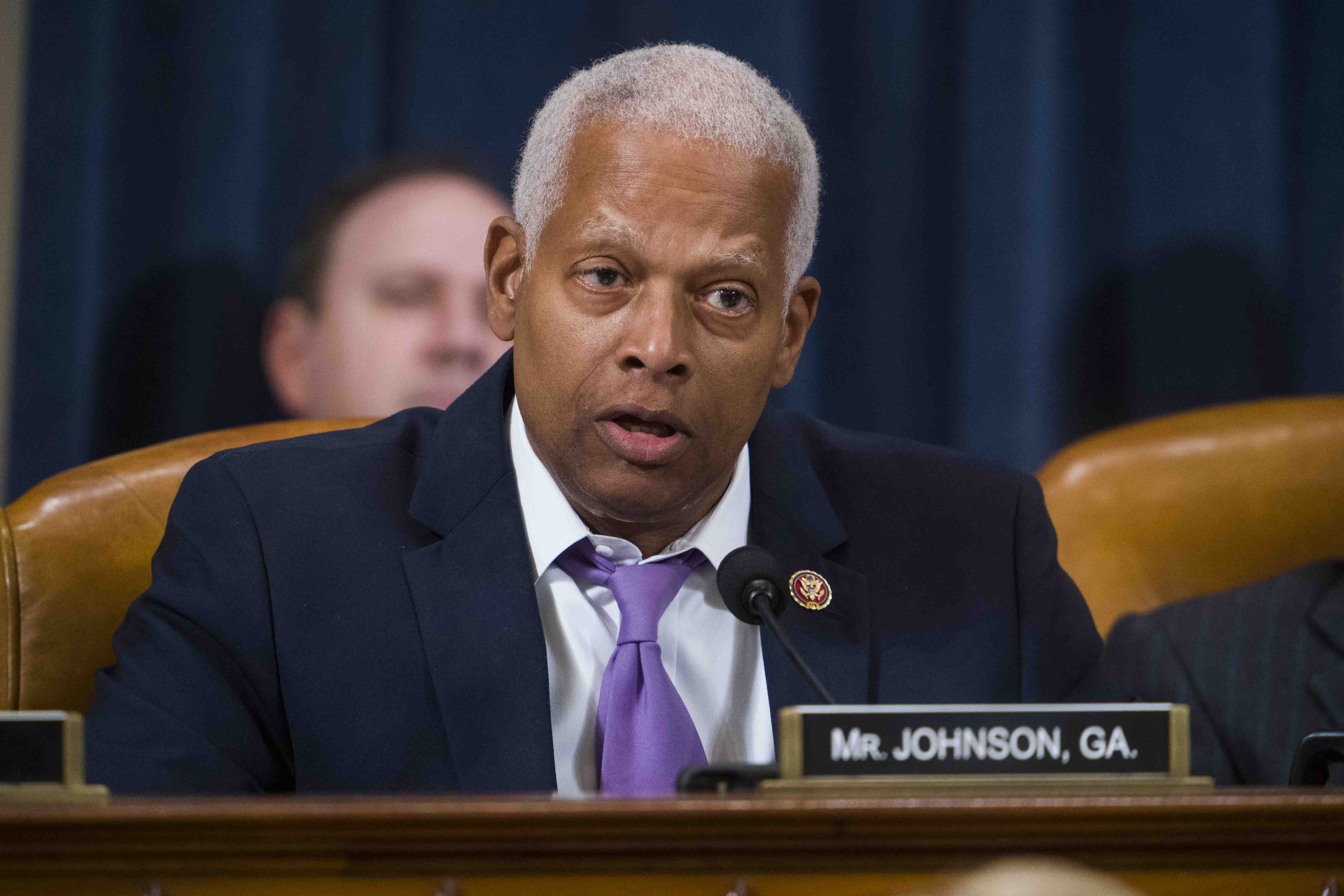
A serious man in a suit speaks into a microphone.
Enlarge / Rep. Hank Johnson (D-Ga.) is the lead sponsor of the Open Courts Act in the House.

The US House of Representatives on Wednesday passed the Open Courts Act. The bill aims to modernize PACER, the website that provides public access to federal court records. It also aims to eliminate PACER’s paywall by 2025.

The PACER system represented a big advance for judicial transparency when it went online in the 1990s. But the system hasn’t kept up with the times, with a user interface that has changed little since the days of dial-up Internet.

Each federal trial and bankruptcy court—around 200 courts in total—has its own distinct PACER website, with limited capabilities to search across multiple sites. Not only is this inconvenient for users, but maintaining dozens of separate websites is an administrative headache.

The PACER system charges users 10 cents per page for documents, with a maximum charge of $3 per document. Searches also incur fees.

The Open Courts Act aims to modernize the system in two phases. In the first phase, scheduled for completion by 2025, the courts would replace the current patchwork system with a national, searchable PACER website.

To finance this overhaul of PACER, the law allows the courts to not only continue collecting current PACER fees through 2025, but also to levy additional fees on customers who spend more than $6,000 per quarter. These high-volume customers include data brokers who scrape the PACER database for background checks and other purposes.

Once the new system is ready—the legislation aims for completion in 2024 but allows a one-year-extension if necessary—the courts will be required to offer free access to the general public. To cover the ongoing costs of running PACER—which advocates hope will be reduced thanks to a consolidated and modernized architecture—the courts will charge fixed annual fees to federal agencies based on the PACER fees they paid in 2018. If that revenue isn’t enough, the courts would raise the fees it charges to litigants.

After the House vote, the legislation must pass the Senate before it can go to President Trump for his signature. On Wednesday, a bipartisan pair of US senators—Rob Portman (R-Ohio) and Ron Wyden (D-Ore.)—introduced a Senate version of the Open Courts Act. It’s not clear if advocates can get the bill through the Senate in the three weeks before the current session of Congress expires. But even if they fail, the successful House vote will give the proposal momentum in 2021.

Court officials claim PACER overhaul will cost $2 billion

The legislation has been strenuously opposed by court officials. They argue that the bill doesn’t provide adequate funding for an overhaul of the judiciary’s IT infrastructure. They say that the bill will require not only rewriting the PACER system but also CM/ECF, a closely related site that lawyers use to make legal filings in court cases. Many documents in the PACER system were originally uploaded using CM/ECF.

Judiciary officials estimate that overhauling PACER and CM/ECF will cost $2 billion and take 10 years. They also say that the PACER-based revenue sources outlined in the bill will be inadequate to cover these costs, forcing the courts to jack up fees to litigants. That could prevent some low-income plaintiffs from having their day in court.

Yet that $2 billion figure isn’t widely accepted outside the judicial branch. Mike Lissner, the executive director of the Free Law Project, is a technologist who maintains a nonprofit archive of PACER documents (full disclosure: Lissner also maintains a PACER-related browser extension called RECAP that I helped to create in grad school). He told Ars that the $2 billion estimate was “obscene.” He signed an open letter estimating that it would cost $10 to $20 million to revamp the PACER system and $3 million to $5 million per year to maintain it.

As a supporter of the Open Courts Act, Lissner might be tempted to underestimate these costs. But the independent Congressional Budget Office did its own analysis and estimated that the project would cost $46 million—higher than Lissner’s estimate but far lower than $2 billion.

Millions and billions

It’s true that government agencies sometimes waste hundreds of millions of dollars on IT projects. The judiciary’s $2 billion figure is based on a failed effort to create a case-management system for California courts. The state spent more than $500 million on the project before abandoning it in 2012. Estimates at the time suggested that it would have cost another $1.5 billion to complete.

But Lissner said there’s no reason government IT projects need to be billion-dollar boondoggles. He urged the judiciary to work with 18F, a federal agency that acts as a kind of in-house consulting shop for federal IT projects. Other agencies hire 18F to develop software for them—and 18F has developed a reputation for doing so quickly and at reasonable cost.

The judiciary’s PACER fee revenue is under attack from multiple fronts. In August, a federal appeals court ruled that the courts had been illegally overcharging PACER users and using the money to fund unrelated projects. That case is still being litigated, and plaintiffs may be entitled to refunds for past charges. But it will become much more relevant if Congress passes new legislation establishing a new framework for the collection and use of PACER fees.

https://arstechnica.com/?p=1728951


FTC, 47 states file suits to break up Instagram and WhatsApp from Facebook

Extreme close-up photograph of smartphone.
Enlarge / Facebook, Instagram, and WhatsApp are the three largest parts of Facebook’s extremely sprawling empire… for now.

The Federal Trade Commission and a coalition of 47 states attorneys general today filed a pair of long-awaited antitrust suits against Facebook, alleging that the company abused its power in the marketplace to neutralize competitors through acquisitions and prevent anyone else from presenting a more privacy-friendly alternative to consumers.

“By using its vast troves of data and money, Facebook has quashed or hindered what the company perceived as potential threats,” New York Attorney General Letitia James, who led the states’ effort, said. “In an effort to maintain its market dominance, Facebook has employed a strategy to impede competing services.”

The lawsuit brought by the states (PDF) asks the court to prohibit Facebook from engaging in “any anticompetitive conduct” or practice going forward. That includes a request for Facebook to be blocked from any acquisitions valued at greater than $10 million without first getting permission from the states.

The states also explicitly ask that Facebook’s acquisitions of Instagram and WhatsApp be found in violation of the Clayton Act and that Facebook be required to divest those businesses if necessary “to restore competitive conditions” in the marketplace.

The suit filed by the FTC (PDF) also calls for Facebook to face more scrutiny when it acquires other firms and to be broken up if necessary to restore competition in the marketplace.

“Facebook’s actions to entrench and maintain its monopoly deny consumers the benefits of competition,” FTC Bureau of Competition Director Ian Conner said. “Our aim is to roll back Facebook’s anticompetitive conduct and restore competition so that innovation and free competition can thrive.”

Both cases were filed in the US District Court for the District of Columbia.

“We’re reviewing the complaints and will have more to say soon,” Facebook said in its original statement (which it made in a tweet). “Years after the FTC cleared our acquisitions, the government now wants a do-over with no regard for the impact that precedent would have on the broader business community or the people who choose our products every day.”

If you can’t beat ‘em, buy ‘em

As we’ve explained before, antitrust law isn’t just about being a literal monopoly or even about being the biggest player in a sector. Instead, it’s about power—how much you have, and what you do with it. Antitrust investigators basically want to answer the question: did you become the biggest naturally, or did you cheat along the way?

In that framing, then, Facebook stands accused of cheating to beat out any potential competition—a lot.

Facebook was pretty much instantly popular when it first hit Harvard and other Boston-area colleges in 2004, but its path to world domination didn’t truly take off until it began acquiring other tech firms a few years later.

Most of those early acquisitions were of small businesses or of patents—basically, a way to bring new tools and developers in-house to bolster the Facebook platform. Its first major blockbuster deal was its $1 billion acquisition of Instagram in 2012. That transaction was controversial even at the time, with company CEO Mark Zuckerberg reportedly going around Facebook’s board to get it done, but antitrust regulators nonetheless allowed the deal to go through.

That was the beginning, not the end, of Facebook’s billion-dollar acquisition spree. In February 2014, Facebook offered a whopping $16 billion to acquire WhatsApp (a deal that eventually cost $19 billion), a messaging platform with enormous popularity outside of the United States. The social media giant followed that up one month later with a $2 billion deal to buy VR hardware developer Oculus.

Emails obtained by Congress earlier this year as part of its investigation into Big Tech’s outsized power revealed that Zuckerberg explicitly thought of Instagram as a threat before acquiring it.

If apps such as Instagram were allowed to grow, Zuckerberg wrote in a 2012 email, it “could be very disruptive” to Facebook, and he added that an acquisition “will give us a year or more to integrate their dynamics before anyone can get to their scale again.”

Facebook’s failed attempts to acquire potential competitors, such as Snapchat, also demonstrate its anticompetitive strategy, both suits allege.

What next?

Facebook has known for a long time that legal trouble was brewing, and it’s had years to prepare for what’s likely to be a long and ugly court battle.

The FTC and the states both launched their antitrust investigations back in the long-long ago of 2019, as did Congress, European Union competition regulators, and regulators from several other nations. The Congressional report, published in October, now seems like a harbinger of today’s suit: the House committee found that Facebook (as well as Apple, Google, and Amazon) exerts monopoly power in the marketplace and should be forced to split up.

It’s incredibly rare in the modern era for the courts actually to force a company to break up for antitrust reasons. The last major breakup came more than 35 years ago, when AT&T finally split up in to the seven regional “Baby Bells” after a decade-long legal fight with the Justice Department. The court initially ordered a breakup in the Microsoft antitrust case that began in the late 1990s, but Microsoft appealed the ruling and, in 2001, reached a settlement with the DOJ that left its business intact.

Some of Facebook’s app updates from earlier this year seem to have been designed with a potential antitrust suit in mind: the company in late 2019 began a plan to integrate WhatsApp, Facebook Messenger, and Instagram Direct messaging into a single service. The integration between Instagram’s and Facebook’s messaging services began in August; when all three platforms are combined, Facebook will reach an estimated 3.3 billion users on a single messaging service.

So many knots to untie

That kind of tie-up makes the businesses logistically much more challenging to unwind, and Facebook seems likely to argue that integration of the services is vital to its business strategy and should be permitted to continue.

“The claims being reported—serial predatory acquisition and withholding interoperability—set up a strong case,” said Charlotte Slaiman, competition policy director at Public Knowledge. “This action reflects a lot of work from advocates, experts, and enforcement officials to build the case, first that Facebook was deserving of scrutiny, and then that the company really has run afoul of our antitrust laws. To fix the harms to competition, we need to see changes to Facebook’s business and the company should be required to open up its network to competitors so that users are not locked in.”

https://arstechnica.com/?p=1728628


GOP clinches 2-2 deadlock for Biden FCC as Senate approves Trump nominee

Federal Communications Commission Chairman Ajit Pai and FCC Commissioner Brendan Carr stand next to each other in a Senate hearing room.
Enlarge / Federal Communications Commission Chairman Ajit Pai and FCC Commissioner Brendan Carr, two of the FCC’s three Republicans, talk before the start of a Senate Commerce Committee hearing on August 16, 2018.

The Republican-controlled US Senate today confirmed a Trump nominee to the Federal Communications Commission, ensuring that President-elect Joe Biden’s FCC will be deadlocked at 2-2 upon his inauguration.

The Senate voted along party lines to confirm Nathan Simington, a Trump administration official who helped draft a petition asking the FCC to make it easier to sue social media companies like Facebook and Twitter. Democrats say he is unqualified for the position.

“During his confirmation hearing even the most basic questions about FCC issues seemed to trip up Nathan Simington. It’s clear he is wholly unqualified to help lead this agency,” Sen. Richard Blumenthal (D-Conn.) wrote on Twitter today.

Shortly after noon today, the Senate voted 49-47 to end debate on the Simington nomination. At about 5pm, the Senate confirmed the nomination by a vote of 49-46. Simington’s nomination was previously advanced to the Senate floor in a 14-12 vote by the Senate Commerce Committee.

Trump nominated Simington to replace Republican Michael O’Rielly after O’Rielly declined to support the president’s attempted crackdown on social media websites. With Chairman Ajit Pai set to leave the commission on January 20, 2021, upon Biden’s inauguration, Simington’s confirmation will prevent the Biden FCC from having a 2-1 Democratic majority in January. (O’Rielly would have had to leave the commission at the end of 2020 even if Simington hadn’t been confirmed today.)

Biden should eventually get a 3-2 majority, but only after the Senate confirms whoever Biden nominates to the third Democratic slot.

GOP’s goal is deadlock

Republican senators offered no justification for confirming Simington, a move that is clearly designed to prevent or delay the Biden FCC from pursuing Democratic Party goals such as the restoration of net neutrality rules. FCC Republican Brendan Carr acknowledged that motive in an appearance on Fox Business last week, saying “it would be very valuable to get Simington across the finish line to help forestall” the Democratic agenda.

“FCC nominee Nathan Simington’s only qualification is his eagerness to defend the President’s attacks on the First Amendment and Sec. 230 [of the Communications Decency Act],” Sen. Mazie Hirono (D-Hawaii) wrote on Twitter today. Section 230 is the law that Trump wants the FCC to reinterpret in order to limit social media platforms’ legal protections for moderating user-generated content.

Noting that Simington lobbied Fox News to support Trump’s Section 230 push, Hirono wrote that Simington’s “attempts to recruit Fox News hosts to bully the FCC shows he has no place leading that agency.”

“I think the purpose of confirming this nominee very simply is to deadlock the commission and undermine the president-elect’s ability to achieve the mandate the American people have given him and his administration going forward,” Blumenthal said on the Senate floor today.

Lame-duck FCC could pass Trump’s Section 230 plan

Simington’s confirmation makes it possible that the FCC will implement Trump’s Section 230 reinterpretation before Biden’s inauguration. The FCC still has a 3-2 majority as Simington replaces O’Rielly, but now all three Republicans are on record as supporters of the Trump administration’s Section 230 petition.

Carr enthusiastically supported the petition all along, claiming that Twitter and Facebook are biased against Trump and Republicans. Pai made his views known in October when he proposed new rules clarifying that social media companies do not have “special immunity” for their content-moderation decisions.

While Congressional Democrats urged Pai to “immediately stop work on all partisan, controversial items” in recognition of Biden’s victory over Trump, Pai hasn’t promised to do so. Berin Szóka, who opposes Trump’s Section 230 push and is a senior fellow at libertarian-leaning think tank TechFreedom, wrote that he thinks the Pai-led FCC will “likely” issue a final Section 230 order before Biden’s inauguration.

“After Twitter and Facebook had the temerity to label Donald Trump’s misinformation about voting and COVID-19, the president issued an executive order that had the simple purpose of retaliating against these social media platforms,” Sen. Blumenthal said today. Trump intended to “punish those companies for the mild inconvenience of a fact check,” he said, adding that “Commissioner O’Rielly recognized the dangers and the potential illegality of the president’s executive order and he had the temerity to speak up and tell the American public.”

Pai issued a statement after today’s Senate vote to congratulate Simington. “Nathan was raised in a rural community, and his confirmation ensures that this important perspective will continue to be represented on the Commission for years to come as the FCC continues its work on bridging the digital divide,” Pai said. “And with his experience at NTIA (National Telecommunications and Information Administration) and in the private sector, Nathan is well-positioned to hit the ground running.”

Biden FCC chair won’t be powerless

A 2-2 FCC would still have a chair, as Biden can promote one of the two Democratic commissioners to the top spot once he’s in the White House. That chair could even pressure the Senate to confirm whoever Biden nominates for the commission’s third Democratic slot.

“[T]he Chair can effectively shut down the agency until Republicans approve a third Democrat,” wrote Harold Feld, a longtime telecom attorney and senior VP of consumer-advocacy group Public Knowledge. “While this sounds like an industry dream, this would quickly become an industry nightmare as the necessary work of the FCC grinds to a halt. Virtually every acquisition by a cable provider, wireless carrier, or broadcaster requires FCC approval. Unlike in antitrust, there is no deadline for the agency to act. The Chair of a deadlocked FCC can simply freeze all mergers and acquisitions in the sector until Democrats have a majority.”

The chair could also “put the FCC ‘on strike,’ cancelling upcoming spectrum auctions and suspending consumer electronics certifications (no electronic equipment of any type, from smartphone to home computer to microwave oven, can be sold in the United States without a certification from the FCC that it will not interfere with wireless communications),” Feld wrote. “Such actions would have wide repercussions for the wireless, electronics, and retail industries.”

The chair in a deadlocked FCC could also take policy actions that don’t require a full commission vote and are “largely unreviewable,” Feld wrote. With net neutrality, a Democratic FCC chair could help turn the tide in a court case that will determine whether California can enforce a state law that replicates the net neutrality rules repealed by Chairman Pai. The US Department of Justice and ISP lobby groups sued California to block the state law with Pai’s FCC supporting the lawsuit. Even with a 2-2 deadlock, Biden’s FCC chair “can switch sides in the litigation, throwing its weight against the industry and supporting the right of states to pass their own net neutrality laws,” Feld wrote.

https://arstechnica.com/?p=1728434


Florida police raid home of former state coronavirus data manager

Workers removing a sign from a drive-through COVID-19 testing site in Orlando, Florida, in October 2020.
Enlarge / Workers removing a sign from a drive-through COVID-19 testing site in Orlando, Florida, in October 2020.

Police on Monday raided the Florida home of data scientist Rebekah Jones, who alleged in May that she was fired from her job collating COVID-19 data for the state because she refused to “manipulate” data to make the governor’s agenda look more favorable.

“At 8:30 this morning, state police came into my house and took all my hardware and tech,” Jones said in a Twitter thread on Monday afternoon. Her initial post included a 30-second video of armed officers pointing guns up a staircase and shouting for Jones’ husband and children to come down before another officer shouted, “search warrant!” loudly to no one in particular.

“They pointed a gun in my face. They pointed guns at my kids,” Jones added. “They took my phone and the computer I use every day to post the case numbers in Florida, and school cases for the entire country. They took evidence of corruption at the state level.”

In her messages, Jones explicitly laid the blame for the raid at the feet of Florida Gov. Ron DeSantis, saying, “This was DeSantis. He sent the gestapo… this is DeSantis’ Florida.”

The DeSantis administration denied any participation, telling CNN, “the governor’s office had no involvement, no knowledge, no nothing, of this investigation.”

Commissioner Rick Swearingen of the Florida Department of Law Enforcement confirmed in a written statement that agents went to Jones’ home to serve a search warrant.

“Our investigation began last month following a complaint by Florida Department of Health that a person illegally hacked into their emergency alert system,” Swearingen said. FDLE agents went to Jones’ house “after determining the home was the location that the unauthorized message was sent from.”

“After several attempts, Ms. Jones allowed agents inside,” Swearingen added. “Agents entered the home in accordance with normal protocols and seized several devices that will be forensically analyzed. At no time were weapons pointed at anyone in the home. Any evidence will be referred to the State Attorney for prosecution as appropriate.”

The message

The Florida Department of Health said last month that someone accessed its emergency communications system to send an “unauthorized message” to approximately 1,750 members of the state’s emergency response team.

The message, according to The Tampa Bay Times, told recipients to “speak up before another 17,000 people are dead. You know this is wrong. You don’t have to be a part of this. Be a hero. Speak out before it’s too late.” Investigators said the messages were sent from an IP address that was connected to Jones’ house.

The message in question was sent from a state account known as ESF-8, which is used by “many people from several agencies,” the Tallahassee Democrat reported—and all of those “many people” share a single username and password to access the system. People who have access but leave those jobs are simply “no longer authorized to access the multi-user group.”

Jones repeatedly denied having anything to do with the unauthorized text. “Hacking is not something I ever thought they would accuse me of because I have never displayed any capability of doing that,” she told the Tampa Bay Times. “I’ve never taken any computer courses or anything like that. I do statistics in a software program designed basically to do all that stuff for you by clicking stuff.”

In a CNN interview late Monday, Jones elaborated, “I’m not a hacker,” adding that neither the tone nor the content of the message were something she would have sent.

“I don’t think they were after me,” Jones added to CNN’s Chris Cuomo, instead alleging that the DeSantis administration was trying to ferret out her confidential sources. “They didn’t take the router in the house, they didn’t take a number of laptops in the house,” she said. “They took my phone and they took the computer that I use to run my companies. And on my phone is every communication I’ve ever had with someone who works at the state who has come to me in confidence and told me things that could get them fired or in trouble like this.”

The road from May

Jones built out Florida’s COVID-19 data dashboard and managed it until May 5, at which point she and her team were suddenly removed from the project. In mid-May, she said she was not only taken off the dashboard project but also fired from her job entirely because she refused to cook the numbers to make it appear safe for the state to re-open businesses and venues.

Since parting ways with the state, Jones launched her own independent Florida COVID data dashboard and co-founded The COVID Monitor, which tracks outbreaks of the novel coronavirus disease in K-12 public school districts.

Back in May, a spokesperson for DeSantis said that Jones was fired for “a repeated course of insubordination,” describing her as “disruptive.” DeSantis himself said the allegations of data manipulation were a “nonissue” and moved forward with state reopening plans.

Florida entered phase 1 of its reopening plan on May 4, which allowed for restaurants and retailers to open at 25-percent capacity. Phase 2 began on June 5 and allowed for gatherings of up to 50 people and permitted movie theaters, bowling alleys, casinos, gyms, bars, pubs, nightclubs, and other venues to operate at 50-percent capacity. Personal care businesses, such as nail and hair salons, tattoo parlors, and tanning salons, were also permitted to open at reduced capacity.

Diagnosed cases of COVID-19 in Florida began to spike shortly after phase 1 took effect, according to data compiled by The New York Times. Cases peaked in mid-July at an average of more than 11,000 new cases per day before dropping back below 3,000 per day in September. The data shows another major surge beginning in mid-October, shortly after phase 3 reopening went into effect, and as of Monday, the state is averaging almost 9,500 new cases per day.

https://arstechnica.com/?p=1728333


Senate invites fringe, unscientific medical group to testify about COVID

Former Secretary of Health and Human Services Tom Price was a member of the AAPS, an organization with extreme, unscientific views who keeps being asked to give testimony to Congress.
Enlarge / Former Secretary of Health and Human Services Tom Price was a member of the AAPS, an organization with extreme, unscientific views who keeps being asked to give testimony to Congress.

On Tuesday, the US Senate’s Committee on Homeland Security and Governmental Affairs will host a hearing on treatments for COVID-19. The four witnesses all have MDs, and three of them work at hospitals, suggesting that this is a case where the Senate will be receiving information from people with relevant expertise. It’s the fourth witness, however, that suggests some of the testimony may go completely off the rails and raises further doubts that US politicians are taking a raging pandemic seriously.

Jane Orient has an MD and is the head of a serious-sounding organization called the Association of American Physicians and Surgeons (AAPS). But a quick look at the group’s history shows that it has adopted positions—such as promoting chloroquine and opposing government vaccination programs—that make it a questionable source of COVID-19 information. And the AAPS actually has a long history of adopting extreme and fringe positions that run contrary to all evidence, in part because of its opposition to government involvement in anything. But because of these libertarian tendencies, the group has maintained a close relationship with conservative politicians.

Bad pandemic advice

It doesn’t take much searching to determine that the AAPS has fringe views about the pandemic. In late April, evidence was developing that hydroxychloroquine, a malaria drug, wasn’t effective against COVID-19, leading the FDA to scale back its emergency approval. Four days after that decision, the AAPS sent out a press release claiming that the drug “has about 90 percent chance of helping COVID-19 patients.” That claim was false at the time—it was apparently based simply on counting any studies that saw any effect toward that 90-percent total. And subsequent studies have clearly indicated the drug is ineffective.

Yet in June, the AAPS ran an op-ed complaining about the government’s limitation of the drug’s approval. The piece called for Trump to bypass the FDA to make the drug widely available so that every patient could evaluate the evidence on their own. And as recently as September it was still claiming that “the body of peer-reviewed research, based on clinical experience, in support of HCQ continues to grow.” By September, so many studies had indicated the drug was ineffective that it was no longer the subject of serious conversation.

Also alarming is the organization’s view on social restrictions to limit the virus’s spread. By October of this year, it was clear that limiting interactions among people successfully cut the spread of the disease, and many of the US’ problems could be traced to lifting these restrictions too soon. Studies of locations with successful lockdowns also demonstrated their effectiveness. Yet just a week ahead of Orient’s testimony, the organization published an op-ed that slammed the use of restrictions to limit the spread of the disease and accused the experts who advocated for them of “channeling Communist China.”

As we don’t have effective therapies and seem incapable of following social limits, most hopes for limiting the impact of the pandemic now focus on the availability of vaccines, which are already being considered for emergency use authorization. But Orient said as recently as Sunday, “It seems to me reckless to be pushing people to take risks when you don’t know what the risks are.” This statement ignores the fact that the vaccines are currently in large-scale trials to determine those risks.

That position is not limited to COVID-19 vaccines, however. In February, before there was general awareness that the virus had gone global, Orient issued a statement to a different Senate committee in which she asked, “But how much of a threat is required to justify forcing people to accept government-imposed risks?”

Those risks? Vaccines, which she said cause “many serious complications.”

This nonsense was predictable

A different perspective such as Orient’s can be valuable if it’s an informed one. The fact that the AAPS is ignoring the growing bodies of evidence about pandemic treatment and control, however, suggests that information has nothing to do with the group’s perspective. But it doesn’t take much looking to figure out that the group’s perspective is consistently driven by ideology, which then causes it to take positions that fly in the face of mountains of evidence.

Take the opposition to vaccine mandates, which springs from the group’s ideological mistrust of government involvement in the healthcare system. There’s nothing factually incorrect about an opinion like this, yet it has driven the group to attack the safety of vaccines, such as when its main “research” publication ran a piece by two antivaccine activists. In it, they echoed the long-debunked and completely false claim that vaccines are linked to problems like autism.

Something similar happened with HIV/AIDS, where the group objected to the government’s involvement in programs to limit the spread of the disease and do the research that enabled the development of treatments. Its journal ran a piece that claimed “both official reports and the peer-reviewed literature afford substantive grounds for doubting that HIV is the necessary and sufficient cause of AIDS and that antiretroviral treatment is unambiguously beneficial.” This is denial of a connection that has become a well-established fact through countless studies.

The group has taken a similar approach to issues that haven’t even heavily involved the medical community, like climate change. Noted denialists have used its journal to claim that there’s no evidence of warming and suggest that climate researchers are being driven to their conclusions by a desire for research funds. Unsurprisingly, Jane Orient of the AAPS is also active in the Heartland Institute, the US’ leading climate denialist organization. Again, the group’s ideological concerns have caused it to adopt positions that are contrary to mountains of evidence.

My enemy’s enemy…

Why would anyone welcome the input of an organization that has such an extensive history of denying basic facts? It goes back to the ideological underpinnings that motivate this denial, which are focused on the libertarian idea of limiting the government’s activities. So it’s not surprising that Sen. Rand Paul (R-Ky.) was once a member of the group and had courted its members during his first run for Congress. And Tom Price, the former head of the Department of Health and Human Services, the government arm that has funded much of the research that the AAPS refuses to believe, was a member of the group while he was up for confirmation to that position.

The AAPS has returned the support, attacking conservatives’ political opponents. Its website still hosts a piece that suggests former President Barack Obama generated his support due to his ability to use his speeches to perform “hypnotic induction” on his audiences. And in its response to the 2020 presidential election, the organization published an op-ed that echoed Trump’s talking points both before and after the election:

One is hard-pressed to deny that Joe Biden is a weak, corrupt, pathologically lying, creepy dirty old man who has lived off the government teat for 50 years. And he allegedly won the 2020 presidential election. Are Americans that ignorant? Or has Joseph Stalin’s political philosophy that has been simmering in America for years finally come to fruition?

As an added bonus, the piece once again repeats the false claim that hydroxychloroquine has produced positive results when used to treat COVID-19. The organization freely mixes its derangements.

Ultimately, the group’s support from politicians and its invitation to mislead Congress come from a small collection of failures. The Senate should actually take the time to examine the expertise of people asked to give testimony to it and has either failed to do so or decided it doesn’t care. The likely reason the senators in the Republican majority wouldn’t care is because they are sympathetic to the AAPS’ libertarian ideology and appreciate its attacks on Democrats.

But critical thinking requires us to evaluate the reliability of the source of any information we use and to reject that information if the source fails that evaluation—even if we like some of the other things they say. The fact that so much of the US government fails this test of critical thinking is a key contributor to the fact that the pandemic is spreading nearly unchecked within the US.

https://arstechnica.com/?p=1728137


SpaceX gets $886 million from FCC to subsidize Starlink in 35 states

A SpaceX Starlink satellite dish placed on the ground in a forest clearing.
Enlarge / Starlink satellite dish and equipment in the Idaho panhandle’s Coeur d’Alene National Forest.

SpaceX has been awarded $885.51 million by the Federal Communications Commission to provide Starlink broadband to 642,925 rural homes and businesses in 35 states. The satellite provider was one of the biggest winners in the FCC’s Rural Digital Opportunity Fund (RDOF) auction, the results of which were released today. Funding is distributed over 10 years, so SpaceX’s haul will amount to a little over $88.5 million per year.

Charter Communications, the second-largest US cable company after Comcast, did even better. Charter is set to receive $1.22 billion over 10 years to bring service to 1.06 million homes and businesses in 24 states.

FCC funding can be used in different ways depending on the type of broadband service. Cable companies like Charter and other wireline providers generally use the money to expand their networks into new areas that don’t already have broadband. But with Starlink, SpaceX could theoretically provide service to all of rural America once it has launched enough satellites, even without FCC funding.

One possibility is that SpaceX could use the FCC money to lower prices in the 642,925 funded locations, but the FCC announcement didn’t say whether that’s what SpaceX will do. We asked SpaceX and the FCC for more details and will update this article if we get any answers. Starlink is in beta and costs $99 per month, plus a one-time fee of $499 for the user terminal, mounting tripod, and router.

The 35 states where SpaceX won FCC funding are Alabama, Arkansas, California, Colorado, Connecticut, Florida, Georgia, Hawaii, Idaho, Illinois, Kentucky, Louisiana, Maine, Maryland, Massachusetts, Michigan, Minnesota, Mississippi, Montana, Nevada, New Hampshire, New Jersey, New Mexico, New York, North Carolina, Oregon, Pennsylvania, South Carolina, Tennessee, Utah, Vermont, Virginia, Washington, West Virginia, and Wyoming.

Charter is getting funding in Alabama, California, Florida, Georgia, Illinois, Indiana, Kentucky, Louisiana, Massachusetts, Michigan, Missouri, New Hampshire, New Mexico, North Carolina, Ohio, Oregon, Pennsylvania, South Carolina, Tennessee, Texas, Vermont, Virginia, Washington, and Wisconsin.

180 ISPs get funding in 49 states

Overall, the FCC announced $9.2 billion ($920 million per year) in funding for 180 bidders in 49 states and the Commonwealth of the Northern Mariana Islands. Windstream, Frontier, and CenturyLink were also among the winners.

Combined, the 180 providers will “deploy high-speed broadband to over 5.2 million unserved homes and businesses. Moreover, 99.7 percent of these locations will be receiving broadband with speeds of at least 100/20Mbps, with an overwhelming majority (over 85 percent) getting gigabit-speed broadband,” the FCC said. In addition to wireline and satellite, the winning ISPs included fixed-wireless providers.

The FCC had set aside $16 billion for this first phase of the RDOF but said it ended up covering nearly 99 percent of eligible locations with just $9.2 billion. Since the RDOF has $20.4 billion overall, there will be $11.2 billion available in the next phase of the RDOF.

“The auction used a multi-round, descending clock auction format in which bidders indicated in each round whether they would commit to provide service to an area at a given performance tier and latency at the current round’s support amount,” the FCC said. “The auction was technologically neutral and open to new providers, and bidding procedures prioritized bids for higher speeds and lower latency.” The FCC initially disputed SpaceX’s contention that its low Earth orbit (LEO) satellites can provide latency under 100ms but eventually relented.

No other LEO satellite providers are getting the FCC funding. Hughes, a traditional satellite provider, got $1.27 million over 10 years to serve 3,678 locations in Rhode Island but did not get funding in any other states. Hughes relies on geostationary satellites that don’t match Starlink on speed or latency, though Hughes is investing in LEO satellite operator OneWeb.

More big winners

Other winners include LTD Broadband, which was awarded $1.32 billion to serve 528,088 locations in 15 states; the Rural Electric Cooperative Consortium with $1.1 billion for 618,476 locations in 22 states; Windstream with $522.89 million for 192,567 locations in 18 states; AMG Technology Investment Group with $429.23 million for 206,136 locations in 12 states; Frontier with $370.9 million for 127,188 locations in eight states; Resound Networks with $310.68 million for 219,239 locations in seven states; Connect Everyone LLC (aka Starry) with $268.85 million for 108,506 locations in nine states; CenturyLink with $262.37 million for 77,257 locations in 20 states; GeoLinks with $234.89 million for 128,297 locations in three states; and Etheric Networks with $248.63 million for 64,463 locations in one state (California).

Like other universal service programs, the RDOF and Connect America Fund (its predecessor program) are paid for by Americans through fees imposed on phone bills. The first phase of the RDOF targets census blocks where there are no ISPs offering service with at least 25Mbps download and 3Mbps upload speeds.

That measure leaves out a lot of unserved homes because FCC data counts an entire census block as served even if only one home in the block can get service. The FCC has ordered ISPs to provide more precise data using geospatial maps and is on track to conduct the next RDOF auction after the data is collected. The $11.2 billion for Phase 2 would target partially served areas and unserved areas that didn’t get funding in the first round.

The FCC has a separate $1.5 billion program for Alaska, which is not among the 49 states that will receive RDOF funding.

Disclosure: The Advance/Newhouse Partnership, which owns 13 percent of Charter, is part of Advance Publications. Advance Publications owns Condé Nast, which owns Ars Technica.

https://arstechnica.com/?p=1728135


Pornhub under investigation by Visa, MasterCard amid abuse allegations

Pornhub under investigation by Visa, MasterCard amid abuse allegations

Paying for adult entertainment may become more challenging in the near future, as both Visa and MasterCard are investigating Pornhub following allegations that the site allows and profits from content depicting rape and child sexual abuse and exploitation.

Visa and MasterCard on Sunday each issued separate statements saying they were investigating Pornhub and its parent company, MindGeek, in the wake of a new report.

“We are aware of the allegations, and we are actively engaging with the relevant financial institutions to investigate, in addition to engaging directly with the site’s parent company, MindGeek,” Visa told the Associated Press on Sunday. If the investigation finds Pornhub to be in violation of the law or the company’s existing banking agreements, it will be prohibited from using Visa for payments.

MasterCard similarly said it was investigating the allegations “and [is] working with MindGeek’s bank to understand this situation, in addition to the other steps they have already taken,” adding that it has “zero tolerance for illegal activity on our network” and that it would take “immediate action” if the claims are substantiated.

Pornhub said Sunday that allegations that it hosts child sexual abuse material are “irresponsible and flagrantly untrue,” adding that it screens for and removes unlawful material from its platform.

American Express already prohibits Amex cards from being used for “digital adult content websites,” according to the AP, and PayPal halted payments to performers on Pornhub in 2019.

In the news

The investigations follow a feature by New York Times columnist Nicholas Kristof that the paper published on Friday. The report alleged Pornhub “monetizes child rapes, revenge pornography, spy cam videos of women showering, racist and misogynist content, and footage of women being asphyxiated in plastic bags.”

Like many other sites, Pornhub accepts user-generated videos for sharing—about 6.8 million new videos a year, according to the Times report. While a majority of that content features consenting adults, an unknown number of those millions of videos depict exploitation, abuse, or rape, including of children under age 18. Kristof interviewed several young women who had videos of them uploaded to the site without their knowledge or consent when they were children or teenagers.

One feature of the site also complicates matters: users can download material from Pornhub fairly easily, so even when the company removes content, it can be easily re-uploaded countless number of times. (Individuals who file takedown requests with Pornhub can have digital fingerprinting applied as part of that process, though it may not be fully effective for future uploads.)

“Pornhub is unequivocally committed to combating child sexual abuse material and has instituted a comprehensive, industry-leading trust and safety policy to identify and eradicate illegal material from our community,” a company spokesperson said in response to Kristof’s report. “Eliminating illegal content is an ongoing battle for every modern content platform, and we are committed to remaining at the forefront.”

The New York Times story, however, was far from the first to assert that Pornhub profits from non-consensual pornography, rape, or exploitation. Earlier this year, for example, the BBC interviewed a woman who was violently raped at age 14, and later found out several videos of the assault were available on Pornhub. Pornhub also hosted the GirlsDoPorn channel, which has been offline since January after its founders faced a fraud lawsuit and criminal charges (including child pornography charges) after investigators found women in the videos were defrauded and coerced into their participation. Three site operators were arraigned on criminal charges in 2019; site founder Michael James Pratt fled the country. The FBI is now offering a reward for information leading to his arrest.

https://arstechnica.com/?p=1728033


Feds logged website visitors in 2019, citing Patriot Act authority

Feds logged website visitors in 2019, citing Patriot Act authority

The federal government gathered up visitor logs for some websites in 2019, the Office of Director of National Intelligence disclosed in letters made public this week. And the feds cited authority derived from a provision of the Patriot Act to do it.

Director of National Intelligence John Ratcliffe confirmed these actions in a November 6 letter to Sen. Ron Wyden (D-Ore.), part of an exchange (PDF) first obtained and published by the New York Times.

The exchange begins with a May 20 letter from Wyden to the ODNI asking then-director Richard Grenell to explain if and how the federal government uses section 215 of the Patriot Act to obtain IP addresses and other Web browsing information. At the time, the Senate had just passed legislation re-authorizing the law. Wyden was among the privacy advocates in the Senate pushing to amend the law to prevent the FBI from using Section 215 to obtain users’ search and browsing histories, but his measure did not succeed.

Ratcliffe’s response to Wyden, six months later, said that the FBI did not use section 215 authority to harvest Internet search terms, and he added that of the 61 orders issued in 2019 (prior to the law’s expiration in March of this year), none involved “the production of any information regarding Web browsing or Internet searches.”

However, on November 25, Ratcliffe sent another letter to Wyden to “amend” his previous response. As it turns out, one of those 61 orders did indeed result in the FBI gaining access to “information that could be characterized as information regarding ‘Web browsing.'” Specifically, federal investigators collected log entries for “a single, identified US Web page” showing IP addresses that accessed it from “a specified foreign country.” The document names neither the site nor the country in question.

The amended letter “raises all kinds of new questions, including whether, in this particular case, the government has taken steps to avoid collecting Americans’ Web browsing information,” Wyden said in a statement. The senator added, “the DNI has provided no guarantee that the government wouldn’t use the Patriot Act to intentionally collect Americans’ web browsing information in the future,” and he urged Congress to pass an amendment he proposed earlier this year.

What now?

The Patriot Act, including section 215, was first adopted in October, 2001, in the wake of the September 11 attacks. Section 215 specifically allows the FBI to obtain an order from a secret court known as FISA—the Foreign Intelligence Surveillance Court—to collect any records it deems relevant to a national security investigation. This particular provision of law rocketed to visibility after Edward Snowden made his infamous leaks way back in 2013. In 2014, the list of records subject to collection under section 215 included not only phone and Internet data, but also some library records, tax returns, some medical records, financial information, credit card purchases, and a whole litany of other data points.

The broad authority granted to federal investigators under section has remained controversial in the years since it entered the public awareness. Section 215 expired in March, however, and still has not been renewed.

The Senate passed its version of a re-authorization bill on May 14. Wyden and Sen. Steve Daines (R-MT) had initially put forth a bipartisan amendment that would limit the government’s ability to conduct warrantless searches of America’s browsing and search histories. Their measure received 59 votes, but in the hyper-partisan, dysfunctional modern era that did not put them over the 60-vote threshold necessary to avoid filibuster, and the amendment failed. The bill the Senate did pass, 80-16, did not include that privacy provision.

We have a bicameral legislature, and so the House was making progress on its version of a bill by May 26, with strong support from Rep. Zoe Lofgren (D-Calif.) and Rep. Warren Davidson (R-Ohio) to add a privacy amendment in line with the one that didn’t make it into the final Senate bill. On May 27, however, President Donald Trump threw the whole process into chaos when he abruptly urged Republicans not to support a reauthorization at all.

That proved to be more or less the end of the matter for, apparently, this entire Congress. It remains unclear to what degree the upcoming administration of President-Elect Joe Biden will pursue the matter, especially as the party makeup of the incoming Senate will not be known until after the January 5 runoff election in Georgia.

https://arstechnica.com/?p=1727701