WarGames for real: How one 1983 exercise nearly triggered WWIII

WarGames for real: How one 1983 exercise nearly triggered WWIII
Update, 11/29/20: It’s a very different Thanksgiving weekend here in 2020, but even if tables were smaller and travel non-existent, Ars staff is off for the holiday in order to recharge, take a mental afk break, and maybe stream a movie or five. But five years ago around this time, we were following a newly declassified government report from 1990 that outlined a KGB computer model… one that almost pulled a WarGames, just IRL. With the film now streaming on Netflix (thus setting our off day schedule), we thought we’d resurface this story for an accompanying Sunday read. This piece first published on November 25, 2015, and it appears unchanged below.

“Let’s play Global Thermonuclear War.”

Thirty-two years ago, just months after the release of the movie WarGames, the world came the closest it ever has to nuclear Armageddon. In the movie version of a global near-death experience, a teenage hacker messing around with an artificial intelligence program that just happened to control the American nuclear missile force unleashes chaos. In reality, a very different computer program run by the Soviets fed growing paranoia about the intentions of the United States, very nearly triggering a nuclear war.

The software in question was a KGB computer model constructed as part of Operation RYAN (РЯН), details of which were obtained from Oleg Gordievsky, the KGB’s London section chief who was at the same time spying for Britain’s MI6. Named for an acronym for “Nuclear Missile Attack” (Ракетное Ядерное Нападение), RYAN was an intelligence operation started in 1981 to help the intelligence agency forecast if the US and its allies were planning a nuclear strike. The KGB believed that by analyzing quantitative data from intelligence on US and NATO activities relative to the Soviet Union, they could predict when a sneak attack was most likely.

As it turned out, Exercise Able Archer ’83 triggered that forecast. The war game, which was staged over two weeks in November of 1983, simulated the procedures that NATO would go through prior to a nuclear launch. Many of these procedures and tactics were things the Soviets had never seen, and the whole exercise came after a series of feints by US and NATO forces to size up Soviet defenses and the downing of Korean Air Lines Flight 007 on September 1, 1983. So as Soviet leaders monitored the exercise and considered the current climate, they put one and one together. Able Archer, according to Soviet leadership at least, must have been a cover for a genuine surprise attack planned by the US, then led by a president possibly insane enough to do it.

While some studies, including an analysis some 12 years ago by historian Fritz Earth, have downplayed the actual Soviet response to Able Archer, a newly published declassified 1990 report from the President’s Foreign Intelligence Advisory Board (PFIAB) to President George H. W. Bush obtained by the National Security Archive suggests that the danger was all too real. The document was classified as Top Secret with the code word UMBRA, denoting the most sensitive compartment of classified material, and it cites data from sources that to this day remain highly classified. When combined with previously released CIA, National Security Agency (NSA), and Defense Department documents, this PFIAB report shows that only the illness of Soviet leader Yuri Andropov—and the instincts of one mid-level Soviet officer—may have prevented a nuclear launch.

The balance of paranoia

As Able Archer ’83 was getting underway, the US defense and intelligence community believed the Soviet Union was strategically secure. A top-secret Defense Department-CIA Joint Net Assessment published in November of 1983 stated, “The Soviets, in our view, have some clear advantages today, and these advantages are projected to continue, although differences may narrow somewhat in the next 10 years. It is likely, however, that the Soviets do not see their advantage as being as great as we would assess.”

The assessment was spot on—the Soviets certainly did not see it this way. In 1981, the KGB foreign intelligence directorate ran a computer analysis using an early version of the RYAN system, seeking the “correlation of world forces” between the USSR and the United States. The numbers suggested one thing: the Soviet Union was losing the Cold War, and the US might soon be in a strategically dominant position. And if that happened, the Soviets believed its adversary would strike to destroy them and their Warsaw Pact allies.

This data was everything the leadership expected given the intransigence of the Reagan administration. The US’ aggressive foreign policy in the late 1970s and early 1980s confused and worried the USSR. They didn’t understand the reaction to the invasion of Afghanistan, which they thought the US would just recognize as a vital security operation.

The US was even funding the mujaheddin fighting them, “training and sending armed terrorists,” as Communist Party Secretary Mikhail Suslov put it in a 1980 speech (those trainees including a young Saudi inspired to jihad by the name of Osama bin Laden). And in Nicaragua, the US was funneling arms to the Contras fighting the Sandinista government of Daniel Ortega. All the while, Reagan was refusing to engage the Soviets on arms control. This mounting evidence convinced some in the Soviet leadership that Reagan was willing to go even further in his efforts to destroy what he would soon describe as the “evil empire.”

USSR had plenty of reason to think the US also believed it could win a nuclear war. The rhetoric of the Reagan administration was backed up by a surge in military capabilities, and much of the Soviet military’s nuclear capabilities were vulnerable to surprise attack. In 1983, the United States was in the midst of its biggest military buildup in decades. And thanks to a direct line into some of the US’ most sensitive communications, the KGB had plenty of bad news to share about that with the Kremlin.

The seaborne leg of the Soviet strategic force was especially vulnerable. The US Navy’s SOSUS (sound surveillance system), a network of hydrophone arrays, tracked nearly every Russian submarine that entered the Atlantic and much of the Pacific, and US antisubmarine forces (P-3 Orion patrol planes, fast attack subs, and destroyers and frigates) were practically on top of, or in the wake of, Soviet ballistic missile subs during their patrols. The US had mapped out the “Yankee Patrol Boxes” where Soviet Navaga-class (NATO designation “Yankee”) ballistic missile subs stationed themselves off the US’ east and west coasts. Again, the Soviets knew all of this thanks to the spy John Walker, so confidence in their sub fleet’s survivability was likely low.

The air-based leg of the Soviet triad was no better off.  By the 1980s, the Soviet Union had the largest air force in the world. But the deployment of the Tomahawk cruise missile, initial production of the US Air Force’s AGM-86 Air Launched Cruise Missile, and the pending deployment of Pershing II intermediate range ballistic missiles to Europe meant that NATO could strike at Soviet air fields with very little warning. Unfortunately, the Soviet strategic air force needed as much warning as it could get. Soviet long-range bombers were “kept at a low state of readiness,” the advisory board report noted. Hours or days would have been required to get bombers ready for an all-out war. In all likelihood, the Soviet leadership assumed their entire bomber force would be caught on the ground in a sneak attack and wiped out.

Even theater nuclear forces like the RSD-10 Pioneer—one of the weapons systems that prompted the deployment of the Pershing II to Europe—were vulnerable. They generally didn’t have warheads or missiles loaded into their mobile launcher systems when not on alert. The only leg not overly vulnerable to a first strike by NATO was the Soviets’ intermediate and intercontinental ballistic missile (ICBM) force. Its readiness was in question, however. According to the 1990 briefing paper by the PFIAB, about 95 percent of the Soviet ICBM force was ready to respond to an attack alert within 15 minutes during the early 1980s. The silo-based missiles were out of range of anything but US submarine-launched and land-based ballistic missiles.

The viability of the ICBM force as a response to sneak attack was based entirely on how much warning time the Soviets had. In 1981, they brought a new over-the-horizon ballistic missile early warning (BMEW) radar system on-line. One year later, the Soviets activated the US-KS nuclear launch warning satellite network, known as “Oko” (Russian for “eye”). These two measures gave the Soviet command and control structure about 30 minutes’ warning of any US ICBM launch. But the deployment of Pershing II missiles to Europe could cut warning time to less than eight minutes, and attacks from US sub-launched missiles would have warning times in some cases of less than five minutes.

And then, President Ronald Reagan announced the Strategic Defense Initiative (SDI) or “Star Wars” program—the predecessor to the current Missile Defense Agency efforts to counter limited ballistic missile attacks. While SDI was presented as defensive, it would likely only be effective if the US dramatically reduced the number of Soviet ICBMs launched by making a first strike. More than ever before, SDI convinced the Soviet leadership that Reagan was aiming to make a nuclear war against them winnable.

Combined with his ongoing anti-Soviet rhetoric, USSR leadership saw Reagan as an existential threat against the country on par with Hitler. In fact, they publicly made that comparison, accusing the Reagan administration of pushing the world closer to another global war. And maybe, they thought, the US president already believed it was possible to defeat the Soviets with a surprise attack.

https://arstechnica.com/?p=783067


Facebook’s Libra currency to launch next year in limited format

Facebook’s Libra currency to launch next year in limited format
NurPhoto | Getty Images

The long-awaited Facebook-led digital currency Libra is preparing to launch as early as January, according to three people involved in the initiative, but in an even more limited format than its already downgraded vision.

The 27-strong Libra Association said in April that it had planned to launch digital versions of several currencies, plus a “digital composite” of all of its coins. This followed concerns from regulators over its initial plan to create one synthetic coin backed by a basket of currencies.

However, the association would now initially just launch a single coin backed one-for-one by the dollar, one of the people said. The other currencies and the composite would be rolled out at a later point, the person added.

Libra’s exact launch date would depend on when the project receives approval to operate as a payments service from the Swiss Financial Market Supervisory Authority, but could come as early as January, the three people said. Finma said it would not comment on Libra’s application, which was initiated in May.

First launched in June 2019, the scaling down of Libra’s vision comes as it has received a skeptical reception from global regulators, who have warned that it could threaten monetary stability and become a hotbed for money laundering.

While the restricted scope may appease wary regulators, critics have complained that a move to single-currency coins could hit users looking to convert currencies with additional costs, undermining its ambition to enable greater financial inclusion.

Originally launched by Facebook executives, Libra suffered a difficult birth when a wave of its founding members—including PayPal, Mastercard, Vodafone and eBay—quit over in late 2019 and early 2020 and distanced themselves from the controversial project.

The association then announced in April that it was overhauling its vision to address regulators’ worries, limiting its scope and promising extra measures to police its system for abuse.

Libra had also come under fire for its close association with the social media network, which has faced multiple privacy scandals.

But several Libra members said that they believed the appointment of HSBC legal chief and former George W. Bush-era terrorism finance tsar Stuart Levey in May as its first chief executive marked a turning point for the project, as it sought to cast itself as independent from Facebook.

Since then, a handful of members have been racing to build and test their own products to launch on top of the digital currency network when it goes live.

Among them is Novi, the Facebook subsidiary rebranded from Calibra that has been creating a digital wallet to allow Facebook users to hold the Libra currency.

One person involved in Novi said that the wallet was “ready from a product perspective,” but would not be rolled out everywhere initially, with the company prioritizing “half a dozen high-volume remittance corridors” including the US and some Latin American countries.

Novi needed its own license in each US state, the person said, adding that it had been granted many of these but was still waiting on “as many as 10”—including a New York Bitlicense.

It remains unclear how some of the major members of the consortium—such as Uber and Spotify—plan to wield the currency, with some telling the Financial Times that they would wait to see how it was received after its launch, before investing in use cases.

The news comes as Bitcoin, the original cryptocurrency, rallied to record highs of close to $20,000 this week, amid rising interest in digital currencies from professional investors and central banks, and as the coronavirus pandemic has quickened a shift from cash towards digital payments.

Meanwhile, PayPal, which was the first founding member to drop out of the Libra initiative, announced last month that it would launch support for cryptocurrencies, including at the checkout, with Dan Schulman, chief executive, calling the shift to digital forms of currencies “inevitable.”

The Libra Association and Novi declined to comment.

© 2020 The Financial Times Ltd. All rights reserved Not to be redistributed, copied, or modified in any way.

https://arstechnica.com/?p=1725937


Amazon to pay employee bonus amid threat of Black Friday strikes

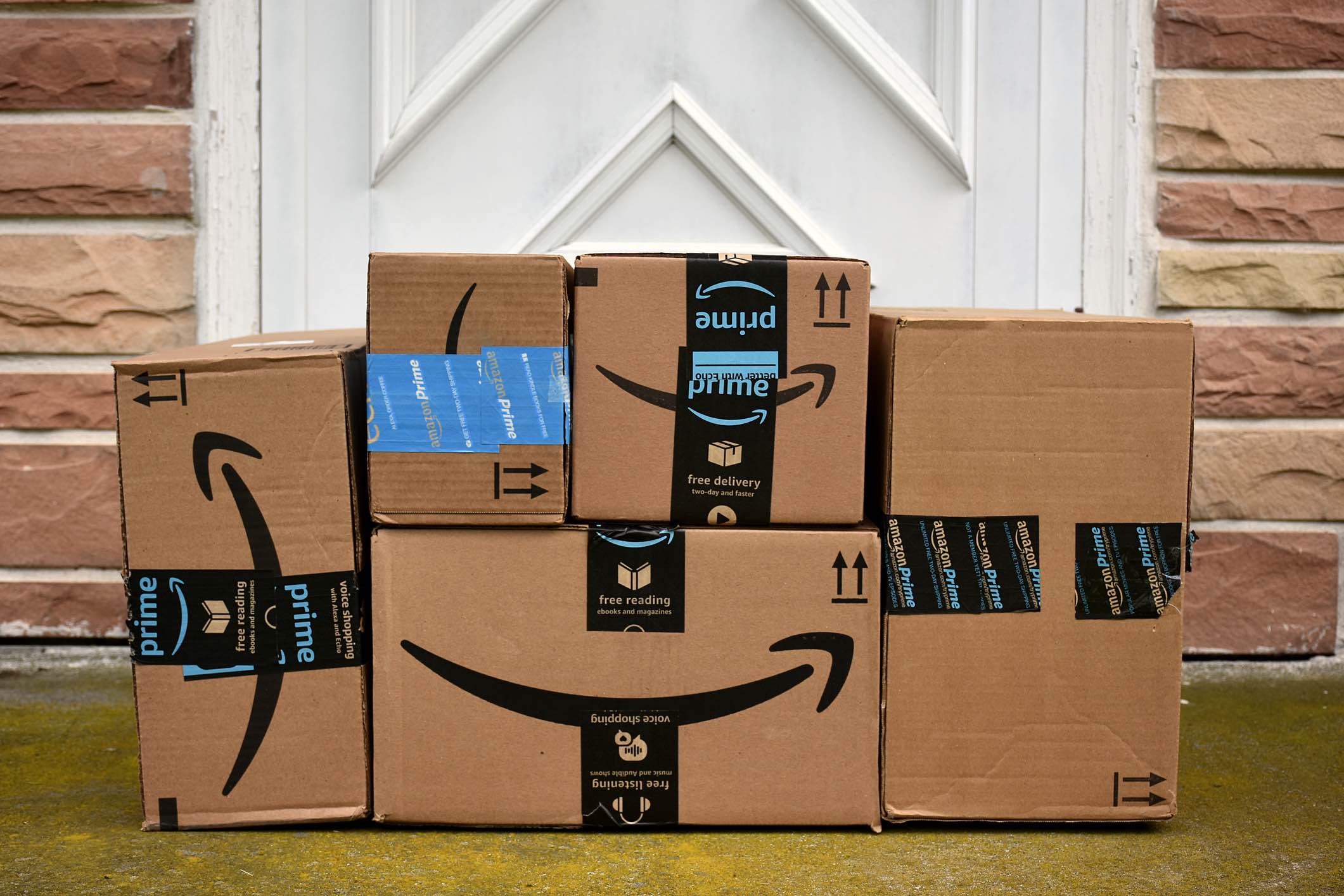
A pile of Amazon boxes in front of the door of a house.
Enlarge / Amazon boxes.

In a quarter in which its revenues are expected to surpass $100 billion for the first time, Amazon says it will spend $500m on a one-time Christmas bonus for its front-line employees.

The pay bump—which will not be paid until January—comes amid plans for strike action over the Black Friday shopping weekend, and growing calls for unionisation.

Dave Clark, the ecommerce group’s head of operations, on Thursday said full-time staff employed in the US from December 1 to December 31 would receive $300. Part-time workers would get $150.

Workers in the UK will get bonuses of £300 or £150, respectively.

“This brings our total spent on special bonuses and incentives for our teams globally to over $2.5 billion in 2020,” Mr Clark wrote. “Including a $500 million thank you bonus earlier this year.”

The bonuses will apply to warehouse workers and delivery drivers. Drivers working via Amazon Flex, the company’s gig work app, will receive a $100 bonus provided they work for at least 20 hours in December.

Amazon’s announcement came on the eve of Black Friday, the bumper shopping day during which US consumers are expected to spend in excess of $10bn, according to projections from Adobe, up almost 40 per cent on last year.

Meanwhile, a coalition involving dozens of advocacy groups and workers unions is seeking to disrupt Amazon’s supply chain and logistics in protest over rates of pay, worker safety and benefits. The groups also demand the company reduce its environmental impact, and pay more in tax.

The UNI Global Union said there were planned walkouts and related action in at least 15 countries where the company operates or has suppliers, including the US, UK and in Germany—where the Verdi union said it had organised a three-day strike at seven of Amazon’s distribution centres in the country. It follows a strike in June organised by the same group.

In all, organizers said, the groups represent about 40,000 Amazon workers globally, though it is unclear how many will participate.

“This is a series of misleading assertions by misinformed or self-interested groups who are using Amazon’s profile to further their individual causes,” Amazon said in a statement.

“Amazon has a strong track record of supporting our employees, our customers, and our communities, including providing safe working conditions, competitive wages and great benefits, leading on climate change with the Climate Pledge commitment to be net zero carbon by 2040, and paying billions of pounds in taxes globally.”

In April, Amazon temporarily shut its six facilities in France after a court order demanded it only handle essential items during the coronavirus pandemic. The warehouses reopened in mid-May after several weeks of negotiation between Amazon and unions.

In the US, despite several attempts, there is no recognized Amazon union. The influential Retail, Wholesale and Department Store Union is seeking to represent about 1,500 workers at a facility in Bessemer, Alabama. “When workers come together to form a union, they win dignity and respect at work,” a website set up to garner support for the effort reads.

“If Amazon workers in Alabama—a strong anti-union state—vote to form a union, it will be a shot heard around the world,” wrote Democratic Senator Bernie Sanders on Twitter. “If they can negotiate higher wages and better working conditions in the south, it will benefit every worker in America.”

Citing leaked internal documents, a recent Vice report alleged Amazon had hired Pinkerton, a private intelligence agency, to engage in union-busting efforts.

Amazon denied using the agency for that purpose, saying in a statement: “We have business partnerships with specialist companies for many different reasons—in the case of Pinkerton to secure high-value shipments in transit.

“We do not use our partners to gather intelligence on warehouse workers. All activities we undertake are fully in line with local laws and conducted with the full knowledge and support of local authorities.”

© 2020 The Financial Times Ltd. All rights reserved Not to be redistributed, copied, or modified in any way.

https://arstechnica.com/?p=1725935


Comcast raising TV and Internet prices, including a big hike to hidden fees

Comcast Xfinity cable television installation truck parked on a street in front of a suburban home, San Ramon, California, May 17, 2018. (Photo by Smith Collection/Gado/Getty Images)
Enlarge / Comcast Xfinity cable television installation truck parked on a street in front of a suburban home, San Ramon, California, May 17, 2018. (Photo by Smith Collection/Gado/Getty Images)
Getty Images | Smith Collection | Gado

Comcast is raising prices for cable TV and Internet service on January 1, 2021, with price hikes coming both to standard monthly rates and to hidden fees that aren’t included in advertised prices.

TV customers are getting an especially raw deal, as Comcast is adding up to $4.50 a month to the “Broadcast TV” fee and $2 to the Regional Sports Network (RSN) fee. That’s an increase of up to $78 a year solely from two fees that aren’t included in advertised rates.

As in past years, even customers who still are on promotional pricing will not be spared from the Broadcast TV and RSN fee increases. “Customers on promotional pricing will not see that pricing change until the end of the promotion, but the RSN and Broadcast TV fees will increase because they’re not part of the promotional pricing,” a Comcast spokesperson told Ars.

Without the upcoming increase, the Broadcast TV fee currently ranges from $7.90 to $14.95 depending on the market, the spokesperson said. The RSN fee maxes out at $8.75 a month in most of Comcast’s territory, but Comcast said this fee is $14.45 for Chicago-area customers with access to the Sinclair-owned Marquee Sports Network that airs Chicago Cubs games. The RSN fee is not charged in some markets that don’t have RSNs.

Six Internet-only packages that cost $53 to $113 a month will all rise $3 a month, and the price for professional installations or in-home service visits is rising from $70 to $100. Comcast revealed price increases in a notice that has been shared on Reddit:

List of Comcast price increases taking effect in Chicago on January 1, 2021.

While the above price-increase notice is for Chicago only, a Comcast spokesperson confirmed to Ars that price hikes will be nationwide. The Chicago price-change list doesn’t include the Regional Sports Network fee “because their RSN fee increased on October 1, 2020 with the addition of the Marquee Sports Network. The RSN Fee will increase by $2 in all other markets effective January 1, 2021,” Comcast told Ars.

“Other changes for 2021 include a Broadcast TV Fee increase of up to $4.50 depending on the market; $3 increase for Internet-only service; and up to a $2.50 increase for TV boxes on the primary outlet, with a decrease of up to $2.45 for TV boxes on additional outlets,” the Comcast spokesperson added. The fee for a customer’s primary TV box is rising from $5 to $7.50, while the fee for additional boxes is being lowered from $9.95 to $7.50.

While the Chicago price list says the base price of the Choice TV package is rising from $25 to $30 a month, it’s not clear which TV packages will get price increases in other areas. Comcast told us that changes to base TV prices will vary by market.

Comcast charges a $30 monthly fee to upgrade from the 1.2TB plan to unlimited data, or $25 a month for customers who purchase xFi Complete, which includes unlimited data and rental of the Comcast gateway modem/router. The xFi Complete fee is only $20 in some markets, but Comcast told Ars it is raising the price in those markets to $25 to match what’s charged in the rest of the country.

Comcast blames programmers

Comcast defended the price increases with this statement:

Rising programming costs—most notably for broadcast TV and sports—continue to be the biggest factors driving price increases for all content distributors and their customers, not just Comcast. We’re continuing to work hard to manage these costs for our customers while investing in our network to provide the best, most reliable broadband service in the country and the flexibility to choose our industry-leading video platform with X1 or the highest quality streaming product with Flex, the only free streaming TV device with voice remote that’s included with broadband service.

But Comcast can’t solely blame other programmers for price hikes because Comcast itself owns NBCUniversal and thus determines the price of all NBCUniversal content, including the national channels and eight RSNs in major markets. Despite Comcast owning NBC, the cable company recently warned customers that they could lose NBC channels if Comcast is unable to reach a new carriage contract with… NBC. The absurd situation was summarized by TechDirt in an article aptly titled, “Comcast Tells Customers They May Lose Access To Comcast Channels If Comcast Can’t Agree With Comcast.”

On the broadband side, Comcast seems to be justifying price hikes based on the company’s investment in improving its network. But Comcast reduced capital spending on its cable division in 2019 and reduced cable-division capital spending again in the first nine months of 2020.

As we reported Monday, Comcast will also be enforcing the 1.2TB monthly data cap throughout its entire 39-state territory in 2021. Currently, Comcast enforces the cap in 27 states.

Comcast is the largest cable company and broadband provider in the US, followed by Charter, which has also raised prices on a regular basis. The companies do not compete against each other, and each has a virtual monopoly over high-speed wired broadband in large portions of the US. Charter is raising prices on its Spectrum service in December. Charter is prohibited from imposing data caps until May 2023 thanks to a merger condition, but has petitioned the Federal Communications Commission to drop the data-cap ban in May 2021 instead.

Disclosure: The Advance/Newhouse Partnership, which owns 13 percent of Charter, is part of Advance Publications. Advance Publications owns Condé Nast, which owns Ars Technica.

https://arstechnica.com/?p=1725587


Apple security chief maintains innocence after bribery charges

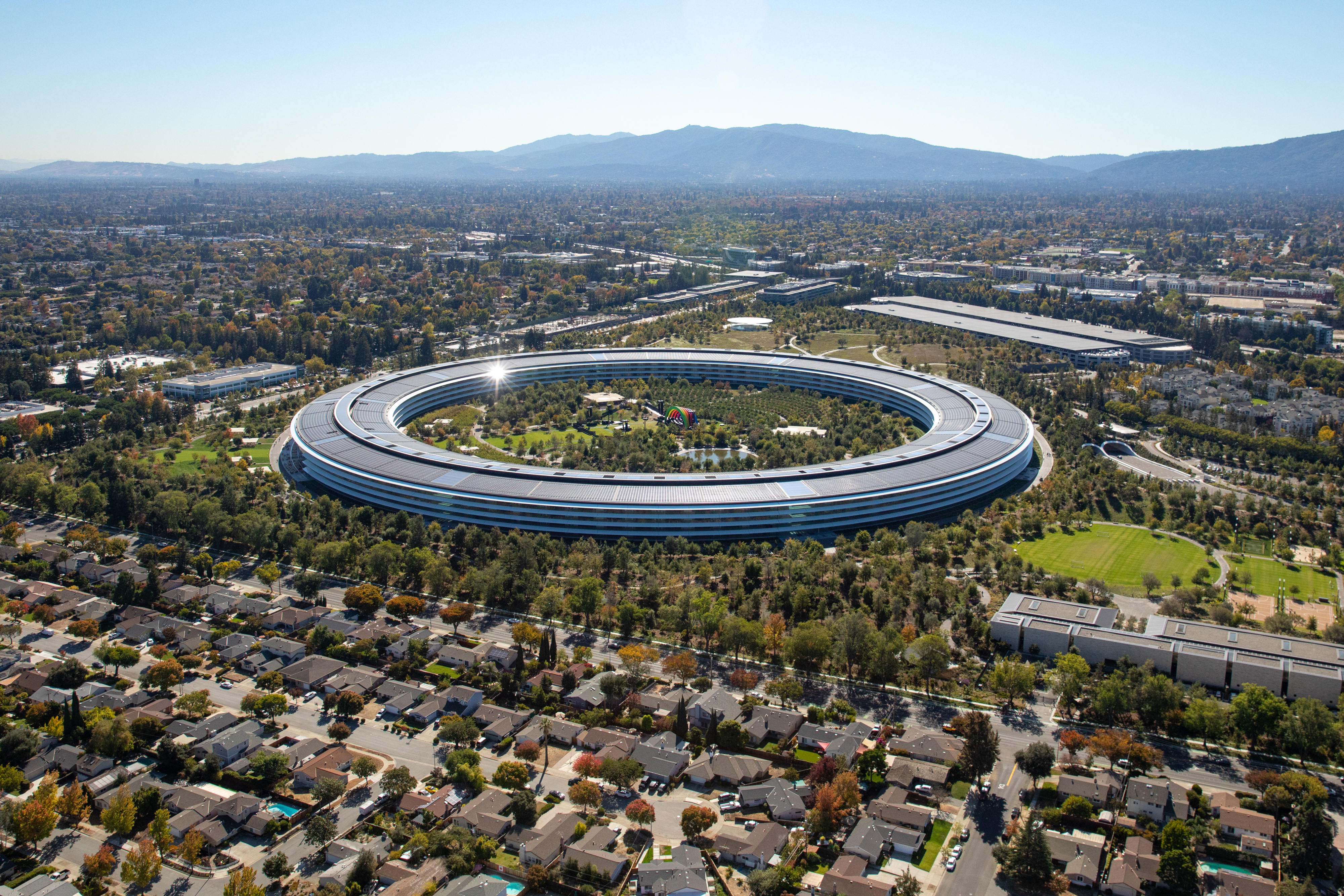
Apple's global headquarters in Cupertino, California.
Enlarge / Apple’s global headquarters in Cupertino, California.
Sam Hall/Bloomberg via Getty Images

A grand jury in California’s Santa Clara County has indicted Thomas Moyer, Apple’s head of global security, for bribery. Moyer is accused of offering 200 iPads to the Santa County Sheriff’s office in exchange for concealed carry permits for four Apple employees.

Moyer’s attorney says that he did nothing wrong, and notably Apple is standing behind its executive.

“We expect all of our employees to conduct themselves with integrity,” an Apple spokesperson said in a statement. “After learning of the allegations, we conducted a thorough internal investigation and found no wrongdoing.”

Also indicted were two officials in the office of Santa Clara County Sheriff Laurie Smith. These officials are accused of soliciting the alleged bribe.

California law gives sheriffs broad discretion to decide who gets permits to carry concealed weapons in the state. Smith has previously faced accusations that her office deliberately withheld permits to carry concealed weapons until applicants did favors for Smith. A June investigation by NBC Bay Area found that donors to Smith’s re-election campaign were 14 times more likely to get concealed carry permits than those who didn’t donate.

A press release from Smith’s office described the indictments as “a difficult time for our organization.”

Jeff Rosen, the Santa Clara district attorney responsible for the indictments, said that the donation of 200 iPads was scuttled at the last minute after Rosen obtained a search warrant in the case.

According to LinkedIn, Moyer is responsible for “strategic management of Apple’s corporate and retail security, crisis management, executive protection, investigations and new product secrecy.”

While two individuals in Sheriff Smith’s office were indicted, no charges have been filed against Smith herself. Rosen says the investigation is ongoing. A common prosecutorial strategy is to focus on lower-ranking employees first in order to pressure them to provide evidence against their boss.

Others also face bribery charges

The same day he indicted Moyer, Rosen also indicted an insurance broker, Harpreet Chadha, who also sought a concealed carry permit from the Santa Clara Sheriff’s office. Chadha is accused of furnishing Smith with tickets worth $6,000 to a luxury box suite at a San Jose Sharks game.

“Sheriff Laurie Smith’s family members and some of her biggest supporters held a celebration of her reelection as sheriff in Chadha’s suite,” Rosen said.

Chadha’s attorney described the indictment as a “grave miscarriage of justice.”

In August, Rosen charged four people in another bribery scheme involving the Santa Clara County Sheriff’s office. The alleged scheme involved a trade of campaign donations for concealed carry permits. One of the defendants, James Jensen, was a sheriff’s captain who was also charged in last week’s indictment of Apple’s Moyer.

The August indictment focused on an effort to obtain concealed carry permits for a company that was providing security to Facebook executives.

“I need you to meet my buddy that runs the Facebook Executive protection team,” one of the defendants wrote to an attorney charged in the case. “It’s a potential $50K.”

The conspirators then allegedly met at a San Jose Jamba Juice and allegedly reached a deal where the sheriff’s office would supply 10 to 12 concealed carry permits in exchange for campaign contributions worth $90,000.

All of the defendants could serve prison time if they are convicted.

https://arstechnica.com/?p=1725290


UK government buys chunk of bankrupt Starlink competitor, OneWeb

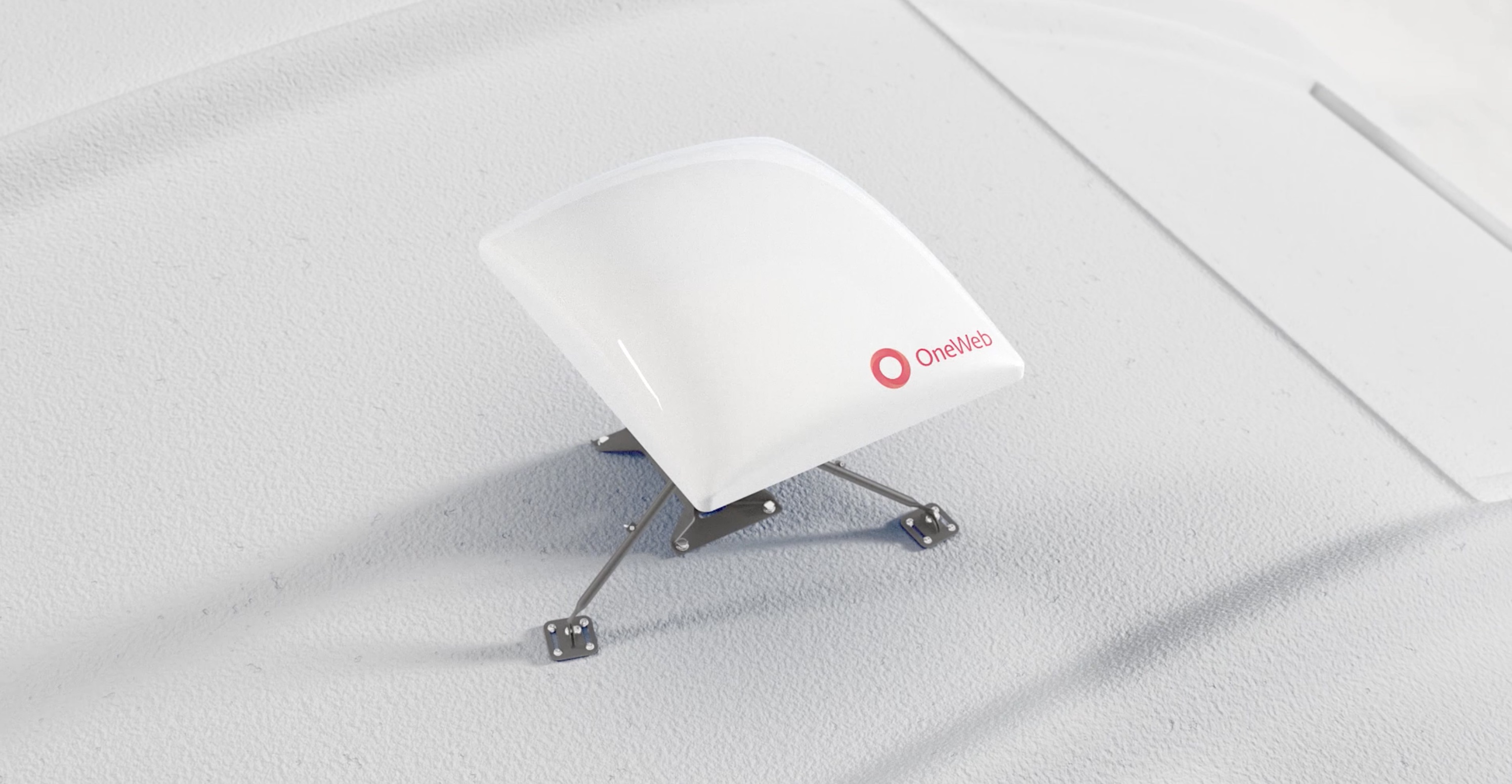
Promotional image of Web device.
Enlarge / A OneWeb receiver.

The UK has entered the increasingly competitive race to become a global satellite Internet provider after taking control of failed space startup OneWeb with Indian billionaire Sunil Bharti Mittal.

The low-Earth-orbit-satellite operator emerged from Chapter 11 bankruptcy protection on Friday and will now seek a further $1.25 billion through debt or equity to achieve its ambitious medium-term goal of launching a global commercial Internet service by 2022 focusing on remote areas.

It will face well-funded rivals, including ventures led by SpaceX’s Elon Musk and Amazon’s Jeff Bezos.

The UK government, which will have a golden share in OneWeb, and Mr. Mittal’s Bharti Global are each paying $500 million for 84.4 percent of the company. The balance will be owned by existing creditors, including SoftBank and Airbus.

Neil Masterson, former co-chief operating officer of Thomson Reuters, is taking over as chief executive. The UK government and Bharti Global will each have three representatives on the board, and there will be three independent directors.

OneWeb’s emergence from Chapter 11, a process distressed businesses use to reorganize themselves, gives a significant boost to the UK’s ambitions to become a major commercial space player and to develop cutting-edge positioning technology that could be used to cement international security alliances.

“This deal gives us the chance to build on our strong advanced manufacturing and services base in the UK, creating jobs and technical expertise,” said Alok Sharma, business secretary.

The Satellite Applications Catapult, a government-funded innovation hub, is already working with OneWeb to develop positioning, navigation, and timing technology that could be used to enhance the resilience of existing navigation services such as GPS.

The initial focus will be to deliver a viable commercial Internet service to the UK and the Arctic region by autumn next year.

The company was one of the earliest to propose a mega-constellation to deliver Internet to remote parts of the world, but SpaceX’s Starlink constellation already has about 800 satellites in low Earth orbit against OneWeb’s 74.

Nevertheless, in its reincarnated form, OneWeb would increase its focus on business customers, helping it to compete, said Chris Quilty, analyst at Quilty Analytics, a space-industry advisory company.

“The two have elected different paths, with Starlink focusing on the consumer market and OneWeb focusing on enterprise customers,” he said. “SpaceX has developed lower-cost hardware for the consumer market but must still subsidize it, even at a $450 price point. OneWeb’s enterprise customers can expect to pay thousands—or tens of thousands—of dollars for the hardware but can expect to receive higher bandwidth.”

OneWeb intends to launch 36 more satellites on December 17 and will accelerate launches next year to complete its target of having 650 satellites in orbit by 2022 for its global coverage.

Mr. Mittal, whose Bharti Airtel is one of the world’s biggest telecom companies, told the Financial Times he was confident the funding would be available to complete the launches. He told staff in a call on Friday that one investor had offered $700 million, but he told the FT that the group was also looking at taking on debt.

He added that $3.3 billion had already been invested before the group collapsed in March after a failed fundraising. OneWeb’s assets included regulatory priority over rival low-Earth-orbit constellations for broadcasting services and a satellite manufacturing facility in Florida.

“A rewarding investment”

“I see no difficulties [in financing],” Mr. Mittal said. “In the hands of new investors, this constellation will be ready for commercial service at $2.25 billion [including the $1 billion committed by the new shareholders] and that will be the cheapest constellation compared to anyone in the world. I can confidently say this will be a rewarding investment.”

The UK government’s decision to invest in OneWeb—against the advice of senior civil servants—has been controversial, prompting criticism from MPs about the use of taxpayer money to rescue a failed company.

It also drew significant opposition from the government’s own UK Space Agency, which had been committed to developing a standalone global navigation satellite service after the EU barred British access to secure elements of its Galileo initiative. This project has now been shelved due to the high cost of developing an independent navigation service from scratch.

As a communications constellation, OneWeb cannot deliver identical navigation services to GPS or Galileo. But it could be a resilient alternative, according to experts, and be offered to partners in security alliances such as the Five Eyes intelligence group of the UK, US, Canada, Australia, and New Zealand, to augment existing services.

Chris McLaughlin, who helped to orchestrate the deal as a special adviser to OneWeb, said the UK government had acquired a foothold in an industry that would provide “options for decades to come.”

“A sovereign nation needs a sovereign space capability,” he added. “Buying OneWeb secures that at a fraction of the cost of starting from scratch.”

Wielding its golden share, the UK government will have a say over who has access to the network. OneWeb will also be a vehicle to jumpstart UK space ambitions for its space industry. It is expected to manufacture the payloads for the next generation of satellites—which will have substantially more capability than the current generation—in the UK from about 2023.

© 2020 The Financial Times Ltd. All rights reserved Not to be redistributed, copied, or modified in any way.

https://arstechnica.com/?p=1724845


Apple moving forward with plan to limit “creepy” user tracking

A man glowers at an iPhone, just as ad firms are worried iOS users will when they discover how they are being tracked and that they can opt out of it.
Enlarge / A man glowers at an iPhone, just as ad firms are worried iOS users will when they discover how they are being tracked and that they can opt out of it.

Apple’s plan to add a new privacy feature to iOS to limit “invasive, even creepy” tracking by third-party firms is nothing but an abuse of market power to stifle competition, Facebook—a third-party tracking firm extraordinaire—claims.

Apple in June announced that iOS 14 would make a change requiring app developers to notify users if their app collects a unique device code, known as an IDFA (ID for Advertisers), and require that collection to be an opt-in setting. After pushback from Facebook and other firms, however, Apple delayed implementation of the new policy and launched iOS 14 in September without enabling it. The company said instead the feature would be added “early next year” to give developers more time to update their apps accordingly.

Apple stands behind its plan to implement the new app tracking transparency (ATT) feature next year and plans to move forward with it, Jane Horvath, senior director of global privacy at Apple, said in a letter to eight civil, human, and digital rights groups including Amnesty International, Human Rights Watch, and the Electronic Frontier Foundation.

“Tracking can be invasive, even creepy, and more often than not it takes place without meaningful user awareness or consent,” Horvath wrote. “What some companies call ‘personalized experiences’ are often veiled attempts to gather as much data as possible about individuals, build extensive profiles on them, and then monetize those profiles.”

“We are not against advertising,” Horvath added. “We simply think tracking should be transparent and under user control, which will engender user trust that will benefit all.” She specifically called out Facebook in the letter, adding:

Facebook executives have made clear their intent is to collect as much data as possible across both first- and third-party products to develop and monetize detailed profiles of their users, and this disregard for user privacy continues to expand to include more of their products … We see the update to iOS 14 which implements the ATT feature as a natural evolution, providing the same explicit, privacy-forward choices to our users regarding tracking by their apps as we do to other key features of the device.

Facebook, fired up

Facebook, perhaps predictably, did not care for Apple’s characterization of its business model. Instead, the social media behemoth swung for Apple’s current sore spot: antitrust enforcement.

“The truth is, Apple has expanded its business into advertising and through its upcoming iOS 14 changes is trying to move the free Internet into paid apps and services where they profit,” a representative for Facebook said, adding:

As a result, they are using their dominant market position to self-preference their own data collection while making it nearly impossible for their competitors to use the same data. They claim it’s about privacy, but it’s about profit. … We are not fooled. This is all part of a transformation of Apple’s business away from innovative hardware products to data-driven software and media.

Facebook clearly has a vested interest in being able to track iOS users in a very granular and thorough way, and the company does indeed stand to lose its position if individuals become able to opt out. That said, Facebook is far from the only entity to allege that Apple is unfairly abusing its power to push out third-party firms.

A group of publishers, advertising groups, and social media platforms filed an antitrust complaint in France against Apple late in October, arguing that Apple was using the language of consumer protection to cloak a deliberate attempt to stifle competition. “While privacy matters and needs to be protected, privacy rhetoric cannot be used as a fig leaf to justify anti-competitive practices that will destroy the mobile ad ecosystem while benefiting Apple,” a lawyer representing the coalition said at the time.

That claim follows a whole suite of different antitrust complaints that have been levied against Apple around the world. The European Commission opened a probe into Apple Pay this summer following a complaint from Spotify. Messaging app Telegram likewise filed a complaint about the App Store shortly after the EU confirmed its investigation was underway.

Here in the US, Apple is embroiled in a high-drama legal fight with Epic Games, which alleged in an August antitrust lawsuit that Apple is “the behemoth seeking to control markets, block competition, and stifle innovation.” Epic in September became one of the founding members of a new trade group, the “Coalition for App Fairness,” which seeks to force Apple to change its “exploitative” app store practices.

A congressional investigation that concluded in October agreed with the complaints, finding that Apple ties its in-app payments system and its app store together in an anticompetitive way and that the company also unfairly used its control over APIs, search rankings, and default apps to hurt third-party competitors. The Department of Justice reportedly has an antitrust probe into Apple currently in progress.

Earlier this week, Apple seemed to try to appease regulators by halving the cut it takes of small developers’ sales, from 30 percent to 15 percent. That cut, however, only affects developers that generate less than $1 million per year across all their iOS apps—and it’s an opt-in program to which developers must apply and be accepted.

https://arstechnica.com/?p=1724658


Facebook AI catches 95% of hate speech; company still wants mods back in office

Facebook logo on a street sign outside a wooded campus.
Enlarge / Facebook’s Menlo Park, California, headquarters as seen in 2017.

Facebook’s software systems get ever better at detecting and blocking hate speech on both the Facebook and Instagram platforms, the company boasted today—but the hardest work still has to be done by people, and many of those people warn that the world’s biggest social media company is putting them in unsafe working conditions.

About 95 percent of hate speech on Facebook gets caught by algorithms before anyone can report it, Facebook said in its latest community-standards enforcement report. The remaining 5 percent of the roughly 22 million flagged posts in the past quarter were reported by users.

That report is also tracking a new hate-speech metric: prevalence. Basically, to measure prevalence, Facebook takes a sample of content and then looks for how often the thing they’re measuring—in this case, hate speech—gets seen as a percentage of viewed content. Between July and September of this year, the figure was between 0.10 percent and 0.11 percent, or about 10-11 views of every 10,000.

Facebook also stressed—in both its news release and in a call with press—that while its in-house AI is making strides in several categories of content enforcement, COVID-19 is having a continued effect on its ability to moderate content.

“While the COVID-19 pandemic continues to disrupt our content-review workforce, we are seeing some enforcement metrics return to pre-pandemic levels,” the company said. “Even with a reduced review capacity, we still prioritize the most sensitive content for people to review, which includes areas like suicide and self-injury and child nudity.”

Secondhand workforce

The reviewers are critical, Facebook Vice President of Integrity Guy Rosen told press in a call. “People are an important part of the equation for content enforcement,” he said. “These are incredibly important workers who do an incredibly important part of the job.”

Full-time Facebook employees who are employed by the company itself are being told to work from home until July 2021 or perhaps even permanently.

In the call with reporters, Rosen stressed that Facebook employees who are required to come in to work physically, such as those who manage essential functions in data centers, are being brought in with strict safety precautions and personal protective equipment, such as hand sanitizer, made available.

Moderation, Rosen said, is one of those jobs that can’t always be done at home. Some content is simply too sensitive to review outside of a dedicated workspace where other family members might see it, he explained, saying that some Facebook content moderators are being brought back into offices “to ensure we can have that balance of people and AI working on those areas” that need human judgement applied.

The majority of Facebook’s content moderators, however, do not work for Facebook. They work for third-party contract firms worldwide, often with woefully insufficient support to do their jobs. Reporters from The Guardian, The Verge, The Washington Post, and BuzzFeed News, among others, have spoken to these contract workers around the world, who describe relentless expectations and widespread trauma at work. Earlier this year, Facebook agreed to a $52 million settlement in a class-action suit filed by former content moderators who alleged the job gave them “debilitating” post-traumatic stress disorder.

All of that was before COVID-19 spread around the world. In the face of the pandemic, the situation looks even worse. More than 200 moderators who are being told to go back into the office signed on to an open letter accusing Facebook of “needlessly risking moderators’ lives” without even providing hazard pay for workers who are being ordered back into the office.

“Now, on top of work that is psychologically toxic, holding onto the job means walking into a hot zone,” the letter reads. “In several offices, multiple COVID cases have occurred on the floor. Workers have asked Facebook leadership, and the leadership of your outsourcing firms like Accenture and CPL, to take urgent steps to protect us and value our work. You refused. We are publishing this letter because we are left with no choice.”

“This raises a stark question,” the letter adds. “If our work is so core to Facebook’s business that you will ask us to risk our lives in the name of Facebook’s community—and profit—are we not, in fact, the heart of your company?”

Scrutiny grows

Meanwhile, state and federal scrutiny of Facebook only keeps growing. This week, company CEO Mark Zuckerberg testified before the Senate for the second time in just three weeks. Members of the House are also complaining that Facebook has failed to moderate content properly or safely amid rampant election-related disinformation.

Other regulatory bodies are likely coming for Facebook—and soon. Many of the antitrust investigations that began in 2019 are drawing to a conclusion, according to media reports. The Federal Trade Commission is reportedly planning to file a suit within the next two weeks, and a coalition of nearly 40 states, led by New York Attorney General Letitia James, is likely to follow in December. Those suits are likely to argue that Facebook unfairly stifles competition through its acquisition and data strategies, and it may end up trying to force the company to divest Instagram and WhatsApp.

https://arstechnica.com/?p=1724341


Massive, China-state-funded hack hits companies around the world, report says

A motherboard has been photoshopped to include a Chinese flag.
Enlarge / Computer chip with Chinese flag, 3d conceptual illustration.

Researchers have uncovered a massive hacking campaign that’s using sophisticated tools and techniques to compromise the networks of companies around the world.

The hackers, most likely from a well-known group that’s funded by the Chinese government, are outfitted with both off-the-shelf and custom-made tools. One such tool exploits Zerologon, the name given to a Windows server vulnerability, patched in August, that can give attackers instant administrator privileges on vulnerable systems.

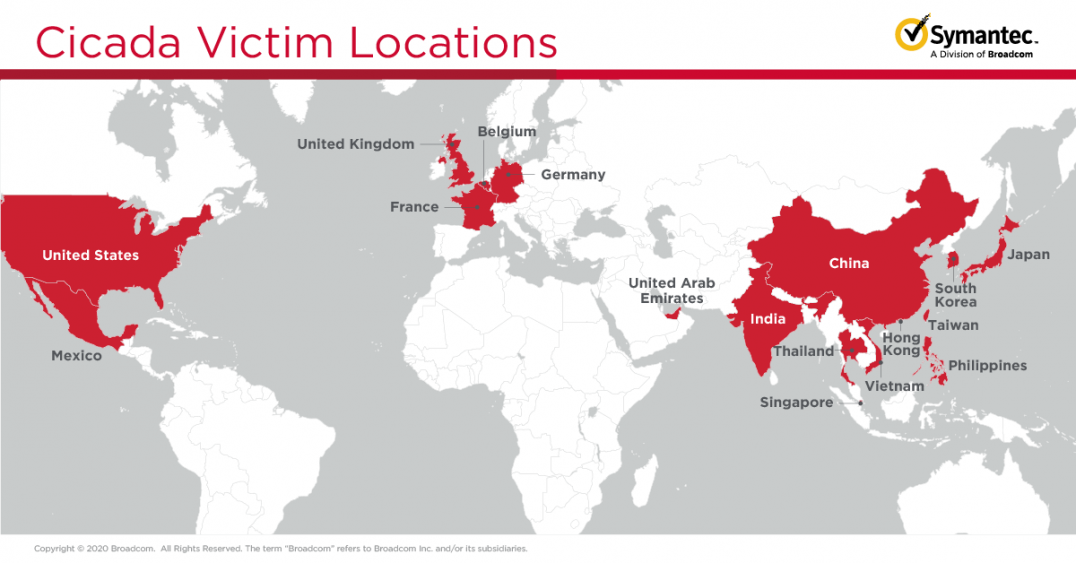
Symantec uses the code name Cicada for the group, which is widely believed to be funded by the Chinese government and also carries the monikers of APT10, Stone Panda, and Cloud Hopper from other research organizations. The group, which has no relation to or affiliation with any company using the name Cicada, has been active in espionage-style hacking since at least 2009 and almost exclusively targets companies linked to Japan. While the companies targeted in the recent campaign are located in the United States and other countries, all of them have links to Japan or Japanese companies.

On the lookout

“Japan-linked organizations need to be on alert as it is clear they are a key target of this sophisticated and well-resourced group, with the automotive industry seemingly a key target in this attack campaign,” researchers from security firm Symantec wrote in a report. “However, with the wide range of industries targeted by these attacks, Japanese organizations in all sectors need to be aware that they are at risk of this kind of activity.”

The attacks make extensive use of DLL side-loading, a technique that occurs when attackers replace a legitimate Windows dynamic-link library file with a malicious one. Attackers use DLL side-loading to inject malware into legitimate processes so they can keep the hack from being detected by security software.

The campaign also makes use of a tool that’s capable of exploiting Zerologon. Exploits work by sending a string of zeros in a series of messages that use the Netlogon protocol, which Windows servers use to let users log in to networks. People with no authentication can use Zerologon to access an organization’s crown jewels—the Active Directory domain controllers that act as an all-powerful gatekeeper for all machines connected to a network.

Microsoft patched the critical privilege-escalation vulnerability in August, but since then attackers have been using it to compromise organizations that have yet to install the update. Both the FBI and Department of Homeland Security have urged that systems be patched immediately.

Among the machines compromised during attacks discovered by Symantec were domain controllers and file servers. Company researchers also uncovered evidence of files being exfiltrated from some of the compromised machines.

Multiple regions and industries

Targets come from a variety of industries, including:

  • Automotive, with some manufacturers and organizations involved in supplying parts to the motor industry also targeted, indicating that this is a sector of strong interest to the attackers
  • Clothing
  • Conglomerates
  • Electronics
  • Engineering
  • General Trading Companies
  • Government
  • Industrial Products
  • Managed Service Providers
  • Manufacturing
  • Pharmaceutical
  • Professional Services

Below is a map of the physical location of the targets:

Symantec linked the attacks to Cicada based on digital fingerprints found in the malware and attack code. The fingerprints included obfuscation techniques and shell code involved in the DLL side-loading as well as the following traits noted in this 2019 report from security firm Cylance:

  • Third-stage DLL has an export named “FuckYouAnti”
  • Third-stage DLL uses CppHostCLR technique to inject and execute the .NET loader assembly
  • .NET Loader is obfuscated with ConfuserEx v1.0.0
  • Final payload is QuasarRAT—an open source backdoor used by Cicada in the past

“The scale of the operations also points to a group of Cicada’s size and capabilities,” the Symantec researchers wrote. “The targeting of multiple large organizations in different geographies at the same time would require a lot of resources and skills that are generally only seen in nation-state backed groups. The link all the victims have to Japan also points towards Cicada, which has been known to target Japanese organizations in the past.”

https://arstechnica.com/?p=1724195


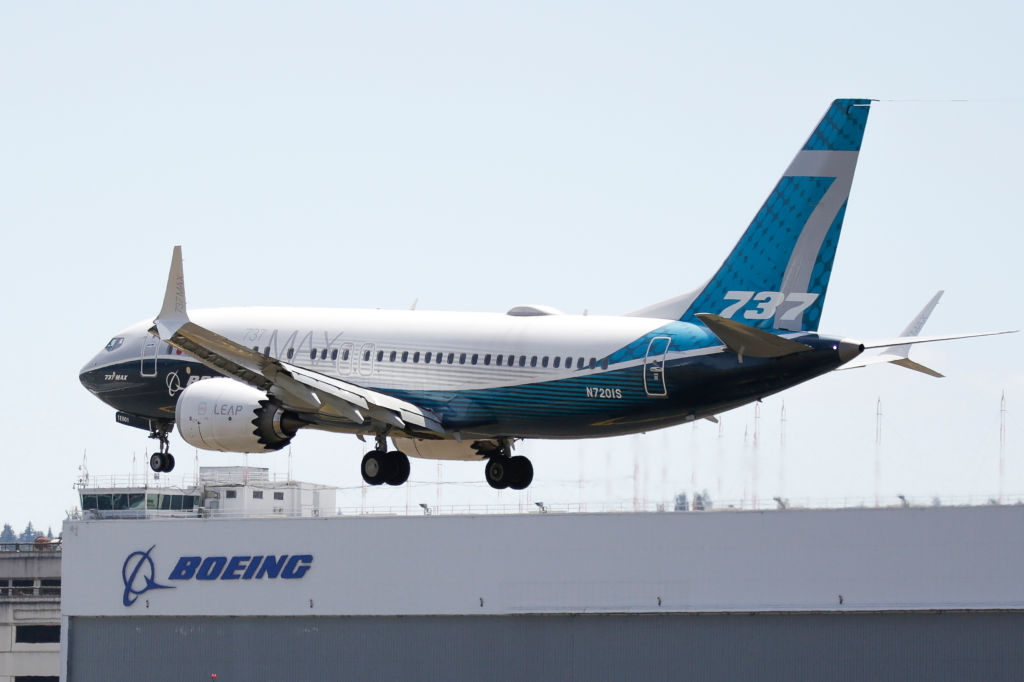
US regulator clears Boeing’s 737 Max to fly again

A Boeing 737 MAX jet lands following a Federal Aviation Administration (FAA) test flight at Boeing Field in Seattle, Washington, on June 29, 2020.
Enlarge / A Boeing 737 MAX jet lands following a Federal Aviation Administration (FAA) test flight at Boeing Field in Seattle, Washington, on June 29, 2020.
Jason Redmond | Getty Images

The US Federal Aviation Administration issued an order on Wednesday to allow Boeing’s 737 Max to return to the skies, clearing the way for other regulators to follow and airlines to restore the plane to their schedules.

The move by US regulators, which had been expected, marks the beginning of the end of the worst crisis in Boeing’s century-long history. Two 737 Max crashes killed 346 people, and afterwards destroyed billions in Boeing’s market value, led to the departure of former chief executive Dennis Muilenburg and tarnished the reputation of one of the most storied US manufacturers.

The FAA is requiring that Boeing change flight control software, known as the Maneuvering Characteristics Augmentation System, or MCAS, which was a critical factor in the two fatal crashes which happened within five months. The software will be unable to activate repeatedly and can only do so with input from two sensors, instead of just one. The agency is also requiring changes to the plane’s wiring.

The FAA is requiring that pilots train to fly the Max in flight simulators, something Boeing avoided before the two crashes. It reversed its position in January. The US regulator also plans to inspect the jets for foreign objects such as rags or tools after some were found among grounded planes.

“The path that led us to this point was long and gruelling,” said Steve Dickson, FAA administrator. “We were never driven by a timeline but rather followed a methodical and deliberate safety process… I can tell you now that I am 100 percent comfortable with my family flying on [the aircraft].”

But families of the victims who were killed in the crashes in 2018 and 2019 say aviation regulators have done too little to assure the plane’s safety and urged potential passengers to steer clear. A lawsuit against Boeing pursued by many of the families from the second crash is ongoing.

“The flying public should avoid the Max when flying in the future,” said Michael Stumo, whose 24-year-old daughter Samya Stumo was killed last year when Ethiopian Airlines Flight 302 crashed six minutes after take-off. “It’s still a more dangerous aircraft than other modern planes.”

Aviation regulators worldwide grounded the Max in March 2019 after the crash in Ethiopia, five months after Lion Air Flight 610 crashed off the coast of Indonesia.

Boeing’s engineers had designed a flight control system that could counteract a stall if the Max’s bulkier engines forced the plane’s nose upward. Instead, on the doomed flights a reading from a single angle-of-attack sensor wrongly signalled a stall. The flight control system forced the nose of each plane downward repeatedly until it crashed.

The flight crew manual for the Max included no mention of the new system because Boeing wanted to avoid changes to the plane that would lead the FAA to impose training requirements. Training for pilots is costly for airlines and would discourage them from buying the Max.

In January, US lawmakers released more than 100 pages of damaging internal messages that showed Boeing employees mocking both regulators and the Max. One said the aeroplane was “designed by clowns who in turn are supervised by monkeys.”

A congressional subcommittee released a report in September that condemned both the manufacturer and the FAA, which the subcommittee found had offloaded much of its regulatory authority to Boeing.

According to the report, the crashes “were the horrific culmination of a series of faulty technical assumptions by Boeing’s engineers, a lack of transparency on the part of Boeing’s management, and grossly insufficient oversight by the FAA—the pernicious result of regulatory capture on the part of the FAA with respect to its responsibilities to perform robust oversight of Boeing and to ensure the safety of the flying public.”

The US House of Representatives passed a bill on Tuesday that would strengthen the FAA’s ability to oversee aerospace manufacturers, and the US Senate is set to consider a similar, though less-stringent, bill on Wednesday.

Regulators in Europe, Canada and Brazil have indicated they are likely to lift grounding orders on the jet as well. China, which was first to ground the Max, has yet to offer a plan to do so. The country’s airlines are important customers for Boeing, but China is also trying to bolster the worldwide standing of its own commercial jet manufacturing industry.

Even as US regulators grant airlines the go-ahead to begin flying the Max, it will return slowly. American Airlines has said it will use the plane on flights between Miami and New York starting late next month. Other airlines have said they will not fly the plane until 2021.

David Calhoun, Boeing’s chief executive, said in a memo to employees on Wednesday that “we will never forget the 346 victims… We will honor them by holding close the hard lessons learned from this chapter in our history to ensure accidents like these never happen again.”

© 2020 The Financial Times Ltd. All rights reserved Not to be redistributed, copied, or modified in any way.

https://arstechnica.com/?p=1724020