Report: White House pressuring CISA to stop debunking election nonsense [Updated]
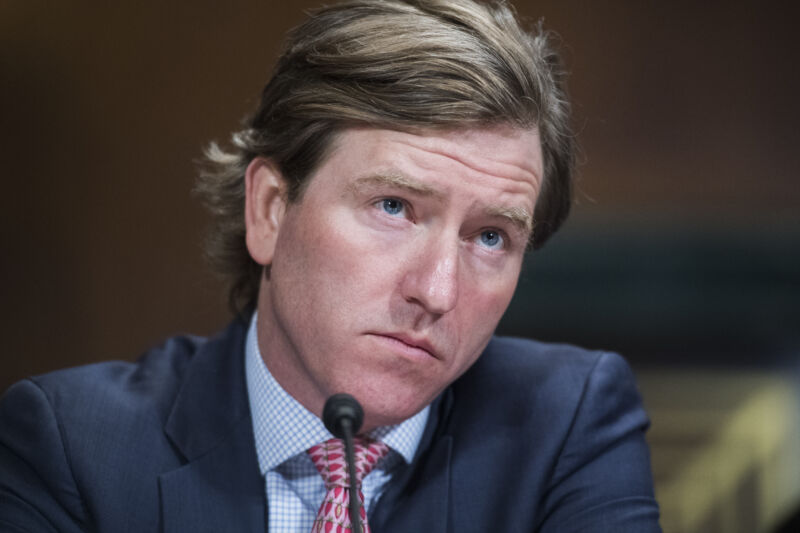
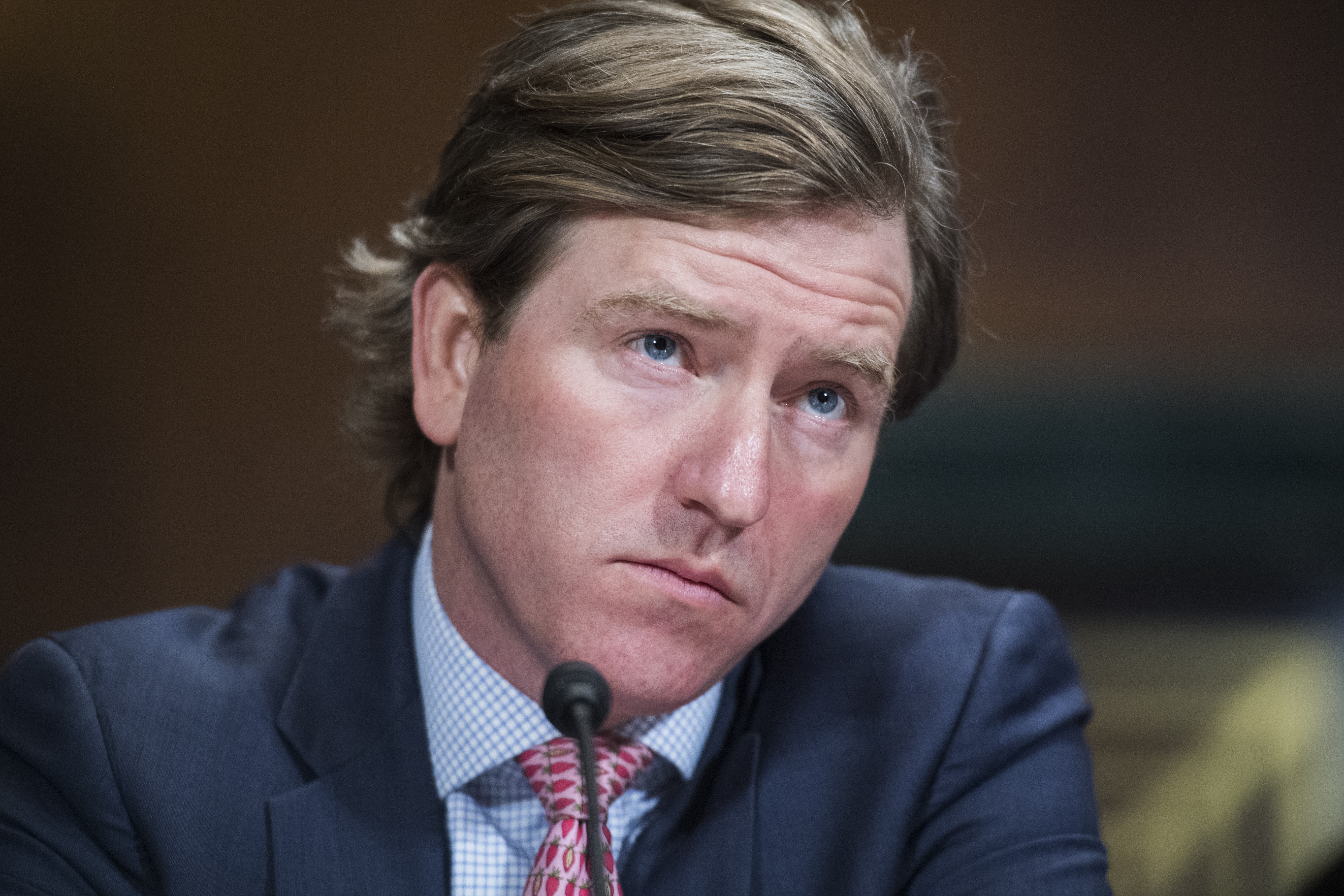
Enlarge/ Christopher Krebs, director of the Department of Homeland Security’s Cybersecurity and Infrastructure Security Agency.
Update: After publication, the Elections Infrastructure Government Coordinating Council and the Election Infrastructure Sector Coordinating Executive Committees issued a joint statement in which they called the 2020 presidential election “the most secure in American history.” The statement continued:
“When states have close elections, many will recount ballots. All of the states with close results in the 2020 presidential race have paper records of each vote, allowing the ability to go back and count each ballot if necessary… There is no evidence that any voting system deleted or lost votes, changed votes, or was in any way compromised.” [Emphasis theirs]
Original story: As Donald Trump and his allies have touted unproven claims of election fraud over the last week, the Cybersecurity and Infrastructure Security Agency and its leader, Chris Krebs, have swatted them down. CISA has set up a “Rumor Control” page that debunks common claims about the election.
Now Reuters is reporting that the agency has come under pressure from the White House to knock it off:
White House officials have asked for content to be edited or removed which pushed back against numerous false claims about the election, including that Democrats are behind a mass election fraud scheme. CISA officials have chosen not to delete accurate information.
Krebs expects the White House to fire him, according to three sources who talked to Reuters.
Debunking election fraud claims
The CISA Rumor Control page is framed in nonpartisan terms. But right now, claims of election fraud are overwhelmingly coming from the Republican side of the political spectrum.
For example, viral rumors have attributed President-elect Joe Biden’s victory in Pennsylvania to thousands of votes cast on behalf of dead people. The Rumor Control page debunks those claims, pointing to “election integrity measures” that prevent such illegal votes.
Trump allies have argued it’s suspicious that thousands of ballots only have votes for Joe Biden and not candidates for lower offices. But the CISA Rumor Control site points out that it’s common for voters to vote in some races—most often the high-profile presidential race—and leave others blank.
Another entry rejects claims that “a bad actor could change election results without detection,” noting that there are rigorous canvassing and auditing processes to detect any large-scale fraud.
“Not a real thing”
While the page was vague on what rumor it was debunking here, Krebs was far more explicit on his personal Twitter account. Krebs denounced an unproven rumor mentioned on Fox News this week that the government had a secret supercomputer called Hammer that it used to steal the 2012 election for Barack Obama and did the same thing for Joe Biden in 2020.
“This is not a real thing,” Krebs tweeted.
A source told Reuters the White House was particularly angry that CISA had debunked this claim.
Another CISA official, Assistant Director Bryan Ware, has resigned from the agency, Reuters reports.
Earlier this week, Donald Trump fired Defense Secretary Mark Esper. The two have reportedly been at odds since Esper opposed the deployment of US troops to American streets during this summer’s Black Lives Matter protests.
https://arstechnica.com/?p=1722925
Trump admin puts a hold on TikTok ban it seems to have forgotten about
Enlarge/ TikTok’s US fate is up in the air, but at least you can still download and patch it.
The Department of Commerce has put a stay on enforcing an executive order that would have forced popular short-form video app TikTok to suspend all US operations as of midnight tonight. This is a tacit admission that the proposed ban isn’t actually particularly important to the administration any longer.
Commerce said the orders against TikTok are on hold “pending further legal developments” in multiple lawsuits, The Wall Street Journal reports.
President Donald Trump earlier this year signed two executive orders relating to TikTok. The first, on August 7, declared the app to be a national emergency. A second (PDF), issued one week later, gave ByteDance, TikTok’s parent company, 90 days to divest the app to a US owner.
That deadline fell today, November 12. And while ByteDance has not divested any portion of TikTok yet, it does have a deal of sorts in place with Oracle that the White House seemed more or less OK with after it was announced in September.
ByteDance filed an appeal in federal court earlier this week asking for more time to make the Oracle deal happen. In short, ByteDance said, it has followed through on its end of the deal—now, it just needs the US government to remember what’s going on.
“For a year, TikTok has actively engaged with CFIUS in good faith to address its national security concerns, even as we disagree with its assessment,” TikTok said Tuesday in a statement. “In the nearly two months since the president gave his preliminary approval to our proposal to satisfy those concerns, we have offered detailed solutions to finalize that agreement—but have received no substantive feedback on our extensive data privacy and security framework.”
Meanwhile, thanks to all that “pending legal action,” the administration was already prohibited from putting any part of its TikTok bans into effect today.
TikTok filed suit against the government shortly after the executive orders were signed. In September, Judge Carl Nichols of the US District Court for the District of Columbia granted TikTok’s request for an injunction, ruling that the government had likely overstepped its legal authority by crafting the ban.
A group of content creators who make a living using TikTok also filed suit against the administration, alleging that the ban would basically destroy their livelihoods. In late October, Judge Wendy Beetlestone of the US District Court for Eastern Pennsylvania agreed, ruling that a shutdown would cause the creators “significant and unrecoverable economic loss” and granting an injunction against the ban.
https://arstechnica.com/?p=1722926
What is Parler, and why is everyone suddenly talking about it?
Hundreds of millions of Americans—and our counterparts worldwide—watched the US election and its high-drama aftermath unfold on social media over the past week or so. Most of us were using Facebook or Twitter, but in the immediate wake of Election Day, a new social media platform suddenly rocketed to the top of the app download charts: Parler.
Conservative politicians, such as Sen. Ted Cruz (R-Texas) and Rep. Devin Nunes (R-Calif.), have been evangelizing Parler to their followers for more than a year and have been joined by right-wing media personalities. Conservatives have now redoubled their efforts to evade “censorship,” as Twitter works overtime to fact-check false claims about the election.
What is Parler?
Parler is a Twitter-style social media platform that first launched in 2018. As with Twitter, it’s built around a newsfeed of accounts you can choose to follow, and users can upload images in addition to creating posts of up to 1,000 characters (Twitter caps posts at 280). In addition to being available by Web, Parler has both iOS and Android apps available.
The service takes its name from the French verb parler, meaning “to speak” (or sometimes, “to talk”) as in the examples “Parlez-vous français?” or “Je veux parler avec ton gérant.” However, the app does not take the French pronunciation of the word—par-lay—and is instead pronounced “parlor,” as in a sitting room where you greet your 19th-century visitors. Posts and messages made on the platform are called “parleys.”
What makes it different from Twitter?
Parler planted its political stake on day one. The service explicitly describes itself as “a non-biased, free speech social media focused on protecting user’s rights,” a stance meant to fall in line with the oft-repeated (but largely untrue) claims of right-wing politicians and media personalities who believe that Twitter (and, to a lesser degree, Facebook) is unfairly censoring them.
These claims of censorship are usually clearly, demonstrably false, mostly made to garner political support. There are some rare exceptions of total bans, but these are generally linked to a proven history of dangerous behavior. Twitter, for example, banned professional conspiracy theorist Alex Jones from its platform in 2018 after Jones repeatedly broke Twitter’s anti-harassment rules. And this year, Twitter and Facebook both banned QAnon groups, figureheads, and content, citing a litany of real-world, physical harms to which the conspiracy movement is linked.
That, however, does not stop right-wing personalities with large audiences from claiming their voices are being suppressed. In December 2018, Candace Owens (2.7 million Twitter followers) became the first high-profile conservative to call for others to bail on Twitter and join Parler. But she was not the last. Throughout 2019, figures from the Trump administration and the right-wing mediasphere followed in waves, which accelerated after Twitter began trying to enforce its existing community standards on the president’s account by appending fact-checking labels to some of his false claims.
It feels like this has happened before…?
Several small social media platforms have launched in recent years, all claiming to be “free speech” alternatives to mainstream sites that dare to commit mild acts of moderation.
Parler’s most direct competition, for example, is Gab, which launched in 2016 and marketed itself as an alternative to “the entirely left-leaning Big Social monopoly.” The platform rapidly became a haven for anti-Semites and neo-Nazis, including the shooter who committed the 2018 mass murder at the Tree of Life Synagogue in Pittsburgh.
Gab’s free-for-all position on speech has prevented it from gaining widespread traction, however. Both Google and Apple blocked the Gab app from their mobile app stores. The platform went briefly offline in the wake of the Pittsburgh shooting, as a veritable host of Web hosts refused it service, before one came through. (That hosting business also provided service to 8chan after Cloudflare cut it off.) These days, Gab uses a Mastodon instance, allowing it to have a mobile presence.
So Parler is a right-wing free-for-all?
Yes, but also no. Although Parler professes to be a free speech paradise and deliberately courts conservative voices, it has not yet deliberately recruited known far-right harassers and provocateurs as Gab did. Parler also does have a user agreement (PDF) and community guidelines (PDF) to which all users are expected to adhere.
Those guidelines, however, are left deliberately unspecific, and a post from Parler founder John Matze, as captured in screenshots by BuzzFeed reporter Ryan Mac, seems to show that the new waves of users are having some trouble figuring out where the behavior boundaries fall.
“When you disagree with someone, posting pictures of your fecal matter in the comment section WILL NOT BE TOLERATED,” Matze evidently had cause to write. Deliberately obscene usernames, pornography, and threats to kill other users are also not permitted, he added.
The company also tried at first to distance itself from any potentially unsavory (but legal) content users shared. It did so by adding a clause to its user agreement that would have required the user to pay any legal fees Parler incurred in a lawsuit over user-generated content. The company seems to have scrapped that clause in the most recent version of its user agreement, however, after it attracted negative media attention.
How’s it working out?
Poorly, it seems. Ars’ own Jim Salter took a spin through Parler this week and discovered that, in addition to much of Parler’s content being questionable, a host of quality-of-life issues make the platform difficult to use.
For example, Jim found that image embedding on Parler rarely works, and embedded links don’t fare much better. The interface also strips context away from conversations, divorcing replies and comments from the parent post to which they are responding.
That “no pornography” rule also isn’t faring so well. The combination of lax oversight and insufficient built-in spam protection tools leaves Parler as a sea of good old-fashioned spam—as Jim puts it, “It is like hopping in a time machine. SO MUCH of the absolute lowest-effort spam just choking every hashtag on the service.”
So what’s the point? Is Parler legit?
These answers are linked because it seems the point of Parler is… money.
That’s no surprise, of course; the point of running a business—any business, in any market segment—is to generate profit. As my colleague Jim realized, however, Parler makes it particularly easy for users to hold their metaphorical hats out, with a setting that adds a “tip jar” link to any tweet parley.
Enlarge/ “Demand money” and “accept money” are two different settings.
Parler has been trying to court Trump since at least June, according to The Wall Street Journal. Trump currently has almost 89 million Twitter followers. If Parler managed to peel Trump away from Twitter and bring a sizable fraction of his fan base along with, it could be a major coup for the nascent platform—particularly if the reports that he plans to try launching a new media brand pan out.
https://arstechnica.com/?p=1721648
Twitch explains confusing copyright crackdown, urges users to delete videos
Enlarge/ Photo illustration of the Twitch logo on a smartphone.
Twitch today apologized to users for how it handled a copyright crackdown last month, but the site still told streamers that they will have to stop using copyrighted recordings to avoid further takedown notices. Twitch—the popular game-streaming site acquired by Amazon for $970 million in 2014—was forced to take more aggressive action on copyright by record labels. But Twitch’s mishandling of the crackdown left users in a state of confusion about which videos violated copyrights and about how users can comply with the rules without simply deleting all their past videos.
In a blog post today, Twitch said users have been asking how they can stream “without having to worry about getting DMCA [Digital Millennium Copyright Act] notifications from music use.” The answer is that users need to stop using recorded music on their streams if they don’t own the copyrights and delete old videos that have copyrighted music in them.
Twitch explained:
Most importantly, don’t play recorded music in your stream unless you own all rights in the music, or you have the permission of the necessary rights holder(s). Doing this is the best protection for your streams going forward. If you’re unsure whether you own all the rights, it’s pretty likely you don’t. If you want to include recorded music in your stream, use a fully licensed alternative like Soundtrack by Twitch, or other rights cleared music libraries such as Soundstripe, Monstercat Gold, Chillhop, Epidemic Sound, and NCS.
Twitch said that 99 percent of the copyright notifications it recently received from record labels “were for tracks that streamers were playing in the background of their stream.” But that doesn’t mean in-game music is completely safe to use.
“While we haven’t received more than a handful of DMCA notifications targeting in-game music, if you’re playing games with recorded music in them, we recommend you review their End User License Agreements (that wall of text at the beginning of a game) to see how the terms cover streaming with that music,” Twitch said. “One way to do this is to search for a game’s official EULA online and then do a ctrl+f (Command+f on Mac) search for words like ‘stream,’ ‘licensed,’ and ‘music’ to point you toward the correct sections. If you’re unsure about the rights, some games allow you to turn off music when streaming, or you can mute the game audio yourself.”
While that covers future streams, Twitch users still have to worry about their previous videos. “For your stream archives (VODs and Clips), right now your only options, if you think they contain unauthorized music, is to either go through them one by one, or, for Clips, use the ‘delete all’ tool we’ve provided,” Twitch wrote. “We understand both of these options have downsides, and we’re working to provide you more and better options as soon as possible.”
Confusing crackdown
Twitch’s copyright crackdown occurred about three weeks ago. As we wrote at the time, Twitch surprised users by issuing a large number of copyright takedown emails that “not only didn’t tell streamers what supposedly infringing content they posted, but… also said that Twitch had simply deleted content outright without giving users a chance to appeal.”
Twitch said in today’s blog post that it had to impose the crackdown because of a gigantic increase in copyright notices from record labels:
Until May of this year, streamers received fewer than 50 music-related DMCA notifications each year on Twitch. Beginning in May, however, representatives for the major record labels started sending thousands of DMCA notifications each week that targeted creators’ archives, mostly for snippets of tracks in years-old Clips. We continue to receive large batches of notifications, and we don’t expect that to slow down.
As CNN reported in August, the RIAA (Recording Industry Association of America) issued more than 1,800 copyright notices to Twitch users in June alone, after issuing only 710 such notices since 2017.
Mistakes were made
In the blog post, Twitch acknowledged making several mistakes and promised to provide a better system for users in the future. Warning emails sent to users “didn’t include all the information that you’d typically get in a DMCA notification,” making it hard to “make an informed decision about whether to submit a counter notification or seek a retraction,” Twitch said.
Twitch said it also didn’t give users enough time to respond to the notices and that the tools it provides are inadequate:
One of the mistakes we made was not building adequate tools to allow creators to manage their own VOD and Clip libraries. You’re rightly upset that the only option we provided was a mass deletion tool for Clips, and that we only gave you three days notice to use this tool. We could have developed more sophisticated, user-friendly tools a while ago. That we didn’t is on us. And we could have provided creators with a longer time period to address their VOD and Clip libraries—that was a miss as well. We’re truly sorry for these mistakes, and we’ll do better.
Twitch promised to “expand the use of technology to detect copyrighted audio” and give users “more granular ways to manage your archive instead of just a ‘delete all’ option,” but the site didn’t say how long that will take.
Other future changes will include “mak[ing] it easier for you to control what audio from your live streams will show up in your recorded content.” Twitch said it will make sure to give the necessary details to users when they get DMCA notifications, specifically “information about what copyrighted work was allegedly infringed, who the claimant is, and how the claimant can be contacted.” Twitch also promised to provide better tools for filing “counter notifications if you believe you have the rights to use the content.”
Twitch could also negotiate a new licensing deal with record labels, but a comprehensive agreement doesn’t sound likely.
“We are actively speaking with the major record labels about potential approaches to additional licenses that would be appropriate for the Twitch service,” Twitch wrote. “That said, the current constructs for licenses that the record labels have with other services (which typically take a cut of revenue from creators for payment to record labels) make less sense for Twitch. The vast majority of our creators don’t have recorded music as a part of their streams, and the revenue implications to creators of such a deal are substantial.”
SITREP: Azerbaijan’s drone war expands with Reaper-like TB2
The renewed war between Azerbaijan and Armenia over the Nagoro-Karabakh region has captured the attention of military strategists worldwide, including the United States, because of the degree to which drones have changed the battlefield. While the wide-open, rugged terrain of the region has played a role, Turkish- and Israeli-built remotely piloted vehicles are dominating the battlefield, causing strategists to think a lot about land-battle tactics—and about the value of tanks in the 21st century.
Azerbaijan has been using a number of weapons systems from both Turkey and Israel, including the Israeli Harop (seen in this Azerbaijani pop music video) and Orbiter-1k drones. Both are “loitering munitions”—i.e., drones that carry warheads and crash into their targets.
But the star of many of Azerbaijan’s drone snuff films is Turkey’s Bayraktar TB2 unmanned combat air vehicle, Turkey’s counterpart to the General Atomics Reaper used by the United States. The TB2 carries the UMTAS antitank missile—a Turkish equivalent to the Hellfire—as well as laser-guided missiles, rockets, and mini-smartbombs. And it can be used to designate targets for Turkish aircraft
The TB2 has been deployed repeatedly in Libya and Syria, and it foiled Russian-backed groups’ ambitions in both places. And Turkey has sold the TB2 to Qatar and Ukraine, as well as Azerbaijan. The drones have been the primary cause of heavy losses to the Armenian side, including nearly 70 tanks, 24 armored personnel carriers, 17 air defense systems, over 72 trucks, and a total of at least 50 artillery and multiple launch rocket systems, based on data tabulated by the threat intelligence consulting firm Treadstone 71.
Sneaky
The TB2 is the result of the US Congress banning sales of US combat drones to Turkey and of a bit of unanticipated technology transfer. Selçuk Bayraktar, founder and CTO of his namesake company, worked on drone communications technology while a grad student at Penn, MIT, and Georgia Tech, and he brought what he had learned back to Turkey to develop drones for the Turkish Security Forces. The TB2 also borrowed a recreational aircraft engine from Canadian aerospace firm Bombardier and lifted infrared and electro-optical sensors from Canada’s L3 Wescam. It’s that sensor that enables the TB2 to designate targets for both its own laser-guided weapons and bombs and rockets from other aircraft—including, possibly, the Turkish F-16 fighters that have been deployed to Azerbaijan since earlier this year.
Canada has an arms embargo in place against Turkey but let the sale of the sensors go through—not knowing they would end up in Azerbaijan. After a TB2 was shot down by Armenian forces, it was discovered that these components had been passed along to Azerbaijan. Bombardier has stopped sales to Turkey, and the Canadian government has suspended permits for sale of Wescam sensors to Turkey as well.
TikTok says it’s been waiting weeks for a Trump response on US ban
Enlarge/ TikTok headquarters in Culver City, California.
AaronP/Bauer-Griffin/GC Images
ByteDance on Tuesday appealed to a federal appellate court seeking to overturn a sweeping Trump administration order requiring the company to divest itself of its popular TikTok platform—at least in the United States. The order is scheduled to take effect tomorrow. But ByteDance says that it has been weeks since it has heard from the government’s Committee on Foreign Investment in the United States about ByteDance’s plan to address the government’s concerns without shutting TikTok down.
ByteDance has proposed selling a share of TikTok to Oracle and giving the company’s US division more autonomy. These changes were designed to address the government concerns that American TikTok users could be subjected to Chinese government surveillance or other meddling.
“For a year, TikTok has actively engaged with CFIUS in good faith to address its national security concerns, even as we disagree with its assessment,” TikTok said in a media statement. “In the nearly two months since the president gave his preliminary approval to our proposal to satisfy those concerns, we have offered detailed solutions to finalize that agreement—but have received no substantive feedback on our extensive data privacy and security framework.”
The August 14 order establishing tomorrow’s November 12 deadline allowed ByteDance to seek a further 30-day extension. ByteDance says it requested an extension but hasn’t received an answer. So it’s now asking the DC Circuit Court of Appeals to rule on the issue.
Trump has actually issued two different orders purporting to ban TikTok—one on August 6 and the other on August 14. The orders haven’t fared well in court so far. A federal judge blocked enforcement of the first order in September. Last month, a Pennsylvania federal judge blocked the enforcement of the second order in response to a lawsuit brought by several TikTok users.
TikTok’s own challenge to the August 14 order is ongoing before a trial judge in DC, but TikTok is now seeking to escalate its challenge to the appellate court level.
ByteDance’s legal arguments
ByteDance argues that Trump’s divestiture order exceeds the president’s authority to review mergers involving foreign companies. In 2017, ByteDance acquired a video-sharing company called Musical.ly and rebranded it as TikTok. President Trump argues that he has the power to retroactively block the Musical.ly acquisition and thereby force ByteDance to spin off or shut down all of TikTok’s US operations.
But ByteDance argues the government is overstating Musical.ly’s role in TikTok’s creation. ByteDance says it launched TikTok before acquiring Musical.ly and that key aspects of TikTok’s technology—including its powerful recommendation algorithm—were developed in-house, not acquired from Musical.ly.
ByteDance also says the vast majority of TikTok’s current users were acquired after the Musical.ly acquisition. So ByteDance argues that even if the president has the power to force a divestiture of Musical.ly, that wouldn’t justify forcing ByteDance to spin off or shut down TikTok altogether.
ByteDance also charges that the Trump administration has failed to seriously consider ByteDance’s proposals to address the government’s concerns—including its proposal to sell a share of the company to Oracle.
All of this means that TikTok’s fate is up in the air. TikTok likely won’t be forced into an immediate divestiture while the courts consider the company’s legal challenges. If TikTok can drag the proceedings out until January, it might find that the new Biden administration is more accommodating. President-elect Joe Biden hasn’t said whether he will continue Trump’s war on TikTok or pursue a more lenient approach.
https://arstechnica.com/?p=1722539
Ajit Pai urged to accept Trump loss and stop controversial rulemakings
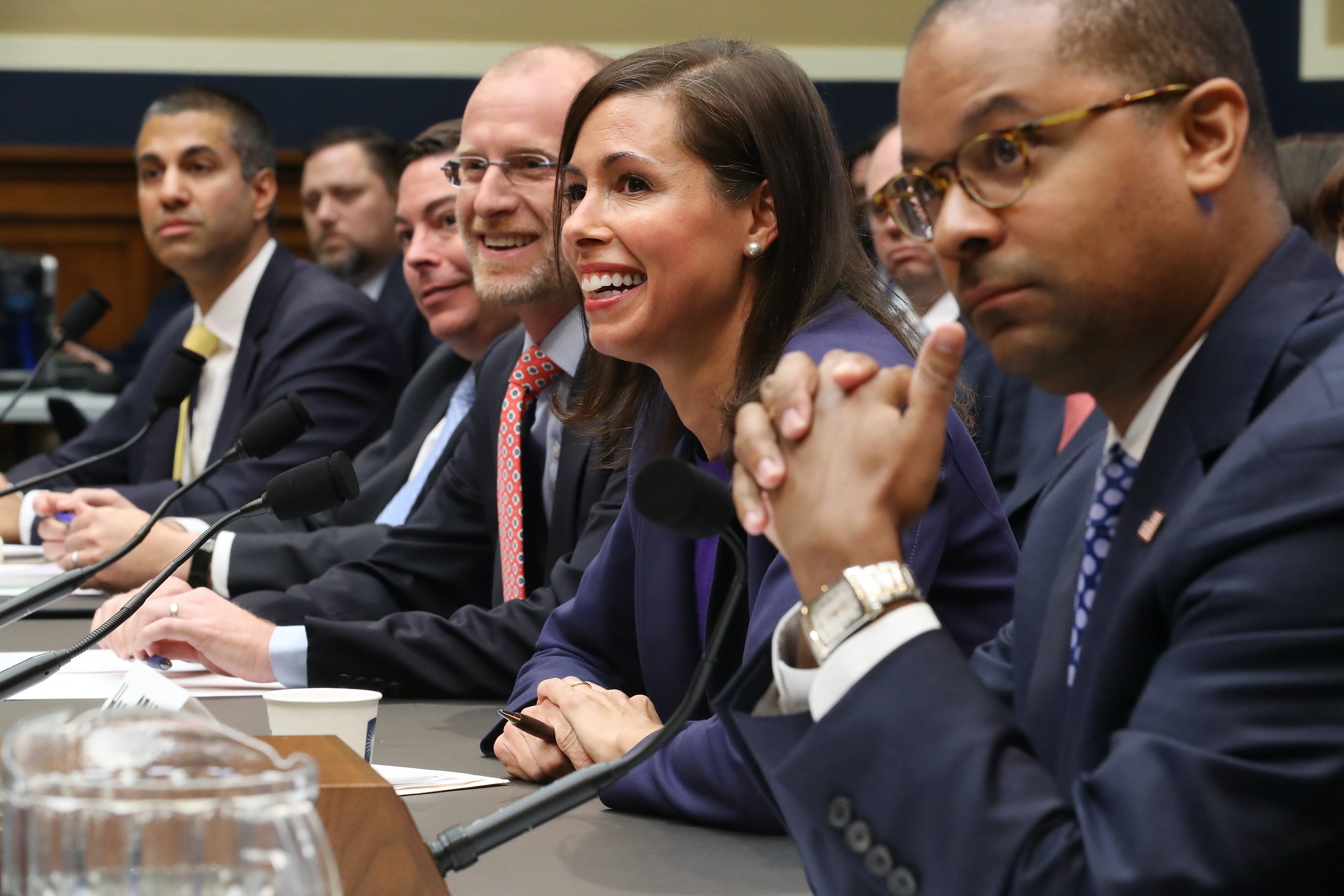
Enlarge/ From left to right, Federal Communication Commission Chairman Ajit Pai and commissioners Michael O’Rielly, Brendan Carr, Jessica Rosenworcel, and Geoffrey Starks testify before the House Communications and Technology Subcommittee on December 05, 2019 in Washington, DC.
Getty Images | Chip Somodevilla
Congressional Democrats yesterday called on Federal Communications Commission Chairman Ajit Pai to “immediately stop work on all partisan, controversial items” in recognition of Joe Biden’s election victory over President Donald Trump.
It has been standard practice to halt controversial rulemakings in the period between an election and inauguration when control of the White House switches from Republicans to Democrats or vice versa. In November 2016, Pai himself called on then-Chairman Tom Wheeler to “halt further action on controversial items during the transition period.” Wheeler complied one day later.
But things could be different this time, because Trump is contesting the election despite Biden’s clear victory and making baseless allegations that the election was stolen by Democrats. The Trump administration has refused to formally begin the presidential transition and has reportedly continued budget planning and vetting candidates for job openings as if there will be a second Trump term. To comply with Democrats’ request to the FCC, Pai would effectively have to concede Trump’s defeat before Trump himself does so.
A spokesperson for Pai declined comment on his plans for the presidential transition when contacted by Ars today.
FCC leadership will “undoubtedly” change
“With the results of the 2020 presidential election now apparent, leadership of the FCC will undoubtedly be changing,” Pai was told yesterday in a letter from House Democrats, namely Energy and Commerce Committee Chairman Frank Pallone, Jr. (D-N.J.) and Communications and Technology Subcommittee Chairman Mike Doyle (D-Pa.). “As a traditional part of the peaceful transfer of power—and as part of our oversight responsibilities—we strongly urge the agency to only pursue consensus and administrative matters that are non-partisan for the remainder of your tenure.”
Pallone and Doyle continued:
We note that you have previously welcomed calls from congressional leaders for the FCC to “halt further action on controversial items during the transition period.” We hope you will respect this time-honored tradition now. There are undoubtedly a number of consensus matters on which the Commission must focus to appropriately carry out its mission on behalf of the public, and we urge you to take quick action on such items.
Controversial partisan items would include Pai’s proposal to help Trump impose a crackdown on Twitter and Facebook, which have been trying to counter Trump’s attempts to spread misinformation on their platforms.
“When I was at FCC, our pencils went down quickly. Will that happen here?” Gigi Sohn, who was a counselor to Wheeler during the Obama administration, tweeted yesterday. Once he is president, Biden will be able to appoint a new FCC chair and form a Democratic majority. Pai would likely resign from the commission when the transition happens.
FCC Democrats agree
Both Democratic commissioners on the FCC urged Pai to respect the House Democrats’ request for the transition period.
“Historically, the FCC has honored the transfer of power from one Administration to the next by pausing any controversial activity,” Democrat Jessica Rosenworcel wrote. “I urge FCC Chairman Ajit Pai to follow this past practice in order to ensure an orderly transition of agency affairs. I look forward to continuing to work on the routine and consensus matters currently before the agency.”
FCC Democrat Geoffrey Starks issued a similar statement:
As two of my Republican colleagues observed in 2016, it is long-standing Commission practice that, upon a presidential transition, the agency suspends its consideration of any partisan, controversial items until the transition period is complete. Our congressional leaders have called for Chairman Pai to respect this precedent, and I expect that he will abide by their request.
House Democrats made a similar request of FTC Chairman Joseph Simons yesterday. We contacted the FTC about the request to stop controversial work and will update this article if we get a response.
https://arstechnica.com/?p=1722563
Amazon’s use of marketplace data breaks competition law, EU charges
Enlarge/ A sign outside an Amazon warehouse in Germany.
Europe’s top competition regulator filed charges today against Amazon, alleging that the company has abused its size, position, and access to data to gain an unfair advantage over the competition.
The European Commission’s statement of objections against Amazon is centered on the firm’s “dual role” in e-commerce, where it is both a retailer and also a platform for third-party retailers. As a platform, Amazon has access to proprietary data about all those other merchants’ online business, which it then gathers and uses anticompetitively to get a leg up in its own retail operations, the EU alleges.
This is not just an infrequent or occasional lapse, the EC determined, finding instead that “very large quantities of non-public seller data” are available to Amazon and “flow directly into [Amazon’s] automated systems.” Amazon then allegedly uses that data to make its own determinations, “to the detriment of the other marketplace sellers.”
The Wall Street Journal reported earlier this year that Amazon employees in the US were accessing and using that data—even though an Amazon executive told Congress to their faces in a hearing that the company does no such thing.
“We knew we shouldn’t,” access that data, one former Amazon employee told the WSJ. “But at the same time, we are making Amazon branded products, and we want them to sell.”
“We must ensure that dual role platforms with market power, such as Amazon, do not distort competition,” said Margrethe Vestager, head of the EU’s competition bureau. “Data on the activity of third-party sellers should not be used to the benefit of Amazon when it acts as a competitor to these sellers. The conditions of competition on the Amazon platform must also be fair. Its rules should not artificially favor Amazon’s own retail offers or advantage the offers of retailers using Amazon’s logistics and delivery services.”
The Commission also announced that it has begun a second antitrust probe into Amazon’s business. The new investigation will determine whether the factors that go into amazon’s “buy box,” and its leverage of “Fulfilled By Amazon” logistics and delivery services, add up to unlawful abuse of a dominant market position.
The beginning, not the end
This EU probe into Amazon’s Marketplace formally launched in 2019 after a “preliminary fact-finding” indicated there was likely an antitrust violation taking place. That the first investigation has spawned a second is not surprising, and European regulators have company on this side of the Atlantic as well.
Here in the US, both state and federal regulators have taken a deep interest in Amazon’s business practices. The Department of Justice and the Federal Trade Commission took a divide-and-conquer approach to probing the behavior of the country’s biggest tech firms, and investigating Amazon fell to the FTC.
The FTC has not spoken publicly about the probe, but media reports that surfaced through 2019 and into this year indicate that here, too, regulators are concerned about the way Amazon leverages its power over Marketplace vendors.
Bloomberg reported in August that the attorneys general for both New York and California are now partnering directly with the FTC on the antitrust probe. It is not uncommon, in major cases, for state and federal enforcers to pool their resources: for example, 11 states signed on to the landmark antitrust case the DOJ filed against Google last month, with several dozen more potentially planning to join in the coming months.
Congress, too, is displeased with the Internet’s Everything Store. The House Antitrust Subcommittee last month published a blockbuster report into Amazon, Google, Facebook, and Apple, in which it found, among other things, that that some statements Amazon made to Congress “appear to be misleading, and possibly criminally false or perjurious.”
“Amazon has monopoly power over most third-party sellers and many of its suppliers,” the committee concluded. “Numerous sellers told Subcommittee staff in interviews that they cannot turn to alternative marketplaces, regardless of how much Amazon may increase their costs of doing business or how badly they are treated.”
https://arstechnica.com/?p=1721805
San Diego’s spying streetlights stuck switched “on,” despite directive
Enlarge/ Two of San Diego’s camera-equipped smart streetlights at twilight in August, 2020.
Over the past few years, streetlights in the city of San Diego have become “smart,” equipped with a slate of cameras and sensors that report back data on the city and its denizens. Following protests from privacy activists, the city mayor ordered the network disabled for the time being—but it turns out that city staff can’t turn the cameras off just yet without plunging the city into literal darkness.
Thousands of streetlight cameras were supposed to be disabled this fall, the Voice of San Diego reports, but there is no software switch for doing so. In lieu of disabling the cameras, the vendor responsible for them at the time instead simply cut off the city’s network access to the devices.
The Smart Streetlight project began five years ago, in 2015, when San Diego Mayor Kevin Faulconer announced (PDF) a new “partnership” with GE Lighting to deploy “a software-defined lighting technology that will help San Diego solve some of the city’s infrastructure challenges.”
As the city government describes the proposal, San Diego’s initial plan to convert to LED streetlights “evolved” to include a “connected digital infrastructure” full of sensors and cameras. More than 3,000 of the sensor-enabled smart lights were installed all around the city (map), and the information they collect, theoretically anonymous, is supposed to help the city gain valuable data used for urban planning purposes, such as traffic management.
But wait, you also get…
If there’s anything we’ve learned from Amazon Ring, it’s that law enforcement tends to view networks of connected cameras as too rich a target to ignore. So, too, in San Diego: local police used footage from the citywide surveillance network at least 400 times since 2018.
Privacy and civil rights advocates pushed back through 2019. A group called San Diegans for Open Government sued the city last December, alleging that the city was violating the law by failing to provide information about or records from the Smart Streetlight Program.
The San Diego City Council unanimously suspended funding for the Smart Streetlight program in July, and Faulconer in September ordered the network to be shut down until such time as city leadership could craft ordinances governing the use of such surveillance technology.
Changing hands
San Diego’s original contract was with GE Lighting. GE, however, has been divesting businesses left and right in the past few years to help manage a frankly staggering amount of corporate debt it had accumulated by 2017.
The CityIQ “smart city” platform GE developed went to a firm called Ubicquia in May of this year for an undisclosed sum. In September, a city committee was supposed to sign a new four-year contract with Ubicquia, but instead it dropped the deal at the last minute when the mayor’s office announced suspension of the program. Ubicquia, however, could not cut the cameras, because they share the same power supply as the lights themselves.
According to reporting by Voice of San Diego, Ubicquia CEO Ian Aaron told city officials, “If you want us to create a software switch we can write custom code and deploy it. The units were not designed for this originally.”
The cameras are still collecting footage, and that footage is retained for five days before being automatically deleted. The city had AT&T deactivate the data connection to the cameras instead so that the footage they are still connecting cannot travel to its servers.
https://arstechnica.com/?p=1720111
“Overpaid Executive Tax” in SF hits firms that pay CEOs 100X more than workers
Getty Images | numbeos
San Francisco voters overwhelmingly approved a ballot measure to impose an extra tax on any big company that pays its highest-paid employee over 100 times more than its median worker.
The ballot question was approved Tuesday by 65 percent of voters, with 230,298 yes votes and 123,943 no votes. As the ballot question states, the new tax is to be imposed on “businesses in San Francisco when their highest-paid managerial employee earns more than 100 times the median compensation paid to their employees in San Francisco.”
The tax is expected to raise $60 million to $140 million per year. Large businesses—those with over $1 billion in gross receipts, 1,000 employees nationwide, and administrative offices in San Francisco—would pay an additional tax of 0.4 percent to 2.4 percent of their San Francisco payroll expenses. Other businesses that pay taxes on gross receipts instead of payroll expenses “would pay an additional tax from 0.1 percent to 0.6 percent of [their] San Francisco gross receipts.”
“This tax not only affects large, local firms like Salesforce, but also large corporations that do business in the city, like Visa and J.P. Morgan,” NBCNews wrote. A similar tax in Portland, Oregon, affects only publicly held companies, but the San Francisco tax affects both private and public firms, the NBCNews article said.
The percentages charged will vary depending on the size of the “executive pay ratio” between the top and median salaries. City government leaders urged voters to approve the tax, writing:
The more inequity between the top executive and their workers, the higher the surcharge. Corporations can avoid the tax by simply paying their executives less or by raising their employees’ wages.
We believe that big corporations that can afford to pay their executives million-dollar salaries every year can afford to pay their fair share in taxes to help us recover. Over the last 30 years, executive salaries in the United States have skyrocketed by 940 percent. But regular workers’ salaries have grown by just 11 percent. Prop L incentivizes companies to invest in their workers, not just their executives.
City leaders also said the new tax “would allow the City to hire hundreds of nurses, doctors, and first responders.” But the revenue may vary a lot from year to year. “The narrow base of expected payers, annual fluctuations in the value and form of executive compensation, and potential relocation risk associated with tax increases contribute to high volatility of the proposed tax, and estimates based on prior years’ activity may not be predictive of future revenues,” City Controller Ben Rosenfield wrote, explaining his revenue estimate of $60 million to $140 million a year.
For purposes of the tax, compensation includes wages, salaries, commissions, bonuses, and property including stock options, as well as “compensation for services to owners of pass-through entities, and any other form of remuneration paid to employees for services.” The tax would take effect in January 2022. Small businesses that already have exemptions from the gross receipts tax are also exempt from the Overpaid Executive Tax.
A study by the Economic Policy Institute found that in 2019, CEOs at the top 350 businesses in the US “earn[ed] 320 times as much as a typical worker,” which is “up from 293-to-1 in 2018 and a big increase from 21-to-1 in 1965 and 61-to-1 in 1989.” Those figures are based on a measure of CEO pay that “counts stock awards when vested and stock options when cashed in rather than when granted.” The average CEO salary for those 350 firms was $21.3 million.
Conservatives blast “bizarre hocus-pocus tax”
The tax was opposed by conservatives.
“Employees’ salaries are based on experience and on value to a company. By enacting such a bizarre hocus-pocus tax on executive salaries as Proposition L seeks to impose, the incentive for hiring new entry-level employees (or retraining current employees due to Covid-19 changes in business) would diminish,” said the opposition’s official statement, written by Republican politician Richie Greenberg. “In other words, companies would reduce or stop hiring low-level employees as an answer to this measure, if it should pass. Moreover, such a tax would most likely prevent the attraction of new businesses to relocate to San Francisco, at such a time as we are seeing unprecedented economic downturn due to the pandemic.”
Greenberg also accused City Hall leaders of “an unhealthy obsession with social media and information technology” and ignoring that “San Francisco is much more than simply social media tech.”
“[T]he sentiment of many of City Hall leaders is that the technology sector has created economic imbalances—yet these same leaders ignore the fact that state-of-the-art advanced medical research facilities and the financial services sectors have a large impact and employee base in the city,” he wrote.
The city’s Democratic Party countered, “Don’t believe the scare tactics of the Republican Party. San Francisco is one of the most desirable cities in the United States for companies to be located. A small .01 percent of their corporate taxes will have little to no impact on companies that can afford to pay their CEOs millions of dollars a year.”
The tax was also opposed by the San Francisco Taxpayers Association and Libertarian Party of San Francisco.
The ballot question’s success shows that “voters are demanding we take action on inequality,” Matt Haney, who serves on the city’s Board of Supervisors and sponsored the ballot question, wrote on Twitter. The new revenue will “support our health and public health systems, which are deeply strained from the consequences of inequality. We will hire nurses, social workers and emergency responders, and expand access and treatment,” he wrote.