Facebook and Twitter struggle with online fury from Trump supporters

HARRISBURG, PENNSYLVANIA - NOVEMBER 05: A child holds a sign as dozens of people calling for stopping the vote count in Pennsylvania due to alleged fraud against President Donald Trump gather on the steps of the State Capitol on November 5, 2020 in Harrisburg, Pennsylvania. The activists, many with flags and signs for Trump, have made allegations that votes are being stolen from the president as the race in Pennsylvania continues to tighten in Joe Biden's favor.
Enlarge / HARRISBURG, PENNSYLVANIA – NOVEMBER 05: A child holds a sign as dozens of people calling for stopping the vote count in Pennsylvania due to alleged fraud against President Donald Trump gather on the steps of the State Capitol on November 5, 2020 in Harrisburg, Pennsylvania. The activists, many with flags and signs for Trump, have made allegations that votes are being stolen from the president as the race in Pennsylvania continues to tighten in Joe Biden’s favor.
Spencer Platt | Getty Images

Facebook and Twitter are struggling to contain rising anger from Donald Trump’s supporters online, as a wave of momentum builds around the US president’s claims that the election is being stolen from him.

In the past 24 hours, Facebook has invoked emergency measures to make it harder for users to share posts that contain misleading information, to remove such posts from people’s newsfeeds, and to restrict the circulation of poll-related livestreams.

The social media company has also expanded its warning labels from posts by political candidates to a wider web of rightwing influencers, many of whom were echoing Mr. Trump’s messages, saying that it was flagging individuals based on whether their posts were going viral.

On Thursday afternoon, Facebook moved to shut down a “Stop the Steal” group, which had amassed more than 360,000 followers in just a day, saying that it was concerned about calls for violence from some of the group’s members.

The move prompted outcry from the group’s founders, the pro-Trump Women for America First, who also complained that their account on MailChimp, the group emailing service, had been suspended. “Is this how social media treated Black Lives Matter protesters?” Chris Barron, a spokesperson for the group, wrote on Twitter.

Another 79,000-strong private group called Stand Up Michigan to Unlock Michigan was also shut down by Facebook, but only after it had successfully called for its members to storm a Detroit counting center.

Alex Stamos, Facebook’s former chief information security officer and a professor at Stanford University, said that while “nothing really stuck on election day,” online narratives had since “consolidated” around several themes, particularly “Stop the Steal,” a catch-all slogan for all accusations of voter fraud against Democrats and election officials.

In one sign of the growing discontent and tension on the platform, an internal metric at Facebook that tracks “violence and incitement trends” rose 45 percent over the past five days, according to a report by BuzzFeed that Facebook did not deny.

Paul Barrett, deputy director of the Center for Business and Human Rights at NYU Stern, acknowledged that Facebook and other platforms had been “much more aggressive” in this election in labelling posts and removing potentially dangerous online groups.

But he said in the coming days, Facebook will need “to do a lot more and a lot sooner,” and called for automated systems to “catch these things.”

Twitter, meanwhile, permanently banned the account of Steve Bannon, Mr. Trump’s former chief strategist, after he called for the execution of Dr Anthony Fauci and FBI Director Christopher Wray.

The moves angered Mr. Trump, who took to Twitter to accuse the platform of being “out of control, made possible through the government gift of Section 230,” the law that grants social media groups immunity for the user-generated content they host.

A Twitter spokesperson also said the group had been “proactively monitoring #StopTheSteal and related Tweets since Tuesday morning,” adding warning labels to a number of tweets from high-profile Republicans pushing the narrative.

The approach contrasted with that of Google-owned YouTube, which has come under fire during this election for failing to respond to misinformation.

In one example, the company refused to take down a video posted by rightwing media group One America News Network that included false claims that President Trump won the election and allegations of voter fraud conducted by Democrats.

YouTube said that the video, entitled “Trump won,” contained “demonstrably false content that undermines trust in the democratic process”—but added that this still did not breach its policies in any way.

Additional reporting by Kiran Stacey in Washington, DC.

© 2020 The Financial Times Ltd. All rights reserved Not to be redistributed, copied, or modified in any way.

https://arstechnica.com/?p=1720076



What using AT&T’s 768kbps DSL is like in 2020—yes, it’s awful

A snail resting on a computer mouse, to illustrate slow Internet service.
Getty Images | Synergee

Millions of Americans live in broadband deserts with no access to anything resembling modern Internet service. But few people have it as bad as those who must rely on AT&T’s ancient DSL network.

Kathie McNamee of Raymond, Mississippi is one of those unlucky AT&T DSL customers. McNamee said she pays AT&T $35 a month for an up-to-768kbps Internet plan that rarely works well enough to be usable for her, her husband, and two teenage sons. McNamee contacted Ars after reading a story about AT&T incorrectly claiming that certain homes in Mississippi had access to broadband when in fact AT&T isn’t capable of providing service to those addresses.

AT&T has received over $283 million from the Federal Communications Commission since 2015 to extend home-Internet service to over 133,000 potential customer locations in Mississippi. AT&T says it will exceed that requirement by the end-of-2020 deadline, but the company’s mapping mistakes have led to unpleasant surprises for customers who thought they’d get modern broadband.

McNamee and her husband bought their house about two years ago. She told Ars that AT&T told them in advance they could get U-verse Internet service of about 5Mbps. That’s slow by modern standards, but it would have been a lot better than what AT&T ultimately provided.

“The technician comes out here and he’s doing his thing and he said, ‘first of all, you’re not eligible for U-verse. It doesn’t exist out here,'” McNamee told Ars. “Looking at the tests he was running, he said, ‘you’re not going to get 5Mbps. I don’t even know why they would sell you that.’ He said, ‘you’ll be lucky to get 1Mbps.'”

That’s because the old telephone lines leading into McNamee’s house are too far from AT&T nodes to qualify for fiber-to-the-node service that provides faster speeds than basic DSL.

“I called AT&T and went around and around with them selling me something that wasn’t available,” McNamee said. “They had me on their map as eligible for all of these things, but I’m not eligible. [I told them], ‘I need you to change your map because I know you’re taking federal funding and saying you’re servicing all of these places and yet you’re not able to.'” The AT&T map was later changed—typing McNamee’s address in AT&T’s online service checker tool now brings up a message that says no Internet service is available at the house.

Basic tasks impossible with AT&T DSL

Coping with horrible Internet service has been challenging, especially during the pandemic. AT&T DSL is so inconsistent that the family rarely even uses it for basic tasks like Web browsing, McNamee said. “I want a home security system or maybe a garage door I can remotely open in case I or my children get locked out,” but the Internet connection isn’t good enough, she said.

Even AT&T cellular service is unreliable at their house, McNamee said. “It has to be crystal clear outside, no rain, no wind, no anything, and from time to time we can use” AT&T phones as mobile hotspots, she said.

McNamee’s husband sometimes has to drive 50 miles to work during the weekend to take care of things that could be handled at home if they had a good Internet connection, she said. Their teenage sons have similar problems with completing homework. Even sending emails from home is dicey, which has resulted in problems at school when emailed assignments weren’t received.

“If they have to use a computer, my oldest daughter lives in Madison County and they have [Comcast] Xfinity, and so I take [my sons] to her house for the day and let them do anything that requires actual computer work. They can do their work there and email it from there,” McNamee said.

Stories of children sitting outside schools, libraries, and McDonald’s stores to use Wi-Fi have been common during the pandemic, and McNamee’s area is no exception. “There were children who would go to the school and actually sit in the parking lot” to use Wi-Fi, she said.

Netflix and other streaming services don’t work at their home, she said. McNamee said they pay about $250 a month for DirecTV’s satellite video service, which is also owned by AT&T.

McNamee’s house is about three-tenths of a mile from the nearest state highway, MS 18. “There’s 12 houses on our street. It is rural for the most part but we’re not secluded in a hole somewhere,” she said. Raymond has about 2,500 residents.

“We are not asking for 5G, New York or California coverage, but decent service so our kids can do school work at home,” she said.

McNamee also tried to get AT&T’s fixed-wireless service, which the company is using to meet the network-expansion requirements it agreed to in exchange for FCC funding. But their home is too far from AT&T’s cellular tower to get the wireless-home Internet service, McNamee said. McNamee said that neighbors she has spoken to are similarly frustrated by the lack of broadband availability. AT&T DSL is “the only thing that’s available… every one of us has the same issue,” she said.

https://arstechnica.com/?p=1720056


Netflix files copyright claims against tweets criticizing movie, trailer

Netflix's Los Angeles office looms above a hapless palm tree.
Enlarge / Netflix’s Los Angeles office looms above a hapless palm tree.

Netflix is apparently fighting controversy about a film on its platform by issuing copyright takedown requests against tweets that include negative commentary about the movie, according to a new report.

TorrentFreak reported today that Netflix has sent dozens of takedown requests to Twitter targeting specific posts that criticize the movie Cuties (Mignonnes), a French film written and directed by Maïmouna Doucouré and released in the United States on Netflix in September. While the tweets are still live (except where the original posters deleted them), the videos attached to the post now display messages reading, “This media has been disabled in response to a report by the copyright owner.”

Why this movie?

Cuties is a coming-of-age drama about a Black girl in France on the cusp of adolescence. She rebels against her immigrant parents’ traditional culture, in which women remain quietly covered up at home, by going overboard in the opposite direction—taking to dance and social media to express a sexuality she is too young to understand the implications of and too new to Western culture to know how to frame it all. Doucouré won a directing award for the film at the 2020 Sundance Film Festival in January.

There’s a discussion to be had about the actual film and to what degree it does or does not convey its messaging and themes. Here in the United States, however, the film’s marketing was instantly politicized before the film itself became available to watch.

Detractors took a look at the poster, which depicted a troupe of 11-year-old dancers in suggestive poses, and decried it as only a half-step away from child pornography. Republican politicians joined the fray, and a grand jury in Tyler County, Texas returned an indictment against Netflix and its CEO Reed Hastings on September 23, accusing them of “promotion of lewd visual material depicting a child.”

Netflix executives repeatedly disputed those claims. “Cuties is a social commentary against the sexualization of young children,” Netflix said after the indictment. “This charge is without merit and we stand by the film.”

A few days later, Netflix co-CEO Ted Sarandos said at a virtual event, “It’s a little surprising in 2020 America that we’re having a discussion about censoring storytelling… It’s a film that is very misunderstood with some audiences, uniquely within the United States. The film speaks for itself. It’s a very personal coming-of-age film, it’s the director’s story, and the film has obviously played very well at Sundance without any of this controversy and played in theaters throughout Europe without any of this controversy.”

Drastic measures

Netflix’s takedown requests, which are still rolling in today, seem only to have targeted tweets that described the film negatively, although some more than others.

“IMAGINE A CHILD SEEING THIS #Cuties #Netflix #CancelNetflixCuties,” one message read. “WARNING CONTAINS EXPLICIT CONTENT,” another similar message said. “Go ahead and try to justify how this film is an appropriate representation of 11 year olds. I’ll wait. #CancelNetfilx.”

Some of the dozens of tweets Netflix issued DMCA claims against used clips from the actual movie, TorrentFreak reports, in which case Netflix’s claims are understandable. However, many of the tweets in question shared the film’s trailer, which is widely and publicly available on YouTube for anyone to view or share.

One person who shared the trailer told TorrentFreak that she didn’t do anything wrong in doing so. “Someone posted the trailer and I retweeted it and stated how I felt about the movie,” she said. “I believe people have the right to be upset about the movie. If people share the trailer and say ‘go watch it,’ it’s not a problem, but if someone disagrees with it, it’s a problem,” she added.

TorrentFreak notes that the cluster of claims is unusual for Netflix, which has sent roughly 300 DMCA claims to Twitter in the past month, half of which centered on tweets related to Cuties. Before Netflix started targeting Cuties tweets, most of the claims it sent were related to accounts known for distributing pirated content.

Ars asked Netflix for comment, and we’ll update if we hear back.

https://arstechnica.com/?p=1719528


FCC forces T-Mobile to pay $200 million fine for subsidiary Sprint’s fraud

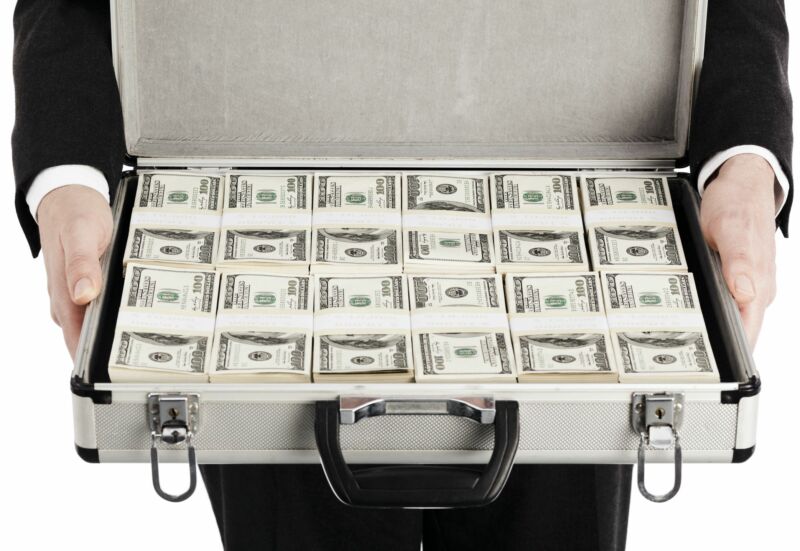
A man holding a briefcase full of money.

T-Mobile has agreed to pay a $200 million fine to resolve an investigation into subsidiary Sprint, which was caught taking millions of dollars in government subsidies for “serving” 885,000 low-income Americans who weren’t using Sprint service.

Sprint admitted the violations in September 2019, about six months before T-Mobile completed its purchase of Sprint. Today, the Federal Communications Commission announced the $200 million settlement, which T-Mobile will pay to the US Treasury.

The $200 million is in addition to money that Sprint previously agreed to pay back to the FCC’s Lifeline program, which provides $9.25-per-household monthly subsidies to companies that offer discounted telecom service to people with low incomes. Sprint had taken the money from Lifeline in violation of the “non-usage rule” that requires providers of free, subsidized plans to de-enroll subscribers who haven’t used their phones recently. When the FCC investigation was announced last year, the commission said that the “885,000 subscribers represent nearly 30 percent of Sprint’s Lifeline subscriber base and nearly 10 percent of the entire Lifeline program’s subscriber base.”

The FCC said today:

Under this rule, providers of “free” service may only be reimbursed for a Lifeline subscriber if that subscriber has used the service at least once in the past 30 days, and such providers must de-enroll subscribers who don’t use their phones after giving them 15 days’ notice. The rule is meant to protect Lifeline from wasting taxpayer funds on service that isn’t used to benefit individual consumers. The FCC developed this and other rules after investigations showed that companies were aggressively selling free Lifeline service, knowing that they would get paid each month even if consumers didn’t use their phones. Since there was no bill, consumers had no incentive to relinquish the subscription.

The FCC said that the $200 million “is the largest fixed-amount settlement the Commission has ever secured to resolve an investigation.” Sprint also “agreed to enter into a compliance plan to help ensure future adherence to the Commission’s rules for the Lifeline program,” the FCC said.

Officially, the settlement closes the FCC investigation without a finding, even though Sprint admitted taking FCC reimbursements for lapsed subscribers. Sprint’s violations were initially found by an investigation by the Oregon Public Utility Commission. Violations in more states were uncovered when the FCC investigated. According to the FCC, Sprint told the commission that a software problem led to its “systems fail[ing] to detect that over a million Lifeline subscribers nationwide lacked usage over an extended period of time.”

https://arstechnica.com/?p=1719348


Connected cars must be open to third parties, say Massachusetts voters

A man operates a notebook computer over the open engine of a car.

On Tuesday, voters in Massachusetts chose, by an overwhelming majority, to extend the state’s automotive “right to repair” law to cover connected-car platforms and telematics services. As a result, the state will require that from 2022, all new telematics-equipped vehicles be accessible via a standardized open-data platform that allows owners and third-party repair shops to access vehicle data from mobile devices.

Massachusetts’ automotive “right to repair” law was the first in the nation when originally passed in 2013. The aim was to fight the growing problem of automakers restricting their proprietary diagnostics tools to anyone other than official franchised dealer networks. When the law came into effect in 2018, it required that every vehicle sold in the state has a “non-proprietary vehicle interface device” for accessing mechanical data.

But the automotive industry is rapidly going wireless when it comes to getting data out of cars. Almost every new car sold in the United States in 2020 is fitted with an onboard cellular modem, and every OEM has invested in cloud infrastructure, promising benefits like vehicles that know when to ask for preventative maintenance servicing. Those cloud platforms have been guarded by the automakers, some of whom smell dollars in all that data.

Question 1, the “Right to Repair Law” Vehicle Data Access Requirement Initiative, asked Massachusetts voters if there should be a standardized open-data platform for vehicles fitted with “systems that collect and wirelessly transmit mechanical data to a remote server.” The answer was a firm yes, with three-quarters of voters approving the measure.

When the revised law comes into effect in 2022, car owners should be able to authorize third-party repair shops access to their vehicle’s remote diagnostics systems through an open-data platform administered by a third party. However, that does not leave much time to create this standardized open-data platform, which will need to take security seriously given that it must allow for “the ability to send commands to in-vehicle components if needed for purposes of maintenance, diagnostics and repair.”

https://arstechnica.com/?p=1719350


California votes against granting Uber and Lyft drivers employee status

Headquarters of ride-sharing technology company Uber in the South of Market (SoMa) neighborhood of San Francisco on October 13, 2017.
Enlarge / Headquarters of ride-sharing technology company Uber in the South of Market (SoMa) neighborhood of San Francisco on October 13, 2017.

California voters decisively approved a ballot measure Tuesday allowing ride-hail services like Uber and Lyft to treat their drivers as independent contractors, not employees. With 72 percent of the vote counted, Proposition 22 is winning by a 58-percent to 42-percent margin. That’s a big enough lead for the Associated Press to project its passage.

Uber’s stock rose 14 percent in Wednesday trading. Lyft is up 12 percent.

The measure had heavy financial backing from Uber, Lyft, and other “gig economy” companies that employ large numbers of drivers. They funded both signature gathering and an expensive ad blitz to convince voters to support it.

Prop. 22 rolls back AB 5—but only for drivers

That was a response to last year’s passage of AB 5, a California law that codified a broad definition of employment under California law. The law made it much more difficult for companies to avoid providing benefits like overtime pay and unemployment insurance to their workers—not only drivers but other professions across the California economy. It also exempted a number of white-collar professions from the new rules.

AB 5 was controversial because it made it difficult for freelance workers to maintain their independence. For example, some freelance photographers and journalists lobbied California’s legislature to pass followup legislation to allow them to stay independent contractors.

Uber and Lyft argued that AB 5 would force them to totally rethink how they run their services. They also argued that the legislation would be bad for their drivers, most of whom value the flexibility of the current model. If drivers became employees, and therefore eligible for a minimum wage, Uber and Lyft would have to more closely supervise when and where they drove. Drivers could lose the ability to activate the app whenever and wherever they chose, the companies said.

Uber and Lyft warned that if they were forced to comply with the law before November’s election they would have to shut down operations in California in order to reorganize the service. A last-minute ruling in August allowed the companies to continue with their current model until the election.

Here’s how we described Proposition 22 back in August:

The November ballot initiative would strip drivers of employee status but offer them some of the protections and benefits that come with employee classification. Uber drivers would be guaranteed to earn 120 percent of California’s minimum wage while they are completing trips. They would also be reimbursed for delivery expenses at a rate of 30 cents per mile, and workers that logged enough hours behind the wheel could get reimbursed for health insurance premiums.

However, under Uber’s proposal, drivers’ earnings would not be guaranteed for time when they are logged in to an app waiting for an assignment. As a result, drivers could still wind up making less than minimum wage for the total time they are logged in to the app.

The proposition approved by voters yesterday doesn’t change AB 5 more broadly. California law will continue to make it difficult for employers to classify most types of lower-skilled workers as independent contractors.

https://arstechnica.com/?p=1719240


As Trump falsely claims victory, Twitter and Facebook counter misinformation

Election workers in Detroit sitting at a table and counting ballots.
Enlarge / Election workers count absentee ballots for the 2020 general election at TCF Center on November 4, 2020 in Detroit, Michigan.
Getty Images | Jeff Kowalsky

As President Trump falsely claimed that he has won re-election despite the fact that votes are still being counted, Twitter and Facebook took steps to counter Trump’s attempts to spread misinformation.

“Once President Trump began making premature claims of victory, we started running notifications on Facebook and Instagram that votes are still being counted and a winner is not projected,” Facebook said. “We’re also automatically applying labels to both candidates’ posts with this information.”

Trump gave a speech in which he claimed “we did win this election” and called the continued counting of legally cast votes “a major fraud on our nation.” He said he will take the election to the Supreme Court and that “we want all voting to stop.”

Trump used social-media platforms to spread the falsehood that votes being counted after election night is the same as votes being cast after polls close. In fact, it was known in advance that many states wouldn’t count votes quickly enough to declare a winner on election night and that it could take days to determine whether Trump or Democratic nominee Joe Biden will win the electoral college. Additionally, numerous states count mailed ballots delivered by the US Postal Service a week or more after polls close as long as the ballots are postmarked by election day.

Trump tweet and a disclaimer added by Twitter.
Enlarge / Trump tweet and a disclaimer added by Twitter.

But Trump claimed on both Twitter and Facebook that “we are up BIG, but they are trying to STEAL the Election. We will never let them do it. Votes cannot be cast after the Polls are closed!” Twitter added a disclaimer to the tweet saying that “some or all of the content shared in this Tweet is disputed and might be misleading about an election or other civic process.” Twitter’s disclaimer includes a link to Twitter’s policy against using the platform to “manipulat[e] or interfere[e] in elections or other civic processes.”

Trump says counting votes is “VERY STRANGE”

In another post that Facebook added a disclaimer to, Trump wrote:

Last night I was leading, often solidly, in many key States, in almost all instances Democrat run & controlled. Then, one by one, they started to magically disappear as surprise ballot dumps were counted. VERY STRANGE, and the “pollsters” got it completely & historically wrong!

Facebook’s disclaimer on the post pointed out that “Final results may be different from the initial vote counts, as ballot counting will continue for days or weeks after polls close.”

Trump post on Wednesday morning, with a disclaimer added by Facebook.
Enlarge / Trump post on Wednesday morning, with a disclaimer added by Facebook.

On Twitter, Trump also shared a post in which conservative blogger Matt Walsh called updated vote tallies in Michigan “reason enough to go to court.” Twitter moderated the Walsh tweet with the same disclaimer applied to Trump tweets.

Biden is leading the popular vote and is competitive in battleground states that will ultimately decide which candidate gets enough electoral college votes to win the presidency. Biden wrote on Twitter, “It’s not my place or Donald Trump’s place to declare the winner of this election. It’s the voters’ place.” Biden’s vice presidential pick, Kamala Harris, wrote, “This race isn’t over until every single ballot is counted.”

Trump has been trying to stop Twitter and Facebook from fact-checking his posts and recently asked the Federal Communications Commission to step in. FCC Chairman Ajit Pai is backing Trump’s proposal to limit legal protections for social-media websites that block or modify content posted by users.

Whether the FCC has authority to do so is under dispute, and FCC Republican Commissioner Michael O’Rielly has said that the FCC must uphold First Amendment speech protections “that apply to corporate entities, especially when they engage in editorial decision making.” Trump is now trying to replace O’Rielly with another Republican who supports his attempted crackdown on social media. Trump winning a second term would give the FCC plenty of time to finalize the plan, but it won’t come soon enough to stop Twitter and Facebook from moderating Trump’s false claims while votes are still being counted.

https://arstechnica.com/?p=1719251


Court tosses constitutional challenge to Trump order on social media

Photoshopped image of Attorney General Bill Barr rolling a giant boulder labeled Section 230 up a mountain.

A federal court in California has tossed out a lawsuit from the voting rights group Rock the Vote. The lawsuit argued that Donald Trump’s May executive order attacking social media platforms violated the group’s First Amendment rights.

Trump’s May executive order was a strange document. Trump was angry about social media companies’ treatment of him and other conservatives. But US law doesn’t actually give the president much power to directly punish private technology companies. So while the May order included a lot of overheated rhetoric, the order’s operative sections were largely toothless.

The order asked the Federal Communications Commission and the Federal Trade Commission to take actions against social media companies. However, these are independent agencies that ultimately make decisions independent of the president. The FTC has signaled it won’t take action on Trump’s suggestions. The FCC has begun a rulemaking process to rethink Section 230, which provides legal protections for sites that host third-party content. But the FCC is just at the beginning of that process. We’re far from any legally binding changes in regulations, and it’s not clear if the FCC even has the authority to re-interpret Section 230.

So in his Thursday ruling, Judge William Orrick ruled that Trump’s executive order simply hadn’t caused the kind of harm to Rock the Vote that could support a First Amendment challenge. US law requires a plaintiff suing the government to show that the plaintiff was personally hurt by the government’s actions.

“Plaintiffs have failed to adequately allege a concrete or personalized injury to themselves traceable to the executive order,” the judge wrote. “It is not that the plaintiffs claim that their rights to free expression have been violated; instead, it is that the speech of online platforms like Twitter and Facebook have been chilled by the Executive Order, and as a result plaintiffs’ missions are frustrated and they have had to divert resources to combat misinformation on social media.”

While future regulations from the FCC or others could theoretically impact plaintiffs’ First Amendment rights, Orrick ruled that this possibility is “far too speculative to give rise to a concrete or particularized injury at this time.”

Another lawsuit against the executive order remains outstanding in the DC District Court, but it seems likely to fail for similar reasons. The lead plaintiff there, the Center for Democracy and Technology, is in a similar position to Rock the Vote. It hasn’t been directly impacted by the executive order, but the group argues that it has been forced to “divert resources to safeguarding the principles underlying the First Amendment.” Judge Orrick’s ruling seems like a bad omen for the CDT lawsuit.

https://arstechnica.com/?p=1718807


Bitcoin hits $14,000 for the first time since early 2018

Bitcoin hits $14,000 for the first time since early 2018

The price of one bitcoin rose above $14,000 on Saturday morning. It was the first time the virtual currency reached that level since January 2018. As I write this, the currency is trading for around $13,800.

Bitcoin, a currency whose name has become synonymous with price volatility, has seen three major bull runs in the past. Bitcoin’s price peaked around $30 in June 2011, around $1,100 in January 2014, and just below $20,000 in December 2017. Each peak was followed by a wrenching crash where the currency lost more than 80 percent of its value.

After the last bubble peaked in December 2017, the price steadily deflated until it reached a low around $3,200 in late 2018. It reached a peak around $13,800 in mid-2019, fell to $4,000 in early 2020, and has now soared back to $14,000. Bitcoin fans are hoping for another boom that pushes the currency past the highs of 2017, but that’s far from a sure thing.

Bitcoin’s price has risen even though early ideas didn’t pan out

Early excitement about bitcoin, from roughly 2010 to 2015, was based on hopes that it would become a mainstream payment network. That never panned out. During periods of heavy use, the bitcoin network can get congested, leading to sky-high fees and hours-long delays for lower-valued transactions to clear. Proposals to dramatically expand the network’s capacity have been strongly opposed by bitcoin traditionalists.

The third bitcoin boom in 2017 was driven by a proliferation of new cryptocurrencies and a fad for “initial coin offerings.” People who wanted to invest in new blockchain-based currencies would often first purchase bitcoins and then swap the bitcoins for a new token, boosting bitcoin’s price in the process. Many of these offerings turned out to be worthless, souring investors on the concept and triggering a crash in 2018.

It’s not clear what’s driving bitcoin’s latest resurgence. One significant development has been the emergence of “decentralized finance” services that offer blockchain-based alternatives to loans and other traditional bank services. While these services mostly aren’t based on bitcoin, rising interest in other cryptocurrencies tends to push up bitcoin’s price. Boosters hope that these new “DeFi” services based on smart contracts will disrupt the conventional financial system. I remain skeptical.

Bitcoin also continues to attract interest from mainstream investors who simply want to diversify into a new asset class. Payment provider Square likely contributed to the current rally in early October when it announced it was buying $50 million in bitcoin—representing about 1 percent of the firm’s assets—as a way of diversifying its investments.

Square described bitcoin as an “instrument of economic empowerment,” touting the technology’s potential to expand access to financial services globally. Square has offered a bitcoin trading service since 2018.

https://arstechnica.com/?p=1718652


Someone leaked the COVID hospitalization data taken from the CDC

A doctor walks in front of a hospital entrance.

Earlier this year, the federal government made a major change to how data on the pandemic is reported, taking the aggregation of hospital data away from the Centers for Disease Control and Prevention and shifting it into the CDC’s parent organization, the Department of Health and Human Services (HHS).

At the time, there were worries that this represented an attempt to limit the public’s ability to see how bad the pandemic was—worries that were reinforced when the data was no longer made public as it came in. But some recent reporting indicated that the change was primarily the work of White House Coronavirus Task Force Coordinator Deborah Birx, who wanted greater control over the data gathering and processing. Still, regardless of the motivation, the data flowing in to HHS only made its way out to the public via weekly summaries.

Until now. Someone has leaked the daily reports to NPR, which found that the reports weren’t all that they could be, but they could still be useful for public health experts.

That data the daily reports contain is focused on the hospital’s capacity to treat COVID-19 patients. These include things like the availability of hospital beds, ICU capacity, and ventilator use. This can help track the changes in pandemic-driven healthcare needs in real time; for example, NPR notes that ICU bed occupancy has increased by about 15 percent in the past month, tracking a steady rise in positive tests (although it’s probably too soon for it to track the current surge in cases). While the weekly summaries would allow a coarse look at how the pandemic is stressing our hospital system, they’re probably too coarse to provide the sort of detailed analysis that researchers and public health officials need to study and understand COVID-19’s progression.

So who does get access to the daily reports? According to NPR, the circulation is limited to “a few dozen government staffers from HHS and its agencies.” Only a single member of the White House Coronavirus Task Force, Admiral Brett Giroir, appears to get the material. Oddly, this would seem to indicate that Dr. Birx, who spearheaded the changes due to her desire for the data, doesn’t have direct access to it.

States

About 800 state health officials can also access daily reports, but only for their own states by default. HHS indicated to NPR that these officials have to ask for permission to see the data from other states. This creates a potential hurdle for officials in states like New York, New Jersey, and Connecticut, where a large overlapping metropolitan area compels careful coordination.

Health experts shown the reports by NPR indicated there are two issues here. The first is that the report doesn’t provide background on different hospitals’ capabilities. Some smaller hospitals might strain to care for patients when ICU capacity is down to 10 percent; large ones may be able to handle that with ease. The second issue is that the daily access to changes in hospital availability could help health officials target local behavior, both through targeted limits on activities and simply by using them to motivate the public to take the pandemic more seriously.

Making the daily data available, as mentioned above, would allow researchers to better analyze the pandemic’s impact on health resources. And that, obviously, could potentially help HHS itself, as independent researchers could perform analyses that HHS doesn’t have the staff for or hasn’t considered.

Still, while it’s unfortunate that the government isn’t making this data available to the public, the data is still being maintained should the policy change in the future.

https://arstechnica.com/?p=1718632