White House-CDC tensions explode as Trump contradicts its leadership
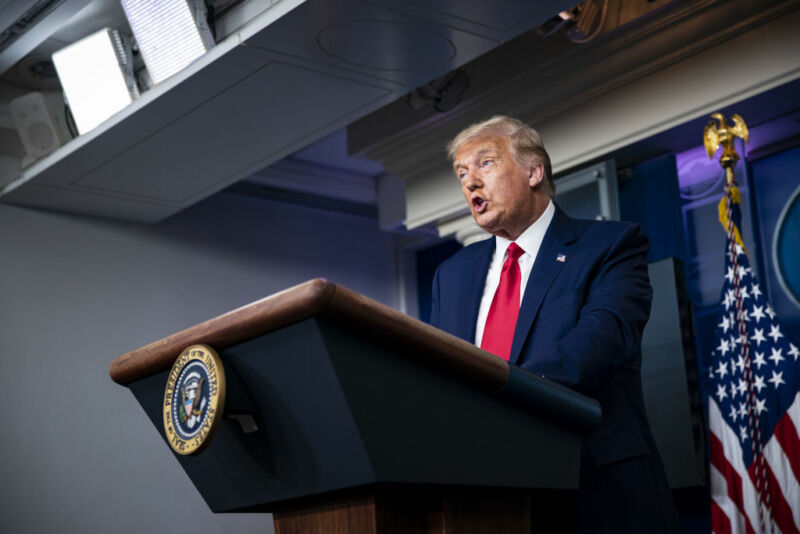
Image of President Trump speaking from behind a lectern.
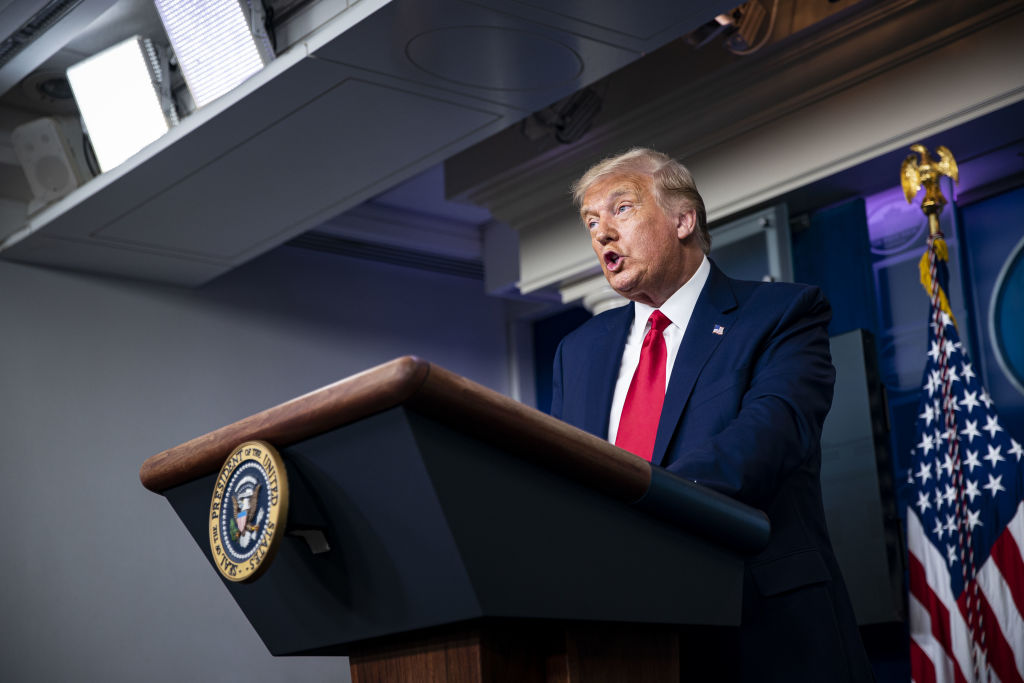
Enlarge / US President Donald Trump speaks during a news conference in which he frequently contradicted his own health experts.

There was good news and then bad news for public health expertise yesterday. In the wake of increasingly unhinged behavior from a President Trump-appointed communications director at the US Department of Health and Human Services, he and one of his key appointees have left their posts—one for two months, one permanently. But any hopes that science might resume being the main driver of US health policy were short-lived. Earlier in the day, CDC head Robert Redfield and other Health and Human Services officials testified before a Senate panel. By the evening, the president himself was calling his own CDC director mistaken about everything from mask use to the schedule of vaccine availability.

By the end of the day, Redfield was tweeting statements that balanced ambiguity against seeming to support Trump’s view.

A backdrop of turmoil

A constant background of tension has existed between the Trump administration (which wants the country to return to normal operations despite the medical consequences) and public health officials (who actually want to protect the public’s health). But several things have driven those tensions into the open recently, starting with last week’s revelation that political appointees were attempting to interfere with reports from career scientists at the CDC. That issue was seemingly resolved in the CDC’s favor, as a key administration figure in the Department of Health and Human Services (HHS), Michael Caputo, took a two-month medical leave after making a video in which he spoke of armed uprisings and conspiratorial cabals of CDC scientists.

While Caputo’s absence is temporary, one of his most problematic hires, Paul Alexander, was let go permanently. Alexander did not go quietly, telling Canada’s Globe and Mail that the CDC’s staff scientists were “generating pseudo-scientific reports.”

“None of those people have my skills,” Alexander went on to write, saying, “I make the judgment whether this is crap.” This comes after the leak of internal emails in which Alexander complained to prominent National Institutes of Health official Anthony Fauci, telling Dr. Fauci (falsely) that children cannot transmit the SARS-CoV-2 virus.

All of this would have seemingly quieted the issues and made it more likely that HHS officials would be better able to convey accurate health information. But the reprieve turned out to be an extremely temporary.

Even as the personnel changes were being reported, several HHS officials (including CDC Director Robert Redfield) were testifying before a Senate Appropriations Committee panel. While they were asked a wide range of questions, a number of these pertained to evidence-based public health policy and the possibility of an effective vaccine. And, as might be expected given the Trump administration’s approach to evidence-based policies, the officials frequently contradicted their boss.

Politics and public health

Congressional Democrats often seize the opportunity to grill public health experts working for the Trump administration. The Trump administration has clearly been spreading misinformation and making policy decisions that are counter to our public health knowledge. Highlighting these contradictions through the testimony of the administration’s own experts provides a golden opportunity for the Democrats to score political points. But it also serves a public health purpose by highlighting the best public health information.

While it’s impossible to determine which of these two were the primary motivators of the Democrats’ questioning, the hearings highlighted a number of key issues where the Trump administration and public health experts have diverged. And to an extent, those testifying dodged as much as they could. When Redfield was asked about Trump’s decision to downplay the severity of the pandemic, he replied that he wouldn’t comment on president’s decision but will say nobody at the CDC advised Trump to do so.

Something similar happened when mask wearing was brought up. HHS Assistant Secretary Brett Giroir said he wouldn’t comment on the president’s frequent dismissal of mask use, but he did say masks are an absolutely critical tool. His fellow assistant secretary, Robert Kadlec, simply said Trump “is an individual who can exercise his rights.”

But it was Redfield who worked the hardest to promote public health. Holding up his own face mask, he told the committee, “These are the most powerful public health tool we have.” He went on to repeat an earlier statement, that widespread use of masks for six to 12 weeks could bring the pandemic under control. “We have clear scientific evidence that they work,” he testified, saying they’re “more guaranteed to protect me against COVID than when I take a COVID vaccine.” His reasoning was that all vaccines fail to elicit an immune response at a measurable rate, whereas all masks provide at least some degree of protection.

Redfield also injected a large dose of reality when the topic shifted to vaccines. The Trump administration has appropriately begun planning for the widespread distribution of a vaccine as soon as one passes safety and efficacy trials. But the fact that current planning calls for distribution to begin just before the November presidential election has raised concerns about whether the timing might be motivated by politics rather than safety. And there’s clearly going to be a substantial gap between initial distribution and widespread availability.

Redfield decided it was time for the public to hear about the size of that gap. He said initial availability would be in the area of November-December but would only go to high-priority populations like health care workers and the elderly. The majority of the American public would probably have to wait for the third quarter of 2021.

Not so fast…

This helpful dose of realism wasn’t allowed to stand for long. Later that day, Trump held a press conference, and reporters were quick to get into the gaps between his earlier statements and what his own health experts had to say earlier that day. And Trump basically tried to walk back Redfield’s comments for him.

When asked about mask use, Trump said, “Number one, it’s not more effective by any means than a vaccine,” before going on to say Redfield really didn’t know what he was saying: “I believe that, if you ask him, he would probably say that he didn’t understand the question.” This despite the fact that Redfield wasn’t asked to compare vaccines and masks—he did so simply to emphasize the importance of mask use. Later, Trump said he’d called Redfield, who reportedly told him, “I think I answered that question incorrectly.”

But Trump wasn’t content to simply address the relative value of masks and vaccines; he went on to dismiss mask use more generally, saying, “I think there [are] lots of problems with masks,” noting people’s tendency to touch them. Later, after giving a non-answer to a question about why he doesn’t set an example by using masks more often, Trump directly contradicted Redfield’s testimony about the scientific evidence on mask use, saying, “The mask may help, and I hope it helps, and I think it probably does, but again, the mask is a mixed bag.”

Atlas drugs

Vaccine-distribution questions ended up completely confused. At one point, Trump brought out one of his health advisors, Scott Atlas (who has some pretty questionable ideas) to talk about the plans. Atlas laid out a timeline that was largely similar to the one Redfield laid out. Distribution would start within a day of FDA approval, the date of which is currently unknown. Assuming an approval in mid-October, the plan was to have widespread vaccination of the initial high-risk populations done by the end of January. Sufficient doses should be available before the end of the first quarter of 2021, leading to widespread vaccination of the entire US population by the end of the second quarter. Overall, it was just slightly accelerated compared to Redfield’s testimony.

Of course, Trump himself said repeatedly that Redfield didn’t know what he was saying—literally. “I got the impression that he didn’t realize he said what he might have said,” Trump told the press. At several points, he suggested that Redfield just didn’t have access to information on the distribution plans, even though the CDC is producing them. At one point, Trump said of Redfield’s testimony, “It’s just incorrect information.”

Trump also took time to say that Democrats’ concerns that the vaccine might be rushed for political reasons was really just an indication that they don’t want an effective vaccine before the election. “This is a phenomenon that only happened when they realized we may very well have the vaccine prior to a certain very important date, namely, November 3,” Trump said. “Once they hear that, the Democrats started—just to show you how bad the intention is—they started knocking the vaccine.”

Not just Redfield

Trump also frequently spreads misinformation on the utility of testing for SARS-CoV-2, stating that if we had fewer tests, we’d have fewer cases. This is nonsense, and the HHS staff correctly identified it as such during its testimony. But Trump returned to this stance again during the press conference. “If we didn’t test, we wouldn’t have cases,” Trump stated. “You would have no cases. Other countries, they don’t test, they don’t have cases.”

Unrelated to the testimony, Trump also took some time to rail against an additional bit of public health advice: controlling the pandemic through restrictions on interactions among people. After suggesting the US’s horrific pandemic numbers would look better if we took out the statistics from Democratic-run states, Trump randomly segued into complaints about social distancing policies, saying, “It’s very important they open up their states.” Naming three swing states run by Democrats (Michigan, North Carolina, and Pennsylvania), Trump said that their restrictions are “hurting people more than the disease itself,” before imploring these states to “let your people have freedom,” echoing the earlier complaints of Attorney General Bill Barr.

Again, Trump suggested any restrictions were a political conspiracy rather than governments following public health advice. “They’re closing it for political reasons,” he said. “It’ll open on November 4—it’ll open right after the election. But they want people to… they want our numbers to be as bad as possible. The problem is our numbers are so good.”

The near-delusional insistence that the US numbers are good when we have the most COVID cases and deaths of any nation made a return near the end of the press conference. That’s when a reporter asked how we could trust Trump about the pandemic when he’s contradicting the head of the CDC. “Because of the great job we’ve done,” Trump replied. “We have done a phenomenal job on COVID-19, as they like to call it.”

https://arstechnica.com/?p=1707451



Patient dies after ransomware attack reroutes her to remote hospital

Photograph of the backdoor of an ambulance.

A woman seeking emergency treatment for a life-threatening condition died after a ransomware attack crippled a nearby hospital in Duesseldorf, Germany, and forced her to obtain services from a more distant facility, it was widely reported on Thursday.

German authorities are investigating the unknown perpetrators on suspicion of negligent manslaughter, the Associated Press, German news outlet NTV, and others reported on Thursday. The event under investigation occurred last Friday when the unidentified woman was turned away from Duesseldorf University Hospital because a ransomware attack hampered its ability to operate normally. The woman was rushed to a hospital about 20 miles away, resulting in about a one-hour delay in treatment. She died.

So far, little is known publicly about the ransomware strain or the attackers involved in the infection, which began last Thursday, about 24 hours before the death occurred. A report from the North Rhine-Westphalia state justice minister said that the attack encrypted about 30 hospital servers and left a message instructing the Heinrich Heine University, to which the Duesseldorf hospital is affiliated, to contact the attackers.

Duesseldorf police eventually communicated with the attackers and told them that the attack had hit a hospital treating emergency patients, not the university. The attackers reportedly withdrew the extortion demand and provided a decryption key to unlock the servers. The justice minister report said that the attackers are no longer reachable.

Hospital officials said on Twitter that the infection occurred after attackers exploited a vulnerability in a “widely used commercial add-on software,” which the tweet didn’t identify. As noted by ZD Net, the officials also said they had notified German authorities of the attack. Hours earlier, the German agency responsible for issuing cybersecurity warnings, the BSI, tweeted a link to this advisory from January. The advisory warned that attackers were actively exploiting CVE-2019-19781, a critical vulnerability in the Citrix application delivery controller, which customers use to perform load balancing of inbound application traffic.

Citrix didn’t immediately respond to an email asking if the vulnerability was the initial entryway into the Duesseldorf hospital. CVE-2019-19781 was in the news on Wednesday when federal prosecutors said it was one of several vulnerabilities allegedly used by hackers backed by the Chinese government to breach game and software makers.

Last week’s infection isn’t the first time hospitals have been paralyzed by ransomware. Last year, 10 hospitals—three in Alabama and seven in Australia—were hit by attacks that also hampered their ability to accept new patients. A few days later, the three Alabama hospitals reportedly paid the ransom so they could obtain the decryption key needed to restore their systems.

https://arstechnica.com/?p=1707440


Impending WeChat ban won’t actually ban users from WeChat, DOJ says

There's no ban on WeChat in the US right now, the DOJ says, which is true—but that's supposed to change, somehow, in the immediate future, and nobody knows how.
Enlarge / There’s no ban on WeChat in the US right now, the DOJ says, which is true—but that’s supposed to change, somehow, in the immediate future, and nobody knows how.

Three days before a ban on the use of China-owned app WeChat in the United States is supposed to take effect, the Trump administration still hasn’t said what specifically is being banned—only that individuals will not be penalized for using the app, despite the alleged threat it presents to national security.

Secretary of Commerce Wilbur Ross does “not intend to take actions that would target persons or groups whose only connection with WeChat is their use or downloading of the app to convey personal or business information between users, or otherwise define the relevant transactions in such a way that would impose criminal or civil liability on such users,” attorneys for the Department of Justice wrote in a court filing (PDF).

Users of WeChat may find services “directly or indirectly impaired” by whatever measures the administration does end up imposing, the filing continued, but “use and downloading of the app for this limited purpose will not be a defined transaction.”

The filing comes in response to a petition a group of US-based WeChat users filed in federal court in August seeking an injunction on the ban.

The… ban?

President Donald Trump signed two very similar executive orders in August targeting WeChat and TikTok. The TikTok saga appears to have resulted in a deal with Oracle, giving the US firm a significant minority stake in TikTok.

The WeChat ban, however, remains much more nebulous. WeChat is owned by Tencent, an absolutely massive Chinese conglomerate with full or partial ownership stakes in a huge array of Chinese and US technology, media, gaming, and entertainment firms. It is China’s everything app: where a US user might use Uber, GrubHub, Venmo, Facebook Messenger, and Google or Apple Pay in the course of a morning, a user in China would do everything within WeChat.

China’s government, however, relies on this ubiquity for surveillance and censorship purposes inside China. The executive order alleges that WeChat captures “vast swaths of information” from its users (as nearly all mobile apps do), and that because of its ties to China’s government, that data collection “threatens to allow the Chinese Communist Party access to Americans’ personal and proprietary information.”

The order says that “any transaction that is related to WeChat by any person, or with respect to any property subject to the jurisdiction of the United States” will be prohibited. The order does not actually describe what those “transactions” may entail but instead says the Secretary of Commerce has 45 days in which to determine them. Trump signed the executive order on Thursday, August 6, making Sunday, September 20—this weekend—the deadline by which Ross needs to identify what, exactly, the prohibited transactions are.

The promise that the executive order will not affect individuals is not enough, the users argued in a response to the court (PDF).

“The ‘representations and assurances'” in the letter “provide no clarity about what the Secretary will or won’t do on September 20,” the group wrote in its response filing. “The Secretary has not taken off the table his ability to ban the use of WeChat by anyone… Having first failed to articulate any actual national security concern, the administration’s latest ‘assurances’ that users can keep using WeChat, and exchange their personal and business information, only further illustrates the hollowness and pre-textual nature of [the administration’s] ‘national security’ rationales.”

https://arstechnica.com/?p=1707271


Bill to tear down federal courts’ paywall gains momentum in Congress

Two men in suits and face masks confer in front of a US flag.
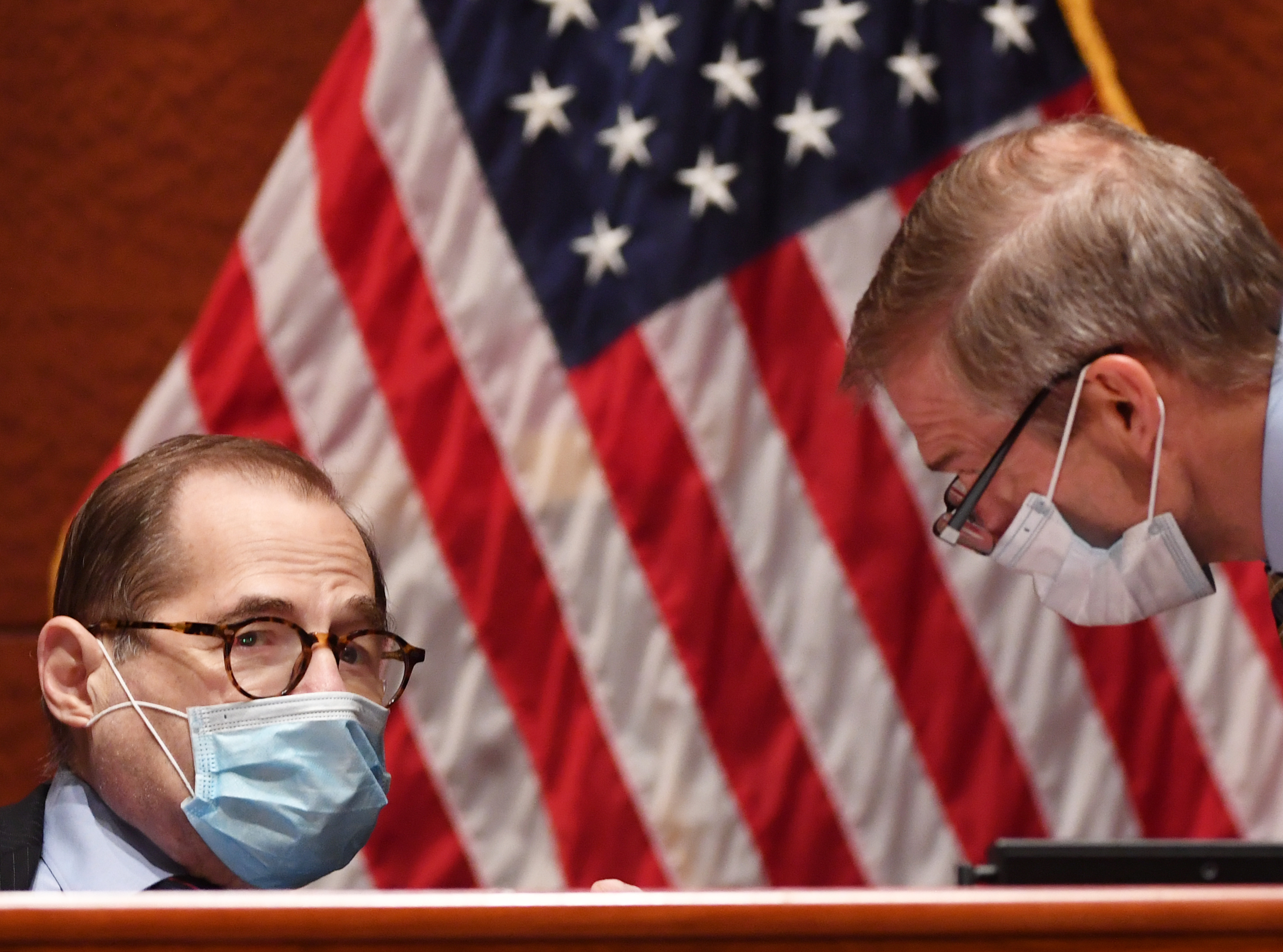
Enlarge / Judiciary Chairman Jerry Nadler (D-N.Y.) and Ranking Member Jim Jordan (R-Ohio) disagree about many issues, but they both support the Open Courts Act.

The House Judiciary Committee on Tuesday unanimously approved the Open Courts Act—legislation to overhaul PACER, the federal courts’ system for accessing public documents. The proposal would guarantee free public access to judicial documents, ending the current practice of charging 10 cents per page for many documents—as well as search results.

The bill must still be passed by the full House and the Senate and signed by the president. With Election Day just seven weeks away, the act is unlikely to become law during this session of Congress.

Still, the vote is significant because it indicates the breadth of Congressional support for tearing down the PACER paywall. The legislation is co-sponsored by Rep. Doug Collins (R-Ga.), whose bill we covered in 2018, and a fellow Georgian, Democrat Hank Johnson.

Prior to Tuesday’s vote of the House Judiciary Committee, the bill received a strong endorsement from Chairman Jerrold Nadler (D-N.Y.).

“It is indefensible that the public must pay fees, and unjustifiably high fees at that, to know what is happening in their own courts,” Nadler said.

This was followed by an equally enthusiastic endorsement from Rep. Jim Jordan (R-Ohio), the top-ranking Republican on the Judiciary Committee and an ally of President Trump.

“Proponents of judicial transparency have long advocated for free public access to court records,” Jordan noted. “I agree court records and information should be more easily accessible. The commonsense reforms contained in the bill are long overdue.”

In short, this is a rare reform proposal with strong support across the political spectrum. In today’s Congress, even broadly popular ideas don’t always become law quickly. But this one has a good shot at passage in the next Congress if it doesn’t happen in this one.

Modernizing PACER

The bill goes beyond just eliminating the 10-cent-per-page charge. It directs the courts to make a number of changes long pushed by advocates of judicial transparency.

Right now, each of the nearly 200 trial, bankruptcy, and appeals courts in the United States runs its own instances of PACER as well as the CM/ECF system that litigants use to submit documents to the courts. Not only does this increase the cost and complexity of the running the system, it also means that the courts do not provide a nationwide search function. If you don’t know which court is hearing a particular case, there’s no easy way to find its docket or view documents associated with the case.

Independent projects like RECAP (which I helped to create a decade ago) have tried to fill this gap with their own search engines. But they only have some of the documents in the PACER system. An official nationwide PACER search engine would be more comprehensive and hence more useful.

The Open Courts Act instructs the courts to create “one system for all court records,” including a search function.

This new system would support permalinks so that other sites can link directly to individual documents. The courts would also be required to publish information in a “non-proprietary, full text searchable, platform-independent computer-readable format,” allowing third parties to easily make use of the data for academic research, journalism, and other purposes. Courts would be given two to three years to make these changes in cooperation with the General Services Administration, a federal agency that has experience with large-scale IT projects.

Funded by higher fees elsewhere

In the past, one of the big sticking points for eliminating PACER’s paywall has been finding replacement funds. It’s a tough problem because Congress hasn’t shown much appetite for higher spending even on widely popular programs.

The Open Courts Act deals with this by increasing other fees charged by the courts. In the short run, the legislation would actually increase PACER fees for the heaviest users—those that rack up more than $25,000 in quarterly charges. These fees would hit data brokers that harvest data from the court records to use in background checks, legal databases, and other commercial services. Higher fees on these commercial providers would help the courts finance the development work to fund the new PACER.

In the longer run, revenue would be generated by higher fees for people who file lawsuits. To avoid being too burdensome, the new fees would exempt plaintiffs who are representing themselves and others who can demonstrate the fee creates a financial hardship. The bill would also charge fees to creditors in bankruptcy proceedings.

If Congress doesn’t act, PACER’s 10-cent-per-page fee may be reduced in the next couple of years thanks to a class-action lawsuit claiming that the courts are charging more than current law allows. Plaintiffs won a key early ruling from an appeals court last month. But even if the plaintiffs ultimately prevail, the case will only reduce PACER fees—it won’t eliminate them altogether. And transparency argues that any paywall—even a substantially cheaper one—poses a substantial barrier to public access.

https://arstechnica.com/?p=1707000


Trump replaces FCC member in bid to push through Twitter/Facebook crackdown

FCC Commissioner Michael O'Rielly speaks at a conference while FCC Commissioner Brendan Carr and Chairman Ajit Pai look on.
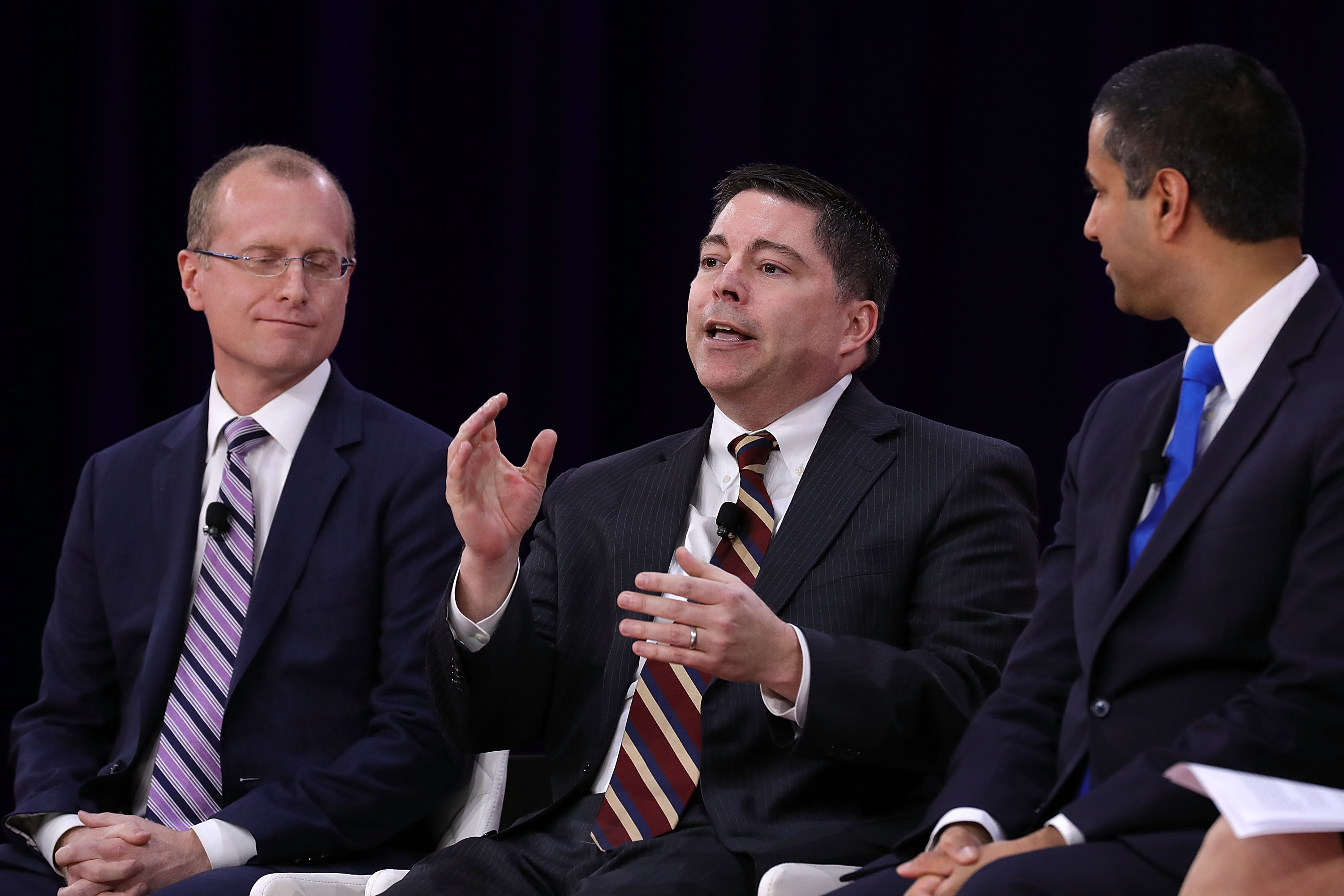
Enlarge / Federal Communication Commission Republican members (L-R) Brendan Carr, Michael O’Rielly, and Chairman Ajit Pai participate in a discussion during the Conservative Political Action Conference on February 23, 2018, in National Harbor, Maryland.

President Donald Trump today nominated one of his administration officials to serve on the Federal Communications Commission in an attempt to push through his proposed crackdown on social media websites.

Trump announced the nomination of Nathan Simington, who is currently a senior advisor in the National Telecommunications and Information Administration (NTIA). Simington “played a significant role in the agency’s social media regulation agenda,” as The Verge reported last week when news broke that Trump was considering Simington for the FCC position.

Simington would replace Republican Michael O’Rielly, who apparently angered Trump by saying that the FCC must uphold First Amendment speech protections “that apply to corporate entities, especially when they engage in editorial decision making.” O’Rielly’s comments signaled that he isn’t likely to support the Trump administration petition, submitted by the NTIA, that asks the FCC to reinterpret Section 230 of the Communications Decency Act in order to limit social media platforms’ legal protections for hosting third-party content when the platforms take down or alter content they consider objectionable.

“Simington had a hand in drafting Trump’s May executive order encouraging the Federal Communications Commission to rethink how Section 230 of the Communications Decency Act protects social media platforms from liability for the content it hosts,” according to The Washington Post.

Trump had nominated O’Rielly to another five-year FCC term in March but withdrew the re-nomination after O’Rielly’s comments. Simington’s nomination would need approval from the Senate. O’Rielly could serve on the commission through the end of 2020 if the Senate doesn’t act on the nomination before then, but he would have to leave if Simington officially gets the job. O’Rielly’s FCC term technically expired in June 2019.

Trump needs three votes

Trump, who is angry about Twitter and Facebook’s treatment of his posts, needs three votes on the five-member FCC to get the NTIA petition approved. The two Democrats oppose it, saying the petition amounts to the FCC becoming the president’s “speech police.”

Trump has the support of Republican FCC Commissioner Brendan Carr, who has explicitly and repeatedly supported Trump’s social media crackdown and criticized Twitter for adding a fact check to Trump’s claims that mail-in ballots will be “substantially fraudulent.”

The question mark is Chairman Ajit Pai, who hasn’t weighed in publicly on the Trump administration petition. Pai is taking public comments on the petition and called for a “vigorous debate.” Trump’s willingness to replace O’Rielly suggests that he could try to do the same with Pai if the chair doesn’t do the White House’s bidding.

If Joe Biden wins the presidency, Democrats would retake the FCC majority. Pai could stay on the FCC if Trump wins re-election, but FCC chairs usually step down at the end of a presidential term even if the White House hasn’t changed hands. A few details complicate matters—Pai’s term extends until mid-2021, and he could continue serving through 2022 if no replacement is nominated and approved by the Senate. But if Trump gets a second term and Pai doesn’t leave of his own volition, Trump would have a chance to replace Pai once Pai’s term officially expires in mid-2021.

During the Obama administration, Pai claimed that the White House orchestrated the FCC’s imposition of net neutrality rules and said, “We shouldn’t be a rubber stamp for political decisions made by the White House.” Trump is taking a much more direct role in trying to set FCC policy by replacing O’Rielly, but Pai has not publicly made the same criticism of Trump that he made of President Obama.

https://arstechnica.com/?p=1707019


AT&T wants to put ads on your smartphone in exchange for $5 discount

An AT&T sign on the outside of a building.
Enlarge / An AT&T sign outside a company office in New York City.

AT&T CEO John Stankey said the company may offer cellphone plans subsidized by advertising, giving customers monthly discounts of $5 or $10 in exchange for ads on their phones. “I believe there’s a segment of our customer base where given a choice, they would take some load of advertising for a $5 or $10 reduction in their mobile bill,” Stankey said in an interview with Reuters yesterday. Stankey apparently didn’t offer details on what form the ads would take.

According to Reuters, Stankey said that AT&T’s ad-supported phone plans could be introduced in “a year or two.” AT&T is already doing back-end work in its targeted-advertising system that could increase the value of such plans to AT&T’s ad-sales business:

AT&T engineers are creating “unified customer identifiers,” Stankey said. Such technology would allow marketers to identify users across multiple devices and serve them relevant advertising.

The ability to fine-tune ad targeting would allow AT&T to sell ads at higher rates, he said.

Stankey also said that a planned ad-supported version of HBO Max would play an important role in ad-supported phone plans, but he didn’t offer further details, according to Reuters.

“Various companies including Amazon, Virgin Mobile USA, and Sprint’s Boost Mobile have tested advertising-supported phone services since the early 2000s but they have not caught on. AT&T is hoping that better advertising targeting could revive the idea,” Reuters wrote.

AT&T used to charge $29 to $60 extra for privacy

AT&T’s CEO may be right that some customers would accept ads in exchange for discounts, though many of those would be people with low incomes who can barely afford phone service in the first place. AT&T does offer subsidized plans to people with low incomes through the US government’s Lifeline program, but AT&T’s website says its Lifeline wireless plans are only available in 13 of the 50 US states, and only in “certain areas” of those states.

AT&T has a controversial history of putting targeted ads on Internet service in exchange for discounts. In 2015, AT&T offered a $70-per-month gigabit home-Internet plan, but that price was only available to customers who agreed to let AT&T analyze their Web browsing histories in order to deliver targeted ads. Customers who didn’t opt in to the traffic-scanning program that AT&T called “Internet Preferences” had to pay $99 a month instead. With some bundled plans that included broadband along with TV or phone service, the extra cost for the more private plan was over $60 a month.

AT&T ended the Internet Preferences program entirely in September 2016, but that wasn’t the end of AT&T’s plans to deliver ads based on its users’ browsing histories. In June 2018, for example, AT&T announced it was buying an advertising company that delivers personalized ads based on Internet users’ Web browsing habits and then combined the new subsidiary with AT&T’s existing advertising and data-analytics businesses.

Trump killed broadband-privacy rule

AT&T’s much bigger purchase of Time Warner Inc. provided even more capabilities for joining AT&T’s telecom services with entertainment and advertising. When pitching the acquisition to government officials in 2017, AT&T said that “more relevant advertising in ad-supported video services” would be one of the merger’s primary benefits. In testimony to Congress in December 2016, then-CEO Randall Stephenson said: “We expect to deliver mobile-optimized content and services, and ad-supported services that shift more costs from consumers to advertisers.”

The Obama-era Federal Communications Commission tried to impose limits on telecoms’ use of personal data for advertising, with a rule requiring ISPs to get opt-in consent from consumers before using or sharing Web browsing data and other private information. But early in 2017, the Republican-controlled Congress and the Trump administration killed the rule before it could take effect.

What customers really want

The merging of ads and phone plans is perhaps an inevitable outcome of telecom companies buying up media and advertising businesses, even though saddling essential telecom services with more advertising is not something customers are asking for.

AT&T could really help US customers by expanding its fiber-to-the-home network to Americans who lack modern broadband, which is another topic that came up in the Reuters interview. (More fiber builds would also benefit AT&T’s mobile network, particularly in rural areas.) Stankey said that “AT&T believes it could double its fiber footprint if it had the economic incentive,” Reuters wrote.

Stankey also called for more government broadband funding in an opinion piece published in Politico last week. This continues a history that includes Stankey’s predecessor Stephenson saying in 2017 that AT&T would use a corporate tax break to create 7,000 jobs for “people putting fiber in [the] ground.”

Since then, AT&T has largely stopped fiber expansions, reduced capital expenditures on its networks, and laid off tens of thousands of employees. AT&T is also not participating in the Federal Communications Commission’s Rural Digital Opportunity Fund (RDOF), which is set to award up to $16 billion in grants to ISPs that expand broadband service. But at least AT&T mobile customers might get a chance to save $5 a month in exchange for targeted ads.

https://arstechnica.com/?p=1706923


Oracle’s TikTok non-acquisition seeks Treasury, White House approval

A smartphone against a colorful, out-of-focus background.
Enlarge / The TikTok logo displayed on a smartphone, with logo of parent company ByteDance in the background.

President Donald Trump spent several months pushing to have TikTok banned or sold to a US firm. He seems to have gotten his way, as Oracle confirmed it struck a deal with ByteDance over TikTok. That transaction, however, does not necessarily assuage the White House’s stated concerns with the popular video app—and the deal has a long way to go, in a short period of time, before it’s done.

The specific terms of the agreement have still not been made public. The arrangement is not the full sale that Trump was pushing for as recently as last Friday. China’s export ban on machine learning and artificial intelligence algorithms prevented that kind of direct acquisition.

Oracle has said very little about the transaction, which first leaked late on Sunday. Monday morning, the company confirmed it submitted a proposal to become ByteDance’s “trusted technology provider” to the Treasury Department for review over the weekend of September 12-13. Tuesday morning, it repeated the statement as part of a filing with the US Securities and Exchange Commission.

Treasury, you’re up

US Treasury Secretary Steven Mnuchin spoke with CNBC about the next steps for the transaction on Monday. Mnuchin did not discuss details of the transaction but repeated that Oracle is the “trusted technology partner.” He added that Oracle made “many representations for national security issues” as well as a promise “to create TikTok Global as a US-headquartered company with 20,000 new jobs.”

The proposal has been kicked to Treasury because that’s where the Committee on Foreign Investment in the United States, or CFIUS, is housed. CFIUS, composed of members from more than a dozen different agencies, conducts national security reviews on transactions in which a foreign business acquires part or all of a US business. The proposed Oracle transaction is sort of the opposite—a US firm is investing in a foreign platform—and might not ordinarily go through CFIUS review. The committee, however, has been heavily involved in the entire TikTok saga to date.

CFIUS last fall began a retroactive review of TikTok, which was formed when ByteDance acquired US firm Musical.ly and rebranded it. The White House ended that review on August 14 with an executive order (PDF) declaring that the Musical.ly acquisition was indeed a national security threat and retroactively prohibiting the acquisition and requiring CFIUS to oversee some kind of divestment process.

“The deadline is September 20,” Mnuchin told CNBC, although Trump has several times declared the deadline to be September 15. Between now and then “there are two processes that we’re going through. One is the CFIUS review, the other is the national security review under the president’s executive order… We will be reviewing that at the CFIUS committee this week, and then we will be making a recommendation to the president and reviewing it with him.”

When asked specifically about the national security threats of TikTok’s proprietary algorithms, which may not end up being part of the deal after all, Mnuchin did not directly answer the question. Instead, he said, “From our standpoint, we’ll need to make sure that the code is secure, that Americans’ data is secure, that the phones are secure, and we’ll be looking to have discussions with Oracle over the next few days with our technical teams.”

Pushback

Trump advisors are split on whether the administration should accept the Oracle deal or pursue more stringent action, The Wall Street Journal reports. According to the WSJ, Mnuchin supports the Oracle deal and secured the support of Commerce Secretary Wilbur Ross before the weekend. The WSJ did not name the “China hawks” inside the White House who reportedly oppose the deal. There are, however, Republicans outside of the White House who are openly asking CFIUS to prohibit the transaction.

Sen. Josh Hawley (R-Mo.), who often speaks out on technology issues, urged regulators to block the deal.

“The available evidence compels only one conclusion: ByteDance has no intention whatsoever of relinquishing ultimate control of TikTok,” Hawley wrote in a letter to Mnuchin (PDF).

The deal “is completely unacceptable, and flatly inconsistent with the President’s Executive Order of August 6,” Hawley wrote, concluding that a full sale or an outright ban would be preferable. “CFIUS should promptly reject any Oracle-ByteDance collaboration and send the ball back to ByteDance’s court so that the company can come up with a more acceptable solution.”

Sources this morning told CNBC, however, that the White House wants to fast-track approval and that an announcement giving the deal a green light may come as soon as today.

https://arstechnica.com/?p=1706152


New Google Fiber plan: $100 for 2Gbps, plus Wi-Fi 6 router and mesh extender

Illustration of lasers flowing down a tunnel to represent fast broadband speeds.
Getty Images | Yuichiro Chino

Google Fiber will soon offer 2Gbps service for $100 a month, a package that includes a Wi-Fi 6 router and mesh extender, the Alphabet-owned ISP announced yesterday.

Google fiber-to-the-home service never rolled out as far as many people hoped, but the ISP is still making improvements in cities where it does provide broadband. The new offering is double the download speed of Google Fiber’s standard 1Gbps service and costs $30 more. While the new offer is 2Gbps on the download side, it will be 1Gbps for uploads.

In addition to fiber-to-the-home, Google Fiber offers wireless home Internet access in some cities through its Webpass service. Even the Webpass wireless service will get the 2Gbps plan, the announcement said. Webpass’ standard speeds today range from 100Mbps to 1Gbps.

The 2Gbps service will initially be available to some customers through Google Fiber’s Trusted Tester program next month, with plans to roll out across “most” Google Fiber and Webpass markets in 2021. The announcement didn’t provide any details on the Wi-Fi 6 router and mesh extender that will be included in the $100 price. Google Fiber provides 1Gbps customers a gateway and router in a single device it calls a “Network Box.”

1Gbps is plenty for most people, and there are millions of Americans without access to anything even remotely close to that. But Google Fiber expects interest from heavy users.

“Why 2 Gig? This year has made this need for more speed and bandwidth especially acute, as many of us are now living our entire lives—from work to school to play—within our homes, creating unprecedented demand for Internet capacity,” the Google Fiber announcement said.

Where, when, and how to sign up

Details on timing are vague, but here’s what Google Fiber had to say about 2Gbps availability and how to sign up:

We’re looking for people to help us test 2 Gig, starting in Nashville and Huntsville next month and in our other Google Fiber cities later this fall. Game changers, super users, and families who need more from their Internet can join the Google Fiber Trusted Tester program to be among the first to put the extra speed to use… Sign up here for an opportunity to be among the first to test 2 Gig in your city.

2 Gig will roll out to all of our Nashville and Huntsville customers later this year, with plans to launch the service across most of our Google Fiber and Google Fiber Webpass cities in early 2021.

You can also visit this page and enter your email and street address to get updates on when 2Gbps will be available. Google Fiber offers either fiber or wireless service in 19 US markets; you can see the list at the ISP’s website.

https://arstechnica.com/?p=1706181


Sweeping internal Facebook memo: “I have blood on my hands”

Facebook logo photoshopped to appear spattered with blood.

After being fired by Facebook this month, a data scientist published a 6,600-word memo to the company’s internal communication systems breaking down 2.5 years of her experiences on the “fake engagement team.” The resulting stories, largely centered on misinformation campaigns with both subtle and clear links to government staffers and political parties around the world, were shared with BuzzFeed News and reprinted with various redactions on Monday, prompting the reporters to describe the memo as “a damning account of Facebook’s failures.”

Former Facebook data scientist Sophie Zhang pointed to activity across the world in nations such as Azerbaijan, Honduras, India, Ukraine, Spain, Bolivia, and Ecuador. Some of these stories include metrics for how many fake accounts Zhang purged, with one story in particular, about the potential spread of COVID-19 misinformation to United States users, linked to a ring of 672,000 accounts in Spain.

“I was the one who made the decision”

Arguably more egregious than the numbers was the silo that Zhang allegedly operated within, without institutional support, to take responsibility for whether particular rings of accounts were moderated. “Individually, the impact was likely small in each [country’s] case, but the world is a vast place,” Zhang wrote in her memo. “Although I made the best decision I could based on the knowledge available at the time, ultimately I was the one who made the decision not to push more or prioritize further in each case, and I know that I have blood on my hands by now.”

Part of this issue, Zhang explained, came from internal pressure to focus on security issues that might merit coverage in Western media outlets like The New York Times and The Washington Post. “It’s why I’ve seen priorities of escalations shoot up when others start threatening to go to the press, and why I was informed by a leader in my organization that my civic work was not impactful under the rationale that if the problems were meaningful they would have attracted attention, became a press fire, and convinced the company to devote more attention to the space,” Zhang wrote.

BuzzFeed News points to Zhang’s example: in February 2019, a NATO researcher tipped Facebook off about apparent Russian interference with US politics, which Zhang resolved before the whistleblower followed through on a promise to report it to US Congress. Having noticed that the issue was only temporarily fixed, the same NATO staffer chronicled that same inauthentic behavior’s return, held it for months, then sent it to the press, “finally causing the PR fire,” Zhang wrote.

One element is missing from BuzzFeed News’ otherwise sweeping look at the memo: the issue of Facebook Free Basics and Facebook Discover, a pair of international initiatives designed to provide free or low-cost Internet devices and data plans to citizens of developing countries… with the catch that Facebook services are “zero-rated” in terms of data caps.

Zhang points to the issue of unresolved problems with politicians and governments running widescale interference on news propagation on Facebook—but she doesn’t remind her former Facebook colleagues in the memo that such interference may be compounded by users in those nations having even less access to news content outside Facebook and its partners. Conveniently, those very nations, according to Zhang’s memo, are apparently less interesting to Facebook’s PR-centric approach to “inauthentic” user management.

BuzzFeed News compared the political forces and government employees in Zhang’s memo to the Internet Research Agency, a Russian misinformation group that dominated infosec headlines in 2017. In Azerbaijan, “millions of comments” were created by an apparent staff of “dedicated employees” to target opposition viewpoints on all corners of Facebook. As University of Washington researcher Katy Pearce told BuzzFeed:

One of the big tools of authoritarian regimes is to humiliate the opposition in the mind of the public so that they’re not viewed as a credible or legitimate alternative. There’s a chilling effect. Why would I post something if I know that I’m going to deal with thousands or hundreds of these comments, that I’m going to be targeted?

https://arstechnica.com/?p=1705996


YouTube unlawfully violates kids’ privacy, new $3.2B lawsuit claims

A sign featuring the YouTube logo, outside the YouTube Space studios in London on June 4, 2019.
Enlarge / A sign featuring the YouTube logo, outside the YouTube Space studios in London on June 4, 2019.

A new lawsuit filed in a United Kingdom court alleges that YouTube knowingly violated children’s privacy laws in that country and seeks damages in excess of £2.5 billion (about $3.2 billion).

A tech researcher named Duncan McCann filed the lawsuit in the UK’s High Court and is serving as representative claimant in the case—a similar, though not identical, process to a US class-action suit. Foxglove, a UK tech advocacy group, is backing the claim, it said today.

“YouTube, and its parent company Google, are ignoring laws designed to protect children,” Foxglove wrote in a press release. “They know full well that millions of children watch YouTube. They’re making money from unlawfully harvesting data about these young children as they watch YouTube videos—and then running highly targeted adverts, designed to influence vulnerable young minds.”

A spokesperson for Google told Bloomberg News that YouTube is not intended for users under the age of 13. “We launched the YouTube Kids app as a dedicated destination for kids and are always working to better protect kids and families on YouTube,” the company told Bloomberg.

Spotty track record

That argument, however, has not saved YouTube from landing in hot water over underage users on this side of the Atlantic.

Last year, Google and the Federal Trade Commission reached a $170 million settlement over allegations that it violated the Children’s Online Privacy Protection Act, or COPPA.

COPPA, one of the few federal laws dealing with digital privacy in the US, imposes certain restrictions on the collection and use of personal data associated with children ages 12 and under. Under the law, websites, apps, and digital platforms that collect data from children under 13 are required to post a privacy policy and have parents consent to it, to give parents the option to opt out of having their children’s information shared with third parties, to let parents review their children’s data, and to follow sound data storage and retention policies.

You don’t have to be logged in or registered in order to view most videos on YouTube, so there’s no age-gating. Anyone can view videos, including kids. YouTube boasted to toy companies Mattel and Hasbro that “YouTube was unanimously voted as the favorite website for kids 2-12” and “93% of tweens visit YouTube to watch videos,” according to the FTC’s complaint.

While Google’s left hand boasted to toymakers about how many kids viewed its content, the company’s right hand said the opposite. According to an email obtained by the FTC, one Google employee wrote, “we don’t have users that are below 13 on YouTube and platform/site is general audience, so there is no channel/content that is child-directed and no COPPA compliance is needed.”

Same problem, different law

The UK lawsuit points to those same claims YouTube made to Mattel and Hasbro and pairs them with a UK government report from February that found about 75 percent of UK kids ages five to 15 watch YouTube, along with roughly half of UK preschoolers aged three and four.

UK law, like COPPA, protects the personal information of children under 13. That, Foxglove argues, makes YouTube’s actions against the law:

We think its unlawful because YouTube processes the data of every child who uses the service—including kids under 13. They profit from this data, as they are paid by advertisers to place targeted advertising on their YouTube website. They do all this without getting explicit consent from the children’s parents. Under the GDPR and UK law, corporations can’t process the data of kids under 13 *at all* without explicit parental consent. Parents haven’t agreed to the many ways YouTube takes kids’ data.

The suit was filed on behalf of more than 5 million children residing in England and Wales and seeks compensation of between £100 and £500 for every child who watched a video on YouTube since May 25, 2018—the day the EU’s General Data Protection Regulation took effect.

“Google’s drive to profit from kids’ attention has turned corners of YouTube into a weird technicolored nightmare,” Foxglove Director Cori Crider said. “The real price of YouTube’s ‘free’ services is kids addicted, influenced, and exploited by Google. It’s already unlawful to data-mine children under 13. But Google won’t clean up its act until forced by the courts.”

https://arstechnica.com/?p=1705851