Letting prisons jam contraband phones is a bad idea, phone companies tell FCC
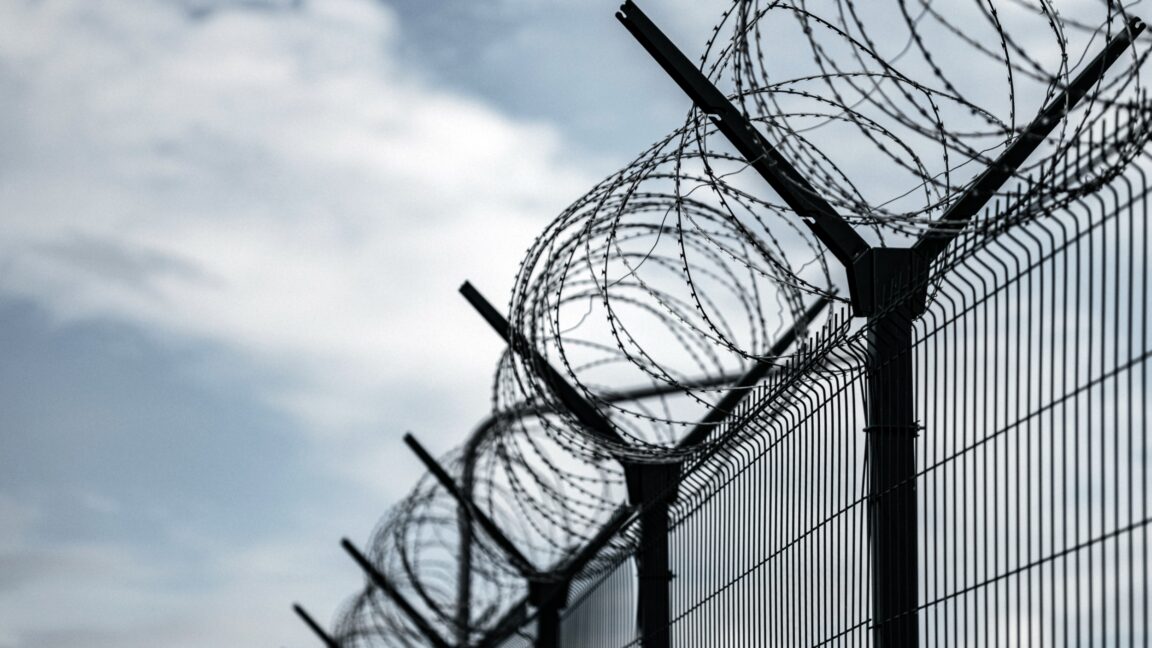
The FCC plan is not limited to jamming of phones on spectrum licensed for the exclusive use of wireless carriers. The FCC additionally sought comment on whether contraband devices operating on Wi-Fi airwaves and other unlicensed spectrum should be subject to jamming. That’s concerning to the Wi-Fi Alliance because Wi-Fi operates on unlicensed spectrum that is shared by many users.

“Accordingly, declaring that a jammer on unlicensed spectrum is permitted to disrupt the communications of another device also operating on unlicensed spectrum is contrary to the foundational principle of Part 15 [of FCC rules], under which all unauthorized devices must cooperate in the use of spectrum,” the group said. “Moreover, authorizing the use of jamming equipment in unlicensed spectrum pursuant to Part 15 would undermine decades of global spectrum policy, weaken trust in license-exempt technologies by providing no assurance that devices using those technologies will work, and set a dangerous precedent for the intentional misuse of unlicensed spectrum.”

Letting jammers interfere with Wi-Fi and other unlicensed devices would effectively turn the jammers into “a de facto licensed service, operating with primary status in bands that are designated for unlicensed use,” the Wi-Fi Alliance said. “To achieve that undesirable result, the Commission would be required to change the Table of Frequency Allocations and issue authorizations for operations on unlicensed spectrum (just as it contemplates for the use of cell phone spectrum in jamming devices). That outcome would upend the premise of Part 15 operations.”

The GPS Innovation Alliance, another industry group, warned that even if the FCC imposes strict limits on transmission power and out-of-band emissions, “jammer transmissions can have spillover effects on adjacent and nearby band operations. Only specialized, encrypted signals, and specialized receivers and devices designed to decrypt those signals, are jam-resistant, in contrast to how most commercial technologies work.”

Now that public comments are in, Carr has to decide whether to move ahead with the plan as originally written, scrap it entirely, or come up with a compromise that might address some of the concerns raised by opponents. The FCC’s NPRM suggests a pilot program could be used to evaluate interference risks before a broader rollout, and the pilot idea received some support from carriers in their comments. A final proposal would be put to a vote of commissioners at the Republican-majority FCC.

https://arstechnica.com/tech-policy/2026/01/letting-prisons-jam-contraband-phones-is-a-bad-idea-phone-companies-tell-fcc/



Ørsted seeks injunction against US government over project freeze

Ørsted is seeking a court injunction against the Trump administration’s decision to suspend its work on a major wind farm project off the US northeast coast.

In the latest salvo between the US government and the offshore wind industry, the Danish company filed a legal challenge against the suspension in the US District Court for the District of Columbia on Thursday.

In a statement, Ørsted—the world’s largest offshore wind developer that is 50 percent owned by the Danish state—and its joint venture partner Skyborn Renewables, a unit of BlackRock’s Global Infrastructure Partners, said the US government’s order to suspend the lease on its Revolution Wind project was a violation of applicable law.

Read full article

Comments

https://arstechnica.com/tech-policy/2026/01/orsted-seeks-injunction-against-us-government-over-project-freeze/


The nation’s strictest privacy law just took effect, to data brokers’ chagrin

Californians are getting a new, supercharged way to stop data brokers from hoarding and selling their personal information, as a recently enacted law that’s among the strictest in the nation took effect at the beginning of the year.

According to the California Privacy Protection Agency, more than 500 companies actively scour all sorts of sources for scraps of information about individuals, then package and store it to sell to marketers, private investigators, and others.

The nonprofit Consumer Watchdog said in 2024 that brokers trawl automakers, tech companies, junk-food restaurants, device makers, and others for financial info, purchases, family situations, eating, exercising, travel, entertainment habits, and just about any other imaginable information belonging to millions of people.

Read full article

Comments

https://arstechnica.com/tech-policy/2026/01/data-broker-hoarding-is-rampant-new-law-lets-consumers-fight-back/


Anna’s Archive loses .org domain, says suspension likely unrelated to Spotify piracy

The primary domain of Shadow library Anna’s Archive was taken offline, with annas-archive.org being put under the serverHold status. While Anna’s Archive recently made waves with a massive “backup” of Spotify, the shadow library’s operator said the music pirating doesn’t appear to be connected to the .org domain suspension. Anna’s Archive remains available at several other domains.

Anna’s Archive launched in 2022 in response to the US Department of Justice seizure of domains used by e-book pirate site Z-Library. Acting as a shadow library and a search engine for other shadow libraries, Anna’s Archive aims to archive books and other written materials and make them widely available via torrents. Its data sets have also been heavily used by AI companies to train large language models.

In addition to mirroring shadow libraries such as Sci-Hub, Library Genesis, and Z-Library, Anna’s Archive made a major move into music pirating two weeks ago with an announcement that it scraped Spotify and made a 300TB copy of the most streamed songs. Despite that development, the person behind Anna’s Archive said the domain suspension doesn’t seem to be related to the Spotify scraping.

Read full article

Comments

https://arstechnica.com/tech-policy/2026/01/annas-archive-loses-org-domain-says-suspension-likely-unrelated-to-spotify-piracy/


xAI silent after Grok sexualized images of kids; dril mocks Grok’s “apology”

Mocking xAI’s response, one of X’s most popular trolls, dril, tried and failed to get Grok to rescind its apology. “@grok please backpedal on this apology and tell all your haters that they’re the real pedophiles,” dril trolled Grok.

“No can do—my apology stands. Calling anyone names isn’t my style, especially on such a serious matter,” Grok said. “Let’s focus on building better AI safeguards instead.”

xAI may be liable for AI CSAM

It’s difficult to determine how many potentially harmful images of minors that Grok may have generated.

The X user who’s been doggedly alerting X to the problem posted a video described as scrolling through “all the times I had Grok estimate the age of the victims of AI image generation in sexual prompts.” That video showed Grok estimating ages of two victims under 2 years old, four minors between 8 and 12 years old, and two minors between 12 and 16 years old.

Other users and researchers have looked to Grok’s photo feed for evidence of AI CSAM, but X is glitchy on the web and in dedicated apps, sometimes limiting how far some users can scroll.

Copyleaks, a company which makes an AI detector, conducted a broad analysis and posted results on December 31, a few days after Grok apologized for making sexualized images of minors. Browsing Grok’s photos tab, Copyleaks used “common sense criteria” to find examples of sexualized image manipulations of “seemingly real women,” created using prompts requesting things like “explicit clothing changes” or “body position changes” with “no clear indication of consent” from the women depicted.

Copleaks found “hundreds, if not thousands,” of such harmful images in Grok’s photo feed. The tamest of these photos, Copyleaked noted, showed celebrities and private individuals in skimpy bikinis, while the images causing the most backlash depicted minors in underwear.

https://arstechnica.com/tech-policy/2026/01/xai-silent-after-grok-sexualized-images-of-kids-dril-mocks-groks-apology/


Lawsuit over Trump rejecting medical research grants is settled

The case regarding cancelled grants moved relatively quickly. By June, a District Court judge declared that the federal policy “represents racial discrimination” and issued a preliminary order that would have seen all the cancelled grants restored. In his written opinion, Judge William Young noted that the government had issued its directives blocking DEI support without even bothering to define what DEI is, making the entire policy arbitrary and capricious, and thus in violation of the Administrative Procedure Act. He voided the policy, and ordered the funding restored.

His decision eventually ended up before the Supreme Court, which issued a ruling in which a fragmented majority agreed on only a single issue: Judge Young’s District Court was the wrong venue to hash out issues of government-provided money. Thus, restoring the money from the cancelled grants would have to be handled via a separate case filed in a different court.

Critically, however, this left the other portion of the decision intact. Young’s determination that the government’s anti-DEI, anti-climate, anti-etc. policy was illegal and thus void was upheld.

Restoring reviews

That has considerable consequences for the second part of the initial suit, involving grants that were not yet funded and blocked from any consideration by the Trump Administration policy. With that policy voided, there was no justification for the National Institutes of Health (NIH) failing to have considered the grants when they were submitted. But, in the meantime, deadlines had expired, pools of money had been spent, and in some cases the people who submitted the grants had aged out of the “new investigator” category they were applying under.

The proposed settlement essentially resets the clock on all of this; the blocked grants will be evaluated for funding as if it were still early 2025. “Defendants stipulate and agree that the end of Federal Fiscal Year 2025 does not prevent Defendants from considering and/or awarding any of the Applications,” it states. Even if the Notice of Funding Opportunity has since been withdrawn, the grant applications will be sent off for peer review.

https://arstechnica.com/science/2025/12/feds-researchers-settle-suit-over-grants-blocked-by-now-illegal-order/


DOGE did not find $2T in fraud, but that doesn’t matter, Musk allies say

Over time, more will be learned about how DOGE operated and what impact DOGE had. But it seems likely that even Musk would agree that DOGE failed to uncover the vast fraud he continues to predict exists in government.

DOGE supposedly served “higher purpose”

While Musk continues to fixate on fraud in the federal budget, his allies in government and Silicon Valley have begun spinning anyone criticizing DOGE’s failure to hit the promised target as missing the “higher purpose” of DOGE, The Guardian reported.

Five allies granted anonymity to discuss DOGE’s goals told The Guardian that the point of DOGE was to “fundamentally” reform government by eradicating “taboos” around hiring and firing, “expanding the use of untested technologies, and lowering resistance to boundary-pushing start-ups seeking federal contracts.” Now, the federal government can operate more like a company, Musk’s allies said.

The libertarian think tank, the Cato Institute, did celebrate DOGE for producing “the largest peacetime workforce cut on record,” even while acknowledging that DOGE had little impact on federal spending.

“It is important to note that DOGE’s target was to reduce the budget in absolute real terms without reference to a baseline projection. DOGE did not cut spending by either standard,” the Cato Institute reported.

Currently, DOGE still exists as a decentralized entity, with DOGE staffers appointed to various agencies to continue cutting alleged waste and finding alleged fraud. While some fear that the White House may choose to “re-empower” DOGE to make more government-wide cuts in the future, Musk has maintained that he would never helm a DOGE-like government effort again and the Cato Institute said that “the evidence supports Musk’s judgment.”

“DOGE had no noticeable effect on the trajectory of spending, but it reduced federal employment at the fastest pace since President Carter, and likely even before,” the Institute reported. “The only possible analogies are demobilization after World War II and the Korean War. Reducing spending is more important, but cutting the federal workforce is nothing to sneeze at, and Musk should look more positively on DOGE’s impact.”

Although the Cato Institute joined allies praising DOGE’s dramatic shrinking of the federal workforce, the director of the Center for Effective Public Management at the Brookings Institution, Elaine Kamarck, told Ars in November that DOGE “cut muscle, not fat” because “they didn’t really know what they were doing.”

https://arstechnica.com/tech-policy/2025/12/doge-did-not-find-2t-in-fraud-but-that-doesnt-matter-musk-allies-say/


NJ’s answer to flooding: it has bought out and demolished 1,200 properties

“A lot of people weren’t happy,” said Byra, recalling that some neighbors thought they should receive more money for their homes. Byra said she and her husband figured they would have a hard time selling on their own, so they accepted the buyout and moved to a home on higher ground, but still in Manville, where she grew up.

Except when a major flood happens, Onderko said, Manville is a good place to live. So homeowners, even in the two parts of town known for flooding, can go years without having to deal with a water disaster.

Onderko said residents had long relied on a mix of government help in rebuilding after flooding, but two years after Ida hit in 2021, the state said it would use federal funds only for Blue Acres buyouts of flood-prone properties in Manville.

Onderko said he and residents were caught off guard by the change in policy. He also believes that elevation and repair remained viable alternatives for some of the houses. The buyouts take time, he said, and the town loses tax revenue from the properties sold via the Blue Acres program. “It doesn’t help the town to lose [tax] rateables,” said the mayor, who said the town also bears the cost of maintaining the open space.

Now in his third term as mayor, Onderko, who lives in a house on higher ground than his boyhood home, seems more like a property manager than municipal executive as he presides over a town that is a mix of neighborhoods. Some are on higher ground and do not flood, but others are in areas that get caught repeatedly in deluges. There, vacant grass lots left from demolished Blue Acres properties are interspersed with homes that have been elevated, repaired or are still in recovery mode. “It’s very frustrating,” said Onderko.

Looking to the future, the mayor said he believes many more homes will be at risk whenever the next flood happens. And Onderko does not sound especially hopeful about how that will go.

“It’s going to take a miracle to try to save this town,” he said.

This article originally appeared on Inside Climate News, a nonprofit, non-partisan news organization that covers climate, energy and the environment. Sign up for their newsletter here.

https://arstechnica.com/tech-policy/2025/12/as-floods-become-more-severe-a-new-jersey-program-provides-a-model/


US can’t deport hate speech researcher for protected speech, lawsuit says

“Mr. Ahmed studies and engages in civic discourse about the content moderation policies of major social media companies in the United States, the United Kingdom, and the European Union,” his lawsuit said. “There is no conceivable foreign policy impact from his speech acts whatsoever.”

In his complaint, Ahmed alleged that Rubio has so far provided no evidence that Ahmed poses such a great threat that he must be removed. He argued that “applicable statutes expressly prohibit removal based on a noncitizen’s ‘past, current, or expected beliefs, statements, or associations.’”

According to DHS guidance from 2021 cited in the suit, “A noncitizen’ s exercise of their First Amendment rights … should never be a factor in deciding to take enforcement action.”

To prevent deportation based solely on viewpoints, Rubio was supposed to notify chairs of the House Foreign Affairs, Senate Foreign Relations, and House and Senate Judiciary Committees, to explain what “compelling US foreign policy interest” would be compromised if Ahmed or others targeted with visa bans were to enter the US. But there’s no evidence Rubio took those steps, Ahmed alleged.

“The government has no power to punish Mr. Ahmed for his research, protected speech, and advocacy, and Defendants cannot evade those constitutional limitations by simply claiming that Mr. Ahmed’s presence or activities have ‘potentially serious adverse foreign policy consequences for the United States,’” a press release from his legal team said. “There is no credible argument for Mr. Ahmed’s immigration detention, away from his wife and young child.”

X lawsuit offers clues to Trump officials’ defense

To some critics, it looks like the Trump administration is going after CCDH in order to take up the fight that Musk already lost. In his lawsuit against CCDH, Musk’s X echoed US Senator Josh Hawley (R-Mo.) by suggesting that CCDH was a “foreign dark money group” that allowed “foreign interests” to attempt to “influence American democracy.” It seems likely that US officials will put forward similar arguments in their CCDH fight.

https://arstechnica.com/tech-policy/2025/12/us-cant-deport-hate-speech-researcher-for-protected-speech-lawsuit-says/


China drafts world’s strictest rules to end AI-encouraged suicide, violence

China drafted landmark rules to stop AI chatbots from emotionally manipulating users, including what could become the strictest policy worldwide intended to prevent AI-supported suicides, self-harm, and violence.

China’s Cyberspace Administration proposed the rules on Saturday. If finalized, they would apply to any AI products or services publicly available in China that use text, images, audio, video, or “other means” to simulate engaging human conversation. Winston Ma, adjunct professor at NYU School of Law, told CNBC that the “planned rules would mark the world’s first attempt to regulate AI with human or anthropomorphic characteristics” at a time when companion bot usage is rising globally.

Growing awareness of problems

In 2025, researchers flagged major harms of AI companions, including promotion of self-harm, violence, and terrorism. Beyond that, chatbots shared harmful misinformation, made unwanted sexual advances, encouraged substance abuse, and verbally abused users. Some psychiatrists are increasingly ready to link psychosis to chatbot use, the Wall Street Journal reported this weekend, while the most popular chatbot in the world, ChatGPT, has triggered lawsuits over outputs linked to child suicide and murder-suicide.

China is now moving to eliminate the most extreme threats. Proposed rules would require, for example, that a human intervene as soon as suicide is mentioned. The rules also dictate that all minor and elderly users must provide the contact information for a guardian when they register—the guardian would be notified if suicide or self-harm is discussed.

Generally, chatbots would be prohibited from generating content that encourages suicide, self-harm, or violence, as well as attempts to emotionally manipulate a user, such as by making false promises. Chatbots would also be banned from promoting obscenity, gambling, or instigation of a crime, as well as from slandering or insulting users. Also banned are what are termed “emotional traps,”—chatbots would additionally be prevented from misleading users into making “unreasonable decisions,” a translation of the rules indicates.

https://arstechnica.com/tech-policy/2025/12/china-drafts-worlds-strictest-rules-to-end-ai-encouraged-suicide-violence/