White House alters arrest photo of ICE protester, says “the memes will continue”

Protesters disrupted services on Sunday at the Cities Church in St. Paul, chanting “ICE OUT” and “Justice for Renee Good.” The St. Paul Pioneer Press quoted Levy Armstrong as saying, “When you think about the federal government unleashing barbaric ICE agents upon our community and all the harm that they have caused, to have someone serving as a pastor who oversees these ICE agents is almost unfathomable to me.”

The church website lists David Easterwood as one of its pastors. Protesters said this is the same David Easterwood who is listed as a defendant in a lawsuit that Minnesota Attorney General Keith Ellison filed against Noem and other federal officials. The lawsuit lists Easterwood as a defendant “in his official capacity as Acting Director, Saint Paul Field Office, U.S. Immigration and Customs Enforcement.”

Levy Armstrong, who is also a former president of the NAACP’s Minneapolis branch, was arrested yesterday morning. Announcing the arrest, Attorney General Pam Bondi wrote, “WE DO NOT TOLERATE ATTACKS ON PLACES OF WORSHIP.” Bondi alleged that Levy Armstrong “played a key role in organizing the coordinated attack on Cities Church in St. Paul, Minnesota.”

Multiple arrests

Noem said Levy Armstrong “is being charged with a federal crime under 18 USC 241,” which prohibits “conspir[ing] to injure, oppress, threaten, or intimidate any person in any State, Territory, Commonwealth, Possession, or District in the free exercise or enjoyment of any right or privilege secured to him by the Constitution or laws of the United States.”

“Religious freedom is the bedrock of the United States—there is no first amendment right to obstruct someone from practicing their religion,” Noem wrote.

St. Paul School Board member Chauntyll Allen was also arrested. Attorneys for the Cities Church issued statements supporting the arrests and saying they “are exploring all legal options to protect the church and prevent further invasions.”

A federal magistrate judge initially ruled that Levy Armstrong and Allen could be released, but they were still being held last night after the government “made a motion to stay the release for further review, claiming they might be flight risks,” the Pioneer Press wrote.

https://arstechnica.com/tech-policy/2026/01/white-house-posts-altered-arrest-photo-to-make-it-appear-ice-critic-was-sobbing/



TikTok deal is done; Trump wants praise while users fear MAGA tweaks

The TikTok deal is done, and Donald Trump is claiming a win, although it remains unclear if the joint venture he arranged with ByteDance and the Chinese government actually resolves Congress’ national security concerns.

In a press release Thursday, TikTok announced the “TikTok USDS Joint Venture LLC,” an entity established to keep TikTok operating in the US.

Giving Americans majority ownership, ByteDance retains 19.9 percent of the joint venture, the release said, which has been valued at $14 billion. Three managing investors—Silver Lake, Oracle, and MGX—each hold 15 percent, while other investors, including Dell Technologies CEO Michael Dell’s investment firm, Dell Family Office, hold smaller, undisclosed stakes.

Americans will also have majority control over the joint venture’s seven-member board. TikTok CEO Shou Chew holds ByteDance’s only seat. Finalizing the deal was a “great move,” Chew told TikTok employees in an internal memo, The New York Times reported.

Two former TikTok employees will lead the joint venture. Adam Presser, who previously served as TikTok’s global head of Operations and Trust & Safety, has been named CEO. And Kim Farrell, TikTok’s former global head of Business Operations Protection, will serve as chief security officer.

Trump has claimed the deal meets requirements for “qualified divestiture” to avoid a TikTok ban otherwise required under the Protecting Americans from Foreign Adversary Controlled Applications Act. However, questions remain, as lawmakers have not yet analyzed the terms of the deal to determine whether that’s true.

The law requires the divestment “to end any ‘operational relationship’ between ByteDance and TikTok in the United States,” critics told the NYT. That could be a problem, since TikTok’s release makes it clear that ByteDance will maintain some control over the TikTok US app’s operations.

For example, while the US owners will retrain the algorithm and manage data security, ByteDance owns the algorithm and “will manage global product interoperability and certain commercial activities, including e-commerce, advertising, and marketing.” The Trump administration seemingly agreed to these terms to ensure that the US TikTok isn’t cut off from the rest of the world on the app.

https://arstechnica.com/tech-policy/2026/01/tiktok-finalizes-trump-deal-that-allows-bytedance-to-maintain-some-control/


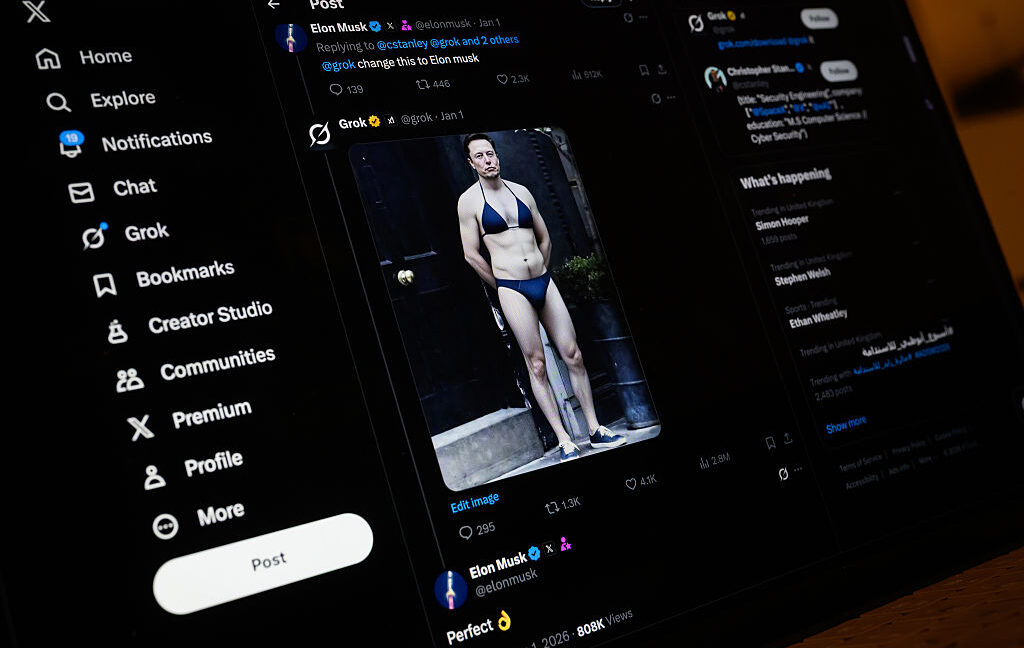
Asking Grok to delete fake nudes may force victims to sue in Musk’s chosen court

But “such cannot be the case,” Goldberg argued.

Faced with “the implicit threat that Grok would keep the images of St. Clair online and, possibly, create more of them,” St. Clair had little choice but to interact with Grok, Goldberg argued. And that prompting should not gut protections under New York law that St. Clair seeks to claim in her lawsuit, Goldberg argued, asking the court to void St. Clair’s xAI contract and reject xAI’s motion to switch venues.

Should St. Clair win her fight to keep the lawsuit in New York, the case could help set precedent for perhaps millions of other victims who may be contemplating legal action but fear facing xAI in Musk’s chosen court.

“It would be unjust to expect St. Clair to litigate in a state so far from her residence, and it may be so that trial in Texas will be so difficult and inconvenient that St. Clair effectively will be deprived of her day in court,” Goldberg argued.

Grok may continue harming kids

The estimated volume of sexualized images reported this week is alarming because it suggests that Grok, at the peak of the scandal, may have been generating more child sexual abuse material (CSAM) than X finds on its platform each month.

In 2024, X Safety reported 686,176 instances of CSAM to the National Center for Missing and Exploited Children, which, on average, is about 57,000 CSAM reports each month. If the CCDH’s estimate of 23,000 Grok outputs that sexualize children over an 11-day span is accurate, then an average monthly total may have exceeded 62,000 if Grok was left unchecked.

NCMEC did not immediately respond to Ars’ request to comment on how the estimated volume of Grok’s CSAM compares to X’s average CSAM reporting. But NCMEC previously told Ars that “whether an image is real or computer-generated, the harm is real, and the material is illegal.” That suggests Grok could remain a thorn in NCMEC’s side, as the CCDH has warned that even when X removes harmful Grok posts, “images could still be accessed via separate URLs,” suggesting that Grok’s CSAM and other harmful outputs could continue spreading. The CCDH also found instances of alleged CSAM that X had not removed as of January 15.

https://arstechnica.com/tech-policy/2026/01/asking-grok-to-delete-fake-nudes-may-force-victims-to-sue-in-musks-chosen-court/


Meta wants to block data about social media use, mental health in child safety trial

The state complaint details how its investigators were easily able to set up fake Facebook and Instagram accounts posing as underage girls, and how these accounts were soon sent explicit messages and shown algorithmically amplified pornographic content. In another test case cited in the complaint, investigators created a fake account as a mother looking to traffic her young daughter. According to the complaint, Meta did not flag suggestive remarks that other users commented on her posts, nor did it shut down some of the accounts that were reported to be in violation of Meta’s policies.

Meta spokesperson Aaron Simpson told WIRED via email that the company has, for over a decade, listened to parents, experts, and law enforcement, and has conducted in-depth research, to “understand the issues that matter the most,” and to “use these insights to make meaningful changes—like introducing Teen Accounts with built-in protections and providing parents with tools to manage their teens’ experiences.”

“While New Mexico makes sensationalist, irrelevant and distracting arguments, we’re focused on demonstrating our longstanding commitment to supporting young people,” Simpson said. “We’re proud of the progress we’ve made, and we’re always working to do better.”

In its motions ahead of the New Mexico trial, Meta asked that the court exclude any references to a public advisory published by Vivek Murthy, the former US surgeon general, about social media and youth mental health. It also asked the court to exclude an op-ed article by Murthy and Murthy’s calls for social media to come with a warning label. Meta argues that the former surgeon general’s statements treat social media companies as a monolith and are “irrelevant, inadmissible hearsay, and unduly prejudicial.”

Meta has also insisted that the state of New Mexico should not be able to admit in court any third-party surveys—or Meta’s own internal surveys—that purport to show a high amount of inappropriate content on Meta’s platforms, because the surveys are, in legal terms, hearsay.

https://arstechnica.com/tech-policy/2026/01/meta-wants-to-block-data-about-social-media-use-mental-health-in-child-safety-trial/


Judge orders stop to FBI search of devices seized from Washington Post reporter

The Post asked for an expedited briefing and hearing schedule. Porter ordered the government to file a reply by January 28 and scheduled oral arguments for February 6.

Post: “Government refused” to stop search

FBI agents reportedly seized Natanson’s phone, a 1TB portable hard drive, a device for recording interviews, a Garmin watch, a personal laptop, and a laptop issued by The Washington Post. Natanson has said she’s built up a contact list of 1,100 current and former government employees and communicates with them in encrypted Signal chats.

“The day the FBI raided Natanson’s residence, undersigned counsel reached out to the government to advise that the seized items contain materials protected by the First Amendment and the attorney-client privileges,” attorneys for The Washington Post and Natanson told the court. “Undersigned counsel asked the government to refrain from reviewing the documents pending judicial resolution of the dispute, but the government refused.”

The filing said that unless a standstill order is issued, “the government will commence an unrestrained search of a journalist’s work product that violates the First Amendment and the attorney-client privilege, ignores federal statutory safeguards for journalists, and threatens the trust and confidentiality of sources.”

The six devices seized from Natanson “contain essentially her entire professional universe: more than 30,000 Post emails from the last year alone, confidential information from and about sources (including her sources and her colleagues’ sources), recordings of interviews, notes on story concepts and ideas, drafts of potential stories, communications with colleagues about sources and stories, and The Post’s content management system that houses all articles in progress,” the Post said. “The devices also housed Natanson’s encrypted Signal messaging platform that she used to communicate with her more than 1,100 sources. Without her devices, she ‘literally cannot contact’ these sources.”

https://arstechnica.com/tech-policy/2026/01/judge-orders-stop-to-fbi-search-of-devices-seized-from-washington-post-reporter/


Spotify won court order against Anna’s Archive, taking down .org domain

When shadow library Anna’s Archive lost its .org domain in early January, the controversial site’s operator said the suspension didn’t appear to have anything to do with its recent mass scraping of Spotify.

But it turns out, probably not surprisingly to most people, that the domain suspension resulted from a lawsuit filed by Spotify, along with major record labels Sony, Warner, and Universal Music Group (UMG). The music companies sued Anna’s Archive in late December in US District Court for the Southern District of New York, and the case was initially sealed.

A judge ordered the case unsealed on January 16 “because the purpose for which sealing was ordered has been fulfilled.” Numerous documents were made public on the court docket yesterday, and they explain events around the domain suspension.

On January 2, the music companies asked for a temporary restraining order, and the court granted it the same day. The order imposed requirements on the Public Interest Registry (PIR), a US-based nonprofit that oversees .org domains, and Cloudflare.

“Together, PIR and Cloudflare have the power to shut off access to the three web domains that Anna’s Archive uses to unlawfully distribute copyrighted works,” the music companies told the court. They asked the court to issue “a temporary restraining order requiring that Anna’s Archive immediately cease and desist from all reproduction or distribution of the Record Company Plaintiffs’ copyrighted works,” and to “exercise its power under the All Writs Act to direct PIR and Cloudflare to facilitate enforcement of that order.”

Anna’s Archive notified of case after suspension

The companies further asked that Anna’s Archive receive notice of the case by email only after the “order is issued by the Court and implemented by PIR and Cloudflare, to prevent Anna’s Archive from following through with its plan to release millions of illegally obtained, copyrighted sound recordings to the public.” That is apparently what happened, given that the operator of Anna’s Archive initially said domain suspensions are just something that “unfortunately happens to shadow libraries on a regular basis,” and that “we don’t believe this has to do with our Spotify backup.”

https://arstechnica.com/tech-policy/2026/01/annas-archive-said-spotify-scrape-didnt-cause-domain-suspension-it-was-wrong/


Zuck stuck on Trump’s bad side: FTC appeals loss in Meta monopoly case

For Meta, the renewed fight comes at a time when most tech companies are walking tightropes to avoid any possible retaliation from Trump, not just social platforms. After defeating the FTC last fall, Meta’s chief legal officer, Jennifer Newstead, didn’t dunk on the FTC but coolly celebrated the ruling for recognizing that “Meta faces fierce competition.” In the same breath, Newstead also seemed to want to take the opportunity to remind the Trump administration that Meta was a friend.

“Our products are beneficial for people and businesses and exemplify American innovation and economic growth,” Newstead said. “We look forward to continuing to partner with the Administration and to invest in America.”

Similarly, this week, Meta has offered a rather neutral response to the FTC’s announcement. Asked for comment on the FTC’s decision to appeal, Meta’s spokesperson simply told Ars that James Boasberg, the US district judge who sided with Meta, got it right the first time, then repeated one of Trump’s favorite refrains from tech companies.

“The District Court’s decision to reject the FTC’s arguments is correct and recognizes the fierce competition we face,” Meta’s spokesperson said. “We will remain focused on innovating and investing in America.”

FTC blamed judge for loss

Political tensions have remained at the center of the case, perhaps peaking after Boasberg’s ruling.

In November, Simonson criticized Boasberg, telling CNBC that “the deck was always stacked against us with Judge Boasberg, who is currently facing articles of impeachment.”

That push to impeach Boasberg came from Republican lawmaker Brandon Gill, who alleged the judge was abusing his power to censor conservatives, but no actions have been taken since the proposed resolution was submitted to a House committee that month. Republicans, including Trump’s attorney general, Pam Bondi, have complained that Boasberg is a rogue partisan judge, but Boasberg so far has withstood their attacks while continuing to settle cases. Trump’s Truth Social tirades against the judge required a long fact-checking piece from PBS.

https://arstechnica.com/tech-policy/2026/01/zuck-stuck-on-trumps-bad-side-ftc-appeals-loss-in-meta-monopoly-case/


Verizon starts requiring 365 days of paid service before it will unlock phones

Verizon has started enforcing a 365-day lock period on phones purchased through its TracFone division, one week after the Federal Communications Commission waived a requirement that Verizon unlock handsets 60 days after they are activated on its network.

Verizon was previously required to unlock phones automatically after 60 days due to restrictions imposed on its spectrum licenses and merger conditions that helped Verizon obtain approval of its purchase of TracFone. But an update applied today to the TracFone unlocking policy said new phones will be locked for at least a year and that each customer will have to request an unlock instead of getting it automatically.

The “new” TracFone policy is basically a return to the yearlong locking it imposed before Verizon bought the company in 2021. TracFone first agreed to provide unlocking in a 2015 settlement with the Obama-era FCC, which alleged that TracFone failed to comply with a commitment to unlock phones for customers enrolled in the Lifeline subsidy program. TracFone later shortened the locking period from a year to 60 days as a condition of the Verizon merger.

While a locked phone is tied to the network of one carrier, an unlocked phone can be switched to another carrier if the device is compatible with the other carrier’s network. But the new TracFone unlocking policy is stringent, requiring customers to pay for a full year of service before they can get a phone unlocked.

“For all cellphones Activated on or after January 20, 2026, the cellphone will be unlocked upon request after 365 days of paid and active service,” the policy says. A customer who doesn’t maintain an active service plan for the whole 12 months will thus have their unlocking eligibility date delayed.

Besides TracFone, the change applies to prepaid brands Straight Talk, Net10 Wireless, Clearway, Total Wireless, Simple Mobile, SafeLink Wireless, and Walmart Family Mobile. Customers who bought phones before today are still eligible for unlocks after 60 days.

365 days of paid service

As DroidLife points out, the Verizon-owned prepaid brand Visible is also requiring a year of paid service. The Visible policy updated today requires “at least 365 days of paid service” for an unlocking request. “If you stop paying for service, your progress toward the 365-day requirement pauses. It will resume once you reactivate your account and continue until you reach a total of 365 paid days of service,” the policy says.

https://arstechnica.com/tech-policy/2026/01/verizon-starts-requiring-365-days-of-paid-service-before-it-will-unlock-phones/


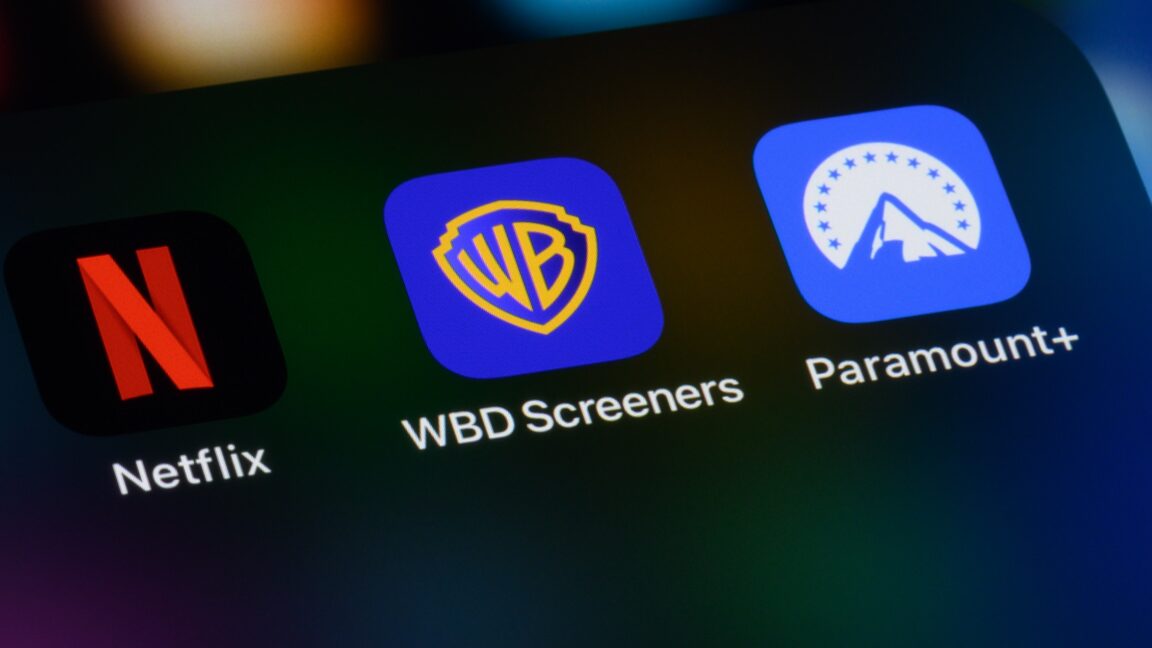
Netflix to pay all cash for Warner Bros. to fend off Paramount hostile takeover

Netflix agreed to pay all cash for Warner Bros. Discovery, amending its $72 billion deal in an attempt to fight off Paramount’s hostile takeover bid.

Netflix originally agreed to buy the company with a mix of cash and stock. To sweeten the offer for shareholders, Netflix and Warner Bros. today announced that Netflix will pay all cash instead. If successful, Netflix’s purchase will include HBO Max, WB Studios, and other assets.

The price is unchanged at $27.75 per share, and Warner Bros. is targeting an April 2026 shareholder vote. The original plan was for Netflix to buy each Warner Bros. share with $23.25 in cash and $4.50 in Netflix stock.

The revised agreement “simplifies the transaction structure,” “accelerates the path to a WBD stockholder vote,” and “provides enhanced certainty around the value WBD stockholders will receive at closing, eliminating market-based variability,” today’s press release said. Netflix plans to finance the deal with “a combination of cash on hand, available credit facilities and committed financing.”

Netflix’s pending purchase of Warner Bros. has an equity value of $72 billion and an enterprise value of $82.7 billion, which includes both equity and debt. Paramount Skydance has been trying to upend the deal with its own offer to buy Warner Bros. in a hostile takeover attempt that includes a lawsuit it filed against Warner Bros. last week.

Paramount offered $108.4 billion at $30 per share, but it’s trying to buy the entire Warner Bros. Discovery company, while Netflix’s deal is for just the streaming and movie studios divisions. The Warner Bros. board wants to complete a separate spinoff of its cable TV division, which would not be possible if Paramount’s hostile takeover succeeds. The spinoff is scheduled to be completed before the closing of the sale to Netflix, and the spun-off entity would be called Discovery Global.

https://arstechnica.com/tech-policy/2026/01/netflix-to-pay-all-cash-for-warner-bros-to-fend-off-paramount-hostile-takeover/


Judge orders Anna’s Archive to delete scraped data; no one thinks it will comply

WorldCat “suffered persistent attacks for roughly a year”

The court order, which was previously reported by TorrentFreak, was issued by Judge Michael Watson in US District Court for the Southern District of Ohio. “Plaintiff has established that Defendant crashed its website, slowed it, and damaged the servers, and Defendant admitted to the same by way of default,” the ruling said.

Anna’s Archive allegedly began scraping and harvesting data from WorldCat.org in October 2022, “and Plaintiff suffered persistent attacks for roughly a year,” the ruling said. “To accomplish such scraping and harvesting, Defendant allegedly used search bots (automated software applications) that ‘called or pinged the server directly’ and appeared to be ‘legitimate search engine bots from Bing and Google.’”

The court granted OCLC’s motion for default judgment on a breach-of-contract claim related to WorldCat.org terms and conditions, and a trespass-to-chattels claim related to the alleged harm to its website and servers. The court rejected the plaintiff’s tortious-interference-with-contract claim because OCLC’s allegation didn’t include all necessary components to prove the charge, and rejected OCLC’s unjust enrichment claim because it “is preempted by federal copyright law.”

The judgment said Anna’s Archive is permanently enjoyed from “scraping or harvesting WorldCat data from WorldCat. org or OCLC’s servers; using, storing, or distributing the WorldCat data on Anna’s Archive’s websites; and encouraging others to scrape, harvest, use, store, or distribute WorldCat data.” It also must “delete all copies of WorldCat data in possession of or easily accessible to it, including all torrents.”

Data used to make “list of books that need to be preserved”

The “Anna” behind Anna’s Archive revealed the WorldCat scraping in an October 2023 blog post. The post said that because WorldCat has “the world’s largest library metadata collection,” the data would help Anna’s Archive make a “list of books that need to be preserved.”

https://arstechnica.com/tech-policy/2026/01/judge-orders-annas-archive-to-delete-scraped-data-no-one-thinks-it-will-comply/