Trump admin undercuts CDC, seizes control of national COVID-19 data

Huge facade for CDC headquarters against a beautiful sky.
Enlarge / Signage outside the Centers for Disease Control and Prevention (CDC) headquarters in Atlanta, Georgia, on Saturday, March 14, 2020.

A new directive from the Trump administration has cut the Centers for Disease Control and Prevention out of the loop for data from hospitals treating patients with COVID-19, a move which could have significant effects on what information about the pandemic is made public and how it is presented and used.

The updated instructions from the Department of Health and Human Services (PDF), dated July 10, go into effect today. Under the new mandate, the CDC “will no longer control” data reported by hospitals about admissions, capacity, resource utilization, ventilator use, staffing—or COVID-related deaths. Hospitals are instead required to make their reports directly to HHS, to have a third party make the report to HHS, or to make reports to their states if their states are certified to receive it.

The instructions also explicitly bar hospitals from reporting to the CDC in addition to HHS: “As of July 15, 2020, hospitals should no longer report the COVID-19 information in this document to the National Healthcare Safety Network site,” the document explains, referring to the CDC’s system.

The federal government will use the data provided “to inform decisions at the federal level, such as allocation of supplies, treatments, and other resources,” the document explains. “We will no longer be sending out one-time requests for data to aid in the distribution of Remdesivir or any other treatments or supplies. This daily reporting is the only mechanism used for the distribution calculations, and the daily is needed daily to ensure accurate calculations.”

In other words, for hospitals to receive federal aid, including access to one of the few known beneficial drugs for treating COVID-19, they will have to comply with the administration’s data directive.

Public health experts expressed concern about the move. “Historically, CDC has been the place where public health data has been sent, and this raises questions about not just access for researchers but access for reporters, access for the public to try to better understand what is happening with the outbreak,” Jen Kates of the Kaiser Family Foundation told The New York Times, which was first to report the new policy.

Ryan Panchadsaram, one of the team behind popular COVID-19 data visualization site Covid Exit Strategy, said the site is already unable to gather data for ICU beds in use following the change. In series of Tweets posted very early this morning, he indicated, “a critical indicator is missing… with @HHSGov as the only source, they need to aggregate this data and make it public. With daily briefings over, the public needs it more than ever.”

The directive echoes moves made by Brazilian President Jair Bolsonaro in June, when his administration removed almost all data relating to COVID-19 from Brazil’s government websites and made it unavailable to researchers. Two days later, however, Brazil’s Supreme Court ordered the restoration of the public data—perhaps presaging the kind of legal fighting we may soon see in the United States.

New fronts, old war

Rather than pulling together federal resources to swim in one direction, the White House for several months has instead apparently been at war with US public health experts, including the CDC, over how to handle the COVID-19 crisis.

On February 26, the White House named Vice President Mike Pence as the head of the administration’s official coronavirus task force. Within a few weeks, the CDC all but vanished from the national scene. Its regular public briefings, led by Dr. Nancy Messonnier, ended March 9, and the agency did not hold another public press conference on COVID-19 until June 12.

In more recent days, the CDC and the administration have been at odds over guidance for how to safely reopen the US economy, particularly schools. President Donald Trump on July 8 publicly trashed the CDC’s proposed guidelines for schools, saying they were “very tough and expensive” and threatening to withhold federal funding from schools that refused to reopen.

An internal document containing more detailed CDC guidance about opening schools leaked to the public over the weekend. That document specifically calls out “full sized, in-person classes, activities, and events” as being “highest risk” for transmission of the novel coronavirus, and suggests local authorities use customized approaches, hybrid models, and distance learning where appropriate.

That, however, is apparently still not what the administration wants to hear, and the White House is spreading a different message. Pence, speaking yesterday, explicitly dismissed CDC guidance. “To be very clear, we don’t want CDC guidance to be a reason why people don’t reopen their schools,” Pence said, according to local media.

The same day, CDC director Dr. Robert Redfield warned that things are likely to get harder from here, not easier, saying, “I do think the fall and the winter of 2020 and 2021 are going to be probably one of the most difficult times we’ve experienced in American public health.”

The administration has also continued to target Dr. Anthony Fauci, director of the NIH’s National Institute of Allergy and Infectious Diseases and the nation’s top infectious disease specialist, whose science-driven approach often puts him at odds with the whims of the White House.

Trump in April amplified a Twitter hashtag (#FireFauci) calling for Fauci to be removed from his post. Although Fauci still has his job and remains on the COVID-19 task force, The Washington Post reported Saturday that he has not spoken with the president in several weeks.

Yesterday, USA Today published a hit piece on Fauci written by Trump aide Peter Navarro. “Fauci has been wrong about everything I have interacted with him on,” Navarro wrote, claiming, among other things, that Fauci was incorrect to dismiss hydroxychloroquine as a treatment for COVID-19. (Studies have found that hydroxychloroquine doesn’t work as an effective treatment for COVID-19.)

The White House immediately tried to distance itself from Navarro’s piece today, saying the story “didn’t go through normal White House clearance processes.”

“Ultimately, it hurts the president to do that,” Fauci told The Atlantic, speaking of Trump’s multiple attempts to discredit him. “I think if you talk to reasonable people in the White House, they realize that was a major mistake on their part, because it doesn’t do anything but reflect poorly on them.”

Meanwhile, the disease continues to spread: as of today, more than 60,000 people in the United States are being diagnosed with COVID-19 every day, with cases increasing in 44 states and territories, stable in eight, and waning in only two (New Hampshire and Maine). To date, more than 3.4 million people in the US have been diagnosed with COVID-19, and more than 135,000 have died.

https://arstechnica.com/?p=1691869


Verizon’s 5G network is tiny—Verizon ads “falsely implied” it’s nationwide

A giant Verizon 5G logo in an expo hall.
Enlarge / A Verizon booth at Mobile World Congress Americas in Los Angeles in September 2018.

Verizon has reluctantly agreed to stop running ads that falsely imply the carrier’s 5G mobile service is available throughout the United States.

Verizon 5G makes heavy use of millimeter-wave signals that don’t travel far and are easily blocked by walls and other obstacles. On top of that, 5G is generally only available in small areas instead of throughout entire cities. Yet Verizon has been running a commercial that “falsely implies that Verizon 5G service is broadly available nationally,” the National Advertising Division (NAD) of the BBB National Programs organization said yesterday. The NAD also recommended that Verizon discontinue two TV commercials and refrain from making the same claims in future ads.

The NAD runs the advertising industry’s self-regulatory system that companies use to challenge each other’s advertising claims. The NAD’s critique of Verizon’s 5G ads was unusually pointed. The group said it “recommended that Verizon discontinue claims which communicate that its 5G service is widely available in cities across the country, and that its service is broadly and readily accessible in cities where it has been launched.”

The NAD said that Verizon “does not dispute that its current 5G service is limited” and that “Verizon’s 5G coverage is primarily restricted to outdoor locations in certain neighborhoods and varies from block to block.” The NAD also said that Verizon commercials touted speeds of nearly 2Gbps despite “the absence of evidence showing that Verizon’s speed test results accurately characterize how Verizon’s 5G network will perform under normal consumer use, or a clear and conspicuous disclosure of the expected results.”

Verizon reluctantly agreed to stop making the misleading claims in ads. The NAD announcement noted:

In its advertiser’s statement, Verizon stated that it will comply with NAD’s recommendations even though it does not agree with all aspects of NAD’s decision. Verizon further stated that it “remains committed to the self-regulatory process and believes strongly in transparency of customer messaging.”

We asked Verizon what specific aspects of the decision it doesn’t agree with, but the company spokesperson who replied to us did not provide an answer. You can watch what appears to be one of the offending commercials here and view Verizon’s 5G coverage maps at the carrier’s website. The Verizon spokesperson told us that “the TV ads stopped running months ago,” but Verizon’s decision to comply with the NAD ruling means that it will have to make more limited claims in future ads.

AT&T challenged Verizon ads despite its own history

The NAD ruling against Verizon came in response to a challenge filed by AT&T, which has also misled US mobile users by renaming parts of its 4G network “5GE.” AT&T started changing the network indicators on many customers’ 4G phones to 5GE in January 2019.

After a challenge filed by T-Mobile, AT&T in May 2020 complied with an NAD recommendation to “discontinue its ‘5G Evolution’ and ‘5G Evolution, The First Step to 5G’ claims,” but it apparently continued to use the misleading “5GE” icon as the network indicator on phone screens. In early June, AT&T finally deleted a webpage that touted the “5GE” coverage that’s actually 4G, and the URL now redirects to a page that doesn’t mention 5GE at all.

AT&T also won a partial victory last year in a challenge of Verizon’s “First to 5G” claims. Verizon is appealing yet another NAD decision in a separate AT&T challenge. The appeals also go through the ad industry’s self-regulatory system, and in rare cases, they are referred to the US Federal Trade Commission.

Verizon’s misleading claims

In yesterday’s ruling against Verizon, the NAD said that “the challenged advertising consists of shifting images of Verizon engineers describing the exceptional speed and capacity of Verizon’s 5G network while standing in geographically diverse cities throughout the United States, with several running real-time speed tests on their phones.” Verizon did not explicitly claim nationwide coverage, but the NAD decided that the ads make the implied claim that “consumers will be able to access Verizon’s 5G network in the specific locations its engineers are depicted to be standing (and representative locations like them).”

In one representative claim, a Verizon commercial said that “people from midtown Manhattan to downtown Denver can experience” Verizon 5G service. The NAD said it “determined that while the challenged advertising communicates the accurate message that Verizon is building its 5G network, the commercials simultaneously tout the current performance of the network, ultimately conveying the net impression that Verizon’s ‘ultrafast’ 5G network is widely available in cities across the country and, where it has already been launched, is broadly and readily accessible to consumers.”

Further, the NAD found that the ads communicate a message “that Verizon’s exceptional speed and performance can be broadly accessed in the cities where it has been launched.” The NAD recommended that Verizon “discontinue claims implying that the speeds referenced in the commercials are typically experienced by consumers.”

Verizon admits limits

One paragraph from the NAD announcement summarizes Verizon’s admission that its 5G network isn’t even close to being nationwide:

With regard to substantiation, Verizon does not dispute that its current 5G service is limited. Verizon’s 5G coverage is primarily restricted to outdoor locations in certain neighborhoods and varies from block to block. Since Verizon’s 5G coverage, at present, is not broadly accessible throughout the cities where it has been launched, NAD was concerned that the challenged advertising potentially communicates a misleading message to consumers. NAD considered whether Verizon’s disclosure (“5G Ultra Wideband only available in parts of select cities and locations. 5G-capable device req’d. Coverage may vary and is not available exactly in all locations and venues depicted.”) is sufficient to limit its claims, but concluded that it is not clear and conspicuous, and fails to effectively qualify or limit the claims. Therefore, NAD recommended the claims be discontinued.

Under years-old NAD guidelines, carriers should only claim “nationwide” coverage “if the provider offers service in diverse regions of the country and the network covers at least 200 million people.”

Americans who see Verizon’s misleading 5G ads “includ[e] people who live in cities and towns across the country that may not receive Verizon 5G coverage for months, if not years,” the NAD said yesterday. Going forward, the NAD said that Verizon 5G ads related to availability and performance should “clearly and conspicuously” tell customers about “the relevant, material limitations of its current network.”

https://arstechnica.com/?p=1691892


Jail time for polluters in Biden’s $2T climate plan

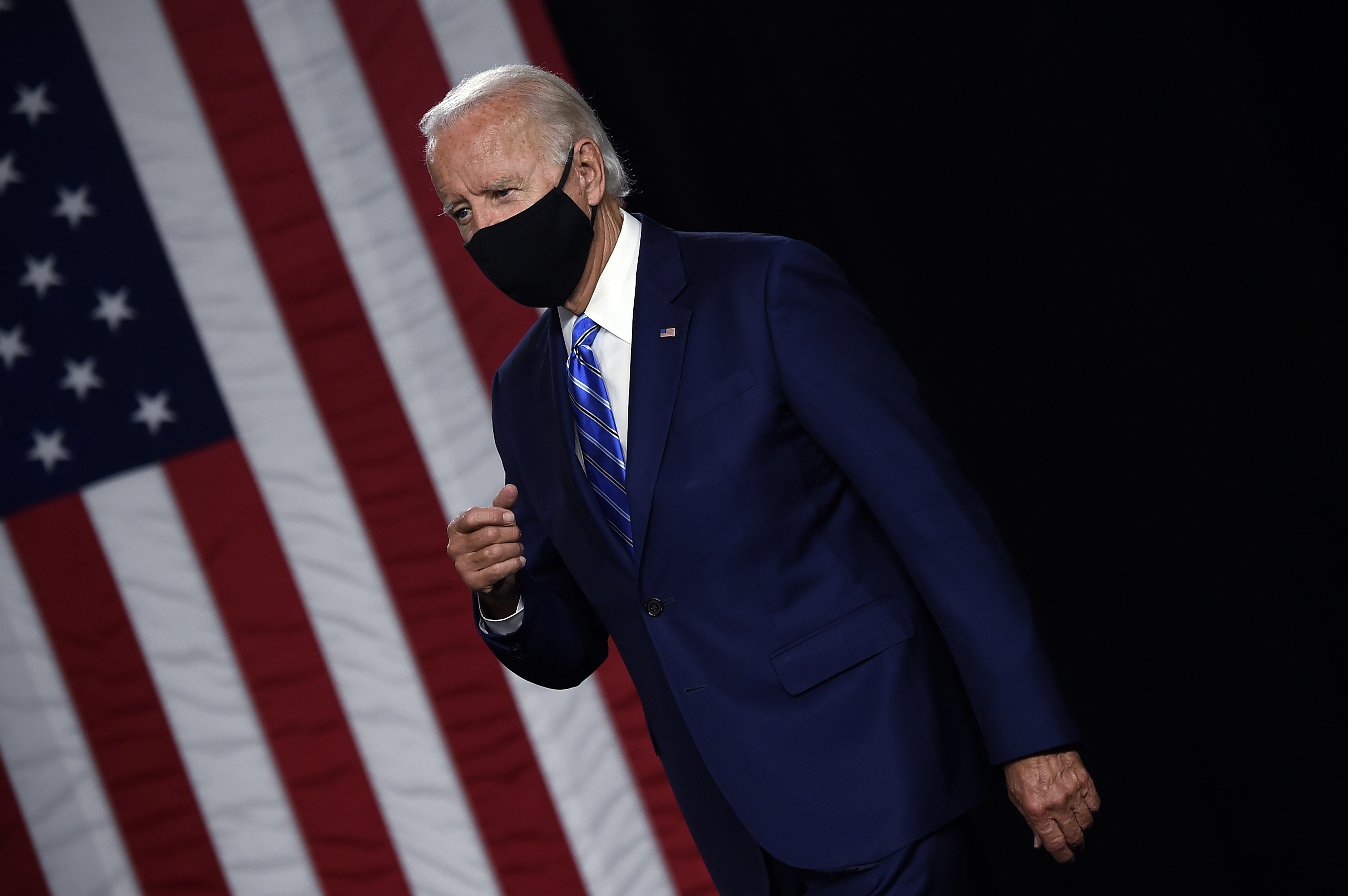
Democratic presidential candidate and former Vice President Joe Biden arrives to speak at a "Build Back Better" Clean Energy event on July 14, 2020 at the Chase Center in Wilmington, Delaware.
Enlarge / Democratic presidential candidate and former Vice President Joe Biden arrives to speak at a “Build Back Better” Clean Energy event on July 14, 2020 at the Chase Center in Wilmington, Delaware.

Democratic presidential candidate and former Vice President Joe Biden today unveiled a $2 trillion policy platform that seeks to address both the climate crisis and the worsening pandemic-driven economic crisis by drastically expanding investments in infrastructure improvements and clean energy.

The proposals in the Biden plan are in line with a policy package released earlier this month by the House Select Committee on the Climate Crisis. The House Democrats’ plan (a 550-page PDF), at a very high level, calls first for bringing the United States to net-zero emissions by 2050, then for using the back half of the century to get to negative emissions. That ambitious goal would be reached by adopting new regulations and incentives in energy, transportation, housing, construction, manufacturing, agriculture, telecommunications, and infrastructure, among other sectors.

Biden’s plans, as outlined on his campaign website, go much less in-depth than the Congressional proposal package but are perhaps even more aggressive.

Invest in everything

Biden calls for a $2 trillion investment across four years—one presidential term—to be spread immediately across the infrastructure, energy, transportation, construction, and agriculture sectors for some fairly large projects.

The infrastructure investment the plan calls for is exactly what you think: repairs and upgrades to roads, bridges, water systems, and electric systems as well as the deployment of universal broadband nationwide. Similarly, the transportation investment covers about what you’d expect from the campaign: electric vehicle charging stations and more US auto manufacturing jobs.

Notably, however, Biden’s plan also calls for a drastic increase in funding for public transportation, both in cities that already have it and in cities that do not. “Every American city with 100,000 or more residents,” of which there are roughly 300 give or take, should have access to “high-quality, zero-emissions public transportation options,” which not only includes rail and buses but also safer, expanded infrastructure for bicyclists and pedestrians.

Biden’s plan also calls for a radical expansion of clean energy, and fast (relatively speaking). US electricity should be “carbon pollution free” by 2035, he writes, which would be achieved by investments that spur rapid development in and widespread commercial adoption of “critical clean energy technologies, including battery storage, negative emissions technologies, the next generation of building materials, renewable hydrogen, and advanced nuclear” technologies.

In addition to expanding clean energy, the plan adds, we should clean up better after existing messes we’ve already made, by creating “250,000 jobs plugging abandoned oil and natural gas wells and reclaiming abandoned coal, hardrock, and uranium mines.” Those clean-up efforts would reduce leakage of toxic products into local air and water supplies and prevent local environmental damage.

Get everyone on board

The Biden plan, like the Congressional plan, also calls for keeping a careful eye on who benefits and who is harmed by US policy, and it does so by focusing on environmental justice. Biden would do that by “creating good, union, middle-class jobs in communities left behind, righting wrongs in communities that bear the brunt of pollution, and lifting up the best ideas from across our great nation—rural, urban, and tribal,” he writes.

The communities that tend to be hardest-hit by environmental pollutants are low-income communities of color. One 2019 study, for example, found Black Americans being exposed to 66 percent more air pollution from vehicles than their white counterparts. Even the Trump administration concluded in 2018 that people of color are more likely to breathe polluted air in the United States than white Americans. Black, Latinx, and low-income communities are also more likely to face cancer-causing pollutants or to live with tainted water supplies.

Biden’s plan would leverage basically the entire federal apparatus to generate change that actually benefits everyone, he explains—or, in his terms, an “inclusive and empowering, all-of-government approach.” That would include the establishment of a new division inside the Department of Justice expressly devoted to pursuing criminal environmental prosecutions for polluters, “to the fullest extent permitted by law and, when needed, seek additional legislation to hold corporate executives personally accountable.” That includes jail time, “where merited.”

Civilian Climate Corps

Additionally, Biden would restructure and expand White House environmental advisory groups and overhaul the EPA’s office of civil rights compliance. The plan also creates a Civilian Climate Corps to work under scientists and land-management experts in areas such as forestry management and wetland restoration. That work would bolster resilience and mitigate damage from future natural disasters, such as hurricanes and wildfires, that can be exacerbated by climate change.

Biden explicitly tied his climate plan to the COVID-19 pandemic still sweeping the United States in remarks (video) he delivered in his home state of Delaware. The US needs to “deal with the climate crisis that could cast us into an even darker and more permanent shadow” than the current pandemic, Biden said, adding that plans to reopen should “build an economy of the future, not an economy of the past.”

That “economy of the future” looks like “millions of high-paying union jobs creating a modern infrastructure and a clean energy future,” Biden added. “These are the most critical investments we can make for the long-term health and vitality both of the American economy and the long-term physical health and safety of the American people.”

https://arstechnica.com/?p=1691692


Trump admin caves to Harvard and MIT, won’t deport online-only students

A student visa stamped with the word

The Trump administration has rescinded a controversial policy that could have forced the deportation of foreign students who attend colleges that aren’t offering in-person classes during the coronavirus pandemic.

As we reported last week, Harvard University and the Massachusetts Institute of Technology sued the Trump administration to block the policy issued by US Immigration and Customs Enforcement (ICE). Under the policy change announced July 6, foreign students with nonimmigrant (F-1 and M-1) visas would have had to leave the United States or transfer to different schools that offer in-person classes.

But US officials agreed to rescind the new policy in a settlement with Harvard and MIT, as revealed today at a hearing on the case at US District Court for the District of Massachusetts. “At a short hearing Tuesday afternoon, US District Judge Allison Burroughs confirmed that a settlement had been reached,” The Wall Street Journal reported. “She said the government would rescind the policy, withdraw an FAQ detailing the rule and return to the status quo of guidance issued in the spring.”

Under a policy issued on March 13, which is back in effect because of the settlement, ICE provided an exemption to the rule that F-1 students must attend classes in person. The Harvard/MIT lawsuit pointed out that, when ICE issued this exemption, “the government made clear that this arrangement was ‘in effect for the duration of the emergency.'” But the Trump administration’s July 6 order reversed that policy despite the pandemic raging on and the fact that President Trump had not rescinded his national emergency declaration.

Harvard and MIT argued in their lawsuit that the Trump administration’s July 6 policy change “is arbitrary and capricious because it fails to consider important aspects of the problem before the agency… fails to offer any reasoned basis that could justify the policy.” The lawsuit also argues that the change violates a requirement to provide public notice and take comments.

Thousands

Harvard has nearly 5,000 students who study in the United States on F-1 visas, and MIT has nearly 4,000 such students. The schools, which are planning online-only instruction this fall, said that the now-rescinded ICE policy would have been problematic for students from countries such as “Syria, where civil war and an ongoing humanitarian crisis make Internet access and study all but impossible.” Such students also would have had to “abandon housing arrangements they have made, breach leases, pay exorbitant air fares, and risk COVID-19 infection on transoceanic flights” or “risk detention by immigration authorities and formal removal from the country” if they did not leave the US promptly, the lawsuit said.

But barring further changes, today’s settlement means those students will be able to remain in the US and take online-only classes this fall. The Trump administration’s backpedal seemed to come as a surprise—the schools submitted a court filing earlier today asking for a preliminary injunction “because Harvard and MIT are likely to succeed on the merits” and because the policy was already causing harm. “The government is enforcing the Directive at airports and consulates across the world, turning students away because they attend universities that have made the considered decision to offer instruction online this fall,” Harvard and MIT said in their filing submitted shortly before the settlement was announced.

While the July 6 policy would have prevented foreign students from taking fully online course loads in the US, the now-rescinded policy said that nonimmigrant students could avoid deportation proceedings by attending schools that use a “hybrid model” of online and in-person classes.

Trump plan “threatened public health and safety”

The Harvard/MIT lawsuit had support via amicus briefs from cities and towns and hundreds of other colleges. The Trump administration’s move to deport students faced other challenges in one lawsuit filed by 17 states and the District of Columbia as well as in another lawsuit filed by New York Attorney General Letitia James.

James issued a statement calling today’s settlement “welcome news for more than 100,000 international students in New York, more than one million students across the country, and millions of additional families across the world.”

“President Trump and his team threatened the public health and safety of all students, all faculty, and hundreds of millions of residents across New York and the rest of the nation because of his rush to reopen schools, his anti-immigrant motives, and his sagging poll numbers,” James said. “Enough is enough. It’s time for the president to stop treating immigrants like nothing more than scapegoats and for him to start leading our nation through this national pandemic.”

https://arstechnica.com/?p=1691705


UK bans Huawei from 5G networks in “victory for the Trump administration”

A Huawei logo next to the word

The UK government today announced a ban on Huawei equipment in 5G wireless networks, along with a plan to urge home-Internet providers to stop buying Huawei gear. The UK government’s announcement said that US sanctions imposed in May factored heavily into the decision, which was “taken today in a meeting of the National Security Council (NSC) chaired by the Prime Minister [Boris Johnson].”

“Following US sanctions against Huawei and updated technical advice from our cyber experts, the government has decided it is necessary to ban Huawei from our 5G networks,” UK Digital Secretary Oliver Dowden said in the announcement. A New York Times report called today’s UK announcement “a victory for the Trump administration and a reversal of an earlier decision that underscores how technology has taken center stage in the deepening divide between Western powers and China.”

Under the new rules, the UK said that “buying new Huawei 5G equipment [is] banned after 31 December 2020” and that “Huawei will be completely removed from the UK’s 5G networks by the end of 2027.” Today’s announcement expands on an earlier ban that applies to the “most sensitive ‘core’ parts of 5G network[s],” the UK said.

While there isn’t a corresponding ban on Huawei gear in home-broadband networks, the UK said it is “advising full fiber operators to transition away from purchasing new Huawei equipment” and recommended a transition of two years or less. The UK government said it is taking this more lenient approach for wireline networks because “the UK has managed Huawei’s presence in the UK’s fixed access networks since 2005 and we also need to avoid a situation where broadband operators are reliant on a single supplier for their equipment.”

“This approach strikes the right balance by recognizing full fiber’s established presence and supporting the connections that the public relies on, while fully addressing the security concerns of our world leading experts,” the UK said.

4G and older wireless networks will apparently be allowed to keep using Huawei gear. Dowden said in a statement to the House of Commons today that “we will need to take a different approach to full fiber and older networks—one that recognizes that they are different to 5G in terms of their technology, their security, and the vendors supporting them.” As the NYT wrote, “the latest British security assessment has concluded that there was no need to eliminate Huawei’s role in earlier 2G, 3G and 4G networks, and the government is not seeking to discourage consumers from using Huawei products.”

A Huawei spokesperson told Ars that the ban “threatens to move Britain into the digital slow lane, push up bills, and deepen the digital divide.” The decision “is about US trade policy and not security,” Huawei said.

US sanctions’ impact

The UK explained that US sanctions against Huawei “remov[ed] the firm’s access to products that have been built based on US semiconductor technology.” The UK said its technical experts at the National Cyber Security Centre (NCSC) “reviewed the consequences of the sanctions and concluded [that Huawei] will need to do a major reconfiguration of its supply chain as it will no longer have access to the technology on which it currently relies and there are no alternatives which we have sufficient confidence in. They found the new restrictions make it impossible to continue to guarantee the security of Huawei equipment in the future.”

Dowden said that even before the US sanctions, UK officials “have been clear-eyed from the start that the Chinese-owned vendors Huawei and ZTE were deemed to be high risk.” High-risk vendors that “pose greater security and resilience risks to the UK’s networks” should be kept “outside the network’s core and away from critical infrastructure and sites,” Dowden said.

Huawei denied that US sanctions will prevent it from offering secure technology. “We remain confident that the new US restrictions would not have affected the resilience or security of the products we supply to the UK,” Huawei’s statement to Ars said. Huawei urged the UK to reconsider the ban and said the company “will conduct a detailed review of what today’s announcement means for our business here and will work with the UK government to explain how we can continue to contribute to a better connected Britain.”

In the United States, the Federal Communications Commission banned Huawei and ZTE equipment in projects paid for by the FCC’s Universal Service Fund (USF). The FCC ban took effect on July 1, and it prevents ISPs from using USF money to purchase or maintain Huawei and ZTE gear. Future US actions may require ripping out old Huawei and ZTE gear from these networks.

FCC Chairman Ajit Pai has argued that Huawei and ZTE “have close ties to China’s Communist government and military apparatus” and “are subject to Chinese laws broadly obligating them to cooperate with any request from the country’s intelligence services and to keep those requests secret.” Huawei has said it doesn’t have secret access to phone networks and that the US has not provided evidence for its claims.

Huawei sued the FCC to stop the USF ban, and briefs by Huawei and the FCC were submitted in court earlier this month.

https://arstechnica.com/?p=1691646


Amazon supermarket will roll out fancy new smart cart when it opens

Amazon has provided an educational video explaining how to use a grocery cart when it is also the register.
Enlarge / Amazon has provided an educational video explaining how to use a grocery cart when it is also the register.

Amazon is working to expand its grocery business—not Whole Foods, which already has more than 500 store locations, but its Amazon-branded line of register-free stores. While it’s easy for a customer to carry a small bag of items around a convenience store like in the first Amazon Go, it’s a lot harder to schlep around the volume of groceries one often buys at a regular supermarket. So Amazon is doing what Amazon does and is making the shopping cart itself an essential part of its high-tech retail experience.

The Amazon Dash cart will launch along with the company’s Los Angeles supermarket later this year, the company said today. The smart cart requires a customer to log in to the cart using the Amazon app on their phone, then uses a system of cameras and sensors to take stock of what a shopper puts in the basket. It also has a touchscreen panel on the front handle, so consumers can purchase items that don’t have barcodes, such as fresh produce. When a shopper is done with their grocery trip, they roll the cart out of the “dash lane,” grab their now paid-for groceries, and saunter away.

Amazon’s camera-heavy, cashier-free convenience stores first opened to the public in 2017. Earlier this year, the company followed suit with a slightly larger Amazon Go Grocery location in Seattle, which Ars’ own Sam Machkovech tested to see exactly how accurate the panopticon supermarket setup is. (Spoiler: It’s not completely foolproof, but it can identify if you try to steal a banana.)

The cart basically takes the technology behind the Amazon Go stores and makes it mobile, using “a combination of computer vision algorithms and sensor fusion” to ID and scan items as you place them inside the cart. “Our primary motivation for building this was to be able to save customers time,” Amazon VP Dilip Kumar said. “The alternative solutions are standing in the express checkout lanes or fumbling through self-checkout stations.”

The implication is that the stores in Amazon’s impending full-size supermarket chain—there are five more locations planned after the as-yet unopened Los Angeles store—are simply too large to fill every square inch of the ceiling with cameras, as the smaller-footprint Amazon Go and Amazon Go Grocery stores are built. Instead, the cart-based shopping option basically works like the Scan-It app at use in traditional grocery retailers Giant and Stop & Shop, except built into the cart. Those systems, however, are far from flawless, and it seems as though the carts might also have some exploitable errors.

Perhaps the biggest unanswered question Amazon has left hanging: are the carts smart enough to sense when they’ve been left in the middle of a parking space or at a bus stop, as seems to be the fate for most standard supermarket trolleys?

https://arstechnica.com/?p=1691554


Google bans ads for stalkerware apps—with some exceptions

Google's corporate headquarters.
Enlarge / Google’s corporate headquarters.

Google is trying to make it a little harder for a determined stalker to spy remotely on their spouse, partner, or ex by prohibiting advertising for stalkerware apps on its services—with one giant loophole.

The search giant updated its advertising policy to say that effective August 11, the company will no longer allow “the promotion of products or services that are marketed or targeted with the express purpose of tracking or monitoring another person or their activities without their authorization.” Notably, the ban does not include private investigation services or apps and services designed for parents to track or monitor their minor children.

The change may sound like it addresses only a tiny niche, but the problem of stalkerware is unfortunately widespread. According to data from the Centers for Disease Control and Prevention, about one in four women and one in ten men have experienced some form of violence, stalking, or abuse from a partner. About 10 percent of women and 2 percent of men specifically report experiencing stalking by an intimate partner.

The smartphone era, for all its benefits, has also put a whole new arsenal of control tools at the fingertips of abusers. More than five years ago, NPR reported, “cyberstalking is now a standard part of domestic abuse in the United States,” and it has only grown since. The New York Times found “hundreds” of readily available stalkerware apps in 2018. Earlier this year, one survey found that one in ten Americans admitted to using stalkerware to track either current or former partners—and it can be difficult for victims to tell if a stalking app has been installed on their device. Last year, one man in Australia made international headlines for using “simple technology and smartphone apps” not only to track his ex-girlfriend’s every move but also to remotely control her car.

A group of researchers conducting an experiment in 2017 (PDF) found that searching Google for terms such as “how to catch a cheating spouse with his cell phone” resulted in thousands of ad impressions for stalkerware. Many are listed as “dual-use” apps that have a legitimate purpose, such as child safety or anti-theft protections “but are easily and effectively repurposed for spying on a partner,” the researchers found. Additionally, “a wealth of online resources are available to educate abusers about exploiting apps for [intimate partner surveillance],” with some dual-use developers “encouraging their use in IPS via advertisements, blogs, and customer support services,” the researchers said.

The popularity of “dual use” apps, as described by the study, also effectively makes Google’s ban on stalkerware ads toothless, as many tracking apps already claim to have a legitimate use for parents or investigators.

https://arstechnica.com/?p=1691253


Amazon bans TikTok on employee phones, then calls it a mistake [Updated]

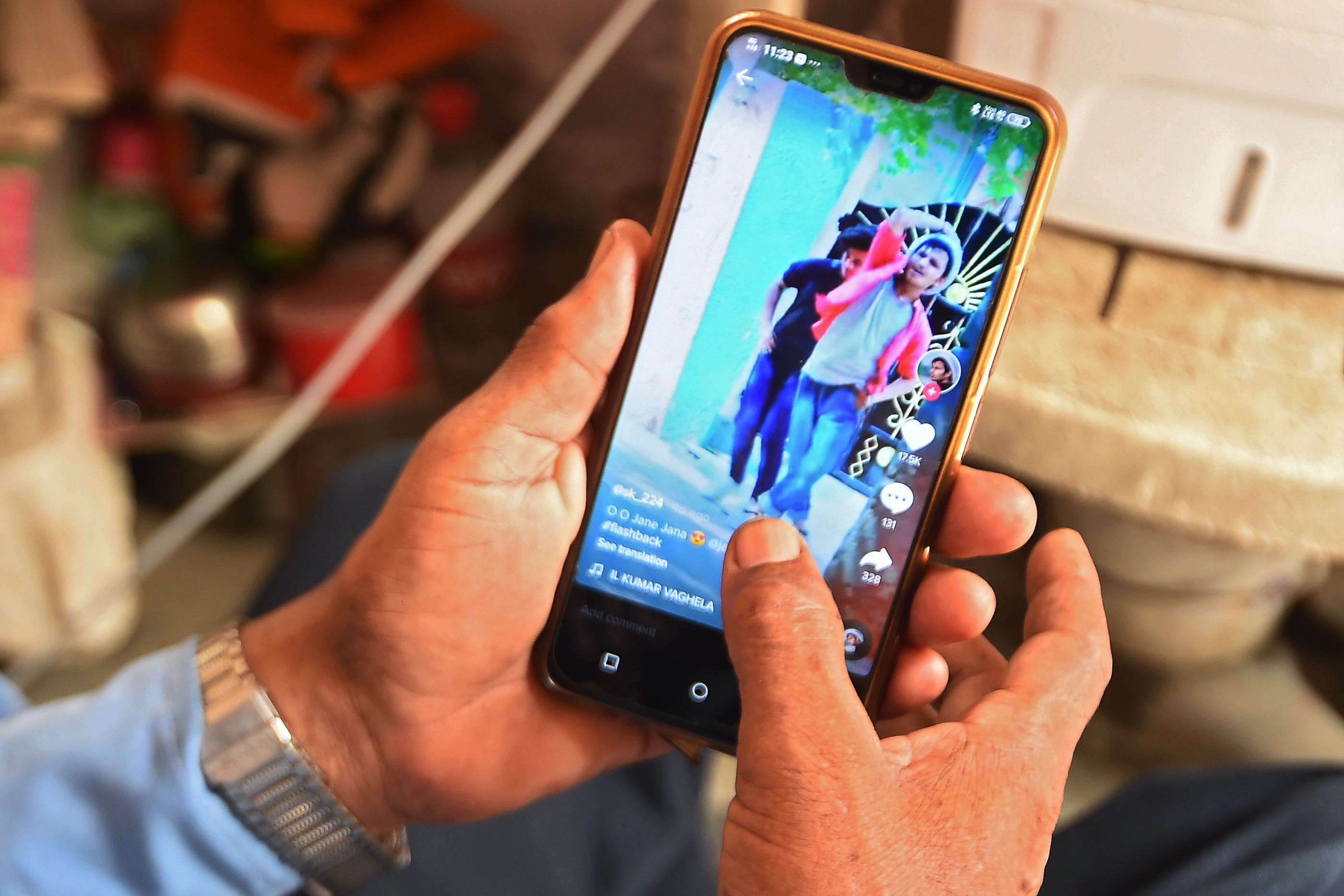
A person's hands holding a smartphone with the app TikTok displayed on the screen.
Enlarge / A person using the video-sharing application TikTok on a smartphone in Faridabad in India on June 30, 2020.

Update at 5:15pm ET: Amazon now says it sent the email announcing a TikTok ban by mistake, according to The Verge. “This morning’s email to some of our employees was sent in error,” an Amazon spokesperson said, according to the Verge article. “There is no change to our policies right now with regard to TikTok.” We’re still waiting to hear back from Amazon.

Original story follows:

Amazon ordered employees to delete TikTok from their phones today, citing “security risks.”

Amazon’s email to employees did not specify what security risks the company is worried about or whether TikTok has already caused a security problem internally. Last month, we reported on research that found TikTok’s app was able to read clipboard data on iOS devices. TikTok said it will stop accessing users’ clipboards.

“Due to security risks, the TikTok app is no longer permitted on mobile devices that access Amazon email,” a message from Amazon’s IT department to employees said. “If you have TikTok on your device, you must remove it by 10-Jul to retain mobile access to Amazon email. At this time, using TikTok from your Amazon laptop browser is allowed.”

Amazon presumably requires device-management software on phones that access company email, giving the company the ability to enforce the no-TikTok policy by removing access to Amazon email accounts. A screenshot of the email to Amazon employees was posted on Twitter by New York Times reporter Taylor Lorenz.

TikTok is a social video-sharing service owned by ByteDance, a Chinese company. The Trump administration is considering a ban on TikTok and other Chinese social media apps, as reported earlier this week. The United States has been imposing limits on other Chinese tech companies such as Huawei, arguing that Chinese firms can be forced to aid the Chinese government with espionage. Members of Congress have also raised national-security concerns about TikTok.

TikTok was already banned by India, and the app halted operations in Hong Kong due to a new security law imposed by China.

TikTok seeks explanation

Amazon did not explain its reasoning to TikTok, a TikTok spokesperson told Ars.

“While Amazon did not communicate to us before sending their email, and we still do not understand their concerns, we welcome a dialogue so we can address any issues they may have and enable their team to continue participating in our community,” TikTok’s statement said.

The statement also said that “[u]ser security is of the utmost importance to TikTok—we are fully committed to respecting the privacy of our users.” TikTok further noted that its users include “many of the Amazon employees and contractors who have been on the frontlines of this pandemic.”

We contacted Amazon about its TikTok ban today and will update this story if we get any response.

https://arstechnica.com/?p=1690883


Charter’s hidden “Broadcast TV” fee now adds $197 a year to cable bills

A cable TV box and remote control.
Getty Images | DonNichols

Charter Communications is raising the “Broadcast TV” fee it imposes on cable plans from $13.50 to $16.45 a month starting in August, Stop the Cap reported.

Charter says the Broadcast TV fee covers the amount it pays broadcast television stations (e.g. affiliates of CBS, NBC, ABC, and Fox) for the right to carry their channels. But for consumers, it is essentially a hidden fee because Charter’s advertised TV prices don’t include it.

Charter has raised the fee repeatedly—it stood at $9.95 in early 2019 before a series of price increases. At $16.45 a month, the fee will cost customers an additional $197.40 per year. Charter sells TV, broadband, and phone service under its Spectrum brand name and is the second largest cable company in the US after Comcast.

Charter imposes a smaller Broadcast TV fee on its streaming TV plans, but is raising that charge from $6 to $8.95 a month, Stop the Cap wrote. Charter is also raising the base price of its TV service. “Spectrum’s most popular TV Select package is expected to increase $1.50/month to $73.99/month,” Stop the Cap wrote. “Customers on a promotional pricing plan will not see this rate increase until their promotional pricing expires.”

Charter confirms increase

A Charter spokesperson confirmed the Broadcast TV and TV Select price increases when contacted by Ars today. The Broadcast TV fee change will apparently apply even to customers who are on promotional deals that lock in a price for a set amount of time. Charter told us that promotional prices apply to the “package price,” which “will not change until the end of their promotional period.” But Charter said that the “Broadcast TV Service Charge is separate from the TV package price,” so it can go up regardless of whether a customer is still on a promotional deal.

Charter’s statement to Ars said that “programmers annually raise programming fees to deliver the same content, leading to higher costs across the entire industry. The increase we are passing through to viewers is a direct result of these rising programming costs.”

Comcast’s Broadcast TV fee is $14.95 a month.

No discounts for lack of live sports yet

Cable customers haven’t gotten discounts for sports channels even though major sports leagues suspended play over the past few months during the coronavirus pandemic. As we explained in a previous story, whether consumers get refunds will depend on negotiations involving cable companies, sports leagues, and broadcasters.

Charter reiterated to us today that it “will pass through [to customers] any rebates we receive from the loss of live sports during COVID-19.”

Charter does not charge a Regional Sports Network fee, while companies including Comcast, AT&T-owned DirecTV, and Verizon charge both the Broadcast TV and sports fees. Sports costs are simply part of the package with Charter instead of being put into a separate fee, and it isn’t clear how big any pandemic-related refunds will be.

Charter faces another lawsuit over hidden fee

Charter has faced lawsuits alleging that the Broadcast TV fee is misleading. A class-action lawsuit filed in May 2020 against Charter in US District Court for the District of Connecticut says:

Across all its advertising channels, Charter consistently and prominently advertises a flat, fixed monthly rate for its television service and cable service packages which include television service.

For years, Charter has not disclosed that it actually increases those promised fixed monthly rates through multiple schemes. Among other omissions, Charter does not fully or accurately disclose the existence or amount of its Broadcast TV Surcharge prior to sign-up, and does not disclose that it periodically increases that surcharge (and thus customers’ monthly rates) at its discretion.

Charter customer-service reps have falsely told customers who call to complain “that the Surcharge is a tax or government fee,” the lawsuit said. The lawsuit points out that “[a]ny costs Charter pays to carry local channels are part of the inherent cost of Charter’s business of providing television services.” The Broadcast TV charge is thus “a way for Charter to charge more per month for its basic service without having to advertise the actual, higher price,” the lawsuit said.

Disclosure: The Advance/Newhouse Partnership, which owns 13 percent of Charter, is part of Advance Publications. Advance Publications owns Condé Nast, which owns Ars Technica.

https://arstechnica.com/?p=1690817


Commerce “Sharpiegate” report finally released without redaction

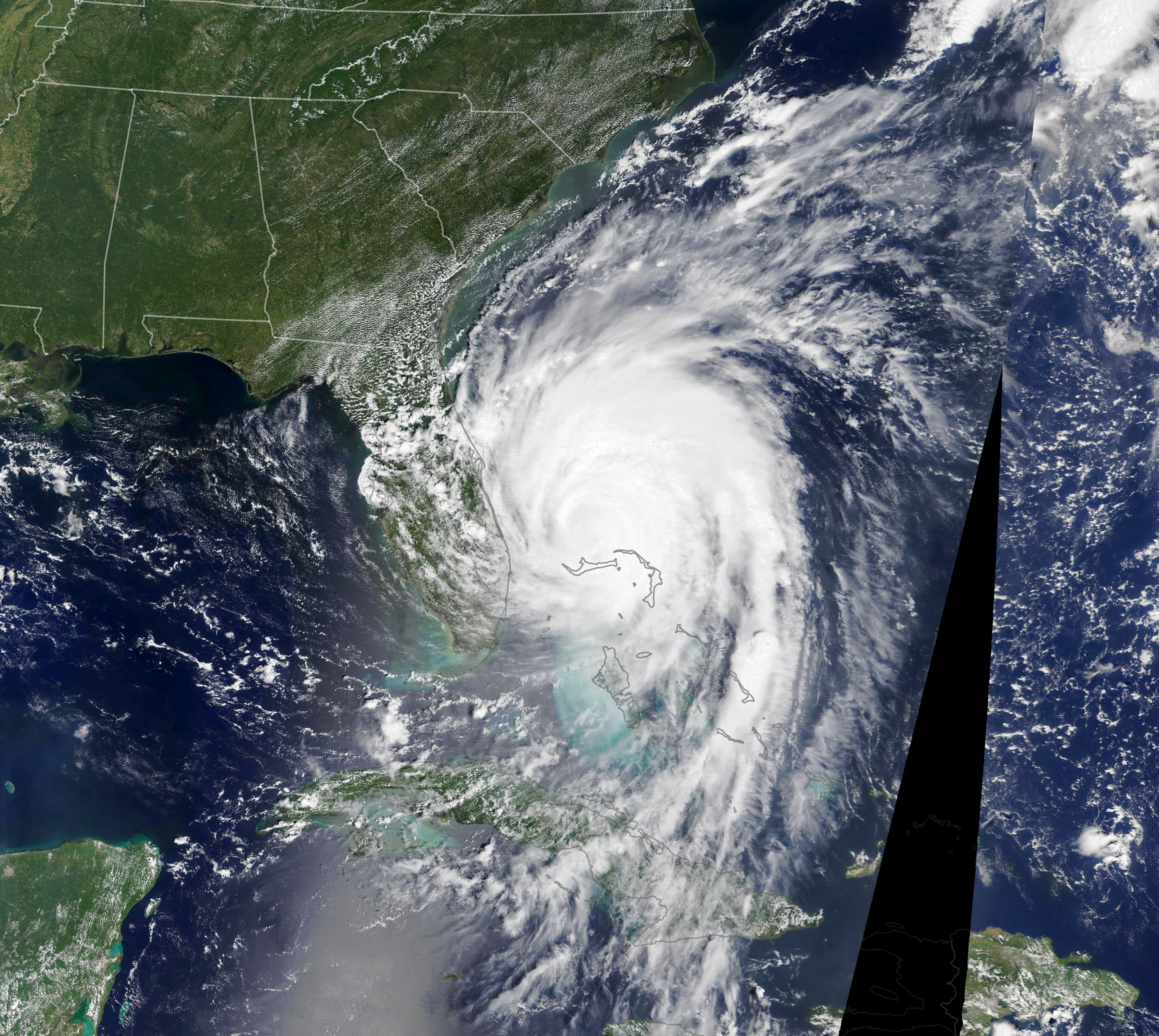
Hurricane Dorian on September 3, 2019.
Enlarge / Hurricane Dorian on September 3, 2019.

Recent weeks have seen some additional drama over last September’s hurricane dust-up between President Trump and the National Weather Service. Last week, the Commerce Department’s inspector general was crying foul over leadership stonewalling the release of her report on any legal issues arising from the dustup. That report is now out, and it brings some resolution to the tale.

If you’re unfamiliar with the background, as Hurricane Dorian approached the US coast, President Trump tweeted that Alabama would “most likely be hit (much) harder than anticipated”—a statement that was untrue, as the storm was set to turn north and up the Eastern Seaboard. His statement, however, prompted calls from concerned people in Alabama, who wondered if the forecast had changed. In response, the Birmingham National Weather Service office tweeted, “Alabama will NOT see any impacts from #Dorian.”

Annoyance and investigations

This tweet perturbed the White House, eventually resulting in a controversial, unsigned statement released by NOAA that essentially said the president was technically right and the Birmingham office should have qualified their tweet. (There was also an incident in which a hurricane forecast map in the Oval Office was modified with a black marker to make it look like Alabama might have been in danger.)

The NOAA statement in turn prompted formal complaints, which set off several investigations into the matter. The broad outlines of what happened have been known for a long time: the White House was upset and called Commerce Secretary Wilbur Ross, whose office worked with NOAA leadership to push out the statement. A report released last month by NOAA’s Scientific Integrity officer reinforced that picture, faulting NOAA leadership for playing along but noting that Commerce staff had run the show.

The panel behind that report had no access to the Commerce staff, but Commerce Inspector General Peggy Gustafson did. And although the outline of events was known, some of the details in Gustafson’s report are remarkable.

The report includes interviews with everyone involved in the statement, as well as some emails and text messages. And that allows for a step-by-step description of events—even though there are discrepancies in the versions presented by different people.

Everything started with an email from acting White House Chief of Staff Mick Mulvaney to Commerce Secretary Ross. Mulvaney explained that Trump tweeted based on the latest info they had seen and did not understand why the Birmingham office would tweet a correction. “As it currently stands,” Mulvaney wrote, “it appears as if the [National Weather Service] intentionally contradicted the president. And we need to know why. He wants either a correction or an explanation or both.”

Jobs on the line

Ross reached out to acting NOAA Director Neil Jacobs to ask what the timeline of forecasts was to see where the two tweets fit in. The next day, he tasked his Chief of Staff Michael Walsh and acting Deputy General Counsel David Dewhirst with following up on the information gathering, which turned into statement writing with NOAA’s Neil Jacobs and his director of communications, Julie Kay Roberts.

Roberts said that Walsh told her that “there are jobs on the line. It could be the forecast office in Birmingham. Or it could be someone higher than that. And the higher is less palatable.”

These four gave different accounts of the meeting in which the statement was drafted. Dewhirst claims he was more or less just typing up the statement but that the NOAA folks were dictating it. Everyone else seems to indicate that it was Dewhirst who was responsible for the contents of the statement.

NOAA’s Jacobs and Roberts went through the timeline of forecasts, finding that significant effects in Alabama had dropped out by the Saturday morning forecast—long before Trump’s tweet late Sunday morning. The National Security Council was receiving updated forecasts in real time, meaning the president should have been briefed of this already. Jacobs had explained that “AL was never in the track cone… AL was in the percent probability of seeing tropical storm force winds” and that “[n]obody here would have said that AL was going to have impacts with a 15 percent chance of seeing 39 mph winds. That’s just a windy day, even if it was 100 percent chance.”

This was the basis for defending President Trump's outdated claim about Dorian's effects in Alabama.
This was the basis for defending President Trump’s outdated claim about Dorian’s effects in Alabama.

But that ended up being exactly the justification used to defend Trump’s tweet that Alabama would “most likely be hit (much) harder than anticipated”—a forecast map showing a sliver of Alabama with a chance of winds over 39 miles per hour. The latter half of the statement was the most controversial:

The Birmingham National Weather Service’s Sunday morning tweet spoke in absolute terms that were inconsistent with probabilities from the best forecast products available at the time.

NOAA leadership apparently pushed back on this move, with Jacobs calling it “just a bad idea.” But Commerce staff overruled them. Julie Kay Roberts said she “remember[ed] being specifically told, and I believe it was by Dave Dewhirst, I think it was Dave, that if the Birmingham part didn’t stay in, it wouldn’t meet the need. Whatever that meant.”

A slight tilt

The report also says, “The [Commerce] Department’s then-Director of Policy, who was traveling with Secretary Ross and participated in one call about the Statement, opined that ‘the President wasn’t wrong, and Birmingham wasn’t wrong. They were ships passing in the night.’ But the statement needed to ‘tilt’ slightly against NWS Birmingham to counteract ‘the press folks’ who have tilted the story ‘against the President.’”

Forecasters from the Birmingham office who were interviewed certainly disagreed with the admonition. The report states, “[One] forecaster explained that the wind probability map for tropical-storm-force winds is not something they ‘advertise’ or were basing the forecast on—and the state and local decision makers they had been briefing had already decided that they did not need any more briefings on Hurricane Dorian.”

The report’s conclusions—which were made public earlier when the summary memo was posted—highlight that the statement Commerce staff directed “did not further NOAA’s or the National Weather Service’s interests,” and it “failed to account for the public safety intent of the National Weather Service Birmingham tweet.”

Even if the Birmingham tweet had deserved correction, five days had gone by and the hurricane had moved on. Obviously, the statement had nothing to do with getting a forecast right or clarifying public confusion.

And the report is not kind to the Commerce staff involved, saying, “Mr. Walsh and Mr. Dewhirst did not exercise the appropriate judgment or have the appropriate science background to have leading roles in navigating these events on behalf of a science agency.”

The hope is that this episode did not have a lasting effect on public trust, and the NOAA workers interviewed seemed optimistic about that. As one of the Birmingham forecasters put it, “I think at this point, we’re ready to move forward… I think that’s the biggest thing, so we can get back to our jobs, protection of life and property.”

https://arstechnica.com/?p=1690784