Google, Amazon condemn Trump order cutting off foreign worker visas

Closeup photograph of immigration documents.
Enlarge / Illustration of a green card sitting on an open passport. Green card holders are not currently affected by the new order, but the administration says immigration-restricting order will leave 525,000 jobs vacant this year for US citizens to fill.

Tech firms are pushing back against the Trump administration after President Donald Trump yesterday issued an order suspending the issuance of a wide range of work visas, including the type that allows high-skilled workers and their families to enter the country and work for American technology companies.

Monday’s proclamation renews and expands on an earlier order issued in April.

Both the April and June orders claim that admitting workers from other nations at this time would put the United States at an economic disadvantage while the nation tries to recover from massive job losses related to COVID-19. The new order extends the existing limitations on immigration into the US through at least the end of the year, and it additionally prohibits several categories of non-immigrant worker visas from being issued in the back half of 2020. The visas now being limited include types H-1B, which applies to high-skilled degree-holding workers; H-2B, which applies to temporary workers in non-agricultural industries; J, which applies to exchange visitors, both educational and professional; and L, which applies to individuals transferring to a US location within the company for which they already work.

The order does not apply to anyone who already holds a green card, who is the spouse or child of a US citizen, or whose entry “would be in the national interest” as determined by the State Department or the Department of Homeland Security, including health care workers involved in COVID-19 research or treatment. Agricultural workers entering the country temporarily are also exempt. The order applies only to new visas and does not affect those who already have been approved for a relevant visa or are already in the US.

Big Tech is Big Mad

The H1-B program is capped at 85,000 visas per year, and large US tech firms compete mightily to hire foreign workers through that program. Google alone filed for more than 7,600 H-1B visas in fiscal year 2019, according to federal data compiled by recruiting firm Dice.

“Immigrants have not only fueled technological breakthroughs and created new businesses and jobs but have also enriched American life,” a Google spokesperson said in response to the new executive order. “America’s continued success depends on companies having access to the best talent from around the world. Particularly now, we need that talent to help contribute to America’s economic recovery.”

Tech rivals Facebook and Amazon also echoed the sentiment that choking off the pipeline for international talent would hinder, rather than help, US economic recovery. “The move to keep highly-skilled talent out of the US will make our country’s recovery even more difficult,” Facebook said. “Highly-skilled visa holders play a critical role in driving innovation—at Facebook and at organizations across the country—and that’s something we should encourage, not restrict.”

“We oppose the Administration’s short-sighted action,” Amazon said bluntly. “The value of high-skilled visa programs is clear, and we are grateful for the many Amazon employees from around the world that have come to the US to innovate new products and services for our customers.”

Major tech-industry trade groups, including the Internet Association and the Information Technology Industry Council, also denounced the administration’s move.

Although major US firms all employ workers on H-1B guest worker visas, the program has not been without controversy. A February report from OneZero found that many employees working for US firms on H-1B visas experience additional pressure, discrimination, or fear at work due to their immigration status. “I believe that H-1B employees tend to tolerate more bullshit from managers because they cannot move to another company that easily, and they cannot just rage-quit,” one employee told OneZero.

https://arstechnica.com/?p=1686565


If T-Mobile’s giant outage affected you, now’s your chance to tell the FCC

A bird sits on top of a T-Mobile sign outside a mobile phone store,
Enlarge / A pigeon rests on a T-Mobile logo outside a mobile phone store, operated by Deutsche Telekom AG, in Munich, Germany, on Monday, Feb. 6, 2017.
Getty Images | Bloomberg

The Federal Communications Commission is kicking off its investigation of last week’s T-Mobile outage by seeking public comment. Government agencies, public safety entities, businesses, and individuals are encouraged to submit comments about their experiences during the 13-hour outage.

“We seek comment on the impact of these outages from the perspective of affected public safety entities, as well as state and local governments,” the FCC said in a public notice today. “Are there estimates of how many calls, including 911 calls, failed or otherwise affected by the outage? What was the effect of the outage on public safety activities and government services across the country? Was there a disruption of data services relied on by public safety entities and state and local governments?”

The outage “prevented customers from making calls, receiving calls, and in some cases, sending text messages over T-Mobile’s Voice-over LTE (VoLTE) network,” and social media reports indicated that 911 calling was affected, the FCC notice said. Besides government and public safety organizations, the FCC is seeking comment on “this outage’s impact from the perspective of affected individual and enterprise consumers.”

The public notice asks these questions of businesses and individuals:

How did consumers learn about the outage? Was T-Mobile’s communication about the outage appropriate, timely, and effective? Were consumers of T-Mobile’s network able to successfully make or receive all calls, some calls, or no calls at all? Were consumers of other communications service providers able to successfully complete calls to consumers of T-Mobile’s network? Were consumers’ text messages successfully sent or received during the outage? Did consumers on T-Mobile’s network experience a disruption of data services during the outage? Were consumers able to use alternative measures, such as “FaceTime, iMessage, Google Meet, Google Duo, Zoom, Skype and others to connect” during the outage, and was that method of communication successful and effective? What effect did the outage have on businesses and providers of critical services, such as hospitals? What effect did the outage have on consumers’ personal activities?

The FCC set a deadline of July 8 for submitting comments. The docket where comments can be filed online is available here. Read the public notice for instructions on how to submit comments by mail.

FCC Chairman Ajit Pai called the outage “unacceptable” and said the FCC will be “demanding answers,” as we reported last week. That doesn’t mean T-Mobile will face any punishment. In a previous case, Pai called mobile carriers’ response to Hurricane Michael in Florida “completely unacceptable,” but imposed no punishment.

T-Mobile’s explanation of last week’s network failure said “the trigger event is known to be a leased fiber circuit failure from a third-party provider in the Southeast.” Mobile networks are designed to survive such failures, but in this case T-Mobile said its network “redundancy failed us and resulted in an overload situation that was then compounded by other factors.” The overload then caused an “IP traffic storm that spread from the Southeast to create significant capacity issues across the IMS (IP multimedia Subsystem) core network that supports VoLTE calls.” To prevent recurrences, T-Mobile said it has “worked with our IMS and IP vendors to add permanent additional safeguards to prevent this from happening again and we’re continuing to work on determining the cause of the initial overload failure.”

https://arstechnica.com/?p=1686657


Millions of documents from >200 US police agencies published in “BlueLeaks” trove

Police officers in riot gear advance, fangs out, down a city street.
Enlarge / Minneapolis police fire tear gas at those protesting the May 25 death of George Floyd.

Millions of law enforcement documents—some showing pictures of suspects, bank account numbers, and other sensitive information—has been published on a website that holds itself out as an alternative to WikiLeaks, according to a security news website KrebsOnSecurity.

DDOSecrets, short for Distributed Denial of Secrets, published what it said were millions of documents stolen from more than 200 law enforcement groups around the country. Reporter Brian Krebs, citing the organization National Fusion Center Association (NFCA), confirmed the validity of the leaked data. DDOSecrets said the documents spanned at least a decade, although some of the dates in documents suggested a timespan twice as long.

Dates on the most recent documents were from earlier this month, suggesting the hack that first exposed the documents happened in the last three weeks. The documents, which were titled “BlueLeaks,” were published on Friday, the date of this year’s Juneteenth holiday celebrating the emancipation of enslaved African Americans in the Confederacy. BlueLeaks had special significance in the aftermath of a Minneapolis police officer suffocating a handcuffed Black man to death when the officer placed his knee on the man’s neck for 8 minutes and 45 seconds.

Over the weekend, critics of police abuse took to social media to celebrate the leak and display documents that purportedly came from it. Some of them included:

The link hosting the data only sporadically loads and, more often than not, times out before loading the index page. When it does display, the page organizes leaked documents both by the law enforcement agency they came from and often by names of individuals purportedly associated with a document. Once again, clicking on a link more often than not fails to load the document. BitTorrent links have also been made available, but they too fail.

What that means is that most of the world has only seen a small portion of the leak in tiny snippets without the ability to analyze the leak in its entirety firsthand.

The leaks, according to Krebs, are the result of a hack on the server of Netsential, a Houston-based Web development firm that caters to law enforcement groups, among other customers. Much of the pilfered data was distributed through law enforcement “fusion centers” across the United States that act as hubs for federal, state, and local agencies to share information. Krebs also quoted a former assistant secretary of policy at the US Department of Homeland Security saying that some of the exposed data could endanger the safety of individual sources by identifying them publicly.

In an article published by Wired, however, DDOSecrets co-founder Emma Best said that she spent a week prior to leak publication removing about 50 gigabytes of material disclosing sensitive details about crime victims, children, and information on unrelated private businesses, health care, and retired veterans’ associations.

“It’s the largest published hack of American law enforcement agencies,” Best told the publication in a series of text messages. “It provides the closest inside look at the state, local, and federal agencies tasked with protecting the public, including [the] government response to COVID and the BLM protests.”

https://arstechnica.com/?p=1686495


North Face, Patagonia, REI join Facebook advertiser boycott

The participating businesses have decided the best way to show "dislike" is to withhold money.
Enlarge / The participating businesses have decided the best way to show “dislike” is to withhold money.

Several brands have agreed to suspend advertising on Facebook for the month of July and are calling for other companies to join them in boycotting the platform to protest its handling of racism and hate speech.

Patagonia, producer of high-end outerwear, on Sunday became the most recent company to say it was pulling all advertising from Facebook and Instagram for the time being. “For too long, Facebook has failed to take sufficient steps to stop the spread of hateful lies and dangerous propaganda on its platform,” company head of marketing Cory Bayers said in a written statement. “The stakes are too high to sit back and let the company continue to be complicit in spreading disinformation and fomenting fear and hatred.”

Patagonia followed employee placement firm Upwork and outdoor wear competitors REI and The North Face, which all confirmed on Friday they would join the boycott. North Face parent company VF Corp also told CNN its other apparel brands, including Dickies, Vans, and Timberland, were considering joining the protest.

The boycott campaign, Stop Hate for Profit, is spearheaded by a coalition of non-profit organizations including the NAACP, the Anti-Defamation League, and Color of Change, among others. The groups accuse Facebook of “allowing racist, violent, and verifiably false content to run rampant on its platform,” while “amplifying the messages of white supremacists, permitting incitement to violence, and failing to disrupt bad actors using the platform to do harm.”

Facebook, in a lengthy statement published Sunday, said it is “taking steps to review our policies, ensure diversity and transparency when making decisions on how we apply our policies, and advance racial justice and voter engagement on our platform.”

Long-simmering

Advocacy groups’ frustration with Facebook and its CEO Mark Zuckerberg is not new. As far back as 2016, Facebook executives knew they had a problem with extremism and polarization, The Wall Street Journal recently reported.

In 2018, Facebook agreed to a civil rights audit. There is “no question that Facebook faces a number of serious civil rights challenges, including allegations of allowing the propagation of hate speech and misinformation and the facilitation of voter suppression, discriminatory ad targeting, privacy lapses, unfair censorship, and algorithmic bias,” the audit leader, Laura Murphy, wrote in a 2018 report (PDF).

Those challenges have persisted. Earlier this year, for example, the attorney general and the governor of New Jersey intervened to have Facebook deactivate the page of an active hate group that was promoting and endorsing calls to violence in the state.

Most recently, the tension between Facebook and the content its users share has come to a head due to messages posted by President Donald Trump and his re-election campaign in the past month, amid nationwide protests in support of Black communities and against police violence. Twitter in late May took action against a Trump tweet by appending a warning that it glorified violence against protesters, in contravention of the site’s rules. Facebook, however, took no action against the same content, and the company took heat from both civil rights advocates and employees over that choice.

Leaders from three civil rights groups—Color of Change, The Leadership Conference on Civil and Human Rights, and the NAACP Legal Defense and Educational Fund—in early June held a conference call with Zuckerberg and Facebook COO Sheryl Sandberg about the decision. After the call, the groups expressed frustration with Facebook, saying in a statement they were “disappointed and stunned by Mark’s incomprehensible explanations” and adding, “[Zuckerberg] did not demonstrate understanding of historic or modern-day voter suppression and he refuses to acknowledge how Facebook is facilitating Trump’s call for violence against protesters.”

https://arstechnica.com/?p=1685500


Apple to close some stores in states where virus cases are rising

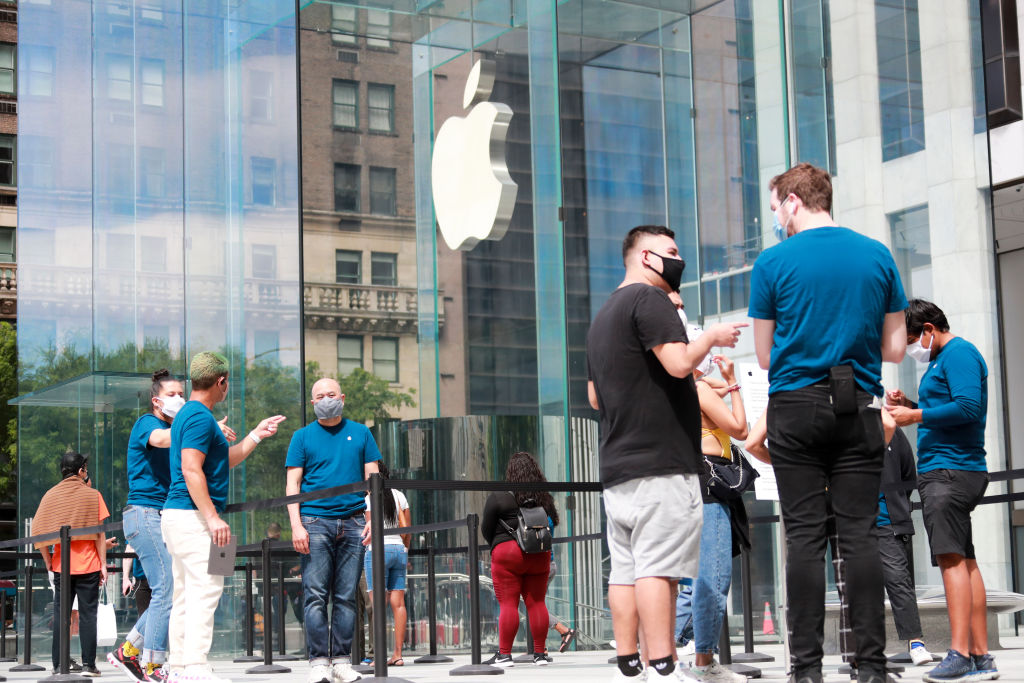
NEW YORK, June 17, 2020 -- Staff workers serve customers outside an Apple store on Fifth Avenue of New York City, the United States, June 17, 2020.
Enlarge / NEW YORK, June 17, 2020 — Staff workers serve customers outside an Apple store on Fifth Avenue of New York City, the United States, June 17, 2020.
Xinhua News Agency | Getty Images

Apple says it will again close almost a dozen stores in the US because of a recent rise in coronavirus infections in the south and west, reversing its recent move to begin reopening stores as states start to ease lockdowns.

The move sent US stocks lower, as investors feared that Apple’s caution could signal wider apprehension among businesses about whether it is safe to begin reopening the US economy.

Apple shares turned negative on the news, dropping 1.4 percent, while the entire S&P 500 index shed its gains from the morning. Apple stock remains near a record high, however, with investors valuing the group above $1.5 trillion—about $220 billion more than at the start of the year.

Wedbush analyst Dan Ives called it a “worrisome trend” for US retail, though he reckoned the impact on Apple sales would be limited. “Apple is a key barometer, globally,” he said. “For [chief executive Tim] Cook to close stores after reopening just a month ago, it’s a headline gut punch to the reopening bulls.”

The iPhone maker named 11 locations in four states that will close. Six locations are being shut in Arizona, where daily new cases have spiked to 2,519, versus fewer than 300 in late May. Two locations are being re-closed in Florida, where daily cases have risen almost six-fold in the last month to 3,207.

Other locations are in North Carolina and South Carolina, each which have experienced daily records in the past week.

“Due to current Covid-19 conditions in some of the communities we serve, we are temporarily closing stores in these areas,” Apple said. “We take this step with an abundance of caution as we closely monitor the situation and we look forward to having our teams and customers back as soon as possible.”

Apple had originally closed all of its global retail stores outside China on March 14, citing a need to “reduce density and maximize social distance”.

On May 8, when it looked like coronavirus had begun to wane, Apple said it was “excited” to begin reopening its US locations, beginning with Idaho, South Carolina, Alabama and Alaska. Customers were required to undergo a quick temperature check, then wear masks and observe social distancing inside.

Just days ago, Apple said it anticipated reopening 70 more stores in the US by the end of the week—including some in New York City, which will move into a new phase of its reopening on Monday—implying that more than 200 of its 271 US stores would be back in operation.

Meantime, in Apple’s home state of California, Governor Gavin Newsom continued to tighten restrictions to mitigate the spread of the virus. He announced on Thursday that masks would now be required in “any indoor public space” including hospitals, public transit and when performing work.

© 2020 The Financial Times Ltd. All rights reserved. Not to be redistributed, copied, or modified in any way.

https://arstechnica.com/?p=1685395


Europeans vow to pursue digital tax plans after US “provocation”

DORTMUND, GERMANY - JUNE 15, 2020: (BILD ZEITUNG OUT) In this photo illustration, a receipt with the VAT of 19% and 7% is seen on euro banknotes. At the top of the receipt are Eurobills and Cent coins.
Enlarge / DORTMUND, GERMANY – JUNE 15, 2020: (BILD ZEITUNG OUT) In this photo illustration, a receipt with the VAT of 19% and 7% is seen on euro banknotes. At the top of the receipt are Eurobills and Cent coins.

The EU has defied the US by vowing to pursue its own plans for digital taxes after Washington pulled out of global negotiations on the matter and threatened to impose tariffs in retaliation against national levies.

France’s finance minister Bruno Le Maire on Thursday labeled the US decision to suspend the OECD-led talks a “provocation” and said Paris would apply a tax on big technology companies “whatever happens.”

Paolo Gentiloni, EU economy commissioner, said Brussels was prepared to advance its own EU-wide proposals. The UK Treasury has also vowed to press ahead with its digital tax, even as it is engaged in negotiations with Washington over a potential free trade agreement.

The warnings follow a letter to four European finance ministers in which US Treasury secretary Steven Mnuchin said he was pausing the negotiations because they had reached an “impasse.”

The move heightens transatlantic tensions, with the threat of more trade disputes as individual countries pursue their own taxation plans.

“There’s a real prospect we end up with a trade war” following the latest development, said Dan Neidle, tax partner at Clifford Chance.

The OECD process needed US agreement to make any deal legally watertight, and European nations would prefer getting the approval of US companies, Mr. Neidle said. So the likely result was “the process falls apart, and we see a plethora of unilateral digital services taxes,” which would turn into “an unprincipled mess” followed by US countermeasures.

Robert Lighthizer, US trade representative, has already announced a probe into whether digital tax measures in the UK, Spain, Italy, and other countries amount to an unfair trade practice, which would allow Washington under US law to unilaterally slap tariffs on imports from the countries involved.

“We weren’t making headway”

The US Treasury said on Wednesday that Washington had suggested a “pause” in the OECD talks to allow countries to “focus on responding to the COVID-19 pandemic and safely reopening their economies.”

“The other people getting together and deciding they’re going to take action against the United States without our acquiescence is something that’s not acceptable,” Mr. Lighthizer told US lawmakers on Thursday. “We weren’t making headway and [Mr. Mnuchin] made the decision that rather than have them go off on their own, he would just say we’re no longer involved in the negotiations.”

In an interview on France Inter radio, Mr. Le Maire expressed shock at the US “threatening [allies] repeatedly with sanctions.”

Paris had agreed to suspend the collection of its own national tax during the international negotiations. Tech companies were still accumulating French tax liabilities in the meantime, which France has promised to waive once a global agreement had been sealed.

“If needed, we will react as one”

“We were very close to an agreement on the taxation of the digital giants, which are perhaps the only ones in the world to have profited immensely from the coronavirus,” Mr. Le Maire said. He said that if there was no international agreement this year because of the US blockage, France would reinstate its levy.

Mr. Gentiloni said he hoped the US decision would be a “temporary setback rather than a definitive stop,” reiterating that the commission was seeking a global solution. “If that proves impossible this year, we have been clear that we will come forward with a new proposal at EU level,” he said.

“Meanwhile, the commission stands as one with all member states that have moved forward with their own digital services taxes. And if needed, we will react as one.”

Rishi Sunak, the UK’s Chancellor of the Exchequer, put Britain’s digital services tax into law in March, and it was implemented in April with an aim of raising £280 million this financial year, although multinational tech companies will not have to pay any money until 2021 to the UK tax authorities.

Two pillars

The OECD has been overseeing work to find a more equitable way of taxing multinational companies and had proposed a compromise based on two pillars.

The first suggested countries would be allowed for the first time to have some rights to tax profits made on the basis of sales in their jurisdictions. This would not just apply to US tech giants but would also give the US, for example, limited taxing rights over European luxury goods companies.

The second was that there would be a global minimum corporate tax rate to stop countries lowering corporate tax rates in an attempt to shift company headquarters to their jurisdictions.

Mr. Mnuchin insisted discussions on the second pillar remained on track and that the parties were “much closer to an agreement.” He said the US hoped to bring these talks on a global minimum tax to a conclusion this year.

The second pillar does not need agreement by all countries involved so is seen by the OECD as an easier element on which to forge consensus, but this will not satisfy many European countries.

© 2020 The Financial Times Ltd. All rights reserved. Not to be redistributed, copied, or modified in any way.

https://arstechnica.com/?p=1685040


Masked arsonist might’ve gotten away with it if she hadn’t left Etsy review

A masked woman holding a flaming piece of wood next to a police car.
Enlarge / Instagram photo of a masked woman, identified by the FBI as Lore-Elisabeth Blumenthal, on May 30, 2020 in Philadelphia.

To some extent, every Internet user leaves a digital trail. So when a masked arsonist was seen on video setting fire to a police car on the day of a recent protest in Philadelphia, the fact that her face was hidden didn’t prevent a Federal Bureau of Investigation agent from tracking down the suspect. The keys ended up being a tattoo and an Etsy review the alleged arsonist had left for a T-shirt she was wearing at the scene of the crime, according to the FBI.

The alleged arsonist—identified by the FBI as Lore-Elisabeth Blumenthal, 33—was wearing a mask, goggles, fire-resistant gloves, and a T-shirt with the slogan “Keep the immigrants, deport the racists” when her crime was captured live on an aerial news feed from a helicopter, FBI Special Agent Joseph Carpenter wrote in an affidavit filed Monday in US District Court for the Eastern District of Pennsylvania. After an investigation, she was arrested and charged with arson of two police vehicles. She appeared in federal court on Tuesday, and the government said it “will be filing a motion for the defendant to be detained pending trial.”

In the news video, a police sedan was already “engulfed in flames” when the suspect “entered from the top of the frame and removed a flaming piece of a wooden police barricade from the rear window of the sedan that was already on fire, and then shoved the flaming wood into the SUV that was not on fire. Within minutes of that, the SUV was then completely engulfed in flames.” This happened on May 30 after a protest over the death of George Floyd. The affidavit says, “While the protest earlier in the day was peaceful, violence erupted later on in the day,” including the arson of police cars.

More footage of the arson came in a video posted on Vimeo that “clearly depicts the same female subject removing a flaming piece of wooden barricade from the marked PPD [Philadelphia Police Dept.] sedan and shoving it through the window of the marked PPD SUV,” the affidavit said. An Instagram user had also posted a photo that “shows the female subject moving away from the sedan after it is on fire, and shows her backpack.” The owner of the Instagram account provided more photos he had taken to the FBI, and another amateur photographer provided about 500 pictures taken that day in Philadelphia.

Etsy review points to more evidence

Even with video and photos, the FBI wasn’t yet able to identify the suspect because her face wasn’t visible. But the T-shirt she wore was unique and sold on Etsy, so FBI agents read the reviews on the seller’s Etsy page to see if anyone from the Philadelphia area had purchased it. Blumenthal had left a 5-star review that said, “Fast shipping, thanks very much!” from her username “alleycatlore,” and her Etsy profile displayed her location as Philadelphia, the affidavit said. The FBI did not yet have her full name, so they did a search for “alleycatlore” and found a user on the online fashion marketplace Poshmark “with a display name of ‘lore-elisabeth,'” the affidavit said. A search for “Lore Elisabeth” in Philadelphia turned up “a LinkedIn profile for an individual matching the name ‘Lore Elisabeth’ who appears to be employed as a massage therapist with a company that provides massage therapy services.”

Pictures of the alleged arsonist showed a tattoo of a peace sign on her right forearm, and that tattoo was visible in a four-year-old video of Lore Elisabeth performing a massage on her business’s website. The website had a phone number for Lore Elisabeth, and Carpenter said the FBI used the Department of Homeland Security’s Electronic System for Travel Authorization to confirm that the number “is associated with Lore Blumenthal,” with an address on West Duval Street in Philadelphia. A further search of Pennsylvania Department of Motor Vehicles records found a DMV photo of Blumenthal along with her address and date of birth.

The FBI subsequently obtained records from the Etsy store owner via a subpoena. The records “confirmed that this user did purchase two T-shirts reading ‘Keep the immigrants, deport the racists’ on March 10, 2020,” the affidavit said. One of the purchased T-shirts was in the same light blue color seen in video of the arson, and the shirts had been shipped to the same West Duval Street address connected to Blumenthal. A search of Pennsylvania Department of Transportation records identified a car registered to Blumenthal at the same address. FBI agents conducted surveillance of the address and saw the car “parked and unoccupied at/near that location.”

From Lore Blumenthal’s Etsy review of a T-shirt, her profiles on Poshmark and LinkedIn, and the tattoo visible on a video posted to her massage therapy website, the FBI found the details they needed to match the arsonist seen in photos and video to government records, the affidavit said.

“Blumenthal, who is charged with two counts of knowingly causing malicious destruction, is in federal custody. The federal charges were lodged because the Philly police receive funding from the US government,” PennLive reported.

“If convicted, the defendant faces a maximum possible sentence of eighty years in prison, followed by three years of supervised release, and a fine of up to $500,000,” a press release from the Department of Justice and US Attorney’s office said.

“We at the US Attorney’s Office fully support the First Amendment right of the people to assemble peaceably and to petition their government,” US Attorney William M. McSwain said. “But torching a police car has nothing to do with peaceful protest or any legitimate message. It is a violent and despicable act that will be prosecuted in this district to the fullest extent of the law.”

https://arstechnica.com/?p=1684823


AT&T’s “headcount rationalization”—i.e. job cuts—hit thousands more workers

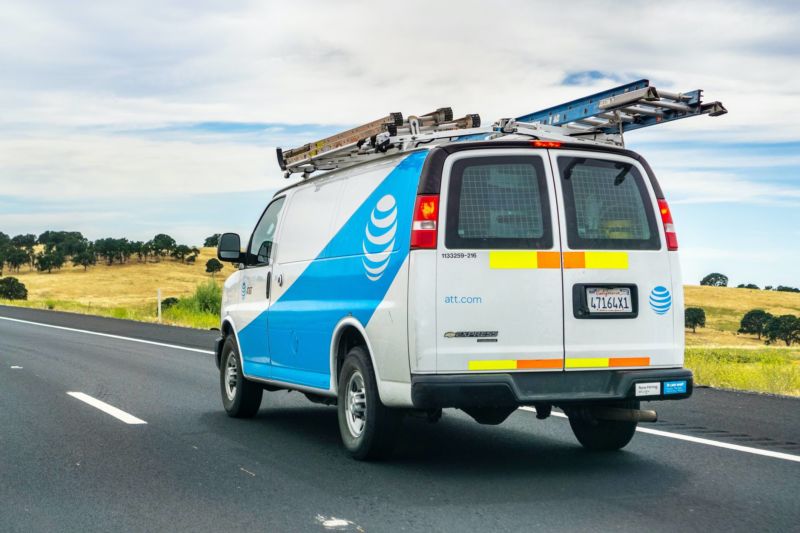
An AT&T service van driving on a freeway.
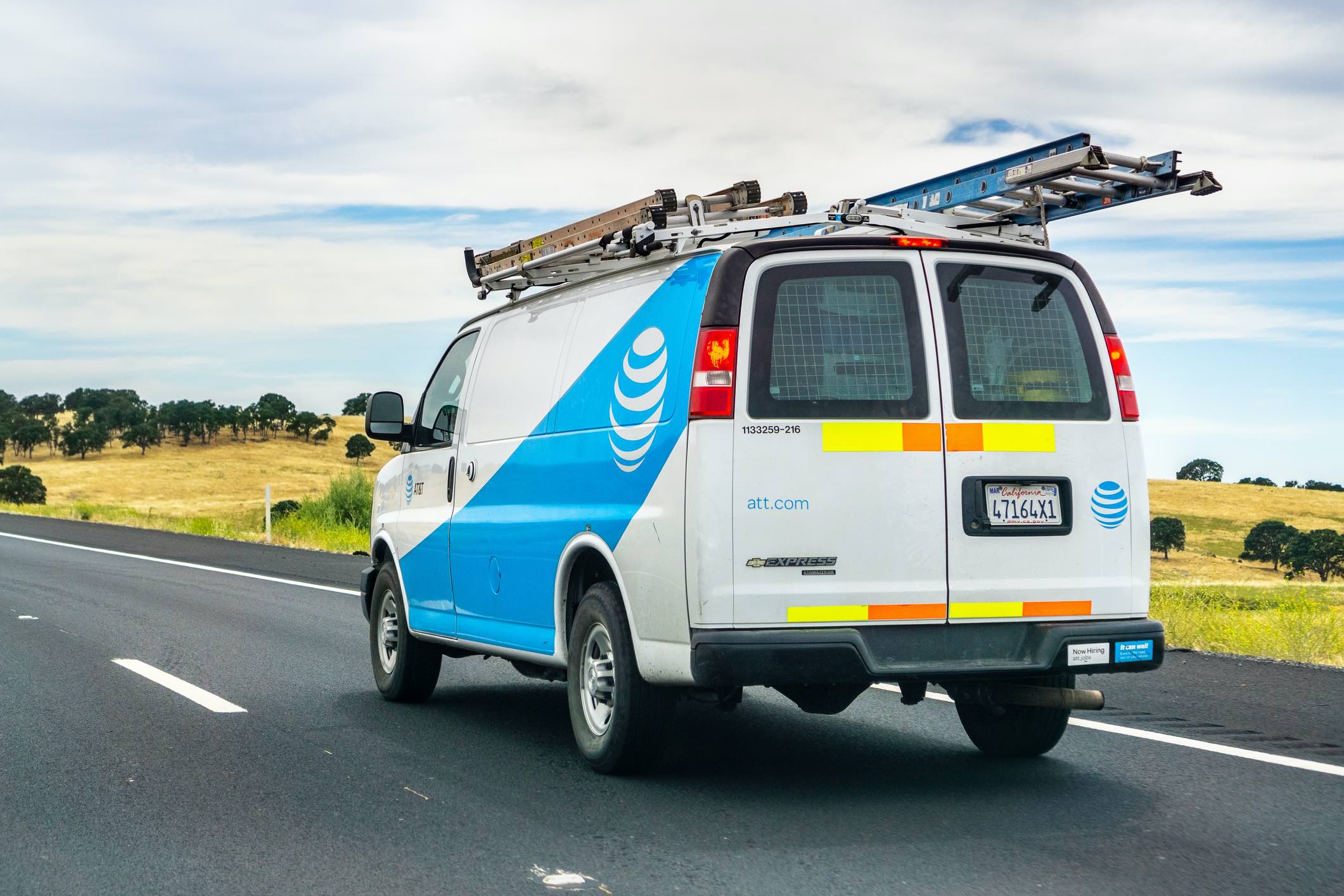
Enlarge / AT&T service van driving in June 2019 in Oakdale, California.

AT&T is cutting 3,400 union jobs from its wireline broadband and phone network operations as well as closing 250 wireless retail stores, according to a union that represents AT&T employees. Wireline job cuts are initially “voluntary” through buyouts, but AT&T will proceed to layoffs if not enough workers volunteer.

The total number of planned job cuts is apparently more than double that, because AT&T told Ars that it is cutting even more non-union jobs than union jobs. The cuts are a continuation of what AT&T has called a multi-year “headcount-rationalization” project.

“AT&T has informed the Communications Workers of America (CWA) of its plans to cut over 3,400 technician and clerical jobs across the country over the next few weeks,” the union said in a press release yesterday. “In addition, the company plans to permanently shutter over 250 AT&T Mobility and Cricket Wireless stores, impacting 1,300 retail jobs.”

CWA Communications Director Beth Allen told Ars that “the vast majority of the 3,400 positions are technicians” for the wireline network. While the CWA doesn’t yet have a complete list of job cuts from every location, Allen estimates that “fewer than 100 are clerical or direct customer service (for instance, billing representatives).” This would mean that AT&T is eliminating more than 3,000 workers who maintain and upgrade the copper and fiber networks that deliver phone and broadband service in 21 states.

“AT&T is offering a voluntary buyout for many of the jobs on the wireline side. If they don’t get enough volunteers in the locations where they are looking to cut, the company will move to involuntary cuts,” Allen told Ars. “We are continuing to work to reduce the job loss, and our collective bargaining agreements provide for severance and relocation offers for many members.”

AT&T also plans to “permanently shutter over 250 AT&T Mobility and Cricket Wireless stores, impacting 1,300 retail jobs,” the union announcement said. Allen told Ars that “it’s not yet clear how many of the workers impacted by the store closings will be able to find another assignment and how many will be going off payroll.”

AT&T hasn’t revealed total number of job cuts

Allen told Ars that “all of the cuts we know about—the 3,400 wireline and the folks at the retail stores—are CWA-represented.” But this is apparently less than half the total job cuts, as AT&T told Ars today that “we’ll be eliminating more non-payroll workers—the vast majority of which are outside the United States—than we are managers or union-represented employees.”

AT&T has not revealed the total number of job cuts for either union or non-union workers.

“We think AT&T should disclose more information about its non-payroll, contracted-out workforce,” Allen said. “These would include call-center vendors, both domestic and overseas, authorized retailers, and contract techs and construction workers. There’s absolutely no way to verify their claims about reducing that workforce if they don’t regularly report on it.”

Pandemic accelerated “headcount rationalization”

AT&T said that retail-store closures “reflect our customers’ shopping practices. While these plans are not new, they have been accelerated by the COVID-19 pandemic.”

But wireline broadband networks like AT&T’s have proven to be a crucial part of the pandemic economy, and AT&T was planning big job cuts even before the coronavirus pandemic forced millions of Americans to stay home and use more home-Internet data. On March 3, AT&T President and COO John Stankey told investors about a 3-year cost-cutting plan to generate billions in savings. Stankey said there would be 10 cost-cutting initiatives including “headcount rationalization,” or what the rest of us call job cuts or layoffs. (Stankey is scheduled to become AT&T CEO on July 1 when Randall Stephenson retires.)

The “headcount rationalization” is a continuation of layoffs from previous years. AT&T reduced its employee count from 268,220 to 247,800 in 2019 alone, despite promising to use a corporate tax cut to create thousands of new jobs. AT&T cut another 3,310 jobs in Q1 2020. In all, AT&T has cut 41,128 jobs since the end of 2017, according to the CWA press release. These numbers do not include contractors.

Despite AT&T cutting thousands of jobs both before and during the pandemic, Allen said that “AT&T executives have made it clear through their public statements that, shamefully, they are using the COVID-19 pandemic as an excuse to accelerate their already devastating job cuts.”

The Dallas Morning News quoted AT&T Communications division CEO Jeff McElfresh telling investors yesterday that the “pandemic gave AT&T a ‘head start’ on its cost-cutting plan.”

“Legacy” copper network affected

AT&T’s statement to Ars said the cuts “align with our focus on growth areas along with lower customer demand for some legacy products and the economic impact and changed customer behaviors resulting from the COVID-19 pandemic.”

The reference to “legacy products” refers at least in part to AT&T’s copper network, which in many areas is incapable of providing modern broadband speeds and has been poorly maintained. Of course, large portions of AT&T’s wireline network wouldn’t be described as “legacy” if AT&T upgraded those areas to fiber. But with AT&T having mostly stopped its fiber-to-the-home deployment, the company in October announced it was planning a $3 billion cut in capital investments in 2020.

In Q1 2020, AT&T’s companywide revenue was $42.8 billion, down from $44.8 billion in last year’s first quarter. Companywide operating income was $7.5 billion, up from $7.2 billion year over year.

Severance packages

AT&T said it “worked with union leadership on an enhanced offer for wireline technicians that includes significant voluntary severance incentives up to nearly $100,000, and virtually all reductions involving wireline technicians are voluntary at this time. Affected retail employees will receive an offer of another position with the company, mostly jobs they can do working from home.”

“Reducing our workforce is a difficult decision that we don’t take lightly,” AT&T also said. “For employees who are leaving as part of these changes, we’re offering severance pay and company-provided healthcare coverage for up to 6 months for eligible employees.”

The CWA isn’t satisfied and, in its press release, took aim at one of Stephenson’s recent statements on the company’s response to the pandemic:

Last month, AT&T CEO Randall Stephenson described the COVID-19 crisis as “a time of war,” during an interview on CNN. Stephenson went on to say, “Everybody needs to step up and do their part, in terms of how we help the general population and the general public.”

“If we are in a war to keep our economy going during this crisis, why is AT&T dismissing the troops?” said Communications Workers of America President Chris Shelton. “CWA and AT&T have been working together to protect worker and customer health and safety and to provide premium pay for essential workers. The company showed an interest in investing in its workers and its network by canceling planned stock buybacks. AT&T could help lead the country toward recovery by partnering with its workforce to build next-generation networks. Instead the company is adding to the pain of the recession already underway.”

https://arstechnica.com/?p=1684477


PG&E pleads guilty to manslaughter: “Our equipment started the fire.”

Search and rescue crews dig through the burnt remains of a business as they search for human remains on November 21, 2018 in Paradise, California. Fueled by high winds and low humidity, the Camp Fire ripped through the town of Paradise, charring over 150,000 acres.
Enlarge / Search and rescue crews dig through the burnt remains of a business as they search for human remains on November 21, 2018 in Paradise, California. Fueled by high winds and low humidity, the Camp Fire ripped through the town of Paradise, charring over 150,000 acres.

California utility firm Pacific Gas and Electric (PG&E) pleaded guilty on Tuesday to charges that it was responsible for the deaths of more than 80 people in a massive 2018 wildfire caused by its equipment.

The fire, known as the Camp Fire, began in November 2018 when two PG&E power lines came into contact with nearby dry brush, sparking flames. Eighty-five people died in the fire, which also destroyed 18,800 structures.

Months of investigation by state and federal authorities found that PG&E had for years failed to conduct maintenance on the power lines that failed, according to the report (PDF) published by the Butte County district attorney’s office. In March, the district attorney filed an indictment (PDF) charging PG&E with 85 felony counts: one for unlawfully causing a fire and 84 counts of involuntary manslaughter.

PG&E “had a legal duty to the public to avoid wildfires and failed to perform that legal duty by recklessly failing to maintain and operate its electrical lines and equipment in a manner that would minimize the risk of catastrophic wildfires posed by those electrical lines and equipment, resulting in the Camp Fire,” each of the 84 manslaughter counts reads.

Company president and CEO Bill Johnson entered the guilty plea in court yesterday on behalf of the company. “Our equipment started the fire that destroyed the towns of Paradise and Concow and severely burned Magalia and other parts of Butte County,” Johnson said. “On behalf of PG&E, I apologize for the pain we have caused.”

As part of its plea agreement, the company agreed to pay a $3.5 million dollar fine and an additional $500,000 to cover the costs of the investigation.

A federal judge on Tuesday approved the company’s $59 billion reorganization plan. That plan includes settlements with insurers and local governments as well as $13.5 billion in settlements to victims of wildfires for which PG&E was responsible. Half of the settlements to individuals, however, will be paid in company shares instead of cash, after which victims would own almost 21 percent of the company, That could expose survivors to future liability, The Wall Street Journal reports, if the company once again ends up facing criminal or regulatory penalties for failing to make good on safety commitments.

PG&E filed for Chapter 11 bankruptcy in January 2019 as it faced an estimated $30 billion in wildfire-related liabilities—not only from the 2018 fires, but from many other large and small wildfires in preceding years as well. The California Public Utilities Commission in May imposed a $1.94 billion fine on PG&E (PDF) for its role in 2017 and 2018 wildfires. The CPUC also agreed to waive an additional $200 million fine PG&E was supposed to pay for neglecting its equipment, agreeing with the company that the penalty could threaten its bankruptcy filing plans.

https://arstechnica.com/?p=1684412


T-Mobile’s outage yesterday was so big that even Ajit Pai is mad

The logo of Deutsche Telekom, owner of T-Mobile, seen over a booth at the Mobile World Congress expo hall.
Enlarge / The logo of Deutsche Telekom, owner of T-Mobile, seen at Mobile World Congress in February 2019 in Barcelona, Spain.
Getty Images | NurPhoto

T-Mobile’s network suffered an outage across the US yesterday, and the Federal Communications Commission is investigating.

FCC Chairman Ajit Pai, who takes an extremely hands-off approach to regulating telecom companies, used his Twitter account to say, “The T-Mobile network outage is unacceptable” and that “the FCC is launching an investigation. We’re demanding answers—and so are American consumers.”

No matter what the investigation finds, Pai may be unlikely to punish T-Mobile or impose any enforceable commitments. For example, an FCC investigation last year into mobile carriers’ response to Hurricane Michael in Florida found that carriers failed to follow their own previous voluntary roaming commitments, unnecessarily prolonging outages. Pai himself called the carriers’ response to the hurricane “completely unacceptable,” just like he did with yesterday’s T-Mobile outage. But Pai’s FCC imposed no punishment related to the bad hurricane response and continued to rely on voluntary measures to prevent recurrences.

T-Mobile CEO Mike Sievert confirmed the outage in a blog post. “Starting just after 12pm ET and continuing throughout the day, T-Mobile has been experiencing a voice and text issue that has intermittently impacted customers in markets across the US,” Sievert wrote. Sievert reported that the “issues are now resolved” just after 1am ET, about 13 hours after the outage began.

T-Mobile mistake may have caused outage

The outage may have been self-inflicted when T-Mobile was making network configuration changes. Cloudflare CEO Matthew Prince last night tweeted that T-Mobile was “making some changes to their network configurations today. Unfortunately, it went badly. The result has been for around the last 6 hours a series of cascading failures for their users, impacting both their voice and data networks.” The T-Mobile problem was “almost certainly entirely of their own team’s making,” he also wrote.

Sievert attributed the outage to “an IP traffic related issue that has created significant capacity issues in the network core throughout the day,” but he did not say what caused the traffic problem or whether it was due to a T-Mobile mistake. We asked T-Mobile to explain the outage cause and will update this article if we get a response.

T-Mobile President of Technology Neville Ray described the problem as “a voice and data issue that has been affecting customers around the country” and said T-Mobile engineers were working to fix it.

The T-Mobile outage was so large that it apparently caused some people to think other carriers and websites were down, too. Business Insider wrote that “Downdetector and customers on social media reported that AT&T and Verizon service was down,” but both AT&T and Verizon said their networks were doing fine. “A Verizon spokesperson also told Business Insider the carrier was ‘operating at normal service levels’ and said that, given that ‘another national carrier’ was having issues, calls to and from that carrier might get an error message, resulting in reports of issues,” the article said.

Prince wrote that the phone-service outage “caused a lot of T-Mobile users to complain on Twitter and other forums that they weren’t able to reach popular services.” Downdetector, an outage-monitoring website, “scrapes Twitter” for such reports and consequently “report[ed] those services as being offline” even though they weren’t, he wrote. This contributed to the spread of rumors about a “massive DDoS attack” that also did not happen, he wrote.

Don’t expect much FCC action

Mobile voice services like T-Mobile’s are still classified as common-carrier services under Title II of the Communications Act, but the FCC under Pai deregulated the home and mobile broadband industry and has taken a hands-off approach to ensuring resiliency in phone networks.

“This is, once again, where pretending that broadband is not an essential telecommunications service completely undermines the FCC’s ability to act,” longtime telecom attorney and consumer advocate Harold Feld, the senior VP of advocacy group Public Knowledge, told Ars today. “We’re not talking about an assumption that T-Mobile necessarily did anything wrong. But when we have something this critical to the economy, and where it is literally life and death for people to have the service work reliably, it’s not about ‘trusting the market’ or expecting companies to be on their best behavior. We as a country need to know what is the reality of our broadband networks, the reality of their resilience and reliability, and the reality of what happens when things go wrong. That takes a regulator with real authority to go in, ask hard questions, seize documents if necessary, and compel testimony under oath.”

Several provisions of Title II common-carrier rules that Pai has fought against “give the FCC authority to make sure the network is resilient and reliable,” Feld said. The FCC gutting its own authority “influences how the FCC conducts its investigations,” he said. “[FCC] staff and the carriers know very well that if push comes to shove, companies can simply refuse to give the FCC information that might be too embarrassing. So the FCC is stuck now playing this game where they know they can’t push too hard or they get their bluff called. Carriers have incentive to play along enough to keep the FCC or Congress from re-regulating, but at the end of the day it’s the carriers—not the FCC—that gets to decide how much information to turn over.”

https://arstechnica.com/?p=1684201