Comcast store punished low sales by smashing pies in workers’ faces, lawsuit claims

Comcast is likely to dispute the negligence claim and may dispute at least some of the factual allegations. Comcast provided a statement to Ars today in which it said it disagrees with the complaint, but did not provide any details. Comcast also did not say whether it still employs the manager.

“The Company has zero tolerance for harassment, humiliation, or any behavior that compromises a respectful and safe workplace,” Comcast said in the statement provided to Ars. “This matter is in litigation so we will not comment on the specific allegations, other than to say that we disagree with the claims in the complaint and its characterization of the alleged events, and intend to fully respond through the legal process.”

Figueroa is seeking compensatory damages for “past and future economic losses” and for emotional distress. The complaint was filed on July 9 in a Connecticut superior court and was described in articles published yesterday by Law360 and The Desk.

Peterson maintained a chart in the back office that ranked store sales staff and “identified the employees who either had been recently assaulted or were scheduled to be assaulted in this way,” the lawsuit said. The complaint includes a photo of what is said to be the chart, which includes people’s first names followed by a month and a “pie face” emoji.
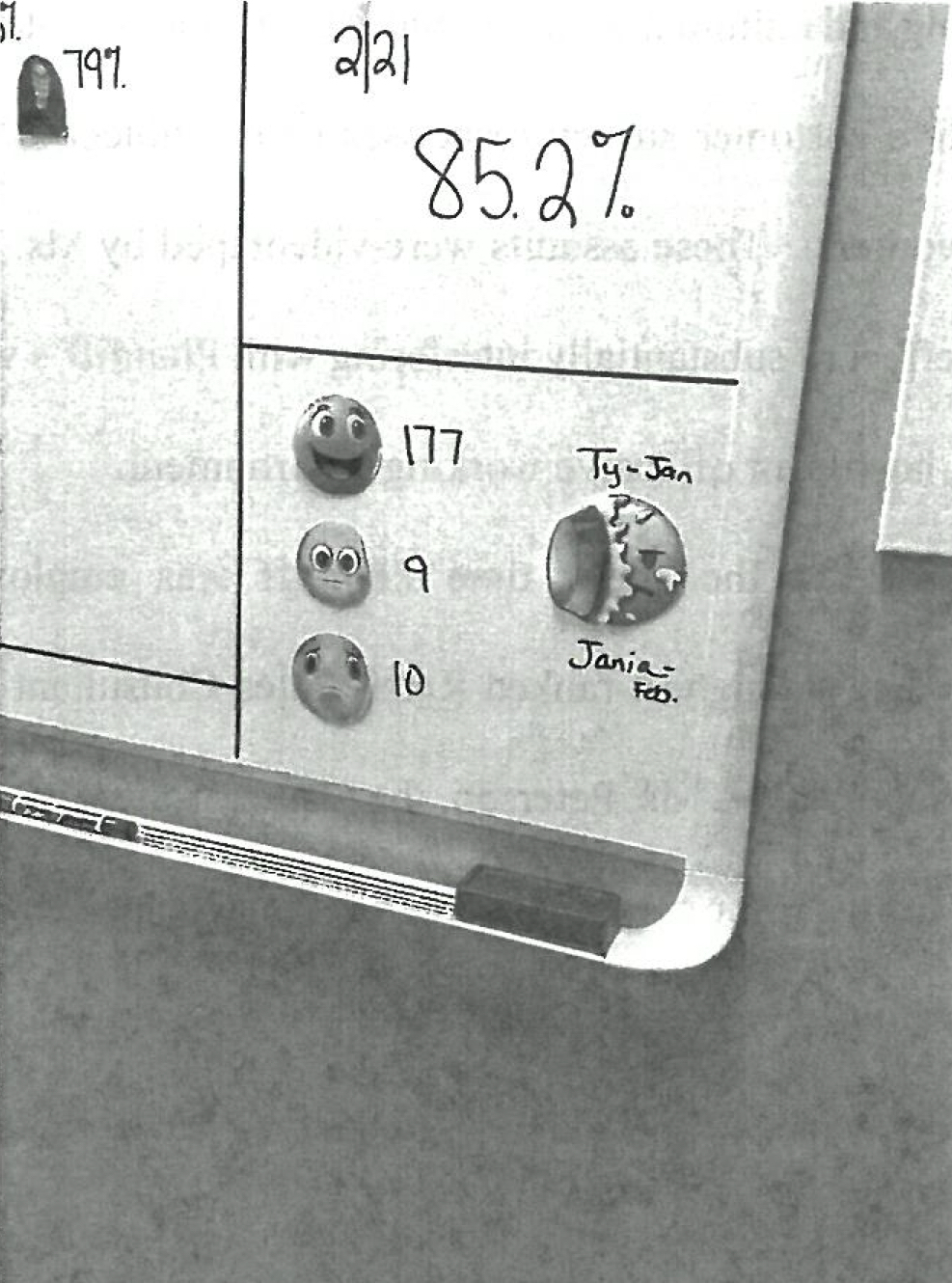
A chart on a wall includes numbers and names along with several emojis, including one depicting a pie in the face.

Image from lawsuit against Comcast.

Image from lawsuit against Comcast.

“An objective, reasonable person in Plaintiff’s position would have felt compelled to resign his employment as a result of this work atmosphere that Defendant—through its employees, servants, agents—created,” the lawsuit said. “As a result of the pervasive, repeated, and ongoing threats of violence—and actual violence inflicted on co-workers not meeting sales goals—Plaintiff resigned his position with Defendant, resulting in his constructive discharge from Defendant’s employment.”

https://arstechnica.com/tech-policy/2026/07/comcast-store-punished-low-sales-by-smashing-pies-in-workers-faces-lawsuit-claims/


Elon Musk’s xAI is trying to sue its way out of a Grok reckoning

“A company whose users request just ten images in violation of the statute would face exposure up to $5 million in civil penalties alone. A company with a thousand violative images could be fined up to $500 million. And a business whose users created a hundred thousand images covered by [the law] (not at all unlikely for a publicly available program with millions of users generating billions of images) could owe an eye-popping $50 billion dollars.”

Additionally, the law gives victims a right to sue xAI over any individual output, which increases xAI’s financial risks.

The penalties are so severe, xAI said in its lawsuit that it was finally preparing to update Grok to block harmful outputs after more than six months of backlash and probes pressuring the firm to tighten its safeguards.

“Confronted with $500,000-per-image strict liability and no safe harbor, xAI has no practical choice but to restrict Grok Imagine’s image-editing features in various ways when the statute takes effect on August 1, 2026,” xAI argued. “Protected speech freely available before the law takes effect will thus be chilled.”

However, xAI would prefer to leave Grok unchanged and continue relying on its terms of use stipulating that users could be banned for using Grok to make CSAM or other kinds of non-consensual intimate images (NCII), its complaint said.

“But for [the law] and its penalties, xAI would continue to offer the editing feature exactly as it does today,” xAI said.

Nudification law is unconstitutional, xAI says

To defend Grok, Musk’s firm is turning to the First Amendment, arguing that Minnesota’s law is a “clumsy attempt to prohibit ‘nudification’” that “sweeps in a wide range of fully protected speech.” That includes nude images generated with “artistic, scientific, political, satirical, educational, medical, or religious value,” xAI argued.

Most egregiously, “liability attaches even if the depicted persons consented—or created the image themselves—and even if the image is never shared,” xAI emphasized in its complaint.

Minnesota has less restrictive means to block harms from nudification, xAI argued, while claiming that the Take It Down Act already protected users from harms of distribution.

https://arstechnica.com/tech-policy/2026/07/elon-musks-xai-is-trying-to-sue-its-way-out-of-a-grok-reckoning/


Big Tech accused of stonewalling European social media researchers

Even for researchers who secure approval, “there’s no guarantee that the data is good,” said L. K. Seiling, coordinator of the DSA40 Collaboratory, a German initiative that tracks 46 DSA applications. API data is often difficult for a colleague to reproduce, so a researcher’s work cannot be checked for errors, which Iamnitchi said is a “basic requirement of science.”

DSA40 data shows that of 46 tracked applications, 20 were approved and 14 rejected. But approval rates vary widely: TikTok approved 11 of 13 applications, while X rejected 11 of 23. The true rejection rate is likely higher because the tracker relies on voluntary reporting, Seiling said.

“There’s no structured advantage for researchers to use this pathway,” Seiling said. “Data access as it’s set up right now tries to disincentivize researchers.”

A TikTok spokesperson told WIRED the company has given more than 1,500 research teams access to its tools, approved 130 applications in the EU in the second half of last year, and that its daily quota of 1,000 API requests lets researchers pull up to 100,000 video and comment records a day, or up to 2 million follower records. TikTok said it considers its research tools compliant with the DSA but “would welcome further public guidance.”

A Meta spokesperson said CrowdTangle covered only a fraction of the company’s public data, while the Meta Content Library and API that replaced it are “the most comprehensive research tools to date.” They cover Facebook, Instagram, WhatsApp Channels, and Threads with “robust privacy protections,” and qualified nonprofit researchers, including journalists, can apply.

There are few workarounds. Iamnitchi and Allen said they resort to scraping on the platforms that allow it, a time-consuming process that exports website data into spreadsheets. Even with sophisticated tools, scraping “is not very comprehensive,” Allen said. It cannot capture an account’s complete follower list, making coordinated disinformation networks difficult to map.

One way to challenge a rejected request is to take the platforms to court. Allen said DRI and the Society for Civil Rights applied for access to X’s API in April 2024 to study political discourse ahead of Germany’s federal election. X rejected the request in November, prompting DRI to sue in February 2025.

https://arstechnica.com/tech-policy/2026/07/big-tech-accused-of-stonewalling-european-social-media-researchers/


Paramount/WBD merger delayed for months as states’ lawsuit moves toward trial

Paramount Skydance agreed to a longer-term delay of its $111 billion acquisition of Warner Bros. Discovery, preventing the companies from combining until after a judge rules on the merits of a case in which a dozen states challenged the legality of the merger.

Under a stipulation filed in court today, the states and companies agreed that the merger will not be completed and the firms will not integrate their operations until “five days after the merits determination in these matters,” or on June 1, 2027, whichever is earlier. The delay was also agreed to by the Writers Guild of America, which filed its own lawsuit to block the merger. If there is no merits determination by June 1, the plaintiffs could seek a preliminary injunction to keep blocking the deal.

The agreement amounts to “a months-long halt” to the merger, New York Attorney General Letitia James’ office said. “Halting this merger while our case proceeds is a critical victory in our efforts to uphold the law and protect the film and television industries,” James said.

Paramount also claimed victory, telling media outlets that “the result is exactly what we have sought from the outset: a direct path to a trial based on the evidence. This is the fastest and clearest way to prove that this transaction is good for competition, good for consumers, and good for creators, a conclusion dozens of competition authorities around the world have already reached.”

Led by California, 12 states sued Paramount and WBD and won a temporary restraining order against the merger on Monday. Judge Araceli Martínez-Olguín at US District Court for the Northern District of California found that the deal is likely to reduce competition substantially and violate antitrust laws.

The states sued after the merger was greenlit by the Trump administration. The US approval reportedly surprised US Department of Justice staff lawyers who led the agency’s investigation into the deal and were leaning toward recommending a lawsuit to block it.

States say the merger will eliminate competition by combining two of the five major Hollywood movie studios and two of the five major owners of basic cable TV channels. “We are eager to continue to make our case in court and celebrate another tremendous win in our effort to ensure this unlawful merger never sees the light of day,” California Attorney General Rob Bonta said today.

https://arstechnica.com/tech-policy/2026/07/after-court-loss-paramount-agrees-to-delay-warner-bros-merger-until-trial/


RFK Jr.’s handpicked committee approves manufacture of peptides he uses

RFK Jr. and many like him, who fear the clearly defined and well-understood proteins in vaccines, are perfectly willing to inject various peptides in the complete absence of any safety data. However, unlike most of the peptide fans who share anecdotes online, Kennedy is in a position to turn his hobby into policy.

While the FDA has already used its standard processes to approve peptide drugs like insulin and some recently developed weight loss drugs, the lack of safety and efficacy data has kept most peptides off the market. The Biden administration also blocked their manufacture by compounding pharmacies, which make specialty drugs. But, earlier this year, Kennedy announced his interest in reversing that ban.

At the time of his announcement, Ars’ Beth Mole wrote, “Outside experts and watchdogs suspect that before the first meeting in July, Kennedy will work to stack the advisory board with questionably qualified allies who will come with a predetermined decision to ease access to the drugs—no rigorous scientific evaluation needed.” That’s exactly what came to pass. In June, Kennedy added members to the advisory group who, with one exception, had obvious interests in the manufacture and sale of the unapproved peptides.

Yesterday, those newly appointed members provided the decisive votes for overturning the ban, with all of the pre-Kennedy members voting against doing so. Despite Kennedy’s earlier claim that “independent experts will rigorously evaluate each substance on its scientific merits using full clinical, pharmacological, and safety evidence,” no such evidence was presented at the meeting.

According to The New York Times, when asked by a committee member whether the FDA had ever approved anything that had never been tested in humans before, an FDA official said it had not. That may be a critical factor in what happens next. The committee’s role is advisory, and the FDA could reject its recommendations. Doing so, however, would place the FDA’s experts in direct conflict with the wishes of Kennedy, who can simply fire them.

https://arstechnica.com/health/2026/07/rfk-jr-s-hand-picked-committee-approves-manufacture-of-peptides-he-uses/


Judge rebuffs Trump admin demand for phone records from NYT reporters

After criticism from a federal judge, the Department of Justice yesterday withdrew demands for phone records and grand jury testimony from New York Times reporters who wrote about security concerns related to the Air Force One jet donated to Trump by Qatar.

It was a setback in the Trump administration’s attempts to unmask journalists’ confidential sources. US District Judge Arun Subramanian “grilled Justice Department lawyers for nearly an hour over their handling of the subpoenas” during a hearing on Thursday, The New York Times wrote.

“Either we can quash the subpoenas, or you could withdraw the subpoenas,” Subramanian reportedly told Sean Buckley, chief counsel for the US attorney in New York’s southern district.

Subramanian reportedly said during the hearing that subpoenas to reporters “are not the first thing you do—they are the last thing you do,” and that “it’s a matter of basic compliance with the law.” Government lawyers agreed to withdraw the subpoenas during the hearing.

“As stated on the record during the July 23, 2026, hearing, the Government has voluntarily withdrawn the challenged subpoenas, including the subpoenas issued to the journalists as well as the third-party subpoenas. Those subpoenas are null and void. As a result, the motions to quash are moot,” Subramanian wrote in an order yesterday.

NYT: “Brazen effort to intimidate the press”

The NYT reported on Monday that the US government sought phone and text messaging records of NYT journalists and their relatives, including one reporter’s mother and two reporters’ spouses. This was in addition to subpoenas demanding that reporters testify before a federal grand jury.

On July 15, the NYT filed a motion to quash the subpoenas seeking grand jury testimony. The motion called the demands “a brazen effort to intimidate the press into abandoning its critical, constitutionally protected role.” The motion said armed federal agents served the subpoenas at the journalists’ homes, ordering them to appear before a grand jury within three business days.

https://arstechnica.com/tech-policy/2026/07/judge-rebuffs-trump-admin-demand-for-phone-records-from-nyt-reporters/


Nintendo says users voluntarily paid higher prices, have no right to tariff refunds

The legal theory behind the lawsuits is not specific to any industry. “Plaintiffs have filed class actions against companies across varying industries and points in the supply chain from food manufacturers to logistics providers. The specific allegations in each case differ, but the primary legal theory is the same: companies cannot pass tariff costs to consumers and retain government refunds for the same tariffs,” Foley & Lardner lawyers Erik Swanholt and Kelsey Boehm wrote.

Holland & Knight lawyers wrote in a legal alert that “any business that both passed tariff costs through to customers and is pursuing government refunds could become a litigation target.”

Nintendo tries to compel arbitration

With lawsuits in the early stages, no court has ruled on the core legal theories, Holland & Knight lawyers wrote. Businesses have several potential defenses, such as arguing that there can be no unjust enrichment when there is a contract between the parties.

“In many jurisdictions, unjust enrichment is unavailable where an express contract governs the parties’ relationship,” Holland & Knight partners Ashley Akers and Austin Rainwater wrote.

Businesses can also argue “that the challenged charges were imposed while the IEEPA tariffs remained legally effective and enforceable,” the Holland & Knight alert said. “According to this view, the Supreme Court’s subsequent decision invalidating the tariffs does not necessarily render charges collected before that decision unlawful or create a retroactive obligation to refund amounts previously paid.”

Although the lawsuit against Nintendo did not allege breach of contract, the Holland & Knight alert said some of the tariff cases make this claim. “This is the principal claim in many shipping and logistics cases. Plaintiffs allege that tariff-related surcharges were not authorized under applicable shipping agreements, terms of service or tariff schedules,” the law firm said.

Companies are likely to ask courts to enforce mandatory arbitration provisions contained in their terms and conditions, and Nintendo has already done so. Nintendo filed a motion to compel arbitration with Hoffert because of evidence that he “affirmatively accepted contractual agreements with Nintendo at least twice.” Nintendo said in its motion to dismiss that it “expressly reserves the right to move to compel Mr. Sharan’s claims to arbitration if discovery reveals his claims are arbitrable.”

https://arstechnica.com/tech-policy/2026/07/nintendo-customers-have-no-legal-right-to-tariff-refunds-company-tells-judge/


DA: Cop covered bodycam to snap nude prisoners on his iPhone—but other cams caught him

Gaffney had also offered his own evidence for this claim. His lawyer sent along screenshots from Gaffney’s iPhone, showing his photo library from January 18 through February 7, 2026. The photos at issue were not in it. Nor were they in the “Recently deleted” folder.

But investigators later said that their detailed forensic search was in fact able to turn the photos up on Gaffney’s phone. They also noted that metadata helped them tie the photos to that very device—and even to specific moments in time that could be cross-checked with bodycam footage.

Watching the watchers

Gaffney was fired from the Sheriff’s Office last month and was today charged by Bucks County District Attorney Joe Khan with “secretly photographing naked prisoners.” This didn’t result in just one charge, either; Gaffney was hit with a batch of charges, including official oppression, unsworn falsification to authorities, possessing an instrument of crime, and obstructing the administration of law or other government function.

“When a deputy sheriff breaks the law and then attempts to cover it up by lying about it,” Khan said today, “it erodes the public trust that thousands of honest public servants work daily to preserve. This Office will continue to aggressively investigate and prosecute official misconduct at all levels of government to ensure that no one is above the law, especially not those who are sworn to enforce it.”

If the charges stick, then Gaffney acted as though he lived in an old-fashioned world, one where police abuse could be hidden with a hand over the camera and some misleading screenshots sent to one’s boss. But a world awash in surveillance cuts both ways—and it can trip up cops who aren’t aware of just how many logs, metadata, and recordings capture their every move.

https://arstechnica.com/tech-policy/2026/07/cop-charged-with-covering-bodycam-to-photograph-naked-prisoners/


Judge halts Paramount’s $111B purchase of Warner Bros. in win for US states

The judge also pointed to a sharp rise in concentration as measured in the Herfindahl-Hirschman Index (HHI), saying the HHI increase for Paramount/WBD exceeds the level necessary to show the merger is likely to enhance market power.

“Where plaintiffs demonstrate a presumption of illegality by way of undue market concentration, they need not offer ‘elaborate proof of market structure, market behavior, or probable anticompetitive effects’” to obtain a restraining order, Martínez-Olguín wrote.

The legal standard for issuing a temporary restraining order is the same as the one for issuing a preliminary injunction. Parties seeking either kind of preliminary relief must show a likelihood of success on the merits, a likelihood of irreparable harm in the absence of a court order, and that the order would be in the public interest.

Martínez-Olguín said the merger poses potential harms to the public, and that Paramount and WBD would not suffer any harm from having to wait a few months.

“Defendants will suffer no apparent harm in the near term if enjoined from consummating the Transaction—they concede that they will not begin to incur carrying costs for a delayed merger until the end of September 2026,” the order said. “Even if Defendants argued that they would suffer economic harm as a result of delaying the merger, the equities do not weigh in their favor when contrasted with the potential public harms that would result from consummation of the Transaction, including the loss of competition.”

Martínez-Olguín set a schedule for the sides to submit briefs and scheduled a hearing on a preliminary injunction for August 3. Paramount can challenge the district court’s rulings in the US Court of Appeals for the 9th Circuit. It is likely to do so if Martínez-Olguín maintains that the merger cannot be completed until after a trial.

https://arstechnica.com/tech-policy/2026/07/judge-halts-paramounts-111b-purchase-of-warner-bros-in-win-for-us-states/


AT&T loses key ruling in bid to stop offering basic phone service in California

California said its rules are “technology-neutral,” allowing AT&T to use wired, wireless, and/or VoIP service to fulfill its COLR obligations. While AT&T says its wireless AT&T Phone-Advanced (AP-A) is a suitable replacement for copper, California said that “AT&T has never formally sought to substitute POTS with AP-A.”

AT&T “does not want to meet its COLR obligations through AP-A; it seeks relief from meeting them at all,” California said. “That is why AT&T does not claim in this lawsuit, either, that it will offer basic service through AP-A (or any other service) instead.”

AT&T doesn’t promise that AP-A will meet state requirements for basic service, California said. Those state requirements include flat-rate options for unlimited voice calls, discounted Lifeline rates for eligible low-income customers, and telephone relay service for the deaf and hard of hearing, California said.

AT&T seeking more help from FCC

The FCC grandfathering order that AT&T cited in its lawsuit applied industry-wide, not specifically to AT&T. But AT&T also asked the FCC for an order specifically preempting California’s COLR mandates and related requirements, such as tariffing and Lifeline participation rules.

California told the FCC that AT&T is lying when it claims that state rules prevent it from replacing copper with fiber. The Utility Reform Network, an advocacy group in California, told the FCC that AT&T’s wireless home phone service is “an ill-suited replacement for existing legacy infrastructure.”

The advocacy group said that “while AP-A has been approved in other states, none of those states have a remotely similar topographical range or extreme weather events to California. This necessarily means that those residents who live on mountains, in valleys, or other heavily forested areas will likely not have access to a reliable cellular signal.” Power outages from wildfires and earthquakes may last for days or weeks, but AP-A comes with only a 24-hour backup battery, the group said.

In addition to seeking a preemption order, AT&T asked the FCC for permission to discontinue copper-based service to 184,000 residential customers and 15,000 business customers on June 1, 2027. Those petitions were granted automatically after a comment period, but the FCC has not yet acted on AT&T’s request to preempt California rules. Even if the FCC grants AT&T’s petition to preempt state rules, California could challenge such an order in court.

https://arstechnica.com/tech-policy/2026/07/att-loses-key-ruling-in-bid-to-stop-offering-basic-phone-service-in-california/