Charter tells court that its no-refund policy helps prevent price increases

A Charter Spectrum service vehicle.
Enlarge / A Charter Spectrum vehicle.

Charter is suing Maine to block a new state law that requires prorated refunds when cable customers cancel service mid-month, claiming that the requirement is a form of rate regulation and is preempted by federal law. The preemption question will be at the heart of the case, but Charter also told the court that its no-refund policy prevents its prices from rising even more than they usually do.

“Charter’s decision not to provide a partial-month rebate for cancelling subscribers reflects the fact that Charter’s service is sold on a monthly basis,” the company, which operates Spectrum TV service, said in its complaint against the state government. “It also reduces administrative costs and thus ultimately reduces the upward pressure on rates for Charter’s continuing subscribers.”

Charter further said that its policy minimizes price increases “for continuing subscribers by reducing costs associated with implementing pro-rata rebates for mid-month cancellations.” Charter said that subscribers who cancel in the middle of a monthly billing period can continue to receive the service until the end of the month.

Charter made a similar argument in a motion for preliminary injunction, saying that its no-refund policy “reduce[s] its transaction and back-office costs and thereby ease[s] upward pressure on rates for existing and future subscribers.”

Charter also claimed that its no-refund policy “leads to simple bills that are easier for subscribers to understand.” The company complained that the state law requires it to “modify its billing system… to create an exception for cable television service in Maine, just one of the services it provides there” and to “re-train personnel in its regionally based customer service centers to address cable-related inquiries from Maine.”

Charter also claims that having to change its billing systems and training “would be particularly onerous now” because of the ongoing COVID-19 pandemic and would “divert attention and resources from ensuring continuity of service during the current crisis.” Separately, Charter’s labor practices and management of employees during the pandemic are being examined by the New York attorney general’s office. Charter initially refused to let call-center employees work at home during the pandemic. It later partially relented, but hundreds of employees got sick.

Charter calls law “quintessential rate regulation”

Whether Charter’s no-refund policy reduces prices or benefits customers with bills that are “easier to understand” may not have a major impact on the case. Charter argues that the Maine law, which is scheduled to take effect on June 16, is preempted by a US law governing regulation of cable TV services.

The US Cable Act “expressly bars states and localities from regulating the rates of a cable operator where the Federal Communications Commission has determined that the operator faces effective competition from other video providers,” Charter said.

“The FCC has specifically found that Charter faces effective competition in Maine,” Charter’s lawsuit continued. “The FCC subsequently established a presumption that all cable operators in the country are subject to effective competition, a presumption that has not been challenged by the State or any of the towns in Maine that serve as cable ‘franchising authorities’ under federal law.”

The FCC made that decision in June 2015, and it was upheld by an appeals court ruling in July 2017. The FCC ruled that cable TV providers face effective competition nationwide mainly because of the widespread availability of satellite TV service from DirecTV and Dish. The shortage of competition for high-speed broadband didn’t factor into that decision because it related only to TV services.

While that FCC ruling prohibits local rate regulation, Maine officials could argue that the state law requiring pro-rated refunds for customers who cancel is not a form of rate regulation. We contacted the Maine attorney general’s office about Charter’s lawsuit today and will update this article if we get a response.

Charter argued that the Maine law “is quintessential rate regulation” because it requires Charter “to charge subscribers by the day by mandating a credit for each day of the month the subscriber does not wish to pay for service.” Referring to a case involving Altice and New Jersey, Charter said, “A federal court recently enjoined enforcement of a similar proration requirement on preemption grounds.”

In that case, US District Judge Brian Martinotti in the District of New Jersey granted Altice’s request for a preliminary injunction, explaining that “Altice has a reasonable probability of success in the eventual litigation” because “a requirement that service providers prorate bills is a type of rate regulation.”

Charter: Our competitors do it, too

Charter also argued that the Maine law is unfair because it targets cable TV providers without affecting satellite TV companies or streaming video services.

“Charter’s practice of whole-month billing, including for terminating subscribers, also brings its rate policies in line with those of its competitors, which include satellite providers such as DirecTV and Dish, and Internet-delivered multichannel video providers such as Sling TV, AT&T TV Now, Hulu + Live TV, Amazon Prime, and Netflix, none of which, per their terms of service, prorate their services,” Charter wrote in its lawsuit. “None of these other providers is subject to Maine’s new proration requirement.” That discrepancy exists because the Maine law is targeted at companies with cable franchise agreements.

Charter used to give prorated refunds to customers when they canceled but eliminated that consumer-friendly policy in fall 2019. DirecTV owner AT&T did the same in January 2019. The no-refund policies are particularly onerous for customers who move from one home to another early in a billing period.

Maine also faces a lawsuit from Comcast and other companies seeking to overturn a law that requires them to offer à la carte access to TV channels. The US District Court in December granted an injunction preventing the law from taking effect while the lawsuit continues. Maine appealed the order granting a preliminary injunction.

Disclosure: The Advance/Newhouse Partnership, which owns 13 percent of Charter, is part of Advance Publications. Advance Publications owns Condé Nast, which owns Ars Technica.

https://arstechnica.com/?p=1676380


TikTok accused of breaching US child privacy regulations

TikTok accused of breaching US child privacy regulations
Getty Images

Twenty advocacy groups have accused TikTok of violating child privacy regulations in the US and breaching a settlement that the viral video app agreed with the Federal Trade Commission last year over a previous privacy complaint.

The groups—which include the Campaign for a Commercial-Free Childhood, the Center for Digital Democracy and the Electronic Privacy Information Center—have filed a complaint with the US watchdog saying they believe that the social media platform is “in contempt” of the terms of the 2019 settlement, as well as children’s privacy regulations.

TikTok, which is owned by Chinese tech group ByteDance, was fined $5.7 million in February last year for illegally collecting children’s data, as it began to rise in popularity among teens in the west.

But according to the advocacy groups’ complaint, “more than a year later, with quarantined kids and families flocking to the site in record numbers, TikTok has failed to delete personal information previously collected from children and is still collecting kids’ personal information without notice to and consent of parents”.

TikTok said it had not yet seen the latest complaint. It said in a statement: “We take privacy seriously and are committed to helping ensure that TikTok continues to be a safe and entertaining community for our users.”

Last month, TikTok topped 2 billion downloads, according to data from Sensor Tower, after it was installed more than 315 million times via the App Store and Google Play in the first quarter of the year alone, a quarterly record for any app to date.

Calling for an investigation into the matter and sanctions on TikTok, the consumer and child privacy groups said the company had failed to delete personal information collected from users aged 13 and under prior to the 2019 settlement order, in breach of the terms of the agreement.

They also argued that TikTok does not have an adequate mechanism for receiving parental consent for the collection of certain data belonging to children on the platform, or for allowing parents to delete that personal information, in violation of the consent decree and the Children’s Online Privacy Protection Act (Coppa).

“We easily found that many accounts featuring children were still present on TikTok. Many of these accounts have tens of thousands to millions of followers, and have been around since before the order,” said Michael Rosenbloom, staff attorney at the Institute for Public Representation at Georgetown Law, which is representing the advocates.

“We urge the FTC to hold TikTok to account for continuing to violate both Coppa and its consent decree.”

The news comes just hours after the Dutch data protection agency announced an investigation into whether TikTok “adequately protects” the privacy of Dutch children and “adequately explains how their personal data is collected, processed and used”.

TikTok said it was “fully cooperating” with the Dutch watchdog regarding its privacy investigation.

There are mounting concerns from critics over children’s online privacy, particularly at big internet companies that collect reams of user data for targeted advertising. Last year, Google paid $170m in a settlement with the FTC to resolve allegations that it breached Coppa by illegally gathering certain data on child users of YouTube for ad purposes.

Separately last year, the FTC reached a $5bn settlement with Facebook after finding it had violated an earlier consent order related to user privacy.

The FTC declined to comment.

© 2020 The Financial Times Ltd. All rights reserved. Not to be redistributed, copied, or modified in any way.

https://arstechnica.com/?p=1676055


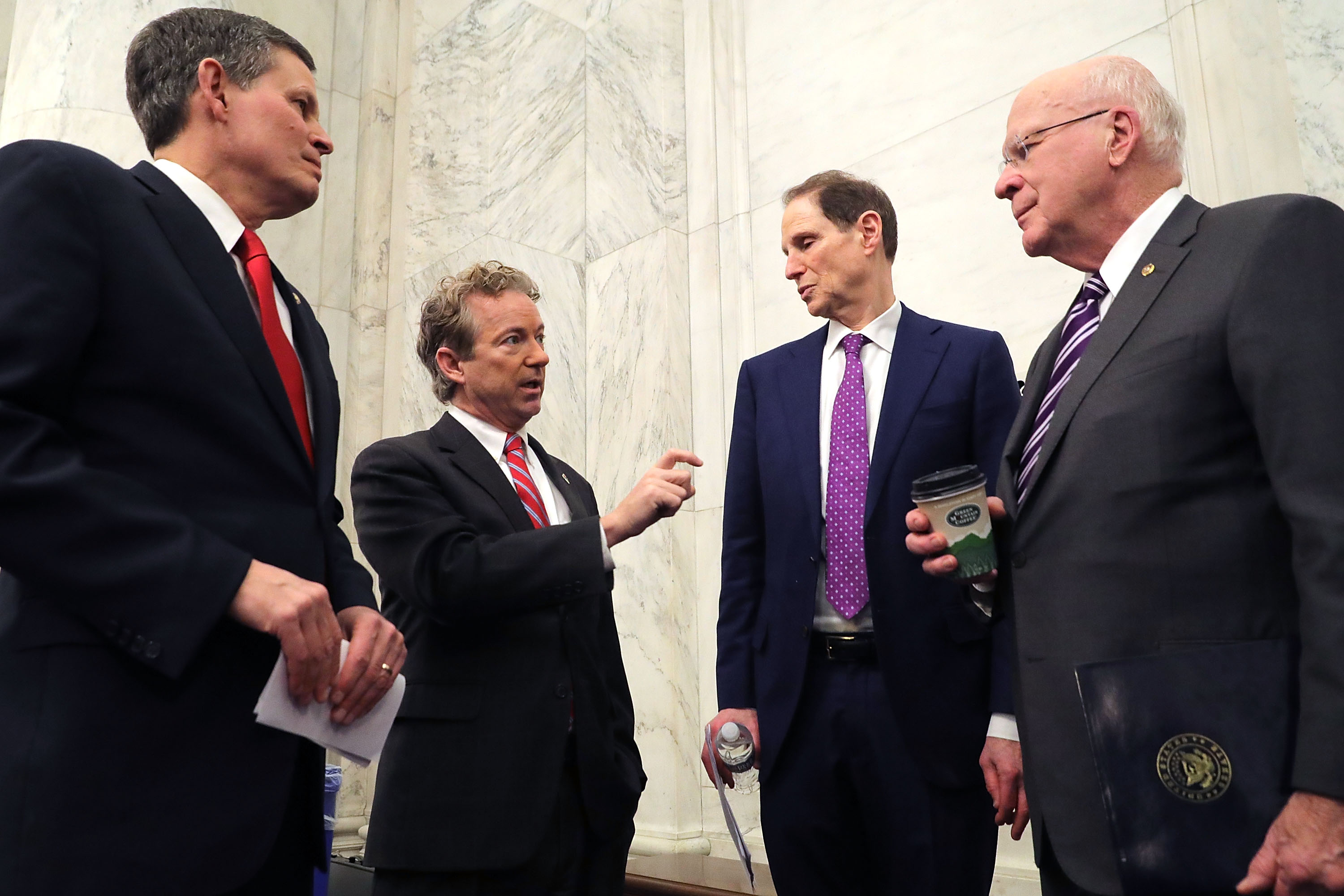
Senate passes spying bill without search and browsing history protections [Updated]

Sen. Steve Daines (R-Mont.), Sen. Rand Paul (R-Ky.), Sen. Ron Wyden (D-Ore.) and Sen. Patrick Leahy (D-Vt.) speak in January. The four men are leading advocates for limiting government surveillance powers.
Enlarge / Sen. Steve Daines (R-Mont.), Sen. Rand Paul (R-Ky.), Sen. Ron Wyden (D-Ore.) and Sen. Patrick Leahy (D-Vt.) speak in January. The four men are leading advocates for limiting government surveillance powers.
Chip Somodevilla/Getty Images

Update (3:15pm ET): The Senate has passed legislation extending FBI spying powers by an 80-16 vote. Because it was amended, it must go back to the House of Representatives for another vote.

Original story (12:30pm ET) follows:

An effort to protect Americans’ browsing and search histories from warrantless government surveillance failed by a single vote in the Senate on Wednesday. The privacy measure, sponsored by Sen. Ron Wyden (D-OR) and Sen. Steve Daines (R-MT) got 59 votes, one vote fewer than was needed to overcome a filibuster.

The vote was over a section of federal surveillance law that was originally part of the USA Patriot Act in 2001. That provision, known as Section 215, gave the FBI the power to obtain “any tangible thing,” including “books, records, papers, documents, and other items,” without a warrant. The provision was only supposed to be used for foreign intelligence investigations, not ordinary criminal investigations. Civil liberties groups have long criticized it for its breadth and weak judicial oversight.

Section 215 expired back in March, and the Senate is working on legislation to re-authorize it. The current Senate draft prohibits the FBI from using the provision to obtain cell phone location data—though the Supreme Court has already ruled that this information is constitutionally protected, so this may have little practical impact.

Support from 59 senators wasn’t enough

On Wednesday, Wyden and Daines offered an amendment to the reauthorization bill that would stop the FBI from obtaining “Internet website browsing information or Internet search history information” using the Patriot Act. That would force the agency to use other processes—with stricter judicial oversight—to obtain that kind of information.

A majority of senators—59 out of 100—supported the amendment. But under the Senate’s dysfunctional rules, it takes a 60-vote supermajority to end debate on a proposal like this and move to a vote. So even though a majority of senators supported the amendment, it did not become part of the reauthorization bill.

Four senators—Lamar Alexander (R-Tenn.), Patty Murray (D-Wash.), Bernie Sanders (I-Vt.), and Ben Sasse (R-Neb.) missed the vote. The amendment would have passed if any of them had voted “yes.”

Senate requires privacy watchdogs inside the FISA Court

The Senate did approve a different amendment to the re-authorization bill. Civil liberties groups have long portrayed the secretive FISA Court, which oversees the government’s foreign intelligence surveillance activities, as a rubber stamp for intelligence agencies. Those arguments gained increased traction in recent years as some Republicans have accused the court of too readily approving applications to spy on associates of the Trump campaign during the 2016 presidential election.

On Wednesday, a bipartisan group of senators led by Sen. Mike Lee (R-Utah) offered an amendment that would appoint a friend of the court with “privacy and civil liberties expertise” to participate in some of the court’s secretive deliberations. This person would ensure that the court considers pro-privacy arguments and would have the opportunity to seek the declassification of significant court rulings. The Senate approved that change by a generous 77-19 margin.

An earlier version of the legislation passed the House in March, but yesterday’s amendment means the House must pass it again before it can be sent to Donald Trump’s desk for his signature.

https://arstechnica.com/?p=1675825


“Fired for being right”: Trump admin whistleblower testifies to Congress

Rick Bright walks out of a hearing room, wearing a face mask and gloves.
Enlarge / Rick Bright, former director of the Biomedical Advanced Research and Development Authority, steps out of the hearing room before testifying about the government response to the novel coronavirus pandemic to the House Energy and Commerce Committee on Capitol Hill May 14, 2020 in Washington, DC.
Getty Images | Chip Somodevilla

US Rep. Anna Eshoo (D-Calif.) and other Democratic lawmakers today blasted the Trump administration for demoting Rick Bright, the whistleblower who says his early warnings about the COVID-19 pandemic and supply shortages were ignored.

“Dr. Bright has filed one of the most specific and troubling whistleblower complaints I have ever seen,” Eshoo said today. “He was the right person with the right judgment at the right time. He was not only ignored, he was fired for being right. We can’t have a system where the government fires those who get it right and reward those who get it completely wrong.”

Eshoo’s comments came in her opening statement during a hearing held by the House Energy and Commerce Committee’s Subcommittee on Health, which Eshoo chairs. Eshoo criticized the Trump administration for “incompetence, denial, delay, and a disorganized response.”

“I’m tired of those who bear the responsibility accepting none of it while deflecting blame on others, [including] the previous administration, the World Health Organization, the Wuhan lab, anywhere but where the blame belongs,” she said. Eshoo said that three Trump administration officials “refused to testify” at today’s hearing. Those officials are Health and Human Services (HHS) Secretary Alex Azar, Assistant Secretary for Preparedness and Response Robert Kadlec, and White House trade advisor Peter Navarro, she said.

Republican members of Congress objected to today’s hearing, saying it’s premature and shouldn’t be held until there’s time to conduct more research and obtain more documents. Republicans also criticized Bright for fighting the Trump administration’s attempt to make anti-malaria drugs available for widespread use to fight COVID-19—Bright responded that studies suggested the drug’s risks outweighed the potential benefits.

As we wrote yesterday, Bright warned Congress that “2020 will be the darkest winter in modern history” if the United States ignores warnings from scientists that it’s too early to fully reopen the economy.

Republican “confused” by Bright’s status

Bright is still a government employee. He was head of the Biomedical Advanced Research and Development Authority (BARDA) until he says he was transferred to the National Institutes of Health (NIH) in a “retaliatory demotion.”

Bright’s current status as a government employee was probed in questioning today by Rep. Markwayne Mullin (R-Okla.). Bright told Mullin that “I have been on sick leave since I was pushed out of my position” and that he is being treated for high blood pressure. “This has been very stressful to be removed suddenly without explanation from my role,” Bright said. “It’s a life change. My physician has been working closely with me to manage my hypertension and stress.”

Bright also said that he switched from using sick time to using vacation time this week in order to prepare for the congressional hearing. Mullin said he was “confused” by Bright’s explanation, because “you’re too sick to go into work, but you’re well enough to come here while you’re still getting paid from the United States government.”

“You are an employee of the federal government, and I just want to make sure you’re not doing something to deceive the American people at the same time getting paid by the United States government,” Mullin told Bright. Mullin noted that Bright is paid a $285,000 salary.

Bright’s complaint is being investigated by the US Office of Special Counsel (OSC), which reportedly found “reasonable grounds to believe” that the Trump administration retaliated against Bright in violation of the Whistleblower Protection Act. The OSC reportedly recommended that the HHS reinstate Bright to his role at BARDA while the OSC continues its investigation. Bright said today that he is in the middle of the transition from BARDA to NIH and that his paychecks are apparently now coming from NIH, but he added that he has not accepted the new role.

Not enough time

Rep. Greg Walden (R-Ore.) said that Bright’s “allegations are serious, and they deserve a real investigation” but complained that there wasn’t enough time to conduct research and get documents before today’s hearing. Rep. Michael Burgess (R-Texas) called the hearing “premature,” noting that “no final determination” of a violation of the Whistleblower Protection Act has been made.

Bright quoted internal emails and other documents in his whistleblower complaint but said that he was locked out of his email on April 20 “so I didn’t have full records available to me.”

“If I had access to my email from HHS there might be additional supporting information in that email,” Bright said. “I do not know the status, if that’s been deleted or wiped. I just haven’t had access to it.”

Republicans defends chloroquine push

Democrats said that Bright demonstrated courage in being a whistleblower and testifying to Congress, and they asked him to provide more details about his reassignment and the shortcomings of the administration’s pandemic response. Bright said he believes that his fight against widespread availability of chloroquine, including his decision to share internal emails with a Reuters journalist, “was the straw that broke the camel’s back and escalated my removal.”

As we detailed in our overview of Bright’s whistleblower complaint, Bright accused the Trump administration of attempting to “score a short-term political victory” by “pressur[ing] BARDA to promote the malaria drug chloroquine as a therapeutic for COVID-19, despite a clear lack of scientific support.”

Bright says that he and another concerned colleague brokered a compromise in which the drug would remain “in the hands of healthcare professionals and out of the hands of the public,” ensuring that “the drugs were administered to patients only under close physician supervision and who were known to be infected with the virus.” But he alleges that “the administration nevertheless continued to push for expanded, unsupervised access to chloroquine and hydroxychloroquine, in blatant violation of the EUA [Emergency Use Authorization] issued by its own FDA and regardless of the risk to the American public.”

Several Republican lawmakers today pressed Bright on his fight against widespread availability of chloroquine, pointing out that some doctors reported anecdotal evidence of the drug working against COVID-19. Doctors often use drugs off-label “if they don’t see a viable alternative” and don’t “wait for the government bureaucracy to approve it” if there’s anecdotal evidence that it works, Rep. Larry Bucshon (R-Ind.) said. Bucshon is a physician.

“This is why doctors are using this drug,” he said. “Whether it’s right or not, data will show. If two years from now we have the studies and we say ‘that stuff really would have worked and the government stopped that from being used,’ if I was a family of a person who was stopped from getting hydroxychloroquine, I’d be pretty mad.”

Rep. Morgan Griffith (R-Va.) made a similar argument. “You said on hydroxychloroquine that one of the problems is you might have an irregular heartbeat,” Griffith said to Bright. “If you’re worried about not having a heartbeat at all—you’re not worried about [an] irregular [heartbeat] if you don’t have one at all. Am I not correct about that? That’s the concern, people were dying out there and here was the first [drug] that showed some promise. Why wouldn’t we want to accept an offer from a manufacturer to give us a lot of this and have it out there for widespread use if the doctors chose?”

Bright responded that clinical trials are needed to test claims based on anecdotal evidence, and that “we need to be cognizant of those risks and make sure those drugs are used in a very safe and controlled manner.” Bright also said that a summary report from scientists “indicated the evidence for [the drug’s] benefit was weak and evidence for safety concerns was stronger.”

The FDA on April 24 issued a warning about hydroxychloroquine and chloroquine, saying the drugs’ use for COVID-19 “should be limited to clinical trial settings or for treating certain hospitalized patients.”

Democrats were convinced that Bright’s warnings to the Trump administration should have been followed.

“It appears clear from the whistleblower report that the Trump administration prioritized political calculations above public health with regard to chloroquine and hydroxychloroquine,” Rep. Doris Matsui (D-Calif.) said. “Despite the lack of data supporting the clinical benefits for treatment and prevention of COVID-19, the Trump administration promoted the drug’s use to the American people because it was seen as a big immediate win.”

Democrats blast “misguided and chaotic response”

While the Trump administration rushed to deploy chloroquine, Bright says his warnings about shortages of masks, other supplies, and the drug remdesivir were ignored. Bright said today that when he complained about shortages of various supplies, “I was told that my urgings were causing a commotion and I was removed from those meetings.”

Rep. G.K. Butterfield (D-N.C.) complained that “we still don’t have enough testing supplies. I don’t understand how and why that is possible. I understand that converting an auto plant to build ventilators might take a little time, but how can we be struggling to get adequate supplies of simple supplies like swabs? What does this say about the federal response o the coronavirus outbreak?”

“It says to me that there is no master, coordinated plan on how to respond to this outbreak,” Bright responded. “We don’t have a strategy or plan in place that identifies each of those critical components and we don’t have a designated agency that is sourcing those critical components and coming up with a strategy to come up with those supplies when we need them. We need this comprehensive national strategy, that’s end to end and includes every component to make sure we can respond and protect American lives.”

Among the Democrats praising Bright was Rep. John Sarbanes (D-Md.), who said that the Trump administration “ignoring and dismissing your input was not harmless malpractice because there is every reason to believe that if that input had been heeded, particularly your pleas for action in the early days of the pandemic, it might have saved thousands of lives.”

“I want to thank you for coming forward, I want to thank you for blowing the whistle on the misguided and chaotic response to this pandemic,” Sarbanes said.

https://arstechnica.com/?p=1676048


Failure to delete hate speech could cost Facebook, Google billions in France

A huge (but mostly empty) amphitheater.
Enlarge / Members of the National Assembly (France’s legislature) meeting on May 12, amid slowly easing COVID-19 restrictions.

Lawmakers in France this week passed a controversial new law that could impose billions in fines on social media companies that fail to delete certain kinds of content quickly enough—within an hour, in some cases.

The new legislation (page in French) gives online platforms 24 hours from notification to remove certain kinds of content or else face fines.

Content subject to enforcement under the law includes: sexual harassment; child pornography; anything that promotes certain crimes; anything that promotes discrimination, hate, or violence; anything that denies crimes against humanity; and promotion of terrorism. The window for removing content related to child pornography or terrorism is shorter, only one hour.

A company that fails to remove such content within the correct time limit after being notified of it can be fined €1.25 million ($1.35 million). If a regulatory board finds a company is not meeting its obligations, it can impose a maximum fine equal to 4 percent of that company’s annual global revenue.

For a sense of scale, Facebook’s total revenue for calendar year 2019 was about $70.6 billion, so 4 percent of that would be about $2.8 billion. Alphabet’s global revenue for the same time period was about $162 billion, 4 percent of which would be around $6.5 billion.

The measure was broadly popular in the National Assembly, passing by a vote of 355 to 150 (47 members did not vote). Critics, however, argue it stifles free speech, which is not a constitutional guarantee in many other nations as it is in the United States.

La Quadrature du Net, a French organization that advocates for digital privacy rights, warned in a statement that the new law could provide “a new tool to abuse… power and censor the internet for political ends.”

Facebook in a statement said that “fighting online hate has been a top priority” for the company for many years, adding, “We have clear rules against it and have invested in people and technology to better identify and remove it.”

https://arstechnica.com/?p=1675828


Alameda County starts to back down in fight over Tesla Fremont factory

Elon Musk.
Enlarge / Elon Musk.

Tesla resumed manufacturing activities on Monday in Fremont, California, in defiance of public health officials in Alameda County, where the plant is located. On Tuesday morning, Tesla picked up a high-profile endorsement for its reopening plan:

In reality, the state of California had already given the green light for companies like Tesla to resume operations. It was health officials in Alameda County that were seeking a delay of at least an additional week to allow time to review Tesla’s worker safety plans.

But those officials signaled late on Tuesday that they were ready to come to terms with the electric car maker. In a series of tweets, they said they had reviewed Tesla’s reopening plans and “held productive discussions today with Tesla’s representatives about their safety and prevention plans.

“We have agreed that Tesla can begin to augment their Minimum Business Operations this week in preparation for possible reopening as soon as next week,” another Tuesday evening tweet said.

No law enforcement official seems prepared to punish Musk for his initial defiance of county health orders. The Associated Press reports that the sheriff of Alameda County directed questions about the issue to the Fremont police department. Fremont police said they would act at the direction of county health officials.

Nevada Gigafactory is also opening

The Verge reports that Tesla is also opening its massive battery factory in Nevada in tandem with activities in Fremont.

In an email obtained by the Verge, a human resources official told employees that the company was taking a range of additional health measures to protect employee safety.

Employees who are uncomfortable with the health risks of returning to work have the option to stay home on unpaid leave. But the end of Tesla’s official furlough means they may no longer qualify for unemployment benefits.

A big question facing Tesla—and a number of other American automakers who have reopened recently or will do so in the coming days—is whether customers will actually buy the cars they’re manufacturing. The Financial Times reported this morning that Volkswagen, which opened its German factories a few weeks ago, is pausing production of several car models due to weak sales.

https://arstechnica.com/?p=1675465


Uber’s attempt to buy Grubhub comes under fire

Young man on a bike with Uber Eats logo delivering food in Bucharest, Romania, 2020
Enlarge / Young man on a bike with Uber Eats logo delivering food in Bucharest, Romania, 2020
Getty Images

An attempt by Uber to build the largest meal delivery company in the US by buying its rival Grubhub has immediately come under fire from lawmakers, city officials, and antitrust experts.

Uber and Grubhub, currently the second and third-largest US meal delivery companies by market share behind DoorDash, are in talks over a tie-up as the coronavirus crisis accelerates consumer demand for delivery services, according to two people familiar with the situation. Grubhub’s share price rose 29 percent on Tuesday, giving it a market value of $5.5 billion.

David Cicilline, a congressman who chairs the House antitrust subcommittee investigating the tech sector, said Uber’s takeover attempt “marks a new low in pandemic profiteering.”

“Uber is a notoriously predatory company that has long denied its drivers a living wage,” he said, while noting that Grubhub “has a history of exploiting local restaurants through deceptive tactics and extortionate fees.”

Analysts at Wedbush estimated that the combination of Uber Eats and Grubhub would have about 55 percent of the US meal delivery market, with DoorDash having 35 percent.

While meal delivery appears to be more competitive than ride-hailing, where Uber has 70 percent of the market to Lyft’s 30 percent, the proposed deal would have a dramatic impact at local level.

According to data from analytics firm Second Measure, Uber’s market share in New York City, for example, would grow from about 17 percent to just under 80 percent.

“I’m wondering what kinds of arguments [Uber is] going to make about consumer benefit,” said Professor William Kovacic, a former chair of the US Federal Trade Commission. “How is this better for the citizens in New York City? I think [regulators] will very keenly focus on that.”

If New York—or any other state—is unhappy with the proposed deal, it could seek an injunction to block it, as happened with the recent merger between networks T-Mobile and Sprint. The office of New York state attorney-general Letitia James declined to comment on the Uber-Grubhub reports on Tuesday.

“I think Uber can expect a very close look,” Prof Kovacic said, “because these providers are now such an integral part of the service infrastructure of these areas in which they do business.”

In defense of a deal, Uber and Grubhub may choose to argue that Grubhub would not be able to survive out on its own, given the spending required to compete in the ultra-competitive food delivery business—the so-called “failing firm” defense.

Such an argument succeeded recently in the UK, where the Competition and Markets Authority approved an investment by Amazon in delivery service Deliveroo on the basis that coronavirus-related pressures meant Deliveroo “would fail financially and exit the market” otherwise.

But Mark McCareins, a professor at Northwestern University’s Kellogg School of Management, said he was “not too optimistic” that US officials would buy the same argument. “I haven’t seen the [US] government make any sort of pronouncements that they’re cutting special deals and merger enforcement in light of the pandemic.”

Meanwhile, local officials are already concerned about the power of food delivery companies to charge high fees to the restaurants on their platforms.

The cut taken varies but is typically about 30 percent, a level that restaurants complain is unworkable but unavoidable with their premises shut by coronavirus lockdowns.

In San Francisco, the mayor, London Breed, instituted a 15 percent cap on commission fees, a move that prompted Uber to suspend deliveries to Treasure Island, which sits in the bay separating San Francisco and nearby Oakland and is home to a number of low-income residents.

In Jersey City, Uber reacted with a $3 surcharge to consumers after the city’s mayor imposed a 10 percent commission cap. In Chicago, an order due to come into force later this month will not force a cap but instead demand transparency on fees so customers have a clear picture of how much of their payment goes to restaurants.

New York City is poised to move next: a bill seeking to impose a 20 percent cap is on the table this week, supported by the mayor, Bill de Blasio, and gaining momentum following news of the possible Grubhub deal.

“We’re concerned about what this is going to mean for the future and the viability of our restaurants,” said councilman Mark Gjonaj, chair of New York City’s committee for small business, and co-sponsor of the bill. “Now more than ever, it’s important how we protect an industry when you have no other option but pick up a delivery.”

Food delivery companies have jointly opposed the commission caps, arguing that critics do not take into consideration the costs of both attracting orders and fulfilling deliveries.

“There is a misunderstanding, at least from some policymakers, around the fact that a company like Uber Eats isn’t just a lead generation service,” Pierre-Dimitri Gore-Coty, head of Uber Eats, told the Financial Times.

“There is a lot of skepticism out there about the path to profitability that we are on. I’m quite convinced that the model can actually be profitable without having to take more from restaurants.”

© 2020 The Financial Times Ltd. All rights reserved. Not to be redistributed, copied, or modified in any way.

https://arstechnica.com/?p=1675446


Shuttered restaurants, bars, hotels speed up TV cord-cutting even more

Every chair in a empty restaurant is inverted onto its corresponding table.
Enlarge / Would you pay hundreds or thousands of dollars for cable if your restaurant looked like this right now?

Everyone is stuck at home, which you would think would mean a lot more TV watching, not less. And up to a point, that’s true: millions of us are putting millions of hours into streaming content from Netflix, Disney+, and others. What we aren’t doing, though, is watching cable—especially sports, which aren’t happening in the bars and restaurants we aren’t going to.

Residential customers have been cutting the cord for years, but now commercial subscribers to pay-TV companies have started jumping into the cancellation heap, The Wall Street Journal reports. Restaurants, bars, hotels, and airlines aren’t continuing to pay for pricey channel bundles when nobody is coming in, and even if they could, those viewers would have nothing to watch.

Cable operators continue to charge fees for sports programming that currently doesn’t exist thanks to a fairly tangled web of rights and contracts. And while some customers could receive rebates down the line, managing cash flow today may be easier if you just cancel the package altogether. That’s even truer for small businesses, which are trying to shore up enough resources to survive long-term.

One bar and grill in Arizona told the WSJ cutting off its cable plan is saving the business $1,600 per month. Although the restaurant does anticipate opening for in-person dining in the next weeks, tables will be spaced farther apart, capacity will be limited and the screens dark, as there are no professional or college sports to show.

Companies’ results for the first quarter were only in small part affected by widespread pandemic shutdowns; most stay-at-home orders and school closures came in mid-to-late March, affecting only the last three weeks of the three-month period beginning January 1. Even so, in Q1, AT&T hemorrhaged 900,000 customers, Dish Network was down by 413,000, and Comcast by about 409,000.

AT&T CEO Randall Stephenson, who is expected to leave the company at the end of June, last month described small-business subscriptions as “the most disconcerting, troubling area” of AT&T’s pay-TV business.

Competitors echoed the sentiment. Charter Chief Financial Officer Chris Winfrey said in April of commercial subscriptions, “it will likely take time for this part of the business to recover,” noting that restaurants, bars, and hotels have nixed service until they fully reopen.

Fully reopening, however, is a dicey proposition that will take months. Although some states are already declaring themselves open for business, consumer demand for in-person business remains low in most areas as individuals shelter at home and practice social distancing. Several surveys in the past two weeks—by universities and multiple media outlets—have found that most Americans, by a significant majority, do not think reopening retail, dining, and entertainment establishments is a good idea at this time.

https://arstechnica.com/?p=1674724


Alphabet’s Sidewalk Labs scraps its ambitious Toronto project

Sidewalk Labs concept for the scuppered lakefront development in Toronto.
Enlarge / Sidewalk Labs concept for the scuppered lakefront development in Toronto.
Sidewalk Labs

When Google sibling Sidewalk Labs announced in 2017 a $50 million investment into a project to redevelop a portion of Toronto’s waterfront, it seemed almost too good to be true. Someday soon, Sidewalk Labs promised, Torontonians would live and work in a 12-acre former industrial site in skyscrapers made from timber—a cheaper and more sustainable building material. Streets paved with a new sort of light-up paver would let the development change its design in seconds, able to play host to families on foot and toself-driving cars. Trash would travel through underground chutes. Sidewalks would heat themselves. Forty percent of the thousands of planned apartments would be set aside for low- and middle-income families. And the Google sister company founded to digitize and techify urban planning would collect data on all of it, in a quest to perfect city living.

Thursday, the dream died. In a Medium post, Sidewalk Labs CEO Dan Doctoroff said the company would no longer pursue the development. Doctoroff, a former New York City deputy mayor, pointed a finger at the Covid-19 pandemic. “As unprecedented economic uncertainty has set in around the world and in the Toronto real estate market, it has become too difficult to make the … project financially viable without sacrificing core parts of the plan,” he wrote.

But Sidewalk Labs’ vision was in trouble long before the pandemic. Since its inception, the project had been criticized by progressive activists concerned about how the Alphabet company would collect and protect data, and who would own that data. Conservative Ontario premier Doug Ford, meanwhile, wondered whether taxpayers would get enough bang from the project’s bucks. New York-based Sidewalk Labs wrestled with its local partner, the waterfront redevelopment agency, over ownership of the project’s intellectual property and, most critically, its financing. At times, its operators seemed confounded by the vagaries of Toronto politics. The project had missed deadline after deadline.

The partnership took a bigger hit last summer, when Sidewalk Labs released a splashy and even more ambitious 1,524-page master plan for the lot that went well beyond what the government had anticipated, and for which the company pledged to spend up to $1.3 billion to complete. The redevelopment group wondered whether some of Sidewalk Labs’ proposals related to data collection and governance were even “in compliance with applicable laws.” It balked at a suggestion that the government commit millions to extend public transit into the area, a commitment, the group reminded the company, that it could not make on its own.

That chunky master plan may remain helpful, Doctoroff said in his blog post. Sidewalk Labs did serious thinking about civic data management over the course of the two-and-half-year project. As recently as March, Sidewalk Labs executives discussed with WIRED how the company might approach the issue with complete transparency. (Critics said even those efforts did not go far enough.) Doctoroff says that work—and the work of Sidewalk Labs’ portfolio companies, which seek to tackle various urban mobility and infrastructure problems—will continue.

Still, the project’s end raises questions about the “smart cities” movement, which seeks to integrate cutting-edge tech tools with democratic governance. The buzzwords, all the rage when the adage “data is the new oil” generated fewer eye rolls, suffered during the techlash. Cities and their residents became more suspicious of what Silicon Valley companies might do with their data. In theory, one way to fix this sort of project is to actually start at the grassroots. “The next time this is done by Sidewalk Labs or any big tech corporation that wants to reimagine the future of neighborhoods, it will be done in close communication with communities,” says Daniel O’Brien, who studies research and policy implications of “big data” at Northeastern University’s School of Public Policy.

Paradoxically, the Toronto project’s demise comes as data collection and surveillance are viewed as key tools to slow the spread of the novel coronavirus. Google codeveloped with Apple technology for smartphones that will automatically track infected patients’ encounters with others. The companies say the data will only be recorded anonymously, and the contact tracing regimen may eventually liberate most Americans from sheltering in place. The world is about to go through a major experiment in what can and should be done with data. For now, an abandoned sliver of Toronto won’t be part of it.

This story originally appeared on wired.com.

https://arstechnica.com/?p=1674466


Trump admin illegally retaliated against pandemic whistleblower, reports say

US health officials Rick Bright and Anthony Fauci sit at a table during a congressional hearing.
Enlarge / Rick Bright, head of the Biomedical Advanced Research and Development Authority, listens during a House Oversight and Investigations Subcommittee hearing on Thursday, March 8, 2018. In the background is Anthony Fauci, director of the National Institute of Allergy and Infectious Diseases.
Getty Images | Bloomberg

The Trump administration is facing pressure from a federal watchdog agency to reinstate the whistleblower who President Trump claimed is “a disgruntled employee who’s trying to help the Democrats win an election.”

Rick Bright, an immunology expert who led the Biomedical Advanced Research and Development Authority (BARDA) until he says he was forced out of his position, reportedly got good news from the US Office of Special Counsel, which is investigating his whistleblower complaint.

“A federal investigative office has found ‘reasonable grounds to believe’ that the Trump administration was retaliating against a whistleblower, Dr. Rick Bright, when he was ousted from a government research agency combating the coronavirus—and said he should be reinstated for 45 days while it investigates, his lawyers said Friday,” The New York Times wrote.

“The lawyers, Debra S. Katz and Lisa J. Banks, said in a statement that they were notified late Thursday afternoon that the Office of Special Counsel, which protects whistleblowers, had ‘made a threshold determination’ that the Department of Health and Human Services ‘violated the Whistleblower Protection Act by removing Dr. Bright from his position because he made protected disclosures in the best interest of the American public,'” the Times story continued.

There’s no direct confirmation from the Office of Special Counsel (OSC), which said it “cannot comment on or confirm the status of open investigations,” according to NPR. A Health and Human Services spokesperson said the agency “strongly disagrees with the allegations and characterizations in the complaint from Dr. Bright.”

Office of Special Counsel recommendations aren’t binding on their own, but the OSC can pursue action that could result in Bright getting his job back. “If the Special Counsel has reasonable grounds to believe that the proposed personnel action is the result of a PPP [prohibited personnel practice], OSC may ask the federal agency involved to delay the personnel action. If the agency does not agree to a delay, OSC may then file a legal request for a stay with the Merit Systems Protection Board (MSPB) to delay the personnel action,” the OSC says on its website. Investigations can also lead to prosecutions.

Bright is scheduled to testify in a congressional hearing on May 14.

Bright said warnings were ignored

As we wrote this week, Bright’s 89-page whistleblower complaint details how the Trump administration’s COVID-19 response was hampered by cronyism and denial about the virus’s severity. Bright says his early warnings about the pandemic and shortages of critical medical supplies were largely ignored, and that he was transferred to the National Institutes of Health (NIH) in a “retaliatory demotion.”

Bright also fought the administration’s push for hydroxychloroquine, a malaria drug President Donald Trump repeatedly promoted as a coronavirus treatment despite a lack of evidence that it would be effective. Trump on Wednesday told reporters that Bright “seems like a disgruntled employee who’s trying to help the Democrats win an election,” according to NPR.

“‘I never met him, I know nothing about him,’ Trump said, adding that he didn’t think ‘disgruntled people’ should work for his administration,” NPR wrote.

Bright joined BARDA in 2010 as head of the Influenza Division International Program, and he was appointed director of BARDA in November 2016 by President Obama. Bright previously worked in the biotech industry and for the CDC, where he focused on avian and human viruses.

https://arstechnica.com/?p=1674507