Don’t trust the US gov’t, states tell court in T-Mobile/Sprint merger case

The logo of Deutsche Telekom, owner of T-Mobile, seen over a booth at the Mobile World Congress expo hall.
Enlarge / The logo of Deutsche Telekom, owner of T-Mobile, seen at Mobile World Congress in February 2019 in Barcelona, Spain.
Getty Images | NurPhoto

The United States government approved the T-Mobile/Sprint merger without fully investigating whether the deal’s anti-competitive harms can be offset by merger conditions, state attorneys general argued in a court filing.

The US Department of Justice and Federal Communications Commission both found that the merger would harm consumers, a group of states that are trying to block the merger pointed out in a court filing last week. The DOJ and FCC approved the deal with conditions they claim will make the merger good for consumers, but the states say both US agencies failed to properly evaluate whether the conditions are likely to achieve that goal.

The US approved the merger on the conditions that the merging companies deploy 5G nationwide and sell spectrum licenses and other assets to Dish Network to help Dish create a new mobile service. With states having sued the companies to block the merger, the DOJ and FCC last month urged the court to reject the lawsuit and trust the federal government’s conclusions.

“I don’t think I’m smart enough”

But the states argue that the federal government hasn’t earned such trust. They pointed out that in November 2017, DOJ antitrust chief Makan Delrahim said in a speech that “I don’t think I’m smart enough” to design behavioral remedies “that distort competitive incentives just enough to undo the damage done by a merger, for years to come.”

Yet that’s exactly what the DOJ did in this case, the states wrote in their new court filing. “It is unclear what has changed” since that Delrahim speech, the states’ filing said.

The DOJ and FCC didn’t do enough research to overcome Delrahim’s skepticism of merger conditions, the states argued:

DOJ conducted an initial investigation of the proposed merger in cooperation with the Plaintiff States, and concluded that the merger “would substantially lessen competition and harm consumers.” Yet DOJ then agreed to the merger subject to certain conditions, without the benefit of formal discovery on whether, when, and under what circumstances the merging companies and Dish might fulfill those conditions. Similarly, the FCC recognized that the merger would likely lead to significant price increases, and it approved the merger only subject to conditions. The FCC has not, however, approved conditions related to Dish or license transfers as called for by the DOJ settlement; some of those conditions remain pending and some have not even been formally proposed. Moreover, the FCC has not undertaken the sort of extensive investigation of the likelihood that the merging companies and Dish will fulfill the merger-approval conditions that the Plaintiff States have undertaken.

There’s ample reason to believe that Dish won’t fully replace the competition provided today by Sprint, the fourth-largest US carrier, the states argued.

“[O]nly a small fraction of the merged company’s assets will be sold to Dish; Dish has no experience in the wireless market and a history of broken promises; and Dish will be dependent on the new T-Mobile’s network and will lack the scale needed for long-term success as a national wireless provider,” they wrote.

While the US government “agreed to the merger based on conditions it had not thoroughly investigated and with incomplete information,” the states “conducted a far deeper investigation of the proposed merger remedies in this litigation, including extensive document discovery, sworn testimony, and expert economic analyses,” the states’ filing said. The states conducted “an intensive 15-month investigation” into the merger, they wrote.

“For example, the Plaintiff States procured additional documents from Deutsche Telekom, the controlling shareholder of both current T-Mobile and the potential new T-Mobile; deposed three Deutsche Telekom executives; and examined two of those executives at trial, including CEO Timotheus Höttges, who acknowledged under oath that reducing price competition was one of the reasons for the T-Mobile-Sprint merger,” the filing said.

The merger is being challenged by New York, California, Connecticut, the District of Columbia, Hawaii, Illinois, Maryland, Massachusetts, Michigan, Minnesota, Oregon, Pennsylvania, Virginia, and Wisconsin. They sued the merging companies in US District Court for the Southern District of New York. Testimony in the trial ended last month. Closing arguments are scheduled for Wednesday this week.

Sides await court ruling

The DOJ/FCC brief that the states were responding to argued that the court should defer to the federal agencies’ expertise because they examine the market from a nationwide level rather than from a state-by-state perspective.

“Both the Antitrust Division and the FCC have significant experience and expertise in analyzing these types of transactions and do so from a nationwide perspective,” the federal agencies wrote. “Thus, their conclusions that the merger as remedied is in the public interest deserve appropriate weight in this remedy inquiry by this honorable court.”

In response, the states pointed out that they represent more than 40 percent of the US population and that “[t]here is no serious option of providing relief on a less-than-nationwide basis.” The state attorneys general wrote that blocking the merger “is the only relief that will protect the public interest.”

“Plaintiffs demonstrated at trial that the merger at issue would have dramatic anticompetitive effects, and that those effects would not be offset by the federal government’s merger-approval conditions,” they wrote. “Those facts require that the merger be enjoined under the Clayton Act.”

Also last week, the plaintiff states submitted their proposed findings of facts, and T-Mobile and Sprint did the same.

Judge Victor Marrero is accepting friend-of-the-court briefs until January 24, and the parties in the case can file responses until February 7, FierceWireless reported.

https://arstechnica.com/?p=1643017



Higher minimum wages linked to reduced suicide rate

Higher minimum wages linked to reduced suicide rate

In the US, suicide is a major public health issue, with double-digit percentages of the preventable deaths for adults under 45. And, disconcertingly, the rates have been rising over recent decades. But recognizing this as a source of preventable deaths is very different from actually figuring out how to prevent them.

One of the challenges is that a variety of factors feed into the depression and stress that are associated with suicide, so identifying which ones play the most significant roles, and figuring out how to address them, is a challenge. A number of studies, however, have indicated that financial stressors are a significant contributor. And a few recent studies have suggested a public policy that can reduce financial stress does seem to have an influence on suicide rates: the minimum wage.

Now, researchers from Emory University have followed those up with a comprehensive look at the correlations between suicide rate and minimum wage laws. They find that the correlation does hold up, but only among those with a high school education or less, and only during times of high unemployment.

Nationwide data plan

The minimum wage might seem like an odd thing to look at, but it’s one of those situations where we already have a surprising amount of data that points toward it. Suicides are often associated with financial stressors, like job loss or mounting debt. Suicide and depression most often affect people who have lower incomes and education, both of which mean the individuals are frequently working at or near the minimum wage. So, it’s not hard to understand why researchers might be interested in taking a look.

Taking a look also involves gathering sets of data that are actually tracked fairly well (unlike many other social factors). Minimum wage laws are structured fairly simply: there’s a federal minimum wage, which states can exceed but not undercut. Individual state rules are a matter of legislation that can be easily tracked. And, conveniently, a number of states changed the minimum wage during the period the researchers were studying, providing a before-and-after experiment. Adjusting the minimum wage for inflation is also easy to do with publicly available numbers.

The US maintains a National Vital Statistics System, which provides data derived from every death certificate, including cause of death and the deceased’s educational achievement. States also track useful data like its share of the GDP, its unemployment rate, and various forms of public assistance. Collectively, these were analyzed to determine if and how minimum wage rules correlated with suicide rates.

The specific analysis done was a difference in differences analysis. This used people with a college-level education as the control group, since they’re far less likely to either commit suicide or be working at or near the minimum wage. Their response to changes in the minimum wage laws (which should be minimal) was compared to that of people with a high school education or less; all of this was tracked on a month-by-month basis.

Focused effects

As expected, changes in the minimum wage had no effect on suicide rates among those with a college education. But those with lower education levels were more sensitive to it. For those with a high school degree or less, “We estimated a six percent reduction in suicide for every dollar increase in the minimum wage among adults aged 18–64 years.” Controlling for a number of the additional state-level economic factors the authors tracked made the effect drop to 3.5 percent, although it was still present.

But it wasn’t just a matter of who was affected—there was also an issue of when. If unemployment was below four percent, changing the minimum wage had no significant effect. But when it was above six percent, higher minimum wages appeared to have a much stronger impact on suicide rates. The peak impact occurred when unemployment was over seven percent and minimum wages were $1.75 or more above the federal minimum.

The researchers also looked specifically at the 2008 economic collapse and estimate that a $1 minimum wage increase could have prevented over 13,000 suicides if previous trends held for this period.

The researchers acknowledge there are almost certainly additional complications. Demographic groups like women, blacks, and Hispanics are more likely to be paid at or near the minimum wage. Yet the suicide rates for these groups differ considerably. And, as noted above, a number of other economic factors may modulate any impacts of the minimum wage.

Still, the result is consistent with the idea that things that lower economic stress at times where those stresses are elevated could reduce some of the factors—stress and depression—that elevate suicide risks. And that, in the end, is probably more useful information, as the minimum wage is not a policy tool that can be easily deployed during times of economic crisis, since it can’t realistically be withdrawn once the crisis has passed. But, armed with this information, researchers could possibly identify alternate policies that produce equivalent reductions in economic distress.

Journal of Epidemiology & Community Health, 2020. DOI: 10.1136/jech-2019-212981  (About DOIs).

https://arstechnica.com/?p=1642693


Amazon takes a swipe at PayPal’s $4 billion acquisition

Exterior of large building during daytime.
Enlarge / The Amazon logo at the entrance of a logistics center in France, July 2019.

Days before Christmas, at the height of the last-minute holiday shopping rush, an ominous message appeared on Amazon.com. It warned shoppers who used a popular browser extension called Honey that the service, which promises to track prices and discount codes, was “a security risk.”

“Honey tracks your private shopping behavior, collects data like your order history and items saved, and can read or change any of your data on any website you visit,” the message read. “To keep your data private and secure, uninstall this extension immediately.” It was followed by a hyperlink where users could learn how to do so. Screenshots of the warning were posted to forums and social media by Honey users, like Ryan Hutchins, an editor at Politico.

[/tweet id]

Honey isn’t some obscure browser extension from an unknown developer. Founded in 2012, the Los Angeles-based startup now boasts over 17 million users. It finds discount codes to save shoppers money at tens of thousands of online retailers, including Amazon. In November, PayPal agreed to purchase Honey for an eye-popping $4 billion, its largest deal ever. The acquisition was completed this week.

Amazon’s warning, which began appearing on December 20, confused and angered many of Honey’s users, some of whom complained on its official social media channels. The browser extension has been compatible with Amazon since it was founded, and it is a significant part of Honey’s appeal. Amazon is one of the most popular retailers in the world and the place where most Americans begin when looking for a product online.

Amazon declined to explain why it decided to label Honey a security risk so suddenly last month. “Our goal is to warn customers about browser extensions that collect personal shopping data without their knowledge or consent,” a spokesperson for the company said in a statement. They declined to answer follow-up questions about the basis for that claim.

When people install the Honey extension in their browser, they consent to the company’s terms of use and privacy and security policy. While these kinds of agreements can be dense and difficult for the average person to interpret, Honey doesn’t appear to be collecting consumer information without asking, as Amazon implied to WIRED. Its privacy policy states that it doesn’t “track your search engine history, emails, or your browsing on any site that is not a retail website.”

“We only use data in ways that directly benefit Honey members—helping people save money and time—and in ways they would expect. Our commitment is clearly spelled out in our privacy and security policy,” a spokesperson for Honey told WIRED.

Honey also says that it doesn’t sell the shopping data it gleans from customers. The company makes money by charging some retailers a small percentage of sales made with the coupons it finds—but Amazon has never been one of them.

Amazon’s security warning last month caught Honey by surprise, and the company scrambled to respond. It was forced to temporarily disable several of Honey’s features—like Droplist, which tracks the price of specific items—to prevent the message from appearing to more people. The changes weren’t announced in an official blog post or message to users.

“We’re aware that Droplist and other Honey features were not available on Amazon for a period of time. We know these are tools that people love and worked quickly to restore the functionality. Our extension is not—and has never been—a security risk and is safe to use,” a Honey spokesperson said.

Browser extensions can be incredibly invasive, and it’s still a good practice to be wary of any that you install in your browser. Amazon warned Honey users that the extension can “read or change any of your data on any website you visit,” but this is a basic functionality of many extensions—which is why installing only ones you can trust is important. In fact, Amazon has a browser extension of its own called Amazon Assistant. It also tracks prices, just like Honey, and allows you to compare items on other retailers to those on Amazon. When users install Amazon Assistant from the Chrome Store, Google also notifies them it can “read and change all your data on the websites you visit.”

Honey says it regularly engages with security firms to assess its protections. Last summer, researchers from the cybersecurity firm Risk Based Security documented a vulnerability in Honey’s extension that malicious websites could exploit to steal user information. But the bug didn’t concern Honey’s own data-collection practices, and it was patched on Firefox and Google Chrome in early 2019, according to Risk Based Security. “If ever an individual or independent researcher contacts us about a potential vulnerability, we engage with that person to understand and remedy the issue (if there is one),” the Honey spokesperson said.

There’s still the possibility that Amazon found a legitimate security problem with Honey, but it won’t say what. WIRED also reached out to Google and Firefox, which each host extension stores for their popular web browsers, but neither company could immediately comment.

Amazon is extremely protective of its shopping and customer data. While Honey may not have been a concern when it was only a small startup, it’s now owned by the financial behemoth PayPal, which used to be part of eBay, an Amazon competitor. Amazon still doesn’t accept PayPal as a direct payment option. In the ecommerce world, there’s no incentive to play nice.
This story originally appeared on wired.com.

https://arstechnica.com/?p=1642379


Indian Supreme Court finds 150-day Internet blackout in Kashmir illegal

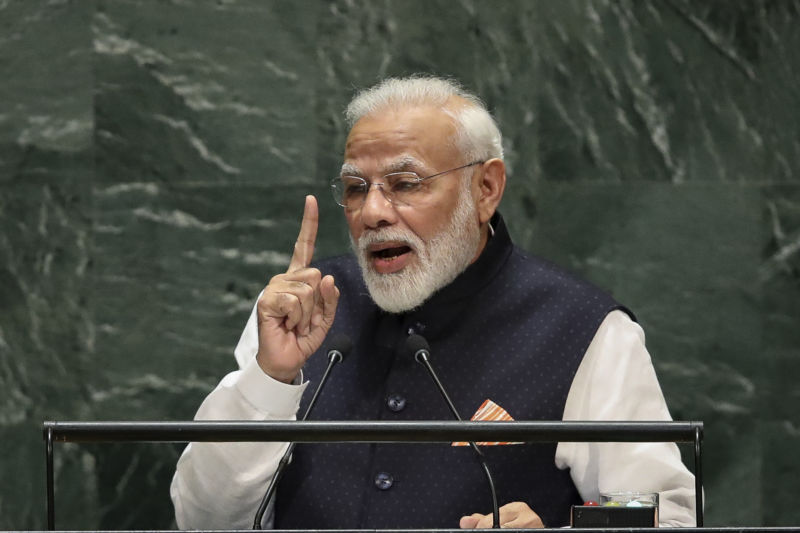
Indian prime minister Narendra Modi addresses the United Nations General Assembly in 2019.
Enlarge / Indian prime minister Narendra Modi addresses the United Nations General Assembly in 2019.
Drew Angerer/Getty Images

The Indian region of Kashmir has had most Internet service blacked out since August. The government of Narendra Modi says the online blackout is a necessary security measure in the face of growing unrest in the region triggered by a change in Kashmir’s status under the Indian constitution. (Kashmir’s status within India has been a topic of controversy for decades.)

“The government says it was necessary to block the Internet to stop agitators orchestrating mass, potentially violent, protests against its decision to revoke Kashmir’s special status,” Reuters reports.

But on Friday, India’s highest court rejected the government’s rationale, arguing that the blackout violated Indian telecommunications laws.

“Freedom of Internet access is a fundamental right,” justice N.V. Ramana said.

The Kashmir blackout isn’t the only time Modi’s government has restricted Internet access in the face of protests against government policies, Reuters notes. But the 150-day blackout in Kashmir is the longest ever in India—or any other democracy.

The blackout has imposed significant hardships on area residents. People in Kashmir have found it difficult to communicate with friends and family elsewhere. And Kashmiri firms that do business outside the region have been hit particularly hard.

The Supreme Court ruling won’t lead to an immediate restoration of Internet access in Kashmir, however. Instead, India’s highest court has given the government a week to revise its policies. The court also required the government to be more transparent about its Internet shutdown orders.

https://arstechnica.com/?p=1642207


FCC will pay ISPs to deploy broadband with 250GB monthly data cap

Illustration of the United States, with fiber-optic cables circling around the Earth.
Getty Images | Henrik5000

The Federal Communications Commission plans to grant a request from AT&T and other ISPs to make more rural-broadband funding available for slower-speed services with lower data caps.

FCC Chairman Ajit Pai initially proposed distributing $20.4 billion in rural-broadband funding to ISPs offering three levels of service: an entry-level tier of 25Mbps download and 3Mbps upload speeds, with a data cap of at least 150GB a month; a mid-range level of 100Mbps down and 20Mbps up, with a data cap of at least 2TB per month; and a “gigabit performance” tier of 1Gbps down and 500Mbps up, with a data cap of at least 2TB.

But AT&T, Frontier, Windstream, and their industry lobby group urged the FCC to either lower the standards of the mid-range tier or add another tier that would be below the mid-range one. The FCC is complying, with an updated plan that it released yesterday and scheduled for a January 30 vote.

Specifically, the FCC added a new tier of 50Mbps down and 5Mbps up, with a data cap of at least 250GB a month. The FCC also raised the planned cap on the lowest tier from 150GB to 250GB. AT&T and other ISPs had pushed for a cap of 150GB on both the 25/3 and 50/5Mbps tiers.

Reverse auction

The FCC will use a reverse auction to distribute $20.4 billion over 10 years to ISPs that bring service at the specified speeds and data caps to rural areas. The new program is called the Rural Digital Opportunity Fund, and it will replace the existing Connect America Fund. Like all of the FCC’s Universal Service programs, the new fund would be paid for by Americans through fees on their phone bills.

In practical terms, adding the new tier means that some federal funding that would have gone to 100/20Mbps service with a generous 2TB data cap could instead go to 50/5Mbps service with a much stricter data cap of 250GB. It’s also possible that 50/5Mbps projects will get some funding that would have otherwise gone to 25/3Mbps. However, the FCC said it expects to distribute funding for 25/3Mbps services “only in areas where higher speeds are not economical,” which suggests the 50/5Mbps tier is likely to play a big role in the program. The overall pool of $20.4 billion, or just over $2 billion per year, is unchanged.

It would be better for Internet users if the 25/3Mbps and 50/5Mbps tiers required data caps larger than 250GB. That amount has been outdated for heavy Internet users for a long time—Comcast raised its data cap from 300GB to 1TB in April 2016. A year ago, research by the vendor OpenVault found that US cable Internet customers were using an average of 268.7GB per month, and 4.1 percent of households were using at least 1TB. Median usage was 145.2GB per month.

The caps won’t remain at 250GB indefinitely, though. The FCC said it chose the amount because its Measuring Broadband America testing program recently found average monthly usage of 251.45GB per month. The FCC plan calls for updating the 250GB cap yearly based on the “average usage of a majority of fixed broadband customers.”

There’s no proposed mechanism for automatically updating speeds each year, though.

Small ISPs objected to lower-speed tier

Two groups that represent smaller ISPs previously urged the FCC to reject calls for slower speeds. NTCA—The Rural Broadband Association and ACA Connects (formerly the American Cable Association) wrote that “It would be remarkable ‘backsliding’ indeed… to adopt lesser standards—such as lower upstream speeds or entirely new, lower speed tiers.”

In explaining why it rejected the argument from small ISPs, the FCC said, “Adding a performance tier at 50/5Mbps furthers our goal of incentivizing providers to deploy networks that will deliver services that consumers need today as well as in the future, but also ensures minimum speed service will be available in the hardest to serve areas.”

FCC Commissioner Jessica Rosenworcel, part of the commission’s Democratic minority, has been unsuccessfully pushing the Republican majority to adopt more forward-thinking speed standards. The 25/3Mbps entry-level tier is too low, she argues.

Ten years ago, the FCC standard for measuring broadband deployment was a mere 200kb per second, which sounds preposterous today. The FCC raised that standard to 4Mbps down and 1Mbps up in 2010 and to 25Mbps down and 3Mbps up in 2015. Pai, who was then a commissioner but not the chair, voted against raising the standard to 25/3Mbps.

The 200kbps standard used 10 years ago “is comically slow today,” Rosenworcel said in August. “But with this proposal we’re taking today’s standard and assuming it makes sense ten years hence. That’s not right.”

FCC broadband maps still inaccurate

Rosenworcel is not impressed with the updated plan, either. In a statement to Ars, she pointed out that the FCC’s broadband maps are inaccurate and said they should be overhauled before the FCC doles out $20.4 billion. The FCC voted to collect more accurate data in August, but it could select the first auction winners before the government has a better idea of which parts of the country lack broadband.

“The agency looks to be rushing its newest effort out the door before it even tries to fix the fundamental problems with its broadband maps,” Rosenworcel told Ars this week. “Everyone knows how poor the agency’s information is about where service is and is not. That’s why we need maps before money and data before deployment.”

The FCC plan says it can account for the data problems by splitting the funding distribution into two auction phases. The first auction, which would start later this year and distribute $16 billion of the $20.4 billion, would “target those areas that current data confirm are wholly unserved,” the FCC plan says.

“By relying on a two-phase process, we can move expeditiously to commence an auction in 2020 for those areas we already know with certainty are currently unserved, while also ensuring that other areas are not left behind by holding a second auction once we have identified any additional unserved locations through improvements to our broadband deployment data collection,” the plan says.

Pai said in an announcement Wednesday that “the Rural Digital Opportunity Fund would be the biggest step the FCC has taken to date to close the digital divide.”

The FCC this week said that about 6 million locations (i.e. homes and businesses) would be eligible for funding in the first auction phase but previously said that the project will “connect up to 4 million rural homes and small businesses.”

Gigabit providers will get more money

In the reverse auction, the FCC will assign a weight to each tier, with the weights helping determine how much money an ISP gets for providing service at the specified speeds and caps.

In good news, the FCC’s weighting system favors higher-speed services. The FCC gives preference to speed tiers with lower weights—a zero weight is assigned to the gigabit tier, so ISPs that promise gigabit services should get more money for each location they serve.

The assigned weight for the 25/3Mbps tier is 50, which is unchanged from the initial proposal to the revision. In the initial plan, the 100/20Mbps tier’s weight was 25, and that has been dropped to 20. The brand-new tier of 50/5Mbps with a 250GB data cap has a weight of 35.

There are also latency standards. Services with latency of 100ms or less won’t be penalized with a greater weight. Higher-latency services of up to 750ms will get an additional weight of 40, which means that traditional satellite services will be at a disadvantage compared to wired or fixed wireless services. The FCC rejected calls to require lower latencies.

https://arstechnica.com/?p=1642267


California considers selling its own generic prescription drugs

A close up of Newsom's face turned to face reporters not pictured, with camera lights in the background.
Enlarge / California Governor Gavin Newsom.

California could become the first state to introduce its own brand of generic prescription drugs in an effort to drag down stratospheric healthcare costs.

The plan for state-branded drugs is part of California Gov. Gavin Newsom’s budget proposal, which he is expected to unveil Friday, January 10.

“A trip to the doctor’s office, pharmacy or hospital shouldn’t cost a month’s pay,” Newsom said in a statement. “The cost of healthcare is just too damn high, and California is fighting back.”

A plan for California to sell its own drugs would “take the power out of the hands of greedy pharmaceutical companies,” Newsom said, according to the Associated Press.

Under the plan, the state would contract with one or more generic drug companies, which would manufacture select prescription drugs under a state-owned label, according to an overview of the plan reported by the Los Angeles Times. Those state generics would presumably be offered to Californians at a lower price than current generics, which could spark more competitive pricing in the market overall.

So far, much of the plan’s details are unclear, though, including which drugs might be sold and how much money they could save residents and the state.

The conceptual plan so far has garnered both praise and skepticism from health industry experts.

Anthony Wright, executive director of the advocacy group Health Access California, told the Associated Press that “Consumers would directly benefit if California contracted on its own to manufacture much-needed generic medications like insulin—a drug that has been around for a century yet the price has gone up over tenfold in the last few decades.”

Geoffrey Joyce, who heads the USC Schaeffer Center for Health Policy and Economics, meanwhile, speculated to the Times that the state might end up focusing on drugs that currently have little competition—which may mean manufacturing drugs that are less commonly used. “In terms of savings to a typical family, it would be very modest,” he predicted.

Industry lobbying group Pharmaceutical Research and Manufacturers of America (PhRMA) told reporters that it was withholding comment until more details about the plan were available.

If the plan moves forward, California would be the first state to have its own drug label. But it’s not the first to try to thwart the current drug market. As the Times notes, over 1,000 hospitals in 46 states banded together in 2018 with philanthropies to form a nonprofit drug-making venture called Civica Rx. The company manufactures generic injectable drugs used in hospitals, offering lower prices and stable supplies.

In October, it delivered its first generic drug, the antibiotic Vancomycin Hydrochloride, which had been subject to shortages. “This first delivery demonstrates the Civica model in action and is a dream come true,” Martin VanTrieste, president and CEO of Civica Rx, said in a statement at the time. “We thank our founding philanthropies for prioritizing accessible and affordable healthcare.”

The company has since shipped several other essential medicines, including the blood thinner heparin and the opioid overdose rescue drug, naloxone.

https://arstechnica.com/?p=1642177


Trump plans to “modernize” environmental impact reports

President Trump gesturing while speaking in front of a small group of supporters.
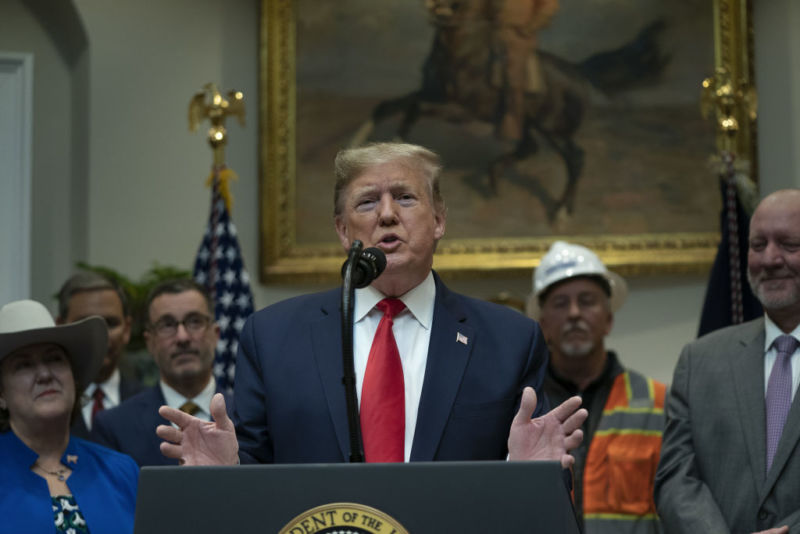
Enlarge / US President Donald Trump speaks during an event to announce proposed new environmental policies at the White House in Washington, DC, on Thursday, Jan. 9, 2020. Trump spoke about proposed scale backs of the National Environmental Policy Act (NEPA).

Today, the Trump administration announced a major overhaul to the implementation of the National Environmental Policy Act. This is the legislation that requires the consideration of the environmental impacts of projects that the federal government is involved with. In an effort to limit the consideration of environmental impacts, the new rules will call for completion of environmental analyses on a time scale that’s too short for a thorough evaluation. And the scope of the analysis will be curtailed so that many environmental impacts won’t be considered at all.

In introducing the changes, Trump claimed that his administration was “modernizing” environmental impact analysis. But various environmental groups are already planning to contest the changes in court.

High impact

The National Environmental Policy Act (NEPA) was part of a collection of environmental legislation passed in the early 1970s, a collection that includes the Clean Air and Clean Water Acts. Compared to the other legislation, its scope was relatively limited, applying only to projects and rules that involved a federal agency. But its impact proved to be significant, as it required that an environmental impact analysis be completed to assess the consequences of federal decisions and the results of that analysis to be considered prior to any decision to move forward.

In practice, this turned out to be a very potent tool for environmental organizations, who were able to sue by arguing that the environmental impact assessments were insufficient or the results were not properly considered. According to an EPA history of NEPA, the courts expanded the scope of the rule by determining that it required that indirect impacts needed to be considered. So, it was not enough to consider damage to a forest caused by building a road through it; federal agencies also had to evaluate the pollution released by the vehicles that would inevitably use that road.

The effect of NEPA has been to slow a number of federal projects. In a few high-profile cases, projects were slowed for long enough that they were eventually cancelled. And, in recent years, the requirement to consider indirect impacts has been used by courts to determine that some federal rules and projects hadn’t taken climate change into consideration when performing their NEPA-mandated analyses.

Given that much of the Trump administration refuses to acknowledge the reality of climate change, this did not sit well, as evidenced by the fact that the EPA pulled its NEPA history off its website and moved it to its archives.

Crippling changes

It’s not an exaggeration to say that the proposed new rules would cripple the current implementation of NEPA. Environmental impact statements would now need to be completed within two years; environmental assessments would be limited to one year. In many cases, this will simply not be sufficient time to perform an analysis. For endangered organisms that are seasonal—think annual plants or amphibians that hibernate over the winter—it can take nearly a year to simply determine whether they exist in an environment that will be affected by a project or rule. And that wouldn’t include the time needed to figure out how they will be affected, which would involve identifying other parts of their range, considering how large a role the specific area being altered plays in their survival, etc.

Environmental impact analyses often take a substantial amount of time because they’re hard to do properly. Putting a time limit on them won’t make them any easier to do.

The second major change is that indirect environmental effects will no longer be considered. If you’re building a highway, only the direct alterations of the landscape will need to be considered. This will essentially remove any consideration of climate change during environmental assessments, but it could have additional impacts that are difficult to determine. To give one example, a dam that altered sediment flow to a distant delta could be considered to have an indirect effect. Given that this requirement was put in place via a court decision, it’s not even clear that the administration is able to alter it via the rulemaking process.

Another change that’s difficult to interpret is that the NEPA requirements will no longer be triggered if there is “minimal” federal involvement in a project. But minimal isn’t clearly defined in any of the documents released so far. As of the writing of this report, the final version of the proposed changes had not been published in the Federal Register, a key step in the rulemaking process.

In news reports on the announcements, a variety of environmental groups have indicated they plan to sue to block the changes. And the decision comes fairly late in Trump’s first term. Should he fail to win reelection, the new rule is unlikely to be implemented before a new administration is in place.

https://arstechnica.com/?p=1641937


US Government-funded Android phones come preinstalled with unremovable malware

US Government-funded Android phones come preinstalled with unremovable malware

An Android phone subsidized by the US government for low-income users comes preinstalled with malware that can’t be removed without making the device cease to work, researchers reported on Thursday.

The UMX U686CL is provided by Virgin Mobile’s Assurance Wireless program. Assurance Wireless is an offshoot of the Lifeline Assistance program, a Federal Communications Commissions plan that makes free or government-subsidized phones service available to millions of low-income families. The program is often referred to as the Obama Phone because it expanded in 2008, when President Barack Obama took office. The UMX U686CL runs Android and is available for $35 to qualifying users.

Researchers at Malwarebytes said on Thursday that the device comes with some nasty surprises. Representatives of Sprint, the owner of Virgin Mobile, meanwhile said it didn’t believe the apps were malicious.

The first is heavily obfuscated malware that can install adware and other unwanted apps without the knowledge or permission of the user. Android/Trojan.Dropper.Agent.UMX contains striking similarities to two other trojan droppers. For one, it uses identical text strings and almost identical code. And for another, it contains an encoded string that, when decoded, contains a hidden library named com.android.google.bridge.Liblmp.

Once the library is loaded into memory, it installs software Malwarebytes calls Android/Trojan.HiddenAds. It aggressively displays ads. Malwarebytes researcher Nathan Collier said company users have reported that the hidden library installs a variant of HiddenAds, but the researchers were unable to reproduce that installation, possibly because the library waits some amount of time before doing so.

The malware that installs these programs is hidden in the phone’s settings app. That makes it virtually impossible to uninstall, since the phone can’t operate properly without it. “Uninstall the Settings app, and you just made yourself a pricey paper weight,” Collier wrote.

The second unpleasant surprise delivered by the UMX U686CL is something called Wireless Update. While it provides a mechanism for downloading and installing phone updates, it also loads a barrage of unwanted apps without permission. The app is a variant of Adups, an app from a China-based company by the same name. In 2016, researchers caught Adups surreptitiously collecting user data on hundreds of thousands of low-cost phones from BLU.

“From the moment you log into the mobile device, Wireless Update starts auto-installing apps,” Collier said. “To repeat: there is no user consent collected to do so, no buttons to click to accept the installs, it just installs apps on its own.”

While all of the installed apps Malwarebytes examined were clean and free of malware, the presence of a feature that automatically installs apps poses an unacceptable risk, particularly since removing the feature prevents the phone from receiving updates. Collier’s post classified Wireless Update as malware, but Jérôme Segura, Malwarebytes’ head of threat intelligence, told me its actual classification is a PUP, or potentially unwanted program, since there’s no evidence the apps that are installed are malicious.

In any event, the two apps analyzed by Malwarebytes make use of the UMX U686CL a bad choice. The fact that it’s made available to low-income users only worsens the insult. Malwarebytes said it notified Assurance Wireless of its findings and asked why the phone it sells comes with preinstalled malware. So far, no one has responded. In an email, Sprint officials said: “We are aware of this issue and are in touch with the device manufacturer Unimax to understand the root cause, however, after our initial testing we do not believe the applications described in the media are malware.”

It’s not hard to find online discussions like this one complaining of annoying displayed ads and apps automatically installing on the device without user permission. A similar thread discusses ads that display on the homescreen even when a browser isn’t running.

Over the years, preinstalled malware has been found on a raft of low-cost Android phones from a variety of providers and manufacturers. An incomplete list includes a backdoor on hundreds of thousands of BLU devices, a powerful backdoor and rootkit also on BLU devices, and covert downloaders on 26 different phone models from various manufacturers.

It seems the price people often pay for low-cost phones is compromised security and privacy. While many users may not be able to afford them, buying phones from mainstream and well-known providers located outside of China is likely to be a better choice.

Post updated at 1/9/2020, 3:24 PM California time to add comment from Sprint.

https://arstechnica.com/?p=1641785


Misleading political ads are the user’s problem to avoid, Facebook says

Photograph of busy open-plan office.
Enlarge / Facebook’s election “War Room” on Wednesday, Oct. 17, 2018.

Following months of criticism for its decision to allow candidates for political office to tell outright lies in advertising, Facebook is trying to correct course not by changing advertiser behavior but by telling users to opt out of being shown certain ads.

Facebook today announced a change to its political ad system that will “expand transparency.” Sometime during 2020, users in all countries where political ads feature “paid for by…” disclaimers, including the United States, will gain an account control for seeing “fewer political and social issue ads” on both Facebook and Instagram. US users are expected to get the feature sometime this summer—well into the depths of the 2020 US presidential campaign season.

Facebook said in October that all content posted by politicians and political candidates, including paid advertising, would be exempt from any of the company’s fact-checking processes and would not be held to company standards barring intentionally misleading content. That policy, or lack thereof, has continued to come under fire as other key Internet and social media players, including Google and Twitter, amended their policies to limit or ban political advertising on their platforms.

The only major exception to Facebook’s otherwise laissez-faire political advertising policy is a ban on content that promotes voter suppression (or tries to suppress responses to the 2020 US Census). Enforcement of the ban on voter suppression, however, appears to be haphazard at best, according to an October report.

“We recognize this is an issue that has provoked much public discussion—including much criticism of Facebook’s position,” the company said as part of its announcement today. “We are not deaf to that and will continue to work with regulators and policy makers in our ongoing efforts to help protect elections.”

One big fan

Facebook’s framing of misleading political ads and certain political ad targeting as a user problem generated immediate blowback from politicians, consumer advocates, and government officials.

Federal Election Commissioner Ellen Weintraub had particularly harsh words for the company. “Facebook’s weak plan suggests the company has no idea how seriously it is hurting democracy,” she wrote on Twitter. “Here, proposing ‘transparency’ solutions is window-dressing when Facebook needs to be putting out the housefire it has lit.”

She added, “These so-called ‘transparency’ solutions are neither transparent nor solutions… I am not willing to bet the 2020 elections on the proposition that Facebook has solved its problems with a solution whose chief feature appears to be that it doesn’t seriously impact the company’s profit margins.”

Several contenders running to be the Democratic nominee in the 2020 presidential race also lambasted Facebook over the move, including Sen. Elizabeth Warren (D-Mass.) and former Vice President Joe Biden.

“Make no mistake, this has nothing to do with transparency and choice,” said Rep. David Cicilline (D-RI)—chairman of the House Antitrust Subcommittee, which is probing Facebook’s business practices. “This is about money. Specifically, the $6 billion that will be spent on political ads in 2020 that Facebook will use to continue increasing their profits at the expense of our democracy.”

Facebook did gain support from one powerful quarter for its plan, however. A spokesman for the Trump campaign applauded the maneuver, saying , “Our ads are always accurate, so it’s good that Facebook won’t limit political messages.”

https://arstechnica.com/?p=1641709


NYC broadband plan calls for fiber everywhere, with ISPs sharing network

An image of New York City skyscrapers, overlaid with lines meant to represent a broadband network.
Enlarge / New York City.

The New York City government has released an “Internet Master Plan” that calls for universal broadband throughout the five boroughs, relying on open-access fiber networks that can be used by multiple ISPs.

The plan, announced by Mayor Bill de Blasio and Chief Technology Officer John Paul Farmer yesterday, says New York City “will prioritize and optimize ‘open-access’ or ‘neutral-host’ infrastructure, which can be shared by multiple operators to lower costs, increase competition, minimize physical disruption to the city, and incentivize private-sector investments to reach and serve customers.” New York City wants to ensure universal access to both wired and mobile Internet, with a fiber network that offers home Internet and provides bandwidth to mobile services.

The plan continues:

Based on the data and analyses contained in this Master Plan, the City has determined that universal broadband calls for an open-access fiber optic infrastructure built out to nearly every street intersection with an aggregation point in every neighborhood. Leveraging City real estate assets and public rights-of-way will allow network operators to extend fiber optic infrastructure from the intersection to a pole or building and deliver service using any of a number of potential technologies. This new infrastructure will support the rapid and equitable deployment of multiple choices for service.

NYC must turn plan into reality

There’s often a big difference between municipal plans and reality, of course. Los Angeles announced a universal fiber plan in November 2013. But the plan stalled after striking many experts as unrealistic—the city wanted to find a private company that would build the network at its own cost, offer free Internet to all residents (while charging for faster speeds), and make the infrastructure available to any other service provider on a wholesale basis.

San Francisco planned an open-access network in January 2018, which also would have required a private company to build the network. But the plan was delayed indefinitely just a few months later when then-Mayor Mark Farrell decided not to place a tax measure on the ballot.

The New York City plan has raised excitement, though. Gigi Sohn, a consumer advocate and former Federal Communications Commission official, called NYC’s plan “the most thoughtful and comprehensive blueprint by any major city to ensure that every resident and small business has affordable and open access to high-performance broadband.” Sohn argued that states and municipalities must act because the “federal government has failed to meet the broadband needs of tens of millions of Americans.”

NYC “is the first major city to treat Internet access with the seriousness it deserves,” the Institute for Local Self-Reliance said.

Public/private partnerships

Like the LA and San Francisco plans, New York wants to rely heavily on private operators. But the city also says it will do much of the investment itself.

New York’s plan says:

The City will invite proposals for the coordinated use of public real estate assets through a new Universal Solicitation for Broadband (USB). For the purposes of this Master Plan, “City assets” refers to those assets that are owned, operated, or otherwise controlled by the City, or available for City use. Private operators will be able to respond with requests for assets from multiple City agencies. The City will prioritize approaches that enable multiple operators to share in the use of an asset. The City will review responses to the USB for feasibility of implementation and potential impacts on City resources.

The city itself “will invest in new infrastructure that can be shared by multiple broadband operators,” the plan says. In addition to the city’s own “seed investments,” New York said it “will leverage public-private partnerships to install, operate, and maintain the infrastructure.”

The plan estimates that building the needed infrastructure throughout the city would cost $2.1 billion. There’s already a lot of fiber conduit in Manhattan and in the Bronx, so much of the construction could be done by pulling fiber cables through existing underground conduits. Aerial fiber installations would also be used heavily.

Focus on poorly connected areas first

Importantly, the plan calls for wiring up parts of the city with the worst broadband access first. “The Master Plan prioritizes infrastructure development for neighborhoods that have low levels of commercial fiber service and where new construction opens the way for new providers and services,” the document says.

In addition to fiber-to-the-home service, New York’s plan calls for the fiber network to “be overlaid with a neutral radio access network capable of providing mobile wireless service throughout every neighborhood,” with “shared spectrum to support multiple operators.” Mobile service would be prioritized “in low-income areas where New Yorkers are most dependent on mobile service, as well as in areas where commercial broadband deployment is already placing the greatest burden on City assets.”

Relying solely on private ISPs hasn’t worked out for everyone in New York. Verizon was supposed to complete a citywide fiber rollout by 2014 as required in its cable franchise agreement, but the city sued Verizon in 2017, saying the company hadn’t met that obligation. The case is still pending in a state court, but Verizon and New York are in negotiations for a settlement.

New York’s plan said that nearly a third of households in the city “do not have a broadband connection at home” and that “more than 1.5 million New Yorkers have neither a mobile connection nor a home broadband connection.” Low-income residents are more likely to lack service, and areas with higher incomes have more home-broadband competition.

The city sees its role as “optimiz[ing] existing infrastructure and build[ing] new open access infrastructure that can support multiple operators.” Private companies that partner with the city would “install, operate, and maintain infrastructure and equipment,” as well as offer service directly to subscribers.

Public money needed for “truly universal service”

It’s not clear how long the plan would take to implement, although it would certainly be at least a few years if the city does everything it aims to. Instead of charting out construction for the entire city in a single bidding round, the plan calls for an iterative process with multiple “procurement cycles to address infrastructure and service goals in new batches of neighborhoods or for new bundles of assets.”

The plan says:

Such an approach allows the City to develop market response and City capacity in tandem. A steady release of new City offerings will allow innovative market operators to reach stabilization incrementally rather than across the entire city at once, and will amplify the City’s ability to influence private broadband investment. After an initial series of projects is realized, the City anticipates having new bundles of City assets, new neutral-host infrastructure, and potentially further capital investments to be incorporated into subsequent rounds of solicitations and proposals.

“It’s a solid plan—bolder than others I’ve seen,” Legal Director John Bergmayer of consumer-advocacy group Public Knowledge told Ars. “Much of it appears designed at lowering the costs of deployment in underserved areas, and I think measures like that can be successful and sustainable.”

The city’s commitment to invest money instead of relying solely on the private sector is promising, Bergmayer said. “Substantial public investment will be necessary for truly universal service,” he added. “The plan’s focus on public investment in shared infrastructure is a good start.”

https://arstechnica.com/?p=1641037