Pick your poison: The potential Iranian responses to US drone strike

TEHRAN, IRAN - (ARCHIVE): A file photo dated September 18, 2016 shows Iranian Revolutionary Guards' Quds Force commander Qasem Soleimani during Iranian Supreme Leader Ayatollah Ali Khamenei's meeting with Revolutionary Guards, in Tehran, Iran.
Enlarge / TEHRAN, IRAN – (ARCHIVE): A file photo dated September 18, 2016 shows Iranian Revolutionary Guards’ Quds Force commander Qasem Soleimani during Iranian Supreme Leader Ayatollah Ali Khamenei’s meeting with Revolutionary Guards, in Tehran, Iran.
Anadolu Agency / Getty Images

The assassination by missile last night of Iranian Revolutionary Guard Corps Quds Force commander Major General Qasem Soleimani and four other senior Iranian officers has triggered vows of revenge from Iran’s Supreme Leader and other members of Iran’s leadership. Those vows have raised concerns about both physical and electronic attacks by Iran against the US and other targets—including an expansion of the already noted broadening attempts at cyber attacks by Iranian state-sponsored hackers.

A Department of Defense spokesperson said in a statement on the attack, “At the direction of the President, the US military has taken decisive defensive action to protect US personnel abroad by killing Qasem Soleimani… General Soleimani was actively developing plans to attack American diplomats and service members in Iraq and throughout the region.”

The attack, apparently launched from a drone against Soleimani’s motorcade as it left Baghdad International Airport, also is reported to have killed Abu Mahdi al-Muhandis, the leader of Iraq’s Kata’ib Hezbollah militia—the force the US blamed for a December 27, 2019 rocket attack on a Peshmerga-operated base that killed a US contractor and wounded several US soldiers there as part of a training operation. Soleimani was alleged by the Defense Department’s spokesperson to have orchestrated that attack, as well as the protest and assault on the US Embassy in Baghdad this week.

Al-Muhandis was also the deputy chief of the Popular Mobilization Forces, the militia group called up to fight the Islamic State. Iraqi government officials, including Iraqi Prime Minister Adel Abdul-Mahdi, were outraged by the attack. The official spokesman for the Iraqi Ministry of Defense said in a Twitter post that the MOD mourned for al-Muhandis, “who was martyred last night following an air strike carried out by the American planes near Baghdad International Airport with a number of employees of the Popular Mobilization Organization.”

An Al Arabiya report claims that Soleimani was killed by a Hellfire R9X “flying Ginsu” missile—giving that as the reason that Soleimani’s ringed hand and other remains of victims were “cut into parts.” But given that multiple vehicles were attacked and the vehicles exploded, that seems unlikely. Soleimani controlled much of Iran’s foreign policy and reported directly to Iran’s Supreme Leader, Ayatollah Ali Khamenei.

A smorgasbord of responses

Iran’s options for a response to the United States are limited only by how much Iran’s leadership wants to escalate the brinksmanship. At the low end of the spectrum, Iran has already demonstrated its desire and capability to launch cyber-attacks against US companies. The Department of Homeland Security issued a warning about a potential wave of destructive attacks coming from Iran last summer. Microsoft reported in October that Iranian hackers had targeted a US presidential campaign (which Reuters identified as President Trump’s).

And in December, IBM X-Force reported the discovery of a new Iranian “wiper” malware variant in an attack against companies in an unidentified Gulf state. The attack was associated with the Iranian threat group “Oilrig” (also known as APT 34). Another Iranian threat group, APT 33, has been targeting industrial control systems in the US through a series of password-spraying attacks against manufacturers, industrial equipment suppliers, and other firms associated with industrial controls, according to Microsoft security researchers. Other attacks have focused on US energy companies.

Dmitri Alperovitch, co-founder and CTO at the security firm CrowdStrike, laid out the most immediate potential responses:

These sorts of attacks are at the low end of the potential spectrum of threats, however. Iran could use its own drones to target US personnel in Iraq or launch the same types of attacks that have taken hundreds of US service members’ lives over the past two decades—with improvised explosive devices, rocket attacks, or insider attacks at training facilities. They could close the Straits of Hormuz to tanker traffic and attack ships with drones. They could attack Saudi oil facilities with drones as they have been alleged to have done in the past.

It is likely that the response will be any or all of these things in some combination. In the meantime, the US faces the prospect of having its forces kicked out of Iraq by the Iraqi parliament after what is seen as a second violation of the nation’s sovereignty, and there could be a loss of access to intelligence on activities in Iran and Syria. Whatever happens, the coming weeks and months in the region (and everywhere else, potentially) are bound to be ugly and messy.

https://arstechnica.com/?p=1638517


To replace gas taxes, Oregon and Utah ask EVs to pay for road use

An electric car is pictured during charging on April 24, 2018 in Berlin, Germany
Florian Gaertner/Photothek via Getty Images

The end of 2019 saw a bunch of headlines proclaiming that it was a huge year for the electric vehicle. Yet more declare that actually, 2020 will be the year the EV really takes off. It’s true there are now more EVs; plug-in hybrid ones, battery ones, and even hydrogen fuel cell EVs in a range of shapes, sizes, and prices, and five of them made it into my list of the 10 best things I drove last year. When the numbers for 2019’s plug-in EV sales are complete, we expect more EVs to have been sold in 2019 than any year before, even if total new car sales in the US have dropped.

Still, let’s not get ahead of ourselves; EVs might be outselling manual transmissions by nearly 2:1, but they still account for little more than a rounding error in the context of ~17 million new car and truck sales. If that has you depressed, take heart that the trend for EV sales is moving in the right direction. And it’s a trend that is starting to worry some of the states. That’s because the US has traditionally paid for the upkeep of its roads via direct taxation of gasoline and diesel fuel, which means that as our fleet becomes more fuel-efficient, that revenue will drop in relation to the total number of vehicle miles traveled each year.

Utah tries something new

As a result, some states are starting to grapple with the problem of how to get drivers to pay for the roads they use in cars that use less or even no gas per mile. At the start of this year, Utah has begun a pilot Road Usage Charge program, coupled to an increase in registration fees for alternative fuel vehicles. Assuming a state gas tax of 30c/gallon and 15,542 miles/year driven, Utah says it collects $777 a year from a 6mpg heavy truck, $311 from a pickup getting 15mpg, $187 from a 25mpg sedan, $93 from a 50mpg hybrid, and nothing from anyone driving a battery EV.

So in 2020, Utah is increasing vehicle registration fees. In 2019, registering a BEV in Utah would cost $60; in 2020 that will be $90, increasing to $120 in 2021. PHEV fees were $26 in 2019, increasing to $39 this year and $52 in 2021, and not-plug-in hybrid fees have gone from $10 to $15, increasing to $20 next year. An extra $30 a year—or even $60 a year—is pretty small in the grand scheme of things, particularly considering how much cheaper an EV is to run.

But Utahns with EVs have an alternative. Instead of paying that flat fee, they can enroll in the pilot program that involves fitting a telematics device to the car. The device tracks the actual number of miles driven on Utah’s roads. These are billed at a rate of 1.5c/mile, but only until the total equals whatever that year’s registration fee for the vehicle would have been; participating in the pilot means you could pay less than you would otherwise, but Utah’s Department of Transportation says that participants would not ever be charged more than that year’s registration fee. The data will be collected by a contractor called Emovis, which operates toll roads around the US.

“This is just one of the avenues we’re investigating for the future because with all the alternative-fuel vehicles, there is going to come a time when the gas tax is not going to be able to fund transportation like it has for the past 100 years,” said UDOT spokesperson John Gleason.

Oregon has been at this for a while

Oregon is another state that has been working on solving this problem for a while now—this Ars forum thread about the topic is exactly 11 years old today, in fact. In 2020, Oregon is increasing its state gas tax by 2c/gallon, and like Utah, it’s also increasing vehicle registration fees. Now, fees for registering your car in Oregon will depend on how many miles per gallon your car gets; a two-year registration for something that gets below 19mpg will cost $122, rising to $132 for a vehicle between 20–39mpg, then $152 for a vehicle that gets 40mpg or better, and $306 for a BEV.

Like Utah, there is a way to avoid some of those increases, as long as you own a 40+mpg vehicle or a BEV. By enrolling in OReGO—which began in 2015 as a pilot for 5,000 road users but which is now being expanded—you can cut that two-year fee to $86 for a 40+mpg vehicle or a BEV. Like Utah’s system, OReGo also requires participants fit their car with a telematics device to track the actual miles they travel on the state’s roads. Those are billed at 1.8c/mile—Oregon evidently decided its roads are worth a little more than those in Utah—but you can then get credited for any fuel tax you pay in the state. (Obviously, this only applies to hybrid and PHEV drivers.)

Knowing Ars Technica’s audience, I’m pretty sure that some of you will be horrified by these approaches. After all, it means surrendering yet more personal data to private companies and local authorities. And it’s fair to say that support is not universal for these approaches, particularly as the data unequivocally shows that a reduction in subsidies for EVs directly correlates with fewer EVs sold. What’s more, state gas taxes aren’t the only gas taxes we pay—the federal gas tax will also need tackling at some point in the future. And with such low market penetration, the problem of declining gas tax revenues isn’t much of a problem right now. But it will be, so it’s probably wise for people to think about how to solve that while we have time.

https://arstechnica.com/?p=1638439


EPA science board to EPA management: Try using some science

Image of a human.
Enlarge / Environmental Protection Agency Administrator Andrew Wheeler.

The Environmental Protection Agency has a Scientific Advisory Board (SAB) that has the ability to review actions taken by the agency and provide feedback on whether they’re based on a solid scientific and technical foundation. Early in the Trump administration, many scientists appointed to the board during the Obama administration were not reappointed, and many were replaced by scientists and engineers working on industry. This raised fears that the SAB would go along quietly with the current administration’s focus on pro-industry deregulation.

Those worries appear to have been misplaced. In preparation for a public meeting of the board scheduled for later this month, the SAB has released draft evaluations of a number of the EPA’s signature policies under Trump, including new vehicle mileage standards and a scientific openness rule. And the results are scathing. Policy decisions are described as uselessly vague, having minimal scientific foundation and producing nonsensical results.

Policy minus science

The Trump administration came to office promising to eliminate government regulations where possible. This initiative has included a campaign to block limits on greenhouse gas emissions, which included a reduction in fuel efficiency standards for vehicles. But there have been lower-profile changes, like limiting planned standards on mercury emissions and water pollution. And there has been an effort to limit how much science is incorporated into future EPA decisions.

The SAB is tackling all of these in its draft comments, and in almost every case, it finds the science used by the EPA to either be questionable or missing entirely.

An effort to roll back planned controls on mercury emissions from power plants is the simplest example. “EPA’s residual risk assessment appears only to include [mercury in] fish consumed from small to mid-size lakes by fishermen and their families,” which the SAB notes represents a small fraction of the fish consumed in the US. On other aspects of mercury exposure, the SAB found that the Food and Drug Administration had obtained more recent data and performed up-to-date analyses, but these weren’t incorporated into the EPA’s analysis. The report also found that earlier suggestions by the SAB had been ignored in the final EPA analysis.

That may sound bad, but things get worse. The Clean Water Act gives the EPA power to regulate pollution in the US’ waterways and requires it to use the best available science to set the rules. During the Obama administration, following this dictate, the EPA recognized that the waterways it regulates are part of a system that includes groundwater, seasonal streams, and man-made bodies of water. It planned rules that would limit the pollution allowed into regulated waterways via these routes, which would greatly expand the entities subject to regulation.

The Trump administration is seeking to eliminate this proposed rule, and the SAB is not impressed. “The SAB discussed the scientific and technical underpinnings of the proposed [Waters of the US] rule and concluded that aspects of the proposed rule are in conflict with established science, the existing [Waters of the US] rule developed based on the established science, and the objectives of the Clean Water Act,” the draft document says. The board says that the best available science supports the Obama-era decision to treat waterways as a coherent, interconnected whole—the perspective that the Trump administration is eliminating. “The proposed Rule offers no comparable body of peer reviewed evidence to support such a departure, and no scientific justification for abandoning the more expansive view of connectivity of waters accepted by current hydrological science,” the SAB concludes.

To give a specific example, the SAB says that irrigation canals are a major source of water contamination and have been the source of E. coli outbreaks spread through vegetables.

The draft letter indicates that the SAB offered to place the rule on sounder scientific footing, but the EPA declined, deciding instead to focus on legal decisions that could be interpreted as calling for a more limited legal scope for regulation. The SAB notes that this justification seems to change with the politics of the current administration and is inconsistent with the requirement to use the best science.

Math problems and defining science

Next up, the SAB tackles proposed plans to reduce future automobile fuel efficiency standards. These were based on new models of car ownership that were incorporated into an existing analysis package. And those were, in part, not based on reality. The report indicates that these models have “weaknesses” in their theoretical underpinnings and actual economic analysis, leading to the nonsensical result that lowering efficiency standards will ensure lower-priced vehicles, which will somehow cause the car market to shrink. The EPA says that will lower the impact of the reduced efficiency.

Finally, the board turns to the EPA’s recent decision to alter which scientific results it considers when developing new rules. The Trump administration is claiming that it’s interested in increasing the openness of the science used in developing regulation by ensuring that the research is publicly accessible. That is theoretically a good thing, and the SAB applauds the sentiment. But the actual implementation runs into problems, namely that many of the studies involve confidential medical data that cannot be made public.

But the board argues that the problems are much more extensive than that. The plan calls for “raw data” to be made available to the public, but it doesn’t define the term. This vagueness is present throughout. “The lack of criteria for what might satisfy the requirement makes it difficult to understand the implications,” the board argues in regard to the proposal’s lack of definition of what research needs to be made available. The rule suggests there may be exceptions to the requirement but doesn’t say what they are.

It also doesn’t explain how the public’s access will be paid for. Archiving data involves ongoing costs, and the EPA hasn’t made clear who was going to pay for them.

EPA policies face a tangled set of requirements. Policies have to be produced through the formal federal rulemaking process and be consistent with the legal abilities that Congress has designated to the EPA, often refined through court decisions. They have to address issues delegated to the EPA, such as clean air and water. In many cases, the laws that have delegated these powers to the EPA specify that the rulemaking process must incorporate scientific and economic analysis. Finally, to the extent that all of that allows, the policies have to be consistent with the political goals of the current administration.

The SAB’s job is to highlight when one of those factors—the best available science—isn’t being properly considered. That doesn’t mean considering it will change a policy, given all those other factors. But the issues highlighted by the SAB suggest it’s not being considered at all, which may make some of the Trump policies difficult to defend in court.

And it provides a solid indication that the SAB remains committed to identifying the best available science, even when that may not be popular with the EPA as a whole.

https://arstechnica.com/?p=1638381


IRS drops longstanding promise not to compete against TurboTax

A US individual income tax return document lying on a table next to a calculator, notebook, pen, and iPad.

The Internal Revenue Service’s new agreement with the tax-software industry prohibits companies from hiding their free options from search engines and allows the IRS to offer its own tax-return software in competition against TurboTax. That doesn’t mean the IRS will offer its own software, but the agency has officially rescinded its promise not to compete against the industry.

As ProPublica reported in April 2019, TurboTax maker Intuit used a robots.txt file to “deliberately hid[e] its Free File page from search engines.” TurboTax subsequently changed the code on its Free File page so it wouldn’t be hidden from Google and other search engines anymore, but at least five US states opened investigations into TurboTax’s marketing and provision of its free tax programs. H&R Block was also hiding its free tax service from Google search using the same method, ProPublica reported at the time, but H&R Block seems to have lifted that restriction based on searches we conducted today.

With the industry under legal pressure, the IRS extracted new promises from Free File, an industry consortium that represents Intuit, H&R Block, and other tax-prep-software makers. The changes were announced by the IRS on December 30 and put into an addendum to the 18-year-old IRS/Free File agreement that requires free services for low- and mid-range incomes.

Free tax prep available to 70% of US

Free File programs offer free tax-prep software to people with incomes below $69,000 (about 70 percent of the US population) and free “fillable forms” for people making more than that. The industry has offered free services in exchange for the IRS promise not to compete against them—but that promise is now gone.

Previously, the IRS/industry memorandum of understanding said that “In recognition of this commitment [to offer free filing services to low-income taxpayers], the federal government has pledged to not enter the tax return software and e-file services marketplace.” The new addendum says that sentence “is hereby stricken” from the agreement.

The addendum also states that tax-prep companies “are prohibited from engaging in any practice that would cause the member’s Free File landing Page to be excluded from an organic Internet search.”

The deletion of the IRS’ promise not to compete against the industry raises the possibility of the IRS offering its own free tax-filing service. The IRS hasn’t announced any plans to do that, but the change could put more pressure on software makers to live up to the full terms of their deal with the government.

We asked the IRS today if it plans to offer its own tax-prep software, but a spokesperson said the agency had no further comment beyond what it announced.

The IRS’ own expert advisory council criticized it in November 2018 for “deficient oversight” of the Free File program, putting “vulnerable taxpayers at risk.”

TurboTax hasn’t been forced to give back all the money it charged people who were eligible for free tax-filing services, but some customers were able to get refunds by calling the company.

Intuit says it doesn’t object to changes

Intuit said in a blog post that it “strongly supports these changes to the Free File program and associated Free File offerings because they increase the focus on the taxpayer experience.” Intuit said that its “search and marketing practices already conform with the new addendum requirement,” though that’s only because Intuit changed its practices last year.

Intuit also said that it doesn’t object to the deletion of the IRS promise not to offer its own software. Intuit wrote:

An original objective of the Free File program was to encourage private industry investment in technology and services to deliver on IRS goals of increasing e-filing. With approximately 90 percent of taxpayers e-filing today, the language is no longer relevant and is not a prerequisite for Intuit’s continued participation in the Free File program. Critics of the program came to believe that this language was the only thing stopping the IRS from offering tax preparation software and assistance, and that companies participated in Free File only in exchange for this promise. That is wrong, and we support removing the language that fostered this confusion. We are confident in our exceptional product, and we participate in the Free File program to help give eligible taxpayers another option to file their taxes for free.

Despite Intuit’s claim, the company and other tax-filing-software makers lobbied for legislation that would have prohibited the Internal Revenue Service from offering a free online tax-filing option. The House of Representatives Ways and Means Committee approved such a ban in April 2019, but lawmakers later dropped that proposal.

Besides the new search-visibility requirement and deletion of the IRS pledge not to compete against the industry, the addendum includes several more obligations to ensure that companies make free-filing options known to eligible consumers. Here are a few highlights:

  • Companies must standardize the names of their free offerings so that taxpayers can find them easily from organic searches. Companies must refer to their free service as: “IRS Free File program delivered by (Member company name or product name).”
  • Company websites must provide taxpayers with a link to the IRS Free File website “at the earliest feasible point in the preparation process if they do not qualify for the [company’s] Free File offer.”
  • Companies must implement new procedures to verify that returns submitted to the IRS with the Free File indicator “have absolutely no fees associated with federal return preparation and e-file.”
  • Each company must survey a random selection of taxpayers who use its free filing service about their customer experience and satisfaction, and provide quarterly and annual reports to the IRS.
  • Companies must use independent auditors to review their websites and provide the auditor’s aggregate findings to the IRS.

IRS Commissioner Chuck Rettig said the changes “will make Free File stronger and give taxpayers another reason to consider this valuable software option.” The IRS and industry will continue working together to “help low- to moderate-income taxpayers and to pursue meaningful opportunities to enhance taxpayer awareness and use of the Free File Program beyond the 2020 filing season,” Rettig also said.

https://arstechnica.com/?p=1638097


Big Pharma celebrates new year by raising prices on over 250 drugs

Big Pharma celebrates new year by raising prices on over 250 drugs

Leading drug makers rang in the new year by once again raising list prices of their drugs—this time on more than 250 of them, according to an analysis reported by Reuters.

Data examined by healthcare research firm 3 Axis Advisors found that major drug makers including Pfizer Inc, GlaxoSmithKline PLC, and Sanofi SA, Bristol-Myers Squibb Co, Gilead Sciences Inc, and Biogen Inc hiked prices this week.

The larger price tags applied to a range of medications, from blood thinners to cancer therapies and treatments for respiratory conditions, HIV, arthritis, and multiple sclerosis.

Nearly all of the increases were below 10 percent, according to the 3 Axis analysis. So far, the median price increase is around 5 percent, though additional price increases could still be announced.

Pricing hikes of less than 10 percent are relatively low; drug makers have made headlines in recent years with abrupt, eye-popping increases, such as 879 percent and an infamous hike of more than 5,000 percent. Amid backlash for the hikes—and the country’s exorbitant drug pricing overall—many pharmaceutical companies have pledged to keep their annual price increases to 10 percent or lower.

Still, that lower rate greatly exceeds that of inflation. As of November, the 2019 inflation rate was 2.1 percent.

In a statement to Reuters, Sanofi noted that its increases were in line with the company’s commitment to keep the rate of increases below “medical inflation.”

Though consumers rarely pay list prices for drugs, the increases can add to overall healthcare costs that can in turn raise insurance premiums.

Drug makers typically increase the list prices of drugs twice a year and have continued to do so amid intense public scrutiny. Last year, drug makers went ahead with price hikes on thousands of drugs, many well over 10 percent.

https://arstechnica.com/?p=1638057


Court backs Comcast, puts Maine’s à la carte cable law on hold

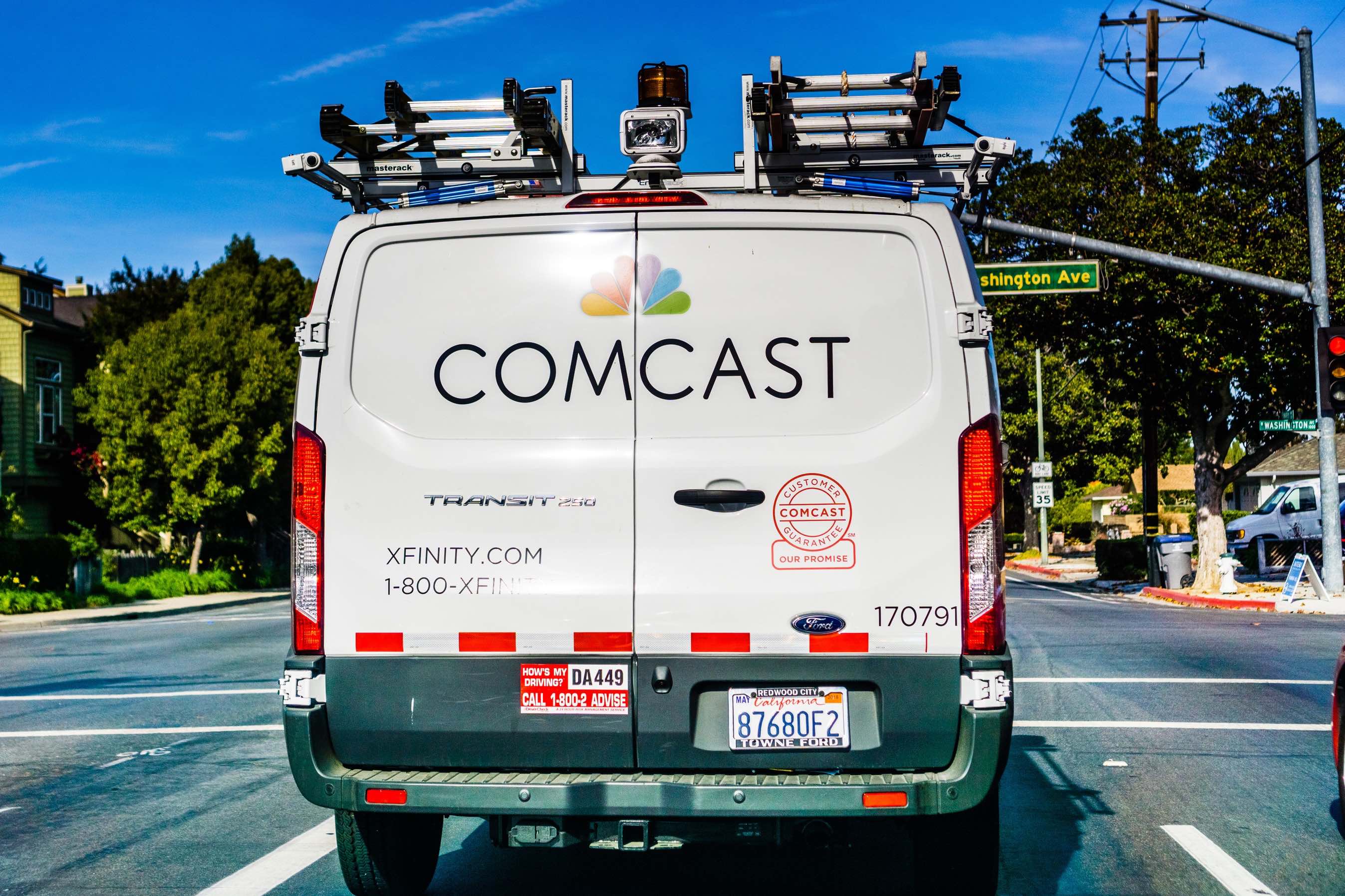
The back of a Comcast van driving along a street in Sunnyvale, California.
Enlarge / A Comcast van in Sunnyvale, California, in November 2018.
Getty Images | Andrei Stanescu

A whole slew of cable companies are notching up a victory in a lawsuit against the state of Maine that seeks to block a recent law that would require à la carte cable offerings.

Comcast spearheaded the coalition of companies, which filed the suit in September. The Maine law, the first of its kind in the nation, was invalid for two reasons, the suit argued: first, because it pre-empts federal communications law, and second, because it violates companies’ First Amendment rights. Comcast was joined by more than a dozen other plaintiffs, including its own NBCUniversal subsidiary, CBS, Viacom (which had not yet completed its merger with CBS), Disney, Fox, A&A, Discovery, and Hearst.

As is common in such suits, the plaintiffs first sought an injunction that would block the state from enforcing the law while the rest of the legal process gets sorted out. District Judge Nancy Torresen granted the injunction in a ruling (PDF) issued just before Christmas.

One good argument, two bad

The injunction would only be granted if the plaintiffs had a chance at winning on the merits of an argument, Torresen explained in her ruling. Two of the main arguments Comcast, et al put forth were unlikely to prevail, she found, but the third just might.

The pre-emption argument was likely a bust, Torresen ruled, because the Maine law as written is content-neutral. “LD832 requires cable operators to offer access to cable channels and programs individually,” she noted, but “it does not require or prohibit cable operators from carrying any particular channel or program.”

The First Amendment argument, meanwhile, was broken down into two overall buckets. The companies first argued that they have an innate right to bundle, as bundling cable channels together is, from their point of view, “editorial discretion” of the same sort a newspaper editor shows in bundling sections together. This argument doesn’t fly, Torresen found, in part because the plaintiffs “do not explain why cable operators’ editorial discretion to choose what channels or programs to offer, which is protected by the First Amendment, should extend to cable operators discretion in how to sell that programming.” Nor does the Maine bill prohibit bundling, she pointed out; it only mandates that unbundled options also be made available.

The companies did succeed, though, with their other First Amendment-based argument. In short, they made the case that the Maine law violated their rights because it applied narrowly, to traditional cable carriers (MVPDs) but not to alternative, Internet-based platforms—such as Dish Sling, Sony Vue, or YouTube TV—that also provide bundled content.

Torresen granted the preliminary injunction on those First Amendment grounds. “Although I had anticipated consolidating the preliminary injunction hearing with the trial on the merits,” she concluded, “the evidentiary record is not sufficiently developed to allow me to make a final determination,” and so there will be further hearings in early 2020.

https://arstechnica.com/?p=1637619


Team that made gene-edited babies sentenced to prison, fined

Chinese geneticist He Jiankui speaks during the Second International Summit on Human Genome Editing at the University of Hong Kong days after he claimed to have altered the genes of the embryo of a pair of twin girls before birth, prompting outcry from scientists of the field.
Enlarge / Chinese geneticist He Jiankui speaks during the Second International Summit on Human Genome Editing at the University of Hong Kong days after he claimed to have altered the genes of the embryo of a pair of twin girls before birth, prompting outcry from scientists of the field.

On Monday, China’s Xinhua News Agency reported that the researchers who produced the first gene-edited children have been fined, sanctioned, and sentenced to prison. According to the Associated Press, three researchers were targeted by the court in Shenzhen, the most prominent of them being He Jiankui. He, a relatively obscure researcher, shocked the world by announcing that he had edited the genomes of two children who had already been born by the time of his public disclosure.

He Jiankui studied for a number of years in the United States before returning to China and starting some biotech companies. His interest in gene editing was only disclosed to a small number of advisers, and his work involved a very small team. Some of them were apparently at his companies, while others were at the hospital that provided him with the ability to work with human subjects. After his work was disclosed, questions were raised about whether the hospital fully understood what He was doing with those patients. The court determined that He deliberately violated Chinese research regulations and fabricated ethical review documents, which may indicate that the hospital was not fully aware.

He’s decision to perform the gene editing created an ethical firestorm. There had been a general consensus that the CRISPR technology he used for the editing was too error-prone for use on humans. And, as expected, the editing produced a number of different mutations, leaving us with little idea of the biological consequences. His target was also questionable: He eliminated the CCR5 gene, which is used by HIV to enter cells but has additional, not fully understood immune functions. The editing was done in a way that these mutations and their unknown consequences would be passed on to future generations.

His goal was to provide protection against HIV infection, modeling it on known human mutations in CCR5; the embryos chosen for editing were from couples in which the father was HIV positive. There are, however, many ways to limit the possibility of HIV infection being transmitted from parents to children. And, if infected, there are many therapies that limit the impact of an HIV infection.

Ethicists and most researchers had suggested that gene editing be limited to cases where the edited genes would not be inherited. The only potential exceptions that were considered were lethal mutations for which there were no treatments. He’s targets and methods violated all of these principles.

But until now, it wasn’t clear whether those violations would have consequences. It had been rumored that He was placed under arrest even as a third gene-edited child was born. The legal action suggests that both of these were accurate.

He received a three-year prison sentence, a ¥3 million ($430,000) fine, and has had limits placed on any further research activities. Zhang Renli and Qin Jinzhou, who reportedly worked at the medical institutions where the work took place, were given shorter sentences and lesser fines.

https://arstechnica.com/?p=1637569


Employee error to blame for massive data leak, Wyze says

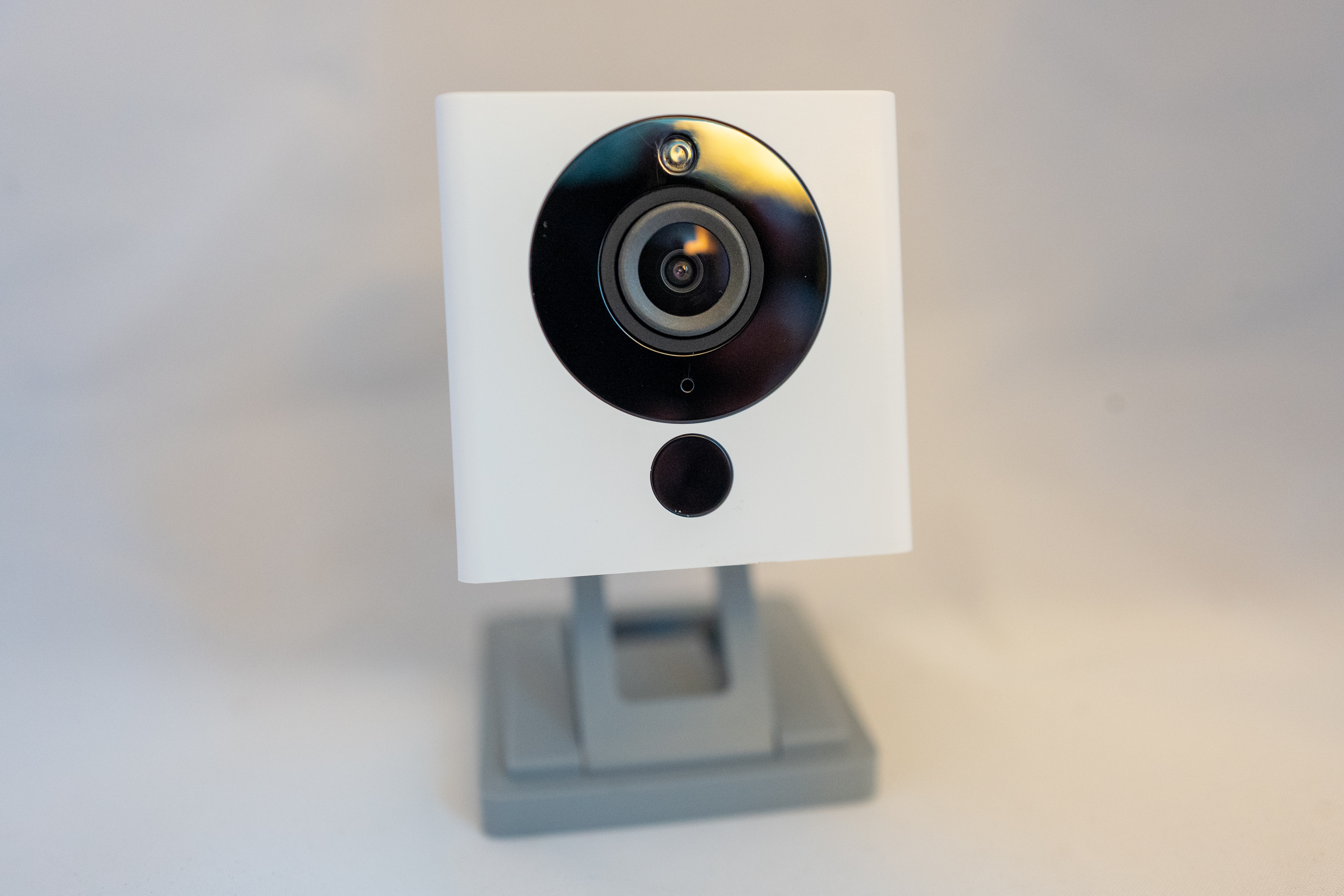
Wyze Web-connected personal surveillance camera, August 2019.
Enlarge / Wyze Web-connected personal surveillance camera, August 2019.

Loads of folks found brand-new Wyze surveillance cameras under their trees or in their stockings this Christmas. And on Boxing Day, the company itself unwrapped a whole new world of trouble for everyone who uses its products, confirming a data leak that may have exposed personal data for millions of users over the course of a few weeks.

Wyze first found out about the problem on the morning of December 26, company cofounder Dongsheng Song said in a corporate blog post. The company’s investigation confirmed that user data was “not properly secured” and was exposed from December 4 onward.

The database in question was basically a copy of the production database that Wyze created to work with, Song explained. Data points left exposed include user email addresses, camera nicknames, Wi-Fi network information, Wyze device information, some tokens associated with Alexa integrations, and “body metrics for a small number of product beta testers.”

The company blames an employee for the exposure. “A mistake was made by a Wyze employee on December 4th when they were using this database and the previous security protocols for this data were removed,” Song wrote. “We are still looking into this event to figure out why and how this happened.”

A pair of essays from a mysterious (and possibly fake) firm called 12Security first brought the leak to light. The firm alleges that data for 2.4 million Wyze users was included in the leak, claiming that the data was sent to the Alibaba cloud and that the breach is tied to China.

Seattle-based Wyze, however, has extremely strong ties to Amazon and strongly denies the allegation that it uses the Alibaba Cloud. “Wyze does have official Wyze employees and manufacturing partners in China, but Wyze does not share user data with any government agencies in China or any other country,” the company said.

https://arstechnica.com/?p=1637525


“They’re abysmal students”: Are cell phones destroying the college classroom?

Picture of someone putting their smartphone into a storage cubby before class.
Enlarge / A student in Berlin, Germany places his smartphone on a shelf on the classroom wall at the beginning of the lesson.
Britta Pedersen/dpa-Zentralbild/ZB/Getty Images

In the early 2000s, when I taught freshman writing at the University of North Carolina, disengaged students couldn’t rely on the Internet to distract them—they had to make their own fun. One male student used a light “get to know each other” first-day exercise as a chance to tell the whole class an aggressive story about how he once peed in his much-despised stepfather’s aftershave; another female student delivered a “professional presentation” to the whole class while wearing a sheer shirt and no undergarments. And you know what? I respected them both. That’s the kind of old-school subversion of the classroom experience, the unspoken challenge to the authority of the teacher, that I can get behind. It takes creativity, it takes guts, it takes rebellion.

Today, who’s got the energy for that kind of acting out? I’ve been in and around universities for my entire adult life, and in the last few years I’ve observed an astonishing “tuning out” taking place in the classroom. I’ve seen a student, in a course where cell phones and laptops were forbidden by the professor, slip his phone out of his pocket every two minutes, checking for messages and occasionally tapping out a quick reply under the table, apparently convinced that the professor did not notice this. (He did.) I’ve seen students shop for boots in class, log in to their stock market portfolios (!), read the newspaper, write emails, and even work on papers for other classes. One spent each class period scrolling through his Twitter account on a laptop, pausing to watch every moving GIF and video clip.

This is not just my experience. Take yesterday’s piece in MIT Technology Review, where philosophy professor Ron Srigley writes about what cell phones have done to his own classroom. His conclusion is sobering: “I have a real fondness for my students as people. But they’re abysmal students; or rather, they aren’t really students at all, at least not in my class. On any given day, 70% of them are sitting before me shopping, texting, completing assignments, watching videos, or otherwise occupying themselves. Even the ‘good’ students do this. No one’s even trying to conceal the activity, the way students did before. This is just what they do.”

Safe, secure, and distracted

After two mediocre classroom experiences—one in 2014 and one in 2018—Srigley suspected that online distractions were to blame. He gave his students a voluntary extra-credit assignment: ditch the cell phones and write about the experience.

A third of the students did so, and they wrote about how cell phones cut down on human interaction, saving people from having to navigate awkward interactions. Simply passing a stranger in the street or the hall caused “almost all of them to take out a phone ‘right before I could gain eye contact with them,'” wrote one student. Others complained about friends who pulled out cell phones while talking to them. Still others wrote about how not using a phone freed them from the burden of responding to a long string of texts, social media posts, emails, and voicemails. “Didn’t have to hear the fucking thing ring or vibrate once, and didn’t feel bad not answering phone calls because there were none to ignore,” wrote one student.

Not surprisingly, students also found that their ability to concentrate in class and while writing papers improved.

But students also reported a creeping sense of fear—what if I need my phone for an emergency? What if I need to contact someone right now? (This despite leading physically safe lives in a largely crime-free environment.)

The experiment was not rigorously controlled and may not be representative; by making it voluntary, those who felt the most dislike of their electronic tethers may have been the most likely to participate. Still, Srigley’s informal experiment mirrors many of the findings of 2011’s Alone Together, a book by MIT psychologist Sherry Turkle. After plenty of fieldwork and interviews, Turkle argued that too many of us are using technology in ways designed to kill solitude, relieve awkwardness, keep us feeling safe, and provide connection… on our terms.

But awkward interactions, calculated risks, time alone, and connecting with others without being in control of the interaction are all important parts of being human. Navigating those experiences is part of a healthy engagement with a world that we can never fully master, and the illusions of safety and control provided by our technology also produce isolation, distraction, and anxiety as we retreat from that uncontrollable world.

On the other hand, both Srigley and Turkle found that young people who are heavy smartphone users stay in near-constant communication with their parents, which was not true of previous generations. (Turkle argues that there is a dark side to this behavior, as younger people seem increasingly afraid to “cut the cord” and live on their own. As a parent myself, though, I take some comfort in the thought that my kids may actually want to text me while away at college.)

While the broader debate about screens, devices, and Internet usage continues to rage, what about this narrower question of how technology affects the classroom? It seems inarguable that widespread use of Internet-connected devices in the classroom has had a negative effect on student attention, but maybe I’ve just been in the wrong classrooms. And maybe, as some critics like to claim, it’s old-school teaching models that need to change—and student disengagement is a symptom of boredom with lectures and discussions, not of a pathological distractedness. So what should the college classroom look like in the age of the smartphone?

https://arstechnica.com/?p=1637139


New York Governor vetoes bill that would have made electric scooters legal

An example of electric scooters left in Berlin city on Thursday, November 7, 2019, in Berlin, Germany.
Enlarge / An example of electric scooters left in Berlin city on Thursday, November 7, 2019, in Berlin, Germany.
Artur Widak | NurPhoto | Getty Images

On Thursday, New York Governor Andrew Cuomo vetoed a widely supported bill that would have legalized electric bicycles and scooters. The bill was the result of extensive negotiations and compromises that sought to balance a set of competing interests. But in vetoing the bill, Cuomo cited an interest that he felt hadn’t been properly considered: public safety, specifically the lack of a helmet requirement.

By waiting until the end of the year to veto the bill, Cuomo has left the legislature without an opportunity to override this veto, meaning the whole process will have to start again next year.

The whole situation has been extremely complex due to the number of technologies and constituencies involved. On the tech front, there are several types of vehicles, including the pedal-assist e-bikes we test rode earlier this year. These require the user to pedal before the motor will act and are typically limited to speeds of just under 30mph. Separately, there are electric bikes where the motor will operate without the user doing anything other than operating a throttle, which have become favorites of the legions of food delivery people in New York City.

Technically, however, the latter are motorized vehicles, and therefore subject to vehicle registration rules—or they would be, if the state’s vehicle registration rules allowed that. This has enabled the police to fine delivery riders at will, leading to accusations that the lack of policy was anti-immigrant and/or a form of class warfare.

Finally, there are scooters and related items like motorized skateboards and balance boards, which also fall into the motorized vehicle category. Here, the push for legalization came largely from the scooter rental companies. But a feature central to their business model—store the scooters in public spaces—raised fears of chaos on the already crowded New York City sidewalks. These would also compete with the popular citi-bike program that rolled out with heavy government support.

In addition to the question of what you can ride, there’s the issue of where you can ride it. New York City has put a lot of effort into producing space for bicyclists to ride free of the dangers provided by motorized vehicles, putting in physically separated bike lanes on streets, in parks, and across many of the city’s iconic bridges. In the absence of any rules, these lanes have become free-for-alls, leaving bicyclists dodging powered vehicles that could travel well in excess of 20 miles an hour uphill.

Balancing all of these complications probably explains why the legalization process has been so slow in the Empire State. But this year, the legislature managed to forge a number of compromises. All of the vehicles would be legalized without requiring state registration. Electric scooter rentals would be prohibited in Manhattan; access to the remaining markets in the state was enough to get the rental companies on board. And, while electric vehicles would be allowed in most bike lanes, they’d be kept off the popular loop around the Manhattan waterfront.

Food deliveries would occur without incident.

But nearby Elizabeth New Jersey had legalized scooters earlier in the year, only to see a rider killed in a collision with a tow truck shortly after. That may have helped motivate Cuomo’s demand for mandatory helmet use to be included with any bill. (The state mandates helmets for bicyclists under the age of 14.) The relatively high speeds achievable on some bikes and scooters would provide further motivation.

Still, that doesn’t explain Cuomo’s decision to hold his veto until after it was too late for the legislature to modify the bill during this year’s legislative session. Due to the wide support it achieved (it passed the state Senate by a 56-5 vote) and the number of constituencies interested in seeing something pass, it will almost certainly be back in 2020.

https://arstechnica.com/?p=1637065