The Trump White House is rumored to be working on a beefed-up open access mandate. The potential executive order would require all scientific papers that are based on federally funded research to be made available online free of charge as soon as they are published. That would supersede a 2013 rule issued by the Obama White House that required federally funded papers to become freely available one year after publication.
The White House hasn’t actually announced the new policy yet, but the rumors were enough to get the attention of scientific publishers. Last week more than 100 publishing organizations signed a letter calling on the Trump administration to scrap the proposal.
The letter warned that an open access mandate would “jeopardize the intellectual property of American organizations engaged in the creation of high-quality peer-reviewed journals and research articles.” Without the ability to charge the public for articles, scientific journals would have to pass those costs on to researchers or taxpayers, the letter warns.
There is undoubtedly some truth to that—many open access journals charge fees to authors. These fees range widely—from a few hundred dollars to several thousand. If the federal government mandated open access for all federally funded research, researchers would presumably see some increases in the fees they pay to publish their articles in top-tier journals.
https://arstechnica.com/?p=1636917
FAA announces new system for remotely identifying and tracking drones
Enlarge/ Wing Aviation, a “moonshot” project of Google’s Alphabet, delivers a package to a customer in October 2019. Wing was the first drone operator sanctioned by the FAA to deliver packages to customers, but a large scale deployment of technology like this depends on better location tracking systems.
Logan Cyrus/Bloomberg via Getty Images
The Federal Aviation Administration is implementing a new system that will allow comprehensive nationwide tracking of unmanned aerial vehicles (UAVs)—commonly known as drones. The new system will enable regulators, law enforcement, and other interested parties to track drone movements and in some cases obtain identifying information. All new drones will be required to comply with the proposed rules within three years after the regulations go into effect—but that’s still months away.
The lack of a comprehensive system for drone identification and tracking has been a long-standing barrier to the adoption of commercial drone technology. Companies like Amazon and UPS, for example, have long dreamed of making package deliveries using unmanned vehicles. But such efforts were blocked by law enforcement agencies worried about unidentified drones being used for terrorism, drug smuggling, or other crimes.
The new proposal will create a comprehensive realtime database with information about almost every unmanned vehicle in the sky. That will allow law enforcement to quickly identify registered vehicles. And it will make it easier to catch vehicles that are flying without authorization.
In the new system, each UAV would be assigned a unique identifier. During each flight, a drone will be required to transmit its identity and location over the Internet to an online service provider authorized by the FAA to be part of the location-tracking system. A vehicle flying more than 400 feet from its base station will also need to broadcast this information directly from the aircraft.
To enhance privacy, vehicle operators will have the option to generate a random session ID for each trip instead of broadcasting a vehicle’s manufacturer-assigned serial number on every trip.
The new system is welcomed by commercial drone operators. Indeed, CNBC reports that the most common complaint from the commercial drone industry is that the FAA is moving too slowly.
For years, Congress has pressured the FAA to speed the development of a commercial drone industry. A 2012 law required the FAA to allow commercial use of drones by 2015 (the FAA missed the deadline). A 2016 law required the FAA to develop a remote identification standard by July 2018. The FAA missed that deadline too, and the agency is only formally publishing the rules now.
The FAA rule establishes a three-year transition period, but that period doesn’t start until the FAA has accepted public comments on its initial proposal, made appropriate adjustments, and issued a final rule. That rulemaking process can take many months. So the new system won’t be fully operational until 2023 at the earliest.
https://arstechnica.com/?p=1636979
Driver training was reportedly too much of “a bottleneck” for Amazon
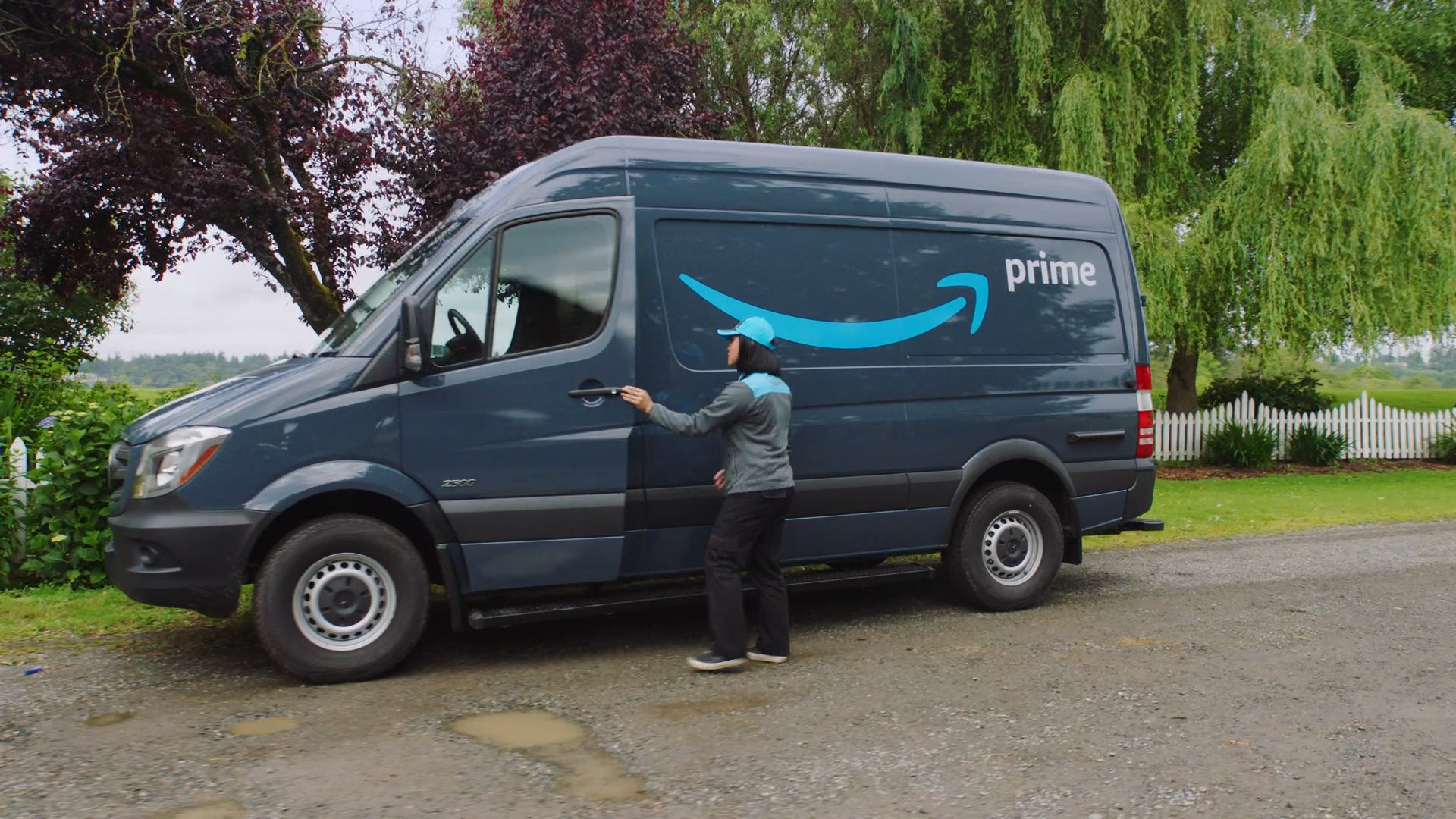
Enlarge/ An Amazon Prime-branded delivery van and driver.
Amazon is rapidly dispensing with carriers such as FedEx for its retail deliveries, bringing the logistics business in-house to ship more Prime packages more quickly. The speed and money savings, though, seem to be coming at the cost of health and safety concerns—and a new report says the company is well aware, and Amazon is letting it happen anyway.
Internal documents show the company had plans to implement driver safety training courses but scrapped them in order to get drivers up and running faster, ProPublica and BuzzFeed News report.
“We chose not to have onroad practical training because it was a bottleneck” to getting drivers on the road, a senior manager wrote.
It was just one of many examples the reporters found of Amazon ignoring evidence its logistics business was overburdened.
Amazon said back in 2016 it wanted to bring last-mile delivery under its own enormous roof, and it has done just that. The company today is happily bragging about the performance of its logistics business this Christmas season, revealing that it delivered more than 3.5 billion packages with its in-house delivery business in 2019 to date.
But that “in-house” business is mostly outsourced. Hundreds of small firms—more than 800 now, according to Amazon—work under contract to provide those Prime delivery services. Some of those contractors no doubt do focus on worker safety. Several reports in the past year, though, have highlighted many that emphatically do not. NBC News in November published a report describing Amazon logistics as a “chaotic environment” where all-but-impossible delivery quotas put unmanageable and unsafe demands on drivers.
“You don’t take your lunch break. You don’t use the bathroom… There were guys peeing in bottles in the van,” one driver told NBC at the time, including himself in that category. “You speed. You run stop signs in a neighborhood… You start conditioning yourself to just go as fast as possible.”
In September, ProPublica and BuzzFeed also published separate independent reports detailing a lack of oversight with several delivery contractors. Both reports detailed several instances of severe injuries and deaths tied to crashes involving Amazon transport vans.
Amazon strenuously objected to the new story, calling the report “another attempt by ProPublica and BuzzFeed to push a preconceived narrative that is simply untrue.”
The company told ProPublica it provided more than 1 million hours of safety training to employees and contractors in the last year but did not say how many of its 750,000 worldwide employees participated in said training. Amazon also said it spent $55 million on “safety improvement projects” last year—”about one-fifth of 1% of the $27.7 billion the company spent on shipping last year,” the reporters write.
“Nothing is more important to us than safety,” the company added.
https://arstechnica.com/?p=1636811
Travis Kalanick quits Uber’s board, sells off all his Uber stock
Travis Kalanick is leaving the board of Uber, the company he cofounded a decade ago and ran until his 2017 ouster. A spokesperson told CNBC that Kalanick has sold all of his remaining Uber stock, estimated to be worth around $2.5 billion.
Three years ago, Kalanick was CEO of Uber and the undisputed master of the ride-hailing company. The company’s board of directors was organized to give Kalanick outsized influence. But a series of scandals in early 2017 fatally weakened Kalanick’s power. An investor revolt led by the venture capital firm Benchmark led to his ouster in June 2017.
In the months after his departure, Kalanick maneuvered to maintain power behind the scenes—perhaps with an eye to eventually reclaiming the CEO title. But his efforts were rebuffed by Uber’s other shareholders, and Kalanick ultimately moved on to other projects. His departure from the board is the final step in his disengagement from the company.
“Uber has been a part of my life for the past 10 years,” Kalanick said in a Christmas Eve statement released by Uber. “At the close of the decade, and with the company now public, it seems like the right moment for me to focus on my current business and philanthropic pursuits.”
Since his ouster as Uber CEO, Kalanick has founded CloudKitchens, a startup that rents kitchen space to chefs who want to sell food via delivery services, with a $400 million investment from Saudi Arabia.
Uber has had a rocky two and a half years under Kalanick’s successor, Dara Khosrowshahi. In March 2018, one of Uber’s self-driving cars killed a woman in Tempe, Arizona, forcing Uber to drastically scale back testing of the technology. Meanwhile, Uber is still far from profitability, having lost $1.1 billion in the most recent quarter. Uber’s stock has lost almost a third of its value since the company went public in May.
https://arstechnica.com/?p=1636819
Why the 2010s were the Facebook Decade
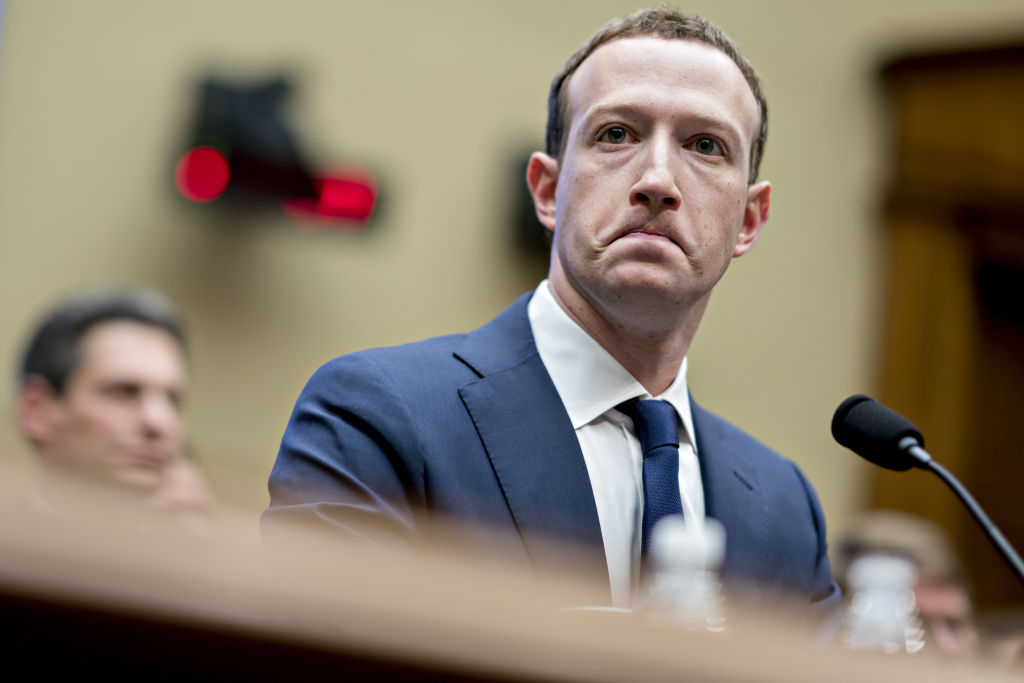
Enlarge/ Facebook CEO Mark Zuckerberg testifying before Congress in April 2018. It wasn’t his only appearance in DC this decade.
By the end of 2009, Facebook—under the control of its then 25-year-old CEO, Mark Zuckerberg—was clearly on the rise. It more than doubled its subscriber base during the year, from 150 million monthly active users in January to 350 million in December. That year it also debuted several key features, including the “like” button and the ability to @-tag your friends in posts and comments. The once-novel platform, not just for kids anymore, was rapidly becoming mainstream.
Here at the end of 2019, Facebook—under the control of its now 35-year-old CEO, Mark Zuckerberg—boasts 2.45 billion monthly active users. That’s a smidge under one-third of the entire human population of Earth, and the number is still going up every quarter (albeit more slowly than it used to). This year it has also debuted several key features, mostly around ideas like “preventing bad nation-state actors from hijacking democratic elections in other countries.”
Love it or hate it, then, Facebook is in arguably a major facet of life not just in the United States but worldwide as we head into the next roaring ’20s. But how on Earth did one social network, out of the many that launched and faded in the 2000s, end up taking over the world?
[embedded content]
The Social Network debuted in 2010.
Setting the stage: From the dorms to “The Facebook Election”
Zuckerberg infamously started Facebook at Harvard in February 2004. Adoption was swift among Harvard undergrads, and the nascent Facebook team in the following months began allowing students at other Ivy League and Boston-area colleges to register, followed by a rapid roll-out to other US universities.
By summer of 2004, Facebook was incorporated as a business and had a California headquarters near Stanford University. It continued growing through 2005, allowing certain high schools and businesses to join, as well as US and international universities. The company wrapped up 2005 with about 6 million members, but it truly went big in September 2006, when the platform opened up to everyone.
But the advent of the smartphone era, which took off in 2007 when the first iPhone launched, really kicked Facebook up several gears. In 2008, the company marked two major milestones.
First, Facebook reached the 100 million user mark—a critical mass where enough of “everyone” was using the platform that it became fairly easy to talk anyone who wasn’t using it yet into giving it a try. Second: Facebook found its niche in political advertising, when Barack Obama won what pundits started to call “The Facebook Election.”
“Obama enjoyed a groundswell of support among, for lack of a better term, the Facebook generation,” US News and World Report wrote at the time, describing Obama’s popularity with voters under 25. “He will be the first occupant of the White House to have won a presidential election on the Web.”
“Like a lot of Web innovators, the Obama campaign did not invent anything completely new,” late media columnist David Carr wrote for The New York Times. “Instead, by bolting together social networking applications under the banner of a movement, they created an unforeseen force to raise money, organize locally, fight smear campaigns and get out the vote that helped them topple the Clinton machine and then John McCain and the Republicans.”
“Obama’s win means future elections must be fought online,” The Guardian declaimed, adding presciently:
Facebook was not unaware of its suddenly powerful role in American electoral politics. During the presidential campaign, the site launched its own forum to encourage online debates about voter issues. Facebook also teamed up with the major television network, ABC, for election coverage and political forums. Another old media outlet, CNN, teamed up with YouTube to hold presidential debates.
If the beginning of the Obama years in 2008 was one kind of landmark for Facebook, their end, in 2016, was entirely another. But first, the company faced several other massive milestones.
https://arstechnica.com/?p=1633773
T-Mobile/Sprint deal is good actually, Feds tell court in states’ lawsuit
Enlarge/ T-Mobile CEO John Legere (left) and then-Sprint CEO Marcelo Claure during an interview on the floor of the New York Stock Exchange on April 30, 2018.
Federal regulators that want to let T-Mobile complete its acquisition of rival wireless carrier Sprint are pushing back on a collective effort by some states to block the deal.
The $26 billion transaction was subject to federal approval by both the Department of Justice and the Federal Communications Commission. The agencies both blessed the deal, with the DOJ reaching a settlement in July and the FCC granting a green light in October.
The deal also requires approval by regulators in several states, however. While about a dozen have in some way approved the deal or signaled support for the federal settlements, attorneys general representing 13 states and the District of Columbia filed suit to block the merger.
The FCC and DOJ on Friday submitted a filing [400-page PDF] in that case arguing that the deal is in the best interest of the US, and any nationwide injunction holding up the merger would block “substantial, long-term, and procompetitive benefits for American consumers.”
The argument, in large part, boils down to: trust us, we’re the experts. “Both the Antitrust Division and the FCC have significant experience and expertise in analyzing these types of transactions and do so from a nationwide perspective,” the agencies write. “Thus, their conclusions that the merger as remedied is in the public interest deserve appropriate weight in this remedy inquiry by this honorable court.”
The dream of 5G competition
The DOJ’s Antitrust Division did find that the deal, as structured initially, would “substantially lessen competition in the retail mobile wireless service market,” by reducing a field of four players down to three. The regulator and the companies, however, agreed on a novel solution: propping up Dish Network as a new entrant into the market to replace the lost competition. At best, however, it would take Dish several years to spin up a nationwide network matching anything like Sprint’s current offerings.
The big upside from the deal, however, is a theoretical boost to nationwide 5G deployment. Under the terms of the agreement with the FCC, the new and improved T-Mobile is required to cover 97 percent of the US population with 5G service within three years, and 99 percent within six years. Said 5G network is also required to provide download speeds of at “least 100Mbps to 90 percent of the US population” within six years.
That said, all the carriers, including T-Mobile, are already working on much-ballyhooed 5G rollouts—none of which exactly lives up to the hype. AT&T will be offering “5G” networks any day now that provide roughly equivalent speeds to its existing 4G LTE service. Verizon just launched 5G coverage maps that basically show the service covering a handful of blocks in the cities where it operates. And T-Mobile itself earlier this month touted the launch of a nationwide 5G network that actually fails to cover about 40 percent of the nation.
In the past month, two different market analysts increased their forecast odds that the states could win the legal case and significantly hamper or block the deal. Firm Raymond James now gives T-Mobile and Sprint a 55 percent chance of prevailing, down from 85 percent earlier. An analyst for Cowen research, meanwhile, gives the companies only a 40 percent chance of a win.
https://arstechnica.com/?p=1636455
Boeing fires CEO after disastrous year with 737 MAX
Enlarge/ Boeing CEO Dennis Muilenburg testifies before Congress on October 30, 2019.
Alex Wong/Getty Images
Dennis Muilenburg is out as CEO of Boeing, the company announced on Monday. Multiple news organizations are reporting that Boeing’s board decided to fire Muilenburg over the weekend.
Muilenburg’s departure caps a disastrous year for the aerospace giant. Two deadly crashes of Boeing’s new 737 MAX—one in October 2018, the second in March 2019—forced airlines around the world to ground their planes. Investigations revealed that the crashes were due to flaws in the design of the aircraft’s Maneuvering Characteristics Augmentation System (MCAS) software.
This software tries to help the pilot provide a safer, smoother ride. But in both crashes, a malfunctioning sensor caused the software to mistakenly believe the aircraft was stalling. It then pushed the plane’s nose too far down, ultimately leading to a crash. Pilots either didn’t realize the MCAS system was malfunctioning or couldn’t figure out how to turn it off. Boeing has faced criticism for providing pilots with too little training and documentation about how the new controls differ from previous 737 models.
Boeing had hoped to push out a software fix within weeks after the March crash. But weeks stretched into months after peer reviewers raised concerns about the proposed fix. Boeing must get approval from the Federal Aviation Administration (FAA) to push out an update to the MCAS software, and the FAA has faced its own criticism for lax oversight during development of the 737 MAX. This has created a tense relationship between Boeing and the FAA.
As 737 MAX planes remain grounded around the world, Boeing’s airline customers have lost millions of dollars in ticket sales. Last week, Boeing announced it would suspend production of the 737 MAX in January 2020.
Then, this weekend, Boeing’s Starliner spacecraft malfunctioned during an orbital test. Once it separated from its rocket, the vehicle was supposed to fire its Orbital Maneuvering and Attitude Control engines to bring it into the right orbit to rendezvous with the International Space Station. But it failed to do so. By the time controllers on the ground realized what had happened, the Starliner didn’t have enough fuel to reach the ISS and then return safely to Earth. It returned to Earth on Sunday without completing its docking mission.
Boeing’s board decided to fire Muilenburg on Sunday, shortly after the Starliner mishap, according to The New York Times. He will be replaced by Boeing Chairman Dave Calhoun next month.
Boeing’s stock is down about 20 percent since the March crash—though it rose about 2 percent on news of Muilenburg’s ouster.
https://arstechnica.com/?p=1636363
Cox Communications hit with $1 billion verdict over music piracy
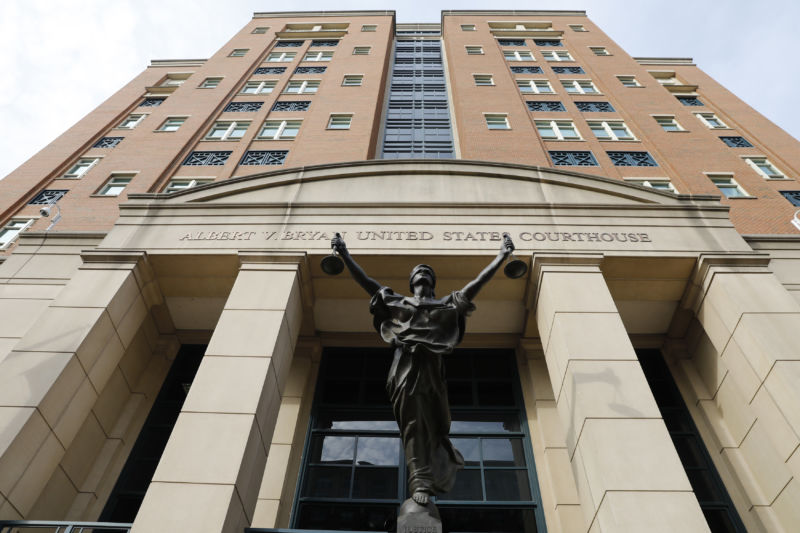
Enlarge/ The Blind Justice statue standing outside of District Court in Alexandria, Virginia, U.S., on Thursday, Aug. 16, 2018.
A jury in Virginia awarded some of the largest names in the music recording industry a whopping $1 billion in damages from Cox Communications, finding that the ISP did not act sufficiently to curb music piracy on its platform.
The verdict was the result of a three-week trial in federal court in Alexandria, Va., Variety was first to report. The jury found that Cox was liable for just over 10,000 infringing recordings and compositions on its network, and it awarded the plaintiffs almost $100,000 per work.
A coalition of more than 50 companies, including Sony, Universal, and Warner, filed the suit against Cox in 2018, arguing that at least 20,000 Cox customers were repeat infringers and saying the ISP “prioritized its own profits over its legal obligations.”
Cox in a statement called the verdict “unwarranted, unjust and an egregious amount,” pointing out that legal downloads can be had for a dollar, but the jury awarded 100,000 times that amount per item. “We don’t condone [infringement], we educate on it and we do our best to help curb it, but we shouldn’t be held responsible for the bad actions of others,” the company added.
The case is considered a potential harbinger of things to come, as infringement lawsuits proliferate following the 2017 demise of the failed “six strikes” system.
The recording industry group filed similar suits against other ISPs earlier this year, including a complaint against Charter Communications in Colorado and one against RCN in New Jersey. AT&T, meanwhile, became more aggressive about booting alleged music pirates from its network in 2018 after completing its acquisition of Time Warner.
The recording industry’s main trade group, the Recording Industry Association of America (RIAA), applauded the ruling. “The jury’s verdict sends a clear message—Cox and other ISPs that fail to meet their legal obligations to address piracy on their networks will be held accountable,” the organization’s chief legal officer, Kenneth Doroshow, said in a written statement. “The jury recognized these companies’ legal obligation to take meaningful steps to protect music online and made a strong statement about the value of a healthy music ecosystem for everyone.”
The jury verdict is not yet final; the court has to resolve post-trial motions first, after which Cox plans to appeal.
https://arstechnica.com/?p=1636329
Facebook removes accounts with AI-generated profile photos
Enlarge/ The Facebook logo is displayed on a TV screen on September 9, 2019 in Paris, France.
Facebook on Friday removed what it called a global network of more than 900 accounts, pages, and groups from its platform and Instagram that allegedly used deceptive practices to push pro-Trump narratives to about 55 million users. The network used fake accounts, artificial amplification, and, notably, profile photos of fake faces generated using artificial intelligence to spread polarizing, predominantly right-wing content around the Web, including on Twitter and YouTube.
It represents an alarming new development in the information wars, as it appears to be the first large-scale deployment of AI-generated images in a social network. In a report on the influence operation, researchers from disinformation groups Graphika and DFRLab noted that this was the first time they had seen the technology used to support an inauthentic social media campaign.
The images were used to enhance the authenticity of some of the 610 Facebook accounts, 156 groups, 89 pages, and 72 Instagram accounts associated with “The BL,” a digital news outlet that described itself as a “pure mountain spring, moistening the heart of every reader” on Facebook before it was removed. Facebook’s investigation connected The BL to The Epoch Times, a conservative media organization with ties to Chinese spiritual group Falun Gong and a history of aggressive support for Donald Trump.
Ostensibly a US-based media organization, The BL network’s pages were operated by users in Vietnam and the US, who, Facebook says, made widespread use of fake accounts to evade detection and funnel traffic to its own websites. A report by Graphika and DFRLab researchers found that the majority of The BL network’s fake accounts were used to maintain a cluster of over 80 groups and pages promoting President Trump. The accounts acting as administrators for these pages—which boasted names such as “America Needs President Trump,” “Trump for America’s President,” and “WE STAND WITH TRUMP & PENCE!”—were predominantly fake and created in Vietnam.
“Fake accounts served as the administrators of Facebook groups, increased the membership numbers of those groups, liked posts on the Pages, and posted large quantities of content from TheBL-related assets,” the report notes. “This structure constituted a large-scale artificial amplification factory whose only observable function was to boost content from TheBL and, to a lesser extent, from the Epoch Times.”
Many of these accounts used profile pictures that researchers said appeared to be created using neural networks trained on images of real human faces to create photos of people who did not actually exist. Researchers from Graphika and DFRLab found 18 images of faces in profile photos used by The BL network that they said had likely been generated using generative adversarial networks.
While the technology is capable of creating passable fake faces, it has a few obvious tells that tipped the researchers off. It works largely by mimicking visual patterns but doesn’t understand human anatomy and struggles with backgrounds and symmetrical features, like glasses or earrings.
The above image, from the Graphika report, was taken from the profile photo for “Alfonzo Macias,” an admin for one of the groups in The BL network. “Note the asymmetry in the glasses and also the poorly defined background,” the report says. “The authors checked this image with experts at the University Federico II of Naples, who assessed that this image was GAN-generated with 99.9 percent certainty.”
New federal rule will hurt renewables, help gas and coal
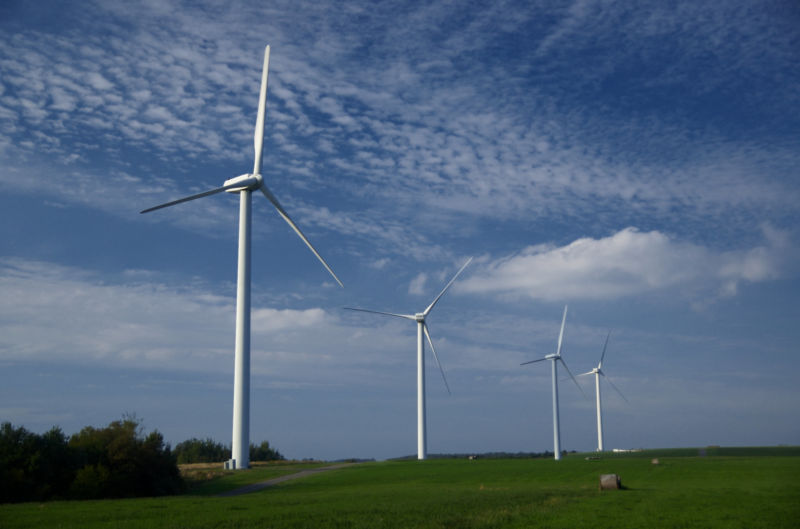
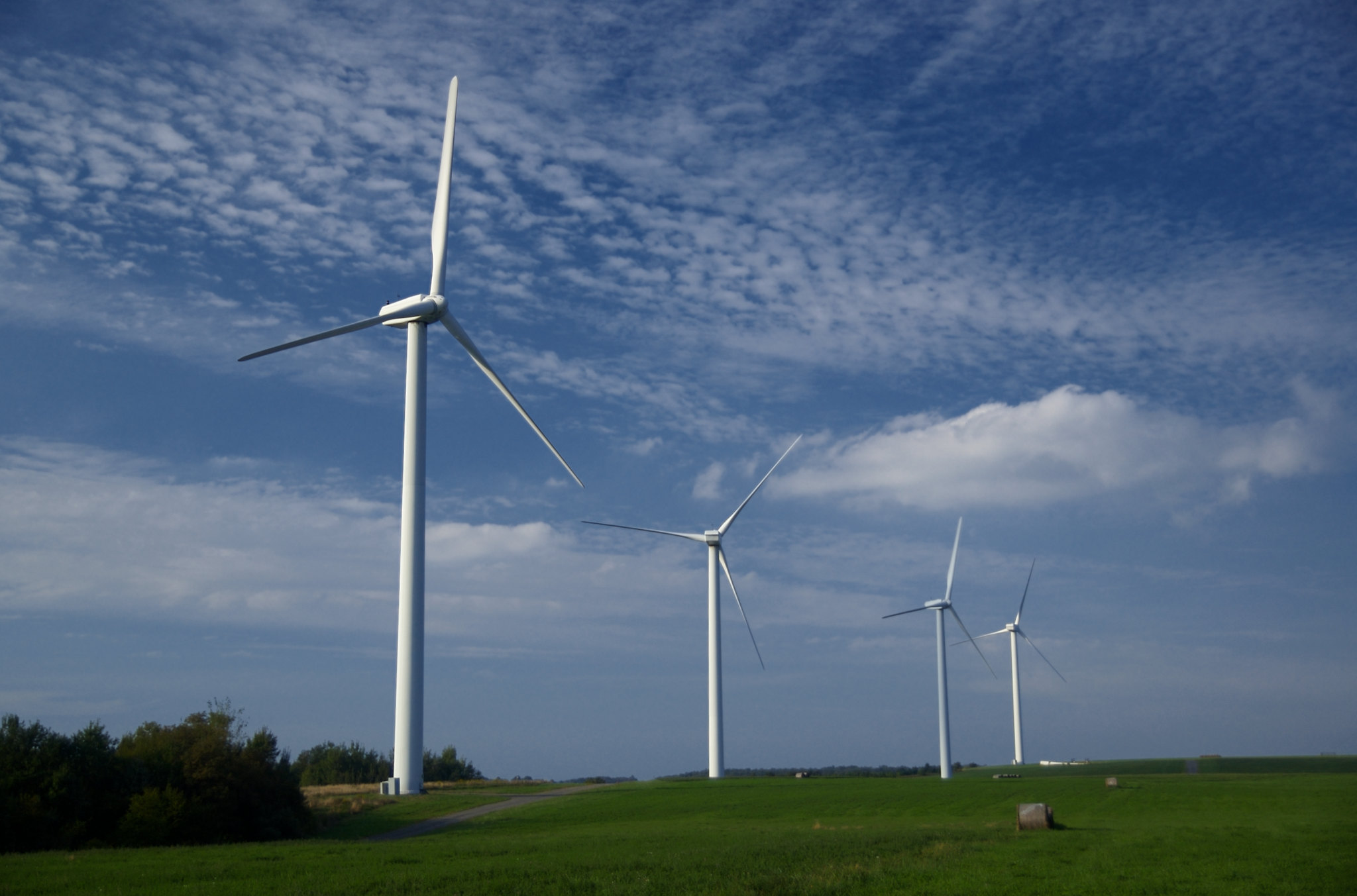
Enlarge/ Pennsylvania wind turbines that probably spent the day trying to understand what a “MOPR” is.
On Thursday, the US Federal Energy Regulatory Commission (FERC) issued a long-awaited decision that had been log-jammed until Commissioner Cheryl LaFleur stepped down, breaking a 2-2 tie. The details are complex, and they relate to a part of the electrical system you likely didn’t know existed, but the decision could have the effect of significantly stifling renewables in the mid-Atlantic US.
The story starts with PJM Interconnection, a grid operator responsible for balancing power in a region spanning 13 states, from Illinois to Delaware. PJM runs a capacity market, with annual auctions to secure enough generation to cover peak demand several years into the future. Utilities bid on these contracts based on their cost to provide power.
However, some generators in recent years have complained that they were losing to lower bids from renewables and nuclear in some places, on the basis that those sources can benefit from state subsidies. Renewables only claimed a very small slice of the pie in the last auction, but generators were concerned this would grow.
A mechanism existed in the capacity market design to account for the possibility of artificially low bids—the “minimum offer price rule,” or MOPR. In the case of an artificially low bid, an alternative higher bid would be calculated and used in its stead. The FERC took up the issue of deciding whether all generators subject to a subsidy from states should get the MOPR treatment.
On Thursday, they decided that they will. Many states have set standards for a percentage of electricity they are requiring utilities to provide with renewables (or nuclear), providing incentives or subsidies to help make it happen. That includes systems allowing low-carbon generators to sell clean energy credits to utilities relying on dirtier plants.
FERC’s definition doesn’t include all subsidies or separate revenue sources, though. Federal subsidies, notably, will not count—likely because a federal commission fears stepping on federal programs. And fossil-fuel-burning plants can make money from things other than their electricity—like selling coal ash as a material or steam for heat—but that won’t count as distorting their bids. And certain state subsidies for “generic industrial development and local siting support” will also be ignored under the justification that they aren’t specific to one type of power.
So in practice, this means that many renewable and nuclear plants in PJM’s region will have their bids increased by a to-be-determined amount, making them significantly less competitive in the auction market.
The FERC also rejected a PJM “carve-out” proposal that would have allowed utilities to pull renewable plants out of the market along with an equivalent amount of their demand. In essence, utilities could decide they didn’t want to play anymore, and they would worry about covering this demand without anyone else’s help. This won’t be allowed.
FERC Chairman Neil Chatterjee—formerly the energy policy advisor to Kentucky Senator Mitch McConnell—highlighted some limited exemptions for existing renewable plants, but no new plants will be exempted. “FERC is affirming our obligation to safeguard the competitiveness of the PJM capacity market,” Chatterjee said in a press release.
FERC Commissioner Rich Glick—who has a background working for the renewable industry and Democrats on the Senate energy committee—dissented rather strongly. “FERC’s PJM MOPR is a direct attack on state electric generation resource decision making. The Federal Power Act is clear, FERC does not have this authority. FERC has the responsibility to attempt to accommodate state decisions not overturn them,” he tweeted. “[The rule] is a bailout—costing consumers BILLIONS of dollars every year. Conservatively, $2.4B+ associated w/ higher capacity payments, rising over time per year, & doesn’t even include the costs consumers will pay when states continue to pursue their policy preferences.”
PJM Interconnection now has 90 days to create a new set of auction rules consistent with the new decision. Glick, however, predicted legal challenges that will probably derail that timeline.