Zuckerberg faces heat in Congress: “It’s almost like you think this is a joke”

A man in a suit looks nervously around a courtroom.
Enlarge / Facebook CEO Mark Zuckerberg did not have a super great time at a hearing before the House Financial Services Committee on Oct. 23., 2019.

Facebook CEO Mark Zuckerberg was on Capitol Hill Wednesday to testify before the the House Financial Services Committee about Libra, Facebook’s controversial cryptocurrency plan. At least, Libra was theoretically his reason for being in Washington, DC. Once he was in the hot seat, however, lawmakers pinned him down with questions about basically everything, making clear just how much ire the ostensible social network now draws at the highest level.

The hearing, titled “An Examination of Facebook and its Impact on the Financial Services and Housing Sectors,” ran for more than five hours as representatives pressed Zuckerberg on a variety of topics. Many of the questions seemed to leave the CEO flustered as members of the committee dug in.

Among the highlights:

On antitrust

Committee chairwoman Maxine Waters (D-Calif.) kicked off the hearing with words that Facebook executives do not particularly like to hear.

“You have opened up a serious discussion about whether Facebook should be broken up,” Waters said, following a litany of the company’s offenses.

“Each month, 2.7 billion people use your products. That’s over a third of the world’s population. That’s huge,” Waters said. “That’s so big that it’s clear to me, and to anyone who hears this list, that perhaps you believe you’re above the law.”

That growth has victims, she added:

And it appears you’re aggressively increasing the size of your company and are willing to step on or over anyone, including your competitors, women, people of color, your own users, and even our democracy, to get what you want. All of these problems I have outlined, and given the company’s size and reach, it should be clear why we have serious concerns about your plans to establish a global digital currency that would challenge the US dollar.

On Libra

Right off the bat, the plan for the Libra cryptocurrency drew “serious concerns” from regulators, who all but lined up to scrutinize its role both as a potential currency and also as a potential payment-processing system.

“I actually don’t know if Libra’s going to work,” Zuckerberg admitted to the committee during his opening remarks.

“I believe that this is something that needs to get built,” he added, “but I get that I’m not the ideal messenger for this right now. We’ve faced a lot of issues over the past few years, and I’m sure there are a lot of people who wish it were anyone but Facebook who were helping to propose this.”

Zuckerberg was, if anything, understating the case, as that list of people may now include several of the original launch partners for the Libra Association. The association recently plowed ahead with its first formal meeting despite eBay, Stripe, Mastercard, and Visa all bailing on the project in a 24-hour span earlier this month.

“Facebook will not be a part of launching the Libra payment system anywhere in the world, even outside of the US, until US regulators approve,” Zuckerberg said, raising the twin possibilities that either Libra will not launch or that Facebook will not be able to be involved in its own project. “It’s a risky project and there’s been a lot of scrutiny,” he admitted, when pressed to explain why one-time participants were already dropping out. “We support Libra delaying its launch until it has fully addressed US regulatory concerns.”

On banking

The original pitch for the Libra project said the currency would improve financial services for unbanked, lower-income populations in the United States and abroad while making it easier to send money around the world more cheaply.

“Access to financial services is limited or restricted for those who need it most—those impacted by cost, reliability, and the ability to seamlessly send money,” the Libra white paper said. “All over the world, people with less money pay more for financial services.”

Rep. Ayanna Pressley (D-Mass.) pressed Zuckerberg on the claim that Libra would assist the un- and underbanked community, rather than line the pockets of the already wealthy.

“Libra is Facebook and Facebook is you,” she said. “I know you understand the technological and business case for Libra. You have the stats, but I’m not certain you know the stories, that you understand the source of the pain that millions are experiencing, that are experiencing underbanking and credit invisibility.”

Zuckerberg—who founded Facebook at age 20 while at Harvard and took it public in a $104 billion IPO the week of his 28th birthday—admitted to Pressley that he had no experience in his adult life with being underbanked. So she broke it down for him:

Almost two-thirds of the 1.7 billion people who don’t have bank accounts say it’s because they lack enough money to open one. So this is not about authentication. This is not about banking costs. This is about a tsunami of hurt that millions are experiencing because of a $1.6 trillion student debt crisis, rising healthcare costs, and people having to use GoFundMe to pay medical bills. This is because of the racial and gender wealth gap.

So again: You represent the power, but I don’t think you understand the pain. There’s underbanking because people are broke.

On content moderation

Facebook and Instagram between them reach literally billions of users, which means hundreds of billions of pieces of content are posted daily—many of which are deeply problematic. Facebook’s challenges with content moderation, and the poor working conditions for the contract workers who are often traumatized by seeing the worst atrocities and behaviors that humanity can perpetuate, record, and upload, have been well-documented in reporting by The Verge (twice), The Washington Post, BuzzFeed News, and others.

Facebook seems like a great place to work, Rep. Katie Porter (D-Calif.) told Zuckerberg, but the company doesn’t use actual full-time employees for the “hardest jobs.” She went on:

You’ve got about 15,000 contractors watching murders, stabbings, suicides, [and] other gruesome, disgusting videos for content moderation… You pay many of those workers under $30,000 a year, and you’ve cut them off from mental health care when they leave the company, even if they have PTSD because of their work for your company. According to a report I have—and this is straight out of an episode of Black Mirror—these workers get nine minutes of supervised wellness time per day. That means nine minutes to cry in a stairwell while somebody watches them.

Would you be willing to commit to spending one hour a day, for the next year, watching these videos, acting as a content monitor, and only accessing the same benefits available to your workers?

“I’m not sure that it would best serve our community for me to spend that much time,” Zuckerberg responded, after being pressed by Porter to answer the question. “But I spend a lot of time looking at the content.”

“Are you saying you’re not qualified to be a content monitor?” Porter pressed.

“No, congresswoman, that’s not what I’m saying,” Zuckerberg replied.

“Then you say you’re not willing to do it,” Porter concluded.

On civil rights and hate speech

Several representatives pushed Zuckerberg on Facebook’s record with issues of diversity, civil rights, white supremacy, and hate speech on its platform. A line of intense questioning on civil rights from Rep. Joyce Beatty (D-Ohio) felt deeply akin to watching a student being verbally eviscerated by a professor who knows he has not done his homework and the teacher is determined to make an example of him for the class.

“Did you review the packet that was sent to you by this committee?” Beatty repeatedly pressed when she began her questioning. After Zuckerberg failed to produce a response, she answered her own question: “Obviously, that’s a no.”

“In your opening statement, you talked a lot about civil rights,” Beatty continued. “I think we should probably phrase it a little differently: that your work with civil rights work is a result of the number of lawsuits you’ve had,” she added, citing a federal suit the company faced after journalists discovered illegal race discrimination in housing-ad placement on the service.

“Let me ask you this,” Beatty added. “Do you know what redlining is?… Maybe you should have known better. If you had real diversity or inclusion on your team,” she added, “maybe the company would have known better than to permit that kind of discriminatory advertising.”

Beatty also pressed Zuckerberg to explain what actions Facebook was taking in response to an earlier civil rights audit and report. She seemed dismayed at his inability to answer to her satisfaction.

“Do you know who the firm that you employ for civil rights is?” He evidently did not. “How could you not know when you have employed the most historical, the largest civil rights firm to deal with issues that are major? And this is what’s so frustrating to me. It’s almost like you think this is a joke, when you have ruined the lives of many people, discriminated against them,” Beatty railed. “Do you know what percentage of African-Americans are on Facebook, in comparison to majority folks?”

Zuckerberg did not, and he said his company does not collect race data. But the answer, Beatty said, was in a report Zuckerberg apparently did not read or remember.

“Well, it came out from the Pew Research Center and was in a report that was sent to you,” she said. “So maybe you just don’t read a lot of things that deal with civil rights or African-Americans!”

Zuckerberg had no response.

“This is appalling and disgusting to me,” Beatty concluded, saying she would be sending a list of questions to the company for Zuckerberg to answer.

On political advertising

Facebook has come under fire in recent weeks for its seemingly inconsistent position on political speech and political advertising. The company has promised to beef up its “election integrity” efforts, including a vow to ban ads that work to suppress voter registration or turnout in some way, while also saying it will not fact-check political ads or hold politicians to its usual content standards.

Rep. Alexandria Ocasio-Cortez (D-N.Y.) particularly focused on those issue in her questioning. “Could I pay to target predominantly black ZIP codes and advertise them the incorrect election date?” Ocasio-Cortez asked. Zuckerberg responded with a firm “no.”

“But you said you’re not going to fact-check?” she followed up.

“If anyone, including a politician, is saying things that could cause—that is calling for violence or risk imminent physical harm or voter or census suppression… we will take that content down, yes.”

“So there is some threshold where you will fact-check political advertisements? Could I run ads targeting Republicans in primaries saying that they voted for the Green New Deal?” she added, referencing her own signature, progressive policy proposal package.

Zuckerberg at first seemed not to follow the question, before responding, “I don’t know the answer to that off the top of my head. I think probably.”

“Do you see a potential problem here with the complete lack of fact-checking on political advertisements?” Ocasio-Cortez said.

“Well, congresswoman, I think lying is bad,” Zuckerberg offered. “I think if you’re gonna lie, that would be bad.” But that would be different from preventing people from “seeing that you had lied,” he tried to explain.

“So you will take down lies, or you won’t take down lies? I think this is a pretty simple yes or no,” she pressed.

“In a democracy, I believe that people should be able to see for themselves what politicians that they may or may not vote down are saying,” he answered. Any actions Facebook might take “depends on the context” in which a dishonest piece of content is posted, he added.

https://arstechnica.com/?p=1590685


White House kicks infosec team to curb in IT office shakeup

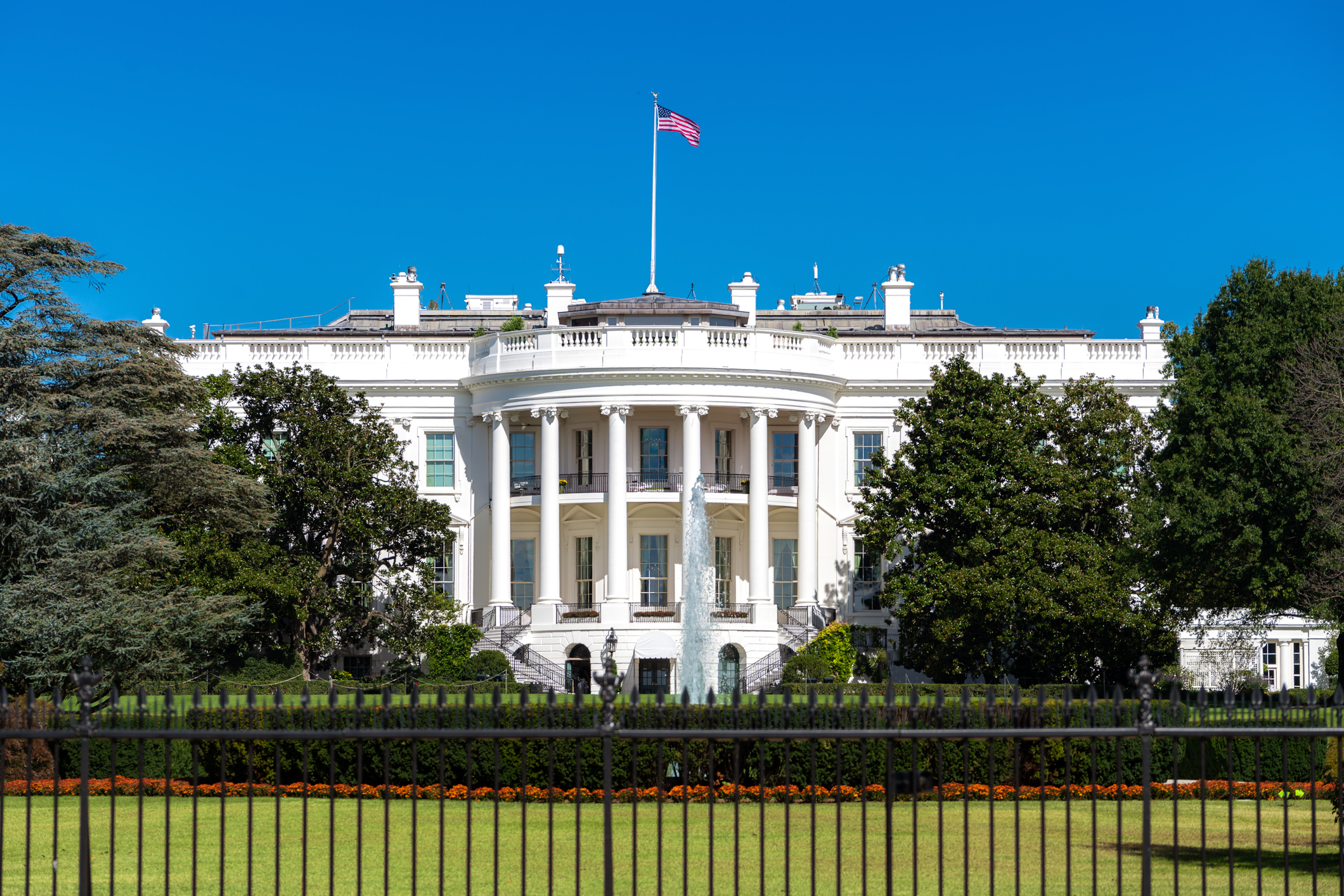
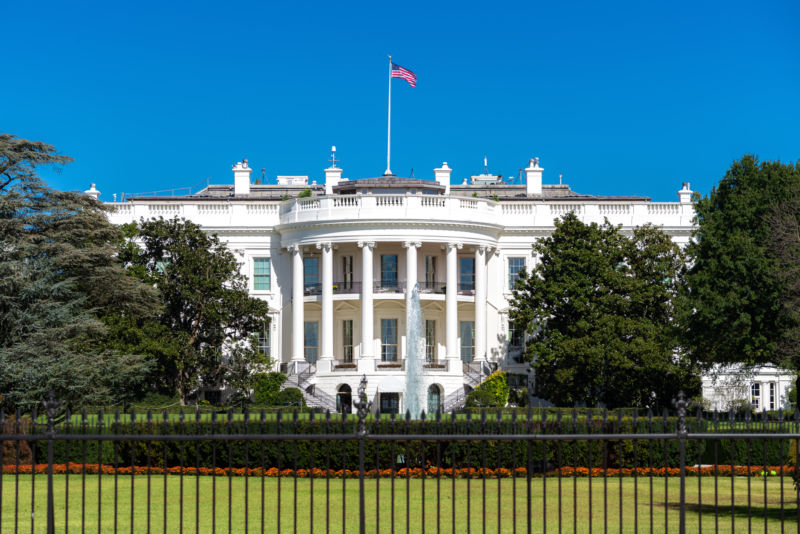
Photograph of the White House on a sunny day.
Enlarge / The White House is kicking its information security team to the curb.

An internal White House memo published today by Axios reveals that recent changes to the information operations and security organizations there have left the security team in tumult, with many members headed for the door. And the chief of the White House’s computer network defense branch—who wrote the memo after submitting his resignation—warned that the White House was likely headed toward another network compromise and theft of data.

The White House Office of the Chief Information Security Officer was set up after the 2014 breach of an unclassified White House network by Russian intelligence—a breach discovered by a friendly foreign government. But in a July reorganization, the OCISO was dissolved and its duties placed under the White House Office of the Chief Information Officer, led by CIO Ben Pauwels and Director of White House IT Roger L. Stone. Stone was pulled from the ranks of the National Security Council where he was deputy senior director for resilience policy. (Stone is not related to indicted Republican political consultant Roger J. Stone.)

The resulting changes have put an emphasis more on convenience than security. The Office of Administration at the White House has reportedly been purging information security staffers while responsibility for cybersecurity is outsourced from the streamlined IT operations team. In August, White House CISO Joe Schatz left the White House for a tech consulting job. And according to the memo, senior security experts have been leaving en masse since then as the White House has become increasingly hostile to the information security team.

“Targeted for removal”

“It is my express opinion that the remaining incumbent OCISO staff is being systematically targeted for removal from the Office of Administration,” departing White House network defense branch chief Dimitrios Vastakis wrote in the memo. The security team had seen incentive pay revoked, scope of duties cut, and access to systems and facilities reduced, Vastakis noted. Staffers’ “positions with strategic and tactical decision making authorities” had also been revoked. “In addition, habitually being hostile to incumbent OCISO staff has become a staple tactic for the new leadership… it has forced the majority of [senior civil servant] OCSIO staff to resign.”

Vastakis warned that the transferal of virtually all of the White House’s cybersecurity operations to the White House Communications Agency—a Defense Department organization that falls under the Defense Information Systems Agency—was in “direct conflict” with the advice of the Office of Administration’s general counsel. He added that it also puts information required to be preserved by the Presidential Records Act outside of the Executive Office of the President’s oversight.

“Considering the level of network access and privileged capabilities that cybersecurity staff had,” Vastakis wrote, “it is highly concerning that the entire cybersecurity apparatus is being handed over to non-PRA entities.”

In closing, Vastakis warned, “Allowing for a large portion of institutional knowledge to concurrently walk right out the front door seems contrary to the best interests of the mission and the organization as a whole.” And reflecting on the previous vulnerabilities in White House IT operations, he noted, “given all the changes I’ve seen in the last three months, I foresee the White House is posturing itself to be electronically compromised once again.”

https://arstechnica.com/?p=1590441


Republicans storm ultra-secure “SCIF,” some with cell phones blazing [Update]

The US House of Representatives.
Enlarge / The US House of Representatives.

On Wednesday, Republican lawmakers committed a major breach of security guidelines when they carried cell phones as they tried to force their way into a secure room where a closed-door impeachment hearing with a Defense Department official was taking place.

At least one House member, Rep. Matt Gaetz of Florida, got inside the Sensitive Compartmented Information Facility (SCIF) in the basement of the House of Representatives. Despite strict rules barring all electronics inside such closed-off areas, Gaetz openly tweeted: “BREAKING: I led over 30 of my colleagues into the SCIF where Adam Schiff is holding secret impeachment depositions. Still inside—more details to come.”

After the tweet came under criticism, Gaetz later tweeted “sent by staff.” It remained unclear how the representative was able to communicate with his members of his staff.

Rep. Mark Walker of North Carolina also issued a tweet that said he was “in the SCIF.” A picture published by The New York Times showed a man identified as a House Republican holding up his phone as if taking pictures or video as he entered the secure room. A sign on the door of the room said, “Cameras and other recording devices prohibited without proper authorization.” The room has lockers outside the doors where people are required to store electronics before entering.

Lawyers said bringing phones into the secure area was a potential felony. Security officials, meanwhile, stressed how damaging the move could be to national security. The SCIF is designed to prevent electronic eavesdropping so members of Congress can receive sensitive information that is often classified. Often, the materials in the room reveal sensitive operations or show how intelligence officers collect information on adversaries. SCIFs are carefully controlled to prevent electronic signals or electronic devices from leaving the rooms. Chief among these restrictions is no unauthorized electronic devices.

Compromising national security

Cell phones in particular are known to be a risk since it’s easily within the means of a nation to infect both iOS and Android devices with full-featured spyware. From then on, the hackers can make the devices record audio and video, take pictures and download and upload files. Lawmakers are particularly prone to such attacks given the large amount of sensitive data they often have access to.

“Storming the SCIF without respecting the security protocols that require people to leave their electronic devices *outside* the space is actually compromising our national security,” Mieke Eoyang, who regularly used the room while she was a former staffer for several security-related congressional committees, wrote on Twitter. “Bringing electronic devices into a SCIF, and this SCIF in particular, is *very* problematic, especially when done by members of Congress.”

The event has parallels to a covertly made recording in the White House situation room last year by then-Trump administration staffer Omarosa Manigault Newman.

Update:Hours after the protest, Rep. Bennie Thompson, a Democrat representing Mississippi and the chairman of the Committee on Homeland Security, sent a letter to the Sergeant at Arms calling the event “an urgent security matter.”

“Such action is a blatant breach of security, violates the Oath all Members of Congress sign to gain access to classified information, and contravenes security controls established by the Director of the Central Intelligence Agency for the protection of classified information,” Thompson wrote. “The unprecedented breach of security raises serious concerns for Committee Chairmen, including me, responsible for maintaining SCIFs.”

Wednesday’s event occurred as members of the House Intelligence Committee were preparing to hear from Laura K. Cooper, the deputy assistant secretary of defense for Russia, Ukraine, and Eurasia. Chanting “let us in, let us in,” the protesting lawmakers prevented the hearing from proceeding. House Intelligence Committee Chairman Adam Schiff turned the protesters away and called on the sergeant-at-arms to break up the crowd.

According to the Associated Press:

Lawmakers described a chaotic scene. Rep. Debbie Wasserman Schultz, D-Fla., said she had just walked into the room when the Republican lawmakers blew past Capitol Police officers and Democratic staffers. The staff member who was checking identification at the entrance was “basically overcome” by the Republicans, she said.

“Literally some of them were just screaming about the president and what we’re doing to him and that we have nothing and just all things that were supportive of the president,” Wasserman Schultz said.

Sen. Lindsey Graham criticized his Republican colleagues for the tactic, calling them “nuts” to make a “run on the SCIF.”

“That’s not the way to do it,” he said.

The Republicans were protesting the closed-door hearings taking place in the impeachment process underway in the House. Only members of the House Intelligence Committee (which includes both Democrats and Republicans) have been permitted to attend hearings, though Rep. Schiff has pledged to make transcripts available after they have been scrubbed of any classified information. Some Republicans have claimed the restrictions resemble a Soviet-style proceeding, even though Republicans routinely held closed-door hearings when they controlled the House.

Post updated at 16:44 California time to add details about Thompson letter.

https://arstechnica.com/?p=1590317


Controversial copyright bill inches closer to becoming law as House approves

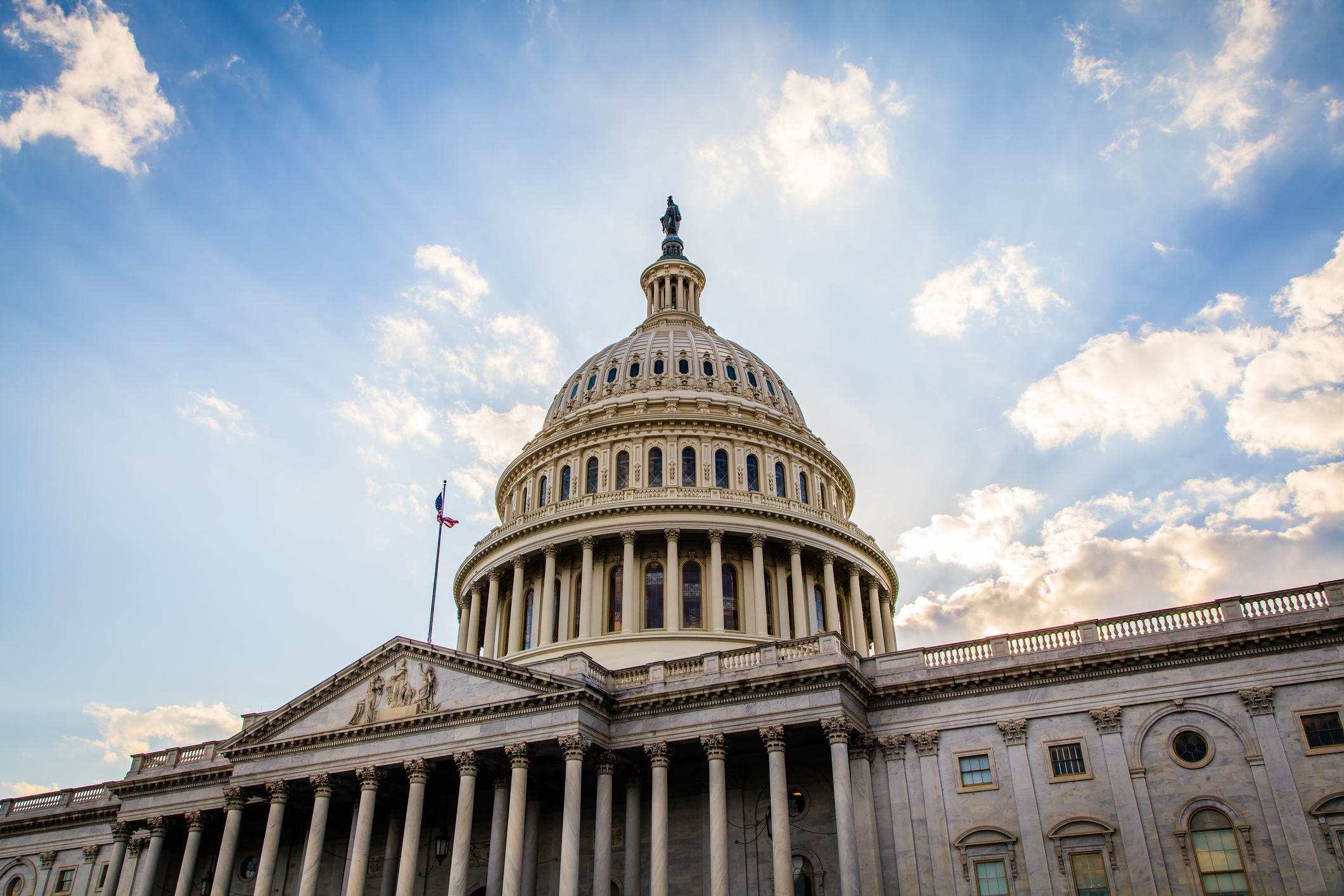
The United States Capitol Building, the seat of Congress, on the National Mall in Washington, D.C.
Enlarge / The United States Capitol Building, the seat of Congress, on the National Mall in Washington, D.C.

In a change of pace for the modern era, the House of Representatives yesterday agreed on a bill and passed it by an overwhelming majority. Unfortunately, the bill in question, known as the CASE Act, is a controversial measure that critics argue could penalize ordinary Americans as much as $30,000 for something as simple as photo sharing, while also emboldening copyright trolls.

The House voted 410-6 on Monday to adopt the measure, fully named the Copyright Alternative in Small-Claims Enforcement Act of 2019. The bill aims in part to create a new “small claims” Copyright Claims Board within the US Copyright Office. That, proponents argue, would give content creators and rights holders a better, more efficient way to pursue infringement claims, instead of having to spend the time and money on filing a federal court case.

As Schoolhouse Rock taught us, a bill needs approval from both the House and Senate before it can become law. (Though the reality is somewhat more complex). CASE went through committee in both the House and Senate earlier this year, and so the version of the bill the House voted to accept on Monday is ready to go to the Senate floor for a vote.

Copyright claims

CASE, if it were to become law, would create a Copyright Claims Board under which rights owners could create claims against individuals instead of pursuing a jury trial. If someone feels their copyright has been infringed, they file a case with the Claims Board and send a notice to the person being sued saying they have done so.

If you’re on the receiving end of a claim, the bill gives you 60 days to respond; failure to do so rewards a default judgement to the claimant. From the notice, the process works in a similar fashion to any other lawsuit, with both sides able to submit evidence, go through discovery, and sit for a hearing before “at least two” members of the Claims Board.

After going through the process, the board may choose to award the claimant financial damages up to $15,000 per each work infringed, or a maximum of $30,000 per proceeding, not counting attorneys fees or other costs.

Rep. Hakeem Jeffries (D-N.Y.), who introduced the bill in May, said at the time that establishing such a board “is critical for the creative middle class who deserve to benefit from the fruits of their labor,” adding, “The CASE Act will enable creators to enforce copyright protected content in a fair, timely, and affordable manner.”

Sides taken

The battle lines around CASE are pretty clearly drawn.

Groups representing individual content creators, including several writers’ and photographers’ associations, back the bill. The measure also enjoys support from well-known industry groups such as the Recording Industry Association of America (RIAA). Consumer and digital-rights advocates—including the American Civil Liberties Union, the Electronic Frontier Foundation, and others—oppose it.

Proponents argue that the claims board would make copyright enforcement cheaper and easier for everyone. American Bar Association President Judy Perry Martinez said in an op-ed supporting the bill that participation would be both voluntary and easy. “Currently, defendants can be burdened with significant legal costs and drawn out suits, even where their use is a fair use or otherwise lawful,” Martinez wrote.

She added:

Participation in the program would be entirely voluntary, and parties could proceed with or without attorneys. Proceedings could be held through phone or videoconferences. Lawyers well-versed in copyright and alternative dispute resolution would decide the claims. The CASE Act would bring positive change to the copyright system by providing copyright holders with a realistic means to protect their works.

Opponents, however, say that the system would be ripe for abuse and would likely to bankrupt individuals who get caught up in it.

“We do not oppose the idea of creating a small claims court process” for copyright holders, the ACLU wrote in a letter opposing the bill, adding, “any system to enable easier enforcement of copyrights runs the risk of creating a chilling effect with respect to speech online.”

Essentially, the ACLU argued, CASE would create a copyright system that could be easily abused in the same way DMCA takedown notices can be, or it could be exploited by the same kind of bad-faith actors that exploit the patents system to file spurious lawsuits in search of settlements and payouts:

The CASE Act’s new enforcement system will create similar risks of chilling speech by increasing the number of copyright infringement claims that will be brought. Many of these cases will be legitimate. However, some will not, and others, even if brought in good faith, may be defensible as fair use or for some other permissible reason. If legally unsophisticated people are drawn into the CCB process, with the possibility of being liable for $30,000 in damages, they may be forced to settle rather than risk far greater liability, even if they had not infringed.

In addition to creating an easily exploitable system, the EFF writes, the CASE Act diverges from existing law by assigning a financial value to unregistered works and allowing suits to claim financial damages for those as well.

Or, as EFF senior legislative counsel Ernesto Falcon explained in a blog post this week:

Under current law, when I take a photo of my kids and someone shares it without my permission, the most I can sue them for is nearly always $0. The CASE Act is a radical departure from this sensible rule. If it passes, sharing most of what you see online—photos, videos, writings, and other works—means risking crippling liability.

The EFF also points out that, while members of Congress may think $30,000 is a small claims matter, it’s anything but pocket change to the majority of US households. The median household income in the country was about $61,900 in 2018, according to census data. But about 38 million people in the United States live beneath the poverty threshold ($25,750 for a family of four), and data from the US Treasury (PDF) find only six in 10 households have $400 in cash or savings on hand to cover an emergency expense.

In other words, having to fight a copyright infringement claim that costs as much as a year of college would be a significant burden to most households. In short, the EFF said, “It fails to help the artists it’s supposed to serve and will put a lot of people at risk.”

https://arstechnica.com/?p=1589963


Facebook must face $35B facial-recognition lawsuit following court ruling

The Facebook app displayed on the screen of an iPhone.
Enlarge / The Facebook app displayed on the screen of an iPhone.

Facebook’s most recent attempt to extricate itself from a potentially landmark lawsuit has come to a dead end, as a federal court declined to hear another appeal to stop the $35 billion class action.

In San Francisco last week, the US Court of Appeals for the 9th Circuit denied Facebook’s petition for an en banc hearing in the case. Usually, appeals cases are heard by a panel of three judges out of all the judges who work in a given circuit. An en banc hearing is a kind of appeal in which a much larger group of judges hears a case. In the 9th Circuit, 11 of the 29 judges sit on en banc cases.

Facebook had requested an en banc hearing to appeal the 9th’s Circuit’s August ruling, in which the court determined that the plaintiffs had standing to sue, even though Facebook’s alleged actions did not cause them any quantifiable financial harm. The class-action suit can now move forward.

Three different Illinois residents filed suit against Facebook back in 2015. The suits, which were eventually rolled together into one single class-action complaint, argue that Facebook’s collection of users’ faces for tagging purposes violates the Illinois Biometric Information Privacy Act, a law that requires businesses to gather consent from state residents before their biometric data is collected or used.

The penalty Facebook would face for violating the Illinois law is up to $5,000 for each knowing violation. There are about 7 million Facebook users in Illinois, meaning Facebook could face a maximum fine of around $35 billion if the case goes to trial and the company loses.

Facial recognition: Far from flawless

While one tech giant faces a lawsuit over facial recognition that works too well, another is facing criticism over facial recognition that doesn’t work well enough.

The Massachusetts branch of the American Civil Liberties Union this week released the results of a test it ran on Amazon’s Rekognition software, in which it mistakenly matched many New England professional athletes to mugshots from a database. The ACLU compared images of 188 athletes from the Boston Bruins, Boston Celtics, Boston Red Sox, and New England Patriots teams against a database of about 20,000 public arrest photos. The ACLU found that 27 of the athletes, more than 14%, were falsely identified in the mugshots.

Rekognition’s false-positive problem is neither new nor improving. The Northern California branch of the ACLU ran a similar test in 2018, in which Rekognition incorrectly matched 28 members of Congress to a database of mugshots.

The false positives continue to draw concern as Amazon has been actively courting partnerships with police departments to spread law enforcement use of Rekognition, as well as shopping it to federal border agencies. The company has also been expanding its work with police departments to sell Ring camera doorbells and home surveillance products in the past two years.

The ACLU in 2018 called attention to a patent Amazon filed that would enable Rekognition in Ring cameras, which Sen. Ed Markey (D-Mass.) pressed the company to explain in detail earlier this year.

“The average sports fan would probably be more accurate at identifying these athletes than Amazon’s Rekognition technology,” Markey said in a tweet. “Law enforcement shouldn’t rely on this potentially discriminatory tech.”

https://arstechnica.com/?p=1589519


After court loss, Ajit Pai complains about states regulating broadband

Federal Communication Commission Chairman Ajit Pai seen arriving at a conference.
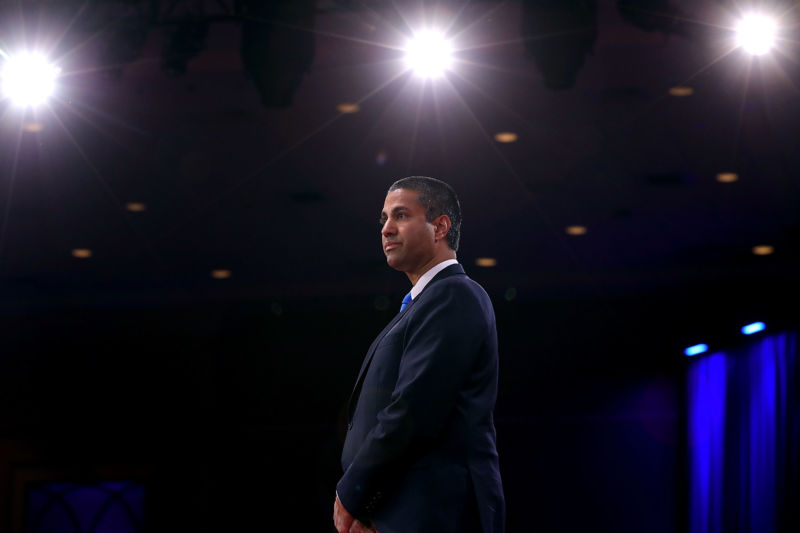
Enlarge / Federal Communication Commission Chairman Ajit Pai at the Conservative Political Action Conference on February 23, 2018, in National Harbor, Maryland.

Federal Communications Commission Chairman Ajit Pai may have belatedly concluded that federal regulation of broadband would be better for businesses than letting all 50 US states regulate Internet access.

Speaking at the WSJ Tech Live conference yesterday, Pai said that “a uniform, well-established set of regulations” is preferable to states regulating broadband individually. “[Pai] said allowing states and local governments to pass their own laws regulating Internet services, which inherently cross state lines, creates market uncertainty,” according to CNET.

The CNET article included this direct quote from Pai:

When you’re talking about the choice for a venture capitalist or an entrepreneur to set up shop in the United States where they have to get permission from the federal government or from the state of California, San Francisco, or some other jurisdiction, or whether they should set up shop in country B where there’s a uniform, well-established set of regulations that are consistent, I worry that the proposition value for country B will become stronger over time.

What Pai apparently failed to mention is that the United States had “a uniform, well-established set of regulations” with net neutrality rules passed during the Obama administration, until Pai himself led a vote to eliminate those rules and deregulate the broadband industry. Pai tried to have it both ways by eliminating the uniform, nationwide regulation while also ordering states not to regulate broadband themselves.

Court shot Pai down on preemption

But Pai’s FCC overstepped its authority when it issued that blanket order to preempt any and all current and future state regulation of net neutrality, a panel of judges at the US Court of Appeals for the District of Columbia Circuit ruled this month. The judges’ reasoning was simple: Pai’s FCC lost the power to stop all state laws when it abandoned its own regulatory authority.

“[I]n any area where the Commission lacks the authority to regulate, it equally lacks the power to preempt state law,” the judges’ ruling said.

On the plus side for Pai, the judges’ opinion upheld the FCC’s repeal of federal net neutrality rules and leaves the door open for the FCC to challenge specific state laws on a case-by-case basis. But in the meantime, Pai’s failure in court could subject ISPs to different rules in each state, with no guarantee that the FCC will be able to preempt any or all of those state laws.

One solution for Pai would be for Congress to pass a law preventing states from regulating broadband. CNET wrote:

[Pai] argued that “while that federalist system has served us very well” up to this point in our nation’s history, it’s time for Congress to consider “whether or not we can still maintain a multilayer regulatory system.”

States regulate

Washington state is regulating ISPs directly under a net neutrality law that took effect in June 2018. Similar to the repealed federal regulations, Washington state law prohibits home and mobile Internet providers from blocking or throttling lawful Internet traffic and from charging online services for prioritization.

California and Vermont have state net neutrality laws but agreed to suspend enforcement of the laws until all appeals in the FCC court case are exhausted. If the judges’ ruling that blocked Pai’s preemption attempt is upheld on appeal, those state laws will be enforced.

Oregon has a law in effect that forbids state agencies from purchasing broadband service from ISPs that violate net neutrality principles. The governors of several other states issued executive orders that also handle net neutrality by imposing requirements on state agencies instead of directly on ISPs.

It’s unlikely that any of these states would have tried to regulate net neutrality if the FCC—the US government’s expert agency on communications networks—had simply continued its regulatory oversight of the telecom industry.

But while Pai has repeatedly stripped regulations away from the industry that he does regulate, he has been supportive of the telecom industry’s call for more regulation of online platforms. Pai said that “big technology companies should be regulated in some form to level the playing field with highly regulated telecommunications and broadband providers,” The Wall Street Journal wrote, paraphrasing Pai’s remarks yesterday.

The Journal also provided a direct quote from Pai on the topic. “The rules that we have on the books, whether the FCC or any agency, should adjust to reflect the marketplace that we’re in, not the marketplace that we were in two decades ago,” Pai said.

https://arstechnica.com/?p=1589735


Robo-tank? Army picks contenders for robotic combat vehicle competition

A uncrewed tank rolls through a forest.
Enlarge / Meet RoboTank, your future tank platoon mate.

On October 18, the National Advanced Mobility Consortium—an organization of industry and academic researchers contracted by the US government to develop autonomous ground systems for the military—announced the selection of four companies to build prototype light robotic combat vehicles for the US Army. These are “non-developmental” prototypes, meaning they’re based on existing technologies that could be turned into deployable systems with relatively minor modifications.

The Robotic Combat Vehicle-Light (RCV-L) program is part of the Army Futures Command’s Next Generation Combat Vehicle effort. It seeks to provide soldiers in mechanized infantry and armor units with robotic “wingmen” that extend their reach and effectiveness on the battlefield. The Army hopes to have prototypes of the RCV-L as well as a heavier vehicle (the Robotic Combat Vehicle-Medium) in full testing in 2020. Two of each design will be fielded as “platoons” for testing, with the goal of wide deployment of tankbots by 2028.

Working in concert with new crewed combat vehicles, the robotic vehicles would provide additional sensors and firepower to bring to bear on an enemy in the field. By using robots to make the “first contact” with an enemy, unit commanders would be given more time to make decisions before committing human soldiers to the fight—or at least, that’s the doctrinal thinking behind the Army’s robotic combat crew goals.

The four companies chosen to develop the first prototypes are HDT Global, Oshkosh Defense, QinetiQ, and Textron. Each has already fielded some combination of ground vehicle and robotic systems—some of which have already been evaluated in some form by the Army. Textron’s entry is based on its Howe & Howe unit’s Ripsaw M5 (a derivative of a light tracked all-terrain vehicle made almost famous by its role in Fate of the Furious).

Textron is partnering with sensor maker FLIR for its design for the RCV-L competition, which it displayed at this month’s Association of the US Army annual event in Washington, DC. The Army began evaluating remote-controlled versions of the Ripsaw a decade ago.

QinetiQ, known largely for its smaller military robots—including the Modular Advanced Armed Robotic System (MAARS), a small tracked, armed reconnaissance and security robot—has teamed with Pratt & Miller to put together a prototype based on the Expeditionary Modular Autonomous Vehicle. The EMAV and Ripper took part in an Army NGCV robotic-combat-vehicle demonstration event in Texas in May.

HDT Global manufactures the Storm and Sword special operations tactical vehicles. It also produces the Protector (a hybrid-electric tracked, modular robot designed for support of infantry units) and the Hunter Wheeled Offload Logistics Follower (WOLF), a six-wheeled robotic support vehicle that is a contender for the Army’s Squad Maneuver Equipment Transport (SMET) robotic gear-hauler program.

Then there’s Oshkosh Defense, which manufactures the Joint Light Tactical Vehicle and a number of other military vehicles. Oshkosh has demonstrated an autonomous system for convoyed vehicles called TerraMax, which allows one operator to control up to five uncrewed vehicles.

The Army is not waiting for the prototypes to begin its testing of joint robot-human operations. Testing of Next Generation Combat Vehicle control systems for the robotic vehicles will begin in March, using modified Bradley Armored Fighting Vehicles configured as “Mission Enabler Technologies-Demonstrators” (MET-Ds) to control the robotic platforms. The first tests will use four automated M113 armored personnel carriers as “surrogates;” future tests will incorporate the prototype platoons along with the M113s.

https://arstechnica.com/?p=1589717


Facebook promises to beef up “election integrity” efforts heading into 2020

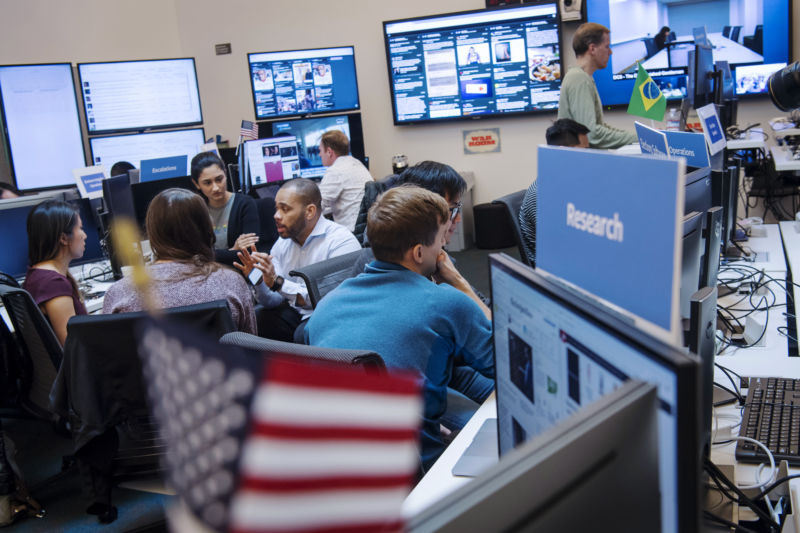
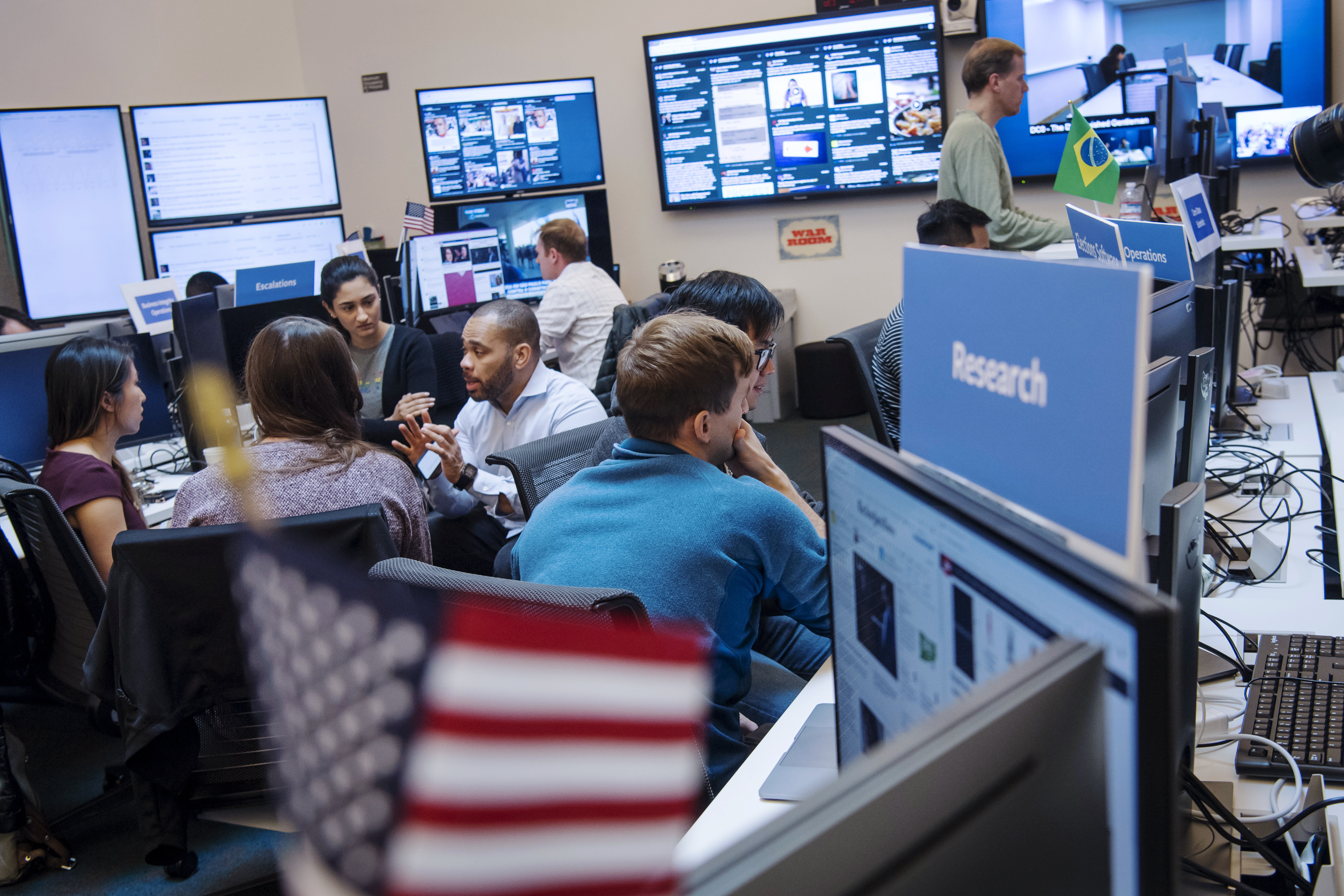
Facebook's election "War Room" on Wednesday, Oct. 17, 2018.
Enlarge / Facebook’s election “War Room” on Wednesday, Oct. 17, 2018.

With 379 long, long days to go until the 2020 US presidential election, Facebook is promising to do a better job than it did in 2016 of preventing bad actors, both foreign and domestic, from abusing its platform to potentially affect the outcome.

The company unveiled a slew of “election integrity efforts” today, saying the measures will “help protect the democratic process” by identifying threats, closing vulnerabilities, and reducing “the spread of viral misinformation and fake accounts.”

The sheer scope of the problem is admittedly mind-boggling but perhaps unsurprising, given that Facebook’s most recent investor report claimed more than 2.4 billion monthly active users on the platform (Instagram also boasts more than 1 billion MAUs). Company CEO Mark Zuckerberg said in a call with reporters that the company spends “billions” on security annually, totaling more in a given year than Facebook’s annual revenue at the time it went public. (For context, Facebook went public in 2012; it posted total revenues of just about $5 billion for that fiscal year. Its total revenue for 2018 was about $55.8 billion.)

All that money goes to a combination of projects that aim to reduce both fake news and voter-suppression efforts, Zuckerberg said. “I’m confident we are more prepared now” than in 2016, he added.

Foreign interference

Facebook’s biggest target is “coordinated inauthentic behavior”—big bunches of super-fake accounts posting super-fake stuff—that originates from a certain geographic area. Today, in tandem with its announcement about election security, the company updated its policy on how it will handle different kinds of coordinated efforts.

“We’re constantly working to detect and stop this type of activity because we don’t want our services to be used to manipulate people,” Facebook said. To that end, the company works with the intelligence community and law enforcement to identify and take down disinformation campaigns, particularly around elections.

Facebook has for many months now posted regular updates when it takes down campaigns of coordinated inauthentic behavior. While some nations do pop up repeatedly, attempts to spread disinformation occur worldwide. The most recent, today, involved campaigns originating in Russia and Iran. On October 3, Facebook pulled down accounts associated with Egypt, Indonesia, Nigeria, and the United Arab Emirates. On September 20, it identified a cluster in Spain. The September 16 announcement involved Iraq and Ukraine. A late August announcement targeted accounts that originated in Myanmar, and so on.

Facebook also said it plans to label pages and accounts more clearly so that users can understand who is behind the information they see on their feeds:

We’re adding more information about who is behind a Page, including a new “Organizations That Manage This Page” tab that will feature the Page’s “Confirmed Page Owner,” including the organization’s legal name and verified city, phone number or website.

Any page that wants to run ads about “social issues, elections, or politics in the US” will be required to add that information, Facebook said. The company also plans to put labels on content originating from “media outlets that are wholly or partially under the editorial control of their government as state-controlled media.”

Not a hypothetical problem

The question for Facebook is not if state actors are attempting to sway elections in a variety of countries, but how many are trying—and how subtly.

Russia’s use of social media to influence the outcome of the 2016 US presidential election is at this point extremely well-documented. The Senate Intelligence Committee issued a report (PDF) outlining the methods that Russia’s Internet Research Agency (IRA) used to “conduct an information warfare campaign designed to spread disinformation and societal division in the United States,” including targeted ads, fake news articles, and other tactics. While the IRA used and uses several different platforms—including Twitter, YouTube, and Reddit—its primary vectors for outreach are Facebook and Instagram.

Facebook said today it removed 50 Instagram accounts and one Facebook account that “showed some links to the Internet Research Agency (IRA) and had the hallmarks of a well-resourced operation that took consistent operational security steps to conceal their identity and location.” The accounts primarily shared and amplified memes, and they purported to be basically all things divisive—pro-Trump, anti-Trump, progressive, conservative, etc. They boasted about 246,000 Instagram followers.

In addition to trying to keep networks of foreign actors out of the fray, Facebook said it is beefing up attempts to protect actual, valid accounts belonging to campaigns and individuals affiliated with them. The “Facebook Protect” program not only includes basic security principles—like requiring two-factor authentication—but it also links participating, registered pages and accounts together. That way, if Facebook detects an attack against one account in the cluster it can proactively move to review activity and protect other accounts affiliated with the same organization.

Authentic—but bad—behavior

Foreign interference is far from the only problem in US politics at the moment. Plenty of homegrown organizations are also spreading disinformation on Facebook.

The company hopes to combat fake news by labeling it as such, very clearly. Stories that have flunked an independent fact-check will be prominently flagged, Facebook said, with a “false news” label covering the content by default. Users who share stories that are considered false will also see a pop-up that explains the post is false, including explanations of why, before they choose to cancel or share anyway.

“In many countries, including in the US, if we have signals that a piece of content is false, we temporarily reduce its distribution pending review by a third-party fact-checker,” the company added.

Facebook also addressed attempts at voter suppression. Organizations have been barred since 2018 from placing advertisements that contain deliberate misinformation about voting, such as encouraging residents to go to the polls on a Thursday (US federal elections always take place on a Tuesday) or claiming you can vote by text message (not a real thing in the United States).

Facebook said it is expanding those policies to include banning paid advertising that “suggests voting is useless or meaningless, or advises people not to vote.” Citing its hate-speech policy, the company also said it prohibits ads that “exclude people from political participation on the basis of things like race, ethnicity, or religion.” That includes ads saying not to vote for a candidate because of their race or that threaten violence or intimidation.

Facebook also said it will upgrade its ad library, a database that documents political advertising, to include an overall US presidential-candidate spending tracker. The database will also know what type of audience was shown ads, where that audience lives, and what platforms it was using.

That said, however, the social media giant has also confirmed several times that its community guidelines—which prohibit, among other things, certain kinds of hate speech—do not apply to politicians. Politicians’ posts are also not subject to fact-checking. Political ads are also exempt from ad guidelines that apply to other kinds of advertisements. That means a candidate or sitting public servant can lie in a political ad and Facebook will still accept their money and run the promotion. (The politicians just can’t include fake buttons or profanity.)

So what happens if ads from a verified campaign are considered to cross the line into voter suppression? We’ve got 379 days left to find out.

https://arstechnica.com/?p=1588743


Accessibility, the future, and why Domino’s matters

A pizza-delivering robot with a Domino's logo.
Technology is changing the way we interact with companies like Domino’s, for sure.

The US Supreme Court last week formally declined to weigh in on an argument that the Americans with Disabilities Act should not apply to websites and digital storefronts, leaving intact a lower ruling finding that the ADA does, indeed, apply to digital space. Internet and Web users with disabilities, as well as advocates for accessible design, are breathing a sigh of relief.

Accessibility in the digital space has come a great distance in a relatively short time, in many ways opening up the entire digital economy of the 21st century to millions of users. But the fact that one company—Domino’s Pizza—could try taking a case for not making its services accessible to the highest court in 2019 makes clear how much work there is left to do to make the online world equitable, both today and in the future.

So although the Domino’s case has run out of road, the questions it raises still remain: where does the connected world stand today in terms of accessibility? What does the future look like? Why is the law still unclear on all of this? And what’s at stake for any future Domino’s followers?

Domino’s v. Robles

The case the Court declined to hear, Domino’s v Robles, stemmed from a 2016 lawsuit. Guillermo Robles, a blind California resident who uses screen readers to access the Internet, tried to place an order through Domino’s mobile app. Neither the app nor Domino’s website proved usable by a screen reader, and Robles eventually sued the company, arguing the site’s inaccessibility violated his rights under the Americans with Disabilities Act.

The section of the ADA at question is Title III, which says, in part, that you can’t discriminate against an individual on the basis of disability “in the full and equal enjoyment of the goods, services, facilities, privileges, advantages, or accommodations of any place of public accommodation by any person who owns, leases, or operates a place of public accommodation.”

The district court where Robles filed his case dismissed his suit, so he appealed. The 9th Circuit Court of Appeals, in San Francisco, heard the case in 2018 and released its finding for Robles in January of this year.

The 9th Circuit ruling (PDF) did not address whether or not Domino’s app and website were, in fact, compliant with the ADA, kicking that question back to the district court to determine. Rather, the appeals court said only that the app and website should be.

“The alleged inaccessibility of Domino’s website and app impedes access to the goods and services of its physical pizza franchises—which are places of public accommodation,” the court wrote. “This nexus between Domino’s website and app and physical restaurants—which Domino’s does not contest—is critical to our analysis.”

The law already considers brick-and-mortar stores, including pizza-delivery joints, to be places of “public accommodation” under the law—basically, any place such as stores, museums, and schools (but not including private clubs or religious facilities) that are meant to, well, accommodate the public without discrimination.

That determination then extends to digital means of accessing the site, the 9th Circuit said:

Domino’s website and app facilitate access to the goods and services of a place of public accommodation—Domino’s physical restaurants. They are two of the primary (and heavily advertised) means of ordering Domino’s products to be picked up at or delivered from Domino’s restaurants. We agree with the district court in this case—and the many other district courts that have confronted this issue in similar contexts—that the ADA applies to Domino’s website and app, which connect customers to the goods and services of Domino’s physical restaurants.

Unsatisfied, Domino’s tried to appeal the loss to the only remaining authority: the Supreme Court. In July, the company filed a petition (PDF) to the Court asking it to take the case in order to resolve the question:

[Does] Title III of the ADA require a website or mobile phone application that offers goods or services to the public to satisfy discrete accessibility requirements with respect to individuals with disabilities?

Or, in layman’s terms: is a website or an app a “public accommodation” under the law the same way a brick-and-mortar storefront is, therefore making it subject to the same requirements?

Back in 1990, President George H.W. Bush and Barbara Bush receive applause by some of the 2,000 people from major disability groups who gathered to witness the signing of the Americans with Disabilities Act (ADA). (How times have changed—take a gander at that video camera!)
Enlarge / Back in 1990, President George H.W. Bush and Barbara Bush receive applause by some of the 2,000 people from major disability groups who gathered to witness the signing of the Americans with Disabilities Act (ADA). (How times have changed—take a gander at that video camera!)
Bettmann/CORBIS/Bettmann Archive/Getty Images

The Purpose of the ADA

About 61 million US adults, roughly one in four, live with some kind of disability, according to data from the Centers for Disease Control and Prevention. The point of the ADA is to prevent discrimination against a quarter of the population and to codify the need for reasonable accommodations.

The ADA, like many other millennials, is on the cusp of its 30th birthday. President George H.W. Bush signed it into law in 1990—a time when only 15% of US households even had a computer, let alone access to any kind of Internet connection. Thirty years ago, only a handful of futurists and businesses were predicting the digital revolution that has pretty much completely upended old models of commerce, communication, and connectivity. Today, more than a decade into the smartphone era, we’re realizing the 21st century likely has a whole lot more surprise in store.

Retired Rep. Tony Coehlo, a Democrat who represented California’s 15th district in Congress from 1979-1991, introduced the ADA to the House in May 1989. He now serves on the board of AudioEye, an accessible design firm. As the author of the bill, Coelho firmly believes it applies to digital space.

“I put in the ADA obviously before the Internet came on board,” Coehlo told Ars. “But what we did is, we provided the language that basically said, ‘accommodation for the infrastructure,’ in effect.”

The definition of “infrastructure” has been challenged, and it’s evolved, over time. And so, as digital commerce came along in the subsequent decades, the question became: is the digital sphere part of American infrastructure?

“Of course,” Coehlo said. “It’s just how people communicate, it’s how people get into commerce, it’s how people relate to each other, and so forth. It’s a critical part of our infrastructure! In my view, without reservation, the ADA was not meant to be something that was in place at the time alone. It basically sets the standard for going forward.

“As a result,” he added, “the Internet is part of our national infrastructure, and it’s asked to comply with the law of the land. I have no reservations on that.”

“It’s fundamentally terrifying”

Coelho said he was sure the Domino’s case would be winnable, but he admitted, “It is a fight. And it’s major from the disability point of view. It’s our access to the real world, like everybody else has, and we don’t.”

Designers and advocates in the field were extremely concerned about the stakes and less confident the case, if the Court took it up, could be easily won. Sina Bahram, an inclusive design expert and president of Prime Access Consulting, spoke with Ars at length about both the case and the field.

Over the summer, the figure of $38,000 was circulating online: that’s how much Domino’s had reportedly said it would cost to make the required upgrades to the company’s app. “As somebody who does this kind of work, that seems correct,” Bahram said. “That’s not an outlandish number. It’s not a too-small number. It’s in the ballpark, it’s within the realm of reason. And so what’s frustrating about that is: I do not know the costs associated with appealing something to [the Supreme Court], but I would put hard money that it is greater than $38,000.”

Given the sorts of fees corporate law firms tend to command, Bahram’s bet seems extremely plausible.

“And so the frustration that I and a lot of other people in the community I know have is: this is not some company going ‘we can’t afford to do this,’ or ‘it’s an unreasonable requirement,’ or anything like that,” Bahram said. Yet he says the Domino’s case had potential to “destroy the foundation of Web accessibility for basically 20% of the population.”

“It’s fundamentally terrifying, because if that is a route to make it essentially invalid, then it could invalidate the Web as a place of public accommodation under the ADA. That’s really, really concerning,” Bahram added.

Whitney Quesenbery is a user-experience design expert who in 2013 co-founded the Center for Civic Design, which helps make election and voting design more widely accessible. She has also published several books about inclusive design. And she recognizes this seemingly bizarre decision to legislate rather than update.

“Here’s what’s shocking about Domino’s: like Target [in 2008], just fixing the problem costs a great deal less than suing. So they were suing for the right to discriminate,” Quesenbery told Ars.

Domino’s could have found itself in an entirely different position with a less aggressive attorney, said Lainey Feingold, a disability civil rights lawyer and author of Structured Negotiation: A Winning Alternative to Lawsuits.

“I feel pretty confident the [Supreme] court won’t take it, because there’s really no reason it should,” she predicted, accurately, of the Domino’s case. “It’s terrible that Domino’s is fighting like this. And it’s terrible even to think that—you know, some of these amicus [briefs] say, ‘oh, it could just be a telephone.’ Who but lawyers would ever think a telephone was equal to an accessible website?”

https://arstechnica.com/?p=1580105


Zuckerberg doubles down on free speech—the Facebook way

“I’m here today because I believe we must continue to stand for free expression,” Facebook CEO Mark Zuckerberg told an audience at Georgetown University Thursday.
Enlarge / “I’m here today because I believe we must continue to stand for free expression,” Facebook CEO Mark Zuckerberg told an audience at Georgetown University Thursday.
Andrew Caballero-Reynolds/Getty

Mark Zuckerberg came to Washington, DC, on Thursday to claim the mantle of Martin Luther King and the Founding Fathers as a champion of free speech. Standing in the stately Gaston Hall auditorium at Georgetown University—which has hosted the likes of Bill Clinton, Barack Obama, and Bono—the Facebook CEO declared, “I’m here today because I believe we must continue to stand for free expression.”

And a city full of regulation-hungry politicians and foes of Big Tech undoubtedly thought: How’s that working out?

Zuckerberg’s highly promoted speech introduced no new Facebook features or initiatives, but was a defiant reply to critics of Facebook’s destructive effects on global society—manipulating voters, fomenting division, and even aiding genocide. He doubled down on Facebook’s handling of the treacherous business of implementing free expression at an unprecedented global scale. Despite considerable evidence that the approach has often fallen short, Zuckerberg still professes optimism: Giving people a voice and connecting the world, he believes, are transformationally positive actions. Essentially, he’s saying—as he always has—that Facebook is essentially positive.

What’s more, he was claiming high ground for Facebook’s values. If you disagree with him on speech, he implied, you’re siding with the forces of censorship and elitism. He described a “countertrend … to pull back on free expression.” His foes, he implied, are the same kind of people who wanted Eugene Debs in prison, who wanted Vietnam protesters stopped. But the people whose Facebook presence is more disturbing include the likes of Alex Jones (whom Facebook ultimately banned) or … Donald Trump. The speech didn’t really take on those kinds of choices.

Furthermore, rejecting his point of view will align you with the oppressive overlords of China! He pointedly noted that his dreams of taking Facebook to that country have been stalemated by that country’s demands on data and censorship. While Facebook’s encrypted WhatsApp service is a boon to protesters, he says, the Chinese TikTok app censors mentions of protests even for users in the US.

Zuckerberg clearly believed in what he was saying: Though his presentation was sometimes halting (maybe reflecting that he was tinkering with the speech until his deadline), his voice grew stronger when invoking Facebook as an instrument of empowerment. He spoke for almost 40 minutes, which is what happens when senators aren’t interrupting you.

But while he constantly described Facebook as giving voice to everyday people and underrepresented groups, he gave short shrift to the way that powerful forces are using his platform to manipulate people. In the past two years, Zuckerberg and his leadership team have admitted that they were late to recognize the downside of free expression: political extremism, intentional misinformation, and political ads that baldly lie.

At every turn, the company has avoided becoming an arbiter of what is news and what political utterances are destructive. “I don’t think it’s right for a private company to censor politicians or the news in a democracy,” he said, a sentiment he often expresses. But neither does that mean that a private company has to promote outright lies and divisive content. It would have been interesting if he’d grappled with that concept more in his Georgetown address.

Maybe the most powerful part of the speech was when he said, “I’m not going to be around forever,” and so he thinks it essential to deeply embed free speech values into Facebook so the company continues giving voice to people long after he’s gone.

Zuckerberg’s foray into the belly of the Beltway to deliver a message of free speech was, in a sense, a daring gambit. It’s hard to disagree with the First Amendment, and even less attractive to align with censors. But his critics—and a lot of people who are simply unhappy with Facebook—are asking for more. Boosting speech at global scale is a tricky and unprecedented practice. Though Zuckerberg constantly cites the army he now employs in matters of security and safety (up to 35,000), it’s not clear that a “community” of almost 3 billion people can be purged of truly destructive content. Facebook is a huge experiment that constantly tests Zuckerberg’s deeply felt claim that connecting the world will yield a net positive. The results are far from settled.

After the speech, Zuckerberg took a few questions from Georgetown students in the audience (which were submitted in writing, not offered spontaneously). One questioned whether Facebook was favoring conservatives with its green light to misinformation in political ads. Zuckerberg agreed with Georgetown’s moderator that liberals are angry, too. “Right now, we’re doing a very good job of making everyone angry at us,” he said.

No one seemed to disagree with that. And things won’t change after Zuckerberg’s Tom Paine moment.

This story originally appeared on wired.com.

https://arstechnica.com/?p=1588181