World’s largest shadow library made a 300TB copy of Spotify’s most streamed songs

But Anna’s Archive is clearly working to support AI developers, another noted, pointing out that Anna’s Archive promotes selling “high-speed access” to “enterprise-level” LLM data, including “unreleased collections.” Anyone can donate “tens of thousands” to get such access, the archive suggests on its webpage, and any interested AI researchers can reach out to discuss “how we can work together.”

“AI may not be their original/primary motivation, but they are evidently on board with facilitating AI labs piracy-maxxing,” a third commenter suggested.

Meanwhile, on Reddit, some fretted that Anna’s Archive may have doomed itself by scraping the data. To them, it seemed like the archive was “only making themselves a target” after watching the Internet Archive struggle to survive a legal attack from record labels that ended in a confidential settlement last year.

“I’m furious with AA for sticking this target on their own backs,” a redditor wrote on a post declaring that “this Spotify hacking will just ruin the actual important literary archive.”

As Anna’s Archive fans spiraled, a conspiracy was even raised that the archive was only “doing it for the AI bros, who are the ones paying the bills behind the scenes” to keep the archive afloat.

Ars could not immediately reach Anna’s Archive to comment on users’ fears or Spotify’s investigation.

On Reddit, one user took comfort in the fact that the archive is “designed to be resistant to being taken out,” perhaps preventing legal action from ever really dooming the archive.

“The domain and such can be gone, sure, but the core software and its data can be resurfaced again and again,” the user explained.

But not everyone was convinced that Anna’s Archive could survive brazenly torrenting so much Spotify data.

“This is like saying the Titanic is unsinkable” that user warned, suggesting that Anna’s Archive might lose donations if Spotify-fueled takedowns continually frustrate downloads over time. “Sure, in theory data can certainly resurface again and again, but doing so each time, it will take money and resources, which are finite. How many times are folks willing to do this before they just give up?”

This story was updated to include Spotify’s statement. 

https://arstechnica.com/tech-policy/2025/12/worlds-largest-shadow-library-brags-it-scraped-300tb-of-spotify-music-metadata/



US blocks all offshore wind construction, says reason is classified

On Monday, the US Department of the Interior announced that it was pausing the leases on all five offshore wind sites currently under construction in the US. The move comes despite the fact that these projects already have installed significant hardware in the water and on land; one of them is nearly complete. In what appears to be an attempt to avoid legal scrutiny, the Interior is blaming the decisions on a classified report from the Department of Defense.

The second Trump administration announced its animosity toward offshore wind power literally on day one, issuing an executive order on inauguration day that called for a temporary halt to issuing permits for new projects pending a re-evaluation. Earlier this month, however, a judge vacated that executive order, noting that the government has shown no indication that it was even attempting to start the re-evaluation it said was needed.

But a number of projects have gone through the entire permitting process, and construction has started. Before today, the administration had attempted to stop these in an erratic, halting manner. Empire Wind, an 800 MW farm being built off New York, was stopped by the Department of the Interior, which alleged that it had been rushed through permitting. That hold was lifted following lobbying and negotiations by New York and the project developer Orsted, and the Department of the Interior never revealed why it changed its mind. When the Interior Department blocked a second Orsted project, Revolution Wind offshore of southern New England, the company took the government to court and won a ruling that let it continue construction.

https://arstechnica.com/science/2025/12/us-government-finds-new-excuse-to-stop-construction-of-offshore-wind/


Apple hit with $115M fine for “extremely burdensome” App Store privacy policy

Apple was hit with a $115 million fine Monday after Italy’s competition authority alleged the tech giant was abusing its dominant position to harm third-party developers in its App Store.

In a press release, the Italian Competition Authority said that an “App Tracking Transparency” (ATT) privacy policy that Apple introduced in 2021 forced third-party developers to seek consent twice for the same data collection.

Requiring such “double consent” was “extremely burdensome” and “harmful” to some developers—especially the smallest developers, the regulator said. Many developers struggled to earn ad revenue after the policy was introduced, as users increasingly declined to opt into personalized ads.

Meanwhile, Apple may have benefited from the ATT restricting developers’ ad revenues, either “in the form of higher commissions collected from developers through the App Store and, indirectly, in terms of the growth of its own advertising service.” Since ATT was adopted, “revenues from App Store services increased,” the regulator said, as developers paid higher commissions and “likewise, Apple’s advertising division, which is not subject to the same stringent rules, ultimately benefited from increased revenues and higher volumes of intermediated ads.”

Without intervention, Apple would continue requiring third-party developers to provide an additional consent screen, which was “found to be disproportionate to the achievement of the company’s stated data protection objectives,” the press release said.

“Apple should have ensured the same level of privacy protection for users by allowing developers to obtain consent to profiling in a single step,” the regulator concluded.

https://arstechnica.com/tech-policy/2025/12/apple-hit-with-115m-for-extremely-burdensome-app-store-privacy-policy/


How Europe’s new carbon tax on imported goods will change global trade

In many countries, CBAM is also accelerating interest in renewable energy and greener industrial processes. Some see it not as a threat, but an opportunity to attract investment and position themselves as low-carbon manufacturing hubs.

However, this mechanism is still controversial. For businesses, CBAM is complex and administratively heavy. Firms need robust systems to measure embedded emissions, collect data from suppliers, and produce environmental product declarations. Many will also need new renewable energy contracts to cut their carbon footprint.

Around the world, CBAM has faced strong criticism. India and China describe it as “green protectionism,” arguing that it puts unfair pressure on developing economies. At the same time, the EU has not yet created dedicated funding to help exporters in lower-income countries adapt. Without this support, the mechanism may not achieve the desired results.

What about consumers?

Although CBAM is mainly aimed at industry, its ripple effects will reach consumers in the EU. Importers are unlikely to absorb the full additional cost, meaning prices are likely to rise—particularly for goods that rely heavily on steel, aluminium, or cement. This could mean Europe sees higher costs for cars, home appliances, electronics, building materials, and, indirectly, food production (through fertilizers).

At the same time, CBAM may bring more transparency. Because importers must report the emissions embedded in their goods, consumers may eventually have clearer information about the climate impact of what they buy.

The mechanism will also generate EU revenues from certificate sales. These are expected to support vulnerable households in many European countries, as well as funding clean technologies and improving energy efficiency. How the funds are used will be crucial to public acceptance of Europe’s new carbon tax.

Even before full implementation, CBAM is already reshaping supply chains and influencing government policies far beyond Europe’s borders. It may trigger trade disputes, push exporters to adopt carbon pricing, and highlight the need for more climate finance to support developing countries undergoing green industrial transitions.

For many European consumers, it’s likely to mean gradual price increases—and potentially, more climate-conscious purchasing decisions. Behind the scenes, it marks a significant shift in how global trade accounts for carbon—and how climate policy reaches into people’s everyday lives.

Simona Sagone, PhD Candidate, Green Finance, Lund University; University of Palermo. This article is republished from The Conversation under a Creative Commons license. Read the original article.

https://arstechnica.com/tech-policy/2025/12/how-europes-new-carbon-tax-on-imported-goods-will-change-global-trade/


Instacart agrees to refund subscribers $60 million in FTC settlement

In a blog post, Instacart emphasized that it has admitted no wrongdoing and elected to settle to “move forward.”

The app defended its “$0 delivery fees” claim by reminding customers that “we clearly and consistently distinguish delivery fees from service fees, which are always shown as a separate, itemized line.” Instacart also noted that subscribers receiving refunds were sent email reminders before renewals were charged. Further, any subscriber shocked by the charges had five days to request an automatic full refund if services were never used, the company said.

Boasting that Instacart has helped users save more than $3 billion “through deals, discounts, and loyalty programs,” the company estimated that users weren’t harmed by its practices and, on average, save $5 for each order.

“We flatly deny any allegations of wrongdoing by the agency, and we believe the foundation of the FTC’s inquiry was fundamentally flawed,” the company said.

The FTC, however, alleged that “hundreds of thousands of consumers have been charged membership fees without receiving benefits from the membership or getting refunds.”

Defending Instacart users from an alleged “variety of deceptive tactics,” the FTC will now work with Instacart to retrieve customer information and issue refunds, a jointly filed order detailing the settlement said.

In its blog, Instacart repeatedly claimed to be transparent and clear with customers about charges. But in a sign that the settlement is already forcing changes, a claim that the company provides “one of the most transparent, customer-friendly subscription programs available, unlocking $0 delivery fees on grocery orders of $10 or more” was starred. At the bottom of the blog, the company clarified that “service and other fees apply.”

https://arstechnica.com/tech-policy/2025/12/instacart-agrees-to-refund-subscribers-60-million-in-ftc-settlement/


ByteDance confirms TikTok will be controlled by US owners

According to Trump, the deal ensures that TikTok complies with the divest-or-ban law, but the White House is still not providing more details. Instead, the Trump administration “referred questions about the deal to TikTok,” Reuters reported.

If the deal closes as expected on January 22, the new US company will have an estimated value of $14 billion, Vice President JD Vance noted in September.

At that point, the deal will likely face mounting scrutiny from lawmakers, including Republicans, who aren’t yet sure if the US operation resolves all national security concerns. Chinese control of the algorithm was a particular sticking point for critics, who claimed that Trump was giving China exactly what it wanted: international recognition for exporting leading technology to the US.

In September, Sen. Chuck Grassley (R.-Iowa) vowed to take a “hard line” and oppose the deal’s framework if it violates the divest-or-ban law. Already, Representative John Moolenaar (R-Mich.), chair of the House Select Committee on China, is planning to hold a hearing next year with US TikTok leadership.

Sen. Elizabeth Warren (D-Mass.) has accused Trump of handing over “even more control of what you watch to his billionaire buddies,” through the TikTok deal, which she likened to enabling a “billionaire takeover of TikTok.” Many TikTokers likely share her concerns, after Trump suggested he’d like to see his hand-picked investors tweak the algorithm to be “100 percent MAGA.”

Questions remain until the exact terms of the deal become public, Warren said.

ByteDance did not respond to Ars’ request to comment.

With the terms obscured, it’s unclear how quickly TikTok may change in 2026 under US ownership. In July, the Information reported that when approximately 170 million US users get ported over to the new US-owned app, it could be buggy.

https://arstechnica.com/tech-policy/2025/12/bytedance-confirms-tiktok-will-be-sold-to-us-owners/


School security AI flagged clarinet as a gun. Exec says it wasn’t an error.

Monitoring these systems continually, humans review AI flags, then text any concerning images detected to school superintendents. Police are alerted when human review determines images may constitute actual threats. ZeroEyes’ spokesperson told Ars that “it has detected more than 1,000 weapons in the last three years.” Perhaps most notably, ZeroEyes “detected a minor armed with an AK-47 rifle on an elementary school campus in Texas,” where no shots were fired, StateScoop reported last year.

Schools invest tens or, as the SCPS case shows, even hundreds of thousands annually, the exact amount depending on the number of cameras they want to employ and other variables impacting pricing. ZeroEyes estimates that most schools pay $60 per camera monthly. Bigger contracts can discount costs. In Kansas, a statewide initiative equipping 25 cameras at 1,300 schools with ZeroEyes was reportedly estimated to cost $8.5 million annually. Doubling the number of cameras didn’t provide much savings, though, with ZeroEyes looking to charge $15.2 million annually to expand coverage.

To critics, it appears that ZeroEyes is attempting to corner the market on AI school security, standing to profit off schools’ fears of shootings, while showing little proof of the true value of its systems. Last year, ZeroEyes reported its revenue grew 300 percent year over year from 2023 to 2024, after assisting in “more than ten arrests through its thousands of detections, verifications, and notifications to end users and law enforcement.”

Curt Lavarello, the executive director of the School Safety Advocacy Council, told the ABC News affiliate that “all of this technology is very, very expensive,” considering that “a lot of products … may not necessarily do what they’re being sold to do.”

Another problem, according to experts who have responded to some of the country’s deadliest school shootings, is that while ZeroEyes’ human reviewers can alert police in “seconds,” police response can often take “several minutes.” That delay could diminish ZeroEyes’ impact, one expert suggested, noting that at an Oregon school he responded to, there was a shooter who “shot 25 people in 60 seconds,” StateScoop reported.

https://arstechnica.com/tech-policy/2025/12/florida-schools-plan-to-vastly-expand-use-of-ai-that-mistook-clarinet-for-gun/


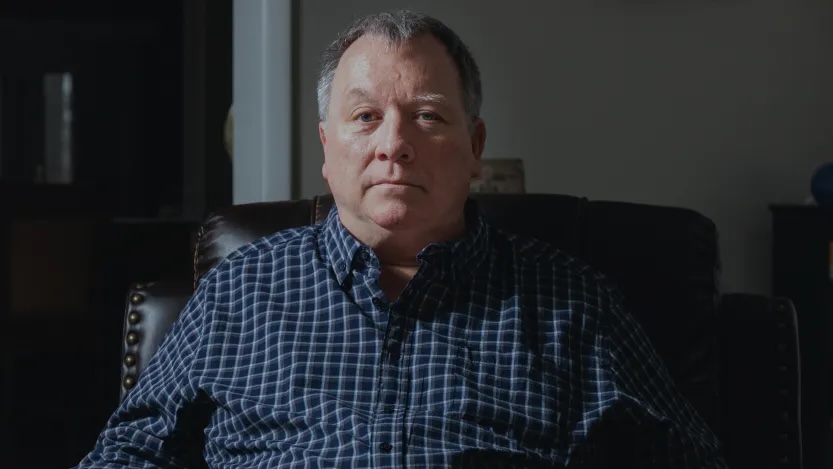
Man sues cops who jailed him for 37 days for trolling a Charlie Kirk vigil

While there’s no evidence of anyone interpreting the meme as a violent threat to school kids, there was a “national uproar” when Bushart’s story started spreading online, his complaint noted. Bushart credits media attention for helping to secure his release. The very next day after a local news station pressed Weems in a TV interview to admit he knew the meme wasn’t referencing his county’s high school and confirm that no one ever asked Bushart to clarify his online remarks, charges were dropped, and Bushart was set free.

Morrow and Weems have been sued in their personal capacities and could “be on the hook for monetary damages,” a press release from Bushart’s legal team at the Foundation for Individual Rights in Education (FIRE) said. Perry County, Tennessee, is also a defendant since it’s liable for unconstitutional acts of its sheriffs.

Perry County officials did not immediately respond to Ars’ request to comment.

Bushart suffered “humiliating” arrest

For Bushart, the arrest has shaken up his life. As the primary breadwinner, he’s worried about how he will support himself and his wife after losing his job while in jail. The arrest was particularly “humiliating,” his complaint said, “given his former role as a law enforcement officer.” And despite his release, fear of arrest has chilled his speech, impacting how he expresses his views online.

“I spent over three decades in law enforcement, and have the utmost respect for the law,” Bushart said. “But I also know my rights, and I was arrested for nothing more than refusing to be bullied into censorship.”

Bushart is seeking punitive damages, alleging that cops acted “willfully and maliciously” to omit information from his arrest affidavit that would’ve prevented his detention. One of his lawyers, FIRE senior attorney Adam Steinbaugh, said that a win would protect all social media meme posters from police censorship.

“If police can come to your door in the middle of the night and put you behind bars based on nothing more than an entirely false and contrived interpretation of a Facebook post, no one’s First Amendment rights are safe,” Steinbaugh said.

https://arstechnica.com/tech-policy/2025/12/man-sues-cops-who-jailed-him-for-37-days-for-trolling-a-charlie-kirk-vigil/


FCC chair scrubs website after learning it called FCC an “independent agency”

Cruz seemed satisfied with the answer and changed the topic to the FCC’s management of spectrum. After that, much of the hearing consisted of Democrats pointing to Carr’s past statements supporting free speech and accusing him of using the FCC to suppress broadcasters’ speech.

Senate Democrats criticize Carr’s Kimmel threats

Sen. Amy Klobuchar (D-Minn.) asked Carr if it “is appropriate to use your position to threaten companies that broadcast political satire.” Carr responded, “I think any licensee that operates on the public airwaves has a responsibility to comply with the public interest standard, and that’s been the case for decades.”

Klobuchar replied, “I asked if you think it’s appropriate for you to use your position to threaten companies, and this incident with Kimmel wasn’t an isolated event. You launched investigations into every major broadcast network except Fox. Is that correct?”

Carr noted that “we have a number of investigations ongoing.” Later, he said, “If you want to step back and talk about weaponization, we saw that for four years in the Biden administration.”

“Joe Biden is no longer president,” Klobuchar said. “You are head of the FCC, and Donald Trump is president, and I am trying to deal with this right now.”

As he has in the past, Carr claimed today that he never threatened ABC station licenses. “Democrats at the time were saying that we explicitly threatened to pull a license if Jimmy Kimmel wasn’t fired,” Carr said. “That never happened; that was nothing more than projection and distortion by Democrats. What I am saying is any broadcaster that uses the airwaves, whether radio or TV, has to comply with the public interest standard.”

In fact, Carr said on a podcast in September that broadcast stations should tell ABC and its owner Disney that “we are not going to run Kimmel anymore until you straighten this out because we, the licensed broadcaster, are running the possibility of fines or license revocations from the FCC if we continue to run content that ends up being a pattern of news distortion.”

https://arstechnica.com/tech-policy/2025/12/fcc-deletes-independent-agency-from-website-as-carr-defends-allegiance-to-trump/


Bursting AI bubble may be EU’s “secret weapon” in clash with Trump, expert says

According to Ryan, “Dutch company ASML commands a global monopoly on the microchip-etching machines that use light to carve patterns on silicon,” and Nvidia needs those machines if it wants to remain the world’s most valuable company. Should the US GDP remain reliant on AI investment for growth, von der Leyen could use export curbs on that technology like a “lever,” Ryan said, controlling “whether and by how much the US economy expands or contracts.”

Withholding those machines “would be difficult for Europe” and “extremely painful for the Dutch economy,” Ryan noted, but “it would be far more painful for Trump.”

Another step the EU could take is even “easier,” Ryan suggested. It could go even harder on the enforcement of tech regulations based on evidence of mismanaged data surfaced in lawsuits against giants like Google and Meta. For example, it seems clear that Meta may have violated the EU’s General Data Protection Regulation (GDPR), after the Facebook owner was “unable to tell a US court that what its internal systems do with your data, or who can access it, or for what purpose.”

“This data free-for-all lets big tech companies train their AI models on masses of everyone’s data, but it is illegal in Europe, where companies are required to carefully control and account for how they use personal data,” Ryan wrote. “All Brussels has to do is crack down on Ireland, which for years has been a wild west of lax data enforcement, and the repercussions will be felt far beyond.”

Taking that step would also arguably make it harder for tech companies to secure AI investments, since firms would have to disclose that their “AI tools are barred from accessing Europe’s valuable markets,” Ryan said.

Calling the reaction to the X fine “extreme,” Ryan pushed for von der Leyen to advance on both fronts, forecasting that “the AI bubble would be unlikely to survive this double shock” and likely neither could Trump’s approval ratings. There’s also a possibility that tech firms could pressure Trump to back down if coping with any increased enforcement threatens AI progress.

Although Wu suggested that Big Tech firms like Google and Meta would likely be “insulated” from the AI bubble bursting, Google CEO Sundar Pichai doesn’t seem so sure. In November, Pichai told the BBC that if AI investments didn’t pay off quickly enough, he thinks “no company is going to be immune, including us.”

https://arstechnica.com/tech-policy/2025/12/us-threatens-crackdown-on-eu-firms-as-clash-over-tech-regulations-intensifies/